



Table of Contents
As a perinatal fitness trainer and birth doula, I spend a lot of time talking about how we move, how we give birth, and how we recover after. But something I don’t talk about enough—and what hit really close to home in this podcast episode—is how deeply our postpartum hormones, stress levels, and nutritional habits impact not just our physical health, but our mental well-being, energy, and ability to even function day to day.
In Episode 118 of the MamasteFit Podcast, Roxanne and I had the absolute pleasure of chatting with Amber Romaniuk, an emotional eating, digestive, and hormone expert. In today’s blog post, I’ll be sharing valuable insights and practical applications from that conversation, with a focus on long-term wellness and better quality of life.
Subscribe to our YouTube Channel for more weekly workouts and educational videos! We publish one new workout video and 2-3 educational videos a week on our channel.
Postpartum Brain Fog and the Hunger Disconnect
I’m seven months postpartum, and I’ve been joking about having “goldfish brain”—but it’s a very real thing. The fog, the exhaustion, the “oh shoot, I haven’t eaten today” realization at 3 p.m.—that’s not just new mom chaos. It turns out, a lot of it is hormonal imbalance, specifically linked to nutrient deficiencies and stress.
Amber explained how common it is for women to not eat enough—especially protein and fat—due to years of conditioning from diet culture. That hit home for me. I’ve had thyroid issues, low B12, iron deficiencies… and they’ve impacted everything from my fertility to my appetite to my energy levels.
I’d be exhausted by mid-afternoon, craving sugar or caffeine, and then beating myself up for “failing” again. It wasn’t about willpower. My body was screaming for support—and I wasn’t listening.
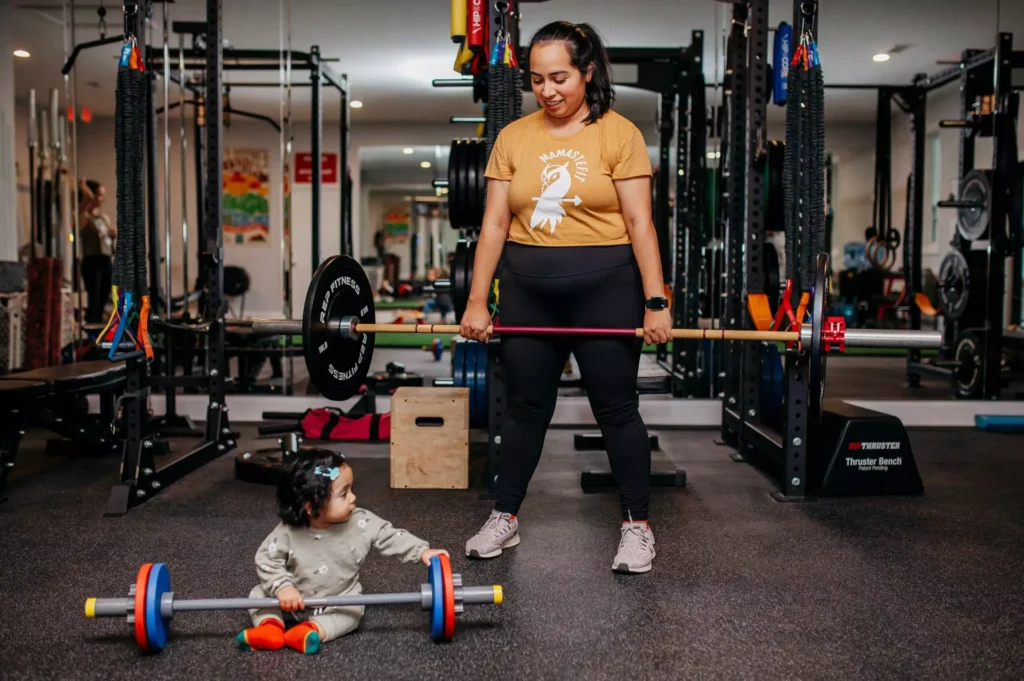

Our postnatal strength and conditioning program helps you navigate your return to fitness after the birth of your baby! Start with a rehabilitation program, then progress towards lifting weights. Feel stronger and lift heavier than ever before!
- Self-Paced
- 48 Workouts
- Teambuildr App
Cortisol and Your Postpartum Hormones
One of the biggest takeaways from our chat was how central cortisol is to our overall health. Amber said nearly every client she’s worked with has some level of cortisol imbalance. And that chronic stress response burns through key nutrients like iron and B12, exacerbates thyroid issues, and shuts down our hunger signals.
So yes—skipping breakfast, skipping lunch, eating on the go (or not at all)—it’s more than just a bad habit. It’s throwing our bodies into survival mode. Cortisol stays high, our digestion suffers, and our hunger hormones get totally out of whack.
I’ve definitely been stuck in that loop. And now I understand why even when I do eat, I might still feel off—it’s not just about what I’m eating, but what my body is capable of doing with that food.
Are You Postpartum Tired Or Depleted?
One of the most powerful parts of our conversation was recognizing the difference between being “normally” tired because you have a baby versus being deeply depleted due to nutrient and hormonal imbalances.
I shared how, during pregnancy, my anxiety was intense. I couldn’t sleep, I felt panicked, and turns out—my iron levels were incredibly low. Once I got that information, it all made sense. But no one had told me before that iron deficiency could impact mood and mental health.
That’s what’s so frustrating about women’s health. So many of us are told, “You’re fine, your labs are in the normal range,” when in reality, those reference ranges are too broad. I’m so grateful my provider understands this and looks at the optimal range, not just what’s “normal.” Because a “normal” TSH didn’t mean my thyroid was actually functioning well—it was absolutely impacting my hunger, energy, and mood.
Redefining Self-Care and Asking for Help
We often think of self-care as spa days or getting our nails done—which are great, don’t get me wrong—but not always realistic in daily life.
Amber emphasized that self-care needs to be accessible and consistent. For me, it’s been coloring, doing puzzles, and turning off my brain for a bit. My husband noticed how much more relaxed I am after these activities and started encouraging me to make time for them. That kind of support makes such a difference.
Roxanne and I also joked (but not really) about how saying “no” is now part of our self-care. Running a business, raising kids, homeschooling—it’s a lot. And I’ve had to learn that I cannot do everything, and that’s okay. Saying no doesn’t mean I’m letting people down; it means I’m showing up more fully for the things that matter most.
Takeaway Steps to Reclaim Your Health
Amber left us with some powerful, actionable advice that I’ve already started implementing:
Eat a protein-rich breakfast within 30 minutes of waking – even something small like a hard-boiled egg or overnight oats.
Prioritize tech hygiene – I’ve been working on putting my phone away at night and taking intentional breaks from scrolling.
Get tested and understand your labs – Especially thyroid, cortisol, iron, and B12. Find a provider who goes beyond the “normal” ranges and helps you make a plan.
Start small with self-care – Whether it’s coloring, journaling, yoga, or just breathing for five minutes outside, start somewhere.
Ask for help – From your partner, your friends, your community. You don’t have to do this alone.
You Deserve to Feel Good
Becoming a mom changed everything for me—including how I think about my long-term health. I don’t just want to survive these early years—I want to thrive for decades to come. That means managing my stress now, fueling my body, and refusing to put myself at the bottom of the priority list.
If anything in this episode resonated with you, please take one step today. Just one. Test your thyroid. Eat the damn breakfast. Color a picture. Say “no” to something. It’s not selfish—it’s survival.
And if you want to join me in going completely overboard with hobbies, I’ll link all my favorite coloring supplies and puzzles below. Because yes, I made a whole group chat with my friends to share our artwork. And yes, it brings me peace.
Additional Resources
Amber Romaniuk: amberapproved.ca
Needed Prenatal Vitamins: thisisneeded.com — use code MAMASTEPOD for 20% off
MamasteFit Courses: mamastefit.com — use code STORY10 for 10% off
- Check out my favorite coloring supplies HERE!
Prenatal Support Courses


Learn the science of pregnancy and birth to take the mystery of labor away! Understand why you are feeling what you feel, and learn strategies to confidently move through pregnancy and birth!
- 9h+ of Video
- Support Group
- Close Captioning
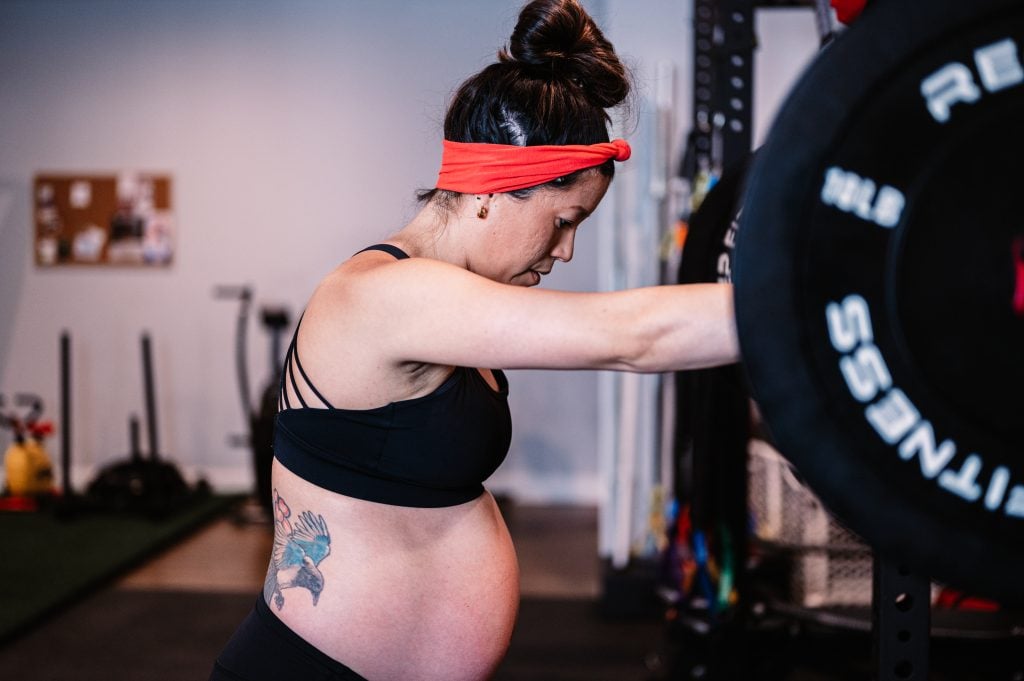
- 5 Workouts/Week
- Gym Workouts
- Self-Paced

Instructor
GINA
Workout on-demand with our prenatal fitness workout videos! Each workout is 30-40 minutes to follow along as you exercise at the same time!
- Birth Prep
- All Trimesters
- Mobility Work

Instructor
GINA
Find comfort and relief from pelvic girdle pain throughout your pregnancy and postpartum period! This program incorporates myofascial sling focused exercises to stabilize across the pelvic girdle joints.
- 3 Weeks
- On Demand Workout Videos to Follow