



So, is that it? Is that all you need to be doing to support your healing after a cesarean birth?
Absolutely NOT! There is a lot we can do to help enhance your healing and support reconnection after major abdominal surgery. In this blog, we are going to discuss how you can approach recovery in the early days to months postpartum!
If you want a step-by-step return to fitness approach, join our online postpartum fitness programs! In addition to our general return to fitness program, we also offer a c-section-specific recovery program developed with physical therapist and 2x c-section mom, Casey Backus.
Our c-section recovery program is designed to begin around 6-10 weeks after birth with daily workouts to help you reconnect with your core and pelvic floor as you return to exercise!
Top Three Ways to Support Your Postpartum Healing After a C-Section
After a cesarean birth, there is fairly little guidance on WHAT to do, even though there is a lot of information out there on how to recover after surgery. But, for whatever reason, c-section recovery guidance is still fairly minimal. If you had knee or hip surgery, you’d be immediately referred to physical therapy and there would be a more in-depth recovery program established both pre-op and after your surgery!
There are quite a few things that you can incorporate into your healing journey, but we will try to condense it to make it feel more manageable.
First, find a physical therapist to work with, especially one with experience working with postpartum clients and the pelvic floor. You can find a PT near you on this directory, or work virtually with our in-house pelvic floor physical therapist, Hayley Kava. If you’re local to us, you can work with her in-person. Many PTs do not require referrals, but you can request one before you are discharged from the hospital! There shouldn’t be much pushback–if so, you can request that your provider annotate in your records that they refused to write a referral to physical therapy after major surgery.
Next, we’ll walk you through a few things you can do on your own! These things can include:
- Scar mobilization techniques to improve how you scar heals and functions after birth
- Breathing strategies to reconnect with your pelvic floor and move your scar
- Exercises to reconnect across your abdomen around the 6-10 week mark after birth
1) C-Section Scar Mobilization
One of the first things you can do after birth is to keep your incision clean and dry (your nurse can help guide you through this, as well).
Then you can slowly begin to touch above and below the incision with your hands, and other types of fabrics to help with desensitization. As the scar heals, you can begin to do desensitization techniques on your scar and some gentle mobilization around the scar. This may be around 3-6 weeks postpartum.
Gradually, you can begin to mobilize and move the tissue on the actual scar closer to 6-12 weeks postpartum. All of these techniques help to release any adhesions or stickiness that can occur during the healing process.
During a c-section, seven layers are cut through from the skin to the uterus. These layers are sutured and secured back together, but as they heal, they can stick to one another. We want each layer to glide smoothly underneath one another for optimal function. If they stick to one another, it can cause a pulling or tugging sensation that can impact you beyond your scar. You may feel lower back pain as the tissues are being pulled to the front of the body at your scar. You may feel that you have issues with your bladder or even pain with intercourse as your bladder “sticks” to your uterine scar.
Scar mobilization helps to improve the integrity of your scar, so the tissue will be stronger. Scar mobilization also helps to improve the function of the tissues and organs around the scar, by releasing adhesions that may be impacting movement and functional capacity. You can work with a physical therapist to find a mobilization strategy that works best for you. Plus, we offer an online c-section scar mobilization course with Casey Backus, physical therapist and 2x csection mom.
In addition to mobilization strategies with your hands, there are tools you can use too to help with mobilization. This could include things like cupping, red light therapy, and even scraping or dry needling. Some of these techniques, such as dry needling, would require support from a professional, but you could try the other modalities at home.
If you want more guidance on HOW to do scar mobilization, such as mobilization techniques and a walk-through of more healing modalities, join our online c-section scar mobilization course! The online course is self-paced but also includes a live webinar with our physical therapist, Casey Backus!
2) Breathing Exercises to Reconnect with Your Pelvic Floor
Another way that you can move and mobilize your scar is from the inside with breathing! But, finding a comfortable position can be challenging shortly after birth. You can try a reclined position using the bed for support, or even a side-lying position like we demo in the video below.
If you want more breathing exercises, mobility exercises, and gentle core exercises to support you immediately after birth, join our free early postpartum recovery course!
Breathing is one of the first core exercises you can do after birth, as it coordinates the deep core muscles to expand and contract. When you inhale, your diaphragm moves down to increase pressure in your abdominal cavity–your back, sides, belly, and pelvic floor all expand outwards.
Then when you exhale, you can either relax and allow everything to recoil back to its starting position or you can exhale to contract to activate the pelvic floor, core, and back to push the diaphragm back up.
In the early days postpartum, your breathing is very gentle. You are not trying to expand to your maximum capacity or contract as hard as you can. Rather, we are focusing on gentle expansion with inhales to feel your core, your incision, and pelvic floor expand. And then very gentle exhales to lift the pelvic floor up and in. I would say its around 30-40% effort.
This can be a gentle way to add some movement to your incision and reconnect with your pelvic floor and core.
3) Cross-Body Exercises to Reconnect After Birth
As you near the 4-6 week mark after birth, you can begin to include some core exercises to help you reconnect across your incision site.
The anterior oblique sling is a myofascial sling that extends from your chest/oblique to the inner thigh on the opposite side. This sling is typically severed during a C-section. Incorporating exercises focused on this sling into your rehabilitation routine can be very beneficial for supporting neuromuscular reconnection. This was a discovery we made with our C-section clients! They all reported feeling much more integrated after completing a series of exercises targeting the anterior oblique sling.
Activation of the anterior oblique sling occurs when both ends of the fascial sling contract simultaneously, meaning the chest/oblique and the inner thigh on the opposite side engage simultaneously. This is most commonly achieved through cross-body movements, such as the opposite knee press!
While there are several other exercises included in our C-section recovery program, this is an example of one of the initial exercises we introduce to aid in reconnecting with the anterior oblique sling.
However, to truly see results, we must advance our movements beyond the floor! Starting from the floor, we can gradually transition to standing or upright positions, incorporating cross-body presses like the reverse lunge row with knee press. While this shift from a supine position is significant, it exemplifies our goal in exercise progression. We shouldn’t limit ourselves to floor-based movements; instead, we should aim to advance them off the floor!
Navigating Your Post-C-Section Healing Journey
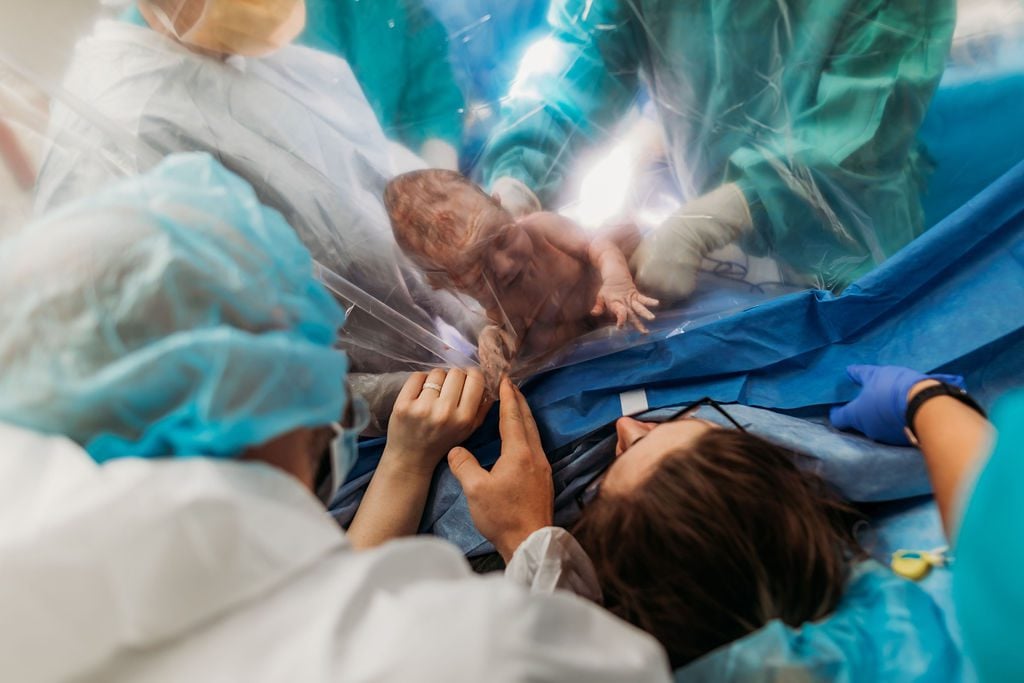
There is very little guidance given after a cesarean birth–which is major abdominal surgery! Other types of surgery will receive extensive physical therapy, including pre-op PT! Why not a c-section too??
Luckily, there are a lot of professionals out there like ourselves, trying to fill the gaps to support your recovery after birth–because we all deserve to be supported in our postpartum recovery!
After a cesarean birth, some of the things you can focus on include scar desensitization and mobilization techniques, breathing to move your scar and reconnect with your pelvic floor, and eventually incorporating cross-body exercises to reestablish the neuromuscular connection across your core. You can do this all with the support of a physical therapist, like our in-house PT, Hayley Kava, and with our online course with physical therapist, Casey Backus.

Instructor
CASEY
Learn mobilization techniques to enhance your healing postpartum with Casey Backus, physical therapist and 2x c-section mom.
- 2h+ of Video
- Support Group
- Webinar

Instructors
GINA & CASEY
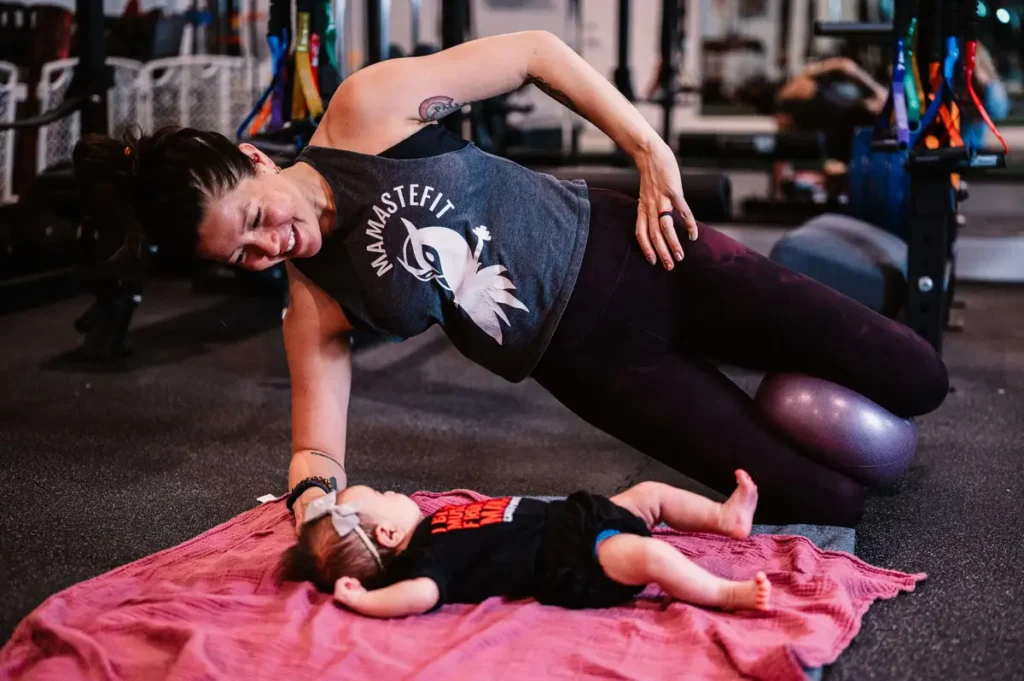
Our c-section recovery fitness program supports your healing after a cesarean birth with strength and conditioning programming. Reconnect with your core and pelvic floor! Includes access to our scar mobilization course.
- 16 Weeks
- Teambuildr App
- Lifetime Access
- 6 Weeks
- 24 Videos
- Lifetime Access
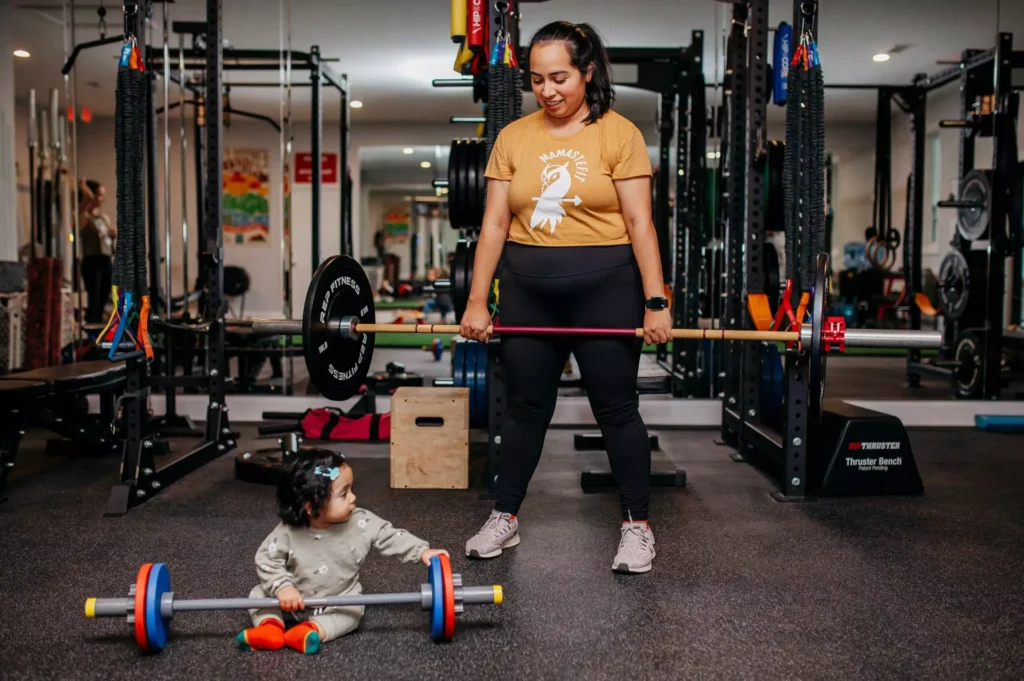
Our postnatal strength and conditioning program helps you navigate your return to fitness after the birth of your baby! Start with a rehabilitation program, then progress towards lifting weights. Feel stronger and lift heavier than ever before!
- Self-Paced
- 48 Workouts
- Teambuildr App