TRAINING FOR TWO

Move Confidently in Pregnancy!

NEW COURSE! ‎ ‎ ‎ ‎ ‎‎ ‎ ‎ ‎ ‎ ‎ ‎ ‎ ◆ ‎ ‎ ‎ ‎ ‎‎ ‎ ‎ ‎ ‎ ‎ ‎ ‎ Pelvic Biomechanics ‎ ‎ ‎ ‎ ‎‎ ‎ ‎ ‎ ‎ ‎ ‎ ‎ ◆ ‎ ‎ ‎ ‎ ‎‎ ‎ ‎ ‎ ‎ ‎ ‎ ‎ for Pregnancy and Birth. ‎ ‎ ‎ ‎ ‎‎ ‎ ‎ ‎ ‎ ‎ ‎ ‎ ◆ ‎ ‎ ‎ ‎ ‎‎ ‎ ‎ ‎ ‎ ‎ ‎ ‎ NEW COURSE! ‎ ‎ ‎ ‎ ‎‎ ‎ ‎ ‎ ‎ ‎ ‎ ‎ ◆ ‎ ‎ ‎ ‎ ‎‎ ‎ ‎ ‎ ‎ ‎ ‎ ‎ Pelvic Biomechanics ‎ ‎ ‎ ‎ ‎‎ ‎ ‎ ‎ ‎ ‎ ‎ ‎ ◆ ‎ ‎ ‎ ‎ ‎‎ ‎ ‎ ‎ ‎ ‎ ‎ ‎ for Pregnancy and Birth. ‎ ‎ ‎ ‎ ‎‎ ‎ ‎ ‎ ‎ ‎ ‎ ‎ ◆ ‎ ‎ ‎ ‎ ‎‎ ‎ ‎ ‎ ‎ ‎ ‎ ‎ NEW COURSE! ‎ ‎ ‎ ‎ ‎‎ ‎ ‎ ‎ ‎ ‎ ‎ ‎ ◆ ‎ ‎ ‎ ‎ ‎‎ ‎ ‎ ‎ ‎ ‎ ‎ ‎ Pelvic Biomechanics ‎ ‎ ‎ ‎ ‎‎ ‎ ‎ ‎ ‎ ‎ ‎ ‎ ◆ ‎ ‎ ‎ ‎ ‎‎ ‎ ‎ ‎ ‎ ‎ ‎ ‎ for Pregnancy and Birth. ‎ ‎ ‎ ‎ ‎‎ ‎ ‎ ‎ ‎ ‎ ‎ ‎ ‎◆ ‎ ‎ ‎ ‎ ‎‎ ‎ ‎ ‎ ‎ ‎ ‎ ‎
Written by

Gina Conley, MS

How I Support My Pelvic Floor at One Year Postpartum

Hi, I’m Gina — perinatal fitness trainer, birth doula, and mom of four! I’m currently about 13 months postpartum, and today I want to share how I’ve been supporting my pelvic floor health one year after giving birth.

Many people focus on the pelvic floor during pregnancy or the early weeks postpartum (and we have tons of content for that), but what about the long-term? The truth is, how we care for our pelvic floor now can have a huge impact on our future — I want to be moving confidently and comfortably when I’m 60 or 70, not dealing with leakage or prolapse.

Subscribe to our YouTube Channel for more weekly workouts and educational videos!  We publish one new workout video and 2-3 educational videos a week on our channel.

Understanding Your Pelvic Floor

Your pelvic floor is a sling of muscles at the base of your pelvis that serves many important roles. It:

  • Supports your pelvic organs

  • Controls your bowel and bladder function

  • Helps stabilize your core

  • Aids lymphatic drainage

  • Plays a role in sexual function

  • And is key during childbirth

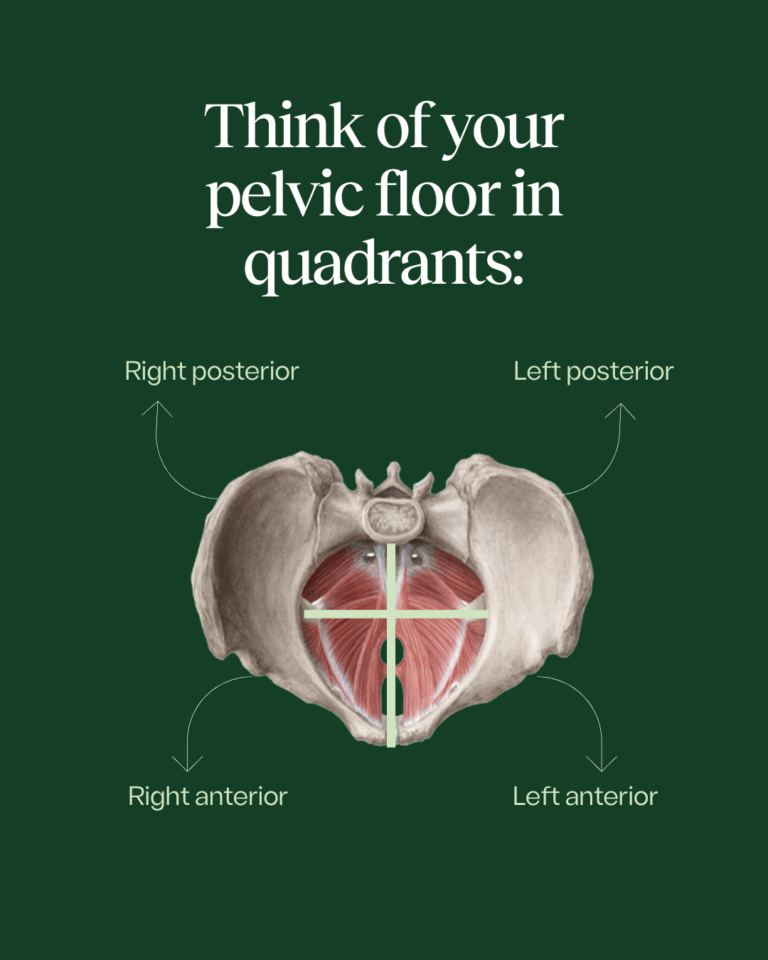
Because your pelvic floor connects to your pelvic bones, its tension and function are influenced by how your pelvis is positioned. If one side of your pelvis sits differently than the other — which is common — you may experience uneven tension across your pelvic floor.

For me, I tend to put more weight into my right leg. This shifts my right pelvic half backward and my left side forward, leading to more overactivity in my right pelvic floor and tightness in the left posterior side. So, I structure my mobility and strength training to rebalance this asymmetry and keep my pelvic floor functioning optimally.

Common Postural Tendency

A lot of people favor weight in the right leg, making the right pelvic half sit back and the left pelvic half shift forward. This causes the right anterior portion of the pelvic floor to become overactive and the left posterior portion tends to be tighter.

My Go-To Mobility Exercises

1. Back Expansion Breathing

I love starting with back expansion breathing to release tension in my lower back and the posterior pelvic floor. I round my spine slightly — standing or on all fours — and take deep breaths into my back, as if I’m inflating my lower back or the back of my pelvis.

  • Inhale: Expand into the back of your body.

  • Exhale: Lift through the front of your pelvic floor and draw your belly gently toward your spine.

This exercise helps counteract the spinal extension that often comes from babywearing or holding your baby, giving the back of the body a chance to open and relax.

2. Right Side Groin & Inner Thigh Stretch

Since my right pelvic floor tends to be more overactive, I focus on offloading that side. I use a half-lunge position with my right foot forward, pressing my right knee slightly out while keeping weight in my right big toe. I imagine drawing my belly away from my thigh to feel a deep groin stretch.

You can also try this on all fours by shifting more weight into your left side, or from standing by shifting your hips laterally while keeping weight in both big toes. Add a gentle arch in your back to target the front portion of your pelvic floor.

3. Left Side Hip Shifts

To release the left posterior pelvic floor, I perform hip shifts with my left knee elevated on a yoga block. On all fours, I shift my weight toward my left hip and round my back to deepen the stretch in my left glute and “hip pocket.”

Standing versions are also great — place your left foot on a block, hinge forward, and shift diagonally back into your left hip. Keep most of your weight in your left big toe while slightly rotating your left knee inward. You’ll feel a strong, supportive stretch deep in that left hip.

These three mobility patterns help me release uneven tension and improve pelvic balance daily.

All fours hip shift: shift your weight toward the left hip and round your back
Standing hip shift: Keep most of the weight in the left foot for a deep stretch in the left “hip pocket”

How I Modify My Strength Training

Mobility is only half the picture — strength is just as important for a healthy pelvic floor. I make small tweaks to my single-leg and upper-body exercises to support pelvic balance.

Single-Leg Strength Work

My right hip prefers internal rotation, while my left hip prefers external rotation. To balance that, I:

  • Right leg: Hold the weight in my right hand to keep my pelvis more neutral during staggered RDLs or single-leg movements.

  • Left leg: Hold the weight in my right hand again, but this time allow my pelvis to rotate slightly toward the left leg to encourage internal rotation and target the inner thigh and hamstring.

This subtle adjustment changes which muscles are activated — helping strengthen underused areas while easing overworked ones.

Right leg neutral/external position: for right leg movements, hold the weight on the right side to target the right glute and quad
Left leg internal rotation: for left leg movements, hold the weight on the right side to target the left inner thigh (adductor) and hamstring

Upper Body Balance

Our upper body also influences the pelvis! I focus on:

  • Right side: More pulldown movements to target the traps.

  • Left side: More rowing movements to strengthen the lats.

This helps rebalance my natural asymmetries and provides better overall pelvic and core support.

Right side upper body: pull down motions to target the trap musculature
Left side upper body: rowing motions to target the lat musculature

Why Asymmetry Awareness Matters

We all have natural asymmetries — that’s completely normal! But understanding them can make a huge difference in how our pelvic floor functions. Instead of trying to “fix” our pelvic floor with one stretch or one strengthening move, we want to think about each side individually and how our daily habits and movements affect it.

These small, intentional tweaks help me stay symptom-free, strong, and confident more than a year postpartum.

Final Thoughts

Supporting your pelvic floor doesn’t stop after the fourth trimester — it’s a lifelong process of learning, awareness, and movement. By paying attention to your body’s unique tendencies and adding small, intentional adjustments, you can build a strong foundation that supports you through every stage of motherhood and beyond.

If this all feels a bit complex, don’t worry — we can help! Our prenatal, postpartum, and Beyond Postpartum Strength Programs include pelvic floor–supportive exercises built into every workout (even the ones you might not realize are pelvic floor–focused). Be sure to use code YOUTUBE10 for 10% off any online offering.

Prenatal Support Courses