

Table of Contents
When we think about preparing for birth, one of the most powerful things we can do is learn how to open the pelvis for labor by creating space at each of its levels. Contrary to popular belief, there isn’t one single movement that “opens” the pelvis. Instead, different movements help open different levels of the pelvis. By understanding how each part of the pelvis works, you can choose positions and exercises that support your baby’s journey through labor.
As a perinatal fitness trainer, doula, and mom of four, this is one of my favorite topics to teach. At MamasteFit, we combine fitness and birth work to give you a full-picture approach to pregnancy, labor, and postpartum. Let’s break down the three levels of the pelvis and explore how to create space in each one.
Subscribe to our YouTube Channel for more weekly workouts and educational videos! We publish one new workout video and 2-3 educational videos a week on our channel.
The Three Levels of the Pelvis
Pelvic Inlet – The top of the pelvis, where your baby first engages.
Mid Pelvis – The middle section, filled with bones, ligaments, and muscles that your baby rotates through.
Pelvic Outlet – The bottom opening of the pelvis, where your baby exits.
Each level opens with different movement patterns, and here’s where it gets interesting: what creates space in one level can actually make another level smaller. That’s why variety and awareness matter.

Opening the Pelvic Inlet
The pelvic inlet opens best with:
External hip rotation with abduction (knees out, ankles in, legs moving away from the midline)
Pelvic tilting front to back
Anterior pelvic tilt (arching the back) creates more space in the front of the inlet.
Posterior pelvic tilt (tucking the tailbone under) creates more space in the back.

💡 Try this in labor: Sit on a birth ball or get into an all-fours position with your knees slightly wide. Rock your pelvis forward and back to explore both tilts.
During pregnancy, we naturally favor external rotation and an anterior tilt, so it’s especially helpful to practice movements that encourage a posterior tilt. This helps balance the body and makes it easier to access during labor.

Opening the Mid Pelvis
The mid pelvis is where baby rotates after engaging. It’s divided into two parts:
Upper mid pelvis (pelvic inlet → ischial spines)
Lower mid pelvis (ischial spines → pelvic outlet)
Movement strategies include:
Weight shifting and swaying – rocking side to side creates asymmetrical movement that helps baby rotate.
Open hip positions (like lunges or wide stances) open the upper mid pelvis.
Closed hip positions (belly toward the thigh, feeling a glute stretch) open the lower mid pelvis.

💡 Try this in labor: Stand and sway side to side with support, or sit on a ball and shift your weight. Even hip circles on hands and knees can help your baby wiggle down.
Opening the Pelvic Outlet
The pelvic outlet opens best with:
Internal hip rotation with adduction (knees in, ankles out)
Lat engagement (drawing elbows in to activate the back muscles, which pulls the tailbone back)
Neutral or slightly rounded spine
This might sound counterintuitive since many people are told to push with knees wide apart. But in reality, bringing the knees inward creates more space side-to-side at the outlet. Pairing that with lat engagement allows the tailbone to move back, increasing space front-to-back.
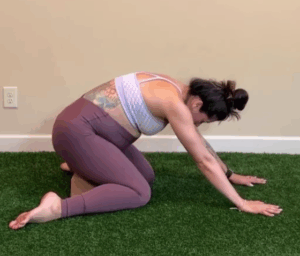
💡 Try this in labor: Bring your knees closer together while keeping your ankles out. Focus on tucking slightly under instead of arching deeply, and use your arms for leverage to create lat tension while pushing.
 On-demand video · 24 workouts
Birth Prep Workout Program
Twenty-four workouts that open the pelvis for each stage of labor — strength, mobility, and positioning you can start at any fitness level, 15 to 30 minutes each.
Learn more
On-demand video · 24 workouts
Birth Prep Workout Program
Twenty-four workouts that open the pelvis for each stage of labor — strength, mobility, and positioning you can start at any fitness level, 15 to 30 minutes each.
Learn more
 Video course · 9+ hours
Childbirth Education
Over nine hours of video on contractions, comfort measures, pushing, and recovery — so you walk into labor knowing what's happening and what your options are at each stage.
Learn more
Video course · 9+ hours
Childbirth Education
Over nine hours of video on contractions, comfort measures, pushing, and recovery — so you walk into labor knowing what's happening and what your options are at each stage.
Learn more
 Video course · 7 modules
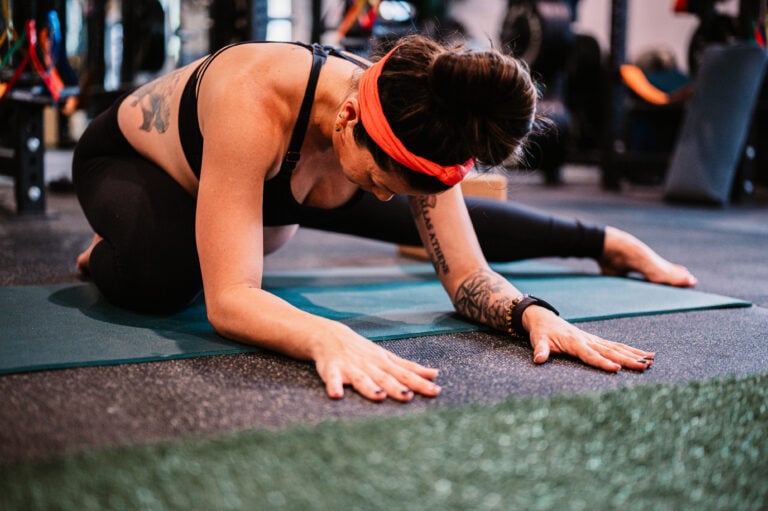
Prepare Your Pelvic Floor For Birth
Seven modules on releasing the pelvic floor rather than only strengthening it — breathing drills, thoracic and pelvic mobility, and how to relax it during labor.
Learn more
Video course · 7 modules
Prepare Your Pelvic Floor For Birth
Seven modules on releasing the pelvic floor rather than only strengthening it — breathing drills, thoracic and pelvic mobility, and how to relax it during labor.
Learn more
Putting It All Together: How to Open Your Pelvis for Labor
Your pelvis works like a dynamic system with three levels that open in different ways:
Pelvic inlet → knees out, pelvis tilting forward and back
Mid pelvis → swaying, open and closed hip positions
Pelvic outlet → knees in, neutral spine, lat engagement
The key is to practice these movement patterns during pregnancy so they feel natural when labor begins. That’s why we designed our free Birth Prep Circuit—to help you find the movements that are often trickiest in pregnancy, like the posterior pelvic tilt and internal rotation.
Final Thoughts
Birth is a full-body event, and your pelvis is at the center of it all. By understanding how to open each level, you’ll feel more prepared and confident going into labor. Movement is medicine—and the right positions at the right time can make all the difference for both you and your baby.
For more structured support, check out our prenatal fitness programs. These daily workouts keep you strong and pain-free, while also preparing your body for the physical mechanics of birth. Use code YOUTUBE10 for 10% off any online program, and bundle with childbirth education and pelvic floor prep for extra savings.
Additional Resources
 Bundle · lifetime access
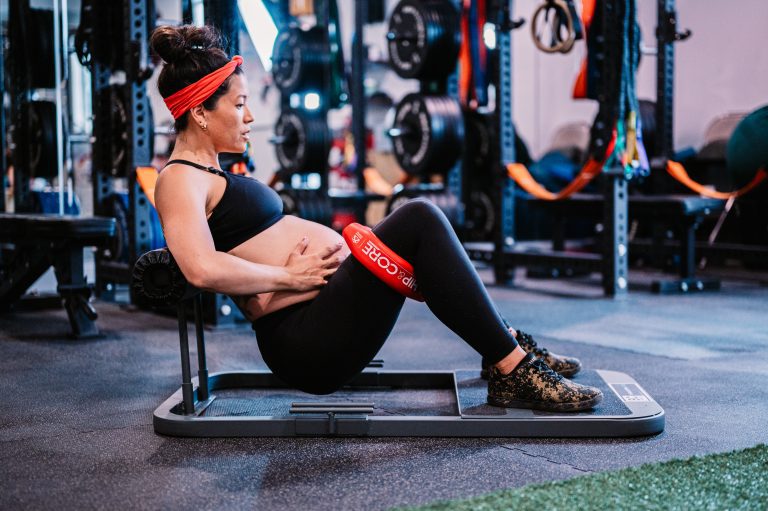
MamasteFit Bundles
Combine courses and programs for lifetime access and save up to 15% — grouped for birth preparation, the third trimester, or the whole pre and postnatal journey.
Learn more
On-demand video · 30 workouts
Core, Pelvic Floor & Pelvic Stability
Thirty follow-along workouts across beginner, novice, and advanced levels, ten per level — core and pelvic floor strength for pain relief in pregnancy or postpartum.
Learn more
Bundle · lifetime access
MamasteFit Bundles
Combine courses and programs for lifetime access and save up to 15% — grouped for birth preparation, the third trimester, or the whole pre and postnatal journey.
Learn more
On-demand video · 30 workouts
Core, Pelvic Floor & Pelvic Stability
Thirty follow-along workouts across beginner, novice, and advanced levels, ten per level — core and pelvic floor strength for pain relief in pregnancy or postpartum.
Learn more
 App program · 40 weeks
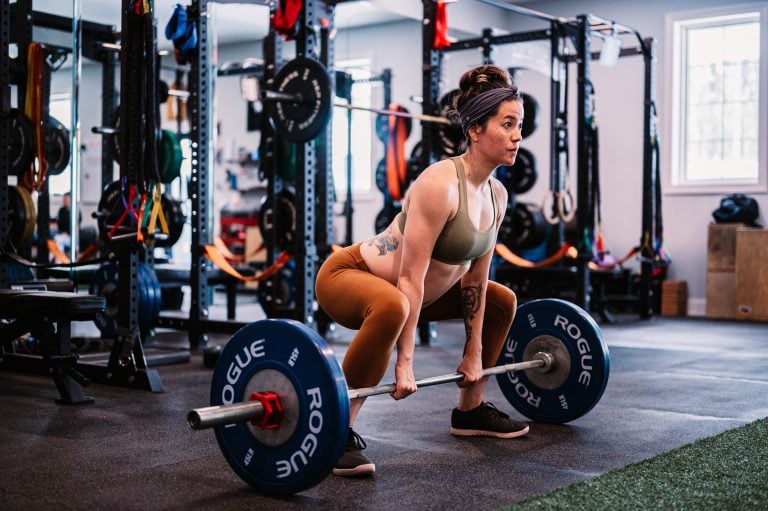
Prenatal Strength Training
A gym-based program that syncs to your current week of pregnancy — four strength sessions plus one pelvic stability workout a week, with demo videos for every exercise.
Learn more
App program · 40 weeks
Prenatal Strength Training
A gym-based program that syncs to your current week of pregnancy — four strength sessions plus one pelvic stability workout a week, with demo videos for every exercise.
Learn more