

Table of Contents
When we hear “pelvic floor strengthening,” the first thing that often comes to mind is: Kegels. But what if we told you that true pelvic floor strength isn’t just about squeezing?
In both pregnancy and postpartum, the pelvic floor plays a vital role in supporting your body, your baby, and your long-term core function. But strengthening these muscles doesn’t mean isolating them—it means understanding how they work in coordination with your breath, your core, and your entire body.
At MamasteFit, we’re not here to give you a one-size-fits-all prescription. We want to help you connect with your body, so you can feel strong, supported, and confident in every phase of motherhood.
Let’s break down how to strengthen pelvic floor muscles in pregnancy and postpartum—and what that really means.
What Does the Pelvic Floor Do?
The pelvic floor is a group of muscles that sit at the base of the pelvis, forming a hammock-like structure that supports the bladder, uterus, and rectum. These muscles are essential for:
- Bladder and bowel control
- Sexual function
- Pelvic and spinal stability
- Managing intra-abdominal pressure
- Supporting the baby during pregnancy
- Lengthening and opening during birth
- Healing and restoring function postpartum
That’s a big job for one muscle group—so it makes sense that true strength means more than just being tight or toned. So what does strengthening the pelvic floor really mean? Spoiler alert: it’s not just about squeezing.
Strength = Coordination, Not Just Contraction
One of the biggest misconceptions around pelvic floor training is the idea that tighter = stronger. In reality, a healthy pelvic floor needs to contract and relax. Just like any muscle, it needs both strength and flexibility.
In Training for Two, we emphasize that the pelvic floor is part of the core canister, which includes your diaphragm, deep core (transverse abdominis), and pelvic floor. These systems are interconnected through the breath.
- On inhale, the diaphragm moves downward, increasing intra-abdominal pressure. The pelvic floor responds by lengthening to accommodate that pressure.
- On exhale, the diaphragm lifts, and the pelvic floor responds with a recoil or contraction, supporting movement and stabilization.
This is why breathwork is foundational for pelvic floor strength: your breath teaches your pelvic floor how to move dynamically with your body.
How to Strengthen Your Pelvic Floor in Pregnancy
During pregnancy, your pelvic floor is adapting to a growing baby, shifting posture, and increasing pressure from above. Your focus shouldn’t be just on tightening—it should be on preparing for what’s to come:
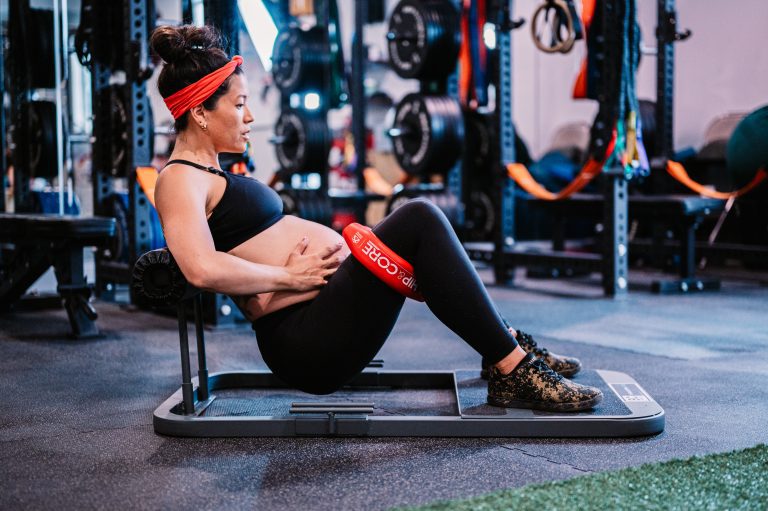
- Can your pelvic floor lengthen under load? This is crucial for birth and daily movement.
- Can it respond reflexively to increases in pressure?
- Is it working with your breath and core to stabilize your body?
One common misconception is that a single movement or stretch will prepare the entire pelvic floor for birth—but the pelvic floor is complex. There is no one movement that stretches the entire pelvic floor. Instead, we need a variety of hip, pelvic, and thoracic positions to access and release different parts of it.
Here’s how we can intentionally target the pelvic floor through movement:
- The front of the pelvic floor tends to lengthen more in external hip rotation and open pelvic positions—think deep squats or wide-stance lunges. These positions stretch the anterior portion of the pelvic floor. However, due to typical prenatal posture (extended spine, anterior pelvic tilt, and external hip rotation), most of us already have more mobility here. So while these movements can be helpful, you may not need to spend too much time on them—especially on both sides.
- That said, unilateral (one-sided) open hip positions, especially on the right, may help offload the often overactive right half of the pelvic floor.
- The middle of the pelvic floor can be accessed through diagonal patterns, such as 90/90 positions or controlled hip shifts. These help stretch the anterior portion of one side and the posterior portion of the opposite side simultaneously. It’s a subtle but powerful way to gain mobility in parts of the pelvic floor that often go untouched in standard exercises.
- The back of the pelvic floor is best stretched in more closed hip positions, such as hip shifts or hero’s pose (kneeling with feet outside the hips). This area is especially important to focus on because many of us carry tension in the posterior pelvic floor, particularly on the left side.
Why? Because of typical standing and walking patterns, most of us tend to favor our right leg, causing a natural shift in our pelvic position:
- The left half of the pelvis moves more into anterior tilt and external rotation
- The right half sits in more of a posterior tilt and internal rotation
This asymmetry often leads to increased tension in the left posterior pelvic floor, which may impact how easily it can lengthen during birth.
During my own pregnancy, I focused on preparing my pelvic floor through intentional, asymmetrical movement that helped me balance this tension and improve function. And my favorite movement for this?
 Bundle · lifetime accessMamasteFit BundlesCombine courses and programs for lifetime access and save up to 15% — grouped for birth preparation, the third trimester, or the whole pre and postnatal journey.Learn more
 On-demand video · 30 workoutsCore, Pelvic Floor & Pelvic StabilityThirty follow-along workouts across beginner, novice, and advanced levels, ten per level — core and pelvic floor strength for pain relief in pregnancy or postpartum.Learn more
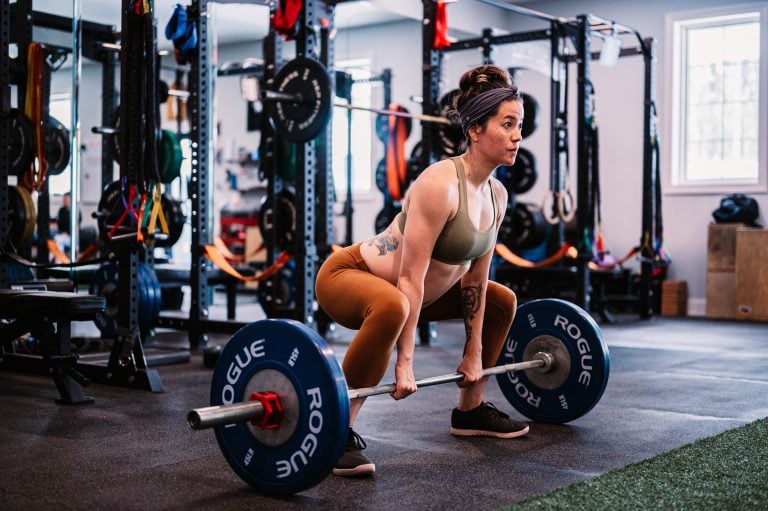 App program · 40 weeksPrenatal Strength TrainingA gym-based program that syncs to your current week of pregnancy — four strength sessions plus one pelvic stability workout a week, with demo videos for every exercise.Learn more
My Favorite Birth Prep and Pelvic Floor Exercise: The Hip Shift
The hip shift is my go-to pelvic floor prep movement during pregnancy—and one we integrate often into our prenatal fitness programming.
This movement helps:
- Mobilize the sacroiliac (SI) joints
- Improve coordination between the left and right halves of the pelvis
- Stretch the posterior pelvic floor, especially on the side that tends to hold more tension (often the left)
The hip shift allows you to:
- Access the back of the pelvic floor with closed hip positions
- Create more space and release where you’re likely holding tension due to postural habits
- Gently train your body in an asymmetrical pattern, more closely mimicking the movements and positions used during labor
You can do the hip shift in different variations: on hands and knees, in a squat, or even standing against a wall. The key is to focus on the subtle shift of one hip back and down while the other hip moves forward—creating space and softening the deeper muscles of the pelvic floor.
If you’re not already practicing this, it’s one of the best ways to prepare your body for birth—not just by getting “strong,” but by being responsive, mobile, and able to release tension when it matters most.
In our prenatal fitness programs and in the book Training for Two, we teach you how to integrate pelvic floor awareness into your strength training. This includes learning how to:
- Use the inhale to pressurize and lengthen the pelvic floor during certain movements
- Exhale during exertion to generate lift and stability from the pelvic floor and core
- Train with positions that simulate labor and birth, encouraging natural pelvic floor lengthening and mobility (like deep squats and asymmetrical stances)
Restoring Strength Postpartum
After birth, your pelvic floor and core system deserve time, patience, and intentional rehab—not a rush back to intense workouts. Postpartum recovery begins with reconnection before reloading.
That starts with regaining awareness and function of your pelvic floor and deep core system, especially through breathwork. Pregnancy, birth (regardless of mode), and postpartum healing can all disrupt the natural coordination between your diaphragm, core, and pelvic floor. So the first step is to rebuild that connection from the inside out.
Reconnecting with the Pelvic Floor
In the early postpartum weeks, your body is healing—and that includes your nervous system’s connection to the pelvic floor. You may feel disconnected, weak, or unsure how to activate these muscles.
This is where breathwork becomes powerful:
- On your inhale, allow your ribcage to expand and feel your pelvic floor gently lengthen in response to pressure from above.
- On your exhale, coordinate a gentle recoil or lift of your pelvic floor and lower abdominals.
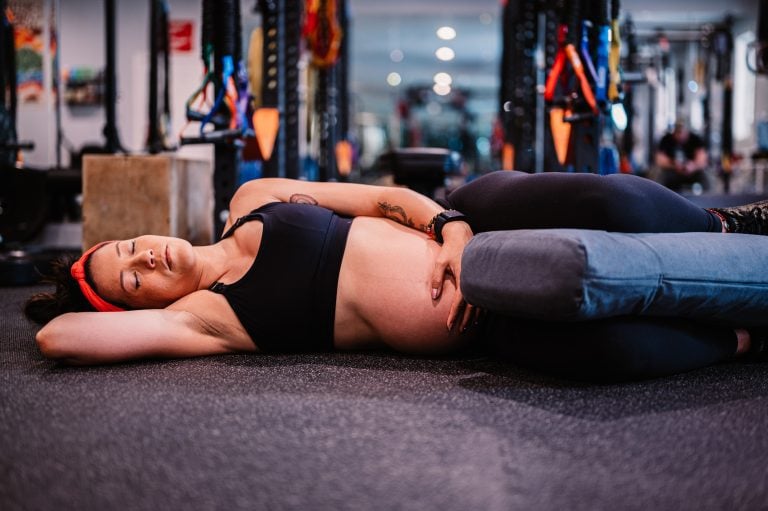
This isn’t about max effort—it’s about coordination. In Training for Two, we emphasize starting with these foundational breath-to-core patterns in supported positions (like lying on your back or side), before progressing to more upright or loaded movements.
Relearning Breath-to-Movement Coordination
Once you’ve re-established a baseline connection, the next step is retraining the timing of breath with movement to support your pelvic floor and core function as you begin moving more:
- Inhale as you prepare or descend into a movement (like lowering into a squat). This increases intra-abdominal pressure and creates pelvic floor length.
- Exhale during the effort or lift phase of movement. This helps activate your core and pelvic floor reflexively to support and stabilize you.
This breath-to-movement coordination teaches your body how to manage pressure again—so you’re not bracing or bearing down through movement (which can contribute to pelvic floor symptoms or diastasis recti).
As strength returns, we begin to layer in progressive load—like glute bridges, squats, and carries—while keeping that breath coordination and pelvic floor engagement at the center of your movement.
Postpartum strength isn’t just about “getting your body back.” It’s about rebuilding function, so your body can support you in daily life, fitness, and future pregnancies or births.
The best part? You don’t have to rush. There’s no deadline for healing. Whether you’re six weeks, six months, or six years postpartum, it’s never too late to reconnect with your body.
This process may look different depending on your birth experience, injury, or symptoms. For some, working with a pelvic floor physical therapist is a vital part of the journey. Our in-house PTs do both in-person and virtual consults + virtual group classes if you are looking for some support!
Final Thoughts
Strengthening your pelvic floor in pregnancy and postpartum isn’t about doing the most reps, squeezing harder, or following a one-size-fits-all routine. It’s about understanding how your body works, honoring how it changes through each stage, and building strength through connection, coordination, and intentional movement.
Whether you’re preparing for birth or healing after it, your pelvic floor plays a central role—not just in your workouts, but in your daily life, comfort, and long-term core function. By learning how to breathe with purpose, move with awareness, and create space for length and strength, you can support your body to feel powerful, capable, and resilient.
You don’t need to figure it all out alone. Whether you’re starting with the basics or ready to deepen your training, we’re here to walk with you through every squat, breath, and push.
Explore our prenatal and postpartum programs, or grab your copy of Training for Two to start building strength and confidence from the inside out.
You’ve got this—and we’ve got you.
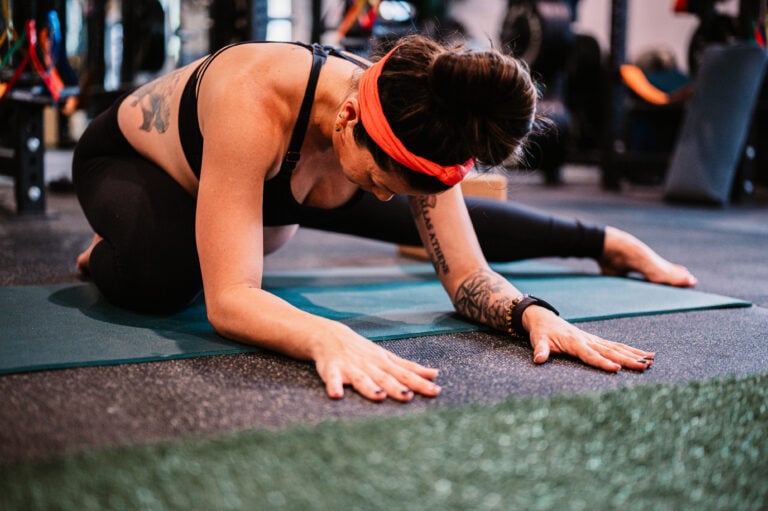 Video course · 7 modulesPrepare Your Pelvic Floor For BirthSeven modules on releasing the pelvic floor rather than only strengthening it — breathing drills, thoracic and pelvic mobility, and how to relax it during labor.Learn more
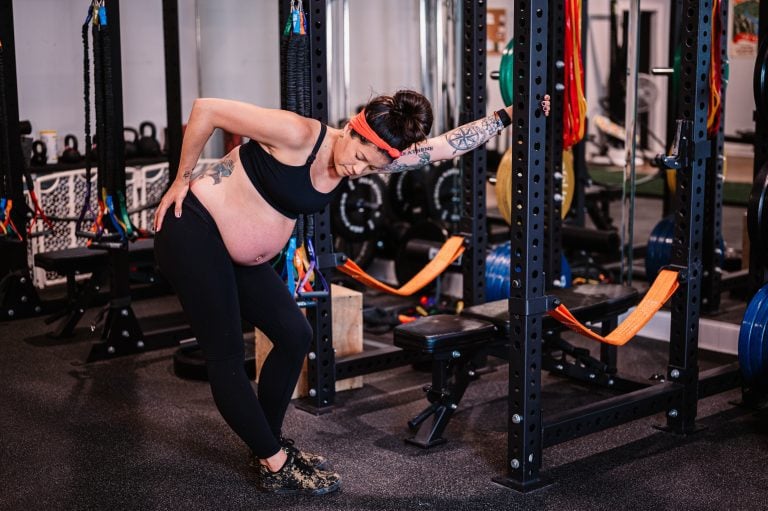 On-demand video · 128 workoutsPrenatal Workout On-DemandFollow-along workouts from week 5 to week 41, four or five a week with guided warm-ups and cool-downs — over 128 sessions coached in real time alongside the video.Learn more
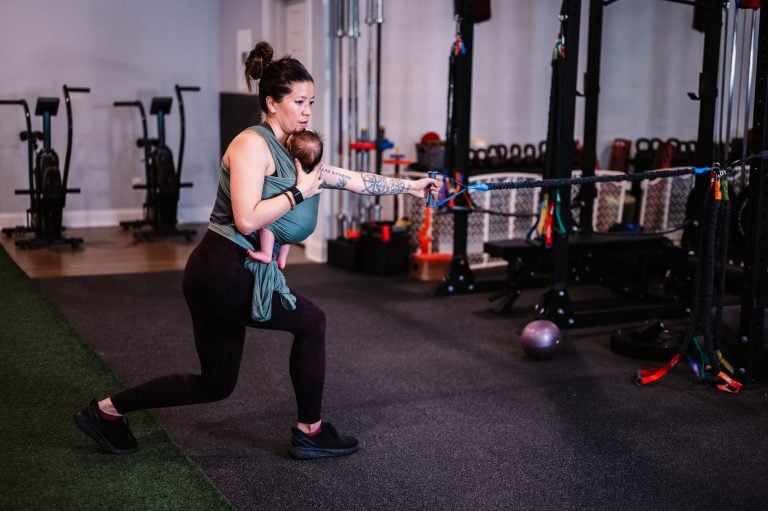 App program · 16 weeksPostpartum Return to FitnessSixteen weeks of rebuilding, four strength sessions a week, with a vaginal or cesarean recovery track and follow-along videos for the first six weeks.Learn more
Lorem ipsum dolor sit amet, consectetur adipiscing elit. Ut elit tellus, luctus nec ullamcorper mattis, pulvinar dapibus leo.