



Welcome to the MamasteFit Podcast Birth Story Fridays! In this episode, Jess shares her empowering experience deciding on and undergoing a scheduled C-section for her second baby. Jess shares her journey of choosing a C-section over a VBAC, feeling empowered to make an informed choice based on her own personal risks. The episode explores Jess’s preparation during pregnancy, including taking the MamasteFit strength course and selecting a supportive OB in her new city. Jess shares insights on listening to one’s gut, navigating external pressures, and making informed decisions for birth. Additionally, Gina and Roxanne offer practical advice on personalizing a C-section birth and emphasize the importance of contingency plans. The episode also dives into postpartum recovery, with Jess detailing her faster and more prepared recovery process this time around.
Read Episode Transcript
[00:00:00] Gina: Welcome to the MamasteFit Podcast, Birth Story Friday. In this episode, Jess is going to be sharing her scheduled C section birth story. In her story, she was debating between whether she wanted to have a VBAC or a vaginal birth after C section, or if she wanted to schedule a C section for her second baby, and she ultimately chooses to have a scheduled C section and found it to be a really empowering experience.
[00:01:40] Gina: Welcome to the MamasteFit Podcast, Birth Story Friday. In this episode, we have Jess here, who is going to be sharing her birth story with us. So thank you so much for being here, Jess.
[00:01:49] Jess: Thank you for having me! I’m excited to talk to you all and just share my story and hopefully help other people.
[00:01:55] Gina: Awesome. So let’s start with how were you preparing during your pregnancy for birth? What were you doing throughout your pregnancy? Did you take any special courses?
[00:02:05] Jess: Yeah, that’s a great segue. I took y’all’s course. I did the strength, I forget what it’s called, but it’s the strength course. It was the mini one because I knew that I could devote 10 to 15 minutes at a time to strength, and this is also my second pregnancy, I wanted to be a lot stronger than my first. And so I went into it knowing that, okay, these are my goals. I want to feel this way. I don’t want to have pain here. And that’s basically what I did was a lot more strength and a lot more walking, than my previous pregnancy.
[00:02:38] Gina: That’s awesome. Where, did you choose to give birth? Who did you choose as your provider through your birth? Did it change at all as you were navigating your pregnancy?
[00:02:46] Jess: So we just moved. I live in Charlotte, North Carolina, and we just moved here a couple of years ago. So I had to choose a different provider than with my first. I knew I wanted to work with an OB. At just a hospital rather than having a home birth or with a midwifery. I had complications with my first birth that ended up in an emergent C section, and I knew that my body would be at risk for this birth. And so I knew I wanted to have a team and feel supported and, have the care that I felt like I would want and would need at the time of my birth. So I did end up picking a new OB because we moved and stayed with the same doctor the whole time. And unfortunately he wasn’t able to deliver our baby, I was so excited for him too, but as you all know, babies do what they want and come when they want. So yeah, it all worked out though.
[00:03:45] Gina: But he was a part of a team that you felt really supported by overall.
[00:03:49] Jess: Yes, definitely. There’s always these mom Facebook groups in whatever city you live in, and I like scoured the group for OBs that specialized in repeat C sections and everyone had amazing things to say about this doctor. And so I chose him and felt like he listened to me, we talked about whether or not I wanted to do a VBAC or repeat C section like the entire pregnancy, and I didn’t really meet any of the other people that would be in the room with me until I got to the hospital and I felt really comfortable with them as well, luckily. Yeah, so as far as like team, it was a team of one doctor until I got to the hospital and he, yeah, he was wonderful.
[00:04:33] Gina: That’s awesome. So which did you decide that you wanted to pursue? Did you want to pursue a VBAC or did you decide to have a repeat C section?
[00:04:41] Jess: I decided to have a repeat C section, probably up until maybe 20 weeks. I was really waffling between the two, because I didn’t get to have the experience that I thought I was going to have with my first.
[00:04:57] Jess: With my first I had, a lot of bleeding. I had, I think it’s like ruptured varicose veins, so I had a lot of bleeding. they were able to suture me back up, but they said, “Hey, you can keep pushing, but you risk rupturing the sutures just from all the pressure. What do you want to do?” And so it was a split second decision. My husband and I were like, “C section sounds like the best thing,” but I was already going in and out of consciousness because I was losing a lot of blood. And so I don’t really remember that birth experience. And so part of me was thinking, if I try for a VBAC maybe this time it’ll be different. And I felt some, I’ll admit, I did feel some of that externalized pressure, on, social media and when you hear people that have these amazing births that are not C sections, you think, “Okay, maybe I should,” like I “shoulded” myself, “maybe I should do this because it can be this thing that I didn’t get to have.”
[00:05:53] Jess: But eventually I did end up deciding on the C section because I didn’t want to risk having the same experience again, laboring vaginally only to have bleeding again and have this rushed C section. And to answer your question, yes, I did end up deciding to go with the C section knowing that, okay, this is going to be the best decision for me and my baby, then it is the right decision for me, even if I, am curious about what a different experience might be like.
[00:06:23] Gina: I think that’s really amazing that you felt empowered to choose what worked best for you, because I do agree, I think there is a lot of that external pressure to have a VBAC, “this is what you’re supposed to do after you have a C section.” and I don’t hear quite as often of folks opting to have a scheduled Cesarean to have a different experience. So I think that’s really great that you felt empowered to choose that option instead.
[00:06:47] Jess: Thanks. I have a therapist who helped guide me that way. I don’t want to take all the credit. I’ve been working with her for almost 10 years now and she was helping me just come to this decision and practice feeling comfortable with it because even leading up to the birth I was like, “Oh gosh, should I try for VBAC? Should I just do it?”
[00:07:08] Jess: And so now obviously my baby has been born. He’s three months old now, and I feel confident about it after the fact. But I do admit like leading up to it, it’s still hard to decide to electively have major surgery when, you know, you hear and read and know a lot of women that have vaginal deliveries and do wonderfully and yeah, all the things.
[00:07:32] Gina: Let’s get into what the end of your pregnancy was, into moving into your Cesarean. How was the end of your pregnancy? How are you feeling? Were you really excited? I’m assuming everyone’s excited at the end of their pregnancy, but…
[00:07:47] Roxanne: Maybe.
[00:07:48] Jess: I was definitely, towards the very end, I was over it, as you and maybe some of the listeners might resonate with. I was just tired and hot and it took so long to get out of bed or sit up. But towards the end of this pregnancy, I felt really strong, which I think I said maybe in the beginning of the interview, that was one of my goals for this pregnancy is to feel stronger and more supportive, while my body’s changing, and so that was something that I guess, I’d like to pat myself on the back for it. And thank you all, because you all provided the resource for me, but just feeling stronger, not being in pain. I had a lot of pubic symphysis dysfunction with my first pregnancy, and so that was the motivation to not feel like that again, because with my first pregnancy with my daughter, I had a lot of pain even like walking towards the end. Like I had to stop running. I had to stop doing yoga. And so this time I was like, I don’t want to feel like that again. That was miserable. For like half my pregnancy I had pelvic pain and so I wanted to just have a different approach. And so to sum it up, stronger was how I felt towards the end of this pregnancy.
[00:08:56] Gina: That’s awesome. So let’s get into your birth story. So I’m assuming that you went in for a scheduled date or did you start having labor or let’s, hear your birth story.
[00:09:06] Jess: Okay! I did a schedule, obviously had the C section scheduled. I did not make it to the scheduled date. I went into labor like the night before, which is just ironic. Cause we were like, “Oh, if you had just stayed in there for one more night, we would have been able to meet, YOU would have been able to meet the doctor that I liked and that would have loved to meet you!” But the week prior to the scheduled C section, I went in for my last checkup and I think I was 70 percent effaced and four centimeters dilated.
[00:09:40] Roxanne: Oh!
[00:09:41] Jess: So he was like, “I don’t know if you’re going to make it through the weekend. There’s a chance.” And then after the fact, he was like, “Yeah, I didn’t think you were going to make it through the weekend.” But at the time, he was like, “You might not make it. These are the doctors that are on call. You’re in good hands.” and every day that the baby stayed in, I would text my sister and be like, “They’re still in there! One more day! We could do it!”
[00:10:02] Jess: So the C section was scheduled for a Monday. Sunday at three o’clock in the morning, and even that night going to bed, I just felt a lot more Braxton Hicks, and they felt like they were more timely, but it didn’t feel like labor pains. I was able to walk and they would go away, but they were like almost timed. So I was like, “You know what, I’m just going to take a shower.” I like had an urge to take a shower, which maybe was timely. I was like, “I just feel like I need to be clean!” And then I went to bed that night and at three o’clock in the morning, I woke up to go to the bathroom and then a gush of fluid came out and I was like, “This does not feel like urine, or normal,” so I went to wake up my husband and we called the office and I waited.
[00:10:55] Jess: I didn’t realize this, there are people on call but like they don’t speak to you right away at the hospital that we were at. So they’re like, “Okay, we’ll have a nurse call you in 10 to 15 minutes.” And I was like, “Okay, I hope I don’t progress that much in that time!” So we waited for a nurse to call and given like my history with the bleeding and the previous emergent C section, she was like, “Why don’t you guys just come on in and we’ll get you prepped and get you ready for the C section.”
[00:11:21] Jess: So I put on a big pad, an overnight pad, woke up my husband, and said, “I think my water broke, I think we need to go in.” Went downstairs to wake up my mom and her boyfriend, who were luckily already here to watch our four year old. And my husband had the audacity to ask if he had time to shower and pack because he hadn’t done any of those things. I said, “No.” And then we got in the car.
[00:11:46] Gina: You missed your opportunity. You should have woke up at 3am.
[00:11:49] Jess: Yeah, exactly.
[00:11:49] Roxanne: Or done this like earlier.
[00:11:52] Jess: Yeah, exactly! Then we got in the car and drove and the rest of the experience was, just, I feel very grateful. It was just very supported. It went really smoothly.
[00:12:03] Jess: Got in, got admitted to the hospital, had a really friendly, warm and welcoming team of nurses. The anesthesiologist who was going to be with me, I think he could tell I was nervous because, just like a big needle going into your spine. I was like, “Are you going to be my doctor this whole time?” just because he was like an older guy and looked established. He was very friendly. And he was like, “Yes, our team like only does OB. So we do this literally all day long, every single day,” which made me feel a lot better. Then we waited for the OB, who is not my OB, just to say hello and walk me through what was going to happen.
[00:12:43] Jess: When you all reached out and asked for birth stories and I shared a little bit about ours, one thing that we wanted to make sure we asked for this time, especially because I would be more conscious this go around was just to have it be a little more personal, just because I didn’t want it to feel very medical. So one of the things that we asked the OB, before we were admitted into the OR, was just asked for a little bit of a play by play. I didn’t want all the like anatomical details, but just, “Okay, about to get the baby now.” We asked for my husband to let us know what gender the baby was. And my husband wanted to cut the umbilical cord after they did the initial cutting, just to make it a little more special and just to make it a little more memorable, especially because the first time was just so sudden and so rushed. And so that, I think, also helped a lot to make it feel like, okay, I can own this birth, I can learn to be confident about the procedure that I chose, or like the path that I chose, and hopefully not feel too much of that guilt and even some shame about not choosing a VBAC.
[00:14:01] Jess: And it turned out to be beautiful. And we laughed because after the baby came, after our son was born, and we were in the recovery room, there were like three or four emergent cases that came in, and OB was completely full. And so we were like, “Gosh, if you had showered, like we might not have been able to have this experience!”
[00:14:20] Roxanne: Thank God he didn’t shower.
[00:14:21] Gina: I hope he took a shower after the fact. There’s plenty of time for you to shower later.
[00:14:27] Roxanne: Yeah.
[00:14:29] Jess: Exactly!
[00:14:31] Gina: That’s awesome! So how was postpartum for you in comparison this time? So your previous C section was an emergency after laboring. And how is the recovery after this one in comparison?
[00:14:43] Jess: Oh my gosh, it was a world of difference. I feel like I am recovering so much faster. I’m 14 weeks postpartum now. But with my first C section, first of all I didn’t know I was going to have a C section, so I just wasn’t prepared, like I didn’t know what to do afterwards, I didn’t know how soon I should walk after. I didn’t know when to start scar desensitization and all those things. And so I felt like my recovery was a lot quicker this time because I went into it knowing, okay, day one, I’m gonna walk around the room. Day two, maybe I’ll, walk across the hall and then come back. And then, again, thanks to y’all’s guidance, I was able to start scar desensitization and like some really light breathing exercises, and even some gentle stretches once we got home from the hospital, and icing, and all that stuff. So I feel like this time I was A, more prepared and B, have been recovering faster because I have the tools and I’ve gathered the resources that I know are out there- mainly your resources!
[00:15:50] Gina: We’re happy to support you throughout your pregnancy and in your postpartum! That’s really exciting to hear.
[00:15:55] Gina: So how is postpartum going for you right now? Like pretty good at 14 weeks, like feeling more connected, more recovered.
[00:16:02] Jess: Yeah, I definitely feel a little more connected and more recovered. I’m still working through- so I also did your postpartum program. I signed up for the postpartum strength, again, the mini, it’s like a 12 week course. And so I’ve been working through those, that has been really supportive to me. And I also saw a pelvic floor PT a few times, just because my goal with her was to do a return to running program. So we made sure that my body was ready for that. And I’ve continued to do the scar mobilization and the cupping and all that. So I still feel sore in some places, I think because I’m only 14 weeks out.
[00:16:40] Gina: Yeah.
[00:16:41] Jess: But again, just, yeah, I feel like I’m making progress. Sometimes I don’t feel like I’m as far as I want to be, but then I have to remember, taking care of a baby is a lot of work. And then I have a four and a half year old. And we also, I think I told you on the email, like we just moved literally a week ago. So like everything is in boxes still. But knowing that, it’ll take time. It’s only been 14 weeks. I was pregnant for nine months. It’s going to take some time to come back to the way I felt before pregnancy.
[00:17:12] Gina: Absolutely. It does take a good amount of time, for sure. It’s longer than I think most folks realize. I feel like there’s this, “After six weeks, you should be good to go. You’ve been cleared.” And it just takes months past that. And I wish more folks realized that, because they would, I think it would just bring so much less stress and Pressure on us if we knew hey, this is going to take a long time and it’s okay if it takes a long time. You made a human being, that’s pretty cool.
[00:17:42] Roxanne: Give yourself some grace and some time.
[00:17:44] Jess: Yeah, I think even now that this is my second kid, I do admit that I forget that. Oh, I created life in my body, and I’m like keeping a human alive. I feel sometimes I brush past that, I’m like, “Oh, I should,” again, the shoulding myself, “I should be able to do all these things I did before pregnancy because blah, blah, blah,” like whatever excuse, when in reality it is going to take some time. I think with my first, I didn’t really feel like I had like my full strength back, until like even a year and a half, also COVID, but just like getting in the rhythm and like toddler schedules are way different than newborn and infant schedules.
[00:18:23] Gina: So can you share any advice you have for somebody that is trying to decide between having a VBAC or having a repeat C section? What were, like, the key things that you considered to help you decide? What would have convinced you that maybe a VBAC would be a better option for different folks? Could you give folks any sort of advice on deciding between the two?
[00:18:46] Jess: Yeah, I think listening to your gut is probably easier said than done, but that might be, like, a good place to start. And if that feels hard, just really talking to your birth team, whether it’s your doctor, your midwife, or someone else, a doula, your partner, and just weighing the options. Because I know when I shared my story, it sounded like a relatively not complicated, quick decision, but I did go back and forth a lot. And I weighed either option like, okay, like my doctor does support VBACs. Do I want to go this route with them? Would I feel less anxious? Would I feel more confident doing a VBAC as opposed to a C section? And I think it really comes down to like your personal decision and your personal risk.
[00:19:35] Jess: Just because I do know I have a friend who had an emergent C section with her first and was able to do a VBAC for her second, probably because her situation was a lot different than mine. And I think mine, at least for me and speaking with my doctor, it felt a little more… “dangerous” is not the right word, but like risky. Do I want to risk bleeding out again, losing a ton of blood? And the quick answer for me was, no. I don’t want to risk it this time. Whereas maybe someone else would say, yeah. So I think listening to your gut, speaking to your health team and your partner, if you have one, and just really, not being afraid to speak up and weigh the options, I think is helpful too, rather than just being like, “Okay, I should do this. I’ll just go ahead and do it.” So trying to be a little intentional too, if that makes any sense.
[00:20:24] Gina: Absolutely. I think it’s a big decision to make, which route do you want to take with your birth? And then ultimately deciding like what feels best for you and what kind of experience that you’re seeking and looking for, and how you want to feel in each experience, I think are like incredibly important.
[00:20:42] Gina: And I’m really glad that you felt empowered to choose the best birth option for you, even if maybe like those external pressures were like, “No, like you’re supposed to want to VBAC. Like, why would you not want this experience?” When like having a scheduled C section can be incredibly empowering, like it can give you so much more control, like you were aware of the experience as opposed to last time, like you were in and out of consciousness, like I think that makes a huge difference in how we feel about our births, too.
[00:21:11] Roxanne: And I think, like what you said about listening to your gut, I feel like there are people that, like we have talked to, that were making that decision as well, like between VBAC and C section, and in hindsight, they’re like, “I wish I would have actually listened to my gut and made this decision, rather than this one that I felt that I should be making.”
[00:21:31] Roxanne: Because our gut is so powerful. Like in labor and pregnancy and motherhood in general, like listening to our gut is so powerful. And sometimes it may not work out, like me going to the ER at two o’clock in the morning for a common cold for my baby, maybe not the best gut decision. But I think it’s like also listening to your gut and not ignoring it because it’s like something in our body knows that something is right or wrong. It might not be the same for everybody, but like us ourselves, we know what’s best for us and what’s best for our bodies and what’s best for our children. And it starts during pregnancy, like your motherhood journey starts during pregnancy. And so if you are very intentional about listening to those guts and your intuition in pregnancy, like you’re entering into motherhood like differently than someone who’s like really listening to those like outside external factors of, “Oh, you should do this. You should do this. You should do this.” And it makes it almost harder I feel like to transition into that motherhood because then you’re like,
“Oh, Instagram says I should do this, so I should. I guess that’s how I should do whatever with my kid. Oh, I should cloth diaper because Instagram said it’s great, but I don’t really want a cloth diaper.”
[00:22:42] Gina: It is great, but it’s not for everybody.
[00:22:44] Roxanne: Not for everybody. And I think that’s so powerful.
[00:22:49] Jess: Yeah, maybe I’ll add: unfollow people on Instagram that don’t help you during your pregnancy.
[00:22:55] Gina: Yeah, it’s okay to unfollow people.
[00:22:58] Roxanne: Or like hide them.
[00:23:00] Gina: Yeah. So they don’t know that you unfollowed.
[00:23:01] Jess: Yeah, exactly.
[00:23:05] Gina: Thank you so much, Jess, for coming on the podcast and sharing your birth story. It means a lot for us to know that we supported you throughout your pregnancy. That we’re supporting you now in the postpartum and that you took the time to come on the podcast to share your story.
[00:23:18] Jess: Thank you. Thanks for bearing with me, even through all of my computer restarting moments.
[00:23:23] Gina: Oh, no worries. We appreciate you coming on. Thank you so much.
[00:23:27] Jess: Thanks guys, take care!
[00:24:22] Gina: If you find that you’re having a Cesarean birth, this may be an unexpected path for your birth, or maybe you’re opting to have a scheduled C section. And Jess was talking about some of the options that she had for her birth to help make it a more personalized and empowering experience, because it can feel very medical, this is major surgery that is happening.
[00:24:42] Gina: And so one of the things that Jess talked about is having her team actually talk to her about what is happening. Cause some C sections that I’ve been a part of, and you’ve been a part of more than I have cause they don’t normally let me back in the OR, is the provider will be talking about like their weekend or like random things that have nothing to do with the birth, cause there’s like a drape and they don’t see the person that they’re performing a birth on. And so it can be really helpful though for the provider to explain what’s happening. Like again, not an anatomical detail, like, “I am currently cutting through this layer of your skin,” more like, “Hey, like we can now see the uterus. Okay, we can see Baby now.” Like, “your baby’s about to be born.” So that could be like a really great way to feel lke you’re a part of the experience, is to have your medical team share what is happening with you during your birth. What other tips do you have for somebody that wants to make their C section birth more personalized and less medical?
[00:25:41] Roxanne: So it’s really important to have this conversation with your birth team prior to, even if you know that you are planning for a vaginal birth, or you’re having that scheduled C section, it’s really important to still have this conversation because if you’re having a planned vaginal birth, anything can happen, and if you don’t know what options you have for a C section, you have no options. And it can be really stressful to feel like in the moment if it does switch to a C section that you have to ask, oh, maybe I want to ask, can I do delayed car clamping? Can I do skin to skin? Like, how can I make this, more of a family centered experience rather than this, medical procedure?
[00:26:20] Gina: So that’s something that I recommend to my doula clients is when we are figuring out their birth plan is to also have a C section plan even if it’s not their first option, and to discuss that C section plan with their provider so that they have an idea of what options are available to them in case like maybe some of the ones that I’ve been recommending are not the ones that their provider also offers, like maybe I don’t know about something that they offer.
[00:26:43] Roxanne: Yeah.
[00:26:44] Gina: And then also helps them figure out like what do we have to advocate for in the moment if they want something specific for their birth and their provider says it’s cool, but maybe it’s not like standard care or standard protocol in the hospital?
[00:26:57] Roxanne: Yeah, so that’s really good because, one, every provider is slightly different on what they would be more comfortable with and like protocols is different in every hospital. So asking these at prenatal visits or some hospitals do tours, so asking the nurses who are giving the tours can also be really helpful. But number one is that you can do skin to skin in most hospitals now. The definition of the skin to skin will be slightly different per hospital, whether it’s like baby will go to the warmer, the pediatrician or the NICU team will like, be like, “Yep, baby sounds good,” and then give you baby- or some hospitals now are even doing it like as soon as baby comes out, they like cut the cord and then place baby directly onto the chest.
[00:27:39] Roxanne: The one thing with the skin to skin is the temperature in the OR and babies come out really wet. So they want to make sure that baby is going to stay warm the entire time that they’re skin to skin. And because most ORs the temperature is lower, they don’t want to do skin to skin for as long because there’s a higher risk that, one, baby’s come out very wet, and if they’re not dried and warmed very quickly, or they don’t raise that temperature in the OR during the procedure, it could lead to them having that lower temperature. So making sure that they, put enough blankets on you if they do put baby directly to skin and that they dry baby really well, and that there’s not a risk that because baby is wet that they’re going to drop their temperature.
[00:28:20] Gina: Something else that can be helpful is to figure out what your plan B is for skin to skin. Because I know, for some of my clients, they feel really shaky and, nauseous and they don’t feel like safe holding their babies, even though they are, like we’re helping them with it. But some of them just feel uncomfortable holding their babies after they have them. And so like having a plan for their partner to be able to hold baby, or like figure out who’s going to hold the baby after the birth can also be like a good option to start to figure out as well.
[00:28:48] Roxanne: One thing that I saw on Instagram and I even tried on in my postpartum was the Joey band. So it’s this band that some hospitals have for all C sections that they put down before you like go in for your C section and it does skin to skin or your hands free. So like after the baby is born, they’ll put baby onto your chest and then attach baby with this band. So you don’t have to necessarily hold the baby while you’re getting this, while they’re like finishing up the C section and baby can be skin to skin. The band is keeping baby really warm. So one of our friends even used it during her C section and she thought it was really great. And then you can continue to use it postpartum.
[00:29:24] Roxanne: So that could be a question you could ask if you know you’re having a scheduled C section, do they use the Joey band? And if they don’t, could you bring it in for them to use it? If you’re wanting to do skin to skin it can be cool.
[00:29:36] Gina: Some options that I’ve been seeing more on social media, I haven’t actually seen it in person yet, is to have a maternal assisted C section delivery where like you scrub in and like pull your baby out.
[00:29:47] Gina: I had one client that was trying to advocate for it, but for her, it was starting to become a, not quite an emergency, but like heading in that direction. And so the staff didn’t feel comfortable taking the time to go through that whole process. And it was like if this was a scheduled C section this could have been something that we could have done, or if it was like a non emergent time frame we could have explored this with you. But again that could be something to explore as well especially if you’re wanting a scheduled C section if you want to do like maternal assisted where essentially you scrub in and you’re the one that pulls your baby from your belly. I don’t think it’s super common but I think It’s becoming more of an option for folks.
[00:30:25] Roxanne: It definitely doesn’t hurt to ask all of these options and the worst thing that they’re going to say is no, and then you figure out something else.
[00:30:33] Roxanne: Another option that they can do in the OR that’s similar to the skin to skin is delayed cord clamping. That’s one really common thing that people will say, “Oh, I’m, having a Cesarean. I can’t do delayed cord clamping with my baby.” And that’s not necessarily true. A lot of babies still come out wet, so they obviously can’t delay it for four or five minutes because they just can’t dry baby very well with the O. R. like towels that come in the O. R. kits. They’re just not very absorbent, I feel like, as you’re drying a baby, and they’re very small. So they can’t delay too long, but usually I’ve seen them do at least 30 seconds to a minute if baby comes out and they’re screaming and they’re crying, most of the time they can do some sort of delayed cord clamping, which is a really big benefit for a lot of babies.
[00:31:19] Gina: Something else that I think would be important to ask your team is where does baby go after birth? Because in some hospitals baby stays in the OR with you and then you all leave the OR together to recovery. In some hospitals baby leaves before you do and so you guys get separated for a period of time. And so knowing what your hospital protocol is and then potentially advocating for what your preferences are can be really helpful. If you do opt to have baby get separated, is your partner going to stay with you or are they going to go with baby? And then usually what I recommend- because we do have one hospital in our area where it’s, I think it’s just really cold in the OR where the baby goes back to the recovery room usually with the partner while Mom is still getting fixed up after birth- but usually what I’ll recommend is like delay all the measurements and stuff. Like you can wait to find out what baby’s weight is until everyone’s reunited. Cause it’s like one of those special things, like finding out how much your baby weighs, and how tall they are, and how big their heads are and all that. So you can like delay all those like newborn procedures until you’ve been reunited. Baby will be fine, not knowing how much they weigh at first!
[00:32:29] Roxanne: Immediately.
[00:32:30] Gina: And then your partner can do skin to skin, in the recovery room while they wait for you as well. Baby doesn’t have to stay in the bassinet or the warmer, you can take them out and put them directly to your chest as you wait to reunite and then give Baby back to Mom when she comes in from the OR. And I would definitely recommend that the first person that holds baby besides the partner is the mom. Don’t let Grandma grab the baby or sister grab the baby, wait for Mom to be able to hold her baby first, maybe second after the partner, depending on what’s going on as well.
[00:33:05] Roxanne: I think that’s a really important thing because sometimes even just us as nurses, maybe we just don’t even think of it, but we bring the baby back to the room if the mom is still in the OR and the partner gets to hold the baby and then the partner is just like, “Yeah, you want to hold the baby, too?” Because they’re all in the room, too. But I think it’s important to have that discussion of, “I would like to be either the first or second person to hold my child that I just carried for nine months and then birthed out of my body.”
[00:33:34] Gina: It’s just these little things that sometimes folks don’t realize until after the fact, and they’re like, “Oh, wow, that would have made it much more special for me to have been a part of this really monumental experience.”
[00:33:45] Gina: So as you are preparing for birth, whether you’re planning to have a vaginal birth or a Cesarean birth, it can still be super helpful to have like your contingency plans figured out.
[00:33:55] Gina: So if you’re planning to have a spontaneous labor, what’s your plan if you have to be induced? If you’re planning to have a vaginal birth, what’s your plan if you have a C section? And then vice versa, if you’re planning to have a C section, what’s your plan if you go into labor and things progress very quickly? What do you think you want to do in that situation? Because that does happen, too!
[00:34:12] Roxanne: It happened to Jess!
[00:34:14] Gina: So it can be really helpful to figure out your contingency plans that you want for your birth and exploring those with your provider. My hope is that you’ve chosen a medical team to support you, that you trust to guide you through this experience, that also respects that you have autonomy and the ability to make your own decisions.
[00:34:31] Gina: But we don’t have to make decisions in isolation. We don’t have to plan for our birth in isolation. We can involve our team to get different opinions and understand what our options are. I highly recommend also planning for the contingency plans for your birth. Yes, we want to trust our bodies and trust our ability to give birth, but it’s still good to have a plan because the worst time to try to figure out what your options are is in the midst of an emergency or in the midst of like your plans changing and you’re scrambling to figure out like not only is this now a stressful situation, but now it’s more stressful because you’re trying to figure out like can I have delay cord clamping? Like, where does the baby go after? If you already understand, it can make that like potentially stressful moment a little bit less stressful. Cause you’re like, all right, we have our plan pull out the C section plan. We’ve already discussed it with our provider, they know what our options are.
[00:35:22] Gina: And then also when you’re planning for a C section, discuss the difference between what does an emergency situation look like versus a non emergent situation and how, might that change my options as well? Because sometimes it is a little bit different.
[00:35:38] Gina: Thank you so much for listening to the MamasteFit Podcast. We hope that you enjoyed listening to Jess’s birth story, which is probably a little bit different than most of the after C section birth stories. I feel like a lot of them are like very VBAC focused, but I think it is helpful to also hear the other side of the story of folks that do decide to have a scheduled C section as well.
[00:35:58] Gina: So if you want more support throughout your pregnancy, you can join our online prenatal fitness programs. Jess did our prenatal mini program, which the workouts are 15 to 20 minutes long. They are strength training exercises throughout your pregnancy to help you stay strong, pain free. Jess was able to avoid pelvic pain during her pregnancy, I like to think it was because of our programming, maybe it was just her. I think it was us. But we also have longer workouts too. If you’re wanting to work out at a gym, you have a little bit more time to dedicate to your workouts, we do have our full length workouts. And if you prefer to watch a video, we do have our prenatal on demand programs as well, where they’re full length workout videos that you can follow and work out with at the same time.
[00:36:35] Gina: And all of the programs offer the same things, just in different formats where there’s strength training, there’s pelvic stability training and core exercises, plus all that birth preparation work as well.
[00:36:45] Roxanne: And if you’re looking for an online childbirth education to help prepare for birth, check out our online childbirth education, which goes over the science of labor and birth to take away some of the mystery that surrounds it to make it less scary.
[00:36:57] Roxanne: We find that when you understand what’s actually happening in your body, it makes it a little bit easier to go through and navigate and less scary. We also incorporate birth options for both vaginal and C section birth, as well as things your partners can do to help support you during your labor and birth.
[00:37:13] Gina: Now if you are planning to have a Cesarean birth or you’re listening to the story and you’ve had a C section, we do have some C section support options in the postpartum as well. We have our C section scar mobilization course that’s taught by physical therapist, Casey Backus. Casey is a two time C section mom and she’s sharing all of her personal experience navigating recovery after Cesarean, plus her professional expertise as a PT. And we have our C section recovery fitness programs as well, which integrates lots of exercises that we’ve figured out with Casey that really help you reconnect after birth. So you can check out all of those options on our website at mamastefit.com. A lot of these options are bundled together to help you save more, and you can use code STORY10 to save an additional 10 percent off.
Prenatal Support Courses
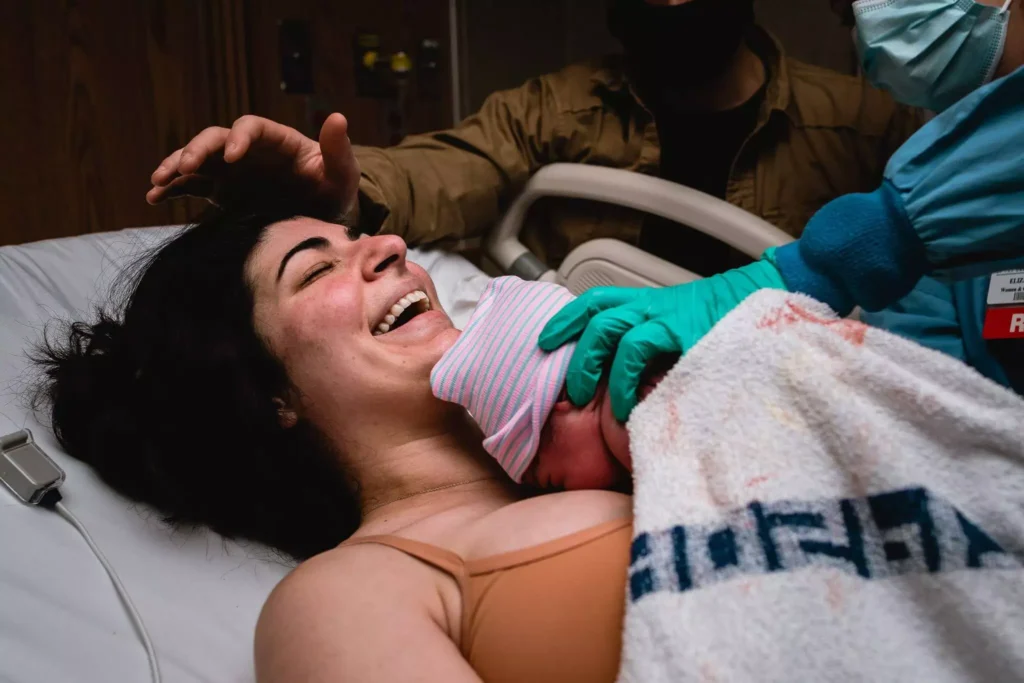

Learn the science of pregnancy and birth to take the mystery of labor away! Understand why you are feeling what you feel, and learn strategies to confidently move through pregnancy and birth!
- 9h+ of Video
- Support Group
- Close Captioning
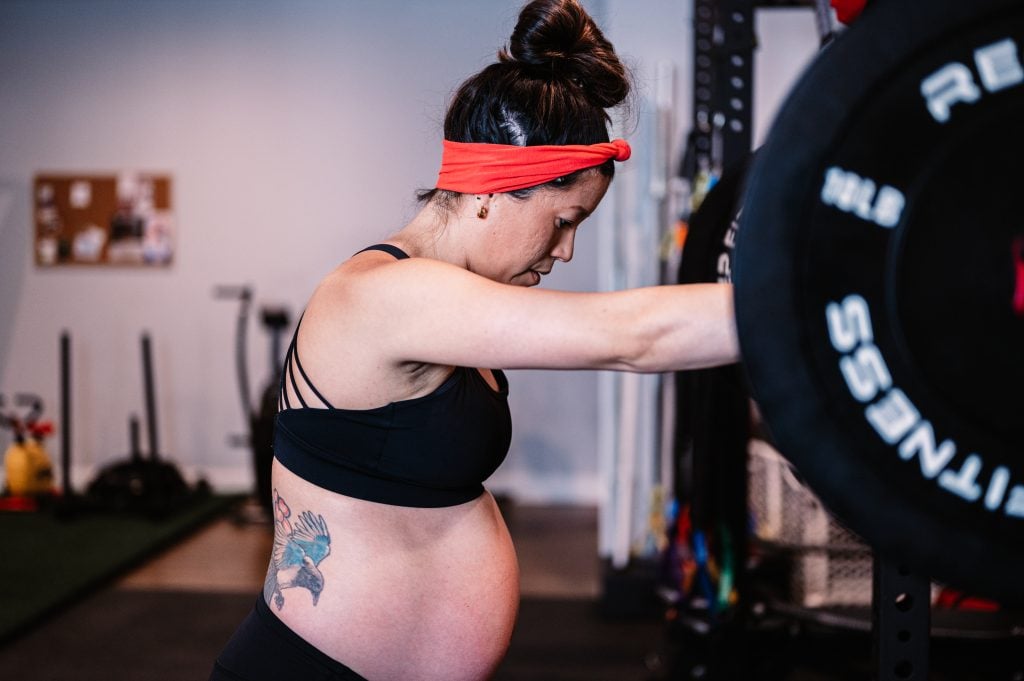

- 5 Workouts/Week
- Gym Workouts
- Self-Paced

Instructor
GINA
Workout on-demand with our prenatal fitness workout videos! Each workout is 30-40 minutes to follow along as you exercise at the same time!
- Birth Prep
- All Trimesters
- Mobility Work

Instructor
GINA
Find comfort and relief from pelvic girdle pain throughout your pregnancy and postpartum period! This program incorporates myofascial sling focused exercises to stabilize across the pelvic girdle joints.
- 3 Weeks
- On Demand Workout Videos to Follow