

Welcome to the MamasteFit Podcast Birth Story Fridays! In this episode, Kelsey shares her memorable experiences with two C-sections, emphasizing the importance of maternal intuition and listening to one’s body. Kelsey, a former gymnast and physical therapist, discusses how her athletic background and CrossFit prepared her for pregnancy. She narrates how listening to her gut lead her to seek medical help at crucial times, leading to the delivery of two healthy boys. The first birth a C-Section at 37 weeks due to decreased fetal movement, and the second at 36 weeks due to a uterine window. Kelsey also sheds light on her battle with postpartum anxiety and depression, underlining the significance of seeking mental health support.
Read Episode Transcript
Roxanne: Welcome to the MamasteFit Podcast, Birth Story Friday. On this episode, we have Kelsey here to share her two birth stories, both of them being C-sections, but something that she really emphasized throughout all of her stories is listening to your mom intuition, listening to your gut and what it’s saying to you. Regardless of the outcome of the birth, she was able to listen to that intuition and left feeling really strong and empowered.
Roxanne: Welcome to the MamasteFit Podcast, Birth Story Fridays. On this episode, we have Kelsey here to share her birth stories. Thank you so much for being here.
Kelsey: Thank you guys for having me. I’m excited to be here and share.
Roxanne: We’re so excited. So let’s dive in. Share about how you prepared for pregnancy and birth.
Kelsey: So for me, a little bit of background will help with context for kind of both pregnancies and births and everything that we have going on. I was an athlete my whole life. I did gymnastics for 20 years, competed at the college level. So going into having children, I was fit. I found CrossFit after gymnastics, and thankfully because of getting into weightlifting in CrossFit, I was actually going into pregnancy the strongest and fittest I’d ever been. Because if you know anything about sports, like gymnastics and dance, like they don’t ever really do weightlifting and that’s why they’re broken all the time- learned that the hard way growing up! But I can confidently say that because of finding CrossFit and weightlifting, I feel like I was probably the best suited for going into a pregnancy because I was strong. I actually had muscle to help myself feel my best during what is a just very uncomfortable time. It’s like it’s inevitable, it’s going to be uncomfortable, but like you guys say, it doesn’t have to be painful, and I certainly give weightlifting credit for that. Not that they’re necessarily did it on purpose, I more so was trying to find something to fill the void of gymnastics, but it ended up being great for my first pregnancy because I’m pretty convinced that because of how strong I was going in, I was able to work out the whole time. I mean, I think I only missed a handful of days, but that’s more because of how sick I was while I was pregnant, which is a whole different thing. But definitely, I’m going to say strength training is what I did, without really knowing it, to prepare best for pregnancy.
Roxanne: Okay, perfect. So when you started preparing for actually getting pregnant, is there anything that you read, or like at the beginning of your pregnancy that you did, to prepare you for birth?
Kelsey: Yeah! So I’m a physical therapist, so there’s some more context here for things I’m going to share. I know enough about the human body to know, like, going in to something that’s going to pretty drastically alter your core and your pelvic floor and everything, I knew that there was some stuff that I could do beforehand just to kind of reinforce the neural connections of your brain to your core and your pelvis and everything.
And so I did my own research on just, okay, well what are productive ways to do that, and a lot of it just coincides with weightlifting. So I try to just do good with staying consistent in the gym, do some prehab kind of stuff, if we’ll call it that. And also just kind of bring intensity on things down. I just knew I was about to enter into a season of life where I know longer needed to be an athlete. I have been my whole life, but I knew going into this, this was going to be a whole new sport, but it did require probably just bringing intensity down, because your body was is going to go through the most intense thing it’s probably ever done.
Roxanne: Yeah, so that totally makes sense. So did you do anything in particular during your pregnancies to like kind of focus on those movements?
Kelsey: Yeah, so kind of during pregnancy I, for my own benefit, but also for clients that I work with, I wanted to do a little bit of, “Alright, what are some things that I feel like I should be doing right now?” Like really just listening to my body. That’s, I think, a perk of being an athlete your whole life, is you’re sometimes a little too aware of everything going on, for better or for worse, which certainly ties into my birth story down the road, which I’m very grateful for.
But during pregnancy, I just tried to listen to my body really. I continued lifting weights. I continued to do things in CrossFit, really until it just didn’t feel like I should be doing it anymore. Because everybody’s body goes in at a different baseline, obviously, and having been a gymnast it was actually wild, like kicking up into a handstand actually felt amazing because it took so much pressure off of my pelvis!
Roxanne: Oh yeah!
Kelsey: But running felt terrible! So I really just tried to listen to my body and tweak and modify. And then just do kind of the gentle core connection kind of exercises, like breathing with my hands on my diaphragm and doing a lot of visualization. Those are some more of the specific things that I did in terms of like physical therapy work.
Roxanne: Okay. Sounds good. So then let’s get into how did you feel at the end of your pregnancy? Was there any like drama at the end of your pregnancy, into your birth?
Kelsey: Yes. So an interesting part of my birth story is I actually have no story of labor.
I am a mom of two boys, one who just turned two and one who is almost five months old. So we were in the two under 2 camp for almost five months.
Roxanne: Oh, bless you.
Kelsey: Yes. And I am a two time C-section delivery mom, and I never went into labor with either of our pregnancies.
But I will say at the end of, or, maybe even backtracking a little bit, I kind of was mentally prepared for it. My mom actually had four C-sections and so the whole time I was like, okay, like, awareness, like this could be my path, but it doesn’t have to be. And I was just always very open. And my pregnancy, again, my first one, other than being sick, which that could be a whole nother conversation in and of itself, but in terms of just the physical side of pregnancy, I felt really good. I didn’t have too much pain, other than with running. And then the closer we got to everything, I was still doing CrossFit and I really was like, “Okay, like I may be able to do this!” My baby was measuring small. My mom had 9 to 10 pound babies and our little boy, our first one was measuring to be like seven, so I’m like, “I could. I could maybe do it. Okay!”
But then, at the end of what was my pregnancy, at 37 weeks, our little, our first little boy, he was always very active. I was convinced that he was trying to break my right rib cage the whole time. And so thankfully his fetal movement was very obvious. But towards the tail end, like 37 weeks, I think it was on the dot, there was just a day where it was a normal day, other than that was one of the few days I woke up and couldn’t go to the gym. I felt way too sick to go, way too tired. I just felt horrible. And then when I got out of the house to go to the office for an hour or two, I just noticed, I was like, “He’s not moving like he normally does.” And again, because- I keep mentioning I was so sick, but it really did alter the way I was thinking about things, like I felt like I couldn’t think clearly enough to really know, is he not moving? But, I just kept it in the back of my mind, kind of went on about my day. And then when I got home, I had like my last breastfeeding class to take online, and I was going to sit down for that. I was like, “I’m just going to lay down and see if I notice anything,” and he still wasn’t really moving that much. Still kept it to myself, waited another hour. and then I finally told my husband.
So it’s probably like one o’clock in the afternoon at this point. And again, we’re at the 37 week mark and things at that point had been looking good, and so we had no reason to worry. But I just told him, I was like, “Hey, I don’t, I just don’t feel like he’s moving much,” and that of course sent off the alarm bells to my husband. He was like, “Just call the OB,” and so that’s what I did. I called and let them know what my morning had looked like, and they right away were like, “Okay, well we’ll meet you at Labor and Delivery,” and I was like, “What?” They were like, “Go to the hospital!” I’m like, “Okay….” And I mean, I was 37 weeks along, but because of how just nauseated I was my entire pregnancy, we didn’t have anything ready. I don’t even think I had a bag packed. So we just kinda hustled together, tried to scrub a few countertops and then get in the car.
And we went and they checked his heart rate right when we got there and his heart rate was okay, but they still wanted to monitor because they were like, “Well, how’s he moving?” I’m like, “Not… it feels like I’m not pregnant.” Like that, I remember telling my husband that in the car on the way to the hospital, I was like, “There are moments today where it feels like I’m not pregnant, and that is weird.”
So we get back into Labor & Delivery. They hook me up to all the monitors and whatnot. And they did notice on the strips, they were like, “Yeah, like, you’re having contractions,” and I was like, “Huh?!” I mean, I, again, like I, I’ve been an athlete my whole life. I’ve had injuries galore, so I’m very aware of what’s going on in my body, but I’ve never had this, and I just thought it was Braxton Hicks. I just thought, “Oh, it’s uncomfortable, it’s tightening, I don’t know.” And when they hooked me up, they were showing me the every four to five minutes, what was happening. And they also noticed that his heart rate would decel if I was in certain positions. So the nurses, for pretty much, I think it was like a day and a half I was in the hospital where they were watching just what my contractions and my positions, and his fetal stats were doing. And just after a day and a half of doing that and seeing a neonatal specialist, they elected that inducing labor was going to be the safest option for him because it was obvious that his environment was no longer safe for some reason. But they still didn’t know why, they couldn’t see anything on an ultrasound, unfortunately.
So we started, I always forget the name of medication, but it starts with a C for softening your cervix.
Roxanne: Was it like a little pill or a tampon looking thing?
Kelsey: It was a pill.
Roxanne: Okay, Cytotec.
Kelsey: That one! They started me on Cytotec. And again, I was having contractions, but they kept checking me and I wasn’t dilating at all. Like I was effaced, but never really- I think I was maybe at one centimeter, was all I was getting. And Cytotec did nothing.
And so after a day of the Cytotec doing its thing, or not really doing its thing, I should say, our OB was like, “Okay, honesty talk here. We may need to look at a C-section. Like it’s not looking like labor is in your son’s best interest.” Because what Cytotec was doing other than dilating me, it was making my contractions stronger so I wasn’t sleeping, and because of that, my husband wasn’t sleeping, ’cause we were like, “Well, are we having a baby today or tomorrow? We don’t really know, and it’s three weeks early.” But, just a lot of questions in the air. And when rubber met the road, our OB just felt most comfortable with getting him out as soon as possible. She did give us the options, I will say. She said, “I’m saying C-section, but if you want to try Pitocin to speed things up, we can try.” But she also was very clear, she was like, “I want you to know that if we try and his stats continued to decel, then it could turn into an emergency C-section situation, versus one that’s just a bit more under control, rather than things spiraling potentially.” And that’s the tricky part of birth, right? I mean, you don’t really ever know, and so you just kind of have to follow your gut.
Which I feel like both of my births were huge in just listening to my gut and kind of feeling crazy for doing it, but then on the tail end being very right. I mean I, yeah, in both births, and we’ll get into the second at some point, but I’m very grateful that I listened and I said something even though I felt crazy.
So yeah, we had, just a heart to heart with OB again about, “Okay, if you were my mom, what would you do? What would you suggest?”
Roxanne: Yeah.
Kelsey: And she said, she was like, “I would do a C-section. Like, it, at this point, I think it’s the safest for both of you.” We also asked my dad, because my mom again had four C-sections. Two of them were emergency, two were planned and scheduled, and my dad very honestly said, “If I could go back and do it all differently, we would just elect it.” It was very scary to be in an emergency situation like they were in. And so that’s what we decided. We just, again, followed our gut and we were like, “Okay, let’s have a baby.”
So after two days of being in a hospital room without a window and not being able to walk around, because again, anytime I would move, they were like, “You can’t move. He’s not happy.” So yeah, after two days of being stuck in bed and still nauseous, and all the things, we delivered via C-section, a healthy baby boy, who just had some low blood sugar issues and a cord wrapped around his neck several times. So that was what ended up being why he was not happy.
And they did say he was very low in my pelvis, and so that kind of makes sense why, if my pelvis wasn’t engaging correctly, I’m thinking like, okay, well if he was stuck, he couldn’t wiggle free. We’ll never know, but that ended up being why they think his fetal movement stopped the way it was. And yeah, him as a newborn was pretty smooth other than low blood sugar for about two days. But because of a C-section, I was in the hospital anyway, so then he was able to be in our room and we got lots of quality time together and it was great.
Roxanne: Yeah! So how was the rest of your postpartum once you got home?
Kelsey: So once we got home, it was obviously a learning curve on, “Oh, you just had major abdominal surgery. Okay!” I’ve had two ankle surgeries before, so I’m familiar with an orthopedic kind of surgery, and the anesthesia like feels and whatnot, but was not prepared for what abdominal surgery recovery feels like. And again, someone who’s athletic and would rather just do everything on her own, I quickly had to ask for lots of help for probably longer than I wanted to. But I thankfully, with the help of PTs that I work with, and like knowledge from you guys, and doing the postpartum recovery program for returning to weightlifting, I was able to have some structure and some guidelines. Because even as a healthcare worker myself, it’s really nice to just have someone else do your programming for you. I don’t know, it’s a weird thing.
Roxanne: Yeah, no, same. Same.
Kelsey: Yeah.
Roxanne: I don’t want to create things, just do it for me. Less work. Yeah, no, I totally get that.
Kelsey: So yeah, but overall I would say recovery was as good as it could have been. And thankfully again, because my mom had four C-sections and so she like even- a little tidbit that maybe this could be helpful to somebody out there that she forgot to tell me of- we were in the hospital hospital and they had taken my catheter out, and I remember they like got me up to do the first pee or whatever, but then I just slept or was nursing a baby and then would go back to sleeping. And I forgot to get up to pee and I was in excruciating pain. Like it hurt so bad and my mom was like, “Oh my gosh, I forgot to tell you! Pee every time you feed your baby, because when your bladder gets really full, it can press on your incision.”
Roxanne: Yes.
Kelsey: And in the early, I would say like week to 10 days, seriously, C-section mamas, just get it into your routine. Like before you feed your baby, go to the bathroom, before you feed your baby, go to the bathroom. And that helps. So, yeah.
Roxanne: Honestly, that’s good for all births because really it could also increase the risk of postpartum hemorrhage if your bladder is full. So it’s pushing on your C-section incision as well, causing more pain. But even if you are having a vaginal birth, it is still uncomfortable holding your bladder, and then it could also lead to heavy bleeding, because your uterus can’t clamp down.
So that’s great advice for, honestly, everyone. But probably C-sections, be more mindful ’cause it’s more painful than if you have a vaginal delivery.
Kelsey: It was something! But fast forward to being home, I guess the C-section recovery part was smooth. I don’t feel like I had any sort of complications. I was able to jump into the return to weightlifting program written by you guys and Kristen Pope who, Kristen Pope is an athlete that we work with, so that was really fun to get to do.
Roxanne: Oh, that’s so fun!
Kelsey: Yeah, it was fun to get to collab a little bit in that way of just like doing programming that like we did, not together, but she did, and then I did it, and getting to be just more informed from you guys and all of your experience.
But then fast forward, I guess to like around the four month mark- and this can, dive into the mental side of things a bit that I am willing to share- I unfortunately was diagnosed with postpartum anxiety and depression, probably more depression than anxiety. And I actually was diagnosed with it at our pediatrician, funny enough, because I went for my six week checkup at the OB and at that point I was marking “fine” for everything. But then between having the baby and four months, or, maybe even moreso two months to four months, when the sleep deprivation starts to add up, and the fatigue adds up and everything, it just, it started to spiral and my personality is one to shove things down. And so I was shoving real hard but just didn’t know it.
And so we were in the pediatrician’s office for our son’s four month checkup and my answers on the sheet that they had handed me in his room, ’cause our pediatrician hands a questionnaire to you when you go for your child’s appointments, ’cause you’re going so frequently. They essentially didn’t let me leave. They were like, “You need to call your OB right now. We just need some verbal confirmation that you’re going to go get seen.” And that was a bit of a shock to me and my husband, mostly my husband, because he was like, “I didn’t know anything was wrong,” and I was sitting in the pediatrician’s office bawling going, “I don’t either!” I mean, it just, it was really sad, I think, for both of us to realize how low I had gotten. But thankfully through the help of both medication, and therapy, which I still go to now because, just because you had it once means that you’re not in the clear every time. So I’ve, over the last two years, I’ve been a regular with my therapist just to be on top of stuff. And I wish I would’ve known more about the postpartum mental health side of things, but I’m thankful for what I know now.
Roxanne: Yeah, and I think that’s something that most pediatricians are doing now for that same reason. It’s like you’re cleared at six weeks, but you could be, you could develop postpartum depression and anxiety for like up to a year postpartum. So that pediatrician visit is kind of vital for not just your baby, but also checking in on you. And like my pediatrician would always give me those little like surveys. And I think one time I scored like higher than I did the previous time and my pediatrician was even like, “How are you doing? Like I was looking at your survey, I just wanna check in with you to make sure like you have support and like you’re doing good.” So I love that your pediatrician is also doing that and that you were able to get the help.
Because I feel like there’s obviously a stigma around mental health in general, but I think that, I hope, I’m hoping that the stigma’s going away because it can, not to be a little Debbie Downer, but like it can be lifesaving. Like postpartum depression can change very quickly and it can lead to people committing suicide, even homicide, and it could literally save lives by being able to identify it early. So I love that you got help, and thank you so much for sharing with us.
Kelsey: I mean, I share because I want for someone else to not have to suffer if they don’t have to. And yeah, I feel like with the mental health things that I went through, I know a lot of people do, but also the two kind of odd deliveries to me is at least what it feels like, like I have had two babies, but I’ve never been in labor. Like our babies were born under, kind of had to like just go off the grid on what I was feeling. And I wish I would’ve heard somebody else go, “This is kind of what decreased fetal movement felt like. And this is what a contraction feels like,” like I just didn’t know. And so, I now know a lot more and yeah, I just hope that any of this can help somebody, so.
Roxanne: Yeah! No, I think that, I mean, that’s why we have these birth stories, because everybody experiences labor differently. Everyone has a different story, and by sharing everyone’s story, like you could hopefully find somebody that is experiencing something similar and make them feel less alone.
So not to like quickly change, but let’s go into your second pregnancy.
Kelsey: Yeah. So pregnancy, round two. About postpartum 10 months-ish with our first, my husband and I were like, “Okay, like we know we want two kids,” and our first was a dream baby- sleeper, eater, you name it. He was so cute and just so sweet. We were like, “Let’s just do it!”
And another thing that I credit to you guys and your programming for is I remember feeling like at the nine month mark postpartum for me, and again, I came into pregnancy with an athletic background, so to each their own, but yeah, for me, at nine months, I remember feeling physically, “Okay, I feel like if I wanted to push it in weightlifting, or hit a hard workout in CrossFit, or you name it, like I feel like I could go back to athletically doing whatever I wanted, which felt really good. I was like, “Okay, like physically we, we can do some stuff!” I still felt, yeah, a little under just because of how malnourished I was during my pregnancy, just with how sick I was. But other than that, like my body felt like, okay, I, I could do things again.
But because my husband and I were like, “You know what, let’s go ahead and try for another,” I decided just to keep doing what I was doing. So I stuck just with kind of basic weightlifting stuff, accessories. I have class pass, so I would do some group fitness here and there, like Pilates and yoga and whatnot. But again, ’cause before the first pregnancy, I wanted to bring the intensity down, I wanted to do the same, going into another one.
So we actually were technically pregnant, but didn’t know it, on our son’s first birthday. And another crazy thing that like I wish I would’ve known but didn’t know was we were in the process of weaning off breastfeeding at the time because my son started to bite me and I didn’t like that. And so I had been pumping for about a month, and me and pumping had never really gotten along great. But then two days before our son turned one, all of a sudden I felt like, what was mastitis. Like it, it felt like it. Hard and painful and horrible. And so I started doing everything I know to do for mastitis. I started trying to pump, I started the hot compress, everything. I did everything I knew to do, and it was just making it worse. So my son’s first birthday, I literally had to just put on the baggiest shirt I own because my boobs were not in a good place. And then a week later I got a positive pregnancy test, so I think that was my milk drying up because I was pregnant, but I don’t know. I’ve never heard of that from anybody else, but that’s just the only thing that I can correlate or put together. So, yeah, that was my experience in finding out we were pregnant with our second.
And I, in my mind thought, “Okay, let’s keep working out, let’s keep doing all the things.” And unfortunately, I was even more sick with our second. But aside from that, around, I wanna say the 23-4-5 marks, somewhere in there, I started experiencing what I remember being contractions with our first. Because I, with our first, I didn’t really know what contractions felt like until we got to the hospital and saw it on the monitor and went, “Oh wow. The woman next door to me is screaming and my line is higher, like, weird.” But it was just odd. I was like, “What is happening?” I’m doing all the same things I was doing before, I am trying to chase after our toddler, and do all the things, and like the only thing that makes these contractions stop is to not do any of those things.
So, we called the OB and they started having me go in every two weeks to check my cervical length via ultrasound because that is an indicator, according to them, of whether or not you could go into preterm labor. if your cervical length is below a certain centimeter line, or above it, they can either 99% guarantee you’re either going to go into labor in the next two weeks, or not. So I started going in at 25 weeks, every two weeks, for cervical length checks because I was having the same issues with just anytime I was trying to move, even do PT stuff, anything more than just being on my feet for 45, 30 minutes at a time. I mean, it was barely nothing. I would just start having that tightening feeling and it was painful and it would come in waves and I was like, “What is happening?”
And so probably around the 26 week mark, I just shut everything down. I was like, “Okay, well if I’m going to listen to my body here, I can’t do things that make me have contractions.” So I stopped working out. I couldn’t go on walks anymore. I had to ask for a lot of help with our toddler. I would take him over to a friend’s house and I would lay on their couch and they would take him on a walk for me. And it just, it was really hard and very confusing. And as someone who’s very active, it was honestly depressing. It was just like, I can’t do anything. I got back into crocheting, a good friend of mine was like, “here’s this for some horizontal activities.” And yeah, for three months it was just horribly confusing.
And then I also just remember having this gut wrenching, not good feeling, kind of like with our first of, “Hey, something’s not right.” It just felt the same. Different in that our baby was moving okay, but it just didn’t feel right, the way that my body was responding to and sort of movement other than standing for a few minutes of a time.
And so fast forward to the 36 week mark. Probably for a month before that, so between 32 and 36, I had a few episodes of like contractions that would happen every four to five minutes for an hour. And at the end of that hour we would call the OB and they would be like, “See if it dies down. If it does, stay home. If it doesn’t, come in.” And that probably happened two or three times. Then on the night before I turned 36- which funny enough was also daylight savings time, so who the heck knows what time it actually was, or what day- but the day before I turned 36 weeks, had another wave of those contractions start. Didn’t feel any different than normal, but the only difference was that they didn’t stop. After about an hour and a half, it was like 11 o’clock at night and we had to call friends to come over ’cause neither of our families live in town, and say, “Hey, can you stay here with our,” at the time, “19 month old while we go to the hospital?”
And so they admitted us and sure enough, monitors said, just like it was with our first, like contractions every four to five minutes, they never stopped. They even tried giving me IVs because they knew because of my nausea I was dehydrated. I can’t drink water when I’m pregnant, that’s, again, a whole nother thing, but, yeah, it’s…
Roxanne: We can dive into that.
Kelsey: Yeah. But we, yeah, they tried starting us on an IV to see if that would slow contractions down, and it didn’t. And so, thankfully the high risk OB with our practice was the one on call that night, and she came in the morning. So the next day after a full night of observing and nothing slowing down, but also me not dilating at all, she was like, “There are typically two reasons why you have what seems like labor happening, but no dilation at all,” and I don’t even think I was effaced either. And she said it was typically because of either decreased fluid, like amniotic fluid, or because of issues with the uterine wall. And so for both of those things, she wanted to get me down to the neonatal specialist, which I remembered them from the first time, I’m like, “Hello, here we are again!” And they checked his fluids and they were fine. But then they checked my uterine wall and I was diagnosed with a uterine window, which was not something that I had ever heard about before. But he showed it to me on the ultrasound and you could see the tissue, and tissue on an ultrasound that is intact will be white, and if it’s not, it will be gray to black. And you could see just like white, white, white, and then there was a space in the white.
So, it was very interesting to see and also kind of shocking. And then he kind of educated me, in that moment that if your uterine wall is actively thinning, your body will contract in response to it, but the contractions make it worse. Which I was like, “Wow, that kind of makes sense what’s been going on for the last three months.” Like, my uterus was like, “No, we can’t do bracing right now. We can’t lift your kid. We can’t go on a long walk.” And it was a very overwhelming moment on the ultrasound table to go, “Oh, like this is what’s been going on,” but also an overwhelming feeling of I’m glad that I was listening. Felt just like our first in that regard. Wow. Just had to be really in tune with what was going on, even though it was confusing for a long time.
Roxanne: Yeah. So a uterine window, sometimes, it’s that uterus thinning that could lead to a uterine rupture.
Kelsey: Yes.
Roxanne: So your uterus completely rupturing. Which is why that is the one risk for VBACs after a C-section is that increases the likelihood of that potentially happening. Not to say it will happen, but in your case it did, so.
Kelsey: Yeah.
Roxanne: That’s good that you went in because the alternative is you stayed home and that window just continued to thin until it ruptured.
Kelsey: Yeah. So it was a very overwhelming moment of relief knowing, okay, there was a reason why everything was going on. But also overwhelm of, okay, we’re having a- oh my headphone just fell out!
Roxanne: You’re good!
Kelsey: But overwhelming, too, because it was like, okay, we’re having a baby today.
Roxanne: Yeah!
Kelsey: And it was also, in the moment, overwhelming, because my husband actually wasn’t even there. He was there picking up our toddler from the friend’s house who stayed with him and then taking him to another house while parents were coming into town.
Roxanne: Oh no! So you found out alone.
Kelsey: Yeah. I did find out alone. He was on the phone, but.
Roxanne: Oh, okay. Okay.
Kelsey: It was still just it was a lot, it was a tidal wave, of all the things.
And so they came up with a plan very quickly. They were like, “Okay, we’re going to give this baby some steroids just to help build his lungs up a little bit because he is a month early.” I also was GBS positive and so they wanted to get antibiotics in my system as well. I would need them for the C-section anyway, but they just wanted to be overly cautious because he was early. And so we got put on the OR for 4:30 in the afternoon and he was born, and sent straight to the NICU, unfortunately.
So that was a journey. But yeah, the birth part of everything, again, I never, I don’t have a labor experience, but I have some interesting, unique…
Roxanne: I mean, that’s still labor.
Kelsey: Yeah.
Roxanne: It’s preterm labor, still counts as labor.
Kelsey: Yeah.
Roxanne: Just not what you imagine.
Kelsey: When clients of mine ask me, “Well, what’s dilating like? What’s labor like?” I’m like, “I don’t know. But I can tell you what a uterine window feels like!” And again, it’s rare. I mean, in doing some research after the fact, I was like, “Oh, it’s,” correct me if I’m wrong, “like 1%.”
Roxanne: Yeah. It’s very… it’s not common.
Kelsey: Yeah, it’s not common.
Roxanne: Which doesn’t make you feel any better.
Kelsey: No, but, but thankfully along the way, and hopefully this has been communicated, but just to say it like, I felt very supported by our healthcare team. Even, I remember sitting in my OB’s office confirming the pregnancy of our second, and she was like, “What are you thinking? Do you wanna try for a VBAC or a C-section? What are your thoughts?” And I just felt very validated by that. I know I’ve heard on y’all’s podcast a lot of stories of women kind of being cornered into stuff, and she was very open. She was like, “I think you’re a great candidate for a VBAC. You’re fit, you’re healthy, and I can refer you to somebody if you want.” That just felt really good. I was like, okay, like, I am validated in what feels right. And my husband and I with our second pregnancy, funny enough, we felt more comfortable with a C-section. And then lo and behold, we would’ve had to have one anyway, so I think there’s something to that mom gut.
Roxanne: Yes.
Kelsey: It’s a thing.
Roxanne: It is, but it’s hard to listen to it.
Kelsey: Yeah.
Roxanne: It’s so hard
Kelsey: Because you feel crazy. You feel a little… I feel all the things, but like no one can see it and everyone just has to trust what I’m saying right now. And, yeah, with both of our babies being born, I’m just really grateful that I had a healthcare team that was supportive, that didn’t think I was crazy for the things I was feeling.
Roxanne: Good!
Kelsey: And that I spoke up when I felt like things didn’t feel right.
Roxanne: Yes. And that’s so, so important, ’cause I feel like that just carries over into motherhood to be able to listen to our guts as well.
So with this one, obviously still like another curve ball thrown in at the end of your pregnancy. How was your postpartum? You had two under two, and two C-sections with a lot of drama.
Kelsey: A lot of drama, man. Our, the grandmothers are like, “Come on, can’t we get like a baby on the day they’re supposed to come?!” because they don’t live here, so they of course had to figure everything out and get into town.
But, postpartum with our second was very different because he was in the NICU. We were very grateful that he was only in the NICU for five days. So we were in under a week, which I’m very grateful for. Only had to be away from him for a night, which again, very grateful for.
But in the theme of speaking up for yourself, something that I’m grateful for because of my mental health struggles the first time- in the first 24 hours of our second I got no skin to skin with him at all. I actually was throwing up during the C-section. I don’t wanna go too much into sickness ’cause that could be a whole nother podcast. But yeah, I was puking during the C-section, and I didn’t even really… I got a picture. I got the picture that I sent to you guys for this episode. But like I didn’t get any time with him at all. And I remembered from the last time how important rest was. So I was like, “Okay, well he’s in the NICU, he’s being taken care of, his dad’s going down there, you need to rest. You need to rest. You need to rest.” And after about 18 hours of that, maybe, so not even a full day, I could just feel myself spiraling mentally. I could feel myself pushing feelings down. I could feel myself doing the things that I was doing, but didn’t know it, mentally, with our first, later on. And one of the nurses came in to give me my medication and check on me and all the things, and I just was like, “Hi, we need to talk,” and I don’t think in my life I’ve ever said anything like that to anyone helping me. But I was like, “I… whatever we’re doing right now is not working and I feel like I need to be with my baby. When can I be with my baby?” And they got me to my baby as soon as I was able to. I had to be able to go use the bathroom, that was the requirement. So as soon as they took that catheter out and they let me stand up, I was, and they wheeled me down in my wheelchair. And as it was actually crazy, as soon as they sat me next to him, I fell asleep. I’m going to cry… And, in that moment, I just was like, “I know this is where I’m supposed to be,” and I’m so glad that I spoke up for myself. I texted my therapist. I was like, “You’d be so proud of me.”
Roxanne: I’m so proud of you!
Kelsey: Yeah. And yeah, and so I spent the NICU time with him the whole time. And that was amazing. So I definitely suggest and recommend to any NICU mamas out there, if what feels right is to sleep, then you sleep. But if it doesn’t feel right, speak up, and they’re there to help you. So yeah.
But had all hands on deck for people taking care of me and taking care of our 19 month old. And it was a group effort between my parents and the in-laws, and just everyone was all hands on deck to take care of me, our baby, and our other baby.
Roxanne: All the babies!
Kelsey: Yeah once we got home, we settled in really well. He struggled to feed a little bit more than our first did, and I think that just has to do with the fact he had a feeding tube for a few days, so he didn’t get to latch until maybe day four. So he really hated latching on my right side for whatever reason, for what felt like way too long. But once we crossed that bridge and met with lactation consultants a few times, we crossed through that and we just have another really sweet boy at home. And I’m very grateful, my husband’s very grateful, and yeah. So it’s chaos. two under 2 is a lot, but it’s also fun all at the same time.
Roxanne: That’s amazing. So how did the rest of your postpartum journey go? You were able to identify yourself kind of spiraling in the immediate postpartum, but you continued to see your therapist, obviously still to this day, and do you find that was still really helpful postpartum?
Kelsey: Yeah, I, we kind of budgeted for it because it is a, it’s an expense. And we planned for it in terms of having childcare for our older boy, that therapy needed to be something that we did intentionally throughout my entire pregnancy, but then very intentionally in the first few weeks postpartum. And I definitely feel like doing that helped so much because we were able to sit with her and I was able to just like word vomit my birth story, and cry, and do all the things so that now I can talk about it with people and not be bawling all the time. And it’s just good to process. Especially if you have any sort of trauma with your births, which, birth is traumatic, I feel like, no matter which way. I mean it’s, yeah, it’s life changing. You’re literally bringing a new person onto planet Earth. It’s a lot. And I know for me, therapy is just one of those things that’s very helpful. So we were very intentional with structuring that in.
We also were very intentional about my husband actually coming with me to my therapy sessions. Because for me, talking about my emotions is exhausting, and when you’re a new mom, you’re exhausted and a big part of taking care of your mental health is making sure that your loved ones are aware of how you’re really feeling. And we just kind of troubleshooted beforehand, in therapy, going, “Yeah, your husband should probably just come with you so he could hear everything so you don’t have to rehash it when you get home because you’re going to be too tired.”
Roxanne: Yeah! Yeah, that makes sense.
Kelsey: So it was actually so sweet.
Roxanne: That’s smart.
Kelsey: Because he would bring our newborn, because again, we went in, I mean, I think at the two week mark. I mean, I was still in the diaper and we were going to therapy. But he would have our newborn on his chest and he was nap trapped while I did all the talking and crying, and he would talk and cry too. And it was just really good.
And I’ve since graduated to going back myself, by myself, I should say. And yeah, still trying to do that consistently when I can.
Roxanne: That’s amazing though that you, like your entire, I feel like, pregnancy- minus the extreme nausea and sickness- you were able to be really in tune with what your body needed, both physically and then in the postpartum, mentally. And I think that’s like a huge testament of how strong of a person you are, and I think that shows that you were willing to be vulnerable and identify, like even if you really wanted that vaginal birth, like maybe you would’ve been like, “Oh, like it’s fine. Baby’s not moving? It’s fine. It’s fine,” because you’re like focused on this one goal. But really like sometimes our body gives us signs. It’s hard to listen to our gut when things are going to happen that’s not the way we might’ve envisioned it, but I feel like it’s shows so much strength to listen to our bodies and actually do what our body needs rather than what we want to do.
So I am so glad you came and shared your entire story with us ’cause I feel like someone else will listen to this and, one, will be feeling their baby not move and might just gaslight themselves into thinking it’s fine, when the whole point of fetal movements and noticing fetal movements is to prevent preventable stillbirths. So we obviously can’t prevent every stillbirth ’cause there are some things that are happening that are beyond our control. But when our babies decrease in their movements, this is like my soapbox, man, if you don’t notice your baby moving like they normally were moving, go in because that is their only way to tell you that something is wrong, by not moving. And if they’re telling you, we have to listen. Even if like you have 49 appointments that you need to do, don’t go to those appointments. Your baby is telling you that something is happening. And you were able to go in and address it. Maybe it did lead to the C-section and some trauma, but your baby is alive and well.
And I hate to be like a Debbie Downer about like, “Your baby is alive. If you didn’t go in, your baby would die.” I’m not saying that, but that is a possible outcome by not listening to our fetal movements. And I’ve been a part of those situations where they’re like, “I haven’t felt my baby move in five days,” and I’m just like, “(gasp) Please, please, please, please…”
Kelsey: Well, and I feel like can also contribute to the mental health side of things because I remember some of my worst thoughts in the weeks of obviously not knowing that I was having intrusive thoughts. It was those, it was, while I was nursing our little boy, I was like, “He could not be here. There’s a chance he could have not made it.” And like obviously because I was unmedicated and all the things that spiraled into more bad things. But yeah, it’s, I kind of sit on that hill too of, it’s really important. Listen to your body.
Roxanne: Yeah. It’s like just, you’re not wasting anyone’s time by going in. They are there regardless of you coming in or not. The nurses are there, the doctors are there, the midwives are there. They are all, they’re getting paid to be there to take care of you. If you do not feel your baby move, or there’s a change even in their movements, like they’re still moving, but maybe not as much, or maybe not as strong- go in. And if they say “Hey, things are fine,” they’re going to monitor you for a while, so account for that time that you’re going to have to be there, but if they’re like, “Hey, your baby is fine, but thank you for coming in because it’s better for you to come in than not.” And I love that you listened to what your body was telling you, and your baby was telling you, and going in.
Kelsey: Yeah, we are grateful too. Felt crazy in the moment.
Roxanne: Yes.
Kelsey: So here to validate anybody who feels crazy.
Roxanne: Yes!
Kelsey: But yeah, it all worked out the way it was supposed to.
Roxanne: Yeah. Both times.
Kelsey: Yep. Both times. And, yeah.
Roxanne: Yeah. I hate to say, “It all works out. Everything happens for a reason,” but sometimes that’s really, it does happen for a reason. You’re having all of those things, and you listen to your body and address them. And I love that you came on and shared this story with us because it’s needed to be shared to the world.
Kelsey: Yes, I know. With both of our births.
Roxanne: I know, we both cried and it was great.
Kelsey: I know it’s crazy like with both births, like at the time I was listening to y’all’s birth stories and just finding a lot of comfort in them, just learning different perspectives and both of my births, I had never heard of either of those things. And I was like, “By golly!”
Roxanne: Yeah.
Kelsey: If someone out there could hear mine and just have had heard it, then they’ll feel less crazy, maybe.
Roxanne: Yes. Yes, though. And like I think that’s the whole, that’s why we do this, is because there’s so many different ways to have a baby and when you feel like yours is different than what you’ve been told your entire life of what birth is, you feel really alone and crazy. Like why? Why was I the only one to have this experience? When you’re not. There are so many other people that probably experience very similar things, maybe not the exact same thing, but like very similar things. And by validating their emotions it makes it seem like they are not crazy. No one, if whatever you are feeling in your body, if you feel that it’s wrong, then go in and get seen. Because you’re not wrong. If something feels wrong, it’s likely wrong. Don’t gaslight yourself.
Kelsey: Your mom gut will not steer you wrong.
Roxanne: Exactly! I love it. And obviously like at the end of every birth story podcast, we ask for if there’s one piece of advice. I feel like I know what your advice will be, but what is your one piece of advice that someone who is maybe going through a similar situation that you are going through, what would it be?
Kelsey: Trust your gut. Trust your mom gut. It is not going to steer you wrong. You are the only one with it, for a reason. It’s because it’s for your baby, and your baby needs you, and needs you alive and well, and all the things. So just, I mean, with all of it really, pregnancy, postpartum, mental health, like just trust your gut. You’re not crazy. Speak up for yourself when you need to. And like you guys say on the podcast all the time, I mean, I’m thankful I had a supportive healthcare team, but if you don’t, permission to find a different one.
Roxanne: Yes, true.
Thank you so much Kelsey, though, for coming on and sharing both of your stories and just sharing your strength and vulnerability throughout all of it, and crying with me during your story, and showing that vulnerability as well.
So thank you so, so much.
Kelsey: Thank you guys for having me and just letting me share. I hope it can be helpful to somebody.
Roxanne: Thank you so much for listening to Kelsey’s birth stories. And the thing that she really emphasized a lot throughout was listening to intuition, listening to our gut because our body is going to tell us what our body and our baby needs. But also emphasizing the importance of seeking help for mental health in the postpartum, for postpartum depression and postpartum anxiety, what we may consider normal may not be normal, and seeking therapy and counseling to be better, could potentially save lives and is really beneficial.
And if you are pregnant or preparing for postpartum and looking for more support, check out our online childbirth education course where we go into the science of labor and birth, as well as our postpartum prep course where we discuss what to expect in the postpartum, as well as signs to look out for mental health, postpartum depression, and postpartum anxiety in that postpartum period.
Both of those courses are available on our website at mamastefit.com. And as a thank you for listening to this entire episode, you can use code STORY10 on any of our courses, to include our childbirth education and postpartum prep, and our fitness programs for pregnancy and postpartum.
Additional Resources
📧 Download our free birth prep circuit guide with six exercises to prepare your body for birth: https://mamastefit.com/freebies/prepare-for-birth-circuit/
📩 Join our free early postpartum recovery course: https://mamastefit.com/freebies/early-postpartum-recovery/
Prenatal Support Courses
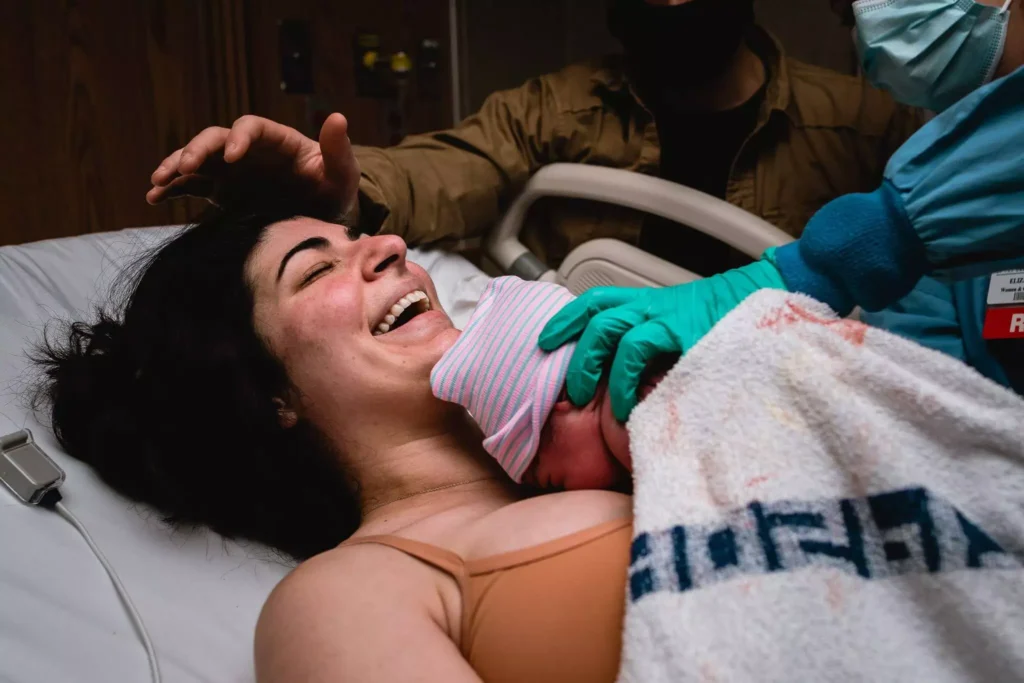

Learn the science of pregnancy and birth to take the mystery of labor away! Understand why you are feeling what you feel, and learn strategies to confidently move through pregnancy and birth!
- 9h+ of Video
- Support Group
- Close Captioning

- 5 Workouts/Week
- Gym Workouts
- Self-Paced

Instructor
GINA
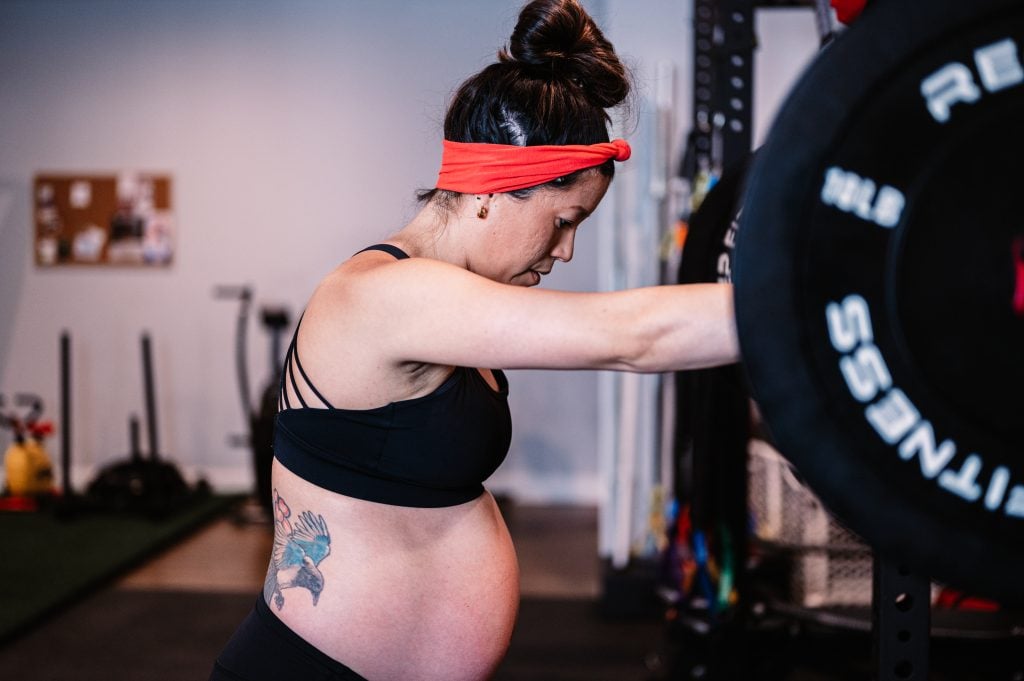
Workout on-demand with our prenatal fitness workout videos! Each workout is 30-40 minutes to follow along as you exercise at the same time!
- Birth Prep
- All Trimesters
- Mobility Work

Instructor
GINA
Find comfort and relief from pelvic girdle pain throughout your pregnancy and postpartum period! This program incorporates myofascial sling focused exercises to stabilize across the pelvic girdle joints.
- 3 Weeks
- On Demand Workout Videos to Follow