Labor Not Progressing? How to Move Past a Late Stall
Birth, Birth Preparation, Labor Stalls
You’re in the thick of labor—eight centimeters dilated or maybe even pushing—and then…nothing. Progress halts, contractions slow, and you find yourself in what we call a late labor stall. It’s one of the most common forms of labor not progressing in the final stretch. If you’re wondering what’s happening and, more importantly, what you can do about it, you’re in the right place.
Late labor stalls can be frustrating and exhausting. But they’re not always a sign that something’s wrong. In many cases, it’s your body—or baby—asking for a little support. Often, these stalls are caused by baby’s positioning or space restrictions within the pelvis. The good news? There are movement techniques and release strategies that can help restore progress naturally and effectively.
Subscribe to our YouTube Channelfor more weekly workouts and educational videos! We publish one new workout video and 2-3 educational videos a week on our channel.
Understanding Late Labor Stalls: When Labor Isn’t Progressing
A late labor stall can occur when you’re well into labor (typically at 8+ cm dilation) or even during the pushing phase, but progress suddenly slows or stops. This might be due to baby’s head not aligning properly with the cervix, or because of tension in the pelvic floor preventing baby from descending.
Rather than jump straight to medical interventions, consider trying these movement-based strategies to help baby rotate, descend, and get labor back on track.
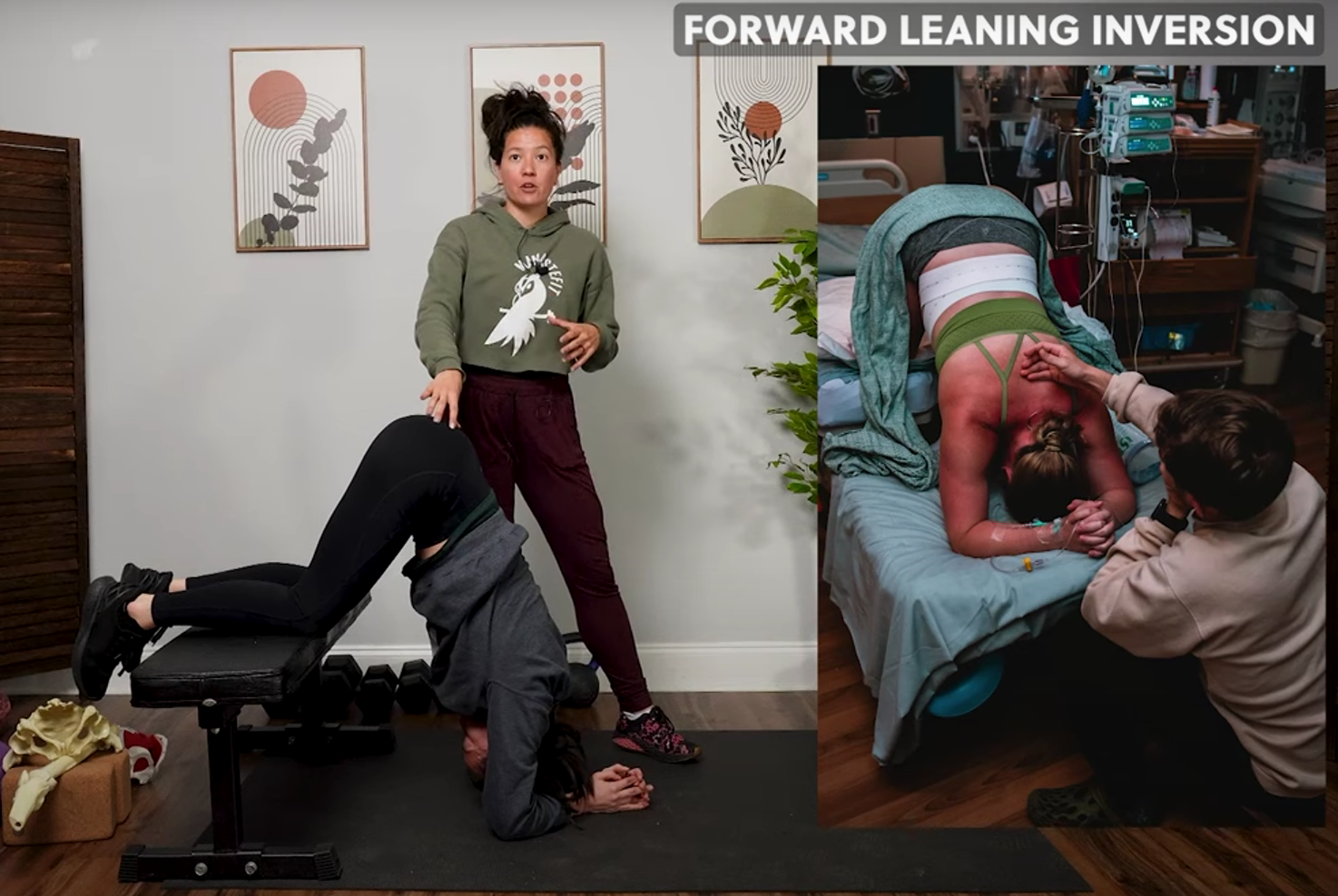
Sometimes, baby just needs a little room—or a change in head position—to get things moving again. Inversions use gravity to create space in the pelvis and encourage baby to reposition.
This technique involves placing your knees on an elevated surface (like a couch or bed) and your hands on the floor. During a contraction, hold this position and breathe deeply. You might feel stretching in the sacral area or round ligaments. Hold through two to three contractions or until you feel a shift in labor.
Puppy Pose
This gentler inversion can be easier to maintain during late labor. With chest and knees on the same surface, elevate the hips slightly and hold through contractions. You can return to tabletop in between or stay in position if comfortable.
2. Release Pelvic Floor Tension with Jiggling
Tension in the pelvic floor or glutes can restrict baby’s descent. Gentle jiggling can release this tension and encourage relaxation.
Using a rebozo, bed sheet, or fabric, drape it across the buttocks and gently jiggle to stimulate the fascial layers, release endorphins, and help open the pelvic space. This can be done during or between contractions—whatever feels best to the birthing person.
The sacrotuberous ligament connects the sacrum to the pelvis and plays a role in pelvic mobility. Massaging between the tailbone and sitz bone—using hands or a massage ball—can release tension, improve sacral movement, relieve pain, and create more space in the lower pelvis.
4. Create More Space with Hip Shifts
Hip shifts help align the pelvis and provide baby with more room to rotate and descend. Here are a few effective variations:
Partner-Supported Hip Shift
With the laboring person on their side, the partner supports one knee in a 90-degree angle. Gently push the knee back to shift the hip. This stretches the deep glutes and helps release tension. Alternate between contractions and add jiggling as needed.
Tabletop Hip Shift
Place one knee on a yoga block or pillow, then shift weight toward the elevated hip. This encourages asymmetry in the pelvis, opening space for baby to rotate. A great option for solo movement.
Half Lunge
This dynamic position—one leg forward, one back—uses movement to help dislodge baby from a stuck position. Rocking diagonally or shifting weight can increase space. Add sacral counterpressure or jiggling between contractions for relaxation and support.
If nothing else has worked, the side-lying release from Spinning Babies can be a powerful final tool. It creates space in the lower pelvis and encourages baby to finish rotating under the pubic bone.
Lay on your side near the edge of the bed, with the top leg dropped off the edge. Hold this position for three contractions per side. For added benefit, reach the top arm overhead for a lat stretch, or apply gentle downward pressure on the pelvis to enhance space and relaxation.
Preventing Late Labor Stalls Before They Happen
While these techniques are incredibly helpful during labor, you can also take steps during pregnancy to prevent late labor stalls altogether.
Incorporate Pelvis-Opening Movements Prenatally
Single-leg exercises like lunges and step-ups, when done with mindful rotation, help create space in the pelvis. Try:
Glute-focused lunges: Bring your belly closer to your thigh on the descent to stretch the glutes, then open the hips on the rise.
Bulgarian split squats with rotation
Rotational step-ups
These moves help lengthen and strengthen the pelvic floor, optimize baby’s position, and prepare your body for labor.
Late labor stalls can be disheartening—but with the right tools, you can support your body and your baby through it. By learning to recognize the signs and respond with intention, you’ll feel more empowered and in control of your birth experience. If you want more daily workouts to support a strong pregnancy as you prepare for birth, join our online prenatal fitness programs!
If you found this helpful, don’t forget to subscribe to our YouTube channel for more insights into the science of birth—and how you can prepare for a smoother, more confident journey.
Learn the science of pregnancy and birth to take the mystery of labor away! Understand why you are feeling what you feel, and learn strategies to confidently move through pregnancy and birth!
Learn the science of pregnancy and birth to take the mystery of labor away! Understand why you are feeling what you feel, and learn strategies to confidently move through pregnancy and birth!
Find comfort and relief from pelvic girdle pain throughout your pregnancy and postpartum period! This program incorporates myofascial sling focused exercises to stabilize across the pelvic girdle joints.