

Welcome to the MamasteFit Podcast Birth Story Fridays. In this episode, Gina and Roxanne are joined by Meagan, co-founder of VBAC Link. Meagan shares her inspiring journey through three births: two C-sections followed by a successful VBAC at home. She discusses the challenges, doubts, and ultimate triumph that led her to become a doula and co-found VBAC Link, a resource to educate other moms around the world. The episode delves into the importance of education, provider support, and community for parents exploring VBAC and repeat C-Section options.
Read Episode Transcript
[00:00:00] Gina: Welcome to the MamasteFit Podcast Birth Story Friday. In this episode, we have Meagan from VBAC Link, who’s going to be sharing her three birth stories. Meagan’s first two births were C sections, and then she went on to have a VBAC at a freestanding birth center in Utah. And so she has a really amazing story, VBAC Link is a wonderful resource for you, and we’re really glad to have Meagan on the podcast today.
[00:01:13] Gina: Welcome to the MamasteFit Podcast, Birth Story Friday. In this episode, we have Meagan, one of the founders of The VBAC Link here to share her three birth stories. Meagan had two C sections and then she had a VBAC, after two C sections, in a birth center. So thanks so much for being here, Meagan.
[00:01:29] Meagan: Hey, thank you for having me!
[00:01:32] Meagan: Obviously VBAC, with what I do for a living, is very passionate, and I’m just honored to be able to share my VBAC story. I love sharing my story. In fact, I was told the other day, I was trying to figure out when I should share my son’s birth story on his birthday podcast. And they said, “No, you should definitely share it. Don’t ever stop sharing your story.” And I thought, okay, you’re right. I shouldn’t. I shouldn’t stop sharing my story. And I think that’s how all of us are. We really shouldn’t stop sharing our stories.
[00:02:00] Gina: Absolutely. I always wonder if we should like re record our birth stories now that it’s been, to see how, their perspectives on him have changed over the years.
[00:02:09] Gina: But I do think, listening to other people’s birth stories and hearing their stories and then sharing my own story, it just feels like really empowering. Like it kind of normalizes the experience and all of the crazy, but also normal things that could happen during your birth, I think just really helps folks navigate this phase of their life.
[00:02:27] Roxanne: Yeah!
[00:02:28] Meagan: Yeah, absolutely. And I think that when I do share my story, along with a lot of people who share their VBAC stories, people just look at you and think, “Wait, what? That’s a thing? You can have a vaginal birth after one Cesarean, let alone two?” And I think, like you said, like the more we tell, the more we tell our stories, the more we normalize it and help people know that it really is an option.
[00:02:51] Gina: Absolutely. So let’s start with your first pregnancy. How were you preparing for birth and then how did that birth go? And then we’ll just kind of move through all three.
[00:03:02] Meagan: Yeah. So first pregnancy was… Wow. It was great. I loved having my baby inside of me and I loved being pregnant. I was so fortunate I didn’t get sick or, you know, I just had a really great pregnancy.
[00:03:17] Meagan: But when it came to preparing, I was young, I was naive, I downloaded an app and I kind of just went along with that app and let the app tell me what I needed to know, if I’m being super honest. It wasn’t great, but every week it, you know, told me what the size of my baby was and what to expect that week. And sometimes I would, you know, I’d get those things and sometimes I wouldn’t, but I just kind of went along with that.
[00:03:45] Meagan: And at 39 weeks, I experienced PROM, which is premature rupture of membranes, meaning my water broke, and nothing was really happening. But I was excited, and my doctor told me at my prenatals that if my water broke, I had to go straight to the hospital.
[00:04:04] Meagan: So, that’s just what I did. I went straight to the hospital, and I was starting to contract a little bit, and about 12 hours into my labor, I was contracting enough to get to 3 centimeters, but my provider told me that I wasn’t progressing fast enough and that I probably wasn’t going to. And that was really hard for me to hear that my body wasn’t going to do it. And I just didn’t have the education along the way to know that was actually very normal 12 hours into labor, especially with contractions not starting for a little while was very normal to be at three centimeters and 80 percent effaced. So I just said, “Okay….” and before I knew it, I was being wheeled down to the OR for a C section.
[00:04:53] Meagan: And, that was just really it. It was just like, “You can’t do this. We have to do this.” And so I went in and I had a C section and it was hard. It was really, hard for me to grasp what was happening and I remember laying there thinking, after I heard my baby cry, I remember thinking to myself, “Cry. You should be crying right now, cry.” But I wasn’t. I was just there in the space. And it was just a weird, really weird disconnect. And after I got into the, you know, room, back with my baby, holding my baby, and I remember seeing people in my room holding my baby, and then I’d fall back asleep and I’d wake back up and someone else was holding my baby.
[00:05:40] Meagan: And it just kind of would repeat. I was just in and I was out. I was really tired. I was very swollen just from all the fluids. And you know, C section, and all the things. And I remember leaving that birth so happy that I had my baby, but just feeling unsatisfied, which a lot of people thought, “How ungrateful are you? Like that you just have this beautiful baby, but you’re unsatisfied.” And it was just hard for me to communicate that to people that it just wasn’t what I expected or what I wanted. And I wanted something different.
[00:06:19] Meagan: And so I started researching my options, definitely wanted to educate myself better. So I started educating and learning more about my options and learned that VBAC was possible.
[00:06:32] Meagan: And so I fell pregnant again and I went to my doctor and I said, “Hey, do you support VBAC?” And he was like, “Yeah, totally!” I was like, “Great, fantastic! Then we’re good.” And I would keep reading and I was listening to The Birth Hour and all these stories to just build me up. And at 36 weeks, I was like, “I want to hire a doula.” And my husband said, “No, we’re not doing that.” I said, “Well, why?” And he said, “I don’t want to be replaced. It’s just not, it’s not what I want.” And he’s like, “I don’t want to spend a lot of money.” At the time we were just, you know, surviving off of, those little jobs before we decided what we wanted to do for our careers. And so I said, “Okay.”
[00:07:17] Meagan: So he went outta town at 38 weeks and my water broke again.
[00:07:23] Gina: Oh, I thought you were gonna say you hired a doula!
[00:07:27] Meagan: I should have hired a doula. I was like, “Listen, if you’re gonna go outta town for work, I’m hiring a doula!”
[00:07:32] Meagan: My water broke, and I had my cousin, who was my cheerleader, who was in my corner, and she believed in me. She was, like, essentially my doula, which we know doulas carry more education than just friends or cousins, but she was my cheerleader. And so I did bring her on, as long as possible. And she was just excited. And we were waiting for my husband to get back in town. And my husband got back in town and I really wasn’t doing much. I was contracting, I don’t know, every once in a while, every 15, 20 minutes, for 10 seconds, so it was like nothing. Enough to be like, “Am I cramping or am I not cramping?” type of a thing.
[00:08:12] Meagan: And so my cousin left and my mom came over and between her and my husband, they were just like, “We gotta go to the hospital, I don’t know what you’re doing, why are you laboring here?” I’m like, “I’m hardly even laboring!” But, I kind of got pressured, and I went to the hospital and when I got to the hospital, my nurse was just amazing and I found out that she was actually a doula. So when I got in there, she was just so loving and did counter pressure and was working with positions and my husband just fell asleep on the couch. He was exhausted. He had all the hype of getting home because he didn’t want to miss his baby’s birth and he just crashed. It was like three in the morning, so he was kind of crashing on the couch, and she was helping me walk through things, getting my head in a better space.
[00:08:57] Meagan: And after 18 hours, new shift change, new nurse, and everybody, you know, was different. The environment had changed. It was very negative. It was very much, “Why are you here doing this? We should have a C section.” And, I was feeling much, very much in a corner. And I told my husband, “I don’t want to have a C section. I just need more time. My body’s hardly contracting.” They refused me Pitocin, which, who begs for Pitocin? But I was begging. I was really just like, “Please, give me Pitocin. Help me get this labor going. If you won’t allow,” as I quote, “allow me, or let me keep going.” And they just wouldn’t. And unfortunately, my provider had a conversation with my husband that scared him and he said, “Let’s just have a C section. Let’s just go have our baby.” And it was hard. It was really hard.
[00:09:56] Meagan: I never felt a contraction after that moment. I asked for one hour and never felt a contraction again. I think just my body went into fight or flight mode. Everything clamped up. And I walked down to the OR for the second time. First time I was wheeled down, this time I walked down. And I got a spinal and they said, “Okay, this is going to be just like last time.” And so I was there, and my husband, as they were starting, my husband said, “Hey, wait, she would like to watch this,” which was crazy to me that he remembered that after so long. Because I told him if I had a C section, I want to be part of that birth. I really want to see it and just not just be laying there and not talked to you. And so they did.
[00:10:41] Meagan: They got me a mirror and I watched my C section. Which definitely I would say is probably not something for everyone, but it for me was absolutely healing because they were talking to me. “Meagan, this is what we are doing. This is what you’re going to experience next. Get ready. Your baby is coming out.” And it was this weird healing experience. Not what I wanted, but I found it so healing to be really involved in my birth and being able to see it.
[00:11:14] Meagan: And after I had my baby, I was in the dark recovery room and I was nursing my baby. I definitely felt more connected in a weird way with them, versus the first time. But I couldn’t get my mind off of becoming a doula. It was just the weirdest thing. All I could do is Google “how to become a doula” as I’m sitting there breastfeeding my little tiny baby. And as I was reading, everything inside of me was just like on fire. You know when you almost get pulled over and you have that adrenaline going through you? It was like that, but in a positive way. Not a, “Oh crap, I almost just got pulled over!” It was my body screaming at me, “This is what you should do.” And I couldn’t stop talking about it, and my husband was like, “Wow, just register!”
[00:12:01] Meagan: So I registered to become a doula before I even left the hospital after my second C section. And after I became a doula, I feel like my passion and drive for advocating for people to not have the experience that I had because I was so pushed into a corner and fear was used against us, I just wanted people to know their options and to feel that love and support because when my nurse that was a doula left and things shifted, it wasn’t the best experience. And I just wanted to try and help anyone to have a better experience if at all possible, but then also help them avoid unnecessary Cesareans, which I believe that I had two of those unnecessary C sections.
[00:12:47] Meagan: So I became a doula, and was very heavy into ICAN and the birth world, and that’s when I met my, the other co founder of the VBAC link, Julie, who had also had a VBAC, and she just had this really fun, spunky energy. And one day, out of the blue, she called me and said, “Hey, we should start this thing. Let’s call it the Utah VBAC Link.” And I was like, “Okay, cool!” And actually I should go back, we, she watched me through my, I should tell my story, she watched me through this journey, go through my VBAC. I forget it actually happened after. So going back, she watched, she was watching me go through this and she was like, “Meagan, you’ve got this!” And she started being my cheerleader, which I loved, and I just got all these cheerleaders in the doula world.
[00:13:38] Meagan: And I got pregnant and I was like, “I’ve got to do something different.” I had interviewed so many providers, 12 to be exact, which is kind of scenes unreal, but, I really wanted to find that provider that was really gonna believe in my own body’s ability and believe me, trust in me. Because I would go to some providers and they’d be like, “Oh yeah, your provider’s probably right. You really probably can’t have a baby. Your pelvis really probably is too small, or your cervix can’t dilate.” And I thought just, to me, it wasn’t the provider that I wanted.
[00:14:12] Meagan: And so finally I found this provider and he was amazing. He’s like, “Yeah, you just never were given a chance. You’ve got this. We can do this.” And I went through 24 weeks of pregnancy with him and something inside of me, my “momtuition” said, “Change.” Which did not make any sense to me at all, because I was with my supportive provider. And everybody in the VBAC world, at this point he had taken off for VBAC, everyone was like, “He is THE doc in Utah to do a VBAC.” And so me wanting to change didn’t make a lot of sense, but I wanted to maybe change with my second. And I kind of felt this commitment to him. Like I had been with him this whole time. I shouldn’t change. I’ll just stay. He said he’d support me and then, you know, look what unfolded.
[00:15:07] Meagan: So I decided that I was going to follow my gut. And I started kind of browsing. the option of out of hospital birth. And I attended an out of hospital birth on Christmas Eve as a doula, and this midwife just blew me away. And I felt so bad because I was attending this birth but I was in my head like, “Oh my gosh, this is who I need to be with.” I wasn’t in that space. And so I just kind of pulled her off to the side and said, “Hey, can we talk about this after the new year? I really want to get back to this birth in my head, but I’m really interested.” She said yes.
[00:15:43] Meagan: So, we continued, had a beautiful birth, and I went after the new year, and everything that I said to her, I just asked her all the open ended questions. What are your thoughts on VBAC? With being out of hospital, what would happen if things were to go awry? Or what would the backup plan be? What would make you want to transfer me? All those really big questions, but in open ended, versus, do you support VBAC? You know, I wanted to know her thoughts, her plans, her views. And everything just rang true. This was where I needed to be.
[00:16:16] Meagan: And so I started care with her at 24 weeks, and it was amazing. Every single time I would get on the internet, I would have naysayers, “Don’t do that!” “It’s not good!” “It’s not safe.” And I’d go to her, and she’d bring me back in. Even being a doula, I knew the facts, I knew the evidence. But then you see this world of social media and they tend to pull you away. They, can make you doubt, right? These forums. And so I would doubt and go into her space and she would bring me back in and rebuild my confidence in myself.
[00:16:55] Meagan: And so, yeah, so at 40 weeks 5 days, which is the longest I had been pregnant, my water broke again. So they say 10 percent of people, their water breaks and nothing happens, that they have PROM, but I am 3 for 3, so apparently I’m high up in that percentage.
[00:17:15] Meagan: So my water broke and contractions did kind of start, but very slow. And I immediately knew my baby was posterior. I could feel it. I just, it was all in my back. I could feel everything up front was really swishy. There wasn’t a back there. And so we started getting to work. We started doing all the rotations and the pelvic, you know, the asynclitic movements and really trying to rotate and do all the things. And finally, 24 hours later, labor kind of picked up and my provider’s like, “Yeah, come in, let’s check you.” and when she checked me, she didn’t wanna tell me what it was, which made me kind of nervous that maybe I wasn’t very far along. But she said, “You know, I think we should stay.” So I was like, “Okay, I must be along enough to stay.” (Sorry, my dog is barking.)
[00:18:10] Meagan: And so we went upstairs and I had this whole new energy. I just was so excited. And my midwife, down the hall, she said, “I know you want to know. I’m just gonna flash you the number,” and she flashed 4. Which in a lot of people’s minds, 24 hours in, 4 centimeters might not feel like a lot, but I had never progressed past 3. So it was a whole new world for me, and I was like, “Yes! I have got this!”
[00:18:38] Meagan: And so I just kept going and kept going, and again, my baby was kind of in that posterior position, so we had to work, and we had to work. And hours later, I was checked one more time, and she was like, “You’re 6 centimeters, you’re doing this! You’re gonna do this!” And I was like, “Okay, but I don’t know if I can do this anymore!”
[00:18:57] Meagan: I was so tired and just really had a lot of back pain, you know? And, you know, my team just kind of just kept me going and we would move those positions. And I was on the toilet and my midwife checked me and she was like, “Huh…” and was kind of hemming and hawing, and was like, ” That’s weird.” And then all of a sudden she just stood up, walked away. And I was like, “Wait, what is happening?” And my midwife comes back and she’s like, “Come over here and sit on this chair.” There’s like a birth stool chair and she’s like, “You’re gonna have a baby right now.” And I was like, “What?!” I don’t even know. I didn’t believe. I couldn’t believe that was going to happen.
[00:19:39] Meagan: And she was like, “Yeah, you’re gonna have a baby. Come over here. Sit down. Let’s do this.” And I was like, “Okay.” So all my doulas, because I, at that time I was a doula, I had a really long labor, it’s 42 hours in, like very long, so I had lots of shifting, and no one wanted to leave because I was right there. And so everyone just circled around me, my husband got up behind me, and she was like, “We’re gonna do this, you are going to birth your baby right now.”
[00:20:07] Meagan: And it’s so weird because I’d seen so many people as a doula have the same experience and I knew I wanted it and I knew I could, but being in that very moment was so surreal. I just could not believe it was happening. And so I pushed twice and my little guy’s head came out. Twice! After being told by so many providers that my pelvis would be too small, I would never get a baby out, and going to 41 weeks 5 days, versus having a baby at 39 and 38. So, it was like so exciting and she said, “Reach down and grab your baby, Meagan.”
[00:20:43] Meagan: And I just remember reaching down and following his squishy little head just to his shoulders and I just pulled him out and put him up on my chest and all I could say was, “I did it! I did it! I did it!” Over and over again. And everybody was just bawling, my husband was bawling, he was like, “I can’t believe it, I’m so proud of you!” it was just one of those huge moments in not only my life, but even my doula career.
[00:21:10] Meagan: And so this is where, going back, Julie, this is where The VBAC Link started. Based off of these experiences, Julie’s VBAC, and this triumphant VBAC after two C sections that so many people told me I couldn’t do. And I think that’s the hardest part about VBAC, is so many people are doubtful.
[00:21:29] Meagan: And so we started this Utah VBAC link, and we were just like, let’s educate, let’s help Utah have a lower Cesarean rate. And started a course, and started educating, and out of nowhere, she said, let’s start a podcast. You ladies will know it takes a lot of time. And I was like, “No, that’s going to be like a lot of time.” And she’s “No, it won’t. No time at all!”
[00:21:57] Gina: It’s a lot of time!
[00:22:00] Roxanne: Podcasts are pieces of cake. What are you talking about? You just show up and record.
[00:22:04] Meagan: Literally she’s like, “Watch! Let’s download this app.” And so we download this app, and she’s like, “It’s going to be great.” She edits it. She’s like, “See, it took a half hour!” And I’m like, “Okay, cool. Sure. Let’s do it.” So we started it and we wanted people to have what we maybe didn’t have during our VBAC journeys is these stories of, you know, possibility and encouragement and also relation. I think there were so many times listening as I was searching for stories when I was pregnant that I just wanted someone to relate to. Okay, that was me. I was told that same thing. Or, my water broke just like theirs. Look, they did it! And we wanted to create that space.
[00:22:49] Meagan: And it definitely does not take 30 minutes to record and edit and post an episode by all means. But, we started it, and it has just been the best thing that could have really happened in my doula career is starting this podcast and hearing all of these stories from women all over the world. You’ll share their encouragement for people.
[00:23:15] Gina: No, it’s, I mean, I love your guys’ podcast. We’ve been on it before. And I definitely, I think I was one of the first students in your like VBAC Link Doula Course. It was like on Zoom. You guys were in like a tiny classroom. I think you had people there too. It was super like ratchet.
[00:23:33] Meagan: It was horrible! Horrible! Because we didn’t know what we were doing. We just were going to create this manual and then we’re going to do this course. So we wanted to you know, do the online thing. It was so bad.
[00:23:47] Gina: But it was so helpful for me because I’ve only had vaginal births. And at that time I was a newer doula. I think I’d only been a doula for about like a year or so when I took your all’s course. And I think I had only supported like maybe one or two C sections, and one or two VBACs. And so for me, it was like really helpful to have not only people who have gone through both a Caesarean birth and then a VBAC, but then your experience as doulas, supporting folks who had VBACs was, like, super beneficial for me, especially as a new doula when it was such a new type of experience. It wasn’t something that I had gone through.
[00:24:26] Gina: But I definitely have, we definitely have a lot of folks that message us with similar stories to yours, where they were told my pelvis is too small. My body just can’t do it. And it always is so frustrating for me. And I’m sure it’s like really frustrating for you too, I’m sure you guys receive tons of those DMs as well, where that’s a really bold, statement to make.
[00:24:53] Roxanne: Like how do you know?
[00:24:53] Gina: Listening to your first story of like, “You’ve been in labor for 12 hours and you’re still three centimeters, you’re just never going to do it.” And then for someone to have the audacity to be like, “It’s because your pelvis is too small.” like, how did that…?
[00:25:06] Roxanne: How is that related?
[00:25:07] Gina: What? This had nothing to do with whether or not the baby is going to fit through the pelvis. This had more to do with your lack of patience. And then instead of taking ownership to be like, “Hey, I contributed towards this problem.” It was like, “It’s your fault actually. Cause your pelvis is just teeny tiny. And you just can’t, your body just doesn’t know how to do it.” And I’m like, what?! How did you get to that conclusion? I would love to know this thought process of yours. Cause that is bold. And that is that is some confidence that I don’t have, oh my gosh.
[00:25:45] Gina: I’m sure you guys get tons of messages like that too. And it just breaks my heart. And I’m like, why don’t… what? what do you mean you, you… Ugh! I’m out of words now.
[00:25:59] Roxanne: Speechless.
[00:26:00] Meagan: Well, because it is! It’s infuriating. It’s heartbreaking.
[00:26:06] Meagan: As a mom who was told with my first, because the first one it was like, “Yeah, like baby might not be doing well, and it’s been too long, your cervix isn’t dilating and you just doesn’t know how to do it.” You know, that immediate doubt that came over my body and my whole self, really, and my ability to do it. I didn’t have, it wasn’t like, “Hey, you just may need some more time. This is normal. Let’s try some things.” It was, “You don’t know how. You are not doing this. Your pelvis is too small.” You know?
[00:26:40] Meagan: And then after, in my second C section, I didn’t share this, but, he, when he went in, he said, “Oh my gosh.” And I said, “What?” And he said, “I’m so glad you didn’t VBAC.” And I said, “Okay…” And he said, “You for sure would have ruptured.” He said those words, “You for sure would have ruptured.” Meaning my uterus, I would have experienced a uterine rupture, which also was seemed very bold to me. And unfortunately it was a statement that stuck with me even though I knew the small chances of uterine rupture, really less than 1 percent at that point, it stuck with me with my VBAC baby. Those words that are said, those bold statements that are being told and put on documents with our name on them, they stick with us. And that’s what breaks my heart because we start believing them.
[00:27:36] Gina: Yeah, I definitely think that they’re, like, I’ve definitely been a part of C sections that I truly felt were necessary, where we had reached a point in the birth where it was like they could keep going, but it was not going to, it was probably not going to end well, and there was going to be some complications, and it was probably going to turn into an emergency situation.
[00:27:56] Gina: I’m glad to feel like I haven’t been a part of a C section that I felt was, like, unnecessary, or like someone just being very bold and impatient. Like I do feel like, I would think like most of the ones that I’ve been a part of, like when the C section was called, yeah, this was a good choice. But it was like after days or like a really long period of time of trying. And at no point was anybody like, “It’s because you suck.” Like that’s really shitty to tell somebody who’s in a really vulnerable situation.
[00:28:28] Roxanne: Especially after the shortest period, like how many people have their babies in less than 12 hours?
[00:28:35] Meagan: Very little.
[00:28:36] Roxanne: I have had one baby less than 12 hours, and it was 11 hours.
[00:28:42] Gina: Yeah.
[00:28:43] Meagan: And it probably wasn’t your first, right?
[00:28:45] Roxanne: Yeah. And it was my second. So, Gina, I don’t even think you’ve had…
[00:28:50] Gina: No, I have always come close to 24 hours. But I cannot believe that you were 12 hours and someone was like, “It’s just not gonna happen.”
[00:28:58] Roxanne: Did he have a dinner party he needed to go to? What was happening?
[00:29:03] Meagan: I know. I know, me either. And I think after- so I got my op reports and I suggest anyone who’s had a C section, if you are wanting to explore the options for VBAC, please get your op reports. It is so good to know what they said, whether or not it’s even true or not, it’s good to know what’s on your op reports.
[00:29:24] Meagan: But as I was looking at my op reports when I was getting ready to go interview all these providers, I crumbled, and I was so mad, and my husband said, “Listen, we didn’t know what we didn’t know. We made choices based off of the information that was given. Yes, you know, now looking over with your information and your education that you have, that these probably weren’t necessary and that’s frustrating. But, we have to move on.” And that was really difficult.
[00:29:56] Meagan: It was very difficult to know that those two things that happened, those two births that happened really weren’t necessary. And like Gina said, I have definitely seen necessary Cesareans as well. And we’re grateful for Cesarean. We are not anti Cesarean. I’m not anti Cesarean. But I don’t love when things are happening like this, and it’s happening too often.
[00:30:21] Gina: I definitely agree that unnecessary C sections are not… because there’s so much impact on future births when you have one C section, it can impact fertility in a future birth, it can impact your birth options in a future birth, there’s so many things that it can impact that it’s not a light decision to make. And so absolutely, if it’s a necessary medical need, 100%, I am fully supportive of it. But it’s when it’s like, “We just don’t feel like waiting around anymore,” and I know these stories happen, they happen to you, they happen to so many people out there, it’s just really frustrating to know that they happen.
[00:31:05] Gina: But what would you recommend to somebody who, maybe had an unnecessary C section, or one that they felt wasn’t necessary? And like, how would you, what would you recommend to them if they were like, “I really want to explore my options. I’m not sure if I want to have a VBAC, maybe I want to have a repeat C section.” Cause, you know, VBAC is not the best choice for everybody, like some folks just don’t want to try that route, and I think that’s fine too, and they should feel supported in that. What would you recommend, and I know that’s, this is probably like a whole course of information, but.
[00:31:37] Roxanne: If you could choose one piece of advice to give somebody, what would that be?
[00:31:41] Meagan: Yeah, so when you’re exploring, either a C section or a VBAC, you know, I think getting the information on both.
[00:31:50] Meagan: Because so often out there, we’re getting all the negative on VBAC, we’re talking about uterine rupture specifically, it’s very big, and very scary word. So, sometimes we’re getting so heavily educated on just VBAC and the cons on VBAC, not even the pros on VBAC, that we’re not even focusing on the pros and cons of scheduled C sections. So, if you’re even exploring, I say go out there and get educated on both topics, the pros and the cons of both. Because for some, like Gina said, some, the pros of a Cesarean or a scheduled Cesarean are going to way outweigh the cons of a VBAC or vice versa. We want you to make the best decision for you and your baby and your family, and you want to think in the future too, so getting the information on both repeat Cesarean and VBAC.
[00:32:46] Gina: I also find that finding that supportive provider is going to be huge as well. Like you had to find somebody who was out of hospital to support you.
[00:32:55] Gina: Like unfortunately that’s not an option across all states. I know in our state like you can’t have, a midwife can’t support a VBAC outside of the hospital. there are some like underground options for folks that are less regulated, or not regulated at all. But it’s really nice that you guys have like an option available to you if you do want to have a VBAC outside of the hospital. And I would be curious, like what states offer that.
[00:33:20] Gina: So for those of you that are listening, if you’re wanting a VBAC, like definitely get familiar with your state’s laws on what type of births that midwives can support if you are curious on exploring an out of hospital birth option. Because again, not everybody wants to give birth outside the hospital, like in a birth center or at home, but if you do, knowing your state laws would be really important.
[00:33:42] Gina: And then if you do want to give birth in a hospital, like finding a provider that truly supports you, not just somebody who’s going to bait and switch you at the end. And, I think the best way to figure out, okay, what providers actually support VBAC is talk to doulas. “Hey, I’m looking for a VBAC. I might hire you. I might not. I probably won’t. But, can you give me some information? I’m trying to find a provider.” Folks that message us, even though I know they have no intention of hiring me, I’m still going to give them all the information because I want them to have a good birth experience. And I’m like, “All right, if this is the birth experience that you’re looking for, these are probably the providers you want to look at.” Because that makes a huge difference in how you’re treated during your birth. And then, like, how you reflect on your birth after, after the fact. I think that applies to, every type of birth, but especially for VBAC because I see the most friction at the end of someone’s pregnancy, if they happen to have had a C section in previous birth for whatever reason. It’s like everything’s totally fine, then it’s like “You’re gonna explode at any moment now because you’re a VBAC!”
[00:34:48] Meagan: Yeah, and that’s like probably one of the number one, other than getting educated and figuring out what type of birth is even best for you, is finding that supportive provider because it will impact your birth. If you do not have the support, it’s either going to impact you emotionally, physically, it can impact the outcome, you know, of what happens. And we see those bait and switches. And so because we are so passionate about finding that provider, we also have started a provider list from people all over the world that have believed that their provider is supportive. Now, I cannot vouch for every single person on this list. I’m in Utah. I cannot go all the way around the world to confirm this, but these are providers that we’ve been given by other people who have felt that they were supportive or they fit the supportive criteria, right?
[00:35:47] Meagan: And so we too, like we want to help people. Find that. If they’re, if a doula in Utah contacts, or not a doula, a parent contacts me and doesn’t want to hire me as a doula but is looking for a provider, I would rather them have that supportive provider and have a better experience. I’d love to be hired, you know, be their doula, but I would rather know that they are in better hands that way. They don’t have to hire me. I’m the same way as you guys.
[00:36:14] Gina: Yeah, I think most doulas are very giving. Not many, not very many of us are gatekeeping information. Like we’re all about…
[00:36:21] Roxanne: They’re very vocal. Very vocal about the information.
[00:36:24] Gina: We want people to have good experiences. And there are certain providers that we’ve, that we know are going to help provide that, but I still think it’s a good starting point. Like your guys’s directory for providers is still a good starting point for somebody who’s trying to find a provider and maybe they’re not familiar with their options. Cause sometimes you don’t… like, I’m going to births all the time throughout the month and I’m meeting and interacting with different providers. But as a patient, I think I saw two midwives during my births, my first births, and, I don’t know who they were. My experience with different providers is pretty limited as a patient.
[00:36:57] Roxanne: I think I remember Gina’s midwives and her nurses more, because I worked with them, though.
[00:37:01] Gina: Yeah, and I’m like, “I don’t know who that person was,” and that’s pretty normal for the patient, the person that’s pregnant, like, why would you know all the providers in the different hospitals? Like, how would you have gathered that information other than being a birth worker? And so I think having the directory is like a really good starting point for someone to start interviewing providers to see who’s a good match with them, who is going to provide the type of care that they’re seeking for whatever type of birth that they’re hoping for.
[00:37:27] Gina: So I know that you guys have your VBAC Link course for parents, and then you have a doula course, and then you guys have a really awesome Facebook community that I think I pop in every once in a while to see what everyone’s talking about. And it’s just like this, army of VBAC moms who just want to support one another, and they’re, like, giving each other tips and advice, and they’re like, “My provider said this.” And so I think it’s like a really helpful community for folks as well.
[00:37:55] Gina: Am I missing anything? And then your podcast!
[00:37:58] Meagan: Yeah, no, the community is one of my favorite places ever because it is that space where people could just come in and feel completely loved and supported. And yeah, we have just Facebook and Instagram as well. So yeah, that’s, we’re in all those places. You can just find us by searching the VBAC Link or on, for that Facebook community, it’s the VBAC Link Community.
[00:38:21] Meagan: And then we actually have a CBAC community as well. So if you’re wanting a scheduled C section or you just had a Caesarean, you wanted a VBAC and it went Caesarean and you’re wanting support there, we have a CBAC community as well.
[00:38:35] Roxanne: That’s awesome.
[00:38:35] Gina: That’s really awesome. Well, thank you so much, Meagan, for not only sharing your birth stories with our listeners, but also creating this community for folks that are looking to figure out what to do after they’ve had a Caesarean.
[00:38:48] Gina: I know this is like a smaller group of people, but it’s still a really important group and group of people to support. And so thank you so much for creating the VBAC Link as well.
[00:38:59] Meagan: Well, thank you all. We love it. And we also just love, you know, it is a smaller group, but we also love to help first time moms learn how to avoid them all together. So we even, you know, we even love to have first time moms join us as well.
[00:39:14] Roxanne: Thank you so much, Meagan, for coming on the podcast.
[00:39:17] Meagan: Thank you. I just love you guys.
[00:40:11] Gina: Thank you so much for listening to Meagan’s Birth Stories and learning about the VBAC Link, which is an amazing resource available if you are looking to have a vaginal birth after C-section, or even considering having a C-section after a C-section. ‘Cause sometimes a vaginal birth is not what you want, and that’s okay.
[00:40:28] Gina: VBAC Link is a wonderful resource. It’s something that I utilize to help educate myself as a doula when I was newer to the birth realm and trying to figure out how to help support clients that were coming from different places than I was. And so they’re a really wonderful resource if you want to check them out. I definitely recommend their Facebook community if you’re looking for a group to join that is VBAC focused in addition to their CBAC community.
[00:40:51] Gina: If you want more support during your pregnancy and you want that support from us though, we do have our prenatal fitness programs. Which are offered both in the TeamBuildr app and as on demand videos. So if you like to work at your own pace, the TeamBuildr app is a great option for you. If you prefer to follow a video as you work out at the same time, our prenatal on demand program would be a great option for you. We offer that both as a fitness program and as a yoga program.
[00:41:14] Gina: Our prenatal fitness programs are designed to help you not only stay strong throughout your pregnancy, but also to prepare you for birth with pelvic opening exercises, pelvic floor release exercises, and so we want to help you to create more space within your pelvis for your birth.
[00:41:28] Roxanne: And if you’re looking for a childbirth education course, we offer an online childbirth education course where we dive into the science of birth and pregnancy, so it can kind of take away a little bit of that mystery surrounding it to make it less scary.
[00:41:40] Roxanne: We also discuss birth options that you have, as well as pain relief options, labor comfort techniques, and what the heck your partner can do for you during labor, cause that’s always a common question that we get: “Do you discuss how my partner can support me during my birth?” And yes, we do.
[00:41:55] Gina: And you can check out all of our offerings on our website at mamastefit.com and use code STORY10 to get 10 percent off any of our online offerings.
Additional Resources
Check out The VBAC Link and learn more:
Prenatal Support Courses
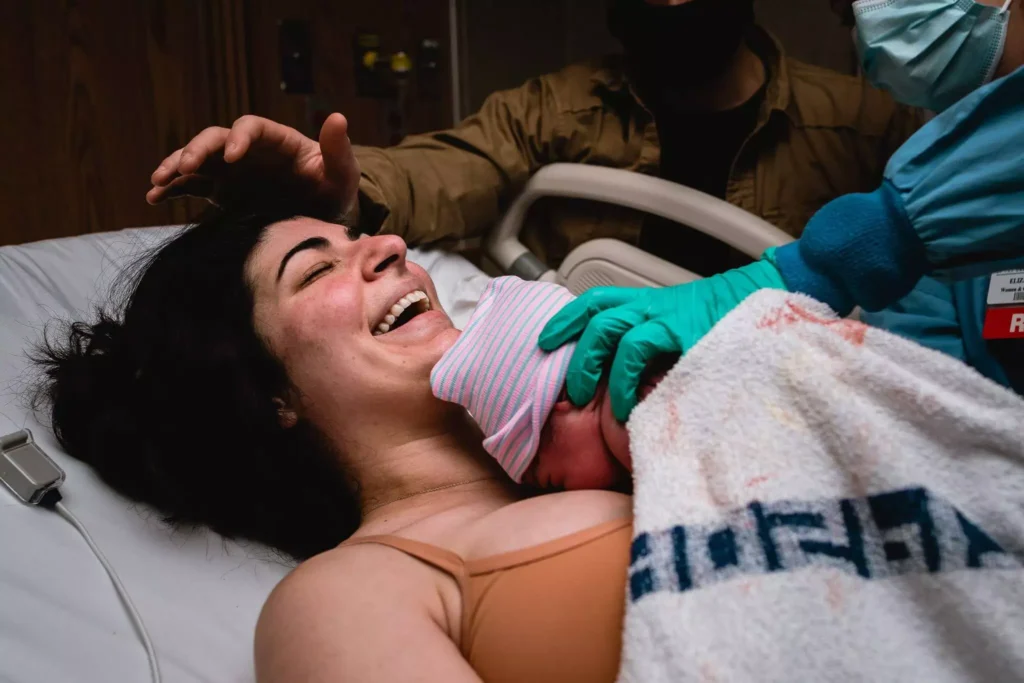

Learn the science of pregnancy and birth to take the mystery of labor away! Understand why you are feeling what you feel, and learn strategies to confidently move through pregnancy and birth!
- 9h+ of Video
- Support Group
- Close Captioning
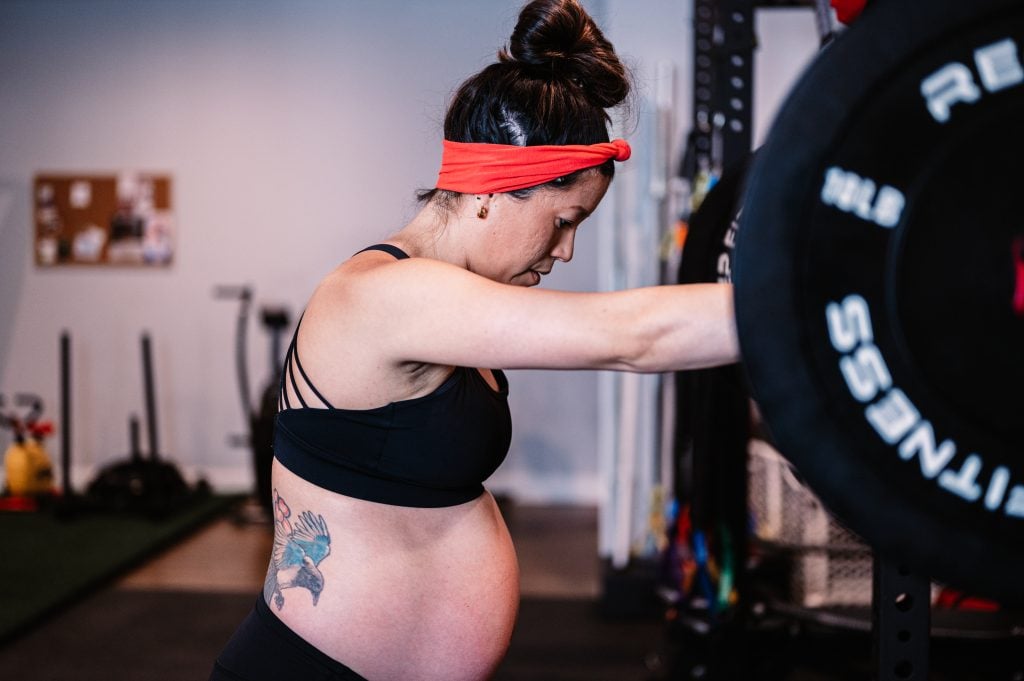

- 5 Workouts/Week
- Gym Workouts
- Self-Paced

Instructor
GINA
Workout on-demand with our prenatal fitness workout videos! Each workout is 30-40 minutes to follow along as you exercise at the same time!
- Birth Prep
- All Trimesters
- Mobility Work

Instructor
GINA
Find comfort and relief from pelvic girdle pain throughout your pregnancy and postpartum period! This program incorporates myofascial sling focused exercises to stabilize across the pelvic girdle joints.
- 3 Weeks
- On Demand Workout Videos to Follow