

Welcome to the MamasteFit Podcast Birth Story Fridays. In this episode, Gina and Roxanne welcome Gina’s friend Melanie, who shares her three unique birth stories. Melanie discusses her experiences with two C-sections, one under general anesthesia due to HELLP syndrome and another planned, but stressful and disempowering. Melanie goes on to achieve a successful VBAC home birth after two C-sections- with the unexpected twist of a breech birth and a transfer to the NICU. This episode underscores the importance of advocacy, the right support, and informed decision-making in pregnancy and childbirth.
Read Episode Transcript
Gina: Welcome to the MamasteFit Podcast Birth Story Friday. In this episode, Melanie is going to be sharing her three birth stories. In her two first births, she had a C section. One was under general anesthesia, and the other she was awake for, but it was at the end of her pregnancy when she was hoping for a VBAC. Her third birth was actually a home birth after two C sections with a surprise breech with an OB provider that supported her home birth.
Melanie: Thank you for having me.
Gina: So let’s start with your first pregnancy. How did you navigate that journey?
Melanie: First pregnancy was, kind onf a instant single mom situation. So it was very, very, heavy on the stress, you know, very minimal support. I of course had my family, but dad wasn’t really involved. So I was really going into it solo and kind of naive. I read Ina May’s guide to childbirth and I was like, “I’m gonna do it all natural!” And then I didn’t really do anything else. So it was very naive. However, I had a very easy pregnancy, you know, even my OB common and he’s like, “Why are you so easy?” And then I think he jinxed me!
So after my regular OB appointment at about 34 and some change, the next day I had like a stabbing pain right between my ribs, like right in the middle. and so I thought, “Wow, I am a wimp. Indigestion is getting me and I can’t even handle ingestion, like how am I going to handle childbirth?” and because it wasn’t offset in any direction, they were just like, “Yeah, it’s probably some ingestion, but we’ll run some labs and get you some Zyrtec and you can go home.” And I had been home for about an hour and I got a call from my OB saying, “Actually, you have HELLP syndrome,” which is, for anyone who doesn’t know, it’s like the severest of the severe forms of preeclampsia. Like your liver enzymes are elevated, your blood platelets go down, all of that. So because I was so early, just shy of 35 weeks, and because my platelets were plummeting, they only felt safe putting me completely under for a C section for that one.
And I remember, everyone kind of clamoring around saying, “Well, it’s okay. VBAC is a thing now. This doesn’t mean you’re always going to have a C sections,” because I wanted the natural birth. And in my head, I was kind of like, “Yeah, I didn’t really prepare, so I guess this is the best option, the safest option.” And that, I think, was one of the few times that I think it is actually medically necessary. It didn’t feel like they were pressuring me to do something because they just wanted it easier for them. It was, they had to get the baby out, they had to get the baby out now.
For about just shy of six years, I was married and we got pregnant with my second, our first together, and I was determined to have a VBAC. I went to a provider here in Kentucky, that specifically, advocated for VBACs and I made sure that they knew that was the plan, that I wasn’t deviating from the plan unless absolutely necessary, and felt relatively supported. They’re still, I was seeing a team of midwives, but they’re still, that kind of… I don’t want to speak ill of them, but a little bit of indoctrination, where they’re like, “Well, you’ve had this before and, it’s very risky and we can TRY it…” that’s they’re kind of little buzzword, like, “We’ll TRY it. We’ll see what happens and go from there.”
But, at that point, again, high stress. I was still in North Carolina commuting up here to, I’m on the Indiana/Kentucky border, so commuting up here to Indiana to be with my husband because he had to be here for his job, I had to stay in North Carolina for my first son to make sure he was still in school before I had permission to relocate. So, I’m driving 10 hours back and forth. I’m not eating well, I’m very stressed, so I’m not eating well, if I’m eating at all. Very not ideal. I’m still doing my walk and everything, every day. But, if I had an appetite, it was for like junk food. I was not getting protein hardly at all. I had, oddly just that pregnancy has only been marked with, I had an aversion to beef and pork for almost two thirds. It’s like the first two trimesters, like I couldn’t even stand the smell of steak cooking, and that’s one of my favorite foods, so it was very heartbreaking!
Roxanne: Yeah!
Melanie: So I was not getting the protein. Definitely not any calcium or any of that. And this is all coming hindsight where I’m like, these are all the things that I did wrong and I could have, maybe made things a little bit better, but you grow and you learn.
So, in my first pregnancy, it was like 0 to 100 blood pressure suddenly was super high and platelets and liver enzymes and all those things were going haywire. With this pregnancy, my second pregnancy, it was like my blood pressure started creeping up and then I had swelling. And it’s funny because I didn’t notice that the swelling started even like a couple months prior, like in my legs, not so much my face, but in my legs, and I saw like family photos we’d taken and I’m like, “Why are my legs so big? Like, puffy?” And I didn’t realize that at the time, and no one was like, “Hey, you are getting some swelling there.” I don’t know if it’s because they were like, “Well, she’s pregnant, that’s expected,” or what?
So being kind of out of touch with my body was not helpful either, but I had some pretty severe swelling for about a week before I had an appointment. They wanted to do a, what’s called a biophysical profile, so check baby’s movements and stuff like that. Make sure things good because of my history HELLP syndrome prior. And they’re like, “Well, your blood pressure is like 150 over….” I don’t remember, low 90’s, or low 80’s, or high 80’s, sorry. 150 over something. And they’re like, “You do seem like you’re pretty stressed, so we’ll check it again after we do the biophysical profile.” And then they checked it again, it was still high. And so they’re like, “We’re going to have you sit and do a little NST and we’ll get an OB here to talk to you.” And I was just so heavily in denial. I’m like, “Yeah, I’ll do this and then I’ll go home.” And they’re like, “We need you to go to Labor and Delivery, because it’s a different location, and go ahead and check in there, and they’ll do some more tests,” and I’m like, “Am I getting admitted?” And they’re like, “We don’t know, but your blood pressure is very concerning and it’s two measurements in a short amount of time.”
So I remember calling one of my best friends, I called my husband who was in Mexico, working, but he was in Cancun! He was working, doing like security type stuff, so he was not having a fun time anyway. He had just agreed to take this longer job for a week, because he was like, “Money! We can get down payment on a bigger car. You’ll be fine, you’re not going to go into labor,” and I was like, “Okay… I just feel like you should be here…”
Gina: Famous last words.
Roxanne: “We’ll be fine!” Famous last words, yeah.
Melanie: I hadn’t even gotten close enough to even have a little bit of, a taste of labor with my first, so I figured I’d probably at least go to my due date, even trying for a VBAC with my second.
And then, so I felt a little nervous about it, and I was like, “It’s okay, I’ll be fine,” but I had that… there’s like this almost phenomenon that they mentioned with people who have preeclampsia, even I think they’ve mentioned it with people who have pulmonary embolisms and stuff when they’re in labor, or shortly thereafter, that they have like this sense of doom. And I had that and I just thought it was nerves because I was like, “Oh, I’m going to have to actually do this, this time.” I really thought it was that, and my husband not being here. And I think now, again, hindsight, I think that was my body saying, “Something is very not right,” and because I ignored it, there was no real opportunity to head it off.
So, regardless, he was in Mexico, had to find a quick turnaround flight. He got there in less than 24 hours. But so I get to the hospital and they’re saying, “Your blood pressure is very high and it’s getting higher. And since you’ve had a C section before, we can’t do any sort of induction.” And now I talked to them previously and I was like, “I, if say preeclampsia comes back, cause I know you’re at a higher risk if you have any form of it the first pregnancy or your prior pregnancy, I would like to at least discuss induction options. I know like Cytotech, no, got it, but low and slow Pitocin, a Foley catheter or something?” And they’re just like, “No, we can’t do that.” They were very… Anyway, I’m sitting there freaking out. My husband is not here, he’s trying to talk to them on the phone and because he’s not there, he’s pretty, he’s very polite and business-like, but it he’s upset he’s going to be a formidable force. And he was trying to advocate for me on the phone, across the, you know, to another country, and they just weren’t having it. They’re like, “Yeah, no, you don’t know what you’re talking about. We’re going to have to do a C section. So we can put her on magnesium until you get here.”
So I felt very let down, and I didn’t have at that point, just because I was doing so much movement and everything, I didn’t have a doula, so I had no one there with me to advocate and it was very defeating. So I was like, “I guess if everyone’s saying this…” I didn’t really push for an induction because I didn’t want an induction. I wanted it to just happen naturally, and because I didn’t get it naturally I was like, “Okay, I guess we’re giving up. I’ll just go on the God awful magnesium that I was on right after my first delivery,” and it’s awful. It makes you have an instant headache, you’re not allowed to eat. It’s, it’s a form of torture, I think. You’re not allowed to eat, you can have ice chips, but you can’t drink water or anything else. It was just miserable.
Roxanne: It’s not great.
Melanie: So I was on that for 24 hours before the surgery. And then once they did that, I had to like, I had to ask, and then finally when my husband arrived, he was like, “No, she needs to eat something. She hasn’t eaten in over 24 hours, we’re about to do a C section, and then you’re gonna put her back on magnesium?” And the doctor was like, “Okay, we’ll let her stay off of it for an hour so she can have something to eat.” I was like, “Oh, thanks!”
So I did get to eat something right after. And because we were in the bigger city, we were in Louisville, my husband was able to find right around the corner, there was a really great I’m probably going to say it wrong, pho place.
Gina: Yeah.
Melanie: And I was like, “Yes!”
Roxanne: Yeah.
Melanie: Bone broth, and all the healing herbs and it was probably the best pho I’ve ever had. But then again, my first meal after I had my first, which was god awful hospital pot roast, I thought it was the best meal I’d ever had, because I’d been on magnesium for days.
Roxanne: When you haven’t eaten for a while, anything tastes good, I feel like.
Gina: It’s kind of like when you’re super thirsty and you like drink water and you’re like, “This is the best glass of water!”
Melanie: Yeah! I did at least get to eat something, and then they put me back on magnesium. And it wasn’t as… I don’t think that they had to do it as, I know they have to be careful with toxic levels of it, but I don’t think that it was as high as it was with my first delivery, because my first delivery, I was on it for two days after. I was in like, the ICU for the first few days, and then I was just on the regular, on the baby floor, but, I don’t remember anything from those first few days. I don’t remember. Apparently, I would wake up…
Roxanne: You had a lot going on!
Melanie: Yeah, I would wake up, apparently, freaking out because I hadn’t seen my baby. Apparently, I saw him right after my C section when I was getting wheeled to recovery, but, was awake, or, wheeled from recovery to the room. Which, every time I was awake, because I think, I was under general anesthesia, so it was probably going from recovery to my room, they took me past the NICU and I got to see my son. And a nurse was like, “Do you want me to take a picture? I’ll send it to you,” and I was like, “Thank you!” Don’t remember that. I have the picture somewhere, I don’t remember that interaction at all. And I don’t remember it because you’re already groggy after being under anesthesia, and then with the magnesium, you’re miserable, not to make it too dramatic.
My son’s father did come so that he could be present for the baby, but he was not, in any capacity, a supportive partner. So he was there, and I remember at one point when I was a little more lucid that the nurse that was checking on me, she was a sweeter, older lady, and she had him step out of the room and she basically yelled at him and said, “If you’re not going to be helpful, why are you here?” So, you know. Because apparently he was complaining that it was cold in the room because, postpartum hormones, and then you’re on magnesium, I had it as low as it would go, I think it was like 50 something degrees, or something ridiculous. And I was like, “I’m so hot!” I’m just there, you know, yourgown turned backwards so you can easily pump and stuff, and it was, yeah, everyone in the hospital sent my boobs.
But, I was on it for a less amount of time for my second delivery, which was better. And I remember being lucid. And I think just having someone there was a lot different. My husband was supportive the entire way. The difference with the C section was I wasn’t completely under, so I didn’t have the, “I’m gonna die,” thought before I went under, but I was also freaking out. They made me walk, they wouldn’t let me stand up or go to the bathroom myself, because I was on magnesium prior to, but then when it was time to go into the OR, they’re like, “You’re gonna walk,” and I’m like, “Now I can walk? Now I can stand on my own two feet?” And I was like, “I want to run away. Can I do that?” yeah, I remember feeling like anxiety to the point of nausea and they’re like, “Oh, that’s just the medicine,” I was like, “You haven’t given me any yet!”
As far as the spinal, they didn’t want to let my husband in the room for that. They’re like “No, you know It’s just you know, if you pass out…” and he’s like, “I’m not gonna pass out.” This is a 10 years Marine, and then he was MARSOF then and now he’s a Green Beret. He was like, “I’m not gonna pass out. Let me in the room.”
Roxanne: I will say, of all the people that I’ve had pass out, they were all Special Forces officers.
Melanie: Were they?!
Roxanne: Of all of the people that I’ve had pass out during epidurals, they were all like huge muscles, they’re like, “Oh, I can do this. I’m not going to pass out! What are you talking about? I see blood all the time!” They see that needle and they’re going down. And I’m like, “Oh, you see blood all the time though! Like you’re not going to pass out.” And now I have two patients.
Gina: Roxanne’s taunting this dude that’s passed out.
Roxanne: In my head, obviously! I’m like, it’s after they wake up with their little orange juice, and I’m like, “So do you want to sit down for this one now?” And they’re like, “Okay, I believe you,” yeah, thank you!
Melanie: Yeah, he’s very like stoic, he’s seen some, outside of even the military, he’s, you know, very much not squeamish. And I have heard that, too, that someone you wouldn’t expect to be squeamish is. But like he, you know, it wasn’t his first rodeo, cause he has a couple of kids from before we met. So like he had seen natural birth, and he’d seen C section birth, like he wasn’t at all, luckily, he’s very supportive. And I, it was funny because we, funny-not-funny, we had not discussed like, how can you support me if I am not able to VBAC, if I have to have another C section? Like how can you support me in that?” I didn’t have to tell him, he just knew intuitively. Cause we’re like, close like that. No, just, he’s a very intuitive person, too, so he instantly, as soon as I was numb and they’re like, “Okay, we’re going to test. You’re numb. Okay, cool,” first thing that- the doctor would not talk to me. She talked over me, to my husband, but she wouldn’t talk to me. So the only person. Like really focused on me, support-wise, of course, was my husband and every single step, he knows that, I just, I need to know things. And obviously I can’t see, they were like, “No, we can’t do a clear drape. We don’t have those.” “No, we can’t play music.” “No, you can’t have headphones.” “No, we can’t delay the cord clamping.” No. Everything was a no for the gentle, the mom assisted C section, none of that was an option. So it really was just, just lay there. I had to argue that they wouldn’t strap my arms down. Because they’re like, “Yeah, we need to strap your arms down so you don’t move,” and I was like, “I’m not gonna move my arms. Just, can I, I will have a panic attack, let me have my arms.” But my husband just, every single step, he was telling me, “Okay, now she’s doing this, now she’s doing that,” because, yes, you’re numb, but you do feel your whole body moving when they’re like, “Let’s get this baby out,” that’s technically what they do, right? They just tug everything away? So that was as good as it could be, like he made it at least where I wasn’t just staring at the light, “What’s happening now? I’ll just wait till they give me a baby, I guess!”
And of course, he got to hold the baby first and he brought him over to me, that was a special moment, but, I’m still, as they’re cutting me open, I’m just like, “I feel like they could have done more, they could have done more,” and then, as I’m having that thought, the OB goes, “Yeah. You see how your wife’s uterus, you see how this is, like, super thin? It’s called a uterine window.” She said, “You can see the baby through it.” And later my husband was like, “I looked at it. You could not, it was thin, but it wasn’t as thin as she was making out to be.” Of course, he’s not medically trained, but he was like, “Seemed like she was really laying it on.” She was like, “Yeah, if she’d even had one contraction, like if she’d even tried to TOLAC, she definitely would have ruptured!” And this is what I’m hearing, not even talking to me.
Gina: It’s a very bold statement.
Roxanne: Yeah.
Melanie: And while I’m cut open on this surgical table and he wasn’t going to argue with her while she’s doing surgery, but he was just like, “Hmm. Well, here we are.” And he like whispered in my ear, “It’s not that bad.” And this is an OB that I’d never met, she obviously didn’t know my history, probably didn’t know how much I wanted and needed to VBAC, so she was just like, “Oh yeah, this is probably the better choice.” But to me, I was hearing it as like, “Why would you even try?” so that was disheartening. And of course she was the OB that I saw for my two week, because you do a two week post op if you have a C section, so she was the OB that I went to see. And I remember I walked into, or, she walked into the room, and the first thing she said, it wasn’t, “Hi, how are you? How are you feeling? How are you healing?” None of that. It was, “So, uh, you’re not planning on having more kids, right?” First thing out of her mouth.
Roxanne: That’s a bold statement.
Melanie: I’m two weeks postpartum from a relatively, I’m not saying traumatic, but not ideal birth… Huh?! I was like, “We haven’t discussed it yet. Why?”
Gina: Have we heard of bedside manner? Is that not a course in her training?
Roxanne: It’s probably not, honestly.
Gina: Just a general, how to speak to other people.
Roxanne: It is a huge portion of my schooling, but probably not their schooling, obviously. This is a very common issue with some providers.
Gina: Oh my gosh.
Melanie: It’s wild to me that it seems to be worse with female OBs because I, my first OB, which to be fair, I, when I lived in Greensboro, I worked with him. I was like a, switchboard operator, so I was doing appointments and stuff, but he was my gyno, and then when I got pregnant, I just, I found out I was pregnant at like my regular, like pelvic exam appointment. And they were like, “You take your birth control perfectly, there’s no way you’re pregnant, but we’ll do a blood test just to put your mind at ease.” And so he was like, “Joke’s on you. You’re pregnant.” So we already had a rapport.
Gina: Someone’s gotta be that 1 in 100.
Roxanne: Yeah. There’s a reason it’s not a hundred percent.
Melanie: “Actually, you’re like seven weeks pregnant.” “You lied to me. You said it wasn’t possible!”
But yeah, so it was night and day difference. Like his bedside manner, he’s very, he’s won awards, like the, I almost said the People’s Choice Awards, but that’s not it… kind of like they do Best of the Pines, they do something similar in Greensboro for like medical stuff. And, he always wins the award. Like he’s the best OB that you can have. So it’s just, it’s wild to me though, because every negative interaction I’ve had with an OB has always been the female ones. And evwhenhe, I saw some male OBs just, when they cycle you through the practice and stuff, and I’ve never had them be so just… and it’s funny ’cause men tend to be more blunt, but like they, they seem to be more compassionate. Maybe because they’re not women, maybe because they can never truly experience pregnancy and birth so they’re like, “We’ll err on the side of, you know what you’re talking about ’cause it’s your body.” Women are like, “No. Nah!” Which sucks because I’m very, I’m a woman’s woman and I want to be like, “Yes, women can do these male dominated professions,” but also, “Don’t be mean to me. I’m just a baby.”
Gina: So, it sounds like a really big difference for you between your first and your second was, one, the first, you didn’t have any emotional support from a partner, but you had a really great OB, to where you felt confident that this was the path that your birth needed to take. It seemed like you felt like it was a needed C section, which there are medically necessary ones, where like 100% there are some of us that do need them. In comparison to your second, where you had the emotional support with a partner, but the OB team, or the medical team that you had didn’t give you that same feeling of, “This is a necessary C section.” Like maybe it would have eventually become that for you, but they didn’t… They were just, “No, everything’s no,” and not giving you the opportunity to try, which I think is a huge aspect of what results in a more positive experience.
So let’s get into your third pregnancy, where I know that you made a lot of really different choices for your birth that resulted in a very different outcome, like a great outcome. So let’s get into your third pregnancy. So you had two C sections, which at that point, most people are like, “You’re supposed to have them forever now,” like, “how dare you even consider a vaginal birth?” But you still wanted a VBAC.
Melanie: So I had to find a place that would even be willing to even consider a VBAC after two C sections.
There was only one within like a four hour radius, and it was a school. So it’s U of L. So it’s, they have education, so a lot of times they might be a little more progressive, in theory. And I was on the, “I Can” Facebook page, and the “VBAC Link” Facebook page. I’d gotten a lot of resources when I was pregnant with my second, but my third, I was like, “Okay, this, we got to hammer down here somewhere. There’s gotta be… we’re getting a doula, we’re doing this, I have to be more strict with it because I’m not letting someone else tell me how it’s going to go this time.” And luckily my husband wasn’t doing a job where he was traveling out of country, out of state, I wasn’t out of state. We were all in the same home state now, so that was great. I didn’t have the stress of an upcoming custody battle, trying to relocate, or I wasn’t single, so it wasn’t as rife with that emotional, just distress. So it was already starting off on a better foot.
The first thing I did, cause I got pregnant at just shy of nine months postpartum. I was like, “Okay, now I’m a little mad, cause you’re making it harder.” I know providers like to see that 18 months between births. Some of them even like to see 18 months after birth before you deliver, whatever. Anyways, 18 months between pregnancies, all of that. So some of them are like, “Yeah, you need to be at least two years postpartum before you get pregnant again,” I don’t know why I made him sound like a country man…
Anyways, there’s all these different policies that just, a lot of times it depends on the practice, or the provider. But I wasn’t letting that get me down. I was just, I took three minutes and I was just like, “It’s too soon. It’s too soon. They’re going to say no, but whatever, I’m going to do it anyway.”
So I specifically found a different practice that was out of, like I said, U of L. So it’s a school-based medical system, you know, teaching hospital. And they had quite a few people on the, I Can, like the local I Can, saying that, “Oh, they’ll let you do a VBAC after two C sections. Their midwife team is great. You’ll have to meet with the OB for a consult, but like you can still see the midwives,” all that stuff. And so I went into it very optimistic, and the midwives were indeed great, there were just a couple that I had met, but then I had to go do my OB consult. And when I did that, I told her the different things that I was doing to help bolster success. My second pregnancy, they were like, “Oh, you need to take baby aspirin and that’ll help reduce your chance of preeclampsia.” So I took it religiously, obviously didn’t prevent it.
And this third pregnancy, I did a little more research. I’d heard about the Brewer Diet and I was like, okay, this makes a little more sense, physiologically, like, nourishing your body so that you don’t have these deficiencies that can cause issues, your placenta is perfusing oxygen correctly, all the science behind it. I was like, “This, it makes sense,” and there’s never going to be those money backed studies on it because there’s no real money in preventing disease, apparently, but, I had a lot of confidence in the Brewer Diet just from a lot of the resources such as you guys. I followed a lot of birth educators and things like that, where they’re like, “You don’t have to just take baby aspirin, like you can actually nourish your body and, take a little more control over what happens within your pregnancy.”
And so I was very confident in that, and spoil alert, it did work. But, I remember I went to that OB consult and I was telling her those things, “I’m following the Brewer Diet,” and she openly scoffed at it. She’s like, “That’s not going to change anything. That’s just what you’re eating.” She was like “I agree, it’s definitely good to eat healthy, but there’s no science to back up the Brewer Diet and I’ve never even heard of it, I mean, I’ve heard of it, but didn’t remember the name.” Again, female OB. But she’s like, “Yeah, that’s not going to work. I can almost, I don’t have a crystal ball, but I can almost guarantee you that you’ll have preeclampsia again, if not severe preeclampsia, because you’ve had it two times before. So really, you probably shouldn’t even bother trying to TOLAC at this point. It’s just because you’re going to get admitted early for severe preeclampsia.” She said that like with the utmost confidence.
Gina: Which is really frustrating because you’re expressing that this is, this experience is important to you, that this is something that you want to try. And instead of “Okay, how can we help you do this thing that you want to do?” Because yes, birth is like this medical event, but there’s more to it. It’s not the same as a knee surgery, or like hip surgery. This is when like a baby is coming and joining your family and that journey of them being born is important. And so it’s really frustrating when there’s no option to try. “Yeah, sure, try the diet and we’ll see if it works. And if it does, I’ll definitely write it down and recommend to other patients in the future.”
Roxanne: I think it’s, what’s hard is that, like she was very dismissive about every single step that you’re like trying to do actively. There is research that supports eating a Mediterranean based diet does help your blood pressure and can potentially reduce your risk of having preeclampsia. So I don’t know exactly what the Brewer Diet is because I have not researched that, but I’m assuming it’s probably very similar to a Mediterranean based diet that has been studied and proven by research to help with blood pressure issues, especially non pregnant people and during pregnancy, could potentially help decrease the severity of preeclampsia and stuff like that. And this is stuff that I’ve learned in school. But the fact that she was like, “That’s not going to work at all. I don’t have a crystal ball, so I can’t predict what’s going to happen, but I can guarantee that this is going to happen,” when…
Gina: You don’t have a crystal ball, or do you have a crystal ball?
Roxanne: You can’t necessarily say that. And I think, had she been able, as an OB- and as a medical provider, like, hopefully, future, but as a person who’s in medicine, I understand where she’s coming from, where like she wants to not get your hopes up. And she doesn’t want you to be like, “Yeah, like we can have a TOLAC, but like you’ve had preeclampsia pretty severely twice, and so like the likelihood of you having it again is increased.” But I think she could have gone about it in a different way because like it would not be like legal or like ethical for her to be like, “Yeah, let’s just try! You’re probably not going to get preeclampsia. Let’s be optimistic!” As a provider, she has to be able to educate you, “Yes, you’ve had it twice. You are at an increased risk of getting preeclampsia again.” We can’t be dismissive that eating this diet is the magical pill that you’re not going to get preeclampsia. So she has to be able to counsel you on, yes, it’s a possibility, but she could have gone about that way differently, or been like, “Hey, I understand that we want a TOLAC, and I’m here to support that goal, is to be able to have a vaginal birth after two C sections, and I want to be here to support you. The things that you’re trying, the Brewer Diet, I don’t know about it. I don’t know all of the things that are about this Brewer Diet, but you have done your research because you’re an adult, and you’re a human, and you’re able to do this. And if you think that this is going to help your blood pressure, we are here to support you. Evidence shows that aspirin can help you. This is what I’m going to recommend as a provider, but you can do both of those things, and hopefully this keeps your blood pressure down. We’ll keep an eye on it. This is the plan, and hopefully we can get to that TOLAC,” instead of being like, “Oh, I don’t have a crystal ball, but you’re going to get pre eclampsia. Don’t even try.” It’s not supportive.
Gina: It’s dismissing the preventative aspect of healthcare, where what you eat and how you move your body are, like, really impactful to our overall health. So sorry for interrupting you, continue your story!
Melanie: No, that’s okay! I don’t, I’m not super familiar with Mediterranean diet. I think that might be similar, but it’s very like high protein. It’s like getting a 100 to, I got, I aimed for more like 120 grams because I’m tall and I had a history of preeclampsia twice. And I was less than a year postpartum when I got pregnant. So I was like going for the high end.
Roxanne: Yeah.
Melanie: And it was, it was a lot of work. It was, as far as I know, I haven’t, I got the book just in case I get pregnant again, but I got the book to read up on it, but the Lily Nichols “Real Food For Pregnancy,” apparently what she kind of outlines is very similar to the Brewer Diet. So it’s really just focusing on getting like the full nutrient spectrum of produce and calcium and all that stuff. Like I said, it definitely seemed to work.
But yes, to have it just scoffed at, “Pfft! That’s silly,” like, it makes you feel like you’re a child being scolded. “That’s not going to work, Honey…” And she went further and said, “Beyond that, we recommend that you have a repeat C section no later than 36 weeks,” which is instant premature range, “no later than 36 weeks because of that uterine window that they noticed during your second C section. We don’t have a way to know for sure that it’s healed or not. And if it’s not,” I’m trying to remember she said something later when I asked her to give like concrete notes that I could reference, where she said that she was aligning with ACOG standards, which is not true, and she was referencing a uterine window being the same risk level as having a prior rupture. She’s like, “Because we can’t really differentiate, we’re just going to apply those stats to it.” So she was saying, “It’s very likely that you will rupture even before you get to actual labor, if you have any contractions.”
And then, it was from that point a battle because the midwives, especially here in Indiana, Kentucky, Ohio, this relative area, they very much- I think it’s similar to the kind of structure in North Carolina- they have answer to a doctor, those policies have to be supported and backed by a doctor. So they were like, “We can’t support you. They won’t let us support you. Not because we don’t want to, but because the OB team has signed off saying this is too high risk, we’re not allowed to support you. So you would have to see the OB team, and you would have to fight.” And I remember I saw a midwife after this consult, and she was explaining that to me, she was like, “Honestly,” she had heard of the Brewer Diet, she was confident in it if I was following it correctly, she’s like, “I’ve seen great success with that,” she’s like, “and best case scenario, if you want to deliver here, is wait until you’re in like true, active labor, and then come to the hospital, where they can’t require you to have a C section. They can’t, technically speaking, they can’t make you have a surgery until you sign off on it.” And I was thinking, “Wow, that’s going to be such a fight though.”
Roxanne: That’s so stressful.
Melanie: Yeah, every other OB in the practice was backing up what this OB had said, that, “Oh yeah, we really recommend a repeat C section at 36 weeks.” And I met with a couple of them, still getting my prenatal visits, cause I wanted to stay current, but the whole time I’m spinning my wheels, because, after that consult, was probably right after my anatomy scan, so 20 something, early 20 something weeks, and it wasn’t until I was 32 weeks that they had someone, like a scheduler call and say, “Hey, you can’t see the midwives anymore. They had to drop you from care. You can see the OBs.”
Roxanne: Oof.
Melanie: “And also, would you like to go ahead and schedule that C section?” No. No, I would not. Thank you. I’m not doing that, thanks.” So it was just such a switch of, I picked a specific practice because they were supposed to be supportive and the consult even included a line of the OB said the classic thing of, “I love VBACs, and I love supporting those. I think they’re great, I just don’t think that you can do it.” “I don’t think you should do it,” actually, not that you can do it, “I don’t think you should do it.” and then all the negative and dismissive talk. And so at that point, I was just like, “I don’t want to, I don’t want to go to that practice at all. Even if I could show up in the middle of labor and they can’t push me, like, it’s going to be a fight this whole time.”
And I had, the biggest difference with this 3rd pregnancy is that I did have a doula. She’s become a close friend. She is amazing. She was the first one I interviewed, and when we met, it was just like, it clicked. I was like, “Yes. Okay.” And so she was very supportive, and she actually, we had a meeting with myself and my husband at her house, and we’re talking about it and she was just like, “Well, what do you want? What’s the most important part to you? Is it delivering at this hospital? Is it being able to have -not the home birth- having the VBAC after two C sections?” She’s like, “‘Cause, I have to tell you, if we didn’t live here, it might not be as much of a fight, but even if you show up in the middle of labor, you guys are going to have to fight. And that’s not something you should have to do while you’re in the throes of labor. That’s not something you,” talking to my husband, “that’s not something you should have to do when you’re supposed to be focusing on physically and emotionally supporting her through the throes of labor. You shouldn’t also have to be fighting and advocating constantly. Cause they’re going to be like sharks in the water, wanting to just go ahead and do the easy, ‘safest’ route for them, which would be a C section.”
And so we were talking about it, and I actually I’ve looked into even just like a consult with Dr. Stu with Birthing Instincts because he did consults over the phone. I was like, maybe we can just do a consult him and my husband wasn’t familiar with him, so he’s like “Who’s that?” And I was like, “Oh, he’s just, you know, he travels around and helps with home birth because there’s so few resources, especially with like breech birth,” foreshadowing, “with breech birth and all kinds of different regulations, like I’m dealing with after having C sections, that’s just his, his shtick.” So I was like, “Maybe we can consult with him, and maybe if he has some notes on it, we can take it to an OB and be like, ‘Hey, see, look here, he’s supporting it.'” I was just desperate at that point. I was like, “I don’t know if that would work. They probably won’t listen, but maybe we can do that,” to my husband. And, my doula mentioned Dr. Nathan Riley, she’s like, “He does those too, and he is closer.” And I was like, “Oh yeah, that’s right. He does sometimes attend births, too.” She’s like, “He does.” And so my husband was like, “Who’s that? And he does home births, but he’s an OB and he is close. Maybe we can meet with him and see if he could give a recommendation that an OB would actually listen to, being an OB himself.” And he’s like, “He does home birth?” And I was like, “Yeah, but…” we discussed it previously and he didn’t feel super comfortable with the idea of home birth because, especially with risk factors of preeclampsia and two C sections, and he had been to some of the appointments with me where they’re like, “You’re going to explode if you have any contractions,” So he was nervous, but he also knew that was something that I considered, but I didn’t think was really an option, cause I had to be comfortable with it, too. And, so,. he was like, “If he does home birth, why don’t we just consult with him about doing a home birth?” And I was like, “What? You want to look into doing a home birth?” If I wasn’t already pregnant… hello!”
Gina: “I would get pregnant again.”
Melanie: Yeah! So that was a very special moment. I just remember that, that I was thinking, “Oh, we’ll just talk to this OB, who does happen to do home births, he knows what he’s talking about. Maybe he can phrase it in a way that these OBs will get off my back and at least let me try.” And he’s like, “Why don’t we just do a home birth?” Okay! Here I am at 34, almost 35. I’d sent a few messages to Dr. Riley on Instagram asking, I think I’d mentioned something about, I can’t remember if it was about preeclampsia and the Brewer Diet or something. It was when I was during my postpartum phase or early pregnancy with the third one.
So, I reached out to him and I was like, “Hey, do you have, like the bandwidth to support this?” And he was like, “Let’s get on a consult call,” he’s like, “I’m not going to charge anything. Just, get on a call and we’ll talk about it, and see if it’s something I can support. I don’t do a lot of births each year, but, I also understand what you’re working against.” and so we talked for probably about an hour, and he felt very confident. He’s like, “I have a twin breech conference right around your due date,” right after my due date, he’s like, “But it’s in Louisville, and I have the permissions to attend a birth in Indiana. Like everything’s, kosher with that.” He recognized that, not that I had to be desperate to work with him, but like I was desperate. Like he was my, you know, he was my only hope of really securing a chance to even try and have a birth, a vaginal birth, after two C sections. And so he was like, “Yeah. Hell yeah. We’ll make this work.”
So we had a couple of meetings with him at his house so that my husband can meet him. And it was so funny cause they got on so well I was saying “Aw, they’re little friends!” We’re scrambling to get the supplies that we needed. But it just felt very like Kismet, very fated, because he happened to have the availability. He had travel before and after that would have made it hard for him to attend a birth, but right in that sweet spot was my due date, and the following two weeks. So he was confident that we can make it work with his schedule, that he just happened to be free.
We had, that was when like the Earthside, the really pretty, aesthetic white pools were getting released, and I missed the pre launch where they only sold like a few of them. And I commented, I was like, “Oh, did you guys send emails? I must’ve missed it. I’m bummed because I’m doing like a couple weeks,” and a mom in- we’re also very close to the Ohio border- and so a mom just over the border in Ohio saw it, she’s like, “I’m not due,” she sent me a message, “I’m not due until October, and they’re going to release more then,” she’s like, “you can buy this one off me.” Too easy! So I got the birth tub I wanted. And I got, especially because the birth tub I got was the, is it “La Vie” pools? The like blue ones?
Gina: I’m not sure.
Melanie: They were the ones that make it. It’s La-something. I don’t remember, but they got blasted on social media because they were posting like, “Who’s a candidate for home birth?” And it was like, “People who’ve never had a C section, people who don’t have any of these,” it was a very, like, limiting vision. And people are like, “Who are you to tell us who can have a home birth? Like, okay.” So a lot of people were boycotting them anyway. So I was like, “Good. I don’t need your tub anyway.
Yeah. So I got the pretty aesthetic white birth tub and I already had the doula. I had this kick ass “unicorn,” as I call him, OB, who’s like “Yeah, I’ll attend a home birth. Let’s do it!” I had no idea what to expect as far as like contractions and stuff like that. I had prodromal labor for like, off and on for a couple of weeks. And so I kept thinking, “This is it. This isn’t it. This isn’t it. It’s never getting consistent,” and, again, hindsight, I assume it’s probably because he was breech, but at my last in office with a hospital OB, they did, they just felt, they did body mapping, or belly mapping. And they were like, “Oh yeah, he’s head down. You can tell because this is his butt and this is his head,” but I also had an anterior placenta, so it’s a little harder to feel, like everything just feels harder. So what he thought was his butt was actually his head. So he was butt down. Again, everything felt like fate because the OB that I have attending my home birth had just hosted a breech birth conference. So he was, not only was he well versed in it, but he was refreshed in it having just done that. But we had everything fall into place.
And I went to 42 weeks exactly. The OBs at the other practice were like, “If you go past 36 weeks, and you have even a contraction…”
Roxanne: “Your uterus is going to instantly rupture.”
Gina: Man, that’s like a whole other pregnancy. Because the previous ones were up to 36 weeks, and going from 36 to 42 is like another pregnancy!
Melanie: Yeah, I went to just shy of 35, just past 38, and then, go all the way to 42 weeks. And I was like… cause, according to my uterus, I was a first time mom, right? So I’d never had a single contraction, no, no hints of labor.
They started like the night before, and of course I failed to like, eat enough dinner. I was like in denial. After you have prodromal labor, you’re like, “Mmmmm….” You start doubting yourself. You’re like, “This isn’t it.” And then by the time I realized it was it I was like, “I don’t want to eat anything.” Did not expect my appetite to go that far south. You know, it started like around dinner time, like I couldn’t really sleep and I was like, that’s how I kinda knew, I was like, “Okay, maybe this is something. I can’t sleep.”
So, I texted my doula at 6am, and she’s like, “Let me get my kids take care of, I’ll be right over.” So she came over and supported me all day. My husband had stuff with like work, but he works in town, he owns his own business now, so like he was close by and was like, “Let me know if things really kick off, if I need to come home. I’ll go get you some food. I’ll get you this, all that. But I’m going to be tying up some of those sins around town.” Dr. Riley came into town around lunchtime and he was like, “It’s still pretty early, so I’m going to go get some work done, and I’ll come back and check in.” He was very, like hands off, which I really appreciated because that kind of really abused the home birth space. Not that I wasn’t comfortable with him, but you have multiple people, you know, my mom was there keeping tabs on my toddler, who was crying for me the entire time, you know, a mama’s boy. And Dad was with me, so he didn’t have either of us. You know, so there are a lot of people in the house, but it still didn’t really distract from it. I went on walks with the toddler in the stroller for a little bit. And then slowly kind of just me and my doula walking.
But I think I was technically in labor for about 24 hours, but some of that included the overnight where I was trying to catch sleep and I just couldn’t because they were coming every, five or six minutes, or less at that point. We did the very fun, the, what did I call it, the porcelain throne? Sitting backwards on the toilet.
Gina: I hated the toilet.
Melanie: It’s very effective. It is very miserable. I think I threw up one of the times. And I was like, “Oh, great, now I’m throwing up on top of it? Cool.” But, at one point, they didn’t do any checks except for one time, shortly after Dr. Riley got there, I asked him, he’s like, “You’re good with that?” I was like, “Yeah,” because I just wanted to see if there was any progress, because I was feeling a lot of intensity and it was happening very quickly. Again, we had been doing kind of like a Mile Circuit that you do during labor, the switching positions on a peanut ball, trying to rest while doing that, and then doing a lot of walks, and I was like, “I feel like things are really gearing up here.” And he checked, and he couldn’t get a good feel, and it was probably because the way the baby was positioned, but, when he was doing that check, my water broke. And he did note, I didn’t notice it, but he did note there was like some meconium in the water, but he wasn’t super worried cause baby was still active, plenty of movement. He was checking. heart tones every once in a while.
So at that point, though, it did get a lot more intense, your water breaking, I think that kind of ramped things up, too. And so I got in the birth pool at that point. I, again, I had done a lot of prep work, but I didn’t really know what to expect. It’s very hard to describe this sensation unless you’ve had it happen, and even if you have had it happen, describing it is still very, it’s like almost esoteric, like it’s very personal. But I do remember not a single time was I feeling any pain around my C section scar, or even, like, it wasn’t even a thought in my head of, “What if I ruptured?” There was none of that fear there. It was a whole lot of, “I can’t do this,” once I hit transition, like, “I can’t do this. Just get him out of me. Someone else do this!” I can’t, like, it has to be you. And I do suspect that if I were in a hospital, if someone was like, “But do you want an epidural?” I’d be like, “Yes, get it.” I think being at home really helped solidify that just wasn’t an option because, I do, I think there were some times where I was just so tired after, again, almost 24 hours, I think I did more pushing than, than actual like pushing for delivery, but I think to get them in a better position. Because again, he was coming out butt first, and we didn’t know that.
I know that at one point my doula was like, “He’s starting to crown a little bit, why don’t you put your hand down there and feel the top of his head, like that can be very motivating!” And I remember doing that and thinking, “Maybe that’s just because of their head molding and all that, they have plates…” I was like…
Gina: “This feels like a weird head!”
Roxanne: You were just touching the butt cheek.
Melanie: I wasn’t even touching his butt cheek, I was touching his scrotum! So he came out butt first, because of male anatomy, it was actually that. So I remember just being like, “This doesn’t feel right, but again, I’ve never done this, so maybe it just feels squishy because he’s got to come out of a small hole.”
Roxanne: Just his testicles!
Melanie: Yeah, I’m sorry, Buddy, that I was just like, tickling your scrotum for an hour, trying to figure out why you wouldn’t come out!
But I remember at one point we finally got out and I was on the bed and I think they were, because I was just gassed and hadn’t eaten, was having a hard time staying hydrated, we were in the bathtub, or in the birth pool, and it was a little bit warmer than it should have been. So I was showing like, they’re like, “Does she have a fever? Let’s just check,” and Dr. Riley took my husband to the other room to discuss maybe we should look into maybe transferring just to see, cause I’m really worried that she might have some sort of, is it choreo? Like where they’re, especially if there’s meconium in the water, he’s like, “I just don’t want to get too far,” he’s like, “I don’t think that now is the time to do it, but maybe we should just have a plan of action, because she’s been pushing for a while and having a hard time.”
And while they were in the middle of discussing that, I was laying on kind of my side with like my left leg up and my doula was supporting it, like standing on the bed and she was like- I couldn’t stop pushing at that point- she was like, “See if you can just relax and go through a few contractions without pushing.” I was like, “I can’t, my body won’t let me.” So I was just suffering through it. And so I had a leg up and when a contraction came, there was a little more, peek-a-boo coming out, and so my legs up, she had a perfect visual, and I wish I had a recording of her face, cuz she’s just looking down she goes, (shocked face), and I was like, “What?!” She’s like, “Let me… umm, paging Dr. Riley,” like she’s just shouting that across the house. She wanted to get a second opinion. I was like, “What is it? You look freaked out,” she was like, “I think the, um, I think the reason his head felt weird is cause it’s not his head. I think that’s his scrotum…” and I was like, “Oh, so he’s coming out butt first, huh?”
Roxanne: That’d be why it might be taking a little longer.
Melanie: Yeah, that explains why he’s not in the best position, and I’m really struggling as a first time laboring mom. So once we figured that out, we tried the, like kneeling on one leg and then the other foot, propped up, pushing that way. And that was like night and day difference of progress.
And so we got him out that way, and my husband recorded it because I was like, “Breech?!” And also just the birth in general, I was like, “Can someone record it?” And so my husband got his phone out and it’s funny because he accidentally took a selfie that’s like half of his face, I think I might’ve sent that to you, Gina, but it was like half of his face, and then just, my… my whole downstairs, and there’s just baby testicles hanging out. And I was like, “Baby’s first selfie with Dad!” One of my favorite pictures, obviously not savory enough to post, but, so he did get video of it.
But because it had been so long, and probably because he was breech and just comfortable hanging out in there, and there was no- a lot of times people say sometimes, malpositioning that they just can’t change, a lot of times there’s like a knot in the cord. The cord is perfect, but he did come out, he was not breathing on his own super well, like you could tell he was trying to, but he was not pink, he was not quite like blue purple, but he was, not as, vibrantly colored. And as soon as he came out, he wasn’t screaming, he wasn’t really breathing. They, they had me try to clear his airway and there didn’t seem to be anything there. Later, come to find out, he had aspirated meconium. Of course, that would happen to me. So, he needed a little bit of support. The upside is, although the OB that I was seeing at a hospital was over an hour away, our local hospital is not even three miles away. And unbeknownst to me, my husband being the meticulous, well-organized, Special Ops man that he is, had already staged the vehicle, had put down the third row, had everything ready to go. Like he’s in the vehicle, like ready to just like hop in the car if we needed to transfer me or whatever. And so he had already staged all that, I had no idea.
And so he actually called the hospital and was like, “Hey, we have a…” or, called 9-1-1, because they’re like, “We’re just going to go ahead and do a transfer.” He is taking breath, but he’s not doing it well enough on his own to keep him here.” And my husband called, 9-1-1 and was like, “Hey, just had a home birth, baby’s not breathing well on his own, can you send someone?” And they’re like, “Oh yeah, our ambulance is busy. There was an accident.” And he was just like, “You guys are useless, just have everyone ready when we get there,” and he got there in 30 seconds, or something ridiculous. He drove very fast. He was like, “I saw the accident on the way in there!” And so him, and at some point his dad had shown up at our house to help with the older kids because they got off the school bus at three, which was right about when I started pushing. So I just, traumatized everyone in the house with my noises. So my father-in-law went with them to help with the bag. I should add in, both my husband and my father-in-law, also volunteer firefighters in the area, so they have a little bit of training in those kinds of situations. But, so he was in the front seat, turned around while my husband’s speeding down the road to get to the hospital because an ambulance couldn’t come. And then I’ve got a robe on and like a, just a chucks pad, cause I hadn’t even delivered the placenta yet, and I’m waddling out to my doula’s car.
We go get there shortly after they arrive, and the whole time I’m like, “Is he breathing? Did I just ruin everything by having a home birth, like I had to have my home birth… It took a little bit of talking with my husband and my doula and Dr. Riley, and they’re like, this could have happened. In a hospital setting, although they would not have let you have a vaginal birth if it was breech, the aspiration of meconium that happens, there’s no real like way to prevent it per se. I know they say, not going past your due date decreases the chances and stuff like that. But, the fact that I had a home birth was not the reason that he was having issues with meconium that was an outside factor of the home birth setting, and the fact that we live so close to the hospital made it very quick, to get him the extra care that he needed. But my husband told me later, that he, they got them to the emergency department and they put him on the little bed with the light, and before even the doctor or anyone was in there, cause they’re scrambling to get everything, my husband gave him like a sternum rub, and he was like, “And he just took a very big breath at that point, and seemed to be fine.” Of course, they still wanted to clear his airway and stuff like that, but, that was the big concern in the, two minute drive from our house to the hospital, if he kept taking like little breaths and making baby sounds they would like cheer and they’re like, “Okay! He’s good, he’s getting there! But we’re still gonna go get him checked out.”
And he spent not quite a week in the NICU, which they did have to transfer him an hour away to have a NICU, so that was a bit of a bummer. Obviously him having the best care possible was the most important part and I’m glad that he ultimately is 100 percent okay, no lasting effects, but of course, they needed to make sure there was no issues with lack of oxygen to any of his organs. The NICU experience is… It was the third time for me, so it wasn’t super, (that’s a very loud truck, sorry!), it wasn’t super unknown to me. But it’s still, it’s just like, again? I get the home birth and everything’s great, everything pans out, and then I still have to drive an hour to see my baby in the NICU. And I have other kids at home, so I can’t just stay there, even though they had the like Ronald McDonald (House) thing set up right there at the NICU, I could have stayed there, but I just I couldn’t with a very needy 18 month old at home and all of that.
So that was not the most ideal, but it, all ended up well. And my husband and I were talking about, why is it that in order to get the birth that I wanted, I had to do it at home? Not that a home birth shouldn’t be an option, and that you should be like scared to do a home birth, or you could only do a home birth if you’re desperate to get the right birth, but, it’s just it sucks that because of your history, and because he was breech you definitely wouldn’t have had a chance. Even if you showed up in labor, they would’ve been like, “Oh, he’s in the wrong position. Sorry, C section.” Like there needs to be some sort of overhaul where breech birth is possible, listening to your body and trusting your body to do this even if you have had adverse complications in the past, it doesn’t mean it’s going to happen this time. That focus on supporting moms and saying, “Okay, maybe the odds are stacked against you a little bit, but we’re going to give it our best, and at least try and give you that chance.” Not give you an immediate, “No,” not give you a dismissive, “Yeah, that’s not going to happen, Sweetie.” That was something that he pointed out, it could be like a learning thing.
And it’s funny too, because afterwards, Dr. Riley mentioned that usually if he did attend home births it was always with a midwife present who typically has the supplies and is trained in the CPR that they would need to know. And he just had a niggling feeling where he was like, “I’m going to get a little tank and the face mask and all that stuff, just in case. I don’t foresee that being an issue, but since I don’t have a midwife that’s going to be doing that, I’ll just go ahead and have that supplied.” So he went ahead and ordered that and it got there technically after my due date, the weekend before I had him. And so it was just, again, the little fated things, just falling into place.
But I will say, even though I had to go to a NICU for a few days and, it still, I feel like, disrupted the breastfeeding relationship- so it was my third bout of exclusive pumping, not my favorite, but, I still felt it was very important- I still feel it was just a radical difference. My first C section, I don’t super remember the first several days and they didn’t let me move because I was in the ICU on magnesium, so there were several days where I didn’t even walk at all. So it was a very tough once I was starting moving. But I do remember the recovery being not super bad, and maybe that was because I was like 25. But, my second C section, I remember just being God awful. And I was like, “When is it ever going to stop that there’s like a burning feeling?” Cause they have to go through nerves, it just feels like that whole area is on fire and very tender. Like you can’t laugh, sneeze, cough, do anything without applying pressure and it still hurts. It’s just, it’s probably the most painful I’ve ever felt, other than a kidney stone, which I got what four, three or four days postpartum from this third baby, too?
Gina: Oh, God!
Melanie: So I went to the ER, I’m like, “Do I have an infection? Did everything not come out okay? Cause they checked the placenta and all is good. It’s in my freezer right now! So what is this?” Like it was just a lot of pain, and I had like elevated blood pressure because of the pain. So they were like, “Oh it’s probably postpartum preeclampsia.” No, it’s not. I was like, “No, I’m in a lot of pain.” Like they gave me, I don’t remember if it was morphine, or dilaudid, or something. And I was like, “It didn’t touch it.” Kidney stone. Kidney stone! So that was worse than labor.
It still was, it was a night and day difference between C section recovery and vaginal birth recovery. I don’t know how, maybe because I was in the birth pool and he wasn’t, he was probably about, he was not quite 8 pounds, so he wasn’t super huge, but I didn’t have any tearing.
Gina: That’s very common with breech birth though.
Melanie: Is it? Because it comes out the squishy end first?
Roxanne: Maybe. I don’t know. But Dr. Stu had mentioned, he’s like, “Not many breech births tear,” and I was like, “Hmm. Interesting.”
Gina: It’s maybe a little bit more hands off, too.
Roxanne: Yeah.
Gina: Yeah.
Roxanne: Yeah, many speculations.
Gina: Yeah.
Roxanne: I’m not surprised.
Gina: So if you guys try for a girl, will you do a home birth again?
Melanie: I would think so.
Roxanne: Or just try for a fourth, Gina.
Gina: We’ve been joking that she’s going to try for a girl now, like they need a girl. So that’s, I guess it’s an inside joke. I’m sorry if that offended anybody!
Roxanne: We should clarify! Inside joke, they’re friends! Just try another baby, have another baby.
Melanie: Yeah, I think we would, especially because we’re still in the same house, so it is still very close to the hospital, should we need to go. But, my doula is in the middle of getting her midwife schooling right now. So she’s like, “Just give me another year before you do it so that I can attend,” I’m like, “Okay. All right.”
Gina: Yeah. There you go. This is how you get the spacing. Just have friends that can attend your birth!
Thank you so much, Melanie, for coming and sharing your birth story on our podcast, all three of them. I think there’s a lot that our listeners can learn from them.
Roxanne: Oh, yeah.
Gina: I loved hearing your story the first time, and I love hearing it in more detail now. So thank you again for coming on the podcast and sharing your story. Do you have any advice for somebody that is navigating either trying to figure out whether or not they want to VBAC? Like, navigating an unexpected birth path? Like, preeclampsia? There’s a whole lot that was going on with you!
Roxanne: Yeah.
Gina: So there’s a lot of advice that you could probably give.
Roxanne: If you just have one nugget of advice, maybe. We could probably do a whole episode on your advice.
Melanie: I know! There’s so many things. I think being honest with yourself about how prepared you are, because I honestly thought I was super prepared going into my second birth, but I was prepared in some of the things, but not like the advocating for yourself and how the like bait and switch kind of thing can happen in a hospital setting. So it’s very important to, not just research, the physiological processes of birth, but like having those contingency plans. Okay, what if the doctor says this? Or, what if this comes up? Really having like that phased approach. Just really knowing, okay, in that moment, obviously, if you’ve never been in that moment, it’s hard to really know how you react, but if you have it already in your mind, that phased approach of, okay, this happens and we’ll ask to give us 30 minutes to discuss it and see what the risks are versus the rewards, that kind of thing. I think that kind of mindset would be very helpful in all situations because there are very few things, especially with birth, that are so emergent that you don’t have time to make a decision. You don’t have time to get informed. And if you can get as informed as possible prior to birth, where it’s almost second nature to be like, “Okay, what’s the risk if we wait? What’s the risk if we don’t do that at all? What can we do to mitigate that and maybe still have the outcome we want while you still feel comfortable giving me care?” Or if you go the home birth route, I think that’s a tenant of most home birth attendants, midwives or whoever is attending, it’s the informed decision. They’re not saying, “All right, I’m just going to go check your cervix” they’re like, “Do you want me to? Are you comfortable with that?” Having that kind of dynamic, I think, is really crucial too, because you’re in a vulnerable state. You, if you are going to make a decision, you want it be your decision, not someone making it for you. So I think those kind of things are really important. To be honest with yourself and how you react in certain high stress situations maybe, and how you can set yourself up for success before you get in that situation where it almost feels like second nature.
Gina: Thank you so much, again, for coming on the podcast and sharing your three birth stories with us. If anybody wants to follow Melanie, she is writing a book now, we’ll tag her Instagram down below. It’s stay at home mom author, I think.
Roxanne: S H A M.
Melanie: Yeah, I say, “stay at home mauther”.
Mauther! Okay, yeah. So it’s the S A H M author. So you can follow her on Instagram to see when her next book comes out, cause that’s how we really forged our relationship was spicy romance books.
Yes!
Gina: But again, thank you so much for coming on the podcast.
Melanie: Thank you for having me! I really appreciate it.
Gina: Thank you for listening to Melanie’s birth stories. Her birth stories really highlight the importance of choosing a provider that you truly trust to help guide you through your pregnancy and your birth experience.
If you enjoyed listening to this episode, be sure to subscribe to our channel so you get notified whenever we release new episodes. We release new birth stories on Fridays and new educational episodes every Wednesday.
If you want more support throughout your pregnancy, check out our online prenatal fitness programs and online childbirth education course. And you can bundle the two together to save an additional 15 percent off. You can use code STORY10 to save 10 percent off any of our online offerings.
Additional Resources
Find Melanie on Instagram @SAHMauthor
Find her OB, Dr. Nathan Riley, here: https://www.instagram.com/nathanrileyobgyn/?hl=en
Prenatal Support Courses
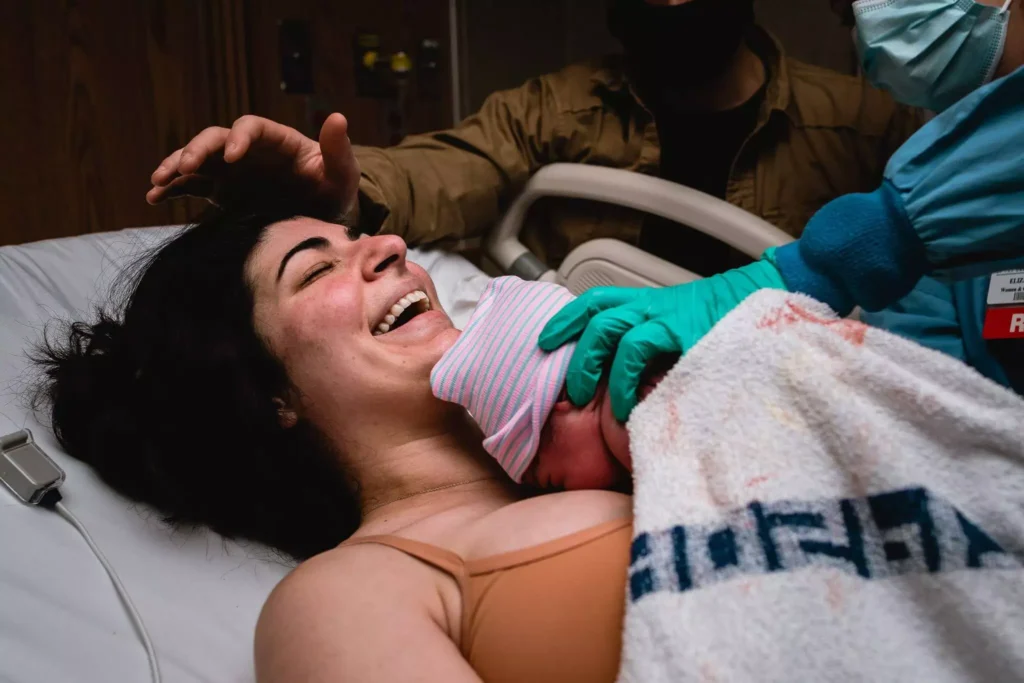

Learn the science of pregnancy and birth to take the mystery of labor away! Understand why you are feeling what you feel, and learn strategies to confidently move through pregnancy and birth!
- 9h+ of Video
- Support Group
- Close Captioning
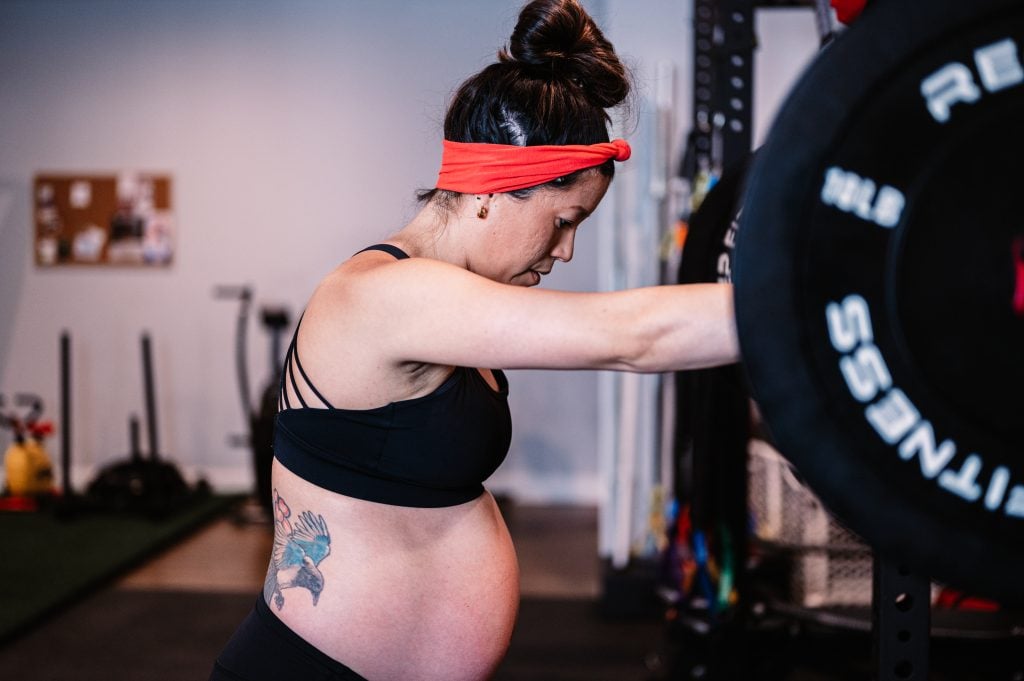

- 5 Workouts/Week
- Gym Workouts
- Self-Paced

Instructor
GINA
Workout on-demand with our prenatal fitness workout videos! Each workout is 30-40 minutes to follow along as you exercise at the same time!
- Birth Prep
- All Trimesters
- Mobility Work

Instructor
GINA
Find comfort and relief from pelvic girdle pain throughout your pregnancy and postpartum period! This program incorporates myofascial sling focused exercises to stabilize across the pelvic girdle joints.
- 3 Weeks
- On Demand Workout Videos to Follow