

Welcome to the MamasteFit Podcast Birth Story Fridays. In this episode, Roxanne is joined by Melissa, who shares her transformative and intense home birth experience. After discovering a previous procedure left considerable cervical scar tissue that was delaying her labor at 41 weeks, Melissa and her midwives devise a plan to break up the scar tissue. Despite initial delays, Melissa’s active labor starts rapidly once her water breaks, leading to a surprisingly swift progression. With supportive midwives, a dedicated doula, and her husband, Melissa successfully delivers her baby at home. This episode emphasizes the importance of trusting and working closely with knowledgeable care providers and offers insights for those with similar cervical procedures in their medical history.
Read Episode Transcript
[00:00:00] Roxanne: Welcome to the MamasteFit Podcast, Birth Story Friday. On this episode, we have Melissa here to share her home birth story, where at 41 weeks, they discovered that she had some cervical scar tissue that was probably preventing her from going into labor, so her midwives and her created a plan to help break up that scar tissue to allow her body to go into labor.
[00:01:22] Melissa: Thanks for having me. I’m excited and nervous.
[00:01:25] Roxanne: Oh, you’ll do so great! So let’s dive in with what did you do to prepare for pregnancy and childbirth?
[00:01:32] Melissa: So I’m a certified yoga instructor and a certified personal trainer. So fitness is really important to me. And I’ve always had in mind that I would continue yoga. throughout my pregnancy. But you never know until you’re in the moment, how it’s going to go.
[00:01:48] Melissa: My sister had two births where she did yoga right up until she gave birth and it really seemed to help her a lot. She had them at birth centers and she was able to have pretty quick labors and limited tearing. So I thought, okay, if I continue on with that myself hopefully that’ll be helpful.
[00:02:08] Melissa: And then I also started to find you guys along the way. And a couple of weeks after I found you guys, you announced your pregnancy and I was like, “That’s so cool! I can follow along together!”
[00:02:19] Roxanne: So fun.
[00:02:20] Melissa: Cause you were only like a week and a half behind me. So we were very close in our due dates, which I thought was like really great.
[00:02:27] Melissa: And I felt like the resources that you guys had really confirmed what I already knew about like my body and yoga and continuing to do things like twisting and stuff like that in my yoga practice because that’s just something that felt good. I kept doing it and I kept feeling okay, I can still twist just not as much, right? I’m not gonna hook my elbow, but I can like still find that rotation and that twisting. And you guys, and your stuff always recommended the internal rotation and how important that is because that’s not what most people think about when they’re prepping for birth. And I was like, “Wow, I’m so happy this validates what I already felt like I knew about birth and pregnancy and what you should keep doing.”
[00:03:12] Melissa: I feel like a lot of people tend to think, “Oh, you get pregnant and then you just have to roll over and stop doing everything.” Like I got a lot of reactions from people like, “Oh my gosh!” like, “You’re still teaching yoga six times a week?!”
[00:03:24] Roxanne: Yeah it’s like you’re porcelain.
[00:03:27] Melissa: Yeah, like people come in to take class and they would look at me like wide-eyed, especially when I was like 39 weeks, teaching yoga, they were like, “Oh my god, are you about to have a baby?”
[00:03:37] Roxanne: In the middle of class.
[00:03:38] Melissa: Yeah, exactly!
[00:03:42] Melissa: But yeah, I felt like it was super helpful to follow along with you guys and read your blogs and see all of your posts and then pull that into my strength training and my yoga practice and ensuring that helped me like prepare for birth.
[00:03:57] Roxanne: That’s awesome. And so you chose to have a home birth. Was there a particular reason you chose home birth versus like in the hospital, which is obviously like the norm?
[00:04:07] Melissa: I’ve had bad experience with women’s health. I have had to have many cervical procedures. I had multiple cervical biopsies and I had a LEEP performed, which if people don’t know what that is, it’s where they burn off the top layer of your cervix because you have like cancerous cells detected on your cervix.
[00:04:28] Melissa: And I had a lot of those procedures done at an army hospital because my husband was in the army at the time. And I just felt like I didn’t have the best care. Every time I went, I saw a different person. And then when I had my LEEP done, no one explained to me ahead of time what was going on. I showed up and they were just kind of like, “Oh, you like, almost have cancer, haha!” And then they also were like, “Oh yeah. And this could thin your cervix so much that you could not hold a pregnancy.” And they just threw that all at me and they were like, “All right, let’s stick a needle in your cervix. Let’s go.” And I was like…
[00:05:03] Roxanne: Let’s, begin! You’re like, “What?!”
[00:05:06] Melissa: Exactly!
[00:05:08] Roxanne: I would like children. What do you mean?
[00:05:10] Melissa: I know. I was like, wait. And I felt like I wasn’t confident enough in myself at the time to speak up and be like, “Wait,” and ask these questions. And I was by myself, it was COVID time, and so my husband couldn’t go with me to support me. I was all alone and it was just, it was really overwhelming.
[00:05:27] Melissa: And I just never felt like I was cared for, I always felt like I was just a number. So I always knew that I wanted to give birth outside of the hospital setting, where I’ve just felt like they have more time to care about you and give you that attention, and make you feel like a person rather than just like a thing that they’re doing,
[00:05:48] Roxanne: Yeah. Which is the one nice thing about community birth settings like home birth or birth center is that their prenatal care is not just like the medical portion and making sure you and baby are like growing and doing well, but it’s that emotional like bonding aspect. Because pregnancy and birth is like this very transformative process and like that emotional support is so helpful during that time.
[00:06:11] Melissa: Yeah, I feel like it’s hard to, if you don’t trust your providers and you don’t feel like they have your best care in mind, it’s harder to then give birth and feel like you’re going to be able to relax in the situation.
[00:06:26] Roxanne: Yeah, exactly. And with home birth and then hospital birth, it’s never one is better than the other, necessarily. It’s just the person that is supporting you in those different settings can be different. Like different hospitals have different providers that you might bond better with, versus not every midwife that does home birth is meant for everybody. There’s different personalities. But I do think that community setting for you is perfect for what you were looking for.
[00:06:54] Roxanne: But now let’s jump into your birth. So pregnancy went well, and now you’re like 40, 41 weeks pregnant still.
[00:07:03] Melissa: Yeah. So I hit 40 weeks knowing that I could go over. My midwife’s trying to drill it into me, like, “You will go over, you will have a long labor,” like just so that even if it doesn’t happen at least I’m, like, prepared for that.
[00:07:18] Roxanne: Yeah.
[00:07:20] Melissa: So I’m not disappointed when I don’t go into labor at 39 weeks or whatever.
[00:07:25] Roxanne: Yeah. It’s, oh, it’s so hard.
[00:07:27] Melissa: Yeah. It was still hard. Oh my gosh, the mental part of going over those two weeks after I hit, 40 weeks, I was like, “Oh my god.”
[00:07:35] Roxanne: You’re gonna be pregnant forever.
[00:07:37] Melissa: Yeah, I felt very slow.
[00:07:38] Roxanne: I’m like, this is just who I am now. I’m pregnant.
[00:07:41] Melissa: This is my identity.
[00:07:45] Melissa: And then I went in for my 41 week check and they offered, they were like, “We can do a cervical check right now. It’s up to you.” They’re like, “But we do recommend it, just to like see how things are going because you’re getting close to that cut off at 42 weeks.” so I was like, “Yeah, let’s do it. Let’s just check in and see.”
[00:08:01] Melissa: And when they went in to go do the check, they were kind of like, “Oh…” They were good at hiding it, but I could definitely tell that something wasn’t normal. And they ended up being like, “Yeah, you have a lot of scar tissue on your cervix. Like it is closed up, very closed up. Like it hasn’t dilated at all, it hasn’t thinned at all.” And they weren’t sure if that was going to be able to break up on its own because it was so bad.
[00:08:30] Melissa: So they started to create a game plan. they told me later on, they were like, “We weren’t sure in that beginning point if we could do this.” They were like, “We didn’t know if we’d be able to break it up enough with the tools that we had for home birth practice.” But we just started to try to do it. And so they started with just massaging it with the primrose evening oil. So they would do like a massage every day. I would go home. I would use the primrose oil at home, try to do different preps like that. And eventually we were able to, a couple of days later, they were able to like, find like a tiny little opening, like just enough to where they could stick a finger in and hold it open.
[00:09:10] Roxanne: Oh, so that sounds amazingly painful.
[00:09:17] Melissa: Yeah, it was definitely very painful. Luckily, because I’ve had so many cervical procedures, I was like, “Oh, been there, done that,” right?
[00:09:27] Roxanne: That’s the, I guess some positives, optimistic view of it.
[00:09:32] Melissa: Yeah, I was like, “Okay, at least they prepped me for this.”
[00:09:38] Melissa: So yeah, they were able to get it just open enough, but they had to like, keep a finger in to actually keep it open and find that spot, that opening.
[00:09:47] Melissa: And then they were like, “Okay, we think our next best bet is trying a Foley catheter so that we could put that in. We can have those balloons pressing on the cervix to try to like manually break through that a little bit more.” So after explaining it to me- they were like, they’re very good about explaining everything- asked me for consent. And they like really broke down like what this meant and what this could do for me, how it’s probably going to be painful, I’m gonna have to go home with it, keep it in for 24 hours. And I was like, “No, let’s do it.” I was willing to do whatever they recommended and whatever it took to give me to that home birth, because I really trusted them and I knew that if they felt like they weren’t going to be able to make it work, that they would have said that. Like that they would have been honest with me if they got to the point of, “we can’t do anything else for you and we do need to like, take this into a hospital setting.”
[00:10:37] Roxanne: Mmhmm.
[00:10:38] Melissa: And so they inserted the catheter. And at the time I thought, “Wow, that’s it?” It was hard, but time, to me, felt so fast. I was like, “Okay, that was hard, but it went so fast,” and my husband later on was like, “No, that was like 45 minutes of you sitting on your hands to tilt your pelvis and then keeping a finger in the opening while trying to find it and, insert the catheter.”
[00:11:03] Roxanne: Oh my gosh. You need seven hands to do that. It’s so hard to place it.
[00:11:09] Melissa: Yeah, it was.
[00:11:10] Roxanne: And your hands must have been like numb.
[00:11:13] Melissa: Oh yeah, like they’re numb because they’re like, “Okay, sit on your hands to like tilt it,” and then both midwives were all up in there like trying to figure it out and get it in there.
[00:11:21] Roxanne: Oh god.
[00:11:22] Melissa: It was a whole thing.
[00:11:23] Roxanne: But they got it in.
[00:11:25] Melissa: Yes, they got it in and that was the great thing. And I was super excited when they got it in.
[00:11:31] Melissa: So we kept it in for 24 hours. I had a lot of contractions like during that time, which was super like encouraging to me, like I wasn’t even mad about the pain. I was like, “Okay, yeah, I got this.”
[00:11:40] Roxanne: Yeah.
[00:11:42] Melissa: “Because it means that something’s happening!”
[00:11:44] Roxanne: Yeah, that’s awesome.
[00:11:45] Melissa: Yeah, and then we went in the next day, and they took it out. And they were like, “Okay, this is looking good.” They were able to stretch me. After they took it out, I think I was only like 1 or 2 CM, but they were able to stretch me to a 3. So they were like, “Cool, this is great. It’s starting to break through a little bit. We’re feeling a little bit more encouraged about this.”
[00:12:05] Melissa: So they told me, “Go home, rest.” They’re like, rest, because it was Tuesday afternoon, and on Thursday that was going to be my cutoff for home birth. So it was like, wow, we’re getting really close to the finish line.
[00:12:19] Roxanne: Yeah!
[00:12:19] Melissa: At this point we’re gonna have to transfer to the hospital.
[00:12:25] Melissa: So we went home, we tried to rest, we tried to eat good. We went to bed early. And then, at 11:30 at night, I got up to use the bathroom, and I lay back in bed, being like, “Okay, I’m gonna go back to sleep,” and then my water broke. I just felt this huge gush of water, and I was like, “Okay, I think I know what this is.”
[00:12:46] Roxanne: You definitely didn’t pee yourself since you just peed.
[00:12:50] Melissa: I’m pretty sure this is not pee, this is a lot more than what pee is!
[00:12:55] Melissa: So I like woke up my husband and I was like, “Oh my God, my water broke.” And it’s, it’s my first baby, so I don’t really know what to expect. He calls midwives and they’re like, so nonchalant, they’re like, “Ah, it’s fine.” They’re like, “Go back to sleep, it’s okay, try to rest as much as you can.”
[00:13:16] Melissa: So we try to go back to sleep, but 30 minutes later, my contractions just start with a bang. Like right away, they were pretty much like active labor contractions, which I feel like, in your birthing classes, they’re always like, it’s a slow ramp up, you’ll have these contractions and they’ll start really far apart, you can walk and do your daily tasks and then, eventually you get to that point where you can’t focus on anything but that. But mine were right away to that point of I cannot focus on anything but my contractions. So I was like, why are people lying to me?
[00:13:47] Roxanne: They lied! But sometimes when your water breaks first, it does, just skip that stage and go straight to active labor because, the water breaking is sometimes that transition point.
[00:13:57] Melissa: Yeah.
[00:13:58] Roxanne: So it’s so interesting to hear that, in out of the real world experiences.
[00:14:03] Melissa: I know. My midwives too, later on, said that, honestly, it was probably my body knowing that I had a lot of scar tissue and that it needed to work hard to push through it. That’s probably why my contractions were like more intense right away. Yeah. And actually only after an hour and a half, like I, I was struggling so hard that my husband called my doula and she showed up and she started to show him techniques for supporting me, she would support me. And I really loved that about her is that she wasn’t just like doing it all herself. She also would be like, “Okay, here, go do this, put your hands here, do this, help her this way,” and then would step back and let him help me as well.
[00:14:47] Melissa: So we just did a rotation for a while. I’d get in the shower, I would lay her in the shower, which was like, the hot water was, like, heavenly to me.
[00:14:55] Roxanne: Yeah, hot water, hydrotherapy, water is amazing.
[00:14:59] Melissa: Uh huh. That was my favorite. We would get out, I would get on the bed a little bit, and eventually I was really struggling, so we called my midwives at two or three. But I know, I think everyone was thinking like, it hasn’t been that long. I think we just wanted to see where it was at.
[00:15:17] Melissa: So my midwives came and they checked me and they were like, “We don’t wanna give you a number because we don’t want you to like fixate on the number and then feel discouraged,” because they, so they told me they felt a lot of change, even though the number may not have changed a lot, they felt a lot of change in my cervix. They were like, “We’re feeling the scar tissue breaking, we’re feeling it starting to like, thin out.” So they were like, that part is encouraging. And I really think if they had told me a number, that I would have focused too hard on that.
[00:15:48] Roxanne: Yeah.
[00:15:49] Melissa: And thought, “Oh wow, I have a lot of time left.”
[00:15:53] Roxanne: Yeah. The dilation does get in a lot of people’s heads and sometimes not knowing it can be really helpful. Or, like people want to know, cause they want to know that it’s, it’s getting closer. They’re like, “I don’t care if I’m only, like, I was three, now I’m four. I want to know that I’m actually four and I’m not still three.”
[00:16:12] Melissa: Yeah. I feel like it depends on the person, right? Some people are wanting to be in the dark. I feel like that’s me. I’m like, if you tell me a number, that’s going to be too much for me.
[00:16:22] Melissa: Yeah, so they left and they were like, “Okay, it’s going to be a long night. She’s going to have plenty of time left to work through this.” And my doula stayed, but she took a nap while my husband and I did a rotation. We’d lay down in bed, I’d close my eyes for 30 seconds, the next contraction would come, I’d stand up and put my knee up on the bed- which was, like, one of my favorite, I feel like the position that I kept gravitating towards was, like, my leg up on something and kind of just shifting in and out of that.
[00:16:50] Melissa: So my thought is maybe, because of what I have learned from like you guys and watching your stuff. I was like, okay, maybe this means that she’s going through that mid pelvic area, right? Because I was doing like that single, I was gravitating towards that like single leg movement, right?
[00:17:06] Roxanne: Yeah, those asymmetrical movements.
[00:17:09] Melissa: Yes. Yeah. So we did that for a while, and I was actually able to get to a point where it just felt rhythmic, like it was painful, but I was like, “Okay.” Nod off, get up, nod off, get up.
[00:17:24] Roxanne: Yeah. Like you got into the groove.
[00:17:26] Melissa: Yeah. Yeah. So for a little while I was able to control it, but then I was hitting a point again, where I was like, “Oh my gosh, this is hard. I don’t know if I can keep doing this.” Like I was going through this thing in my head of, I don’t know if I can do this. This is really difficult. And I think I kept saying out loud, “I can’t do this! I can’t do this!” And my doula was like, “What does that mean?” And I was like, “I don’t know! I don’t know what it means!”
[00:17:54] Melissa: And my husband was getting really, I could tell that he was getting a little scared at that point, because he’d never seen me struggle that hard, or be that upset, right? So I know he was feeling a little bit overwhelmed and upset in that moment, too. But he was doing a good job of not outwardly showing it to me. But I know he shed some tears in that moment.
[00:18:15] Roxanne: Oh, that’s… I love it!
[00:18:18] Melissa: Cause he was just worried about, like, how much pain I was in.
[00:18:21] Roxanne: Yeah.
[00:18:22] Melissa: And then I started to have, I think one of the things that bothered me the most that I struggled with the most, I started to have really bad, pubic bone pain.
[00:18:30] Melissa: So even, like, when I was done with the contraction, my pubic bone would hurt, really bad. I just had the worst pain in my pubic bone. And my doula thought, maybe she’s stuck, on the pubic bone. So we kept trying to do the lift and tuck, try to get it, past that point, but it just kept happening. So I still don’t know, what was causing that. But I think that just made it extra difficult for me because I just felt like I never got a break. You usually get a break between contractions, but between contractions I was having like really bad pain.
[00:19:03] Roxanne: Yeah.
[00:19:04] Melissa: Which, yeah, I just don’t, I still don’t know why.
[00:19:08] Melissa: So we worked through that for a while and then I was really, having a hard time. And, I think it was around like 9:00, 8:30 or 9:00, they called the midwives back, which I think the midwives told me later, they were like, “I don’t know…” it’s only been like, what, I called them first at 2:00 or 3:00, and then it was like 8:00 or 9:00, so it had only been like six hours. They were like, “We’ll come,” because they’re more patient especially when it’s your first.
[00:19:36] Roxanne: Yeah.
[00:19:37] Melissa: So they showed up and I was at the point where I was like screaming. Like I was having a hard time like controlling myself and I would get back to my breath between, but like at the peak of the contraction, I was like straight screaming.
[00:19:50] Melissa: And so they came, and they did the check and they were like, they were shocked. They’re like, “Wow, there’s nothing there! You’re done!”
[00:19:56] Roxanne: That’s awesome!
[00:19:57] Melissa: And we were all like, everyone was super shocked, because my first contractions were at like midnight and it was only like 8:30 or 9:00.
[00:20:05] Roxanne: Yeah.
[00:20:06] Melissa: So, they’re all rushing. They’re like, we got to get everything together. They’re like getting their birth pool blown up, and then trying to get the water in as fast as possible, as I’m sitting there, “Is it ready? Is it ready?”
[00:20:20] Roxanne: Oh my God. Why wasn’t it set up already?
[00:20:23] Melissa: I think it’s because no one expected me to be like that far, that fast. Like everyone thought, oh, we were going to have plenty of time. They were like so surprised when they showed up and I was like already fully dilated.
[00:20:40] Roxanne: Yeah!
[00:20:41] Melissa: So yeah, they were all like rushing to get it ready as I’m like… and I could feel myself I’m pretty sure I was like having the fetal ejection reflex at that point, because I was feeling myself like bear down.
[00:20:51] Roxanne: Oh gosh.
[00:20:52] Melissa: Like in every contraction like the only thing that helped me like feel relief was if I just gave into the contraction and bared down with it. Not necessarily like pushing, but just…
[00:21:05] Roxanne: Yeah.
[00:21:06] Melissa: Giving in to the, to that feeling of everything pushing downwards.
[00:21:10] Roxanne: Yeah.
[00:21:11] Melissa: So eventually they got the birth pool set up enough, and I got in, and I started laboring in there, and honestly, that was, like, instant relief.
[00:21:19] Roxanne: Oh my gosh, yeah.
[00:21:21] Melissa: Oh, it was the best feeling ever. Like I suddenly, I went from being like, I can’t do this to being like, talking and like laughing, like it was such a transition.
[00:21:33] Melissa: And so then I started pushing. I started on my shins and I was like, over the side of the birth pool, on my shins. It’s like I would rest between and then I would come up and start pushing with the contraction. So I did that for a while. And honestly, like I was that person where pushing did not bother me that bad. Like I preferred, I know it’s like different for each person. Like some people like pushing is the worst.
[00:21:57] Roxanne: Some people love it. Yeah.
[00:21:58] Melissa: For me, it wasn’t like, it’s not like it didn’t hurt, but it was so much better than the contractions that I was like, I’ll take it!
[00:22:07] Roxanne: It’s like you could do something with it that it made it less painful, yeah.
[00:22:12] Melissa: Yeah. I felt like I had more control in the moment.
[00:22:14] Roxanne: Yeah! Yeah.
[00:22:16] Melissa: And I would like, between every one, I would reach down and I’d be like, oh my gosh, like I could feel her. I could feel her hair. Cause she was born with a lot of hair.
[00:22:26] Roxanne: Oh, I love when they have a lot of hair.
[00:22:28] Melissa: Yeah! My husband is half Thai and he has a thick, full head of hair, so she definitely got it from him.
[00:22:39] Roxanne: That’s awesome.
[00:22:40] Melissa: I started to feel her hair and I started to get really excited and everyone was super excited in the moment and I eventually turned seated a little bit because my knees were starting to hurt me and then I was able to, I felt her coming out and her head started to come down and I did a big push and her head came out and one push later, the rest of her came out. And I’d only pushed 45 minutes, and everyone was like, “Wow, okay!”
[00:23:06] Melissa: That was like, the whole thing was just fast and furious. The labor itself was 10 hours, I think total 10 or 11. And the pushing was 45 minutes, which my midwives were like, really surprised because that is not typical for a first time mom.
[00:23:22] Roxanne: No, not at all. That’s amazing. Did you like pull her up yourself or did like the midwives help you?
[00:23:28] Melissa: So I wanted to, that was like my goal, but I was so like, I was so focused on like the pushing aspects that I didn’t, they ended up grabbing her and handing her to me.
[00:23:39] Melissa: But being able to just have her right away was such a great experience. Like they didn’t, they just grabbed her, they put her right on my chest, and I just got to hold her for an hour. I delivered my placenta in the pool. And I had a birth photographer, my doula was my photographer, and she got these best pictures where I’m like, right after she came out where I’m like crying, and my husband’s crying, and it was just like, the best experience. It was all worth it.
[00:24:07] Roxanne: Yes, every moment was worth it.
[00:24:09] Melissa: Yeah.
[00:24:10] Roxanne: If you had another pregnancy and baby, would you do another home birth and unmedicated birth?
[00:24:17] Melissa: Yeah, I definitely would. As hard as it was, and as much as I had those moments of, “I can’t do this,” and I got into that pain and I kept doing the math to myself I was like, “Well, if I tried to go to the hospital, it’d take me an hour to get there, an hour to get admitted, an hour…” I was like doing that math, like in the moment.
[00:24:35] Roxanne: Gina literally does that math every time she’s in transition. She’s like, “How fast can we get there? Like, how long would it take them to register us and then give me all the labs and place it?” Then she’s like, “Oh, it’s just not worth it at this point, I guess I’ll just push and have a baby.”
[00:24:56] Melissa: Yeah, I was doing that exact same thing. But it’s funny.
[00:25:00] Roxanne: That’s how you know, you’re like, “Oh, I’m probably in transition,” for like future babies.
[00:25:05] Melissa: Now I know!
[00:25:06] Roxanne: It’s almost over!
[00:25:08] Melissa: I know it’s like now I know like how to gauge it because that first time I didn’t especially because I was active so early on. But yeah, I would definitely repeat it.
[00:25:18] Melissa: It was funny because I think it was only like in a couple hours after the birth, I was like, “I would do that again.” My midwives were like, “Usually it takes a few months to say that.”
[00:25:29] Roxanne: Honestly, Gina, I think after her first home birth, she goes, “I want to have six of these babies, like that was so amazing!” and her husband’s just like, “Can we like clean the blood off of you first before we decide to have another baby?”
[00:25:45] Melissa: My husband was like, “Wait. Let’s like, let’s get through this first one.”
[00:25:50] Roxanne: Yeah. Like the high of birth, man, it, it lasts days. I feel like it like could keep you going like with no sleep for days. It’s so amazing.
[00:25:59] Melissa: Yeah, I just felt like so good. I was so proud of myself. I was like, wow, like I did that. I was so proud of myself for pushing through the hard stuff, like doing that extra work with having to do like the Foley catheter, and like all of that to get to that point. And I feel like just that point of being in my own house, feeling comfortable and also like the connection I have with my midwives, especially now after all of that, I, I don’t think I could ever see somebody else. I just felt like that experience was everything it could have been, even with my complications.
[00:26:32] Roxanne: Did you have any issues come up in the postpartum or did your postpartum go smoothly?
[00:26:37] Melissa: Postpartum wasn’t too bad. I definitely, had a little bit of that, postpartum anxiety, that kind of stuff, because I already have anxiety, prior to having a baby. But I just had a small tear, which was nice, so that healed up, pretty easily on its own. And generally, the postpartum was good, and my midwife said because they broke through all of that scar tissue, that with, subsequent pregnancies, hopefully that wouldn’t be an issue anymore.
[00:27:06] Roxanne: Yeah. Like you broke through it, so now it’s, now you’ll just have the quickest of labors, hopefully, in subsequent pregnancy.
[00:27:13] Melissa: I definitely had a little bit of that, like lingering pubic bone pain. And I still don’t really know what caused that. Like I still had that like until pretty recently where it would just like occasionally, like I would feel it like when I was like peeing or something like that, I would feel like a little bit of pain, like right at the joint.
[00:27:32] Roxanne: Because I get it, but like I had, like you didn’t have pubic bone pain at all during your pregnancies.
[00:27:37] Melissa: No, I actually had more like pain in the back. Like I had sciatica, like bad, and like low back and SI joint like more.
[00:27:46] Roxanne: But nothing…
[00:27:47] Melissa: Yeah. So that’s why I’m like, I don’t, I still don’t know what was causing that.
[00:27:52] Roxanne: I’m going to ask our PT friend what she thinks.
[00:27:55] Roxanne: So if somebody else, maybe had previous LEEP procedures or cervical procedures, what advice would you possibly give them if they’re navigating their first pregnancy?
[00:28:06] Melissa: Yeah, I would say, ask a lot of questions. I felt like after my procedures, I didn’t. I wasn’t really aware of a lot of, what could happen afterwards. I didn’t know that I could have all that scar tissue. Going in, and if I had known that, I probably would have had a cervical check sooner. So that we had more time to help work through that. So I would definitely say don’t be afraid. Because I know, especially like with like home births and stuff, a lot of people, they don’t want to have the cervical checks, which is totally valid, because they want to trust their bodies to do what they’re made to do. But I also feel like there’s that valid point of there is a time when those things are necessary, when your body needs a little bit of help.
[00:28:50] Melissa: I felt like when I was going over, I was like 41 weeks, I kept getting the advice of trust your body, it’s gonna do it, it’s gonna do it on its own- and I really don’t think it would have. I don’t think it would have done that on its own because it was like, so built up. So I just feel like if you’ve had those kinds of procedures, knowing that maybe you should check your cervix a little bit earlier, so that you could have like more time to break up the scar tissue. So you’re not like on the time crunch, like I was.
[00:29:18] Roxanne: Panicking at the end, breaking up scar tissue. Yeah.
[00:29:21] Melissa: Like one week of like, “All right, we got this!”
[00:29:24] Roxanne: Yeah. And I think it’s also important to note that not every provider, I think, understands and knows how to feel for that scar tissue and knows that they can like break it up.
[00:29:35] Roxanne: Because I think we’ve had, Gina’s had a doula client who had some scar tissue on her cervix and her labor wasn’t progressing. And she’s like, “Could you like massage the scar tissue that you’re feeling?” And they’re like, “I don’t know how to do that.” So I think it’s also like provider dependent. You literally had just the dream team.
[00:29:54] Melissa: Yeah, I definitely was very lucky that like they knew exactly- they had it happen, I think they said like once before, like a long time ago. And they knew exactly what steps to take, to help work through that. So yeah, making sure your provider, if you’ve had those procedures, your provider, like knows what to do if that becomes an issue.
[00:30:16] Roxanne: Yeah. Yeah, that’s so amazing. thank you so much, Melissa, for coming on to the podcast to share your birth story. It sounds like you had just the dream team to support you, to include like obviously your partner and doula, but also your midwives.
[00:30:30] Melissa: Yeah.
[00:30:30] Roxanne: Kinda knew what to do to help you get the birth of your dream.
[00:30:33] Melissa: Yeah!
[00:30:57] Roxanne: Thank you for listening to this episode. If you enjoyed this episode, please and subscribe to our podcast so you can be notified when we release new episodes. We release new educational episodes every Wednesday and birth stories every Friday.
[00:31:08] Roxanne: If you’re pregnant and looking for more support throughout your pregnancy, you can check out our online childbirth education course where we go through the science of birth and labor to help take away the mystery that revolves around labor, as well as prenatal fitness programs that you can move through to help strengthen and support your body throughout pregnancy.
[00:31:24] Roxanne: If you’re in the postpartum, we offer a postpartum education course to discuss what to expect in the postpartum, what’s normal, what’s not normal for both you and your baby. It also comes with infant massage and infant and toddler CPR and choking. As well as we also offer postpartum fitness courses to help return back to the sport after having a baby.
Prenatal Support Courses
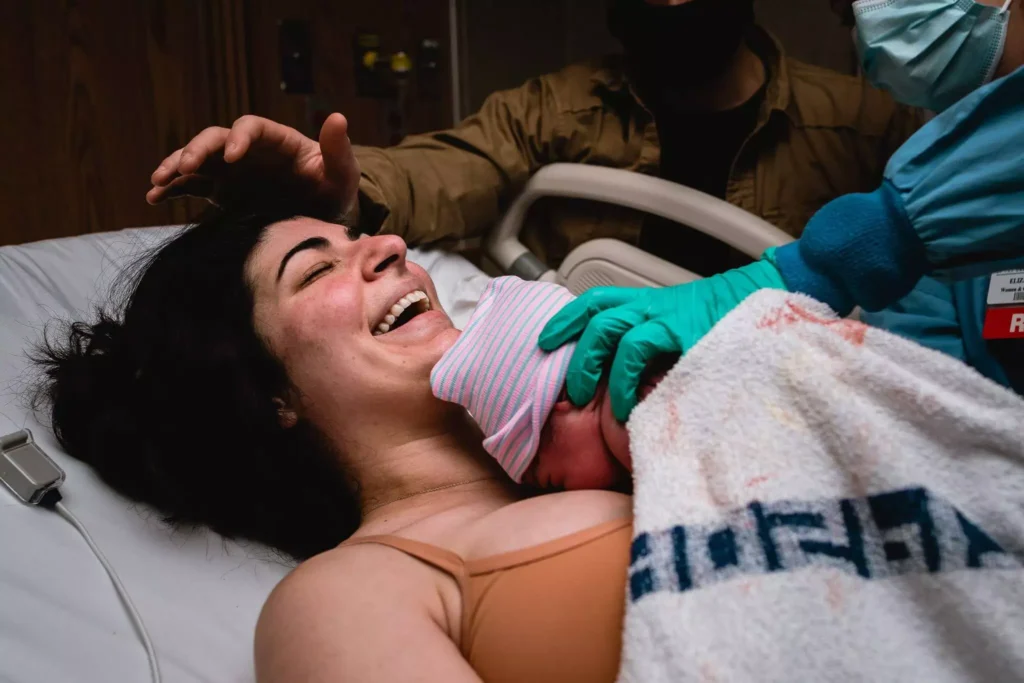

Learn the science of pregnancy and birth to take the mystery of labor away! Understand why you are feeling what you feel, and learn strategies to confidently move through pregnancy and birth!
- 9h+ of Video
- Support Group
- Close Captioning
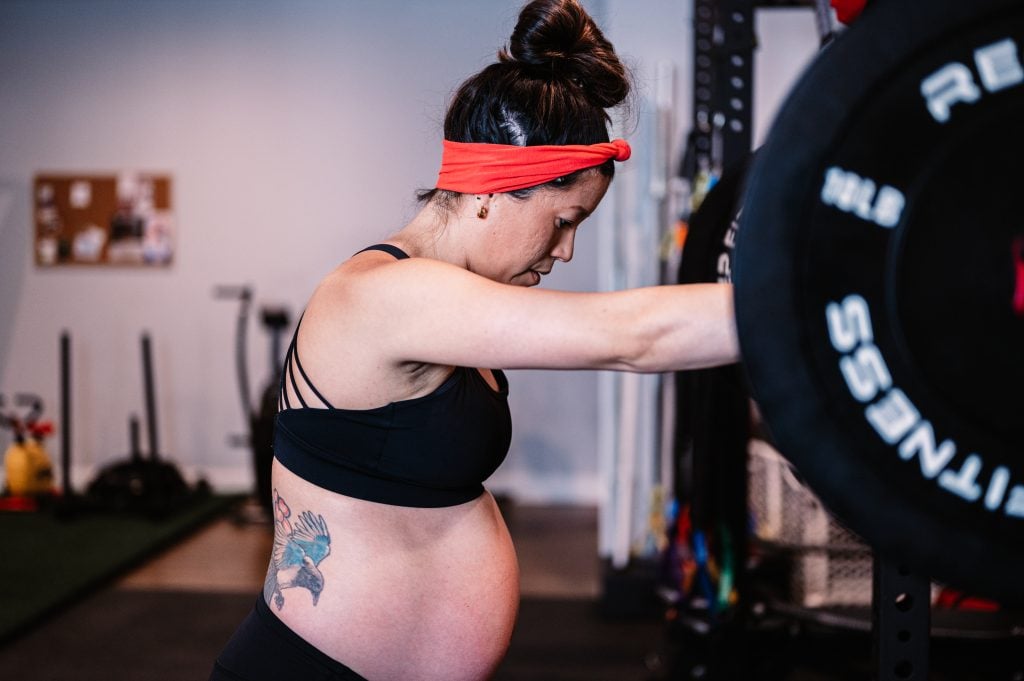

- 5 Workouts/Week
- Gym Workouts
- Self-Paced

Instructor
GINA
Workout on-demand with our prenatal fitness workout videos! Each workout is 30-40 minutes to follow along as you exercise at the same time!
- Birth Prep
- All Trimesters
- Mobility Work

Instructor
GINA
Find comfort and relief from pelvic girdle pain throughout your pregnancy and postpartum period! This program incorporates myofascial sling focused exercises to stabilize across the pelvic girdle joints.
- 3 Weeks
- On Demand Workout Videos to Follow