



Welcome to the MamasteFit Podcast! In this New Year’s episode, Gina shares the journey of creating MamasteFit—a global company offering both online and in-person pre/postnatal fitness programs, and childbirth education courses. Gina discusses the steps she and her sister Roxanne have taken to build their business, challenges faced, the importance of community, and how their backgrounds and commitment to continuous learning shaped MamasteFit. From starting small in 2017 hoping for 100 followers and handful of in-person clients, to a global company with hundreds of thousands of followers and even becoming a published author, Gina shares advice on what has helped her along the way.
Read Episode Transcript
[00:00:00] Gina: Welcome to the MamasteFit Podcast, and happy new year and welcome to 2025! In this episode, I’m going to share how I created MamasteFit. What were all the steps that I took to make my business both an in person business and an online business, and where I plan to go with it in the future.
[00:01:08] Gina: So, MamasteFit right now is a global company. So we are supporting clients all over the world with our online pre and postnatal fitness programs, our online childbirth education course. And we also have a brick and mortar location here in North Carolina, where we have a fitness facility where we train pre and postnatal fitness clients, we allow their kids and their families to work out in the gym. In our space we also have a chiropractor, massage therapist, pelvic floor physical therapists- we’re like a one stop shop for wellness for this specific perinatal demographic. On our Instagram page, we have over 360,000 followers. On YouTube, I think we’re over 12k at this point. TikTok, we’re over 60k. And so there’s a lot of people that are following us across different platforms, and so I want to share how I made it here. How did we come to this point where we have a very large social media presence? How I became an author, how I created the online courses, or in person, because it may be something that you’re interested in for yourself as well. And so I’m going to highlight the things that I had along the way that really helped to support my journey, who helped me along the way, and then just how did I do it? How did I do it?
[00:02:16] Gina: So MamasteFit started in 2017 after the birth of my first daughter. And so throughout my pregnancy, my birth, my postpartum, I just felt very confused on what to do, and so I wanted to figure out the answers. At that point, there really wasn’t a lot of perinatal fitness trainers online, there really wasn’t a lot of like online programming specific for pregnancy or specific for the postpartum, and the programs that I could find were like too easy for me. And so I wanted something that was designed for an athlete, for somebody who had an athletic background that wanted challenging programming. And this evolved over the years to include other types of workout programs besides what I would just like to do. But initially I created MamasteFit to be for the pregnant athlete.
[00:02:59] Gina: And so after the birth of my daughter, I had left my full time career in the army, I had pretty much lost all my friends because I was the first one to have a baby out of them, and so I was really alone and I was generally confused on what I should be doing. And so I decided that I was going to focus on prenatal fitness training, so I was going to train prenatal and postpartum fitness clients. And so the first thing that I did was I needed to figure out how do I do that? How do I train personal training clients? And so one of the guys that I was deployed with, his wife was a personal trainer, and so I reached out to her and asked her if she could meet me for lunch and just talk me through like what I should be charging. How do I find clients? What courses should I take? And so we had a great lunch where she shared like, “Hey, you should probably get some sort of personal training certification because it’s going to give you the foundational knowledge. And it’s also going to give you a little bit of credibility before you have the experience.”
[00:03:51] Gina: And so if you are brand new to a new field that you’re trying to move into, having some sort of certifications can be really beneficial. Either like the education, so like a Master’s degree, a Bachelor’s degree in your topic, certifications, like a personal training certification- those can all be really helpful to give you that initial credibility to know that you have the educational background to be within this field. And it’s going to help your clients trust you a little bit more from the beginning, especially if you don’t have the years of experience behind you.
[00:04:21] Gina: So I went and took a personal training certification, and then I went back to school to get my second Bachelor’s and a Master’s degree in exercise science. For me, because I was a stay at home mom with a small baby, I needed to do an online course, I couldn’t do like an in person brick and mortar education course like I did when I first went to college. And so I did an online school instead. This was a great option for me. And so every Sunday would essentially be my school day, and so my husband would take our baby and they would go and do something together, they would have daddy/daughter time, and I would spend that whole day just doing all my schoolwork for the week. And then if I had a little bit that I still needed to do during the week when he came home from work, he would take her and then I would completely focus on school, like one or two evenings a week.
[00:05:03] Gina: And so it was definitely a very intensive thing for both of us to be doing to help for him to support me while I was going to school full time, while he was working full time, while I was also trying to build this business and be parents to a little baby, to a brand new human being. And so it was definitely a lot of scheduling on our part, a little bit of sacrificing, like, what we can do on the weekend. And it took me about three years to do that Bachelor’s and to do that Master’s program. Because I was in the army, I did have a GI Bill, and so it’s one of the things that you get from serving that I was able to use to help fund this additional education background for me. And I also was able to use the GI Bill to pay for that personal training certification. So if any of you are military service members, veterans, or your partner or spouse is a military service member, you can use the GI Bill to help fund that. But if you’re not within that realm, we can also look at different scholarship options to help fund any sort of additional education that you want to do. And personally, I found online schooling to be most accessible to me because I didn’t really have the opportunity to put my baby in childcare so that I can go to an in person school. So, I went and got my second degrees in addition to the personal training certification. I was doing the degrees simultaneously of running my business. But the first thing that I did was get the personal training certification, and then I began coaching pre and postnatal fitness clients.
[00:06:22] Gina: So I initially started out in a personal training gym and I just rented space within it. And so I would give a portion of my revenue to the gym owner, and he was really great with welcoming us into the space, and allowing us to be in there with our kids- which was a huge thing for a lot of us as new moms, because there either wasn’t childcare available for us to leave our baby so that we can then go work out, or we just didn’t feel comfortable leaving our baby somewhere. And so he allowed us to have the babies in the gym. And so we would put them in the stroller, we’d have a little play area for them, and then we would work out together. Initially, I started my classes where one class was prenatal, one class was postpartum, and so 9 AM was prenatal, 10 AM was postpartum, but I was finding that it was like really hard for folks, scheduling-wise, to be able to come to those time blocks. Prenatal was typically easier because most of them didn’t have any kids yet, so it was easier for them to schedule throughout their day. But for postpartum, it became much harder because a baby really dictates your schedule. And so you might be out the door heading to your class and the baby has a blowout and then you have to change them, and then something happens, and then you’re 30 minutes late, and you’re like, “I might as well not even go. Like, my whole day is ruined now. I’m just going to stay home.” And so what I was finding was it was making it really hard for our postpartum clients to make it to the classes by having set class times.
[00:07:41] Gina: The other thing that I was figuring out was most folks are at different phases and not everyone needs to be doing the same exact workout. So during pregnancy, each trimester was a little bit different and so not every pregnant client should be doing the same workout. If someone’s in their first trimester versus their third, it’s going to be a little bit different for them based on what movements they can do. And the same for postpartum- somebody who’s six weeks postpartum is going to need a different workout than somebody who’s eight months postpartum, or somebody who’s been working out with me consistently, versus a brand new client. And so we adjusted to block time. So 9 to 11, you can come and work out with us, and I only did it like four days a week cause I was the only coach at this point. So I would show up at the gym at 9, I would work with clients until 11 and then I would go home. And then I started adding evening hours as well for the working moms.
[00:08:27] Gina: During our time blocks, because I had so many different clients at different phases who are all doing different types of workouts, I had these little index cards that I would write all their workouts down on it and they would have their workout and they would do it and I would help them with it. And so one mom would be doing deadlifts with this movement, another one would be doing squats with this movement, and this other one would be doing like bench press, for example. And so they would come in, their card would be up on the board, they would grab their card, most of the movements they start becoming more familiar with, and they would move through their workouts at their own pace. And then I would be there to guide each of them based on what movements they needed more help with. And so this allowed me to have a lot of different clients. Doing completely different workouts based on their phase of life. And so at first it was a little difficult to manage, but over time it became much easier as I got used to it. But this was how I was able to meet my clients based on where they were, rather than where I needed them to be for my own convenience.
[00:09:20] Gina: And so a lot of the moms, they would come, they would bring their babies and their kids, and we would socialize with one another, the babies would play together, and it became this really amazing community where we were all growing together as new moms. Like I was still trying to figure things out, they were also trying to figure things out, we were helping each other figure things out together, and it was just this really amazing community, and I’m so thankful for those initial clients that helped me figure out my programming and what exercises made sense and what exercises we needed to do differently.
[00:09:51] Gina: And so the programming that I first had when I started MamasteFit was not great. It was not as good as it is now, obviously. I think 10 years from now, my programming will be even better than it is right now. But initially when I look back at it, I’m like, “Oh my God, I can’t believe I had people doing that!” But my clients were super understanding. They knew that I was still learning too, and I really tried to approach it with a growth mindset, where I understood, “Yes. I don’t know everything. I will never know everything, but I’m going to continue to improve and learn and to make this even better.” And so with my clients, I figured out what exercises made sense, what groupings made sense, which ones didn’t- don’t do that again, Gina! And so that was, I was really thankful for all that. I figured out what modifications made sense for pregnancy, where in pregnancy different folks needed different types of modifications, where in the postpartum we could start introducing different movements. And so it was really wonderful to begin to explore all this with in person clients.
[00:10:47] Gina: And so that’s something that really makes MamasteFit stand out a little bit more, is that we don’t just train online clients. Like I didn’t just get pregnant and then create an online program, I started primarily just training in person clients and exploring different types of movement with those clients. Cause we all have different bodies, we all have different experiences and priorities. And so movements that feel really good for me and my body may not feel really good for other people in their bodies. And so this is where a lot of the testing and refining of our programmings became really helpful.
[00:11:16] Gina: I also had a few physical therapist friends that started working out with me and they were helping me tweak things as well and were really giving with the information and their knowledge, which I appreciate so, so much. And so Casey and Hayley, thank you so much for supporting MamasteFit along our journey, and just throwing all this information on me and answering all my questions. I really, really appreciate it so much.
[00:11:39] Gina: And so if you are trying to create a product to share with the world, either in person, online, know that it’s not going to be 100%. Like you’re going to put in 1,000% effort, but it might not be like a perfect product and it probably will never be a perfect product, but it’s okay if it’s like an 80% good product. Like just put it out in the world and then get the feedback and make it even better. Get the feedback and make it better. And this is just like this continual feedback loop so that you can continue to improve. But don’t wait until that product is “perfect.” Don’t let that be what prevents you from giving your knowledge to the world. Just go with it. You just got to put it out there and then be okay with it not being perfect. The first childbirth education course that we released, we didn’t even have microphones. We were just yelling at a camera. And then we were like, “We need to get a microphone.” And then we went and refilmed it all. And then we got better cameras, and we refilmed it again. And so it’s never going to be this perfect product, but people are still interested, and they’re very forgiving, and they want to support you. So if you have a product that you want to create, just do it. Just create it and put it out there and then improve as you need.
[00:12:47] Gina: Another thing that can be really helpful as you venture into creating your own business is understanding that there are going to be other people that do things similar to you. So there’s going to be other perinatal fitness trainers, there are going to be other doulas and other childbirth educators, but it’s okay. There’s plenty of clients for us all. There is no shortage of clients. We don’t need to bash somebody else to make sure that we get all the clients. And you’re also not going to be the best for everyone. So I’m not the best doula for everybody, the programming that I offer is not the best programming for everybody, like my childbirth education course is not the best fit for every student, and that’s okay! I’m okay with not being the best for everyone, and I know that there’s going to be somebody else at vibes, better with different people. And that’s okay. I also understand that there’s an abundance of clients. There’s plenty for us all. There’s no shortage of people that are pregnant, shortage of people that are postpartum. And so it’s okay that not every client chooses me. And I found that to be like a really helpful approach when I was moving through creating my business, because it’s really easy to get jealous and consumed with, “This other person is doing stuff really similar to me. They’re going to steal all the clients and I need them for my business!” Or if you’re online, you might say, “Somebody else is doing the exercises that I created!” And it’s okay. There’s plenty for us all. And having that kind of abundance mindset is really helpful to one, decreasing a lot of your stress, and then also just bring a little bit more joy to this journey.
[00:14:13] Gina: So after about a year of doing just pre and postnatal fitness trainer and refining my programming, figuring out what worked best for all of us, and creating this really amazing community in our local area, I expanded to also offering doula support. And so we were doing these labor prep workouts at the gym, where we would pretend we were having a contraction by doing like some high intensity exercise to get our heart rate up, and then we would spend like one to two minutes trying to lower our heart rate or aspiration rate and relax in different laboring positions. The folks’ partners would come and they would do different comfort techniques. And so one of the prenatal clients asked me to be her doula and I was like, “Sure, I’ll go take a course.”
[00:14:51] Gina: And so again, I was trying to venture into a new career field. I did not have the experience to back myself up. So I decided to take a professional course to certify myself. And so I took DONA’s birth doula course, that was the organization that I chose to go with. There’s so many different doula organizations out there, but I would definitely look for one, if you are starting as a doula, that would be reimbursable by insurance. So DONA is one of them and different insurances do different ones, and so seeing like which ones are most common with the insurance in your area can be really beneficial to market yourself as a doula, especially if you’re new, if your clients know that they can get some reimbursement from their insurance. For me, DONA was one of those doula organizations that is commonly reimbursed by insurance, so this is who I chose to go with.
[00:15:35] Gina: So I took the doula course, and then there’s a certification process that I had to do after that. But I was really fortunate in my early doula days that I was able to back up for a really experienced doula in our area, and I was able to get a lot of births in really quickly, which was really uncommon for a new doula. Usually it takes a year or two to reach the number of births that I had met within two months. So actually the first birth that I attended was not my hired client’s birth, I was a backup for another doula’s births.
[00:16:04] Gina: And so while I was attending births, I was also understanding that I am new to this, and there are going to be things that I am going to wish I knew looking back. So there are things that when I look back to the first births that I was supporting that I wish I knew all of this information that I know now, but it’s still a learning experience. I’m never going to be perfect and I’m always going to be continually learning. And even the births that I attend now, looking back 10 years from now, I’m probably going to know, “Oh, there’s all these different things that I could have done,” as I learn more and more.
[00:16:33] Gina: So I spent a lot of time at these births just observing movement patterns, watching what folks were needing, and trying to be like really observant to what was happening. And this was super helpful for me because I started understanding what type of movement patterns were needed to create space within the pelvis, what type of intuitive movements folks were doing, when certain types of comfort measures seem to be really helpful, what type of comfort measures should we try? And I was just experimenting with everything. I was okay with if I offered something and it didn’t work. I was like, “All right, I’ll never do that one again.” And so it was a really good learning opportunity for me as well, while also getting to support this really transformative time in people’s lives. And so it was really special to me, all of the births that I’ve been invited to, that I’ve had the opportunity to support. And it means so much to me that folks trusted me to be in that sacred space with them.
[00:17:19] Gina: And so with all the information that I was now learning in births, I continued to improve our prenatal program based on what type of movement patterns I understood we needed to be able to do during labor to make it an easier process, and so our prenatal program really began to adapt at this point as well.
[00:17:34] Gina: At around the same time, our Instagram page also started to take off. And so initially I had, like, 100 followers on Instagram. It was really just like the local community. I was just trying to get like more moms to come to my in person classes. But then I posted a video where I was trying to explain how internal hip rotation creates space in the bottom of the pelvis, which is the opposite of what I had been seeing promoted in a hospital setting. And so I was like, how do I show, how do I visually show that internal rotation creates space in the bottom of the pelvis? And so I took some tape and I painted a white dot on it and put it on my two sitz bones, so like little bony bumps on your butt. So I put it on there and then I was like, I told my husband to take a video of my butt, and I started to move my ankles out and I kept my knees in, and I was like, “Do you see the dots moving?” and he was like, “Yeah, I see them moving.” And so I posted that video and that was our first viral post. We got like a hundred likes on it, which was a really big deal. Normally I only get five or six likes on our posts. And I also got over a thousand followers from that.
[00:18:35] Gina: And so when it came to social media, I began to realize that certain types of content seemed to resonate more with folks wanting to follow us and to help us grow our platform. And so folks were looking for visual aids and clues to help them better understand these more complex things that are a little bit harder to see. So I was creating all these visual props, I was buying these different props to show different things, I was using dots and movements, and I just started posting these educational videos. At this point, there were no reels, it was just like one single post. I think you could do carousels at this point as well. There was just like one video post. There were no reels at this point. You couldn’t even have “swipe up” or “click a link” without having like 10,000 followers. And so I started creating all these educational videos to explain primarily like childbirth topics, but really focusing on pelvic mechanics and like the science of birth, and it really resonated with our followers.
[00:19:29] Gina: I also started teaching a childbirth education course at our gym, and for the childbirth education course, I created this like workbook. So it was just like a little manual that had all the information that we were going over in the course. And I posted a video of me flipping through it, and I had 10 people that asked me to buy it. And then I had 50 people that wanted to buy it. And I was like, “Oh, okay, so people are interested in something that I have to sell.” And so I made like a thousand dollars from selling this ebook, and it was like really cool to me. I had no idea that anyone would be interested in this at all. And so at this point I realized that maybe I should start to think about online offerings so that I can reach more people beyond my local community. And this is where a lot of folks get like decision paralysis where they don’t want to take the next step because they don’t have that perfect product. And so that ebook that I was selling five years ago is much better now. It’s a much better product! But if I didn’t allow myself to release that, then I would have prevented myself from being able to expand in this way.
[00:20:28] Gina: And so we started offering our fitness programs online. I started with just eBooks and then I expanded to the TeamBuildr app, which is what we still use to this day. I also started offering more eBooks and other things online as well. And folks started buying them! And it was like really exciting to see this really big shift in my income.
[00:20:46] Gina: And so if you’re going to use social media as a platform for your business, it’s important to note what type of content creates conversions. And so what I mean by conversions is somebody is going from your social media page and either joining your newsletter, or they’re buying a product from you, or they’re going and signing up for a service with you. We are very giving with the information that we give on our different platforms- with the podcast, our Instagram page, our YouTube channel. We are just like regurgitating tons of information, like in lots of depth, on all these different platforms, because we want this information to be accessible to everybody, regardless of finances. But we consolidate it better within our paid courses. And so these platforms do not pay you well. Instagram pays us like five cents a video. Like it is not a sustainable way to make an income by just posting content. And so you also have to think about how is this content going to generate into conversions.
[00:21:42] Gina: And so for us, we think about what type of end courses that we want people to end up at, or be inspired to buy. And so we have our prenatal programs, our childbirth education, and our postpartum fitness programs. And so we’re going to create content that demonstrates what is special about those programs. And so we’re going to educate on prenatal fitness. We’re going to show prenatal workouts. We’re going to explain specific movements that are really beneficial for pregnancy, birth prep exercises that somebody can be doing, pelvic floor exercises that somebody can be doing. And then within that, what type of content seems to really resonate with our followers, with our viewers? And this is going to shift over time based on the different types of people that are interacting with your page, kind of new generations, like new type of people. And so the type of content that we were doing 7 years ago is really different from the content that we’re doing today. And it’s going to be different than the content we do 10 years from now. And so just paying attention to your analytics to see what type of posts perform well and then what type of posts tend to convert to whatever it is that you’re trying to send people to. And so for us, we want people to sign up for our newsletter and then we also want people to end up buying our fitness programs and our childbirth education course.
[00:22:48] Gina: So while it’s really nice when folks do buy our fitness programs and our education courses, our main goal at MamasteFit is to help folks feel confident as they move throughout their pregnancy, as they prepare for birth, to feel empowered throughout their birth experience, and then to feel confident navigating motherhood. And so for us, if nobody bought any program from us ever again, we would still feel very rewarded by knowing that we are changing lives and we are helping so many people around the world. But it is a really nice add on that this is also how we make an income and this is how we sustain our families.
[00:23:20] Gina: And so I think that’s also really important when you approach creating a business, is to understand what your mission is and how you’re helping others- and to keep that at the forefront of your business. It’s not about, “how much money can I make off all these people?” It’s, “how can I help these people, and as a really nice benefit, make an income?” I find that when businesses only focus in on making a dollar, it really shifts the way that they approach customer service and how they support their clientele, and it really just doesn’t resonate with me as a client.
[00:23:48] Gina: And so now on Instagram, we have over 360,000 followers, and this is all organic growth. These are just people that decided to follow our page because of the information that we share. We’ve never paid for followers. But there’s different things that you can do to help increase your reach. So you can try to partner with bigger pages, you can try to do shared posting, like collaborative reels or posts now. You can try to do like podcast episodes. A lot of it is relationship building with other brands and other content creators so that we can all just build each other up together.
[00:24:18] Gina: So rewinding just a little bit, in 2019, we shifted to our own brick and mortar space. So I was working out of another gym, it was a personal training gym. And then in 2019, after about like 18 months to two years of being in that gym, we shifted to have our very own building cause we were outgrowing where we were. And so while we were here, what was really beneficial for me was to have the doula services being offered as well, cause it really boosted my monthly income to allow me to sustain the gym. So I was barely making like anything over my overhead at this point, and so the doula work really helped to fund all this as I was trying to figure it out and continue to grow my clientele.
[00:24:58] Gina: And then in 2020, we shifted to another building that was in a better location that worked better for us… And then COVID happened and it shut everything down. And so all of a sudden I lost the income that the gym was generating and had to figure out how I was going to continue to pay for our facility that clients could not come to anymore. And so at this point, we begin to share the space with other practitioners so that we can share overhead- and they’re all still within the gym now. So we have two pelvic floor physical therapists, a chiropractor, a massage therapist, and then we also have a neuro PT that works out of our space. And so we all collaborate together, we all kind of share expenses together, and we all get to support clients without feeling as financially stressed about it.
[00:25:40] Gina: So if you’re looking to open your own brick and mortar, and you are just starting out or you’ve only been doing it for a few years, it can be helpful to collaborate with other businesses so that you all can work together in one space.
[00:25:52] Gina: Another thing that happened around the same time was our social media platform like exploded. A lot of people were online at this point because we just had nothing else to do, and so we decided that we needed to offer some online classes. Folks were asking about our online courses, they wanted to learn more from us, they wanted more than just our social media. And so at this point was when I dragged Roxanne into MamasteFit. So Roxanne is my sister, she’s a labor and delivery nurse, and I was like, “We need to make an online childbirth education course together.” And we had been talking about it and talking about it, and we just never actually did it. And then COVID happened, the gym was closed, and we were like, “Well, we’ve got an empty gym, might as well do it.” And like I said earlier, we started by just yelling at a camera, we didn’t even have microphones, but we created this course and we launched it, and we were really excited and we wanted to have a hundred people sign up for it. And we had a hundred people sign up for it right away, and it was really exciting! And then they all gave us feedback to get a microphone. They were thankful for the information, but they would love better audio. So we bought a microphone off Amazon, we rerecorded the entire education course, and it was a little bit better. There was definitely still room for improvement, but we released it. We’re really excited about it, and we’re getting really good feedback from the course.
[00:27:02] Gina: And there’s always room for improvement. So over the years, we’ve gotten better cameras, we’ve gotten better recording equipment, we’ve gotten better microphones. And we also have a team that helps us with the video editing, with the audio and all that as well that we are so thankful for.
[00:27:18] Gina: And so a lot of folks ask me, “How do you do it all? How do you do everything?” I don’t. I definitely do not do everything. We have child care with our parents who live nearby, so they help out a lot with the kids so that we have the time to come and film and to work on different aspects of our business. Our husbands are very much a part of helping us with the business as well, it is a family business at this point. And then we also have a background team that helps us with the video editing, with getting things onto our website, to launch things on the YouTube channel, so that Roxanne and I can really focus our energy on content creation.
[00:27:50] Gina: And so we don’t do everything all by ourselves, we have a team. And there’s a certain point as a business that you need to start thinking about what do I invest in to help improve my processes? And there’s a certain point where you need to delegate and you need to figure out who can you pay to do certain things for you. And so something that I had to do is figure out what do I not have to do? Gina does not need to be the one that edits all the videos cause we have Amazing Max who does it for us. And I don’t need to be the one that does it, he can do it better than me. And so figuring out like what it is that Gina needs to do versus what somebody else can do who can probably do it better than me, was something that was really hard for me to let go of at first, because I felt like I needed to do everything. Once I expanded to allowing other people to take on tasks and do those tasks better than me, it really opened me up to have more time to spend with my kids and to focus on different aspects of my business. So creating that team and delegating and figuring out your priority tasks is going to be really important as you build your own business or as you create something for yourself.
[00:28:54] Gina: I always think back to the early days of MamasteFit where I was not making any money. If anything, I was spending more money than I was actually making. But my husband would come home from work after working all day- so he was leaving 4 or 5 in the morning, coming home 8 or 9 at night, he was in a really intensive job at that time- and he would take our baby and try to get her to sleep and do all the things for her and just focus completely on her so that I can try to get some work done. And I look back to those days and I always tell him that I’m so thankful that he did that. He didn’t have to do that. He could have easily been like, “Hey, you need to stop with this hobby. We don’t have time for you to be doing this right now. You need to wait until I’m in a different job.” but he said that he saw that this was something that was really important to me, that I was feeling very passionate about, and he felt like he needed to support me in it. That, even though it wasn’t making any money, he knew that it was important to me, and he wanted to help me have this thing for myself, especially because he knew that I had left my career, that I was feeling more lonely, and that I wanted something for just Gina. And so I’m really appreciative to him for having that perspective on it at the time, because I know it’s not what everybody would want to do at that time. They might be coming home from work, and just be exhausted, and just wanting to focus and relax and go to sleep, but he chose to really support me during those really hard times. And now our business is much more profitable.
[00:30:15] Gina: So where is MamasteFit right now? So across all our platforms, we have tons of followers. Instagram’s over 360k, TikTok is over 60k, YouTube, I think we’re over like 12 or 13 K at this point. So we have a lot folks following us across different platforms, which is really exciting because this is how we get our free content out there. We are sharing tons of information about pregnancy, birth, the postpartum, across all these platforms because we want this information to be accessible to all, regardless of finances. And then if you do want to pay us, we do have our education courses on the TeamBuildr and the Teachable platforms. And so Teachable we have our education courses. And I realized that not everybody wants to work out exactly like Gina does, some folks prefer different types of workouts. And so we expanded from just the TeamBuildr app with workouts that Gina likes, to video workouts, to yoga classes, to mobility stuff. And so we expanded what we offered based on, not everybody wants to be just like me, and that’s okay. And so all of our video based workouts are on the Teachable platform, and that’s where we host a lot of our education courses.
[00:31:22] Gina: In addition to those platforms with our education courses, our free content, we do have the podcast, which is what you’re listening to right now. And I’m also an author of a book called Training for Two, which is all about how you can use prenatal fitness to stay strong and pain free throughout your pregnancy as you prepare for birth. And so this was probably our latest baby that we have launched into the world. And hopefully in the future we get to write more books about childbirth, about postpartum fitness, but this book was like a really exciting adventure for us because I have always wanted to be an author. When I was a kid, I wanted to write like fantasy novels after reading Harry Potter. And so it’s really cool to find myself an author now in a very different realm. I’m not writing books about dragons, I’m writing books about fitness and all these nonfiction self help books, which I would not have imagined myself doing as a child, but it’s really cool to know that I’m an author now.
[00:32:13] Gina: How we came about writing a book, because there is a whole process that is involved with writing a book, was we actually had a publisher reach out to us, wanting to create a prenatal fitness book. And so our publisher is Quarto Publishing, Fairwinds Press, and we were really excited when they reached out to us. I thought it was a scam at first, but then quickly realized that it was a real deal, and it was really exciting to go about the entire process. It took about like 18 months to do the whole process, so it is very lengthy to do, but really excited to have learned along the way. And hopefully this book does really well so that we have an opportunity to write more in the future.
[00:32:49] Gina: I’m also now a mom of four. So I started MamasteFit, which just one. One baby. Now I got four babies, and each birth and pregnancy journey and postpartum journey I’ve learned more and continue to improve things that we offer because of my own personal experiences, in addition to my professional experiences. And my oldest is now in school, and so we are in a blended program where she does two days a week at an elementary school and the rest of the week we homeschool. So it’s like this mix of both, which is really awesome. And again, the reason why I can seemingly do it all with our Instagram, our education courses and fitness programs, while being a full time mom is, I have a great team to help support me along the way.
[00:33:29] Gina: Now, where do I envision MamasteFit going in the future? I think we’re going to continue to go along the way that we do where we offer our fitness programs and our education courses, but we would definitely love to expand more in the professional. Like I said earlier, I am not the trainer for everybody, I’m not everybody’s doula, but I do think that the information and the knowledge that we have is really important to a large group of people, but I think it’s really nice to have an in-person option. And so we hope to expand in the professional world where we offer more professional education courses, like in-person workshops, in-person courses for folks to learn both for fitness training and for birth support, so that we can have more folks across the country and across the world that have been trained by us to help support you during your pregnancy or birth and beyond.
[00:34:14] Gina: So this year we are going to be expanding our Birth Workers’ Course and our Fitness Trainers Course to offer information specific for physical therapists, chiropractors, for midwives, OBs, and nurses, and so we’re going to be collaborating with the two pelvic floor PTs in our gym to really expand our professional education course, both online and in person with workshops.
[00:34:34] Gina: Now for myself in the year 2025, my main goals are to eat breakfast every day. I’m thinking about my own health and supporting that long term. So one of the big things that I’m thinking about is eating my breakfast every morning. And one of the things that I’ve been adding into my breakfast to help increase the protein is Needed’s collagen. Needed’s collagen is one of my favorite products of theirs. I like to mix it into my coffee into my morning oatmeal to help increase my protein intake. I took it throughout my entire pregnancy, I take it now in the postpartum because our protein needs Increase both during pregnancy and in the postpartum. And so they’re a brand that Roxanne and I both personally use and we trust. I’ve been working with them since the beginning of their company. And so if you want to check them out, you can check them out at thisisneeded.com and use code MAMASTEPOD to get 20 percent off your first order or first month of subscription.
[00:35:22] Gina: And so I am focusing on increasing my protein intake throughout the day by making sure I eat breakfast that’s higher in protein. I’m also trying to sleep a little bit more at night- it’s a little bit hard with a baby. Trying to be more consistent with my workouts and also increasing my daily step count. So we’ve been doing this Step Bet challenge every month that gives me like a daily step goal. And so that’s been really fun for me to be able to do as well.
[00:35:45] Gina: For me, professionally, I would love to write another book, I liked that. That whole experience was really fun and I think there’s a lot of information that I have that I want to share with the world. And then, of course, I want to continue to support you all here at MamasteFit. It’s been a really rewarding journey. I never thought that this is where I would end up. I truly believe that we’re changing lives and we’re, helping people have a better experience. I didn’t have a great first birth experience, I was really confused in my whole first pregnancy, and I wish I had this resource when I was starting it cause it would have been a much better journey for me at the beginning.
[00:36:21] Gina: And so I’m really thankful for all of you that have chosen to follow us, to join our online courses, to join our fitness programs, to support us along this journey, because without all of you, there would be no MamasteFit and I am truly grateful for you all. I hope 2025 is a great year for all of us, and thanks for choosing MamasteFit to support you on your journey.
Prenatal Support Courses
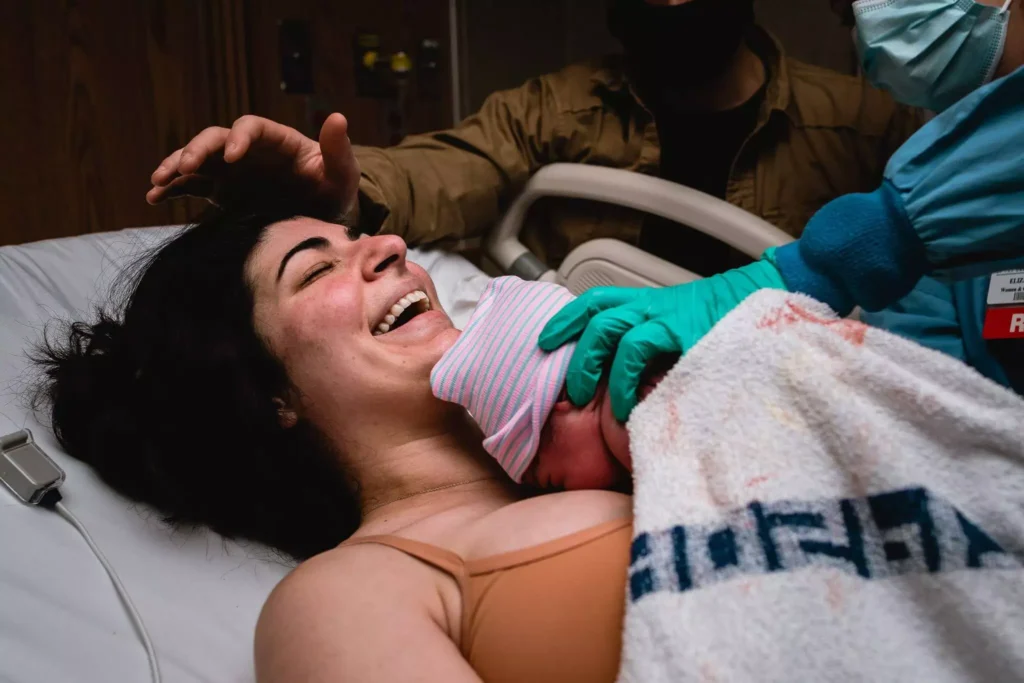

Learn the science of pregnancy and birth to take the mystery of labor away! Understand why you are feeling what you feel, and learn strategies to confidently move through pregnancy and birth!
- 9h+ of Video
- Support Group
- Close Captioning
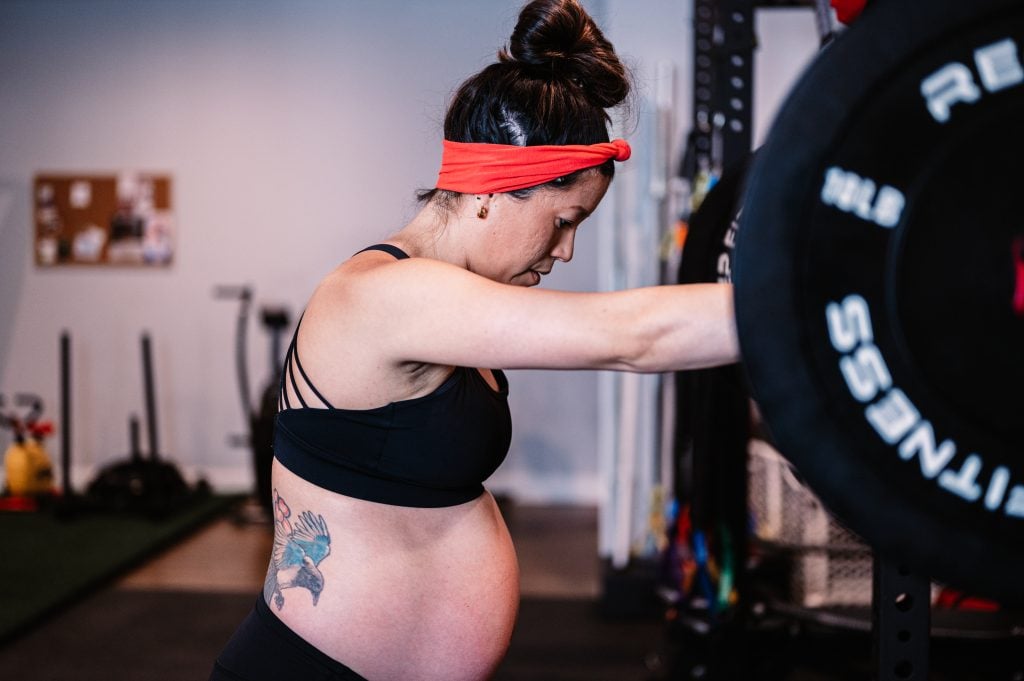

- 5 Workouts/Week
- Gym Workouts
- Self-Paced

Instructor
GINA
Workout on-demand with our prenatal fitness workout videos! Each workout is 30-40 minutes to follow along as you exercise at the same time!
- Birth Prep
- All Trimesters
- Mobility Work

Instructor
GINA
Find comfort and relief from pelvic girdle pain throughout your pregnancy and postpartum period! This program incorporates myofascial sling focused exercises to stabilize across the pelvic girdle joints.
- 3 Weeks
- On Demand Workout Videos to Follow