



Welcome to the MamasteFit Podcast! In this episode, Gina speaks with Jo Robertson, a New Zealand-based sex therapist specializing in women’s sexual health and postpartum intimacy. The discussion covers strategies for rebuilding intimacy after childbirth, starting with a strong non-sexual connection. Key topics include the ‘orange light’ approach to intimacy, dealing with guilt and societal pressure, practical tips such as the Three Minute Game, the importance of lubrication, and using vibrators. Jo also shares the significance of self-view and body positivity postpartum. The episode highlights the importance of communication with partners and planning ‘date nights’ at home.
Read Episode Transcript
[00:00:00] Gina: Welcome to the MamasteFit Podcast. If you are nervous about approaching intimacy in the postpartum, or you’re not sure when to begin, or maybe you don’t want to be intimate at all with your partner, in this episode, we’re going to be talking with Jo Robertson- who’s based out of New Zealand and is a sex therapist- all about how you can approach intimacy after birth. In this episode, we’re going to talk about ways that you can establish a strong foundation to build intimacy from, to include ways to connect with your partner without being sexual or intimate with them.
[00:01:18] Gina: Welcome to the MamasteFit Podcast. In this episode, we’re going to be talking all about approaching intimacy in the postpartum and are really excited to have Jo Robertson here to talk all about that. So thank you so much for coming on the episode with us, Jo.
[00:01:31] Jo: Oh, it’s so good to be here and talking to you!
[00:01:34] Gina: So can you just introduce yourself to our listeners in case they are not familiar with you?
[00:01:37] Jo: Yeah, great! And probably people are picking up, I’m not American! So, I’m in New Zealand and I haven’t actually lived here my whole life, but I would consider myself from New Zealand. I am a sex and relationship therapist, so I have a few different specialties. I focus a lot on women’s sexual health and on the postpartum, often in the perinatal period- perinatal being from when they get pregnant right up until a year postpartum.
[00:02:10] Jo: So I’ve worked with lots of couples in that, what I call like a bit of a “crunchy” phase of their life, which is things are just really harsh. And so often people are trying to tackle multiple things at one time in their life. They might be trying to buy a house or pay a mortgage, they might be trying to escalate their career or do really well, they’re trying to hold a lot of friendships, and then they’re also trying to be parents, and they’re having a huge shift in their relationship as well. So it’s like everything might be coming at them at one time.
[00:02:39] Jo: I have been a sex therapist for, I’m going to say eight years, but I’ve been in sexual health and sexual trauma for 19, and most of that, I’ve been a therapist. So I used to work with kids and then I found myself always drawn to the parents, and I kept wanting to talk to the parents and hear more of what was going on for them. Because, it’s quite interesting that the way parents have sex or the way that they think about relationships, the way that they think about gender, things like that, that ends up impacting their parenting so much, and therefore that next generation. I still do a lot of parent education around how to talk about sex and how to talk about relationships and things like that because they’re so interlinked for me. So that’s a little bit of a broader picture of my work.
[00:03:33] Jo: And then I’ve got three kids- three boys, always wanted a girl, never happened. I actually cried when they told me my second was a boy. I just couldn’t control my reaction. It was so embarrassing in front of the person doing the scan! But I’ve gone on a big journey with that, and I’m now really excited about the boys and growing great men into this world. I’ve been married for 15 years and my husband and I have been together for 17. So, also got a sense of what it’s like to be having intimacy over a long period of time and trying to keep things slightly interesting! So yeah, that’s a bit of the professional and a bit of the personal.
[00:04:20] Gina: Awesome. So let’s start with just approaching intimacy again in the postpartum.
[00:04:26] Gina: So for me personally, after I give birth and, even when I’m outside that initial, four week or six week, like, “all clear, now you can do all the things” timeframe, I am, for whatever reason, very nervous to approach intimacy. Even with my last birth, I didn’t even tear, and I’m still like, “I just don’t know if I want anything being put in there right now. I just need some space!” I’m also super touched out, I have this baby, just hanging off my body all day, and I have four kids, so they’re all just piling on and touching me, constantly. And so then my husband is like, “What about me?” And I’m like, “You are, like, very low on my priority list of who I’m looking to touch right now.” So I feel like it’s probably a very common situation for a lot of folks after they give birth and they have young children as well.
[00:05:13] Gina: How is your general approach for intimacy in the postpartum? What are some things that folks can do to begin that remembering that they have a partner process?
[00:05:25] Jo: Yeah, so echoing the fact that’s really, really normal. So I’ve talked to two people, ever, who desired intimacy at six weeks. So I have, by far, I’m making this stat up, but I still think it’s a good, pretty reliable one, it’s 99 percent of mums and women, they just are in the “NO” camp at six weeks.
[00:05:49] Jo: And I think that the fact that we even give a date, the date thing is helpful, sort of, but also really problematic because it creates this kind of benchmark where apparently that’s, “green light, go,” and it’s actually not. It’s just that prior to that it’s “red light,” and that’s just in terms of anything penetrative. So anything going inside the vagina. And also if you’ve had a Cesarean, you’ve probably got maybe some ongoing pain or a wound there that you’re just wanting to make sure it’s really well protected. So your risk of infection is just higher in that first six weeks and your recovery is happening. So that’s why it’s “red light,” but after that it’s actually “orange light.” It’s not green. So it’s a: see how you feel, go really slow, be cautious. I don’t love that we give this message, I don’t even know if it’s explicit or if it’s just implicit, we feel it, that we’re supposed to just kick off at six weeks. That we’re physically ready and therefore we must just be ready in general, and no, that’s just not the case.
[00:06:59] Jo: I recommend taking that cautious approach and moving really slowly. I like to tell people that you think about going back to old school dating when it was like, oh, it’s really exciting to start holding hands, or kissing more often, or touching each other a bit more to be getting more close. And then you listen to your body and like care when it’s ready. So pressure is a pleasure killer. That’s absolutely the case, but specifically at that six weeks, but I would say anywhere up to about three months, any kind of pressure you put on yourself, your partner puts on you, is just going to kill your desire completely. So you want to go quite slow and do that build up, listening to your body around when it’s ready. Is that making sense?
[00:07:46] Gina: Absolutely.
[00:07:47] Jo: Orange light.
[00:07:49] Gina: Yeah. So this orange light could last… it could be a really long orange light!
[00:07:53] Jo: It can be a really long orange light. And I will use my own personal experience. After our second, we didn’t have any kind of big intimacy for nine months. And we definitely took the approach of, we’re just going to wait until I feel ready. And I had a history of sexual pain, particularly postpartum after my first, and we know that the pain cycle, like the more often you have sexual pain, the more likely your body is to respond with no desire, but also more pain in the future. And so every time you send a message that sex is painful, why would your body desire that? Like nobody desires to be kicked in the shin, because it’s painful.
[00:08:36] Gina: Absolutely, yeah. Not my idea of a good time.
[00:08:39] Jo: Yeah! And so one in five women experience postpartum sexual pain. And so that’s, I think it’s 22 percent specifically, and so that’s a lot of people who, if they just pushed through and they just kept going, would actually have long term kind of issues with sexual pain. They can be recovered from, but it sits there in the background.
[00:09:00] Jo: So we very much took the approach over that nine month period of orange light, just moving to green when my body felt ready. And I think that my postpartum experiences and the fact that I have the three kids has really influenced my work as a sex therapist because I just so get it. And I’m not this superhuman person who just wants a lot of sex all the time, I’m just a really normal person who’s tried to navigate those seasons of life.
[00:09:36] Gina: Absolutely. Yeah, I think the same for me after each postpartum, I feel like there’s always a bit of guilt for me, where I’m like, oh, my poor husband, this poor man is just being deprived. Because it’s usually the last-ish month of my pregnancy, I’m like, “Please, I just don’t, I don’t feel comfortable in my body. I’m just like, not interested,” and then it’s like several months postpartum before I’m like, “Let’s explore some intimacy together.” Cause I just do not have any desire. I am breastfeeding a baby, my babies sleep in bed with me, like, my kids are touching me all day and I am just fatigued. And I just do not have a desire.
[00:10:16] Gina: But I still battle with that little bit of guilt where I’m like, “Oh, my poor husband,” even though he puts no pressure on me at all to be intimate. Like he is very like respectful of, “It’s fine if you’re not like feeling it, I don’t want you to do it if you don’t want to.” So there’s no pressure from him, I think it’s just like this internal pressure that I put on myself, maybe from like external societal expectations. Like six weeks, I’m like, ready to go, I have to please my husband, kind of thing.
[00:10:48] Gina: So how would you recommend someone like manage like potentially that guilt of not wanting intimacy yet? Like they just don’t feel it, but feeling like guilty about their partner potentially being like, quote unquote, like “deprived” of intimacy as well.
[00:11:07] Jo: I absolutely understand that. I think, imagine us saying that about a 16 year old. Oh, you feel guilty about not offering your body for sex because the other person wants it. We would all look at that and go, “Oh, that’s really not okay, and you should do what feels comfortable for you.” So I sometimes put myself in that like, oh right, in general, if I put myself in a different season of life, no one would find this acceptable for this pressure to be on myself or this pressure externally to be put on me. So just that little reframe, like just because I’m an adult, doesn’t change the fact that, that pressure isn’t okay internally or externally. So there’s that little bit.
[00:11:58] Jo: I also find it helpful to think about the fact that there are people all over the world who don’t have sex for extended periods of time and they’re really okay, like they’re actually all right. Everyone will survive. There are people who, there are adults everywhere who don’t have sex for years on end. They’re okay. Like they’re not…
[00:12:22] Gina: That’s a good reframing!
[00:12:23] Jo: Yeah, yeah! They’re not psychologically damaged as a result. So everyone’s going to be all right.
[00:12:33] Jo: I think it’s about, for the partner, I think two things. One is you’ve said right there, something really great, which is I think that you have talked about it with your husband. There’s been some kind of conversation where he’s going, “No, I don’t want you to do anything you don’t want to do,” so that internal pressure can often sit in the darkness, and so I encourage people to bring it into the light, because then we can look at it externally and go, what is that? And what is it about? And And then they can show you or share with you their perspective on it, whereas if it sits internally in the dark, they never get to speak to it. They never get to reassure you. So allow them that opportunity to reassure you, to help you feel more comfortable. Hopefully people are with partners who do that. I know lots of my clients for whom that’s not the case and we have to talk through consent and pressure and obligation and duty and how that’s like a terrible foundation for intimacy, it will actually only harm the relationship long term. So conversation, bring it into the light. Let them reassure you.
[00:13:42] Jo: And then, other strategies, talk about if masturbation is okay in this season. So it’s not for everyone and that’s okay, I’m respectful of everyone’s different values and beliefs around that. But, when we went to a sex therapist years ago, I remember they said, “So,” this is to my husband, Dave, “Dave, can you just DIY?” And I really liked it because she was basically saying, let’s talk about this as a group, let’s really get this out. And then I could say, “Yeah, I’m really comfortable with that,” and then she could say, “Let’s take the pressure off Jo, cause she’s on a different kind of journey and we need there to be no pressure in this relationship.” So that’s a conversation.
[00:14:26] Jo: And then often for the partner, they just want to feel like they’re moving forward. Let’s say like typically it’s dad, they just want to feel like there’s a plan, or that this isn’t going to be years. And I find that even if it has been years without sex and intimacy, they’re like, “Okay, like, where are we going?” And people are often a lot more patient, loving, kind, supportive if they know where they’re going. And so share, like, “Here’s what I’m imagining. I’d really like to start doing these kinds of things. I feel like it would be nice to start showering together. I just want to go with the orange light caution process and just slowly integrate things. And hopefully in my mind, I’m thinking, when we’re like, yeah, let’s say six months postpartum, nine months postpartum a year, then life will be way more normal.” And I find their partner’s like, “Okay. I get that. I just wanted to know that we weren’t in this holding pattern for the next five years,” because they can’t see the end.
[00:15:35] Gina: Yeah, absolutely. I think that’s a really good approach to just talk about it out loud. Because I’ve been doing that with like other things that have been bothering me postpartum as well, and just saying it out loud brings it to light, and then I feel like I can manage it better. As opposed to just letting it like dwell and it builds into anxiety and like concern.
[00:15:56] Gina: And so when I can just say whatever it is that’s bothering me out loud and acknowledge, “Hey, this is not from you. I’m not feeling this pressure from you. I’m putting this pressure on myself as a societal expectations of me as a woman, as a wife, like what I feel like I’m supposed to be doing for you, even though you are not in any way pressuring me to do anything.” I think just talking to him about it is going to be really helpful to helping me be like, “Okay, like I don’t have to put this pressure on myself.” And every postpartum, it’s been really similar where it’s like a period of time where I’m just like, “I just don’t have any desire. Like I just don’t.”
[00:16:36] Gina: And then once my period comes back and I start ovulating again, my body’s like, “Let’s make another baby!” My desire begins to definitely increase at that point. So I think for him, he probably knows we’re gonna get there, it’s gonna come back. This is just a phase and it’s been a phase each time. But I think talking about specific timeline could be really helpful for him.
[00:16:58] Gina: Some things that we’ve started doing to help with finding intimacy again and showing like affection towards one another, especially in front of our children to set an example of this is what a healthy relationship looks like, is we’ve been like hugging more and like just kissing and like snuggling on the couch and just physically touching one another, I think has been something that’s been helpful for us that feels like within reach for me, or within… I don’t know what the right word is, but sometimes I get touched out, but like that stuff feels very manageable and very approachable to me at this phase, but where I’m still showing affection towards him. And it’s just maybe not sex. So do you have other recommendations on folks for what they could do, like to show affection, that’s maybe not intimacy.
[00:17:47] Jo: Yeah. So you’re really hitting two important things there. One is that when you touch in general, each partner feels wanted, and that is so crucial. So even if that intimacy isn’t happening where there’s intercourse or penetration or genital touch, the feeling of being wanted actually comes from when our partners give us a spontaneous hug, when they hold our hand in the car, from when they bring us a hot drink at night- those are the feelings of being loved and cared for and actually desired. So there’s lots that we can do to help our partner feel really secure, even if we’re not having full blown sex.
[00:18:31] Jo: I feel this tension between saying the word sex and saying the word intimacy, because often when people think of sex, they think penetration, but it’s actually so much more than that. So when I was training, for example, one of our lecturers, they said, “Sex starts with a look and it ends wherever you want.” and I’m definitely not saying that when you look at someone on the street, you started having sex with them, what I mean is in the committed relationship, the feeling of being wanted and desired and pursued starts really early. So with different kinds of touch, and then it can end, yeah, wherever you want. So there’s lots of things that you can do that can bring about intimacy, closeness, even arousal that aren’t having, like, what people think of, which is the penetrative sex bit.
[00:19:20] Jo: I really encourage people to spend more time naked with each other, whether that’s in the shower or in the bed. I really encourage people to kiss for longer periods of time. So there’s been a lot of research that’s been done by the Gottman Institute, which showed that when people kiss or even hug for 20 seconds that their relationship radically changes. And so if people gave themselves to that relationship, like that moment for 20 seconds, the kind of the culture of the relationship shifts to, “I’m wanted, I’m desired, I’m pursued, they like me,” which is a really critical piece of relationships! And then build your way up.
[00:20:04] Jo: So there’s this game that I really like called The Three Minute Game. And if you take, if you’re having penetration off the table- so that’s in the Not Ready camp, maybe you’ve experienced some sexual pain, maybe you’re just feeling cautious, you’re just not there yet- The Three Minute Game is you go back and forth. There’s four rounds. So the first minute is, the first three minutes is, how would you like me to touch you? And I hear lots of moms say things like, “A massage. Could you just rub my back? Could you just rub my arm?” And that’s perfectly fine. So any kind of touch, all good, like it doesn’t have to be anything big. So how would you like me to touch you? And then you do it the other way, and you literally put a timer on. So you have your phone, you put the three minute timer on. Then the next round of two, three minute segments is, how would you like to touch me? So how would you like to do the touching? And then you go both ways. I find couples do really well, they build a lot of arousal if they do that twice, so 24 minutes. It’s amazing how the body comes alive when we take “the destination,” and I’m using, for anyone who’s just listening, like the rabbit ears there, “the destination of penetration” off the table. The body comes alive with all the other types of touch. And the journey is so critical to really good arousal.
[00:21:41] Jo: So there’s this really great quote, which is, “Monotony lulls the mind to sleep.” And if you think in contrast, novelty wakes it up. So when something is different and new, and I don’t mean new partners, I just mean in the relationship, the body wakes up more, and it’s more alert, and usually builds more arousal than going, “Oh yeah, the same destination, we know where we’re going every time we do the same thing. It’s like step one, two, three, four, done.” It lulls the mind to sleep. Those are some of my thoughts.
[00:23:23] Gina: So for me, I don’t know if I have 24 minutes to do that. The game sounds really fun, but I’m like, I don’t know if I have 24 minutes to set all four of these kids with an activity and then run over to my husband. So could I just do a minute for each of them? Like we could expedite this arousal.
[00:23:45] Jo: That’s true, because what you’re saying there is, “I don’t feel fully ready for that. But can we do this?” So you’re doing that negotiation. Let’s make a plan. Let’s do what works right now. Yeah, nobody has 24 minutes in like the middle of the day when their kids are awake, unless they’re watching TV, that’s the only time people have 24 minutes! And so that is where you need to probably make a plan.
[00:24:11] Jo: And the plan looks like: on Thursday nights, that’s our date night. And we invest in each other. We have good quality conversation. We have good quality food. We not going out cause who can get a babysitter? No, it’s too expensive. So we’re staying at home, but we’re treating it like a date night. And then that’s maybe the time where we invest in some intimacy. That’s the night that you get takeout for the kids, you, like, get everything done early, maybe the working partner can come home half an hour early from work just to help sort everyone out, and then, okay, this is our invested time. So we’ve got a plan. It’s not like spontaneously, Monday at 9 p. m. someone says, “Hey, should we do this thing, this game?” No, this doesn’t work. Not for parents. They’re too tired. Mentally, they’ve already gone to sleep. They’re probably watching Bridgerton, like, they’ve checked out.
[00:25:05] Gina: I’m like scrolling on my phone, like something’s on, background noise.
[00:25:10] Jo: Yeah. So I call it planning the party. So if you’re planning a birthday party it’s a bit annoying. There’s a lot of admin, like it often feels like a little bit stressful in the lead up. But, it’s like very rare, if ever, that you would get to the end of the birthday party and think, “Oh, I so regret doing that.” like you get to the end of the party and you often think I’m so glad I put in the effort. I’m so glad I turned up. I’m so glad I did the thing. And that’s the same with intimacy. So we often need to plan it, which feels a little bit boring and painful, but afterwards it’s so common, so often, almost always, people say, like, “Why don’t we do that more often?”
[00:25:55] Gina: I love that it can just be something that you do at home too, it doesn’t have to be this big elaborate night out where you have sitters. Because one, it’s hard to get a babysitter, and then they’re expensive, which I mean, yeah, I want to pay somebody well who’s watching my kids, but it becomes inaccessible and you’re like, “If we can’t go for a date night, then I guess we just don’t spend time together.” But I really love that it can be this fun thing that you plan to do together. And when it comes to those date night type things, I’ll sometimes put that on my husband as well, where I’m like, “You figure it out.”
[00:26:31] Jo: Yeah.
[00:26:32] Gina: This is the night. I’m letting you know our family schedule is open this evening, you go figure some stuff out and he’s like, “Cool. I will do that.” Like as much as I would love for him to just do this stuff all spontaneously on his own, like, we’re a family team, we’re planning things together, like I’m not just planning stuff without him. And so if I give him like this night, figure something out, he can run with it and be creative with it and have fun with it too.
[00:27:01] Gina: And then something else that I think could be really helpful that we’ve been trying to implement into our own thing is when you’re doing these like special nights, or even if you’re just spending time together in the evening, put your phone away.
[00:27:12] Jo: Oh yeah.
[00:27:13] Gina: Cause it’s so annoying when I’m like in mid scroll and he’s like having a conversation with me and I’m like, “I didn’t hear anything you’re saying because I am doom scrolling,” or vice versa, where I’m like trying to have a deep conversation and he’s like mid scroll. So we’ve been finding that putting our phones away has been a really helpful way for us to connect with one another because typically, we only really get like the evenings, like the two of us. And so if we’re both just like doom scrolling, then we’re like, “Let’s put the phones away and just focus on one another, like you and
[00:27:43] Jo: Yeah.
[00:27:44] Gina: So that’s been really helpful for us as well.
[00:27:46] Jo: Phones drive me crazy. I have spent many a conversation and sessions talking about phones. And that’s because usually one person is like, “I just want to escape. I just want to check out and when I’m scrolling on my phone, that’s because I’m doing something mind numbing and I just don’t want to be present.” And so we talk about, okay, what are some other ways that you can do escapism? But also, yeah, just exactly what you’re saying, bringing your phone out while your partner is trying to talk to you is so bad. It’s so bad. So Dave and I have this general approach, which is that if the other person is in the room, and the moment they start speaking, no matter what it’s about, the phone goes down. Like, the moment. And if I’m doing something important, so if I’ve got work on, and it’s I’ve got a reply to an email, then I say that out loud, “I’m so sorry, I really want to listen to you, just give me two minutes to send this email,” and then the phone, physically, often I find it helpful to put it under a pillow so you can’t even see it. Cause I think the addiction is so strong.
[00:28:56] Gina: Oh, man.
[00:28:57] Jo: Yeah. And so just put it away. And I have the same approach with my kids. So if they come into the room, the phone immediately goes down, because I want them to know, and just like with Dave, I want them to know that they are the most important person in the room and the phone is not. And so it’s gone completely.
[00:29:17] Gina: Like I would think about in other situations in my life, like I would do that same thing. If I’m having this, or, I am having this interview with you, it’d be really weird if I was playing on my phone while you were trying to talk. It’d be so weird. Like I would not do that. Or if I was at, if I worked at a traditional setting where I had a boss that walked into the room, like I’m not going to keep playing on my phone while they are trying to talk to me about something that they need me to do, like I’m going to put my phone down and I would assume that the people in my family are probably more important to me than my boss or someone that I’m interviewing on a podcast.
[00:29:51] Jo: Yeah.
[00:29:53] Gina: It would make sense that I would then put my phone down. And that would probably be really beneficial to establishing the foundation to build intimacy on as well with our partners.
[00:30:03] Jo: Yeah. And you’ve touched on an important, when you talked about, “Hey,” like to your husband, “can you plan something?” and so again, you’ve said something out loud, you’ve thought a bit about what you need, whether you put a lot of thought into that or not, but you have thought about what you need for it to be a conducive environment to intimacy and closeness. And I find that when people make a plan, so like the planning of the party, that kind of concept, they bring their best self to it. And when somebody turns over, like I said, at 9pm on a Monday night and says, “Do you want to have sex?” often their best self is not turning up in that moment. But when they know, “Okay, on that night, that’s our date night at home,” they tend to bring more energy to it. They tend to be just generally in a better kind of posture towards each other, and that’s really helpful.
[00:31:00] Jo: So I’m a big introvert, and I need a lot of time by myself and it was a huge challenge for me when I started living with Dave. I was like, “Oh my gosh, you’re here all the time! Why are you always with me?!” and I needed heaps of space. It’s a change now, cause I have three kids and there’s no such thing as space. But what we do is that we have our date night and it’s the night after he goes out and plays sports with his friends. And so on a Wednesday night, I know that he’s off playing sport with his friends, and I have that night completely to myself, and I treat it as quite a restoration time. So I have like my favorite ice cream, and I make myself my nice cup of tea, and I watch my favorite show and I just really check out. And then the next night I am just in a better space. And so the planning means that you can do that.
[00:31:55] Gina: Yeah, I like that a lot. I also am an introvert and like to do solo activities, so I’ve been like coloring a lot and doing like puzzles and things because I’m tired of staring at my phone all the time. So that’s been like a mind… it’s still mindful, but I don’t have to think. I mean, I guess I’m still thinking, but there’s no pressure. I feel like sometimes there’s like pressure when I’m trying to do work and different things, so it’s a way for me to relax.
[00:32:23] Gina: And so we may not look the same as we did pre kids, or pre pregnancy, and the kind of pressure that we may be putting on ourselves because we don’t look a certain way anymore. Do you have any insight on how someone can maybe navigate that?
[00:32:38] Jo: So I want to explain just one thing that’s happening in the body that often people don’t understand, is that after you’ve had the baby, and particularly during breastfeeding, estrogen, which is the female sex hormone, crashes and burns. It’s like, it’s not really present, it’s low levels, but it’s not really present anymore. And that’s a really tangible, biological, you’re not in control of that. And what estrogen does is that it builds libido, it also makes it easier to access pleasure, makes it easier to self lubricate. So all the things that we often need to make for a good experience, they’re gone. So when you’re talking about changes to the body, I just want to address that. But first, basically what the body is doing is going, “Don’t get me pregnant again,” like, “Protect, protect, protect!” And so it’s doing something really helpful. It’s almost like an evolutionary hangover. The body doesn’t know that we can use birth control now and that we don’t need that total shutdown like we did in the past, but the function is still there.
[00:33:47] Jo: I also think it’s a way of the body prioritizing the bond with our baby and making that priority list in our mind, which is, protect the most vulnerable person here, as opposed to protecting our partner who, isn’t the most vulnerable person. So they were our primary bond before, and then it changes and there’s this primal drive, I think, to focus on them.
[00:34:12] Jo: So in terms of the softness, and the mass, and how our bodies change and look different, absolutely it’s a huge impact. And it can be that your body is different forever, or it can be that your body is different just for a period of time, and both a normal and completely fine. So I encourage people to do a few things that they always find really uncomfortable, and I say them and people cringe and never want to think about doing them ever. So I’m preempting it by acknowledging that!
[00:34:49] Gina: I’m ready to be cringe!
[00:34:50] Jo: Yeah, so if you hear this and you’re like, “Oh my gosh, I never want to do that,” I totally get it, but I encourage you to push past that place of discomfort.
[00:34:59] Jo: So what I would love is in a private time by yourself, maybe at home, maybe when your babies are having naps, maybe it’s at night and your partner is out and everyone’s asleep, whatever, that you try and take some photos of yourself in more sensual positions. And so that might be with nice underwear on, or it might be naked, but you take some photos and you never have to send them to anyone and you just can look at them yourself. But what it does is it gives you a different view of your body as opposed to the one that you most often get, which is when you get outta the shower and you’re just like standing straight looking at the mirror, and going, “Oh, wow. This is not what I hoped for.” So we need a different lens, and I find that the process of putting yourself in a more sensual position, taking some photos and looking at them- and maybe even keeping them on a private folder on your phone that you can go back to, but often people want to delete them immediately, that’s okay- is it just opens the eyes up a little bit to see how your partner sees you.
[00:36:13] Jo: Because they… My auntie said this really early on when I was young, I said, “Oh, what if they don’t like the way that I look?” We had a close relationship, and she said, “Honestly, they don’t care if you’ve got pubes down to your knees. They’re just so happy to have a naked woman in front of them!” And that is the overwhelming message that I get from particularly male partners, is, “We’re just so excited that she’s naked or that she’s like wanting to have sex with us. We’re just so excited about it. That is just everything to us.” And so it’s true that it’s our own barrier. It’s not often theirs, it’s ours. And so changing that lens is quite important.
[00:36:58] Jo: Two other things is one doing exercise, and I’m not saying in regards to getting skinnier or anything like that, but the feeling that exercise gives you is more confidence in your body, so the psychological impact is actually very powerful. People who exercise more often feel better about their bodies, no matter what it looks like. And that’s partly the rush of dopamine that we get and the adrenaline that sits in our body, and that’s all really like great feelings, but it’s also the feeling of kind of I’m working on myself and I’m becoming a better version of me. And that really builds confidence for people, no matter what the outcome is.
[00:37:39] Jo: The third thing…
[00:37:39] Gina: Absolutely.
[00:37:41] Jo: Yeah, I was like assuming that you’d be on board with that, but it’s actually what I tell people all the time. So less about the kind of physical outcome and so much for me about the psychological one.
[00:37:52] Jo: And then the third is around how you look after your body. So I encourage people in the shower to- this is another like cringy one people don’t want to do- is to nourish their bodies. So you have some really beautiful shower oil or moisturizing cream, whatever you like, and like really rub your body down. And as you’re doing that, lots of words of affirmation, lots of gratitude, like really showing your body that you care about it and love it, because probably most of the time you criticize it. And that actually creates a strong neural pathway in your brain, which is that every time you look at it again, those are the words that come really quickly to your mind. So in terms of just neuroscience, it only shifts when we start saying different things. So people seem to go, “Oh my gosh, that sounds super like lame and cringy and…” but it actually works. That’s really how the brain works is that we have to start saying different things and treating our body differently in order for our default to change.
[00:39:01] Gina: I love that. One of the quotes that I’ve heard that I like repeat all the time is, “The only body that has created life is the postpartum body,” and I think that’s such a powerful reframing as we navigate the postpartum time frame with a body that probably looks really different of just acknowledging how powerful and amazing this body is, that it made a whole, it made a person! Or maybe two people, depending on how many you had in there! Like that’s an incredible feat! And I find that when I see like Instagram reels and stuff where the partner is like celebrating how amazing their wife is or the mother of their children is for doing that, I find that there’s probably a lot of positivity that comes within their relationship as well. And they are impressed by this amazing thing that you did. Making a baby, growing the baby, birthing this baby, even though our society may put a lot of pressure on us as women to be as small as possible, as fast as possible after we give birth. And it always breaks my heart when I see folks in our community that are looking for, “How do I lose weight quicker? I have this, I have some fat still here, how do I get rid of it?” And I’m like, “Let’s take a step back and instead of me giving you exercises to achieve whatever physical goal you’re hoping for, or aesthetic goal you’re hoping for, let’s talk about the mental aspect of how we feel about our bodies.” and like you’re saying, can we talk differently to ourselves? I think that’s really powerful.
[00:40:40] Gina: One thing that a few of the moms in our gym have done- so we live in a military community, so the partners usually deploy or are away for work frequently- and so we have a lot of boudoir photo photographers in our area, which is like the sexy photos. I did it during my pregnancy, cause I was like, I really want like pregnancy, like sexy photos. But they put you in all sorts of positions and I’ve seen like photos from people with all sorts of different body types and they all look stunning, depending on the pose and the lighting and like the confidence. And so I always think that those photos are like a really great way to boost confidence, too. It’s like, it doesn’t matter what your body looks like, like they will make you look so hot.
[00:41:24] Jo: And that empowers you!
[00:41:26] Gina: Yeah. So I always, I like usually recommend that to folks that are like, “I don’t know,” I’m like, “Just do the photo shoot. Like they will put you in those positions and the way that they take the photos, you’ll just look, you’re just gonna look stunning and it’s gonna skyrocket your confidence.” But I love that you can just do it yourself, too. Like you don’t…
[00:41:47] Jo: Yeah!
[00:41:47] Gina: It doesn’t have to be like a professional photo shoot, and it gives you a different lens too. Because the way that I see myself is I look down and everything looks really frumpy when you do that, because you’re slouched, and it’s it’s not a good angle, it’s not a good angle. I would never take a photo like this! Or I’m like, looking, again, directly forward in the mirror, that is not a good pose, if I’m trying to accentuate things. And so I find even just like turning a little to the side when I look in the mirror, like exploring the way that my body looks with different postures, can be really confidence boosting. Taking the photos, taking videos of yourself can be, I think, really nice. And then even just like just touching your body, like with your own hands and, yeah, I love that. I love that so much.
[00:42:35] Gina: I think there’s definitely a lot of underlying like stigma within myself on just like touching my own body, either in a non-sexual way or in a sexual way. And so I think even that can be potentially something that someone could explore before we get to penetrative sex as well. But yeah, I was just going on a little tangent there at the end, but I think those are all really great ways to just reconnect with a body that might be different for you. And obviously, a big fan of the exercise one. Like we have a big thing with the function over aesthetic, so the way that my body works and the way that it moves and being able to move pain free is going to be so confidence boosting as well, regardless of how tiny you get yourself. If you can move without being in discomfort and you could have a high quality of life, that is going to be so much more confidence boosting for you than having six pack abs but being in debilitating pain, like one, one hundred percent.
[00:43:33] Jo: Yeah. I also asked Dave for what I need when I’m feeling more insecure because there’s phases where I feel more insecure physically and then phases where I feel more confident. And I just straight out, I’m like, “You need to affirm me more.” And I said to him recently, because it’s summer here, and what we call togs, what you call swimsuit, then I was like, “Every time you see me in a swimsuit, you need to praise me. Every single time.” I said, “It’s quite a big deal to have that much of your body showing and especially in a public area, like a beach or a pool,” and I said, “I just need a lot of affirmation in those seasons. And how would he know that if I didn’t say it? How would he know that he wasn’t offering it? Because he’s already thinking it. So he said, he’s like, “I always think you look great when I see you,” and I’m like, “Yeah, but if you don’t say it out loud, I don’t know.” And it’s the same in reverse, if he doesn’t hear it, if I don’t say it out loud, he doesn’t know that I need it. And so I, whenever I’m in more insecure seasons, I tell him I’m not feeling great about my body right now. And then as well, whenever we have intimacy, he does more praise. “You look amazing, beautiful, I want you, you’re so hot,” all of that stuff. And he wouldn’t know that I’m in an insecure phase otherwise, because he doesn’t notice the stuff that I notice.
[00:45:03] Gina: Yeah.
[00:45:03] Jo: Because we notice it about ourselves more than our partners do, because they’re just so happy that you’re naked.
[00:45:10] Gina: I feel like the overarching theme is that a lot of the pressures and guilt that we may be feeling is probably from ourselves, like we’re probably creating it on our own, or hopefully your partner is not putting it on you. And being able to just communicate with our partner and tell them what it is that we need, it is going to just set such a strong foundation to build the intimacy from.
[00:45:35] Gina: So can you just conclude with what your like main or your top recommendations are for somebody that’s like, “Hey. I want to be intimate with my partner, but I am really struggling to either have the desire, to have the time to,” I mean, that’s a big ask, but….
[00:45:55] Jo: Okay. So on a practical level, you need a really great lubricant because your body isn’t self-lubricating in the same way. Usually store bought, like chemist pharmacy lubricant is not that great, so online is really your best bet. They’re going to send it in discrete packaging so it’s not as though it’s going to come to your door with like, “lubricant for sex,” on the box. But, that’s really your best bet. And I could give you, you could put it in the notes maybe, some of the recommendations.
[00:46:29] Jo: If you feel comfortable with vibrators or toys, it’s really helpful in this season for, doing two things. One is accelerating your pleasure because it’s harder to access with lower estrogen. And two, it’s also really helpful to desensitize the area post birth. you were saying that feeling of being just uncertain, feeling a bit cautious. So a vibrator is really helpful, brings the nerves, activates them a little bit, but it also distracts the nerves in some ways, and so touch feels just generally more comfortable. So I see it as a medical tool as much as a sexual tool. So those two things, lubes and toys, if you feel comfortable. Going really slow, following your body. So as it desires something more physically, to let it take the lead.
[00:47:19] Jo: But also, desire may not come spontaneously. So it may come in what we call a responsive way. So there are two types of people and postpartum, most people are responsive. Spontaneous is you just get turned on in the middle of nothing. You’re walking through the supermarket, you feel aroused, just it’s happening in your body and you’re not fully in control of it. Some people know that feeling when they’re ovulating, they’re like, “Oh, I’m turned on. I’m ready. I’m with my sexual energy. It’s here.” And, then I find most people postpartum and also lots of women in general are responsive, so they don’t actually feel that organic desire until something starts and then their body responds with, “Oh, yeah, this is nice. Yeah, this is good.” But they don’t think about initiating themselves. So my mom actually said this to me once, she’s like, “My job is to get in the boat and his job is to do the rowing.” Yeah! That’s, for lots of us, that’s true. So I encourage people if they feel emotionally ready, if they feel psychologically like able to, then hop on the boat. Hop on the boat every once in a while and they can do the rowing, and see how you feel. And if you get 50 percent of the way through an intimacy encounter, and then you feel like you need to stop, you’re feeling nervous, you’re feeling uncomfortable, it’s painful, whatever, then pull back. And I recommend people have a code word. So they say, “Should we get ice cream?” or something, “Can we get a cup of tea,” or a hot chocolate or whatever it is so they say, “I’m not feeling good moving forward, but, I still really like you and want to spend time with you.” So it’s a code word. But you don’t have to go all the way just because you got in the boat. You just hop in every once in a while, let them do some rowing and see how you feel.
[00:49:20] Gina: I love all these metaphors.
[00:49:22] Jo: I know, I do have a lot of metaphors and I think it’s a lot to remember, so people might want to listen in a few times.
[00:49:31] Gina: Well, do you have any more recommendations?
[00:49:34] Jo: Oh, I have, what I did was I made a code for your listeners for my postpartum sex course. And lots of the tips you will have heard in this podcast, but even more cause it’s longer, and also it’s really great to listen to together as partners because then you’re both hearing the same thing and getting on the same page. Is the way that you say this, Mamaste?
[00:50:00] Gina: Yeah.
[00:50:00] Jo: Mamaste Fit? That’s how you say it?
[00:50:02] Gina: Yeah.
[00:50:02] Jo: Okay, yeah. If people want, they can go on my website, Jorobertson.Org, and then the Postpartum Sex Course, and you get 20 percent off if you put MamasteFit in the checkout. And hopefully your partner loves that just as much as you.
[00:50:19] Gina: And we’ll link your course down in the show notes below with the discount code as well. Where else could our listeners find you if they wanted to learn more from you?
[00:50:27] Jo: I’m on instagram @sextherapistjo and I put heaps of really practical information there. Dave makes a lot of features, so you get to know a little bit more about who we are as people as well.
[00:50:42] Jo: And then yeah, on the website I’ve put some of my favorite podcasts that I’ve been on, and I’ll have to include this one! And also some recommended resources. I’ve got some lube on there, for example, that I recommend, but I can give you extra information about that.
[00:50:58] Gina: Awesome. And so we’ll link everything so everyone can find you down in the show notes below, but thank you so much, Jo, for coming onto the podcast and sharing so much insight. I really enjoyed the conversation. I’m going to try one minute, or three minute game, but like very condensed, because I have four kids and they’re all little right now. But thank you again so much for coming on the podcast and sharing all of your insights.
[00:51:20] Jo: You’re so welcome! It’s a great conversation.
[00:52:18] Gina: Thank you so much for listening to this episode with Jo Robertson. Be sure to check the show notes below so that you can learn more from her and check out her course with our discount code, MAMASTEFIT, for 20 percent off.
[00:52:28] Gina: If you would like more support in the postpartum, especially with fitness so that you can feel good in your body, you can move confidently throughout motherhood and you can be pain free because it’s all about function over aesthetics after we give birth, check out our postpartum fitness programs. Our postpartum fitness programs are designed to help you recover after pregnancy so that you can feel more connected with your body, you can rebuild your core, you can heal your pelvic floor, and you can feel strong and capable in your body as you navigate motherhood.
[00:52:56] Gina: Our postpartum fitness programs come in two main formats. We have full length workout videos that you can follow and work out with at the same time. And we’ve divided those full length workout videos into smaller sections to make it more manageable in motherhood. You can also do our self paced workouts, which is a list of exercise with demo videos and this is a great option for someone that prefers to work out in a gym setting. Both options come together, but the good news with our postpartum program is you get both. So you can have the full length workout videos, and/or you can do the self paced workouts instead. You can check out all of our fitness programs on our website at mamastefit.com/fitness-programs and use code STORY10 to get 10 percent off any of our online offerings.
[00:53:34] Gina: This podcast is sponsored by Needed. Needed is a nutrition company that specializes in optimizing nourishment for the perinatal timeframe. Needed is a brand that both Roxanne and I utilized during our pregnancies and now into our postpartum, and we truly trust and love and highly recommend to you.
[00:53:48] Gina: If you want to check them out, you can check them out at thisisneeded.com and use our code MAMASTEPOD to get 20 percent off your order.
Additional Resources
Find Jo Here!
Website: https://www.jorobertson.org/
Instagram @sextherapistjo
Link to course: https://courses.jorobertson.org/postpartum – use code MAMASTEFIT for 20% off at checkout
Recommended Lubricant: Pjur Bodyglide
Prenatal Support Courses
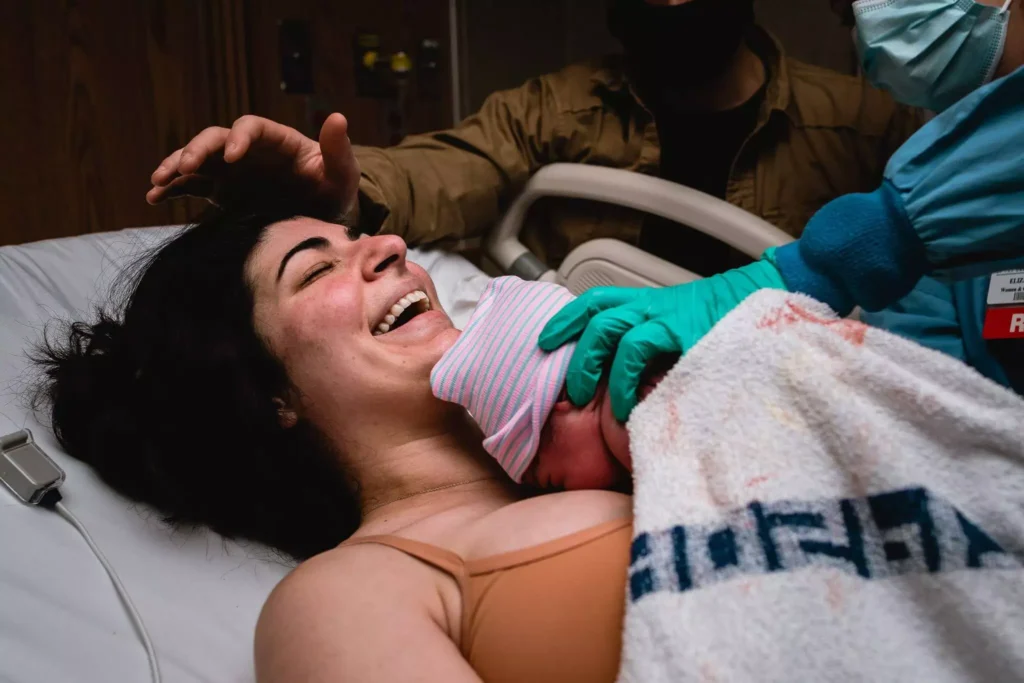

Learn the science of pregnancy and birth to take the mystery of labor away! Understand why you are feeling what you feel, and learn strategies to confidently move through pregnancy and birth!
- 9h+ of Video
- Support Group
- Close Captioning
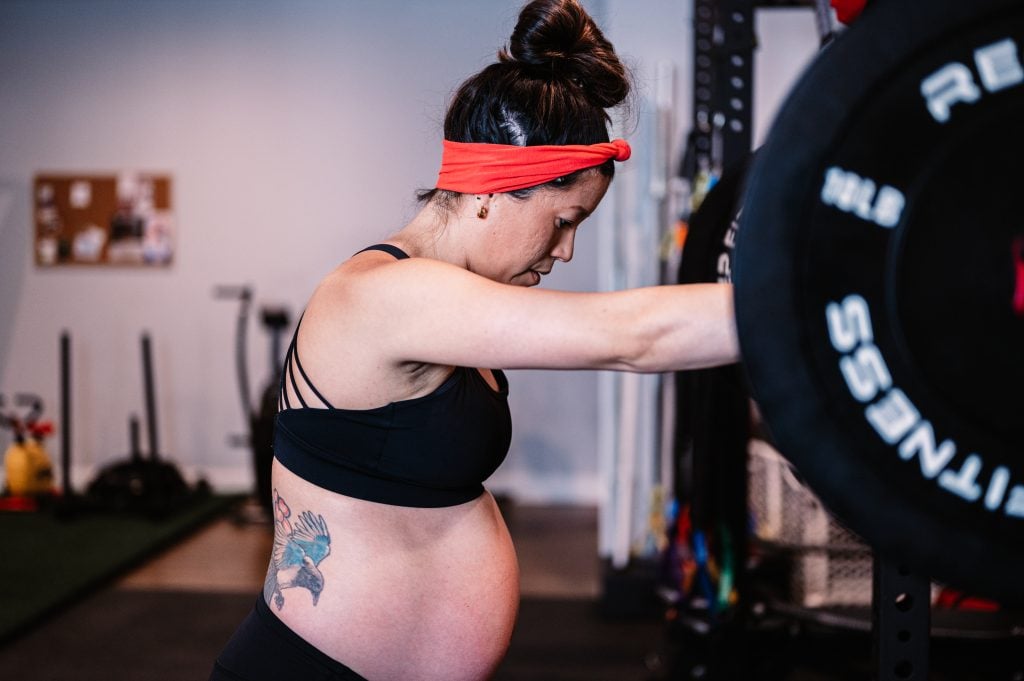

- 5 Workouts/Week
- Gym Workouts
- Self-Paced

Instructor
GINA
Workout on-demand with our prenatal fitness workout videos! Each workout is 30-40 minutes to follow along as you exercise at the same time!
- Birth Prep
- All Trimesters
- Mobility Work

Instructor
GINA
Find comfort and relief from pelvic girdle pain throughout your pregnancy and postpartum period! This program incorporates myofascial sling focused exercises to stabilize across the pelvic girdle joints.
- 3 Weeks
- On Demand Workout Videos to Follow