



Table of Contents
Welcome to the MamasteFit Podcast! In this episode, hosts Gina and Roxanne sit down with Dr. Puja Shah again, this time to discuss mental strategies for navigating the postpartum period. They delve into hormonal shifts, common emotions, and effective coping mechanisms. Dr. Shah shares her personal journey with postpartum mental health, emphasizing the importance of self-awareness and breathing exercises. The conversation also touches on the realities of life and death, providing insights on grieving and managing postpartum anxiety. This episode aims to empower new mothers with tools for a smoother transition into motherhood!
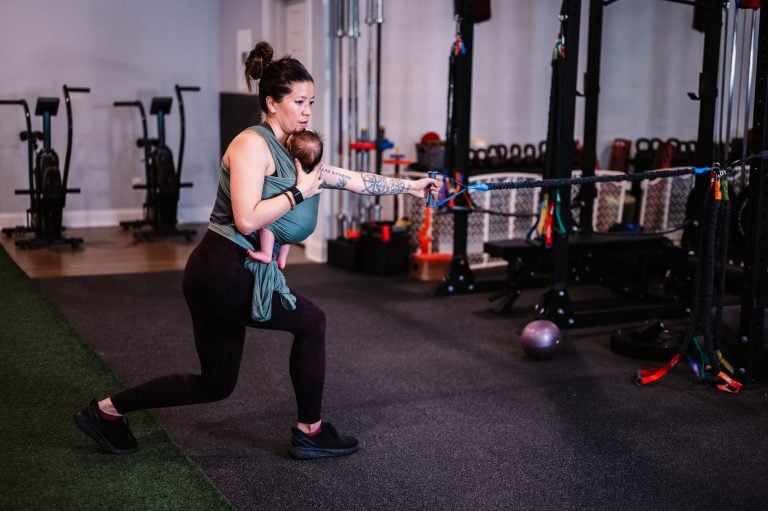 App program · 16 weeks
Postpartum Return to Fitness
Sixteen weeks of rebuilding, four strength sessions a week, with a vaginal or cesarean recovery track and follow-along videos for the first six weeks.
Learn more
App program · 16 weeks
Postpartum Return to Fitness
Sixteen weeks of rebuilding, four strength sessions a week, with a vaginal or cesarean recovery track and follow-along videos for the first six weeks.
Learn more
 Video course · 3+ hours
C-Section Scar Mobilization
Over three hours of video on scar mobilization technique and movement for recovery, plus a live webinar every other month you can attend or watch back.
Learn more
Video course · 3+ hours
C-Section Scar Mobilization
Over three hours of video on scar mobilization technique and movement for recovery, plus a live webinar every other month you can attend or watch back.
Learn more
 On-demand video · 30 workouts
Core, Pelvic Floor & Pelvic Stability
Thirty follow-along workouts across beginner, novice, and advanced levels, ten per level — core and pelvic floor strength for pain relief in pregnancy or postpartum.
Learn more
On-demand video · 30 workouts
Core, Pelvic Floor & Pelvic Stability
Thirty follow-along workouts across beginner, novice, and advanced levels, ten per level — core and pelvic floor strength for pain relief in pregnancy or postpartum.
Learn more
Navigating Postpartum Mental Health: What This Episode Covers
Read Episode Transcript
[00:00:00] Gina: Welcome to the MamasteFit Podcast. In this episode, we’re going to be chatting with Dr. Puja Shah all about navigating the postpartum space mentally, because there is a really big hormonal shift that happens and a lot of emotions and thoughts and feelings that may be happening. And so we’re going to talk about some different coping strategies, in addition to how we personally felt navigating this phase of life.
[00:01:12] Gina: Welcome to the MamasteFit Podcast. In this episode, we have Dr. Puja Shah here who is gonna be discussing some mental strategies to use postpartum to help you navigate this really challenging timeframe. She’s also going to be sharing her personal story about how she developed some of these strategies based on her own birth and personal struggles.
[00:01:30] Gina: So thank you so much for being here!
[00:01:32] Puja: Thank you for having me. Nice to meet you and congratulations on the new baby. You are in the postpartum phase as we speak so you’ll be able to add in your wonderful experience.
[00:01:43] Puja: So I think postpartum is a topic that is talked about a lot, but not necessarily honed into in maybe the exact sense that it needs to be.
[00:01:53] Puja: There are a lot of blanket diagnoses that occur, such as postpartum depression and postpartum anxiety. As much as I do find it great that individuals are going to their providers, seeking help for these diagnoses, one thing that has to be kept in mind is that if you are struggling with either postpartum depression, anxiety, or any mental health concern in this time period, there are often struggles that you had before and during pregnancy that are popping up.
[00:02:22] Puja: One of the topics that I like to talk about is grief during pregnancy and postpartum. We are human beings, and when we’re going through postpartum, it’s not that the beginning of our life before pregnancy is just cut off from us. Often it’s easy to compartmentalize and say, “Okay, I’m focusing on the baby, I’m focusing on my childbirth,” but the body keeps the score, and it all comes flooding back.
[00:02:46] Puja: So now you’re in this postpartum state where your hormones are in flux, every day is new, and especially as a new mom, you’re really maybe struggling to find that new role. And in comes a lot of old feelings and struggles that you may not have processed. An example is grief.
[00:03:04] Puja: For me, personally, my father passed away, unfortunately, about six months before I found out I was pregnant. So he was not part of this pregnancy journey, by any means. I realized that during the pregnancy, I had a lot of new feelings about the loss of my father. I think the concept of having new birth and the concept of a new beginning can really hone into our feelings of life and death. Whether that’s medical or spiritual, it’s a natural feeling to really ponder life and its existence and even our roles in the world itself. When it came to postpartum, I realized that I had now a new role. I’ve always been a medical provider for many years, I’ve been in charge of the wellbeing of other people, but now I had to be in charge of the wellbeing of this small child that was only dependent on me. I was not the doctor at home, I’m Mom.
[00:04:03] Puja: So during this time, it really got me thinking about what it’s like to be a parent. And the loss of my own parent made me think a lot about the
parent child relationship in general. I’m sure you have many thoughts on this and would love to hear that.
[00:04:18] Gina: Oh yeah.
[00:04:18] Gina: So for me in this early postpartum, and I do definitely agree that things that we were like experiencing during our pregnancies can continue into the postpartum, and maybe be in a stronger form.
[00:04:33] Gina: For my first birth and postpartum, I was, the transition from zero to one is, was like the hardest for me emotionally and mentally because I was mourning the loss of myself. Like I was a career woman, I had my own thing going on, I gave birth and then I transitioned to being a stay at home mom, and then eventually creating MamasteFit. And so there was a little bit of this like grieving of the loss of self that I was having and trying to navigate this new identity that I had. In addition to, I didn’t have the birth that I had envisioned for myself and that I was preparing for. And so then I’m grieving this birth process while also being really excited that my baby was here. And so this was a conflicting emotion for me, where I was then feeling guilty for being sad about my birth ’cause I was like, “My baby’s here though. Like I should just… She’s healthy and happy! That’s all that matters!” is usually like kind of the phrasing that I will start hearing from like other folks as well. It’s like, “We’re all healthy, we’re all alive…” And so it’s like, yeah, but there’s room for us to also feel good about that experience. And so it was a little bit of grieving what I thought was going to be my birth story, to a more traumatic experience for me. And now I’m into the postpartum still trying to process that, while also no longer having the same life that I did before. Like I didn’t have the same career to go back to, there’s a different dynamic with my relationship with my husband now that we have a new baby. And so there’s just all of these different moving pieces that almost feel like they’re conflicting.
[00:06:17] Puja: Opposing ideas.
[00:06:18] Gina: They almost feel like they’re conflicting with one another and competing with one another.
[00:06:22] Gina: And then eventually I was like, “These conflicting emotions can coexist and not take away from one another. I can still be sad about my birth experience and be grieving the loss of self while also being super excited that my baby is here,” and they don’t take away from one another. But that took some time to get to. It took me several months.
[00:06:43] Puja: Yep. It’s a continual process and I like that you brought up the concept of these dual feelings, identities, and thoughts. in DBT, which is Dialectical Behavioral Therapy, the tenet is that we can hold both. So whether that’s in postpartum or any other parts of our life, you can feel grief over the way a certain thing happens, such as a birth, but also feel joy with the outcome.
[00:07:09] Puja: To be able to hold both feels very contradictory and it can lead to a lot of guilt. But as time goes on and you develop the right coping mechanisms, holding both can really be that sacred space.
[00:07:21] Gina: Yeah, it definitely felt like being able to have both the emotions made the feeling of joy feel a little bit stronger as well, or like I could appreciate it a little bit more. But it still took a lot of time to get to that point.
[00:07:37] Gina: And then something that I struggled with my second postpartum was I had a lot of anxiety during pregnancy because we had two pregnancy losses before my son. And so I just carried that anxiety the whole time. Checking every tissue whenever I wiped when I went to the bathroom for 40 weeks, very concerned that something was going to happen, like detaching from the pregnancy emotionally. And so it wasn’t shocking when I made it to the postpartum and I had a lot of postpartum anxiety and postpartum OCD, like I was having panic attacks with intrusive thoughts where I would have to sit down. I think the moment that I realized that I needed to seek professional help was when we were at an aquarium and there was a fish tank that you could look down into, and my intrusive thought was someone’s going to take my baby and throw him into the fish tank and I don’t know what I can do to save him, like other than jumping in after him. And I was like sitting on a chair, because I had to sit as far away from possible from this tank because I’m scared somebody’s going to grab him and I need to secure him tighter into my baby carrier and just have a panic attack right now. And I was like, “This is not normal guys. Like I should not be having this response to a very unrealistic situation happening.”
[00:09:05] Gina: And so, sought therapy after that, and was super beneficial for me. And then, like you were talking about, like the parent child dynamic and like the life and death, I definitely find that with a new baby, a new life, it reminds me that we all die and that gets really dark, really fast for me too.
[00:09:27] Gina: So yeah, mental health, postpartum is… there’s a lot. There’s a lot of different things coming, for me at least, from like all sorts of different angles that just becomes emotionally and mentally overwhelming, to where like my chest feels heavy, and my throat is tight, and I have to get up out of bed and just shake like my hands or just do something to distract myself.
[00:09:54] Puja: Have a coping mechanism.
[00:09:54] Gina: I need to do a mindless activity like Candy Crush to distract myself.
[00:09:59] Puja: Yeah.
[00:10:00] Gina: And it’s always worse at night. Like when it’s quiet and it’s just me and my thoughts, I’m like…
[00:10:07] Roxanne: During postpartum, it’s called matrescence. So it is a time that our hormones are like changing and shifting or at higher amounts, and it’s called matrescence, and it’s very similar to adolescence when you are going through puberty and also having these influxes and changes in our body. And puberty is similar to when we become mothers and it happens every postpartum, but nobody talks about matrescence and the shifting in our hormones. So do you remember what it was like to our puberty and trying to cope with your emotions and thoughts and feelings, and feeling very overwhelmed?
[00:10:47] Roxanne: I remember in middle school, or… middle school? High school? I don’t remember, I think it was high school. I had an emotional breakdown like during one practice, it was like track practice, I just sat down and started crying for no reason. And I was like, “I need to quit this sport. It’s not for me.” And just like mentally spiraled because of this feeling overwhelmed, and your hormones are shifting, and you don’t know what’s happening within your own body. This happens again when we become mothers, because we’re going through this shift in hormones. We just carried a baby, our hormones were different during pregnancy, but then they shift dramatically after we have a baby.
[00:11:24] Roxanne: And this is why Baby Blues is so common in people, because you’re going through matrescence.
[00:11:29] Gina: Sometimes I didn’t even know, what was causing it. I couldn’t even pinpoint what the problem was. Like, what is causing this anxious feeling or this overwhelm? Just everything! And that’s what’s the hardest part for me is there’s nothing that I can pinpoint as the problem to then solve.
[00:11:49] Gina: And so I would definitely love to dive into like strategies, like what can we do when we’re having these overwhelming feelings? And panic attacks, you should see a provider, but like, when we’re just having those moments of overwhelm, like what can we do to lessen it?
[00:12:09] Puja: It’s important. First of all, thank you for bringing up matrescence. I really think we should be speaking about that term more. And that’s really a transition into motherhood. We spend so much time on Amazon buying the best Baby Bjorn things, and the cribs, and all the outfits, but are we actually mentally transitioning into that time?
[00:12:32] Puja: According to me, you really don’t know what it’s going to be like until you’re in it. You can read all the books. I have done OB anesthesiology, putting epidurals, as you guys know, in patients, I’m seeing these pregnant women. Most of my friends had kids before me, so I was an expert in knowing it all, but I had to experience it for myself, right? It’s humbling.
[00:12:54] Puja: So I think with that, I wanted to say that one of the things you pointed out to me was self-awareness. There is also a difference between postpartum one and two. It sounds like postpartum number two, you had a different experience, whether the delivery was different or not, it’s that you had an awareness of, wait, I’m at an aquarium and this is an irrational fear. I’m not just feeling overwhelmed, it’s irrational. So really doing that kind of 360 view of where your thoughts are going. And this really applies to all of us at any time during our lives, but since we’re talking about postpartum, especially during that time, we want to take a nonjudgmental 360 view of what I’m thinking, right? Right now you might be thinking, okay, baby’s crying, is it changing the audio of the podcast? Okay, that’s fine. If our thoughts go into a place that they get more sticky, more OCD-like, a lot of self guilt, then that gets into a different realm. I think it’s always great to see a provider if you’re feeling really uncomfortable with how you’re feeling. Therapy, as long as you find a therapist that you are working well with, it really, there’s not much harm to that. Medication plus or minus, depending on each person and their profile.
[00:14:11] Puja: So self awareness first and foremost, and being aware of when things become a little out of that norm for you to seek help. You don’t have to do everything yourself. You are not made to do everything yourself. And there are specialists, like the two of you, like me, that specialize in one part of it or another, and it is our job to come in and help you with that. I’m not a specialist in everything and neither are you, we all can’t be great at everything.
[00:14:37] Puja: Number two, let’s remember that just because we’re postpartum, we aren’t an entirely new human being, although it may look like that in the mirror our in our own thoughts. So I used to love yoga during my whole life, even during that adolescence. During pregnancy, I was good about practicing it at some point, but there were definitely times that I wasn’t as great about it. Some of it due to anxiety of not knowing how I should be moving my body, even as a physician. Postpartum, it wasn’t easy for me to go back into exercise easily, but slowly I realized it doesn’t have to be black and white. If I did a downward facing dog for 20 seconds, I started to feel like old Puja a little bit. Oh wait, my body does move like this! Oh, okay. I remember this was the hour I used to spend without air pods, without my phone, thinking, when I was 24, let’s say. I don’t have to do that for an hour to that level, but at least I know that I have that tool in my toolbox and it’s something I did enjoy. The caveat there is that you can’t compare this new version of yourself to that old person in the level of skill, athleticism, but it’s more that toolbox is there because Puja, Mama Puja, still loves yoga, and I can still access that as a tool for joy and stress relief.
[00:16:05] Puja: Now, do you guys have any examples of that, where you like this one thing a lot (I’m sure you have many), and then you lost touch with it, and then you can come back to it?
[00:16:15] Roxanne: We talk about all the time, what are our hobbies? What do we do for fun? What? We hang out with our children, and do this for fun. And we’re like, what, do we do?
[00:16:26] Gina: I color now.
[00:16:27] Roxanne: Gina colors now. We’re like, what hobbies? And I think I’ve been discussing this with my therapist. She talks about it like your (hissing sound) moment, like when you open a soda can that was shaken up- if it’s a bottle, obviously, it it’s a can, good luck- but if it’s a bottle, you like open it a little bit, and then you close it just to let a little bit of the air out slowly before it just explodes. So what is your (air escaping) moment? And I was like, “That’s a really great question. I have zero hobbies. I just stay home with my children all day. So maybe I should figure out what the heck my moment is.”
[00:17:03] Roxanne: And so I, again, just like you, loved yoga. I would go to yoga every day. 90 minute hot vinyasa classes every day before I had kids. After a 12 hour night shift, I would drive 40 minutes to a yoga class, do yoga and then I would sleep amazingly afterwards before a night shift again. Like I was very obsessed, probably, a little bit, but I just loved the way I felt when I did yoga. I wasn’t mad at everybody, I like slept better, like all of these things. So that is the thing that I’ve started incorporating again in my life, is I go to yoga on Sundays so that I have a little (air release) moment from my children. Especially because my husband is gone right now for work, so I need a reprieve for me, because I’m also important.
[00:17:50] Puja: You are.
[00:17:51] Roxanne: But that’s all that I’ve figured out. I need to find more release moments.
[00:17:57] Gina: For me, it’s going to the gym and working out. Which, I think that’s what’s hard about this early postpartum is I don’t… I’m not gonna do that. I’m not gonna go to the gym and lift weights at a week postpartum, that’s not realistic. And so I’m just sitting in my thoughts.
[00:18:13] Roxanne: You need to find other ways.
[00:18:14] Puja: Even a small walk.
[00:18:17] Gina: And so this is where going for walks and finding different types of movement for my body has been really helpful for me. And then when I do return to my workouts, it’s not the same as pre-pregnancy, like pre-kids. Like I am not gonna be working out for three hours, like crushing whatever workout that I’m doing for that full three hours.
[00:18:37] Roxanne: It might take you three hours to do the workout.
[00:18:38] Gina: It might take you three hours to do a workout with a baby. But, my goals are different when it comes to my workouts. It still feels good to move my body and to lift weights and to do those things. It’s just, it’s not gonna look the same as it did before, but I could still do that thing that makes me feel good. And now I have a new buddy that gets to join me with it, which is really fun because they copy me and they want to work out.
[00:19:03] Gina: And so my oldest, she’s seven, she’s like, “Look at my muscles, Mommy. Like I’m so strong, like you!” And that’s like super cool to see. Like we were in the gym one time and one of the other little girls, she and her mom come and work out all the time, we have a little kid weights in the gym, so we have a bench and this little girl jumped on the bench and she was like, “Look at me, I’m a mommy!” and she started like bench pressing the toy bar. And I was like, that’s awesome! Like you associate motherhood and being a parent as a female with working out, and being there for your kids in this aspect, and that was really cool to see that shift of behavior, right? But again, it’s not the same as pre kids. The goals are different. Like, how we’re approaching it is different. But we can still access these things that make us feel good in our body, that bring us joy, that helps us.
[00:20:00] Puja: That’s what it is. I think that, when we are all on social media, I think sometimes it’s easy to compare. This is the way to be postpartum, and you now have to have a whole new Pilates routine, or go on this journey. And all of those things can be great, but A, they’re not accessible to everyone, especially with a young child, and B, it doesn’t have to be an extreme, right?
[00:20:24] Puja: I think even the word “hobbies” can be triggering for some people because there’s this, “I don’t have hobbies. How do I have time for them? How do I have money for them? I need to have childcare.” But we spoke, it’s small dips back into the water, right? It could be for me, 20 second downward facing dog, even seeing my body in a different sort of position in the mirror after almost what, 9 months plus 3, 12 months, a year, it was like, okay, I am still in there somehow, some way. Not necessarily going back to 90 minutes of hot yoga, and for me, I personally, I don’t really love hot yoga anymore. Maybe something has changed in me as a mom. Maybe it’s the way the heat makes me feel. It’s not good or bad, but accepting that, that doesn’t mean it’s forever. I might be on here and in five months and say I like it again. So really not having the judgment and knowing that it’s just one little step.
[00:21:17] Puja: I think you also brought up a really good point about modeling. So I have an 18 month old and I noticed that even if I’m walking around the house, and I sometimes will try to do squats and lunges if I don’t have time to go for a workout, he’s copying them. We’ll get a video one day where he’s just boom, and he’s laughing. And the reason that’s important to me like you is that we have to show them their own coping mechanisms as they get older. They may not be like us, but everyone will have stress. We can’t avoid it, even if we’re the best parents. And we will have to model to our children, how do you relieve stress? Is it through sports? Is it through exercise? Is it through breathing? They will develop their own patterns as well, but if we aren’t coping with our own stressors in the best way possible, we won’t be able to teach them.
[00:22:02] Gina: Let’s take a break from this week’s episode to talk about our podcast sponsor, Needed. Needed is a nutrition company that focuses on optimizing nourishment for the perinatal time frame. It is a brand that Roxanne and I have personally used during our pregnancies, postpartums, I’m still using it now. Roxanne’s still using it.
[00:22:16] Roxanne: I still use it.
[00:22:17] Gina: Our husbands use it. And now we got our mom using it as well.
[00:22:20] Roxanne: Oh yeah.
[00:22:20] Gina: So they’re a brand that we trust and love. And one of the products that I’ve started using in the postpartum is stress support because postpartum is a little stressful, if you can’t tell from this episode how I might be feeling right now! So I just…
[00:22:33] Roxanne: Gina needs some stress support.
[00:22:34] Gina: So I just ordered their stress support. I’ve just started taking it so that it hasn’t quite…
[00:22:38] Roxanne: Kicked in.
[00:22:39] Gina: I’m not totally stress free yet. Hopefully these coping strategies help me as well.
[00:22:46] Gina: But yeah, so it’s a new thing that I’m trying. I’m really excited for it. I think Roxanne has taken it previously.
[00:22:51] Roxanne: I started taking it during my second postpartum. They do recommend not taking it during pregnancy, but outside of pregnancy, even breastfeeding, it is safe to take. It’s filled with ingredients to help optimize and support our stress response by decreasing our cortisol levels so that we’re able to cope a little bit easier during these stressful times of postpartum and motherhood.
[00:23:12] Roxanne: So if you want to try out the stress support, you can go to thisisneeded.com and use code MAMASTEPOD to get 20 percent off your first order or the first month of your subscription.
[00:23:21] Gina: So what are some coping mechanisms that we can do besides working out?
[00:23:25] Puja: Yeah, so, I really want to stress the awareness.
[00:23:29] Puja: So I think that when you go to a provider, therapist, personal trainer, PT, anyone, and you bring with that consultation an awareness of what you’re really feeling, you will come out of it that much better. It’s that whole, “help me help you” philosophy, and if that’s just doing a 360 view of what you’re feeling, if it’s actual journaling, if it’s even bringing a friend or a spouse with you if that’s accessible, and having them say, “Okay, she’s been a new mom and these are the few things she’s struggling with,” whatever that is will help that person guide you if you’re going with someone as a coach to help you through those moments.
[00:24:12] Puja: The next thing, as simple as it sounds, it’s breathing, right? So for me, one thing I have realized is that my entire body mechanism of breathing after having kids is entirely changed. So first and foremost, I’m not able to really inflate my diaphragm like I used to for a lot of reasons, including that my entire tilt, postpartum, is anterior like this with my ribs flaring out. First and foremost, I’m working with a coach to really get my posture aligned again so that I can actually breathe in a healthy way. And someone would say, “Of course you’re breathing, you’re alive.” Yes, but am I breathing effectively and utilizing all of my musculature in a way that can engage everything head to toe and actually lead to relaxation? Not always. So I’ll be posting a video about actual deep relaxation breathing methods.
[00:25:10] Puja: And this is especially important for C section mamas, I am one of those, because so much of our musculature really is numb and severed from the mind body connection after having a C section, and it’s very frustrating. Even at one month, two month, three month postpartum, I would practice some breathing exercises and it was almost like my mind would tell my body, but my body would say, “Huh? I don’t know what you’re talking about.” Now, over a year, I can re engage that and it’s daily practice. All of this to say that not just physically, mentally, our breathing is extremely important, but with the caveat that we have to be doing it effectively. We have to have diaphragm motion, we have to be able to engage our core muscles. This will of course also lend itself to great physical results where we can actually end up with a better core posture equilibrium, but the breathing is really here for deep relaxation.
[00:26:06] Gina: Yeah, the way that we breathe can really impact which nervous system we are activating as well. So when we have more of that flared rib cage and we’re breathing primarily into our chest and to our neck, this is going to really activate our sympathetic nervous system a lot more and create more of that high anxiety, fight or flight type mentality as well. But when we can breathe down and we can activate our core and our pelvic floor, like that’s going to help to activate more of our parasympathetic nervous system for that rest and relaxation, which again is incredibly important.
[00:26:38] Gina: I spend my time Googling on Reddit whenever I’m up at night with anxiety. And one of the things that I was reading was to do a longer exhalation to help with the vagal nerve. And so you take like a count of four to inhale, you pause, and then you exhale for a count of eight, which can help to relax you a little bit more. And I do find that to be super helpful for me as well, it just, it it gives me something else to focus on than whatever feeling that I’m having, is to just focus on like that shorter inhalation that’s still full and down and then this really long, slow exhalation really, I’ve been finding, has been a really helpful tool for me, breathing wise. And again, just gives me something else to focus on and to think on and that awareness to bring me back to reality.
[00:27:35] Gina: During my pregnancy, when I was having a little bit more anxiety, I also found like repeating like a mantra to myself was beneficial as well while I was doing the breathing exercises. And so for me, it was that I’m safe in my body, was what I would repeat to myself, like that resonated with me- there may be a different mantra or phrase that resonates for other folks. And so I would be doing my slow breathing exercises, and I would just say, “I am safe in my body, I am safe in my body,” over and over again, because I was having all of these symptoms within my body of anxiety that were very overwhelming and I was trying to remind myself, you’re in a safe place. This is your body, you’re safe in this body, and I found that to be really beneficial for me. And so I’m definitely a big fan of breathing exercises. And they don’t have to be complicated either.
[00:28:26] Roxanne: My favorite mantra I learned in yoga teacher training was, “I forgive myself for being imperfect. I forgive myself for being a learner in this lifetime, we are not perfect beings, I forgive myself for making mistakes.” Because we are allowed to make mistakes, we are allowed to be imperfect, and I think like motherhood is so hard not to be like, “Oh, I need to be the perfect mom for my children,” and we are the perfect mom by just being who we are, and we’re allowed to make mistakes.
[00:28:58] Puja: Yeah. I think the breathing example to me actually is a great example of a lot of things, because first of all, postpartum for anyone, it’s actually hard to breathe normally, right, for the reasons I said. Your musculature- especially if you’ve gone through something like diastasis, which you can learn a lot from Roxanne and Gina’s social media, what that is- our body isn’t connecting, right? So it’s easy to have that negative self talk. “I can’t even breathe right. Like how am I going to heal?” And then like you said, we’re breathing entirely in our interscalenes, which are here in our trapezius, we’re creating more tension in the body in the locations where we already hold it, so we’re activating sympathetic nervous system, which causes heart rate to go up, cortisol to go up, right?
[00:29:42] Puja: When we breathe down and have that deep diaphragmatic exhalation, like you said, at least for a count of five to eight, the vagus nerve activates. The vagus nerve is the nerve that leads to the rest and digest system, the parasympathetic. What does that mean? It means that you will feel over time, a let go of those stress hormones. And, clinically speaking, if you had your Apple watch or any tracker, you’ll actually see your heart rate go down. And these things take time. We can’t have immediate results. We can’t be watching our, tracker while we’re breathing and expecting it to be real time. But over time, like practice, like yoga, like strength training, anything, breathing is still at practice. You can actually manipulate your body to a lower stress state and a lower heart rate. It is possible. That whole part of psychology is actually called biofeedback. You’re giving feedback to your body, your biology, to make a change.
[00:30:45] Puja: So this goes into so many different things like blood pressure management, heart rate control, this is for all of our livelihood, but postpartum especially because our tools are not always at our fingertips. We can’t leave for a 90 minute class. We might only be able to walk around the block, but if we’re also doing this very wholesome exercise that’s accessible to us any time, it can change. Just has to take a little bit of patience.
[00:31:11] Roxanne: I love when my daughter- because we try to teach them the breathing, like, when we’re upset. maybe we can try to take a deep breath- and so then when I am upset she just goes, “Mommy, I think you need to take a deep breath.”
[00:31:24] Gina: “Oh, you’re right, I should!”
[00:31:26] Roxanne: You are so right!
[00:31:28] Gina: “You seem a little frustrated right now. You should take a deep breath.” I’m like, yeah…
[00:31:33] Gina: So I want to go back to what you were talking about being like, the perfect imperfect mother because our daughters will tell us, “Hey, you need to take a deep breath,” because they have learned this coping mechanism from us when they feel frustrated. Like, okay, when you feel frustrated, we’re gonna take a deep breath to come back to a calmer state, and then we will respond. And so they have learned that from us, and so when they see that we’re not perfect, they are also seeing different ways to manage and to cope with different emotions that they’re having. And so, I think I read something once that was like, if you get into an argument with your spouse, you should apologize in front of your children as well. If you got into an argument with them in front of your children, then you should also apologize in front because they need to see that. They need to see, okay, this is how you have an effective disagreement, and then this is also how you resolve that. And so showing them the different ways to manage emotions as opposed to, “Mommy is always happy, and Mommy is always on time, and composed, and…” like they’re never going to learn how to manage when they have other emotions and then also accept within themselves that they are also not perfect. Although my children are perfect, you know what I’m trying to say, like they’re going to be able to model those things as well.
[00:32:58] Puja: The average scenario or like the stereotypical scenario, my child is obviously not as old as yours, is that they see mom and dad or mom and sister, auntie, having some kind of interpersonal argument, right? They might be there for a part of it, then they go off to sleep, because they all sleep earlier. And then when they wake up in the morning, everything’s fine, right? And there’s often the case that they may go to sleep thinking, “What happened with that? Did I cause something like that? Is Mom okay?” And then it’s brushed aside as adults because we’re off going to soccer practice or work, and some people may even say, “Oh, don’t worry, that’s all fine.” But as you said, the child needs to see the full resolution in order to understand conflict management in themselves. So even if you don’t have the ability to apologize in front of your child, it’s important to take that whole conversation and then explain it.” We were upset because of this thing,” in whatever terms you want to explain it, “and these are the ways that we’ve resolved it.” Or, “This is what we’re going to do, or try to work on,” because it’s like a cause and effect, and they need to see both parts. Constantly seeing only the cause, is really just going to show them conflict. But how can you resolve conflict without really ever seeing a model of it?
[00:34:18] Roxanne: It’s so true, they’re always watching, and they’re so observant, these children. We’re going off on a little tangent here. But no, we always give the example of when we clean up water and you throw the towel on the floor and you just mop it up with your foot instead of bending down and using your hand, but then when like your child spills water and you’re like, “Okay, we’ll clean up your mess. It’s okay to make a mess, but we got to clean it up,” they throw the towel on the ground and use their foot. And I’m like, “Oh my gosh, they’re watching me. Now I need to like actually go down and use my hands so that they see that behavior.”
[00:34:52] Roxanne: But like my daughter will come home from school right now, she’s in kindergarten, and will tell me like, “Oh, Mom, listen to this! What happened at school today…” and I’m like, “How are you hearing this and learning all this gossip at school?!” She’s like, “Oh, this kid did this today, Mom.”
[00:35:08] Gina: “Rachel’s mom came in and she was wearing this.”
[00:35:11] Roxanne: Or she’s like, all these teachers, like my, friends did this, and I was like, no, we don’t do that. I’m like, man, I’m learning the gossip on the playground right now. But she’s so observant and just taking in everything to learn and be able to shape herself. And so they’re always, always watching you and they’re so observant so I do think it’s like it teaches you to try to figure out these coping mechanisms because like I’ve seen my poor coping mechanisms in my children and I’m like, “Oh, yeah, I should work on this together to be better.”
[00:35:49] Puja: And it’s not necessarily a tangent because it goes back to that first part about having that 360 view of self awareness. Sometimes that view is a mirror, which is your child. Going back to not having to be perfect, that you can make mistakes, often it’s a practice, like if you’re having trouble giving yourself the narrative of how you’re feeling, saying it out loud to your child may actually be like that journal. I’m not saying use your child as your therapist, disclaimer, but learning to eloquently describe what is going on, conflict or not. And I think it’s always good to start these tactics, as a side note, with positive things. It’s not, you don’t want to walk through life and then try to become an excellent speaker and orator when times are really tough because that’s not going to be the time you’re able to explain yourself to yourself or your child. It can start off as even narrating something really good that’s happening. Like today we had a great episode of this podcast, telling your daughter that. Why is that important? It’s important because future moms and men and women can learn about their bodies and how to manage stress. And so when we’re practicing telling them all of these great things that are going on, we already have the practice mechanisms to tell them about things that may be not so great. Once again, it’s all practice.
[00:37:05] Gina: Yeah. That’s a really good point. Great point. So I want to come back to something that we brought up towards the beginning of the episode about life and death because I think that’s a topic that a lot of us struggle with, especially like in early postpartum, or at least I do. I like to think that I’m not alone in that. And I think it’s something that a lot of us are afraid to bring up, though. And so I’ll be like, struggling with these emotions of mortality and coming to terms with that, but will feel very overwhelmed to bring it up to other people because I know how overwhelming it is for me and I’m like, “I don’t want to trigger them and be like, ‘hey do you remember that we all die?'”
[00:37:49] Roxanne: Oh my gosh, yeah, the thought that, I think I saw it on Instagram, is like you are not always going to be there for your children. You’re not always going to be able to be there to help them with whatever it is they need.
[00:38:02] Gina: I think I sent it to you.
[00:38:04] Roxanne: Probably. Gina’s, triggering me. And I was just like, “Shh!”
[00:38:08] Gina: And so, yeah, something that happened before Sophie was born was my oldest, who was five at the time, came to understand that we don’t live forever, and that she will grow up and then eventually one day we all die. And she was like completely overwhelmed by this thought. And I remember being at a similar age and also realizing this and being completely overwhelmed, to where my coping mechanism was coming up with my funeral plan as like a seven-year-old. I was like, “If I die, I would like to be buried with this thing.”
[00:38:44] Roxanne: Because our grandmother passed.
[00:38:47] Gina: And so she tells me this and I’m like, “Oh my God, I’m so… how do I…”
[00:38:54] Roxanne: Not prepared.
[00:38:55] Gina: “…comfort her,” without being like, “No, we live forever!” Cause that’s obviously not true. And so what I said was, “We don’t know how much time we have on this earth, like we don’t know when we leave it, but we do have control over how we spend it, like how we spend our time here. And so all we can do is, at the end, hope that we have a lot of good memories and we had a lot of good times.” And she was, like, comforted by this and I was like, “Alright, good job, Gina. you crushed it!”
[00:39:27] Puja: I feel comforted by that!
[00:39:28] Gina: And so when Sophie was being born, or after she was born or like right before, she was like, “I want to plan this party for her so we can have a sleepover, so she can have a lot of good memories!” And I was like, “Oh my God!”
[00:39:46] Gina: But early postpartum is when I definitely struggled the most with recognizing my mortality and my children’s mortality, and it becomes very overwhelming. And so I’m like, I just gotta hold on so that we make good memories.
[00:40:04] Roxanne: I think it’s also hard because of the community that we live in, in the military, we know more people that pass at a younger age and they lose that gift of growing old. And you don’t get to see your kids grow older, or you don’t get to have that relationship because you passed at a younger age. And so it’s not even like that our kids are going to get older and we’re going to miss out, but we also could die any moment.
[00:40:40] Gina: I really just need a psychic to tell me that I’m going to be 90 and all my children will be 90.
[00:40:45] Roxanne: Oh my gosh, we’re like taking a turn here. But obviously, I will live forever and it’s gonna be fine. Or your animals could pass at any moment. My dog and I were walking today and she, just laid down on the ground. I was like, “No! It’s not the moment!” I was like, “Please stand up!”
[00:41:02] Gina: I don’t mean to laugh at this, it’s my coping mechanism.
[00:41:05] Roxanne: Or your spouse could go on a trip and not come home. Like, the community that we’re in, so many people don’t make it to 80. Some people die at 18, 20, 30, and it’s more common than people who potentially aren’t in this community.
[00:41:27] Gina: I mean, we know a lot of widows, 30 year old widows.
[00:41:30] Roxanne: Yeah. We know so many who’ve lost their spouse at a young age that it’s a very realistic possibility at any moment. Whereas some people who this is not their reality, they’re like, “Oh, we’re gonna live till, we’re 80, ignorance is bliss! That’s not even a possibility. How would that happen?” But, it like, it could happen at any moment.
[00:41:50] Gina: So both our parents are still alive, but your father passed. How did, how do you deal with that and then also navigating motherhood?
[00:42:02] Puja: Yeah, that’s a great question. I also worked in the VA system, so I was around a lot of military families and around their experiences with early mortality. Being a medical provider in general, we’re faced with the concept of life and death daily and sometimes it can create anxiety and all of it’s right there in front of you.
[00:42:24] Puja: My dad had a premature death and it was sudden. And so at the time when he passed, it wasn’t like I was prepared. As they say, you’re never really prepared. And I had to quickly tune into a lot of different coping mechanisms that really helped my entire family first and foremost.
[00:42:43] Puja: And the biggest thing I would say is that if you’re dealing with a death of a family member, it’s always the best reminder, I’ve said this to my friends recently, even, that you are supposed to be there for your community, but don’t forget that you have to also grieve it for yourself. So if you are a daughter, it’s different for you to lose this person as a daughter versus a spouse, and you have to process it as a daughter, even if you’re now a mother. So there’s the duality of all the roles we play because at the end of the day, we’re still a spouse, we’re a mother, we’re many other things. We wear all these hats, but the role we played with that person is essential in processing, if that makes sense. If it’s a spouse, you’re a wife, you’re also a mother too, but you are wife and you’re losing a partner. So really understanding my role with my father is being a child, at the end of the day, when you lose a parent, you are still a child, whether you’re 5, or 10, or 50 and a grandmother yourself, you are still a little girl or a little boy losing a parent. Being humbled and knowing that you’re allowed to feel like that and that’s the only way you can truly process that relationship and grieve it effectively is important.
[00:44:01] Puja: I then went into a pregnancy and my own postpartum, which there’s a lot to say about that, I’ll keep all of that for another podcast episode. But, there’s often a lot of advice that you’re given from community members. And in general, I don’t really like a lot of black and white thinking because our bodies and our minds aren’t really supposed to be black and white. It’s not all or nothing. And there’s a lot of talk about now that you have your own healthy child, it’s easier that you had a loss, not always, right? But what I took from that is that the concept of life and death is just ebbing and flowing. We truly have no control over it, right? I gave a lot of advice on how we can be the best version of ourselves, mind and body. You do a lot of that with exercise and fitness, but in reality, a lot of things are out of our control- they’re based on genetics, sheer luck, and who knows?
[00:44:58] Puja: So I had to work on a lot of relinquishing control. And that is just a life force that I’m working on, honestly, forever, is that I am only able to do as much as I can within my own world and on my plate, right? I can work on my own health. I can work on being as good of a mother as possible while making mistakes. But there are these intangible things out in the world that I cannot have control over and it’s not necessarily my job to try to control. Easier said than done, but that releases a lot of tension and responsibility on my own self because often we go into the world thinking we’re in charge of all of those things and we’re not. We’re not meant to be, and we also can’t be.
[00:45:44] Puja: It’s this delusion sometimes that we have a lot more control than we do, and seeking ways to try to change those outcomes is a false sense of security, right? So if you have someone, a loss in your family, and now you have a very anxious way of parenting to try to control and be extremely safe all of the time and have a fear based way of parenting so that your child never has to suffer because you’re coming from a place of fear, since you had this loss, that’s not going to be beneficial, right? That’s just going to create a more anxious feeling around your own self with motherhood, and then your child is now living in a place of fear as they grow as well. I realidze that’s not the way I wanted to approach it. I had to understand that I’m not in control of everything, and then the things that I can control, I’ll try my best. Whether that’s, healthy mindset, having a growth mindset, working on my physical well being, such as those breathing exercises or some postpartum recovery, and trying to honestly just be a good person and teaching them good things. Like Gina said, if my child grows up in a few years and asks about life and death, I’ll hopefully ask you to send me that clip and use that sort of concept of we don’t have all the answers but while we’re here, we want to make good memories and make good choices and help other people.
[00:47:08] Puja: So all of this to say that it’s a truly a spiritual shift, a lot of letting go. I think when I entered the grief journey, I felt like there was a lot more I had to do and take on, take on this extra way of learning, take on this becoming an expert at learning about my grief, take on, take on- but the true reality was a lot of relinquishing.
[00:47:33] Gina: I think the aspect of surrender is just so beneficial in so many aspects of our life, like navigating pregnancy, or birth, like the postpartum, like being able to let go of our expectations and our control is just, is a really powerful tool to be able to do.
[00:47:52] Gina: And like you, I am also, it’ll be a lifelong attempt on my part. But I think like being able to understand what is within my control, what is not, and being okay with releasing and letting go is, I think, something that could benefit us in so many different ways, physically, mentally, emotionally, throughout this entire motherhood transition, before and after it.
[00:48:18] Roxanne: Yeah.
[00:48:20] Gina: But yeah.
[00:48:21] Roxanne: So just to round up all of the coping strategies that we’ve talked about. One, our breath. Being able to activate that parasympathetic system and calm our nervous system down with our breath is so powerful as a coping tool. Finding something that we find joy in to help us bring us back to ourself, whether that’s yoga, working out, coloring, knitting, crocheting, whatever brings you joy, find that thing. And, you don’t, again, manage your expectation of doing it every day like maybe you did before kids, but, 5 minutes, 30 seconds of a down dog, 5 minutes of coloring can just, bring us down to ourselves and help coping with stress. It doesn’t have to be some crazy hobby, really just taking five minutes for ourselves. And then, making sure that we know that we’re taking care of ourselves. Our self care is important. We need to eat, drinking a coffee in the morning is not a meal, like providing our body with nutrients is a way of self care. And that is something that we need to do is take care of ourselves, and move through all of the different griefs for ourselves as people, is like those three things are like the top three things that I’ve taken out of this.
[00:49:43] Roxanne: And knowing that whenever people talk about like coping skills, we’ve touched on it, it’s not like, “Oh, do this one thing and you’ll be better.”
[00:49:52] Gina: And instant relief!
[00:49:53] Roxanne: Like instant relief. It is like, fine tuning it over years. Like we are imperfect beings and we need to just like slowly figure it out and work on ourselves over time, like letting go of that control. Like some people, really good at letting go of control, but then taking control of the things that maybe they can have control over, that’s something that they struggle with. And then there are people that letting go of control in general is really hard, even though they have no control over a lot of things, that is a really hard thing. So surrendering or taking control of different things within our life, that is a really great coping mechanism.
[00:50:28] Puja: It really is.
[00:50:29] Roxanne: And all of these things can be applied in postpartum to be able to cope with that huge mental shift that we’re experiencing in the postpartum with the crazy hormones, but also taking on this new amazing role of being a mother and raising these small little humans into contributing members of society.
[00:50:54] Puja: Yeah. Each day, each hour is different in postpartum. So I recommend everyone wake up every day and try to realize it’s a new slate- what worked yesterday may not work today, whether it’s for your baby or yourself. Honing into those coping mechanisms is really important. I think the biggest takeaway is letting go and surrendering- perfection is not the ideal. And even something like breathing, you don’t have to be an expert, all we can do is try and wake up with a mindset that you’ll just do a little bit better today.
[00:51:23] Roxanne: Exactly.
[00:51:23] Gina: Amazing. How can our listeners find you and learn more? Not like physically find you, but like, how can they learn more from you?
[00:51:32] Puja: You can follow me on Instagram. My handle is @DrPujaNYC. You’ll also see some media and articles that I contribute to. I do speak a lot for the Military Women’s Association, which I can link. And besides that, you will find some more podcasts with Roxanne and Gina and, some upcoming articles about postpartum well being, more from an anatomical standpoint, coming soon.
[00:51:56] Gina: Amazing. thank you so much, Puja, for coming on the podcast. Again, if you didn’t know, we do have another episode with Puja, like episode 20, all about epidurals and anesthesia. And so thank you again for coming on the podcast to share your wisdom with us.
[00:52:11] Roxanne: Thank you.
[00:52:11] Puja: Thank you and congratulations! Take care.
[00:53:32] Roxanne: Thank you for listening to this episode with Dr. Puja Shah, all on mental coping strategies that we can utilize during the postpartum period.
[00:53:38] Roxanne: If you are beyond the first two weeks postpartum and you’re displaying any signs of postpartum depression or anxiety where you’re not wanting to do normal activities that you normally enjoy, or you’re having any thoughts of harming yourself or others, please seek help by going to either your nearest emergency room or calling your doctor to get into therapy or get into help because this can be life saving by getting treatment early.
[00:54:02] Roxanne: These coping strategies are great to utilize in stressful time periods, but if you are having true clinical psychosis or having postpartum depression or anxiety with suicidal ideations or homicidal ideations, this is definitely a reason to get treated as soon as possible to save the life of you or potentially somebody else. Calling 9 1 1 or going to your provider, recommend it.
[00:54:25] Roxanne: If you enjoyed this episode and want to hear more from Gina and Roxanne, please like and subscribe to our podcast so you can be notified whenever we release new episodes. We release new educational episodes on Wednesdays and birth stories every other Fridays.
[00:54:36] Roxanne: And as a thank you for listening to this entire episode, you can go to our website for any courses or programs and use code STORY10 to get 10 percent off.
[00:54:43] Roxanne: This podcast is also sponsored by Needed, a nutrition company focused on the perinatal timeframe that both Gina and I have utilized during our pregnancies, postpartums, and if you want to try them out, you can use code MAMASTEPOD to get 20 percent off your first order or the first month of your subscription.
Additional Resources
More about Dr. Shah:
Puja Shah, M.D., is a double board-certified anesthesiologist and interventional pain management specialist. After her own journey with pregnancy, and postpartum she has honed her craft to women’s wellbeing, particularly during this intricate stage of life. Approaching wellness from the inside out, she uses her intensive medical training and deep understanding of the mind-body connection to deliver comprehensive pain management care to her patients. As one of the few double board certified female pain management specialists in the country, she also has a special interest in women’s health as it pertains to both mental and physical wellness. Dr. Shah taps her cultural roots to incorporate the concepts of Eastern and Western medicine, maintaining that success comes from treating the “whole” patient. Passionate about promoting a greater understanding of chronic pain, she believes that many conditions may have multifactorial sources and works diligently with each patient to find their own specialized wellness profile and treatment plan. She is an expert mind/body coach and believes that without self awareness, we cannot truly heal. She coaches clients to become aware of the root causes of their distress, to allow relief of symptoms such as chronic pain, anxiety, depression, PTSD, and more. The synergy between the mental health and somatic (body) system is what she believes can lead to long lasting wellbeing. Dr. Shah was accepted into the highly competitive, accelerated seven-year B.S./M.D. medical program at Drexel University College of Medicine, where she completed her education. She then completed a residency in anesthesiology at the State University of New York (SUNY) Downstate Medical Center, where she won the Resident of the Year award, and a fellowship in Interventional Pain Management at Tufts University. Dr. Shah has authored numerous research presentations and is a member of several honorary and professional societies. Dr. Shah works as an anesthesiologist, pain management specialist in New York City and the surrounding area. When she’s not counseling, injecting, and managing patients, you will find her in Central Park with her adorable 18 month old, Australian Shepherd, and orthopedic spine surgeon husband, Dr. Neel Shah.
Follow Dr. Shah on Instagram here: https://www.instagram.com/drpujanyc/