



Welcome to the MamasteFit Podcast! In this episode, Gina and Roxanne discuss Gina’s postpartum healing and return to fitness journey so far. They emphasize the importance of prioritizing functional recovery over aesthetic goals, and Gina shares about focusing on training for long-term health while being able to comfortably meet the demands of motherhood along the way. Gina shares her accomplishments in her 12 weeks postpartum, as well as how she is structuring her training to support her goals.The episode highlights the need for gradual movement, core stabilization, and strength training, while also addressing the mental and emotional aspects of postpartum recovery. Listeners are encouraged to be patient with the process and appreciate the incredible things their bodies have done.
Read Episode Transcript
Gina: Welcome to the MamasteFit Podcast. In this episode, I’m going to be breaking down what I’ve been doing for the past 12 weeks to support my postpartum healing as I am focusing on function over aesthetics.
[00:01:01] Gina: Welcome to the MamasteFit Podcast. I’m 12 weeks postpartum, and I’ve had two major physical accomplishments, the third being giving birth to Zoe.
[00:01:11] Roxanne: And very important.
[00:01:11] Gina: Raising her, she is thriving at this point.
[00:01:15] Roxanne: You’re nourishing her with your body.
[00:01:17] Gina: I still think that’s incredible, that my body literally makes her food.
[00:01:19] Roxanne: You are giving her hamburger milk, pasta milk, coffee milk.
[00:01:24] Gina: Which is lots of coffee milk, lots of coffee milk, sorry girl. But the two things that I’ve done, that I’m very proud of is one, I went for a run, at 12 weeks postpartum, and I had no pelvic floor issues. It was a minute long, but it still was a big deal.
[00:01:40] Roxanne: Who knows what would have happened at 61 seconds, though.
[00:01:44] Gina: I know. And I went to Disney with my family, which is, if you’ve ever been to Disney…
[00:01:49] Roxanne: For a week!
[00:01:49] Gina: If you’ve ever been to Disney, it’s long days on your feet, walking, because I will experience all of the magic. I’m going to get my money’s worth.
[00:01:58] Roxanne: Yeah. It’s not cheap. You’ve got to get your money’s worth.
[00:01:59] Gina: I’m going to get my money’s worth. So we’re there near park opening, and we are leaving when that park is closing.
[00:02:05] Roxanne: Naps in the stroller because we’re not leaving to go back to the hotel.
[00:02:09] Gina: You will experience all of this magic. But it’s probably walking like 20,000 steps a day, baby wearing Zoe most of the day, I was doing weighted carries all day. Pushing a stroller that had probably two children in it at different times. And so physically, very intensive vacation. Which you may not think of Disney as something you need to train for, but I was training.
[00:02:31] Roxanne: You need to train for Disney.
[00:02:32] Gina: I was training for Disney.
[00:02:33] Roxanne: If other people are not training for Disney, they’re going to be very sore.
[00:02:38] Gina: I was still sore. But I knew that I had this vacation planned when I was going to be about three months postpartum and I was very deliberate with making sure that I was training for it. What did I do?
[00:02:51] Roxanne: No rest days.
[00:02:52] Gina: There’s a lot- there, there were some rest days, because rest is important, Roxanne.
[00:02:55] Gina: So let’s start with how the beginning of my journey started, and I do want to preface this with, this is my individual journey. Not all of my postpartums have been like this either, not all of Roxanne’s postpartums have been like this. So I am just sharing what I have done for this specific postpartum and how it supported me and my healing and your journey may be similar, it may be very different than mine, there’s lots of different factors that can contribute towards it such as like how was your birth, were there any complications during your birth or your pregnancy?
[00:03:25] Roxanne: How much support you have.
[00:03:27] Gina: How much support you have postpartum. So I just want to preface with that, this is my individual experience, results not guaranteed, by any means.
[00:03:36] Gina: So first, the first is I was exercising throughout my entire pregnancy. So before I even made it to postpartum, I was exercising. And again, I know that’s not possible for every person.
[00:03:48] Roxanne: How often were you exercising?
[00:03:50] Gina: I was doing like four days a week. Four days a week in general was about as often as I was exercising and I was also going for like walks, like most days of the week. So I would say like most days I was fairly active, but generally four days a week was lifting and like doing some sort of like workout for probably like anywhere from 30 to 75 minutes at a time. And I was doing our prenatal fitness program.
[00:04:11] Gina: But what you do during pregnancy can really carry over into the postpartum and so while we’re not necessarily like only training for a specific birth outcome- yes, prenatal exercise is beneficial for your comfort during pregnancy and also to help you prepare for birth regardless of what birth path you take- it’s incredibly beneficial to help you in the postpartum as well. And I think sometimes we forget about that when it comes to prenatal fitness. So even before I was postpartum, I was working out during my pregnancy knowing that it was going to help me after the fact.
[00:04:42] Gina: When it came to the postpartum, it was really important to me to rest and allow my body to heal from pregnancy and from birth. And so there is a lot of pressure as women, like within this country and maybe in other countries as well, but I’m an American, so I’m going to speak from my personal experience, to be as small as possible at all times, to include shortly after birth.
[00:05:07] Gina: And so I know that for some folks, the thought of not doing anything for two to four weeks is mentally very challenging or emotionally very challenging because of the desire to bounce back and to be small and to pretend like pregnancy didn’t affect you. And even though I’ve been in this space for a really long time, I still feel this pressure as well.
[00:05:30] Gina: I will be very newly postpartum and still be like, “Why do I look like this?” Cause you just gave birth, Gina!
[00:05:37] Roxanne: Why don’t my jeans fit? Just had a baby.
[00:05:39] Gina: During my first postpartum, I tried to squeeze myself into some jeans and I was like, what am I doing?
[00:05:45] Roxanne: When do you ever wear jeans though, also?
[00:05:49] Gina: But it was like this weird thing where I was like I needed to show that it didn’t affect me. I shoved myself into some shorts and I looked like a can of biscuits and I was like, “Gina, you need to let go of these shorts. They’re not necessary for you right now.”
[00:06:02] Roxanne: Buy the pants that fit you.
[00:06:05] Gina: And so the thought of resting and not doing anything can be like really stressful for some folks. And even for me at moments, I felt kind of the stress. But it was really important to rest and allow my body to begin this healing process.
[00:06:20] Gina: So the first five-ish days I was mostly just in bed resting. We’re in the inflammation phase, like the body just needs that time to heal. And then I was like very gradually introducing movement and activity during my day. So I went from being primarily in bed off my feet, to like slowly moving around my house for another five days. And then I slowly started venturing out to do short walks, starting to go and do short activities for an hour or two to start to build that endurance back.
[00:06:48] Gina: After about the month-ish mark, my bleeding had stopped, so I decided, now is the time to begin structured exercise again. But it wasn’t, “Go back to the gym and PR. I’m going to go back to the gym and run 5K.” It was, “I’m going to be doing primarily body weight movements with some resistance bands and some very light weights to begin to reintroduce movement.”
[00:07:08] Gina: And things that I was looking at doing was, I was decreasing the number of joints that were moving, so this is known as freezing the degrees of motion. And what this means is instead of doing like a full-blown squat where my ankle, my knee, and my hip are all moving, I was doing a kneeling squat where just my knee and my hip were moving. And so it’s less moving pieces which makes it easier to focus on stabilizing and relearning the movement pattern.
[00:07:32] Gina: And so a lot of our Postpartum Return to Foundations program is relearning movement patterns in this new postpartum body- learning how to reconnect with our breathing, with our core, introducing, single leg stability, one sided leg stability, that core stabilization, so there’s a lot of different movements that were integrated within our postpartum programs to help that rebuilding process, but it’s a very slow and gradual process. It’s still hard workouts, but they’re very intentional with how we’ve structured them. Because we don’t need a PR right away. If you’re not dripping, like, sweat angel on the floor, it’s okay, there’s still a benefit that’s happening.
[00:08:16] Roxanne: I was also sweating.
[00:08:17] Gina: Yeah, you can still be pretty sweaty because postpartum, you just sweat.
[00:08:20] Roxanne: Yeah, that too, sweat more.
[00:08:21] Gina: But the thing that can be really hard when we’re, one, being very patient with that initial resting time frame, where we’re still doing some stuff, going for some short walks, maybe some very gentle core exercises- just reconnecting with our core and pelvic floor with breathing exercises- is being patient to not do anything. Which can be stressful because you’re like, “Oh my God, I’m gaining all this weight,” or “I’m not bouncing back,” which is fine. Like you just did something incredible. I just made a person and gave birth to them, and now I am nourishing them with my body, with my blood, essentially. That’s incredible!
[00:09:00] Gina: And so I think for me, reframing in my mind what my goals were and the incredible things that I have done with my body really helped me be so much more patient with the process and give myself a lot of grace. And honestly, like 99 percent of the time really just not care what my body looked like. Yes, it’s mushier right now and that’s fine because I like grew a person by myself. She’s got two eyeballs, she’s got a brain in there, she’s got all sorts of incredible stuff. She’s got a brain! Haha, the key. And now my body is nourishing her with my milk. That’s, like, when I just can acknowledge, like, how amazing these things that my body is doing are, I really just could care less about what my body looks like.
[00:09:55] Roxanne: It’s also important to know that, yeah, pregnancy and birth, it’s a natural process that your body can adjust to all of these changes, but it’s still a lot. Physically demanding on the body. If you had a surgery, you are not gonna get your surgery, all your incisions healed, and you’re immediately gonna go lift the exact same way that you did prior to that surgery. No, you’re going to slowly build back up, just like you should during pregnancy. After pregnancy, your body essentially went through a lot of changes, and so you need to, you can’t expect yourself to be able to do the exact same things that you did during pre-pregnancy immediately.
[00:10:38] Gina: Yeah, and for me, those are not necessarily my goals right away, too. Because, again, I wanted to go to Disney. I was training for Disney at this point.
[00:10:48] Gina: A quote that I heard, and I don’t remember exactly what the quote was, that has really resonated with me since I’ve been postpartum, and has resonated with me with all my postpartums is, “The only body that has created life is the postpartum body,” and that is like incredible. And I think when we can reframe and be just thankful for our bodies, it’s a lot easier to be more forgiving or more open to that they might look a little bit different at this point, and we don’t need to rush this process.
[00:11:18] Roxanne: Yeah, and also we are aging. Our bodies change as we get older as well.
[00:11:25] Roxanne: Let’s take a break from this episode to hear about our sponsor Needed. Needed is a nutrition company focused on the perinatal time frame that both Gina and I have utilized during our pregnancies, postpartums, and beyond.
[00:11:35] Gina: During my last pregnancy and the ones all prior to that as well, I was definitely taking a lot of iron because my iron levels are definitely on the low side. And your iron levels can impact how well your thyroid functions, or maybe they kind of work together to do things- nothing is in isolation. And so for me, making sure that my iron levels were at a good level was really beneficial for my thyroid health, which was something that I was super focused on during my pregnancies because my thyroid health was something that I thought contributed towards my recurrent miscarriages.
[00:12:05] Gina: Needed’s iron supplement was really beneficial for me in this last pregnancy. So I got my ferritin levels checked at like 28 weeks and it was like, borderline anemic. It was so low. I was like, “Oh, maybe that’s why I’m super anxious.” And then I got it checked again around 35 weeks and my levels had doubled just from taking Needed’s iron supplements, and then also like eating more red meat and cooking it on a cast iron skillet. But I definitely think the supplements were super beneficial in helping to increase my ferritin levels. And I highly recommend Needed’s iron supplement in addition to all their other supplements as well. I take their prenatal, their collagen, their omega, like you name it, we probably take it.
[00:12:40] Gina: And if you want to check them out, at thisisneeded.Com and use code MAMASTEPOD to get 20 percent off your order.
[00:12:46] Gina: So when I was about four to five weeks postpartum is when I started that return to fitness, and like more structured exercise. And again, that pressure to have those super sweaty workouts, where you’re burning all those calories and you’re doing the HIIT workouts, like there is a lot of pressure, again, to be as small as possible, and if you think that the only type of workout that I can do to lose weight and to be small is those HIIT workouts, those high intensity workouts where I’m sweating, like you’re really going to do yourself a disservice and we’re probably going to have more issues down the line.
[00:13:16] Gina: And so my workout started with primarily bodyweight movements with the bands, just slowly progressing. And now after about seven weeks of doing our programming, so I’m 12 weeks postpartum, I am now using a barbell again. I have a little bit more impact where I’m like introducing running within my workouts. The workouts are definitely a little bit longer and a little bit harder. Like I am a little bit more sweaty at the end of them now. But that took time. And I’m still not at where I was pre pregnancy, but I feel really good in my body. My pelvic floor feels really good and I think that’s something else to be really focused on.
[00:13:50] Gina: And so for us with our programming and at the gym, and for me in this postpartum, I’ve been very focused on function over aesthetics. Like yes, my body looks a certain way, this is just genetic for me, like we have really high metabolisms, it’s easy for me to say, “Just focus on your body and not what it looks like,” when I look the way that I do.
[00:14:09] Gina: My focus is still on function over aesthetics because I want to be able to play with my kids without being in pain, I want to be able to carry them and baby wear Zoe for as much as she needs- all, pretty much all of her naps have been contact naps, either like on my chest or in the carrier, like I want to be able to do that and not have my back like hurt for the next three days. I want to be able to like chase my kids outside, and then of course I wanted to go to Disney and do all the magic there.
[00:14:35] Gina: And so I was really focused on being able to do all those things and then also do them for a long time. Another quote that I heard was, “I’m not training for my bikini body, I’m training for my old lady body.” Because as I have gotten older, I have realized more and more the importance of exercising now and strength training now in my like 30s, and how that is going to be so important for me later down the line. And so when we strength train, our bones are getting denser because the additional weight on us is making our bones much stronger. And if there’s anything that pregnancy and like breastfeeding do is it sucks the calcium from your bones and potentially could affect them. And so when we- just sucks them right out- and so as we get older, we have more issues potentially with like osteoporosis where the bones are just not as strong. And so if I can strength train now, my muscles will be denser, my bones will be denser, and that’s going to pay off down the road as well.
[00:15:34] Roxanne: And there’s so much research that supports strength training, resistance training now, to be able to prepare for when we’re older, because we’re living longer. People, back in the day, would not live past 40. But now, people are, like, living til they’re 70, 80, 90, and we, now know more of what’s happening, especially in the female body, that as you hit menopause, there’s all of these things that are changing within our body, similar to like pregnancy and adolescence, all of these changes. If we can prepare for them by doing strength training now, it would pay off when we’re like menopausal.
[00:16:14] Gina: So there was a couple at Disney, they were sitting behind us on the monorail, and they were in their 70s, I think, 70s or 80s. And they were just talking about their trip- they were there for their 50th anniversary- and she was like, “You know what I’m really proud of? We just walked 30 miles on our trip, and I feel great! I was able to do that! I walked 30 miles at Disney!” And I was like, I want that when I’m older too. I want to be able to live a full life for as long as I can. So I want my health span to be just as long as my lifespan.
[00:16:52] Gina: And that was definitely something that I was seeing more during our trip as well, was there’s a variety of levels of capability and health span at the park. And I’m like, I want to be that lady in my 70s and 80s who can walk 30 miles at an amusement park. That sounds awesome. And so that’s something else that I’m thinking about now, as I approach my postpartum fitness is how I approach this and the mindset that I bring to this is going to carry over well beyond this.
[00:17:23] Gina: And so the key things that I would take away from my own experience is to not rush the process. It’s a very patient and slow process. To honor how amazing your body is, like the incredible things that it has done for you. It has grown, your baby. It is taking care of them in some capacity after you’ve given birth, whether you’re breastfeeding or you’re not breastfeeding, like you’re still doing all of these incredible things with your body. And I think when we can reframe that in our minds, it just gives us so much more grace and patience in this process, because it does pay off. So if I had rushed the process where after about a week postpartum I started doing tons of core exercises and going for these super long walks and like really focused on losing weight, one, my body would be struggling right now because it wouldn’t have all the nutrients that it needed in order to do that. Like I would have not allowed my body to initially heal, and I would probably have had a harder time on our vacation. I would have had a harder time later down the road where I had more speed bumps. And that’s a trend that we see with our clients here in the gym and with our online clients is, the folks that rush the process end up having more issues down the line. Or they weren’t working with us, they rushed the process and then six months postpartum, they’re having all of these pelvic floor issues, and then they start with us and restart the whole thing. And so instead of at six months starting to think about lifting heavier weights and running and progressing with their movements, that next phase of postpartum fitness, they’re restarting back from the beginning as if they were four or six weeks postpartum.
[00:18:56] Roxanne: Which is what I did with my first postpartum is that I started too strong, too fast. I was like, “Oh, I’m two days postpartum. Let me go for a walk. Let me go buy a TV. My insides feel like they’re falling out, but I need to start moving.” And it took me a year till I even felt ready to do anything, lift heavy, like I barely was lifting anything for the first year postpartum.
[00:19:23] Roxanne: And then I got pregnant again and was very nervous for postpartum. But then that second postpartum was so much better because I listened to Gina. But also don’t tell me what to do.
[00:19:36] Gina: It’s almost like I know what I’m talking about…
[00:19:38] Gina: But I also want to acknowledge that just because I think something should be done a certain way does not mean that is what aligns with everybody. And so I’m never going to tell somebody that they’re wrong for wanting to go about it in a different approach that they do want to do a little bit more, a little bit faster. And I’m never going to be like, “I told you so,” because that’s not supportive at all. Like we’re all adults and we get to make decisions about what works best for our bodies. And my general recommendation is to be patient with the process, to honor the things that your body has done for you, to really focus on the function over the aesthetics. And that is going to serve you so much longer in your life because, like you said, we’re all getting older every second. We’re getting older and older. And if we don’t honor the things that our body has done for us, it’s going to be much harder for us down the road.
[00:20:30] Roxanne: I also think, the aesthetics, it’s only aesthetics. You can be aesthetically pleasing to the eye, but have zero function within your body.
[00:20:41] Gina: Yes.
[00:20:42] Roxanne: You can be very small, and like, when you look at yourself in the mirror, you’d be like, “Yeah!” But then you walk down the street for half a mile, and you’re like, (gasps for air) because you have no muscle, maybe. Or, you can’t walk down the street without feeling like your uterus is gonna fall out.
[00:20:59] Gina: Like you were saying, the way that you look does not equal your health status or how well you can function in your daily life. you can be super skinny, have six pack abs, and have a super dysfunctional pelvic floor, be leaking every time you breathe, have trouble getting super fatigued just walking down the street. And so it doesn’t mean that you’re healthier if you’re skinnier, and having more weight doesn’t mean that you’re unhealthy either. Like we all want to be a point within our bodies that we can function well, like I can move my body and not be in pain.
[00:21:28] Gina: And so we had Lexi come on the podcast a few, like a few months ago, her book is More Than a Body. And so if you are really struggling with the body image during pregnancy and postpartum because it, there is a lot of physical changes happening within our body, her book is like a really great one that I would definitely highly recommend because we are more than our body. Our body is an instrument, not an ornament.
[00:21:54] Gina: And it’s really hard to overcome that when there’s such a constant barrage of, “be small” or, “be skinny,” “six pack abs means healthy,” and it’s relentless. And like I said, even though I’ve been in this space for a long time, I still find moments that I struggle with it. Where I’ll step on the scale, which doesn’t happen often, but I’ll step on the scale and be like, “Oh, I’m still 10 pounds heavier than I was pre pregnancy.”
[00:22:21] Roxanne: And I’m like, what does that mean?
[00:22:23] Gina: What does 10 pounds mean? What am I going to have in 10 pounds from now? Am I going to be like more functional within my body? Are my children gonna be happier because I weigh less? No. I can still have all the things that I want now at the weight that I am with the body that I have and feel good in my body and do all the things that I want to do.
[00:22:47] Gina: And so let’s break down what I actually am doing, exercise-wise, because I’m sure there’s a lot of folks that are wanting to know, “Okay, but that’s great, Gina. What are you doing? Give me the breakdown.” So if you want a day by day, exercise by exercise breakdown, the good news is we have our postpartum fitness program, which is what I did.
[00:23:09] Gina: So I have been doing our postpartum fitness program. In the fitness program we have workout videos that you can follow, and it’s also self paced, so you can choose your adventure as you go. But if you want like the specific exercises and reps that I did, that’s where you can find them.
[00:23:24] Gina: But in general all the workouts start with core stabilization exercises. And with these core stabilization exercises the goal is not six pack abs. That is never the goal in anything because again six pack abs does not equal health. What I’m looking for with these core stabilization exercises is to reconnect my breathing to my movement which is how we stabilize our body. Can I keep my torso, my rib cage, and my pelvis in the position they are as my arms and legs do all of the things? And the core warm up progresses each week, but the first week is like just my arm moves as I keep my ribcage position and I focus on exhaling as I extend, inhale as I come back, and then also reconnecting with my breath. So I inhale to expand, and then I exhale to contract and lift up and in. And so relearning that at the beginning of the workouts is really beneficial and important.
[00:24:18] Gina: All of the core workouts are listed on our YouTube channel as well for free. They’re part of our postpartum core playlist. There’s six workouts there and you would do them for a week at a time. But these are the warmups for our workouts.
[00:24:31] Roxanne: And they don’t seem, like when you watch it, you’re like, “That doesn’t seem that bad,” but the hard part of it is the breathing. It’s coordinating that breath to movement at first, because you are very almost disconnected from your body, to like doing that, I’m like exhausted just from the warm up.
[00:24:51] Gina: Yeah, they’re mentally fatiguing.
[00:24:53] Roxanne: Because it’s like thinking of the 49 different cues of like breathe and then do this and do this. So don’t sleep on them. They’re very beneficial and important.
[00:25:03] Gina: But they’re important. They are really important.
[00:25:06] Gina: Now when it comes to core exercises, because this is like a big focus for some folks.
[00:25:11] Roxanne: Just do those crunches.
[00:25:11] Gina: Especially if you are trying to get smaller- which to reiterate, is not our focus and probably shouldn’t be your focus either. A core exercise is anything where your torso maintains its position as your arms and legs do things. So squats are core exercises, deadlifts are core exercises, like, box jumps are core exercises. Anything where your body is moving is technically a core exercise. So we need to think beyond six pack abs, we need to expand our mind beyond that, and understand that there is way more to our core than the six pack.
[00:25:45] Roxanne: So you mean if I do a five minute plank that I need to do more than that?
[00:25:48] Gina: We need to do more than that. That’s probably too much, also. I’m sure you’re compensating about 30 seconds in.
[00:25:55] Gina: So all the workouts start with that core stabilization. So, the goal is I’m breathing, I’m thinking about how my breath is coordinating to how my arms and legs move, so that we can then carry that over into the workout.
[00:26:08] Gina: The workouts then have three parts. The first two parts have some sort of strength movement at the beginning, which is my bilateral focused exercise. So both my arms, both my legs are working at the same time. Or, either just my arms, just my legs, but I have both sides working together, which we can usually lift more weight with that. And at the beginning of the programming, it’s about less joints moving, so it’s easier to focus on the stabilizing. So if I was doing a lunge, for example, and I was doing a walking lunge, I have to think about- okay, I’m going to alternate my weight from side to side, I’m going to step, my ankle, knee, and hip are going to flex, and then they’re going to extend, and then my upper body is rotating with it. That’s a lot of things. That’s a lot of things to think about.
[00:26:54] Gina: And so first we’re going to start with just one side doing its thing in a super stable position, and then the next week maybe we alternate sides because now we have to shift our weight from side to side. And then the next week we’re going to add a little bit more movement to it, add a little bit of instability to it. And so that’s how these progressions are working with all these lifts.
[00:27:14] Gina: So the lifts that I’m focusing on are the squat. I started with a kneeling squat and then I progressed to a box squat. And then an air squat. And then I added some weight. I did dumbbell box squat, dumbbell air squat, and then now I’m back into barbell.
[00:27:28] Gina: And so it’s a very slow progression where we’re introducing a little bit more instability. I’m introducing a little bit more movement so that I’m building on my prior week’s stabilization. And I’m doing that with all the lifts, so squats, deadlifts, hip thrusts, lunges, overhead press, bench press, so there’s lots of different lifts that we’re incorporating within it.
[00:27:48] Gina: With all of my lifts, I’m adding on some sort of stabilization exercise, and this is going to help with strength endurance, so being able to maintain my position for prolonged periods of time. And so with the squat, I was pairing usually some sort of step up movement or single leg exercise, in addition to some like band work, so like lateral band walks or things to help strengthen the glutes a little bit more. And I’m doing that with all of these lifts. So the lifts have the main lift, the bilateral exercise, in addition to that one sided or one sided loading exercise, sometimes single leg or single arm, but sometimes it’s a staggered stance where one side is working just a little bit more than the other, and then some sort of band type of work incorporated within it.
[00:28:28] Gina: And so with all this, we’re increasing stabilization, we’re increasing how well our body can maintain its position. I’m focusing on how my breathing is coordinating with this exercise to help support my pelvic floor. But in addition to breathing, I’m not just exhale, squeeze my pelvic floor as tight as possible, I’m also thinking about the inhalation and how the inhale is expanding and stretching.
[00:28:53] Gina: And commonly, when we think about breathing with our exercise, we think exhale really strong, exhale and squeeze, but we also need the inhale. And so when we inhale, the core expands outwards, and I’m thinking more about breathing into my back side. So I want the back of my rib cage and the back half of my pelvic floor to find more length. The reason being is for a lot of us, we tend to be tighter back there, and there’s also just more structure back there, so it can be more supportive to brace into the backside of our body. And so if you’re sitting there, I want you to think, inhale, and try to feel like your bra strap line expand. Or you can even think, breathe into your low back like you’re trying to push air into your low back, and then coming all the way down to the pelvic floor. So essentially, you’re butthole. I want you to feel your butthole push out a little bit more. And it’s not, the strongest breath I’ve ever taken, but I want to expand to bring some length and stretch to my inhalation. The reason being is when I have a little bit more length, I can generate more power to contract and lift up and in to counter the increase in pressure that tends to happen with exertion. So when I’m lowering in a squat, for example, I’m going to think big inhale into the backside of my body, either as I lower or before I lower, you can pick which one you want to do, and then when I come up, because I have that length, I’m going to exhale to stand up as I lift up in my pelvic floor, and it has more power that it can generate.
[00:30:25] Gina: And so if you think about if you were jumping, if I jumped with my legs straight and I tried to jump as high as I could, I would not jump very high, like if I had no bend in my legs. Now if I bend my knees and my hips and I come into a little bit more like a squat type position and then jump, I’m going to be able to jump much higher. And the reason is because we have more length to generate that power. And so when we have more length to the pelvic floor because we inhale to stretch it, I’m going to be able to generate more power, I’m going to have a stronger contraction to counter increased pressure within my pelvic floor. So hopefully that makes sense.
[00:31:02] Gina: And so with the breathing, it’s not just the exhale, it’s also about the inhalation as well, and I’m thinking about that with every single repetition that I do in my workouts, and so it is mentally fatiguing.
[00:31:16] Roxanne: Yes.
[00:31:17] Gina: After a while, this will become more second nature. You won’t have to think about it quite as much.
[00:31:22] Gina: So like now, I don’t quite have to think about it with every single rep because my body’s just automatically doing it. And so it will become more automatic after a little bit of time. But at first it’s very like, I’m thinking about this, this, and this.
[00:31:37] Roxanne: Because your body’s not doing it intuitively because it’s still figuring out life.
[00:31:43] Gina: And so that is like a huge part of the workouts as well.
[00:31:46] Gina: The final portion of the workout is you do some sort of conditioning where we’re getting our heart rate up a little bit more, we have a little bit more accessory work. Not every exercise is like kettlebell swings and jumping and like all these super high intensity movements, like we ease them all in together. Some of it will be, there’s a mobility exercise, some of it will be something that gets your heart rate up a little bit more, some days may just be an accessory work that supports the rest of the workout, but we have the three parts to each workout. And I do that four times a week is essentially what I was doing.
[00:32:18] Gina: The other thing that I was doing in addition to my strength workouts is increasing my step count, just overall. Because I wasn’t ready yet to go for a run at four weeks postpartum, I’m still not ready to go for like a 5k right now… maybe I could.
[00:32:34] Roxanne: You did one minute, Gina!
[00:32:35] Gina: I did one minute, just do 25 more.
[00:32:39] Gina: So I’m not quite at the point yet where I feel like I can go run a marathon, or a 5k, like, I’m not going to do the turkey trot this Thanksgiving.
[00:32:46] Roxanne: I won’t either.
[00:32:47] Gina: But I have been just thinking about increasing my movement throughout the day. So I have a walking pad at my desk where I can walk on there usually for half an hour to an hour as I’m doing work.
[00:32:58] Gina: I don’t do it every day, but I would say most days I’m doing something on the walking pad. I started going for daily walks with my kids in the morning, so they really like going for like a bike ride. And I got Sophie this, what’s the brand?
[00:33:13] Roxanne: Radio Flyer.
[00:33:13] Gina: Radio Flyer tricycle that has a handle. And so I can push it.
[00:33:19] Roxanne: It’s on my Christmas list.
[00:33:21] Gina: It’s pretty nice. So I pushed that as I baby wear Zoe and then my older two ride their bikes and we go up to the stop sign and back. It’s probably like a quarter, half a mile of the walk. So I’ve been doing that every day, but just trying to increase my step count. Cause again, ultimately I was trained for Disney and I wanted to be able to do a lot of steps.
[00:33:41] Roxanne: But I think that walking is honestly a forgotten portion of returning back to running. No one just one day decides, “I’m going to run!” And then they just go run for 15, 30 minutes. And over time, like that’s not sustainable and it’s not a way to improve with running. Whereas walking is just running… slower. You’re building the same muscle movements and like muscle memory when you’re walking as when you’re running. So going for longer and longer walks and then slowly introducing shorter periods of running, like how you did 3 one minutes with a little rest in between, like that is how you can get back to running and be comfortable.
[00:34:24] Roxanne: Because when I went back to running and I just was like, “I’m going to just go for a 15, 30 minute run.” I didn’t really get any better. But when I did the 15, 30 minute runs, as well as some like intervals where I ran 200 meters and then rested and ran 200 meters, or did run walks as well, that’s when I started noticing like I was getting a little bit faster as well as my endurance was getting better. So walking, let’s not sleep on the walking.
[00:34:53] Gina: For my first postpartum, so Roxanne and I were collegiate runners, and so I just had this impression, I run all the time, I can just go for a casual two mile run cause when I was in college, that was like an easy, shake-out run.
[00:35:09] Roxanne: Gina texted me, she’s like, “I wanted to go for a three mile run.” And I’m like, “How far did you make it?”
[00:35:16] Gina: Not very far. So I made it about a quarter mile before I- and I was like six weeks postpartum, I was very dumb- and so I made it like down the road and was like, “I don’t feel good. My body hurts.”
[00:35:30] Roxanne: But also pushing a baby in a stroller.
[00:35:32] Gina: No, I was just by myself just going, “Oh my God, no.”
[00:35:36] Gina: And so I just turned my happy ass around and walked back home and was like, “That was a bad idea!”
[00:35:43] Roxanne: This is pre-MamasteFit!
[00:35:46] Gina: Even with our athletic background, because we’ll have some folks that are like, “Oh, but I was a runner. I ran my whole pregnancy,” and all that, there still is a recovery process. I was lifting weights my whole pregnancy, it doesn’t mean like as soon as I hit six weeks, I’m just going to go barbell back squat. I guess some folks do, but not my recommendation.
[00:36:05] Gina: So postpartum return to fitness is a very patient process. It’s a very hard process. Because it’s very mentally fatiguing to re learn to connect with your body, especially if you had a Cesarean birth, or you had like vaginal tearing, or there’s other things that we’re healing from.
[00:36:26] Roxanne: Or you had a hemorrhage.
[00:36:27] Gina: Or you had a hemorrhage, you have diastasis still, or you’re having a prolapse.
[00:36:32] Gina: And so you can still live a very full life postpartum. You can train for your old lady body, and you can totally honor what your body has done for you and this healing phase so that you can do all the things you want with your kids, that you can live a full life with them, you can get up and off the floor with them without being a pain, you can carry them for as long as they need, you can go on these Disney trips or vacations and not feel like, “My body is falling apart,” or, “My pelvic organs are going to fall out of my body.”
[00:37:01] Gina: And I do want to say quickly on prolapse, I have a pelvic organ prolapse, my bladder pushes into my vaginal wall. I think it’s like a grade one or two. I don’t have any symptoms from it. And I just, I know that prolapse is something that is very scary. For some folks where they hear like they have it and they feel like they can’t do anything until it heals. I would consider prolapse almost like looser skin, postpartum. Like our bodies are different after we give birth, it doesn’t mean that it’s less functional. And so if your prolapse is not causing symptoms, it’s not a problem. It’s not a problem at that point. Now, if it’s causing symptoms, like we’re leaking, we’re having tons of heaviness, you feel like something’s falling out, that’s what we have pelvic floor physical therapy for, to help us postpartum as we heal.
[00:37:48] Gina: You do not have to suffer postpartum, and just having a prolapse doesn’t mean that your life is over. Yes, there are more severe cases, and you can be really symptomatic with a very mild form of prolapse as well. And so this is where seeking help can be super beneficial. But I have a prolapse, and I don’t have any symptoms from it. It’s not impacting my life in any way, my pelvic floor is working really well right now. It’s still healing. I’m not totally back to myself by any means. That’ll probably be, like, a year to 18 month process before I really feel I like, “All right, I am pre pregnancy Gina,” and that feels like a long time. That feels like a really long time. And so that’s why it’s so important to be patient with this process because if you rush it and you focus on like the weight loss or the getting smaller, you’re really gonna impact how fast we move through this process. You’re going to prolong it, and you’re just going to be like more anxious and like upset during it, too. If I only focused on the weight loss and what my body looked like and how much the number on the scale told me, it would be a really hard journey for me mentally to go through this process.
[00:39:03] Gina: And yeah, sometimes I’m like, “Man, my belly’s still a little…” like Sophie will like squish my belly or something, like she’ll pinch my belly and I’m like, girl.
[00:39:12] Roxanne: Rude.
[00:39:13] Gina: Rude, don’t be pinching people’s bellies. But she’ll do that, and there’ll be a moment where I’m like, “Oh man, I like definitely need those high waist leggings to just stuff all that stuff in there.”
[00:39:26] Roxanne: Or Lily, my oldest asked me, “Is there another baby in there?” Girl, you better keep that to yourself.
[00:39:34] Gina: But then I like remind myself, I grew four people. I made four people with a little bit of help from my husband, but..
[00:39:43] Roxanne: His DNA.
[00:39:44] Gina: It’s really all me. I nourished these four babies.
[00:39:47] Roxanne: You took his sperm and grew a human.
[00:39:51] Gina: Grew a human all by myself. But that’s still such an incredible accomplishment, and I just, I want everyone to appreciate how amazing their bodies are for the wonderful things that it’s done for you and to focus on how you can help your body work better, as opposed to be smaller or to shrink or to fit in any sort of mold that we feel like we need to have.
[00:40:19] Gina: I don’t think my husband loves me any less because I wear high waisted leggings instead of low rise jeans. I think he loves me just the same regardless. And I think my children love me just the same like they’re not like, “My mom doesn’t have six pack abs and her bikini…” like I wear high waisted bikinis too because it makes me feel more comfortable in my body. But yeah, I just I want everyone to understand how incredible this journey is and how important it is to be patient on the process so that you can do things like go for a run and not have symptoms. And go to Disney and walk and carry your kids.
[00:40:57] Roxanne: Or Universal if that one better resonates with you.
[00:41:00] Gina: Busch Gardens, Six Flags, wherever you want to go, I want you to know that it is possible to go and live a very full life postpartum within the first year postpartum, to not have pelvic floor issues, and to feel strong in your body so that you can meet the demands of motherhood.
[00:41:20] Gina: So thank you so much for listening to this episode about my postpartum healing journey. If yours is a little bit different, it’s totally fine. We’re here to support you however you need. If you want more support in the postpartum, we do have our postpartum return to fitness programs. If you’re in the early part of postpartum or maybe towards the end of your pregnancy and you’re trying to prepare for the postpartum, we have our free early postpartum recovery course, which is a four week gently guided course with like breathing exercises, very gentle core exercises, and just like a general recommendation on like how you can incorporate movement into those early days, because we don’t want to do nothing, we do want to do some movement to help begin that reconnection process. But you can also do nothing and be fine as well.
[00:42:03] Gina: After that, you can progress into our return to fitness programs. And we have a few different variations depending on your sports preferences. All of our programs begin with our postpartum return to foundations program, which is a six week program with four workouts a week. And this is going to be building that foundation, that core stabilization to then build from. Starting at week seven, we move into our sports specific programs and there are various options. We have our general fitness, which is the one that I’m doing right now. We also have a running program, Olympic weightlifting, and if you’re a service member or a first responder, we do have our return to duty program also.
[00:42:35] Gina: And so our mini program is essentially each workout from our return to foundations program split up into three workouts, so they’re 15 to 20 minutes long at most. And it’s split up over 12 weeks, but you can take a little bit longer because that would be working out six days a week, which is usually not realistic for everybody.
[00:42:51] Gina: But we have all of our postpartum return to fitness programs on our website at Mamastefit.Com, and you can use code STORY10 to get 10 percent off any of our online offerings.
Additional Resources
Check out the Push Tricycle Gina is Loving HERE!
Navigating Body Image Pregnancy & Postpartum with Dr. Lexie Kite
Prenatal Support Courses
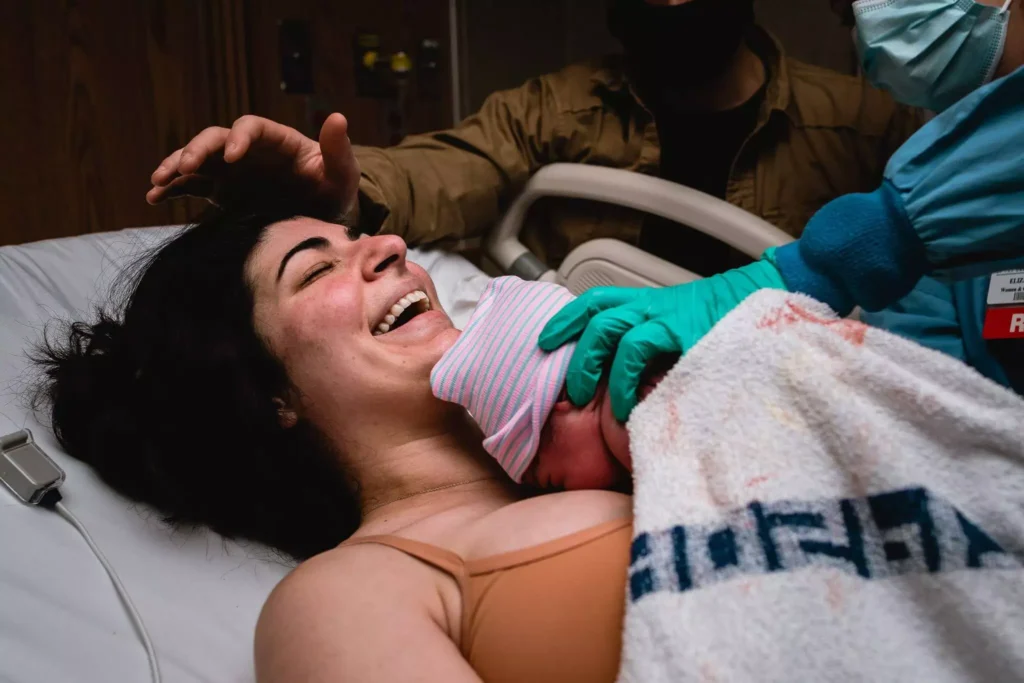

Learn the science of pregnancy and birth to take the mystery of labor away! Understand why you are feeling what you feel, and learn strategies to confidently move through pregnancy and birth!
- 9h+ of Video
- Support Group
- Close Captioning
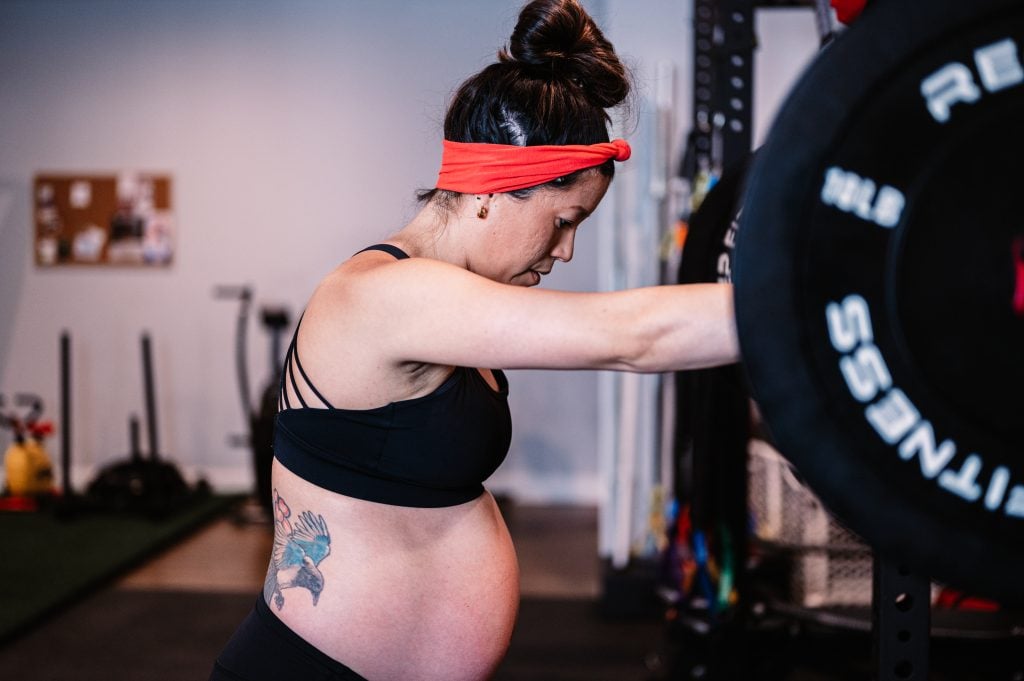

- 5 Workouts/Week
- Gym Workouts
- Self-Paced

Instructor
GINA
Workout on-demand with our prenatal fitness workout videos! Each workout is 30-40 minutes to follow along as you exercise at the same time!
- Birth Prep
- All Trimesters
- Mobility Work

Instructor
GINA
Find comfort and relief from pelvic girdle pain throughout your pregnancy and postpartum period! This program incorporates myofascial sling focused exercises to stabilize across the pelvic girdle joints.
- 3 Weeks
- On Demand Workout Videos to Follow