



Welcome to the MamasteFit Podcast! In this episode, Gina and Roxanne break down the importance of various movement patterns and labor positions to create space in the pelvis during pregnancy and childbirth. The sisters emphasize that there is no single “best” position, but rather a range of movements that can help facilitate labor progress. They explain how to prepare the body during pregnancy through exercises like hip shifts, pelvic tilts, and spinal mobility. This talk also covers how to address common issues during labor using specific movements and positions, but again, they stress the importance of practicing these movements during pregnancy to be better prepared for labor!
Read Episode Transcript
[00:01:01] Gina: Welcome to the MamasteFit Podcast. We’re going to be talking all about laboring positions and how different labor positions create different types of space within your pelvis, how you can create more space within your pelvis, and then how you can use those movements to help resolve issues that you may be encountering throughout your labor experience.
[00:01:19] Gina: And so before we dive into labor specifically, let’s talk about pregnancy because we’re not going to just write down a list of labor positions and then never attempt any of those positions until we make it to labor. We’re setting ourselves up for failure if we do that. We want to ensure that the movement patterns that we need to create space within your pelvis are accessible to us during pregnancy. So we want to practice during pregnancy.
[00:01:45] Roxanne: What?
[00:01:45] Gina: I know. When I am supporting births as a doula, there’ll be moments where I’m like, “Ah, man, if I can just get this person into a hip shift, it would definitely release tons of tension within their pelvic floor, and we will probably see a little bit more progress,” but it’s really hard to teach somebody a movement in the middle of labor. It’s just a really challenging thing to do. So I usually just leave it alone or I like slowly introduce it, or just like a tip of the iceberg introduction, because if I try to introduce something that’s a little bit more complicated, it gets really confusing for folks.
[00:02:18] Gina: And so the time to figure out movements is during pregnancy. And so with the pelvis, there’s four main types of movement patterns that we want to be able to do. We want to be able to have more hip external rotation where both legs are moving outwards- this tends to create more space in the top part of the pelvis. We want to be able to find a one sided open hip position. So think like Captain Morgan, so knee out to the side, like an elevated lunge with your belly pointing away from your thigh. We want to be able to find a closed hip position where the knee is coming towards the middle of the thigh, or middle towards the chest- so think like belly to thigh type of positions. And then we want to be able to find hip internal rotation where the knees are coming in and ankles are coming out. This is going to help to create different types of space within the pelvis. And we want to be able to ensure that we can do all of those movement patterns, that they’re all accessible to us.
[00:03:12] Gina: Now, in addition to the pelvic position, because nothing moves in isolation within our body, we also need to think about how other positions of like our rib cage, of our feet, could be impacting how the pelvis could be positioned as well. So it’s not just, “I’m going to torque my hip into internal rotation as hard as I can,” if the rib cage is in a different position.
[00:03:34] Gina: And so for us to create space on the top of the pelvis, we also need the pelvis to tilt forward and backwards. And that is going to be in response to the rib cage position. So we want to be able to find a front to back rib cage positioning, or front to back kind of spinal mobility. So if you think like cat cows, like those would be really helpful to creating space more in the top of the pelvis, in addition to the bottom of the pelvis.
[00:03:55] Gina: So front to back movements patterns with the spine, great for the top and for the bottom of the pelvis. When it comes to the middle of the pelvis, this is where we have a lot of that rotational torque that’s happening. So we’re thinking more of twisting within the spine, also lateral side bending, so this is where we’re adding in different types of thoracic mobility with side to side opening in addition to rotational movement.
[00:04:17] Gina: So when we’re thinking about birth preparation exercises, it’s not just deep squats, butterfly pose. It’s also spinal mobility as well. How well can I move my spine forward and backwards, especially to the rounding position? How well can I expand in my back? How well can I rotate from side to side, in addition to stretch from side to side? So we want to make sure all of those women patterns are accessible to us. And that’s already a long list where you’re like, okay, I need to do front to back, spine mobility, side to side, spinal mobility, and rotational spine mobility. And then I also need to have hip external rotation, one sided open hip positions, one sided closed hip positions, and then both sides knees in. That’s seven movement patterns right there, and then you have to combine them together. And so this is where it starts to get a little bit more complicated. But the good news is just moving your body throughout the day tends to incorporate these different types of movement patterns. If you want more of a specific step by step guide, our prenatal fitness program is going to incorporate all of that for you.
[00:05:18] Gina: In addition to the movement patterns, we also have to be thinking about what type of common postural tendencies do we have during pregnancy that could maybe make some of these movement patterns more difficult to achieve during labor and also could impact our comfort during pregnancy. So typically, a lot of us are going to favor more of an extended spine position. So we’re going to be arching our back a little bit more, and we’re also going to have a little bit more external hip rotation. So toes pointed out a little bit more. This is going to result in our backside being a little bit tighter or more compressed, our hip flexors being a little bit tighter and more compressed, in addition to the back half of our pelvic floor is going to have decreased mobility as well. And so this can make it harder for that sacrum to move out of the way, so maybe trying to enter into the pelvis can make it harder for baby to engage, or when baby’s trying to exit the pelvis, make it harder for that tailbone to shift out of the way.
[00:06:07] Gina: And so our common postural tendency during pregnancy could impact how we create space within our pelvis during labor. So back half of the body tends to be a little bit tighter, the lats, the back of the pelvic floor, in addition to the hip flexors, which could impact pelvic mobility, spinal mobility, pelvic floor mobility, all of the mobilities. So it’s not about finding perfect posture during pregnancy. It’s about how can we change our position during pregnancy. So that’s another thing to add to your list. So now we have to think about what is the common postural tendency and how can we release these common areas of tension. And this is where the MamasteFit Birth Prep Circuit comes into play. And it’s a free circuit that we offer. It’s six movements. The first is going to be a forward leaning inversion, which helps to support baby’s position by releasing tension in the uterine ligaments. Then we’re going to incorporate exercises to release these common areas of tension. We have a lat release, a back expansion exercise, and a hip flexor release- all three of those are going to help to improve your mobility of your spine and of your pelvis. And then the last two exercises are hip shifts, which helps to release tension in the back half of the pelvic floor and makes your sacral mobility a little bit better as well. All six of the movements really beneficial to supporting your pregnancy as you prepare for birth, and it’s a free guide, so we’ll include that down in the show notes below.
[00:07:26] Roxanne: Let’s take a break from this episode to hear about our sponsor, Needed. Needed is a nutrition company focused on the perinatal timeframe that both Gina and I have utilized during our pregnancies, postpartums, but even still to this day, like way outside postpartum, I still take all of their supplements. One of our favorites is their collagen protein. We love their collagen protein, adding it to our morning cups of coffee, our oatmeal. I’ve started adding it to my morning yogurts, there’s so many things that you can add it to. So it’s not changing the flavor of whatever I’m putting it into. It doesn’t make my coffee taste, collagen-y, or my oatmeal or our yogurt tastes a little, collagen-y, which I think just doesn’t taste great with like sweeter things. But this one, no added flavor, if anything, it makes it like creamier. But Needed is very intentional about the ingredients that they’re also adding to any of their products to include their collagen protein- that they’re going to find the right dosages and the right forms of the ingredients that are going to easily absorb into our body. And so their collagen protein is one of our favorites. And if you wanna try it out as well, head to thisisneeded.com and use code MAMASTEPOD to get 20% off your first order.
[00:08:32] Gina: So now that you know all of the movements that you need to incorporate into your prenatal routine, which may feel overwhelming, but it can be really simple.
[00:08:40] Gina: So if I was gonna incorporate all of these movement patterns into a single workout- which we already do with our prenatal fitness program, if you look on our YouTube channel and you look at like our prenatal workout list, there’s going to be birth prep workouts in there as well- I’m going to be thinking about, okay, how can I create space in the top of my pelvis? I need to have wider knees. So I’m going to do squats, but then I also need pelvic tilting from front to back. So maybe I incorporate some cat cows with my knees a little bit wider, so pelvic tilts with wide knees. So that’s going to be supporting opening the top of my pelvis. I can incorporate a little bit of mobility where I’m releasing my lats and my hip flexors as well, if I want to help create more space in the top of the pelvis. But typically thinking like squat type movements, pelvic tilting type movements are going to be like my main focus is there.
[00:09:25] Gina: When it comes to creating space in the middle part of the pelvis, I’m thinking that open hip position and that closed hip position. So I could be doing some lateral hip shifts where I’m shifting my weight from leg to leg, and you can use weights for that. I could do like a half lunge rock position where my knee is more out and I’m rocking into that leg. And I could also incorporate lots of hip shifted exercises- staggered stance Romanian deadlifts, Bulgarian split squats, lunges, anything where I’m finding rotation.
[00:09:52] Roxanne: Everyone’s favorite.
[00:09:52] Gina: I know!
[00:09:54] Gina: Rotation in my hips. I find my closed hip position to my open hip position. And if that, again, feels unfamiliar to you, look at our playlists. It’s free on our YouTube channel. It’s got birth prep workouts. Pick one of those, and we’re going to be incorporating that hip rotation movement. And that’s going to help create space in the middle of your pelvis. So do your squats with your pelvic tilting from front to back. And then move on to the mid pelvis, where we’re doing more hip rotation, where we’re finding a closed to open hip position. And in there, you can also incorporate some thoracic rotation, some lateral side bending. My favorite is the 90/90 side camel. If you don’t know what that is, just google “MamasteFit 90/90 side camel.” I think it’s a position that somebody else has already made up, but that’s what I’ve named it, cause it felt really good during my pregnancy, but you’re going to get a hip flexor release in that one round ligament release, side body release, thoracic rotation. So it’s like a whole bunch of things within it.
[00:10:49] Roxanne: All the things, in one movement, which is what we need!
[00:10:52] Gina: And you get internal and external hip rotation. So throw that in there. So my workout is squats with pelvic tilting with my knees wide, and then I’m going to do some lunges going from open to close hip position, adding in my 90/90 side camel. I’ve already got a full workout right there to help prepare my body to open for the birth
[00:11:11] Gina: And then for the bottom of the pelvis. I want to think about strengthening my hamstrings and my inner thigh muscles because our muscles have the ability to pull, not push. So while I do want to release the muscle so they have the capability to be stretched, I need to strengthen the muscles so they can pull my pelvis in different positions. And your hamstrings and your inner thighs are what help to pull the bottom of your pelvis open into that internal rotation. So I’m going to be doing like deadlifts, Copenhagen planks- but Copenhagen planks are probably listed right up there with Bulgarian split squats where nobody likes them.
[00:11:44] Roxanne: They’re so bad.
[00:11:45] Gina: They’re so good for you! They’re so good for you, and there’s different variations.
[00:11:49] Roxanne: They’re fairly easy to implement, even if you have no gym, too, which I like. Bulgarian split squats and Copenhagen planks you could do at home pretty easily. So, very accessible.
[00:11:58] Gina: And they’re the best.
[00:11:58] Roxanne: You don’t even need weights.
[00:12:00] Gina: Birth prep is more than deep squats. Just do Bulgarian split squats and Copenhagen planks!
[00:12:07] Gina: So you can incorporate a hamstring strengthening exercise and an inner thigh strengthening exercise to help create space in the bottom part of your pelvis by strengthening those muscles, which you may not think that these are birth prep exercises, but they are. And then again, you can incorporate some of Hero’s Pose, like knees in, pelvic tilts for that spinal mobility and for the mobility aspect of things.
[00:12:29] Gina: To review your mini workout that you all now have- and this is probably a workout that we already have on our YouTube channel- you’re gonna do squats for your wide knees with pelvic tilting with your knees wide. This is focusing on the top part of your pelvis. If you want more mobility, you can add in hip flexor releases, lat stretches. Then we’re moving it to the middle part of the pelvis. We want a lot of hip rotation happening. So thoracic spine is rotating and we’re finding an open to closed hip position. So we’re gonna do lunges where at the bottom of the lunge, belly towards the thigh, and at the top of the lunge we’re in an open hip position. And if you’re like, “I don’t know what that means,” search “MamasteFit reverse lunge,” “MamasteFit split squat” in YouTube and you’ll find some demo videos from us where we’re walking you through it, or just go to our workout playlists on YouTube and you’ll see like a whole birth prep workout where we walk you through that, especially ones that are like “help baby rotate,” or, “open the middle part of the pelvis.”
[00:13:20] Gina: So we’re going to have our lunge with our open to closed hip position, and then we’re going to add in a 90/90 side camel, maybe some hip shifts in there, maybe a staggered stance Romanian deadlift if you want to get a little bit more hamstring-y in there, and that’s gonna be your mid pelvis portion opening of your workout.
[00:13:35] Gina: And then to finish up you’re gonna do some deadlifts, Copenhagen Plank, and then knees in pelvic tilts to help release the bottom part of your pelvis. So there’s your birth prep workout and those are the movements that I would be incorporating throughout my prenatal routine to help my body prepare for birth. So birth preparation is more than just deep squats, Kegels- don’t do Kegels- butterfly pose, things like that.
[00:13:59] Gina: Now that you have those movement patterns accessible to you, the next movement that I want to talk about is the hip shift. So if there was only one movement that I can do to prepare for birth, I wasn’t allowed to do any other movement, a hip shift is the movement that I would learn how to do during my pregnancy because it is so helpful during labor. And so what a hip shift is, is your pelvis is going to be rotating on your femur, which is going to bring your pelvis into internal rotation. What is happening here is your sacrum is actually moving away from that pelvic half, and it’s creating a lot of space in the posterior pelvic floor, or it’s the posterior pelvic outlet. And so that stretch there is going to release tension in the back half of your pelvic floor, which can feel really good, a lot of us hold a lot of tension back there. This is also going to be really beneficial because it helps your baby get underneath the pubic bone. So if you’ve been pushing for a long time, or baby starting to get really low, being able to find a hip shift can help baby get underneath that pubic bone as well, which can sometimes take a little bit longer during labor. And there’s so many variations of a hip shift that you can do as well, you can do a side lying variation, all fours, standing, you can add in movement. And we incorporate tons of hip shifts within our prenatal fitness programs as well, across our YouTube channel, we show them on our Instagram page a ton. But you can do it with a yoga block, it’s usually probably the easiest way to teach it, where you come in at all fours position, you put one yoga block underneath one knee, and then you shift your weight over, so hip shift, you shift your weight over that knee. So you’re putting weight into that knee, into that foot, into whatever you’re shifting too. And when we put our weight into our leg, that hip comes into more internal rotation. That pelvic half comes into more internal rotation. Because that is how we stabilize. And if you are in labor, again, this can be really helpful- it releases tension within your pelvic floor, it creates more space in the posterior outlet, it helps your baby get underneath that pubic arch.
[00:16:04] Gina: And so if I’m noticing that things are just taking a little bit longer, being able to find a hip shift is usually like the resolution to that, but it’s hard to teach it in the moment. And so during pregnancy, exploring that movement can be really helpful because there’s like little tweaks that happen. Like you get into it and then you just shift around until you find that like perfect spot. So when I showed you hip shifts for the first time, what was like something that helped you with it?
[00:16:32] Roxanne: Gosh, the first time I did a hip shift ever I feel like it was actually not even in the middle of a workout, I was at your house and I was like, “My back has been hurting me,” and you’re like, “Just do a hip shift,” and I was like, “What is that? What do you mean? What do you mean by that?” And you’re like, “Just do this thing,” and I was like, “Oh!” I don’t think I was ever like even at that time, I wasn’t in it fully, but I still felt just so much relief, and it felt so nice in my back, and I could feel the release in my butt, too. Because I, surprisingly, I’m just so chill as a person that I would have any sort of tension in my butt at all, I know, but stress, right in the butt cheeks. You just tense up. And I noticed that once I started implementing the hip shifts, like my prolapse symptoms would go away, like I would have this, it’s called like anal proctogeal, which just means like a spasm within your butt, like the muscles around your anal sphincter, just like spasm and it’s not super comfortable, like people get them in the postpartum period from just tension within that portion of your body. And when I started implementing hip shifts, I stopped having that spasm in my butthole.
[00:17:54] Gina: You’re welcome.
[00:17:55] Roxanne: Yeah, I know, just, thank you. And it’s funny because I actually think I asked Hayley about it and she’s like, “Yeah, hip shifts would help that,” because someone messaged us, and I was like, “Oh, that’s why my, butt spasms went away, so it was hip shifting!”
[00:18:06] Gina: I know what you’re talking about. I didn’t know that there was a name for that.
[00:18:09] Roxanne: Yeah, it’s, that’s probably not…
[00:18:11] Gina: It’s like the stabbing butt pain that you get.
[00:18:13] Roxanne: Yeah, it’s like stabbing butt pain. I got it during postpartum and I’m just like running out of bed, like hip shift! Because it does help just strengthen and like release that portion. And we even will do it like when we go to Disneyland, if my back was hurting because of the way that I’m like walking when I was pregnant, and I would just do a hip shift in the middle of the line at Disney, and people were probably like, “What the heck is wrong with this lady doing this weird movement?” and I was like, “It feels so nice!” It feels so nice.
[00:18:39] Gina: All of the clients that I show how to do a hip shift in the gym, they’ll be like, “I was having tailbone pain,” “I was having low back pain,” “I was having this discomfort, and now that I know how to do a hip shift, all that pain is gone.” And so it’s, again, if I could only do one movement, that would be it.
[00:18:56] Roxanne: It does take a while to like fully master it though. Like when you, there are so many nuances to the hip shift. And I think that, I don’t think I fully understood that the first time. It’s like the first time you literally just shift, like just shift your butt back, front hipforward, back, hip back, and you feel it.
[00:19:15] Gina: Yeah, so if you’re in a seated position…
[00:19:16] Roxanne: But, there’s also
[00:19:17] Gina: Let’s walk people through it.
[00:19:18] Roxanne: Different nuances to the hip shift.
[00:19:21] Gina: If you’re in a seated position, we’re going to walk you through a hip shift, because again, if I can only pick one movement, this is the one that I would pick. You’re going to think, you’re going to take your left- we’re going to do left hip shift, cause this is where we tend to have more problems- you’re going to think, drive your left knee back, like you’re trying to push your knee into your hip socket, and then you’re going to push your right knee forward. So you already have two to three inches difference between your two hips. And if you need to adjust in your seat, feel free. Now your upper body is going to rotate a little bit more towards that left side. And then you can take your hand and you can put it to the inside of your left knee and then press into that left hand, or your right hand pressing into the left knee. And then just feel what that like little stretching sensation feels like. So this is the beginning of a hip shift in a very supported position. You’re going to take that same kind of orientation of your pelvis and come to like a standing position, or to an all fours position where you can put some weight into that knee or into that foot, and then you’re going to come into that same, like I’m pushing my left hip back, my right hip forward. And we’re looking to feel a stretch in like your back hip pocket area. So if you’re wearing jeans and you put your hands in your jeans, that’s where you’re going to feel the stretch happening to that side you’re rotating to. And then put weight into the big toe of that foot, so your left foot, think lots of weight in my big toe. This is going to bring your leg into an internally rotated position, which is going to drive you deeper into that hip. So it’s going to be a counter rotation that meets at your hip. Your upper body is rotating towards the leg and your leg is rotating inwards and they all meet at that hip joint, is kinda what you can think about. You can also think about if you had like a bowl on top of like a pole and that bowl is rotating and shifting around on top of that pole, think about that being like your hip socket on your femur. And so those are some different visual cues that you can try to utilize to help you find a hip shift, but explore it. Different positions are going to bring you a little bit deeper into the hip shift, and we’ll link some examples down in the show notes below.
[00:21:28] Gina: Now let’s take all of these movements, and we’re going to apply them to labor now. How can I take all of these movements and facilitate my labor process? Now, when it comes to choosing the best labor position…
[00:21:40] Roxanne: There is none.
[00:21:42] Gina: There is none. There is no one best position. Because, one, each part of the pelvis opens with different movement patterns. Your baby’s rotating through different positions as well, so there’s even no one best position for your baby. I know, it’s really hard to believe because someone has probably deeply ingrained within you that OA is the best position, that deep squats are the best position. They’re not.
[00:22:01] Gina: So when it comes to labor, we want to think about, okay, where is baby within my pelvis? How is my baby moving through my pelvis? And then, how can I facilitate more space? The first question that we always get whenever I talk about, “If baby is here, create space in this part of your pelvis,” is, “How do I know? How do I know where my baby is?” There’s a few different ways. The way that I find to be the best, which can be hard, is to trust your intuition, but it’s really hard to do.
[00:22:33] Roxanne: I think it’s just been so ingrained in us to just ignore all of your intuitions and stop listening to yourself because you know nothing.
[00:22:40] Gina: It’s a new experience, too, so it’s understandable that trusting your intuition can be really hard. And so what I tend to find is when you have a contraction, you tend to move in a way that creates space in the part of your pelvis that your baby is navigating, or you will do things that are helping to correct issues as well. And so for me as a doula, these are the little movements that I’m looking for to help me know where someone is within labor. Like when they start doing this one specific movement, okay, that usually means they’re about to start pushing. That means that baby’s getting pretty low. If they’re doing like this other movement, oh, their baby’s probably still trying to engage into their pelvis. I guess I can say what the movements are. If someone is like emphasizing a tuck of their pelvis, especially towards one side, their baby’s probably still trying to engage into their pelvis. If they are like tippy toe, like shifting their weight into one leg repeatedly, their baby is probably getting ready to be born. Thoe are kind of the two like little movements to look for. If I don’t see those, sometimes I wish for them, especially the tippy toe one, I’m like, “Please get on your tippy toes. Just do it. Just do it to please me!”
[00:23:46] Roxanne: Which is funny because with Colin I remember, I vividly remember being on tippy toes at one point.
[00:23:51] Gina: You did it with Joan, too.
[00:23:52] Roxanne: Yeah, probably. Oh, I do remember with Joan. But I wasn’t like, I noticed it and I was like, “It’s not real.”
[00:23:56] Gina: Yeah, so your intuitive movement pattern is a really big clue to where your baby is. So whatever movement you’re already just trying to do, just lean into it. And labor positions don’t have to be these big movements. It doesn’t have to be like the deepest squat you’ve ever done and the biggest lunge, like lunging down the hallway. It can just be swaying from side to side, sitting on the ball and just shimmying your hips a little bit. They can be really minute movements as well.
[00:24:20] Roxanne: Shimmying is really good.
[00:24:21] Gina: Shimmying is a great one to do.
[00:24:23] Roxanne: Like not just shoulders though, shimmying your hips.
[00:24:25] Gina: Yeah. Another way that you can tell where is my baby within my pelvis, is your provider can do a cervical exam and they can assess baby station, which is how high or low baby is within your pelvis. And this is especially helpful if you have an epidural because the intuition it doesn’t completely go away, but it’s not quite as strong to where you’re like wiggling and moving with the contractions. And so if you get an epidural or if you are unmedicated and you’re just generally confused, which is understandable, especially if it’s your first time, knowing your baby’s station can be a clue to how high or low within the pelvis they are, so you know what type of labor positions to do, in addition to their positioning as well. So that can be a helpful tool if you’re trying to figure out okay, what leg should I lift, or things like that.
[00:25:10] Gina: Now when it comes to creating space within the pelvis, it’s the same type of movement patterns that we talked about with prenatal preparation. The top of the pelvis primarily opens more with wider legs, so think like those squat type positions with front to back pelvic tilting. So sitting on a ball, rocking your hips from front to back while tucking your butt, arching your back, tucking your butt, arching your back with your knees a little bit wider.
[00:25:33] Gina: If we start moving to the middle of the pelvis, so baby’s engaged, they’re starting to rotate, we want to think about more side to side type movement patterns. Open and closed hip positions. Walking, curb walking. Yeah, so curb walking does not engage your baby. It helps your baby rotate, and no movement will put you into labor, unfortunately! So swaying from side to side, like shifting your weight from leg to leg, those are going to be like mid pelvis opening type movements. So if I was sitting on the ball, rocking from side to side, if I was on all fours, rocking from side to side, you can throw in some like half lunges in there, hip shifts and things like that.
[00:26:09] Gina: When it comes to opening the bottom of the pelvis, typically you’re pushing at this point. It’s usually pretty obvious when we’re at the outlet, is your baby, we can see your baby. If you don’t see baby, you’re not at the outlet yet. If you’re pushing, just do outlet just to make it easy. But if you do not see your baby is not at the pelvic outlet yet, they’re still in the mid pelvis. And if you are pushing, and it’s taking a while, try a lower mid pelvis opener to push. So think like a hip shift, which opens the lower mid pelvis, can be a helpful thing to do.
[00:26:42] Roxanne: Which is why, the side lying release helps open at the bottom of the pelvis. If you’re having trouble pushing, do a side lying release to see if that helps.
[00:26:51] Gina: So those are the main movement patterns when it comes to creating space within the pelvis. We want to think wider legs for the top, side to side for the middle, and then knees in for the bottom, are like the main movement patterns that we’re looking for. And obviously we can get much more in depth with like different types of laboring positions. We have a whole guide within our childbirth education course that shows these are inlet positions, these are mid pelvis positions, these are outlet positions. That guide is also just a standalone purchase as well, but it is included within our online childbirth education course. I think it’s 30 pages, you print out full color. I was really proud of it!
[00:27:25] Gina: But there are tons of positions that you can do, but we don’t have to do these giant movements. They can be very small movements, just going with what feels good for you and that’s okay. But primarily thinking wider legs, front to back movements for the top, side to side movements for the middle, knees in for the bottom.
[00:27:41] Gina: Now, there are moments where there are some like common issues that can occur based on where baby is within your pelvis, and movement can usually help to resolve it. Now, there are other things that can be involved with labor stalls, such as like your energy level, have you been eating, like what is your health status. It could also be involved with like baby’s position, but I tend to find that your movement pattern and baby’s position correlate to each other really well. And so we can do movements to help support our baby’s position.
[00:28:11] Gina: The first place that we may notice like an issue is engagement. So baby entering into the pelvis. And now first we want baby to be aligned to the pelvic level. So depending on what kind of position they’re in we may want to do certain types of movement patterns. But generally, if baby’s having a hard time entering into the pelvis, it could be that there is decreased space in the back half of the pelvis, like the posterior pelvic floor that’s pushing baby forward, so they can’t quite enter into the pelvis, and this is usually related to like lat tension or compression, posterior pelvic floor tension, in addition to those hip flexors. And so, if your baby is having a hard time engaging into the pelvis, all of my corrections begin with an inversion. We’re going to invert just to give baby some space so they can wiggle their head around, because maybe their head position was a little bit off. And then, for engagement, I’m going to focus on, can we release in your lats? Can I release your hip flexors? And then we’re going to try to do some upper mid pelvis openers. And the reason for that is, with an upper mid pelvis opener, we’re coming into that open hip position, and this is going to create more space in that upper half of the pelvis. And this is going to give baby room to rotate so they can then drop in to the pelvis.
[00:29:22] Roxanne: Oh, I just had a thought! Flying cowgirl…. mermaid, I prefer mermaid, I am just gonna say mermaid. The position of mermaid is always taught for engagement of babies. And that is where wide knees, the peanut balls between your knees- so if you have an epidural, this is usually the position if baby’s having trouble engaging that a lot of nurses will put you in- so peanut balls placed between your knees and then they bring your knees back so that your hips are fully extended. And the thought was this was putting your pelvis into that posterior tilt to create more space or yeah posterior tilt to create more space so your baby can drop into the pelvis.
[00:30:01] Roxanne: But maybe it wasn’t actually doing that what it was doing it was releasing your hip flexors And creating more space by doing the wide knees, and that’s why it was helpful, not necessarily because of the position of your pelvis that I was putting in. It was releasing those hip flexors, and that was creating the space.
[00:30:17] Gina: I also find that the mermaid position, I think, is more of an anterior pelvic tilt. I think most folks are going to be more arched in it, which creates more space in the front half of the pelvic inlet. Which sometimes the angle changes and so baby can slide in to the pelvis.
[00:30:33] Roxanne: But I think it’s what I feel like the hip flexor release is probably also why it’s really beneficial to release that to also help the baby. When you said that, I was like, “Ah, that’s probably why.” Because we put them into the peanut ball with a ball between their legs, if they don’t like that hip extension, I’m not going to force someone into something that’s uncomfortable for them. If it’s not uncomfortable, then yes, but it’s still beneficial for people by just putting the balls between their legs in like a normal neutral position. So I was like, why the legs back? Does that always help? Because not everybody gets into that anterior pelvic tilt that you’re talking about, I misspoke. But probably that hip flexor release, they were probably very tight because even in my three labors, every single one, I found myself doing like really arched back and lifting my belly. I wanted to do all of those things intuitively, and my hip flexors are just naturally tight, and I wonder if that was why.
[00:31:31] Gina: For most folks, they are tight.
[00:31:33] Roxanne: And then my babies dropped, usually, shortly after I did all of those things.
[00:31:37] Gina: I think so.
[00:31:37] Roxanne: So that’s, I just connected those things in this exact moment.
[00:31:42] Gina: Yeah. So you can do the releases. So you can do that lat release, you can do a hip flexor release, and you can do both of these either outside of the bed or on the bed in a supported position. We can just create space in the inlet with the peanut ball between the knees. So more of that external rotation. You could add in the hip extension for a little bit more hip flexor release too. But we could also do like an upper mid pelvis opener to help baby rotate.
[00:32:04] Roxanne: Yeah.
[00:32:05] Gina: So it’s going to create a little bit more space just to one half to help with the rotation so they can then engage. So like a fire hydrant position, an exaggerated side lying. If you think like Mile Circuit where it does like the inversion and then it’s the exaggerated side lying, that’s an upper mid pelvis opener that’s helping baby rotate, so that’s why that position works.
[00:32:22] Roxanne: Do you normally, would you do the left leg on top?
[00:32:24] Gina: I would probably do the left leg first, ’cause most babies are gonna rotate to the left side. So those would be like the movements that I would do to help with engagement if that was the issue. I would focus on a lot of releases. So the inversion, and then I’m going to release hip flexors, I’m going to release the lats- you can do both of them in the bed. And then I’m going to think of an upper mid pelvis opener with exaggerated side lying, or you can just do an inlet opener with the ball between the knees, like deep squats, things like that as well. Just whatever feels good for you. So that would be how I would address engagement issues.
[00:32:54] Gina: Now, when it comes to the next type of issue that I normally notice during labor is going to be when baby’s trying to finish the rotation. So the first one is them entering into the pelvis to begin the rotation. The next one is going to be exiting the pelvis to finish that rotation. Again, for a lot of us, we tend to have more tension to the back half of our pelvic floor. And this is where, again, those hip shifts are going to be magic. They’re just going to be magic for us. When we have that tension to the back half of the pelvic floor, it’s going to decrease space in the pelvic outlet, especially the back half of it cause the tailbone cannot move out of the way, and it’s going to push baby forward into that front half of the pelvis. It’s going to make it harder for your baby to get underneath that pubic arch. Cause they’re not just like going straight down to the pelvis, they’ve got to come underneath, and if they can’t get underneath because the tailbone doesn’t move, they’re going to have a hard time with that extension. And so these hip shifts are going to be super helpful here. And again, you can do hip shifts in a supported position where your partner just pushes that top knee back- again, left side would be the side I would focus on. You can come into an all fours position. I’ve taken pillows and just folded them in half and put them underneath a knee if someone was in a tabletop, and then they just shift their weight over. If you’re standing, you can do a standing hip shift as well.
[00:34:10] Gina: And so learning how to hip shift during pregnancy can be really beneficial for labor. For me in my own labor, I was like hip shifting, like just swaying from hip to hip, shifting my weight from leg to leg, and that was like a really helpful way for me to release tension within my pelvic floor, which is probably why my last labor was so fast, because I was a little bit more, slightly more relaxed.
[00:34:32] Roxanne: Just a smidge more. Her pelvic floor was more relaxed. Facial massages were probably the key, honestly.
[00:34:39] Gina: They were so good. I did do a lot of face massages during my pregnancy, highly recommend.
[00:34:45] Roxanne: TheraBody has a face massager that I want.
[00:34:50] Gina: I have it. It’s amazing.
[00:34:51] Roxanne: I want it.
[00:34:52] Gina: Free plug, TheraBody!
[00:34:54] Roxanne: Yeah, please, send me one!
[00:34:57] Gina: When it comes to addressing issues during labor, we can use movement to help it. If baby’s position’s a little bit off, if maybe like there’s a little bit of tension somewhere, again, we don’t want to try to fix it with totally new movements that we’ve never done before, prenatal is helpful to be familiar with this stuff. But if baby is having a hard time engaging, I want to think about what can I do to release common areas of tension that is making it harder for my baby to enter. I’m going to release my lats, I’m going to release my hip flexors. I’m going to then create space in the top part of the pelvis, either with an inlet opening exercise, knees wide, or an upper mid pelvis opening exercise, one sided open hip position.
[00:35:35] Gina: Now, when it comes to the other potential stall area is baby finishing that rotation. I’m going to think primarily about hip shifts. So finding a closed hip position. So you’re feeling more of that stretch towards one glute, butt cheek type of area. And you’re shifting from side to side. So learning how to hip shift during pregnancy, very helpful. Now your partner can help you with a hip shift or you can do it yourself. If you follow us long enough on Instagram, you will find some, you will see a hip shift on the page. And a lot of those hip shifts again, it’s going to be kind of exploring the movement a little bit. Like, which one brings me the sensation that I’m seeking? And so it might not be like the first time you do it that you totally feel it, and might take a little bit of tweaking and movement, but once you feel it, you’re going to be like, “Ah! I understand.” And again, it really helps with prenatal comfort too.
[00:36:25] Roxanne: And even like gym clients that we have, they have been doing hip shows for a while, but sometimes we’ll just come over and give like the smallest little tweak and they’ll be like, “Oh my gosh, now I feel it even more!” They’re like, “I felt relief, but like this just took it up a notch.” Like the toe or the knee.
[00:36:43] Gina: Usually it’s like the big toe.
[00:36:44] Roxanne: Or even like rounding slightly in the lower back. Like all of those things are like, “Oh man, I feel it a lot more now.”
[00:36:51] Gina: So that’s something else- when we were trying to find internal hip and pelvic rotation, the pelvis needs to be in a more posterior position, so slightly rounded position.
[00:37:01] Gina: So again, if you’re sitting in your chair and you find a big arch in your back, like really throw your belly forward, and then I want you to bring your knees together and then spread your ankles apart, and see how that feels like a little bit more strainy. It’s like a little bit more straining in the low back. Now I want you to just tuck the pelvis underneath and round on your back and then bring your ankles apart. See how like much better that feels in your back area? And so it’s not about torquing the hip joint as hard as you can, it’s about: how does my pelvic position impact my pelvic mobility?
[00:37:36] Roxanne: I just did it intuitively where I was like, nope.
[00:37:39] Gina: Yeah, so having that slight round in the back is going to help you move deeper into those internally rotated positions.
[00:37:46] Roxanne: Which I think just emphasizes that there’s no one perfect posture, it’s the ability to move in between the different postures that is key.
[00:37:53] Gina: I saw a page that said that the number one cause of C sections is slouching and I audibly gasped. I was like, how? You’ve got to be kidding me. That’s a bold ass statement to make.
[00:38:07] Roxanne: It’s not just slouching, but are you able to then ge out of it.
[00:38:10] Gina: Yeah, so it’s not about maintaining one single position. If anything…
[00:38:14] Roxanne: Cause even this would be bad!
[00:38:16] Gina: Yeah, you don’t want to maintain that either. Even just maintaining neutral, like, all the time that’s, not a functional position.
[00:38:22] Roxanne: That’s a whole, that’s a whole other podcast, but.
[00:38:24] Gina: Ugh, God. That made me so angry.
[00:38:26] Gina: Anyway, so you can slouch during pregnancy. Because we’ll also get folks that are like, “I am trying to sit upright when I watch movies, but I’m so uncomfortable,” because they’re afraid to just relax into a position.
[00:38:38] Roxanne: Oh, yeah, like laying back in bed is gonna make your baby O. P. and you’re gonna have a long labor.
[00:38:43] Gina: That’s not true.
[00:38:44] Roxanne: I don’t think that’s true at all.
[00:38:45] Gina: So when it comes to positioning during pregnancy to support our baby’s position to create space within our pelvis, it’s not about finding that one perfect position. It’s about increasing movement capability.
[00:38:59] Roxanne: Motion is lotion.
[00:39:00] Gina: So if you want to relax to watch your movies, it’s okay, it will not negatively impact your experience, but maybe at some point during your day, get up and move around. Go for a walk. Do some pelvic and spinal mobility.
[00:39:12] Roxanne: Again, watch one of our videos.
[00:39:13] Gina: We have tons of workouts on YouTube. If you want like just standalone workouts as well.
[00:39:18] Roxanne: We even have some yoga on there too, which would be great.
[00:39:21] Gina: Prenatal fitness programs, check that out as well. But it’s all about movement as opposed to static perfect positions when it comes to supporting creating space within our pelvis, both during pregnancy and during labor to support our labor progress and our baby’s position.
[00:39:35] Gina: So in conclusion, there is no one best labor position, there’s no one best position for our baby, and there are different types of movement patterns that we want to be able to do during labor to create space within our pelvis to help our babies navigate through. This needs to start during pregnancy, though. We don’t want these movement patterns to be something that we’ve never done and then all of a sudden during labor, we’re trying to figure them out. It’s a little bit late at that point. Like you can still do it, but it’s, you’re working against yourself. So during pregnancy, we’re going to be emphasizing spinal mobility. So front to back spine movement, side to side spine movement and side to side spine movement, so rotational and lateral bending. And then we’re going to think about hip movement as well. So we’re finding both knees out, both knees in, and then each knee in either direction. So we have our open hip or our closed hip position. Our internal and external hip position, because those are different from each other. Internal and external hip rotation is different than a closed and open hip position, which is pelvic rotation. So they are a little bit different, but just for simplicity’s sake, different things on each side is going to be important.
[00:40:40] Gina: When it comes to labor, those same movement patterns are going to create space within our pelvis. So to create space in the top of the pelvis, front to back, spinal mobility, in addition to wider knees. And then remembering we’re not just going to torque our hips into different positions without thinking about our pelvic position. When it comes to the middle of the pelvis, that side to side movement pattern is happening. So if anything, just watch this video and remember my movement.
[00:41:04] Roxanne: I just think of Beyonce’s, Single Ladies, and they’re doing, “All the single ladies, all the single ladies, all the single ladies!” That’s hip shifting.
[00:41:12] Gina: You just Single Lady your way through labor.
[00:41:16] Roxanne: Hopefully you’re not a single lady.
[00:41:19] Gina: Unless you want to be. So the bottom of the pelvis where it’s going to be more of that internal hip rotation, so knees in ankles out, create space in the bottom with again, more of that front to back pelvic movement. I would say more of the rounding pelvic movement, because again, that internal hip rotation, slight rounding is going to feel better with hip shifts. So learn how to hip shift during your pregnancy.
[00:41:38] Gina: Now, if you want more support during your pregnancy, cause you’re like, “That’s a lot of stuff. I don’t want to have to figure it out on my own.” Guess what? I have figured it out for you with our prenatal fitness program! So our prenatal fitness programs have daily workouts with all of these movement patterns. It’s not just third trimester birth prep, we are incorporating it throughout your entire pregnancy- but you can start in the third trimester if you are already at that point, it’s not too late. Cause we’ll have folks that are 32 weeks pregnant, they’re like, “Is it too late for me?” I’m like, “You got two months. You got two months, that’s lots of time.”
[00:42:09] Roxanne: Maybe too late when you’re in labor.
[00:42:11] Gina: If you gave birth, it’s too late. That would be when I would say it’s too late. If you are like 38 weeks, I’ll just direct you to our free YouTube videos. I’m like, don’t buy a program, just do some free videos. and we also do have lots of resources on our YouTube channel, on our Instagram page, but if you want a step by step guide, the prenatal fitness programs is going to be a great option for you.
[00:42:32] Gina: In addition, we have our childbirth education course, which is going to talk a lot about the labor positions, breaking down the pelvic mechanics for you so that you know how to move during your labor. And you can check out my book, Training for Two, where I talk about all of the concepts that we do within our prenatal fitness programs and within our childbirth education course.
[00:42:50] Gina: And there’s a whole chapter on labor positions within it as well. So you can check that out also. Just grab a bunch of our resources. We’re here to support you during your pregnancy.
[00:42:59] Roxanne: This podcast is sponsored by Needed, a nutrition company focused on the perinatal time frame that both Gina and I have utilized ourselves and we even got like our whole family in on the Needed train. So if you want to check them out, you can go to thisisneeded.com and use code MAMASTEPOD to get 20 percent off your first order.
Additional Resources
Prenatal Support Courses
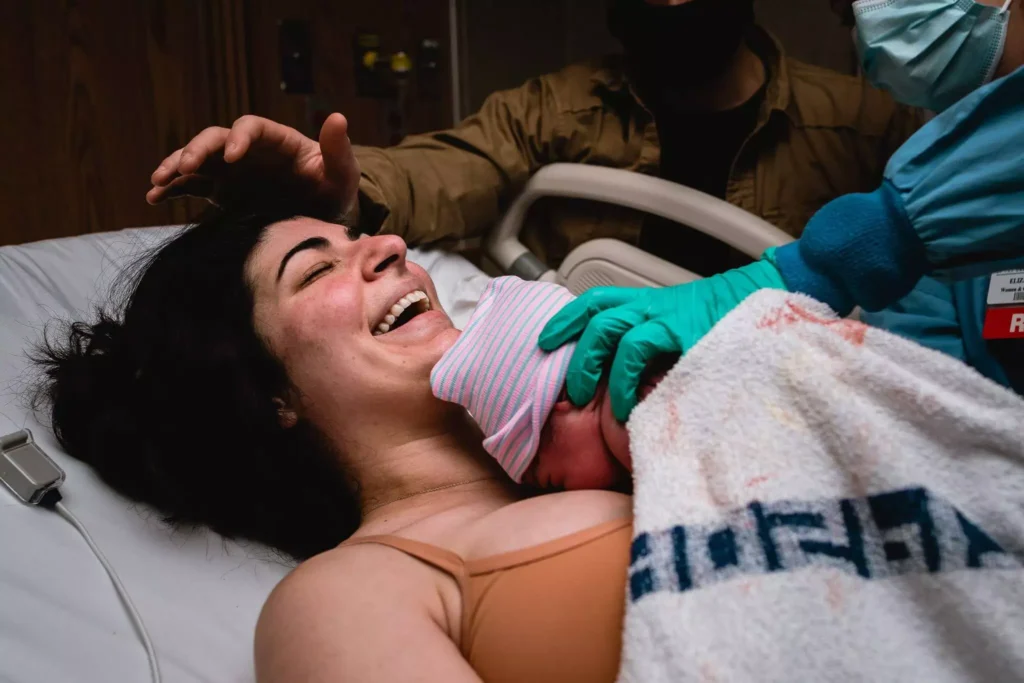

Learn the science of pregnancy and birth to take the mystery of labor away! Understand why you are feeling what you feel, and learn strategies to confidently move through pregnancy and birth!
- 9h+ of Video
- Support Group
- Close Captioning
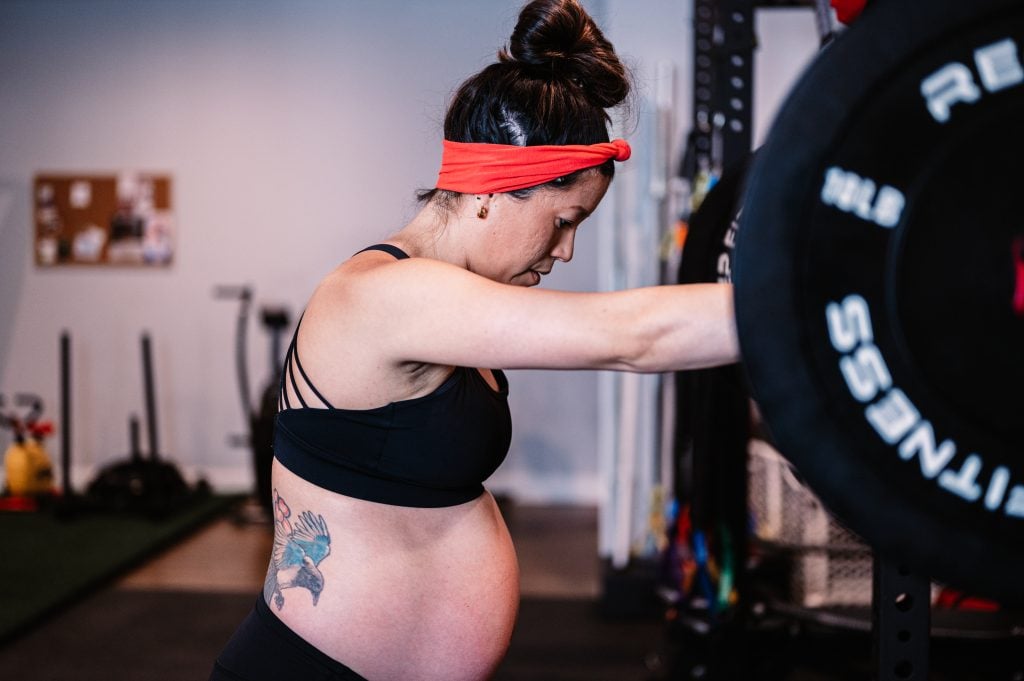

- 5 Workouts/Week
- Gym Workouts
- Self-Paced

Instructor
GINA
Workout on-demand with our prenatal fitness workout videos! Each workout is 30-40 minutes to follow along as you exercise at the same time!
- Birth Prep
- All Trimesters
- Mobility Work

Instructor
GINA
Find comfort and relief from pelvic girdle pain throughout your pregnancy and postpartum period! This program incorporates myofascial sling focused exercises to stabilize across the pelvic girdle joints.
- 3 Weeks
- On Demand Workout Videos to Follow