
You can prepare for pushing with your prenatal workouts. There are several movement patterns that can create more space in the bottom of the pelvis to make it easier for baby to be born! If you incorporate those movement patterns into your prenatal workout routine, it can support your pushing prep!
You do not need to wait until labor to focus on opening the pelvis! You can prepare to open the pelvis during pregnancy with our prenatal workouts! Throughout pregnancy, you can focus on ensuring you have the movement capability to open each pelvic level: the inlet, the midpelvis, and the outlet of the pelvis!
We include workouts that prepare you to open the pelvis in our prenatal fitness programs starting in the third trimester! We offer our prenatal program in two formats:
- 40-Week Prenatal Strength Program in the Teambuildr App. This program is a list of exercises with demo videos and it syncs to your current week of pregnancy, so you can start anytime! This program comes in both a full and mini version, so you can choose the program length that works best for you.
- Prenatal On-Demand Fitness Program has full-length workout videos that you follow as you work out at the same time. This program sync with your current trimester.
Open the Bottom of the Pelvis: Time to Push!
Opening the Pelvic Outlet: Prepare to Push
The pelvic outlet, or the bottom of the pelvis, is where baby extends and is born. We want to create more space in this pelvic level so that baby can finish their rotation under the pubic bone, extend their head, and be born!
The pelvic outlet opens more with:
- Internal rotation of the femurs (knees in, ankles out) creates more space from side to side
- Posterior pelvic tilt makes internal rotation easier, but we don’t want to completely round in the back
- Lat engagement can pull the sacrum out of the way plus pushing is a pulling activity, so having strong lats can support you in multiple pushing positions.
- Posterior Pelvic Floor releasing allows us to find that internal rotation more easily (plus a relaxed pelvic floor is easier for our baby to navigate through while pushing)!
We can include movements in our prenatal fitness programming to ensure that those movements are easier to find!
1. Find Internal Rotation to Create Space in the Outlet
Internal rotation at the hip creates more space in the bottom of the pelvis by spreading the ischial tuberosities, or sitz bones, further apart. Internal rotation can look like a knees in, ankles out position, or rotating the toes inwards.
This movement may be more difficult to find during pregnancy, as the common postural tendency tends to be external rotation (toes out) and an anterior pelvic tilt (arched back). Movements from our Birth Prep Circuit can target common areas of tension to make internal rotation much easier to find!
If we focus on HOW we can find internal rotation, it requires the following:
- Adductors (inner thighs) and hamstring strengthening to pull the femur into internal rotation on the pelvis
- Quad, hip flexor, and lat release to allow the pelvis to move into internal rotation
We can emphasize internal rotation with single leg movements, such as the staggered stance RDL with banded row. The key to finding internal rotation is at the BOTTOM of the movement. As you hinge into the RDL, focus on rotating the belly to the thigh (think rotating the pelvis on top of the femur). You should feel more of a stretch in the glute and hamstring at the bottom of the movement. Keep the weight in the big toe, and knee stacked over the ankle.
Many fitness programs neglect internal rotation; it is usually extension and external rotation. Why is that an issue? Internal rotation is a part of our hips’ normal range of motion. If we neglect a portion of the range, we may see more pelvic pain issues, pelvic floor issues, and labor stalls due to the pelvis not being able to open for allow baby to pass through!
Ensuring that you have the movement capability to OPEN the pelvic outlet is important! Watch the demo video below for more on the staggered stance RDL with banded row.
2. Lat Strengthening: Pull the Sacrum and Prep for Pulling to Push
The lats pull the sacrum out of the way during pushing! Plus, we spend a LOT of time pulling while we are pushing: pulling on our legs, the bed, a scarf or a sheet… to help generate the force to push DOWN! We can focus on strengthening the lats to help prepare for pushing! It is a very active part of labor.
Exercises such as the single arm row are a great option to strengthen the lats.
If you want more of a breakdown of WHAT to do throughout your prenatal workouts, check out our prenatal fitness programs! We offer it in two formats:
- 40-Week Prenatal Strength in the Teambuildr App (traditional delivery format)
- Prenatal On-Demand with full-length workout videos that you follow along as you workout
3. Releasing the Posterior Pelvic Floor
In addition to the adductors and hamstrings pulling the pelvis into internal rotation to create space in the pelvic outlet, we also need the posterior pelvic floor to RELAX so that we can find internal rotation.
Movements that incorporate a hip shift can target releasing tension in the posterior pelvic floor. The supported standing hip shift is one of my favorites to release tension in the pelvic floor, as its the most active pelvic floor release movement. Many of us hold a lot of tension in general in our pelvic floor, so a more active position can sometimes make it easier for us to FEEL what is happening.
But there are a lot of pelvic floor release options that we offer in our prenatal fitness programs and pelvic floor prep for birth course!
Prepare for Pushing: Create More Space in the Pelvic Outlet with Prenatal Exercises and Pelvic Floor Release
You don’t have to wait until birth to figure out how to create more space in your pelvis–you can incorporate exercises into your prenatal workout routine to open each pelvic level. When it comes to pushing, you need to find internal rotation at the hip (creates more space side to side) and lat strength to not only support pushing positions but also to pull the sacrum out of the way. Plus, you need to release tension in the back half of the pelvic floor. If you can ensure that you can open each pelvic level BEFORE labor begins, you are likely looking at a smoother labor process!
Prepare for Birth Courses

- 5 Workouts/Week
- Gym Workouts
- Self-Paced

Instructor
GINA
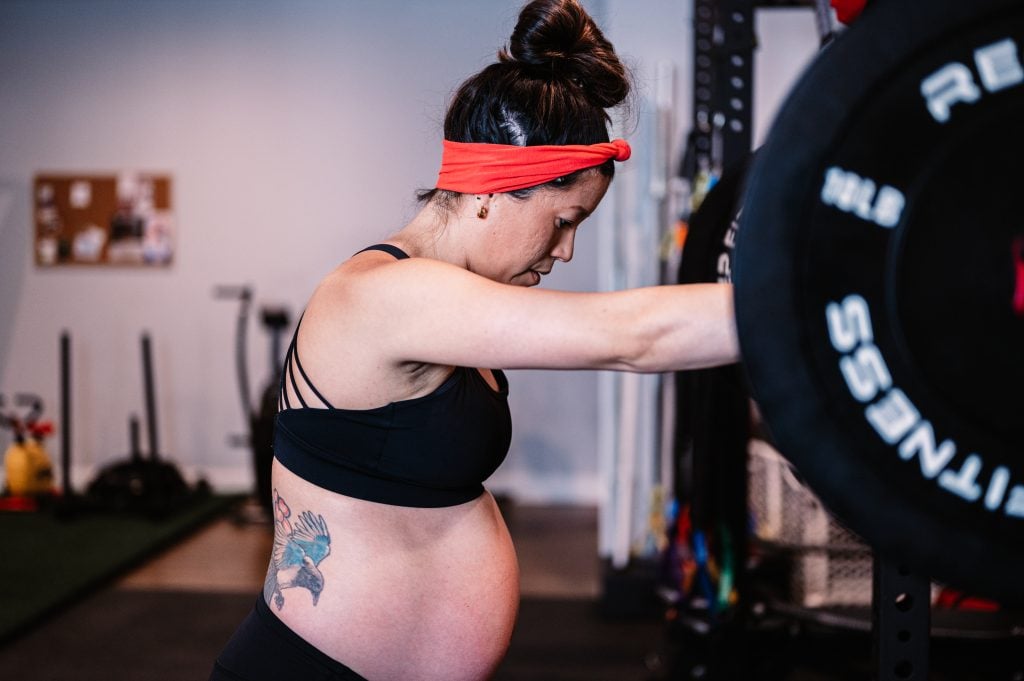
Workout on-demand with our prenatal fitness workout videos! Each workout is 30-40 minutes to follow along as you exercise at the same time!
- Birth Prep
- All Trimesters
- Mobility Work