



The MamasteFit Birth Prep Circuit is a series of exercises that support your baby’s position, opening the pelvis for birth, and preparing you to move with ease during your labor!
The Birth Prep Circuit focuses on releasing tension in the uterine ligaments, lats and hip flexors, and the posterior pelvic floor.
This circuit also integrates thoracic and pelvic mobility to support both baby’s position and the ability of the pelvis to open and move during pregnancy and labor.
The MamasteFit Birth Prep Circuit
The MamasteFit Birth Prep Circuit was designed to incorporate into your daily prenatal workout routine and to use during early labor!
This circuit includes:
- Back Expansion Breathing Drill: 10 Breaths
- Inversions: 3-5 breaths (no more than 30 seconds)
- Lat and Quad Release: 10 breaths per side
- Hip Shifted Pelvic Tilts: 10 pelvic tilts per side
- Supported Standing Hip Shift: 10 breaths per side
This circuit focuses on releasing uterine ligament tension to support the uterine shape. Then we advance to releasing the lats and quads to support the rib cage and pelvis position, which both can influence the pelvic floor’s tension.
And then we finish with a supported standing hip shift that opens the lower midpelvis and releases the posterior pelvic floor (where a lot of us hold a ton of tension).
This circuit can be done during pregnancy and during labor.
We incorporate this routine into our prenatal fitness programs starting in the third trimester!
1) Back Expansion Breathing Drill
Throughout pregnancy, our common postural tendency is a more extended back position. As belly grows larger, the center of gravity shifts up and out, so arching in our back can bring this center of gravity more midline and make it easier to stabilize.
But, this extended position could result in a shorten or “tight” lats, which could affect how our pelvis can open during birth! A more extended position tends to make it easier to find external rotation, BUT it can be harder to find internal rotation which opens the lower half of the pelvis.
Starting our birth prep routine, we want to focus on finding some expansion in the back! You can do this in a variety of positions, such as child’s pose, all fours, and standing. The standard for our routine is to do the standing as it tends to be more accessible.
Grab onto a sturdy structure, such as a power rack or door frame, and sink back into the hips as you round in the back. Take 10 DEEP inhales into the ribs to feel the ribs expand and stretch in the back, then exhale to relax.
2) Forward Leaning Inversion:
Release the Lower Uterine Ligaments
Next up, we have the forward leaning inversion. We learned this movement from Spinning Babies, and it is a part of their balancing circuit that can be done both during pregnancy and labor to find more balance in the uterus for optimal fetal positioning.
We include the forward leaning inversion in our birth prep routine because the inversion helps to release tension in the vertical running uterine ligaments: the uterosacral and round ligaments.
In addition, inversions may help baby adjust their head position to better press against the cervix during late pregnancy and labor.

In the forward leaning inversion, start with your lower legs on an elevated surface such as your couch, then drop down to your forearms. Try to find a more stacked position, with the elbows generally aligned just in front of the hips. Tuck the chin and hold this posture for three full breaths.
The forward leaning inversion is the most intense inversion variation, so be mindful of upper body strength. Forcing yourself into positions is not always optimal, so pay attention to how you are feeling, and it may be a good idea to have a spotter if you feel unsure.
Other inversion options:

Open Knee Chest: great if you are in early labor, but contractions are spaced out more than 5 minutes apart. Ensure that the angle at the hip is greater than 90 degrees!
This variation requires some partner support for your legs, as is the first movement from the Miles Circuit. The open knee chest position helps to open the top of the pelvis more and can help baby readjust their head position if you have prodromal labor, or find that the forward leaning inversion is too intense for you.

Puppy pose is another inversion variation that is the least intense. Sometimes puppy pose is all you need to help baby adjust their head!
Starting in a table top position, drop down to your chest to bring the chest lower than the hips. Hold here for up to 20-30 minutes.
3) Forward Leaning Lat Release
Next, we can move onto releasing tension in the lats to find more back expansion and a rounded position.
The common postural tendency is to arch in the back, which can result in tighter lats! This tension can make it more difficult to find a more rounded back position. And we need a rounded back position to open different pelvic levels! The top of the pelvis opens more with a posterior pelvic tilt (moves the sacral promontory out of the way).
And a slight posterior pelvic tilt helps us find internal rotation more easily which is important for opening the lower half of the pelvis.
Our thoracic position plays a large role in our pelvic position (aka how we can open our pelvis for birth), so focusing on thoracic mobility with lat releases supports birth preparation!

Movement tips:
- Starting with your hands pushing into a wall, hinge the hips back
- Then step the feet perpendicular to the hands
- You should feel a stretch in the side body
- Then press HARD into the hand on the lengthened side
- Push the chest away from the floor
- Hold here for 10 long breaths
4) Hip Flexor Release

Next, we can support finding this posterior pelvic tilt by releasing the front side of the legs with a hip flexor release. We can add more by reaching overhead with the same side arm to bring more of the side body into it too!
The common postural tendency during pregnancy involves an anterior pelvic tilt, or the pelvis tipping forward.
An anterior pelvic tilt changes the inlet angle, making it easier for baby to enter into the pelvis, but can also result in a tighter posterior pelvic floor and make it challenging to open the lower midpelvis.
Releasing the front of the thighs can help us move the pelvis out of this forward-tilted position more easily!

The pelvic floor plays a large role in our pregnancy comfort, birth, and recovery postpartum! Prepare your pelvic floor for birth with our online course!
This online course includes:
- Thoracic and hip mobility to move the spine and hips
- Breathing drills to connect the diaphragm and pelvic floor
- Pelvic floor relaxation exercises to release tension prior to birth
- Labor tips to release the pelvic floor tension so you can move easier through your birth!
Unsure if you’re ready to commit to our full course? Explore our free mini pelvic floor prep for birth course to gain a better understanding of our teaching style and what you will learn from us in our full course!
5) Hip Shifted Pelvic Tilts

The final two movements of our circuit involve shifting the hips into an internally rotated position, which hopefully you are understanding by now is the more challenging position for us to find during pregnancy. In these hip shifted positions, the elevated leg is the internally rotated leg; we are looking to feel more of a stretch in the back hip pocket of the elevated hip (space between the tailbone and the sitz bone).
In the all fours hip shifted position, place a yoga block under one knee. Then shift your weight towards the knee. This will bring your hips into an internally rotated position. Then push your chest away from the floor to find more rounding in the back, and breathe here.
After you feel the stretch, we can begin to pelvic tilts. The asymmetrical position targets one side of the pelvis more so than if both knees were down!
If you want more of a breakdown of WHAT to do throughout your prenatal workouts, check out our prenatal fitness programs! We offer it in two formats:
- 40-Week Prenatal Strength in the Teambuildr App (traditional delivery format)
- Full Version: Workouts 45-75 minutes in length, designed for the athlete with gym access or a home gym set up
- Mini Version: Workouts 15-20 minutes in length, designed for the busy person!
- Prenatal On-Demand with full-length workout videos that you follow along as you workout
6) Supported Standing Hip Shift

The final movement of our circuit is the supported standing hip shift. This movement forces the hip into internal rotation and releases the posterior pelvic floor (which again, for a lot of us is really tight)!
In the supported standing hip shfit, hold onto a sturdy structure and hinge the hips straight back. You should feel a big stretch in the elevated leg’s hamstring.
Then shift your weight into the elevated foot, and bend in the support leg to rotate the pelvis towards your elevated leg. After you do this, you should feel more of a stretch in that hamstring and glute.
Push the belly away from the thigh to feel more of a stretch in the lats and this will target more of the posterior pelvic floor.
Prepare for Your Birth with Our Circuit!
The Mamastefit Prepare for Birth Circuit is designed to release common prenatal tension so you can more easily move your body to support opening the pelvis and prepare for birth! The circuit includes uterine ligament release techniques with the inversion, lat and quad release to make it easier to find a posterior pelvic tilt, and then hip shifted movements to target more internal rotation and posterior pelvic floor release.
Hope our circuit helps you prep for birth, and if you want more, join our prenatal fitness programs!
Online Courses to Prepare for Your Birth
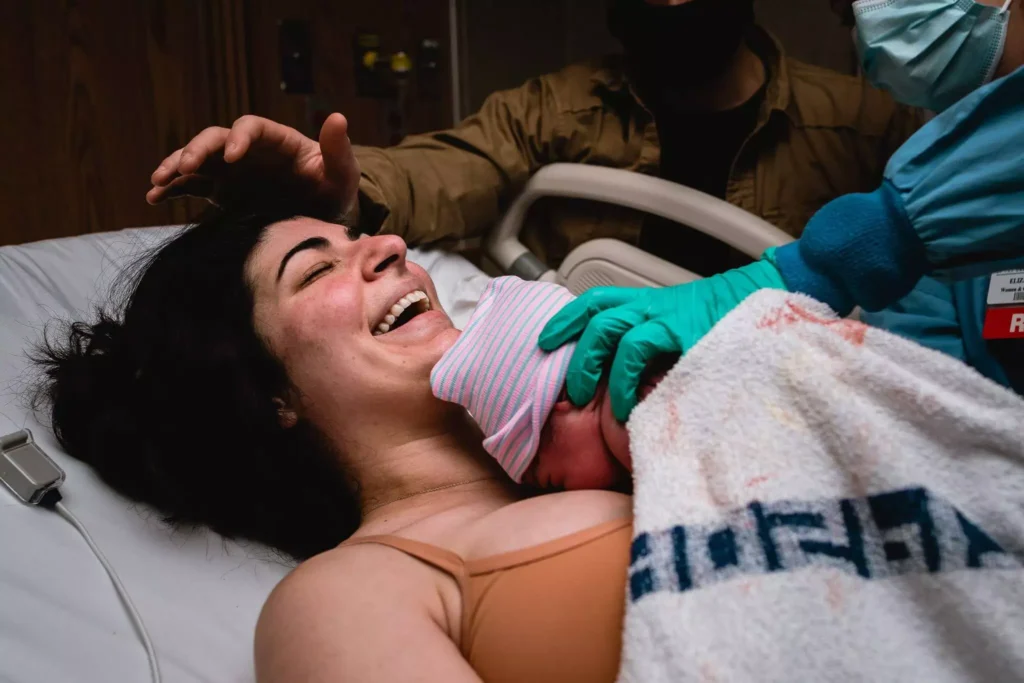

Learn the science of pregnancy and birth to take the mystery of labor away! Understand why you are feeling what you feel, and learn strategies to confidently move through pregnancy and birth!
- 9h+ of Video
- Support Group
- Close Captioning
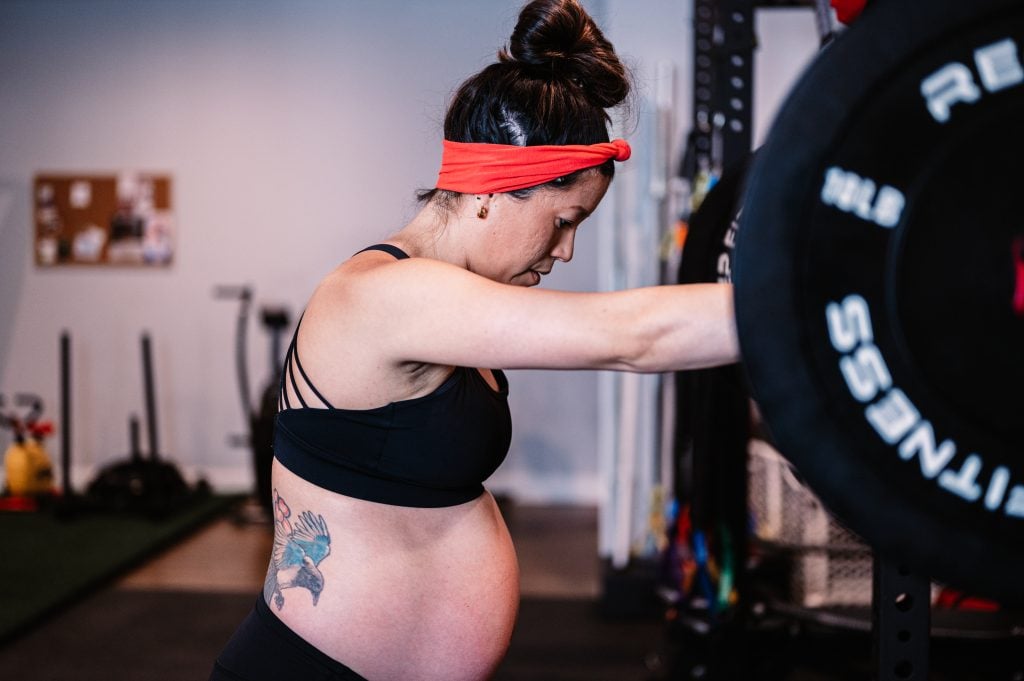

- 5 Workouts/Week
- Gym Workouts
- Self-Paced

Instructor
GINA
Workout on-demand with our prenatal fitness workout videos! Each workout is 30-40 minutes to follow along as you exercise at the same time!
- Birth Prep
- All Trimesters
- Mobility Work

Instructor
GINA
Find comfort and relief from pelvic girdle pain throughout your pregnancy and postpartum period! This program incorporates myofascial sling focused exercises to stabilize across the pelvic girdle joints.
- 3 Weeks
- On Demand Workout Videos to Follow