



Welcome to the MamasteFit Podcast. If you’re wanting to have an unmedicated birth, this is the episode to listen to. Or maybe you’re debating whether or not you want to get an epidural or if you want to go unmedicated. In this episode, we’re going to talk about what are the benefits of going unmedicated–why would anybody choose not to get an epidural? Then, there are also some tips to help you achieve that if it is your goal.
Read Episode Transcript
[00:01:12] Gina: Welcome to the MamasteFit Podcast. In this episode, we’re going to be talking all about unmedicated birth. Before we dive into our tips to have an unmedicated birth, let’s first define what that even means.
[00:01:24] Roxanne: So, “unmedicated birth,” kind of depends on who you ask, what is the definition.
[00:01:29] Roxanne: Most people, when they say, “I had an unmedicated birth,” they will either say, “I had an unmedicated birth,” or, “I had a natural birth,” and this means they didn’t get an epidural. For some people, that’s all it is. It’s I didn’t get an epidural, but I did, you know, I got IV pain relief or I was induced. So, they still got some medication, but they just didn’t get that epidural.
[00:01:49] Roxanne: Whereas other people, they might be, “I didn’t have any pain relief at all. No IV pain relief, no nitrous, no epidural, no, no pharmacological pain relief.” and then other people will say “unmedicated,” they were not induced, they did not get Pitocin, they didn’t get any sort of labor induction methods, as well as no epidural or pain relief. So it kind of depends on your own personal situation of what “unmedicated” means. But the majority of people usually say, I had a natural birth, I didn’t get the epidural, or I had an unmedicated birth.
[00:02:20] Gina: And in this episode, we’re going to be defining unmedicated as just not getting an epidural, but you may define it differently than we do, and that’s totally fine. And I do want to say that the use of the phrase “natural birth” to define not getting an epidural, I feel like sometimes puts not getting an epidural on this hierarchy of better than everything else. But I really think it just depends on what you’re needing in the moment, like what your personal goals and desires are as to what the best type of birth for you is. Some folks getting an epidural can be super beneficial for them.
[00:02:52] Gina: Like for me in my first labor, getting an epidural was definitely something that I needed at that time. And then for my subsequent births, and this is something that we’ll talk about, I kind of set the environment up a little bit different so it was more supportive for an unmedicated birth. And so it’s important to note that when we’re referring to a specific type of birth path, that we’re not putting this path is better than the other. whether or not you get an epidural, whether or not you have a vaginal birth or a C section doesn’t necessarily mean that you did things better during your labor. But this episode will be specifically about unmedicated birth because it’s one birth path that you might be really interested in.
[00:03:29] Gina: So let’s discuss, what are the benefits of going unmedicated? Like, why would anybody want to even do that? During my first birth, I was like, or my first pregnancy, I was like, why would you not get an epidural? Like, you just show up and the doctor helps you have your baby and then you
go home. Like, labor’s supposed to be the worst pain ever, like, why would I not get an epidural? And then as I kind of navigated my pregnancy, I was like, oh, like some people don’t get an epidural. And this is like an option that some folks like to explore, like, why would they want to explore that? I’m confused. And so then this became like a desire of mine to explore having this unmedicated birth.
[00:04:07] Gina: So let’s talk about what are some of the benefits? Like, why would anybody even want to do that, you crazy girl?
[00:04:15] Roxanne: And I mean, when I first started, I was like, man, who wouldn’t want to get an epidural? Like labor looks awful. Everyone should just get an epidural. They look way happier once they get the epidural.
[00:04:26] Gina: It can be a much calmer experience.
[00:04:27] Roxanne: They sleep, and then their baby just falls out. well, not all of them, not all of them fall out.
[00:04:32] Roxanne: But I was the same way. And so when Gina was like, “I don’t want an epidural.” I was like, “Oh, okay, we’ll try this. We’ll try. I’ll not let you get an epidural if you don’t want me to. I’ll say no.”
[00:04:44] Gina: “You crazy girl.”
[00:04:46] Roxanne: but like people would be like, “Yeah, I think I wanted to not get an epidural.” I’d be like, “Okay, did you do any sort of like preparation? Did you take, a childbirth class? I mean, hypnobirthing, breathing class?” And they’re like, no, I just decided, I want to try this.
[00:04:59] Gina: On my way here, I just…
[00:05:00] Roxanne: And there are lots, there are benefits of unmedicated birth, but you, most of us can’t just decide, be like, “Yeah, I would like to go unmedicated and that’s, it. There you go.”
[00:05:11] Gina: It’s got to be a really deep desire.
[00:05:13] Roxanne: It’s, it, there’s got to be some preparation in an unmedicated birth, which we’ll get into. But what are the benefits of even wanting to do an unmedicated birth? Like, why would anyone be like, oh, so crazy? Why would you want to do this crazy thing?
[00:05:25] Roxanne: And there are benefits to having an unmedicated birth.
[00:05:29] Gina: So the first reason why not getting an epidural can be super beneficial is you maintain freedom of movement. So you can move however your body needs to allow your baby to kind of wiggle and rock through your pelvis. Because motion is lotion, as Roxanne likes to say, which I think is a phrase she stole from other people. But the more we’re kind of moving and wiggling around the baby is kind of rocking and wiggling through the pelvis as well.
[00:05:52] Gina: And what’s really cool when you’re unmedicated is you have intuitive movement. And so you just kind of create space based on where your baby is within your pelvis to help them kind of wiggle and rock there. So if baby’s still trying to enter the pelvis, you’re kind of going forward and backwards a lot, kind of tucking your hips underneath. And then when baby engages, all of a sudden, everything’s side to side. And then as baby gets super low, you’re kind of like coming up on tippy toes. So it’s really cool to see, but it goes away once you get an epidural. And then we’re just well, baby’s at this station. We’ll do these movements to see if we can help baby kind of continue to their path through the pelvis. And when we’re unmedicated, we can typically be in that upright position, which can help kind of get things going a little bit faster.
[00:06:34] Gina: And then when it comes to pushing, when you can feel where your baby is, it’s much more effective to know where to push than it is when you get an epidural. Typically for my clients that have an epidural, it usually takes us about an hour to kind of figure that mind body connection again. Not always. I would say most of the time, though, it takes about an hour to be like, “When I do this, is me pushing.” Unmedicated, you know, “My baby is there. It has moved deeper into my pelvis.”
[00:07:03] Roxanne: You know what to do.
[00:07:03] Gina: And so typically you can push faster unmedicated because you can feel what’s happening, which you may or may not want to feel what’s happening… in the moment, I’m like, “I have deep regrets.”
[00:07:13] Roxanne: Crowning every time.
[00:07:14] Gina: And after the fact, I’m like, “That was so cool!”
[00:07:18] Gina: So, one big benefit is you can move freely, which is going to really help support your baby’s positioning, help them navigate through the pelvis more easily. If there’s an issue during labor with regards to the baby’s position, you can more easily do movement to help correct that. It’s a little bit harder to do if you have an epidural. And then when it comes to pushing, because you can feel everything, your pushes tend to be more effective and you tend to not do it quite as long as if you had an epidural. So those are kind of like my big reasons why going unmedicated can be really beneficial.
[00:07:50] Roxanne: Another benefit of not getting an epidural is that there is usually less interventions involved in your birthing process if you don’t get an epidural. And this is based off of like statistics, is that with an epidural, there are things that can happen after you get it.
[00:08:03] Roxanne: One, it is a medical procedure, so they’re giving you a bunch of IV fluids. You have to have an IV placed. And then a common thing that can happen after an epidural is placed is your blood pressure can decrease. For some, this is not an issue. It decreases a little bit, but everyone is fine. But for some, like that decrease in blood pressure can cause baby to have some distress. So their heart rate can decrease and it’s usually not a good time for everyone involved when the baby’s heart rate goes down.
[00:08:31] Roxanne: And the reason that their heart rate goes down is because when your blood pressure drops, the amount of pressure that’s going and pushing the blood into the placenta, into baby, decreases as well. So baby is not getting the same amount of oxygen and nutrients as they were prior to the epidural, which they’re like, they were drinking out of a water fountain, giving them all of the things that they needed to sustain themselves, and now all of a sudden the pressure of their water fountain is like nothing. And they’re like, “Wait a second. I’m not ready for that. Please give that back to me.” And so if we don’t correct that blood pressure, then babies will continue to be angry. So then we have to give you medication and more IV fluids to help increase your blood pressure back to your normal level so that baby can then be happy again, for lack of a better word.
[00:09:18] Roxanne: So this just starts, potentially, this cascade of intervention and it’s very commonly talked about, like many birth workers will be like, “Well, the cascade of interventions that occur after an epidural…” but it’s not necessarily. Sometimes it could be, yes, that epidural dropped your blood pressure and that’s what caused your baby’s heart rate to go down and lead to an emergency C section and that sometimes can happen. But usually it’s the epidural is like the first intervention amongst other interventions.
[00:09:44] Roxanne: So after you get an epidural, your labor can slow down because baby is not putting the same amount of pressure on your cervix. Which during labor, there are two main hormones that sustain labor, the oxytocin, which is causing the uterine contractions, and then prostaglandins, which are released whenever there is any manipulation of the cervix. So baby’s head or the amniotic sac putting pressure onto the cervix releases those prostaglandins to tell your brain to continue releasing the oxytocin. And this feedback loop just keeps going around in a circle until a baby is born. But once we get an epidural and you’re not putting as much pressure down onto your cervix from baby’s head, because now you’re in a reclined position, this can potentially cause your labor to slow down.
[00:10:28] Roxanne: And the labor has slowed down because the prostaglandins are telling your brain to release more oxytocin. So now they’re recommending you start Pitocin to increase the strength of your contractions. And now they’re starting Pitocin, and then they’re like, “Well, you’re still not progressing, so now let’s break your bag of water.” So then they break your bag of water, and this, all of these interventions, potentially, could lead to either a C section or like very stressful end of labor.
[00:10:54] Gina: So for me during my first labor, I got an epidural and I started actually like with Pitocin and then I got like super stressed out from it and decided to get an epidural.
[00:11:04] Gina: And then it just kind of felt like it was like thing after thing was like being given to me and I was just like very slowly losing my power and like my say in what was happening because I didn’t understand what this intervention was, I didn’t really understand why it was being given to me and it was just like “Oh, yeah, I guess whatever you want to do, just go, just do it at this point.” And I know that’s not the case for everybody. I’ve had plenty of clients that get epidurals and still feel very empowered and informed throughout their entire experience. But for me personally, in that birth, I just kind of felt like I was just like slowly losing my power with each new intervention that I took. Mostly because I didn’t feel very informed and I felt like I was just being told that this is what was next because this is what my labor needed. “Oh, well, you know, we just need to break your water to get you over this last hump and then we can have a baby.” And then I’m pushing and they’re like, “Oh, well now you need this extra thing to help you while you’re pushing.”
[00:12:00] Gina: And da-da-da, and it was all kind of started at, I got an epidural and that kind of started this process of like slowly losing my power.
Again, it’s not that, it’s not like that for everybody, but for me, that’s what it felt like after I started receiving intervention, after intervention.
[00:12:16] Roxanne: So it’s important to note that, the epidural is not the cause of all of these things to happen. It’s just very frequently, the first step. And then this cascade starts to begin of other interventions, one potentially being needed, depending on how the epidural affected baby or affected your labor pattern. Or it could just be like, “Oh, well, you have an epidural now, so, breaking your bag of water isn’t going to increase the amount of pain you’re experiencing. So this could potentially be a thing that we can offer you to, speed labor up.” And especially if you’re planning an unmedicated birth and then you got an epidural, you’ve already made a decision that’s different than your original birth plan. And for some, it may not have been, like, a willing decision that they made. It could have just been like in the moment they’re very stressed and they’re like, “Fine, I guess I’ll just do this. I’ll cave,” for lack of a better word, and get an epidural. And then that is like the start of them losing their power during the labor process. And then this cascade again, it’s like a snowball at the top of the hill. It just gets bigger and bigger as it goes down.
[00:13:24] Roxanne: So it’s important to know like you can get an epidural and not have any of these things and have a very empowering birth. But sometimes an epidural can be the start of this cascade, which can lead to you feeling unempowered or having a traumatizing birth experience.
[00:13:39] Gina: I think what would have made a really big difference for me in my first birth, not to make this about myself, but it is our podcast, is when I was telling folks that I wanted to have an unmedicated birth, if they would just not roll their eyes at me, I would have felt way less worse when I decided to change my mind.
[00:13:56] Gina: Because then it was like, “Oh. All these people were right, like I couldn’t do it,” and so then I’m just like in my own like pit of despair. They were all right, like they told me so. But if I had folks that were like, “Oh, that’s awesome, I’m really excited for you, like, how are you preparing for that?” Or like when I told my nurse I wanted to go unmedicated and if she didn’t roll her eyes at me, I probably would have been like, “Oh, she really wants to support me in this!” Instead she was not a very pleasant person.
[00:14:23] Roxanne: No, she did not support you.
[00:14:24] Gina: I think it’s also really important to kind of set the environment if you’re wanting to have an unmedicated birth with a really supportive team, so that if you do change your mind, you don’t feel like you failed in some aspect.
[00:14:37] Gina: So let’s talk about how we can go about having an unmedicated birth, if that is someone’s goal, and then I’ll talk a little bit about some reasons why I changed my mind and my first birth and some common reasons why I see some of my clients change their minds during their birth. Because it’s not a failure if you do change your mind, if you adapt to what’s happening during your labor, or what is going on in your environment, it’s more about remembering that an epidural and different interventions are different tools that are available to us to help us during our birth if we need it.
[00:15:09] Gina: So one of the first things that I would say if you’re wanting to have an unmedicated birth is you have to deeply want it. You, deep in your soul, you have to want to have an unmedicated birth. Not that you’re not open to other options, but you have to be like, this is the one I want. I really want this, like deep, deep down.
[00:15:29] Roxanne: You have to commit.
[00:15:30] Gina: You have to really commit to it. So whenever I have a doula client, that’s Sharing their birth preferences with me and they’re like, “Oh, I would really like to have an unmedicated birth, but I’m open to getting an epidural if I need one.” I’m like, “Okay, so if you want to have an unmedicated birth, I support you. And if you want to get an epidural, I support you too. But if you want the unmedicated birth, you have to really want it.” So it’s not I’m open to the epidural, because once you have one really good contraction, you will be very open to that epidural.
[00:15:58] Roxanne: It opens that a lot more.
[00:16:00] Gina: You have to deeply want it. And so my clients that come to me that are like, “This is a really important goal of mine, I really want to have an unmedicated birth. I know that there are other options available to me, but this is my goal.” Those are usually my clients that have an unmedicated birth. The ones that are like kind of teetering on either, you’re going to teeter really quick to the epidural side. So the first thing that I would say is you have to deeply desire this birth path because there are going to be moments during labor where it’s hard, and you’re like contemplating some things and some decisions that you’ve made. I have contemplated every decision that I have made when I’m sitting at home and I feeling the urge to push and I’m like, “It’s kind of late
now, but I have some regrets!” So typically at some point during labor, there will be a moment of, I don’t know if I want to do this anymore. And if you were kind of teetering on that line of unmedicated versus epidural, you’re going to very quickly jump to the epidural side. But if you’re like, this sucks, but I really want this, like you typically will stay on the, I can do this side.
[00:17:08] Roxanne: Unless your labor is just so quick you don’t have a choice.
[00:17:10] Gina: Yeah. That’s also. That’s that would be my number one option, or recommendation, have a really fast labor. So you have no other options.
[00:17:17] Roxanne: But you have zero control of that.
[00:17:19] Gina: Another thing would be if you’re planning to give birth in a hospital or somewhere besides your home, staying at home as long as possible because again, it just gives you less opportunity to get an epidural.
[00:17:32] Roxanne: This is true. So we normally will recommend, if someone comes into triage, and we ask them, oh, are you wanting an epidural, or are you wanting to go unmedicated, and then they say, I would like to go unmedicated, we usually will then give them the option of being like, you are 5 centimeters, you, this is your first baby, you likely have some time to go. Do you want to go walk around? Because being here is probably the least likely place that you will want to be. You will have to have monitors, or I will have to come monitor you at some point, usually recommend an IV, and we have to do things because you are admitted, but if you’re not admitted, you can do whatever you want.
[00:18:12] Roxanne: And so, nine times out of ten, they’ll be like, okay, I’ll go walk around for a little bit. If they’re like, no, I would like to stay, they have an increased chance that they might ask me for an epidural later.
[00:18:23] Gina: So laboring at home, or as long as possible, super beneficial. So if you show up at the hospital and you’re like 2 centimeters, go home.
[00:18:33] Roxanne: Go home.
[00:18:33] Gina: For the love of God, go home.
[00:18:35] Roxanne: Go home.
[00:18:35] Gina: Go home and labor.
[00:18:37] Roxanne: Learn from us. Go home.
[00:18:38] Gina: If you live far, get a hotel. Just chill somewhere else. Don’t walk around the track like I did, thinking that things would just pick up because I didn’t have a baby for 24 more hours. Just go home. That would be my next tip.
[00:18:53] Roxanne: Learn, if you haven’t listened to Gina and my’s first birth story, please, we’ll link them below. Just listen to them. Gina did not go home. Spoiler alert. She stayed at the hospital, walking around outside of it for 36 hours.
[00:19:06] Gina: It was not a good time.
[00:19:07] Roxanne: And Roxanne, we did stay outside of the hospital for a couple hours and then we’re like, okay.
[00:19:11] Gina: Mostly because we took a nap, but then we went home.
[00:19:13] Roxanne: Yeah, my husband needed to sleep before he drove back in the dark. And then I went home and then came back in transition, so. Go home.
[00:19:22] Gina: Deeply want it. Stay at home as long as possible. And then I would say like the third, one of the third most important things, there’s a bunch of things that are important, is to choose a supportive team and environment. So if your hospital is not known for supporting unmedicated birth, they may not be the hospital that you want to have an unmedicated birth in.
[00:19:44] Gina: So if they don’t have wireless monitors, they are really limited on, birth support options, such as a tub or a shower, or they have all these extra things to help support you in laboring positions, and to help you have an unmedicated birth, it may not be a great choice for you. And if you’re like, “Well, how do I know?” Because most of us don’t spend a lot of time in hospitals, in labor rooms, if you’re not a birth worker, ask doulas. Ask local doulas. You don’t have to hire them. You can if you want, but ask them, “Hey, I, this is the type of birth that I’m wanting. Where do you recommend that I go?” I will always answer anybody that emails or calls me, even if they have no intention of hiring me.
[00:20:26] Roxanne: Let’s start with, “You can deliver anywhere you want, but this is where I would.”
[00:20:31] Gina: Yeah, “this is where I would go.” So when they express to me what their goals are for their birth and what they’re looking for, I’ll be like, “This is going to be a really great hospital for you. In case you didn’t know, there’s also this freestanding birth center that just opened up and here are some home birth options if you’re interested in that.”
[00:20:47] Gina: And so I’m really willing to give them the information that they’re seeking and to help them know what other options they have, not to force them to give birth somewhere, but If somebody says, “I want to have an unmedicated birth,” I’m like, “Okay, well, this hospital would not be the one that I would go to, but these three would be, I would definitely explore these three hospitals. They have tons of options. The staff is really supportive of unmedicated birth. Like they’re going to help you with it as well.” And so that would be super important. And so for me, when I reflect on my first birth, one, I didn’t go home. I should have went home.
[00:21:19] Roxanne: Should have went home.
[00:21:19] Gina: I deeply desired it.
[00:21:21] Roxanne: I told her.
[00:21:22] Gina: I know.
[00:21:22] Roxanne: To go home.
[00:21:23] Gina: Listen to Roxanne. If you’re in labor, DM us and Roxanne will tell you what to do. So I should have went home and labored at home. I should have stayed home longer, first of all.
[00:21:35] Gina: So when it came to preparing for my next two births, which, one, I gave birth at home, so I didn’t have to worry about showing up at the hospital too early. I could labor at home as long as I wanted because that’s where my baby was going to be born. I also didn’t have an option to get an epidural. It’s really easy to not get an epidural when it’s not an option available to you. But not everybody wants to give birth at home, so there are options like freestanding birth centers that are not attached to a hospital. That can be a really great option as well. If you’re like, I want to not give birth at my house, but if I can be in an environment where there, that option is not available to me and maybe more helpful for me to not ask for one. And then the third thing was I chose a team that I knew would truly support me in whatever my birth desires were, and to kind of help guide me if my plans changed. And so that was like
probably the biggest difference between my first and my second and third birth was the team that I chose to support me. One, Roxanne knew what was going on, so she was more informed to help guide me through my birth.
[00:22:37] Roxanne: I was not confused AF, also, half asleep.
[00:22:39] Gina: My husband and I had more experience going into our second and third birth. And then because we had, one specific midwife that was going to be at the birth, I knew who her birth assistant was, so I knew who was going to be in my environment, I felt very comfortable with all of them, and so I felt very, safe where I was, and that really made a huge difference for me moving into my second and third birth, where I did have unmedicated birth.
[00:23:01] Roxanne: I think it’s important, like, where you said, choosing where you deliver, because not every nurse, one, enjoys supporting unmedicated birth, there are nurses that love labor and birth, but they don’t enjoy the unmedicated support, and that’s totally fine. And then there’s also you could be at a hospital where all of the nurses there do not enjoy unmedicated birth except like one nurse is, “I love all unmedicated births!” And they get all of them, but they’re only there three days a week for 12 hours, so maybe you’ll get them. Or you can go to a hospital where 90 percent of the nurses enjoy supporting unmedicated birth. And maybe only a little bit of them, which Gina just happened to get the one that does not love it, doesn’t enjoy supporting unmedicated birth.
[00:23:52] Roxanne: There’s a huge difference within the staff as well. So, if the nurses enjoy unmedicated birth, most likely it’s because the providers support it, versus, again, if you’re at a hospital where they don’t really support unmedicated, it’s probably because, one, they just don’t see it enough. They don’t know what that, they feel very uncomfortable because they don’t know what to do, because they never see it, because their providers don’t support it. So finding that hospital to be able to explore that option is helpful.
[00:24:21] Roxanne: So doulas, obviously, a great resource, but also going into like mom groups could even be helpful if you don’t have a doula in your area. That is, like helpful, like going into the mom groups to just hear other people’s experience. Because sometimes like people will be like, “I had a beautiful experience, but then but such-and-such happened as well.” Oh, it’s such a beautiful experience, cause yeah, you like, you met your baby, so it’s still exciting, but I kind of left feeling like really unempowered. So listening to, the undertones of people’s experiences could be helpful to decide whether or not
that actually is a place that you want because they can make such a big difference on your experience.
[00:25:00] Gina: Let’s take a break from this week’s episode to talk about our podcast sponsor, Needed. So I am 29 weeks pregnant now at the recording of this. Who knows how many weeks pregnant I’ll be when it’s live. And I have dangerously low iron levels, and surprisingly, I have very low energy as well and more anxiety, like, shocking. But what I’m really thankful for is Needed has an iron supplement that one, doesn’t cause constipation, because that’s not, I already have enough of that already. I don’t need more thanks to my iron supplement. But they also give recommendations on how much of their iron supplement to take based on your ferritin levels. And mine are like as low as they can go before being anemic. And so I’m taking four capsules a day to hopefully increase my iron levels before birth.
[00:25:49] Roxanne: With an iron supplement, it’s really important that we’re taking one that’s not included in our prenatal because there are other vitamins within most prenatals, such as calcium, that can actually interfere with the absorption of iron. So for most prenatals, they create it with iron because they’re like, “Well, it’s better that they get some iron than no iron, even if it like interferes with the absorption, they’re still getting something from it. Some is better than none!” Whereas, you can get a prenatal that does not have iron, and then take iron separately so that you’re, one, taking the iron, getting all of the benefits of that iron without maybe potentially some side effects associated with it. So you can still get the constipation from a prenatal that has iron, but maybe finding an iron that doesn’t have the same side effects can be beneficial for you.
[00:26:38] Roxanne: So some things that we might experience by taking an iron supplement is very commonly constipation. It can upset your stomach. And this is just due to the way that it’s absorbed in our body. If it’s not in an optimal form, it can not absorb as well. Also with iron, we don’t get most of our iron from food. So the, amount of iron we actually absorb from food and supplements is a lot lower than like the amount that you’re taking in. So finding an iron that’s in a form that your body can readily absorb easier can be beneficial, which obviously Needed’s iron is in.
[00:27:13] Gina: So if you want to check out Needed, which is a brand that we highly recommend- I’m personally taking Needed throughout this pregnancy. I’ve took it during previous pregnancies, I’ll take it postpartum- you can check them out at thisisneeded.com and use code MAMASTEPOD to get 20 percent off your first order.
[00:27:27] Roxanne: With unmedicated birth though, probably Gina has list of the top three reasons to have an unmedicated birth or like things to do to prepare, but honestly, number one should really be mental preparation.
[00:27:39] Gina: I mean, that’s like a deep desire.
[00:27:41] Roxanne: It’s a deep desire, but like mentally preparing for birth. And a comment, so I worked labor and delivery when I decided to have an unmedicated birth- I had worked there for four or five years at this point on a labor and delivery unit- and previously, like until Gina had a baby, I was like, obviously getting an epidural, like 100%, why, would I not want to get an epidural? Maybe, it looks kind of cool when you don’t get one, but like, why would I want to do that?
[00:28:08] Roxanne: And then I started seeing more working at the hospital that Gina delivered at. And I was like, you know, maybe, I just want to see what it’s like. I just want to know what it’s like to have an unmedicated birth. I feel like it would make me a better nurse to be able to sympathize more with people who don’t either, one, get an epidural because they came in and they were 10 centimeters and pushed a baby out, or, people who want to go unmedicated, I’d be able to be like, “I know, I see you. I know what it’s like. I’m here with you.” So I was like, yeah, that would be a reason.
[00:28:40] Roxanne: But every time I’d be like, yeah, I don’t want an epidural, everyone would be like, “Okay, what are you doing to prepare?”
[00:28:46] Gina: See, that’s what people should do!
[00:28:49] Roxanne: “What are you doing to prepare?” And I was like, “Oh, I’m gonna take like a childbirth ed.” “What are you doing to prepare, Roxanne?” I was like, “I mean, I do yoga.” They’re like, “Roxanne, what are you doing to prepare?” I was like, “Okay!”
[00:29:01] Roxanne: So I found doing like meditation and like hypnobirthing type things to prepare me to know how the hell to relax. Because like we are very stressful people. Like being able to relax and surrender to the process is so important. And if you feel that you are a very relaxed, chill person, maybe you don’t need this kind of preparation, but for people who are like super stressed out.
[00:29:26] Gina: Like us.
[00:29:26] Roxanne: 90 percent of the time, being able to learn to relax and surrender, especially surrender to the process was so important, where I went into labor and my early labor was long AF, but I was able to, listen to the hypnobirthing tracks and the meditation tracks all through early labor that made it more manageable.
[00:29:51] Roxanne: And then when I did show up at the hospital and they’re like, “Oh, you’re only like one centimeter,” Tear, tear, tear!. I was able to, turn on my tracks to be like, “Roxanne, get your shit together. It’s gonna be okay. Things are fine.” And then things were fine.
[00:30:05] Gina: I think I listened to one hypnobirthing track.
[00:30:09] Roxanne: Yeah.
[00:30:10] Gina: And I fell asleep.
[00:30:10] Roxanne: I mean, you gave me the hypnobirthing tracks.
[00:30:12] Gina: I fell asleep, every time.
[00:30:13] Roxanne: Yeah.
[00:30:14] Gina: I never made it through. Maybe it would have helped.
[00:30:17] Roxanne: That’s all you needed. I would listen to it, before I would go to bed, and then I would listen to it at lunchtime. After you listen to it going to bed a couple times, then you listen at lunchtime, and then there’s, things that you listen to during the day, but you do not listen to them when you’re driving…. because the point is you listen to these tracks and they create this conditioned relaxation response to relax. But it also, it’s kind of a little bit of hypnotism. But this is not everybody’s way to prepare mentally. It’s just preparing mentally, finding something to use that reminds you to relax your body and like finding ways to surrender to the process. And so doing fear release exercises, even just getting massages and like during the massage when they’re like kind of finding that spot and they like get to a, like a knot, relaxing and surrendering I found really helpful.
[00:31:11] Gina: A charlie horse. I would practice.
[00:31:13] Roxanne: Well, no, I did not. I practiced when I got massages and she would massage a point in my lower back or glue and I’ll be like, okay,
surrender to the process. Surrender. And I felt that there was really helpful to do these different things. Some people say the ice. I don’t do the ice. I don’t think that’s, I think that’s silly because it’s not, like labor contractions. I don’t think are like this, like excruciatingly painful thing. It’s like uncomfortable for sure, but it’s like for a reason, whereas like holding a thing, a friggin, an ice cube is just torture.
[00:31:47] Gina: That’s something else that I have found a lot of my clients who have gone unmedicated found to be very helpful, not the ice thing, but recognizing that labor pain has like a purpose, you can anticipate it, like it’s not just non stop pain for 30 hours, it’s one minute, and then two minutes of rest. One minute, for most people, two minutes of rest. You know when the next one’s coming. It’s not continuous, and it’s necessary. This is, pain with a purpose. And so, sometimes kind of reframing the pain in your mind, makes a huge difference as you’re navigating it, and then also remembering it has to end. It will end eventually. It may feel like it’s never going to end. And that’s usually where people start to spiral when they’re like, how much longer do I have to do this? Try not to think about how much longer you have to do and just focusing on each contraction, it can be like a really good mental strategy as well.
[00:32:46] Gina: Something that I used during my past two births that I will probably use again for this one…
[00:32:50] Roxanne: Gina just gaslights herself.
[00:32:52] Gina: I gaslight myself. I lie to myself and I tell myself that my contractions are 10 seconds long. They are not. They are a minute long. But the peak of the contraction that’s the hardest is maybe like 10 seconds. And so I just tell myself that is how long my contractions are and I’m like, “I could do anything for 10 seconds.” And so I feel it build, and I’m like, “Okay, I’m ready. I have my comfort measure in place. I’m ready to go.” It peaks and I’m like, relax, for 10 seconds. And then I’m like, “Alright, it’s over, it’s done,” even though I still got like 20 seconds left. So I just lie to myself. And that was a mental strategy that worked for me, was the intense part is 10 seconds. I can do that. I can do anything for 10 seconds.
[00:33:36] Gina: And then, also adding in all of the extra comfort measures as well. What can we incorporate to help reduce the labor pain? Because if we can introduce a pleasurable stimulus, it reaches our brain faster, which is known as the Gate Control Theory. So it reaches our brain and the brain shuts the door and then the pain is like, “Let me in!” And we’re like, “No one’s home!” So that
can also be why introducing labor comfort measures can be super beneficial. And you can learn labor comfort measures in a childbirth education course.
[00:34:07] Roxanne: Yes. So taking a childbirth education course, not just for learning what the hell is happening in your body, but also learning labor comfort techniques to be able to use in an unmedicated birth.
[00:34:19] Roxanne: And I do want to say, even if you want an epidural, you need to learn some labor comfort techniques because, one, you can be that person who has a precipitous quick labor where you are home, you have one contraction and your baby is going to be born an hour later, and you need to know what the hell to do for that hour of just quick labor.
[00:34:38] Roxanne: That learning of labor comfort techniques is still beneficial. Because you could also be that other person, where like you get to the hospital, but let’s say your anesthesia is not available. Like they’re downstairs doing a C section. Oh, someone unexpectedly broke their arm. So anesthesia is busy making sure that they’re asleep for their arm to be put back together. So they cannot give you your epidural.
[00:34:58] Gina: It’s not instant.
[00:34:59] Roxanne: It’s not like, “Oh, I had a first contraction. I can get an epidural.” Some people, if you are being induced, can get an epidural prior to feeling any contractions because like we’re giving you all the meds to start your labor anyway, and if you want an epidural, I guess get it whenever you want.
[00:35:14] Roxanne: But if you are at home, you have to feel a contraction. If you went into spontaneous labor, you can’t get an epidural before you go into spontaneous labor.
[00:35:23] Gina: And then you probably won’t be admitted until you’re in active labor.
[00:35:27] Roxanne: You have to be somewhat dilated in order to get admitted to the hospital. And then you have to be there for a little bit before you get your epidural.
[00:35:34] Roxanne: So you need to know what the heck to do until you get that epidural. Because labor, you need to relax in order for labor progress to happen. It’s almost if you are super, super tense, because you’re like fighting your contractions, your uterus is a muscle and that cervix also needs to relax
and open, so if you are so so tense, one, contractions are going to hurt so much more. They’re going to be so much more painful, and your cervix is not going to dilate and open because you’re not surrendering to the process because you’re, like, fearful of labor and contractions.
[00:36:11] Roxanne: So even if you want an epidural, you need to know what the heck to do until you can get your epidural, or if your labor very unexpectedly goes quickly. So, learn some labor comfort techniques. Obviously recommend our childbirth education class, we go over all of these labor comfort techniques for you.
[00:36:28] Gina: We think very highly of ourselves!
[00:36:31] Roxanne: There are so many childbirth education classes out there. If you find one and you’re like, “I hated that!” Try another one, because there is something out there for everyone.
[00:36:41] Gina: And so my, there’s so many comfort measures out there too.
[00:36:44] Roxanne: Oh, so many.
[00:36:44] Gina: And different ones will work for different people. So it’s good to have like an arsenal of comfort measures. My favorite’s counterpressure. Like you could squeeze my hips until they break and it would feel better, probably. Like all the hip squeezes. My husband, like the last month of my pregnancy will really emphasize chest exercises and work in like upper body workouts because he’s holding hip squeezes for like hours. Cause I have normal length labors. I do not have very precipitous labors.
[00:37:13] Roxanne: I mean, maybe.
[00:37:14] Gina: I mean, we’ll see. I would be like, startled, I think it’s going to happen.
[00:37:18] Roxanne: I don’t think you would cope well.
[00:37:20] Gina: I would not cope well! So, counterpressure is probably one of my favorites. The water, like getting in a shower or the tub. I prefer the shower over the tub, but the tub is also really nice. Those two things, like just alternating between the two is like a game changer for me with like labor comfort.
[00:37:38] Gina: Other things that I have prepped for this time- oh, I also use a heating pad in early labor. That was like, I loved that. And then I have a birth comb this time that I’m going to try to use. Cause I’ve had clients use it and they’re like, this is really wonderful. And I’m like, well, I should try that. But I always forget! Whenever I’m in labor, I forget where it is. I have also tried the TENS. I find the TENS is eh, for me, maybe it’s cause I have like really high expectations for it, but I find like the counterpressure and the shower, helped me so much more. But when I’m feeling really like sad and pathetic about myself, the TENS is kind of helpful at that time. But there’s so many options out there.
[00:38:17] Roxanne: With the TENS, though, you can’t like expect to like it to be put on and like instantly you’re like, “Whoa, I feel nothing!” Like it, one, it works the, it works better the longer you use it. So, starting it in early labor and then using it for a long period of time, by the time you hit active labor, all those endorphins have, built up, and that’s why it’s really helpful. But also, if you don’t have back labor, I don’t find that it helps a lot. And some people are, it’s too much sensation, the TENS unit.
[00:38:48] Roxanne: I personally love the TENS unit because I have back labor. So TENS unit, number one! Counter pressure number two. And then water, hydrotherapy. I love the tub personally, but the shower is a nice like in between because there’s only so long that you can be in a tub. But I also love massage and jiggle, like jiggle and massage, even like they say, don’t do it during contractions. Even during contractions, I need you to jiggle my butt, please. Like jiggle.
[00:39:17] Gina: Our mom is the jiggle master.
[00:39:19] Roxanne: She’s so good. Because I will, tense up my butt during a contraction. So I need you to jiggle it so that I don’t tense my butt.
[00:39:28] Gina: But it’s like a firm jiggle. Like it’s like pressure, shaking.
[00:39:32] Roxanne: I think some people say twerking is good for labor.
[00:39:36] Gina: I don’t have enough coordination.
[00:39:37] Roxanne: I don’t know how to twerk either, probably cause I can’t relax my butt. You need to be able to relax your butt for it to, like, twerk. So that’s one, one of my friends told me, she’s like, “You should start going to like, a hip hop twerk class to induce your labor.” And I was like, “I don’t think I’m physically capable of doing that.”
[00:39:57] Gina: So when it comes to preparing for an unmedicated birth, taking a childbirth education course is definitely something that’s very high on our list of things to do. I mean, there’s a lot of things on this list at this point.
[00:40:08] Roxanne: I know.
[00:40:08] Gina: And the reason is, childbirth education can help you understand like what the heck is going on, because there’s so much mystery and fear surrounding birth, where we’re like, “Oh my God, like this is going to be the most pain I’ve ever felt. I don’t even know what’s going to happen.” But when you understand like the physiology of it, like the science of: what is a contraction actually doing? How does a contraction work? What movements can you do to facilitate your labor process? You can feel so much more empowered and informed on your experience, and it makes it so much less scary. Because we tend to fear things that we don’t understand. And if you have a basic understanding of birth and like the labor process, it’s a lot less scary and you’d be surprised how much you can retain.
[00:40:50] Gina: So you might be like, “Wow, this is a lot of information,” like when you’re taking like our childbirth education course, but then during labor, you’ll be like, “Oh, actually, I remember like Gina describing what a contraction is. And that’s what I’m feeling right now! Oh, that’s so cool!” Or you might forget everything and be like, “You lied.”
[00:41:07] Gina: Most folks say that they are surprised with how much they’ve retained and are able to utilize during their labors. But also, learning those comfort measures because that is what’s really going to help you move through your labor with a lot less pain is having these things to help decrease the intensity of the contractions, to feel really supportive, to give your partner something to do so they can feel involved in this experience as well. And so those are some things that can really help you to have the unmedicated birth.
[00:41:37] Gina: So number one, want it. You have to deeply desire this, because it’s not easy to do. It’s a really empowering experience to give birth unmedicated, especially if you’re in a super supportive environment, like you’re, like, when I get finished giving birth, I’m like, “I am amazing. I am incredible. Like I gave birth to this baby.” During it, a little intense. So you got to really, really want it.
[00:42:01] Gina: The second thing is, the less opportunity you have to ask for an epidural, the less likely you can get one. So if you’re giving birth at home or a freestanding birth center, It’s not an option, like you’re just probably not going
to ask for one. If you are giving birth in a hospital, staying at home as long as possible can be really beneficial because you just have less time to ask for one.
[00:42:24] Gina: The third thing is going to be to choose a supportive environment. So choose a hospital, or a birth team, or wherever you’re planning to give birth, that’s filled with folks that are like really excited to support you to have this unmedicated birth. Because if you do change your mind for whatever reason, you’re not going to feel like a failure. Because everyone’s like, “Hey, whatever,” like, “you want to go unmedicated, I support you. If you want to get an epidural, let’s do it.” Like when everyone’s just like cheering you on, it’s hard to feel like you did something wrong. But the opposite can happen where if everyone was like, “Oh, you just wait… (eye roll).” You’re gonna feel like crap when you decide, or if you decide to change your mind, which is how I felt during my first birth. If I had a team that was like, “You can do whatever you want, Gina!” And then I changed my mind, I’d be like, “Okay, well, this is what I want to do, this is what I want to do.”
[00:43:10] Roxanne: I’m the boss here, and I want an epidural.
[00:43:12] Gina: Instead of feeling like I had failed and proved all of these people wrong, or right, not wrong.
[00:43:17] Roxanne: The fourth would be mentally prepare for labor. One, it’s really long.
[00:43:22] Gina: Most of the time.
[00:43:24] Roxanne: One, it’s really long most of the time. So having the like mental endurance, not just physically, like obviously preparing physically, it is a marathon physically, but also preparing mentally because it can be kind of like a mind game of convincing yourself to keep going. Because you can get tired and you’re like, “Oh, an epidural is there to make this not so tiring.” But, if you want to go unmedicated, you need to prepare yourself mentally to be able to be like, “Yeah, I can keep going. I got this. I got all my tools. I can keep going.”
[00:44:00] Gina: And figuring out all those like little mental tricks and strategies to kind of help motivate you throughout can be super helpful.
[00:44:06] Roxanne: You’re gaslighting yourself just kind of through labor.
[00:44:08] Gina: Yeah.
[00:44:08] Roxanne: A little bit. But like also hyping yourself up. I found like mantras, I didn’t say this yet, mantras to be really helpful during a contraction.
[00:44:16] Gina: Oh, I thought about, “All of these other women are in labor at the same time as me, and we’re doing this together. I’m not alone,” was like really helpful for me.
[00:44:25] Roxanne: Not helpful for me. I just said, “I got this.” I just said, “You got this. You got this.”
[00:44:31] Gina: I’m getting all deep with my mantras.
[00:44:33] Roxanne: Gina’s just like super deep with her mantras. And I’m just like in the moment. “I got this. I got this.” literally just reciting it though, like over and over either out loud or in my head was like really helpful.
[00:44:44] Roxanne: I would usually end all my hypnobirthing tracks, so if I’d listen to it during the day, I’d turn it off and be like, “I got this.” Ingrain it. Mentally prepare for the marathon, physically and mentally. Because even running a marathon is like a freaking mental game. I’ve only done one, and that was obviously hard physically, but also convincing myself to be like, you can just run one more mile. Just run one more mile. It’s hard. So mental, game.
[00:45:12] Roxanne: The next is taking you some sort of childbirth education because you need to learn, one, what the heck is happening, but all those labor comfort measures to help like decrease the amount of pain that you’re experiencing during labor in any way you can.
[00:45:26] Roxanne: They will not be an epidural, they will not take away all of your pain, so expectation management is helpful. But knowing, hey, I can use a TENS unit, or hey, they have baths here, I can get in the bath, or I can get in the shower- learning all of these different labor comfort measures that you would like to utilize. Or hey, I know that one’s not going to work for me, so let me learn other ones, learning all of these tools, even if you want an epidural though, is so helpful because every one of us will experience a contraction.
[00:45:56] Gina: Hopefully.
[00:45:57] Roxanne: Hopefully.
[00:45:58] Gina: Another thing when it comes to labor comfort measures, because it can also be hard in the moment to remember what comfort measure
you want to try, is making like a list with your partner of, okay, these are the top comfort measures I want to try to do. And then if I’m not coping, these are other things that you can bring up to me. So that way they have a plan, not that we want to write lists for our partners, but like it’s a collaborative effort, like we want to help educate them too on what they can do to help support us. And so I found just having a list of these are the comfort measures that I have prepared that I would like to explore. Let’s practice them together. Let’s know what’s in our arsenal so that when labor comes and if I’m struggling a little bit more, you can bring it up to me instead of me trying to like, figure out, okay, what other thing can I do right now? Because as a doula, this is typically, I’m the one bringing up different comfort measures to my clients. Like they’re not usually like, “Hang on, this contraction is really rough. Can you get the TENS unit for me?” Usually I’m like, “Hey, would you like to try the TENS right now?” And they’re like, “Ooh, yeah, that sounds like a good idea.” And then I’ll be like, “Oh, hey, do you want to try to get in the shower?” Or, “would you like to get in the tub?” And so I’m kind of bringing up different options to them. And they’re like, “Oh, yeah, that does sound really good.” but it’s not usually something that they bring up to me. Sometimes they do, but usually it’s like other people on the support team are like offering different things to you. So you having a list for your partner can be super helpful.
[00:47:23] Gina: So ultimately whether or not you choose to have an unmedicated birth, it’s just a personal decision. There’s obviously benefits to not getting an epidural. There can be some benefits to getting an epidural. So if you’re having a really hard time relaxing, you’re super tired, maybe there’s like a complication going on with your birth where you might be heading towards a C section, like epidurals can be really great options for those situations, or if you just decide that you want one. It doesn’t have to be some dire circumstance, by any means.
[00:47:49] Gina: The reason why I chose to have an unmedicated birth for my next two was just, it was really a personal reason for me. I wanted to see if I can do it. I wanted to experience labor. It felt very empowering for me to be able to move my body like the way that I needed to throughout my entire experience and kind of feel everything that was happening, even though in the moment I was like deep regrets. But in hindsight, I was like, wow, that was a really incredible experience to be so connected with that process.
[00:48:17] Gina: And so that was just like a personal reason why I decided to was I wanted to be connected to the experience. And I felt I had more control over what was happening when I didn’t have an epidural versus when I did. But I do feel like if I was in a different, if I had a different team for my first birth,
the epidural would have been a different experience for me because I, again, I have supported births as a doula where an epidural was like a really empowering experience, where they felt like they were still in control and they were very connected. They felt that they could connect more because they weren’t in pain with their experience. So again, it is really personal.
[00:48:52] Roxanne: I think that’s important to know, like even if you go unmedicated or get an epidural, you can still leave your birth feeling very empowered and strong because, I mean, birth itself is beautiful and it takes a lot of strength to go through it. So, even if you get an epidural, it doesn’t mean that it’s not going to be a great experience, especially if you’re hoping to go unmedicated and then you changed your mind and got an epidural, you can still leave that experience feeling very empowered.
[00:49:23] Gina: So hopefully this episode gave you some tips on how to prepare for an unmedicated birth if that is your desire, some of the benefits to why these crazy people would even want to not get an epidural, and hopefully it was really helpful for you.
[00:49:36] Gina: If you want more support throughout your pregnancy, you can check out our online prenatal fitness program, which is going to help you prepare physically for birth, because there is some physical preparation that needs to happen, especially if you’re wanting an unmedicated birth, because being able to stay upright and move longer and to have the stamina to move through labor and then push is going to be really beneficial to helping you navigate your birth experience.
[00:49:59] Roxanne: If you’re looking to mentally prepare for childbirth, with or without an epidural, check out our online childbirth education course where we discuss all of the different pain relief options, as well as different positions you can utilize during labor and all of the different labor comfort options that are available to you.
[00:50:14] Roxanne: And you can check out both of these on our website at mamastefit.com and use code STORY10 to get 10 percent off any of the offerings. And you can bundle these together for an additional 15 percent off, which is like 25 percent off at that point.
[00:50:27] Roxanne: And this podcast is sponsored by Needed, which is a nutrition company that focuses on the perinatal time frame. They’re a brand that Roxanne and I have both personally used throughout our pregnancies and our postpartums and forever. Our husbands use it. So they’re a brand that we trust
and we highly recommend to you. If you want to check them out, you can check them out at thisisneeded.com and use code MAMASTEPOD to get 20 percent off your first order.
Additional Resources
Prenatal Support Courses
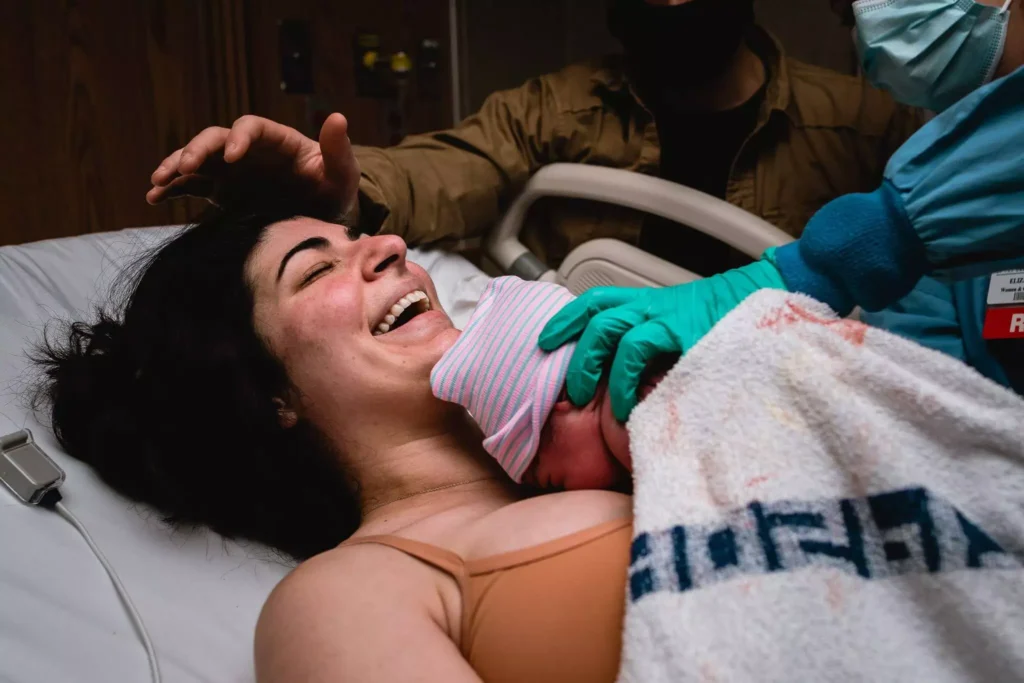

Learn the science of pregnancy and birth to take the mystery of labor away! Understand why you are feeling what you feel, and learn strategies to confidently move through pregnancy and birth!
- 9h+ of Video
- Support Group
- Close Captioning
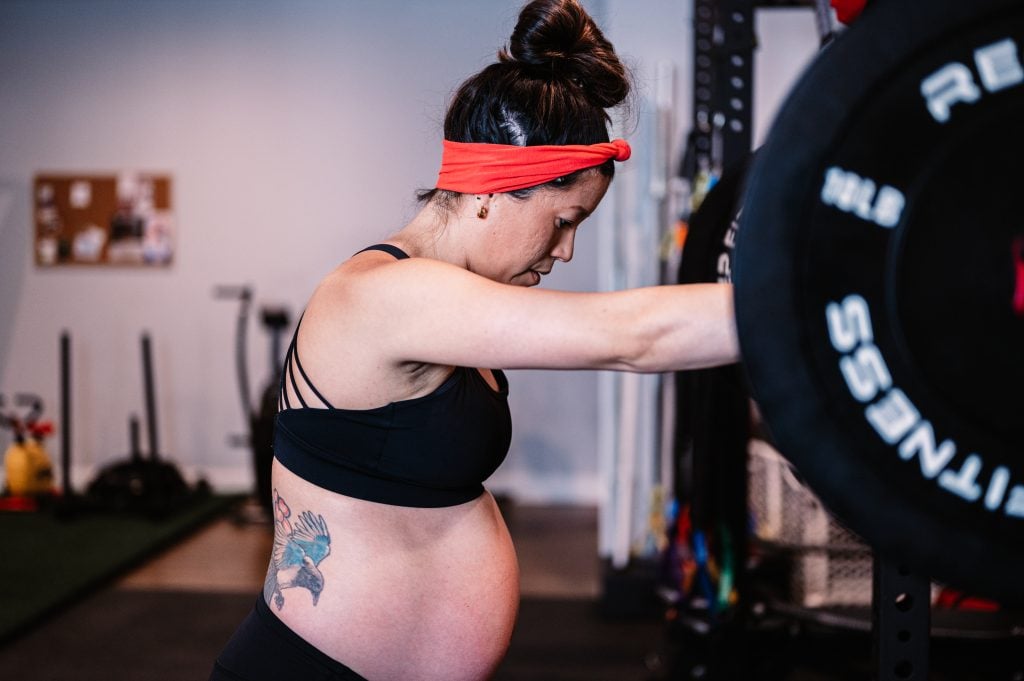

- 5 Workouts/Week
- Gym Workouts
- Self-Paced

Instructor
GINA
Workout on-demand with our prenatal fitness workout videos! Each workout is 30-40 minutes to follow along as you exercise at the same time!
- Birth Prep
- All Trimesters
- Mobility Work

Instructor
GINA
Find comfort and relief from pelvic girdle pain throughout your pregnancy and postpartum period! This program incorporates myofascial sling focused exercises to stabilize across the pelvic girdle joints.
- 3 Weeks
- On Demand Workout Videos to Follow