
Table of Contents
Birth preparation goes beyond packing your hospital bag or practicing breathing exercises. True preparation involves supporting your body, calming your mind, and creating an environment where you feel safe and empowered. In a recent MamasteFit Podcast episode, I sat down with Hayley Kava, pelvic floor physical therapist, to discuss how to prepare for birth in a holistic way.
Subscribe to our YouTube Channel for more weekly workouts and educational videos! We publish one new workout video and 2-3 educational videos a week on our channel.
Physical Preparation: Creating Space and Releasing Tension
When we think about preparing physically for birth, the focus often lands on “the right” position for the baby. Many parents are told to get their baby into an ideal position—such as left occiput anterior (LOA). But the truth is: babies move. They may start in LOA, rotate to the right, or even turn posterior, and that’s completely normal.

Instead of forcing your baby into a specific position, think about clearing the path so your baby can move freely when labor begins. This involves:
Releasing uterine ligament tension. Tight round or broad ligaments can act like “speed bumps” for baby’s movements. Gentle stretches, inversions, or even belly support bands can help.
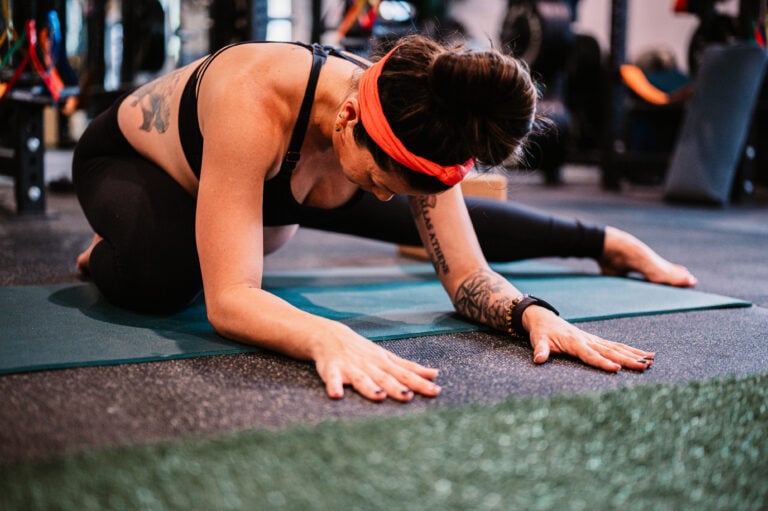
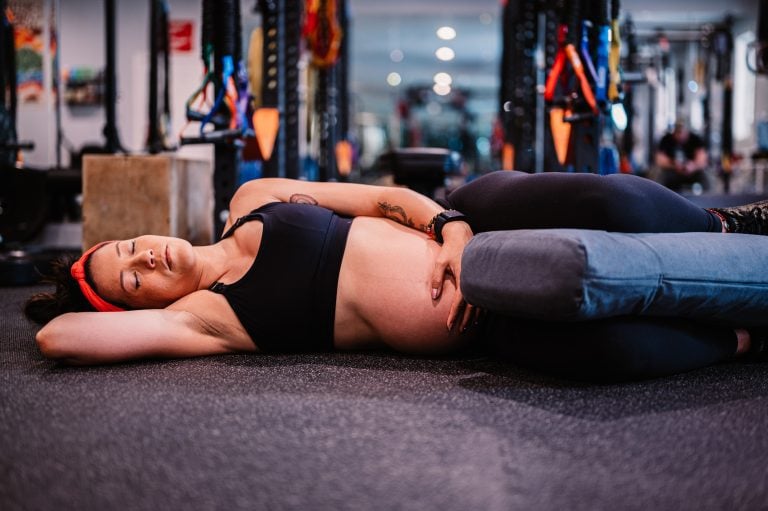
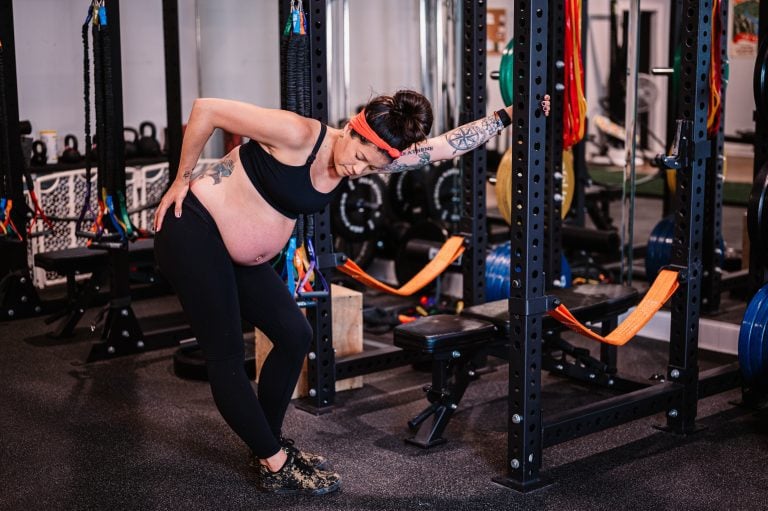
Improving rib cage and torso mobility. Twisting, side bending, and cat-cow movements reduce tension and allow your pelvis to move more fluidly.
Supporting pelvic mobility. Different movements create space at different levels of the pelvis:
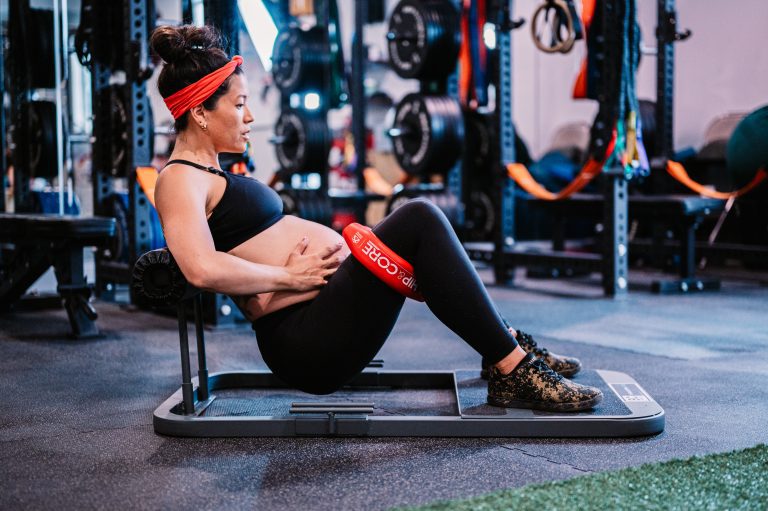
Wide squats and butterfly poses → open the top of the pelvis.
Split stance or asymmetrical positions → create space in the mid-pelvis.
Knees-in or deadlift-type movements → open the bottom of the pelvis.
The more your body practices these movements in pregnancy, the more naturally they’ll come during labor. Even small, subtle hip shifts can make a difference when your baby is descending.
Pelvic Floor Preparation: Strength and Release
A common misconception is that strong Kegels will “push the baby out.” In reality, your uterus does the pushing. The pelvic floor’s job is to yield and release so the baby can pass through.
Instead of endless Kegels, aim for balance: the pelvic floor should be capable of engaging when needed but also softening and releasing. Because your pelvic floor is tied to both your nervous and digestive systems, emotional stress can tighten it just as much as physical tension. Feeling safe and supported is just as important as stretching or strengthening.
Mental and Emotional Preparation: Feeling Safe Enough to Let Go
Birth is not just a physical event—it’s deeply mental and emotional. Even if you’ve done all the stretches and exercises, if you don’t feel safe, your body may resist releasing. Here are a few strategies to prepare mentally:
Practice yielding under stress. Something as simple as softening during a charlie horse cramp can train your brain and body to release rather than tighten when discomfort arises.
Normalize bodily functions. Fear of pooping, farting, or “making noise” in front of others can hold you back during pushing. Practice letting go in safe environments so you’re more comfortable during labor.
Prepare for the birth environment. Hospitals can be noisy and busy, with alarms, chatter, and multiple staff members entering the room. Bring tools like headphones, eye masks, or dim lighting to create calm. Retreating to the bathroom or shower can also offer privacy and help you reset.
Choose your support team wisely. If you don’t feel comfortable with your provider, it’s not too late to switch—even late in pregnancy or during labor. Adding a doula or trusted advocate can also help ensure your voice is heard.
Ultimately, your environment and support team play a huge role in whether you feel safe enough to relax and let labor unfold.
 Video course · 7 modules
Prepare Your Pelvic Floor For Birth
Seven modules on releasing the pelvic floor rather than only strengthening it — breathing drills, thoracic and pelvic mobility, and how to relax it during labor.
Learn more
Video course · 7 modules
Prepare Your Pelvic Floor For Birth
Seven modules on releasing the pelvic floor rather than only strengthening it — breathing drills, thoracic and pelvic mobility, and how to relax it during labor.
Learn more
 On-demand video · 24 workouts
Birth Prep Workout Program
Twenty-four workouts that open the pelvis for each stage of labor — strength, mobility, and positioning you can start at any fitness level, 15 to 30 minutes each.
Learn more
On-demand video · 24 workouts
Birth Prep Workout Program
Twenty-four workouts that open the pelvis for each stage of labor — strength, mobility, and positioning you can start at any fitness level, 15 to 30 minutes each.
Learn more
 Video course · 9+ hours
Childbirth Education
Over nine hours of video on contractions, comfort measures, pushing, and recovery — so you walk into labor knowing what's happening and what your options are at each stage.
Learn more
Video course · 9+ hours
Childbirth Education
Over nine hours of video on contractions, comfort measures, pushing, and recovery — so you walk into labor knowing what's happening and what your options are at each stage.
Learn more
A Holistic Approach to Preparing for Birth
Birth preparation isn’t about rigid checklists or forcing outcomes. It’s about building movement capacity, releasing tension, and cultivating an environment of safety and trust. Physical exercises help create space for baby, pelvic floor work ensures your body can release, and mental preparation empowers you to stay calm and confident.
If you’re looking for support, MamasteFit offers prenatal fitness programs, free birth prep circuits, childbirth education courses, and professional mentorship for birth workers. Each resource blends physical, mental, and emotional preparation to help you feel ready for birth.
Because at the end of the day, birth prep isn’t about control—it’s about creating space, physically and emotionally, for both you and your baby to move through this experience together.
Additional Resources
MamasteFit Podcast 55: Birth Planning Tips from a Labor Nurse and Doula
Empowering Birth: Insights from Dr. Nicole Rankins, OB/GYN
Empowered Birth Through Mindset: Insights with Tracy of GentleBirth
How to Choose Your Birth Team for an Empowering Birth
Navigating the Polarizing Extremes of Opinions About Birth
 Bundle · lifetime access
MamasteFit Bundles
Combine courses and programs for lifetime access and save up to 15% — grouped for birth preparation, the third trimester, or the whole pre and postnatal journey.
Learn more
On-demand video · 30 workouts
Core, Pelvic Floor & Pelvic Stability
Thirty follow-along workouts across beginner, novice, and advanced levels, ten per level — core and pelvic floor strength for pain relief in pregnancy or postpartum.
Learn more
Bundle · lifetime access
MamasteFit Bundles
Combine courses and programs for lifetime access and save up to 15% — grouped for birth preparation, the third trimester, or the whole pre and postnatal journey.
Learn more
On-demand video · 30 workouts
Core, Pelvic Floor & Pelvic Stability
Thirty follow-along workouts across beginner, novice, and advanced levels, ten per level — core and pelvic floor strength for pain relief in pregnancy or postpartum.
Learn more
 On-demand video · 128 workouts
Prenatal Workout On-Demand
Follow-along workouts from week 5 to week 41, four or five a week with guided warm-ups and cool-downs — over 128 sessions coached in real time alongside the video.
Learn more
On-demand video · 128 workouts
Prenatal Workout On-Demand
Follow-along workouts from week 5 to week 41, four or five a week with guided warm-ups and cool-downs — over 128 sessions coached in real time alongside the video.
Learn more