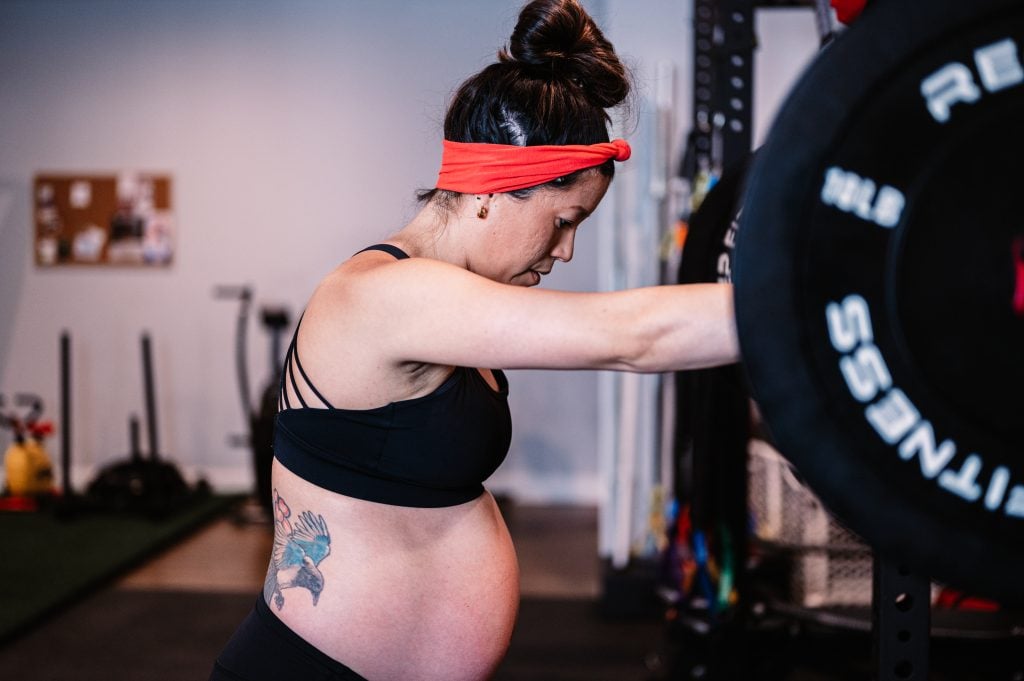
Pushing Prep Workout: Creating Space in the Pelvis to Prepare for Birth
Fitness, Prenatal, Pushing
Preparing your body for pushing during labor is about so much more than just “bearing down.” It’s about learning how to create space in the pelvis, balance the pelvic floor, and coordinate breath with muscle engagement so your body can work with your baby, not against them.
In this Pushing Prep Workout, we focus on intentional strength training, mobility, and breath work that supports the pelvic outlet—the bottom portion of the pelvis that baby must pass through during birth.
I’m Gina, a perinatal fitness trainer, birth doula, and mom of four, and I’m joined in this workout by Roxanne, co-founder of MamasteFit, a midwife, mom of three, and currently pregnant with her fourth. Together, we walk you through movements that physically open the pelvis while also teaching you how to yield—an essential skill for pushing.
Subscribe to our YouTube Channelfor more weekly workouts and educational videos! We publish one new workout video and 2-3 educational videos a week on our channel.
Why Pelvic Space and Yielding Matter for Pushing
The bottom of the pelvis isn’t bone—it’s made up of soft tissues, including muscles and fascia. For a baby to descend and rotate efficiently during labor, those tissues need to be able to:
Lengthen and relax
Move symmetrically
Respond to pressure from breath
This workout is designed to address all of that by:
Strengthening muscles that pull the pelvis open
Offloading overactive areas of the pelvic floor
Teaching effective push breathing
Strength and relaxation work together. Muscles can only pull—not push—so balanced strength is what allows space to be created.
Equipment You’ll Need
Before starting, gather:
One medium to heavy weight (appropriate for you)
A yoga block or small stack of books
A long resistance band (anchored around knee or ankle height, or looped around your feet)
The workout is performed in two rounds, and you’re always welcome to repeat the video if you’d like additional practice.
Exercise Breakdown: How Each Movement Supports Pushing
1. Staggered Stance Romanian Deadlift (RDL)
This movement targets the hamstrings and inner thighs, two muscle groups that help pull the bottom of the pelvis open side-to-side.
Strengthens the adductors (inner thighs) to widen the pelvic outlet
Strengthens the hamstrings, which assist with pelvic rotation
Creates a stretch-strength balance in different regions of the pelvic floor
On one side, the band encourages more internal rotation, stretching the posterior pelvic floor. On the other side, holding the weight on the same side helps promote external rotation, offloading an often overactive anterior pelvic floor—especially on the right side, where tension commonly builds.
This asymmetrical work helps create pelvic balance, which is critical for baby’s descent and rotation.
2. Seated Band Rows (Lat Strengthening)
Lat engagement plays a surprisingly important role in pushing.
Although the lats don’t attach directly to the tailbone, they connect through fascia. When the lats engage, they help draw the tailbone backward, increasing space from front to back in the pelvic outlet.
During these rows:
Elbows stay close to the body
The focus is on controlled pulling, not momentum
Breathing expands into the back, not just the belly
This same lat engagement is often seen instinctively during labor, especially when birthing parents grip a bar, partner, or squat support.
3. Push Breathing Practice (Seated Hold)
Once the band is held back, we practice push breathing:
Inhale deeply into the back, creating downward pressure into the pelvic floor
Exhale with a gentle 20–30% push, adding muscular effort
The inhale is the most important part of pushing—it increases pressure and lengthens tissue. The exhale simply adds to that effort. This is not forceful bearing down and definitely not straining.
You’re learning direction and coordination, not intensity.
4. Hero Pose Rock Backs
This movement encourages:
Internal rotation of the hips
Activation of the posterior pelvic floor
Controlled yielding of tissue under pressure
With knees in and ankles slightly out (never painful), the focus is on a rounded lower back, gentle movement, and breath coordination.
As you rock forward and back:
Inhale to feel downward pressure
Exhale to gently bear down at 20–30% effort
This mimics the mechanics of pushing while keeping everything controlled and intentional.
Round Two: Reinforcing Strength and Coordination
The second round repeats the same sequence, often without the band, allowing you to:
Reinforce movement patterns
Improve coordination between breath and strength
Build confidence in the mechanics of pushing
Each repetition helps your nervous system learn how to relax and engage at the same time—an essential skill for labor.
Strengthening muscles that help pull the pelvis open
Offloading overactive pelvic floor regions
Practicing effective, gentle push breathing
If you want additional practice with push breathing, you can even apply it during bowel movements—thinking inhale for pressure, exhale to gently add to it.
Creating Space in the Pelvic Outlet: Tips for Pushing
Want More Birth Prep Workouts?
If you enjoyed this Pushing Prep Workout and want more like it, MamasteFit offers two prenatal fitness program options:
Learn the science of pregnancy and birth to take the mystery of labor away! Understand why you are feeling what you feel, and learn strategies to confidently move through pregnancy and birth!
Find comfort and relief from pelvic girdle pain throughout your pregnancy and postpartum period! This program incorporates myofascial sling focused exercises to stabilize across the pelvic girdle joints.