

Pushing is one of those things about birth that can feel really overwhelming! Most of us haven’t pushed a baby out of our body before, so it can feel very unknown on what to expect. But, the good news is there are some strategies you can use to feel more confident about pushing! In this blog, we will breakdown what you can expect for pushing and some ways to advocate for your pushing preferences.
As you get ready for childbirth, you might be interested in doing exercises to prepare your body. Sign up for our newsletter to receive our FREE MamasteFit Birth Prep Circuit.
This circuit includes six exercises that you can do multiple times a week to get your body ready for childbirth. These exercises focus on common areas of tightness during pregnancy, making it easier to open your pelvis for birth. The guide provides pictures, written descriptions, and videos to help you with each movement.
What to Expect with Pushing!
There are two main ways that you can approach pushing:
- Spontaneous pushing, where you push without direction based on the sudden urge to push. This is more common for someone who is unmedicated (does not have an epidural).
- Coached pushing, where someone guides you through pushing. This is more common for someone who is feeling overwhelmed by pushing or has an epidural and needs more guidance on when to push due to decreased feeling.
Both techniques are totally valid ways to push! You may hear that coached pushing is “bad” and you shouldn’t even need to push because your body will do it for you. This is not necessarily accurate and also a really dismissive approach to birth–not everyone will feel the urge to push, especially if you have an epidural. And even those of you who do feel the urge to push, may feel really overwhelmed and find that having someone guide you through pushing is helpful.
It’s important to have an open mind to navigating your pushing phase based on what is going on in the moment! This is not to say that you shouldnt have a preference and discuss these preferences with your birth team–you should absolutely explore what options you think you’d like to explore in the moment.
For me, I had a vision that I would slowly breathe my baby out and I reach down gently to catch them. However, the reality was that I was incredibly overwhelmed by spontaneous pushing and my pushes were not gentle and peaceful. I was loud and it felt like an out-of-body experience. But for others, they may have that serene birth experience!
Some may want to explore other pushing positions but end up finding they prefer their back the best. Or you may want to do gentle pushing, but find that gentle pushing doesn’t feel effective for you.
Being open to exploring different options is important for pushing!!
Listen to our podcast to learn more about pushing tips, plus weekly birth stories where our listeners share their birth experiences (to include pushing). You can listen to our podcast on Spotify, Apple Podcast, and YouTube! New episodes every Wednesday and birth stories every Friday.
Pushing: What to Expect with Each Contraction
When you have reached the end of your labor, you may feel that there is a lot of pressure in your butt (like you have to poop), or you may not feel a ton of pressure yet, but your birth team may let you know that you are now 10cm.
If you don’t want to actively push quite yet, you can labor down (wait to push) for 1-2 hours to see if your baby gets lower. Once your baby is lower, you may feel more of that pressure!
If you’re ready to start pushing (either your body just starts pushing or you want to actively push), you can start by finding the position that feels most comfortable and effective for you. This may take a few pushes to figure out, but it’s okay to explore it in the moment too! Being familiar with different types of pushing positions is really helpful too.
Generally, contractions will space out to about 3-5 minutes to give your baby more rest in between pushes (which can be pretty intense) and also give you more rest! So, it is normal if your contractions space out once you start pushing.
Pushing Tip: Breathing Strategy
Now, before we get into the breakdown of spontaneous versus coached pushing, let’s talk about some ways you can approach breathing with pushing!
First, pushing is a pressure management activity. This means that we increase pressure in our abdominal cavity to push our baby out. The best way to manage pressure in our abdominal cavity (aka where your baby is) is with breathing!
The diaphragm is our main respiratory muscle that sits at the bottom of the rib cage but at the top of our abdominal cavity. When we inhale, the diaphragm moves DOWN to increase pressure in the abdominal cavity.
When pushing, we want to START with our INHALE to push everything down from the top with the diaphragm. The inhalation begins your push by increasing the pressure DOWN.
Tip: When you start your push, INHALE to your baby. Focus on sending your breath to your baby to begin your push. This will result in your belly expanding and your perineum pushing down!
After you inhale to start your push, then you can either exhale or hold your breath to continue to push DOWN. The exhalation or breath-hold will add muscular force to your increased pressure to make your pushes more effective.
You can also do a combo of both exhaling and holding your breath. There is a lot of demonization of holding your breath to push–but the best breathing strategy is the one you find is most effective for you at the moment! There are benefits to exhaling as you push for your pelvic floor, but if you are not effective with exhaling to push, then it is not a good strategy for you.
Tip: Practice pushing on the toilet! When you are having a bowel movement, inhale to increase pressure down to the perineum. Then exhale to continue to bear down or hold your breath to push down. Explore which breathing option feels best for you!
Let’s break down what to expect with spontaneous pushing and coached pushing!
Spontaneous Pushing: Ferguson Reflex
If you are unmedicated, you may feel a sudden (and sometimes overwhelming) urge to push or may even be pushing without control. This is known as the Ferguson Reflex! This is the normal, physiologic response to your baby being low in the pelvis and you are ready to push. I would describe this as vomiting out of your vagina–you cannot stop it; it just happens without your control.
If you have a spontaneous urge to push, you will push as much as you want with each contraction. You usually choose the best way to push for you, such as position and breathing technique in the moment. But, if you are struggling to know what to do, this is where your team can give you more guidance! You can still incorporate the breathing strategies that we listed above: inhale to increase pressure downward, and then either exhale or hold your breath to push.
Coached Pushing
There is a lot of hate on social media about coached pushing–but for some of us, this is the most helpful method of pushing! Coached pushing is when someone guides you through pushing, such as your birth doula or your labor nurse.
With coached pushing, you can expect to push 3-4 times per contraction for about 6-8 seconds per push. Coached pushing is more common if you have an epidural and do not have a strong urge to push.
Choose whatever position feels more comfortable for you, and change positions about every 20-30 minutes. You can choose more upright positions, even with an epidural, if you have some mobility!
When your contraction is building, you may feel an increase in pressure. If you don’t feel anything, your nurse can guide you on when a contraction is happening–and you can consider lowering the strength of your epidural so that you can feel pressure sensations and more movement capability.
After your contraction has begun to build, you can begin pushing!
- Start with a big inhale DOWN to breathe to your baby (and you may feel an increase in pressure in the perineum with your inhale).
- Then you will push for 6-8 seconds. If you go beyond 6-8 seconds, I usually find that most of us are no longer really pushing anymore and just holding our breath or exerting ourselves without much progress.
- When you push, you can either exhale as you push or hold your breath, depending on what feels more effective for you!
- After you are done pushing, you will reset to inhale again to start another push.
- You can expect to do about 3-4 pushes per contraction.
After you are done pushing, you will rest for 3-5 minutes until your next contraction. Drink water or electrolytes (we love LMNT), apply lip balm and rest until your next push.
Prepare for Your Birth with MamasteFit!
There is a lot to prepare for when it comes to birth–and just like pushing can feel overwhelming, all the birth education out there can feel like a lot to try to weed through (especially the misinformation).
The good news is that we have an online childbirth education course that teaches you the science of birth so you understand the WHY! When you understand WHY contractions happen, and WHY certain movements open different parts the pelvis, you can better apply the tools you learn from us to your individual birth experience!
Join our online childbirth education course to prepare confidently for YOUR birth! Our course is completely online and self-paced, plus you maintain lifetime access of the course, so you can use it for this pregnancy and futures ones!


Learn the science of pregnancy and birth to take the mystery of labor away! Understand why you are feeling what you feel, and learn strategies to confidently move through pregnancy and birth!
- 9h+ of Video
- Support Group
- Close Captioning

- 5 Workouts/Week
- Gym Workouts
- Self-Paced

Instructor
GINA
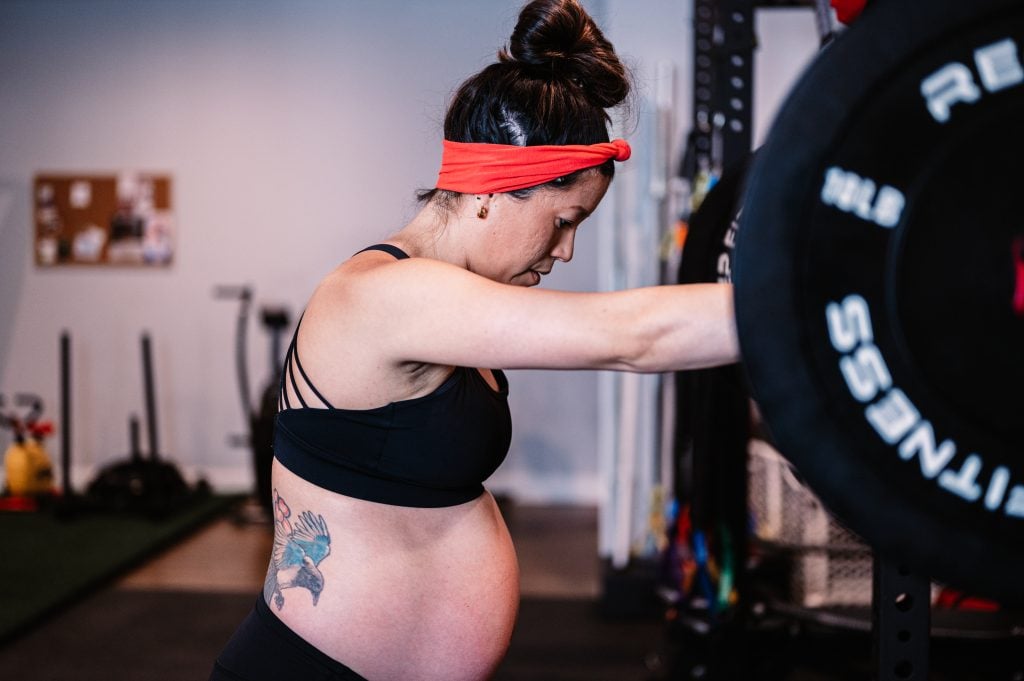
Workout on-demand with our prenatal fitness workout videos! Each workout is 30-40 minutes to follow along as you exercise at the same time!
- Birth Prep
- All Trimesters
- Mobility Work

Instructor
GINA
Find comfort and relief from pelvic girdle pain throughout your pregnancy and postpartum period! This program incorporates myofascial sling focused exercises to stabilize across the pelvic girdle joints.
- 3 Weeks
- On Demand Workout Videos to Follow