

Welcome to the MamasteFit Podcast Birth Story Fridays! In this episode, Roxanne, a labor and delivery nurse and student midwife, shares her three unique and empowering birth stories: two unmedicated hospital births and one unmedicated birth center birth. Alongside Gina, a perinatal fitness trainer and birth doula, Roxanne discusses the importance of support during pregnancy and labor, her preparation methods, the impactful experiences of her births, and the essential role of building a supportive birth team. This episode offers insights into navigating the perinatal timeline with confidence, emphasizing the significance of intentional support and preparation for a positive birth and postpartum journey.
Read Episode Transcript
[00:00:00] Gina: Welcome to the MamasteFit Podcast, Birth Story Friday. In this episode, Roxanne is going to be sharing all three of her birth stories. She had two unmedicated hospital births and one unmedicated freestanding birth center birth. And she’s going to be talking about how the support that she had, both during her pregnancy and her labors, helped her to have an empowering experience for all three of her births.
[00:01:09] Gina: Welcome to the MamasteFit Podcast. Roxanne is gonna be sharing all three of her birth stories, which I was a part of all of them, so I probably could tell the stories myself. I don’t even need you.
[00:01:18] Roxanne: Yeah, let me just go. I’ll leave.
[00:01:21] Gina: But Roxanne had two hospital births and one freestanding birth center birth, and so you’re gonna get a little taste of what a hospital unmedicated birth is like, giving birth outside of the hospital setting, and how she managed to have three very empowering birth experiences.
[00:01:40] Gina: Usually, I feel like the first birth is always a little bit negative for most folks- they’re trying to get their feet wet and figure it out. So I feel like it’s more rare for somebody to have all positive birth experiences, which I feel should be the norm.
[00:01:55] Roxanne: Yeah.
[00:01:56] Gina: But yeah, let’s do it.
[00:01:56] Roxanne: I do feel very fortunate whenever anybody’s like telling birth stories and I’m always like, “Yeah I had three really great experiences,” and I almost feel like I’m like bragging in a way, “Oh, look at me, I’m so amazing.” But then I, feel guilty that I don’t have trauma. I’m sorry I don’t have trauma. But I do view my first experience with birth, your birth story, I feel like, was, like, my first experience with birth that wasn’t a patient. And I think that I, by being there and supporting you through the entire thing, I definitely learned a lot from your birth to be able to influence my first pregnancy and birth. I think that played a really big part. So if you haven’t listened to Gina’s birth story, that would really be like part one of my birth stories.
[00:02:44] Gina: Yeah, so I experienced the trauma for the both of us. But you also had experience as a labor nurse, and my birth, obviously, so your birth and pregnancy was not the very first time that you’d gone through, which I think is also part of the norm.
[00:02:57] Roxanne: Yes.
[00:02:58] Gina: How did you prepare for your birth? So you were a labor and delivery nurse already for two years when you got pregnant with Lily, your first.
[00:03:06] Roxanne: I had been a labor and delivery nurse for four years at this point.
[00:03:09] Gina: So lots of experience.
[00:03:11] Roxanne: And I think I had a very well-rounded experience where I had the hospital births, like all the births I supported were hospitals- inductions, C sections, like the full gamut. But within the past two years, like after you had Adeline, between then and me getting pregnant, I did learn a lot, and started learning a lot more about like unmedicated birth, physiologic birth, and I think that played a really big part on how I prepared for this pregnancy with Lily.
[00:03:39] Roxanne: So for my first, it was like 2018, got pregnant. My husband was deployed for the entire period, so I did have a lot of free time, more so than, I feel like some people would have during their first pregnancy. I had a lot of free time to do a lot of preparing and reading because I didn’t have other things. I didn’t have to do date nights with my husband like, talk to him and do all of these things with my husband, I just did them by myself. We would FaceTime, he was deployed and had internet, so I did a lot of that stuff. But, I didn’t have to, take care of other people other than myself, which was pretty, pretty nice, honestly, when I think back on how easy that pregnancy was. I did have, a lot of pelvic pain, but, otherwise, I just had a lot of time to explore what I wanted for birth and kind of, build the team that I wanted.
[00:04:27] Roxanne: I was really intentional that I wanted an unmedicated birth, and I let that be known pretty early on in my pregnancy, that this is something that I wanted to experience. And I wanted to just like, one, it’s like a learning experience so that I was better able to be like a labor and delivery nurse that understood a little bit more and was like a little bit more empathetic for people who did want to go through an unmedicated birth, because I would be like, “Yeah, I know. I know what that feels like. I’m here for you.” Because, I’ve had a couple experiences where I didn’t have kids before and I was taking care of someone in labor. And they’re like, “Do you have any kids?” And I was like, “No,” and they’re like, “So you don’t know what I’m experiencing right now,” and I was like, “Well, shoot. Shut down. I don’t know. I do not know. You are accurate. But I’ve taken care of many people in your experience!” So like it’s not like I don’t know how to help you, but.
[00:05:12] Gina: I think it is different though.
[00:05:13] Roxanne: I don’t know what you’re experiencing. You’re correct. I’ve never felt that in my body, and I think that it can really be beneficial for some people. So I wanted to know what labor was like, and then just obviously everyone wants to know, can I even do it? Can I do it?
[00:05:28] Roxanne: So I was very vocal my entire pregnancy that I wanted to have an unmedicated birth and everyone was always like, “Are you sure? What are you doing to prepare? What are you doing to prepare for having an unmedicated birth? Because you can’t just show up, Roxanne, and be like, ‘Yep, that’s what I’m gonna do!’ You need to do stuff beforehand.” And everyone was very, either supportive of being like, “Hey, this is what I did,” and other people were just like, “Okay, well, anesthesia’s down the hall when you want them….”
[00:05:57] Roxanne: And I think I also was very open to if I needed an epidural, I wasn’t gonna be like, “Oh, okay, I suck.” I was very understanding that, hey, epidurals are there, and they’re available to me. If I was gonna get induced, I was like, yeah, I would probably like an epidural if I was gonna be induced, because that’s gonna be a long ass time, probably. I think that I was not very gung ho, unmedicated birth or bust. I was pretty open to if I needed interventions, because I knew as a labor and delivery nurse that they’re there and they’re beneficial.
[00:06:28] Roxanne: But I picked a team, because I worked with everybody, so I knew who I would want and who I jived with the most of who I wanted to be on my team. I had one midwife who, she delivered at birth centers, and she wanted to work at birth centers, so I knew, I was like, she’s the jive that I want. She’s the vibe that I’m wanting. And she was like, “I will do all of your prenatal care. That’s fine.” So we would do it at work when I was working with her, she would do my prenatal visits. I think I had to go to the clinic maybe once or twice because she was like, just not working on labor and delivery for the times that I needed. But it was really easy. I didn’t have to like, come in on my day off or worry about scheduling stuff on my days off. I got to just enjoy the three to four days a week that I was at home, and I got to just prepare and research all of the things that I wanted for birth.
[00:07:14] Roxanne: I really wanted to do Hypnobirthing. I did learn about it when I was in like the Army School of Labor and Delivery Nursing. So I was like, this is what I’m going to do. And, because my husband wasn’t home at nighttime, I just played it on a Bluetooth speaker and I didn’t have to worry about wearing headphones or it being too loud for someone else who’s trying to fall asleep. So that was really nice and I started implementing that pretty early on in my pregnancy, and then as you progress, you like listen to it more often.
[00:07:38] Gina: I found that to be like the challenging part with it, ’cause after you did Hypnobirthing, I was like, “I wanna do Hypnobirthing!”
[00:07:44] Roxanne: Yeah!
[00:07:45] Gina: But I couldn’t figure out how to do it because I was like, I don’t wanna like meditate in the middle of the day when I’m supposed to be watching my children, or child. And then for night I was like, I can’t just play it ’cause everyone’s sleeping.
[00:07:57] Roxanne: You have to wear headphones.
[00:07:58] Gina: But then if I wear headphones I’m like, it’s uncomfortable. So that made it really challenging for me to do Hypnobirthing because I could not find the time, other than when I was going to bed, but that didn’t feel accessible to me.
[00:08:12] Roxanne: Yeah, and so I think that the only reason I could really do it was because I was home alone at nighttime, and it also helped me because I mean if you’re home alone, it’s like, single white female, people can break into your home in the middle of the night, by listening to the Hypno track, I didn’t think about that or even worry about that, because that’s what I focused on. But it’s always a fear of my husband’s, whenever we’re like home alone, he’s like, “Someone’s gonna break into our home!” We live in like a a neighborhood of old people… No one’s coming to my neighborhood anyway. But I felt it was so much more accessible because in subsequent pregnancies, I could not do that because I had a husband in the bed, kids in my bed, and headphones, I’m just not comfortable to sleep in. So I was really glad, it really worked out that he was gone because I was able to do the Hypnobirthing really well, and I think it was really influential in my birth by being able to do the Hypnobirthing. And then we took a Spinning Babies course in the middle of my pregnancy for like practitioners, and I was like, this is perfect! Like, I’m pregnant, I’m gonna utilize all of these things! But then I had no partner to do all of the…
[00:09:17] Gina: It’s hard to do some of those techniques.
[00:09:18] Roxanne: You can’t! I literally could only do inversions at home. So that was like one of the barriers of him being gone, I couldn’t really do any of the things that Spinning Babies educated about other than a forward leaning inversion because I didn’t have a partner home to do that with. And Gina, she couldn’t just come to my house every single night.
[00:09:34] Gina: Why not?
[00:09:34] Roxanne: Because she had a baby, to do all of these things, or, I wasn’t going to ask her to do all those things. I was just like, whatever, I’ll do it every once in a while when I see her.
[00:09:41] Gina: I will say that we did have to figure out how we could implement some of the protocols of Spinning Babies for people that were by themselves.
[00:09:49] Roxanne: Yeah.
[00:09:50] Gina: So now, with my better understanding of pelvic mechanics and the goals of different positions, we were able to develop movements to help you prepare your body for birth that you can do solo.
[00:10:02] Roxanne: Because that’s the one thing that’s hard.
[00:10:03] Gina: And we’ll link one of the workout videos down below where we incorporate all those solo exercises as well. Because that is one of the challenging things is you have to have a partner that’s readily available to then do all of these movements.
[00:10:14] Roxanne: And then it takes some time to do it.
[00:10:16] Gina: Yeah.
[00:10:16] Roxanne: If you have other kids running around, it’s a little bit harder to implement all of those things. And so that was like a challenge that we experienced in my pregnancy because I just didn’t have my partner at home to be able to do all of these things.
[00:10:27] Roxanne: He got home at 36 weeks pregnant, like not him, I was 36 weeks pregnant…
[00:10:35] Gina: It’s OUR pregnancy.
[00:10:36] Roxanne: “Our.” “We” were pregnant….
[00:10:38] Roxanne: We did a crash course on preparing for pregnancy, because like he was busy, like, defending our freedom. He didn’t have time to read a bunch of like pregnancy books while he was there. He was like focusing on missions.
[00:10:49] Gina: If he wanted to, he would!
[00:10:50] Roxanne: I know. He did do some stuff. If I sent him videos and stuff, he would watch it. But he was like, “I don’t have the brain capacity to process all of it, I need to just focus on this, and then I’ll remember you’re pregnant when I come home.”
[00:11:02] Gina: I think it’s harder for them because, a lot of the stuff that we’re learning during pregnancy, we’re implementing within our own body.
[00:11:07] Roxanne: Yeah, and it’s hard to conceptualize it.
[00:11:08] Gina: If I’m learning different movements, I am then practicing them in my own body, while for our partners, if they are not aiding us in that preparation, it’s hard for them to, yeah, visualize it and conceptualize it, I think.
[00:11:21] Roxanne: Yeah, and I think he also understood when he came home, he could do all of that when he was home, because I wasn’t going to have a baby at 36 weeks pregnant.
[00:11:30] Gina: Yeah.
[00:11:30] Roxanne: As much as he feared it, I think he understood that 40 weeks was likely when it was going to happen, so he had time. His unit, he actually came back like two weeks early, and he’s like, “That would be really nice if you just had your baby before my team came back, because then I wouldn’t be like, ‘I left you early because my wife was pregnant, and then she didn’t even have a baby,'” which, spoiler alert, that happened.
[00:11:50] Gina: Oh, that happened once with, I think it was like Eoghan’s or Sophie’s pregnancy, I can’t remember. Barron didn’t do a thing, like he didn’t go on a work trip…
[00:11:58] Roxanne: Oh yeah, I remember this.
[00:12:00] Gina: …because I was pregnant. And then everyone came back from the work trip, and I was still pregnant.
[00:12:04] Roxanne: But like you don’t know! Like you don’t know. You don’t know.
[00:12:08] Roxanne: I think he knew that we had a lot of things to prepare, like our house was not, I did not do any house prep, because that’s his thing. He prepped the house for a baby to be there. He actually cleaned out a room and a drawer for, like, all of her clothes and all of that. I just had it in a box. And I was like, “This is your job when you come home.” So he did, he prepared the house for a baby.
[00:12:29] Gina: You focused on his strength.
[00:12:31] Roxanne: Yeah, which was fine. So then, when he came home, we did a prenatal childbirth education course with Gina. It, at the time, it was two days, two separate days, at nighttime, which fit in his schedule really easily. And it was like a nice way for him to start getting into, the childbirth prep. But he also knew I had Gina. She was gonna be my doula, and she would tell him what to do. And if he was doing something wrong, she would tell him he was doing it wrong. So he’s like, “I’m not super stressed about it, because I know if there’s something that I should be doing, Gina will remind me to do it. If I needed to give you food, she’ll tell me, ‘Hey, Roxanne should eat something,’ or, ‘Hey, give Roxanne some water, it’s been a while,'” and he’s like, “So I knew that I had someone.” So all of the pressure just went off of his shoulders and onto Gina’s shoulders.
[00:13:19] Gina: I was very relaxed. I’m always very relaxed. Super calm person.
[00:13:22] Roxanne: Super calm. I don’t know what that type is. Like type A, type B, I think it’s type C, super chill.
[00:13:29] Gina: Oh yeah, we’ll just say type C for chill. Which we are not.
[00:13:34] Roxanne: Gina’s not. We are both type A.
[00:13:35] Roxanne: But, he was pretty relaxed, but he still was very involved in preparing. He would pack our bags, make sure that we had everything. He had his whole bag already packed, he was very involved in the car seat, so we were preparing in all that aspect for the four weeks prior to my labor.
[00:13:53] Roxanne: I was, my entire pregnancy, I was like, “I can’t give birth until 40 weeks,” cause the Army’s leave, I had calculated it out. I had to deliver by no earlier than 40 weeks because I was getting out of the Army and I had so much time like saved up. My sick leave, for lack of a better word, was saved up. And then the Army gives you three months maternity leave. So I was like, “I have to deliver by this day or else I have to go back to work for a couple days, like in the hospital, before starting my like transition out of the Army.” But once 37 weeks hit, I was like, “I could come back to work. You can come any second now, please, I’m so tired.”
[00:14:34] Roxanne: But of course, she did not. She waited till 40 weeks. So I was due on a Wednesday and Tuesday was my last day of work that week. And I was like, “I will not be back on Friday.” Cause we did shift work, so Friday I had to go back, and it was a long weekend, and it was Cinco de Mayo weekend. So I was like, I would just to not do anything that weekend except have a baby. And I was like, “I will not see any of you Friday, unless it is to have a baby.” And they’re like, “Okay, Roxanne, we’ll see you Friday! And I was like, “No!”
[00:15:03] Gina: They saw you Friday!
[00:15:04] Roxanne: Yeah, they did. Spoiler, they did see me Friday. But I was like, “I will not be here working Friday, guys. I’m just letting everyone know, I will not be here Friday!”
[00:15:12] Gina: You gotta put that out in the universe.
[00:15:14] Roxanne: So Tuesday they checked my cervix, I remember, and I was totally like closed, maybe fingertip, like nothing happening. And I was like, “Can you strip my membranes?” and they’re like, “Even if we could, we would not,” because labor and delivery had been full. They were busy! Every bed was full, every bed and triage was full, there was not a bed even if I was in labor at that point.
[00:15:34] Gina: The hallway is available for you.
[00:15:36] Roxanne: And they were joking that we had- postpartum was so busy, and that’s another reason we were so busy, because we had to hold on to postpartum patients who had already delivered because they couldn’t go to postpartum- so they had joked at one point, they’re like, “We’re just going to birth center it up, Roxanne. You’re going to have your baby, we’re going to discharge you home after six hours because we know you will come back.” And I was like, “I’m fine with that. You can do that for me. I’d be okay. I would like my new parent meal and then I’ll go home.” but they did have a bed for me, so it was fine.
[00:16:08] Roxanne: So this was Tuesday. Wednesday I woke up, it was my due date, nothing happened. And I was like, “Ughh.”
[00:16:14] Gina: The disappointment.
[00:16:15] Roxanne: The disappointment I felt. And I was like… I think, actually, I had a little mental breakdown that evening because I think we tried to do the side lying release because my husband was home, but I had super bad SPD pain, symphysis pubis pain, I started crying during it because it hurt so bad. Doing those closed leg movements just did not feel good. And I was like, if I can’t even handle this, how am I going to handle labor? There’s no way. This can’t be, like, worse than labor. Spoiler alert, it is worse than labor, because it’s just constant pain while you’re in that position.
[00:16:48] Roxanne: But, I spiraled.
[00:16:49] Gina: Before we dive into your story though- because someone who’s listening that has pelvic pain is going to get really nervous- did you notice the pelvic pain during your actual labor?
[00:16:57] Roxanne: No, I didn’t notice it during labor. And it was only when I was in side lying release with the bad pubic pain, that position was super uncomfortable. So just don’t do side lying release if you have really bad symphysis pubic pain. That was what caused me to mentally spiral because, I was like normally it’s not bad, but like that made it so terrible, that position, when I had the really bad pubic pain. And I never noticed it during labor. I didn’t notice my pubic pain at any point.
[00:17:25] Gina: We get that question a lot where someone’s like, “I have a lot of pelvic pain. What do I do during labor?” And I’m like, “Most folks don’t even notice it.”
[00:17:32] Roxanne: But I also did not choose positions that would be like painful.
[00:17:36] Gina: Intuitively.
[00:17:36] Roxanne: Like I intuitively didn’t choose any closed knee positions during my labor because that would hurt. Like I didn’t lunge at all with her labor because I knew intuitively it would have caused me more pain.
[00:17:48] Gina: And you don’t need to lunge!
[00:17:49] Roxanne: So like the things that I did during her labor like did not irritate my SPD.
[00:17:53] Roxanne: But that night, Wednesday night, I did side lying release, cried hysterically because I was like, “If I can’t even do this, like, how am I gonna handle labor?” I like texted Gina, I texted my friend, and they’re like “It’s nothing, it’s not the same. You’re gonna be fine. You’re strong. You just need to take a breath.” And so my one friend was like, “Take a bath. Get in the bath,” because she knew I liked baths. If you don’t like baths, don’t take a bath. Take a shower or whatever, however you would relax. But I was like, I will take a bath because it’ll be relaxing. I did a little bit of nipple stimulation in the bathtub, listened to my Hypnobirthing track and just chilled the F out.
[00:18:30] Roxanne: And then I woke up the next morning- and then I went to bed, obviously- and then I woke up at 2am having contractions. So I just needed the chill pill.
[00:18:39] Gina: Sometimes you just need a good cry.
[00:18:40] Roxanne: Yeah, also a really good cry.
[00:18:43] Roxanne: But I woke up, it was like 2am, started noticing them and I was like, “Oh…these are contractions!” Of course, what did I do, labor and delivery nurse? I got up immediately! I started moving around my house. I was like, “Yes, labor is starting!” Got in the tub, listened to my Hypnobirthing tracks, I was texting my dad, because he was on night shift. I was like, “I’m contracting!” He’s like, “Cool.”
[00:19:05] Gina: Thumbs up.
[00:19:08] Roxanne: But then he did ask, he’s like, “Do you want me to send your mom over?” and I was like, “No, I don’t think I need her yet.” And I think by 7am she like came over and fed me. And again, labor contractions were still far apart, able to talk through them. My friend was like, “You are in early labor. Go take a nap. Take some Tylenol and Benadryl and go to sleep,” and I was like, “Fine.” So I told my husband, I was like, “I am contracting. I think you’re probably fine to go to work, but just in case, maybe you can stay home if you can.” They were doing nothing because they were still recovering from their deployment. So he’s like, “I’ll just stay home, it’s fine.”
[00:19:42] Roxanne: So we both, I think he also went back to sleep, so we went back to sleep and I woke up at 2-ish, I don’t know, in the afternoon sometime. Gina brought us lunch, we ate Panera Bread, and then we’re like, “Let’s go for a walk.” So we walked around the neighborhood for a little bit. They started to pick up a little bit more, but it wasn’t really until like dinner time, we were cooking dinner, that they started picking up to the point that I needed more support. So this is when my husband started doing hip squeezes, and I was able to distract myself in between with prepping dinner.
[00:20:13] Roxanne: So again, evening time, my dog came in through the doggie door and we’re prepping dinner, I’m needing some support during contractions, I feel like they might have been like two to five minutes at this point, and she comes lays, or pushes up against my leg and I look at her, I was like, “What’s wrong? What are you doing, girl?” She’s a snuggly dog, but I was like, this is a bit much. And then she starts having a full blown seizure, in my kitchen, and my contractions immediately stopped. They were on a good pattern, and they stopped. Because I’m like, “My dog is gonna die.”
[00:20:42] Gina: So you were like, “Oh, she knows I’m in labor, and is bonding with me.” No.
[00:20:46] Roxanne: No. Seizure.
[00:20:47] Gina: She knew she was gonna have a seizure.
[00:20:48] Roxanne: Yeah.
[00:20:49] Gina: Oh my gosh.
[00:20:49] Roxanne: She had an aura, and this was like consistent with a whole seizure journey. She no longer has seizures, but, anytime she was about to have a seizure, she would come find us. And one time, this is a side note, one time she was having a seizure and we had closed the doggie door because they were washing our floors and she was trying to get in and then had a seizure on the deck. And I felt the worst about that one, out of all of them. Cause I was like, she was trying to get to us and she couldn’t. And I like, I cried so hard about that one as I like petted her until she was done. I was like, “I’m so sorry I left you, I abandoned you for your seizure!” But normally she would come and find us before, so she had that aura, but this was her first one ever during my labor.
[00:21:32] Roxanne: And so my contractions stop, my husband’s calling an emergency vet. I’m, like, thinking my dog’s gonna die. I’m gonna have to name my baby after my dog, which her name is Nymeria, that’d be a very odd name for a human, and she was fine. She stopped seizing, got up, drank some water, and carried on about the rest of the day.
[00:21:49] Gina: Like nothing happened.
[00:21:50] Roxanne: I was like, are you kidding me? The vet was like, “Just continue to monitor her.” So we tell my dad like, “Hey, can you watch her like throughout the night?” But no one told him that she had a seizure. So he’s like, “Cool. Obviously I know I need to watch your dog, you’re about to go have a baby, duh!” And he never like actually checked on her till the next morning. But it’s fine. She was fine.
[00:22:11] Roxanne: So after we recovered, not just my dog recovered, but also me physically and mentally recovered from my dog’s seizing, my contractions did pick back up. So they started back, slowly, and then picked back up, and we switched from going in the shower to just laboring in the living room.
[00:22:30] Roxanne: And I think it got to the point that it was like 1, 2am at this point, 24 hours of on and off contractions, and my husband was like, “I’m going to get a little bit sleepy here soon, so if we want to go to the hospital, can we go now? Or I’m going to be very sleepy in the morning.” And I was like, “Okay, I’m definitely 6 centimeters, we should definitely go to the hospital, for sure. Really in labor, for sure, agree with this decision.” I was very clearly still in early labor, but I had convinced myself I was further along.
[00:23:01] Gina: But surely you arrived and you were 6 centimeters.
[00:23:03] Roxanne: Yeah, surely. Surely! Because I am a labor and delivery nurse. I have been doing this for four years.
[00:23:07] Gina: You would not show up too soon.
[00:23:08] Roxanne: Obviously, no. I would not show up at 0 centimeters! So we got to the hospital, checked in, got to triage, like Gina had called our photographer, we saw Gina’s doula in the hallway, and she was just like, “Oh yeah, clearly in labor.”
[00:23:23] Gina: Clearly six centimeters.
[00:23:24] Roxanne: I got into triage, they checked me, and my lovely, lovely midwife goes, “Oh honey. You are one centimeter… But, you’re a hundred percent effaced!” So she like threw that like positive at the end, and I was like, “Okay,” still devastated. And so she’s known as she strips people’s membranes, willingly, with consent, and they come back in four to six hours, complete, ready to have a baby. So she goes, “Do you want me to strip your membranes?” And I was like, “Yes, I do, please.” So just from stripping my membranes, I went from one centimeter, because I was 100 percent effaced, one centimeter to three centimeters very quickly. And I was like, “Great, I feel less defeated. Now I’m three centimeters, but I still have seven more to go.” She’s like, “Come back if like they pick up.”
[00:24:15] Roxanne: So we walked around the hospital for a little bit. They told me to eat some food. I grabbed like a little bit of snack out of the potluck that they had that evening, and immediately threw it up. I was like, “This is not what I needed. I’m going to throw up.” I ran to the bathroom and then threw up and peed myself, and I was like, “Great, doing real well today.”
[00:24:32] Gina: Not only are you one centimeter, you also now peed yourself.
[00:24:36] Roxanne: Yeah. So I was like, great. So we went outside. I think we did a little bit of curb walking, even though I was like minus two station. I don’t know why I even attempted. You did some like hip lifts.
[00:24:45] Gina: Just trying to throw everything out there.
[00:24:46] Roxanne: Yeah, I was just like, hip lifts, do it all, all the way to the car. Cause I was like, “I peed, so I need new pants.” And then we got to the car and I was like, “I don’t want to go back in. I just want to take a nap. I just really want to take a nap. I’m just freaking tired, y’all. I just want to go to bed.”
[00:25:05] Roxanne: Everybody, we all got into the car. I couldn’t lay down, so I was just sitting in the front passenger seat. I think I listened to my Hypnobirthing tracks at this point, because everyone else was asleep and had my TENS unit on, just resting. I say “resting” because I did not sleep. Gina and Patrick were like just full on asleep. And I definitely fell asleep, because I remember having, some, vivid dreams, but in between contractions. I was like, probably fell into sleep and then woke up during the contraction, was able to just breathe through them, move my hips, and then was able to fall asleep. And we probably did that for a couple hours. I don’t know, a couple hours. It was like 6, 6:30, we woke up and decided we probably should not just continue sleeping in this parking lot, because this is now Friday. I also, panicked texted my boss like, “Hey, I’m in early labor. I will not be at work today. Please say it’s okay.” Cause in the Army, you can’t just not go to work and be like, “Oh, I’m sick,” you have to like, get a note and be excused from duty. And since I was supposed to be at work the day, technically I should’ve gotten a note. And I was like, “Can my triage visit at 3am count as my note, please?” And she’s like, “Yes, it’s fine. Let me know when you’re coming in for labor.” And I was like, “Okay thanks.” Cause I will not be helpful at work, in labor.
[00:26:24] Gina: No.
[00:26:24] Roxanne: To help other people in labor.
[00:26:27] Gina: It could be a bonding experience.
[00:26:28] Roxanne: I know, right? Oh, me too! Let’s breathe together!
[00:26:31] Gina: So, 6:30… Wait, do you think your contractions would sync?
[00:26:36] Roxanne: That would be funny! But, so it was like 6:30, we have to go get my mom, who’s inside, cause we were deciding like, should we go to triage or should we go home? So I was like, then maybe we can just get checked. So we’re on our way inside to grab our mom, who was in the waiting area of the hospital labor and delivery where like motion sensor lights, anytime you walk by the room, not just in the room, but by the room, the lights would turn on. So she’s sleeping in this room, and the lights are like coming on and off underneath her blanket!
[00:27:07] Roxanne: But on our way there, we’re like in the hallway to labor and delivery. Gina’s doula is there and she goes, “Oh, how you doing?” And I was like, “Oh, it’s about the same.” And so she looks at me and she goes, “They’re full, like every bed is full. And triage is full. Just go home.” And I was like, I just almost needed that permission to just go home. So I was like, “Okay. I guess we’ll go home.” So we grab our mom and just head home.
[00:27:32] Roxanne: By the time I got home, it was like 7:30, 7:40-ish, and I was like, I just, I’m going to take a nap. Yesterday I took Tylenol and Benadryl, my contractions slowed down, and I got to take a bomb nap. I’m going to do the same thing. Gina went home to our parents’ house to sleep with her daughter, because she had been away from her. She didn’t bring Adeline to the hospital.
[00:27:52] Gina: I did not.
[00:27:53] Roxanne: So she went to sleep with her daughter for a little bit before she had to go to the gym, because there was a class at the gym in the morning that she had to open up the gym for. And I was like, labor’s not doing anything, so it’s fine, nothing’s happening over here.
[00:28:06] Gina: I’m just gonna take a nap.
[00:28:07] Roxanne: Yeah, so I took the Tylenol Benadryl, got into the bathtub, because I did really want to take a bath, and I was, in my head, “The contractions are just gonna peter away, and I’m gonna fall asleep in the bathtub.” They did not, spoiler alert. They did not, they just kept getting closer and closer together and stronger.
[00:28:27] Gina: It was like your labor was progressing.
[00:28:29] Roxanne: I know, it’s almost like labor was happening, and I was upset about it. I was super mad! I was like, “Why isn’t this helping? Like the bath is supposed to help relax you!” And every time it would come I would just be like upset. You were not supposed to come. You were supposed to go away.
[00:28:46] Roxanne: And so Gina comes in on her way to the gym just to check in on me, and I was just like, “This bathtub’s not working. It’s not helping.” And they’re like, “Maybe let’s get out.” I was like, “Oh, that’s a wonderful idea. I would have never thought of that!” That’s why she gets paid for this.
[00:29:01] Roxanne: So we got out of the tub and she like got me set up in the bed and it was like all nice and pillows everywhere because she knew about my pubic pain, so she put pillows everywhere to help support me. And my husband came and lay next to me and she’s like, “You’re good?” And I was like, “Yeah, I’m fine… But I think she might be too big,” and cried about it. And Gina’s like, “She’s not too big, you’re doing great, but I’ll be right back.” It was longer than that, but like basically I cried that she wasn’t gonna fit, and then Gina’s like, she will fit, you’re doing great, just takes a long time sometimes. And so then she went to the gym, and me and my husband were just laying in the bed.
[00:29:40] Roxanne: The first contraction hit, and I was like, “Where is this TENS unit? Please go get the TENS unit,” and like hitting him to go get it. He runs, grabs it, puts it on, and then the next contraction, I think I was good for that one, and then the third one, I was like, “Absolutely not. I can no longer lay in this bed. Laying down is the absolute worst.” So I went and sat on the toilet. While I was sitting on the toilet, obviously, I’m a nurse, so I was like, “I’m gonna check my cervix. No idea what I’m feeling for. I know it’s more than three. That’s all I got.” Looking back, I was like five to six centimeters at this point. I could feel my bag, but it was still higher up. And I was like, “Okay, at least I’m not three. But it’s not time to go to the hospital. It’s not time to have a baby. And it’s gonna be a while.”
[00:30:21] Roxanne: So then I’m like, spiraling. So just wandering my house, walking in circles, sitting on the toilet, not sitting, because I’m not gonna sit on the couch and I’m not gonna lay on that bed again, because that was a terrible position. Still have the TENS unit on this whole time, though. Patrick is like, “Should we go to the hospital?” I was like, “No.” I was like, “I feel this pressure in my butt, but it’s not like I need to poop. So no, it’s not time yet.” He calls Gina and he’s like, “You need to come. You need to. I don’t know what I’m doing. You’re supposed to be here!”
[00:30:52] Gina: “This is why I hired you!”
[00:30:54] Roxanne: So then, I’m still just like wandering the house. Gina comes and when she comes, I’m like sitting on the toilet and she’s like, “How you doing?” And I’m like, “I don’t know.”
[00:31:03] Gina: “Not good, my man, not good.”
[00:31:04] Roxanne: I don’t know what’s happening. I was like, I feel like something’s down there. She like looks down, she like sees something, and it’s like my bulging bag of the amniotic sac, it’s like coming out, and I was like, “I don’t know what it is.” And she was like, “Do you think it’s your amniotic sac?” I was like, “I don’t friggin know. I don’t know.” In hindsight, I touched it, and it was very clearly amniotic sac. I knew it was an amniotic sac, but I could not process that thought in the moment, because I was like, a lot of things were happening to my body, and I don’t know what’s happening.
[00:31:31] Roxanne: So Gina’s like, “Well, I have an amni hook. Do you want that?” And I was like, “No, I do not want that.”
[00:31:37] Gina: What is the worst idea that Gina’s ever had in her life? Roxanne, break your water at home.
[00:31:41] Roxanne: I’ll never let her live it down.
[00:31:43] Gina: That was a horrible idea. I had only been a doula for a few months at this point and I was like, maybe that’ll help relieve the pressure. I don’t know.
[00:31:49] Roxanne: It would have, but it also would have expedited birth, but it’s fine. I was like, “No, I do not want that. I don’t know what’s happening.” And so then I got up and I’m like wandering the house again, and Gina’s like, “I think we need to go to the hospital,” and I was like, “No, I feel pressure in my butt, but it’s not like I have to poop. It’s not time.”
[00:32:07] Gina: So we throw Roxanne in the car.
[00:32:09] Roxanne: So Gina and my husband are preparing the car as I’m like panicking, like spiraling, literally walking in circles in my front yard thinking about, “I don’t want to get back in that car because that was the worst. 45 minutes in that car right now, that’s a terrible idea. I’ll just have this baby right here on this front lawn and then I’ll get in the car. That’s a good idea.” And then Gina and Patrick just throw me in the vehicle and we start on our way.
[00:32:33] Roxanne: Probably five or ten minutes into the drive, I start, uncontrollably pushing. And Gina’s like, “Are you…”
[00:32:39] Gina: “Don’t do that!”
[00:32:40] Roxanne: “Are you bearing down?” And I’m like, “I don’t know. I don’t know what I’m doing. I do not know what’s happening to my body at this point. Maybe? I don’t know.” And Gina’s like, “Let’s just breathe. Let’s breathe through these.”
[00:32:53] Gina: “Let’s take a deep breath.”
[00:32:54] Roxanne: “Just take some deep breaths through these contractions,” cause I’m like holding my breath, bearing down uncontrollably. And she’s like, “Let’s exhale instead. Exhale, do not bear down uncontrollably.” So then Gina’s also texting the girl that I was supposed to work with in triage that day, “Hey, we are bearing down, on our way to the hospital now, please help us.”
[00:33:13] Gina: See you soon!
[00:33:14] Roxanne: See you soon. And so I read those text messages every once in a while because they crack me up.
[00:33:21] Roxanne: We also were delivering at the military hospital, so we had to go through a gate, and all I kept thinking about was like when we get to the gate they do random inspections because they don’t want you bringing random unauthorized things onto the base. Totally understandable, I know why they do it, but in the moment I was like, “They’re gonna have to inspect this vehicle and I’m gonna have the baby at the gate…”
[00:33:41] Gina: They would’ve just let you go.
[00:33:42] Roxanne: That little specialist was gonna have to catch my baby. The military police officer is gonna catch my baby, because I’m in labor. I would just, I don’t know why, that was all I thought about. And then once we got to the gate, we literally just sped through, they checked our IDs and let us go. And I was like, “Okay, one less thing that I have to worry about.”
[00:34:00] Roxanne: But we get to the hospital, Gina runs inside, grabs a wheelchair, and I was like, “No, please take that away.” And you’re like, “Get in the wheelchair. It’s for speed. I know you can walk, but get in this wheelchair.”
[00:34:12] Gina: I just want to emphasize that you’re telling a story like we were all incredibly panicked. We were.
[00:34:16] Roxanne: We were very panicked.
[00:34:17] Gina: We were in fact very panicked. It was this, I was running.
[00:34:21] Roxanne: No, very panicked. Because I was still like, I was like still in the zone, but I still remember the panic. Cause I was like, I also don’t want to have a car baby.
[00:34:30] Gina: I’m not trained for this.
[00:34:33] Roxanne: No one in this vehicle is trained for this. My husband also would have been like, “Please, this car would be forever unclean. Do not have a baby in it!”
[00:34:41] Roxanne: But, wheelchair, Gina’s like, “Get in the wheelchair right now!” And I was like, “No. I can walk. I’m fully capable. I’m a strong, independent woman.” And you’re like, “Yup. Get in the wheelchair.” So I finally like, get in the wheelchair. My husband speeds me to labor and delivery. Gina goes and parks the car and also grabs our mom who was also speeding to the hospital behind us.
[00:35:00] Roxanne: And we get to the elevator and I have to have a contraction. I have to stand up, like not making it there in this, I cannot sit in this wheelchair for any longer. As soon as we get to the third floor and the doors open, he just puts me back in the wheelchair to speed me to labor and delivery. When we get into labor and delivery, I was a very typical lady who’s about to have her baby. One butt cheek is not on the wheelchair. And if you ever see anybody in a wheelchair that’s about to have a baby, they cannot sit on it like a normal person, with both butt cheeks down, one is off. And that was me. I was, like, lifting a leg up, into triage. So they saw me do that, and they’re like, “Okay, Roxanne’s probably gonna have a baby!” And then I also jump out of the wheelchair as soon as Patrick stops at the front desk and just walk to the triage because I know where I’m going. And I was like, I just had a contraction there. I know one is coming. So I need to quickly get somewhere, not in this wheelchair.
[00:35:56] Roxanne: So walk into triage, I know where I’m going, I work there. I work with all of these people and they’re like, “Okay, well, you know where you’re going, Roxanne!” My husband’s just like following behind. I get into the bed, I see the nurse that I was supposed to work with, and I was like, “If I’m five centimeters, I’m going to be very mad.” And she goes, “I can guarantee you’re not.”
[00:36:16] Gina: “I don’t know what I’m going to do, but I’m going to be mad!”
[00:36:18] Roxanne: “You are not five centimeters.” And I was like, “I’m holding you to this!”
[00:36:23] Roxanne: So she helped me get into the bed. The midwife comes in with the consent forms, like clearly knows that I’m being admitted at this point, even if I’m not completely dilated. They check my cervix. I have a bulging bag of water, completely dilated, and they’re like, “Yeah, do you want your midwife or do you want me to be your midwife?” And I was like, “If she’s available, I would love it!” As I’m like contracting, I was like, “If she’s not busy, I would love if she could come.”
[00:36:47] Gina: “Not to be an inconvenience!”
[00:36:48] Roxanne: “I don’t want to inconvenience her, but if she’s busy, it’s okay.” They’re like, “She rescheduled all of her clients. It’s also lunchtime, so she will be here.” And I was like, “I appreciate her and all she does for me.” And then I immediately have a contraction and my amniotic sac ruptures all over the bed, meconium- I did spiral a little bit about the meconium, even though I know it’s fine, but like in the moment I was like, “Oh no!” And then they’re like, “Well, you can’t walk to your labor room any longer.” The room was also just cleaned! So then they just wheel me there, to the labor room, with my butt in the air in like puppy pose, the sheet over my butt, and they’re like, “We’re just going.” And Patrick just texted Gina, “She’s there.”
[00:37:34] Gina: I was like, “Where?!” What does that mean?
[00:37:38] Roxanne: She’s completely there.
[00:37:39] Gina: It’s so cryptic.
[00:37:40] Roxanne: Gina’s like, “What is that? She’s completely dilated?”
[00:37:44] Gina: “Like, she had a baby?! She’s in her room? What?!”
[00:37:47] Roxanne: I love it. I also read those text messages in the and they crack me up sometimes.
[00:37:54] Roxanne: So we get into the room, and Gina and my mom and our photographer got there at the same exact time, so they let them into our room, like all of us entered.
[00:38:01] Gina: So before we move on to this, he texted me and I was not like in the waiting room. Like Mom and I were just like casually, not casually, like we were walking into the hospital, and he’s like, “SHE’S THERE!” and I’m like, “Where?!” And the labor and delivery is on the third floor, so Mom and I are like sprinting through the hospital thinking like your baby’s falling out of your body right now. We grab the photographer along our adventure, and so all of this is happening in a very condensed time frame.
[00:38:31] Roxanne: Yeah, it’s minutes. A lot is happening in short minutes. We arrive at the hospital, it’s probably, 10:30, and get admitted into the hospital, 10:35, so like, all of that happened in five minutes, we are literally running. Get into the labor room and then my contractions…
[00:38:48] Gina: You telling the story is longer than the time that actually transpired.
[00:38:52] Roxanne: And then we literally get into the room, but my water had just broke before they brought me in, and so that pressure had decreased that I was experiencing. So my pushing wasn’t as strong, or like I didn’t feel as strong of an urge to push. So we got into the bed, people were able to talk to me a little bit more, but then I got to the toilet, like my midwife was like, “Yeah, you can go push on the toilet for a couple times,” and that did help increase the pressure, I still had the urge, but it just, she didn’t feel as low anymore, because the amniotic sac was creating a lot of that pressure.
[00:39:22] Roxanne: So we pushed on the toilet for a couple times, and then we moved back to the bed. She checked me, and she did feel a lip, which is like a little bit of the cervix was still present, and she’s like, “That honestly could be like holding her head in.” So she’s like, “I can just push it back and then she likely will come lower, but that won’t feel very nice.” And I was like, “Do whatever you got to do. This baby needs to come out like right now.” So she held it for the next maybe one or two contractions, and that didn’t feel great. But she was able to get past the lip. And then, the next like 30 minutes, felt probably longer, it was probably less than 30 minutes, but the next couple of minutes felt like years because it felt like she was crowning for 90 years.
[00:40:00] Roxanne: Every push, it was just like one centimeter more of her head came out, and they’re like, “Clearly, like very next push, definitely, she’s definitely gonna be born! There’s no more of her head left in your body. There’s no way!” No, she, it was like another contraction, and another contraction. I was like, “You guys are all lying! Like you said this four contractions ago, that she was coming, and her head is still there! I’m gonna be the person that has half a baby’s head just sticking out of me forever!” And that all, I just, I remember looking down too and it was like this much of her head I felt was like sticking out of me and I was like, “Just get out. Get out already! Just pull her out!”
[00:40:37] Roxanne: But maybe it was like one or two more pushes and then she finally emerged from my body, all eight pounds of her chunky self. And they put her on my belly and I was like, “Whoa, that is a lot of baby,” first. And then two, looked at her little cheeks, and I was like, “That’s why you didn’t want to come out!” Her cheeks were holding her in my body. That’s why her head took so long, because her little cheeks were probably like, “No!” But she came out, and because she had the meconium, like I was obviously very excited she was there, but I was also really worried about her breathing. And so they very nicely just called the respiratory therapist from the NICU to come look at her and he looked at her. They brought her over to the warmer because she was breathing a little bit faster, which is all completely normal. I know all of these things, and if I was the nurse, I would have been able to calm myself down as, a patient. But in the moment, I was very much still, all the stress hormones were still rushing through my body. And so I was very thankful that respiratory therapist, he was very nice, was like, “Oh yeah, I’ll check her out. She’s likely fine. But if it would make you feel better,” he was very nice about it. And we got some cute photos of Patrick and Lily at the warmer and I like looking at them, so I appreciate it.
[00:41:50] Roxanne: But the midwife, she like stitched me back up beautifully. I got to hold my baby, and then everyone that I wanted to be there was there. And it was also very limited people in the room at birth. So NICU had to be there at the birth, technically, because I had meconium, but they all thankfully stayed out of the room, or stayed away from me, where I didn’t notice that they were there. So it was just like, my nurse, it was still a little bit of a party, because we had a photographer, my mom, Gina, and my dad, not my dad, Lily’s dad, my husband, and then the midwife.
[00:42:25] Gina: Who are the same person, Lily’s dad and your husband are the same person.
[00:42:28] Roxanne: I said “dad” as in my child’s dad. There’s still quite a few people, but it was like all people that I really chose, and wanted to be there. And like the minimum amount of people that had to be there was there, and I felt very supported, and I felt… I remember when she first came out and I was just like, “I did that.” I remember thinking contractions were going to be the worst thing in the world. I was so worried, I couldn’t even do side lying release without having any sort of pain. And I did it. And, the worst thing that I remember was being so frickin tired. I just wanted to take a nap. And the contractions just kept happening, but it wasn’t the pain that bothered me throughout the entire labor, it was the fact that I couldn’t sleep and I was just really sleepy. I wanted to nap. Like, literally, and even still to this day, I just think about how, man, if I would have just got a nap how much better would I have felt throughout that entire thing?
[00:43:23] Roxanne: So I felt like I felt very strong and so powerful, and I think that it really did have a huge impact on my parenting journey that I felt pretty confident and all that. I mean I was still a first time parent, I feel like it carried over that I was capable, and I could make decisions, with help, but I could do this.
[00:43:48] Roxanne: Having the team that I did had a big impact on how I felt, not just during pregnancy and birth, but also, into postpartum, into future births. By my first midwife coming in on her lunch break to be there for me, I think it really made a really big impact for me as well.
[00:44:06] Gina: I think a big difference between, your birth and my first birth, because they’re really similar in timeline and the type of labor that transpired, was the difference in the level of support. Because obviously like we’re both capable of giving birth without an epidural, like I demonstrated that with my next three births, and obviously like you wanted to give birth unmedicated without any epidural and you did it, which was amazing, but it wasn’t because like I was weaker.
[00:44:35] Roxanne: No.
[00:44:35] Gina: That I got an epidural. I think the biggest difference was you didn’t have that additional point of conflict with a provider. The only conflict that you were having was like an internal, “I really want to sleep, this is longer than I thought it was gonna be,” but you didn’t have that external conflict, which I think really helped you feel confident and cope better with your contractions than I did during my first birth.
[00:45:01] Gina: So I guess I’m just trying to clarify for folks that are listening that are like, “Oh, I didn’t give birth without an epidural. Am I not as strong?” Like it’s, I don’t think it’s about strength.
[00:45:09] Roxanne: No.
[00:45:09] Gina: I think support played a huge role.
[00:45:12] Roxanne: Yeah. And I think it’s also I worked at the hospital, so like literally every single person knew what I wanted for my birth and who I was as a person, they knew me more on a personal level. Every midwife, had I come in that first time and they told me to come back in a couple hours, and if I hadn’t worked there, I probably would have came back in a couple hours and been like, “Okay, now what? What do I do?” But, I had the support, I knew these people, so I had a little bit of the knowledge that, no, I didn’t need to go back if I didn’t feel that it was the right choice. So I think, the education and then the support that I had made a really big difference. And then, even just your doula telling me like, “Hey, you can go home, you don’t have to stay,” was also like a really nice permission. Because that was the difference, you didn’t go home, and I did go home, and that was also a really big difference between our births. So now we know to go home.
[00:46:05] Gina: So your next two births, so you did not work at the birth center before, and you did not work at the hospital that you gave birth at. So some folks might be thinking like, “The only way I can have a good experience is if I work there.” That’s not the case. Let’s get into your next two births.
[00:46:21] Roxanne: So after our first, we knew we wanted at least one more. So with our next pregnancy, we wanted to wait two years between pregnancies. And I had just finished like all of my prolapse recovery with my pelvic floor PT, and I was finally back to feeling like myself. But we were not using any contraception methods, so we got pregnant a little bit sooner than we had anticipated, and that definitely took some time to process. We were still very excited, like we obviously wanted another baby, it was just a lot sooner than we had anticipated, like almost a year sooner than we had anticipated. So I definitely went through like a period where I was like, “Oh my God. I’m going to have two kids. I’m not ready. I can barely take care of one! I’m not ready!”
[00:47:11] Roxanne: And then at 12 weeks I had bleeding, like very heavy bleeding. We were on our way to swim lessons and I had very heavy bleeding, and I was like, “Well, I brought this on to myself because I was saying I wasn’t ready, and now the universe was like, ‘We listened. You said you weren’t ready. We’re going to listen to you.'” And I was like, “I take it back! I take it back!”
[00:47:32] Gina: “That’s not what I meant!”
[00:47:33] Roxanne: “That’s not what I meant! I mean, I had nine months to prepare. I was kidding!” And I’m like… oh, it was… I was so upset. And then we get to the hospital, the radiologist like looks at it, but they can’t tell you anything, they’re not allowed to tell you anything because they’re not a doctor and they “don’t really know what they’re seeing,” quote unquote. But the lady, I’m like sobbing uncontrollably on the table as she like wraps me with a warm blanket and she just goes, “I can’t tell you what I saw because I’m not a doctor, but baby has a heartbeat,” and I was like, “Thank you. That’s all I needed.” And then she sends me on my way.
[00:48:06] Roxanne: So then the ER doctor doesn’t even tell me that my baby has a heartbeat. He’s just like, “Well, you have a subchorionic hemorrhage, and this is what it is, and this is what you have to do.” And I’m like, “So was my baby okay?” and he’s like, “Oh, yeah, your baby’s fine!” I’m like, “You could have started with that.” Had I not known, unless the lady told me I had my baby on a heartbeat, you could have thrown that in there.
[00:48:26] Gina: Sure they must experience this. They must have experience with people having miscarriages.
[00:48:32] Roxanne: You would think, but.
[00:48:34] Gina: Because you don’t go to labor and delivery if you’re before 20 weeks, if there’s something wrong.
[00:48:37] Roxanne: Yeah, everybody that has a miscarriage or pregnancy loss before 20 weeks goes to the ER.
[00:48:43] Gina: Surely.
[00:48:44] Roxanne: Anyways. That’s a whole, that’s a whole episode there of itself.
[00:48:47] Roxanne: But, after that, I, had a really large subchorionic hemorrhage. They’re like, “Don’t exercise, don’t lift anything heavy, just monitor your bleeding,” and then the bleeding took a couple weeks to resolve.
[00:49:01] Roxanne: So by 20 weeks, though, the subchorionic hemorrhage had been gone, and that was one thing that I was worried about because we were moving. In the middle of my, or, at the end of my pregnancy, at 32 weeks, we were moving across the country to California. And I was like, “I can’t move across the country if I’m potentially gonna have an early labor, or if anything’s wrong, with his baby growing.” Because with a subchorionic hemorrhage, things that could happen if it doesn’t resolve by 20 weeks is it could affect baby’s growth, so they could be small, way smaller than they’re supposed to be. It could also lead to chronic placental abruptions that could increase the likelihood that I would need an emergency C section if the placenta started to fully separate from my uterine wall. It could increase my bleeding risks that I could have throughout pregnancy, and so there are risk factors associated with it if it did not resolve by 20 weeks. Also I could not deliver at a freestanding birth center because that’s a higher risk pregnancy. And I really wanted to do that because it had always been something that I wanted to do. But in North Carolina, like where we were living, one, I didn’t even know that there was a birth center, but also it was an hour and a half away, like I was not, I would have made it, but, I wasn’t trying to drive an hour and a half for a birth center. And there, it was only five minutes down the road from the house we were renting. So it was like perfect. It’s like all the stars aligned to have this free standing birth center birth that I really wanted to do. And I knew I could have an unmedicated birth because I had it previously, so like I knew my body could do it. I just wanted to set up a different environment this time.
[00:50:33] Gina: It also isn’t a prerequisite, though.
[00:50:35] Roxanne: It’s not a prerequisite. But it was like something that like when I was planning this I was like, I know I can do it. I don’t need to deliver at the hospital. And the hospital there, not everybody loved their experience, so I was like, maybe I would like to have a different hospital experience this time. And the birth center, five minutes down the road, all of the midwives there have been really awesome every time I’ve talked to them, so I was like, this feels like stars have aligned for, me, personally, to deliver there. But, the subchorionic hemorrhage had to have been resolved and things be okay, so we had a growth ultrasound before we started our drive to California. And one, they saw hair on the ultrasound, which like, so cute, but two, his growth was fine.
[00:51:17] Roxanne: So, everything lined up well. I started reaching out to the birth center, like pretty early on, as soon as we knew we were going to deliver in California. And I had a bunch of like virtual visits with them to help start building that relationship, because that is the one thing about community birth, is like you build this relationship with the providers a lot closer than you are able to in 15 minute visits with your OBs and midwives in hospitals and like clinics, because they just don’t have the time, to have 30 minutes to hour long visits with you for prenatal because they have a higher volume of patients. But at the birth center they have less patients so you can get those hour long visits easier. So I was able to build a relationship with them before we even got there. And then once we got there, like actually seeing the birth center was like so nice. And it was really nice for my husband to see where we were delivering, how to get there, and got to meet them as well.
[00:52:13] Roxanne: Once we were settled in, we got settled in pretty quickly because we had to, and Gina and my mom flew out to California at 38 weeks, when I was 38 weeks. And it was not that we were worried, but I did not have my baby before then. When we were there, though, her husband was conveniently also on Ike leave, so he was able to come out to California to spend time with us out in California. And they were like, “If Roxanne has her baby, we can go to Disneyland!” because it was only like a five hour drive. And then I just never, I never had my baby, for a while.
[00:52:48] Roxanne: So it was like 39 ish weeks, and they’re like, “How you feeling?” And they’re like, “We’re thinking of going to Disney.”
[00:52:55] Gina: “I know you’re trying to have a baby….”
[00:52:58] Roxanne: “We know you’re trying to have a baby. We can take Lily with us though.” So my Lily, my oldest, they’re like, “We can take her with us to Disneyland. We had hoped you would have your baby and we would just take her after, but that’s not happening.” So I was like, “Yeah, that’s fine.” So they took her.
[00:53:13] Gina: He also was leaving soon, and so it kind of was like our last opportunity.
[00:53:16] Roxanne: This was supposed to be like the last time, like he wasn’t going to be able to stay any longer. So it was like, okay, that’s fine. They went to Disney. It was like two days maybe. They went to Disneyland, and my mom got to relax for two days without any kids, and my husband and I got to just spend time with just me and him, which was also really nice. Like, we went to my prenatal appointment, just went to the beach, walked around, got to relax and prepare for having two small children. And that was honestly really nice.
[00:53:43] Roxanne: So then they got back from Disneyland. My brother-in-law loves cooking, Gina’s husband loves to cook, so he and my mom made like a huge meal with like meat, and steak, and so much food. So I ate a very delicious meal, and then as we were sitting at the table at the end, I was like, “My back’s kind of hurting…Hmmm.” And with my first, I had a lot of back labor, which was why the TENS unit was so great. So with this one, it was like tingling in my lower back, which I had been feeling on and off for a few days at this point, so I was like, “Well…” told no one, but I was like, I think I should go to bed just in case. Again, told nobody though. None. I didn’t tell my husband, didn’t tell Gina, I was just like, “I’m going to go to bed.” So me and my daughter, we went and laid down in bed because she slept in bed with us, because everyone, they were in her bed, everyone was sleeping in her bed.
[00:54:33] Roxanne: So I put the TENS unit on and went to sleep. Woke up probably like around 3:00am, and was like, okay, these contractions are a little bit closer. Like, they’re actual contractions now, but still pretty far apart. And I was like, “I’m dehydrated. This isn’t labor. I’m dehydrated.” Because I was, like, 39 and 5 at this point. Technically, it was, like, my actual, my original due date, but they had changed the date, so I was 39 and 5 on paper. I went in, drank some coconut water, drank some water, and I was like, I just, I’m dehydrated. never stopped.
[00:55:07] Roxanne: So then at four, I like woke my husband up because I was like, I need some hip squeezes with these contractions. So he’s giving me some hip squeezes. I texted Gina, Gina woke up at around five and was like, “Hey, how you doing?” I was like, “Yep. Still laboring,” but I’d felt them lower my belly, which I never felt with Lily, but it was like a lot more cramping in my lower belly with my back, and I was like, “I don’t know, this feels weird.” And then they’re like, “Should we think about going to the hospital?” like during this, and this is like a long period of time, “Should we go to the birth center?” And I was like, “no, it’s too early. I knew my last one was, like, 36 hours. It’s been, like, two hours, guys, it’s definitely fine.
[00:55:48] Roxanne: And we labored there for a little bit. Gina took some pictures. And then my husband’s like, “I texted the midwife on call and she’s gonna give me a call here in a little bit.” And I think maybe 10 minutes later, Gina’s like, “We could just go, and you can just enjoy the room.” She’s like, “It’s a really nice room, and the tub is really nice.” And I was like, “Okay, yeah, that sounds nice.”
[00:56:13] Gina: It’s also more spacious than your bedroom with 15 people in it.
[00:56:17] Roxanne: In our small little, 1300 square foot home. And so I was like, “Yeah, maybe that would be nice to go.” And then it was like two contractions later, I was like vocalizing with contractions, and the midwife is like, “Hey, does she want to come in?” and she hears me in the background, and she goes, “Okay, we’ll meet you at the birth center!” Which I don’t really vocalize in labor, it was just those two, I was like, “Okay, that was odd!”
[00:56:43] Roxanne: And so then we started getting everything ready to meet them at the birth center. By the time we got there, I think it was like 7:30, and I was probably just hitting active labor, I feel like, because I was still able to like communicate or maybe it was just the drive there, brought me out of it a little bit. But once we got there, I jumped in the tub as soon as I possibly could, because I was like, this is one of the biggest reasons we wanted to deliver here. This tub. This tub, this is the reason. And I got into the tub and it felt so nice. So nice. But we labored there, in the tub, in the shower, like, all around the room for three hours. And then Gina at three hours was like, “So you gonna start pushing?” Because usually, that’s been the trend, three hours of active labor, and then we start pushing. And so she asked that, jokingly, “Okay, Roxanne, it’s been, like, three hours. When are you gonna start pushing?” and then it was, like, the next contraction, I started bearing down a little bit.
[00:57:39] Gina: I was like, “Oh, okay!”
[00:57:40] Roxanne: Gina was like, “Oh, I’m a magician! Okay! And I was like, “Okay!”
[00:57:45] Gina: And it happened in, a few births where I had made a joke, “Alright, any time you’re ready!” and then, the next contraction, I was like…. okay….!
[00:57:57] Roxanne: Yeah, it worked again.
[00:57:58] Gina: I was like, three hours is when we all start pushing. That’s how long our active labors are. Let’s go.
[00:58:03] Roxanne: And then I started bearing down. And it wasn’t like strong, it was probably, definitely, still the early portion of the strong urge to push, but I was like, “Okay! I’m okay with this.” So I think we pushed for a little bit, and then I was like, it just feel like the pushes feel off. I don’t know. Like maybe I’m just like, I’m very in my head, I feel like, in a lot of births, that I think something’s wrong always. I, it’s probably just who I am as a person, but I was like, “Can you just check to make sure, I’m not feeling anything funny.”
[00:58:31] Roxanne: So they checked, and I had an anterior lip, but they’re like, “It’s super stretchy, it’s fine.” But I remember the one midwife was like, “Just stand up for the next contraction,” and I was like, “I don’t want to do this.”
[00:58:45] Gina: “No, I don’t want to.”
[00:58:45] Roxanne: And she’s like, “You don’t have to get out of the tub, just stand up. And if your water breaks, or the baby starts coming, just sit back down.” And I was like, “Fine, I trust you!” because we had built that trust throughout my pregnancy. So when she says this, I knew it wasn’t just for like shits and giggles that she was like, “Get out of the tub,” I knew it was like for something. She has a lot of experience. So I was like, fine. I stand up. And I think I must have pushed for maybe two contractions, I don’t remember how many contractions it was, because it was all a blur at this point. But I remember my water broke during one of my pushes, and I instantly sat down, because I was like, “F this, I no longer want to be here, I don’t want to be above the water when this baby starts to crown,” because I remember what it was like with Lily, and I didn’t love that.
[00:59:29] Roxanne: And so I sat down once the water broke, and I don’t remember if there was a contraction, if there was a waiting period between when the water broke and I started actually delivering his head, once I got back in the water. But I remember, feeling his head coming down, and I intuitively put my hand there and felt his head deliver. And the burning was still there, but it wasn’t nearly as bad. And then his head, his shoulders, like, all just came, literally his head, shoulders, and body just came out, and I just pulled him up to my chest. But I was very focused because I knew I was, like, I need to not let go of him at any point of this period of time, and I didn’t know how long my umbilical cord was. So like all of these things that I know with water birth is that once I brought him up, you can’t put him back in the water, because then they took their breaths of air. And of course, once we brought him back, he was all tangled in his cord, so I was just very focused.
[01:00:23] Roxanne: But as soon as they untangled him and then gave him back to me, I just remember being like, “Oh shit. I did that… again!” And I like looked at his face, his little blue face, because he shot out of my body, his like face was bruised, and I was just like, “Oh my god, I did it!” And like obviously there’s a photo of me of just sheer disbelief, I’m like, “I did this?!” And not just had a baby, but like I pulled him up to my chest, and I was able to stay focused enough for that entire period, and I was like, “Okay, I’m bad ass.” I might not be super confident about a lot of things in my life, but I pulled my baby up to my chest because I’m cool. I just felt really cool. And thankfully, they let me, stay in the pool for as long as I needed to afterwards to deliver the placenta in the pool. And then, I did have some heavier bleeding after the placenta came out, so we did get out of the tub at that point. But they were very supportive of everything that I wanted during that birth.
[01:01:20] Roxanne: So it was very, I had met the wifeys over FaceTime a couple times and then with my visits. Those visits I had a feeling that they were very trusting in my ability to birth a baby, and they were trusting of like most people’s abilities, like everyone’s abilities that they had. Just after working with them, they were very trusting of the whole birthing process and it was a very sacred process for them that I could just feel. And by having them on the team and like being able to build that relationship with them even virtually was really I think important, but then also, being fortunate enough to have my mom and Gina there again.
[01:02:00] Roxanne: And this was still like the end of COVID, where originally, my mom wouldn’t have been able to come, but it was sort of a lull of the COVID times, they allowed her to come to the birth. My daughter could not come to the birth, because it was still COVID times, and that’s one thing that I did wish, that she could have been there, because I think she would have really enjoyed it, even though she was like two. But I think she would have really enjoyed it because seeing her meet her brother was like the sweetest, sweetest thing.
[01:02:29] Roxanne: But I was able to go home after six hours, which is what I really wanted because it’s the first baby that we added to the family and, I didn’t want Lily to be, like, alone- even though she wouldn’t have been alone, she would have been with Gina and my mom.
[01:02:41] Gina: She’s just hanging out at her house with her dog.
[01:02:43] Roxanne: With all our dogs. They’ll be fine, they’ll feed her. But I didn’t want her to be without us. She had never been alone without us for a long period of time. Like two days at Disneyland was probably like the longest she had ever been away from us, like both me and my husband. So I didn’t want to have to be away from her for a hospital visit, so that was the one really big benefit is that we were able to go home after four hours and spend the night with her for the first night after adding a baby. And thankfully, I luckily went into labor during the day and had a baby during the day. So I didn’t have to leave in the middle of the night for labor.
[01:03:20] Roxanne: But that experience… I definitely learned from my first that I could do it, one, first of all. And not that it’s, again, a prerequisite, but for some people it is, to know that they could do it before they try, because it is a financial investment, not all birth center and home births are covered by insurance, and it’s free for some people to deliver at a hospital and not free to deliver at home or a birth center, and then if you end up transferring, you don’t get your money back at some places. And so that is a big financial thing that some people think about.
[01:03:54] Roxanne: But for me, it’s something I always wanted to do. I always wanted to deliver at a free standing birth center and I always wanted to experience that. So it was really like, check the box a little bit. But it was just an amazing experience to do because I never had, they never forced a cervical exam on me or never needed a cervical exam until I asked for one. So I was admitted to the birth center without ever having a cervical exam. They just saw me and they’re like, “She’s in labor,” cause they were very trusting of the process, and then trusting in my intuition in my body. And so I think that team that I created for that birth was really amazing, one of my best that I think Colin’s birth was one of my favorites. There’s only three, but I really enjoyed it. And it was, like, the perfect lighting, and I was just….
[01:04:39] Gina: It was really peaceful.
[01:04:40] Roxanne: It was so peaceful.
[01:04:41] Gina: And it wasn’t very crowded, because it was very limited, but let’s get into your third.
[01:04:46] Roxanne: So, Joan, I found out we were pregnant. We wanted to have a third, we were, like, trying, and we found out we were pregnant, and I was like, “Oh, I can’t deliver at the birth center.” Because we were moving that December and she was due in August. And I was sad. And we even contemplated, could we fly back to Monterey and just stay in an Airbnb so I can deliver there? But I was realistic, that was not a possibility for my husband’s job or my job with MamasteFit, and I was in school. I was like, that’s not realistic, financially, either. But I did contemplate it. And then I think the birth center here had closed so like I couldn’t even do that.
[01:05:27] Gina: It was also not as nice.
[01:05:29] Roxanne: Well, but like also like they weren’t open, so like I couldn’t even deliver there even if I wanted to. And I really wanted to have another water birth because like the one with Colin was so nice. I remember crowning with Lily, and it burned, and I didn’t love it. With Colin, well, he also just shot out of my body, so that’s probably why crowning didn’t feel as bad. But I was like, “that was so nice and peaceful, I want to do that again.”
[01:05:50] Roxanne: I also went into Joan’s birth, with the expectation that it was going to be like Colin’s birth.
[01:05:55] Gina: I feel like that’s a trend with third babies, where you’re like, “Yeah, this is gonna be like my other one.”
[01:06:02] Roxanne: Colin’s birth was a trick. So Lily was 8 pounds and Colin was 7.7, so the path was paved. That’s why he just shot out, because he didn’t need to create a bigger path, that had already been created. But Joan, surprise, was 8.8, so she had to create her own. Spoiler alert, she did not shoot out of my body. But I was expecting her to just fall out, because she’s my third baby, and it happened with Colin. Colin’s whole labor itself was like, seven hours, not very long.
[01:06:30] Gina: From first contraction to baby.
[01:06:32] Roxanne: Yeah, not long at all. So I was expecting the same with Joan, and that did not happen.
[01:06:37] Roxanne: I think we were 40 and 1. It was a Saturday. I woke up at 3am with contractions with Joan, and…
[01:06:47] Gina: We had a photo shoot on that Sunday.
[01:06:49] Roxanne: We had lots of plans at the end of this pregnancy. And it was all day. Her labor was all day.
[01:06:55] Roxanne: But with her, obviously I wanted a birth center birth, but it was not an option. So we know now, after Gina was a doula, we knew the hospital in the area that I would want to deliver at. They had a tub, they don’t do water births, but they had a really nice tub that I could labor in. And a really nice shower, which I love hydrotherapy during labor. So I was really intentional on the hospital that I wanted. And of all of the hospitals that are nice in that area, that was the closest one as well. My husband was already worried about an hour and five-minute drive to the hospital. I could not convince him if I wanted to, to go to an even further hospital that was just as nice.
[01:07:32] Gina: I think this one is the nicest facility, and the midwives practice patient oriented care more, by far, and really well.
[01:07:41] Roxanne: I really enjoyed all of the providers that I saw during my prenatal visits. And they all knew who we were, so I think that also, I didn’t work with any of them, but, they had an idea of who MamasteFit was. And, I think almost all of them followed us, so they knew that I knew, somewhat, about pregnancy and birth; so they didn’t have to do a lot of education.
[01:08:02] Roxanne: But I was able to ask a lot of questions, because I’ve never worked at that hospital. So, how do they do different things? And they were very open with how they did things, and I always felt very confident whenever I would leave those visits that, even me, who has a lot of experience with birth, they still made sure that I didn’t have any questions, which I really enjoyed. And, they had a birth plan template online that I could bring to the birth, so that this is all of the things that they offer, which I thought was really nice, because if I saw a midwife that I maybe never saw on any of my visits, she would still have an idea of what I wanted. By looking at my chart and then reading this, she would have an idea of what I wanted, which I really liked that.
[01:08:42] Roxanne: But when I went into labor, it was a Saturday. Gina was supposed to coach that morning. I was convinced that I was just dehydrated. Denial is pretty common for my labors. I woke up- I had nested the entire day before, like crazy. Our house was under construction still, but it was like near the ends of construction. So like, we got a bed in the day before for my daughter, so I like put her bed together. Like I built a bed, put the mattress on it, like made the bed, did a bunch of laundry- cause we had to do laundry at my mom’s house and then walk it down cause we didn’t have a water heater yet. Like, I was doing like lots of cleaning cause there was like dust everywhere. I was just in the nesting mode. And then the next morning I was like, “It’s cause I did too much work yesterday and I’m a little dehydrated. This isn’t labor.” And then it just continued. I think I sent a picture of my contraction timer to Gina and she’s like, “You’re contracting every two to seven minutes. What do you mean you’re dehydrated?” And I was like, “Oh, it’s nothing,it’s fine.”
[01:09:44] Gina: We’re working on Roxanne’s confidence.
[01:09:49] Roxanne: So then I was like, just in case, let me go take a shower. So I went, I had to walk back down to my mom and dad’s house, it’s 7:30 at this point, took a shower. My mom had plans to put down sod in her front yard. And she’s like, “Oh no!”- and that’s also pretty on trend by my mom, “Oh no!” So she’s freaking out a little bit, and I was just like, “It’s fine, Mom!” I was like, “I’m fine. Labor is fine.” What is the Ross line? “I’m fine!”
[01:10:16] Gina: “I don’t know why my voice is coming out all squeaky!”
[01:10:19] Roxanne: “I’m fine!” My dad’s like, “Yeah, Gina, Roxanne’s fine. She’s just over there wrapping presents,” because I was wrapping presents for my children to open when they came to the hospital to meet their sibling, and I was like, “Let me just do all these things, just in case, but we have a photo shoot tomorrow that I need to be at, so she’s not coming today. It’s fine.” And then Gina’s like, “What do you want to do? Like, how are you feeling?” And I was like, “We need to record those reels,” and we’d been just saying we were going to record for the past three weeks, and we just never recorded. And I was like, “Just in case today is the last day, we should do that.”
[01:10:52] Roxanne: I go to the gym, record some reels, and I’m just pausing to be like, “I just need to breathe through this. Okay, now we can continue.” early active labor, very clearly early active. We had a client come in, we’re like, “Just in case we need to leave, Roxanne is in early labor. Just lock the door on your way out.” And she’s like, “Oh my gosh! Are you okay?” And I’m like, “It’s fine. It’s fine.”
[01:11:19] Roxanne: After about an hour of being at the gym, though, we did get all of the reels, I think almost all the reels that we wanted to record, I was like, “I can no longer be at this gym. I need to do not this.” So I call my husband and I’m like, “Please come pick me up right now.” So he comes, grabs me we go to Gina’s house because we’re going to drop off our kids at Gina’s house for just the cousin sleepover for if I am in labor, just in case. Maybe.
[01:11:46] Gina: This might not be it though.
[01:11:47] Roxanne: And my husband, he was even like, “I need you to stop being wishy washy. Like you are clearly in labor. I need you to be confident and tell me when we need to go to the hospital because we have to drive an hour and I don’t want a baby in my car. I need you to not be wishy washy,” and that made me mad. So I was like, “I don’t know! I don’t know when the baby’s gonna come!” And he’s just like, “I don’t care if we go to the hospital too early, but I need you to be confident in your decisions and not be like, ‘oh, I don’t know!’ You are in labor, Roxanne!” And I’m like, “Fine! I’ll be more confident.” And then it was like an hour later that I was like, “Let’s just go, I think I’m actually in labor.” shocker, I know, everyone’s so shocked by this revelation, even though I packed my bags and wrapped all these presents for my children.
[01:12:38] Roxanne: We went to the hospital. It was like 11, I think, when we decided. Gina, I think, needed to eat lunch, and that’s why we waited. I think that’s why I waited to decide fully. So Gina was eating, and I was like, “I’ll eat a little snack, too.” And then after that, I was like, “It’s time to go, so. Gina’s done eating, so let’s go.” Cause Gina drove with us and my mom drove up afterwards to then drive Gina home.
[01:13:03] Roxanne: So we get to the hospital, definitely early, but I was still, I was contracting the whole way to the hospital. Got to the hospital, I was like four centimeters. I was really excited about the midwife who was on call that day, so I was excited to hopefully have a baby that day, thinking that it was gonna be like three hours from now, because that’s the trend, right? So we got there at 11, 12, three hours later, no baby. And I was like, what is this shit? Why isn’t she coming? Why? It’s been three hours! This is the trend!” And it’s because I got to the hospital and I was still in early active labor. I never, I hadn’t hit active labor until when I was like, “Excuse me, it’s been three hours,” that’s really when I hit active labor was three hours in, and then that’s when I started to be like, something must be wrong, and that’s why things aren’t progressing. No, it’s just, I just took longer to get to active labor. But I was like, she’s clearly in a bad position, that’s why things… something’s wrong.
[01:14:04] Roxanne: So I was like, we need to do an inversion. So we did some inversions, and it did pick things up. So she could have been like in a funky position.
[01:14:10] Gina: We did some releases, like a hip flexor and lat release.
[01:14:13] Roxanne: Yeah, we did a lot of releases and I don’t know if it was just like, what is it, the placebo effect? Because like I just needed to do something and distract myself from the fact that labor was taking longer than it did with Colin. Or, if maybe truly she was in like a funky position. Like I have back labor with all of my labors, so it’s not like doing those things relieved my back labor it was still there. But she could have been like maybe extended in her chin and like it helped her adjust, because I definitely did feel a shift after doing all of those things.
[01:14:46] Roxanne: And then I got into the shower. And I remember in the shower, and we I think we did the tub and the shower maybe a little bit after that, in the shower I remember feeling more sensation in my hips. And I was like, “Oh, this is good, this means she’s progressing, moving down, this is good!” and I got excited. And then I think I did maybe two or three more contractions in the shower, feeling that, and I was like, “If I want to have an accidental water birth, I need to get in the tub, so I don’t have a shower baby, I have a tub baby.” Because, I was thinking, again, pushing was going to be very quick cause it was quick with Colin.
[01:15:24] Gina: I was also quick with my last, the two that I had before.
[01:15:28] Roxanne: But Gina also had very quick pushing with every kid after Adeline. So I was like, that’s just the trend. We push a long time with our first, and then every subsequent one, we don’t. So I was like, I’m not feeling pushy, but I should be in the tub when I do, just in case.
[01:15:44] Roxanne: So we get into the tub at that point, and I did some more like hip flexor releases, and I felt when I did that with one contraction, the next one I started to feel more pressure and like I was bearing down a little bit. And at that moment, the midwife had also come in to check on us at that exact point. So then she’s “Oh, you feeling pushy?” And then I knew I can’t have a baby in the tub, or they would like me not to have the baby in the tub, preferably. So then I think I got into my head, “Oh, I can’t have this baby,” because it was supposed to be, like, coming out of my body, and then she walks in, and then, “Oops, here’s a baby,” so then I got into my head, “Oh, no, I can’t have a baby in the tub.” But also pushing was a lot more, overwhelming than it was with Colin, because I had to focus with Colin, I had something to focus on, whereas this one was just very overwhelming. And I do remember that my eyes were closed for most of my labors, I think. I don’t really remember my eyes being open and looking around very often. I think, that’s just, it’s very normal, I feel like, for people to close their eyes during contractions. But when I was pushing, I remember opening my eyes to look at the midwife, and I just remember seeing, four people standing behind her. I don’t know who, like it could have literally been you.
[01:17:04] Gina: There was a lot of people.
[01:17:04] Roxanne: It could have literally been you and Mom, and like the nurse and Brittany, just, it could have honestly been you, but I remember looking and there was a ton of people staring at me, and I was like, “Ooh, I’m gonna pretend they’re not there.”
[01:17:15] Roxanne: But I think, and even looking back to this day, like when I got out of the tub, because I was pushing for a while and she just wasn’t coming down, and I was checking and like she wasn’t moving down, I should have gone to the shower, or the bathroom, and just collected myself. Because I think I was like freaking myself out that she wasn’t coming out quickly. And I was like, “She’s a third baby. It’s 6:30…”
[01:17:39] Gina: I mean, just in that little tub area, because it’s a smaller space, you were in the tub, Patrick and me and Mom were there right by you, Brittany was there, the photographer, you had your labor nurse there, and the midwife, and so that’s a bunch of people in that really small space.
[01:17:55] Roxanne: And then there were more people behind.
[01:17:57] Gina: Because it was also like, change of shifts. And it was like, the baby’s being born in the tub.
[01:18:03] Roxanne: Yeah.
[01:18:04] Gina: So then this baby nurse is coming in, and then like they have a lab tech, or like a tech assistant that comes in.
[01:18:11] Roxanne: There was a lot of people staring at me and I wish I would have just went into the bathroom, even if it was like one or two contractions, just collect myself before going to the bed. But I didn’t do that. Hindsight’s 20/20. But I got out of the tub, went to the bed and we pushed on the side of the bed. I do think that helped, pushing on the side of the bed, like gravity is always our friend. But it like just didn’t feel like she was coming any lower at that point.
[01:18:37] Roxanne: This is when the nurse then was like, “Hey, do you want to try to some side lying release?” Which at that point, probably, helpful to help me, one, just take a deep breath and relax, but also maybe it was like that lower portion of my pelvic floor, because I do have some tension there. So we did some side lying release. Gina remembers, the nurse just leaving me, like did put me in the position and just walked away. I don’t know, my eyes were closed that entire time.
[01:19:02] Gina: I had to reach across the bed to grab you.
[01:19:03] Roxanne: But I do remember I wanted someone to push downward when they did the side lying release. Some of them were just holding, but I wanted pressure downwards because that was really nice on my back. And so Gina’s doing it, reaching across and pressing straight down, and I was like, “Thank you, nurse.”
[01:19:17] Gina: So I think the nurse was like, “Oh, she’s got it,” and then just left. And I was like, “No, you’re supposed to stay and prop her!”
[01:19:21] Roxanne: Which is fine. Which is fine. Because again, my eyes were closed, so I didn’t notice. So we did that for three contractions, and then I got up and wanted to just, I wanted to be in an inversion for just a second, and Gina’s like lifting the head of the bed, and I was like, “I don’t want to do that, please.” But I know it would have been helpful, and it was the right thing to do. And again, in hindsight, I kinda could have gone into a lunge at that point too.
[01:19:45] Gina: Something that I had noticed at this point was I could tell that you were getting overwhelmed by the number of people that were in the room and the number of people trying to talk to you at the same time.
[01:19:57] Roxanne: Yeah.
[01:19:57] Gina: And so that was a point of frustration for me during that labor was most the folks there knew who we were, but for whatever reason, the nurse that we specifically had did not. And she was very kind and I think that she’s a good nurse, but she did not do a good job reading the room and would keep coming in and giving lots of recommendations where it was like, we weren’t asking. She was just like adding noise to the space. And then while you were pushing, there was just like a lot of people trying to talk to you at the same time that did not need to talk.
[01:20:31] Roxanne: There was a lot of people in the room. And I think, if no one had spoken, just like with Lily’s birth, there were people in the room, but, I didn’t notice them because they were either behind the curtain or just didn’t say a thing.
[01:20:42] Gina: Everyone was trying to talk to you at the same time.
[01:20:44] Roxanne: But, I feel, because, third time mom quickly pushed a baby out with her second, things are probably… something needed to happen with the pushing, where maybe, I needed to try a different position. But the number of people, I noticed more people, even with my eyes closed, like, I felt them just staring at me. And I knew that I was taking a really long time, and then I realized it’s change of shifts. People are trying to go home, and the nurse that I have and the baby nurse that I have is going to have to stay late if my baby has to be born, because they’re going to have to chart everything that they did before the new nurse came on. And, like, all of these things are running through my head as I’m also actively pushing my baby out, who doesn’t want to come out of my body. So it was, like, just a lot. I was definitely just a lot more stressed.
[01:21:31] Roxanne: But I think the midwife definitely, I feel like she was still encouraging during the process, nothing was going wrong. She was never worried, or I never felt like she was panicked, or concerned anything was going wrong. It was just taking a little bit longer, and that was fine. But I think the fact that I felt people just staring at me, definitely didn’t help me feel less stressed about the matter.
[01:21:59] Roxanne: And then when she finally started to crown, I think, I didn’t have this with Colin, but with Lily I did have some regrets. I was like, “This kind of sucks, I wish I had an epidural for just this portion. It’s just this exact burn. I don’t love it.” And especially like they both crowned for a little bit longer than Colin did, so the burning is just a little bit longer than normal. And, I felt her head coming out, but then I felt like my tailbone was also breaking as her head was coming out. So the midwife was like, “I’ll do this, you just press your butt,” so that was really nice, I got to press against my tailbone for that counterpressure, and then her head was born. But still, she knew I wanted to try to catch her myself, so she did a good job of, “Hey, reach down, and pull your baby up,” so I could still do that even though maybe the head portion was a bit much out of the water.
[01:22:55] Roxanne: So I was still able to pull her up to my chest. And then when I looked at her, I was like, “This is why you took so much longer! Finally! Thank you for being born, even though you took so much longer.” But then, you see her cheeks. And I was like, “Oh, you’re a big girl. You’re a little chunky girl!” But I do remember the baby nurse kept coming over with the bulb syringe to like suction her mouth out too, because she was meconium as well, and I did mentally spiral again that she had meconium.
[01:23:24] Gina: And then it added people to the room.
[01:23:27] Roxanne: Yeah, added more people to the room, yeah. And I knew more people would come to the room. She kept trying to suction out her mouth, and I just kept being like, “I’m okay,” just wiping her mouth myself, because she was crying, and she was fine. She just had a little bit of fluid in her mouth that you just had to wipe away.
[01:23:44] Roxanne: But I think, had I not been a labor nurse, I wouldn’t have known to do all of those things. It was by, I think, my education and the knowledge that I had, I was able to very silently advocate for myself by just, using my hands and be like, “I’m okay.” And then, again, this is the third baby, so even though I delivered at the hospital, still had an unmedicated birth, I still felt very empowered in the process because my midwife still believed and she never rushed us at all, even though, third time babies, you think they’re going to be pretty quick. I was at the hospital for, seven hours in labor, like, seven, eight hours in early active, active labor, when my previous labor, the entire labor itself, was seven hours. She never was concerned that it was taking too long,, she just mostly didn’t want to miss the birth. She was like, “Please call me if the baby’s coming out. That’s all I care about, is being here.” I still felt very supported.
[01:24:41] Roxanne: But I think having the team of you, Patrick, and my mom, who have been in all my births, and even Brittany, who is a doula, she was there for birth photography because she takes amazing photos. But I think even her as a birth doula being there was also very helpful. And I felt very confident in the team that I had, but I think, there were little things that were different than Colin’s birth, that are just different in a hospital, like a lot more people, a lot more noises, and obviously, different. I didn’t have a water birth, that aspect was different. But I think overall I still felt very empowered by the entire thing. Had Lily and Colin been allowed to be there, I think that would have still been really cool and I think they would have enjoyed it. And then we had to stay overnight, mostly because you would have had to go back to the hospital. Like I could have left at six hours and they would have been fine with that, but then I would have had to make an appointment for my pediatrician to get all the other stuff done and I didn’t want to do that. But that was the one nice thing is that I could have left if I wanted to, and not many people even realize that, but they brought it up. They’re like, “I know you had an unmedicated birth, you’re very low risk, baby’s fine, if you want to go, you can go.” But I also hemorrhaged two liters, so I was like, “I would like to stay as well to make sure I’m okay.”
[01:26:06] Gina: So in reflection of all of your births, the thing that seems to be very similar is the support that you established with each of them, even if the medical team was a little bit different each time. You were still very intentional on where you chose to give birth, which medical provider you chose to support you- some you’ve had pre existing relationships with, some you didn’t- and then your like, individual family type of support team seems to be very consistent through them all to help you have these very empowering birth experiences. Even if they were different, and things were not exactly the way that you were hoping for.
[01:26:47] Roxanne: There’s always like something that I could look back and be like, “Oh, maybe I could have done that,” but I still feel very, when I think back on all of my births, they make me very proud, and they like make me feel more confident in myself, and like, I smile and I’m happy when I look back on all of my birth stories. And I feel very fortunate that I have that, ’cause I know not everybody has that. But I think by being so intentional with the team that I had, not just like my medical providers, but also the people that I invited into the space of my birth, I think that had a really big impact on how I felt with every single birth. Every person that I invited to my birth space trusts in our bodies, in our intuition of knowing that like we would be able to identify if maybe something is wrong. Or if maybe I need something else, I am able to do that for them and they don’t have to keep telling me like, “Oh, hey, I, I see this, maybe we should try this.” Or, “Hey, I think this is what I’m seeing, maybe we should try something else,” because they trust that I, as the person in labor, would be able to be like, “I feel like something is off,” which I think that made a really big difference. And like all of them were willing to listen to me and what I wanted, instead of what they felt was the right thing to do, based off of like their education.
[01:28:23] Roxanne: So yeah, so the one thing with all of my births that I learned is find your team, and I think that we emphasize this a lot in our content, is like, finding your birth team, and who you want to support you, and where you’re going to be giving birth, and that that place is also supportive, can make such a big impact. Even though I didn’t work at the birth center and the hospital for my second and third birth, I was still able to have a really empowering birth experience with the team that I created. Even though there’s little things that you could always want to fix about your birth, or wish were different, I still think overall I felt very empowered because of the team that I made and the research that I did on the teams that I wanted in my birth. So I can’t emphasize finding the birth team that you want to support your births enough. Like it’s the biggest, thing.
[01:29:11] Gina: So if you want more support throughout your pregnancy, check out our online prenatal fitness programs and online childbirth education course, where we teach you how to move confidently throughout your pregnancy and what your options are during your birth. Because again, choosing your team to support you is probably one of the most important decisions that we make during our pregnancy to not only support our prenatal experience, but also support our birth experience. You can check out all of our courses on our website at mamastefit.com and use code STORY10 to get 10 percent off any of our online offerings, and you can bundle them together to save an additional 15 percent off.
Additional Resources
The MamasteFit Birth Prep Circuit:
Relieve Tension & Prepare for Birth https://youtu.be/6MsiKQQFbC8
Prenatal Support Courses
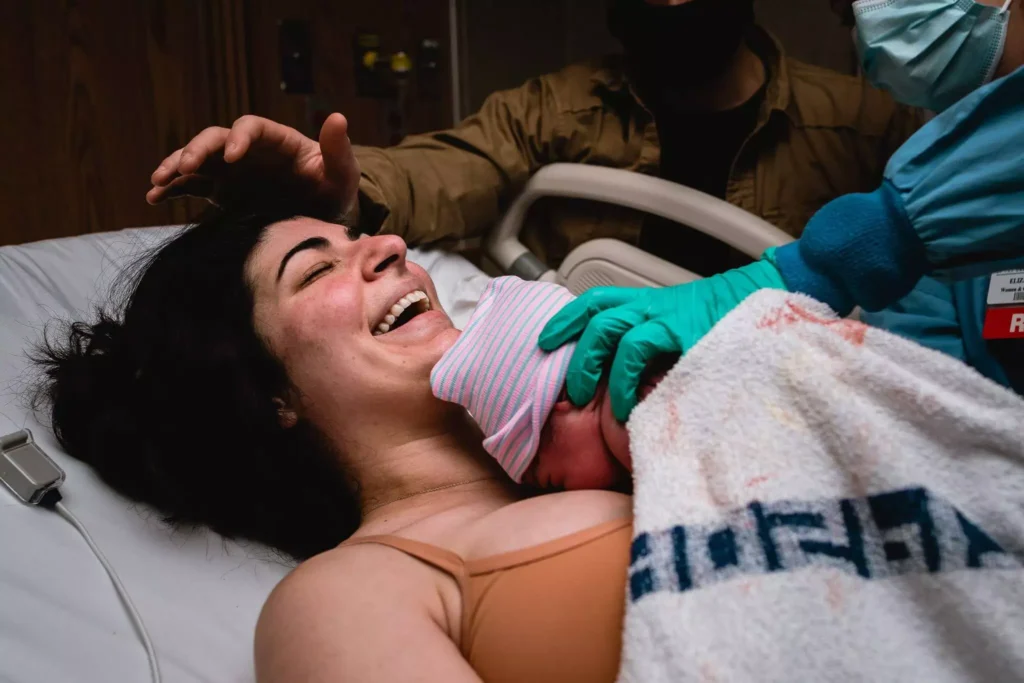

Learn the science of pregnancy and birth to take the mystery of labor away! Understand why you are feeling what you feel, and learn strategies to confidently move through pregnancy and birth!
- 9h+ of Video
- Support Group
- Close Captioning
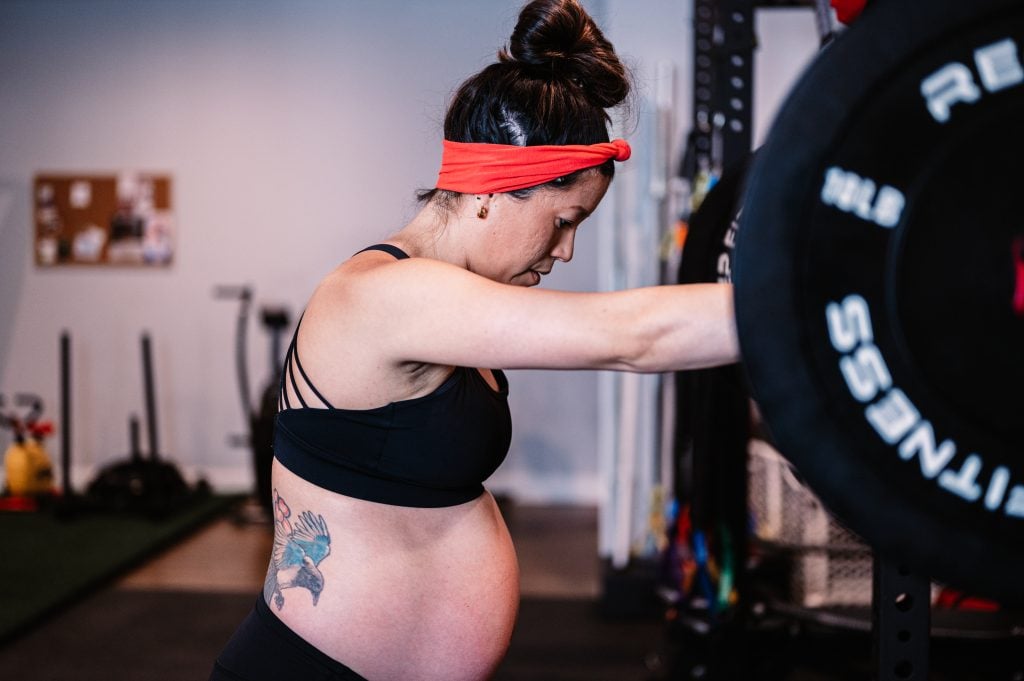

- 5 Workouts/Week
- Gym Workouts
- Self-Paced

Instructor
GINA
Workout on-demand with our prenatal fitness workout videos! Each workout is 30-40 minutes to follow along as you exercise at the same time!
- Birth Prep
- All Trimesters
- Mobility Work

Instructor
GINA
Find comfort and relief from pelvic girdle pain throughout your pregnancy and postpartum period! This program incorporates myofascial sling focused exercises to stabilize across the pelvic girdle joints.
- 3 Weeks
- On Demand Workout Videos to Follow