



Welcome to the MamasteFit Podcast! In today’s episode, Roxanne welcomes Sadie to share her first birth and postpartum experience. Sadie prepared for an unmedicated birth through extensive education (birth courses, daily podcasts/YouTube), movement/pelvic biomechanics work, breathing/hypnobirthing, and practicing counterpressure with her husband- inspiring her to later train as a doula! She chose a low-intervention hospital option in Utah called “Simply Birth,” which includes tubs and doesn’t admit until 5 cm. Sadie describes her birth in great detail, as well as postpartum recovery with a second-degree perineal tear and a minor periurethral tear. Postpartum, the hardest parts were tear healing (first two weeks), fear around bathroom trips, and breastfeeding challenges (shallow latch, supply dip after 4 weeks, stress about low weight percentile, some pumping/supplementing with donated milk). Her key advice: don’t let others’ opinions derail your birth goals, and use education to build confidence and reduce fear.
Read Episode Transcript
Roxanne: Welcome to The MamasteFit Podcast. On this episode, we have Sadie here to share her birth story. Thank you so much for being here, Sadie.
Sadie: Yeah, I’m so happy to be here! Thank you.
Roxanne: Perfect. And I’m so excited for you to share your story with our followers and listeners. Can you tell us what did you do to prepare for pregnancy and birth?
Sadie: Yes, I did a lot. I am a classic researcher at heart, and so before I got pregnant I always was very intrigued about unmedicated births. And I actually watched my mom give birth to my two youngest siblings, and so I always thought birth was very, very cool.
And before I got pregnant I tried to just, I was taking prenatals before, and my husband and I eat really healthy and we have a generally healthy life, so I was pretty hopeful that, you know, everything was ready to go. And then I think it took me three months, four months to get pregnant, just ’cause, you know, figuring it all out. And then that was a blessing, because I actually thought, because my mom, all of my aunts, they all have endometriosis and so I thought that I had it because I kind of have all the symptoms and irregular periods, stuff like that, lots of pain during my periods. And so I actually had a scan to go get checked for it, and then I found out I was pregnant a couple weeks before, so I was like, oh, all right, that works out!
Roxanne: Perfect!
Sadie: So as soon as I got pregnant, I knew that I really wanted to plan out the birth of my dreams. And my mom had very good experiences with birth. Hers were full medicated induction, everything, but they actually went really well for her. But I still didn’t want to do that, just because I always kind of have gone to the natural side of things, and I’ve always been intrigued with our bodies as women, and I knew that I could do it.
And so I started out by taking a few different courses. I actually took, at first I took the Built to Birth course and I really, really liked that. And then as I was doing all of this research on YouTube and podcasts and everything, I found your podcast and I listened to this podcast, for sure, every day, at least two episodes a day.
Roxanne: Aww! I love it.
Sadie: I loved the birth stories and everything else that had to go into that. And I really, really liked how kind of the focus of what you guys do is about movement and how that helps prepare for labor and especially it helps in labor. Especially pelvic biomechanics, I’ve always been really interested in that.
So I started listening to your podcast. I watched all your YouTube videos. And then I started planning out my birth, and I knew I wanted to give birth unmedicated. I already had OB GYN and I wanted to stick with him ’cause he was pretty, he was chill about me wanting to go unmedicated. I will admit, I will not do that next time, just because I felt like every single time I met with him, he was like, “So you’re STILL wanting to go unmedicated? You’re a first time mom, I don’t really think….” whatever. And I was like, why does it matter that I’m a first time mom? Like, yeah, I just didn’t really like that. And I had those feelings of like, maybe I wanna go to a birthing center ’cause my pregnancy was super low risk. All of the tests came back negative for anything high risk, and so, factually I knew I could for sure- I could have even had a home birth if I wanted, but I just, I think my husband was a little bit more comfortable with it being in the hospital with the first, and I was fine with it because I was really confident in what I wanted, so I wasn’t scared about advocating for myself.
So, there’s a program, I live in Utah, there’s a program at a lot of hospitals here called Simply Birth. And it basically, they call it a home birth in hospital, so you don’t have to have an IV, or you can eat, you can basically, you can do all the things that you wouldn’t normally be able to do in a hospital, but you’re in the hospital. And so I definitely wanted to do that if I was in the hospital, and there’s tubs in all of those rooms for Simply Birth. And so that, I was really grateful there was that program.
Roxanne: Yeah, that sounds super cool.
Sadie: Yeah, it’s really, really cool. And so I got to, I think I was 36 weeks, and I started having a panic where I was like, “Maybe I should just give birth at the birthing center, I don’t wanna do it at the hospital,” and my husband was like, “Well, how does that even work?” So I called a bunch of birthing centers and they were like, “Yeah, you could do it. We would just take off the cost of all your labs since you already had it at the hospital.” But then my husband was like, “It’s okay! What has happened that has made you think they wouldn’t be okay with you going unmedicated? I was like, “Nothing, I just like the midwifery care better!” And then he, after a little while, I was like, it would be really annoying to switch everything, and I know that everything will be fine in the hospital, and I guess my mindset was: we’ll see how it goes, and if it wasn’t how I wanted it to be, then I’ll for sure not do it at the hospital next time.
Well, definitely, I just think that education is what gave me the most confidence. Just learning about anything and everything. I studied, every single medical intervention they could possibly do, and the benefits and risks of it, so if something came up, I would be like, oh, I know exactly what that is and I’m okay with it ’cause it makes sense. Or, maybe not, could we do something else?
Roxanne: Yeah.
Sadie: So that definitely made me not scared of anything. I was like, whatever happens in my birth, I know how it goes, I know how it’s supposed to go.
And actually during this time, I was so overly obsessed, not I, I don’t think overly, I’m just birth obsessed and it’s okay! But I was so obsessed with it, I actually started a birth doula training course. So now I’m a birth doula, all these months later. And I love it so much. But I think that for me, what I would say was the best thing ever, was just having that education and knowledge of everything so that in the moment it wasn’t scary. Or, if the baby was in a weird position, I knew exactly what movements I needed to do. I did lots of the hip shifting that you guys talk about, and I loved that. My baby actually, the last ultrasound, I think I was 36 or 37 weeks when they do the last ultrasound to check position and she was in a perfect LOA right there, ready for birth. And so I was really, really happy that everything I had done in pregnancy, excuse me, in pregnancy, had put her right in the right position. So yeah, I think that that’s everything. I guess I just listened to podcasts every single day, watched YouTube videos, did birth courses. That’s what I did to prepare.
Roxanne: Perfect. So it sounds like you like love educating yourself and now you are a birth doula. Just like us, birth junkie! So tell us how did your birth go? You didn’t end up switching to the birth center, so you did deliver in the hospital. So tell us the whole story.
Sadie: So I was 39 weeks and I, it was my 39 week appointment and I, I had a feeling my whole pregnancy that I was gonna go into labor before 40 weeks and you know, everyone’s like, “it’s your first baby, for sure not,” and I was fine with it if it wasn’t going to be. I was a little bit wary just ’cause in the hospital they don’t usually let you go past 41 weeks, that’s like the deadline for not getting induced. And especially my doctor was like, yeah, I don’t feel comfortable with you going, basically he was like, if you’re doing it with me, I won’t let you go over 41 weeks. And so he’s like, kind of, you know, fear mongering, but I wasn’t playing into it. But he was like, “If you go past 41 weeks, you’ll have to sign a paper saying that if anything happens to the baby in labor, it’s not our fault, it’s yours,” and it was just kind of weird. So I didn’t want to go over 41 weeks because of that, just the pressure I felt. But I had this feeling deep down.
And so at my 39 week appointment, I had done enough research that I felt comfortable with getting a membrane sweep, and I actually asked for one. I probably won’t do it again because for me it was horrible. It was like the most uncomfortable thing ever. And some people said that, and some people said it wasn’t bad, so I was hoping I’d be one of those people where it wasn’t too bad. But yeah, no, I did not like it at all. But I will say it did work. So I guess it’s kinda… but I was doing everything. I was eating six to eight dates a day. I was drinking red raspberry leaf tea every single day, twice a day. I was doing a series of different pelvic movements and stretches, and I was practicing birthing position, pushing positions, and just laboring comfort positions so I would be used to it, ’cause you know, throwing yourself into a deep squat when you’re not used to it is really hard.
Roxanne: Yeah.
Sadie: So I wanted to be ready for that. And then with my husband, I was practicing with him all the different counter pressures. I was like, if the, if I’m feeling this, he was, he was my doula, ’cause I told him, I was like, if we’re not hiring a doula, you have to do all the prep with me. And he was like, “Okay, deal.” So he knew all the different counter pressures for different types of things.
And so anyways, 39 weeks, I got a membrane sweep. It was really painful. I was crampy the whole day, which is just not fun, and it’s tiring and not easy to relax, and it’s already not easy to relax when you’re that pregnant. So I just didn’t love that. But the next day after I got the membrane sweep, I had contractions kind of in the morning. It was feeling, you know, period crampy, and it was a little more consistent. And I didn’t wanna time it because, you know, I know that early labor can be really long and it’s, you know, early labor’s the longest but the easiest, so I didn’t really wanna stress. And so I kind of just went about my day. My parents just put in a pool, so I was like, oh, I’m just gonna go swim. It’ll feel so nice, have the pressure off. And this was in July, so it was really nice in the summer. And I had just got done, I had to quit my job when I was 38 weeks, so I had nothing to do. And so I went to the pool, swam around, and then I was noticing they were about 10 minutes apart, but very mild. I didn’t quite time them, other than just seeing what time it was in between them.
And so they were 10 minutes apart pretty much the whole day. And it was such a mind game, like, am I in labor? Is this prodromal labor? Because these Braxton Hicks, are they usually this close together, or sorry, are they usually this consistent? And so I think I kind of knew it was early, early labor. I just felt it. And so then I think that night- but they were so unpainful, I could speak through them, I could walk through them. It was just like, oh, I feel it, whatever. And then that night around 9:00 PM, they started getting closer and closer together, but they were still not super intense- maybe a little bit like from a one to a two, or maybe a two to a three, just a little bit more intense. But they were getting closer together, and they were about five minutes apart for hours. And I was like, you know, the 5 1 1 rule, but I already knew I wasn’t gonna follow that because I didn’t wanna go to the hospital too early, I was more gonna follow it, like- ’cause I knew all the signs of being in active labor, I didn’t wanna go to the hospital till I felt like I was almost in transition. That was kind of my goal. I wanted to get into the hospital and then push! I thought that would’ve been cool. That didn’t quite happen, but.
So then they were five minutes apart, but still not too intense. And so I called the hospital just saying like, “Just so you know, they’re, they’ve been five minutes apart for a few hours,” and the doctor, my doctor is, not an on-call doctor, he, or I guess, is that what it is? He is on call. So he was telling me, “I’ll be there no matter what, ’cause they’ll just call me in,” he’s not on a shift, if that makes sense.
Roxanne: Mm-hmm. Yeah.
Sadie: And so, but whoever the doctor was that was there was the one that answered and was like, “Oh yeah, it’s definitely prodromal labor,” and I was like, “Oh no!” I was so sad. And I was, I was 39 and a half weeks, actually, I wasn’t quite, I wasn’t dead 39, I was almost 40 weeks. And so I was so sad. I was like, oh, maybe it is. But also, I mean, this is kind of how prodromal labor looks, it looks like real early labor, so I was like, I guess it is. That’s just sad. So I was like, maybe if I am in early labor, I’m gonna try to sleep tonight and just get the rest I need, ’cause if I’m going into labor, true labor, then it will be exhausting later. So I tried to sleep, but you know, first time mom, it’s really hard. I was kind of excited. And then I think I only got like four hours of sleep that night because halfway through the night they were getting really intense, like. Not so bad, like I could talk through them, but I started waking up my husband and asking him to do hip squeezes because it was like I had, I couldn’t lay down. It hurt really bad to lay down through them. So I’d get up on my hands and knees and I would have to, I was practicing my breathing. And I had that was another thing I did to prepare that I think was amazing, was lots of different breathing techniques and hypnobirthing techniques, that really, really helped me for sure. And so I was practicing my breathing and I was like, I think I am going into labor, but I’m a little bit, I’m just kind of tripped out because people keep saying that I’m not, but I don’t know.
And so, then, I think it was around 7:00 AM I was like, okay, I’m gonna let him rest because I’m gonna need his full hands-on support when it gets really intense. So, and then, and I just needed to get out. I was, I felt really restless just sitting in bed and then waking up every five to seven minutes with contractions. So we were actually staying at my parents’ house because they, the hospital I was giving birth at that had that program is 10 minutes away from my parents, but it was 45 minutes away from us.
Roxanne: Wow.
Sadie: So we stayed at their house that night in case it was true labor. And so I went upstairs. They were definitely getting more intense, but they were not getting closer together than five minutes.
And so I was trying to just stop listening to the side of my brain that was logical and saying, oh, you should wait till they’re two minutes apart. And I was like, I think I’m gonna go off sensation, because some women don’t get two minutes apart till they’re pushing or in transition, so just depends. Usually that’s the case, but I just was listening to my body and they felt very intense. And I actually went, my mom was awake and I was, and she’s like, “I feel like this is real labor,” ’cause I actually couldn’t talk through them anymore. And I was like, you know, breathing really heavy. I couldn’t open my eyes, I was trying to relax my face, but it was getting pretty intense. And then I went and got my husband and I was like, “I think it’s real labor, but I still don’t wanna go to the hospital yet. I just wanna be at home as long as possible.” So I kind of just tried to have a normal morning. My dad made us breakfast and I just was trying to talk with everyone, but then they were, were four to five minutes apart and getting really intense. Like, I would be sitting down and I had to stand up and sway on the counter and I would be like, “Keaton, please do the pressure.” And weirdly enough, even though my baby was not op, I had a lot of back labor. So that’s kind of strange. But my back pain was really bad. That’s when I wished from your podcast, I was like, oh, I should have gotten a TENS unit.
Roxanne: Yeah.
Sadie: Just to try it. ‘Cause the back labor’s pretty intense.
Roxanne: It’s awful.
Sadie: Yeah.
Roxanne: Don’t recommend.
Sadie: It’s no fun. Yeah. And I’m like, and my baby wasn’t even in the position that people usually have back labor, so I was like, maybe I’m just a back labor mom.
Roxanne: Yeah. Some of us are just lucky to be chosen as back laborers, regardless of our baby’s position. We are both. We are both one of the chosen, unfortunately!
Sadie: Oh no. Oh man. Well maybe with my next one I’ll be lucky, but we’ll see.
Roxanne: Yeah. So fingers crossed for you.
Sadie: Thank you. So then, they were getting… anyways, I need to speed this up a little, but they were super intense. My dad was like, “Maybe just go to the hospital and if you aren’t where you want to be, you can just come back home. It’s only 10 minutes away.” But they seemed like… my parents were concerned. My parents also did not know a lot about physiologic birth that was unmedicated, they just didn’t know a lot. So in my mind I was like, anything that seems intense, they’re just gonna think it’s like, “Oh, the baby’s coming!” ’cause that’s kind of how it seems in the movies and people who give birth unmedicated, it seems like that, but it, you know, it’s not.
And so I was like, well, I was also really excited, so I was like, maybe they’re right. Let’s just go get checked. So I went into the hospital, and for the Simply Birth program, I actually like this, they don’t accept you into the hospital until you’re at a five. So that, because I think that. They know the longer you’re there, the more likely you are to have interventions.
Roxanne: Mm-hmm.
Sadie: I got in and they checked me, and I was a four, and a half and they were like, “We’ll let you kind of,”- this was kind of annoying, they needed, ’cause you know, sometimes some hospitals, they want you to be under continuous monitoring just for 20 to 30 minutes or something- so they were like, “just sit here.” They taught, I didn’t know this counter pressure, but they taught my husband the counter pressure where, they kneel up and push on your knees, kind of pushing your femur into your hip sockets.
Roxanne: Oh yeah.
Sadie: I really liked that one for when I just had to sit there and I couldn’t move. So they said, “Let’s keep you here. If in the next hour you haven’t gotten to a five, then we’ll send you home. But if you have, then that’s great, and we’ll admit you.” And so part of me was like, should I just go home? But I was like, “No.” Like I’m at a four and a half and I think I was almost a hundred percent effaced. So I was like, “Yeah. I was like, I feel pretty good about that. I’ll just stay. If they admit me, for sure, I’ll stay.”
So then she came and checked me an hour later. She was like, “oh yeah, you’re definitely at a five, if not almost a six. So yeah, you’re good. You can stay.” And then she took the monitors off, and then this is what I loved- so when I was there, there was no one else there. I think maybe one other mom. And so my nurse got to stay with me the whole time. She didn’t have to kind of be between patients, you know?
Roxanne: Mm-hmm.
Sadie: And she was so cute. They introduced her to me and she was like, can I see your birth plan? Did you bring one? And I was like, “Yeah!” And she was nerding over my birth plan with me and she was like, I love when mom’s go unmedicated. And that was really comforting for me, ’cause you know, I just didn’t wanna be pressured at all in the hospital.
Roxanne: Mm-hmm.
Sadie: And she was, she told me, she was like, “I always wished that I went unmedicated, so I like to live through you mamas, and I think it’s so cool!” So she was cute and she went through my birth plan and was like, “I love it! I love it!” to every single thing. And it was just awesome, ’cause that isn’t everything I’ve always heard. Like some nurses are super excited and some, or maybe just sometimes they’re busy ’cause there’s so many people giving birth. So I felt lucky that there wasn’t. And so anyways, she kind of helped us out with lots of things.
I think I was at a six at this point and I was like, “Could we fill up the tub? I just think that would feel nice.” And my waters had not broken or anything at this point, and honestly it was not that painful. It was intense enough that I definitely had to breathe through it. I couldn’t really like walk or talk through it. I could sway, but I, honestly, I was hanging, I was hanging on pretty good, I was pretty calm. In between contractions I was full awareness, so I was like, yeah, I’m obviously not in transition yet.
But, so I got in the birthing tub, it felt, or they don’t let you actually birth in the tub at the hospital, just, you know, they just let you labor in it. But it felt really, really nice. Honestly though, I didn’t feel like it was the “midwives’ epidural” like it is for some people. It felt nice just because the warmth was nice, but it didn’t make the pain different, honestly. So that was interesting for me. I’ll definitely try it again next time, but just for that one, I didn’t really notice a difference other than maybe like the weight lifted is kind of nice. And these birthing tubs were really deep so you could full on float in it, and it was like up to my collar bones, it was really deep and nice.
So anyways, I went, I think she came back and checked me a couple hours later and she was like, “Oh, you’re at a seven,” and she had been coming to do the doppler and just do intermittent monitoring every 30 minutes or so. But she was like, “Wow, like you’re progressing pretty quickly. You’re already at a seven, you’re almost in transition.” And I felt great. I was like, “Oh, if this is what transition’s like this will be great!” It wasn’t, but.
Roxanne: Spoiler alert!
Sadie: Spoiler alert, it wasn’t that nice. And so this is the only thing about my labor that I really didn’t like, everything else was great. So she goes, “Your doctor just called,” and so in Utah there’s a holiday, it’s Pioneer Day, July 24th, that was the day that I had my baby, I was in labor. So lots of people, there’s like fireworks and fun celebrations everywhere. And he had called and said, “Hey, I have a family barbecue tonight, so would she be okay if I just came and broke her water so that it can go a little faster?” And I was like, “I don’t even care if you’re the one to catch the baby. I literally, my husband could do it, the nurse could do it.” Like, I just didn’t like that he was rushing me just because of a family barbecue.
Roxanne: Yeah.
Sadie: I was like, “That’s weird.”
Roxanne: I don’t love that either.
Sadie: Yeah. And I had done enough research that I had kind of weighed the pros and cons. I was like, I am almost in transition. It’s not like they’re breaking my water at a three.
Roxanne: Yeah.
Sadie: And the nurse, I was like, “What do you think, knowing that my goal is to have, you know, like zero intervention?” And she was like, “Honestly, it’ll probably be the difference between like three hours and one hour, but it’s totally up to you. Like you do not do it if you don’t want to.” And I was just thinking about it and, you know, that was my one regret is I just, I think I was so excited and I was like, yeah, I am almost in transition, so I think I’m fine. I just didn’t realize how much more painful it was when your waters are broken. That’s what I didn’t know.
So because of that, I was just like, honestly, I guess that’s fine. ‘Cause she said I was a seven and a half, like I was almost seven, eight. So I was like, “Yeah, okay. I guess that’s fine.” And then she’s like, “Are you sure? ’cause I don’t want you to feel….” and I was like, “No, it’s fine.” I was like, “Does it hurt though?” And she’s like, “No.” And so I was like, “Okay.”
Roxanne: Yeah…
Sadie: but I hated cervical checks. That’s why I was like, “Does it hurt? ‘Cause I’m seriously done with getting checks.” And so the doctor, he got in pretty quick. I don’t know how he got there so fast, but he got there and he, I just didn’t like the rush that I felt. He was like, well, one thing, so I walked in, I was actually going to the bathroom and then I came out and he was like, “Wow!” He was like, “I’ve never seen someone almost in transition, this calm.” And I was like, “Really?” and he was like, “Yeah,” which, you know, I’m sure he doesn’t see unmedicated laborers a ton. So I don’t know, like maybe it’s people who come in and they don’t know how to prepare for it, so they’re like, “Gimme the epidural!” you know? But I was like, oh, that’s good. Like, it made me feel good. I was like, oh, I’m handling it pretty well.
And so I was just, he didn’t like prep me. He wasn’t like, “This is how we’re gonna do it.” I just see the little hook thing, and then I was like, “Can you please explain to me everything that you’re doing?” Because I don’t like when people, and especially like doctors, when they just do stuff and don’t explain it, ’cause to them they’re like, oh yeah, it’s super easy and normal. But for me, I’m like, what? You’re shoving a hook up there? What’s going on? And so he was like, “Oh, sorry. Yeah. I’m gonna, you, I just go up there at this hook and I kind of twist it on your, on the…” I can’t think of the word, like the sac?
Roxanne: Amniotic sac.
Sadie: Yes. Mm-hmm. And he was like, and then it just kind of pops out. And I was like, does it hurt? And he was like, no. And apparently, my sac was bulging through my cervix already, like it wasn’t super flush on my baby’s head. But, one thing I was really, really paying attention to when I did have to get checked was like, where, what position is the baby’s head in? Where’s everything at? ‘Cause then that could help me know what to do movement wise. He was like, “You are almost at a zero, basically, like she’s pretty low, but the bag is, the bags of waters are bulging and so this will probably bring her down even lower pretty quickly.” And so I was like, all right. And so he broke my water. Yeah, it didn’t hurt or anything. It was just like, gush of warm water.
And yeah, I’m not kidding, immediately it escalated. And I was like, whoa. Because also, every time I got a cervical check, it made me have a contraction, so I also was like, please, as little as you can, ’cause it’s really uncomfortable when it just sends me right into a contraction, and I have to try and like breathe through it while you’re checking me. And for me, laying down was terrible. I didn’t wanna lay down. I wanted to be standing, swaying, hands and knees, rocking back and forth was really good for me. And I would just kind of position my knees wherever my pelvis needed to be. And so, got really, really intense. I immediately was like, “Yeah, I wanna get into the tub.”
And so I got back in the water and that’s when I was like, “Yeah, this is so strong, the water’s not even helping.” But I was scared to get out ’cause I was like, what if it is helping and it’s going to get worse? And it was probably five out of 10 pain to 10 out of 10 pain. And I actually wasn’t using that word in my labor, I was just, I didn’t want anyone to say the word pain because I just know that words are really important with your, how your brain and nervous system are connected.
Roxanne: Uhhuh.
Sadie: So I was using “intense,” I was like, “Yeah, this is super intense.” And I promised myself that I would never say out loud like, “I can’t do this, I don’t wanna do this.” But I was starting in my head to get those thoughts of like, why did I even wanna do this unmedicated?! I was like, this is, but then it kind of made me excited. I was like, oh, yay, that means I’m in transition. I’m almost done. Those thoughts are welcome.
And so it was really hard. I was starting to vocalize through my contractions while I was breathing. Lots of deep moaning, rocking back and forth. Every single contraction, my husband was doing counter pressure because of the back labor I was having. And he had been doing that actually from the start, so he’s great for that. That was really nice. And nobody was helping him. I probably should have been like, “Hey nurse, can you come help do some counter pressure for a minute?” I just was out of it by that point.
Roxanne: Yeah.
Sadie: And that’s when I felt I was starting to dip into the labor land. Like in between contractions, I felt like I was gonna fall asleep, I was super tired, I couldn’t, I would not even open my eyes because I was just staying with my breaths to prepare for the next contraction. I had heard on your podcast that, it’s a lot more beneficial if you start your breaths before the contraction starts rather than when it’s coming on.
Roxanne: Mm-hmm.
Sadie: So that’s what I started doing. I just was, I couldn’t even talk to anyone unless they asked me something, then I’d kind of, yeah, like just nod my head.
And then, it got really, really intense and this was about 30 minutes in. I was like, maybe 45 being in the tub, I was like, okay, I wanna get out of the tub because I’m just ready to be done and I feel like it’s gonna help gravity wise, just bring everything down. And it, it did, as soon as I got out of the tub and I knew I couldn’t push in in the tub anyways, so I was like, I might as well get comfortable out of the tub, so.
Roxanne: Yeah.
Sadie: I went and I got on the bed and I was just rocking back and forth on my hands and knees. And I started feeling like tons of pressure. I could, it was actually really cool, I could literally feel her head like descending. And so the doctor comes in, he’s like, “Can I check you?” and I literally almost started crying. I was like, “No, I do not wanna get checked! Like if that sends me into these contractions, I don’t wanna do it.” But he’s like, “I will not check you again. I just need to do it once to make sure. ’cause you seem like you’re almost ready to push. So I just wanted to make sure.” And I was like, “Okay, fine,” and I didn’t even lay on my back. I was like, “You can do it while I’m in this position. Like I’m not doing that.” And so was kind of on my side and he checked me and he’s like, “You’re almost at a 10, you just have a little bit on one side left.” So he’s like, “As soon as you feel like you’re pushing, I won’t check you, you’re ready to go.” And I was like, okay. So he like left and he’s like, “Yeah, they’ll just let me know when you’re pushing.”
And so I was on my hands and knees and. As soon, and it was like almost like my brain needed to know I was almost at a 10, and then I full, I like knew I fully dilated that next contraction because her head, it was like, I could see it in my brain, her head coming down through the cervix.
Roxanne: Yeah!
Sadie: And I was like, oh my gosh. And I just remember feeling, this is so TMI, but I was like, I feel like my butt’s gonna rip open. Like just so much pressure back there, and I was like, oh, the pressure was insane! And then I was kind of in a hands and knees squat, if you can see what I mean, like my hands were in between my legs and I was in hands and knees, kinda like a frog position on my knees.
Roxanne: Mm-hmm.
Sadie: And I put my fingers down there and I could feel her head, and I was like- like not, not crowning, but a little bit higher- and I was like, okay, wow, i’m almost there. And then that next contraction, I started, my body just started pushing and my husband said it was so crazy, ’cause he’s like, “Your back would kind of arch up and I could see your stomach, like, just like pushing down really hard.” And he thought that was really cool.
Oh, and also I just have to give a shout out to my nurse. She was so amazing and when I was in those transition contractions where it was just really, really, really intense, I was really tired and she would hold my head on her chest and sway while my husband did the counter pressure. She was so sweet. She was my doula, honestly, if I didn’t have a nurse that great, I would’ve wished I had like an extra person there as, as a doula. But she was amazing. She was a doula for sure.
Roxanne: Oh, I love that.
Sadie: Yeah, it was great. So, anyways, my body started pushing and she was like, “Hey!” she was kinda looking at me, and she was like, “You are doing so good!” And I remember I almost, I that like made me wanna give up, but it also made me feel stronger, ’cause you know, I was just like emotional. And she was like- oh, also I need to mention this, I was throwing up right before I was pushing, in between contractions, I think two or three times I was throwing up. And that was terrible. I was like, really? My break time?!
Roxanne: It’s awful.
Sadie: My like thirty second to one minute break time, I’m throwing up? It was, it was terrible. But honestly it was nothing compared to the contractions, so, yeah.
Roxanne: Yeah.
Sadie: And I kind of knew that that’s normal in transition, like a lot of women, yeah, get nauseous or throw up, but still it’s no fun. Throwing up is the worst.
Roxanne: No. Yeah.
Sadie: But the nurse was so sweet. She would hold my head, hold the barf bag up. And while I was throwing up, I was like, “Wow, she’s really nice for this ’cause that’s so gross!” And I couldn’t even hold the bark bag because I was so focused on, I don’t know, I just, I was in labor land, I couldn’t even do anything.
Roxanne: Yeah.
Sadie: And so that was really nice that she was there to help with that. And so my body was pushing. She was like, “You’re there, you’re pushing. I’m gonna call the doctor.”
Roxanne: Yeah!
Sadie: And I was like, “Are you sure I’m there?” And she was like, “Yes!” And it was crazy. It’s like, you know, those grumbly sounds when you’re natural, when your body’s naturally pushing, that was starting to happen. Kind of almost like scary demonic sounds. But it was great! Just, I couldn’t even help it, but I loved that feeling. That was what I was really excited to feel was like my body pushing without me trying. I thought that was really cool because you don’t really get to feel that unless you are unmedicated, so.
Roxanne: Yeah.
Sadie: I love that.
And then my pushing was very fast, which I was grateful for, but it did cause probably more tearing. So, you know, it’s like a pros and cons.
Roxanne: Yeah.
Sadie: In my mind, before birth I was like, I’m gonna take it slow. I’m gonna breathe my baby out, so that I’m stretching good. And then in the moment I was like, no, I’m so done.
So I originally told my doctor I did not want directed pushing. And he was asking me how I wanted to push, and I was like, “Just on my side.” ‘Cause I was so tired, I was like, “I just wanna be on my side.” But it hurt too bad and I didn’t wanna lay on my back for obvious reasons. I just, that was something I didn’t wanna do. And so I was on my side and, the nurse was awesome, she was like, “Relax your hands, relax your hands,” ’cause I kept like grabbing onto the bed and she was kind of helping me and she was going like this on my, well if people can’t see, she was kind of rubbing my forehead and she was like, “Relax your face,” and that was so awesome. And I just remember in pushing right before, when the doctor was coming in, you know, gloving up, everybody’s getting ready. I couldn’t even speak a full sentence and I was like, “Wet, cold rag right now!” And someone brought, I don’t even know who, someone brought me a rag and I just put it on my face, ’cause I was starting to sweat a ton at this point. And also I was fully naked, I didn’t even care who was in the room. ‘Cause I got out of the tub and I was like, I can’t get dressed like this is so hard. So I, and I just remember being like, I don’t even care who’s in the room. I don’t know who’s in the room. I’m just in my own world. I can’t even open my eyes.
Roxanne: Yeah.
Sadie: And all I remember is my husband was holding my leg and then the nurse was like, “Swap me spots so you can go like, be by her face and support her.” And so my husband came and he wanted to watch the baby come out too, so it was great. So he came and was holding my hands and like rubbing my neck and watching and I told my doctor, he was like, “Do you still not want directed pushing?” And I was like, “Actually with contractions, I think I do because this is so intense. I like need some coaching,” but I didn’t wanna like purple push.
So I actually met with a pelvic floor physical therapist before- that’s another thing that I did to prepare that I loved because my second trimester I had really bad SI joint pain. Now I know it’s nerve pain in the SI joint, but I had, that was pretty bad. Like I could barely walk. And so she totally helped me with that. And then she taught me how to push, in like a physiologic way to help lengthen your pelvic floor, not tighten it and bear down. So I was pretty confident about that, but I just wanted some direction because I was, you know, you’re like, I don’t know if I can do this. Like, it is just really intense. So then he was like, “All right, on your contractions, we’ll just count with you and you know what you’re doing, you’re body’s already pushing on your contractions.” And I was like, okay.
So first contraction, I just remember the nurses, I was on my side and they were like, “Curl your head down”- which that’s like a such a hospital thing. But it did, it did actually kind of help me like relax for some reason. Like when I was pushing, just being able to kind of tuck in, it made me feel like I was in like a safe little ball. I don’t know why I liked that for some reason.
Roxanne: Okay! That works!
Sadie: Yeah. But some of the time I was like, no, and I just wanted to like stay lengthened. I was just listening to my body kind of doing what I felt like.
But so that first push, that first contraction when the doctor was in there, I was pushing and I was trying to keep an open glottis, you know, and like moan through it and not be purple pushing and bearing down. And I felt her head come down so much. Like it was just the craziest like, and he was like, “Oh my gosh, her head is right there!” And I remember feeling like, okay, I can do this. I’m almost done. And you know, most first time mom stories I heard about it was like one to three hours of pushing.
Roxanne: Oh yeah. Oh yeah.
Sadie: So I did not really expect that. My mom had really fast pushing like two pushes per kid, so I was like, maybe that’s why. I don’t know. my baby was also small. She was six and a half pounds, so that probably helped too. Or just maybe that’s how my body does it, which is nice, so.
Roxanne: Yeah, take it.
Sadie: Yeah. So then I pushed the second time and they were like, “Oh, she’s crowning.” And the nurse, like I could answer, she was like, “Oh, do you feel the ring of fire?” and I didn’t say anything, but I remember thinking like, oh, I actually don’t. Like, I didn’t experience the burning sensation actually. I was kind of scared about that, but yeah, I didn’t have that, which was really nice.
Roxanne: That’s nice.
Sadie: Yeah, it was great. And so then I was like, all right, I can do it. If she’s crowning, I’m getting her head out, this is so great. I don’t wanna do this any longer.
And so then I pushed again and her head came out and he was like, “Head is out! You got it! One more!” And so then I pushed and her body came out and it was the craziest, like immediate relief, just UGH! No pain, like 10 out of 10, to a 0. Like zero pain, just bliss. I was so happy. And they put her right on my chest and I remember feeling like, I was, you know, it’s like the nervous system and the adrenaline was so crazy, I couldn’t enjoy it quite yet. Like, for a couple seconds I was just like, “Oh my gosh. I did it. I did it.” And I was a little out of it still. And I just remember feeling like I’m done. Oh, it’s all worth it. Like finally it’s done. And so, yeah, I looked at my husband ’cause he kept on joking in pregnancy, he’d be like, “Oh, we’re gonna have such an ugly newborn,” just as a joke. But I remember looking at her and I was like, and I was crying, I was like, “She’s not ugly! She’s cute!” I was still kind of in a different world.
Roxanne: Aww! Yeah!
Sadie: But it was like the best thing ever. Just immediate relief. I actually didn’t have, even when I was breastfeeding after it, the contractions were like super mild. And maybe that’s because, you know, I had felt how intense it can get, so anything other, like lower than that is nothing.
But yeah, I was holding her, and I told them I wanted to wait to cut the cord and I think it was like 10, 5 to 10 minutes later it turned white, it was all ready, which was pretty quick. So then my husband cut the cord, and I was actually really nervous for stitches because without an epidural you have to get the lidocaine shots and everything and I was just like, oh, getting a shot down there after all that trauma. I was like, I don’t know how that’s gonna be. And I had heard people say like, but once your baby’s with you, nothing matters and you don’t even care. I was not like that. I was like, Ooh! Like still pretty nervous about that. And so, yeah, they had her on me and they, I think it was like by the time, no, after they cut the cord, he was like pushing on my stomach to, you know, make sure the placenta was detached and everything. And then he was like, “Alright, give me just a little push,” and I was kind of scared. I was like, “I don’t wanna push again for the placenta.” But then it was like pushing as hard as I would push to pee like nothing and it just came right out.
Roxanne: Uhhuh.
Sadie: So that was actually really easy. I think it was your podcast. I heard one person out of all the birth stories I listened to, one person said that delivering the placenta was terrible. And so I was like, hopefully it’s not like that for me. But it was way easy and not, it wasn’t even a big deal. It actually, this is so weird, but it kind of felt satisfying. It’s like jelly! It’s just, it was kind of weird. I was like, whoa! That’s a weird feeling.
Roxanne: Yeah, it’s a big relief after it comes out.
Sadie: Yeah.
Roxanne: I describe it as a jellyfish.
Sadie: Yes, exactly! Yeah. And then I just remember I was like, “Wait, can I see it?” Like when it came out, I wanted to see a placenta. And it was really cool. Mine was a little bit small, actually it wasn’t, he said it, it wasn’t abnormal, but he did say it was smaller. And actually this is a blessing, but her cord had a knot in it, but it didn’t cause any problems, there was just a knot in it. And also her heart rate was completely amazing the whole time, even in pushing, they were like, “Wow, she’s just chilling in there. She’s having a good time!” So that was another blessing that I felt really grateful for just ’cause that adds a lot of stress to moms. If they’re like, “Oh, the heart rate,” and you’re like, “Wait! What?!” Especially in the hospital, ’cause you know, it’s like sometimes that could lead to like, oh, should we do a c-section? The baby’s in distress. So I was really glad I didn’t hear anything about her heartbeat that was negative. And even if I did, I definitely was educated enough to know the options and things I could fix. I even have heard women where they’re like, I got in a different position and it totally resolved it. So just lots of things like that.
So then I was holding my baby and then I think five minutes after she was born, it was so cool. I was back to full mental clarity. It was like nothing even happened. I was just like, “Oh wow, what a great time.” And so the doctor was like, “Alright, I’m gonna do this.” And so the stitches that they did, it wasn’t like individual stitches, it was the, what do you call that?
Roxanne: Continuous.
Sadie: Yeah. The ones that are like laced up, you know? So just, so I had a second degree perineal tear. And then a really minor periurethral tear. Ugh.
Roxanne: Okay.
Sadie: Not fun. But the baby came out so quick, I wasn’t really that surprised, honestly. And in the moment of pushing I, and I’m a first time, I have heard with your first baby, you’re the most likely to tear, so. Obviously I wanted to not tear, but when I was pushing, I actually knew I was going to, I was like, I feel how much I’m stretching and I just know it’s gonna happen, but it’s okay.” And I didn’t feel myself… I guess I did, I felt myself tear, but it wasn’t upsetting, it’s just what it was. It wasn’t like it made it more painful, if that makes sense. I just, I just had a feeling I knew that I did. So he was like, “I’m gonna do some shots,” and I was shaking, I was getting, you know, the post-labor shakes really, really bad, just from all the adrenaline, which is normal, I knew that was normal.
Roxanne: Yeah.
Sadie: But my legs were shaking so bad, he was like, “Okay, try to relax,” and I was like, “I can’t!” I’m just, and I was holding my baby and I was just like shaking.
Roxanne: Yeah.
Sadie: And then, oh, this was another thing, that nurse that I loved, her shift ended at seven. And I was really hoping I’d have the baby before then, because I loved her so much. And I gave birth, the baby came out at 7:00 PM on the dot, so it was a miracle. It was a miracle. I was like, yay! She got to stay! I would’ve been really sad if they had to swap her out.
Roxanne: Mm-Hmm.
Sadie: So she was there for the whole thing, but then she did have to leave and another nurse came to just hold my leg while they did the stitches, and she was amazing. She was like, “Kay, look at, look in my eyes,” she’s like, “You’ll feel some pressure, you won’t feel pain,” and I was able to like, relax, no shaking. And I, I really appreciated how she was like, “Look at me,” ’cause I kept kind of joking with the doctor, I was like, “Are you sure I need stitches? Because like, sometimes people don’t like, need them, you know?” I was like, and just kind of joking and he’s like, “No, it’s a second degree. You definitely need stitches.” But I was like, “I know, but like… just….” I don’t know. For some reason I was like in a, like a laughing panic. I was like, “Yeah, but, ha ha if I don’t like knd them all the way up…” or I don’t know why I thought that. I was just, I’ve heard that midwives will sometimes, they won’t do as many stitches and it’s actually beneficial. So sometimes I was just kind of like, you know, don’t overdo it. And I had also heard about, what do they call it? Like the extra stitch that they do, and I was like, I mean, I’m definitely gonna have more kids and I don’t want to have that, and I’ve just heard how terrible that is for like, after, in like, you know, all the different things. And so I was like, I do not want that. But he didn’t, he didn’t do that. It’s all been fine. But I was good just kind of joking with him. I was like, “Wow, I can’t believe how much pain I was in like 10 minutes ago and I feel great now!”
And then it took about 10 minutes, and then he was all done. I think the worst part about the stitches was when he’d have to kind of stretch and look around. Oh, that was terrible. I was like, “Oh, like please stop, like stretching me out. It’s so painful.” But luckily I think the adrenaline helped ’cause it was pretty numbed out still down there, but the periurethral tear, I think I just needed a tiny bit of stitching on it. That one was not numbed out.
Roxanne: Oh no.
Sadie: Yeah. Getting the lidocaine shot for that one, I screamed. I was like, I was like, “Ow! Ow!” And he was like, “I’m sorry!” But then like, I was obviously grateful ’cause I didn’t feel the stitching on that part, but just in general, like when he was kind of stretching around up there, I was like, oh please, no. Like it hurts so bad. And I was trying to like keep it together and I was like, wait, just focus on the baby. She’s literally here now. Like I should just look at her. But I was just a little panicked ’cause the imagery of that happening down there is no fun.
Roxanne: Yeah, yeah.
Sadie: And so, yeah, that was how that went.
And then the best thing ever was, so nobody was going into labor really when I was, but then right that evening, ’cause you know, you’ve heard most people go into labor in the evening or at night, that they had a crazy influx of people coming in, going into labor. And so things got really busy and they were like, “Yeah, we’ll just give you your golden hour and enjoy it!” And they all left and I was like, sweet!
One thing I wish that they did in hospitals better, luckily I knew this, but for other first time moms, I’m like, they should have made sure that she like latched on or something. Like, you know, established that first hour or even like first 30 minute latch. I think that that’s important and I just did it myself because I knew to do it. But, that’s one thing, like in all of my doula training, that that’s what I learned was like, that’s super important to make sure that that latch happens if possible, within that first hour, because it helps the baby with so many different functions. And so I did it myself. It was great. She latched right on and it was amazing. So then they actually left me for two hours. No one came back.
Roxanne: No one. Oh my gosh.
Sadie: No. I was like, they didn’t even weigh her or measure her or anything, but I guess I, I guess they’re just unconcerned because it was such a smooth labor, there was nothing wrong, which was a good thing. But I was like, are they gonna come back? It’s been like, I think it was two and a half hours by the time I like, called the nurse and I was like, should we weigh her? I don’t even know how much she weighs or anything. I was fine, and like I had already, after that first hour, my husband, had his shirt off and I like put her on my husband so he could get some skin to skin and he just was sitting in the hospital bed with me. And that was such a special time, but I also thought that they were gonna move me to a postpartum room. I was just confused. But at that hospital, they didn’t tell me the labor room, they keep you in there for postpartum, which was so great that I didn’t have to get moved, but I didn’t know that. So my family was in the waiting room and I was like, “I think they’re still gonna move me so don’t come yet.” But the nurse was like, oh yeah. And so she comes in and she’s obviously kind of like stressed out and I was like, “Are you okay?” And she was like, “We are having two emergency C-sections right now and one of them have to get life flighted to a different hospital, the baby has to get life flighted, so there’s like a lot of, you know, like high intensity going on.” She was like, “Sorry, like you’re doing great. Your baby’s great. That’s why we haven’t come back. I’m sorry if you were nervous.” I was like, “No, I wasn’t nervous. I just didn’t know why no one came back.” And she was, you could tell she was like visibly shaken ’cause she said she was in the operating room for the scary one. And so that was sad and I was like, oh, well I feel really, really blessed and lucky that I’m not having that experience. ‘Cause the hospital I was in doesn’t have a NICU, so they had to life flight the baby out. And so like, typically you can’t give birth at that hospital if it’s not lower risk.
Gina: Mm-hmm.
Sadie: Or if it’s like premature, they’ll send you straight to the other hospital with a NICU.
But anyways, so she weighed her, she was six and a half pounds, 18 inches, so she was just so little.
Roxanne: Peanut!
Sadie: She was so little! And then they just wrapped her up and my family got to come see and my husband’s family got to come see her. And it was really cool, because the labor and delivery wing is on the third floor, and we had a view of the whole valley, and there were fireworks everywhere because of Pioneer Day. So that was really fun. I was like, oh, there! She’s gonna have fireworks on her birthday every year if we live in Utah.
Roxanne: Yeah.
Sadie: And so, yeah, that was, I think that that was everything. Going to the bathroom the first time was really scary, but it wasn’t as bad as I thought.
Roxanne: Yeah.
Sadie: Yeah. That’s it. That’s the whole birth story.
Roxanne: All right. So you educated yourself very well. you had the births that you were envisioning for yourself, and you felt very empowered, it sounds like.
How about postpartum though? How did you prepare for postpartum and then how did postpartum go?
Sadie: Like everyone, I was more prepared for birth than postpartum, but I had done some preparation. I took, part of the birth course that I did, there was a postpartum newborn care course, all of that stuff, which was really nice, ’cause as a first time mom, I was like, I have younger siblings, but I didn’t really know all the newborn safety things or just in like, you know, all that stuff. Or even with latching and everything- I took a breastfeeding course as well, which was good- she had a bit of a shallow latch at first. I also just think that we were learning together. Her mouth was the smallest, like maybe that’s not why, but it was hard to get that deep latch for a while. Breastfeeding actually went really well for the first four weeks, and then it hit that classic dip in supply. Like I had a really high supply and then my body was more like regulated and it went down, but I wasn’t getting enough stimulation before that, so it dipped a little too much and I was like, oh, now I have to pump a little bit extra probably, or just, you know, feed her more.
And the pediatrician had been telling me like, she’s pretty low on weight, like second or first percentile. So she was just super small, but I was like, she’s eating like every two to three hours, so I don’t know what’s going on. I think part of it I learned was that shallow latch and just the milk extraction wasn’t great from her. And so, but I hate pumping, honestly, for me, kudos to the moms who exclusively pump. I can’t imagine. It is so much work.
Roxanne: Yeah, it’s awful.
Sadie: It is, it’s just, I would so much rather exclusively breastfeed for sure. It’s just like you don’t have to clean anything. You have all the stuff you need right there. And I feel very, very fortunate. I had, my husband and I had always planned for me to be at home. The doula thing has been great ’cause it’s like the perfect mom job. But I wasn’t pressured for going back to work, which was really nice and I didn’t have to do that and pump. So I was planning on exclusively breastfeeding. I would just start pumping a little extra to get that extra stimulation and up my supply.
But that’s probably been the hardest part about postpartum was just how demanding keeping your supply up is. It’s like I, if I do everything except for drink enough water, my supply is down that day. If I drink enough water but don’t eat enough food, my supply is down. I feel like I’m a very, maybe that’s normal, you tell me. But I feel like I’m very sensitive to it.
Roxanne: I think it’s person dependent. So you could just be more sensitive to it and other people not. I think it’s dependent ’cause I make a lot of milk, and that’s always, yeah, but Gina doesn’t make like as much, but still enough.
Sadie: Mm-hmm.
Roxanne: So I think it’s just person dependent and baby dependent.
Sadie: Yeah, true. And I do think, just figure, like, you know, figuring out her latch was a process and mm-hmm. Yeah, just it helped once I figured that out better. but I actually, I just listened to a few, a couple weeks ago- ’cause right now I’m four and a half months postpartum. But a few weeks ago, no, probably like last week I listened to your podcast episode that you released, just barely. That was about, postpartum exercise and keeping your milk supply up.
Roxanne: Okay.
Sadie: So that was actually really helpful. All of your breastfeeding and postpartum podcasts have been helpful, so that has been great postpartum.
And just with, oh, so my diastasis recti. I went to my pelvic floor PT at six weeks to just get it checked and see what the, what the damage is, ’cause everyone gets it pretty much.
Roxanne: Yeah.
Sadie: But I had been doing lots of diaphragmatic breathing, lots of like minuscule healing techniques. I did the 5, 5, 5 midwife rule, the five days in the bed, five days around the bed, five days like down the block or something. Just like minimal, just to heal better.
Roxanne: Mm-hmm.
Sadie: And not go crazy. And so- oh, that’s another thing, postpartum, ugh, those stitches just healing from tearing, like a lot of women do, it is terrible. Like getting up at night when I would feed her, I would be like shaking, trying to sit down in my bed. I could not sit in a normal chair in the car. I had to sit on my boppy, like my nursing pillow.
Roxanne: Mm-hmm. Yeah.
Sadie: Or on a blanket or something.
Roxanne: Yeah.
Sadie: And so yeah, that was way more intense. Like in some ways I remember thinking this is worse than birth, ’cause it lasted way longer. It’s like two weeks of that, the first week especially. But I did, I think after two weeks, the stitches were dissolving and it got a lot better. The itchiness of that dissolving is really terrible.
Roxanne: Uhhuh.
Sadie: ‘Cause it’s like, you don’t wanna itch and it hurts and it’s hard. And I also, you know, nothing’s too TMI on here, but I took the stool softeners the whole six weeks ’cause I was just like, I am not gonna go through that.
Roxanne: Yeah.
Sadie: That, that is just… ’cause pooping is already scary postpartum, so.
Roxanne: Yeah. You don’t wanna… that’s a valid concern.
Sadie: Yes. And I tried to drink a lot of water and have a high fiber diet, but it was really hard to prioritize eating enough. I also just would be so distracted. It would be like four o’clock and I’m like, oh, I haven’t even eaten yet today. That’s so bad.
Roxanne: Yeah.
Sadie: But then ever since my milk supply kind of dipped, I’ve been better with eating enough and eating more than enough. But yeah, that was, postpartum was pretty good after two weeks, I’d say the first two weeks was the hardest. And then the next hard part was just refiguring out the breastfeeding stuff.
Roxanne: Mm-hmm.
Sadie: But other than that, it’s been great. My baby’s weight is still low. My pediatrician has started being like, “You know what? I think that she’s just small. Don’t worry anymore. Like, she’s going up. She’s just really small.”
Roxanne: Yeah.
Sadie: So that has been a big cause of stress. Like every time I left the pediatrician, I’d be bawling and he would just like hug me, he’s the nicest doctor, we actually are family friends with him, and he’s like. “I’m so sorry,” he’s like, “you’re doing great, you’re doing totally fine. Like, just keep trying to feed her frequently. Get your milk supply up, maybe supplement.” And I, my best friend has tons of frozen milk, so she’s the best and has given me some milk to supplement with.
Yeah, I think that that’s it for postpartum. oh, I was gonna say the diastasis recti. So I went to the pelvic floor pt, and I only had a one finger separation, which was really nice.
Roxanne: That’s awesome!
Sadie: And I think part of it was just I was really actively doing the breathe, the diaphragmatic breathing and really minor, not like exercises, ’cause I was kind of waiting for that six week appointment to be like doing exercises.
Roxanne: Yeah.
Sadie: But I was doing some of like the, the heel slides and different things like that. And then she was like, “Yeah, you’re actually like, you’re good to do anything. You can do crunches. You can do some of the stuff that wouldn’t be safe for someone with like a three finger gap.” She’s like, “But yeah, you can do all normal activity just obviously, as you shouldn’t before postpartum, like, don’t strain yourself. Don’t be shaking when you’re doing an exercise.” But she’s like, “Yeah, you can do anything you want.” And that was so nice to hear that ’cause it’s a little stressful, like, what can I and can’t I do postpartum?
Roxanne: Yeah.
Sadie: So hearing that and the doctor that, that was another reason I’m like, I’m definitely not, the postpartum care with OBGYNs is not great, as you know, at least for some doctors. For mine, it was like the only appointment I had was six weeks, and then he didn’t even check, he didn’t even look down there. He didn’t even check me. And he was like, “Oh yeah, you’re six weeks, you’re good to do anything you want. And I was like, “Uh…”
Roxanne: How do you know?
Sadie: And I was like, “Do you need to check me?” And he’s like, “I can check you if you want, but if you don’t feel like anything’s wrong then you’re fine.” And I was like, well, I don’t really wanna get checked, but I also wanna know if it’s good. So I ended up not even getting checked because I was like, my pelvic floor PT can just do all that anyways, and I like her more, so.
Roxanne: Yeah.
Sadie: So yeah, that was really great. Next time I’ll definitely, I really wanna do it in a birthing center or I would do a home birth, but we just live a little bit too far from the hospital for my comfort doing a home birth. But I still, oh, I love home births. I think they’re amazing. It’s just like the midwifery model of care is a lot more suited to physiological birth, and even like comforting you through it. Like in the hospital they don’t always even sometimes know like what to do to comfort you when you’re in pain in natural labor, ’cause they’re just used to pharmaceuticals and stuff. Like, my nurse was amazing, she did know, she knew counter pressures. She was super comforting. But just, in general, I think having a midwife matches my goals better. And I remember right after she, I gave birth probably like 20 minutes later, right before they all left, one of the nurses was like, “That was such a cool birth to witness. Do you think you’ll do it again?” And I was like, “Don’t ask me that right now.” Like right after I just gave birth, if I would do a unmedicated.
Roxanne: I just had a baby. Yeah.
Sadie: Yeah. I mean, I knew I would have a baby again, but I was like, don’t even ask if I’ll give birth unmedicated again. But yeah, definitely I will! And it was so worth it and it was amazing.
Roxanne: Awesome. So we usually ask this question at the end of all of our podcasts is, if there was one piece of advice that you would give someone who is in a similar situation as you, or like your past self, what would that one piece of advice be?
Sadie: That one piece of advice would definitely be to listen to your body and your goals. Because a lot of people said to me, “I wouldn’t recommend going unmedicated with your first baby. That’s a lot!” I heard that all the time. Like so many people, especially people who had never even given birth unmedicated, and then they just thought I was crazy. And it’s like, “Why would you wanna do that to yourself?” Or it’s just like, don’t, don’t listen to people who don’t have the same goals as you.
Roxanne: Mm-hmm.
Sadie: Because typically they’ll just have advice that you don’t really wanna hear.
Roxanne: Yeah.
Sadie: Or just unsolicited advice that might make you feel scared. And it’s not necessary to feel scared. Our bodies definitely know what they’re doing.
And so I would say to all the first time moms out there, you can do it. You can give birth however you want to. You’re definitely capable of having a physiological unmedicated birth with your first baby. Just because labor might be longer, it doesn’t mean it’s less manageable.
For me it was just, I have nothing to compare it to, so maybe my next birth I’ll be like, oh, that’s way better than my first. But for me, I felt like it was everything I wanted and I actually planned on my labor being like 12 hours or more just to prepare. I think active labor was seven hours. So it was not that long, but early labor was that whole day before, so.
Roxanne: Yeah, 24 hours of early labor.
Sadie: Yes, exactly. But yeah, that would be my advice is don’t be afraid to just learn more. And I think, can I do this part two? My part two advice, that’s just as important is knowledge is power and it’s confidence, and you will not feel nearly as scared if you just are educated. Simply if you know the statistics on things, it’s like, oh, huh, that’s not so scary. Like that’s really rare that this complication happens or that this would need to happen.
Roxanne: Mm-hmm.
Sadie: Or if there is this problem, I know exactly what to do to fix it. I think that educating myself, taking birth courses, just feasting on all the information definitely helped me. And it’s what made me want to become a doula. And it’s my passion now. It’s great.
Roxanne: I love it. I mean, we always need more birth workers in the world and in America. So I am so glad that your birth inspired you to come and join the birth worker community. And I’m so happy your birth went exactly as you wanted it, and you felt empowered and confident to make all the decisions that you wanted, to include even like choosing to have your water broken even though that was an intervention that you maybe not would’ve considered previously, but then you were open to it in the moment. And then postpartum, yeah, it’s a whirlwind, but you navigated it pretty seamlessly, minus the breastfeeding, which is usually the most common difficulty in postpartum. So thank you so much, Sadie, for coming on the podcast and sharing your stories of not just preconception, pregnancy, but your birth and postpartum journey.
Sadie: Yeah. Thank you so much. I love getting to be on the podcast. I’m such a big fan.
Prenatal Support Courses
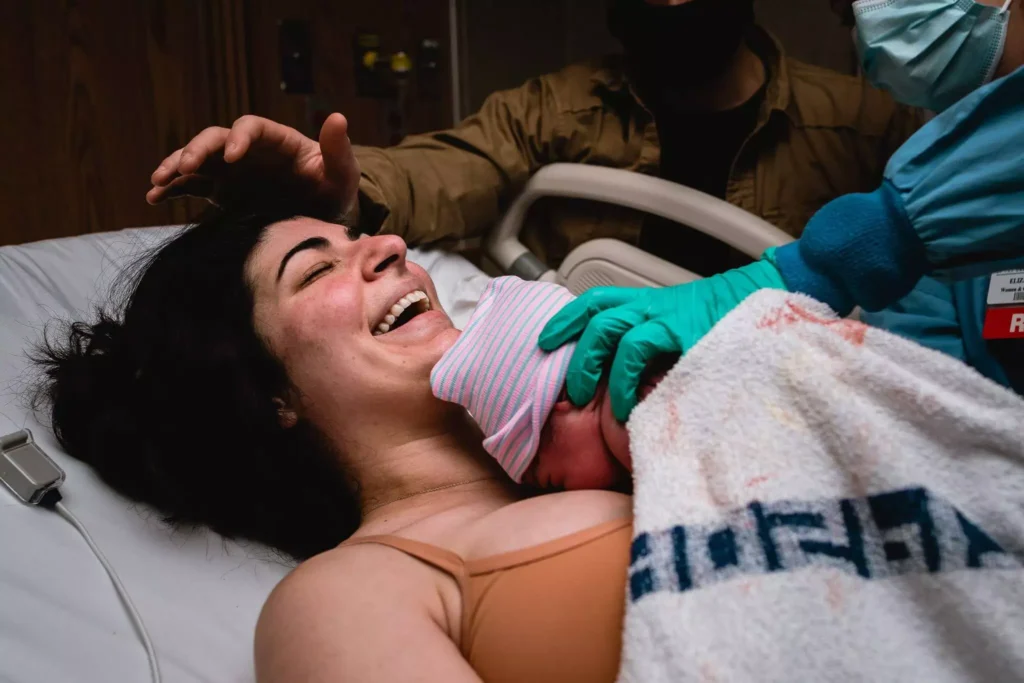

Learn the science of pregnancy and birth to take the mystery of labor away! Understand why you are feeling what you feel, and learn strategies to confidently move through pregnancy and birth!
- 9h+ of Video
- Support Group
- Close Captioning

- 5 Workouts/Week
- Gym Workouts
- Self-Paced

Instructor
GINA
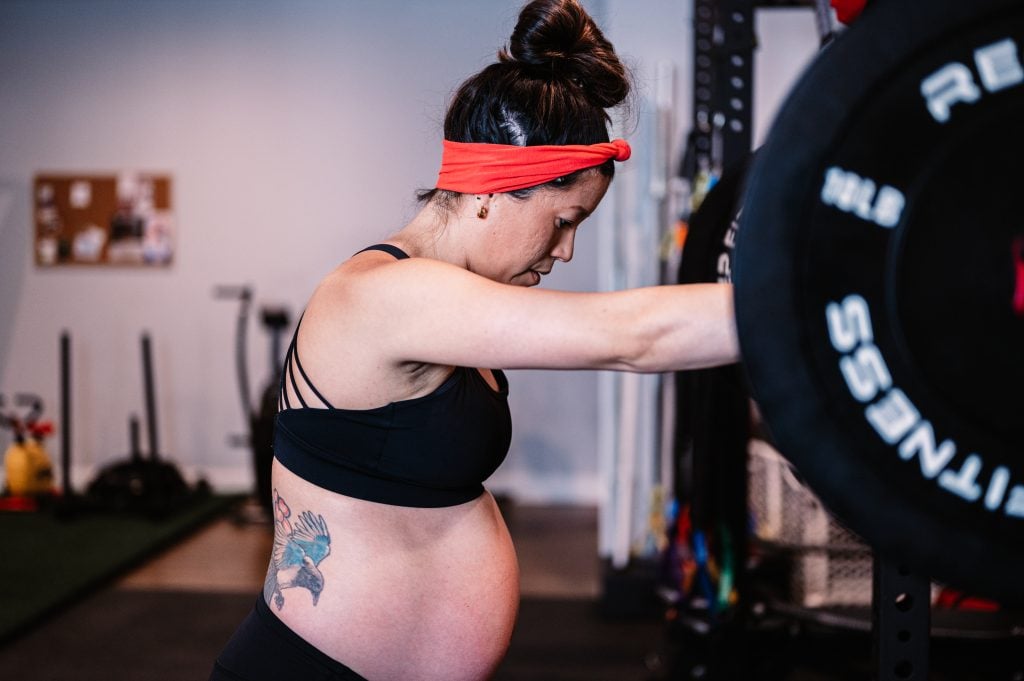
Workout on-demand with our prenatal fitness workout videos! Each workout is 30-40 minutes to follow along as you exercise at the same time!
- Birth Prep
- All Trimesters
- Mobility Work

Instructor
GINA
Find comfort and relief from pelvic girdle pain throughout your pregnancy and postpartum period! This program incorporates myofascial sling focused exercises to stabilize across the pelvic girdle joints.
- 3 Weeks
- On Demand Workout Videos to Follow