



Welcome to the MamasteFit Podcast Birth Story Fridays! In this episode, Roxanne welcomes Sam, who shares her personal journey of her two birth experiences. Sam’s first birth was a challenging C-section following an induction due to high blood pressure, which led her to seek a different path for her second pregnancy. Determined to have a VBAC, Sam finds a supportive provider and prepares extensively through prenatal courses, pelvic floor exercises, and Hypnobirthing. Despite facing another induction for preeclampsia, Sam successfully delivers her baby vaginally. Her story emphasizes the significance of having a supportive medical team and the importance of preparation and advocacy in achieving a desired birth experience.
Read Episode Transcript
[00:00:00] Roxanne: Welcome to the MamasteFit Podcast. On this episode, we have Sam here to share her two birth stories. Her first one was a C section after an induction for high blood pressure that arose during her pregnancy. And with her second, she sought out a supportive provider to have a vaginal birth after Cesarean, even though she had to be induced for preeclampsia.
[00:01:07] Roxanne: Welcome to the MamasteFit Podcast, Birth Story Fridays. On this episode, we have Sam here to share her two birth stories. Her first was a C section after an induction, and then her second was a VBAC, also after an induction.
[00:01:18] Roxanne: Thank you so much for being here, Sam.
[00:01:20] Sam: Thank you for having me. Of course. I’m happy to be here.
[00:01:26] Roxanne: So let’s just dive right in! Do you want to share how you prepare for pregnancy and birth with your first pregnancy?
[00:01:32] Sam: My first pregnancy was pretty uneventful. I definitely tried to prepare as much as I could. It was COVID, so there were a lot of virtual birth courses popping up. Everything was new, right? A lot of new prenatal workout programs. And my friend, she was doing a, what was called a Prenatal Pilates and Push Prep Course, which is what kind of made me change my mindset and really start focusing on my core and pelvic floor and all of that stuff during the pregnancy.
[00:02:09] Sam: I definitely tried to prepare, once we get into the actual labor we’ll see how that went off course. But I did try!
[00:02:20] Roxanne: Yes! I love that.
[00:02:21] Sam: As I said, so I kind of went down this rabbit hole of learning about the pelvic floor and its relation to being pregnant and in labor, and I hadn’t really heard much about it, so that is what kind of shaped how I did things during my pregnancy, or, tried to.
[00:02:41] Sam: My pregnancy was relatively uneventful. The one thing that I had throughout the pregnancy was elevated blood pressure, but I really think it was mainly “white coat syndrome,” because, I was monitoring it at home and everything was normal and fine, but every appointment I went in and my blood pressure was elevated. They sent me to triage, actually, two times- one pretty early on as well for the blood pressure monitoring. But as soon as I got there and I laid down and relaxed, everything went back to normal. Everything was fine, nothing was problematic with my labs or anything like that.
[00:03:19] Sam: But it did start to creep up in the end, even at home. I don’t remember what it was exactly, like how high, but it started to creep up. And so at my 38 week appointment, it was elevated again, of course, and my OB wanted to induce me within the next 48 hours, or whatever she said.
[00:03:42] Sam: She kind of said, “You could just go right now, if you wanted…” and I actually had a hair appointment the next day. So I was like, “If I can come tomorrow, I would like to get my hair cut, and then I will come in.” And she was totally fine with that, there was no issue!
[00:03:59] Roxanne: I know!
[00:04:01] Sam: We’d scheduled it for the next evening, and I took that day to try to digest everything that I had learned. So with the course that I took and the information from Instagram, and wherever I was getting it at the time, I really tried to just take that all in so that I could use it in the labor room.
[00:04:22] Sam: And I did originally want to doula, but because of COVID, only one support person was allowed in the room at the time and I chose my husband, what can I do? And we can only do so much, but we really just tried. I had him practicing hip squeezes the day that we were going to go in for the induction, and kind of reviewing everything that I thought would be helpful, but… I just was not prepared. I wasn’t prepared at all, and I ended up having a labor that was 40 hours total, and it ended with a C section.
[00:05:01] Sam: So, I really think it was kind of your typical cascade of intervention story, right? I think they started with the misoprostol, and I can’t remember if they did the Foley at the same time? Now I can’t even remember, but I did have both. So they started that around 9pm at night. And I just chilled overnight, couldn’t really sleep, but wasn’t really, I don’t think I was feeling much at that point. And the next afternoon, I was still only 4cm, so I really hadn’t progressed that much, at least according to what it seemed like the team wanted. It definitely seemed like they wanted things to move more quickly. And because they kept saying, “Okay, you’re only here…” and, “You were only here X amount of time ago…” so I definitely kind of had that rushing from them. And this is where, of course, would have loved a doula to jump in and help with the timing of things.
[00:06:09] Sam: But, they broke my water at that point and that is really when the pain increased, but I was totally fine before! I didn’t really have any strategies for pain. Now, in hindsight, I really didn’t have any. But I was totally fine up until that point. Then the pain increased with the water breaking, and I had no pain management techniques at all. And so I had kind of hoped to get as far as I could without an epidural, but at that point it was pretty much, “Nope, need the epidural. There’s nothing else I can do here.” So that was about 24 hours in, got the epidural. And I also had, while I was waiting for the epidural, they gave me some fentanyl, like the IV meds, which, I think they can only give you three rounds, and that’s the maximum, and the first one was really the only one that actually did anything. And then the second and third were really just… no, nothing happened. It definitely made me relaxed, but, it was very short lived. So, there goes another night. I was able to rest with the epidural, at least not have any pain, couldn’t really sleep.
[00:07:33] Sam: But, I had nobody helping me change position or making any recommendations. And I knew from what I had learned and seen that I should be doing something different. I should be changing position. I should be moving
around. I didn’t know how, and I didn’t know what to do, or how often, or any of that, and they weren’t telling me to do it either. So I was kind of just taking a backseat in my own labor, honestly. And the baby, also, she was not tolerating the Pitocin at all. I think they got up to, I don’t know what the measurement is, but level 2. It couldn’t get any farther than that. Every time they increased it just one or to two, her heart rate would drop. That wasn’t helping anything.
[00:08:25] Sam: And, I did ultimately get to 10 centimeters, fully effaced, and I pushed for a few hours. A couple hours into pushing, I find out she’s sunny side up- would have been nice to have known that at some point earlier on- and she got stuck. And actually when she came out, she did have a bump on her head, you could tell that’s exactly where her head was kind of lodged in my pelvis somewhere, and where she was hitting.
[00:08:59] Sam: So she wasn’t descending at that point, couldn’t tolerate the Pitocin, and we did agree to move forward with the C section. And I just remember the doctor coming in, and she sat down at the foot of the bed, and I remember the quote so clearly because she says, “Okay, I think you’re done.” And my husband laughs at that too, because he had no idea what she even meant. He’s like, “What do you mean ‘You’re done’? What are you talking about?!” And she obviously meant, “All right, you’re done pushing. Let’s move to a C section.”
[00:09:35] Sam: And I actually reviewed the footage- so my husband was able to record it- so I did review the footage with my doula for the second birth. And she kind of commented on how it took a little bit of stimulation to get her to breathe in the beginning. And the cord was white when they did end up taking her out. So I do think that at that point, the C section was necessary. With everything going on, it was necessary when it happened. But, I couldn’t help but feel that it could have been a vaginal delivery if things during labor had gone differently. It was necessary when it happened, but I didn’t think that it needed to be. She wasn’t a big baby, she was six pounds, didn’t have a big head, so I was like, “This could have happened in different circumstances.”
[00:10:29] Sam: And you know, I think I was just… plenty of people get induced and go on to have vaginal deliveries, and don’t have issues, and nothing happened, everything was fine! They broke their water and everything was okay, or, they had an epidural and everything was fine, and I just, I was one of the unlucky ones, who got induced and things just went off track.
[00:10:55] Sam: Aside from me getting these crazy uncontrollable shakes on the operating table- which they tell me is normal, but aside from that- really the C-section went, well. My husband recorded it. I could watch it, which I really liked, and, my recovery was smooth. I only needed, whatever they give,
acetaminophen and ibuprofen for pain meds, nothing stronger. And I healed really nicely, very happy to this day with my scar and the way things healed. I got back to walking and working out in a really reasonable time frame. I don’t have trauma from it. Which is great. I know that there is definite risk, for people to have that from C sections.
[00:11:38] Sam: But, it was still major abdominal surgery, still difficult, still painful. And I just knew from super early on, I knew in the moment, that if I wanted to have another baby, or if I did have another, that I wanted to avoid a repeat C section, if I could- especially to then do that recovery with a toddler or another child running around! And I also wanted things to go differently in labor. I wanted to feel more in control and know what was happening and why things were being suggested, and do things a little bit more my way, feel less pressured.
[00:12:17] Sam: And, there was one specific comment that I remember, that I kind of have held on to when the OB was reviewing my birth preferences. It wasn’t the OB that I saw during my pregnancy, but it was the OB who was on call from that practice, and I hadn’t met her before. And it’s not who I reviewed my preferences with prior to the labor. And I had written something about not holding my breath while pushing, or open glottis pushing, something along those lines, and she says, “How else do you push a baby out?” I didn’t push back on her at the time, or say anything, it just didn’t sit well with me. And she had this attitude kind of every time she was in the room that there was no other way to do things aside from how she wanted to do things. And that wasn’t great. It just wasn’t a great environment to be in for me when I know there are alternatives to most things, whether or not it’s that I can wait a little bit, or whatever it might be, but I just never really felt like there were any other options.
[00:13:30] Roxanne: Yeah.
[00:13:31] Sam: I just wanted things to be different. And I asked, at my six week appointment, if I would be a VBAC candidate, just so I would know, then I didn’t have to worry about it. I could just know from then that yes, I was, and great. Moving on. So that was my first story.
[00:13:50] Roxanne: Yeah! And how was postpartum after the first?
[00:13:54] Sam: It was fine. I felt like myself pretty quickly afterwards and was able to get back to normal activity pretty quickly and felt like everything recovered really nicely and didn’t have any feeding issues, or issues like that. So it was, great, right? It was totally fine. It was hard, but nothing that stood out that was something that I absolutely didn’t want to experience again.
[00:14:30] Roxanne: Alright, so then let’s get into preparing for the next pregnancy and birth.
[00:14:38] Sam: I did things a lot differently with the second. I was interviewing doulas even before I had a provider. And obviously I knew I wanted a VBAC, so everything was just around that conversation and how I could be best prepared.
[00:14:56] Sam: And I had moved a week prior to finding out that I was pregnant. So moved states.
[00:15:02] Roxanne: Oh!
[00:15:03] Sam: And I would have gotten a new provider, I think, anyways, even if I hadn’t moved. But obviously, just new environment, everything was different. It was back home to where I grew up, but hadn’t lived there, or, here, in quite some time.
[00:15:21] Sam: So I needed a new provider. And I just, I did all of the things to prepare my mind and my body. I wanted to try unmedicated again, and knew I had no strategy before so things needed to be different. And also, I wanted my body to be prepared, especially since she did get stuck, and being able to navigate that differently. I did acupuncture. I did chiropractic. I listen to every single one of your birth podcasts, birth story podcasts, which is why I wanted to come on here because they really helped me very much.
[00:16:00] Sam: I continued to do prenatal exercises, which I did before, but another thing that I really took from your content was all of the mobility and stretching, which I really didn’t focus on with my first. It was really just, I’m doing exercises that are safe for pregnancy, I’m following a program, but I didn’t do much of the mobility. And I really tried to do that every single day, and it helped so much- just how I felt with it during the pregnancy, but I know that it helped during labor as well. I just could feel a difference. And I took a Hypnobirthing class. I did tons of breathing exercises. I did it all! You name it, I did it all.
[00:16:43] Roxanne: Yeah!
[00:16:44] Sam: And, when choosing a provider, you can’t interview OBs, you can’t just call them up and say, “Can I talk to you about me wanting a VBAC and how you’d handle that?” And I knew that for the first appointment or two appointments, it didn’t really matter where I went to, I just needed to confirm the pregnancy, get some blood tests, it’s not gonna be very different.
[00:17:11] Sam: And so I went to a friend’s OB and brought up wanting to have a VBAC to have that conversation. And it was really clear that she would “allow” me to try, but no confidence. Not supportive. And I could, tell from the beginning that- and I’ve heard a lot of these stories as well- where providers will say they’ll let them try and then they’ll do a complete switch when it’s the last couple of weeks of pregnancy and say, “Nope, it’s a C section,” and I didn’t want to get into that situation. I just knew that wasn’t a good fit.
[00:17:49] Sam: And I spoke to one other OB, and I did have the opportunity to speak to one on the phone and kind of interview her because she knew my sister. It was a better conversation, but it was still really evident that she didn’t think it would happen. Which, why do I want to work with a provider who just, is essentially telling me like, “Yeah, you can try, we’re gonna end up with a C section anyways.” And with kind of both of those OBs, when I explained what happened with my first, their response was that was kind of their least favorite circumstance for a VBAC candidate, because I pushed and she didn’t come out. So kind of insinuating that something about my body wouldn’t allow a vaginal birth, rather than if the situation were different, I could do it. They kind of said, “If you had a planned C section, and now you wanted to try, okay, we would let you.” They also both wanted to give me an “early epidural”, is what they called it, and I was like, “Well, I would like to get as far as I can without one.” So there were just a lot of conflicting opinions and thoughts about how we would have wanted the labor to go, so I knew that if we were in the situation, I would have a lot of pressure to do some of those things, even if I was saying I didn’t want that.
[00:19:15] Roxanne: Yeah.
[00:19:15] Sam: And I switched to a midwifery practice that operates out of the hospital, which made me feel really comfortable, because their philosophy aligns so much more with mine, but I was still in a hospital in case something happened and that just made me personally feel very comfortable about that situation.
[00:19:37] Roxanne: Okay.
[00:19:37] Sam: And truly everything was different with the midwives. Like, I have an app for scheduling appointments, and I don’t know, I don’t know if this is a bug or if this is supposed to happen, but at some point I could see the length of time- because I’ll get into how many times I switched providers- but, I could see the length of time that my appointments were scheduled for, for the midwives versus the OBs. And the midwives, I had a 45 minute time slot, and with the OBs I had a 10 minute time slot. I could tell, it was scheduled in the app, that’s how much time I had. And, I know it’s not an individual provider
thing, I know there’s a lot with the system that can be improved, but you can feel it when you’re in the appointments and you don’t feel rushed, and you can ask the questions and they’re not running to the next patient. And so everything was just really different.
[00:20:37] Sam: My first appointment was an hour long! We talked about everything with the VBAC. And alternatively, when we discussed what happened with my first, her reaction was like, “Yeah, we have similar situations all the time. And this practice’s VBAC success rate, Cesarean rate, unmedicated rate….”
[00:21:01] Roxanne: Oh, I love it!
[00:21:01] Sam: They were all so great. And so I knew that it was the right decision. And, they were like, “Yeah, there’s really no indication that you can’t have a vaginal birth. Absolutely. Let’s do it.” So it was great, and it was a no brainer to choose to work with them.
[00:21:19] Sam: But then on my 20 week scan, I had my first hiccup, which is I had partial placenta previa. So at that point, I needed a C section, and had a couple more ultrasounds to monitor and at 28 weeks, it was still there. So because it was the third trimester, I qualified out of the midwifery care at that point.
[00:21:44] Roxanne: Oh, no!
[00:21:45] Sam: So, third provider switch at this stage! But, I could go back to them. They told me I could go back to them if it went away. And I knew that it still could, and just kept hoping that it would.
[00:21:59] Sam: And so I did end up going to the OB with whom I spoke on the phone, because she could perform a good C section. Everything else aside from how she felt about the VBAC was great, so I felt comfortable going there. And At 32 weeks the previa was gone, which was great.
[00:22:17] Roxanne: Oh, yay!
[00:22:19] Sam: Which was like, couldn’t this have happened a couple weeks earlier?! But I was very happy, of course. But, the baby’s growth percentage had dropped at that point so we were keeping an eye on that, and had to do another ultrasound at 36 weeks. But everything was fine, it was cleared. I think I just birthed small babies, but I guess, for whatever reason, he was higher percentile in the beginning, and I don’t know, who knows!
[00:22:47] Sam: And then, of course, and I had been monitoring my blood pressure this pregnancy as well, and everything had been great. It was also not elevated in the appointments either, except for one. So at my 36 week appointment, it was slightly elevated, still under the threshold for gestational hypertension. But because I had that one higher reading earlier on, they told me that basically the next time I had an elevated reading, they would recommend induction at 37, by 37 weeks, and my next appointment was 37 weeks.
[00:23:27] Sam: And I knew that my first elevated reading, I knew why I had it. I just had so many things happening in a row, and I was incredibly stressed, and there was a reason for that elevated blood pressure, but,
[00:23:44] Roxanne: Yeah.
[00:23:44] Sam: I didn’t have them retake it, and I didn’t do anything about it, because it was one time.
[00:23:50] Roxanne: And you thought you were fine!
[00:23:52] Sam: Exactly! And I thought I wanted to avoid the induction, you know, I definitely had it in my mind a little bit that’s what caused the C section. And I was able, later on, when I was induced, I was able to get it out of my head that that’s not what caused it, and that helped. But I think the entire pregnancy I was thinking, “I don’t want to get induced. I don’t want that process to happen again.” And so I was really trying to avoid that. But, I knew that it would be high. Going into my 37 week appointment, I’m so nervous, I know that it’s gonna be high. And it was. But I did ask to go to triage, and they sent me to triage, and again, it was totally normal at triage, nothing in my urine and my blood, and it was fine at home.
[00:24:43] Sam: I went home and the next night I just felt off. And I put my daughter to bed, I tried to relax and take a bath, and then I took my blood pressure and it was really high. And, so I called my sister to come over, and we went in. And I think I knew that… I didn’t know something was off, but I think I knew I was gonna end up going in, because I told my daughter, when I was putting her to bed, that it was possible that her aunt would be the one to get her in the morning. So I had an idea.
[00:25:17] Sam: And we get into the hospital and I unfortunately had preeclampsia. So that was what I was obviously trying to avoid. And because of the preeclampsia, technically I was no longer under the midwife’s care for the labor. So they did tell me they would be there to deliver the baby and they would kind of keep an eye on me, which was because they just knew that we
shared that philosophy, and this didn’t change my ability to be able to deliver the way that I wanted, it’s just that I needed to have the hospitalists actually watching over my…
[00:25:57] Roxanne: Yeah.
[00:25:58] Sam: My care, and everything.
[00:26:00] Roxanne: Yeah.
[00:26:01] Sam: So they gave me magnesium pretty quickly, which I reacted really well to. Like, honestly, in labor, I don’t even think I noticed it.
[00:26:10] Roxanne: Okay!
[00:26:10] Sam: Which was great, because I hear, you know, it can really impact people. But I was restricted to the bed, and I could move around on the bed, but I just couldn’t leave the bed. One of my pain management strategies was using the bath and/or the shower. So I was pretty disappointed that I did not have that option since I did want to try again without an epidural, and I knew that would have helped me. And so that was a big bummer for me. But I had other strategies. I was much more prepared.
[00:26:48] Sam: And they started the induction. So, just Pitocin this time, and they started at 10 at night. So I sent my doula home overnight. Didn’t feel much overnight. Oh, and I think they did check me. I think I was like literally zero, like nothing, when they checked me first. I’m… Did they? Yeah, I think so. I’m trying to remember if that happened. Am I making this up? But, obviously, of course, I couldn’t really sleep. But the first reassuring sign for me was that I got past that level two on the Pitocin. There were no heart rate issues this time, and that was reassuring because I’m thinking, “If things go the same way, I’m going to have the same outcome.” So I liked that and, I think they got all the way, in the end, or whatever, they got all the way up to I think 19, or something. Is the limit 21 or…?
[00:27:46] Roxanne: Twenty, usually.
[00:27:47] Sam: So, yeah, I think they got like up to 18 or 19. So, didn’t have any issues there.
[00:27:52] Sam: And I think around 6 a. m or so my water broke and that’s when things started to pick up and I had my doula come in. And I was actually needing to focus and breathe through the contractions and I was amazed at how well these breathing techniques, some of the mantras that I had for relaxing, and changing position, how they actually worked. I was amazed.
[00:28:21] Sam: But I started to get nervous that I had a long way to go and my first is kind of stuck in my head that I’m going to get stuck at three, four centimeters for 24 hours, and how can I go through this for 24 hours? That’s what’s running through my mind. So they did check me and I was at two, two to three centimeters. Oh no! And that’s all I could think of is, “I’m going to be doing this for hours and hours. I can’t. Like I can do it a little bit, but not that long.”
[00:28:58] Sam: So my doula did try to convince me to wait an hour and get checked again. She told me, she was like, “I’m really impressed at how calm you are and how well you’re handling the contractions, like I wouldn’t even know you were in pain,” and my husband said the same thing. And she said, “I expect a big change to happen soon,” whatever, based on whatever she was assessing with the situation.
[00:29:26] Sam: But fear took over, I got the epidural, but I had zero relief. Nothing happened. And so they’re like, “Okay, let’s check again.” And I was 10 centimeters and 100% effaced- and this was no more than an hour after that first check. And so I kind of say, even though I got the epidural, I made it to 10 centimeters unmedicated, because that’s what I did!
[00:29:53] Roxanne: Yes, you did!
[00:29:55] Sam: And my doula was completely right. If you’re listening, you know who you are! And I told her that after, “Yeah, she, she knew!” That’s why I hired her, but we should have listened to her!
[00:30:08] Sam: And, the nurse was shocked also. She said, “If I wasn’t the one to check you, I wouldn’t have believed. I wouldn’t have believed you were at two, and now you’re where you are.” So that happened very, quickly. And they didn’t even put the catheter in, because they were like, “You’re gonna be out of here soon, we don’t need to do this!” but I did have them turn up the epidural, which in hindsight, I wish I hadn’t done, or at least hadn’t have them turn up so much because then it was harder to connect to the feeling of pushing.
[00:30:42] Sam: And so it took a little bit of time, it wasn’t a couple of pushes. But I was able to be on my hands and knees and side lying. And ultimately they brought a mirror, which actually helped so much to connect to my body and push him out. And I had a small internal tear, but I did it. And I sent a text to, or, we sent a text to my family, and it was of my husband catching the baby-nothing graphic, but you can see my sock, my foot, and I had a compression sock on, so everyone was making fun of that picture for that reason- but I had sent them that picture, so it was obvious that it was a vaginal birth, it wasn’t a C section, and my dad responded, “You did it your way.” and I’m like, yes! Why should I do it someone else’s way? I wanted to do it. That’s exactly right! I knew I could do it, I knew that I could with the right support, the right team.
[00:31:48] Sam: And, one thing with the recovery, right when I stood up to move, just from the bed to the wheelchair for them to wheel me into the recovery room, and I guess my body was holding some feeling, cause I was expecting the feeling of standing up after a C section, which is essentially: your insides are gonna fall out.
[00:32:10] Roxanne: Yeah.
[00:32:11] Sam: And, I stand up and I’m like, “Oh!” Obviously that’s not what I’m gonna feel, but I just, I hadn’t really made the connection. And it was just so interesting that I’m bracing for this feeling, and I stand up and I’m like, “Oh!”
[00:32:26] Roxanne: And you didn’t have it.
[00:32:28] Sam: That’s not what that feels like! This is so much different. This is great!
[00:32:31] Sam: And then I felt the magnesium for the next 24 hours, until they could turn it off. I was very…
[00:32:40] Roxanne: Just sleepy.
[00:32:42] Sam: Yeah, heavy. Even talking, I kind of just felt like I was not able to open my eyes, not able to open my mouth very much, slurring a little bit. But once they turned that off and that wore off, recovery was just so drastically different. I really wouldn’t even consider what I had was even pain. I was swollen, but I wasn’t in pain. It was just so different. And, I’m so happy that I listened to what I wanted and trusted, that I could do it, and trusted my doula and the midwives, and everything. And it was very validating. I felt really validated that I had that vaginal birth and what some people had told me prior just was made up.
[00:33:35] Sam: And, so that was, yeah, that was the second one!
[00:33:43] Roxanne: I love that going into it, like you were saying, you were afraid of that induction, though, and you almost attribute your first birth to having to go in and get that induction. And then when you had that feeling that you were going to get induced with that second one, like those fears, they come back up, even if you’re not having any sort of issues or traumas associated, they can still just creep back up and create this doubt. But you were able to kind of like still work through it and be like, “No, I’m not going to have that experience again,” like, “I am an active participant in my birth and I can change and do different things.” Even if it may be still would have ended up in a C section, like you would have been able to still have made decisions along the way to have a different experience for like yourself, and I think that’s so empowering just by itself.
[00:34:38] Sam: Yeah. And I spoke to a friend who actually had a C section for her first and tried for a VBAC, but ended up ultimately having a repeat C section. And I spoke to her the day that I ended up going in for the second induction, and I asked her, “Was it still worth trying?” Would she still have done that again? And she said, “Yes,” and that was helpful.
[00:35:07] Sam: And even though I think in my head, I had never really said it out loud that I was worried that an induction would lead to another C section, but I think I just, I was thinking it. And she actually asked me, “Do you think the induction is what caused the C section?” and then when I really thought about it, I said, “Actually no, I don’t think that’s what it is.” Everything that happened was… it was a factor, but it’s not what caused it. And that helped me as well going into the second induction.
[00:35:40] Roxanne: Exactly.
[00:35:41] Sam: That’s not it. It was aa small factor, but actually, it can go a different way. And so that conversation was super helpful.
[00:35:50] Roxanne: That’s awesome. And I think having someone that you can talk to about those things during pregnancy can be so beneficial. So if anybody else is like out there in the interwebs, having some sort of thing, having somebody to feel safe to ask these questions, and just express your feelings to, can be so beneficial like in prep for pregnancy and birth.
[00:36:13] Roxanne: So how was your postpartum experience with this birth compared to your first? Obviously you had a toddler running around.
[00:36:22] Sam: Yeah.
[00:36:23] Roxanne: So, that obstacle. But, like, just recovery wise.
[00:36:27] Sam: Yeah, recovery wise, yeah, really night and day. Yeah, I’m running after a toddler, but it didn’t feel like a problem to have to have a toddler to run after. It didn’t feel like a struggle, and it didn’t feel like I was pushing through pain or anything like that. It was really manageable, and it was great, yeah. It was so different.
[00:36:59] Sam: It was so different, and, now that I’ve had both, absolutely, I’m going to choose a vaginal birth to a C section. There’s no comparison, at least for me, with the experiences and how they felt afterwards. It’s just so different.
[00:37:16] Sam: And, and I do want to comment on what you just said about having someone to talk to. And I think, everyone had something to say about me wanting to try for a vaginal birth after a C section, or wanting to try unmedicated. Everyone had something to say.
[00:37:34] Roxanne: Everyone has an opinion.
[00:37:35] Sam: Yeah, and most of them are negative, and it’s really important to find those people who are supportive, and don’t have something to say, or have positive things to say.
[00:37:51] Roxanne: Yes!
[00:37:51] Sam: And to tune everything out. I had to, at some point I just, stopped telling people because I didn’t want to deal with having to explain myself, or having to deal with these, you know, negative comments. So I do it’s real important to have, even if it’s just one person. And I had a couple people who I could speak to which was super helpful. But that’s very important, absolutely.
[00:38:19] Roxanne: So if there was one piece of advice for someone who is potentially going through the same situation as you, where they had a C section the first time and they’re navigating a second pregnancy and they’re wanting a VBAC, what type of advice would you give them? Or if you could, give advice to your past self, what is your token of advice that you would give someone?
[00:38:38] Sam: Well for my past self would be: get a doula for the first! But…
[00:38:45] Roxanne: Doula, get a doula.
[00:38:46] Sam: Yes. I also know that my advice definitely would be get a doula, but, I know that’s not feasible for everybody. And so I do think it is having a provider that is supportive, and I’ve heard so many people on your podcast as well with, this same advice, and I just don’t think you can say it enough though, that having a provider who is going to be supportive of your decisions and allow you to make those decisions. Obviously they’re not going… if I had needed another C section, I would have gotten another C section. And I was never trying to harm myself, or my baby, or anything like that. It was just, I knew that I could do this safely. And having people there to support you through that who have been in similar situations was super helpful and is definitely the advice that I would give.
[00:39:52] Sam: And honestly, I think the second thing is the mobility. Honestly, like mobility and breathing exercises. You really do got to practice them though, you can’t just think you’re gonna be okay in labor. You got to practice them. And I stood with like ice cubes in my hands over the sink practicing the breathing exercises and I think that, you know, knowing what’s going to help you kind of push through is very helpful. Definitely worth it.
[00:40:25] Roxanne: Yes. Yes. I love that. Both of those little nuggets of advice, they’re both really great.
[00:40:30] Roxanne: But thank you so much, Sam, for coming on to the podcast and sharing both of your birth stories, as well as your advice. And I’m so glad that we could have been like a little tiny portion of your birth prep with your VBAC.
[00:40:42] Sam: Yes. Thanks for having me. I’d argue that while small, it was still very influential, so, definitely appreciate it.
[00:40:50] Roxanne: Of course!
[00:41:17] Roxanne: Thank you so much for listening to Sam’s two birth stories. I really loved her birth stories because it just highlights the importance of finding a very supportive provider. We share about this a lot on the birth story podcast, but finding a supportive provider, not just for a VBAC, but also just pregnancy and birth in general can really have such a huge impact on how our births go.
[00:41:38] Roxanne: I was really intentional on finding different providers during all of my pregnancies and with all of my births. It was a different experience because every provider is slightly different. I always felt supported by all of the midwives that I chose for all of my pregnancies, though, and I think that made such a big impact on the experience that I was able to have.
[00:41:59] Roxanne: So finding a supportive birth provider cannot be emphasized enough to be able to have a different type of birth experience that you’re wanting- whether or not it ends in a vaginal birth or C section, that may not have that big of an impact, but how you feel during that experience by having a supportive provider can be different.
[00:42:19] Roxanne: If you enjoyed this episode, please like and subscribe to our podcast, so you can be notified whenever we release new episodes. We have educational episodes every Wednesday, and birth stories every other Friday.
Prenatal Support Courses
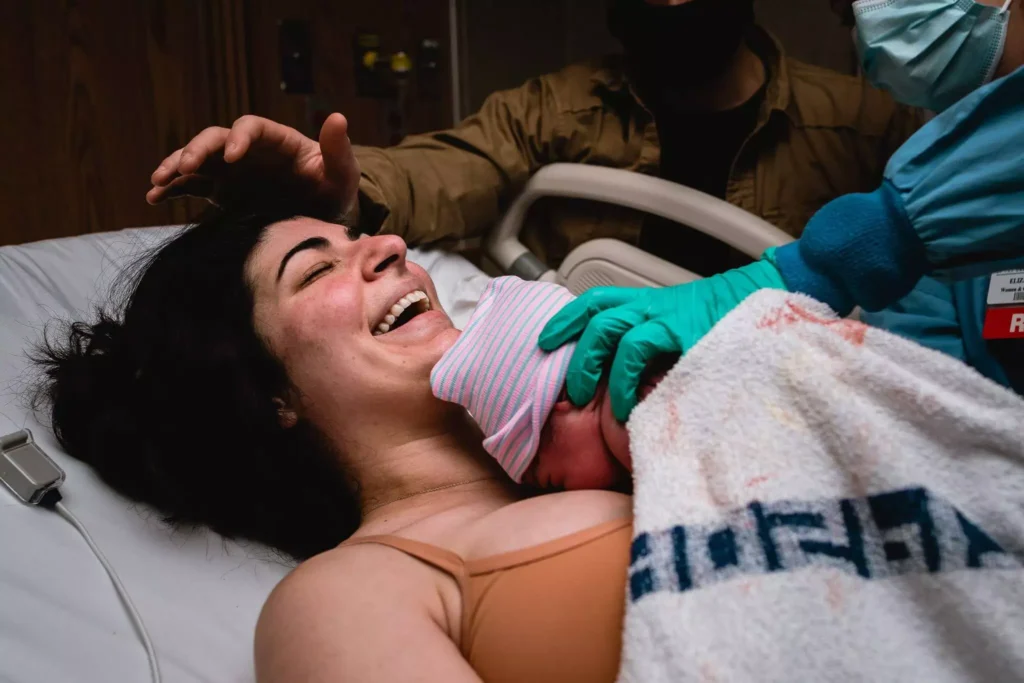

Learn the science of pregnancy and birth to take the mystery of labor away! Understand why you are feeling what you feel, and learn strategies to confidently move through pregnancy and birth!
- 9h+ of Video
- Support Group
- Close Captioning
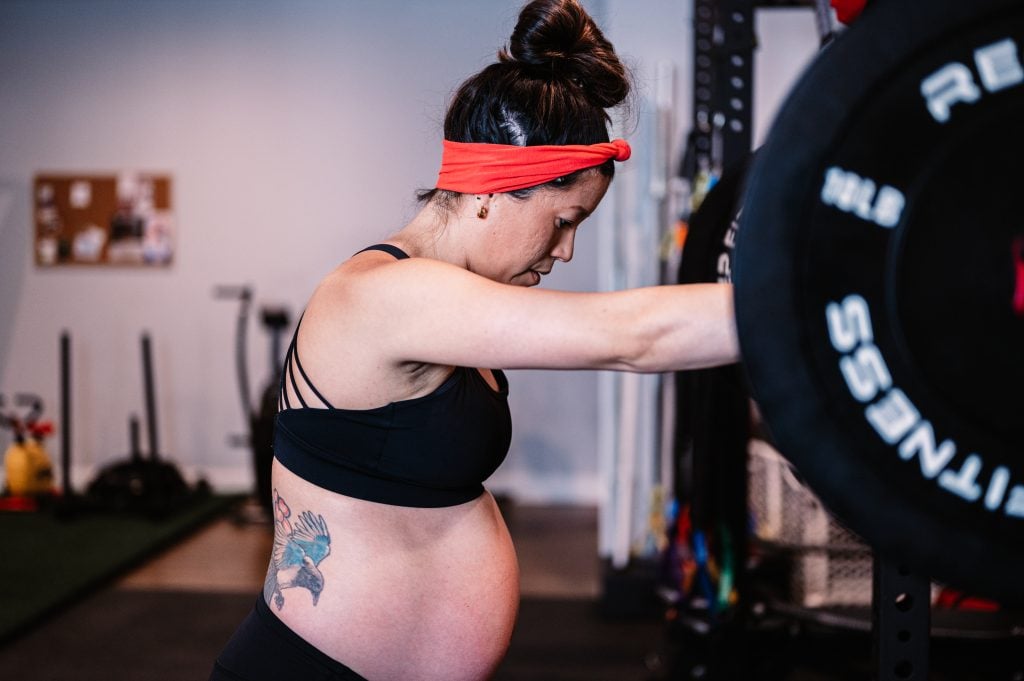

- 5 Workouts/Week
- Gym Workouts
- Self-Paced

Instructor
GINA
Workout on-demand with our prenatal fitness workout videos! Each workout is 30-40 minutes to follow along as you exercise at the same time!
- Birth Prep
- All Trimesters
- Mobility Work

Instructor
GINA
Find comfort and relief from pelvic girdle pain throughout your pregnancy and postpartum period! This program incorporates myofascial sling focused exercises to stabilize across the pelvic girdle joints.
- 3 Weeks
- On Demand Workout Videos to Follow