TRAINING FOR TWO

Move Confidently in Pregnancy!

NEW COURSE! ‎ ‎ ‎ ‎ ‎‎ ‎ ‎ ‎ ‎ ‎ ‎ ‎ ◆ ‎ ‎ ‎ ‎ ‎‎ ‎ ‎ ‎ ‎ ‎ ‎ ‎ Pelvic Biomechanics ‎ ‎ ‎ ‎ ‎‎ ‎ ‎ ‎ ‎ ‎ ‎ ‎ ◆ ‎ ‎ ‎ ‎ ‎‎ ‎ ‎ ‎ ‎ ‎ ‎ ‎ for Pregnancy and Birth. ‎ ‎ ‎ ‎ ‎‎ ‎ ‎ ‎ ‎ ‎ ‎ ‎ ◆ ‎ ‎ ‎ ‎ ‎‎ ‎ ‎ ‎ ‎ ‎ ‎ ‎ NEW COURSE! ‎ ‎ ‎ ‎ ‎‎ ‎ ‎ ‎ ‎ ‎ ‎ ‎ ◆ ‎ ‎ ‎ ‎ ‎‎ ‎ ‎ ‎ ‎ ‎ ‎ ‎ Pelvic Biomechanics ‎ ‎ ‎ ‎ ‎‎ ‎ ‎ ‎ ‎ ‎ ‎ ‎ ◆ ‎ ‎ ‎ ‎ ‎‎ ‎ ‎ ‎ ‎ ‎ ‎ ‎ for Pregnancy and Birth. ‎ ‎ ‎ ‎ ‎‎ ‎ ‎ ‎ ‎ ‎ ‎ ‎ ◆ ‎ ‎ ‎ ‎ ‎‎ ‎ ‎ ‎ ‎ ‎ ‎ ‎ NEW COURSE! ‎ ‎ ‎ ‎ ‎‎ ‎ ‎ ‎ ‎ ‎ ‎ ‎ ◆ ‎ ‎ ‎ ‎ ‎‎ ‎ ‎ ‎ ‎ ‎ ‎ ‎ Pelvic Biomechanics ‎ ‎ ‎ ‎ ‎‎ ‎ ‎ ‎ ‎ ‎ ‎ ‎ ◆ ‎ ‎ ‎ ‎ ‎‎ ‎ ‎ ‎ ‎ ‎ ‎ ‎ for Pregnancy and Birth. ‎ ‎ ‎ ‎ ‎‎ ‎ ‎ ‎ ‎ ‎ ‎ ‎ ‎◆ ‎ ‎ ‎ ‎ ‎‎ ‎ ‎ ‎ ‎ ‎ ‎ ‎
Written by

Gina Conley, MS

The Busy Mom Full Body Mobility & Strength Workout

Welcome to the MamasteFit Blog! Being a busy mom means juggling multiple responsibilities, and finding time for yourself can be a challenge. That’s why today we’re sharing a full-body workout designed for busy, tired parents. This workout blends mobility work with strength-building exercises, all designed to fit into your hectic schedule. In just 18 minutes—with only a yoga block as your prop—you can unlock a series of movements tailored to enhance thoracic and hip mobility, increase pelvic stability, and build strength for everyday movements. Let’s dive into the details!

Subscribe to our YouTube Channel for more weekly workouts and educational videos!  We publish one new workout video and 2-3 educational videos a week on our channel.

Why This Workout Works

We understand that long workouts can be tough when your schedule is packed, especially during sleep regressions or unpredictable days with little downtime. This routine is designed to be time-efficient, hitting multiple areas, with minimal equipment:

  • Mobility and Stretching: It targets the thoracic spine and hips, areas that often accumulate tension.

  • Strength Building: Incorporates dynamic squats, lunges, and hinged movements to support functional strength.

  • Pelvic Stability: Special hip-shifting exercises aim to relieve pelvic discomfort—a common issue for moms.

By incorporating these exercises, you’re not just enhancing your physical fitness but also building resilience and easing daily activities like lifting, squatting, or even playing with your little ones. Grab your yoga block and let’s get started!

Warm-Up & Deep Squat with a Yoga Block

Getting Started:
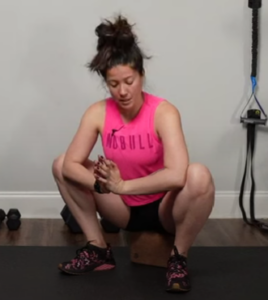
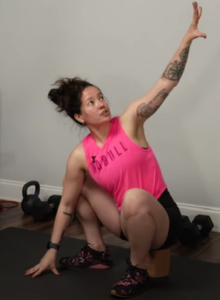
Begin by grabbing your yoga block. If you have limited ankle mobility, placing a supportive prop under your heels can be a game changer. Start in a deep squat position, positioning the block under your feet if needed for extra support.

The Movement:

  • Deep Squat with Knee Spread: As you settle into the squat, spread your knees apart. This not only opens up your hips but also sets the stage for the upcoming thoracic rotations.

  • Thoracic Rotations: Spend about 30 seconds on each side. With one hand on the block, rotate your upper body, reaching up toward the ceiling to unlock the movement in your thoracic spine. This rotation helps increase flexibility and prepares your upper body for more intense movements later.

Tip: Even if you’re feeling a bit stiff, allow your movements to be gentle and controlled. The goal is gradual improvement and consistent release of tension.
Kaitlin
Prenatal Fitness and Childbirth Ed Client
Went into spontaneous labor at 38 wks with baby #1 last night (born this morning) and was able to push through a very fast and intense labor (8 hrs active, 4 hrs of contractions with basically NO BREAK in between that got me from 1cm dilated to fully 😵‍💫) unmedicated! Pushed for an hr! I thank you both, your prenatal fitness program, and prepping pelvic floor fit birth for how much I rocked this delivery. THANK YOU!!!
Ronna
Prenatal Fitness and Childbirth Ed Client
I just wanted to leave a review for you, I took your prenatal bundle with the birth course, fitness app, and pelvic floor prep. I can't say enough good things about it, my only regret was not enrolling sooner! After having some nagging SI and pelvic pain, at 22 weeks I enrolled in your program and started the workouts on the app. After a few weeks,my pain was minimal except for the days I missed a workout or getting in movement. The birth course was very informative and I felt confident and excited about giving birth. While I did need to be induced at 39 weeks, I felt confident and understood my options. I had a great and speedy delivery with just a minor tear. I attribute this to the strategic movements I learned in the course throughout my labor and breathing during pushing, along with wonderful hospital staff. We were blessed with a healthy baby girl Ellie Jo. I look forward to using the fitness program again in the future and other courses you have! Thank you for all the time you put into creating such thorough content!
Lauren
Prenatal Fitness and Childbirth Ed Client
For what it's worth, I'm a PT myself (not a pelvic floor specialist), but am going to a PFPT. I also took a CEU course for my license and my own learning on pelvic floor health in pregnancy. With that background, I am utterly impressed with the content of your course so far. I was wondering if it'd be repetitive at all from the CEUs I recently took, but it hasn't been. It's so informative, thorough, and covers way more topics than I ever expected. Thank you!!

Dynamic Squat to Jump Sequence

Transition smoothly from the deep squat into air squats:

  • Air Squats (30 seconds): Keep the rhythm steady to warm up your leg muscles.

  • Jumping Air Squats (30 seconds): Add a little burst of energy by integrating a slight jump as you rise from the squat. This variation not only boosts your heart rate but also enhances muscle power—perfect for busy days when you need an extra boost.

The combination of mobility and strength work in this short burst serves as an effective primer for the rest of the workout.

Exploring the 90/90 Position for Hip Mobility

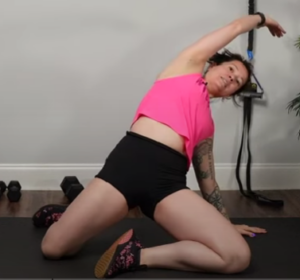
Next, come down to the floor and settle into a 90/90 position—a dynamic way to work on internal and external hip rotation while integrating lateral thoracic mobility.

Step-by-Step Instructions:

  1. 90/90 Setup:

    • Place your left leg in front with your knee bent at 90 degrees.

    • Position your right leg behind, also at 90 degrees.

  2. Side Body Opener:

    • Reach your left arm overhead across your body, which intensifies the stretch in the hip flexor and the side of your torso.

    • Alternate by switching the positions: windscreen wiper your legs and repeat the stretch on the opposite side.

  3. Benefits:

    • This position helps address imbalances in hip mobility by alternating between open and closed hip positions.

    • It is especially useful for moms recovering from childbirth or those experiencing pelvic discomfort due to daily stresses.

Remember: Use your hands to support yourself when transitioning between movements. The modifications in this routine make it accessible whether you’re at home or squeezing in a quick session before the next errand.

Finding the Open Hip Position & Side Body Opener

This section is designed to combat the “stickiness” often felt on one side of the hips (typically the right side) and to encourage a balanced, full range of motion.

How to Perform This Move:

  1. Establish Your Base:

    • Begin by positioning your foot so that it is perpendicular to your knee or shin. This forms a stable base as you start exploring your hip’s open position.

  2. Rocking into the Open Hip:

    • Slowly rock into the hip on your right side, intentionally easing into an open hip position.

    • This open position is particularly important if you favor an internally rotated stance—as it helps alleviate tightness and prepares you for a deeper stretch.

  3. Incorporate the Side Body Opener:

    • While maintaining the open hip position, reach your arm overhead. This creates a side body opener that stretches your lateral torso.

    • The simultaneous movement of reaching and opening the hip assists in releasing tension, not only from your hip flexors but also from the muscles along your side. It’s a coordinated effort that helps balance the body and improves mobility for activities like getting up from the floor.

  4. Transition into Strength Work:

    • After about 15 seconds in the open hip and side opener position, transition into a split squat. Lower your body so that your belly almost touches your thigh, then exhale to open up further in the hip.

    • This fluid movement continues with a reverse lunge and knee drive sequence to reinforce the hip’s range of motion while building strength.

Benefits:

  • Enhanced Mobility: The open hip position helps reduce stiffness, especially in the side that tends to stay more internally rotated.

  • Improved Balance: Coupling a side body opener with the hip movement promotes a more balanced stretch, which is essential for preventing injuries and optimizing performance during daily activities.

  • Functional Strength: Incorporating these stretches before strength moves helps prepare your muscles for exertion, increasing overall stability and control.

This extra focus on open hips and lateral opening is a crucial addition, ensuring that you not only gain flexibility but also build a solid foundation for more demanding movements later on.

Strength Moves: Reverse Lunges, Split Squats, and Knee Drives

Enhance your functional strength with a series of targeted moves:

  • Reverse Lunge with Knee Drive:

    • Step back with your right leg and drive your left knee up as you transition into a reverse lunge.

    • This exercise not only works your legs but also challenges your balance—key for stability in everyday activities.

  • Split Squats:

    • With your left foot forward and right foot back (and vice versa), lower yourself slowly so that your belly nearly touches your thigh.

    • Rotate your torso as you come up to intensify the engagement in your hip region.

  • Adding a Hop:

    • If you feel energized, add a slight hop to one of the reverse lunges or split squats. This moves your workout from a slow build-up into a burst of explosive strength.

These movements are designed to support the way you move daily, making tasks like getting up from the floor easier.

Targeting Pelvic Mobility with Hip Shifts

A standout component of this workout is the hip shift exercise. This move is crucial for pelvic mobility. You will first perform the pelvic tilts and hip shifts on the knees, then from a standing position:

Pelvic Tilts on the Yoga Block:

    • Begin with one knee on the yoga block and shift your weight into that knee, performing pelvic tilts.

    • The lower knee may lift off the floor slightly, without altering your overall body position.

Lateral Hip Shifts:

    • Spread your knees slightly and shift your weight from one hip to the other.

    • This is excellent for stretching the inner thighs and releasing tension in the pelvic floor.

    • For an added twist, extend your arms in coordination with the hip shifts to enhance upper body rotation.

These controlled shifts not only warm up the hip area but also strengthen the muscles that support everyday movements like walking up stairs—an essential benefit for moms on the move.

Finishing Strong: Heroes Pose and a Gentle Hinge Movement

Wrap up your routine with exercises that further integrate the work done earlier:

  • Heroes Pose:

    • Lower yourself into a supportive seated position with your knees together and hips resting on the yoga block.

    • This provides a deep internal rotation stretch for the hips.

  • Hinge Movement/Deadlift:

    • Place the yoga block between your thighs to serve as resistance.

    • With your feet parallel, hinge at the hips by pushing your hips back. Then, as you engage your glutes and hamstrings, bring your hips forward.

This final segment focuses on closing the workout by reinforcing hip mobility while also working the posterior chain—a crucial element for maintaining overall strength and posture.

Bringing It All Together

This routine offers a balanced blend of mobility, strength, and functional fitness that is ideal for busy moms. Here’s what you accomplished in just 18 minutes:

  • Thoracic Mobility: Incorporating rotations, flexion, extension, and lateral bending.

  • Hip Mobility: Achieved through deep squats, 90/90 positions, split squats, and hip shifts.

  • Strength & Stability: Enhanced by lunges, split squats, knee drives, and deadlifts.

These targeted exercises are not only beneficial for immediate physical relief but also build a foundation for long-term stability and ease in daily activities. If your schedule is packed and you struggle to find an hour for a full workout, remember that even short routines like this can make a significant difference over time.

Final Thoughts

The Busy Mom Workout is designed with you in mind—maximizing efficiency, accessibility, and effectiveness. Whether you’re managing sleep regressions, navigating a busy workday, or taking care of the family, incorporating these 18 minutes into your day can yield meaningful improvements in mobility and strength.

For more detailed workouts and in-depth fitness programs tailored to both prenatal and postpartum needs, be sure to check out our programs at MamasteFit. Embrace these moves to support your body through every stage of motherhood and reclaim that well-deserved “me time.”

Prenatal Support Courses