


Welcome to the MamasteFit Podcast! In this episode, Gina and Roxanne explore their own family spacing decisions and various birth control methods used between pregnancies. They share personal experiences, challenges faced, and the choices that influenced the age gaps between their children. The discussion covers methods of natural family planning, hormonal and non-hormonal birth control options, and offers insights into how these decisions have impacted their lives both as mothers and as fitness professionals. They also discuss the emotional and physical aspects of birth control and family planning, reflecting on experiences with different methods and their effects on the body.
Read Episode Transcript
Gina: Welcome to the MamasteFit Podcast. In this episode, Roxanne and I are going to be sharing our personal family spacing planning, why we chose the gaps that we have with our children, and what type of birth control we’re utilizing in between our children, so that you can learn from our own personal experience.
Welcome to the MamasteFit Podcast. We are going to be chatting all about our personal family spacing cause we get this question a lot, “When should I have my next kid? When should I start preparing for my next kid? What is the best gap in between your children?” Some folks are like, “I want them all as close together as possible,” some are like, “I want at least five years in between.” So we’re going to discuss our own personal family spacing that we did and what type of birth control were we using or not using, and yeah!
So I have four kids. My first two are three years apart, not by choice, that’s just kind of how it happened, and we’ll dive more into what that was like. And then every kid from there was about two years apart. So right around like the 18 month mark with each of my children, we started trying to conceive again. And fortunately for my subsequent kids, we didn’t have quite as much of an age gap, but that age gap ended up being kind of perfect for us with our first, even though it wasn’t my initial plan
Roxanne: And for me, so I have three kids, and between the two gaps are the exact same, actually, so around 16 months postpartum is when we would get pregnant again. And so my kids are 25 months apart, both of them, all of them.
Gina: You like to trend.
Roxanne: I am very much consistent. Not necessarily planned consistent, but I’m consistent.
Gina: Yeah, so I really like the spacing that I have in my family, obviously, they’re my children, I love them all. But so my first two were three years apart, and that was not my initial plan. I wanted them to be as close as possible, because I wanted them to be like really close in age because Roxanne and I are only about like 22 months apart and I was like, “She’s my BFF. I want my children to have their own BFF.” And so when my daughter was a year old is when we were like, “We’re going to get pregnant,” or I was like, “We’re going to get pregnant,” but I hadn’t quite gotten my period back yet. So I think that’s like a big thing that has kind of influenced family spacing for me is, when do I begin to ovulate again?
And so with her, I started ovulating around like 13 months but I had heard about trying to “catch the first egg” so that you never get a period. And so I was trying to do that, did not succeed. And we were trying and trying and I just kind of assumed it was going to be really easy because with her, we only tried for three cycles and we really only had three cycles cause my husband was like gone for one of them, so we really had two cycles. And so I just assumed it was going to be super quick again, and it was not. It took some time and it might’ve been because my body wasn’t ovulating yet, like I was having a period, but I wasn’t having like ovulation. And so it took a few months before we finally got pregnant, and then we ended up having two pregnancy losses while we were trying to conceive our son, and so that really kind of lengthened our timeframe. So we kind of had some secondary infertility, recurrent miscarriage, did some stuff with my provider to kind of figure out what might’ve been going on. I have a whole, we did a whole episode on my pregnancy loss story, so I won’t dive too deep into it, but it really kind of delayed the timing for us by almost a year. Like I was trying to conceive and then it wasn’t until 18 months later that we actually got pregnant with our son. And so I think that’s always something that I kind of keep in mind with like my subsequent kids is, “Hey, this might take us much longer than we’re anticipating, and so if we want four kids, we can’t wait for two years in between each kid cause what if it takes us like another year and a half to conceive?”
So my first two kids are three years apart and that ended up being a really nice age gap for us. So the transition from one to two was pretty smooth and I think it’s because my daughter was three and so she was really good at communicating back and forth, like she can tell us what she needed, we can ask her for help, she was really interested in her baby brother. Like she can conceptualize like what pregnancy meant and that there was a baby that was going to be born. And so that age gap was like really nice for us.
And then when it came to my son, or in between my son and my third child, or next daughter, I again was like, “Well, we might… there might be a little bit of a gap, like in when the next kid will actually be conceived.” And so because I had issues with recurrent miscarriage in between my first two, I was really deliberate on my preconception preparation. So we wanted to just start to try to conceive around like 18 months cause for me, I felt like that was the point, like within my own body that I felt like good, that I felt like really recovered, like myself again. Like I was able to be a little bit more challenged in the gym and I just felt healed, like, from birth and from pregnancy. And so it was around 18 months when we started trying to conceive our third child. But the six months prior to that, I was really focusing on okay, making sure my nutrition is good. Am I exercising doing preparatory exercises to kind of alleviate as much SI joint pain as I could? Taking any sort of like extra supplements to help with the conception phase, and then also working really closely with my provider because we had issues conceiving before. So I was doing a lot of blood work with my provider to check up my thyroid level, like seeing if I needed to start any sort of medication or could I control it with diet. And so very deliberate with the conception that time.
And then the same thing for the fourth. 18 months, I was like, “Okay. We’re going to start to try to conceive. Let me do my prep work with my provider.” I actually started medication this time in the preconception phase in preparation for pregnancy. And, it was a similar timeline. Like as soon as we started trying, like the same month, we got pregnant, which was kind of like shocking, where I was like, “Is this…. is everything okay? Like it was really quick!” And they’re both really smooth pregnancies, which I was really thankful for.
But yeah, so that was kind of like the initial gap that we had. Between one and two was about three years, which was not my plan, but I ended up really liking it. It was a really nice gap and it made that transition I think smoother for us because my daughter was a little bit older. And then from there they were just about two years apart. So between my son and my daughter, and then my third and my fourth, it was about just under, or just over, or just under two years. But I think having my older kids helping with the younger ones, that closer age gap felt much more manageable because my oldest was five when the third one was born, and my son was two and they were kind of working together. And then with our youngest born, my oldest is seven and then my son is four and then Sophie is two and the older ones kind of help with the transition as well. So those are kind of like my initial age gaps.
Roxanne: So how did you prevent pregnancy when you weren’t ready?
Gina: So because I’m tired all the time, we just do not have a lot of sex some days. So that’s the easiest way.
Roxanne: Absolutely.
Gina: Absolutely, 100 percent, it’s the easiest way to avoid pregnancy.
Roxanne: 100%.
Gina: But when we were trying to still be romantic with one another but avoid pregnancy, I was also tracking my cycle. So with my first, it was like 13 months before I started getting my period back. For subsequent babies, it was like five to eight months timeframe was kind of when I’d get it back. So I’m anticipating my period’s coming back soon with Zoe right now.
So once my period came back is when I would start tracking my cycle and I use like the Inito App, where you like pee on a little, well, I guess you don’t pee on the stick, you pee in a cup and then you dip the stick in it, and that kind of tracks your different hormone levels. And it also helps to confirm ovulation actually happened based on what hormones are increasing and decreasing. So I started using that to kind of track, okay, when am I ovulating? And the app even tells you like, “Do not touch your husband. This is a bad idea. Don’t. If you don’t want a baby, this is a bad idea,” kind of thing. And so I’ll use that to kind of help me track. And ultimately it’s like, well, if we get pregnant sooner than we’re planning, it’ll be okay. And so it’s a lot of like pullout method as well, which I don’t know what the percentage of success is.
Roxanne: Like 70 something.
Gina: You know, it’s not a great method. I track my cycles.
Roxanne: It’s not an effective method.
Gina: So I do family planning. What is it, the family planning method?
Roxanne: Natural family planning.
Gina: Natural family planning. I also am real big on checking my cervical mucus, which I don’t know if that’s TMI. I guess this whole episode is TMI. But yeah, I…
Roxanne: This goes into the natural family planning.
Gina: I find checking my mucus is like really helpful, because when it’s like that little egg whitey, I’m like, “Hmmm.”
Roxanne: Don’t touch me.
Gina: And I also can kind of tell when I’m about to ovulate because I am like, “This is the hottest man ever!”
Roxanne: Yeah, you do have to be like aware of that though, like aware of what ovulation does to you.
Gina: I’m like, how inconvenient is that?
Roxanne: And understanding the menstrual cycle and what hormones are being released at different points of your menstrual cycle can be helpful to know when ovulation is happening, because your body releases testosterone around the point of ovulation. Which, what does testosterone make you do? It makes you want to have sex.
Gina: So rude.
Roxanne: So that you make a baby.
Gina: I know. So that doesn’t really start hitting me to the year mark, because I think before the year, I’m just exhausted and my body is like, “You do not, you can’t, you do not have time.”
Roxanne: You can not afford, energy wise, to carry another baby.
Gina: So before that kind of like shifts around the year mark, it’s mostly just like tracking my cycle and pull out method. And then after that, it’s like also monitoring me. I also did not believe that I PMSed for the longest time, until this last postpartum, like not this one, like the previous one when I started getting my cycle back. I was just like so irrationally irritable and I just was like, “Oh my god, like this guy is breathing so heavy! Ah!” Like everything bothered me. And then one day I was just like, “Gina, you do PMS!
Roxanne: “Roxanne! Get away from the microphone, you’re breathing so loudly!”
Gina: I was like, “Oh, I guess I do experience that. Nevermind, guys. I’ve been lying.”
Roxanne: But it could just be, I mean, as you get older your hormones are different, especially prior to having babies, we used hormonal birth control like pretty much consistently had some sort of hormonal birth control. Estrogen makes you a little bit more emotional, and then progesterone as well makes you a little bit more emotional. So I definitely noticed huge differences in myself on different types of birth control, as well as not on birth control.
Gina: So let’s talk about your gaps and then let’s talk about birth control, because I felt very different off of it.
Roxanne: So I have three kids obviously, so I have two gaps, but before we got pregnant with our first, we knew we wanted to try to time it before my husband left for his deployment.
And so I had the Skyla IUD in. So we had our wedding celebration- we had been married for two years at this point, but we had our wedding celebration in June of that year. I got, we got back from our honeymoon at the end of June, and I went to work and was like, “Can you take this thing out?” After I had a consensual talk, like, we had a consensual talk about having babies. And then literally went to work the next day after we both agreed we were going to start trying having kids. So I was like, “Can you take this out?” and so we went to triage, they like pulled that thing out- I got my health care at this hospital as well, so it wasn’t just like a friend helping me out.
Gina: Your buddy.
Roxanne: Yeah, she was my provider. So she pulled it out while we were at work, and I went home and I was like, “We could start having a baby!” And I think I had my first period like the next month, which I was like, “Oh, why?!” cause my body, it’s been one month since I’ve had this thing taken out.
Gina: I mean, that’s how it was for me. I took my, I had the NuvaRing, took that out, and then I was like, “I don’t understand. Why am I not pregnant right away?”
Roxanne: “Why isn’t this working right away?!” Obviously, I had no idea when I ovulated, also.
Then the next month though, we did get pregnant. Which is we also went on a second honeymoon to Ireland and then, I was pregnant while I was in Ireland, unknowingly. But came back, found out, pregnant, had that pregnancy. And then my postpartum, obviously, recovery, if you haven’t watched that episode or listened to that episode of my postpartum recovery, it was fairly hard with that first postpartum, physically, because I had prolapse, so it was a lot more like rehab after that birth. And I didn’t feel ready to have another baby, physically. Like I wanted to enjoy my body once I finally reached that point where I felt like myself and I could do all of the things again.
Gina: You weren’t symptomatic anymore.
Roxanne: I wasn’t symptomatic anymore, I could lift without feeling like my like organs were gonna fall out of my vagina. So I had just gotten there, and I was so excited to start running again cuz like I hadn’t been able to run without any sort of symptoms really for like longer than a couple minutes.
And then we went on a trip, and while we were on the trip, I was just like, “You are a gorgeous man. Come here. I can’t get enough of you. I love you so much.” And I was like, “It’s just cause I feel good. I feel finally like myself in my body.” I was like, “Yeah! I finallyfeel like gorgeous! And you’re gorgeous!” And then the next month I was like, “I… I’m late.” And I, this was like my, this would have been my third period postpartum, as well. So I don’t get my periods like until like way later, like 13, 14 months. So maybe this was even the second period postpartum that I was going to have supposedly. And I was like, “Hey, it’s been…” normally, I’m very regular. 28 days, on the dot, I get my next period. Maybe 27, if I’m feeling feisty, a little early, but never late.
Gina: I remember you sending me a picture of the pregnancy test that was very clearly positive. And I was like, “Roxanne, that’s positive,” and you’re like, “No. It’s just a, it’s an evaporation line.” I’m like, “That’s a positive pregnancy test.”
Roxanne: Yeah. And then I went to work and I was like, “I’m five days late. Can you put in like a… can you put in a test for me?” And they’re like, “Oh, is this a good thing?” I was like, “No…..” And it was positive, and I just remember sitting at the nurse’s station, just crying. I’m like, “I’m not ready. I’m not ready!” Obviously I got over it. Cause we were like, I hadn’t had a period, I had literally had one period. So I was like, “There’s no need to think about birth control yet. Because I’m not fertile.” That was a lie. That was a lie.
And I do remember my entire postpartum, like we had the conversation of, “Oh, am I going to go back on birth control after having my daughter?” And I was like, “Well, I kind of know I haven’t been off of birth control in so long, like I kind of want to know what my body is like not on birth control.” Like I think my entire adult life I’d been on some sort of hormone except for one year, and that was a very stressful year, I think. I don’t remember why I wasn’t on it, but it was like, I think it was like changing from being under our parents to an adult, so I just forgot to get birth control, and it was, I don’t know, this whole thing. But it was a year, and I was like, I kind of liked that year, also, like I felt more in my body. So I was like, “I kind of don’t want to get it, get back on it.” I was like, “But maybe I’ll just go to the walk in contraception clinic and get some birth control, maybe one day I’ll just get an IUD put in,” and it just never happened, because I was like, life. I’m not having a period. I don’t need to go get it. And then I got pregnant.
Gina: So my oldest asked, “How are babies made? Where do babies come from?” And I said, the daddy gives the mommy a seed, and she plants it and a baby grows. And she’s like, “Oh, that’s pretty cool!” This was when she was like five, or four, and she was like, “I would like you to ask Daddy for a seed, because I want a baby sister.”
Roxanne: Yeah.
Gina: And then Sophie was born. I was actually already pregnant with Sophie and I didn’t know yet. Well, I tell her that Colin was not a planned baby.
Roxanne: Loved and wanted.
Gina: Very wanted, but not planned. And she’s like, “How did Emo accidentally get a seed? How did that happen?” And I was like, “Ummmm….”
Roxanne: “I’m not ready for this.”
Gina: I mean, Uncle Patrick just didn’t know that he was giving her a seed. It just happens sometimes.
Roxanne: And it’s so funny having these conversations with my kids, cause I, obviously, like, we’re in the birth world, so I feel it’s more intuitive to have these conversations. So obviously when I first got my menstrual cycle after, Joan, not Zoe, Zoe’s yours, after Joan, my first cycle happened, obviously all my kids like just walk into the bathroom. And so they’re like, “Why are you bleeding mommy?” So I was like, “Well! Let’s talk about the menstrual cycle!” and pull up a uterus. And I’m like, “This is where babies grow when you get pregnant. And there’s a lining that’s full of blood and nutrients that feed the baby when it’s like growing. And these little things are ovaries and inside them are little tiny follicles that grow into an egg that releases once a month. And once a month you can get pregnant from that egg that’s released if the Daddy gives you the seed for that egg to become a baby.” So I’m explaining the menstrual cycle, and then, “If you don’t get pregnant, that lining has to come out because it can overgrow and be bad for us. So it has to come out, and that is what the blood is.” And they’re like, “Oh! Well, can you tell daddy to give you a seed for your egg? Cause we want another baby.” And I’m like, “Well, no.”
Gina: “We’re good.”
Roxanne: “We’re not going to have another seed and baby, so don’t expect that. But, that’s what’s happening in your body!” And so my daughter and son are both like, “Man, I’m excited to get my menstrual cycle! And I’m like, “Well…” then I have to go on a whole other tangent of, “Well, you don’t have a menstrual cycle cause you have a penis, but Lily will.” And she’s like, “I’m excited!” I was like, “I want you to hold on to this excitement, cause it is a beautiful thing that we can have.”
Gina: My son came and asked why his nipples were so much smaller, I mean, I don’t think mine are huge, but I’m breastfeeding. And he’s like, “My nipples are really small. Yours are much bigger so that you can feed the baby. Why, are mine like this?” And I was like, “Well, Mommy is going to feed a baby. This is how like the baby eats.” And he’s like, “Oh, so like when I’m bigger, I’ll have milk to feed,” and I was like, “No, but only like women do,” so he’s like, “Oh, so when Adeline gets bigger and she’s a mommy, she can feed Zoe!” And I’m like, “She could feed her own baby. Zoe will be like 20.” But it was like, this is the little wheels turning in his head where he’s like, “Why is your body different than mine? So I could feed a baby?” and I’m like, “No.” And so it was really cute like the curiosity and like trying to figure out ways to explain it to them that feels age appropriate.
Roxanne: Yeah.
Gina: Without lying and be like. “The stork brings the baby to us.”
So yeah, so Colin, not planned.
Roxanne: Not planned. In hindsight, now I know what I’m like in ovulation. Noted, for the future.
Gina: If your husband is a 10 out of 10, stay away.
Roxanne: If he’s normally not a 10 out of 10, and now all of a sudden he is, maybe you’re ovulating. Just, that’s what I learned. I think my husband’s a 10 all the time. But maybe not the first year…
Gina: When he’s a 15 out of 10…
Roxanne: During postpartum, everyone is a zero. Cause I’m like, “I don’t feel right yet. I can’t. I cannot carry a baby. I will hug you and give you love in other ways, but don’t look at me like that.” It’s like a baby came out of there. Some people, they’re fine to start immediately. I was like, I was terrified. I was terrified.
Gina: Yes.
Roxanne: It’s terrifying.
But, got pregnant with Colin. Then after Colin, obviously that postpartum was rough, as well. Postpartum being rough is like just on par for me, it’s just my trend. Pregnancy is not usually that bad. I have some SPD pain and a little bit of nausea, a little bit of heartburn. But postpartum rocks my world. The freaking freight train hit me real hard, every postpartum.
And then, my husband was very much on the two kid train. I was on the three kid train, and our trains were just running next to each other, they were not meeting, and he wasn’t coming on to my train at the three kid train. Until, one, I don’t know, one holiday, I brought it up many times cause I was like, “We are going to have three kids,” he’s like, “No, we’re going to have two,” and I was like, “No, but we’re going to have three kids.” And then one day his parents came to visit us and they have three kids and they, my (husband) and his sister have a pretty large gap. And he said that his dad had told him that he wishes that they could have been closer, and he regrets, waiting longer, and he doesn’t regret having three kids, and he might have regretted not having three kids, and, I guess they had this whole conversation about having three kids. And so then that day, after they left, like we were just like hanging out, and I was ovulating that day because of course I know, I knew my body at that point. This was again like my second cycle after having a baby. I was like, I have all the signs. And he just goes, “You know I think I would be okay with three kids. We can do it.” I was like, “Okay, I’m gonna need you to verbalize you want three children,” and he’s like, “Yes, I want three. We can start trying to have three kids. Like, not three kids at once, but a third kid, just one, one pregnancy, one child per pregnancy. But we can start trying to have a third kid.”
And this is always the pattern. With Lily, he was like, “Yeah, we can start trying,” and then it was like, and pregnant! So he’s like, “We can start trying,” and I was like, “Well, I need you to like, confirm, because I’m ovulating today. I’m about to. Like an egg is about to release from my ovary. So if we’re, if you’re saying yes, then we can try to make a baby right now.” And he goes, “Well, now I’m having second thoughts!”
Gina: “That’s a lot of pressure!”
Roxanne: But finally, he’s like, “Yes, let’s try and have a third kid.” And so our journey began, but it ended right there because we got pregnant. It was very, I just knew, I was like, “An egg is being released.”
I also get, so there’s this ovulation pain and I get it. And I never got it prior to kids, but after having Lily, I would, always. and I didn’t notice it was Colin because it was the first time it ever happened. It was like, my belly would be like achy, but only on one side. And it would only happen for 24 hours. And then two weeks later, my period would come. And then I’m like, “Oh.”
Gina: I feel like I’ve had that too.
Roxanne: So it’s, called Mittelschmerz. It’s German. Someone can correct me if I said that wrong, but it’s like ovulation pain. So you’ll feel it on one side and it usually will alternate. So I was also like having a little bit of that pain. So I was like, “Oh yeah. I know.” And then like my cervical mucus, like, position of my cervix. I was like, “I have all of those things, so we’re going to make a baby.”
Gina: Let’s take a break from this week’s episode to hear about our podcast sponsor, Needed. Needed is a nutrition company that specializes in optimizing nourishment for the perinatal timeframe. It is a brand that Rox and I have personally utilized. We only promote brands that we use ourselves and that we love, and Needed is definitely the top of our list.
During my preconception phase, I was using Needed’s egg quality support bundle, so it has their egg support supplement in addition to CoQ10, and I was utilizing that in addition to my prenatal vitamin to help support my preconception phase. So I had some recurrent pregnancy losses, and so it was a really big deal to me that I was doing as much as I could to help support and to have a healthy pregnancy. And I really thank Needed for their support in that.
Rox and I have utilized Needed both during our preconception, our pregnancy, and in our postpartum, so if you want to check them out, you can check them out at thisisneeded.com and use code MAMASTEPOD to get 20 percent off.
So what are some signs that people can look for if they’re wanting to do like the family planning method?
Roxanne: So birth control options, yeah. So if you’re wanting no hormones and you don’t want like any sort of like objects in your body, even if they’re non hormonal, the natural family planning, or family awareness method, depending on like the name that you use, is a way to track your cycle. So what you would do is one, you would notice when your menstrual cycle starts. So this is the first day of your period. And then you’re noticing like your basal body temperatures, so your temperature first thing in the morning without moving. But there are things, like you have to not wake up in the middle of the night for it to be accurate. So then there’s like different trackers, like Temp Drop, the Oura Ring, you can wear your Apple watch, I think Whoop does it too for like temperature monitoring. Where you need to have slept for at least three hours and then that will give you an accurate temperature. And your temperature will rise after ovulation. So it’s not a way to predict like when to have sex necessarily until like you’ve monitored for a while, because it will rise after ovulation. So like the, there’s like apps out there that can do that. Like Natural Cycles is a really easy one, Inito, I’m sure, also does it, of like when to test like LH strips and stuff so you can actually predict ovulation if you’re wanting to get pregnant or avoiding it.
Gina: So Inito, it tracks four different hormones. LH, which is the main one in the ovulation strips, it also looks at a variation of progesterone, estrogen, and then there’s one more.
Roxanne: FSH, those are the four main hormones of the menstrual cycle.
Gina: So it looks at that. And so what’s really cool about it is the temperature never worked for me because, one, I wake up throughout the night with my baby, but also the thermometer, I would like always forget.
Roxanne: Yeah.
Gina: It was not reliable. So I needed something that I can either wear and it would tell me my basal body temperature, but I found like the pee stick thing was like really nice because you could use it your whole cycle to track like what your hormone trend is. And it would show you the peak in the LH and then it would confirm with the progesterone variation. It’s not the progesterone hormone, it’s something else, but I can’t remember the exact name, there’s some verbiage for it. So that was really nice because it would confirm that you actually ovulated.
Roxanne: Yeah.
Gina: Because you can still have the rise in LH but not actually ovulate. So I found that to be really helpful, and I used it to try to confirm pregnancy too, which I mean, it’s not designed for that, but you can, kind of.
Roxanne: Yeah, you can see the progesterone line starting to drop off.
Gina: Yeah, it was like an early sign that maybe we did get pregnant, which I thought was pretty cool.
Roxanne: I think understanding the menstrual cycle and the fertility window for natural family planning is really important. And, I mean, even me, who’s taken multiple exams on the menstrual cycle, like I understand it, but there are so many nuances of the menstrual cycle that I still am learning. But like ovulation, like you can have spotting with ovulation, or you can have that pain with ovulation that can confirm that it’s happening.
But, with basal body temperature, I never could do the thermometers either. So this Oura ring has been like super cool because it’s able to track my temperature. I have to remember to put it on at night- sometimes I take a shower and then forget to put it on. You can wear it in the shower, but that’s just when I charge it since I can’t charge it at night. But, it’s been a game changer for me to be able to track my cycle. I think Oura has the option to just track it in there, but I just like the Natural Cycles app and they pair, so that’s been working.
Gina: So natural family planning method is how we have spaced our family out for the past seven years now. We’ve obviously been very successful with it. I haven’t had any unplanned babies thus far. So I am, we’re, done now with our four. We feel complete as a family. And so now we’re kind of debating what is the next step for us with family planning? Are we going to continue with this method? Are we going to take a permanent birth control method, like with my husband getting a vasectomy? Am I going to consider going on some sort of hormonal birth control? Because I don’t want five kids. If I have a fifth kid, it will not be the end of the world, but I will need some processing time probably.
Roxanne: I mean, I think they say like 49 percent of pregnancies are unplanned.
Gina: Yeah, so we are currently debating that. He’s been talking to some of his friends who have had a vasectomy to see whether or not that’s like the path that we want to go down. He’s not opposed to it by any means.
Roxanne: Yeah.
Gina: So it’s just, okay, when do we, when do we want to take that step and make that appointment?
Roxanne: It’s still permanent.
Gina: Yeah. Or do I want to go on, and do I really want to track really well with this method? Do I just never want to touch you again until I’m in menopause?
Roxanne: Actually, there is some research that supports if you are sexually active throughout your entire life, you are less likely to have certain sexual function issues when you hit menopause. So if you are sexually active it could decrease the risk of like vaginal dryness, pain with sex once you hit menopause. Because that estrogen drop affects our bodies after menopause but potentially being sexually active helps.
Gina: Yeah, so we’re debating that.
For me, so similar to you, I was on some sort of hormonal birth control from when I started college, until the year, the month before my daughter was conceived. So yeah, like almost a 10 year period of time that I was on it. And there was like little gaps here and there where I was not on it- and this is all anecdotal, this is just my personal experience, it’s not based on anybody else’s research- in my own body, I felt different, not on hormonal birth control. Like when I was in college and the times that I wasn’t on birth control, I felt like my performance was better, like physically. Like I felt like I… there was, I don’t know what it was, I just felt like I athletically could do more things like when I wasn’t on any sort of birth control. And so after my first daughter was born, when my period came back, I was like, “I feel different in my body than I did before when I was on birth control all the time.” I feel like, maybe it was because of pregnancy, like I just felt more in tune with my body, like my cycles feel different and I’m just like, I don’t know if I want to go back on hormonal birth control.
Roxanne: Yeah.
Gina: I don’t know what like long term impacts of being on hormonal birth control are for like, decades of my life. I like to believe that it is safe to use, like that there’s nothing like wrong with using them. You know, it was advertised to me that I could help to decrease like ovarian cancer and things like, that help with acne. And so I don’t want to say like hormonal birth control is bad or anything, but I don’t know if, for me, if that’s something that I want to go back onto. I also have no attention span and I will forget. I tried like the mini pill after my first, and I like could not remember.
Roxanne: Yeah. Pills are not…
Gina: I could not remember to take it. And I was like, “This doesn’t seem effective for me.”
Yeah, I don’t know what our, we have not made like a definitive plan on what it is that we want to do. I haven’t gotten my period back yet after the fourth, so we’re going to have to start making some decisions soon because I’m getting to the window where I normally get my period back, so yeah.
Roxanne: Yeah, same. I mean, we were, I was on some sort of birth control except for that one year gap, after college before I started back in the Army. And prior to that, I really just used the pill. And how many times did I forget that pill and I was doubling up? Granted, with birth control, this is just like how to prevent pregnancies. Obviously, in college, I was not married, so usingother forms of things to prevent sexually transmitted infections was always used as well. It’s like double protection for pregnancy at that point. But then, once, you know, I met Patrick and we got married, didn’t really need that anymore.
But I did switch from using the pill, once I joined the army, I started using the NuvaRing. So the pill and the NuvaRing that I was using were estrogen and progesterone, they’re a combination of hormones. So you get both estrogen and the progesterone to help prevent the ovulation and keep the lining thin. But with that estrogen and I don’t get along, apparently, is what I learned after I stopped taking estrogen. I was so emotional, but I just thought that was who I was as a person. I mean, I am still emotional. But like I, when I was on birth control, I always tell the story because it just, it perfectly captures how emotional I was on estrogen, that the ending of “Men in Black 3,” this is a bit of a spoiler, so if you don’t, if you really want to watch “Men in Black 3,” just skip ahead, or even the beginning of “Up,” the first five minutes of “Up”…
Gina: That makes everybody sob.
Roxanne: Yeah, but I couldn’t even say- not watch it, yeah, watch it, sob, cry- talking about it, just imagining the beginning of “Up,” I would start to bawl. The ending of “Men in Black 3” is sad, it’s- okay, spoiler alert, again, don’t listen if you want to watch “Men in Black 3”- the ending of it, Will Smith’s dad sacrifices himself to save the world. In the entire movie, he’s like, “My dad’s a piece of shit,” and his partner’s like, “Don’t say that about him!” because he knows his dad sacrificed himself. And it was really sad, but it was this beautiful moment. But I can recite that now because I’m not on estrogen. Back then, I literally was like, (uncontrollable sobbing), and I’m like, “What is wrong with me?!” Like “Chappie,” the movie “Chappie,” this one scene, this robot gets made fun of and I’m just like, (sobbing) and Patrick’s like, “It’s okay, Babe. It’s a robot, but it’s okay.” Like sobbing uncontrollably on estrogen.
But then I switched from the NuvaRing because I was like, I can’t, I’m not going to remember pills. I think I asked Patrick one time, I think I was like, “Do you like feel the ring?” And he’s like, “I mean, sometimes,” and I was like, “Okay, I’m going to change. I’m going to try something else.” And I was at work, so again, worked in a hospital that I received my healthcare at. And I was like, “I think I want to get an IUD, guys,” and they’re like, “Okay, well, when do you want to have kids?” And I was like, “Well, I’m not engaged. I’m just in a relationship, and I hope he proposes soon, but not currently. So I was like, “I don’t know, like three to five years? Maybe, eight, I don’t know,” and they’re like, “Well, then don’t get this one. They’re like, this new IUD came out that’s only three years and you could get it placed, it’s smaller, so you’ve not had a baby before, so we know it’ll fit in your little non baby uterus.” and I was like, “Cool, can I get that now?” And they’re like, “Yeah.” So they called the clinic, I’m literally upstairs, and they’re like, “Hey, are you seeing any patients right now?” and she was the walk in clinic, so it was really just like pregnant people who had issues that didn’t have an appointment would go see her. And she’s like, “Yeah, I have no one here. She can come up.” Took a little ibuprofen, went upstairs, they placed it, went back to work. Not everyone’s experience is like that. I know people who are like, “I was dying after my IUD was placed.” I was like, “Fine. Okay.” But I didn’t really have a lot of menstrual cramps prior, it was like smaller, so I don’t know if it was just my experience. But I went back to work and I was like, cool. And I’d like called Patrick, I was like, “I changed birth control. I’m on an IUD now.” He’s like “Oh, that was quick. You literally talked about this like this morning and it’s already done.”
Gina: I’ve heard so many IUD horror stories that I do not… I’m like, I do not want to get one.
Roxanne: Well, most of the people that I’ve heard have not had babies before when they got it placed and they’re like, “That was awful.” And then I would, I don’t know as many people that got it after babies that I’ve heard horror stories from. So maybe it’s not as bad because their cervix is open a little bit, always, after babies.
Gina: Are there non hormonal options?
Roxanne: There are non hormonal IUDs. So there is the hormonal ones that is all progesterone only. So that is like the one biggest thing of IUDs is that it doesn’t have estrogen, it’s just progesterone, so it’s helping prevent implantation. So it’s not necessarily stopping ovulation, so an egg is still being released every month, but it’s keeping your lining thin, so an egg can’t implant, and it’s also keeping your cervical mucus thicker, because that’s what progesterone is doing to prevent little spermies from getting inside of your uterus. So it’s preventing, hopefully, conception as well as implantation.
Gina: So no accidental seeds?
Roxanne: Yes. No accidental seeds. Well, 99.9% no accidental seeds. There’s always that 0.1%.
Gina: We have a friend that got pregnant, or two friends that got pregnant on IUDs.
Roxanne: Yeah, because there’s another version.
Gina: One of them was falling out.
Roxanne: Yeah, the Paragard, which is what I think she had, the Paragard, is a non hormonal copper IUD. So this just makes it super hostile in there that it prevents, conception and implantation because it’s a hostile environment.
Gina: Not if it falls out.
Roxanne: Not if it’s moved. If it’s not, if an IUD is not perfectly in there, if, it’s not in that perfect spot, it’s not providing any sort of support.
Gina: Yeah, so we’ve had two friends.
Roxanne: So you have to check your strings or they recommend checking your strings. They’re like three centimeters long, so if you’re curious what three centimeters is, this is it, the tips of my fingers.
Gina: I don’t know why I thought three centimeters was like way bigger.
Roxanne: So this is one and a half centimeters, because I just had to measure my fingers at school, this is one and a half centimeters, and this is three centimeters.
Gina: Interesting.
Roxanne: For me. This is two. But that was a tangent. So that’s how long the string is that hangs out of the body. And so you have to check your strings to make sure that they’re the same length every month. And over time, if it’s too short, it’ll just poke people. So you don’t want it shorter than three centimeters, because that string over time just softens and like you don’t notice it, to include if you have a partner with a penis, when he inserts it, he won’t notice it because it won’t be hard. But if they cut it too short, then it doesn’t soften and then it’s just poking the tip of their penis every time. Which is not fun, it does not sound like a good time for them not at all.
But so an IUD can be really helpful if you don’t want hormones cause there’s that copper, but it’s not, again, it’s not a hundred percent fool proof and it can move. And with the copper, you still have a period every month. So with the progesterone IUDs, most of the time, people don’t have a period, like you eventually don’t have one. So I didn’t have one my entire time when I had my IUD in.
Gina: I feel like it’s beneficial to have a menstrual cycle though.
Roxanne: But if it’s, if you don’t have the hormone where the uterine lining is building up then you don’t need it. Because the estrogen is what, this is what my preceptor calls it, so the lining of your uterus, the estrogen is like the fertilizer for the lining. It builds it and makes it grow and overgrow to make it like thick and nutritious for the baby. The progesterone just helps make it a little bit more, it’s like a very little bit. And so if you don’t have the additional estrogen, it’s not causing that lining to thicken up.
Gina: I guess the conspiracy theorist in me thinks that because fertility is such a key factor of our overall health, it feels like we should be having like a real period. But I mean, I don’t know. Maybe.
Roxanne: Some people still do, but yeah, it just depends.
Gina: Because even if you’re on birth control, you’re not having a real period because you’re not technically ovulating.
Roxanne: No, yeah.
Gina: Yeah. I don’t know. Anyways, I don’t really want to go on hormonal birth control again. My husband will probably just get snipped. I think he’s in the process of going down that road.
Roxanne: It’s a long process, though, for it’s called sterilization.
Gina: I know.
Roxanne: Permanent birth control, pretty much. Which is funny because like an IUD or the implant- which I’m going to have to learn to place them, it’s like a little rod that they implant into people’s skin- those actually have a higher rate of success at preventing pregnancy than sterilization like tubal ligation and vasectomies.
Gina: I mean, we know somebody whose husband has a vasectomy and she had her tubes tied and they still got pregnant. I’m like, “That is going to be the next Albert Einstein. That baby needed to be born!”
Roxanne: He’s going to cure, he or she, is going to cure cancer.
Gina: I know. Oh my goodness.
Roxanne: Yeah.
Gina: So between my first and third, or first and second child, there was a three year age gap, not planned. We wanted it to be smaller, but recurrent pregnancy loss really had a big say in that spacing. And then for the next ones, they’re about two years apart, and it felt like a really good gap. And I think if my youngest two were my only ones, that age gap would have been really challenging for us.
Roxanne: Yeah, it is.
Gina: It is. But because my oldest was three years old when her brother was born, it was like really, it was accidentally really nice for us. And then even though the subsequent ones had been two years apart, it felt much more manageable because I have the older kids to help kind of entertain the toddler, it’s not just toddler and baby. So that’s been like a surprising thing.
I don’t plan on going on hormonal birth control. My husband will probably get a vasectomy, cause I don’t really want to go back on some sort of birth control. I feel better in my body, not on it. And then I’m also like, well, if fertility is such a key factor of our health, like maybe I’m supposed to ovulate and have a period, I don’t know. But I also don’t want to like spew that information and then have it be like, “Nobody should be on birth control!” Like we should all have choices in what we want to do with our bodies. But for me, personally, that’s what I’m feeling with mine.
I don’t plan on any more children. I feel really happy with where I’m at. Our family spacing has been like perfect for us. And similar to you, when we were deciding to have our next baby, I was feeling like really good in my body. And I also, I didn’t want to be like 40 when our fourth kid was born. Granted, I’m only almost 37 now, like we had some time, but I was like, well, what if we have more losses? And so we weren’t trying to wait like a super long time in between each kid, even though that three year age gap turned out to be really nice, we wanted to keep it closer to the two years for each one after that.
Roxanne: I really like tracking my cycle, so I would like to continue doing that. Cause I feel like I, I think it helps me also learn about my body to be able to also explain the full menstrual cycle to patients. So like knowing what things to look for and what I found useful in my own body can be helpful. I might try out some of the other birth control so that I can, again, give like personal feedback on all of those different ones of getting the implant put in, and getting the implant taken out, because that’s usually the biggest concern for a lot of people is the insertion and taking it out. Same with the IUD and all those, like having the experience of what it’s like, but also I don’t want to be like my own experiment at the same time.
Gina: Your own guinea pig?
Roxanne: Yeah. So, we’ll see.
Gina: If you want more support throughout your pregnancies, your birth, or your postpartum, check out our online courses. We have a prenatal fitness program, childbirth education course, postpartum education course, and postpartum fitness program, so we are here to support you throughout your entire journey.
And if you have a story about your family planning and you want to share it on our podcast, be sure to send us a message because we love hearing from you all, and we love sharing your stories on our Friday episodes of our podcast.
Roxanne: And this podcast is sponsored by Needed. Needed is a nutrition company focused on the perinatal timeframe that both Gina and I have utilized, in Gina’s preconception, prenatal, and postpartum, and then my prenatal and surprise prenatal and postpartums.
And if you want to check them out, you can head to thisisneeded.com and use code MAMASTEPOD to get 20 percent off your first order.
Prenatal Support Courses
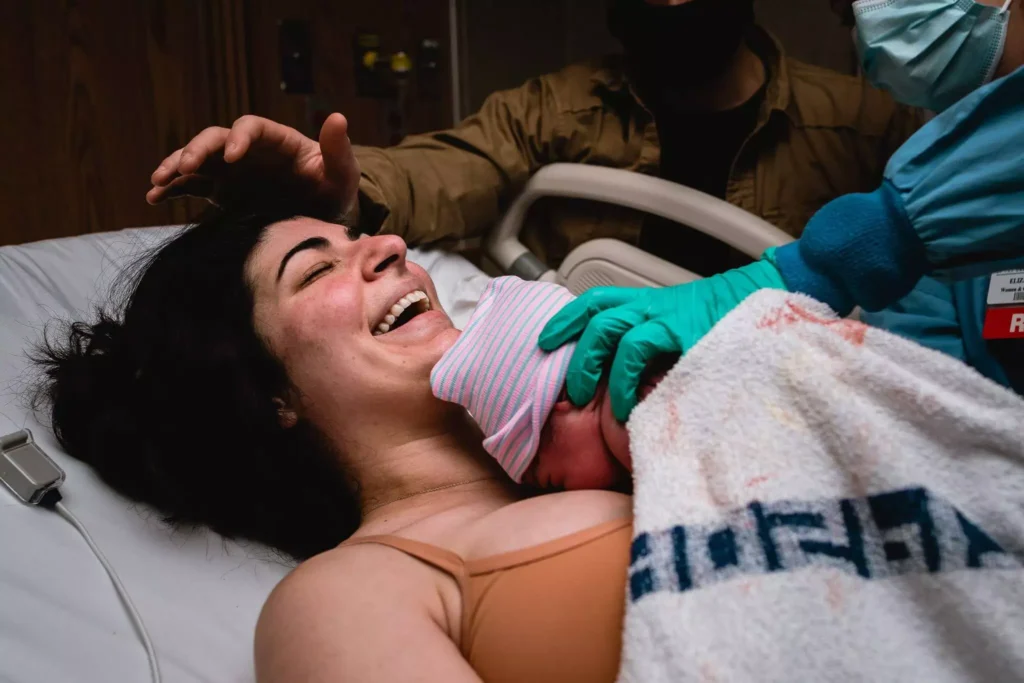

Learn the science of pregnancy and birth to take the mystery of labor away! Understand why you are feeling what you feel, and learn strategies to confidently move through pregnancy and birth!
- 9h+ of Video
- Support Group
- Close Captioning
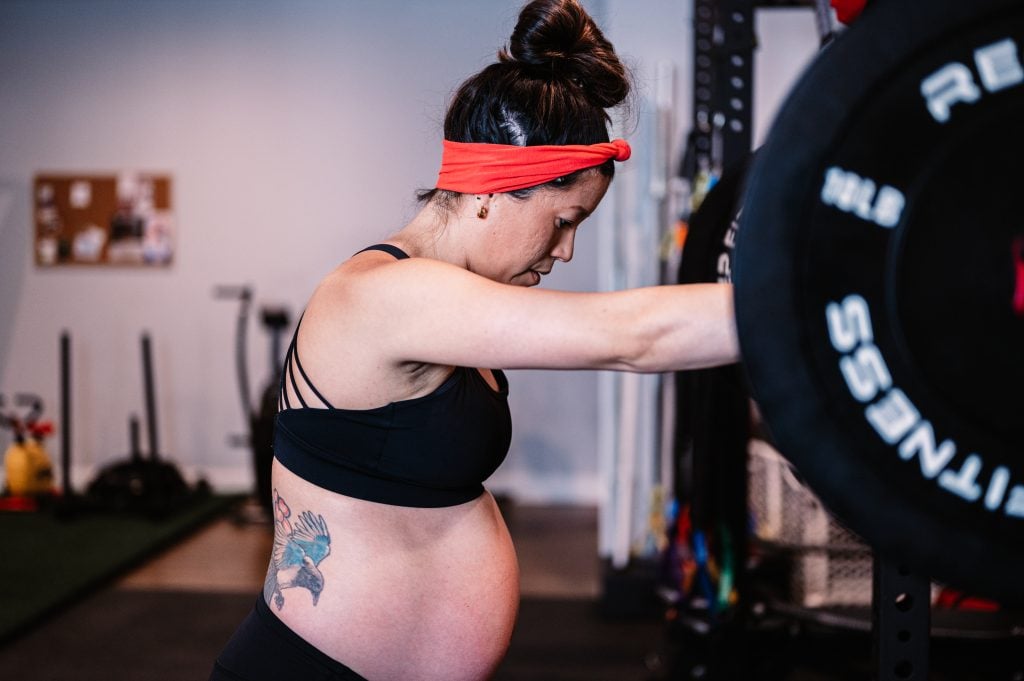

- 5 Workouts/Week
- Gym Workouts
- Self-Paced

Instructor
GINA
Workout on-demand with our prenatal fitness workout videos! Each workout is 30-40 minutes to follow along as you exercise at the same time!
- Birth Prep
- All Trimesters
- Mobility Work

Instructor
GINA
Find comfort and relief from pelvic girdle pain throughout your pregnancy and postpartum period! This program incorporates myofascial sling focused exercises to stabilize across the pelvic girdle joints.
- 3 Weeks
- On Demand Workout Videos to Follow