


Welcome to the MamasteFit Podcast! In this episode, Gina and Roxanne discuss their experiences as military spouses, focusing on the challenges and benefits of solo parenting, frequent deployments, and the importance of community and support systems. They share personal stories, coping techniques, and the unique aspects of being part of a military family. The episode also touches on mental health, the importance of having a personal creative outlet, and strategies for balancing multiple responsibilities, including homeschooling, running a business, and professional development.
Read Episode Transcript
Gina: Welcome to the MamasteFit Podcast. In this episode, Roxanne and I are going to be sharing our experience as military spouses, in case you are curious about this lifestyle and wanting to find a man in uniform for yourself. Or woman.
Roxanne: Or woman!
Gina: We are going to share all about the benefits of parenting all by yourself with frequent deployments and work trips, how it makes you really resilient and independent.
Roxanne: Coping, coping techniques.
Gina: How to cope. We’re going to go over all our coping strategies. so we’re going to share our experience as military spouses, ’cause it is military child month and we live in a military community. And this is something that is prevalent for us, very important to us, and so we’re excited for you to listen to this episode.
Welcome to the MamasteFit Podcast. My name is Gina. I have been a military spouse for eight years now, so I think I got some experience in being a supportive member- what is it the hardest job of the military?
Roxanne: It is. We should get paid for it.
Gina: We should get paid for it. I guess we do with the, we do with healthcare.
Roxanne has also been a military spouse for eight years.
Roxanne: Nine years.
Gina: Nine years.
Roxanne: Nine years, almost, on the 15th.
Gina: Oh yeah.
Roxanne: Our anniversary is coming up.
Gina: I guess I’m coming up on my ninth year here as well.
Roxanne: Yeah, well, yeah, in 10 days.
Gina: I actually started my relationship with my husband the day that Roxanne got married and then eloped.
Roxanne: We had an engagement party scheduled and my husband and I went to the courthouse the day before and got married. His parents came in and his grandmother was in town, and all of my friends were in town, so we went to the courthouse together so they could be part of it, so it wasn’t just like us and the random people that we found to be our witnesses.
Gina: I found random people.
Roxanne: Gina found random people, but we, it was like our families were all there. But then we were having a big engagement party the next day and it just honestly became a wedding party because we were already married. So it was like a celebration of marriage, as well as engagement.
Gina: Marriage.
Roxanne: And so yeah, almost nine years married spouse life. But my husband and I were dating for two and a half years prior to that, so I was a military girlfriend.
Gina: Fiance, for a while.
Roxanne: Military fiance. So that was different.
Gina: So Roxanne and I have had similar but also very different experiences as military spouses as well.
My husband is gone all the time. He is in jobs where he deploys very frequently, he’s constantly on work trips. So I have definitely really had to live the solo parenting lifestyle. But I will say that my experience is unique, also, as a military spouse, because we have been stationed in the same place pretty much that whole time. Normally folks move every two to three years, and we have not moved a single time. The only time that my husband was stationed somewhere else, it was just up in Virginia for nine months. And so me and my kids just stayed here and lived with my mom for a year because I was not about moving.
In addition, our family lives nearby us, which is pretty unique as a military family. Most families are located very far from their support systems, and so that has also been something else that has made this lifestyle slightly easier, is that we have our mom and our dad, and Roxanne nearby, to help me out with all these kids that I keep having.
Roxanne: That you just keep having.
Gina: I just keep having.
Roxanne: Willingly.
Gina: Willingly! They’re all planned!
Roxanne: Whereas my experience is similar- it’s different than a lot of people because we have not moved very much, still, in our like nine years of marriage. I was stationed in Kentucky for two years when I was still in the Army, but we did like dual military for quite a bit of our marriage until we got pregnant with our first.
And so we were long distance for a while we were dating, like two and a half years. And then like he deployed shortly before I moved back to Bragg, so we were like still separated by a deployment, and then he finally came back. But we were at Bragg since 2017, until we went to California, which was in like 2021. So we were at Bragg for a very long period of time, and then we’ll hopefully be here for a while. We might have to take a little stint to Tampa, but fingers crossed.
Gina: If Roxanne leaves, I will take applications for a new sister because how dare she move away from me?
Roxanne: But…! But I could become a Disney annual pass holder and you can just come live with me in Tampa.
Gina: Application’s closed.
Roxanne: And we can just go to Disney all the time.
Gina: Application’s closed.
Roxanne: Rescinded!
But we are also unique, where our friends move so often and their parents are not close by. And so my husband’s family’s all in Indiana, so we don’t see them very often, which I think is very hard for him, and my kids love their cousins, but they’re in Indiana. So we do have that aspect where we’re still far from family, but I have my mom and dad and Gina here, which makes it slightly less, like slightly less common and we’re very unique in that aspect that we have that support.
When I was in California, it was a very sad panda time. Very sad panda time from no support. It was beautiful there. We loved it. I loved the beach, but I also like family support.
Gina: And adult friendships.
Roxanne: And adult friendships.
Gina: Your, yours is different than mine as well, where your husband doesn’t deploy or go on work trips quite as much as Barron.
Roxanne: Yes. That is like the one thing that was really nice. So he is in like a special operations job, so before we got married it was, they were gone for six months, home for six months, gone for six months, home for six months. But he, our timing is just very impeccable that once he switched to that job, they changed it to, oh, you’re home for at least a year, and then you’re gone for six months. So we got like a whole year, granted, like he was on a lot of trips during that point, like doing a lot of training, so he was like gone for a couple weeks, but we didn’t have kids and I was still working in the Army, so it didn’t bother me as much.
And then we had a kid and he was in that one year window before he deployed. And then he switched jobs to be a teacher, like an instructor, so he didn’t deploy for that entire period. And then it was Covid so no one was going to work during that time. Well, I was going to work, he was not going to work. Healthcare still continues, the world, shut down.
Gina: Healthcare heroes.
Roxanne: Yeah. So it was like, I hate to say, but like the timing of when we decided to have kids worked out really well for us, because he didn’t deploy, then was in a job that he was home, and then no one left their homes for quite a while. And then we went to California where he was in a master’s program, so still very busy, like it wasn’t like he was just home for 20 months doing nothing. He was still in a master’s program, had to write like a 200 page thesis and do a lot of research and was busy, but he wasn’t like going on training trips, so he was just home. I think the longest portion was when we would come home to North Carolina, we would take like long trips here so I could have adult conversations and have my mom to like, help me watch my kids and get a massage. And those were the times that they were away from him, but that was not military caused, that was like me, I need my family.
Gina: But they were coming to play with their cousins and it was like really fun.
Roxanne: Yeah. It wasn’t like… like they still had a lot of fun. But they still missed him, and like all those reunions were still nice, but it wasn’t like they were without their dad because he was on a work trip, we were on a vacation, so it’s fun.
So solo parenting is something that I have done a lot of in the past seven years since having children, and it is challenging. One of the things that has been helpful for me, mentally, ’cause it’s hard to be a parent by yourself when you’re, especially when you’re managing like children of different ages that have different demands, while also working, and then there’s so many different competing things that are happening at the same time. Like I have to schedule the appointments, and take all those kids to the appointments, I have to make sure, like if things break in the house, that I’m coordinating with people to come and fix them, or I’m fixing them myself. Like I had to install my own bidet, which was actually very easy. And it’s very…
Roxanne: I know.
Gina: Very cozy poops now. But like I had the box sitting by the bathroom for three months, but this guy is always working and away on trips that like, when he would come home for the one weekend that he would get, we were focusing on family time, and like getting as much of it in as we could, and then he would leave again. And so my cozy poos were just sitting in a box and so I installed it myself.
Roxanne: I did too.
Gina: Like I have a light on my porch that has been out for months that I just keep hoping will just magically start working again. Maybe there’s a light bulb fairy out there that will just fix it for me. Because again, when he has this limited time that he comes home, he’s not immediately trying to fix all the things in the house, like it’s up to me to try to coordinate and figure those things out.
Roxanne: So it can be a mental load.
Gina: Yeah, the mental load gets to be a lot, when you’re solo.
Roxanne: And you don’t have someone to task to give the mental load to.
Gina: Yeah, like I can’t task him with anything unless it’s something that he can do online.
Roxanne: Yeah.
Gina: Like he can pay certain bills online and he can manage certain things online and those will be the things that I offload on him. But he’s not here in person to help me figure a lot of that stuff out. And I think that’s probably one of the biggest challenges as a military spouse is, you have a loving and supportive partner who is just not physically here to be able to help you, that wants to help you- ’cause when he is home, he is super helpful. He is a very hands-on father, like changes all the diapers, like grabs the kids so I can sleep in, focuses on them so I can do my hobbies, I can go get my massages, I can do all my stuff.
And so I think that’s one of the hardest things about being a military spouse is you have somebody that really wants to be there and wants to support you, but their job just takes them away so much. And so having to like deal with all the mental load of navigating a house, or managing a household by yourself, can become a lot. Also just doing all of like the competing things that all the different kids are trying to do, like spending time with each of them, figuring out how to navigate that. Like babies are very demanding, they, need a lot. They don’t come out just knowing how to walk like a giraffe. Like they gotta, yeah, someone’s gotta take care of them. And so I’m also trying to balance, I’ve got a seven month old that requires a lot of my attention.
Roxanne: To not die.
Gina: I’ve got a toddler that also requires a lot of attention. And then it just becomes a little bit less attention as they get older, which then makes it really hard. So managing all of the kids, managing the household, gets really challenging.
So it’s really easy to become resentful towards your partner who is off doing the good work, protecting our country.
Roxanne: All our freedoms.
Gina: All our freedoms.
Roxanne: Thank you for our freedoms.
Gina: Thank you. Thank you for my service! And so it can be really easy to be resentful. “Oh, this guy is getting to have a beer with his coworkers and just relax and all that.” But, he is missing out on a lot of stuff with the kids. And so when I remember that, I, it almost helps me feel like bad for him in a way.
Roxanne: Yeah.
Gina: Which makes me not feel resentful. Because, little babies, they changed so much in their first year of life, and so he would go away on a week long trip and come back and our baby would be doing something totally different, and he’d be like, “I feel like she’s a whole different person right now.”
The first year of our daughter’s life, our first daughter’s life, he was working a really intensive job to where he was coming home really late, he was leaving really early in the morning. He was going on a lot of work trips to where she like had a really hard time like being held by him because she just wasn’t spending time with him. And their relationship was a little rocky for the first, I think like 18 months, until I think Covid hit.
Roxanne: And he was home all the time.
Gina: He was home all the time. Where he moved into a new job that, that he was home so much more. Like even though he was doing all the work trips, when he was home, he got to be home, and that made a huge difference in their relationship. And we fortunately haven’t had that same issue with any of our other kids. Like he’s been home enough to really develop relationships with them, to where like Zoe now is like really excited when she sees him. Sophie is like always asking for him and wants to play with him. So we’ve been fortunate that he’s been in jobs that, while they are gone a lot, when they get to be home, they’re home, which has been really great.
So it’s really easy for me to feel resentful towards him, but because I know he’s missing out on so much with the kids, it helps soften me a lot, to where I realize how hard it is for him to be away.
And, yeah, I’ve done deployments myself. I didn’t have children when I did it, but when I think about being in that environment and knowing that there’s like little people waiting for me, I could see how that can be really challenging for him.
Roxanne: And I think it, like, when he’s going on trips there, they’re at so many different locations that he’s going to. It’s not like he’s going to a weekend trip to Vegas to go vacation with his bros.
Gina: He did go to Vegas once.
Roxanne: But it wasn’t a, again, it’s not like a weekend trip with his bros to go party in Vegas.
Gina: Yeah, he’s going to Afghanistan.
Roxanne: Literally going, yeah, like he’s going on work trips where there’s probably not a lot of fun things to do. Like my husband doesn’t deploy to Germany or like South America, he’s going to places that there’s not a lot of things to do. So I’m just like, “Yeah, I know you’re, you are not having a good time. So I miss you. We all miss you very much, and we know you miss us. And yes, I am tired. I’m so tired. And you can come home at any moment.” Like the number of times that I think I messaged my husband when he was deployed this last time when we had three kids, “Okay, this was fun for a little bit like. You can come home now.”
Gina: I feel like such an independent woman.
Roxanne: Yeah. Like I’m so strong and independent. I need nobody, but “nobody” needs to come home now! Like, you can come home now anytime. ‘Cause it’s, it’s hard when you have three kids, all different ages, all requiring different things, and bedtimes were the hardest. Like you just sleep with all your kids in bed with you, that’s still hard. But my kids have to go to bed ’cause they go to school. I do not homeschool my children ’cause I have too many jobs, and I can’t watch them, they can’t come to work with me. They can’t come to clinicals with me and be homeschooled. So they need to go to school, ’cause they would not get educated with me. I would have no time to educate them. So they have to go to bed early so they’re not exhausted in the morning, but like getting three kids in bed when you’ve never done bedtime before, was so hard by myself.
With my husband, like we would split, he would take the big kids, I would take the baby ’cause the baby’s the one that was the hardest at the time. And then when he left I was like, “Holy shit, what do I do? How do I do this?” And then they just started sleeping in the bed with me. But then that meant I had to also go to bed at 8:00 PM, because then they’re all in the bed with me, where I’m supposed to do all of my work ’cause tmy office table was in my bedroom at the time. And I was like, “This is inefficient.” I really do enjoy going to bed at 8:00 PM and waking up at 6:00 AM well rested, but I also have a lot of things to do, so I can’t go to bed at 8:00 PM. So then like having a support system that can help you is really nice, which I did not have in California to do that. But like my mom started coming over and putting my older kids to bed, or my dad would put the kids to bed as I put the baby to bed, and that made it a lot easier. But then that requires a lot of our parents that, like, they raised us, they tired too! Like they did their job raising us.
Gina: Yeah.
Roxanne: And they didn’t want to be putting a five and three old year old to bed.
Gina: It becomes a hard thing where like you, you need to rely on other people to help support you. Like whether it’s family, friends, like you need to ask for the help.
Roxanne: It’s so hard.
Gina: But it’s hard because you know that everyone else…
Roxanne: Is also struggling.
Gina: …is also struggling. We’re all just on random struggle buses in our separate lanes.
Roxanne: Like what is that video of the people trying to pull the guy out of the water on the boat and they’re like, they’re just all drowning.
Gina: Yeah, that’s just military spouses. We’re all struggling.
Roxanne: We’re all drowning.
Gina: And so you don’t want to be the additional burden on somebody else, even though if anybody else asks for help, like we’d be running out the door to support them. ‘Cause a lot of our friends, their husbands are also deployed, like their husbands are also away on work trips, and we’re all just like, “Uhhhh…”
Roxanne: We’re all just soloing together.
Gina: Soloing in separate places.
And so it becomes really hard to ask for the help. ‘Cause even sometimes I have a hard time asking our parents for support where I’m like, “I could, I could physically do that, so I’ll just do it by myself,” because I’m like, “I don’t want to always be bothering them or burdening them because of these kids that I chose to have, marrying this guy that I chose to marry.”
Roxanne: Like knowing that he going to be gone.
Gina: I chose this lifestyle, like I should live it. And so it becomes really hard to ask for help, but I think it’s really important to be able to confidently do that and to be okay with relying on other people, ’cause that’s how you get a village.
Roxanne: Yeah.
Gina: It doesn’t just appear, like you have to be there for other people and then allow them to be there for you, too. And I think that’s really hard to do. Again, I have a hard time doing it with my own family members.
Roxanne: Yeah. The number of times I’ve had to be like, “Gina, just drop your kids off. Why are you struggling?”
Gina: I’m like, “Eldest daughter, I will not rely on anybody!”
Roxanne: Just drop your kids off at my house and go do your appointment.
Gina: I get in these weird moods where I’m like, “I am just going to do it all by myself. I don’t need anybody.” I don’t know why.
Roxanne: Yeah. Yeah.
Gina: Maybe it’s hormones. I’m like, whenever I’m acting like that, I’m like, “My period must be coming soon.”
Roxanne: Yeah, probably. But I think it’s also- I obviously, I work with my therapist on it, because I also will spiral that I think I’m just being a burden on people, especially when my spouse is away and I need a lot of support. Even when my spouse is here, he still has to go to work from nine to five during the workday, so like I still need help from nine to five, from everybody. And that’s still hard ’cause you want to be like, again, we decided to have these kids, like we should be able to take care of them ourselves, but like, we can’t.
Gina: So the thing that’s different for me with my routine, so, I’ve implemented some things in my routines to make my life easier that are different than you. My kids all sleep in bed with me. We all go to bed at the same time. My older two, on the nights that they do go to an in-person school, they will go to bed earlier and I’ll just tell ’em to go to bed at nine and they’re like, “Okay,” and then go lay down in the bed that I then join them in later that evening while I keep the toddler and the baby out. So that part is really easy. the two of them are just very compliant, which I appreciate.
Roxanne: They show no emotion.
Gina: They are very compliant with it. They’re like, “Do we have to?” I’m like, “Yes.” But the nights that they don’t have school, we’ll all just go to bed together, whenever we decide to go to bed. We don’t really have bedtimes, other than the nights that they have to wake up in the morning, then I like will enforce a little bit more of a bedtime. They’re still at an age where they shower and take baths together, and that just really consolidates it all where I’m just like, oh yeah, we just shower together everyone. Or they just jump in the shower with me and that makes it super easy.
Roxanne: Oh yeah.
Gina: So I do a lot of stuff where I just pile everyone together. Making meals is really challenging.
Roxanne: Oh, yeah.
Gina: With small children, when you’re doing everything else in your household. And so I, we have a meal delivery service that I utilize that cooks like actual meals, and they deliver it directly to my door- shout out Spoon Lickers, if you’re local to us in Moore County. And that has been really helpful for me to have nourishing meals so I’m not just DoorDashing all my food, but DoorDash is also fine, so I have these actual meals that I can feed at least myself. And then if my kids don’t want to eat it, chicken nuggets.
Roxanne: Yeah. We go through a rice, chicken nuggets and rice.
Gina: And we eat a lot of Korean food as well.
Roxanne: Yeah, my mom makes a lot of eggs, rice, and seaweed.
Gina: Different meats and stuff.
Roxanne: Meats.
Gina: So that’s one way that has been really helpful for me, is I figure out things in my routine that I either don’t need to separate, or I don’t need to create a fight, that works for our family. So like bedtime, we don’t all need to go to bed, or I don’t need to have them all have specific bedtimes ’cause we are not waking up early in the morning. But that doesn’t work for everybody, obviously. And then like for showers, like instead of having like separate bath times for all of them, like the older two can go take a shower by themselves, and then I just wash the babies in the shower with me, like when I take a shower. And then when it comes to meals, I’m just ordering meal delivery to have the meals delivered to the door. They do it like once a week. Or I’m like looking up like ChatGPT is super helpful for coming up with meal plans too. And so if you’re like me, the mental load of figuring out like what to eat is really challenging. So I’ll type it into ChatGPT, and be like, “Hey, come up with a week’s worth of meals, with a grocery list, for these ages, that is like high in protein that has all the vitamins and stuff that they need that a child will eat. And then ChatGPT will gimme like a list of snacks and meals, which I think is like really helpful.
Roxanne: ChatGPT, honestly, is like the hack to motherhood that I’ve created, or, like, I found.
Gina: It’s like my third parent…
Roxanne: Yeah.
Gina: …in my family. So I’ve found that to be really great.
I also use ChatGPT to help me come up with activities for my kids. Where I’ll be like, “Hey, I’ve got these ages. This is the topic that we want to focus on this week, come up with some sensory and science experiment activities for me to do with my kids throughout the week.”
Homeschooling hack.
Gina: Yeah. And, and even just for the little kids. So like right now we have a table that we have set out that I have a bunch of spring sensory bins on, and I have like other activities like in the queue. And so the kids will just go and they’ll just play with those when I have to do work, or I have to do other things. And so that’s been like really helpful for me. But having to come up with all of that stuff by myself when I’m already thinking about all of the other things that I need to do in our household, that ChatGPT has been like super helpful for me there, where it figures stuff out for me.
So those are like some places where I have figured out what can I do less of to free myself for some time, specifically. And, it’ll be different for everybody, like what they, what kind of hacks they find for their days. But finding pockets that you can consolidate efforts makes it so much easier, also. Like you don’t have to do it all the hard way. Like obviously certain things for you, like you need to do a bedtime ’cause like they have to wake up early for school.
Roxanne: Yeah, or they’re just exhausted.
Gina: For me, I have more flexibility to not have them to go to bed like at a specific time every night. But yeah, so I think figuring out like what little hacks can you incorporate into your day to take off some of the mental load, to consolidate your efforts, to just make it a little bit easier on you, has been super helpful for me.
Roxanne: I definitely feel like establishing a routine was really helpful for us. So the bedtime, like being at 8:00 PM we started eating dinner at seven, and then them going to bed. Waking up in the morning, they go to school and that also gave me time to do my schoolwork. So it’s also, like they, I think they say like, “Nobody is as productive as a mother during a four hour period of time,” and I will say I was very productive, within reason. I was also still postpartum, our like postpartum brain lasts forever. So I did still do nothing sometimes, but like it gave me, it forced me time to do something. And having that routine, it took us a while to get into it, and it also took my kids a while to get used to him being gone.
Because again, he wasn’t. He doesn’t really go away for work trips as often, so it was a huge change for them once we hit one month into the deployment that they’re like, “Oh, what do you mean Dad’s not coming home like he should? He’s, he comes home now. This is the longest he’s ever been gone is one month, like what do you mean he’s not coming home yet?” And that’s when they like spiraled, like not behaving at school, like trying to get, like they were just, they wanted attention because I couldn’t give them all the same amount of attention. There’s just one of me and three of them, and I can’t give them the undivided attention that they’re wanting. So then they started having, their teachers were emailing me and being like, “Hey, like they’re being a little bit disruptive in class today, like trying to get our attention,” and I was just like, “Oh my gosh, I’m failing my children.” So I feel like it’s really easy to just spiral as you’re solo parenting. So therapy for me was a really great coping skill that I implemented during deployments.
Gina: And something that is really helpful to, if you, if a military spouse is listening, Tricare also does virtual therapy as well. It’s like Doctor on Demand where you can do virtual sessions with a therapist, and there’s different parameters where you can pick like a certain type of provider as well. So that’s a resource that’s available that… sometimes it’s hard to go in person to stuff.
Yeah!
Gina: And child care and like preschools and all that stuff can sometimes be really challenging in military communities as well. Like in our community, like a lot of the wait lists are like several years long.
Roxanne: So long.
Gina: It’s hard to know when spots are opening up. Like it’s hard to, we’re all battling for the same nannies and babysitters, and people are constantly moving, and so like the turnover of folks is really hard. And so finding places to put your kids to do your appointments and stuff is also really challenging.
Roxanne: Yeah. We were on the wait list for a while for Joan.
Gina: So that’s something else that like can be a battle as a spouse or a military spouse that is moving frequently is trying to establish what is my childcare situation? For military spouses as well, if your partner is deployed, there are military, like, childcare on the bases, so like on the military bases, where you get a certain number of credits that you can use each month as well. I can’t remember the exact amount, it might vary from locational location, but you get so many hours that you can utilize at the on base daycare to do your appointments and stuff as well. But that only works if you live near the installation. For us here at Fort Bragg, we live like 40 minutes away from the military installation, but if you live nearby, that can be a resource that you utilize as well.
But childcare is definitely one of those things that gets super challenging.
Roxanne: It’s one of the top challenges that many military spouses have, because, especially if you want to work, like if you are a working military spouse, you need childcare. And you are, I think the hardest part is that I am the person that has to coordinate the childcare. So it’s another task on my list, because he’s not here to like… what, do I expect him to coordinate childcare from across the world? Like, please do that for me, that would be great. No, that’s like another thing that I have to coordinate to ensure like someone is there to drop my kids off if I can’t be there, someone is there to pick them up if I can’t be there to pick them up, or like that, “Oh, I have this appointment so I need all of the kids at some sort of childcare for that.” And granted, we are very fortunate because like we don’t have to find, we’re not forced to find a nanny, because our mom and dad are there to watch our kids and are happy to watch our kids at any point, versus a lot of people don’t have that in the military communities. They don’t have, their parents maybe are willing, but they live seven states away, so they can’t. Or they even live two hours away and they can’t because they also still work. And so not everybody has that opportunity.
And I think I searched for a nanny for a very short, well, I say, short period, it was like a six month time span. I like interviewed a couple nannies, and I feel like I’m a pretty cool person and my kids are pretty great, and none of the nannies picked us. And I was like, “What’s wrong with us that not a single one…
Gina: They got 10 families that are fighting for them!
Roxanne: “…of these nannies picked us?” And it wasn’t even the point like, “Oh, like we weren’t going to pay them enough,” that wasn’t even a part of the conversation. She just like, all of them just met us and was like, “I want another family,” and I was like, “What’s wrong with us?!” Like, why did none of them want my kids?
Gina: Maybe you need to do some self-reflection. I’m just kidding!
Roxanne: But I think it’s just like nannies, like they, in this community, like they, if they want to only nanny kids that are older, like they can choose that because there is such a high demand, like I should have been a nanny, really, because that’s where, that’s job market is very high in military towns. Because it’s so hard to find, if you want childcare and you want to work, and that’s like a whole other struggle of the military spouses that could be a whole episode is like working.
Gina: I think military spouses have the highest levels of unemployment rate because it’s really challenging to, one, get established in a career, and then move.
Roxanne: Yeah.
Gina: And if that job doesn’t have a remote capability, you have to start all over with your career and so you’re, it’s really hard to advance, it’s hard to stay for retirement, there’s a lot of challenges when it comes to being a military spouse, when it comes to employment. And there’s not always a lot of federal protections as well, which I, a lot of our friends are going through right now with the remote work limitations.
So how are we managing? How are we balancing working and also still parenting as military spouses? So again, we are unique, in regards to the fact that we have not moved a whole ton, and that we also have our own business that we are able to do. So we have a brick and mortar gym, and again, we haven’t moved, so I’ve been able to stay with this brick and mortar gym and manage it. We have the online space, and we’ve reached a point now where we have people that help support us on the backend. So we have two employees, we have a few employees that work out of the gym. We have different teams that help support us with the editing of this podcast, with our website, with things like that. So that really helps to free up a lot of our time.
And so if you are your own business owner, specifically- and Roxanne could talk more about what it’s like being an employee of somebody else’s business as like a midwife and then going through school- if you’re your own business owner, as a military spouse, or just in general, the thing is to consider what are things that you have to do, like what are specific tasks only you can do? And for us it was the creative stuff. So I have to be the one that creates the content, that creates the course, that creates the videos, but I don’t need to be the one that edits the videos. I don’t need to be the one that edits the podcast. I don’t need to be the one that creates the graphics for the newsletter. I’m like, I need to write the newsletter, but I like… So I’m figuring out what the backend stuff is that are still important, and I love all of the members on our team, but those were tasks that I did not need to do, and a lot of them do those tasks better than me.
Roxanne: Oh, way better.
Gina: Like Max, our podcast editor, can edit this podcast way better than I can. Do you know how long it would take me to edit this? Forever.
Roxanne: It would never get done.
Gina: Like he’s very talented.
Roxanne: It would never get done, we wouldn’t have a podcast.
Gina: And so finding other people to help support you in your business that are probably better at certain aspects of it than you, frees up so much of your time.
And so for me, I really focus like two main days for filming content creation, like the creation aspect, per week. And those are the two days that I consolidate like my kids in some sort of in-person school option. And then I just pick like pockets of time throughout the week where they’re doing a lot more free play that I could sit on the computer and do some more administrative tasks that are still things that I need to do, but that frees up a lot of my time. Before we had these teams, I was like working constantly. And it’s 24/7, and it’s really challenge. Like I left my nine to five to work 24 7. So it can be really challenging, especially if you’re just starting a new business, to do that. But once you have a team and you can figure out, “I don’t need to do these tasks,” super helpful as a business owner to let some things go. I also can’t do all the projects that I want to do. There’s certain courses and stuff that I want to create, there’s certain things that I want to update and improve that I just cannot right now, and it’ll be okay. As much anxiety as it creates for me that like the new course that I want to film is not filmed, and edited, and prepared, and released, right now, it’s important that I set boundaries on myself that I don’t need to film all of the things right now. And that is really hard ’cause then I’m the one that’s limiting myself, but it’s important because I have a lot of things that I’m balancing. Like I am parenting, I’m solo parenting right now. My husband is currently on a work trip. He’s going to have a few months before he deploys, fortunately, or maybe he’ll have some more work trips, who knows. But I need to balance my time so that I can pay attention to my children, and to do the homeschooling, then also to work while doing it fairly solo. I say 75% solo, ’cause our mom is really helpful, but she’s not their father.
So how is it for you balancing being a midwife or a student midwife, while also solo parenting, and being at school full-time, and working at three jobs, and working for me?
Roxanne: It’s a lot, yeah. Gina’s very demanding.
Gina: I’m a very toxic boss.
Roxanne: Very toxic boss. MamasteFit is our main thing, and I love it, and that’s one of the reasons why I went to midwifery school is to help create this better aspect of MamasteFit, of the provider role, and then the doula role, and the fitness. And being able to implement the knowledge that I’ve learned just from Gina into my role as a midwife has also helped. ‘Cause like people will come for clinicals, like I’m not even a licensed midwife, and other providers in the clinic will be like, “Oh, this patient has like pubic bone pain. Do you mind going in there and showing her some stuff to do?” and I’m like, “Yes. I love doing that!” So being able to add that into like my prenatal care in that whole role, like I’m so thankful for MamasteFit, and I’m very thankful for Gina for all that, the grace that she is giving me as I…
Gina: You’re welcome.
Roxanne: …navigate the struggles of time management of life, with my husband deployed, being in school full time. It was technically part-time, but it’s full-time. learning all of these things, while also taking on a role at a birth center that was just like an opportunity that I just couldn’t turn down even though probably should have.
But you enjoy it! You enjoy it, so it’s okay.
Roxanne: It’s so, like, honestly, like I’m so tired after supporting a birth, but I am so happy when I leave, that it makes it worth it.
Gina: I had the same thing. So I stopped being a doula because it’s hard to solo parent. So that was one aspect of my job that I had to let go because I, I had two births that were both three days, back to back, and so I was essentially gone for a week.
Roxanne: Yeah.
Gina: And it was really like, it was so rewarding. Like I, I sympathize with that feeling of like, when the baby is born and that family is like there, and it’s just so magical and you’re like, “Oh my God, that was so incredible.”
Roxanne: Like the high you experience.
Gina: I want to do it again. And then like, I just had a string of, they were all amazing births to be at, I was so thankful to support everybody- so anybody that’s like a client of mine that’s listening, like I was happy to be there.
But it’s tiring!
Gina: But it’s hard when you hit like the 24 hour mark and you’re like, “All right, I’m exhausted. You are exhausted. The baby is not here yet. My boobs are full,” and so it gets, it’s the time demand of supporting in-person birth, as amazing as it is, was just something that I had to like, let go of for balance, and it was hard to do. It was really hard to do. So I sympathize, because you had not been supporting births in a while.
Roxanne: Such a long time. But I think it’s also different as a doula, like you don’t know how long you’re going to be gone. And it could be just a few hours.
Gina: Yeah.
Could be five days.
Gina: I’ve had some where it was the middle of the night and I was back before my kids woke up.
Roxanne: Yeah.
Thank you, to those clients!
Roxanne: So like you don’t know, yeah. But I’ve had, I’ve gone to one for Gina and it was literally, I was, I left in the middle of the night and I was back before school drop off, so it was great.
But I think that it’s different because, at a birth center, like as a nurse I work, I’m on call for 12 hours and that’s it. So if they don’t have their baby by 7:00 AM or 7:00 PM, or whenever the end of my shift is, like I’ll go home. And that, I’m sad to miss it, obviously, and I hope that I’m always just at the births and then someone else comes for the postpartum. But like I’m there at for a limited time, and I know I’m going to be there for a limited time, so like for that aspect of like time management, it’s easier for me to fit it into my day and my weeks because it is a 12 hour period that I’m on call. And even when I was a birth assistant in California- which like honestly, I don’t even know if they fully understand how helpful that experience was for me, not just like experience wise, like just being at a birth center and being a birth assistant in this out of hospital setting for the first time was so amazing for me, but it also like mentally, like I was struggling and it, it gave me something for me during that time. So I don’t even know if they fully understand how helpful that job was for me. But I wouldn’t go to very many births. Like it was like one, every couple months. But it makes such a difference.
Gina: That’s how it was for me with our first. When my first daughter was born, my husband was in command, which for our listeners that are not familiar with the military, command is one of those like key jobs that officers have to go through at various points in their career to continue to advance. And it’s usually one of the most time demanding jobs. So he was gone from really early in the morning, and then he would be home like super late, just based on the unit that he was in. And I had recently left the military, and so what I had for a career was gone, and this was when I was first tinkering with the idea of starting MamasteFit, I needed something that I could focus my creative energy on. Like, love being a mother, I love coming up with creative activities for my kids now and homeschooling them and doing that stuff with them, but it’s still really nice to be able to step away from them and do something creative and create something for myself with MamasteFit.
And so for me, like having that creative outlet was really helpful for my mental health, ’cause before I created it, I remember like sitting by the window, like holding my baby and just waiting for my husband to come home, ’cause I was like, “I’m so lonely.”
Roxanne: Yes!
Gina: And it’s hard. It’s hard, and I think having that is so helpful, especially as a military spouse, when you’re potentially in a new community where you don’t know anybody yet, to have something that’s just for you, that you can focus energy towards, that you can go and speak to other adults, I think is a huge game changer to helping you feel just better in your life.
And so even for me, like with my husband being gone very frequently, being able to come to the gym and to the studio to film and to create content and to spend time with you is like super helpful. My 7-year-old is much more of a conversationalist now than she was when she was a year, but like it’s still nice to come and do something that’s just for me.
Roxanne: Yeah. And I think it’s like some people will think of it, it’s like a break, like you’re taking a break from your kids. But I don’t think of it as a, “I need a break for my children.” It’s like I just need a break from like the to-do list of my life. Like this is something just for me to like refresh myself.
And that’s why like it was so hard to like at first decide to go to the birth center. Like it took me, it was like a couple weeks of me looking at this application and then I was like, “I feel like it would help me so much, mentally,” because I was struggling and it was really nice. Like the first birth, I was like, “I feel better already.” And I think that also solidified my, because I was in school still, at the time, so just add another thing to my plate. Why not? And I think, I don’t think I was… I was struggling a little with the motivation of school ’cause it was still like in the time period where it was like the prereqs of the harder stuff that’s like not super exciting. Like as much as I love physiology, like it wasn’t my favorite class. I cried a little bit during it when I got a B on one of the tests. And I think being able to have somewhere that reminded me why I was going to school and wanted to be a midwife was very helpful for me.
Now that I am in clinicals though, so like during school they say it’s 20 hours, 20 to 30 hours of studying time. I, thankfully am a person that does not need to study that much to do well and remember a lot of content. I’m very lucky, thank you, genes, Mom and Dad, for my brain and for feeding me well and making me take vitamins that my brain can retain things better. Because I did not have to spend 20 to 30 hours a week studying and being able to do my assignments and still get an A in the class and be able to understand the material. So the didactic portion, which is the lecture portion, wasn’t that hard to navigate. Like it was at first ’cause I just forgot how to be a student, but I was able to navigate like the days that I would study and take my test and then the days that I was doing MamasteFit was easier to manage. Now that I’m in clinicals, I have to do like actual 20 to 30 hours a week of schoolwork because I have to physically go to clinical, do the clinical, and then come home and do the reflection portion of clinical and submit all of these assignments like I can’t make it less time. Like I can’t be like, “Oh, I’ll just go to a clinical for four hours, ’cause like I don’t need the full eight days, full eight hours,” when like I do, actually.
So that part now is a little bit more challenging, navigating that. At first without my husband, ’cause for the first two or three weeks he was gone, so like navigating those hours with our parents and like childcare was really hard, while also figuring out like birth center and MamasteFit. And I struggled and Gina was mad at me while I struggled, but she understood and was forgiving, thankfully. And the birth center is also very understanding because they’re like, “You’re in school. That comes first. We understand that. Don’t feel like you need to put us first.” And I think, like I still feel like I’m failing everybody because like I can’t do everything. But now I’m like three months in, and I, hopefully, am doing better at managing it. I’m just trying to finish this out, and my husband is home now, so that has made it a lot easier because he’s able to help at night when he’s home with the kids, helps put them to bed, so I don’t have to do this solo anymore. But when he was gone for a week with our older kids, but I had one of the kids, he was gone for a week, and that week sucked. I was like, I would not have been able to do clinicals without him. We would be drowning very badly. So I don’t even know, I would’ve had to take a break from school if he was going to be deployed for all of my clinicals, because it’s not, it’s, that is like physically not possible for me to do clinicals with another job.
Gina: So I think it’s, I think it’s important to reflect on what your capabilities are and to not feel bad if you have to prioritize things in certain areas. And so I think that’s a really big thing when it comes to solo parenting and managing the military spouse lifestyle, or even just a lifestyle where, like your partner is frequently gone is, you can’t do it all, and there are certain things you have to say no to, even though those might be things that you want to do. And it’s tough. Because even when he was gone, like my ability to get childcare was impacted because everyone needs to support you, and help you with his deployment. My husband was still coming home at certain times as well, and so it was impacting, especially when you had the overnight shifts, like that was like more challenging for me, not to make this about me, but.
Roxanne: Which is why I was looking for a nanny, but no one ever chose me!
Gina: It’s a balance. It’s a balance. So like I was in school full time when my husband was in command, while also starting my business and raising our child solo parenting. And that was hard to manage and figuring out the timeframe. There was a lot of just no sleeping that happened. Very little sleep was happening that like first year of my child’s life. And, during that timeframe, I also had to say no to things, too. Like I was trying to do so much for my business that there was a certain point where I was like, “I can’t do all these things. Like I can’t manage and scheduled play dates for 85 people and then go have lunch with these three people, and then do this thing.”
Roxanne: Oh, yeah.
Gina: And so there’s just a lot of balancing that needs to happen, but it’s hard. It’s hard to be the one that has to say no to certain things and to remove things from the schedule.
The other thing that I am also balancing is homeschooling.
Roxanne: Yeah.
Gina: My children.
Roxanne: My kids go to school.
Gina: Which, for me, has actually been really helpful with my husband’s work schedule because when he goes to cool places, we travel with him as well so that we can spend time with him. And because we homeschool, we just homeschool wherever else we’re at and that makes our schedule super flexible. So that’s been really nice for us. I also, my kids do go to school two days a week at an in-person school, but it’s okay if they miss it if we’re on a trip. And then we have a children’s learning area that’s like a drop in class thing, it’s called Connection Corner, by us, that is really helpful. They go to that like once a week for various art classes. And so those are just like little things that I do to help take some of the load off my plate. And then we have two dedicated days per week that we just homeschool, sometimes three days. And the homeschooling that we do is not like super demanding either, like we’re doing our math, our reading, and our science, and I have different curriculums that we follow. And there’s a lot of planning for that as well, so essentially the beginning of every week I’m planning like what we’re going to be doing at each of our homeschool sessions to really consolidate our time, what I’m going to be doing at each of my work sessions to really have that well planned out. So there’s a lot of planning that is involved with it. And then again, figuring out where can I outsource certain things so that I don’t have to do it all, because I physically cannot do it all.
My biggest struggle right now is I want to sleep in a little bit more than my baby wants me to. And so when my husband’s home, it’s really nice ’cause he just takes her and he goes and does stuff with her while I sleep a little bit more. But we haven’t had that for a few months because his trips have been back to back. And so I did have a moment where I broke down, because the one day that he was supposed to be able to take her while I slept in, he had to go pick up his bag that didn’t get delivered from the airport. and so I didn’t get to sleep in, and so I cried.
Roxanne: But I think it’s also like giving yourself grace for when you do have like your little mental breakdown. Because like it’s a little mental breakdown, a little breaky, little cry sesh is probably a little therapeutic for some of us sometimes. And I think that it’s like we feel weak when we cry, like when I cry I’m just like, “God damnit it defeated me.” But also at the same time, like it’s powerful to like get a little vent session.
Gina: So what are the benefits of being a military spouse?
Roxanne: There is a lot! I feel like we went like on a little spiral of all the negatives.
Gina: We’re kind of complaining a little.
Roxanne: Yeah, we’ve been complaining a little bit, but I think it’s also like really nice, ’cause one, I feel like our spouses complain about their jobs, I mean, I feel like everyone has something to complain about, I feel like they honestly really enjoy them. I feel like they really enjoy their jobs. And there’s always like aspects of any job that you’re not going to like, but like I feel like they feel fulfilled when they, especially like during his deployment, he was like, “We’re like actually doing shit. So this feels good. Like the freedoms, we got the freedoms!” Versus like when they’re here that they’re not doing as much of the freedom and fun stuff.
Gina: I think they’re very fulfilled with their careers.
Roxanne: They feel very fulfilled. Obviously I enjoy seeing him happy, which I would, I wish that on everyone, that they have a job that they find fulfillment in. We do, so I want them to be fulfilled even though they won’t necessarily maybe admit it, but I think that they feel fulfilled.
Obviously there are benefits to being in the military, just in general- there’s lots of, the military discount, the whole 10% that some places give you!
Gina: The things that I have, that I particularly am thankful for as a military spouse, is we have healthcare.
Roxanne: Healthcare, yeah.
Gina: And it’s very cost effective.
Roxanne: And being in healthcare, I realized how great healthcare is.
Gina: Yeah. So that is definitely a big perk. When my husband retires, you have to serve 20 years to retire in the military, you have to serve 20 years active duty, and he’ll have a pension when he retires. So we’ll have a little bit of like extra money to help while he transitions to a civilian job. And then we’ll have healthcare for life, our kids will have it until they’re 26, I think, which is…
That’s if they go to college.
Gina: Which was really helpful for me and you when we were going through college, ’cause our father retired from the military.
Roxanne: Yeah.
Gina: So there are benefits. We also received the GI bill and so our kids, my husband signed it over to them so they can use that for college, which is something that contributes towards a lot of debt for people. And so it’s nice to know that they have an option to help fund their collegiate careers.
Roxanne: Yeah, and that’s why I’m able to go to midwifery school is because my own GI Bill is paying for it. So that’s a whole thing.
Gina: That’s how I got my second master’s was my own.
Roxanne: That’s a whole debt that we didn’t have to take on for me to be able to even take on this endeavor. But my husband is going to transfer his to the kids so that they also won’t have to have all of that debt, or have to go into the military, potentially, to pay for their school.
Gina: Yeah, my husband didn’t have his own student loan debt either when we were married. I had a little bit left on mine, but I didn’t have that much because the military also paid for a lot of my school. And so that was something that was like really beneficial.
So a lot of this is like financial benefits of being in this lifestyle. It’s a very secure career. It’s even, during like Covid, when potentially people were losing their jobs, like we knew that we had a very steady paycheck. So, when things were a little like concerning with our in-person gym ’cause it was closed, we knew that I had my husband’s paycheck to rely on, which was very nice at that time as well.
Roxanne: Which was also nice as like a military spouse because in some aspects you may not need the income of your jobs. Not everybody, but some people, like, I don’t necessarily need to work because we could survive on our husbands’ paychecks, but we enjoy working, so.
Gina: I would have to budget a lot.
Roxanne: Oh yeah. No Disney trips.
Gina: But the other thing, so our brother was also in the military, he recently got out, and he was able to get a lot of his like certifications and got a lot of like courses and stuff done before he got out of the military, which is similar for my husband. Like a lot of these TDYs that he’s going on are going to be certifications that are going to be beneficial for him in the civilian sector. ‘Because sometimes military jobs don’t translate well to civilian life. And so he’s taking certain courses and stuff now that’s going to allow, that’s going to help with that transition. So that’s another benefit, which is a huge benefit, which we really love as well.
We also get to travel a little bit because of his job. Like obviously like the military’s not paying for me and the kids to go places, but they pay for his ticket to go places.
Roxanne: I mean, we got to live in California for 20 months, and they helped pay for that.
Gina: Whenever he’s deployed to Germany, we go and take a trip there, which has been fun. I’m not going to Djibouti or Afghanistan to visit with the kids, but.
Roxanne: I’m not going to Kuwait, sorry. It’s, it’s not good.
Gina: I’m good. I’ve been there enough times for myself personally that I don’t want to go back, but.
So there are some benefits to being a military spouse, but it is a hard lifestyle. I was talking to one of our friends recently where I was like, “Yeah, we should do a podcast on this,” and she’s like, “The reason why I do it all is because I have to. I don’t have another choice. There’s no other option. Like I have to do it all.” And so it’s tough.
Roxanne: There is another choice. You can get divorced.
Yeah, you can, but then it’s…
Roxanne: That’s not a viable option for many people.
Gina: So it’s tough being a military spouse. I don’t know if anybody’s learned anything from listening to this episode other than us venting about how we have managed it.
Roxanne: Gina attacking me for taking too much on.
Gina: Roxanne’s working too many jobs.
Roxanne: But I love them all.
Gina: I know, it’s hard. It’s hard to say no to yourself, but you should.
Anyways, thank you so much for listening to this episode. Again, I don’t know if you learned anything from it or you just learned stuff about us. It is military child month, and we’re very thankful for our very resilient little kids that are adapting to this lifestyle that they did not choose.
Roxanne: Same with us.
Gina: They did not choose it. We were also military kids.
Roxanne: So shout out to us.
Gina: Yeah, you’re welcome, Father, for being a military child.
So thank you so much for listening to this episode. If you want more support throughout your pregnancy or postpartum timeframe, because you don’t have the mental load to write your own program for fitness during either phase, we got you. We have developed prenatal and postpartum fitness programs that we developed working with in-person clients, so other military spouses, and we also have expanded to offer these programs online. So you can grab any of our programs on our website, at mamastefit.com and use code STORY10 to get 10% off any of our online offerings.
Roxanne: This podcast is sponsored by Needed. Needed is a new nutrition company focused on the perinatal timeframe that both Gina and I have utilized during our pregnancies. And if you want to try them out, head to thisisneeded.com and use code MAMASTEPOD to get 20% off your first order.
Prenatal Support Courses
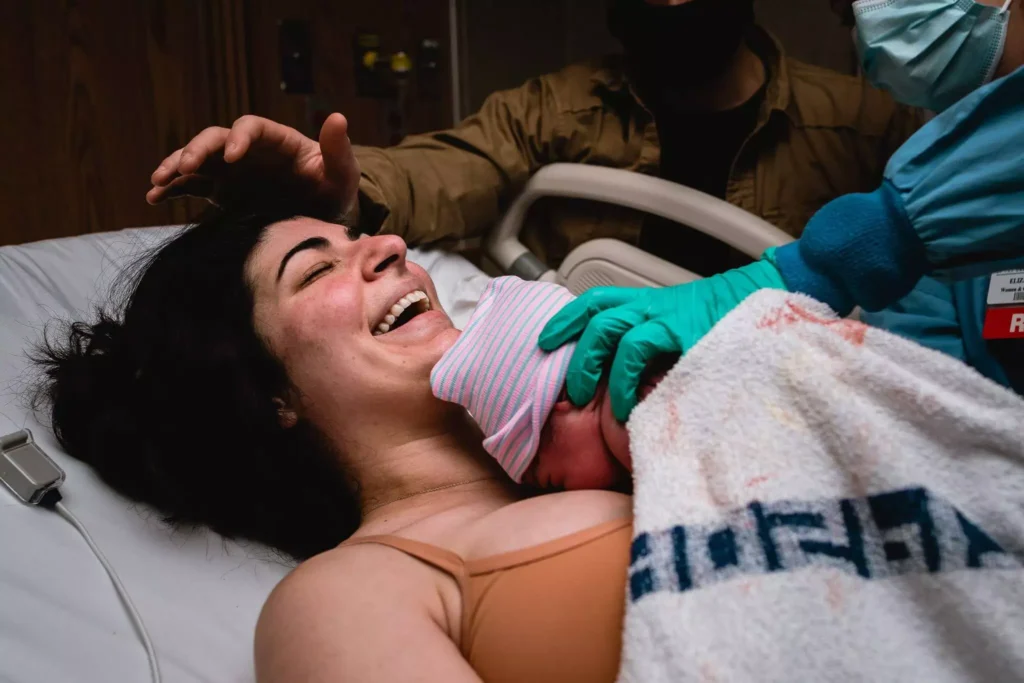

Learn the science of pregnancy and birth to take the mystery of labor away! Understand why you are feeling what you feel, and learn strategies to confidently move through pregnancy and birth!
- 9h+ of Video
- Support Group
- Close Captioning
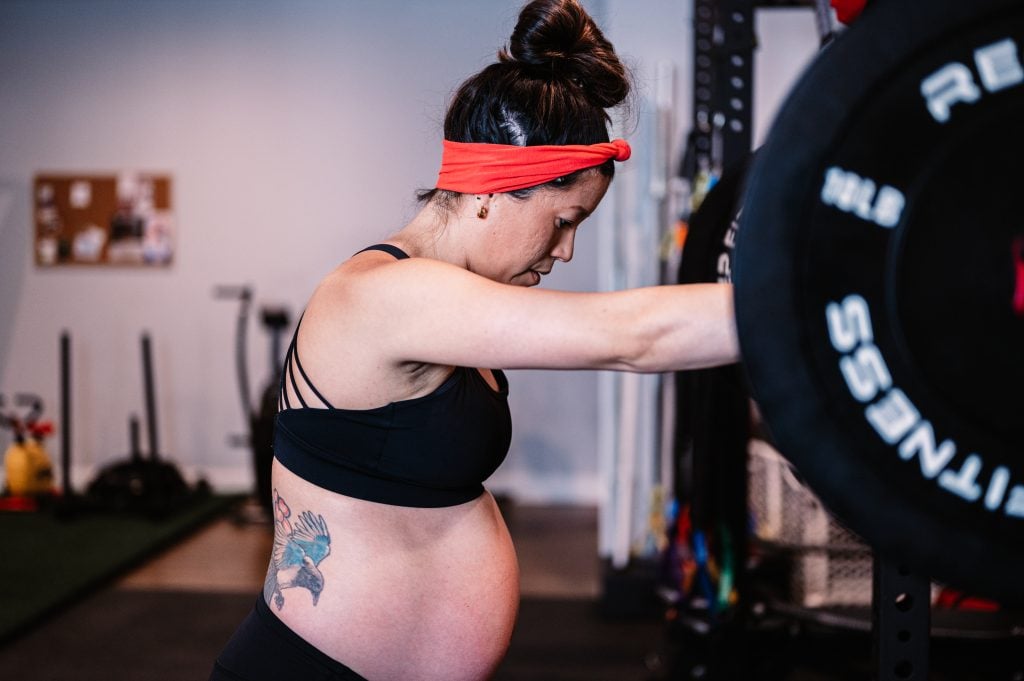

- 5 Workouts/Week
- Gym Workouts
- Self-Paced

Instructor
GINA
Workout on-demand with our prenatal fitness workout videos! Each workout is 30-40 minutes to follow along as you exercise at the same time!
- Birth Prep
- All Trimesters
- Mobility Work

Instructor
GINA
Find comfort and relief from pelvic girdle pain throughout your pregnancy and postpartum period! This program incorporates myofascial sling focused exercises to stabilize across the pelvic girdle joints.
- 3 Weeks
- On Demand Workout Videos to Follow