



Welcome to the MamasteFit Podcast! In this episode, Gina talks with James Hogue from Fathers Assisting Mothers (thatfam.org). James shares valuable insights on how partners, especially fathers, can support mothers throughout pregnancy, labor, birth, and the postpartum period. The discussion covers various topics including creating a birth plan, understanding medical terminology, providing physical and emotional support, and the importance of advocacy. James also talks about the unique role of fathers and how they can be involved in the birth process, including unexpected events like C-sections and NICU stays. The episode emphasizes the significance of preparation, communication, and physical fitness to ensure a supportive and empowering birth experience.
Read Episode Transcript
Gina: Welcome to the MamasteFit Podcast. If you have a partner that is supporting you during birth, this is the episode that you’re going to want them to listen to. We have James Hogue from Fathers Assisting Mothers, or thatfam.org, here to talk all about what the partner can do, what your husband can do, what your baby’s father can do to help support you throughout your entire pregnancy, your labor, and your postpartum experience.
Welcome to the MamasteFit Podcast. In this episode, we’re going to be talking all with James Hogue, who is the Doula Dad. He offers courses specific to the birth partner, which is really exciting. I think a lot of the childbirth education courses are a little bit more tailored towards the person that is giving birth, so it’s really awesome to chat with you all about the tips that you have for dads, for birth partners. So thanks so much for being here, James.
James: Oh, absolutely. I truly appreciate the opportunity. I look forward to sharing a bit more about our work and how we are endeavoring to impact the lives of those who are getting ready to bring a little one into the world. So yeah, I’m excited!
Gina: Let’s just start with introducing yourself. Can you, I’m sure a lot of our listeners may or may not be familiar with you, so can you just share like how you came about this journey of being the Doula Dad?
James: Absolutely. James Hogue, this opportunity really came as a result of the experience that my wife and I went through giving birth to our son.
And so, we initially walked in with an idea of having a completely natural home birth and due to complications we had to pivot. And in that pivot I saw how important it was for me to have been educated like we did, like we had an amazing childbirth education team. And so our doula had walked us through almost everything that we needed to know, and so when we had to pivot, it wasn’t this abrupt change that we had to experience. Instead, it was just really enacting the audible or the plan B that we already had in place. As a result of that, I had several of my friends reach out who were getting ready to have kids, and so they began to ask questions I answered some. It started real authentic and generic as like a FaceTime meetup with a few of my buddies who were getting ready to have kids, and then they began to ask more questions and then I had this idea like, “You know what? These questions that they’re asking, I don’t necessarily have the answers for, but let me find out how to get them the answers.”
And so I reached back out to our doula. She came on and did a few sessions, and then it led to her saying to me like, “James, why don’t you go and get your training and certification as a birth doula so you can lead these courses for yourself?” And I was like, “I don’t know. I don’t know if that’s a thing, can I do that?” but yeah, in August of 2021, I went through and got my certification, my training and certification as a birth doula, and I tell people now I use that training not to show up to anyone’s birth, but instead I use that training to pour into other expecting dads so that they can fully show up, assist, and advocate for the mothers and their lives.
So since 2021 August, man, we’ve been doing the work pouring into guys. We launched our nonprofit back in November, 2024. And so we’ve been growing for just a little while and I’m excited about where the impact is going to continue to go.
Gina: Have you and your wife had any more children since your birth before you started this business?
James: Not yet. No, we haven’t. We’ve been talking through it, see if we want to try again. But as of now, no. It’s just our one little guy, he’s four, and so it’s… he’s a handful! He’s a handful for us right now. And so we’re considering it.
Gina: Yeah, four is a fun age. Four is a really fun age.
James: “Fun” is a good way to put it.
Gina: If you guys do have more kids, I would be really curious to see how your next birth experience is different, based on all of this knowledge that you’ve gained. For me personally, my first birth, I didn’t have the education that I have now when it comes to like birth preparation, and so my next three were like really different. And so I would be curious if you guys have another one, if it would be different for you.
James: Yeah, I would imagine it is different. It would be different, right? Like you said, as the growth of knowledge happens, the experience is different. I think, coming into it, I believe where the biggest difference, just projecting looking outwards, just will be our preparation for it, right?
So when we were getting ready to have our first child, we, talked about it, we like, “Yeah, let’s do it!” But there wasn’t much pre-work on us individually beforehand. So have we, now looking ahead, we know, nine to six months, six to nine months beforehand, or a year beforehand, let’s start implementing these practices, or let’s get this sort of ground work done. Let’s get these things done so that we know what the foundation is like that we’re trying to bring the baby into. So I believe that will be the biggest change that we’ll have, looking ahead, but yeah, I’m with you. I think that the experience will be completely different, if we go back into it and do it again.
Gina: Absolutely. So like I said at the beginning, I feel like a lot of the preparation is put on the woman, the person that’s giving birth.
James: Absolutely.
Gina: And there’s a little bit of sprinkling for partners. “Hey, also, you should read the book, too, save the Instagram posts.” There’s definitely not any courses that I know of that are specific to the dad, to the husband, to the birth partner.
Why do you feel like it’s really important for partners to also be really involved in this preparation? What, for you as like a father was like, really helpful for you to go on this journey,
James: On the journey, so I’m a lifelong learner. I’m an educator, taught middle schools, assistant principal, school leader, all those things. And so I love learning, right? So that’s me on the front end. And so when I, my wife and I were going down the journey, and we developed our birth team, we had an amazing birth team. And so as we were walking through that there were resources that our doula, and the OB, and the midwife that we were seeing at the time would give us, so that we can read and go into. And so I loved it, I consumed it, read it up. But what really stuck to me was that one, I didn’t see many resources that spoke directly to me, right? I could decipher where my role would fit within it, but there wasn’t anything that was specific like, “Hey, James, Dad, here’s exactly how it fits with you, and here’s how this impacts you and your life as well.”
And by not seeing that, it left some things to be desired, but I was able to still find a way to be involved because I truly wanted to. And so, caveat: any guy that I’ve met, I’ve yet to meet the guy who didn’t want to be involved. The question is always, “How? What does that look like specifically for me to fully show up for my family in this timeframe?”
And so for me, one thing, it was meeting a need that I saw that was there. Because, when I was walking through the process and I didn’t see many resources or couldn’t find many resources that spoke to me directly, I’ve always been the way that my parents raised me like, “Hey, if you see something that needs to be done, if no one else is doing it, do it.” And so that was the idea of me doing it in that aspect, just for guys in general. But specifically when the experience that my wife and I walked through where there were moments where I literally had to have back and forths with the medical staff to make sure that she was receiving quality care, it added a different layer, added a different layer of how can I be an educator, or how can I create something that not only gives information, but empowers Dads to be the advocate for their partner if need be. And so that, that’s really what it was. It was based upon the void that I saw that was there, led me down the path of creating something that needed to be there.
Gina: Absolutely. I definitely agree that…. I would say like the majority of fathers that I interact with like really want to be involved. They wanna be the advocate, they wanna support, but they don’t always know what to do.
James: Exactly.
Gina: And because there’s this confusion, or there’s no clarity on what exactly you should do, they sometimes hesitate with the support ’cause they don’t wanna do something that is harmful or that impedes the process. And so they’re just like, “Maybe I’ll just stay back here.” So our in-person childbirth education course, and our online course as well, the partners really the, “Do this thing. Do this tangible thing. Squeeze the hips like this.”
James: Uh-huh!
Gina: “This is what this medical term means.” And then it empowers them to be that advocate to have like tools in their tool bag to actually utilize.
So what are your, what were like the top questions that your friends were asking you that they were like, “I’m really confused about this, like, how do, I be a better advocate?” Or, “How do I better support?” What were some of those questions that they were asking you?
James: So on the front end it was, you don’t know what you don’t know. So a lot of the guys didn’t know what to ask or what to be confused about in the front end. And so we do a deep dive on just terminology, like you, I know you just mentioned like terminology. That was one of those moments, that module that we walked through with terminology, helped them understand how to be empowered through the process. So if you are in the delivery room and they’re talking about, “Your wife is at a negative three station and 5% or 10% dilated,” Okay, what does all this mean? Like 10, 20% effaced, 3% dilated, not knowing what that means, it can lead you be to be confused and you just relegate yourself to the back of the room, because I don’t quite understand, I’m not comfortable in this space. And so by unpacking those things, guys are now able to be a part of the conversation throughout it, right?
But where guys really asked the most questions was on how do I provide comfort to my partner during this time? “Hey man, I know I’m not the one physically carrying the baby. I know I’m not the one that will be experiencing all of these bodily changes that are happening, but hey, when it’s go time, when we’re there, when those stages of labor are starting to progress, what can I do?” Because all them, majority of them, not majority, they all have love for their partner, and so to see their partner in some sort of discomfort or pain, if you will, it tugs at a guy’s heart string. So if there’s no way for me to physically bring some comfort and help her in that moment, then I’m ultimately feeling useless as her provider, as her protector, as her friend, as her lover. Then how can I do that? And so when we are able to walk with guys through those practical ways to offer comfort was a game changer.
Some of the other guys, they wanted to be on the planning side of things. They’re like, “Hey James, I want to know all that I need to know about planning for the unthinkable, or planning for what happens,” because they’re planners, right? And so when they plan, they know that the birth plan or the game plan is really solid, then they’re able to activate themselves throughout it, or make the adjustments as they need to.
And so it was a variety of things. Some guys just needed quality information on terminology. Some guys wanted hands on, here’s how I provide comfort. Other guys wanted, “Hey man, help me understand how to map and plan this thing out, so that I can get my mind wrapped around it, so that when it’s go time, I know exactly what to do.”
Gina: Absolutely.
James: So we just try to get ‘ em where they needed to be.
Gina: Yeah, I could totally see how there’s probably two types of birth partners, where you got the ones that are like, “Really just give me the things to do with my hands.” Like very hands on. And my husband is one of those, hands-on, like, “I need to do things to feel useful!” And then the other side, like the planner side, “Hey, what does this word mean? How can we prepare for things? How do I prepare for different contingencies as well?”
We had an OB that came onto our podcast a few weeks ago, and she was talking about how sometimes partners don’t feel comfortable advocating for like their wife, or for their baby’s mom. And she’s like, “This is where hiring like a doula or having additional support people available to you is good, because it’s okay to not be the one that is doing all the conversations with the medical staff, or having an additional person to help support you.” So what would you recommend to the dad who is like, “Hey, I wanna be the advocate. I wanna be there. I wanna provide all the support. But I feel really uncomfortable with the medical terminology and I don’t know how to navigate that.” Would you recommend them hiring a doula? What are the resources that you like offer to them in that way?
James: Great question. I am always a proponent of getting yourselves a doula, I think that individual is designed to walk with you through the process. Whether it’s your first time, second time, third time, whatever the case may be, I believe a doula is an individual that really brings that extra set of support. The medical staff, like they’re there medically, but like that doula is there for you and your partner, for you and the birther to get through the experience. And so I would encourage that a hundred percent, but I would also encourage that you don’t just hire the first doula that you come across. Take the time to interview those individuals. Interview all of your providers, that’s what we walk our guys through. Hey man, we lead them through here’s a step of choosing your birth team. Just like a NFL team brings players in during the combine to interview them about who they are, their take on the game, what they know about the game, or what they would do in these certain scenarios within the game, you should do the same thing when you’re choosing a provider. Have a list of questions, have some things laid out that you ask so that you get to see if that individual’s thought process or their way of viewing this experience aligns with yours. So that, that would be the front end. Yes, get yourselves a doula, but make sure you take the time to interview that individual. Have a conversation to see if it’s the best fit.
But when it comes to advocacy, that is where, as I stated earlier, my wife’s and my experience, that’s what led me truly down this path, was because I saw that I needed to be an advocate. And we do a huge module section on just advocacy in and of itself. Walking guys through how to ask the right questions to the provider, how to appropriately take up the space, right? Not to come in and vilify the entire medical staff because the medical staff, believe it or not, they’re there for you and your partner to have the experience, and so not to come in and vilify anyone, but to come in to make sure that they know that this experience will be watched. We’ll be watching to see what’s happening, to make sure things are in the right place, and then also that we know what it is that we can expect throughout it. And advocacy is key. If you are uncomfortable with standing up or saying something in those moments, a doula could be beneficial and helpful for you to find out the right words to say, or how to walk through the experience. But from what I’ve seen, the most impactful advocate is the partner.
Gina: Yeah.
James: The partners the most impactful advocate, because it’s you and your partner there that was walking through it, but then also you can have the best doula, but the best doula isn’t with you all at two 3:00 AM during, month six when something may arise that you can see and be that kind of first responder to make sure that you get the help that you need. And so dads, you need to be educated. Like this is truly for you and there is space for you to fully show up and be there for your family.
Gina: Absolutely. What are the kinds of questions that maybe a dad could be asking if something… So, one of the stories that I have is the mom was getting an IV and the nurse was having a hard time getting the IV in and they like stuck her like four times and she was in active labor, she was in tons of pain, and the dad was getting like visibly upset because he can see that this was incredibly uncomfortable, the nurse was being a little rude, and he was having a hard time navigating the scenario without getting angry. I don’t think he was ever close to like violence, but like he was like close to like, verbally, being very upset.
James: Yeah.
Gina: With the staff.
James: Something needs to change! Yeah.
Gina: How would you recommend a dad kind of handle a situation like that where they’re getting very frustrated with something that is clearly she needs to get an IV, it was something that she was consenting and wanting, the approach was maybe not that great, and he is like, “Ah!”
James: Yeah. Oh man, that’s, you know, each scenario is different. But if I’m in that scenario, after maybe the first or second poke attempt, I would, as calmly as possible, you say, “Hey, thank you for trying. Is there another nurse or any other person, a phlebotomist or anyone that’s available that could come out and try this again?” I would frame it in that way, not to put them on their heels to make them upset, but I would ask if there’s another individual that’s available to do it. But if there’s an intervention that we’re not sure is necessarily important in that moment, right, what we walk them through is, how do we, we use that BRAIN acronym like the benefits, risk, alternatives, intuition, we use that acronym to help guys walk through. So if an intervention is brought up, how do I ask the questions to make sure I understand why this is being brought up? What are the benefits of this intervention? What are the risks to this intervention? So we help them walk through them that way. But if we have come to a conclusion that this intervention is necessary, then we walk through, okay, if this individual has tried it and is not working well, who else is available at this moment to try and do this as well? And if this isn’t a diar emergency in this very moment, is there an opportunity for us to wait for this to be done, right? Those simple questions, and moving like that, not only provides comfort for your partner to know that, okay, I have someone who’s speaking up for me on my behalf there, but it also keeps the integrity and the dignity of the medical staff intact. I’m not attacking you and saying that you are treating us this way because of this or that, but just saying, “Hey, in this moment. We’ve tried it, it’s not working. Is there something else that could be done? Or is there someone else that can bring that intervention that you’re speaking of?”
That’s if we’ve already decided it, but beforehand, we truly walk through that BRAIN acronym on the front end to make sure that the intervention that’s brought up is one that’s beneficial and that we should be engaging in it in the first place.
Gina: Could you talk more about the BRAIN acronym and how you walk dads through that acronym in case any of our listeners are not super familiar with it?
James: Absolutely. I’m tripping, I ain’t thinking about it, I’m just running through it like everybody knows. So the BRAIN acronym…
Gina: I do the same thing!
James: Yeah. So the BRAIN acronym is one that my team and I, we use whenever we are engaging in our advocacy module, when things are brought up. So the BRAIN, B stands for benefits, R stands for risk, A stands for alternatives, I is for intuition, and N is nothing. And so within that, we tell guys and we tell families, “Hey, whenever an intervention or something is brought up, walk through that BRAIN acronym, either in your mind or out loud verbally with the medical staff.
So for example, when my wife and I were giving birth, labor stalled out for a little bit and the question was, “Hey, we want to artificially rupture the water,” right? We wanted to rupture the water, that’s what they were brought up with. And so I heard it, and I got what they were saying, they came in nice, the attendee, and the doctor, they all, the OB came in. They were very nice with it and brought it up. And I heard it and then my initial comment is always, “Okay, thank you. If this is not an emergency, can you give us a little bit of time to discuss it?” And so they stepped out and then we began to talk through it with our doula and she’s like, “Well, James, remember the BRAIN acronym?” So they came back in, we said, “Okay, what are the benefits of us rupturing the water?” “Okay, if we rupture the water, the barrier’s no longer there, baby’s head now engages with the cervix a little bit easier, and then our hopes of dilation increase and labor progresses and that baby can come on out.” My wife was suffering at the time from preeclampsia, and so they re reiterated that, “Hey, the only way to cure that is to get baby out.” I get it, those are the benefits. Alright, so B is benefits. Now what are the risks? What are the risks if we rupture the water, what are the risks that comes along with that? They didn’t initially give us the risk until we asked the risk. So the risk was that, hey, when you rupture the water and labor doesn’t progress, you’re on a clock. Infection begins to set in. If after about what, 16 to 24 hours if baby isn’t delivered, then now we’re in a situation where we have to be in an emergency C-section because it’s now unsafe for baby to be in utero without the amniotic fluid there.
So now I know the benefits, we can progress labor. The risk, now we could get into the point if labor doesn’t progress, we get into a need for an emergency C-section. Alternatives. Are there any other alternatives that we could do instead of rupturing water to get labor to progress? We could change positions, we could start walking, move around, do different things. We can use the rebozo to get some things rolling that way. Intuition, what is my gut telling me? So the I of the BRAIN acronym is what is my gut telling me? Is my intuition, am I having the feeling that we should be doing something different? And N is what if we do nothing? Hey, what if we waited a few moments, gave mom a little bit of time to rest, maybe get a little food, or whatever she needs to do, to maybe see if it progresses on its own after a little bit of time.
And so we walk them through, use that BRAIN acronym in almost any scenario that’s brought up. So one, you get all the information that you need to make a well-informed decision. And two, it lets the medical staff know that, hey, we’re not just going for anything, we’re going for whatever is going to put us in the best position. So that BRAIN acronym- benefits, risks, alternatives, intuition, and nothing- is a huge part of our advocacy toolkit that we give dads as they walk through our process.
Gina: Oh, absolutely. I would add another thing to the I, to the intuition, I like to add in like confidence. So do you feel confident that this is a good decision, that you feel ready to make this decision?
James: I like that.
Gina: And if you don’t feel ready, then we need to keep asking questions. So that’s what I add into the intuition as well.
James: I like it.
Gina: Because some of us may not like the decision. So let’s say you do develop preeclampsia at the end of your pregnancy and like you understand that a medical induction may be a really good option for you, that may not be what you wanted, that may not be what you’ve been preparing for, you don’t like the decision, but you know it’s a good one. You feel confident that you have enough information to make this decision without having any like anticipation or hesitation with it. So that’s something I would add to the I is, do you feel confident that you feel ready to make this decision? Because I think that comes with intuition and like that gut feeling and stuff as well.
James: Because, it is not… my wife and I went into our experience not wanting to be medically induced, not wanting to rupture, like not wanting any of those things, but we were ready to make them because we understood the scenario that we were in. So I think that’s a great point, if you are ready to make that decision.
Because what this does, it puts agency and ownership and autonomy back on you? I think where a lot of the heartache and a lot of the apprehension, from interventions comes is because it takes away the control that I thought I had through this experience. And when you are using that and when you are ready to make a decision, it puts the ownership back on you. Okay, you made this decision, if it goes great, if it doesn’t, we made this decision together and we’re going to adjust as we need to. Yeah, I think that’s a great add, I’m going to add that to the list and make sure.
Gina: Yeah, you can steal it, you can steal it!
So how many, like, second time, or third time, or like seasoned dads, do you have, or do you interact with in your courses?
James: Yeah. So one I was talking with, we were talking with the foundation here earlier, and they were asking about our outcomes. What is success for us? And it’s a roundabout answer, I’m going to get to the answer. We have some repeat dads, but the roundabout answer is we say it this way, you know, when we feel our program is successful is when dads don’t need us anymore. We feel that’s when we have success, right? So when you, we’ve had three guys come through for the first time with their child, and now they’re on child number two and three, and they didn’t have to go through our course again, right? They reached out, they stay connected with us, they reached out and asked questions, but on their second, they asked more questions. On their third, they’ll be like, “Hey, just checking in.” “Hey James, this was the question that the doctor asked. What do you think about this?” Respond back. And so what we feel makes us successful is that when we’ve developed and grown these guys enough and educated them enough that they’re able to be the advocate for their partners moving forward and their families moving down the line.
But for first time guys coming through our program- when I say first time guys, it may be their first child or their second- we’ve had several, like very first time dads who have never had a child before, and then we’ve also had several repeat dads who this is their second child, maybe their first time coming through our program, but their second or third child. We’ve also, one of the most beautiful things that we had, we had an event where we did a one day course for dads and we had several grandfathers show up. They’re like, “Yo, my, my daughter is the one that’s pregnant now. And I know I love my daughter and my daughter listens to almost everything that I say, so I wanted to come in and learn something so that when she calls me or she has a question, I can answer it and I can be that support for her. I wanna make sure I know what I need to know to support her.” So we’ve the whole gamut.
Gina: I absolutely love that! Love that. Oh, gosh. That’s amazing.
James: Yeah, it was real cool. And it, because when we, when he came in, I saw like the full gray beard, kind of bald head, I was like, I said, “Bro, you having a baby?!” He said, “Nah.”
Gina: Sugar daddy?
James: I was like, “Brother, what’s happening?!” He was like, “Nah, nah Bro, it’s my daughter.” I said, “Okay, cool.” And so those types of moments are key.
What we say is, we want whoever, if you care about mothers in your lives and birthing bodies in your lives, this course, the information that we provide is for you. We want to make sure the mothers in your lives have the experience that they want. and you may be the best friend, you may be the brother, you may be the uncle or the grandfather, whatever the role that you fill, we want to make sure you have the support and information that you need to be there for them.
Gina: Absolutely. So I think I asked my initial question in a way that was not clear.
James: Okay.
Gina: So something that we have with our courses, we have a lot of like parents who have had a previous birth that did not have a good experience. They have a lingering… something happened in that first birth that they’re like, “We’re going to be better prepared this time.” Do you have dads like that, that are coming to the course, ’cause we have a lot of moms and families where that first experience was not what they expected.
James: Yeah.
Gina: And sometimes they’re holding onto things that happen as they navigate their next experience to make sure that it’s better.
When I think about my own first birth experience, we had a more traumatic first birth and my husband will reflect on some things that happened and he’s like, “Yeah, when you were pushing, I felt like I was watching a fight because there was so many people surrounding the bed that I like couldn’t even be next to you. And I felt like I was watching like a high school fight, and she came out, and they took her immediately to the warmer, and I didn’t really understand what was happening and I thought maybe something was wrong.” And so he has some lingering trauma that I think he had to work through when it came to like our next births.
James: Fair, fair.
Gina: So I guess what my question is, is do you have like considerations within your course for dads who maybe are struggling with something from a previous birth that they may or may not have vocalized? ‘Cause my husband didn’t even mention this stuff to me until I started talking about how the experience was hard for me, and he’s like, “Oh, I didn’t realize it was hard for you. It was also hard for me,” so.
James: Yeah, man. First I’m sorry to hear that, that stinks. Yeah, especially going in with the thought of what you wanted to experience and having to have something different. Yeah, and it does impact guys, just thinking through, “Hey man, was there something that I did wrong for this to happen? Or did we make the right decisions in this? Did I ignore any signs or anything like that?” It definitely hits, and for many guys who are fixers by nature, they feel like they need to fix things, it always points back to did I drop the ball in some way? Not to make it about us, that’s not the thought at all, but it does impact the way that we view our effectiveness in that role.
But to answer the question directly, we have some guys who come through wanting to have a different experience. They’re wanting to have a more natural experience. They may have had an emergency type of intervention, or C-section, or something like that happened, and they want to view it and do things differently. A lot of people are coming through, hey, they want to be as natural as possible as they walk through it. And so we do a couple things. We, there’s a portion within our, one of our modules, that walks through just the mental side of things. And so we have a medical, mental health professional that comes in and he leads courses, a few of our sessions with the guys, so that they can begin to unpack some of the mental side of things with them. Whether it is childhood traumas that they may still have that may impact the way that they wanna show up. If they’ve had a previous loss or a previous experience that wasn’t great, the mental health professional comes in and fosters that conversation. I bring it up from time to time, but because I don’t have the training or the knowledge to how to unpack that properly, we’re intentional about bringing individuals in that do, so that they can walk through it.
Gina: I really love that. That’s really amazing that you guys have a specific professional that comes in to unpack that stuff. ‘Cause I think you can really impact how someone can show up and how they can provide that support if they’ve still got some of their own lingering traumas and things going on.
I recognized that in myself when I first became a birth doula where I still was carrying some trauma from my own birth, that I was almost like projecting onto my first clients with wanting them to have something different than I did. And it took me like a few births to be like, “Whoa, I need to do some unpacking, ’cause I’m bringing some emotions here that just do not have a place in this room.” So I think it’s really amazing that you guys are, that you have that incorporated within your course as well.
James: It really is. Like birth is a super, extremely intimate and personal experience, but it’s also a communal one as well. And when you view it in that way and realizing that hey, it’s not just you and your partner’s experience only, right? It is you all, the main two characters, like you and your partner are the main two characters, but the way that you grew up and the way that child rearing was for you automatically dictates how it will be, not automatically dictates, but it has a huge role in how you show up as well. And one of the things that this really plays out into is that for a lot of guys choosing, getting them to really buy into the pregnancy and buy into the role on the front end. Because for so long the paradigm has been, “Hey, this isn’t for me. This space isn’t designed for me. This is a woman’s issue,” right? “It is not for me to be a part of this. I’m a hunter and gatherer. I don’t do this,” right? And so having to reshape some of those thought processes with guys is what really takes up a lot of our initial work, our initial couple sessions are all walking through and unpacking. You have a vital role to play in this, and I know society may have painted out for you to be in the stork club waiting off in the waiting room while Mom is delivering and not being fully involved. No, that’s not the case. Like your role is essential into the overall progress of this pregnancy and the experience that you have.
Gina: Absolutely.
James: That’s where a lot of the heavy lifting and the uphill fight has been for our org on our front end. It’s just getting people to realize that, yo, one, I belong in this space, right? A dude that’s trying to be in birth work. What are you doing? Just weird, bro. Like just know I belong in this space, but then also at the same time, you all belong in this space. And even though it has been relegated to sideline status, the impact needs to be there for where we are trying to go.
Gina: Let’s take a break from this week’s episode to hear from our podcast sponsor, Needed. Needed is a nutrition company that specializes in optimizing nourishment for the perinatal timeframe that both you and your partner can use. Needed has a men’s multivitamin in addition to sperm support, to not only help with the preconception phase and planning for a pregnancy, but also supporting daily health for your partner. Needed is a brand that my husband and Roxanne’s husband personally utilized to help support their health throughout our pregnancies, and now into the postpartum timeframe as well with their men’s multivitamin, the Omega-3 support, in addition to sperm support. Know that we only recommend brands that we personally use and trust and love, and Needed is at the very top of that list. And so we highly recommend utilizing Needed’s products to help support your pregnancy and postpartum experience, in addition to your partner’s. You can check them out thisisneeded.com and use code MAMASTEPOD to get 20% off your order.
So let’s kinda walk through like birth and then into the postpartum, and go through what are some like tips that you have for dads along the way. So Mom finds out, or, realizes that she’s in labor- maybe she was in denial, I have some friends that were in denial in the beginning. What would you recommend during like early labor, like during active labor, pushing, let’s say they have a C-section, and then in that early postpartum to help support their partner during this experience.
James: Man, absolutely. So if we are in early labor, one of the first things I will let ’em know is, hey, just because the water broke doesn’t mean you need to run to the hospital right away. Like you, there may be still some time. And for those who are looking for as natural as possible experience, right? Let’s say you’re not ready to do a home birth, you’re still going to a hospital or a birthing center, that’s perfectly fine. My challenge and the advice we typically give is that, hey, labor at home as long as possible. As long as possible labor at home, right? So make sure Mom is as comfortable as possible- she gets a good solid meal, maybe grab a nice shower, begin to walk up and down the stairs. Do whatever you need to do. If you’re still okay with intimacy, you all can be intimate ’cause we know those things help progress and get things going. We tell her, “Hey, what got the baby in is what will get the baby out,” right? As much as possible, be at home when you’re laboring. Now when you get that it, was it the 3-1-1 or the 5-1-1? The contractions are three minutes apart, lasting a minute, and they’re doing that consistently, then it’s time to begin to progress. I will always say labor at home as much as possible, make sure you are in constant communication with your medical professionals, whether that’s your doula, or your OB, or the midwife, if you’re doing a different experience, make sure you connect with them, but labor at home as long as possible.
Now, when those contractions get to the point where you no longer can ignore them, and they are consistent, there’s a consistent flow- they’re two, three minutes apart, they’re lasting at least a minute long- map out, get to that hospital. Caveat on the front end, fellas I need you to make sure you got the bag packed and ready to go at about seven months, make sure that bag is ready to go. Have in your mind how far it is to get to the hospital, the birthing center, wherever it is that you’re delivering. Know that on the front end so that you are ready to go when it’s time and you don’t have to think about those things.
So that happens, you all arrive at your birthing facility. Then it comes into the point of how do you make this hospital room or whatever it is that you are delivering in as comfortable as possible. We tell ’em in their birthing plan, lay out what you want the room to feel like. Do you want a music going on the room? Have your little Bluetooth speaker ready! Do you want some essential oils and diffuser happening in the room to bring calm to Mom? Do you want pictures of loved ones who can’t make it in the room? Whatever the case may be, do as much as you can to make that hospital room feel like home so that Mom is comfortable with what’s happening.
But as labor progresses, as it gets on to that second stage of labor, those comfort measures, those hip squeezes, that counter pressure, walking, if you are getting in the water, all those things need to be happening in that moment. And for you, Dad, your goal is how do I make Mom as comfortable as possible throughout this process? And that’s a conversation between you and your partner.
For me and my wife, wanted me to make sure that any conversation that needed to happen with medical staff, I was doing it. She was like- my wife is a medical professional, she’s an RN, she’s been one for almost 10 years- she’s like, “Listen, I’m focused on these contractions. That’s mine, I’m focused on these contractions. Any conversation that needs to happen with anyone else outside of that…” right. She’s like, “Bro, I need you to handle those conversations.” So do whatever needs to be done for you and your partner to have that experience. But those counter pressures- if you’re going for a completely natural route, if you’re going for a less intervention route, a less medical intervention route, then those counter pressures changing positions, movement will be your best friend. Breathing techniques are your best friend, too, as you all walk through this process.
When it’s go time for pushing and delivery, one thing that we wanna make sure that you all do is know that, make sure that after Baby’s delivered, that’s not the end of the story. You gotta make sure, that placenta is completely delivered and pushed out and it’s completely in one piece. If you all are choosing to keep the placenta, make sure you have your cooler there at the hospital so you can get it out there. You sign the papers that you need to sign, whatever it is that you’re deciding to do.
But overall fellas, your role with progressing pregnancy and making sure the experience is good, is on you. Oxytocin is produced and that’s that love hormone, so when you and your partner are connected, when you are whispering what you need to whisper in her ear, you hugging on her, rubbing her face, whatever you need to do that helps produce that hormone of oxytocin, which helps, progress, labor and get your baby here.
What else did you ask? I went on it, I was kind of on a roll!
Gina: What if, let’s talk about that first and then I had: C-section and postpartum were my other questions.
James: Okay. Cool, cool, cool.
Gina: So other things that I would definitely recommend to partners is if you are the primary communicator with people outside the room, so like Mom and Dad, Grandma and Grandpa are texting you, “Gimme updates,” like, within reason. You need to focus on the person that’s in front of you.
James: Absolutely.
Gina: And those people absolutely can wait. Like they can get a picture of the baby after the fact. So trying to be off your phone as much as possible. If you’ve got like work stuff that you need to finish up, you need to do that at a different time. Like, right now…
James: Absolutely!
Gina: Right now is not the time.
I do find that labor can be a very like, romantic thing for couples as well. Like you can be, it’s like such a really amazing like bonding experience. Like when I reflect on like my own labors, they were all like the times where I felt like most intimately connected to my partner. I mean, obviously we love each other, we feel very connected all the time, but like during labor, when you’re bringing this life into the world, you’re just like, there is this connection that like, I haven’t been able to see in other places that I think it’s just, it’s just this new life that’s being born.
And then also physically preparing for labor support is crucial.
James: Okay.
Gina: For me, I love hip squeezes. My husband’s a big guy, he loves working out, and during our, I think our third labor, he was squeezing my hips and he was like, “Ow, is this one almost done? Like my chest is getting tired,” and I was like, “Excuse me…”
James: Yeah, yeah!
Gina: So our most recent labor, the last two months of my pregnancy, he was bench pressing like every day. ‘Cause he’s like, “I will not complain.”
James: That’s real.
Gina: So do you have any like recommendations for partners, like fitness wise as they prepare for birth?
James: Oh, absolutely! Yeah, so my wife and I were college athletes and so we worked out a ton all the way up until, we couldn’t, right? Up until we couldn’t work out, that was when we were induced at 37 weeks, we worked out right. And so we are huge proponents of being active physically throughout the time.
So, we walk guys through how to do those comfort measures and we offer like live examples of what that looks like. And then we encourage, “Hey, when you guys get home, begin to walk through these things, practice these comfort measures, practice these things, so one, your partner can see what they like, what they don’t like. And then you can begin to see that here’s how the motion works, here’s how the intensity might need to be during this time.” But then also, we walked them through just, on the front end, why is exercise and activity beneficial for you and your partner?
We just did a workshop two weeks ago here in Kansas City about it and we were talking through the one young lady that was there, one birthing mom was there, she was like, “I just don’t like working out. It’s not fun for me. X, Y, and Z.” Okay, cool. We was like, “Hey, what about just walking around the block for a little bit? Like walking around the block four or five times and build that up.” She’s like, “Oh yeah, I think I can do that.” And then we begin to walk through, like it does several things. If you and your partner aren’t ones to go to the gym and work out together, okay, I hear it, I wanna see that happen, but if you had been doing that, don’t just start something all of a sudden, because that could be dangerous. So make sure you talk with your medical providers on that. But we were walking through when you and your partner are walking around the block, we gave ’em our example of my wife and I and, we would walk around the block every single day after work. So it’s a good 30 minutes, we walk around the block four or five times, about a mile or so, and it gave us 30, 45 minutes to decompress through the day and talk about what was going on. A moment of not only are we getting exercise in during this time, but we are also exercising our relational muscles. I’m learning even more how this day impacted you today, or I’m learning even more how the note that I wrote you was impactful for you to have, and now, I’m building that emotional equity so that when we are there in the delivery room and I need to withdraw some of that, we have spent time building it up. And so we are walking through, not only is exercise helping physically to develop the body to the point that they’re able, the body is able to deliver in an impactful way, but it also emotionally, you and your partner are getting connected on a level that continues to grow beyond that time and it will be truly beneficial when it comes to delivery.
And so yeah, we walk them through the importance of it, but also walk them through how to practice these movements, into a way that you know it, but then also how do you physically get your body in a moment that can withstand being on your feet for several hours that may need to happen? That can withstand holding your partner’s weight when she needs to lean on you during this time in a different position. And so yeah, fitness, is vital.
Gina: Yeah. You should write like a whole birth partner fitness program. It’s kinda like your prenatal program, your birth partner program.
James: Yeah.
Gina: And they can do it together throughout their pregnancy.
James: We adjust, so that was one thing that we were looking at.
And so my wife, she played college softball, I ran track, played football, and we were just working through some new certification on prenatal and postpartum fitness, because I wanted to do it, but again, like, I said with the mental side, if I don’t have the training, I don’t want to give somebody the wrong information.
Gina: Yeah.
James: But I’m with you though. I think that’s a, it’s such a vital part of it, such a vital part. And sad to say, as we know, I’m sure you’re aware that Americans as a society, we’re not healthy. We’re not the healthiest society as it is. And so when we look at some of the negative things and negative outcomes that are there, a lot of it is can be attributed to our diet and our lack of exercise and movement. And so our goal is to make sure that families truly are as healthy as possible as they walk through the process.
Gina: Absolutely. So let’s come back to birth support during a C-section. Do you have any recommendations for someone that maybe they have a scheduled C-section, or maybe this is an unexpected C-section? Usually what I’ll do as a doula when a family is about to have an unexpected C-section, whether it was an emergency or it’s just more urgent, maybe it’s just unplanned, nothing’s an emergency yet, but this is the route that seems safest for us. Usually I’ll like quickly run down with a dad- Hey, these are different things that we can be thinking about doing. You can either stay with her whole time, talk to her and see if she wants you to go with the baby to the warmer or stay by her, like you can like physically touch her, you can still provide comfort during it. Talk her through things, like advocate for her with anesthesia, make sure she’s feeling good. If you do go to baby, narrate what’s happening. Hey, the baby. He or she’s grabbing my finger, they’re getting their height and their weight. This is how much they weigh. This is- so narrating the story. Because sometimes it’s hard to see where baby is if you’re laying down on the table. So what are some of your tips for a dad that’s family’s about to have a C-section, whether it was scheduled or it’s something that was more unplanned or even emergent?
James: Absolutely. So completely honest with that, we’ve haven’t had a family that has had to have an emergency C-section that we worked with, thus far. And what we’ve laid into though is, we are intentional letting them know that, hey, just because a Cesarean or a C-section has to happen, that doesn’t mean that’s a failure on you and your partner’s part, right? That’s where we, I lean into a lot of it. There are a few guys that have reached out and asking about dealing with the feeling that it was a failure because they weren’t able to have the experience that they wanted, right? And so we walk through that, right? Hey, just because this is what has happened, doesn’t mean that you and your partner have failed when it comes to being parents or bringing a baby into the world. Hey, a Cesarean section or a C-section is still a delivery. You all had your baby delivered, and that’s the ultimate goal, that we want to have.
But we, so the role that we play, I play on a birthing team, is just that, a part of the role. Typically anyone that works with us has an official like birth doula that’s there with them the entire time, and that person and I may communicate, “Hey, this is what’s happening with his family. Make sure you connect with Dad. He needs to support X, Y, and Z in this way.” And so we lean into it in that regard. But as far as us having to, me having to, be there to support someone through a Cesarean section, we have not had to have do that. But we provide, on the front end that information that, hey, if this does come about, make sure you ask the right questions and understand why this is being offered so that you all can understand that, hey, the goal is for you and Mom and Baby to make it out in one piece as much as possible, and so sometimes that Cesarean section is what’s necessary.
Gina: Yeah, absolutely. I’m a big fan of medical interventions are here for us to help keep us safe.
James: Yeah, absolutely.
Gina: Not everybody needs all of them. But there, there’s no morality to them and they’re not good or bad. There’s no success or failure based on the way that your baby was born.
One of the things that I’ll just highlight on from my experience as a birth doula is if there is an emergency C-section, like cords being ripped outta the wall, like Mom and Baby are being rushed down to the OR, the thing that I would recommend to the partner at that point is get your scrubs on as fast as possible. So they’ll give you like little booties, you’ll have a whole suit, and even like a hair net. When you get down there, or as you’re going down, throw that stuff on as fast as you can so that there’s a higher possibility that you can go into the OR as well and be with your wife. Sometimes with emergency C-sections, if it’s a general anesthesia one, so they don’t have an epidural in place, you may have to wait outside and like she’ll go in by herself. And that can be really hard for partners.
James: Oh, absolutely.
Gina: They’re thinking like, everyone just died, or, it can get really dark really fast. And so I would definitely recommend if there was that type of situation that happens to really unpack that either with your partner, with a mental health professional, ’cause it can be really hard for both partners in that situation.
James: Yeah, I can imagine. Yeah, there was a family that, we didn’t work with them directly, but we did a session, a listening session for dads to just share their experience. And he brought that up. He was like, “Man, it felt as if I was all alone, and not knowing. I was just there,” because he wasn’t able to go into the OR with his wife at the time. And he kinda just, it took a moment for him to just process through that with us. Yeah, it can be scary. It can be one of those moments where you feel helpless, right? You literally feel helpless. What do I do in this moment? You know what, wherever your spirituality lies, you pray about it, you put good intentions, whatever it is that you say, do that. And just trust the medical staff are there for a reason, and it’s not to harm or hurt, for those. So yeah, it’s, it can be difficult.
Gina: Absolutely.
James: It can be difficult. I can imagine it can be extremely, jarring to have a thought and then to have that happen, other way around.
But we’ve had some people who elect C-sections like, “Hey, I want this,” which is perfectly fine as well. So whatever way that you and your partner decide to bring your child into the world is how it happens.
Gina: Absolutely. And not to continue down this more depressing path, but, like two other instances that I can see, like really big things that partners can do, in case any of our listeners find themselves in these situations- if baby has to go to the NICU and let’s say you or your partner can’t also accompany them. If you can accompany them, it’ll obviously be a conversation between you and her partner, “Hey, I’ll go with the baby and I’ll be with them in the NICU,” or, “I’ll stay here with you.” If you guys can’t go together, and she wants to breastfeed, go ahead and ask for the breast pump. “Hey, can we get the breast pump in here so we can start to get that kind of established as we wait to rejoin with Baby?”
‘Cause sometimes they only go for a little bit, sometimes it’s a little bit longer. But navigating, how can I support in this potentially scary situation? If she’s wanting to breastfeed, I would say, go ahead and ask for the pump, try to help establish that. have the nurse walk you through how to use it if you’re not familiar. If you can go with baby to the NICU before your partner can, and that’s something that you guys agree upon doing, go ahead and do that. Try to advocate to get Baby back to Mom as fast, and as safely, as possible.
Another thing will be is, if for whatever reason, Mom can’t do skin to skin, let’s say she had that general anesthesia C-section, there’s a complication that was going on, dads take your shirts off, put Baby against your skin.
James: Exactly.
Gina: You can do skin to skin, too. That is totally a great option. Even if she’s just getting repaired, let’s say she had a tear and it’s just a little bit more intense. Like you can also hold the baby, too, if she doesn’t feel comfortable with it. ‘Cause sometimes there’s just like a lot going on, like after a baby’s born, and you can do skin to skin as well, even in something that isn’t like super scary. ‘Cause I think sometimes dads don’t know that they can do that.
James: I was just about say, yeah! And some of the guys I’ve come across, they were just nervous about holding Baby, period. And walking through how to properly support and hold Baby is key. But that golden hour, as much as possible, fight for that as much as you can. ‘Cause that skin to skin, like you said, it is truly a game changer. How it regulates Baby’s temperature, how it helps get hormones and things in intact, like it, it really is so important.
But speaking to the NICU side of things, if you are finding yourself in that position as well, so my wife and I, our son was in the NICU for a little over three weeks.
Gina: Okay.
James: Roughly three weeks. And we were blessed to have the opportunity, flexibility at work to be there with Baby as much as possible. And so what I would lean into is one similar to when it comes to advocating for your partner, and when it comes to knowing the medical staff that is there in the delivery room- as much as possible, show up to meet the medical staff that’s there within the NICU and make sure your voice and thoughts are known, right? Speak to the people, talk with them. See what’s going on. Check about your ins and outs, like, how much did my Baby take in today? How much did they poop out today? Make mental notes and write those things down so you can track that progress.
And as much as possible be there on site to love on your baby. It can feel… it can feel off-putting because Baby is hooked up to monitor, or maybe inside of the capsule and you can’t really… it can feel off putting, but, your presence there definitely helps out as much as possible. Especially if you lean back to, let’s rewind a bit. If during, pregnancy you were taking the time to read to the baby, bump, rub, and talk to the baby, when you have the opportunity to speak to Baby in the NICU, Baby recognizes your voice. I promise you Baby will recognize your voice, and it can bring comfort to Baby during that time.
As much as possible, show up there to the NICU, have the conversations with them. It may be some things offered that you may not necessarily want right away. Like, our goal was to be completely breastfed the entire time, but the supply wasn’t happening fast enough, and the way that they wanted Baby to gain weight was they offered some formula. It may not be what you want, but if it’s going to get your baby to a healthier state, do what you gotta do to get that baby there, and run the play that you wanna run when you get home. But being there and being present is truly so important during that time.
Gina: Absolutely. I did not, I didn’t realize that you and your wife’s, your son was in the NICU as well. I should have just asked you what your tips were!
James: No, it’s all!
Gina: Thank you so much. Thank you so much for sharing that with our listeners. I know it’s going to be really helpful for anyone that may find themselves in that situation.
James: Absolutely.
Gina: So I don’t wanna take up all of your time. I’m sure our listeners are like, “Do not hang up on this guy, we wanna hear more from him!”
What is your kind of overarching advice for fathers, for dads that are navigating- I think we’ll have a lot of dads that are going to be listening to this episode- what is, like your big tip to them? If you could have one motivational quote for them.
James: And I want this, and I’m saying it delicately, ’cause I don’t want to offend or make anyone upset, but- you’re pregnant too. And I’m saying that with all due respect there to Mom and the birthing body that’s holding Baby. But, especially, if you are in a married or committed relationship, doing life with this individual, you are pregnant too. The adjustments that are there happens for you as well.
For those listeners that may not be familiar, there’s a phenomenon called the Couvade Syndrome, the Couvade Syndrome, C-O-U-V-A-D-E, Couvade Syndrome. And this is a study that anthropologists and scientists have studied and it’s where the non birthing partner, the dad, begins to take on some of the symptoms that Mom is taking on during pregnancy. And so this is studied through, anthropologists have studied it through, for the last several hundred years they’ve been studying it, where dads who find themselves to be pregnant, begin to experience different lifestyles changes, as well as some physical or hormonal changes begin to shift within them.
And so all that to say that your experience during pregnancy may not look like Mom with a growing belly or an adjustment in that way, but your life is starting to change as well. And because of that, you need to, one, make sure you are prepared and educated to walk down this process and walk down this path with your partner to make sure that the experience is as best as possible for you all.
But the advice that I would give you is one, give yourself grace. you’re not going to have everything perfectly right off. But if you are intentional about taking the time to learn, intentional about taking the time to grow and develop as a partner, the experience that you and your partner can have can truly be a life changing one.
And honestly for my partners, that are in similar situations that I am, that are partners to black women, we’ve noticed the numbers are there, right? For the disparities that are there, for black birthing bodies here in the US, your voice within advocacy is a game changer. When you are aware of what’s happening and when you have the ammunition to ask the right questions to make sure that your partner’s receiving the care that she deserves truly can change the trajectory of you all’s pregnancy, and could be lifesaving. So I would encourage you all to learn as much as you can, connect with as many dads as possible, plan out as much as you can plan out, and be prepared to advocate as much as you can throughout this entire process.
Gina: Absolutely. Thank you so much, James, for coming on the podcast to share all of your knowledge for our listeners. I know all of the dads and birth partners that are listening are definitely going to get a lot of really great information from this.
James: Absolutely.
Gina: Where can our listeners find you and learn more from you?
James: Yeah, our website, so the name of our nonprofit is Father’s Assistant Mothers. So our website is, thatsmyfam.org, so T-H-A-T-S-M-Y-F-A-M.org. thatsmyfam.org. The same way on Instagram, @thatsmy_fam, as well as @thedadsdoula on Instagram and TikTok. And so we drop a lot of information on all of our social platforms, the dads doula, that’s my fam.org, and we are in the process of really just making sure this information is accessible to all the dads who want to learn it, and all the support partners who are out there and wanting to be there for their partner throughout the time. So yeah, that’s where you can find us.
Gina: Awesome. Thank you so much for coming on the podcast. It was a pleasure to have this conversation with you. And so thanks again for your expertise.
James: Absolutely. Thank you for having me.
Gina: I’m really excited that James is offering this resource to fathers to help support them throughout their pregnancies, their birth experience, and into the postpartum to include having that mental health professional to help you kinda work through the deeper layer of providing support at a birth, and throughout a pregnancy. So definitely go take a look at James’ resources and we’ll link them down in the show notes below.
If you have more support throughout your pregnancy, check out our online prenatal fitness programs and our online childbirth education course. Our prenatal fitness program is designed to help you move confidently throughout your pregnancy so that you’re comfortable. We’ll also help you to prepare for birth and prepare for the postpartum as well. Your efforts during your pregnancy, not only support pregnancy and birth, it also helps support your recovery after birth as well.
And you can check out our online childbirth education course. Our childbirth education course includes a lot of that information on birth options. What are these interventions? Where the risk and benefits of those? How can we work through advocacy and figuring out what interventions do we want? Which ones do we not? Because interventions are not inherently bad, but not all of us need all of them, either.
You can bundle our prenatal fitness and our childbirth education course together to save an additional 15% off, and you can use code STORY10 to get 10% off any of our online offerings. Plus you can bundle prenatal fitness and childbirth education together to save an additional 15% off.
And this podcast is sponsored by Needed. Needed is a nutrition company that specializes in optimizing nourishment for the perinatal timeframe. It is a brand that Roxanne and I personally use throughout our pregnancies, during our postpartum phase, and our husbands also use it as well to help support their health with a multivitamin and sperm support. So you could check them out at thisisneeded.com and use code MAMASTEPOD to get 20% off your order.
Additional Resources
Find James Here!
Instagram: https://www.instagram.com/thedadsdoula
TikTok: https://www.tiktok.com/@thedadsdoula?is_from_webapp=1&sender_device=pc
Website: https://www.thatsmyfam.org/
📧 Download our free birth prep guides!
Birth Partner Guide: https://mamastefit.com/freebies/birth-partner-guide/
Birth Plan: https://mamastefit.com/freebies/birth-plan-guide/
Birth Prep for Labor Guide: https://mamastefit.com/freebies/prepare-for-labor-guide/
Prenatal Support Courses
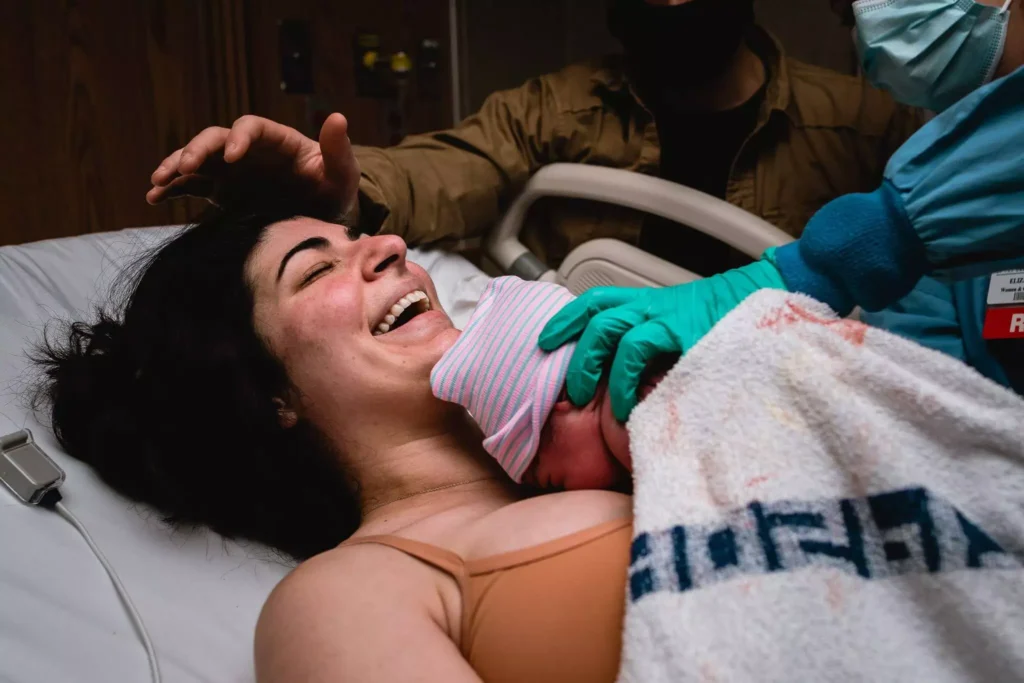

Learn the science of pregnancy and birth to take the mystery of labor away! Understand why you are feeling what you feel, and learn strategies to confidently move through pregnancy and birth!
- 9h+ of Video
- Support Group
- Close Captioning
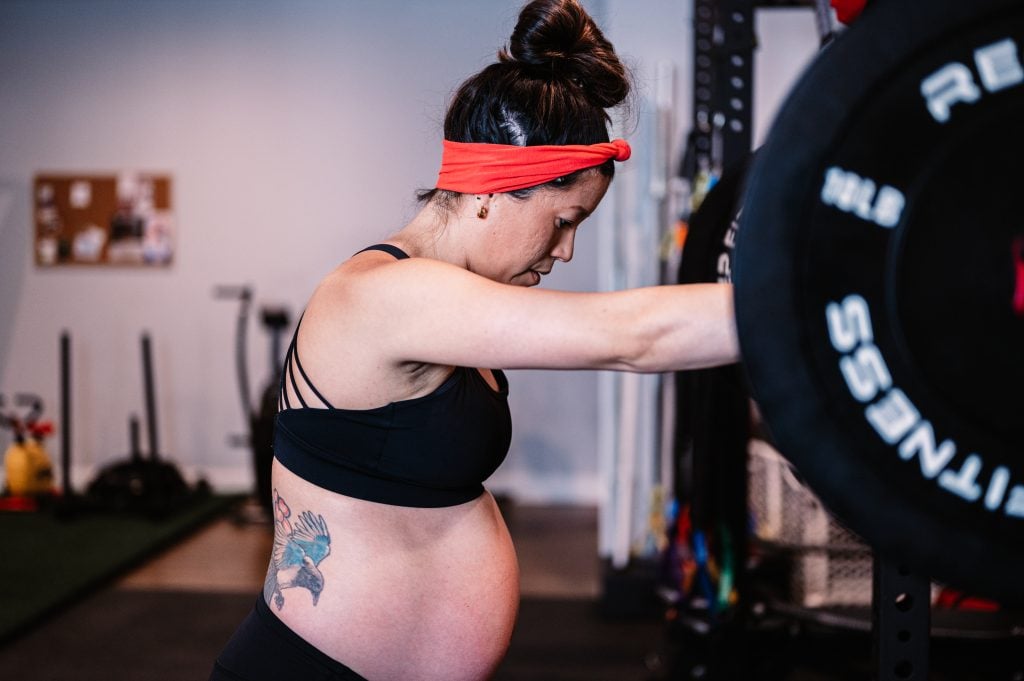

- 5 Workouts/Week
- Gym Workouts
- Self-Paced

Instructor
GINA
Workout on-demand with our prenatal fitness workout videos! Each workout is 30-40 minutes to follow along as you exercise at the same time!
- Birth Prep
- All Trimesters
- Mobility Work

Instructor
GINA
Find comfort and relief from pelvic girdle pain throughout your pregnancy and postpartum period! This program incorporates myofascial sling focused exercises to stabilize across the pelvic girdle joints.
- 3 Weeks
- On Demand Workout Videos to Follow