



Table of Contents
Welcome to the MamasteFit Podcast! What does perfect posture look like? In this episode, Gina sits down with Dr. Jen Fraboni, PT, DPT, FRCms, known as DocJenFit on social media, to find out — and the answer may surprise you. Dr. Jen, a physical therapist and mom of 2, discusses the significance of mobility, the fallacy of the ‘perfect posture,’ and how varying positions can benefit individuals, especially during pregnancy and postpartum. The conversation extends into addressing myths related to movement and posture, advocating for tailored fitness and mobility programs to ensure overall well-being. Dr. Jen also shares her personal experiences with pregnancy and the nuances of preparing for a vaginal birth after Cesarean (VBAC). The episode strives to empower listeners to relax and adopt a fluid approach to posture and movement for a more comfortable and confident pregnancy, birth, and postpartum journey.
Read Episode Transcript
What Does Perfect Posture Look Like??
Gina: Welcome to the MamasteFit Podcast. In this episode, we’re chatting with Dr. Jen Fraboni, who is known as DocJenFit on Instagram and all the different platforms. She’s a physical therapist and we’re going to be talking about what is the best posture– and spoiler alert, there is no best posture. And so we’re going to talk about the nuances of why it’s important to be able to change positions and how this can support you during your pregnancy, in your preparation for birth, and into the postpartum.
Welcome to the MamasteFit Podcast. In this episode, we have DocJenFit here, also known as Jen Fraboni, and so I’m really excited to chat with her all about posture, mobility, and how important it’s to move your body intentionally throughout your pregnancy, after birth, and really just like any time within your life.
So thanks so much for being here, Jen!
Jen: Thanks for having me. I have always enjoyed following you guys and learned so much from you guys as well, so I appreciate being here.
Gina: Yeah. So can you just introduce yourself to our listeners in case they’re not familiar with you?
Jen: Yeah, so I am DocJenFit across all platforms and I am a doctor of physical therapy. I have two babies of my own now and I feel like I’m still in the thick of postpartum ’cause we’re not sleeping that well.
Gina: I think it lasts a while. I’m still, I feel like I’m still in the thick of postpartum where I get like little chunks of sleep throughout the night and there’s a lot of begging to my seven month old, “Please just go to sleep, please!” there’s a lot of like attempts at negotiation. She’s not complying.
Jen: Yeah!
Gina: So let’s talk about movement during pregnancy, postpartum, and how just important it is. And so, one of the like top myths that I hear is you have to maintain perfect posture, one, to support your baby’s position, to feel good in your body, it’s better for your health- and this obviously expands outside of pregnancy as well. Like I see devices that are like perfect posture, brass or back backstraps. And so there seems to be a really big emphasis on finding this one static perfect position. What is your take on that and what are the nuances with maintaining perfect positions.
Jen: I think we first have to identify that there is no one perfect posture and get that out of people’s mindset, first of all, because that’s just unrealistic and false. And what it does, it can create, one, either more anxiety or more stress on the body, because now we’re forcing the body into a posture that it’s not used to being in. And so imagine trying to pull your shoulders back and hold a certain posture and turn on muscles all throughout the day. Now you’re not letting your body relax. You’re increasing the tone of the muscles so that you’re not going to have as much mobility, as much movement. You’re going to create more stress and tension in the body. So I hate the idea of focusing on one perfect posture.
I think posture is developed on your own, based on how you move your body more often throughout the day. That’s the goal, ultimately. Like we shouldn’t be standing in one position all day long, we shouldn’t be sitting in one position all day long. The whole point is that we’re supposed to introduce our body to so many varieties of movement, and that is ultimately the goal. And I think that’s what we miss out on most often.
Gina: Absolutely. I remember when I was writing my book, I was researching like what causes like low back pain and kind of the things that increase the prevalence during pregnancy, and a lot of it is not, “Oh, this person wasn’t in perfect posture,” it was lack of movement. So if somebody is stuck in a position all the time, it could end up increasing discomfort that they have in their lower back.
And I feel that for myself and my own body, like if I am stuck in one position all the time, like holding my baby standing in line, like I’m always arching in my back is usually my postural tendency, like my low back will start hurting a lot. And then once I add in some mobility and some movement to find some more flexion in my spine, find more rotation, I usually find that the pain relieves itself pretty quickly. Is that something that’s familiar in your experience?
Jen: Oh, a thousand percent, yeah. And we also have studies where we look at neck posture- because I know that’s such a huge one right now especially, we’re all on our phones and so we’re looking down- and we actually have research that continues to say it is not the one position that you’re looking in that’s going to be more likely to cause neck pain. It’s actually forcing yourself into a certain position that could cause neck pain more often.
So, same with the low back, like you were talking about, same with the neck. it just depends on how we want to move the body altogether. And so I typically tell people if you are wanting to get out of feeling like your head is coming forward so much, or feeling like you’re getting a bump in the back of the neck or anything, then it depends on what we’re doing all throughout the day. And so are we moving through the upper back a lot more? Are we creating space for the neck to be a little bit more aligned over the body without having to force it into position? Are we working the deep neck flexors while we’re doing exercise or are we always keeping our head out? Even these chin tuck exercises, they don’t have to be done in isolation. It could be done when we’re doing a chest press. It could be done when we’re doing a lat pull down, a deadlift. Like all of these neck control positions and strengthening and stability around the neck can come when we’re doing regular exercise. But we have to understand, how often are we getting to that? How often are we doing it? How often are we focusing on it? And that’s why sometimes getting programs where people are cueing you, and people are pointing out things that you’re probably not going to pay attention to, can be so helpful. And not only getting programs, but working with a personal trainer, working with a physical therapist, working with someone who can point things out that cues you into the areas that you might be neglecting. Because, once we start to strengthen, open, put ourselves in all these different postures and positions, your body’s naturally going to start holding itself in a different place and you’re going to start feeling a little bit more ease, a little less tension, a little less stress. And ultimately, that’s what gets us into this better posture position. We shouldn’t be forcing it. We want the body to find its way there on its own, and that’s why there’s also no one perfect posture because every body is going to find a different position. And I know you guys talk about this a lot too when it comes to pregnancy and having to be upright all the time and having to…
Gina: Oh gosh!
Jen: Because that’s been a huge thing that I think has been going around, which again, now we’re going to create more people having more tension into the low back and trying to force a posture and a position that isn’t natural and normal for the body. And we also have to understand, if I’m pulling my shoulder blades down and back- which I hate that cue- but if I’m pulling my shoulder blades down and back, I’m now flaring my rib cage, which is already in a position that’s not optimized as we’re pregnant. So now I’m just creating probably more tension through the back, creating more stiffness through the body, and more stress- again, anxiety of trying to force yourself into a position that your body’s not used to being yet all the time. It’s just not natural and it’s not ideal for the body to have to be.
Gina: Oh my gosh, yeah. For me, the, “You must maintain this perfect position during pregnancy, or else your baby will be in a horrible position.” I even saw one like really prominent page that their statement was, “Poor posture is the number one cause of C-sections,” and I was like, “What did I just read? Are you serious?”
And so I know that this causes a lot of anxiety for folks, where they’re like, “I can’t even relax on my couch when I’m watching a movie or when I’m watching tv. I feel like I have to always be upright and sitting perfect, and my belly button has to be forward or else my baby’s going to get OP!” Like I posted a video where I was showing like how you can use your pregnancy pillow to find a more reclined position if that feels more comfortable for you when you’re sleeping, and there were so many folks that are like, “But if I sleep like that, my baby will be OP,” and I’m like, “Oh no, please stop.” but it’s so prevalent that it’s really hard to overcome and feel confident to be able to find a relaxed position. And so again, yeah, people are forcing themselves into this perfect posture. I don’t know if that was something that was marketed to you or you heard a lot more prevalent, as when you were going for your VBAC at all, ’cause that’s something that like, I’ll hear a lot from, our clients that had C-sections for their first and they were wanting a VBAC for their second was all of this additional pressure to move in the perfect way to set themselves up for quote unquote success. Did you feel the same type of pressure?
Jen: I did see some things, and I know they talk about it a little bit in Spinning Babies. So when I went back and listened to Spinning Babies about- especially because he was breech for a little bit, not very long, like I think 32 to 35 weeks he was breech so I was going back to Spinning Babies and trying to do some of the maneuvers. And what I ultimately found, was just creating more space in my body to allow him to get into the position that was most ideal for him. And I also had talked to moms where it was like, “I couldn’t force it, and ultimately he came out,” or, “We had a C-section, he had a really short cord, so he wouldn’t have been in an optimized position in order to have flipped.” and so it was like, okay, hearing that this all gets to work out the way that it does for baby and me and, what is best, and all I can do is help to create that space for him to be in, in that place. But it didn’t come from me forcing a posture or having to be in a perfect posture.
And so I let a lot of the maneuvers, I let a lot of the things go and just said, okay, if I’m thinking of creating space relaxing tension. I want to open up my upper back, I want to release some tension around my rib cage, I want to make sure there’s mobility and movement along the scar area from my Cesarean, around my hips, I want to do some downregulation, I want to do some breath work. I want to allow the baby to do what he needs to do. And it worked. And I think also not stressing about it! And I heard other moms talking about that as well, of he ended up in a position and I didn’t do anything, or, he ended up head down and I did nothing. I did no focus on posture or positioning or anything like that. And I think letting go of stress and making it a certain way is actually what helped.
And so I really took that into consideration because we know that the body, it goes through so many positions. There’s so many postures throughout the day. So feeling and thinking that only one posture and position is going to be best for baby just really didn’t make sense to me, physiologically. And it’s better for the body to be in different postures, to be in different positions for your body, to be able to relax and for your body to be able to reduce tension in all these different ways, in all these different planes of motion.
So, I saw reels, I saw things going around about being in the perfect position, and I just laughed. And I also felt bad for these women who are sitting on their couches, on the edge of their couch, because they feel like they cannot relax. They can’t watch a show and sit back. And it makes me a little sad to think about. And I think I had it for a slight second of, “Oh, I need to do this,” and then I was like, “You know what? I really don’t. I really don’t. I could watch the show and lean back and be okay,” and I had my VBAC!
Gina: Yeah. It’ll be okay. Yeah, we get a lot of folks that are like, “If I lounge, my baby will be OP,” or, “My baby is OP, what do I do?” Either maybe their provider told them that their baby was OP and they’re like, “Oh, which means like the back of baby’s spine is to your spine.” And it’s, “Oh, you need to try to get your baby into the perfect position of OA or LOA,” are usually the two that are marketed as quote unquote best. And I think one of the things that’s most important to remember is, one, like we’re talking about, there’s no perfect posture for us, just in general. Like our body does not maintain a static position all day. Like we have to walk, we’re doing different activities, and so there’s so many different positions that we have to be able to move to, and the better we can change position, the better for our comfort and for our function, the less compensation that we’re going to have.
And so it would only, again, make sense that there’s no one perfect posture. And so that one perfect posture is not going to be the only thing that your baby is relying on for their perfect position. And more along the lines of what you’re talking about is, rather than trying to force baby into one perfect position or to force yourself into one perfect posture, let’s focus more on ensuring that their path to rotate is clear, their ability to change positions is easy for them to do. And so with a lot of the workouts that we do, it’s never, “This workout’s going to force your baby to be. In a perfect position,” this workout is going to help to release the tension to make it easier for your baby to rotate when labor does begin, for you to be able to move your body more easily when labor begins. ‘Cause again, there’s no one perfect position that opens your entire pelvis. There’s a lot of different movements that we have to move through to create space in different parts of our pelvis to change tension within our pelvic floor. And yeah, it wouldn’t make any sense that there’s only one perfect posture and this one perfect posture is the only thing that is determining your baby’s perfect position.
And I think when we recognize that we can actually just relax and to let go, and that would probably do more for you than holding one specific posture where you’re stressed and tensed up, because that is probably going to create some pelvic floor tension, is probably going to be better for you to just relax and to lounge on your couch. Like, I’m totally on board with that.
What are like your- I know that you do a lot of like mobility challenges and you offer like tons of mobility and like strength work within your app- what is like your walkthrough of like overall mobility that you’re thinking of when you think of like full body. If somebody was going to watch this video or they were going to listen and they’re like, “Okay, for my neck, I want to think about these types of movements. For my spine, I want to incorporate these type of movements.” Like what would your kind of general like full body flow include?
Jen: So I like to go back to the- oh my gosh, I’m blanking right now on who this method is… it might come to me- but there’s a joint-by-joint method. Very simple, very easy to generalize the body in this way. Now, obviously the body doesn’t just move in this way, but it’s an easy way to be able to think of we’re going to want more mobility in one joint, we’re going to want more stability. Mobility, stability, mobility, stability. And when we think of the body in this way, it helps to understand a little bit more of oh, my neck should have a bit more stability, my upper back, a bit more mobility, my low back, a bit more stability, my hips more mobility, my knees more stability, more mobility along my ankles and more stability around my feet, more mobility around my big toes.
Now obviously, again, we want mobility and stability throughout the entire system, but this is a really easy way to be able to say, okay, if my low back is feeling a lot of tension right now, have I been working on the mobility above and below? Have I been opening up my upper back? Have I been opening up my hips more? My neck is feeling really tense and really tight. Rather than just stretching my neck, because it’s likely already in a stretched position, what if I started to address my upper back a bit more? What if I started to address how my shoulder blades are moving and the stability and mobility around my shoulder blades and around my upper back so that I can help take tension off of my neck?
So I think when we start to just pull back for a second, especially if we’re having a lot of pain and tension in different areas. Stop focusing on that area. Let’s, pull back for a moment and look at the areas above and below and how those might be affecting what’s happening into that certain area. Or say the upper back is feeling a lot of tension. Have I been working on my stability around my neck? On my core stability below? So this is where, again, it’s a general thing, it’s not going to work for everyone, but it’s a really easy way to say the body likes homeostasis- which it does- and so if I want to find better balance, where am I not finding mobility? Where am I not finding stability? And again, the neck stability, upper back mobility, low back stability, hips mobility. So if we, again, look in that certain pattern, where can I start to optimize mobility and where can I start to optimize stability? It’s a really simplemethod to use.
And then I also like to say, I don’t like to add a ton of time to people’s life because I understand that’s why on Jen.Health, I’m always like, the plans take five to 15 minutes ’cause I want you to do your thing. Go do your workouts. Like, you guys like the MamasteFit thing? Great. Go do it. This is just an additional little add in of things that you could potentially be missing out on, could potentially. If you went to a physical therapist, here’s what they’d likely be giving you for your low back, or for your knee, or for your neck- things that you might not be thinking about. So that’s what I try to sprinkle in, whether it’s a little thing you’re going to do in the morning, a little thing before your workout, a little thing after your workout, or before bed, I’m all about sprinkling in those little things, rather than worrying about doing an hour long mobility routine that I now have to take on along with my strengthening and my other things that I’m- my walking I’m supposed to get in, now I’m supposed to get in some HIIT interval training, and I’m supposed to- all these things that we’re supposed to get on it could be really overwhelming. So my thing is always like, where could I be lacking mobility or stability and where can I start to sprinkle it in?
Gina: Yeah, I love that. Yeah, there’s so many things on like the pregnancy to-do list, to prepare for birth, to have a good experience, and so it can totally be incredibly overwhelming. It’s like, “Oh my God, now I have to do an hour long mobility too? Geez.” And so I think there is a balance between the mobility- which I think is different than just straight up stretching- but, the difference between like mobility, the stretching aspect, improving joint range of motion and like the strengthening, like the resistance training. ‘Cause like you were saying our joints are stable, mobile, stable, mobile, and all up and down the body, and so if we have too much mobility can we add on some strengthening to help support it? If we have too much stiffness, can we add on mobility? So also being able to understand, okay, if I have too much movement happening here, or too little movement happening here, maybe I can add in mobility or more strengthening, ’cause I think it is like a pairing of the two.
When I think of like pelvic stability to start- because that’s where a lot of us have issues during pregnancy- I think you might have had some pelvic pain, I have some during my pregnancies as well. And one of the big things that can contribute towards pelvic pain is one, the pelvic position. How well do the pelvic pieces fit together, and how stable are they in that position? And some of that is, is maybe one muscle a little bit tighter on one side than the other? So it’s pulling the pelvis into a position that it can’t quite get out of. And so in those instances, mobility can be really helpful to release the uneven tension so that the other side now we can strengthen to help pull that pelvis where it needs to be to help stabilize. And so that would be like one example of mobility versus strengthening.
And so specifically for most of us, we have a little bit of left pelvic half sits a little bit more forward, right half sits a little bit more back. And so if I was having some SI joint pain, for example, I could think, okay, my right inner thigh is probably a little bit tighter than my left. Let me mobilize and stretch that. But now I need my left pelvic half to be able to pull back. So I’m thinking hamstring adductor strengthening right side, I’m thinking glute quad strengthening to help pull the pelvis to a neutral position or the opposite position. So that would be like one approach that I would do specific to, how can I combine mobility with strengthening. And it sounds like that can apply just up and down the spine. If someone’s having upper back pain, can we add maybe some more mobility to the chest? Can we add some more strengthening to the low back to the core to help stabilize in that area?
Do you have any other examples of like kind of common areas that you see folks having issues with?
Jen: Yeah, there’s so many areas of the body that people can get hung up on. And I think what’s important to know also is that, and this was a little hard for me as well during pregnancy, is hearing pelvic symmetry, and the pelvis has to be in this perfect symmetrical position in order for baby to move through and, deliver. And I’m like, that’s why we have hormones that create laxity around the pelvis so that the pelvis can move out of the way as baby is moving and do its job. I think we, our goal is to find as much where are we restricted, where are we tighter, where are we not moving into, I think that is ultimately the goal of our body just to be able to find more ability to move and ability to access different positions.
But I always get really hesitant on the pelvis has to be in this perfect alignment, in this perfect posture, in this perfect symmetry. Because the reality is we’re not perfect symmetrical beings. Like I can even look at my face and, my hairline comes back more on one side than the other, or my nose is one way or the other, and and then I go down the chain and I continue to find asymmetries. And the reality is, we look inside and we have complete asymmetries throughout the body. We have our, we have different lobes of the lungs, we have our liver that’s huge, and it’s on one side of our body, you know. So, we have all these asymmetries inside, and we write with one hand, we kick with one leg. We’re going to have asymmetries on the outside as well.
So I love that you direct us to okay, where could you be tighter? Where could you be a little bit stiffer or need to move into as much? And I like to remind people we’re never going to find the perfect posture. And that’s why it’s hard for me, even I go to professionals, I go to chiropractors, I go to physical therapists myself, and when they say, “Oh, one hip is higher than the other,” I’m like, “Yeah?”
Gina: It’s supposed to be.
Jen: Yeah, that’s my body. I also have scoliosis, so if I’m going to have, some lateral curvature of my spine and it’s going to end up in one way, my pelvis is probably going to always be off no matter what I do. But I have no back pain. I have no hip pain. I had no SI pain. We can’t say one leads to the other.
And we have studies now where we look at where anterior pelvic tilt is one of the most demonized positions of the pelvis, right? I hear, “I want to get outta my anterior pelvic tilt.” First of all, it’s not a diagnosis and it’s not a bad thing. It’s just might be where your body is holding more positioning. So again, how could we find different positions at that pelvis? But in a study of asymptomatic people, so like people who have no pain at all, we’re finding that I think it was like 87% they measured had anterior pelvic tilts, about 9% had posterior pelvic tilt, 7% were completely neutral. And again, this is, you’re going to have differences physical therapist or clinician to clinician, whoever’s measuring it. It’s always going to be a little different. There’s no clinician to clinician consistency, unfortunately. And so again, this isn’t a proper diagnosis. Your body moves in all different ways, we have asymmetries throughout the body. So again, it’s just finding, okay, are my hamstrings a little bit not taking on as much pressure with my glutes? Maybe my quads are really tight and I need to reduce some of the tension in my quads. Adductors tend to be a really tight place for a lot of women, so getting into some positions that open up, stretch and strengthen the inner thighs. Places that stretch and strengthen the lats. Those are areas that can create some tension down into the back or reduce movement along the spine. So sometimes getting into more side bending positions, getting the body into, using our lateral strength, so getting into side planks, getting into things that move us into rotation- those are areas that I think can be really neglected and sometimes we need to kind of address.
But I just want to put in people’s heads, if someone’s telling you your pelvis is out of alignment, that’s okay. Like, rather than telling me I’m out of alignment, tell me where I’m a little tight, tell me where I can fire muscles a little bit more, tell me where I’m neglecting positions, or I’m not finding a range of motion in a certain way. But to tell me that my structure looks a certain way, doesn’t tell me anything. Because we know now that there are people who have all the pain and no problems in their pelvis, and then there’s people who have all the pelvic asymmetries and everything going on in their body and they have no pain at all.
And it was also interesting, I just wanted tell about from first birth to second birth- I felt like in my first pregnancy, I did all the things. I worked out probably even more than I did in my second one. I really addressed so many different ranges of motion, so much mobility work, pelvic floor, perineum stretching, all the things- and I did not get past five centimeters. I also didn’t feel a lot of pelvic pains, I didn’t feel, I mean, I felt no pelvic pain. I felt no pelvic symptoms. I felt no round ligaments symptoms. I felt no clicking in movement in my pelvis. I felt nothing. And I also not open for whatever reason, whatever that may be. Second pregnancy, I felt pelvic symptoms from like second trimester on. They would come and go. They were managed with movement and what I was doing, but, I felt I would do hip 90/90 and get so much clicking in my pelvis. I would just move different and feel the movement in my pelvis.
And then I had a baby who was two pounds heavier with a VBAC. So it’s interesting to me, and that’s where I feel like the hormonal changes, the laxity changes in the ligaments, play such a huge role rather than- and who knows? Because I did all the mobility work, I did all the strengthening work, I did all the things, and I had two completely different outcomes. So it’s just, it’s very interesting to observe.
Yeah, I definitely feel that when we put less pressure on ourselves our birth experiences can be really different, too. And that’s not to say if you do these, if you totally relax in your pregnancy and you hit these four markers, you’ll have the perfect birth. But even for me, like with each birth, I felt like during each pregnancy I was like releasing a little bit more of like my expectations of myself. Like each one, I still exercised and I was still moving and struggled with SI joint pain in all of them. But like my expectations and my ability to let go of expectations and ego increased with each pregnancy. And each labor was much easier because I think when I let go of my ego, it allowed my body to just release into it as well and to open and to do all the things it needs to do during labor. So I can see that there is some correlation between like letting go of the expectation. Like maybe there’s more of like muscle memory of opening and increasing movement that’s happening. And just overall, just like the downregulation that I think comes with releasing to the experience I think plays a huge role.
And I see that with my VBAC clients, too. The ones that like can really just surrender to it- or even just even with my clients that haven’t had a C-section before, the ones that can really just surrender to, “Hey, I have a plan. I feel prepared. I’m setting up the conditions for the experience that I’m wanting, but I’m really just going to surrender to whatever needs to happen.” And I find that things just go a little bit smoother for them, compared to the ones who come into their labors with a lot of anxiety of, “I hit my checklist.” “Oh, I was sitting in a slouch position that one time.” And so I think letting go of that ego and surrendering is huge when it comes to our labor experiences.
And totally on board with it’s not “perfect” pelvic position or “perfect” posture, it’s about how well can you change positions? How well can you move? And I think most people favor an anterior pelvic tilt, just in general, like we walk forward, like our pelvis is going to tilt in the direction that we’re like going to be moving. And so it would totally make sense that most of us favor that position, especially during pregnancy. And just because we favor certain postures during pregnancy or even outside of pregnancy, doesn’t demonize them. It doesn’t equal, like having more laxity in our pelvis doesn’t equal pelvic pain, like having a certain posture doesn’t equal this dysfunction or this issue. It’s how well can we then move out of said posture? How well can we change positions with control, with, ease, like you’re talking about, as opposed to forcing ourselves into a different position? And I think that definitely contributes towards a more comfortable pregnancy experience and then also just releases a lot of that stress, like I think that plays a huge role in our comfort during our pregnancies, for sure.
So let’s talk about what you felt was the difference between like your first pregnancy and birth versus your second. ‘Cause I know that we have a lot of listeners that maybe didn’t have the experience that they were hoping for with their first, like they did all the prep and it wasn’t the experience that they thought it would be, whether they had a vaginal birth where maybe they got an epidural where they were wanting to go unmedicated, or maybe they had a C-section when they were hoping for a quote unquote natural birth. And now they’re preparing for their next birth, and I see two types of people, generally. One has a really long list of, “These are all the things I’m going to do to have a better experience this time, ’cause these are all the things that I failed at my first time, this is why I had that bad experience, so I’m going to go against that.” And then we have somebody else who is just kind of like, “You know what? I really just had no control over that, and I’m going to prepare as best I can, but I’m just going to let it go, and just surrender to it.” How did you navigate the two, and what would your recommendation be for someone who’s feeling like on the more guilty side of things.
Jen: I think that’s where we’d first have to… Like, I feel like pregnancy itself is your first introduction into motherhood, of, you can’t control the outcome, ’cause you can’t control whether you get to see a baby at the end, or… like you can’t control anything. And I think, you having been through miscarriage as well as me, you get to really see that right off the bat. And then you go into birth and you’re reminded again, “Oh, I really don’t have control. I could do all the prep work I could do, but I have no control on the outcome.” And I think that was, that is how I thought I went into the first birth is not having any expectations, obviously I had what I hoped, but I think that also did help to be able to advocate for myself along the way of, “Okay, if this, if we’re going down this path, what is, what, is it that I really want? I’m going to choose.” And like I remember, ultimately, I started with a home birth, we ended up going to the hospital, and one of the OBs told the nurse that I was going to have a Cesarean before she even came and talked to me. And I just like felt really icky about that. So I was able to advocate of his, “Okay, who else is an OB here? Who else is on call? I want to have another person.” And so I feel like I got to advocate for myself, even though I ended up in a Cesarean, which was not where I wanted to be- obviously, I was trying to go for home birth!
And so second time it was like, okay, releasing those expectations again, but also being so committed to what I wanted. So that was a hard, I feel like that’s a hard thing to do, where it was like mentally I had to full on say, “I am going to VBAC. Like I, I know this is possible. I know my body can do this and I’m going for the VBAC.” And at the same time, “I’m okay if things adjust and go a different way. I’m letting go of the outcome, but my intention moving in is to get that VBAC.”
Because, when I first got pregnant again, I was like, “Oh, maybe I’ll VBAC, maybe I’ll have a Cesarean, I don’t really know. We’ll see.” And I left it really airy, flopping in the air. And I talked to the OB, actually- I was seeing midwives, throughout the practice and then when it came time to sign off that I was going to get a VBAC, I talked to the OB, and he just very plainly said, “Your VBAC will happen if you believe it’ll happen, like you can definitely
VBAC. You have to believe that you can VBAC.” And that sunk in with me so much of, okay, I, yeah, I get to really choose. Because even when he was leaving, I was like, “If I need to go into the Cesarean, would you do my Cesarean?!” Like I was still was kind of like, “Well what if this happens?” I had to full on believe that it was possible.
And so I think the mental aspect is such a huge role in pregnancy and birth. And it’s hard, because you go in with the ability to know that this is possible, and you also have to go in with releasing any expectation of what the outcome may be. And I think that’s helped in not having traumatic births with both birth experiences- feeling empowered, feeling knowledge, feeling okay, this isn’t where I want to be, but here we are, and what can I do, and how can I help it? Like I ended up pushing on my back, holding my breath, legs open wide- in a position I never thought I would be in for my VBAC, but here we were. And so it was like, okay, how can I, what can I do in this moment to make it the best experience for myself possible?
So I think we go in with the intention full heartedly was my biggest thing in the VBAC. Knowing that uterine ruptures can happen, knowing that I might still have a Cesarean at the end of the day, knowing that I might not dialate all the way, and that’s okay. I remember when I got to 6cm, because I only got to five centimeters in my first birth, so when I got to, when I heard, “Six centimeters,” in my mind and body, I was already successful because I had already gotten further than I got last time. So it, no matter what happens after this, at least I know my body was able to go further. That was pretty cool to me. For my husband, he was like, “Oh, that’s still only six centimeters…” it was, that’s a huge accomplishment. So I think just really getting mentally prepared as to having that intention and releasing the expectation, that was huge. That was the biggest for me.
And then, I think we could do all the things, but we just, like we’ve been talking about this whole podcast, we put our body in the best position possible by opening as much as we can, by strengthening as much as we can, by finding new ranges of motion so that our body can naturally find that on its own as needed in birth as much available.
But, I went to chiropractic a couple times, I didn’t feel like it was as personalized to my structure. It was the same kind of technique every single time. So I ended up going more to a pelvic floor therapist that was a little bit more specific, based on my restrictions, and gave me homework based on what they found. So for me, that felt better to be like, “Okay, here’s what’s not moving as well. Here’s what I could be doing.” But I think you get to find what that is for you, whether that is chiropractic, acupuncture, physical therapy. But I think getting other people to be able to see, okay, here’s where you are, here’s where you can be, and here’s how you can help yourself get there as well. Which is why I love your guys’ programs as well, because you give the tools to allow someone to step into their own body and discover and learn. And I think that’s most important when you’re preparing your body, is having control as to what you can control, not what someone else is controlling, not what someone else is opening, knowing that there’s no perfect alignment. Other people are helping to facilitate what we could be missing in an area, and that is the only thing I could do for the VBAC leading into it was like, where could I be missing? Where could I be opening?
One very interesting thing I’ll end with, is I did see a pelvic floor therapist who did really, really, really deep ligament release work, which I don’t think is as common, so you might not find a pelvic floor physical therapist who would do this. But it’s basically going internal, beyond the muscles, and then pushing into the ligaments and holding sustained pressure until you feel a release. And I did feel a release. It was very, very interesting. Did that help with my VBAC? Probably not. But mentally I was doing anything I could to create room in the pelvis.
Gina: Oh man, that’s really interesting. I had a little bit of pelvic floor release at the end of my most recent pregnancy as well. We have two pelvic floor PTs that work out of our gym. And we did a little bit of internal work. So for any of our listeners, if you are like wanting to do internal work, sometimes PTs want you to have some sort of clearance from your OB, sometimes they don’t. Usually, as long as you don’t have any sort of like complication where like you can’t penetrate the vagina, it’s usually not an issue. But, so just be aware that some PTs may or may not want to do internal work with you while you’re pregnant, but you can totally work with a PT during pregnancy.
So she did internal work on me like more to I think my right side, and it was like that sustained pressure, and it, I was like, sweating a little bit. I was like, “Oh, this is intense.” But it felt so much better, especially after the fact, and I totally think like my baby, like just dropped a little bit more. I actually went a little bit earlier than all of my other pregnancies with this one, I don’t know, maybe it helped. I don’t know. We’ll see. Or I guess we won’t see, we’ll just question it. But I also found that of the two, if I had to only pick one modality, PT I felt was more like individualized, especially with that like internal assessment and the overall viewpoint of the body. And I know that there are chiropractors that are, they teeter on that line of PT in chiro. But I definitely find that if they’re not like getting up and assessing you and they’re not like monitoring how you move, like you might be missing like a really key piece. ‘Cause again, it’s not just what is the alignment of your pelvis and your spine, it’s: how does it move, and how well do you change positions? As opposed to: what are you, just laying on my table? I might be dismissing what a chiropractor fine tunes. We’re going to have one come on the podcast that lives here locally. But it’s like, what kind of like assessment are we doing to identify that this joint move and it’s a controlled movement versus, “This is your alignment right now.”
But, thank you Jen, for coming on the podcast and sharing your personal story about the difference between your two pregnancies and all about how there is no one perfect posture. We can, all let that go. If you’re following a social media page that’s making you feel like garbage after you watch their reel, maybe unfollow for a little bit. My hope is not of our reels, or any of Jen’s!
But if folks want to learn more from you, where can they find you?
Jen: I am @DocJenFit on all the places, Instagram, YouTube, TikTok. and I also have a Jen Health platform, so it’s just Jen.Health. Literally you can use it for free! If you sign up there’s a “Discover” section that has a search bar and you type in anything and we have… it’s essentially my Instagram searchable! So imagine not having to scroll anymore. You could just type in, “low back pain,” “knee,” “hip mobility,” whatever it is, you could type it in and you will find a video for free. So you can explore it completely free. We also have different plans that take you through that kind of tracking of progress daily so that you can really start to just sprinkle in the things that you could be neglecting. And I think that’s the biggest thing. I also, I cue like crazy in my app because I don’t want it to just be a thing where you’re coming and you’re moving, but you’re learning. And so whoever is a part of Jen.Health, for however long they want to be a part of it, my goal and my purpose of doing it is that you learn something about your body so that once you step away, and no matter what you’re doing after this, you either know what you need to do to help yourself through a certain pain area, or you know how to modify when you’re in a different class. So that’s my goal.
Gina: I absolutely love that. I think there’s something really special about being able to take information that you’re learning from somebody and then apply it to you as an individual. Because you’re not going to be there to cue somebody through every deadlift rep that they do, like I’m not going to be there to coach someone through every labor position that they do, and so being able to take the information in a digestible way to then apply it to you as individual is invaluable.
So thank you so much Jen, for coming on the podcast. For our listeners, head to the show notes. We’re going to link all of Jen’s platforms down there so you can find her easily. Definitely give her a follow on Instagram. I’ve been following her for years, I think, since the beginning of MamasteFit, so I’m really excited to have you on the podcast.
Jen: Yeah, thank you for having me!
Gina: Thanks so much for listening to this episode with Dr. Jen. If you want to move more confidently throughout your pregnancy, because again, there is no one perfect posture, there is no one perfect position for your baby, and there’s no one perfect labor position, we go over all the nuance of that in our prenatal fitness course and in our childbirth education course.
With our prenatal fitness course, we’re going to help you to move your body more confidently throughout your pregnancy through a variety of different positions that are important, one for your prenatal comfort, but also to create space in your pelvis and to support your baby’s position for birth. ‘Cause again, there’s no one perfect position, there’s a large variety of movements that we should be incorporating throughout our day, throughout our workouts. And we do that for you in our prenatal fitness program.
Then in our childbirth education course, we talk more in depth on the nuances of baby’s positions, different labor positions, to help you better understand what might be the best choice for you and your individual birth experience.
You can check out both our prenatal fitness program and our childbirth education course on our website at mamastefit.com, and you can use code STORY10 to get 10% off any of our online offerings, and you can bundle them together to save an additional 15% off at mamastefit.com/bundles.
This podcast is sponsored by Needed. Needed is a perinatal nutrition company that specializes in optimizing nourishment for the perinatal timeframe. You can check them out at thisisneeded.com and use code MAMASTEPOD to get 20% off your order.
Additional Resources
Find Dr. Jen on social media: @DocJenFit
Prenatal Support Courses
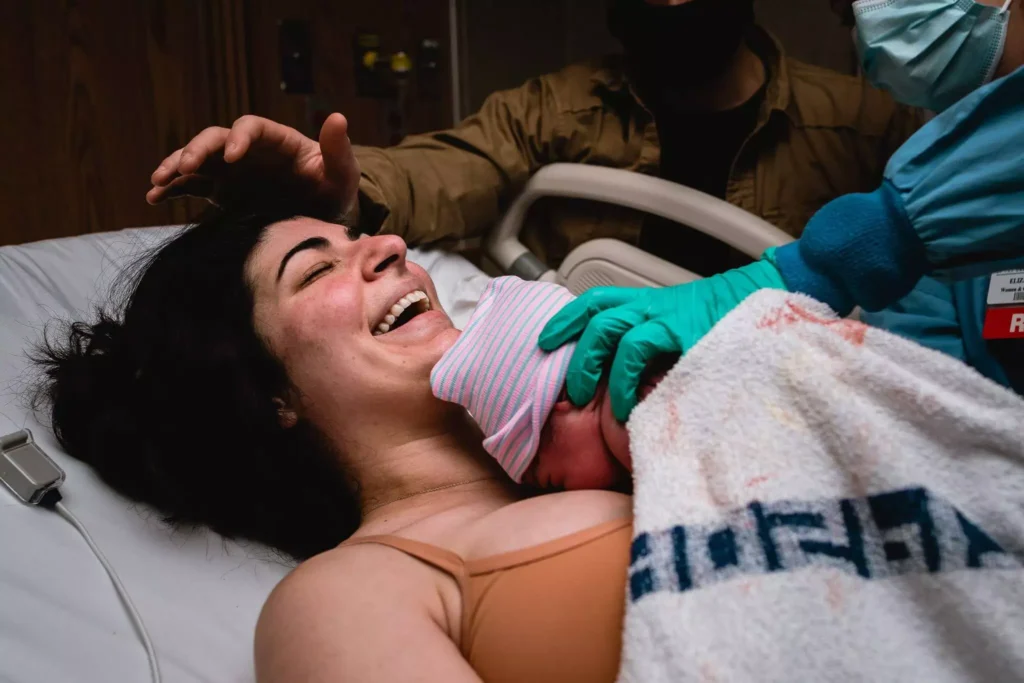

Learn the science of pregnancy and birth to take the mystery of labor away! Understand why you are feeling what you feel, and learn strategies to confidently move through pregnancy and birth!
- 9h+ of Video
- Support Group
- Close Captioning
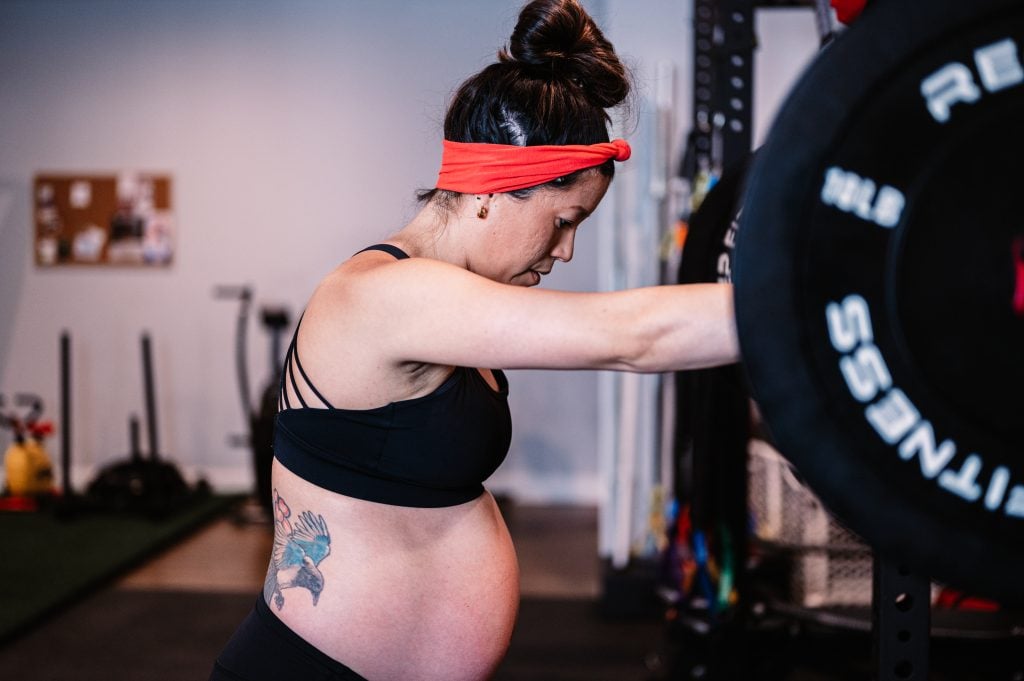

- 5 Workouts/Week
- Gym Workouts
- Self-Paced

Instructor
GINA
Workout on-demand with our prenatal fitness workout videos! Each workout is 30-40 minutes to follow along as you exercise at the same time!
- Birth Prep
- All Trimesters
- Mobility Work

Instructor
GINA
Find comfort and relief from pelvic girdle pain throughout your pregnancy and postpartum period! This program incorporates myofascial sling focused exercises to stabilize across the pelvic girdle joints.
- 3 Weeks
- On Demand Workout Videos to Follow