



Welcome to the MamasteFit Podcast! In this episode, Gina sits down to discuss how she has safely and confidently navigated her return to running- most recently at 8 months postpartum after baby number 4! As a former collegiate athlete and ultra-marathon runner, Gina breaks down what she has learned about returning to the sport she loves after becoming a mom (multiple times over!), sharing tips and advice on how to structure your return to running journey so that you can run farther, faster, and without pain!
Read Episode Transcript
Gina: Welcome to the MamasteFit Podcast. If you’ve been wondering how you can return to running after giving birth, this is the episode that you want to listen to. I’m going to be sharing all of my tips to return to running- both pain-free, symptom-free- so you can get back to the sport that you love after your pregnancy. And this could include if you have a diagnosis of prolapse, if you have any other pelvic floor issues, we’re going to discuss strategies so that you can overcome those issues so that you can run pain free and to improve your quality of life.
Welcome to the MamasteFit Podcast. In this episode, I’m going to be talking all about our approach to returning to running. Roxanne and I were both collegiate runners, I used to run ultra marathons, and we’re both currently training for a marathon now in the postpartum. And so I’m going to be sharing our approach at MamasteFit to getting back to running.
One of our very first programs that we offered online was our return to running program. I just recently revamped it completely, so it’s a ton of new exercises, a lot of new approaches based on new research that I’ve been coming across, with our experience with our in-person clients, and then for ourselves personally, what we’ve been tweaking based on our marathon prep.
And so I’m going to be breaking down what you can do starting from day one postpartum and that first month, we’re going to talk about that next phase, which is about the second and third month postpartum, and then that return to running portion, which starts anywhere from three to four months postpartum, and beyond.
I’m also going to be breaking down some tips on how to run in a stroller with your baby, some considerations for that. How we can think about like our form and our posture to help decrease symptoms that we may be experiencing. And then also sharing my own personal experience with running with a prolapse, which is something that a lot of folks may feel like once they get that diagnosis of prolapse, it’s over, we can’t do any jumping or running ever again- but that’s not necessarily true. So we’re going to break down a lot in this episode. If you are trying to take notes, there is a transcript for the episode that is available on Spotify, so you can always read through that if you want some more details, and there will be a blog post as well. And then of course, you can always join our Postpartum Return to Running program, where we give you a day by day approach through all of these concepts as well.
So let’s start with what can you do to help support your body’s recovery after you give birth, from day one, especially if you have the goal of returning to running in the postpartum. The first month postpartum, there’s a lot of healing that is happening from the planned injury of birth. So whether you gave birth via C-section, if you gave birth vaginally, that is planned injury that we have to heal from, and that takes about four to six weeks postpartum. And then again, just because we hit that six week mark, it doesn’t mean that we’re all clear, everything’s good to go, we’re totally healed, let’s jump back into it. Healing from pregnancy is going to take probably at least 6 months to 9 months to 18 months long. So that first month is just healing from this planned injury of the actual act of giving birth, and the next year is going to be healing from the act of pregnancy, which is a much longer timeframe.
During that first month postpartum, we’re really focusing on one, healing from birth, so allowing the bleeding to come down, allowing our uterus to shrink down, and to have that initial tissue healing begin to happen. The first about week to two weeks is going to be this inflammation phase- there may be a little bit more swelling, we have more blood flow. This initial healing is really important for our tissue healing after giving birth. After that, we’re going to move into this early phase of tissue healing that comes after inflammation, where that tissues beginning to restructure itself and beginning to heal, but it’s still a weakened state, so it’s not super mature remodeling yet. And so this would be similar to if you like sprain your ankle and it starts to feel better, so you go out and you go for a run, and then you reinjure yourself fairly easily- we’re still in that initial tissue healing phase right there where you may feel better in your body, but if we load it too much too soon, you could increase your risk of injury. So still important to continue to be mindful during this first month, especially after that initial inflammation phase.
During this first month, main things we’re thinking about is reconnecting with our core and with our pelvic floor. And we can do that with some deep core exercises like diaphragmatic breathing, so just breathing to expand in the rib cage that may feel a little stuck from pregnancy, so I especially find a lot of back expansion exercises to be really helpful here. We can also incorporate some mobility within the thoracic spine, so like rotation, lateral bending in addition to mobility and like the hips and the pelvis. And so all of this stuff is going to help you just feel a little bit better in your body as you’re probably sitting a lot and kind of stuck in positions holding your baby, feeding your baby, and so some gentle mobility can be super helpful as well.
Towards the end of this first month, we can also begin to incorporate some gentle core stabilization exercises. So we’re thinking like one arm, one leg moving. So we have just one thing to focus on, and it’s re-coordinating how is my core stabilizing as I maintain my position, as my arm or leg extends. And then we can begin to incorporate walking as well. And so this will be as tolerated- if you had a C-section walking earlier can be helpful to decrease the risk of blood clots, but we want to not go crazy with it. Like we’re not walking for a 5K, we’re doing like a five minute walk, a 10 minute walk. And this is also important after a vaginal birth as well. And so once you hit like the two to three week timeframe and your bleeding has decreased a lot, you can begin to go for some walks outside the home. And maybe this is like a 10 or 15 minute walk, very slow, very mindful, your baby can be in a shoulder, you can be baby wearing. But what we’re really monitoring for with these walks is to ensure that our bleeding is not increasing. And that’s going to apply to really any activity that we do in the first six weeks postpartum. We shouldn’t notice an increase in bleeding, ’cause that could be a sign that we’re maybe doing a little bit too much.
So this first month postpartum is really just a lot of resting, diaphragmatic breathing to reconnect, maybe some gentle core exercises, mobility. Then we can begin to incorporate some walking, which is should be a very low impact activity, but the main thing that we’re monitoring for is our bleeding.
And now we do have a free early postpartum recovery course that you can join- we’ll link it down in the show notes below- where we walk you through all of these movements in detail. So I explain how to do a back expansion exercise, I walk you through some mobility movements, I walk you through some core exercises. So if listening to the audio or watching this video where I’m just sitting in a chair is not really giving you what you need to learn, join that free course and I’m going to walk you through each of those movements.
Now, the next phase that we can move into is going to be our foundations phase, and so this is going to be at that four to six week mark. You’re feeling a lot better in your body, our tissue is progressing towards that more maturation phase, so the tissue’s getting a lot stronger at this point. If you’ve had a C-section, your fascial tensile strength around your incision site is at 51% strength at this point. And so we can begin to load and increase the demand on our bodies a little bit more.
And now the foundation phase, it’s going to be anywhere from that 4 to 6 week mark, until about 9 to 12 weeks, so it’s about a two month timeframe.
Let’s take a break from this week’s episode to hear about our podcast sponsor, Needed. Needed is a nutrition company that specializes in optimized nourishment for the perinatal timeframe that both Roxanne and I have utilized during our pregnancies and into our postpartum now. Needed’s collagen is one of my favorite products that is utilized pretty much daily, sometimes multiple times a day, to help support my recovery during pregnancy and now in the postpartum, especially after my workouts and after my runs. In our Facebook group, one of the moms was asking, “Hey, what is everybody using for recovery after their workouts? I’m sleep deprived, I’m exhausted. I want to start taking some sort of supplements to help support me,” and I was like, “Hands down, and Needed’s collagen is something that I am utilizing to help support my recovery after all of my workouts.” Needed’s collagen is third party tested, so you can trust that what’s in it is what is actually in it, and that it’s going to be a high quality product as well. I use it personally throughout my pregnancy. I use it personally now throughout my postpartum. My hair volume is great, so maybe that really helped with that. My nails are super healthy, so I’m assuming that it’s related to the collagen. So if you want to check them out, you can check ’em out at thisisneeded.com and use our code MAMASTEPOD to get 20% off your order. And again, Roxanne and I only recommend brands that we personally use and love. We’re not just throwing out brand names for the money. We only recommend brands that we really trust, and Needed is definitely on the top of our list.
Before you progress into the foundations phase, we want to ensure that our bleeding has pretty much stopped, so we shouldn’t really have any heavy bleeding at this point, you shouldn’t really be needing to wear a panty liners anymore. This is a good sign that your body has internally healed and is ready to begin to load that tissue. So if you’re still experiencing heavier bleeding at this point, or you’re still like noticing a lot of spotting, especially with an increase in activity, we may need to rest a little bit more and maybe we resume this phase around like the 6 or 10 week mark.
Once you start the foundations phase, the main things that we’re incorporating within our programming and that are great recommendations for you, is we’re going to be focusing on rebuilding core stabilization. So can we maintain our torso position as our arms and legs do things? And we can start with this, with floor based exercises, those tend to be easier to stabilize in because we don’t have to think about gravity and there’s less joints that are stabilizing. So if I’m standing up, I have to think about my foot positioning, my ankle, my knee, my hip, my spine, all the way up, to stabilize in a movement. While if I’m just on the floor, all I have to think about is my torso against the floor. There’s a lot less demand on my body, and so it can be easier to figure out, okay, my diaphragm moves here, my pelvic floor moves here, as my arm and leg does different things. So it can be easier to stabilize on the floor to reconnect with our body.
So all of our postpartum workouts are going to start with a core stabilization series that starts on the floor. So again, we can maintain torso position, which is core stabilization as we extend an arm overhead, as we extend a leg, as we extend in the hips. And so we have a series of three movements where we have a few different things added to each of them. The first is going to be the dead bug, where you’re on your back, so we have the ground that is supporting your back, and we’re going to start with just moving one arm, just one leg. And then we’ll progress towards opposite arm and leg, all the way to incorporating like bands and weights with the movements. This is going to be helping you to maintain your torso position to resist extension, so resist arching in your back as you are reaching overhead.
After that, we can incorporate some like glute bridges here, so strengthening the glute musculature and then we’re going to move on to our side. So we have our side lying hip abduction where we’re going to be strengthening the side obliques, strengthening the side glute muscles while maintaining that position as well, we can add in some side planks here. And again, we can start this progression by squeezing a ball between our knees, and then advancing it to bands and holding onto weights. The final progression is going to be in a tabletop position, so now it’s similar to the dead bug, but now it’s flipped over, we have a little bit more of a gravity demand. We also have a more stabilization demand ’cause now instead of just being flat on my back, it’s my knees and my hands that I’m stabilizing on to maintain my torso position. So a little bit more challenging than the dead bug. Here again, we can just do just one arm, just one leg, opposite arm and leg, and then we can add in some bands and weights to increase the challenge.
We can also incorporate some bear crawls, some bear positions, and planks here as well, and we incorporate all of those different movements in our free postpartum warmup series, which again, all of the warmup series is the warmup for our actual workouts. But if you just want the core exercises, again, I’ll link it down in the show notes below so you can get all of these movements as well. Because again, I know listening to me talk about it is probably not giving you maybe the best visual, but just joining the programs where I’m going to walk you through each of the core warm ups is also really helpful.
After our core stabilization warm up, so we have our floor base movements, we’re reconnecting with our core and our pelvic floor, we’re reconnecting with our ability to stabilize, to move our arm and leg, then we can begin to progress towards more upright movements that are low impact to build strength. So we’re really focusing on building strength in the leg musculature, in the upper body as well, because you do have to maintain your torso position as you run. And so we can incorporate movements like squats, dead lifts, more of those bilateral movements, so both legs are doing something. We can incorporate some staggered stance movements, maybe we’re incorporating single leg movements- ’cause again, running is a dynamic movement from leg to leg. So we need to be able to bound from one foot to the other, and that foot and leg needs to stabilize all by itself in a very dynamic movement. So we’re not just running, because we could just throw sneakers on and run out the door. There is a lot more to it that we need our bodies to be able to do so that we don’t have symptoms and we don’t have pain.
And so with the strength portion, we can start with bilateral movement- so with both legs working together. We can progress towards staggered stance movement- so beginning to load just that one leg. All the way to single leg movements. In our programming, we incorporate a main strength movement that is a bilateral movement, so both legs and both arms working, and then tons of accessory work. So we have a lot of rotational work, stagger stance, single leg work, movements that are side to side, that are rotational- ’cause all of those are going to be super beneficial to helping you to really build some stable hips before we move on to returning to running. Folks that do our programs, even like the dads that join our program, so they’ll copy their wives workouts in the gym, usually will say that a lot of issues that they were having in their hips go away because of all of the accessory work. So we’re really intentional with all the extra movements that we add in.
So what type of movements can you include into your workout routine to help support you in this foundation phase? So first, you can have your bilateral movement, so both legs doing something. This will be your main strength movement to where you can load the most weight here. And now, we’re being a little mindful in this first phase- we’re not, we’re probably not using super heavy barbells, maybe at 40 to 50% effort levels. But both legs are working together, and over time we’ll increase the loading. You can also include those staggered stance or single leg movements as well to begin to learn that single leg stability. And so for us, we’ll do like squats and then we’ll pair it with step-ups, and then we’ll do deadlifts and we’ll pair it with like staggered stance RDLs. And then we can incorporate lateral movements, movements that are side to side. You can do like lateral band walks. You could add lateral resistance to movements. We could do rotational movements, so you can do diagonal pull downs, upward chops, you can do split stance where we’re rotating to one direction. We can also do like hip shifts and rotation within the hips as well. And so we want to make sure that when we’re designing our running programs, that we are incorporating strength movements that include movements in all three planes of motion- so front to back, side to side, and then the rotational movement.
We incorporate all that within our Return to Running Program, and within all of our programs- so prenatal, postpartum, all of our postpartum programs. But again, if you’re trying to figure it out on your own, make sure that we have movements that are front to back, side to side, and rotational. Make sure we have movements that are just on one side that are staggered stance, single leg, and then incorporating all three of those movements, even just on the one side as well.
Now during this foundation phase, some issues that you may be experiencing as we begin to load the tissue could be that you might be experiencing maybe some leaking, some feelings of heaviness, lower back pain, maybe some pelvic pain. These are all things that can be common as we begin to load the tissue again. Maybe you’re loading in a little bit too much, too fast, or maybe you’ve seen a pelvic floor physical therapist- ’cause usually during this time is when you may have like your initial consult- where they may have given you a diagnosis of something. “Hey, you have diastasis still. You have pelvic organ prolapse. You have this issue.” And now you have that lingering over you now as well. For me and for Roxanne, we both were diagnosed with prolapse during this timeframe, and for me, I was asymptomatic, so I didn’t have any symptoms of having a prolapse- I didn’t have heaviness, I didn’t have any pain with it, it did not affect me at all. And for most of us, we are asymptomatic, where you have an organ prolapse, it’s not falling out of your body necessarily, but you don’t have any symptoms from it. I would say over half of people who have pelvic organ prolapse do not experience any symptoms from it, it is just like a normal change that happens in your body. And so if you think about after you give birth, you tend to have looser skin. So even for me, I have looser skin around my abdomen. It doesn’t mean that there’s a functional issue. My body is just different because I carried a baby, I grew a literal human for nine months, and I birthed them, and then I did that four times. So my body is going to be a little bit different just from that simple act of giving birth. But looser skin doesn’t mean there’s a functional issue, it’s just different. And it’s really similar to pelvic organ prolapse. For most of us, it is just our body’s different after we give birth, things are just going to change down there, but it doesn’t mean that there’s a functional issue. So just because my bladder sits a little bit into my vaginal wall doesn’t mean that it impacts my function of my pelvic floor. It doesn’t impact my quality of life. And so it’s important to note that pelvic organ prolapse, I would compare to having looser skin after birth- our bodies are just different, but it doesn’t mean that there’s a functional issue.
Now if you do have symptoms from pelvic organ prolapse where you do feel heaviness, maybe it’s impacting like you have more constipation, you have more bladder issues, this is where we can take steps to help with that. One of the common feelings of pelvic organ prolapse is the sensation of heaviness- like you just feel like there’s something down there. For a lot of us, it’s not actually the pelvic organ, like falling out of your body, it’s actually pelvic floor tension. So the pelvic floor is really tensing up and it’s creating this feeling of heaviness. And so things that we can do to help to relieve those symptoms- that are probably not directly related to pelvic organ prolapse, it could just be like you’ve been standing a lot that day, maybe you’ve sunk into a specific posture, so you’re kind of in this really arched position, or you’re clenching your glutes- and so things that we can do to release the tension within the glutes and the pelvic floor is I usually find back expansion exercises where you find a more rounded position, and I also find hip shifts to be something that’s really helpful to relieving tension within the pelvic floor. So when I’m like standing in line at an amusement park and my back is starting to hurt, I’m feeling a little bit more heaviness, I usually will hold onto like the railings, sink back into my hips for a rounded position to stretch my back in the back half of my pelvic floor, and then I’ll do some hip shifts as I stand in line- and that really helps to relieve a lot of that tension and discomfort.
And so again, the feeling of heaviness is not always because you have a prolapse. It could just be that the pelvic floor is clenching a lot, and so doing exercises to relieve that tension can be super helpful, especially if you are starting to run again, you’ve increased your movement a lot, you’ve been on your feet a lot- these can all be things that contribute towards that feeling of heaviness. Now we can also still work with a pelvic floor physical therapist during this time to help with those feelings of prolapse and help improve a prolapse. Working with pelvic floor PT can help to improve the grade of your prolapse by like a whole grade, which is a really big deal, and it can also decrease your symptoms or eliminate your symptoms altogether. We have two PTs that work here in our gym. They do virtual consults and they also work with clients in person. We’ll link them down below, but it’s Hayley Kava PT. And so if you are not finding success with the PT that you’re working with, where you’ve been working with them for six months and you’re still experiencing a ton of symptoms, I would highly recommend working with our PTs ’cause they can definitely help you find some relief.
Now, things that you can do with PT is, again, figure out what is going on with your pelvic floor, with your hip positions, with your rib cage position that may be contributing towards this prolapse, or to those symptoms. You can also work with a urogynecologist to get fitted for a pessary, which is essentially like an internal supportive device. So almost think like a sports bra for your pelvic floor. And so that’s inserted vaginally, and this is something that Roxanne used during her first postpartum timeframe to help support her prolapse so that she can run symptom free. And we have a ton of friends that use pessaries when pelvic organ prolapse is causing a lot of symptoms for them, and they find that it’s super helpful so that they can be symptom free. Because sometimes we need to support the musculature so that we can strengthen around it, and then eventually you’re not going to need it anymore. So Roxane doesn’t need to run with a pessary anymore because we provided the support, we were able to strengthen the musculature that surrounded it, and now she can run without it. But a pessary can be a really great internal device that you can utilize, but you usually have to get fitted by urogynecologist.
You can also use external support devices, so there’s all sorts of different like outside support that you can utilize. My Pelvic Floor Muscles has an external, it’s like the V2 supportive device, where it’s essentially just like a jock strap for your pelvic floor. And so there are external devices that you can utilize just to provide a little bit of perineal support as well.
If you are experiencing any sort of pelvic floor issues, lower back pain, maybe you’re not sure you feel ready to return to running, I would highly recommend working with a pelvic floor physical therapist. And again, if your symptoms do not improve after several months of working with a pt, I would highly recommend reaching out to our PTs- because again, you do not need to be in pain, you do not need to be symptomatic as you approach motherhood.
So let’s move on to the next phase of return to running. So we had our initial phase, which was pretty much just kinda like lying in bed, doing a lot of gentle movements to reconnect. So we have the breathing, the mobility, gentle core exercises, beginning to walk. And then we move into our foundations phase, which is going to be in initiating that strength training. So we have lower body exercises, bilateral movements. We’re incorporating some single leg movements here, or incorporating a lot of rotational lateral movements too. So this is like building our foundation of strength. We can begin to incorporate some lower impact activities here, but we’re really going to focus on them in the final phase, which is going to be our return short running phase- and this is going to be anywhere from nine to 12 weeks postpartum. Some newer guidelines recommend not returning to running until around the 12 week mark, so around three months postpartum. And we generally find that this aligns with when most of our clients feel ready to begin to run again.
In the 9 to 12 week mark when you’re beginning to return to running, this is where we can begin a gradual introduction to impact. And so we can think about how we can help our upper body to support our lower body to begin to do a little bit more bounding type movements. And so you can start by being in like an elevated position- so you put your hands either against a wall, against a couch, and you’re leaning into your upper body and then you do like little hops from there. So you’re just bounding from foot to foot, and then eventually we can do maybe both leg bounding. And so bounding from one leg to the other is going to be a little bit less impactful on your pelvic floor than both legs bounding at the same time, so we can think about how can we begin to add some jumping type motions in a really supportive position. So again, you could put your upper body against something, so you’re inclined. You can place your hands on, like the back of your couch into a wall, add in some hops from there, and really small, gentle hops. So we’re just like hop…hop…hop. And then maybe we go a little bit faster, and then maybe we bound a little bit higher with it. And so there are progressions within it. You can then also do more upright bouncing. So we’re in an upright position and you just hop from foot to foot. Again, slower, lower is going to be easier, higher, faster is going to be a little bit harder onto the pelvic floor, so we’re going to play around with what feels good for us in our own bodies. But we can begin to gradually increase and include this impact or this return to impact here before we begin to straight up start running.
Other tools that we can incorporate to help with kind of this return to bounding is you can put one foot onto a box and you can just balance with one leg, again, we have the other foot providing support. As we’re bouncing in this other leg you can hold onto like a resistance band overhead and you could do like pogo hops with it. And so again, upper body is helping to provide support and that band is helping to slow you down as you come down onto the floor. And so we can incorporate a lot of different plyometric type exercises to increase the impact and to gradually help our pelvic floor get used to this new type of loading.
In addition, when you do begin to return to running, we want to do it gradually. So we don’t want to just do a five mile run on day one, which is what I tried to do when I was like six weeks postpartum with my first. I decided that I was a collegiate runner, I was running ultra marathons, I’m just going to go for a casual two mile run because when I was in college, that was like the easy run that we did before our races. So I was like, I could totally do that. I made it about a quarter mile, and I felt like my pelvic floor was going to fall out of my body, and I was like, “Regrets. I’m going to turn my happy ass around. I’m going to walk back home.” And so when we return to running and like actually running, we don’t want to immediately go for a five mile run, for a two mile run. We want to gradually increase the demand on our pelvic floor to help it get used to it before it fatigues. And so pelvic floor healing takes at least six to seven months after you give birth, before it regains its normal tensile strength- that’s at a minimum. It could take a little bit longer than that as well. And so when we return to running, we can incorporate interval training. So you can do 30 seconds of running, a minute of walking. So we have 30 seconds of that higher impact on our pelvic floor where it’s having to work a little bit more to stabilize, to maintain continence. And then we give it a break, let it catch its breath for a minute of walking, and then we come back to that higher demand. And then we just alternate between those two. And then gradually over time, we increase the length of that interval to three minutes, four minutes, five minutes, and then decrease the length of our walk so it’s a minute, maybe it’s just 30 seconds now. And so that’s how we incorporate the return to running in our Return to Running Program, is we incorporate these intervals where you run for a short period of time and then you walk, and then you run for a short period of time, and then you walk. And this is again, going to help to build the endurance of the pelvic floor over time so that it can meet the demands of maintaining continence, it can meet the demands of stabilization while bounding through dynamic movement without completely fatiguing yourself. And so when we experience a lot of these pelvic floor issues, it could be that the pelvic floor is too tired- the demand that is being put on it is exceeding its capability, which can be normal in this first half of the first year postpartum, like our pelvic floor is still very much healing within that first six to seven months postpartum. So it’s not abnormal for it to need a little bit more recovery.
And so in this 9 to 12 week timeframe- so this is the start of this timeframe, and this can last for the next year postpartum- we’re thinking about introducing impact with more supportive plyometrics, so maybe arms, other leg is supporting you. We’re incorporating some more dynamic plyometrics, but again, this is just introducing that impact. We’re incorporating interval training where we’re increasing the demand on the pelvic floor, allowing it to build its endurance, not just jumping in to a straight up run. And then ideally, once we hit like that six to seven month mark, we feel good enough to go for just a straight up run. We can go run for 20 minutes, we can run for 30 minutes, and our pelvic floor can meet that demand.
Other things that we want to take into consideration when we are returning to running is… our child. And so it’s really easy to go for a run- you just throw some sneakers on and you run out the door. But when you have a little baby, we also have to think about, where is that baby going. Now, if you have somebody else that’s watching your kid, that’s great. For me, I primarily run on a treadmill, so I have a playpen that’s right next to treadmill, it’s like a pack and play from Graco, and I put my toddler and my baby in there, and then I can run. But with my first, I did a lot of stroller running because that was most accessible for me. I didn’t have a treadmill that I wanted to utilize, and so I was primarily running outside with my baby.
Things to consider if you’re going to be running with a stroller is ideally your baby’s at least six months old because there is a lot of bouncing that’s happening, and we want them to have good head control and strength to be able to sustain kind of those little vibrations that are happening while you run. And so making sure that your baby’s around that six month mark is going to be really important. Now, if you do want to do stuff in your stroller with them prior to that, walking can be helpful instead, and then maybe prioritizing having somebody else watch them, or using like a treadmill where they’re in a safe place, but really trying to minimize running with them in the stroller before that six month mark. And now you want to make sure that you have an actual jogging stroller as well, ’cause the jogging strollers have a little bit more suspension so like the bouncing that happens with it is going to decrease kind of the load on your baby. When running with a jogging stroller trying to switch hands, like every 30 seconds, every minute, is going to be really helpful as well ’cause we do want that rotation in the upper body. And so if you’re always holding with one hand or you’re holding with both hands, this can decrease the movement that’s happening in your thoracic spine, which could potentially be problematic. And so doing one hand and just rotating and then switch, I’d like to do 30 seconds per hand, that seemed to be like a good number for me. And they also have different like leashes that you can attach to yourself, either to your wrist or to your waist, to the stroller, in case like you lose your grip or something. And now obviously when running with a jogging stroller, being sure that you’re on like stable surfaces is going to be helpful. So I personally did not like doing a jogging stroller on trails because it was really rough terrain and in some places if I didn’t have two hands on it would’ve been really easy for the stroller to flip. So I personally preferred running with my jogging shoulder on like a cement path, a trail, a running path, instead of on trails because I found that the smoother surface was a lot safer for me and for my baby. And then we also want to think about our posture when we are running with a stroller. If the stroller is too short or if it’s too high for you, you may have to really adjust kind of the positioning of your upper body. You may have to adjust your stride length based on how tall you are in comparison to your stroller. So sometimes you can run to the side of the stroller, or you just have to make sure that you get a stroller that fits your body type as well, or is fairly adjustable.
So as you can see, there’s a lot to returning to running in the postpartum timeframe. It’s not as simple as just to throw on some sneakers and run out the door. There’s a lot of healing that needs to happen. If you had a C-section, it takes at least six weeks just for that initial healing of your abdomen, like just to get 50% of the way there, and that initial healing can take up to 18 months. So it’s still a long timeframe after Cesarean birth. After vaginal birth and even after a C-section, it could take your pelvic for six to seven months to regain its tensile strength after birth and after pregnancy. Because again, when we’re thinking about our return to fitness, we’re not just thinking about that first month that we’re healing just from birth, we have to think about that whole year that we are pregnant. And healing from that. There’s a lot of stretching of tissue, different types of loading, different postal shifts that are happening. So it’s important as we return to fitness in the postpartum that we honor the fact that you literally grew a human being and you literally birthed that person in some capacity, like a literal person came out of your body, and honoring that it might take a little bit of time to get back to it in the postpartum timeframe.
I know when it comes to running, a lot of us, it is a part of our identity. It’s something that’s really important to us, that helps us feel good in our body. So I completely sympathize with the desire to rush the process and get back to it as soon as possible because it, it gives you a little bit of something to feel like yourself again. And that was huge for me as a new mom, especially, when I was trying to figure out who I was now. Like I wasn’t working in my previous career anymore, I didn’t have the same set of friends anymore, and I was trying to figure out like who am I now that I am this mom, and running was something that was a huge part of my life before I had kids, and so it was something that I wanted to maintain for myself. And so I sympathize with the desire to get back to it.
When I was in college and when I was in the military and I was doing a lot of the running that I was doing, I always had a lot of lingering injuries. Like, I had to red shirt a few seasons when I was in college because of injuries, when I was in the military, I always had like nagging aches and pains here and there, and most of them I just ignored, which may or may not have been a good idea. After I gave birth and I started my return to running program and I started that process, I felt so much better in my body because I was incorporating so much more additional stuff besides just running. I was incorporating a lot more of the strength training, a lot more of the accessory work. And I was really honoring the process of returning to running in a really gradual way. And so it took me like six months before I was like really running again postpartum. And that six months felt like forever, but it really paid off in the end. Like I felt so much better in my body. I was running just as fast as I was, like pre-kids. I wasn’t having any sort of injuries or aching pains, which was huge for me. That was really big deal. And so I want to encourage you, if running is something that is a part of your identity, to take your time with the healing process because it will pay off so much more if you’re very patient with it.
And again, I would highly recommend working with professionals to help support you in this timeframe. We have a return to running program that we developed after my first baby, it was one of our first online programs, and I just revamped it completely based on newer research, what we’ve been learning with our clients, we’re creating a marathon training program now. So there’s a lot of support from us to help guide you as you return to running. All the clients that do the program all report back that they feel so much better in their bodies, they’re running faster, they’re running pain free- which was huge for a lot of them. They thought that they would never run again without feeling heaviness, without leaking. And they’re doing it! They’re doing it because they took the time and they trusted us to help support them.
You can also work with pelvic floor physical therapists. I would highly recommend it, especially if you have one local to you that’s accessible. If not, I would highly recommend working with our PTs virtually or in person if you are local to us.
And then there’s tons of other support out there for you as well. Maybe there’s like a local mom running group that you can join to help motivate you. And again, we’re going to still think about all that foundational work that we need to do. I found finding running groups was helpful to motivate me after I was starting to feel really good in my body. Maybe there’s like a running club that you can join. The running mom groups I really like because they would always pick like really stroller friendly areas that we can run on pavement with, and so that can be like a really great option for you.
We also do like a monthly Step Bet challenge where it’s like a walking challenge or step challenge that I find to be really motivating as well. And so those are some different routes that you can take so that you can feel good in your body as you navigate motherhood.
So thanks so much for listening to this episode. Hopefully it gave you some insight on how to return to running after giving birth. It was a little bit more of a technical episode. There was a lot of different movements that I was explaining, and so that might be a little bit hard to visualize. Again, we have a free early postpartum recovery course that you can join, our postpartum core workouts, there also a free PDF guide with videos that you can follow. So both of those are linked down below if you want step by step with the exercises, we have our return to running program, which incorporates all of those movements. I also filmed a workout, a return to running workout that you can check out where I’m going to incorporate all of the movements that I was talking about. So if you’re listening to this episode, the video came out yesterday or however long ago this episode came out versus it, but the return to running workout is already released, so you can go and watch that to get a better idea of what these exercises are. I’ll guide you through them so you can feel it in your body, and if you love it, definitely check out our Return to Running Program.
And again, if you want to check out any of our postpartum fitness programs, maybe you don’t want to do the Return to Running, you just want to do general strength and conditioning, use code MAMA10 to get 10% off any of our online offerings. Our postpartum programs can be bundled with prenatal fitness to save an additional 15% off. But go check ’em all on our website at mamastefit.com.
This podcast is sponsored by Needed. Needed is a nutrition company that specialize in an optimizing nourishment for the perinatal timeframe, and is a brand that Roxanne and I personally utilize during our pregnancies and now in the postpartum, and we highly recommend it to you. We only recommend brands that we personally use so you can trust our recommendation. You can use our code MAMASTEPOD to get 20% off your order at thisisneeded.com.
Additional Resources
Check Out Our Core Warm Up Progression Series Here: https://www.youtube.com/playlist?list=PLpVOLQAGXrKWGFHO68ccwuJfvEufDWkj4
📩 Join our free early postpartum recovery course: https://mamastefit.com/freebies/early-postpartum-recovery/
Check out our Pelvic Floor PT: https://www.hayleykavapt.com/
Check Out Gina’s newest Running Prep Workout: https://youtu.be/Co1Ag54rWVU
Prenatal Support Courses
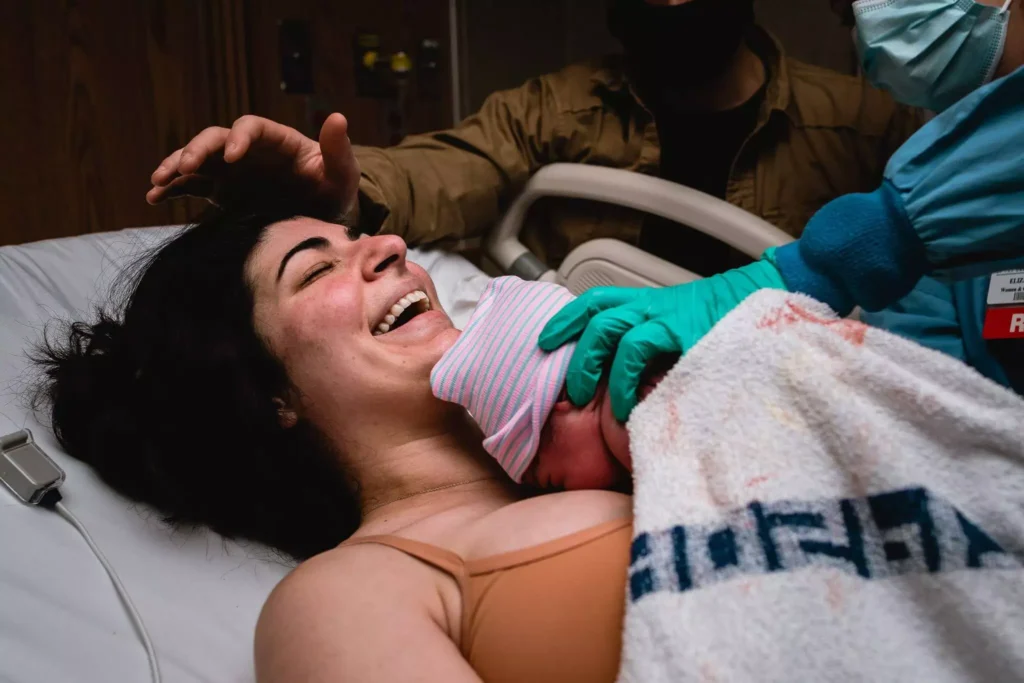

Learn the science of pregnancy and birth to take the mystery of labor away! Understand why you are feeling what you feel, and learn strategies to confidently move through pregnancy and birth!
- 9h+ of Video
- Support Group
- Close Captioning

- 5 Workouts/Week
- Gym Workouts
- Self-Paced

Instructor
GINA
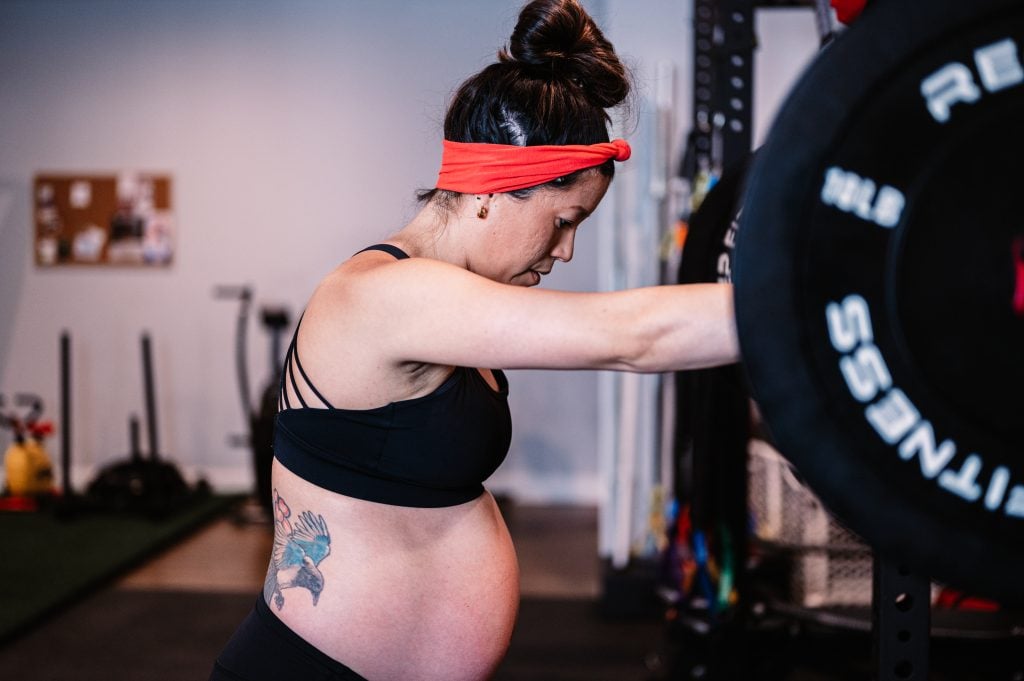
Workout on-demand with our prenatal fitness workout videos! Each workout is 30-40 minutes to follow along as you exercise at the same time!
- Birth Prep
- All Trimesters
- Mobility Work

Instructor
GINA
Find comfort and relief from pelvic girdle pain throughout your pregnancy and postpartum period! This program incorporates myofascial sling focused exercises to stabilize across the pelvic girdle joints.
- 3 Weeks
- On Demand Workout Videos to Follow