

Welcome to the MamasteFit Podcast! In this episode, hosts Gina, a perinatal fitness trainer and birth doula, and Roxanne, a Labor and Delivery nurse and student midwife, are joined by Andrea Syms-Brown, an International Board Certified Lactation Consultant (IBCLC). They discuss simplifying the breastfeeding journey, especially during the first month postpartum. Andrea shares practical tips on how to ensure that your baby is eating enough, identifying potential breastfeeding issues, and supporting an exclusive breastfeeding journey. The conversation covers preparing for breastfeeding before birth, recognizing early signs of proper and improper latching, and understanding the basics of how to know if your baby is getting enough milk. Andrea emphasizes the importance of taking breastfeeding classes, working with a supportive team, and seeking help as early as day four if experiencing pain. The episode is filled with valuable insights and simple, actionable advice aimed at making the breastfeeding journey less daunting.
Read Episode Transcript
Gina: Welcome to the MamasteFit Podcast. In this episode, we’re going to be simplifying breastfeeding, especially in that first month postpartum with IBCLC, Andrea Syms-Brown. She’s going to be breaking down these overly complicated topics and making them so much easier to digest with simple things to look for to know that you’re baby’s eating enough, that your breastfeeding journey is going well, and how we can support an exclusive breastfeeding journey, if that is something that your family is choosing to do.
Welcome to the MamasteFit Podcast. In this episode, we have Andrea Syms-Brown here to talk all about breastfeeding and how we can approach it after we give birth, how to identify red flags, when you should seek additional support. And so Andrea, thank you so much for being here with us.
Andrea: It’s my absolute pleasure and I’m excited to lead into this whole conversation. I’ve been excited for a month!
Gina: I know, I am really excited to have you on here, too! So can you just introduce yourself to our listeners in case they’re not familiar with you?
Andrea: All right. My name is Andrea, like you said, thanks, Gina. I’m a lactation consultant, which is the short version of a international board certified lactation consultant. And in my work as a lactation consultant, I work with families who are breastfeeding, and I always say, “who choose to breastfeed,” because let’s get that out of way right away- breastfeeding in 2025 is a choice. So, the family who chooses to breastfeed their child, if they’re facing any challenges, they would contact an IBCLC, and that would be me or one of my colleagues.
I have a pretty strong background with babies. I never wanted to have children, so I don’t have children. I’ve never breastfed anybody except my dolls, I breast fed all of my dolls! I was actually a baby nurse when I was a younger woman, and so I watched women breastfeed, and not breastfeed, whatever choice they made, and I made the decision very early in my career as a baby nurse, a newborn care specialist, to focus on breastfeeding families, because I realized that there was that difference between the baby’s personalities. And understanding why there was a difference was why I chose to become a lactation consultant. So I come out of a period, a case of curiosity. I like to say. I wanted to know why, and so that’s my background really right there.
Gina: Alright.
Roxanne: That’s so cool.
Gina: So let’s talk about starting a breastfeeding journey. So if someone, if a family is choosing to breastfeed, what are like the top things that they should do like in preparation for meeting their baby? Do you have any like top tips that they should consider?
Andrea: Of course! I have three. Of course, I have three.
Gina: Perfect.
Andrea: Number one, take a breastfeeding class. Take every breastfeeding class your budget can afford, because we all have different perspectives. You’re reaching for your drink and you could have been standing up and walking around. So breastfeeding is basically drinking and learning from various people from different backgrounds, from the hospital staff, there’s going to be a class at your hospital, there’s going to be a class at your yoga studio or Pilates studio, and there’s going to be your best friend who said, “Oh my God, I took Andrea’s class online and it was amazing!” So the more education you can have going into that journey- like any trip, if I’m going on a trip, I’m going to go online and look up that island or that city. I want to know everything about it as much as possible so I can find where my interest lies. And so having the education beforehand is always number one for me.
Number two, it’s a good idea to have a conversation with your obstetrician or midwife, gynecologist- whoever’s going to help you through the birth. Simply because you want to let them know what your expectations are or what you’d like to have happen. Particularly for breastfeeding families, we know that if that baby can go skin to skin, which can mean something as simple as holding your baby’s hands and rubbing your cheeks on him or her, we know that if we tell the team, you know, beforehand, then they are more prepared. So believe it or not, that’s tip number two.
And tip number three, from my perspective, is always work with a team. You have your pro team and that’s your obstetrician, your doula, your midwife, whomever, your baby nurse, your lactation consultant, so that you have an understanding of who these people are and what their perspective is. I have families who say, “Look, I plan to breastfeed for a week, and then it’s pump, because I have stuff to do.” So you want to work with a lactation consultant or a doula who’s aware of that and open to you having that choice. And that’s your pro team. Your home team is who’s going to walk the dog, who’s going to clean the cat litter box? Who’s going to bring me food? Who’s going to buy me maxi pads with wings? If your partner is somebody who’s like, “I wouldn’t even walk past that section,” then you’re engaging your best friend, or your neighbor, or your niece, or your whomever, somebody who’s going to be the person that’s going to run out and get you fill-in-the-blank at the last minute. I call those people your home team. And so those are my three top tips for getting ready to breastfeed.
Gina: I absolutely love that. So you do have an online breastfeeding course that people could take if they’re like…
Andrea: Of course I do!
Gina: “Andrea told me to take a course,” we’ll just make this super easy. We’ll make sure that we link that down in the show notes below.
For me, when I started my very first breastfeeding journey, I think the number of times that I think I actually remembered witnessing someone else breastfeed was zero times. I don’t think I ever noticed it before. You probably saw me at least, or people at work probably.
Roxanne: Oh yeah.
Gina: When you were a postpartum nurse.
Roxanne: So I was a postpartum nurse and Labor and Delivery nurse for a very long time. So I saw lots of people breastfeed, but just in hospital settings. I think we had one friend who breastfed.
Gina: Oh, yes, I did have one friend that breastfed and I was like, “Oh, cool. That’s something that people do. It seems very normal and natural and easy.” But other than that, I’d never really encountered anyone in my day to day that was breastfeeding, until I started breastfeeding, and then everyone around me was all new moms that were breastfeeding their babies and we helped boost each other’s confidence with that.
But anytime I had an issue with breastfeeding, I’d never… I didn’t always know what to do. And so when I first started my breastfeeding journey with my first, again, no exposure really to people that are breastfeeding. I had some really bad nipple damage and it was like excruciating to the point where I was like, “Am I going to be able to do this? This is awful. This is so painful,” like my entire nipple was like a scab. I was like Googling like, “What can I do to help?” Like coconut oil?
Roxanne: And let’s note, Gina had a sister who was a Labor and Delivery nurse, postpartum nurse, and helped many people breastfeed and would have been able to tell her, “Hey….”
Gina: She did not help me though.
Roxanne: “That’s not normal.”
Gina: I didn’t know. I didn’t know!
Roxanne: But she didn’t ever tell me. I didn’t know there was issues.
Andrea: Oh, so, you are siblings?
Gina: We are siblings, yes. Yes, we are sisters. And Roxanne withheld a lot of information that would be really helpful for me.
Roxanne: But she also didn’t ask.
Gina: I had really horrible nipple damage. It was incredibly painful. And I didn’t know what to do. So what can someone do? So let’s say you’re talking to Gina in 2017, who’s crying in her armchair, like nursing her baby with her nipple damage. What are some things that someone can do, like when they immediately meet their baby to help support that initial breastfeeding journey? Because obviously, I would like to not have nipple damage. That was much easier in my subsequent journeys, not having that initial damage, it was so much smoother from there. But when I had all that nipple damage from an initial latch that was not great, caused all that damage, and then that led to more clogged ducts, and then that led to issues, and then I was, it was just, it was an awful beginning to the journey.
We ended up nursing for two and a half years, so we did have a very long journey with breastfeeding and all of my journeys after that were much smoother. But what could someone do like in that first like day to help support that initial breastfeeding journey if they are choosing to breastfeed?
Andrea: And that, that’s it right there. I’m going to start with, your sister could have helped you, and you didn’t reach out?
Gina: I, well, she… I didn’t know!
Andrea: That’s why, that’s why it’s important to have that home team and that pro team. And if you’d had a conversation with her, with Roxanne, she might have been able to say to you, “Gina, have you taken a class?”
So being mindful as you go into this pregnancy adventure. You want to go into this breastfeeding journey, like any adventure, we’re going to look up, right? So in that moment, there you are. Didn’t get the first point of, “Oh my God, I gotta get some breastfeeding education.” Now you have a baby.
Gina: I know, I needed your three tips seven years ago.
Andrea: It’s okay, we love you anyway. Your nipples are sitting there, three o’clock in the morning, cursing the universe. Okay, what do you need to do? You need to first of all understand why it’s hurting, right? So that may sound very high minded, but really is your baby latched onto your nipples? So look down, and while your baby’s suckling can you see areola? Then probably babies latched onto your nipple, which we don’t want. We always want your nipple in your baby’s soft palate. So if the nipples are damaged on day one, the latch, as you said, that initial latch is not working. Luckily for most women, they’re giving birth in a hospital or in a birthing center, or even at home and the birthing professional, AKA Roxanne, or your midwife- yes, Roxanne, I got you, girl- your midwife or whomever is going to say to you, “Do you need some help with that?” And if nobody offers you, you start asking. Because most of these women have either had children or like me chosen not to, but they can teach. So right in that moment, if that initial latch isn’t working, you start asking everybody, oh, the orderly comes in to clean up. “Do you have kids? Have you have a breastfed? Can you Give me some pointers?” You would be amazed, Gina, the stuff that some of these people who come into your orbit, just in that first 72 hours, can actually impart and some of them don’t have credentials. Because breastfeeding is a very natural, basic activity. And I will tell you, I would say about one in three of my clients have shared with me, “Yeah, my mother-in-law was saying I should try this, and that’s similar to what is working for us.” And so reach out for help. There’s nothing wrong with that initial latch not working right, somebody can help you.
So let’s fast forward. Three days later, you’re home and you’re on your own. Everybody’s got a smartphone these days, find a lactation consultant. Especially if this nipple pain and damage is persistent. And if it comes and goes and sometimes it’s working and sometimes it’s not, then perhaps your doula or midwife can give you further guidance. But if you are a week in 10 days, in even five days in, and people have come in to help you, various people, including perhaps your well-meaning mother-in-law, if it’s not working, that’s when you need what I call the big guns, the IBCLC. The gold standard of lactation consulting is the IBCLC. So it’s easy to figure out if things are working three days later if things are not working, time to call for help.
Gina: Absolutely. I usually when, whenever I’m supporting a birth and my client has just given birth and they said, “Hey, I want to breastfeed,” or this was a conversation we had ahead of time, I give them some like things to look for to make sure baby is latched well. And if they’re not, then we need to unlatch them and try again. And then I help them understand like what resources are available for them in their hospital or in their birth center, if they’re giving birth at home with their, midwife and the birth assistant these are people we can ask for additional help, but I say the sensation that you’re feeling should be like a tugging sensation. It shouldn’t be like chompy or pinchy. If it’s pinchy, you feel like it’s all at the nipple, they’re latched, they’re not, they don’t have a deep enough latch. We need to unlatch and try again. We’re looking for like a tugging sensation. I tell ’em to look at baby’s cheeks, see if, are their cheeks like really sunken in or are they more full? I say, what kind of noises are they making? Is it like slurping or is it like a deep sucking noise? And so I give them some like things to listen for, to visually see, and to feel in themselves to know, okay, this baby has a good latch. Do you have any other like initial like signs they could look at? Or Roxanne, if you’ve got any additional ones where someone can look down at their baby and be like, “We got it,” or, “I need more help, please help me.”
Roxanne: Yeah. Normally I say the fish lips.
Andrea: There you go. The lips should be open like that.
Roxanne: The fish lips is good. You want the mouth open. You don’t want it to be like puckered, you want it open wide.
Andrea: That’s right. And luckily for your patients, your clients, the people with whom you both work, you are sharing that kind of information.
But we know, the evidence shows, that about half of the women that give birth are not either hearing it and taking it in, or they’re not being given this information. So really the females, the families that I try to meet are those who were in that limbic, that limbic brain functioning the first day after you’re given birth and Roxanne says, “Look for the fish lips,” and three days they’re like, “She said something about a fish. I don’t remember what it was,” I get that a lot.
Gina: I think I need to eat more fish.
Andrea: “And maybe it’s Omega-3 she was talking about? I don’t know, something about fish! Or something about sunken cheeks. I don’t remember!” I’m more, my approach is much simpler. I say to the person in front of me, “Does it look like your baby’s comfortable?”
Gina: Oh, that’s good.
Andrea: And if a baby’s wiggling around and they’re nursing with their chin on their chest, I say, “Could you drink with your chin on your chest?” So I try to avoid, yeah, bullet points- and I’m not saying anything’s wrong with asking to look for fish lips and all that. The first couple days, you both have given birth, those first couple of days you’re not… everything is filtered.
Gina: It’s a lot of information.
Roxanne: Yeah.
Andrea: Everything is filtered through, “Oh my god, my baby’s perfect.”
So my approach is look down at your baby as she nurses. If it’s hurting you look to see, does she look comfortable? And what steps can you take to make her or him more comfortable? I could probably move him down a little bit more because he’s pulling my breast up. Okay, let’s do that. I could probably move my arm to my body a little bit more so he could bring his chin up to drink. Yeah, let’s try that. Magically the lips turn out and the nipple pain releases. Because if you can be comfortable eating as a human, chances are the milk transfer is good and mom’s comfortable as well.
So those, that’s the way that I approach breastfeeding. I’m known for teaching breastfeeding naturally, or natural breastfeeding, or whatever you want to call it. But I always start with, as you said, Gina, I always start my class, the first picture is a 2-year-old and a 2-week-old breastfeeding right next to each other with their moms. Most of us have not seen it, it’s become a hidden activity. It’s become behind the thing to hide it, behind the screen at work or wherever, and under a blanket in the park. Whereas in the rest of the world, I’m currently in the Caribbean, people are breastfeeding and walking around and it’s like, “The kids eating and I gotta do this shopping, so it’s happening.” So for our, from my perspective, it’s always simpler to teach through the eyes of the person who’s observing. Meaning, does your baby look comfortable? Would you be comfortable if you were sitting drinking like that? Yes or no?
Roxanne: Yeah.
Andrea: It’s the easiest way to share from the mom’s perspective how to fix things, without the IBCLC. If the baby looks comfortable, if you feel that if you were that baby, could you drink comfortably in that position? If the answer is no, let’s see how we can make that better. That’s it. And then from there, things tend to improve dramatically.
Roxanne: Yeah, no, that’s a really great tip though, because a lot of the times that is like the easiest thing that we do is just reposition the baby and then they latch on. And then I go over like, “So if you were drinking a glass of milk and you were in the position of the baby, do you think that would’ve been comfortable or not comfortable?” And they’re like, “Yeah, I could see why,” like literally just moving them down the belly and then turning their belly onto their belly made it so that they actually were comfortable enough to open their mouth at that point. And I was like, “Yeah!”
And then a lot of patients will put their hand on the back of the baby’s head and they’re just like jamming it onto the breast. And I was like, “So think about if you were trying to eat a meal and someone was just shoving your face into the plate, would you enjoy that or would you like start to push back?” Because that’s what all the babies do, they’re just like, “What are you doing? What are you doing?” And I was like, so that’s why we want to support their head, but maybe grabbing onto their neck rather than the back of their head. And then they do that and the baby just latches on. I was like, “See?”
But I like how yours is, look at your baby. Do they look comfortable? That’s easier than me being like, “Hey, let’s just reposition your baby.”
Andrea: You’re right, but you made the food reference, and that’s what it’s about. The food reference, you did it. That’s it right there. And I use tequila as a reference because of course tequila’s much more fun than a glass of milk.
Roxanne: Same, I like you more!
Andrea: And when people drink tequila, where do, where does your chin go? Why? My chin goes up. Why? Because I want to get that tequila down really quickly. If you were three hours old, you’d want to get that colostrum down really quickly, because you just learned to breathe. So you’re right, you said it, Roxanne, try not to inhibit their head, hold their shoulders, support the body, and let the neck and the head do its job.
See, it’s out there in the world already. We just need to maybe tone it down a bit in terms of the forcefulness and let things unfurl on their own with babies and moms, and that’s always my approach.
Gina: I love this simplicity to it. I was coming out with a bullet point list, here’s a PowerPoint presentation.
Roxanne: Yeah.
Gina: You’re like, “Is your baby comfortable?” And I’m like, “Oh, that’s much easier!”
Roxanne: Yeah. Yeah.
Gina: That’s so much easier.
Roxanne: Yeah.
Gina: Oh my gosh.
How can somebody know that their baby is eating enough, that breastfeeding is going well? Because I know that’s a common concern.
Roxanne: Oh, everybody is concerned.
Gina: Is my baby eating enough? “I feel like they’re latching all the time,” or, “They’re not really eating at all.” Or like how can somebody know that…
Roxanne: Especially when they cluster feed.
Gina: …things are going, they’re going well with breastfeeding.
Because you can’t always like measure, I mean if you’re pumping, you can see like an output, or someone will breastfeed and then they’ll pump and they’ll be like, “Oh my God, there’s half an ounce my baby’s starving.” What are some, I’m really excited, what are the simple ways to tell that your baby is eating enough?
Roxanne: Yeah!
Andrea: And you cut right to the chase. What’s the easiest way? When I’m hungry, I’m cranky, me personally, and I’m 60! But if you are six hours old, you really don’t even know that you’re hungry because you’ve never been hungry before. So you as as the nursing parent is understanding how this child is communicating this information to you. So you know, the question is, how do I know if my baby’s getting enough? my question is, how old is your baby? If your baby’s five hours old, you don’t know and they don’t know. And so just like your grandma, you keep offering food. “You sure you don’t want something to eat, Honey? How about something to drink? How about something to eat? How about something to drink?” Because by getting full or satiated, and then getting hungry, this is how humans develop an appetite. So the answer to the newborn mom is just keep offering. As long as you’re awake, just put him by your breasts, let him noodle wrong. If he starts sucking on his hands, he’s going, “Yeah, I could eat.” And so help him latch, right? If the baby’s five days old, that’s a different question because by then this baby’s been eating. What color are the poops and pees? How big are they? How frequent are they? Because if your stomach is the size of a chicken egg and you’re in a liquid diet, you’re pooping pretty often, right? Nobody’s having ham and cheese sandwiches at this point. So look at the stool, look at the frequency of stool and wet diapers. That’s what your great-grandmother did.
Now, from the mom’s perspective, you can feel your breasts. Moms don’t get the message that, a message that moms don’t get tends to be the fact that, after a baby has breastfed well, their breasts are still going to be full. Because I always use the reference of, in pregnancy you can get away with the secret for like maybe three or four months, and then your belly starts to show, everybody knows, okay, something’s happening, or maybe lay off the ham and cheese sandwiches. You’re pregnant, so your body starts to expand at that point. In lactation, it’s the opposite. It starts off with this huge expansion, breast engorgement, but as the baby regulates by eating as frequently as she or he wants, your breasts understand over time- and that could be up to a month- exactly how much to make. And they always make a little bit more, because breasts are like caterers. You cater for 20, you pay for 20, but they’re bringing food for 25 because they know that your uncle likes to take food home. So you know, your breasts are always going to produce a little bit more than the baby needs. But initially we don’t know how big this appetite is going to be because he’s not born with an appetite. So letting baby nurse as often as they want to, particularly if they’re fussing, means it’s time to feed. And so when you’re finished feeding, feel the front of your breast. And if it’s softer than when you started, Baby probably got a lot, especially if we’re seeing those regular poops, pees and poops. Everybody knows it’s as many pees and poos as you age in days for the first week. Easy way to remember. You’re five days old, you need to have at least five big stools. It’s the same as your age in days, so it’s easy to figure that out.
Luckily, nowadays, babies are seen by their pediatrician or some kind of healthcare provider by day four, day five, so we are tracking their weight. I think it’s important to families to know that a baby will be born at a certain age and then lose a certain amount of weight safely, 5 or 6%, because you know that last week they’re just drinking amniotic fluid. They’re like, “I can’t get enough of this stuff because that’s what your colostrum tastes like, and I want to make sure I know how to drink that.” They come into the world, they get a lot of colostrum, that early milk, and then a couple of days later you start to make more liquid milk, I like to say, more like water than like honey. And they learn how to take what they need.
So how do you know if your baby’s getting enough? Your baby will be weighed, obviously, but at home you’re looking at the output and you’re feeling your breast, knowing that closer to your chest wall will be firmer, and closer to your areola or nipple will be softer after baby’s fed. And the most important point, am I cranky after I’ve eaten? No, I just had lunch before we got on so that I could be friendly. If I hadn’t eaten, I’d be like, “I don’t know, ask somebody else. Why, did I even say yes to this? I don’t want to talk to you.”
Gina: “Gina, why are you giving them bullet points?!”
Andrea: Exactly. You’re getting the, “That’s what you need to do,” with the five syllable words.
Gina: No, I, so whenever I would nurse my babies and they, especially like the early days, they would do that milk drunk thing where they would be like nursing and they would just like fall off the breast, and they’re just like drooling milk, and their hands are open, and they’re just like this little floppy, like sleepy baby. That was always like my sign, “Oh, she ate. She’s good. She’s good, she’s good.” Really for me, anytime that my newborn woke up, I was trying to nurse her, I was like…
Roxanne: Yeah, they don’t do a lot.
Gina: …you only eat and sleep.
Roxanne: Yeah, like if they’re awake, they’re probably hungry, so just try to feed them. And if they don’t eat, then maybe just do some skin to skin until they do want to eat, because it’s probably coming soon.
Gina: Yeah, it’s just like nonstop eating. It was really cute….
Roxanne: With some poops and pees in there.
Gina: The little milk drunk thing.
Something for the diapers- because one of the things that was like super stressful for me as a first time mom was all the tracking that I felt like I had to do, again, all these bullet points, all these lists of things. So I had an app where I was like timing our feeds and like also tracking, “Okay, I changed a diaper, I changed a poo diaper, this one seemed like moderately full,” and it was a really intensive app. And I was like, “I need to have all these lists, because every time I go to the pediatrician, they ask me how many times a day is she feeding? How long is she feeding?” And it was stressing me out. So something that I started doing instead to help me just keep an eye on the number of diapers was I would put like 10 diapers every morning into our little diaper pail, and then at the end of the day, I would just count how many were left. So I’m like, “Oh, I put 10 in this morning. I have two left. I used eight diapers today,” or, “I used seven diapers today,” or however many. So that was like mentally easier for me.
And then now that I have four kids, when I go to the pediatrician, they ask me like, “Oh, how long does she nurse for?” I’m like, “I don’t know, 10 minutes. She’s fine. She seems happy.”
Roxanne: She’s happy afterwards, that’s all I gotta say.
Gina: Oh my God, all the time. I’m like, when she was a newborn, it was nonstop, is that a thing?
Roxanne: Twenty four, seven.
Gina: She sleeps and eats, Dude. I don’t know, how much does she sleep in a day?
But that was something that I found to help me kind of decreased my anxiety with all the lists that I felt like I had to keep. So if any of our listeners are like, “Oh my God, there’s… I have to keep track of diapers now? Like in addition to all this other stuff?” That was like a super easy way for me.
But I really love, if they seem comfortable. Just check out the vibe, what is the vibe of your baby right now? Are they, chilling with you? Do they seem like they’re having a good time? If not…
So what are some of the like red flags then? So we got a baby who’s not chill, who’s not vibing with being on the outside. What are some like initial red flags that you know of that you would recommend, like, here’s like a quick hack? And then at what point does that red flag become you need to work with your pro team? Like you need to talk to your provider, you need to work with an IBCLC. Like you need to seek additional support to help you with this.
Andrea: I’m glad that you mentioned before, that you are on baby number four and you’re like, “I don’t know, she nursed for 10 minutes and I went through this many diapers.” You said it. That’s exactly the point that I’m trying to get across.
First of all, is the simpler you look at things, you narrow it down to the necessities, right? What do you need to know? If your baby’s getting enough? Here’s how you know, output and how your breasts feel. Simple, easy to look at. You talk about red flags, but between red flags and what’s normal is that anxiety that comes with being a new mom. Your first baby, you were very different from your fourth baby. So addressing those concerns come first to me. So a red flag is, I’m three weeks in and my baby’s not gaining weight, or my breasts are not becoming engorged. Those are the big red flags. Usually by then, your pediatrician or your midwife has mentioned, something’s not right here, we need to have an IBCLC see you because you would’ve been seen by these professionals. So it’s the moments when you’re sitting at home at three o’clock in the morning with a screaming baby going, “Why won’t you feed?” and then you give your baby some formula from the hospital and they knock out after two ounces and don’t wake up for six hours, kind of messes with your mind.
Like, why is this not working? So understanding the routine that babies need to go through to be satiated, I think that’s a simpler way to look at things.
So let’s say you’re in day five and you’re home and everything was going well, and all of a sudden your baby seems to want to nurse constantly and you feel like you can’t keep up because he’s just eating every hour. Well, understand that babies get growth spurts, where there’s a period of intense cellular growth that could last for three or four days. Understanding that and knowing that, trusting that the output is telling you that your baby’s getting enough, that’s before, that’s the, that’s what I call a green flag. That’s not an issue. Baby feeding frequently is a good thing because their stomachs are so tiny.
The true red flag is, my doctor is concerned. Most things before the true red flag can be taken care of by listening to your sister, listening to your doula, addressing smaller concerns, like my nipples are slightly sore, they’re just pissed off, they’re a little bit irritated, they’re not damaged, and losing their minds. So if you can address that then and fix the issue, then we can avoid the big red flags that come three weeks in when you’ve gone to the pediatrician five times and baby’s not gaining weight. So getting on the issue early because it, like you said, it just gets easier as they get older because they become more proficient and you get used to not sleeping for five or six solid hours straight.
Gina: Yeah, it does get much simpler as they get older, for sure. The first six weeks I think are like the toughest when it comes to establishing that supply, figuring out breastfeeding with your baby, who’s also a brand new person. I don’t know if you’re on Instagram at all, where they have the reels where the mom is like pretending to nurse her baby and she’s like, “Just fucking nurse!” and the baby’s like, “I just got here! I don’t know what to do either! Like, I just got here, relax.” So I think remembering that they’re also learning in this process. And again, like you said, they never felt hunger before. Like they were at a 24/7 buffet, they didn’t know what hunger felt like. They gotta figure that out, in their first few days.
You’re doing a really good job of making everything much more simpler. I’m like, “What are the signs? What are the red flags? Give me my bullet points!” And you’re like, “Is your baby comfortable?” Helping identify like what is normal would make it much easier to know that there’s an issue. But also, recognizing that a lot of us are working with providers we’re having, ideally, these like checkups. Like for me with my babies, I gave birth at home and my midwife and her birth assistant, they came at like 7 days, at 14 days, they were checking on baby’s weight and they were like, “Oh, she’s gaining weight well. How do your nipples feel? They feel good? Do you feel good? I think everything’s going well,” and that was really reassuring. But if there was a red flag, like you said, my midwife was going to be the one that found it, where she’s like, “Oh, Baby is not gaining enough weight. We need to seek some additional support.” So I think that takes a lot of pressure off of the person that is breastfeeding to not feel like they have to know all of the signs to look out for, to fix, to prepare for. It’s is your baby comfortable? Do your breasts feel softer after you feed? That’s so much more simple. I was like, “I need an in-depth course right now.”
Andrea: And Gina, keep in mind, and you said it, it’s a very compact period. It’s that first four to six weeks. So I try to prepare families for that period, I call it, “Hell week.” The first week in college, hell week, the first week in law school, the first week as training as a doula- anything that’s new to you is going to be confusing because it’s new exposure to you, and to your point, to your baby. So keeping things simple and if an app is helpful, great. I’m a big fan of everybody’s got a cell phone, every time the baby takes a poop, take a picture. That’s it. You don’t have to remember what time it happened.
Gina: Oh, that’s so much easier. I’m taking all these pictures anyways!
Roxanne: No, that’s so smart. That’s like my new thing that I tell people, because we tell people to, like during pregnancy, “Oh, we need to have you track your blood pressures at home,” or track your blood sugars at home. And they’re like, “I have to remember to write it down?”
Andrea: Take a picture!
Roxanne: And one girl was like, “I just take a picture and I put it in an album.” And I was like…
Andrea: There you go!
Roxanne: …you are a genius. And now I literally tell everyone, I was like, “If you don’t want to remember to write it down, just take a picture.” Like everyone has, it’s all digital, so it’s like it tells you your blood pressure, it tells you what the blood sugar was, just take a picture. If you don’t remember what you ate, so if you need a food log, just take a picture of your food, just take a picture.
Gina: Oh my God, this is the most enlightening episode ever.
Roxanne: Yeah!
Andrea: Right? And Roxanne is right. We get a timestamp. We get all the details we need in that picture. If it’s a nipple, what time? What did it look like before Baby fed? What did it look like after baby fed? And it’s totally objective because the camera is just going to tell you what’s there.
Roxanne: Yeah, it’s not going to, you can’t edit the photo. I guess you could, but.
Gina: Put a filter on my nipple, some eyelashes.
Roxanne: Yeah. Yeah, no.
Andrea: A kitty filter.
Roxanne: Yeah!
Gina: Oh man. I have all these- not related- I have all these like filters of my baby, my first baby, so 2017, where it’s like the kitty cat, like rainbows.
Roxanne: The Snapchat filters.
Gina: The Snapchat filters.
Roxanne: Like the crying rainbow, oh yeah. Oh, they’re so great.
Gina: It’s like, “Show me my baby pictures, Mom, from when I was a baby,” and it’s all these kitty cat filters.
Roxanne: Yeah, or the dog, with, they’d open their mouth and the tongue would come out.
Gina: That one was my favorite.
Roxanne: That one was my favorite, too, yeah.
Andrea: Yeah.
Gina: Oh my gosh.
Roxanne: But no, just take a picture.
Gina: One of the things that I’ve always read is about the breastfeeding timeframe. So people that want to exclusively breastfeed, you usually stop at like the six week mark, or a lot of people fall off at a certain point. Do you think it’s because we have like “hell week,” essentially, the first month, where we’re trying to figure it all out, where it’s just really challenging, but if you made it to six weeks, it would be easier? Because I think that’s what it was like for me with my first, once I made it over that hill the first month, it was like smooth sailing from there, like we didn’t really have really any issues after that. Does that perspective make sense to you, or is there something more that you think folks could implement to help support them to have an exclusive breastfeeding journey, if they’re wanting to have it for the six months, for the year, if they’ve set like a goal for themselves of how long they want to breastfeed?
Andrea: You said it best, and Roxanne was nodding emphatically. Those first six weeks are challenging because it’s a big change to everybody’s routine. Baby comes into the world and that’s your first red flag, you’re six weeks in and it’s still not going well. That’s a late red flag, by the way. So anybody who chooses to breastfeed, most people say to me, “I want to go as long as I want, as long as I can.” As long as you can will vary for somebody who has a full-time job at McDonald’s, it’ll be different for the person who is the CEO of a huge corperation, it’ll be different for somebody who’s a professional dancer, or an actress, or a singer, and opera singer, or a flight attendant or a military person. How long can you go? It depends on what you are doing.
Now, having said that, as you said, once we get through those first four to six weeks, the baby becomes so proficient that it’s easy for Mom, right? And the support comes from the perspective of, now you’re going back to that job, or not going to work, and still want to be able to pump and bottle feed your child your milk. So again, we come back to keeping it simple. What would you like? I would like to breastfeed for at least three months, because at three months I need to go off and do this to earn a living. And are you then willing to pump to have milk for your baby, or do you want to wean to formula? Most families say, “Is there a way for me to do both?” Let’s give it a shot. We’ll see. We can never predict. So for the family who knows, a woman who knows, “Okay, I have this high power job, but I still want to give my baby milk,” that’s where an IBCLC can also be really helpful in terms of providing the best evidence-based information, keeping it simple, so that she can achieve her own goal, and perhaps even surpass that goal. And, having the best products, and I was about to say to you, I’m a Bodily advisor, on the bras and the latte and all of that.
We want to be able to support moms in their journey of breastfeeding, particularly if they want to go as you did, for two years, three years, that kind of thing. You need to have the right garments that give you the kind of support that you need, and you might need a little help with boosting your supply. These products come in handy, but understanding how they’re applied, that’s where the IBCLC can be really helpful. The support is here.
Gina: Let’s take a break from this week’s episode to talk about this episode’s podcast sponsor, Bodily. Now, Bodily has tons of breastfeeding support bras, they have a lactation latte. I really love pretty much everything that they offer and I have personally used their Everything Bra, every day, all the time, especially in those early weeks. One of the things that can really help to support your comfort in this area is having a bra that is noncompressive, but still supportive. I personally like to have fabric covering my delicate nipples after I give birth- there’s a lot going on down there. And so the Everything Bra is very soft to touch, it’s very comfortable to wear, and there’s no compression. There’s no compression underneath the breasts, nothing in like the armpit area, and so it’s really going to decrease the likelihood of any sort of clogged ducts that can happen, especially as your milk supply is trying to regulate itself. So it’s one of my favorite products that I use from them pretty much every day. Everything, every day. Even now, seven months postpartum, I still sleep in that bra because I’m still feeding my baby throughout the night.
I’ve also started to drink their lactation latte, which I have been a really big fan of. It tastes like a chai, vanilla chai, so if you don’t like vanilla chai, you probably won’t like it, but I’ve personally been enjoying it. I’ve been replacing one of my like 17 coffees each day with the lactation latte. Their lactation latte is evidence-based. It was developed by IB CLCs to help support your milk supply, and so I’ve been a really big fan of it.
Roxanne: I also love the Everything Bra from Bodily, like all of their bras I’ve used at some point during my breastfeeding journey or pumping journey. And the other thing that I really love from them though, is they’re All In panties. I am all in with their panties. I wear them still to this day at 18, 19 months postpartum, because they’re just very supportive but also very soft. So I love that all of their products, like their bras and their underwear are very soft material, so like they’re not like abrasive on the skin, but they’re really thoughtful when they created all of these.
Gina: So check out Bodily at itsbodily.com. We love pretty much all their products. You can’t go wrong with their belly band, with their bras, with their underwear, intentionally designed to help support you through this phase of life.
Roxanne: So for me personally- because I had a ton of experience with breastfeeding or supporting people at breastfeeding, because obviously I did its job- when I finally had my first baby, I was like, “I’m going to be a pro at this. Like I got this, like easy peasy.” And my first day I had pain with like almost every latch. The lactation consultant came in, who I like worked with, and she just did one tiny thing and then it wasn’t painful anymore. But then I was like, “What did you do though? Like how? What did you do?” She’s just like, “I got a deeper latch.” But every time I would try to replicate it, it wouldn’t work.
Gina: “Just fold in the cheese!”
Roxanne: Yeah, just fold in the cheese. She’s like, “I just made her open her mouth more.” I was like, “I don’t freaking know what that means.” And then I got home and like the damage just continued, and I was a bit in denial. But like when do you normally recommend for soreness- nipple soreness is normal, no one’s used to a baby, chomping down on their nipples as a food source, so like some soreness is expected- but like pain and damage, when would you be like, “Hey, this is not normal. This is definitely a time to reach out,” because some babies can still like, compensate really well. Like my daughter never lost weight, she was the chunkiest freaking baby I’ve ever seen. Rolls, on rolls, on rolls, on her body, but I still just had a ton of pain. I had an oversupply and everyone was just like, “She’s fine.” I was like, “But I’m not fine.”
Gina: But what about me?
Roxanne: I also matter. But they’re like, “She’s fine. You just have to get over this hump,” and then two months later, still try to get over this hump. So like I am like obviously an extreme example of waiting till this hump, because if I was waiting for the weight to drop, like I would’ve been waiting forever. So when would you say soreness would normally stop, but if you’re feeling pain at this point still, like initial latches, you could have some initial damage as baby’s just figuring it out, but like when would you say: not normal anymore, seek help? Soreness expected for this time period, but pain, at this point, like that is the point that you definitely need to seek help. Not two months, like Roxanne did.
Gina: I feel like you were closer to like four months or…
Roxanne: I don’t even know. It’s all blur.
Gina: It was a long time.
Roxanne: It was a long time. My poor nipples, ugh, they were struggling.
Gina: I was really sad for you. I was like, “Oh, God!”
Roxanne: Gina was just like, “It’ll get better,” I was like, “When does it get better?”
Andrea: I’m sorry that happened, Roxanne. You’re right. Mothers tend to just take it, and if the baby’s doing fine, I’ll be fine, it’s okay. And that’s not okay. Day four, if you are in pain, you need help. Day four. Baby was born on Thursday, and here we are, it’s Saturday, going into Sunday, going into Monday, and I am dreading those feedings. And the pediatrician is saying, “He’s gaining weight. All is going well. How’s your breastfeeding? Clearly it’s going well because baby’s gaining weight!” If you are in pain on day four and having nipple damage day four into day five, you need to seek the services of an IBCLC, you do. Because just the IBCLC at the hospital made one little adjustment that you couldn’t replicate, there was something she did, find somebody, maybe her, maybe some of them will do a home visit or virtual visits like I do, and guide you through an adjustment that will take all of that pain away so that you’re not sitting there in two to four months, which by the way, you notice you don’t remember how long, and that’s mothering! Mothering is, “I don’t care if it hurts, it’s fine,” and it’s all in the old part of your brain, so you’d forget anyway. That’s not okay. Not in the moment.
Roxanne: Yeah.
Andrea: Day four.
Gina: Absolutely.
Roxanne: Day four. Noted.
Gina: You have really simplified this whole process. I know this was, this is a very informative episode, even for myself.
What is your last advice for a family that is, “We want to breastfeed, we’re excited to breastfeed,” what would be like the one piece of advice that you would give them? Obviously, like you gave so much during this episode.
Roxanne: This whole episode! But like, one last parting advice, right?
Andrea: If it’s something that you choose to do, make sure that you choose- not your partner, not your mother-in-law, not your best friend, not the media- if you want to do this, and you want to be “successful” at breastfeeding, educate yourself. Go on your phone and type in, “breastfeeding class near me,” start there. Really, that’s it. Having more information is always the way to go. And we live in the age of information, so why not access that? There are various resources available to moms, make use of those. Once you know, you plan to expand your family and have babies and you know you want to breastfeed, it comes with a little bit of work. Look into it. That’s my best advice. And it could be as simple as, I teach virtually, and people often write to me and say, “That was so effective. We’ve had the baby now for a month, and everything’s going well.” Just understanding how to keep things simple and have clarity is key.
Gina: You’ve done a really good job of simplifying. This whole process.
Roxanne: It’s like you do this for a living or something.
Gina: I know. It is such a game changer. We’re over here like, give us your 85 tips, all these things, like, go into detail. And you’re like, no, it’s, super simple.
And that’s so much more easy to digest as like a new parent, as you’re navigating this really new journey. So where can our listeners learn more from you if they’re like, “Count me in. I’m going to learn from Andrea.”
Andrea: To your point about simplifying things, as I said, I used to be a baby nurse and so I observed a lot of families struggling to breastfeed. The name of my company is Baby in the Family, so my website is babyinthefamily.com. If you’re struggling to make enough milk, I’ve helped itsbodily.com, I helped Bodily to produce their lactation latte, helped them design the bras if you’re having clogged ducts, stuff like that, those bra do make a difference. But for prenatal education, and newborn care, and in breastfeeding and postpartum support, obviously check out my website at babyinthefamily.com.
Gina: Absolutely. Thank you so much. I personally, Roxanne and I both, use Bodily bras to help love support our breastfeeding journey. We love them. I still wear them every night when I go to sleep, the everything bra or every day, I always mix that up.
Roxanne: Everything bra.
Gina: I wear it like every night because it’s just so much easier to nurse in.
Roxanne: Yeah, I love their bras.
Gina: Oh my God, I love it. But thank you so much for sharing your wisdom with us and with our listeners. We’ll link all of your information down in the show notes below. Definitely check out Andrea’s course because she definitely is going to be simplifying this process for you in a time where there’s a lot of new things happening.
So, thank you so much for joining us.
Roxanne: Thank you!
Andrea: Thank you, Gina. Thank you Roxanne, for sharing your time with me.
Gina: Thank you for listening to this episode. If you want more support throughout your pregnancy and into your post program, check out our online prenatal fitness programs and our online childbirth education course. Our prenatal fitness program is going to give you movements that you can do throughout your pregnancy to support a strong pregnancy, pain-free pregnancy, in addition to help you prepare for birth. And the good news is the efforts that you put into your pregnancy to help support movement and birth preparation also help to support you in the postpartum and aid in your recovery. If you want more support on what to do actually during labor, you could check out our childbirth education course because again, a lot of the stuff that we’re navigating through this phase of life is about the preparation and the education that we do so that we can navigate each of these phases with a little bit more confidence. And then you can also check out our postpartum preparation course where we discuss what to expect in that first month postpartum, which again, hardest part, I think, in my opinion, I would rather do labor than the first month postpartum because it’s, it is a lot. There’s a lot of stuff going on during that timeframe, but check out all of our online courses to help support you during this phase of life. And you can use code STORY10 to get 10% off any of our online offerings, and a lot of them are bundled together where you can save an additional 15% off.
This episode is sponsored by Bodily. Bodily, provides products to help support you during your birth, your postpartum recovery, and your breastfeeding journey with thoughtfully designed products based on evidence and using experts to help design these products to support you during this phase of life. You can check them out at thisisbodily.com.
Additional Resources
Find Andrea here!: babyinthefamily.com
This episode is sponsored by Bodily: https://rstyle.me/+_Nvv7BkX_TzNw68fZdLRkQ
Use code MAMASTEFIT20 to save on orders over $135
Prenatal Support Courses


Learn the science of pregnancy and birth to take the mystery of labor away! Understand why you are feeling what you feel, and learn strategies to confidently move through pregnancy and birth!
- 9h+ of Video
- Support Group
- Close Captioning
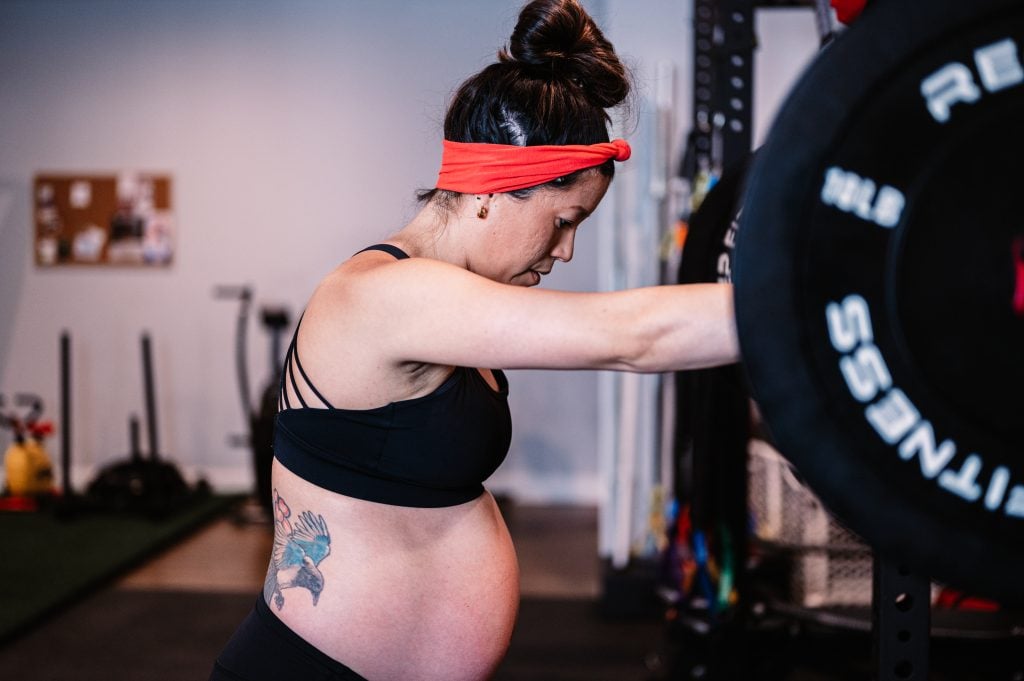

- 5 Workouts/Week
- Gym Workouts
- Self-Paced

Instructor
GINA
Workout on-demand with our prenatal fitness workout videos! Each workout is 30-40 minutes to follow along as you exercise at the same time!
- Birth Prep
- All Trimesters
- Mobility Work

Instructor
GINA
Find comfort and relief from pelvic girdle pain throughout your pregnancy and postpartum period! This program incorporates myofascial sling focused exercises to stabilize across the pelvic girdle joints.
- 3 Weeks
- On Demand Workout Videos to Follow