



Welcome to the MamasteFit Podcast! Our girl, in-house pelvic floor physical therapist Hayley Kava, is back to discuss SI (sacroiliac) joint pain- a common issue during pregnancy! Hayley and Gina delve into various types of discomfort associated with the SI joint, detail the joint’s function, and explain how asymmetry in pelvic movement can cause pain. Hayley provides insight into how the pelvis supports movement, particularly the gait cycle, and suggests exercises and strategies to manage and alleviate pain. They also discuss the limited effectiveness of relying solely on SI belts, emphasizing the importance of proper footwear, pelvic balance, and thoracic rotation. The episode concludes with recommendations for seeking appropriate care and utilizing prenatal fitness programs for a pain-free pregnancy journey.
Read Episode Transcript
Gina: Welcome to the MamasteFit Podcast. In this episode, we have our in-house PT, Hayley Kava here to talk all about SI joint pain. So this is pain to the backside of your pelvis- you may describe it as sciatic pain, you may describe it as lower back pain, glute pain, tailbone pain. There’s a lot of different ways that you may express this type of discomfort, but we’re gonna talk about how the pelvis is moving and how this could be impacting whether or not you have pain more to the right side or to the left side. And this is something near and dear to me ’cause I personally had SI joint pain during my pregnancies that I was thankfully able to overcome and alleviate and manage really well, thanks to Hayley’s help! And so I’m excited to get into this episode to dive into all of the things that you can do to help overcome SI joint pain.
Welcome to the MamasteFit Podcast. So we have Hayley here and we’re gonna be talking all about SI joint pain. So Hayley, could you just introduce yourself to our listeners who may or may not be familiar with you, probably familiar with you, but just in case.
Hayley: Yeah, yeah. I’m Hayley Kava. I’m a pelvic floor PT that specializes in postural restoration and I work here at MamasteFit.
Gina: Yeah. So let’s dive into it. Let’s talk first, what is the SI joint, like what is the function of this area?
Hayley: Yeah, so the SI, sacro iliac joint, it labels where it’s at. So we have our sacrum, which is the sort of bone at the back of our, at the bottom of our spine- so if you’re watching on YouTube, you can get a visual- but our spine comes down, at the bottom of our spine is our sacrum. At the bottom of the sacrum is our tailbone, so it’s just a continuation on from our spine. And then our iliums are our two sides of our pelvis, like the bony pelvis, and the SI joint is where our sacrum and our ilium join up together.
So we have an anterior part of the joint in the front, and then we have a posterior part of the joint in the back. And so we can end up with compression or distraction in different parts of the SI joint, which can create different symptoms and can help us figure out how do we address the pain that you’re having from different directions, if you will.
Gina: Yeah. So the sacral area is like a big junction between our upper and our lower body as well. So there’s a lot of force and movement kinda being directed through this little junction within our body, so it’s a really big deal. We have tons of ligaments and muscles that are supporting this back area, and so there is a big approach to addressing SI joint pain.
So let’s start with how is it supposed to normally function, and then we can break down like what happens when it’s not quote unquote “normal.”
Hayley: Okay, so, I feel like this is a bit controversial because we don’t want you to feel like your pelvis is unstable, okay? Your pelvis is incredibly stable, these bones of our pelvis are incredibly strong, so let’s start with that! Like, we’ll start there. But, we need to transfer load, three dimensional or multidimensional loads, from the left side of our body to the right side of our body, in order for us to move forward, in order for us to be upright, for us to function properly. And so, if these SI joints did not move, we really wouldn’t be able to walk and there wouldn’t be joints here. Okay? A joint, it would be a solid ring of bone. It’s not a solid ring of bone. It is really heavily reinforced by all this fascia, all these ligaments, muscles, like everything that’s crossing this area in order to offer its stability. But within that stability, it does need to be able to transfer forces.
So when we stand on one leg and we’re walking- so we’re gonna talk about the gait cycle a lot- when one leg swings forward, that side of the pelvis, so if this is the right leg, that side of the pelvis has to move into flexion, abduction, and external rotation, it has to turn out. And then the other side has to turn in, and do the opposite. Our sacrum turns toward the standing leg and tips into a little bit like a forward motion. Okay? Then it has to be able to switch and go to the other side. It does not move this much, okay? So when we do these demos with the pelvis, we make it move quite a bit just to help us see it and visualize it and understand how that works. It doesn’t move this much. It’s more about like force transfer, energy transfer from side to side.
And so, if we, through the gait cycle, are maybe not transferring that load well because we have some pelvic asymmetry, or because we have lost, or we’re stuck more in an anteriorly rotated position, the biomechanics of that load transfer from left to right is gonna be interrupted. That’s going to interrupt how the big muscles around our pelvis, like our glute max and our piriformis, and our hamstrings and our adductors, and then up and beyond, influence this alternation. Yeah.
Gina: Okay.
Hayley: So it, it really needs to be able to help us shift from left to right evenly. When we can’t, this is when we run into problems. This is when we run into pain, and where that pain is, if that pain is now showing up in our SI joint, then that’s where it’s showing up.
Gina: All right, so let’s break it down, ’cause we’ll have some folks that have more right SI joint pain, we have some that have more on the left side. Are there like different things that they should be doing to address either side?
So I had more right side SI joint pain due to a number of reasons. So let’s break it down, like what if they have right side SI joint pain? What is going on, potentially, there?
Hayley: Okay, so our right brain, our right lung, and our right diaphragm, the muscle in the bottom of our lung, are all bigger, our lung itself is bigger on the right side. Our liver is on the right side, and more of our digestive system is on the right side. So the right side of our body is heavier, and neurologically like our brain, our vision and all of that is more attuned to the right side of our body. It’s not debatable, this is like real, okay? And so we tend to, as human beings, orient ourselves more onto our right half of our body. That’s going to influence how we transfer forces through our pelvis, and then in turn, influence how our pelvic floor functions as well.
So when we are more oriented to the right, our sacrum is rotated toward the right, we’re then more internally rotated on this right half of our pelvis, I’d say we can call that more of a stance phase. So if we’re thinking about walking, we have a stance phase and we have a swing phase- and then we can divide those phases up more, but for the purposes of this- we like stance phase on the right. Stance phase on the right includes our right abs, our right, like, some of our right back muscles, all of these things that are keeping our body pulled a little bit more to the right. Then our left side, on the other half, is more in a swing phase, it’s more externally rotated, it’s more moving forward, it’s, it’s more here. And that’s good, when we’re on our right leg, okay? Where we run into problems, say in a right SI joint, is when our left side doesn’t know how to become a standing leg. So if we then put our weight over onto our left leg and we don’t know how to shift our sacrum over to the left, orient our body over to the left, and get well loaded onto our left leg- so we are staying in a more externally rotated position- we’re gonna change how we position our femur, we’re gonna change how we position all this, and we’re gonna stay in a standing phase on the right, even when we are trying to swing our right leg. Does that make sense?
Gina: That makes sense.
Hayley: So I’m trying to switch over to left stance and swing this right leg and my pelvis is not transferring over to the other side. So we’re staying in a stance phase on the right, even when we’re swinging our right leg and even when we’re standing. Okay?
That’s going to tire out the right side. The right side is gonna say, “We’re tired!” Like, “We’re doing too much, we’re doing too much.” The muscles that help push us off of our right leg and help us get over to that left side aren’t in a position to work well, so they’re not gonna do it, right? They’re really comfortable staying in that standing position, but now it’s causing us problems. It’s causing us problems because again, it needs a break and it needs that shift and that alternation.
So, what happens on the right side is that we end up in a more gapped position of the, sorry, we end up in a more compressed position of the front of that right SI joint in a more gapped position of the posterior SI joints we’re more open in the back of the right and more compressed in the front, and then vice versa happening on the other side. So I would say when it’s happening more on the right, it’s because we just can’t get off the right, we can’t give that right side a break. We can’t let go of what’s going on the right side, and that’s really common thing to have happen.
On the left side, it’s just the opposite of what we’re saying. That left leg is staying in a swing phase, and so when we load onto that left leg, we are not able to orient into a position that’s gonna optimize that left side for support in stance, right? And so sometimes you’ll get a catch in your SI joint when you pick up your leg, and sometimes you’ll get a catch in your SI joint when you put your leg down. And that could happen whether it’s on the right or on the left, that’s not necessarily predictable based on your orientation, like what side it is. It’s not, “Oh, always on the right it’s painful when you pick your leg up.” But it helps us figure out how we’re gonna approach it.
And the kind of the fun of that is that we don’t always have to approach it on the side that hurts, okay? So often if we have a painful area of our body, like our right SI joint, for example, and this right side is just not doing a good job at getting out of the right side, we can do things that help to release the right side, we can stretch the right side, we can strengthen muscles that help us get out of that right side, but sometimes when something’s already pissed, we are now poking the bear, no matter if we’re going the right direction or not. Sometimes it’s really nice when we have a painful area to be able to address it from the opposite side of the equation because we want both of these sides to know how to work together. So I find particularly in like very painful conditions where we’re really afraid of moving this right pelvis, or left, but moving one part of our body because it’s painful, and I feel like these types of conditions are really common in pregnancy, if we can do some things to the left side, like a pullback for example, even though we’re doing a pullback on the left side, both sides of that pelvis are working together, so we’re actually getting what we want to have happen on the right, even though we’re addressing it on the left. And so we’re able to find better balance without having to poke the angry bear, if you will.
Gina: Yeah, absolutely. So I had more right SI joint pain during my pregnancies and the ways that we approached it was, strengthening the muscular imbalance, so a little bit more quad and glute on the right side, a little bit more hamstring inner thigh on the left side. And that kind of helped to pull the pelvis back. I was doing a lot of hip shifts towards the left side. A little bit more like back strengthening and like rotating towards the left side as well with some rowing movements, a little bit more external obliques, and all of that was like super helpful.
And now postpartum, I’m working more on, can I bring my rib cage over as well? ‘Cause I’m good at moving the pelvis.
Hayley: Yeah.
Gina: But my rib cage is not what’s moving. And so I think sometimes we need to think beyond just the pelvis, and recognize that it’s a chain.
Hayley: Correct.
Gina: Where we’re removing load from the upper to the lower body across this pelvis, and so how is the upper body moving and how may that be impacting the pelvis?
Hayley: So what I like to tell people all the time is we gotta figure out what’s driving the situation. So if we struggle with right swing, the movements that allow that right side to come forward and the left side to come back, absolutely, we can address that at the pelvis. But when we think about what our arms need to be doing at that moment, what we often find is that people struggle with that thoracic rotation in that phase of the gait cycle. So if we struggle to get onto our left leg, to prolong our left stance phase, to stay on that left leg a little bit longer, versus jumping back over to the right, we actually need to be able to rotate our upper trunk to the right and get that right shoulder blade coming back more to give us that last little bit of left stance. If we lack that, that could potentially be the reason why that pelvis wants to pull back over to that right side. So sometimes how we address the SI joint pain, again, could go further than addressing the left side, but also addressing what’s going on above that.
Gina: Yeah, so that’s something that I’m dealing with right now. So I have been having, I have NOT been having SI joint pain, but I know that it’s coming if I don’t start to address it a little bit more now that my running volume is increasing. But really thinking about right side, coming back, that shoulder blade pulling down, so that I have more extension to finish up my left stance.
Hayley: Correct.
Gina: And when I add that extra movement into my runs, ’cause again, it’s like thousands of steps, one after another, when I add in that little bit more, any discomfort that I was having in my left leg starts to go away because I’m finishing the stance, I am spending a little bit more time on that left leg, and then my right leg starts to feel better, too.
And so it’s crazy how much the thoracic rotation and movement can really influence the pelvis as well. ‘Cause normally when we hear pelvic floor, like, pelvic pain, it all seems to be very focused on glutes, the pelvic floor musculature, the joints of the pelvis and doesn’t always think about how is the rest of the chain impacting this junction point?
Hayley: Yeah, like if we’re thinking about all the changes that happen to our body in pregnancy, a huge one is what’s changing through our rib cage. And so if we are losing that alternation and that rotation through our rib cage, it only makes sense that’s gonna influence our pelvic rotation as well. And if we are not… if we’re not looking up, yeah, then we’re missing out.
Gina: How much do you think relaxin plays a role into pelvic girdle pain? And so that’s like a big, I think, villain of discomfort during pregnancy is, “Oh, you have this relaxin, it’s gonna increase movement in the joints, which causes the pain, but once you give birth, it’ll go away.”
Hayley: Yeah, … it’s a good excuse to shoo you out of the office, right? “Oh, just relaxin! See ya! It’ll go, it’ll get better when your baby’s born.” And I think it’s, relaxin peaks in the first trimester, and maybe if you’re experiencing some of that early in pregnancy and your body mechanically hasn’t changed that much, potentially that could be playing a role. But your body regulates pretty quickly and it is wild to me that, yeah, it just gets the blame. And I think it’s so common for so many women’s health issues is like, “Oh, it’s just your period,” or…
Gina: “It’s just your hormones.”
Hayley: “It’s just your hormones!” Or, “It’s just these pregnancy hormones that are messing with you.” And and I think that’s… it’s unfortunate that a lot of people will just continue to suffer and there’s options.
Gina: So let’s break down the right versus the left again, mostly for my own clarity.
Hayley: Yeah.
Gina: So right side SI joint pain is linked more to not being able to get out of a stance position.
Hayley: Correct.
Gina: While left side is not being able to get out of the swing phase of the left.
Hayley: Yeah.
Gina: So if I am able, or not able to swing on the left side, am I also stuck in stance on the right side though, or how does that kind of work?
Hayley: Okay, so there is a very… the common pattern is that we tend to be more in right stance and left swing. So now we take a left swinging leg- so when our left leg is swinging, we are using more of our glute, quad, hamstring, calves- we’re here. Now this is a swinging position that allows for more gapping at the front of the SI joint and more compression in the back of the SI joint. Now when we go and step on that leg, we go to step on a leg that’s in a swinging, or on a pelvis that’s in a swinging position, again, now the orientation of the muscles that help offer that stance support aren’t in a great position, and then we can get more sheer across that joint. And so, yeah, that would be more of what would contribute to that left side. Can you have… in my mind there, it’s the same, right? So like whether it’s showing up on the right or the left, it’s similar. I would say then the next thing that can happen is that as we’re moving on in pregnancy, we start to lose our stance ability on both legs, and we end up that really waddly, that really waddly posture.
So there’s a study that I looked up, it’s a 2018 study and it’s called “Pelvic Alignment Factors for SIJ During Pregnancy,” okay? We can link it. But they looked at women who had SI joint pain and women who did not in their pregnancies at both 12 and 36 weeks, and they wanted to figure out, what was different between these groups? So their results are a little bit weird to interpret, but when I actually looked at their, the numbers, it was a little bit more clear. So women who had SI joint pain had a less of a difference between their anterior pelvic tilt at 12 weeks versus 36 weeks- their anterior pelvic tilt didn’t change that much. Women who did not have SI joint pain started with, whatever their pelvic tilt was, and their pelvic tilt increased more. So that can be a bit confusing, ’cause you’d go, “Oh, so if you have SI joint pain, your pelvis didn’t change that much.” Not accurate. The groups were statistically significant at baseline.
So the group with SI joint pain was more forward to begin, significantly, I don’t know, like a couple of degrees. And so, if you start here, this is our gymnasts, our CrossFitters, our dancers, those who do sports where we tend to be in a little bit more of that tilt, if we are starting there, we’re a little more vulnerable to SI joint issues, because we’re just starting off in a more forward position. My guess is that those people tend to be more forward on both sides versus like maybe your normal asymmetry- they didn’t denote right or left side in that study. But if we’re more here now, we’re compressed in the back of both SI joints and we’re not able to transfer load well to either direction. So we’re trying, we’re trying to transfer that load from left to right, but we’re just not able to do that well. And then the group with more pain also tended to have more asymmetry.
I’ll say, their measurement of pelvic asymmetry was a little bit funky- they were looking at anterior pelvic tilt, just left versus right, so they used some different like measurements. But people who had more SI joint pain were a little bit more asymmetrical. And so you can be forward on both sides, but still be more forward on one versus the other. And that’s probably my guess with that.
Gina: That was probably me.
Hayley: Yeah. Yep. Yeah, and that’s not uncommon, like it is not uncommon for someone to come in, in pregnancy, or even before pregnancy, and be in anterior pelvic tilt. That’s like pretty normal. I would say it’s that you can be an anterior pelvic tilt and still be able to shift left and right when you move and do other functional activities. It’s like when we’re forward and stuck is when we run into a lot of problems.
Gina: Yeah. So these positions are not bad by themselves, I think it is more about how well can you change positions. Similar to how there’s no best posture, your best posture is the next position that you can move into.
Hayley: Correct.
Gina: And if you’re getting stuck in positions and you cannot change to do functional things like walking, that’s where we’re gonna run into some issues, which seems to be what is related to the SI joint pain, is if we’re stuck on the right, versus we’re stuck on the left or maybe we’re stuck everywhere and we’re not able to move, that’s gonna really impact how comfortable we are gonna be during our pregnancy.
What are some exercises that you would do with somebody who has more of the right SI joint pain versus somebody who has more like the left SI joint pain? Are they different or are they pretty similar approaches?
Hayley: It will depend on some testing that we do. If somebody has a lot of hyper-mobility, so their hamstrings are really long, you can do a big hamstring stretch or, we’ve got some over lengthening, or we’ve got hyper-mobility just in general, sometimes we will adapt based on that. And then sometimes we will adapt based on what’s going on above, so what’s going on with thorax? And also maybe what’s going on with feet? So lowest effort, lowest exercise effort is footwear.
Gina: Yeah.
Hayley: So we wanna make sure people are wearing shoes with a good heel counter that’s level across the back, that has flexion at the big toe, and they can feel the ground in, when they’re wearing them. That could be any number of shoes, but those are some things that we definitely wanna look at for footwear. So we need to have good ground underneath us.
If you are dealing with severe SI joint pain, it’s really not the time to be like, “Let’s go into barefoot shoes, and let’s only wear minimalist shoes!” Mainly because, our life, barefoot shoes are great if we’re walking on uneven, natural services all the time, but we’re walking on hard, artificial services all the time and that’s not natural.
Gina: Yeah.
Hayley: And so, sometimes people will push back on that, “Oh, barefoot’s better, our foot can do whatever.” I’m like, “If you’re standing on concrete all day, it’s not natural.”
Gina: Yeah, that was always my argument. So I was a collegiate runner and some folks would argue about whether or not we should run in barefoot shoes. And I was like, “Yeah, the caveman used to be barefoot, but they didn’t have cement.”
Hayley: Correct.
Gina: We’re all running on cement most of the time. Like I’m not running barefoot on cement.
Hayley: Correct, yeah!
Yeah, and, particularly then with the changes in our neuromuscular control and pelvic floor and biomechanics and pregnancy. So get yourself a good pair of shoes. I can get you a list of recommendations. And so that’s from the bottom.
From the top, is we want to address left to right balances in things like our lats or intercostal muscles, right? Because those lats are huge muscles, they attach on the front of our shoulder and they wrap all the way around and they attach back in that thoraco lumbar fascia and onto the pelvis, so onto the sacrum in the pelvis. They’re definitely gonna have an impact on how well that rib cage can rotate and gonna have an impact on how well that pelvis can transfer load. So if we have some tension in one side versus the other, we definitely wanna be addressing that.
We also wanna be addressing our like abdominal wall, and we wanna be able to move into that more like stacked position. Because from that stacked position, then we can alternate left, left to right. So I’ll say we wanna move from that swiveling through our low back to being able to swivel through our pelvis, and our rib cage. And that’s sometimes nice when the SI joint is so acute to be able to go, “Okay, let’s look from the floor up. Let’s look at your feet, let’s look at this rib cage,” and hopefully that helps start to calm things down.
I am not a humongous advocate for SI belts. I think that’s something that a lot of people just get handed. It’s like, “Strap this on, hope for the best…” And the theory around that is that the SI belt, it comes around this, the top of the ilium, the top of the pelvis, and helps bring it into that internally rotated position, which allows then for some gapping at the back of that SI joint, maybe offering a bit of relief back there. It changes the way that we’re transferring left to right. So if we lock it in, now we’re not moving that SI joint, it might be less painful, but it might not. And now we’re not optimizing the mechanics of plevis.
Gina: I usually find like a belly band is more of my go-to, ’cause at least during my pregnancies, I was finding that my belly was almost pulling me forward.
Hayley: Correct.
Gina: I was in a more extended position, so when I could just provide more support it allowed me to be in that more stacked position so I could stabilize better.
Hayley: Yeah!
Gina: Those over the SI belts. The SI belts are also super confusing for me- we got sent a few and I was like, “There’s so many straps and I don’t know where this goes….” So I found like a good belly band.
Hayley: Yeah.
Gina: Just like that little sports bra for my belly was like really helpful for the days that I was feeling a little bit more discomfort ’cause I was fatigued and I was just collapsing into positions and getting stuck in those positions and not moving as well.
Hayley: Yeah. So I looked at a study, I can’t find it right now, on SI joint pain and kinesio taping- similar concept of, okay, we, maybe we could belt it, maybe we can tape it. And they did like their specific SI joint taping and then they did a “sham” SI joint taping. What that means, what the difference was, I don’t know. Maybe they just didn’t put any tension on the tape, they just laid the tape down flat, versus fastening it in the right way? And the outcomes were the exact same. So whether it was just a piece of tape laid on someone’s back, or it was this very specific elaborate taping that was designed to stabilize the SI joint, it really made no difference, because it’s about feedback.
So just like the belly band offers this like input, like this proprioceptive input of, “Oh yeah, this is how I can control my body,” versus letting it like just boing out, is valuable. So same thing with potentially tape or whatever is it’s just the fact that there’s something on there helps your brain modify.
Gina: Remember where it is.
Hayley: Yeah, know where it is in space, ’cause our sense of where we are is changing throughout pregnancy, yeah.
Yeah, I really tell patients, I’m like, “Don’t buy the belt. Invest in in a PT session, and if we’re not, if we can’t, if we can’t get this significantly better in a session or two, then okay, go get the belt.”
Gina: Yeah. I mean,
Hayley: Or if you find that it’s like majorly helpful, yeah, cool.
Gina: For me personally, like I had, I’ve had SI joint pain in all of my pregnancy. The first one, I didn’t know anything that I know now and the provider essentially told me like, “Just give birth and it’ll go away,” and I was like five months pregnant and I was like, “That’s a long time away to not be able to walk comfortably…” So fortunately, I was able to find a chiropractor that was able to help me come to a point of not being in pain so that I was able to strengthen. And I think she had a little bit of an understanding of movement. She was more DNS certified, and was able to gimme some movements to help feel comfortable with the rest of my pregnancy.
The next three pregnancies I had you guys helping me out, and that was so much more beneficial with really understanding like what was going on. And really was like a big game changer for me in all of them was just learning how to move better through my pelvis, to move better through my rib cage. And yeah, so that was like incredibly helpful. And it’s really disheartening to be told this is just a part of being pregnant. And the best part was, it was like one or two sessions, I think maybe it was just one session for all of them. And I was able to be pain-free.
Hayley: Yeah.
Gina: Which was amazing. And then when I was starting to have a little bit more like irritation, redo my exercises and like I was pain-free again.
Let’s take a break from this week’s episode to hear about our podcast sponsor, Needed. Needed is a nutrition company that specializes in optimizing nourishment for the perinatal timeframe that I have personally utilized throughout my pregnancies and now into the postpartum. And if you’re interested in Needed, you can use our code MAMASTEPOD to get 20% off your first order.
Needed’s collagen is one of my favorite products that I utilize during my pregnancies and now into the postpartum, because our protein needs during pregnancy, and even into the postpartum are much higher than normal. And so being able to take a collagen supplement is a great way to meet your protein needs. Needed’s collagen is third party tested so you can trust that it has all the stuff in it that they claim it does, and that it’s a quality product that is well sourced as well. You can check them out at thisisneeded.com and use our code MAMASTEPOD to get 20% off your first order. And again, Roxanne and I only recommend brands that we personally use and love, and Needed is one of them that we trust fully.
So what are some things that folks can look for? Because I hate when I recommend, “Hey, you can see pelvic floor PT during pregnancy, like you don’t have to be in pain,” and they go and they see a PT, and they see a PT, and they see a PT and they’re like, “I am still in pain.” What are some things that someone can look for either before they go to the session to know that this PT is gonna be a good fit and help them, or even in their first session? Like what are some red flags of you’re probably not gonna see a ton of relief?
Hayley: Yeah. So, dysfunction of the SI joint or pubic symphysis, or pelvic- any dysfunction in your body- is a movement problem. So if in your session it’s completely revolved around restraining movement, right? So it’s, you are laying on your back and you’re squeezing a ball and you’re trying to tighten everything, and then relax, and then tighten everything, and relax, and there isn’t, and it’s… like without understanding that the goal of that is to offer some stability so that then when you get up and start walking, you’re gonna have some better neuromuscular control of that pelvis and that’s what you’re gonna continue to do throughout, that’s not, in my opinion, not particularly helpful.
We want, early in a program, for the treatment of SIJ to address the problem, which is this load transfer from left to right. Whether that’s addressing above the pelvis, or below the pelvis, or at the pelvis, or a combination of all of those things. And so a how do we identify if a PT can do that? Can I give him a call and ask? I’d say, “Ok, what sorts of things do you typically do for SI joint pain?” Or, like, “How often do you work with people with SI joint pain?” And I think that’s something for any healthcare provider, if you’re seeing them for something, is a fair question to ask is, “How often do you see this thing?” If you have SI joint pain and your PT sees it once a year, like they might not have the tools that you need.
Gina: Yeah, it’s tough ’cause I hate it when we like recommend folks to see a PT and then they’re like, “I’ve been seeing a PT for four months and I’m still in pain,” “I gave birth and I’m still in pain,” like, “I’m still, I cannot function well in my life, and all I’m getting is glute bridges and clamshells and they’re dry needling me.”
Hayley: Correct.
Gina: “And they’re massaging my back, which feels great during, but it doesn’t result in me feeling better in my life and more functional within my life.” And I don’t know if maybe there’s like this disconnection between like PT school versus what works in real life, or the additional certifications that folks could get, ’cause we’ll sometimes get like new PT grads that’ll angrily message us on Instagram when we mention that the pelvis moves, right? It does have some movement capability, it’s not a ton, but it does have some movement. And getting stuck in one position can typically result in some dysfunction.
Hayley: Yeah, and like I will fully admit, as a young little PT, I believed that the SI joint couldn’t really move, or it could move very little, and that there’s no way that could possibly be the cause for someone’s pain or dysfunction.
So, if that’s where you’re at right now as a PT, that like, it’s okay. But what if… what’s the worst that could happen? Your patient comes in and they’re having severe SI joint pain, and you only offer them fear-based strategies that limit their movement. That doesn’t, really align with our ethos as physical therapists, which is to get people to restore movement in order to hopefully reduce pain, right?
Gina: Yeah.
Hayley: I’m not, I don’t really treat pain. I treat what I see mechanically, or what I test and is limited, then we address that and often that addresses someone’s pain. Like we fix the mechanics and the pain kind of follows along. But if we’re constantly having to go after the pain, whether it’s with needles or with other tools, or with taping, or with banding or with all of those things, or, adjustments, right- like chiros, don’t come after me or, we love you too. But say our chiropractor, I find chiropractors are pretty good at understanding that there are these patterns, and so then they use the tools that they have, which is an adjustment, and the hope of their adjustment is that now we can restore this function. Like with Dr. Ring, who we work with pretty closely, and we have some shared patients, it’s like, “Yeah, go ahead! Have Dr. Ring adjust that. Give us a little bit more freedom there, and now I’m gonna teach you how to really control it so that you don’t have to see him as much.” And maybe he doesn’t like that, but…
Gina: I think he’s supportive of it though. It’s like, people are feeling better.
Hayley: I know, I’m kidding!
Gina: Yeah, I can say, I definitely find like the adjustments and the manual therapies are helpful to bring somebody out of pain so that we can then move in a better way, but it doesn’t have to be an all or none. Like it doesn’t have to be, “You can only do manual therapies, now you’re pain free, good luck, like move, go do things in your life.” Like we can do the manual therapies to come to a point of pain relief and then add on the movements to improve how well that pelvis can change positions and shift.
Hayley: But I think you were asking how can we do this maybe without so much individualized care.
Gina: Yeah.
Hayley: And I think it’s being willing to experiment in our own bodies. It’s a different episode, but we just recorded the episode about perineal stretching and this idea of, “I feel discomfort. Let me just take a minute. Let me just take a minute and see what’s happening, and don’t freak out, and don’t try to get away from it and don’t be afraid of it. But what happens if I feel this pain and I just sit with it for a second?” And oftentimes like nothing catastrophic is gonna happen. Your SI joint’s not gonna explode, it’s not, I promise it won’t. It’s not gonna explode. And so say we’re in a lunge position and we feel like, “Oh, I feel like that really hurts, that really hurts when I bring that leg forward, or I step that leg,” whatever direction it is, what happens if I just shift a little bit? Whether I shift my knee forward or shift my knee back, or I change the way I’m reaching my arms and I change the way I get my rib cage positioned. Oh, okay. It first freaked me out, but now I’m in this better position, i’m not so freaked out and I changed my mechanics a little bit. Okay. Not so bad. And now I can strengthen without discomfort.
Gina: Yeah.
Hayley: And I think that’s a huge piece of it, too, is, “Okay, this is not wonderful, I don’t love this, but I can do something a little bit different and it goes away. And I’m not broken and there’s nothing wrong and we can keep going forward.”
Gina: Yeah.
Hayley: And I think just offering the empowerment of that often helps people’s pain get better pretty quickly too.
Gina: Yeah, and I am like, I have felt the success in my own body and I’ve seen it with our clients where it is reasonable to find pain relief fairly quickly. Like it’s not gonna be a three month process.
Hayley: Correct.
Gina: It can be like. Two days… a week.
Hayley: Yeah.
Gina: Like it’s, it can, be very condensed if you can explore the movement in your body. Give yourself the tactile cues or visual cues that helps you learn to shift. And so we’ll use like bands in the gyms, or foam rollers, or blocks, or different tools to help bring somebody into a different position. Maybe it’s adding a row on one side or maybe a little bit more external rotation in the shoulder to just come into that different position and explore it. And like little tweaks, whenever we teach someone hip shifting, it’s like this is the basic movement, but now you need to spend time in it and like wiggle around and shift the weight around until you really feel it.
Hayley: Right.
Gina: And you are gonna know when you feel it.
Hayley: Yeah. It’s about embodying it. And I think in, pregnancy that’s huge is like you have to, you have to feel it. And so a lot of times patients, sometimes exercises we do are a little weird, right?
Gina: Yeah.
Hayley: They’re a little different than your regular exercises. And people will be like, “Does that look right? Does that look right?” and I go, “How does it feel?”
Gina: Yeah. How’s it feel in your body?
Hayley: Can you feel an inhale? Can you feel your pelvic floor move? Can you feel your glute? Can you feel your hamstring? Can you sense these things in your own body? I don’t care what it looks like- I, mean I do, but, really at the end of the day, it’s about what it feels like. And so it does take a little bit of that and puts that on you, a little bit, to do.
Gina: Yeah, there’s a little bit of guidance that we can receive, and I think understanding kind of the mechanics of what is happening and where that issue may underlie, can really help the individual kind of figure out, “Okay, if I am stuck here, what can I do to help me bring the weight over here and change this pelvic position? Is there different ways that I can cue myself either visually…” like we have mirrors that line our gym to just give that visual cue, ’cause sometimes that’s huge during pregnancy and postpartum. Can I apply something tactilely to help with the shift? Okay, what other movements could I add on? How can I integrate my PT movements? And there, there’s so many different exercises that you can do. But hopefully this episode is helpful for folks that are trying to really understand the underlying of what is potentially going on to help address that SI joint pain, whether it be on the right or on the left. It seems to be like there’s a really similar pattern that’s happening, it just depends on where it presents of which leg maybe you’re having a little bit more trouble with, is what I’m understanding.
Hayley: I’ll sometimes ask people, if they’re like having pain with running or having pain with walking is, I’ll say, we’ll watch them walk or we’ll video them walk or run and/or I’ll just have them feel what they feel like when they’re walking. And I’ll say, and then we’ll look at like a phrase I use is like, “Where are your headlights facing?” So headlights being like the points of these, like this is a headlight, this is a, the two points of our hip bones at the front being our headlights. And we can feel like we’re walking like normally, but if our headlights are turned to the right and the rest of our body is like straight, but we’re walking with this right orientation of our pelvis, and we’re never getting our headlights turning back over to the left, people sometimes don’t even really know or realize that until we start to go, “Okay, I want you to pause mid step. Can you get your headlights turning to the left? And then when you step to the right, can you bring your headlights back to the right and they’ll go, “Oh. They were staying over there.”
Gina: Yeah.
Hayley: And so can, we bring some of our awareness? If you’re sitting, listening in your car, where are your headlights pointing right now? I’m totally leaning on my right leg.
Gina: Yeah, I’m like super scrunched over on this side.
Hayley: And we scrunched over to the right side. Okay, do we need to be perfectly even all the time? No. Can we bring our, maybe bring our awareness onto our left for a minute? Get some left orientation for a little bit, and then as we keep talking, we’ll veer back over into our normal pattern, but sometimes just interrupting our pattern a little bit, which also helps us feel better.
Gina: Yeah.
Hayley: Which is probably something I’ve said in other episodes.
Gina: Yeah. that helps me when I’m like running to think about, okay, I need to get over to the left and I need to really think about the extension, and that makes me feel different and better within my body.
It was the same during pregnancy as I was exploring movements. If something was tweaking the SI joint a little bit, okay, how am I not shifting? Where am I not moving? And that’s where, record yourself when you’re working out. If you’re having pain, record yourself walking and then look at it and see, okay, what seems different? Or like you said, stop mid step, see how are my hips oriented? What am I looking like? And explore the movement in your own body. I think that’s a huge thing when it comes to prenatal fitness and how that can translate to how we feel during our labor and in the postpartum, is to really explore how movement feels for us and to feel confident that we can move that it doesn’t have to be a painful experience. And then figure out the little tweaks that work for you because again, the shape might look different, but the sensation should be similar in each of us and how we receive that sensation may look different from one another.
Hayley: Oh yeah.
Gina: Well, thank you, Hayley, for all your insight on how we can approach SI joint pain, ’cause it is something that I think a lot of people struggle with. Either SI joint pain or pubic symphysis pain, or the SPD to the front of the pelvis. We have a whole episode on SPD pain that we did with Hayley. We also have some free workouts on YouTube as well with some exercises that you can try to help overcome some of the pelvic pain. You can work with pelvic floor PTs during pregnancy, I would highly recommend it, even if you just want like a check-in to see what is going on with your body. I find it to be really helpful for me. Once I have a little bit more awareness of how my body is moving, I’m able to really take what I’ve learned and apply it to my workouts, to my runs, to my walks, so that I can explore movement a little bit better and feel much more comfortable within my body. ‘Cause pain is definitely not a requirement of pregnancy, that’s something that I firmly believe in, and I think our programming really helps folks feel pain-free. I think working with PTs can help people feel pain-free, and we’re all about just helping you improve your quality of life.
And so if you want more support throughout your pregnancy, check out our online prenatal fitness programs where we have daily workouts to help support a strong pregnancy, with lifting modifications from first trimester all the way through birth. We have exercises within it to help you stay comfortable with pelvic stability exercises, pelvic floor exercises, lots of hip shifting and moving from side to side. ‘Cause again, it is totally possible to be pain-free throughout your pregnancy, pain is not a requirement by any means.
If you wanna check out our prenatal fitness program, you can check ’em out at mamastefit.com and use code STORY10 to get 10% off any of our fitness programs, including our childbirth education, which you can bundle with prenatal fitness and save an additional 15% off.
And this podcast is sponsored by Needed. Needed is a perinatal nutrition company that specializes in optimizing nourishment for the perinatal timeframe. And you can use our code MAMASTEPOD to get 20% off your order at thisisneeded.com.
Additional Resources
Find Hayley Here:
Website: https://www.hayleykavapt.com/
Instagram: https://www.instagram.com/hayleykavapt/?hl=en
Shoe List: https://www.hruska-clinic.com/shoe-list/
Prenatal Support Courses
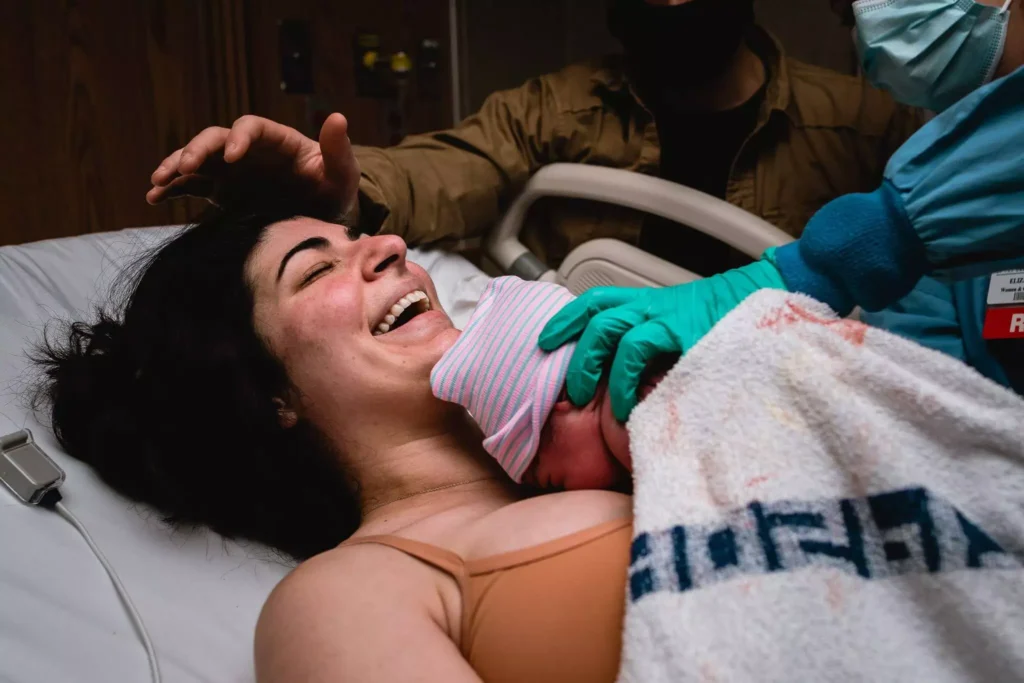

Learn the science of pregnancy and birth to take the mystery of labor away! Understand why you are feeling what you feel, and learn strategies to confidently move through pregnancy and birth!
- 9h+ of Video
- Support Group
- Close Captioning
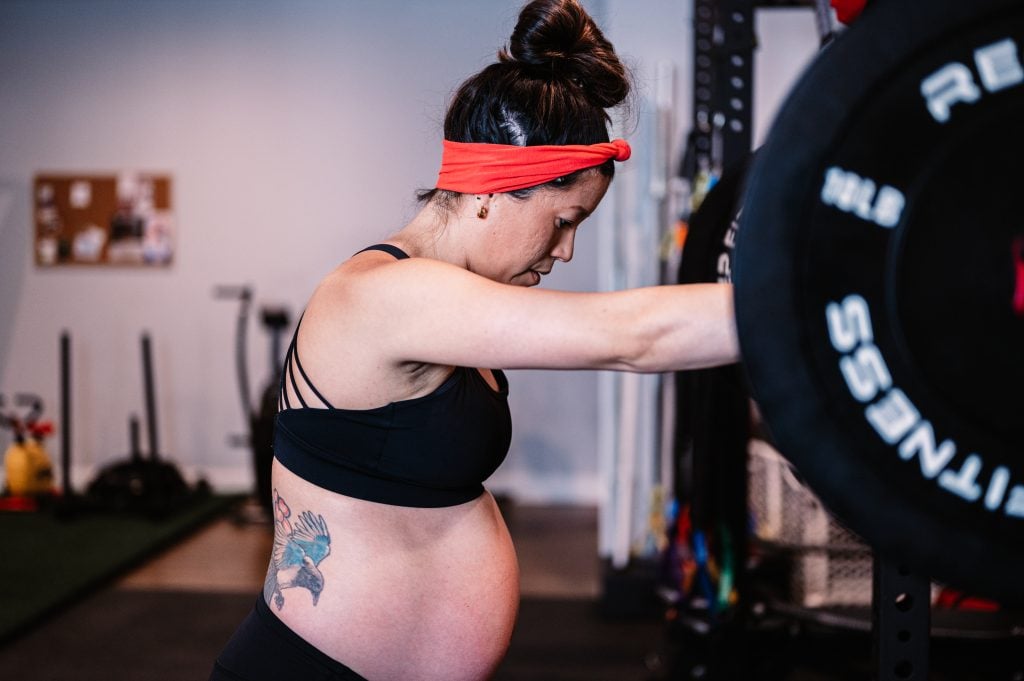

- 5 Workouts/Week
- Gym Workouts
- Self-Paced

Instructor
GINA
Workout on-demand with our prenatal fitness workout videos! Each workout is 30-40 minutes to follow along as you exercise at the same time!
- Birth Prep
- All Trimesters
- Mobility Work

Instructor
GINA
Find comfort and relief from pelvic girdle pain throughout your pregnancy and postpartum period! This program incorporates myofascial sling focused exercises to stabilize across the pelvic girdle joints.
- 3 Weeks
- On Demand Workout Videos to Follow