



Welcome to the MamasteFit Podcast! In this episode, Gina, a perinatal fitness trainer and birth doula, shares her experience training for and completing a marathon just nine months postpartum with her fourth baby. Despite initial challenges, including being abandoned by her running partner Roxanne due to a surprise pregnancy, Gina details her journey from maintaining fitness during pregnancy to rebuilding her strength and endurance postpartum. She talks about the specific training regimen she followed, the physical and mental challenges she faced, and how she managed to complete the marathon without unrealistically intense preparation. Gina also discusses the logistical complexities of marathon training while parenting, the importance of a gradual return to fitness postpartum, and her plans for future races. The episode serves as both an inspirational story and a practical guide for anyone looking to undertake a significant physical challenge postpartum!
Read Episode Transcript
Gina: Welcome to The MamasteFit Podcast. In this episode, I’m going to be sharing how I trained for a marathon at nine months postpartum, even though Roxanne abandoned me in running it, and supporting me in it. But I’m going to walk you through how I made it to the point where I could survive a marathon- I did not die. I did not die.
Roxanne: It was a little questionable.
Gina: There was a key moment during that marathon when I thought I might actually die, but I did not. I survived. And I’m going to share my journey with you.
Welcome to The MamasteFit Podcast. So I ran a marathon and I did not die.
Roxanne: Gina is the millennial where you have to pick the three things. It’s either getting into gardening, I don’t remember, something else, and then marathoning. Gina has chosen marathoning.
Gina: I don’t know if I am going to… So, there was a moment where I was pondering…
Roxanne: You are signed up for two marathons!
Gina: I was pondering, I was like, “Maybe if I trained more this would be less miserable.”
Roxanne: You used to run ultra marathons.
Gina: But ultra marathons were different, because with the ultra marathon, I had no time goals, I was literally just trying to finish it. And so if I wanted to walk and relax, I did. This marathon, I thought I was going to win it, and then I was like, “I’m not going to win it. I’m going to race for a time.” And because of that, it made it so much worse. So the ultras I felt were easier ’cause there was no… if you just tell somebody you ran 40 miles, they’re like, “Wow, that’s impressive.”
Roxanne: It was just your own personal…
Gina: It was my own problem.
Roxanne: Yeah.
Gina: It was my own problem. But I was like, maybe if I trained for this marathon, it would be less miserable, and then I saw a video of this lady who legitimately trains for marathons and she was like, hobbling around after the fact. And I was like, “No, I just think that’s how marathons are. Every one just sucks.” It just feels like awful.
Roxanne: I mean, some people run marathons literally every day.
Gina: That sounds like a bad time. They probably don’t do it for time though. Anyways, so I ran a marathon, I did not die. There was a moment during it where I was like, “I might die.” But, it was a really beautiful trail marathon- so it was all on this gravel trail. So it was a really nice scene, so if I…
Roxanne: Wait, like, gravel rocks?
Gina: It was like really fine. It was pretty much like a dirt path.
Roxanne: Okay.
Gina: So if I was going to die somewhere, that would have been a nice place to die.
Roxanne: But it smelled bad though.
Gina: No, the trail was away. So it was in a small town in Virginia where they had like a cardboard factory, so the whole town smelled like wet cardboard. But once you made it to the trail, you didn’t smell that anymore.
Roxanne: Okay.
Gina: So that was nice. So it would’ve been a nice place to die during it.
But yeah, so how did I train for this marathon? Why did I even sign up for a marathon at nine months postpartum when I have not really been running at all for the past like nine years of my life?
So in college I was a collegiate runner. And then my early adult years, I was doing like 10 milers, I was doing ultra marathons, so I was still like in my running era. And then I got pregnant with Adeline, my oldest- she was a planned pregnancy. Whenever I say that, I always feel like people think like she was like an unplanned child, she was totally planned. But during that pregnancy, running just didn’t feel good for me and my body, and running has not felt good for me in any of my pregnancies. I know that there are some folks that. Running feels really great for them and they can do it the whole time, or maybe they’re lying to themselves. But for me personally, running just did not feel good for me, so I usually just do like low impact. And then postpartum, I found getting back to running was a little bit more challenging with my second and then my third. Because, my first, I was able to get back into it and I did, I think I did a 5K with her in the stroller, but it was much easier to push a single stroller than a double stroller, and then you had a third kid, and it was just like, “Oh God. Ugh, this is awful.” So I really haven’t been running a whole ton since before Adeline was born. And I just decided I was going to do a marathon, for some reason, with four kids instead.
So we signed up for the Disney Marathon in January, and my grand idea was we should do the Goofy Challenge. And if you’re not familiar with what the Goofy Challenge is, it’s a half marathon and then the next day you do a full marathon. I was like, “That sounds like a great idea.” And apparently nobody likes to tell me no. Everyone is my hype…
Roxanne: I said, “I’ll do the half marathon.”
Gina: Everyone is my hype person. And so not only did I sign up for the Goofy Challenge, Roxanne signed up for it, and two of our friends.
Roxanne: And by, “we” signed up for it, Gina means she signed everybody up.
Gina: And everyone agreed to it.
Roxanne: So I didn’t really have a choice. Even if I was like, “I would like the half marathon,” Gina was like, “It’s easier if you just do the Goofy Challenge, so I’m going to sign you up for the Goofy Challenge.”
Gina: And Roxanne said, “Okay.” So not only did I sign up for the Goofy Challenge, three of my friends did.
Roxanne: One of them being me.
Gina: One of who is Roxanne, who is also not running it now anymore, obviously, ’cause it’s like her due date.
Roxanne: 40 weeks.
Gina: So everyone decided that the Goofy Challenge was a great idea, and so we were ready to do that in January. And then while I was signing us up, I saw that you could either say, “My time is less than five hours,” or, “my time is more than five hours,” for the marathon. And if your time is less than five hours, you have to submit a time, like, proof to show like that’s what your time is. And if you do that, you get placed in earlier corral. And so what corrals are, is when you run these large races, they have like different segments based on your time. So, Corral A is going to be the fastest people, and then B is like the next fastest, C, all the way down. And so ideally the faster runners get to take off, as opposed to being like in the back of the pack and then you have to like weave through all these people. I have no idea how large the marathon is at Disney.
Roxanne: It’s huge.
Gina: I’m assuming it’s very giant. And so I did not want to be weaving through hundreds of people.
Roxanne: I wasn’t weaving through anybody, but.
Gina: For the marathon or for the half, and I wanted to be an earlier corral. I was also told that if you’re in an earlier corral it’s more fun, because you’re in the front of the pack to be able to see the characters and do rides and stuff. So I was like, “I want to submit a time,” but you have to submit times by July 1st, which was in about two months from when I realized this. And so I looked up a marathon and I said, “Hey Roxanne, we need to sign up for this marathon on June 14th, in two months from now, because we need to submit a time.” And Roxanne was like, “…Okay,” and we both signed up for it!
So we signed up for this marathon and then, realized that we had to actually train for it. Because Disney felt really far away, and I was like, “Oh, we’ll get to it. We will start training for that.”
Roxanne: I would do a 30 minute run and be like, “I feel great!”
Gina: “We’ll train for that marathon.”
Roxanne: I can totally do this. 30 minutes? No problem.
Gina: It was probably going to be November when I was like, “Oh shit, we need to train for this marathon.”
So because the marathon was an eight weeks, I was like, “Oh, we have to actually run now.” And so we did one long run together, which was five miles and it was slow, and I was like, “Oh no. Oh no, we have made a mistake!” And then Roxanne did not do another long run with me because she was pregnant, and she said, “I can’t run this marathon. I’m growing a person,” which was probably a good idea, it was pretty miserable. So I started training by myself all by my lonesome, ’cause Roxanne abandoned me and I started doing…
Roxanne: You could have not ran it.
Gina: I could have not ran it, but I wanted my time, Roxanne. I want to be able to take picture….
Roxanne: It really doesn’t make a difference.
Gina: …with Mini Mouse.
Roxanne: You get, you still get a picture with Mini Mouse.
Gina: I wanted a picture with Mini Mouse.
Roxanne: You still get a picture with Min Mouse? I ran the Disney Marathon, it’s always a long line, unless you are first.
Gina: Well, maybe that’s who I’m going to be.
Roxanne: Gina…
Gina: I got six months to train, Roxanne.
Roxanne: Gina…
Gina: To be number one.
Roxanne: Gina.
Gina: So what I started doing for my marathon training was, first, during pregnancy, I was staying fairly active throughout. I wasn’t running during pregnancy, but I was doing like low impact cardio, like riding the Peloton, doing stationary bike, going for lots of walks, but mostly really focusing on strength endurance training with my lifts. So, my lifts were higher volume, so higher rep schemes, like mini circuits, so I was still getting like cardio training with resistance training, but I wasn’t running. So I would not say that I finished that pregnancy ready to run a marathon, by any means. I was ready to have a baby and then heal postpartum.
And then in the postpartum timeframe, the very early weeks and first month postpartum, I mostly just focused on resting and allowing my body to heal and to have that initial to tissue healing, which I find to be incredibly important to set the stage for like long-term postpartum healing. I find when you rush that process in that first month to get back to the gym at two weeks or three weeks postpartum, before your body is like really ready for it, can really hinder progress long term. So you might be like four or six months postpartum and then you start getting injured or having issues, which is the trend that we see with clients that show up at our gym at six to eight months postpartum was they rushed it, they went back to like their normal more workouts, to their fitness classes, and then they were getting injured, and now they’re coming to work with us. Or even with online clients as well, like they kinda rushed to do kinda what they were doing before, they didn’t really do like the recovery process, and then four to six months postpartum, they’re coming back to us and like, “I still can’t connect with my core and I’m finding issues like getting back to the same level of performance that I was doing before.”
So that first month is setting the stage for that. So really taking your time, resting and allowing for that initial tissue healing and just enjoying doing nothing. Cuddling with your baby, the little newborn bubble. For me, I was always like, towards the end of that newborn bubble, I was sad that it was going to, that we were going to emerge from this little bubble and have to do things again.
Roxanne: But also she couldn’t wait to get out.
Gina: What?
Roxanne: But also, you could not wait to get out of your bubble.
Gina: Oh, yeah.
Roxanne: Everyone “just abandoned” you. Gina has a very…
Gina: I have a lot of abandonment issues, apparently.
Roxanne: She’s like, “Everyone’s just abandoning me!”
Gina: Everyone’s just going and doing stuff, leaving me here.
Roxanne: Literal just went to the grocery store.
Gina: Anyways, so I suffer from issues, from a lot of issues apparently, like signing up for marathons. If my mental sanity was not already questionable…
Roxanne: Spontaneous, and impulsive.
Gina: It should be.
Roxanne: Impulsive abandonment issues.
Gina: So after I came out of the newborn bubble, I didn’t just immediately resume pre-pregnancy workouts. It was a very slow and gradual process, starting mostly with like body weight movements, maybe some lightweights and bands, really decreasing the overall amount of movement that I was doing in like a lift. So instead of doing like a full blown back squat with a barbell, I was doing like a kneeling squat to start and then it was a box squat, and then it was air squat, and then we were adding on some weight. So there is a very slow and gradual process for me to reconnect with my core, reconnect with my pelvic floor, learn how to stabilize in this new body, and also work through any kind of like movement pattern issues that I was having. So if I was having aches and pains working with PT to figure out how can we adjust it so that I don’t have this discomfort? And so that was like another, like two months of a process of just rebuilding back to the point where I was lifting with a barbell and I was running and all that stuff again.
In those two months I was also slowly reintroducing impact again. And so your pelvic floor, when you jump and run, it is like a little trampoline for your pelvic organs. And so we want it to be able to move and we wanted to be able to take on the load of dynamic movement and jumping in high impact activity, but we don’t want to do it in a way that like overwhelms it and it becomes super fatigued. And so in our programming, we just introduce a little bit of impact, so you do just hopping from foot to foot, or maybe you put your hands against a wall and you do some hopping for some more support. And then over time we increase how fast and how high you’re jumping, how long you’re jumping, and then we start to integrate some running around that two month mark. So at this point it’s three or four months postpartum is when this process is starting.
So right around that point I started the running again, I started doing our Return to Running Program where I was starting to integrate some shorter runs, so it’d be like 30 seconds of running and then a minute of walking, 30 seconds of running, and then a minute of walking, just again to slowly introduce that impact without overwhelming my pelvic floor, without overwhelming my body, and still integrating a lot of that strength training. When I was in college, I had a really high volume for my miles for running and I was getting injured a lot because I didn’t, I wasn’t strength training with it. Which blows my mind when I think about being a collegiate level athlete and not having an established strength and conditioning program. It was just like, just do some like leg extensions and hamstring curls and there was no barbells or anything in our programming. There was a lot of fear, like if we lifted too much as runners, that we would get too heavy and it would impact our running. But I found like after I graduated from college and I was lifting weights and running that I was able to decrease my running volume and still be able to run a similar speed without the same injuries, which was surprising and also like disappointing. I was like, “I could have been so much better!” With our programming we do incorporate a lot of strength training to compliment the running. And not just like squats and dead lifts, but also like tons and tons of accessory work as well. So towards the end of this phase though, I decided to sign up for that marathon, and then I was like, “All right, I have to be a little bit more deliberate with my running volume now and increasing that,” so that I could survive this marathon.
Prior to, I think it was like April when we started, when I started training for a marathon, my workouts were a little bit more sporadic. I was still exercising several times a week, but some days my workouts were maybe like 20 minutes, some days they’re a little bit longer, and so there’s a lot more like fluctuation to it just ’cause there wasn’t any like pressure to meet any end goal, it was really just to feel good in my body. And so if Zoe didn’t sleep that much the night before, I maybe took the day off, or maybe I just did a 20 minute workout instead of a full hour. But once I had a marathon that I was signing, or I had signed up for, and I was training for, I was like, “I can’t just like skip my workout ’cause I don’t feel good today and I can’t do that all the time.” Like I could do it like maybe once a week, but I can’t do it like every day, ’cause eventually the marathon will come.
Roxanne: Yeah.
Gina: And so because…
Roxanne: And it’s not fun when you don’t actually train for it.
Gina: No. So because I knew I was in crunch time, I was very happy with how my training went the past two months, with the workup for it.
So my general workup or workout week structure was I would have one day where I did intervals, so I was doing faster work, for a longer period of time. So it’d be like a minute to three minutes of running with one or two minutes of jogging in between, and that whole workout started around like 30 minutes. And then by the end of the cycle, that workout was like an hour long, which I was like pretty pleased with that. I was also doing another workout, which was like a tempo run where you have a longer sustained effort from five to eight minutes of effort with a shorter period of rest. So usually it was like 2 to 3 minutes. And that again, started at 30 minutes and then by the end was like, I think an hour and a half was how long I was doing the tempo efforts for. And then my next hard effort was on the weekends. And because I knew, okay, I am not reasonably going to be able to get to an 18 or 20 mile long run in a two month period, like that is just not going to happen, and I also knew because I was suddenly increasing my running volume, I was still only seven to eight months postpartum, that doing those super long runs every weekend was probably also going to be too much for my body as well. And so what I did was I split up my long effort over the weekend. So on day one, I would do a long Peloton ride, so a long bike ride for an hour, and then towards the end of the training cycle, it was an hour and a half. So that had a low impact, but it was a cardio effort. And then the next day, so I would be fatigued going into the long run, I would do my long run. And I started at five miles with Roxanne, which was a lot harder than I was anticipating. I was like, “Roxanne, we should run for an hour and a half today!”
Roxanne: It was 12:00 PM so like hottest part of the day, just starting to get hot in North Carolina. I started chafing at the end. It was very sad.
Gina: We were pretty, pretty sad. I was like, “We’re going to do 90 minutes!” And Roxanne was like, “How about we just try an hour? How about we start there?” And I was like, “We’ll see how we feel at 30 minutes….” I was like, “Turn this bitch around!”
Roxanne: “We could always add on more at the end, Gina.”
Gina: Yeah. And we were running SLOW.
Roxanne: At 60 minutes, we were like, “Okay, we can walk now.”
Gina: Yeah, we did five miles in an hour, which was embarrassingly slow.
Roxanne: I wasn’t embarrassed by it.
Gina: I was embarrassed by it. So that was another thing that I really had to overcome with my training, was accepting that I was not a collegiate runner anymore.
Roxanne: No seven minute 14 mile runs anymore for Gina.
Gina: I needed to be okay with running a slow, slow pace.
Roxanne: Which I had already accepted, ’cause my husband and I trained for a half marathon after our second, my second postpartum, not his. He was, he’s not postpartum, I am. But after that one, we would do all of our long runs at a 10 minute pace, and I had to accept that I was not an eight minute mile long run person anymore. And so I had already accepted it. So Gina, distraught about out 11 minute mile.
Gina: I still have not.
Roxanne: Was very proud of my 11 minute mile, for our five mile run.
Gina: I was not, I was distraught about it. So, started at an hour for a long run, which, only ran five miles. And by the end of it, by the end of the training cycle, I made it to 12 miles, which was still not long enough. It was still not long enough. My goal was to make it to 16. So each week, my plan was to add two miles to it, and so by the end of the eight weeks I would be at 16 miles, and I was getting pretty close to it. And then one week when I went out for my 14 miler it was down pouring and thunderstorming. And you know what I don’t want to do? Run 16 miles on a treadmill. No, thank you. No, thank you. So there was one week where I was supposed to do 12 miles I think, and I did eight, and I was like, “I’m good. I’m done.” And so then I did the 12 the next week, and then I was supposed to go off to do 14, which was less than my goal of 16, but because I had skipped a week, it messed up the progression. And then it was like thunderstorming down pouring, like the trails were rivers, and I was like, “I’m going to call it a day and we’re just going to go home.”
Roxanne: So Gina trained for a half marathon.
Gina: I did train for a half marathon.
Roxanne: And ran a marathon.
Gina: The half marathon in the race felt really good.
Roxanne: Eight minute mile half marathon. That’s really good!
Gina: It was.
Roxanne: You still had to run…
Gina: And I still had to run another half marathon!
So overall, I was really happy with my training. I feel like if I had another two months, it would have been a lot better.
Roxanne: So Disney, gold.
Gina: So Disney is going to be, I’m going to be first in line to take a picture with Minnie Mouse, I’m excited.
So the two months was enough to get me to survive, but I know that the only reason why I was able to do that was because of all the stuff that came before that two months. Like I was still very, very active throughout my pregnancy, so I wasn’t starting at zero when my postpartum return started. I was still starting at three, probably, and then I was rebuilding for six for four months, and then it was, okay, now I’m back into the return to running, and now I am at the marathon. There was a lot of preparation work that came before I made it to those two months that allowed me to do that without having any issues during it, which I was really excited about.
I really haven’t had any pelvic floor issues since I gave birth, outside of like normal aches and pains here and there, but nothing… I’m not peeing myself. I don’t have any pain. Like I have prolapse, but it’s not symptomatic, it’s asymptomatic, so I don’t have any issues from it. So if you have pelvic floor, if you have pelvic organ prolapse and you’re worried about, “Can I ever run again?” The answer is yes. You don’t have to have symptoms from it, by any means. So even with that increase in running volume, I didn’t grow any new symptoms or discomforts. I did have a little bit of knee pain, that my, that I worked with the PTs to figure out some exercises to help improve how my feet were landing and how I was pressing off that was super helpful, and I found that when I ran faster and I really focused on like my arm swing, it really helped to decrease any pain that I was having in my knee. And then my doctor also assessed my knees and he was like, “They’re a little swollen, just from probably the increase in running but they’re going to go, it’s going to go down once you get used to it.” And like literally the next week, right before the marathon, the swelling went down and I was like, “Oh, like I, I don’t have any knee pain now, and I think this is my body has finally gotten used to the mileage. Just in time. Just in time.”
Let’s take a break from this week’s episode to hear about our podcast sponsor, Needed. Needed is a nutrition company that specializes in optimizing nourishment for the period in all timeframe that Roxanne and I personally use during our pregnancies and into our postpartums.
While training for this marathon, I knew that I really needed to focus on my nutrition to one, be able to maintain my breast milk supply, and to also help to optimize my recovery before and after my workouts. I personally utilize Needed’s collagen in the morning with my coffee and then after my workouts to help optimize my recovery because our protein needs during postpartum are much higher than they are at other times in our life. In addition to if you’re training for a full on marathon, collagen protein can help with tissue recovery, which was something that I was really focused on while training for this marathon.
If you want to check out Needed, you can check them out at thisisneeded.com and use our code MAMASTEPOD to get 20% off your order.
So, I felt really good going into the marathon. My goal the whole time was to break four hours, but I didn’t know how realistic that was, ’cause my long run pace was right around a 9:00 to 9:30 pace for like the 12 mile. But that was on like a really hilly, like trail terrain. And so I was like, maybe it’s ’cause of that. My tempos and my intervals were getting a lot faster too, which I was like really happy with the progression of how, much quicker I was able to run by the end of the training cycle. So I was feeling ambitious going into it, where I was like, “All right. I think I could break four hours. I think that’ll be cool.”
Roxanne: Which is why Gina felt like she was going to die.
Gina: Yeah. So, I have run ultra marathons before. This was my very first marathon. And the ultra marathons were still really hard and I was still like really sore and stuff after them, but this marathon was like way worse. And I think it’s because I was running for time, like I was trying to break a certain time. With the ultra marathons, which an ultra marathon is anything longer than 26 miles, and the first one I did was like a 50K and then I did a 40 miler. The difference with those is like nobody knows what a reasonable time is for a 50K. Do you, what would’ve been an impressive time for 50K be for you? Probably any time. Like, “You finished a 50K? Wow, that’s impressive!”
Roxanne: That’s 31 miles!
Gina: “Oh, you finished 40 miles?!” Nobody has asked me, “How many hours did that take you?”
Roxanne: Because it, there’s so many, there’s so many factors in ultra marathons of: what was the terrain like? Was it very mountainous? Like you can’t always run the entire ultra marathon because of just the terrain that you were navigating.
Gina: Yeah.
Roxanne: Or was it just a flat ass ultra marathon?
Gina: The 40 mile was a flat ass one, but that one sucked. I rolled my ankle at like mile three. But it’s super reasonable to take a long time to run them. Like nobody, even the super fast ultra marathoners are not doing seven minute pace. They’re doing like 10 minutes.
Roxanne: And they sometimes will still walk.
Gina: Yeah, they’re walking a lot. So it’s just like a different mentality with the ultra marathons versus like a marathon. A marathon like times are a little bit more understood. There’s people that actually race them and run them the whole time.
Roxanne: In the Olympics.
Gina: Like there’s a little bit more like to it. And so I put some pressure on myself to do four hours. I was also researching a little bit, ’cause it was a smaller marathon, what the top women were running, ’cause I was like, “Maybe I’m competitive for that. Maybe I couldn’t get a trophy. I can get a trophy and give it to my son who was distraught that he did not get a trophy.”
Roxanne: Then maybe he should have ran faster.
Gina: Maybe he should have run faster.
Roxanne: He (giggles) did not run fast for the first three races. And missed a race, cause somebody went on vacation.
Gina: I know. So when it came to the marathon, I was like, “I want to break four hours.” And so the morning of, I show up, and I’m like, “All right. Let’s do this, let’s do this.” And then it got delayed! It was supposed to start at seven and then the marathon got delayed. And so I was already like, “Okay, that’s good ’cause I kinda have to poop.” So I ran to the porta potties, I had my last run poo- ’cause that was like my biggest concern. I was like, “I don’t want to have to shit in the middle of this marathon.” I wasn’t worried about shitting my pants or anything.
Roxanne: I did have to poop.
Gina: But I was like, “I don’t want to have to stop to poo.” Because you know what’s really hard to do? Stop, poo, and after sitting to then get up and run. And I was like, “I want to not have to do that.” So I, they were like, “The race is delayed. There’s a tree in the middle of the trail. We have to chop it up and remove it.”
Roxanne: Oh, yeah.
Gina: And so I was like, I sprinted to the porta potty, I like had my last poo, and then I was like, “Okay, I feel like I have a lot of time, so let me run to my car and pump real quick,” which was dumb. Like, so the race was on….
Roxanne: So Gina’s running BEFORE running the race.
Gina: I’m running around, and I’m like sprinting, too, ’cause I’m trying to be quick. So the race was on this trail that ran by the river, where you had to park was downhill. But this hill was so steep and it had rained, so it was slick, to where like you couldn’t just walk down the hill like you had to go around, and do the loop to get down to your car. So you had to run down and then it was like two little loops you had to take to get, because it weaved down. So I did that, got to my car, I like did two pumps and then I was like, “What the fuck am I doing? I need to go.” And I like threw it back in the car and I was like, “Hopefully that was enough,” and it was. And I like ran back and as I was like making it to the start, they were like, “And, go!” but it was chipped, so it was like, “As long as I passed the starting line.” So my heart rate for the first mile was like 190 because I was sprinting up a hill to get to the start!
So the race starts, and they had combined the half and the marathon together because it was delayed. It was supposed to be marathon at 7:00, and then 7:15 was the half, and then the 10K was at 7:30, and then 5K was at 7:45. But they started the half and the full together at 7:20. So now there’s like a ton of people ahead of me. This is still a smaller race, but there’s probably like 200 people and it’s only a, maybe an eight foot trail, so it’s not like that big. But so I’m like weaving, bebopping in through all these people, and I’m like holding like under an eight minute pace. And I’m like, “This feels quick. I shouldn’t be doing this.” But I was like, “But I feel okay. I’m not breathing heavy. This doesn’t feel too bad.” And so I just keep holding this like eight minute pace, and I’m just like passing people and I’m like, “Okay, I’m going to regret this, I think, but it’s fine. I feel fine right now. Like I’m not breathing heavy. I feel like this is a good pace for me.”
And so at this, I think around like mile two or three, I had like really separated from like the crowd and was just on my own, not on my own, but like I had a lot of space to do whatever I wanted. And I was curious at this point I’m like, “I wonder how many women are ahead of me,” because I didn’t start with the pack, like I was like way behind. So I had no idea who was in the half, who was in the full, but it was an out and back marathon. So I was like, I know that at the half, halfway point, I’m going to know what place I am and then I can make some decisions there. And every mile that I went, ’cause I knew I had to run like a 9, 10 pace in order to break four hours, and I hit mile one, and it was like eight minute, and I was like, “all right, I added one minute to my little bank of extra minutes that I have probably for the way back,” which I needed every one of those minutes. And so like a mile two. Okay, another eight minute pace. Okay, now I got two minutes in my little, my pocket of saving that I can use for later.
And so I was with like two guys that we were just like running all together at the same pace. And one guy was like, “Oh, you might be the top female. I might be running with the champ right now!” And I was like, “Fuck yeah, you might be!” And so I was like, super motivated. I was like, “I want to be the champ!” And I was like, “I really want to stop at these rest points and like really drink my water and eat my snack and then move on. But if I’m in the lead, then I want to keep the lead.!” Dumb. So dumb!
So we get closer to the halfway point and I’m like, “Man, I don’t think I like this eight minute pace anymore. This kind of feels like a bad time.” And we’re still like a mile from the turnaround. And I see the first female run by and I’m like, “All right, I’m not first. That’s okay. And top three gets a trophy. If I’m not in the top three, I’m going to walk at these rest stops.” So then we run, and so she’s two miles ahead of me, I’m not catching her, like even if I sprinted, even if I sprinted. So she’s…
Roxanne: She could have walked.
Gina: She’s… Roxanne, she finished in like almost a seven minute pace. She’s, she trained more than two months!
So then I see the second place and she’s about a mile ahead of me, so it was, I had half a mile to the turnaround point. And I see second place run by. I’m like, “All right, maybe I’m in third, maybe I’m in third.” And then like a quarter mile to the turnaround, I see number three, and I’m like, “I’m walking at every rest stop now. Fuck this pace. Like, fourth place, don’t get shit.” And I’m like, “They’re too far ahead for me to catch them, even if I sustained this pace. I, even if I sustained that pace, I would not have caught any of them. I would’ve been really close to the third, maybe.
So once we hit the turnaround at that point, like my, “I’m going to keep this pace,” was like, “Just break four hours.” And so I shifted my goal. So we made the turnaround, I had a little, they had a bunch of gels and snacks and stuff, so I had a gel. I like, took my time drinking the water, and then I started running back. And so my pace out there for the half was I think 8:20 or 8:15, or something like that. My pace back was like 10 minutes.
Roxanne: But you had those minutes banked!
Gina: I did! I had all my minutes banked.
So I’m running back and I’m like, “Oh man, my legs are starting to be tired.”
Roxanne: Well you ran a nine minute pace the whole time.
Gina: My legs are starting to be tired. They got very tired. And so I started walking at all the rest stops to drink my water or drink the Gatorade. I also did not pack enough LMNT with myself- ’cause they just had Gatorade at each rest stop, which, I don’t love Gatorade. And it was also really watered down, so it was like, there really just wasn’t a lot of like electrolytes within it to help replenish. And I only brought two packets of LMNT with me ’cause I’m dumb.
And I didn’t bring a water bottle, so I would only get the little cup and then I would dump the packet in it and then just chug as much as I could, and I should have brought four more packets with me to drink throughout the race, and I drank both of them by like mile eight. And I was like, “That was dumb of me. I should have brought way more than that.” So they did have pickle juice along the way, which at like mile 20, I was like, “Gimme that pickle juice!” And I had a, I struggled to open it, like it was really hard to open. And so it’s just like, really sad Gina, like trying to rip this thing off as this guy, the rest stop guy is just staring at me like, “Do you want some help?” because I’m so fatigued and I’m just like, “Please just let me get some pickle juice!” for the salt. I did eventually open it. He did not offer to help me, which I was very sad about.
So on the way back, it was probably around like mile 16 or 17, where I still had a lot to go, that I was like, “This sucks a lot. I don’t like this anymore.” My like right foot was starting to cramp a little bit, like my legs just felt like super heavy, and, but like my breathing and stuff and like my heart rate actually lowered as the marathon went on. I don’t know if my body was just like shutting down at that point, where they were like, “Yeah, we need to not do this anymore.” But my legs were just like, “We’re the problem,” where I was like, obviously they were the problem. But I felt like my legs were what were holding me back.
Roxanne: Your muscles.
Gina: My muscles.
Roxanne: The muscles in her legs. Cardiovascular system? On point.
Gina: The muscles of my legs….
So I’ve always heard of this wall that people hit and I had convinced myself at the halfway point that I was not going to hit this wall, that it was going to be fine.
Roxanne: Oh no.
Gina: And it was like mile 16 or 17 where I was like, “I do not love this.” And like it was a little bit like fuzzy at points where I was like, “I’m going to die. I’m going to pass out and die on this trail.”
Roxanne: She was abandoned, so she’ll be all alone.
Gina: And I had no… and I, even thought about that. I was like, “What would happen if I just fucking passed out?” I was like, “There’s a rest stop every mile…. so I’m assuming that someone would run by my body and then seek help. Or maybe stay with me until someone, until somebody else came by.”
Roxanne: I’ll say, I will say runners are usually very considerate of other runners.
Gina: Yeah.
Roxanne: Because we had, in our marathon that we ran, two people went down. One guy just had a heart attack, it was very, it was very crazy.
Gina: I wasn’t worried about that, ’cause my heart felt fine.
Roxanne: Yeah. No.
Gina: It was my legs.
Roxanne: But I’m saying like, like one guy just passed out, like probably…
Gina: I was worried about that.
Roxanne: …heat exhaustion. And one guy like had a heart attack and fell to the ground and hit his head on the pavement. So like runners stopped to tend to these people until the like paramedics at the marathon came.
Gina: Yeah. I also had no service.
Roxanne: Which was really nice.
Gina: So I was not going to calling.
Roxanne: That’s so considerate.
Gina: Calling anybody. So I was like, if I pass out somebody.
Roxanne: But also who are you calling if you’re passed out?
Gina: I know. Roxanne….
Roxanne: Nobody.
Gina: Stop catching babies and come support me. Yeah, no, I would probably just, just died.
Roxanne: No, you would’ve.
Gina: I would’ve just..
Roxanne: You would’ve been passed out. How would you use your phone? You need like Life Alert.
Gina: I know. I guess I could have done something on my watch.
Roxanne: I think it does notify if you like stop moving, there’s like a thing it does.
Gina: I think if you have a collision, I have that set up on my phone.
Anyways, so mile 16 or 17, I was like, “I regret some life choices that I’ve made.” And I was like, “But, I want to break four hours.”
And so at every mile, because the mile markers were also out, I would hit the mile marker and be like, “Okay, I hit mile four for the way out, so I got four miles left, I got three miles left, I got two miles left, to the start.” And then in my head- actually I had to use my phone, ’cause I could not do math at this point, like my brain was like, “We’re not working anymore”- I’d be like, “Okay, I have to hit this, like by six and a half miles to go, I have to hit that by three hours. Okay, how much time do I have to run X number of miles?” So I’d be like, “Okay, it’s, I have four miles to go. I’ve got this much time. What mile pace do I need to do to get that?” And I did that for every mile and I just hung on to that. And, I would do okay, “This is the mile point out, that’s the half miles, like mile marker,” and I would just use every marker as like my little milestone to make it back.
The last six miles were definitely, I think the most mentally challenging ’cause I knew I still had to sustain a pace. Like I couldn’t just start walking and just like finish, like I’m like, “I have to maintain at least an 11 minute pace or I will not break four hours, so you can’t walk for that long.” But when I would run, I would be running like an 8:30, 9:00 minute pace, and then I would walk for 30 seconds, and then I’d be like, “Okay, now I have to run.” But every time I’d be like, “I’m going to run all the way to that rest stop before I stop walking. And then three steps later, I’m like, “Just kidding. I’m walking.” And then I’m like, “Okay, now I’m going to run until that thing. No, I’m not. I’m going to walk now.” So anytime I like tried to give myself that little goal, I was like, “Fuck you, Gina,” and I would just start walking. But everyone else around me was also like, “I’m also fatigued and walking,” I was like, “We’re in this together.”
Roxanne: A very common thing at the end of marathons.
Gina: Yeah. So it wasn’t like everyone else was like running the whole thing and they were like, “Bye!” Everyone else was also like walk, running, walk running.
So it was very sad, the last little bit. I had this vision that I was going to like document the whole thing. So there’s two videos during the marathon. I took it at the quarter mile mark and then I took it like right around the halfway point, or the quarter marathon mark, and then the halfway point, and then there are like no other videos, because I like physically could not hold my phone and record anything at that point.
So I finally see the finish line and I’m like, “Thank fucking God, this thing is finally over.” I cross, I immediately bee line it to a seat, and I sit down, which was super dumb, but honestly, like what else was I going to do? Anything I did at that point was going to be dumb.
Roxanne: You just ran 26 miles.
Gina: I like paused for a moment and then I was like, “Okay, I need to get up and move before I get fucking stuck here.” And I’m like, “Lady, can you take a photo of me?” but I picked like the oldest lady possible and she was like, “I don’t know what to do with this phone,” and so her daughter’s trying to help her like, take my photo, and I’m just like…
And then I realized, “I have to walk to my car.” Which is all downhill and downstairs and it’s a quarter mile away. So I am like…
Roxanne: Probably on purpose.
Gina: …holding on for dear life to the stairs to like slowly walk down the stairs, which is like a thousand steps, at least. And then I have to like slowly hobble that like quarter mile loop down, all the way to my car. All the way to my car. And then I realized that I did not stage my stuff properly. I should have had like my sandals, my change of clothes, my water, and my snack, like in the trunk of the car, like ready to go. It was still in my bag that was buried in the backseat. So now I have to open the car, find my stuff, which is, for whatever reason, the most challenging thing I’ve ever done in my life. And in this moment, I was like, “I really wish I had somebod
So I finally get all my stuff out and then I’m like, I’m allergic to grass, so I can’t just sit down in the grass to stretch. And so I crawl into the back of my SUV to try to stretch back there, but it’s just like a little bit too low for me, so I’m like cramped up in there. It’s also really hard to crawl into that vehicle.
Roxanne: It’s also probably hot.
Gina: I’m like, I should have brought a sheet or something. I didn’t even have a large towel. All I had was a hand towel!
Roxanne: Now you know, for your next marathon.
Gina: I had a hand towel! So I finally get all my stuff on, and then I just sit there and I’m like, “Ugh. I wonder if there’s age group prizes.”
Roxanne: So if you couldn’t tell, Gina’s pretty competitive. She’s motivated by trophies and winning and prize.
Gina: So then I decide, “Okay. I did remember seeing a lot of metal stuff on this table, so I think they might have little trophies for every age group.” And I was very motivated about the idea of bringing home a small trophy to give to my children. So I decide, “You know what? There’s extra parking spaces a little bit up on this loop. I’m going to move my fucking car.” So I move a little bit closer to where the finish is. And then begin my trek back to the awards area. And I’m like, “Hey, are there age group prizes?” And they’re like, “Yeah, we’re actually getting ready to tally it up to see if we have enough.” And I was like, “Cool.” And then she’s like, “In half an hour, I’ll announce it unless you gotta go,” and I was like, “I got nowhere to be, but I don’t want to be here anymore, so can I have my prize?”
So she hands me my little cup and she’s you can go on the podium and take a picture. This podium is like 18 inches tall.
Roxanne: Oh, so you had to do a box step?
Gina: I had to step up onto it. But I didn’t just step up. I like put my hand on like the other podium and crawled on top of it and then stood up, took my photo, and then got down and then the photographer showed up, and she’s like, “Can you get back up there so I can take a photo of you with our camera?” And I was like…
Roxanne: Which, it does look very nice, the fancy camera.
Gina: “Sure.” And so I go back, I crawl back up on top of it. She takes my photo, and then I crawl off, and then I make my way to my car.
And that drive home was so miserable, but I was like, “It’ll be just as bad tomorrow.” It would have been a little bit better if I had waited until the next day, however, this was my first like solo trip away from Zoe, so I was like, “Ugh, I gotta get home. It’ll also be nice to be in my own bed.” It was not nice to be in my own bed with my two small children that loved to snuggle ’cause I couldn’t move, and so my legs were like cramping all night. Oh my God.
But I did stop at Roxanne’s house to do an ice bath for about five minutes. And then her children were like, “We’re going to play in the pool while you’re in the ice bath!” And I was like, “No, you’re not. I am not watching you. I will not be responsible if you drown.” So the ice bath did help a lot. And then I went home and our mom was like, “You should take an Epsom salt bath, too.” And so I was like, “I’m going to do all of the things.”
Roxanne: You took all the baths.
Gina: I did all the baths. And so then I did an Epsom salt bath, and then I laid in my bed and thought I was going to die throughout the night it.
And so somebody asked me what was worse, the marathon or labor? And I was like, “You know what? I can’t give you a clear answer right now.” The marathon has a set endpoint though, at this point it’ll be done. I just have to make it through this and it’s done. Labor does not have a set endpoint. You could be in labor for hours, for days.
Roxanne: Mentally, it’s different.
Gina: And so there’s a differentness to it. With the marathon, I felt like physically it was much more fatiguing, ’cause my legs hurt after labor, but not in the same way that it does with a marathon. So it was definitely like much more fatiguing, but labor was also painful in its own way. But yeah, I think because labor doesn’t have a timeline to it…
Roxanne: Mentally, it’s harder.
Gina: Mentally, it’s harder.
Roxanne: While the marathon took longer, I think, for my legs to recover from, than labor.
Gina: Yeah, I do. I do feel like post marathon and postpartum initially are very similar, where you feel like you just got hit by a bus.
Roxanne: But I was able to sit on a toilet without (wincing).
Gina: Yeah.
Roxanne: After a marathon, no, after having a baby. Then after a marathon for… granted, Gina trained for her marathon, I ran one five mile, five miles was my longest run when I trained for a marathon. So sitting on a toilet for a while was the worst thing. And we lived in a house that had stairs, so I had to go up and down the stairs to get to my bedroom after a marathon, which was horrible.
Gina: Yeah.
Roxanne: Horrible.
Gina: I went down one set of stairs and it was like, leaning into the railing as I like hobbled down and like holding Zoe in one arm.
Parenting after a marathon is awful!
Roxanne: Yeah.
Gina: Awful.
Roxanne: I’m so heartbroken that I won’t be there for the Disney marathon. It’s just… so upset about it.
Gina: I know. You were really looking forward to it.
Roxanne: Looking forward to parenting my three children, at Disney, post half marathon/marathon and I’m so sad that I’m going to miss.
Gina: Overall though, I think it was a great experience. I don’t know if I’m going to become a marathoner because again, I don’t know if there’s ever a feel good.
Roxanne: No, but half marathons!
Gina: I think half marathon’s a good distance.
Roxanne: Half marathons are my thing. I personally would run all the half marathons.
Gina: I think a half marathon is a good distance too. The marathon is just like a little bit…
Roxanne: Like 13 miles. You could also har 13 miles.
Gina: Yeah.
Roxanne: If you didn’t train as well, you could still do a 13 mile run.
Gina: Yeah. I don’t know if marathoning is in my future. I didn’t even qualify for Boston! You have to run 3 hours and 30 minutes, or less.
Roxanne: Why would you want to though?
Gina: I don’t know. I feel like that’s like the thing that everybody wants to do. I was like, “Oh, for sure I must have qualified for it with breaking four hours!” No.
Roxanne: Gina! Boston is like a really big marathon.
Gina: Is it?!
Roxanne: Yeah, it’s really hard to qualify for. Why do you think people like train for that?
Gina: Exactly. I’m like, Ugh.
Roxanne: That’s their Olympics.
Gina: I do not want to run any more marathons besides the Disney one, which sounds fun.
So I don’t think I’m going to become a Disney, or not, I’m going to become a Disney marathoner, I don’t think I’m become like a legit…
Roxanne: I’m going to be a Disney half marathon marathoner.
Gina: It’s a lot of training.
Roxanne: I don’t have time for that.
Gina: It was, it’s very time consuming, to train for a marathon. Like I had to really schedule childcare and like really arrange my like, workout routine to make sure that somebody was there. It’s not like when I lift weights and stuff and the kids are nearby ’cause they can just play. Like, I can’t run on a treadmill with a baby nearby, unless she’s in a pack and play, and she’s got like an expiration of how long she wants to be in that pack and play. So I really had to coordinate a lot with my workout routine to make sure somebody was available to watch the kids while I was doing my longer runs. If I was going to go outside and run, like I had to have somebody there for a few hours so that they can be there while I drove to the trail, while I ran for my super long period of time, and then when I came back, so that I can shower and like stretch and stuff.
So I was also finding that I was like rushing the recovery portion after my workouts, because I felt like I needed to hurry up and get back to momming. And it was like very, like I was running like every day or I was working out almost every day, and so it was just, the workout volume is just so much higher when training for a race that long that it was, it’s not sustainable for me to do long term. Like I have a double stroller so I can do some runs with Zoe and Sophie in it, but we don’t have a ton of like stroller friendly running areas by us outside of my neighborhood, which I’m not going to do like a 10 mile run in my neighborhood.
Roxanne: That’s not big enough.
Gina: Like I can do maybe like a two or three mile one and not want to lose my mind. But there really isn’t any like stroller friendly trails around us, which is unfortunate. you would have to really drive to find someplace. It’s, I don’t find it to be something that’s like super accessible for me to maintain long term while my children are young, by any means. I think a half would be much more reasonable, like workout volume wise. It was fun to do for these past two months and I’ll probably sustain like a level of it going to the Disney marathon. I’ll probably lower the volume for maybe two or three months and then up it like about four, four months out. But yeah, I don’t think it’s going to be a long term thing for me just ’cause realistically it’s just not going to happen, yeah, but.
Roxanne: And that’s like the one hard thing about living where we live is that running is harder ’cause you have to find places that you can actually run. Whereas when we lived in California, we lived next to a bike trail that everyone ran on that was a quarter mile from our house.
Gina: Yeah.
Roxanne: It was a lot easier to train for a half marathon ’cause there was a 26 mile trail.
Gina: Even when we lived in New York, it was a lot easier to do runs. It was a lot of trails, but the shoulders were six feet.
Roxanne: But also stroller friendly.
Gina: Yeah.
Roxanne: Not really stroller friendly.
Gina: But because the stroller, the shoulders of each road were so large for snowplows, essentially, it gave you like essentially a car lane that you could run in.
Roxanne: Yeah.
Gina: Safely. And that’s what I ran in through college and yeah, like that would be perfect to run like, with. Strollers where we live here, there’s no shoulder at all, so there really isn’t a place for you to run unless you have a lot of sidewalks.
So yeah, I don’t think I’m going to become a long-term marathoner. I’ll sustain like a level of this training for the next, six months, up to the Disney marathon, and then probably transition to, if I’m going to be doing running races, it’s going to be like halfs instead of fulls, just ’cause it takes, it’s a lot of, it’s very time consuming to train for a marathon.
But if you want to train for a marathon or a half marathon, I am releasing, or I have released our half marathon and or marathon training program. Which is going to have running workouts to do throughout the week, your long runs on the weekends or whatever works for you. I’ll also offer some options where if you want to split up your long efforts over the two days, like I did the past two months, in addition to strength training throughout the week. So our marathon training program is definitely going to be a higher volume workout program, which you need if you’re going to be running 26.2 miles, but we’ll also offer a half marathon training program, which is going to be a reduced volume of running and of lifting that is probably going to be a little bit more manageable if you do have a busier schedule. But you can choose whichever one works for you.
So if you are looking to get back to running a marathons, running half marathons, check out those programs. They are follow on programs from our postpartum return to fitness programs, so if you are early postpartum, check out our postpartum return to running program first, and then progress towards our marathon or our half marathon programs. Those are meant to start at least six months postpartum. But check them out on our website and we’ll link them down in the show notes below. And as a thank you for listening to this episode and being with me on this journey to where I survived and did not die during a marathon, you can use code MARATHON to get 10% off the program.
Roxanne: And this podcast is sponsored by needed. Needed is a nutrition company focused on the perinatal timeframe that both Gina and I utilized during pregnancies, postpartums, marathon training. And if you want to check them out, head to thisisneeded.com and use code MAMASTEPOD for 20% off your first order.
Additional Resources
Is This a Bad Idea? Marathon Training at 8 Months Postpartum
Running With a Double Stroller: Tips for Postpartum Moms Training for a Marathon
8-Min Mobility Flow | Week 2 Marathon Training Vlog + Real Mom Life
Marathon Training at 9 Months Postpartum | Long Run Vlog (3 Weeks Out!)
Marathon Training Vlog: Core + Lower Body Strength Workout for Runners (2 Weeks Out!)
Prenatal Support Courses
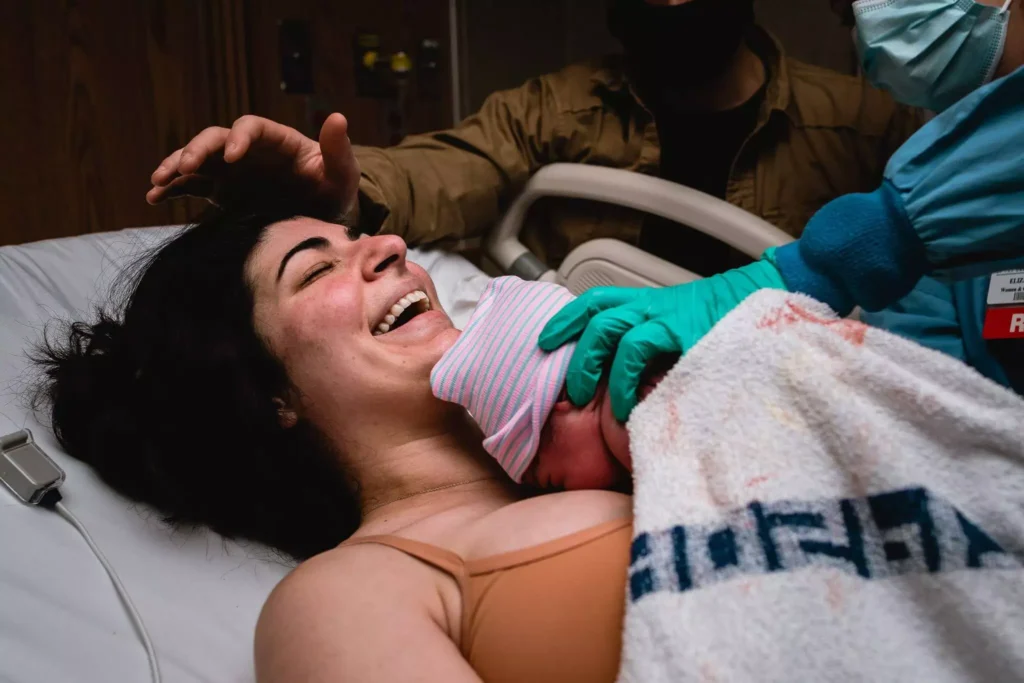

Learn the science of pregnancy and birth to take the mystery of labor away! Understand why you are feeling what you feel, and learn strategies to confidently move through pregnancy and birth!
- 9h+ of Video
- Support Group
- Close Captioning
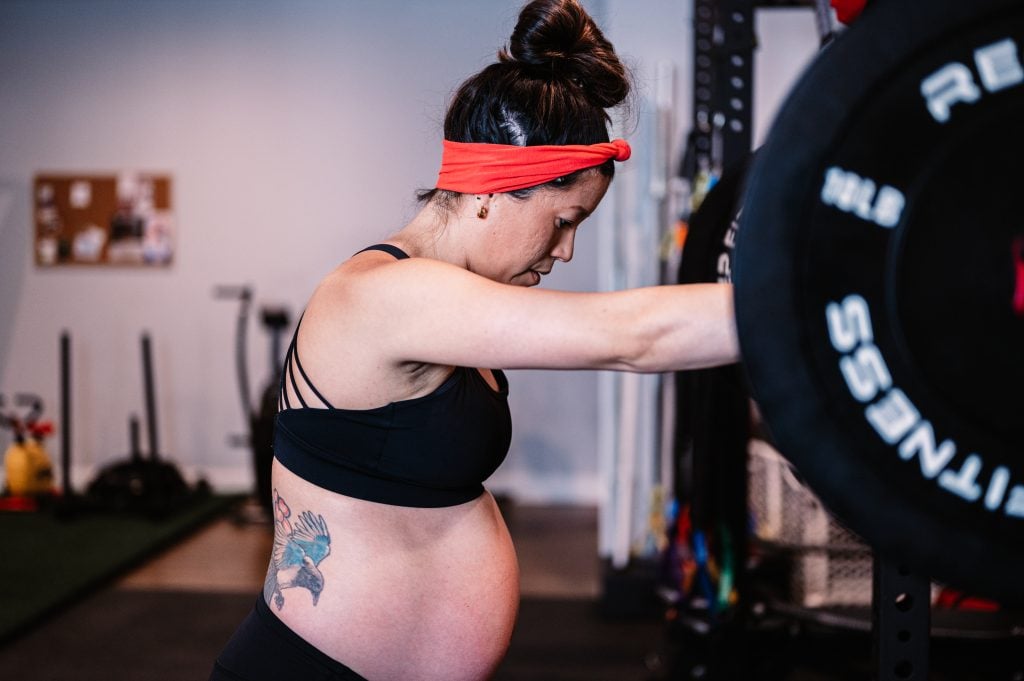

- 5 Workouts/Week
- Gym Workouts
- Self-Paced

Instructor
GINA
Workout on-demand with our prenatal fitness workout videos! Each workout is 30-40 minutes to follow along as you exercise at the same time!
- Birth Prep
- All Trimesters
- Mobility Work

Instructor
GINA
Find comfort and relief from pelvic girdle pain throughout your pregnancy and postpartum period! This program incorporates myofascial sling focused exercises to stabilize across the pelvic girdle joints.
- 3 Weeks
- On Demand Workout Videos to Follow