

Welcome to the MamasteFit Podcast! In this episode, Gina interviews Ryan Woodbury, one of the co-founders of the perinatal supplement support company, Needed. They discuss the importance of quality prenatal vitamins to fill nutritional gaps and support a healthy pregnancy. Ryan shares insights into her background, the inception of Needed, and the research and testing behind their prenatal vitamins. The conversation highlights the significance of bioavailable nutrient forms, the impact of iron absorption, and the importance of third-party testing to ensure product quality. Ryan addresses criticisms of ‘designer prenatal vitamins’ and emphasizes the value of investing in supplements that truly support maternal and fetal health. The episode underscores Needed’s commitment to research and evidence-based nutritional solutions for the perinatal timeframe.
Read Episode Transcript
Gina: Welcome to the MamasteFit Podcast. In this episode, we have Ryan, one of the co-founders of Needed, here to chat all about why you need a quality prenatal vitamin to help fill the nutritional gaps that you may have to support a healthy and strong pregnancy.
Welcome to the MamasteFit Podcast. In this week’s episode, we have Ryan, who was one of the co-founders of Needed, here with us to chat all about our favorite prenatal vitamin, and they just did a new study to validate how great their prenatal vitamin is. So thanks so much for being here, Ryan!
Ryan: Yeah, I’m so glad to be here! Thanks for having me. I’ve known you and your sister for a while, but fun to actually be on the podcast.
Gina: We have been with you guys since the very beginning, which is really, it’s been really cool to see your guys’ business grow, watch our business grow, and so yeah, I just love you guys so much and so I’m excited to be able to have this like one-on-one chat with you.
So could you introduce yourself to our listeners who may not be familiar with you?
Ryan: Absolutely, yeah. My name, I’m Ryan Woodbury. I am, I guess like first and foremost, a mom. I have two kids, a 3-year-old girl and a 1-year-old boy. And then I think my first children, I have two, wild rescue mutts, which sometimes makes it feel like we have four kids. But, my business partner Julie- who I know you’ve had on the podcast before, some of you have heard from her- we met, gosh, 10 years ago at this point, so Needed had been in an incubation and in process for a long time.
But I think the basics of my background, I grew up in Los Angeles, LA kid, very outdoorsy kid from the start, and a lot of my nutrition, excuse me, interest in nutrition, actually started from an interest in the environment and realizing that there was a bigger connection between environmental and human health. One of my earliest memories as a kid was my dad driving me to school in the morning, and he had grown up in LA as well, and saying, “Ryan, look at the mountains,” and I’d need to repeat, “It’s a beautiful day. It’s great to be alive.” And why my dad was so excited about the mountains was because he couldn’t see those same mountains growing up in the same foothills when he was a kid because of pollution that shrouded the LA skyline. So I think that was a very early kind of memory that led me on this path around environmental health, human health. Started more in the environmental science realm, but kept migrating towards food systems and nutrition. That’s what I ended up doing my undergraduate studies in, and it continued.
And I think the shocking part, and really what Julie and I came together around, was thinking that we’d done a lot of nutritional training, we were the most nutritionally informed, kind of, of our friends, and we thought we were doing a really good job shopping at the farmer’s market, like preparing our food to maximize nutritional content. And with the explosion of at-home nutritional testing about 10 years ago, we tested ourselves and we were shocked to discover that we weren’t just a little bit depleted, we had significant nutritional deficiencies across a broad range of ingredients. And it was this aha moment of we’re doing about as good as you can do with food and we’re not getting anywhere close to what would be considered optimal, especially as we were both thinking about beginning our motherhood journey.
So that led us to dig into the research, and the research validated this idea that despite in pregnancy the majority of women supplementing, that women at large, 95% of the population, has nutrient deficiencies. And we all know or increasingly understand that these nutrient deficiencies can lead to suboptimal outcomes for both Mom and Baby. So that kind of led the journey to be like, “Hey, there is a lot of knowledge around you should be taking a prenatal supplement during pregnancy, but the standard prenatal supplement is falling short. How do we make a better one such that women can be better supported nutritionally?” And I think in those early days is how we met you and your sister.
And, I think in the very early days of Needed, beyond looking at the clinical research, we were really building relationships with a broad set of practitioners to get in-practice data to understand more around how they might be dosing to inform, and doing nutrition/nutrient testing in complement to that for some of these practitioners that could get their patient population into more optimal reference ranges when it comes to your vitamin D, your B12, your B6, the list goes on, levels. And that led us to launch our supplement line. It started with redesigning a prenatal multivitamin from the ground up with, I think, huge scrutiny with myself and a team of practitioners and some other biochemist supplement formulators, reviewing every single ingredient so you have a choice around nutrient form, nutrient supplier nutrient dosage, to determine what is that kind of optimal prenatal.
And then, no prenatal, no matter how supportive, really if you think about it, a prenatal containing vitamins and minerals can be supportive enough for this highly demanding life stage. So we look to create some other products to support women. So anyways, long short overview of the last 10 years!
Gina: I think the, I think Julie and you were the ones that made me realize that even eating like a super whole foods diet and sourcing my food from really good places sometimes is still not enough, because of the soil and the type of nutrients that are within our food and that aspect of things, which I think sometimes is overlooked. And so even when eating a really great diet, having a quality supplement- such as a good prenatal vitamin from Needed- is so helpful to fill the, little gaps that we may be having.
Ryan: For sure. And it’s an, it’s definitely an area where I feel a little bit more like full circle or at least things feel aligned in my life of my original background was pretty heavy on the environmental science side, and it’s like, how did I end up starting a supplements company? But I think it is this… our environment is a big piece of that. Unfortunately food is not as nutritious. There’s a bunch of research showing that even if we ate the exact same diet our grandparents did now, we would get far less nutrition. And just, we are, exposed to a ton of modern stressors both through technology and pollution. There’s some ways where the environment had cleaned up- LA is not as shrouded in air pollution as it used to be, but there still is a whole host of just stressors our body has every day that increase our nutrient demands.
Gina: Absolutely. So let’s start with the prenatal vitamin, because that was the first product that I started using from Needed was the multivitamin powder. Your guys’ prenatal vitamin has different dosages and kind of recommendations on what somebody needs during pregnancy that may or may not be aligned with like current guidance from ACOG, but is more aligned with current research. How do you guys navigate the dosages that you recommend and that you include within your prenatal vitamin and how it may align better with current research as opposed to maybe like governing bodies’ recommendations?
Ryan: Yeah. Yeah, so that’s a the great way to ask and I think that most, if you take a step back, most prenatal vitamins tend to be designed around the RDAs, which is a government standard, which gets translated, there’s a few different like bodies that oversees it, but effectively gets translated to the percent daily values that you would see on any like supplement or nutritional facts label, like you were getting X percent of your, vitamin D.
But there’s some inherent kind of issues with those RDAs. I think some that they were set during World War II and many of them haven’t been updated. So it was, one, they have not been updated with new research. Two, they were largely designed excluding women in the studies, especially pregnant women. And I think thirdly, they were very much designed around bare minimums- how do you avoid a disease condition versus how do you support a body optimally? And I think there can be a pretty broad range between what’s the vitamin C you need to not get scurvy, versus what’s the vitamin C you need to support collagen production such that you’re like pelvic floor tissues are juicy enough as your pelvic floor expands through pregnancy. Like, these can be very different ends of the spectrum. So inherently, I think the RDAs were helpful in grounding some research, but they’ve been taken too far that they should be the standard recommendation, ’cause it very much follows a less is more philosophy and not up to date with what we now know in the latest research and taking into account the perinatal life stage- pregnancy, breastfeeding is the most nutritionally intense time of a woman’s life.
So we really stepped back and both looked into the literature, and then validation with practitioners. There were a broad set of practitioners that were recommending higher dosing and had protocols that they were giving their patients with much higher nutritional recommendations, it just hadn’t been consolidated into, “Hey, here’s a system for pregnancy.” You had to work with a one-off functional medicine doctor, and you might be given a protocol of, take these 12 supplements from six different brands, versus knowing that they actually were designed for this life stage and designed to work together in a system. So that was really, I think, the innovation on the Needed side. But we spent three and a half years in R&D, and a lot of that was just validating safety and efficacy, such that our products would be supportive and they would be safe for a pregnant population at large.
Gina: I think that’s something that a lot of folks don’t realize when it comes to some of the current nutritional recommendations for pregnancy, if there are any recommendations for somebody who’s breastfeeding is, a lot of the studies that generated these recommendations don’t even include women in them. They don’t even include like pregnant women within them. Which I think always blows my mind when I- like choline, for example, like the choline recommendation comes from a study with just dudes in it, there isn’t even like a pregnant person within it.
Ryan: Women were like actually excluded from research officially starting in 1977 and then that policy wasn’t changed until the like mid nineties, which is crazy.
Gina: And I don’t even think the need to include women is like overly enforced, either. Like I’m sure some of the studies that are out there now still don’t include a ton of women because somebody who has a menstrual cycle is gonna be a little bit more volatile of a participant. Somebody who’s pregnant is gonna be more scary, maybe there’s more rules involved with it. And so one of the things that I really- I mean, there’s so many things I love about Needed- but one of the things that I really love about Needed is you guys are doing your own studies too, that include women, that are helping us to understand better on what our needs are during pregnancy. Not only by speaking to practitioners who are working with this population and gathering their data, but also running your guys’ own studies as well.
So you all just did your own international review study on your prenatal vitamin. Can we talk more about that?
Ryan: Yeah, absolutely. And yeah, I think this is an area where I think fundamentally we are trying to raise awareness, that nutrition changes outcomes and do believe, yes, there’s a compelling huge amount of research that exists, but it’s disaggregated in terms of looking at a single nutrient at a time. We need more research to really convince the powers that be, that nutrition changes outcomes. More research is gonna be an important piece of that puzzle and we just continue to learn. So we’re excited with that in mind to be able to contribute to the literature and understanding and pushing the conversation forward around, “Hey, nutrition can’t be ignored in the standard of care any more.”
So we did just collect the results of our first IRB- International Review Board- study, which we’re really excited about. It was a observational kind of cross-sectional analysis of the blood levels of pregnant women. We had 235 pregnant women participate. And it was observational on purpose because, to some of the challenges you had mentioned before, Gina, of just there’s a lot of ethical issues with giving women… intervening in her pregnancy if you’re not, like… I don’t know if we would feel… since we have some belief that standard prenatals aren’t cutting it, to intervene and dictating someone gets a standard prenatal versus something that we view as more optimal, has a lot of like ethical considerations around it. So instead we chose the observational route for this first study and elected to basically, with the main goal of observing and testing women on a standard prenatal and how did they do around nutritional sufficiency. And then we also recruited a group of women, taking Needed’s prenatal to look at it in comparison.
And we basically defined a standard prenatal by, a prenatal that contains folic acid- because in general, prenatals that contain folic acid versus our preferred methylfolate active form of folate, tend to just align with low dosing RDA level dosing, and the non bioavailable cheaper forms of ingredients- like folic acid is one cyanocobalamin, excuse my language, is a version for, sort of B12, that tends to be rooted in cheaper, less easy to absorb. So that’s how we set the difference.
And we collected survey data and tested the blood levels of these women at a contained point and pregnancy, such that you could do a cross-sectional kind of comparison. And what’s exciting is that, one, pregnant women aren’t studied very often, and we were able to study 235 of them, and we did, they were, they lived across seven metro areas, across the US and were diverse, ethnically, but had very similar characteristics in terms of being around the same age, being around the same stage of their pregnancy, which allows for an easier ability to compare them. And what’s exciting is that the results were quite compelling. We’ve only revealed a portion of the results thus far, and I will talk about that because the other results, the data was, quite robust. We are looking, we are in process of trying to get it, in, review, it’s actually in peer review right now with a journal, which we’re excited to have published hopefully later this year. And then a couple of the other pieces of the data, we have been approved to present at different conferences, in the nutritional space, which is exciting. But the data that we did do a reveal of and we’re gonna talk about today, was looking at the standard prenatal group versus the Needed prenatal group. And it effectively showed that the standard prenatal group had a huge number of nutritional deficiencies if you look at what is a reference range for where someone’s vitamin D or zinc levels should be, where the Needed prenatals fared a lot better, in terms of hitting those sufficiency or optimal markers, which is really exciting. But the early validation of our initial goal was more oomph in the pudding, around demonstrating if you’re taking the standard prenatal, there are likely going to be, you’re gonna, you’re gonna likely face significant nutrient gaps. And, the blood results did show that.
Gina: Let’s take a break from this week’s episode, chatting with the co-founder of Needed, to talk about how they’re also a sponsor of this podcast. Needed is a nutritional company that specializes in optimizing nourishment for the perinatal timeframe, which you probably can tell from this entire podcast episode so far.
Roxanne and I personally use Needed’s products during our pregnancies, I’m still using it now in my postpartum. And we have been with them since the very beginning of their company and we have been so excited to be working alongside them ever since the conception of them. One of my favorite products from Needed is their prenatal vitamin because it has all of the stuff that I need to help support me during my childbearing years, and is also a product that we have our mom use now that she is in menopause.
Needed’s prenatal vitamin, as you have already heard in this episode, has been included in an international review board, so it has been studied to verify that it does have a ton of quality ingredients within it, and those ingredients are being well absorbed as you take them. Needed devotes a lot of energy to reviewing current research that’s out there on nutrition for this phase of life, in addition to working with clinical experience- plus doing their own studies on women’s health, which is huge. So the fact that Needed is doing studies with women, especially women during this phase of life, really demonstrates how dedicated they are to ensuring that they are supporting you to have the best outcomes during your pregnancy and after birth.
If you wanna check them out, you can check them out at thisisneeded.com and use our code MAMASTEPOD to get 20% off your order.
Yeah, I thought that was really exciting, that you guys had a study that had actual pregnant women within it, and then compared it to the standard prenatal. So going to Walmart or going to the standard grocery store and grabbing like the One a Day, or the random brand that you can get, like, that is really different than investing in a quality prenatal vitamin. Can we talk about the form of different vitamins? So we touched upon it a little bit, of, we more readily absorb certain types of ingredients better than others. And so can we talk a little bit about kind of the type of ingredients that you guys use in Needed’s prenatal versus what is probably used in a standard prenatal vitamin, and why that matters?
Ryan: Yeah, absolutely. So it’s a whole range of them and I think this is where it’s really difficult for moms that you have to start getting into like biochemistry a little bit to know, what do I look for? But that’s where it’s great that there’s practitioners or other educators that can help break that down in terms of, what do I look for in a prenatal. And I think, spot on, that nutrient forms is one of the most important areas to look at. And, a few examples of that would be, you hear you have to take folate during pregnancy. Folic acid is, the form that’s most commonly used. It’s a synthetic form that is quite cheap. The methylfolate form of folate is what sort of we prefer as the bioactive form of folate. We are excited In the study that we just completed, there’s been, I think some pushback against the methylfolate forms because it has not officially been studied to prevent neural tube defects because the type of research folic acid was studied, I think ethically can’t happen anymore. But we are excited in this study that, the folate levels were comparable between, the Needed group in the standard group. And some of the worries- this is a topic for a later time- with folic acid is that it can get into the blood, but it’s not as metabolized as easy as the methylfolate form, so then being able to put to use by the body. And you really want these nutritional elements to be usable.
So some other examples that you might look at would be, like for vitamin A, a betacarotene, versus actually having a retinal form of vitamin A. This is another kind of contentious topic, given, I think, you’re told to avoid retinal creams in pregnancy. A lot of people confuse that with the retinal palmitate are the more active forms of vitamin A that are very important for different reactions, metabolism pathways within pregnancy. And betacarotene just is not… betacarotene is a great nutrient, it’s the one found in food, but it’s just not as readily available or bioactive, meaning it has to go to that many more conversion processes in your body in order to be usable. So there’s, a whole host of them.
You can think about it also, you hear about it in Omega3’s a lot. DHA and EPA are the readily available forms for the body. ALA, is what is found in like walnuts or chia seeds, and great source of nutrition, but your body has to put it through a multi-stage conversion process before it’s readily available. And how good we are at doing that conversion process does depend on sort of genetics, stressors, what else you were eating- which, can limit. And we’re really looking for, how do you guarantee, with the number of pills that you’re taking, or number of powder scoops that you’re taking, that it’s as ready to be metabolized and usable to go run through all the important reactions that need to do as your in your body as soon as possible?
Gina: That was something that Roxanne was the one that really helped to educate me on- that the type of form that we take of these different supplements matters based on how we readily our body can actually absorb them. And then also, the type of supplements that you take together can also impact how well you absorb it, or maybe even hinder the absorption of it.
So I saw one like paper that was comparing different prenatal vitamins and one of the knocks on Needed was the iron was not included within the prenatal vitamin. And I think that’s a big deal to not have it included, that it’s better to not. Could we talk a little bit about why certain supplements are not included within your prenatal vitamin that may be included in a standard prenatal.
Ryan: Yeah, absolutely. So iron is, spot on. We, as Gina said, we decided to remove iron from our prenatal and sell it separately. And that was, not an attachment, like, buy-more-products scheme, it was really intended for how do we best support women in this design. And the reasons for it is multifold.
One is, iron, not everyone really needs the same amount of iron at different stages of pregnancy, and you might need different levels in your first trimester versus in your third. And iron is not something that you want to over supplement with, and most women are getting their iron levels tested during pregnancy, so it is something that we do recommend titrating based off of need. But one of the other biggest driving decisions was iron competes for absorption with other minerals. Those other minerals are very important and oftentimes not talked about in the same way.
So the study, if we go circle back a little bit, found for example, that the standard population, had pretty low rates of zinc and selenium sufficiency- and those are two nutrients that do compete with iron absorption. And where we recommend, again, let’s take your iron away from your prenatal multivitamin and do it a different time of day such that you can maximize absorption of this broader suite.
But there are, there are other nutrient synergies where things are beneficial to take together. Folate and choline work synergistically together in neural tube formation. Vitamin C does help with iron absorption. You probably hear a lot about vitamin D3 and K2 working together for bone health and a whole host of other processes.
And yeah, I think… I think if you step back a little bit, we are meant, originally, to get our nutrition through food. And food is much more complex in how various phytonutrients and minerals interact together. And I think at Needed, we still really do advocate for a food first approach- that’s where you should be a hundred percent focusing on getting quality nutrition. The just sad part in our modern age is that we have very little conviction that food can get you far enough, and if you really wanna support optimal outcomes, being smart about filling in with, proper supplementation- which includes nutrient forms, nutrient dosages, third party testing, making sure you’re not getting other kind of contaminants, as you’re eating the supplements- is a very important piece to the puzzle.
Gina: That was something that I’ve always seen, like highly recommended by different registered dieticians, is when we’re looking at prenatal vitamins, look for one that is gonna be third party tested to demonstrate that this is a quality product, that you’re not gonna be taking things you’re not supposed to because supplements are not regulated.
So how do you guys go about ensuring that your products are what they say they are?
Ryan: Yeah, a few different ways. I think a combination of, we do third party tests, every single batch we release, for both, does it match the ingredient label? If we say, “Hey, there’s X amount of vitamin D in there,” we’re gonna run a test to make sure it’s within a proper range to release it. And then testing for micro, other standard release procedures, as well as we’ve partnered with the Clean Label Project, they’ve been, we are actually the first prenatal that was Clean Label Project certified, which is exciting, to basically look at heavy metals and other contaminants like phthalates, that are very common in our ecosystems now, to make sure our products were passing a clean threshold in that way.
Gina: Which, I think, is a huge deal. I know I’ve seen stuff like, you wanna make sure like you’re supplements that you’re taking don’t have these like harmful ingredients in it and that it has what you think it is. And so I think it’s really cool that you guys have all this third party testing to ensure the quality of your products, in addition to that study that you guys just did, to show how good it is to take this quality vitamin.
Ryan: Yeah. I will say to our, practitioner community holds us very accountable as they’re, they’re constantly pulling draw blood draws of their patients and assessing before/after on certain supplements. And, we very much design our products to be effective and make sure they pass the test of the most discerning practitioner.
Gina: I saw it for in myself. So my most recent pregnancy was the first time that I was like borderline anemic. And so I started taking Needed’s iron supplements, I think it was like the beginning of my third trimesters when I got my blood draw and was like, “Oh gosh, that’s why I’m so tired.” So I started taking Needed’s iron based on the recommendations that was on your guys’ website for if your ferritin levels are this, this is how many you should take. And my provider was like fully supportive of it as well. And then I got my blood drawn about a month later and it had, my rates had, my ferritin levels had doubled, so my iron levels were like well above, just from one month of taking additional iron supplement, which I was like super stoked about. I was expecting it to be higher, but I didn’t expect it to jump that much in just a month. And so I think it was just a testament for myself of the quality of products that you have and how beneficial they are because it’s not just, let me buy the cheapest vitamin that I can. I wanna make sure that I’m choosing one that is actually gonna work well in my body, ’cause I don’t wanna just waste my money on garbage. Like, I wanna make sure that I’m investing in a quality product. And so really thankful for all the work that you guys do.
Ryan: Thank you. We joke that like our supply chain team has a tough job, that we wanna have the most like potent labels out there, but at an appropriate price. But I think it’s also a lot of our ingredient suppliers really like us because there’s not that many big companies that use ingredients actually at a clinically studied dose, and we really do have a big emphasis there.
Gina: So one of the like negative things that I hear about Needed, or just these prenatal vitamins, is they’re called like, “designer prenatal vitamins.” And it always sounds like it’s like a dig of like, they’re just trying to get your money by selling you this super expensive prenatal vitamin. But, it would be much cheaper for you to just include folic acid versus folate if your whole goal was to make money. So can we talk a little bit about this like designer vitamin controversy that I hear sometimes?
Ryan: Yeah, it’s a sad controversy that’s out there and I think it is really what we are trying to change the conversation on when it comes to the research side of this and getting really rigorous, with how outcomes is tracked. And this clinical study that we released, a couple months ago is just the first of many that we hope to do and something that we’re building off. This was foundational for basically setting, “Hey, there is a problem with standard prenatals.” Now let’s build upon that to show you, “Hey, what do things look like? What might a placenta look like on a Needed prenatal versus a standard prenatal?” And what are, what does that mean for the health of mom and baby are some of the questions we want to continue to go after?
Certainly I think there are some scare tactics used in the, like the motherhood and baby space at large, that sort of make people feel like you’re inadequate or you’re not doing enough if you’re forced to spend money on something that’s too expensive. We think though, if you looked at the price point of our prenatal, and we’ve done some of this work historically versus nutritional content, that we’re actually a value product versus a lot of the sub $30 prenatals on the market, where you’re spending like 25 bucks for something that has RDA level nutrients and dirt cheap ingredient forms, is they probably have higher margins than us and it’s a waste of money for that consumer.
So I do think it’s an unfortunate conversation that’s getting spread quite heavily now, and I think we like to just go back to it of, we’re gonna prove in time over outcomes why it is worth it to choose nutritional density in more of the bioactive forms. And pregnancy, postpartum is a very critical time of both a woman in a future kind of like child’s life in setting the stage for how you both are gonna thrive and recover, and set that kind of trajectory of cognitive development for the baby, or mom’s immune development going forward. and, we think the conversation is ultimately like too narrow right now in terms of what makes a healthy mom or a healthy baby, that we could look at some of these outcomes quite differently in support of how do we really support these two amazing beings to thrive, versus just get by in this life stage?
Gina: It seems like a weird thing to be really passionately against, like against the prenatal or designer prenatal vitamins. When it, I feel like, at least with Needed, the product is, it’s such a high quality product that’s based on so much research and clinical experience, that it seems weird to be so against it when there’s so many other really predatory products out there for this phase of life that like we can focus much more energy on. Like waste trainers, or like these weird things that are supposed to save you during motherhood. Like we could focus our energy in a much more efficient way than like a prenatal vitamin. So it always confuses me where I’m like, “What is the problem, exactly?” Yeah, it always confused me.
Ryan: Yeah. I agree. I, I don’t totally understand it. I think especially, I think for the folks that know us, that our hearts are really in what we do, and we are… Yeah, we, maybe we should flip it the other way of just, hey, this is a “designer prenatal,” it’s not the same way as a Chanel t-shirt, where just because it has a Chanel label on it, it’s $300 instead of $10. But, a lot of heart and hundreds of hours of work, thousand, hundreds of thousands of hours of work- we had a team of like practitioners going through every C of A, scrutinizing every dosage ingredient form, we were looking at what testing does the supplier do, how is the ingredient made as part of designing the products, and we continue to do that- that, a lot of, work and love and intent went into the design. And, it is sad that women’s health can be much more of a, maybe like malicious point in time. I think, people’s like hearts are in the right place and wanting, or at least I hope, I wanna think that people’s hearts are in the right place, they’re… but yeah, some of the outcomes around our conversations around it are certainly disappointing.
Gina: Yeah. I can honestly say all of my experience with you all for the past five years, ’cause we’ve been with you guys since the beginning, have always been very positive experiences. I’ve always felt very supported by you all, and like I’m always really excited to support you guys however I can because I know that there is a lot of love put into your business and a lot of wonderful intention and very deliberate design with the products that you’re supplying to the community. And yeah, I’ve never felt that I was being taken advantage of by you guys at any point ever. And so it always angers me when I see people like accusing you guys of trying to financially take advantage of pregnant women and postpartum women when I have never even remotely felt that at any point in my relationship with you all. So for our listeners, just know that Needed It is amazing.
Ryan: We appreciate that. And, yeah, I think, do the math on the like nutrients, number of nutrients and amount that’s in there versus, some of the cheaper options that you can buy. And, I think we keep going back to quality and effectiveness are really what matters and making sure, yeah, we are designing products both for all women that can be better support a much broader set of the population, but also will be scrutinized by the most nutritionally informed as their prenatal choice.
Gina: Yeah, I’ve definitely have found that you all’s company has felt very aligned to the way that we approach things as well, where there will always be people that are haters out there, but I never feel like you guys ever pay attention to them, you just continue to focus on improving your products and focus on ensuring that you’re delivering a quality product to this pregnant population. And I have always really loved that about you guys, too, like you don’t have time to worry about the haters. Like you’re just so focused on the research, clinical recommendations, clinical experience, sourcing your ingredients, getting third party tested. And I think that’s something that I really admire about you guys as well.
Ryan: Yeah, we try. I think, high conviction that history will reveal, and we’ll be on the right side of it, in time. Yeah, I think, I think there is a lot of just, I think belief that, hey, if we like continue to do good work, folks will hear. And then, I think there’s also moments in time where we’re questioning, gosh, should we be… how, and should, and when should we be more like directly vocal about some of these disagreements?
Gina: I think you guys do a good job of ignoring the stuff that you probably don’t need to waste your time with.
Thank you so much, Ryan, for coming on the podcast and sharing all about Needed. I’ve learned a ton from chatting with you and I’m sure our listeners have as well.
Do you have any last advice for our listeners? Most of them are pregnant and they’re navigating their pregnancies right now- we have some postpartum listeners as well- but primarily like women moving through the motherhood phase.
Ryan: Yeah, I think what we go back to, and a lot of what we talk about at Needed is just there’s so much focus on baby at this life stage, and really just advocating that I’m so glad that you’re listening to, Gina and Roxanne’s podcast because there’s just a wealth of knowledge here, and their support is amazing. And I think in alignment it with just supporting moms to feel empowered to get their needs met, too. I think it’s a very important part of this life stage, and something that’s harder to do than we would like, at times.
Gina: Thank you so much for coming on the podcast and sharing your wisdom, and thank you for creating Needed.
Ryan: Thank you, Gina. Thank you for being a part of the journey with us.
Jacquelyn: Hi, I am Jacqueline Diaz and I just wanted to share how much I absolutely loved the Beyond Postpartum Fitness Program. I wish I had found this program sooner, is all I want to say. I had a twin birth and completed the 16 week postpartum fitness program for MamasteFit, and after that I just started bouncing around from different programs to different programs. But I’d get to a certain point in the program where I felt like I would meet a space where I couldn’t lift any heavier or it would result in pain. At about 18 months postpartum, I actually injured my back trying to work through one of these programs that left me literally at ground zero, worse than I was post birth. And that’s when I found the MamasteFit Beyond Postpartum Fitness Program.
When I started this program four months ago, I literally could only squat a barbell. I didn’t have a lot of pulling strength. I would, after movement, I’d be in a lot of pain. And once I started doing the program consistently for four months, I gradually started to get back my strength and my stability and wasn’t in pain anymore when I was working out.
The program includes a lot of your basic strength movements like squatting, deadlifting, pull-ups, bench pressing, all those things that you need for strength. But the supporting exercises around it really also helped build that core strength up and build a lot of stability that I was lacking. The program’s also really exciting because the cycles change and the goals to reach cycle change. So you might be building some strength in one program or in one cycle, and then it’s gonna lead you into endurance strength in the next cycle. So it keeps it really exciting to be a part of a weekly program where the movements are changing. They’re building on each other, but it’s also your fitness goals are changing with each one.
And I really will use this program probably way beyond being postpartum now that I’m two and a half years postpartum, and will use it as long as I can ’cause I just love it so much. I’ve never felt as strong as I have now, since before I was pregnant and I really credit it to this program. The last cycle we did, I didn’t have a single strict pull up before and by the end of it I could do 10. How exciting is that? That’s awesome. I feel so strong. Thank you guys so much.
Gina: Thanks so much for listening to this episode with Ryan. I hope that you learned a ton on why it is important to choose a quality prenatal vitamin, and to ensure that it has the best forms and ingredients within it as well. Needed is obviously our favorite prenatal vitamin and we would highly recommend them to you, so if you wanna check them out, you could check them out at thisisneeded.com and use our code MAMASTEPOD to get 20% off your order.
And if you want more support throughout your pregnancy, besides nutritional support, check out our prenatal fitness programs and our childbirth education course. Our prenatal fitness programs are designed with intention to help support you throughout your pregnancy so that you can feel strong, pain free, and to help you prepare for birth. And you can bundle our prenatal fitness programs with our childbirth education course, which is designed to help you feel confident as you navigate this potentially mysterious and unknown phase of your life. And a lot of us are not experienced with childbirth, and so with our childbirth education course, we really want to help remove the mystery from birth so that you can understand what is actually going on, and feel confident as you approach your birth experience.
You could check out all of our courses on our website at mamastefit.com, and use code STORY10 to get 10% off any of our online offerings, and you can bundle them together to save an additional 15% off.
Additional Resources
Ryan’s Bio:
Ryan Woodbury is the Co-founder and Co-CEO of Needed, a company championing radically better nutrition for women, their families, and our earth. She is a lifelong environmentalist, a holistic nutritionist with training in folk herbalism, and a mother of two children, and two rescue mutts.
Links:
Prenatal Support Courses
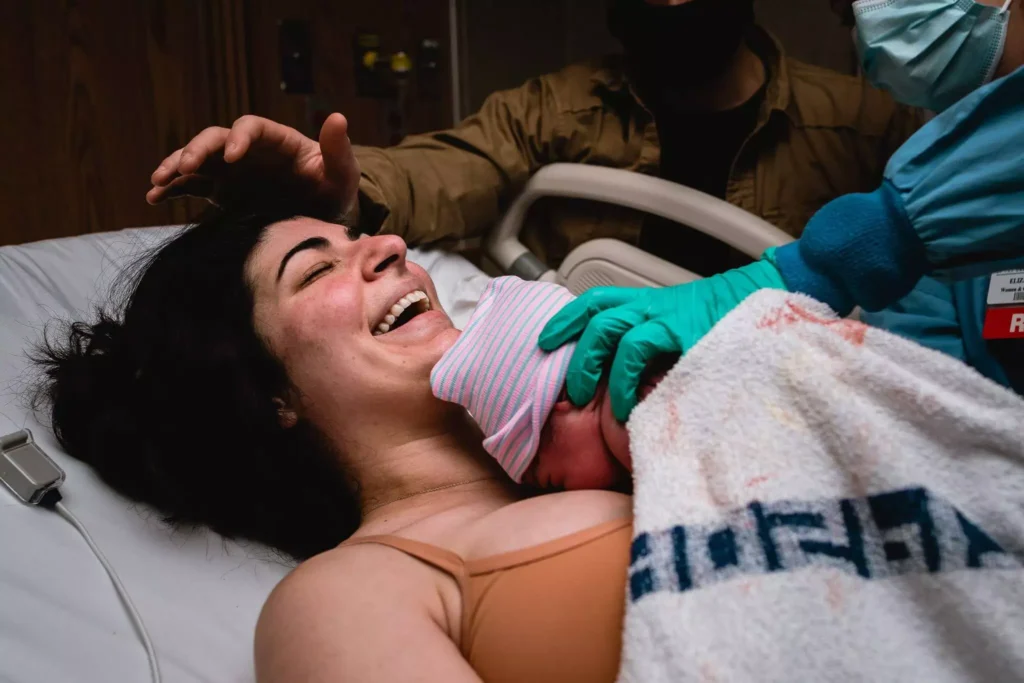

Learn the science of pregnancy and birth to take the mystery of labor away! Understand why you are feeling what you feel, and learn strategies to confidently move through pregnancy and birth!
- 9h+ of Video
- Support Group
- Close Captioning
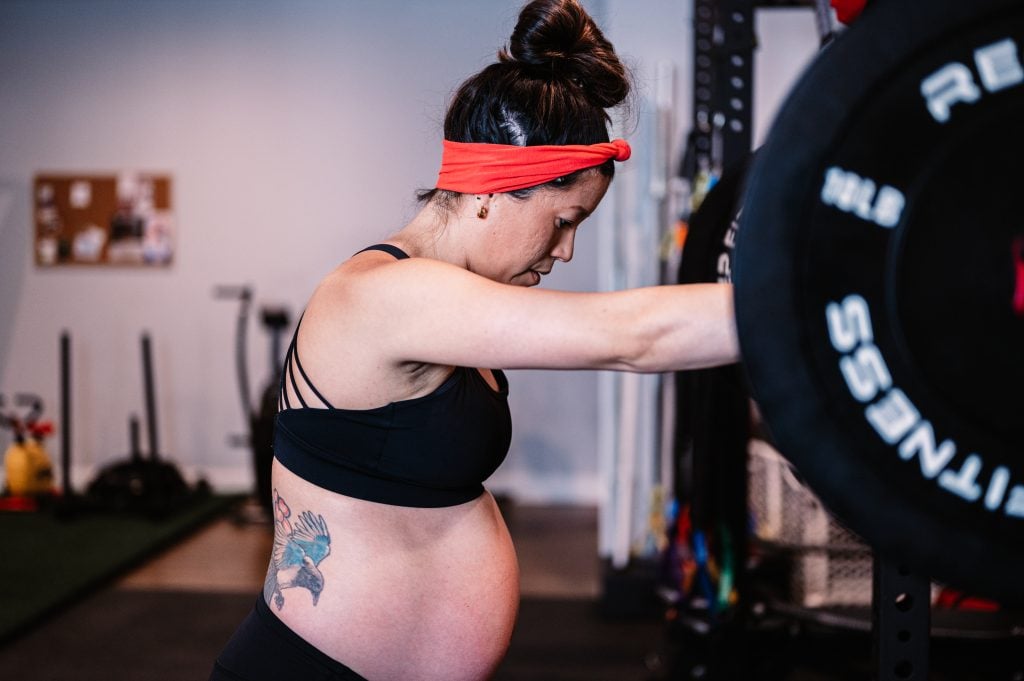

- 5 Workouts/Week
- Gym Workouts
- Self-Paced

Instructor
GINA
Workout on-demand with our prenatal fitness workout videos! Each workout is 30-40 minutes to follow along as you exercise at the same time!
- Birth Prep
- All Trimesters
- Mobility Work

Instructor
GINA
Find comfort and relief from pelvic girdle pain throughout your pregnancy and postpartum period! This program incorporates myofascial sling focused exercises to stabilize across the pelvic girdle joints.
- 3 Weeks
- On Demand Workout Videos to Follow