

Welcome to the MamasteFit Podcast! In this episode,
Read Episode Transcript
In this episode of The MamasteFit Podcast Roxanne is joined by Pachet Bryant, a pregnancy and postpartum care coordinator and founder of Mine Maternity. They discuss the often overwhelming financial aspects of childbirth and parenting, highlighting the importance of understanding insurance benefits and exploring available resources. Pachet shares insights on optimizing benefits through insurance, accessing community and government resources, and navigating maternity care deserts. They also cover the benefits of using care coordinators to reduce costs and enhance the pregnancy and postpartum experience. Additionally, they discuss the comprehensive care approach through various services such as doula care, midwifery, and more. This episode aims to empower parents-to-be by providing them with the knowledge to make informed financial decisions throughout their perinatal journey.
Roxanne: Welcome to The MamasteFit Podcast. On this episode, we have Pachet here to talk all about the financial things that involve childbirth as well as raising kids, because it can be expensive! Thank you so much for being here.
Pachet: Thank you so much for having me.
Roxanne: I’m so excited to talk. Could you introduce yourself to our listeners who are not familiar with you, though?
Pachet: Absolutely. So my name is Pachet. I’m a pregnancy and postpartum care coordinator. I’m also the founder of Mine Maternity, and that’s where we help families unlock the financial resources to access comprehensive pregnancy and postpartum care. And I really specify that comprehensive word because there’s so much that goes into the physical portion of it, but also the mental, emotional, financial, and as well as the spiritual component of just this transition into motherhood and parenthood. And that’s a little bit about us.
Roxanne: Yeah! So what, I guess, are probably like the first couple of tools that you would implement and help someone work through who is newly pregnant and now, like, navigating the cost of not just like pregnancy, but also childbirth and postpartum?
Because for Gina and I, we have Tricare, which is, for most people, birth is free. Like maybe you pay the fee for food at a hospital, so maybe it’s $20, if anything. But for most of us, all pregnancy and childbirth is free. So I didn’t even realize people paid, had to pay out of pocket for pregnancy care and childbirth care until we left the army, and then also started making friends with people who were not in the military and did not have Tricare. And then I was like, “Oh wow, this… how do people afford children?”
Pachet: They get help. They need support.
Roxanne: Yeah.
Pachet: Yeah. So like you were saying, it can be very expensive, when it comes to just even the labor portion of things, let alone, prenatal visits, the postpartum visits! And so it really is important to take a look at your insurance, and if you need help, making sure that you coordinate with someone or professional who can support you navigating your benefits. But really understand what your insurance has.
So for instance, I’d love to share even a personal story of mine. I was at a company and I was reviewing- and this was prior to my own pregnancy, but- I was reviewing insurance benefits and I had two options and I was about to select one option, but then something inside of me, I had a gut feeling saying, “Ah, take a look at that, that extra line to see if there’s maternity care,” again, this is before I’m even pregnant, but, “take a look to see what women’s health, maternity care options there are.” And that plan actually had zero maternity coverage. I called three representatives from the insurance company, spoke to one who’s been there for 20 plus years, and she says, “I know what I’m looking at. This plan does not include maternity care.” And thank goodness I did not choose that plan because that year, that benefit plan year, I actually became pregnant.
Roxanne: Oh, no.
Pachet: Oh, yes! So I went from, having to pay just a $250 hospital bill, $250 hospital bill, when I could have potentially paid 30, 15- multiple thousands.
Roxanne: Yeah, and that’s one thing that a lot of people I feel like don’t look into, really, is their benefits for maternity care. Because I know like some friends who paid like $6,000 because it was like the copays for every prenatal visit, as well as their birth, and like this one didn’t even have an epidural and she just had a very straightforward vaginal birth, so she’s like, “Yeah, we paid $6,000 out of pocket.” But I know a lot of people with their insurance, if they don’t figure out how much like the entire pregnancy and birth will cost them out of pocket at the beginning, it’s like almost a shock at the end.
Pachet: Yes.
Roxanne: And then, something that we discuss with people is if you’re considering out of hospital birth, so a community birth, a home birth or birth center birth, having that like plan of like, how much is it even gonna cost me to deliver in a hospital with the traditional prenatal care in the clinics versus a community birth? And a lot of our friends chose home birth because it was actually cheaper out of pocket, and sometimes they would even get a little bit of reimbursement from their insurance. But home birth, unfortunately, and a birth center is not always covered by insurance, so all of these things are like things that I’m now like learning in the past like five years and I’m like, “Gosh, this is just… How, again, do people have children?”
Pachet: Absolutely. And I would say that is something that you brought up a great point, and I really hope people focus on this, is that really understand what your deductible is and what your out of pocket cost will be. Because your deductible is how much you need to put in to sometimes access these benefits. Now for preventative care measures and maternity care, a lot of times fits into that. It’s a whole separate conversation. But you wanna know what your deductible is going to be because that is how much they want you to contribute. And then their out-of-pocket cost is, that’s how high it can go up to. So if you’re signing up for a high deductible insurance plan, health insurance plan, then you know, just be sure to recognize where you are in life. Do you have existing health conditions, or do you foresee a life change?
Because when it comes to insurance, the life change that allows you to switch your benefit plan is that birth, it’s not, yeah, when you get pregnant.
Roxanne: Not pregnancy.
Pachet: Which I would love, actually, if it was when you were pregnant because, then maybe you can get a better plan or something more suitable, but absolutely.
Now the exciting thing is that, ’cause I am very familiar with the birth worker community, holistic community, I’m actually part of several different medical communities, so it’s everything from Western, to Indian, to holistic, from both regions. And I will say there’s movement going on with Congress to get midwifery coverage when it comes to insurance, or through government…
Roxanne: Like fully covered?
Pachet: I think realistically we should start with partial. Or it may start with partial, but if we can go just straight to the finish line and say, full coverage, let’s do it.
Roxanne: I think ’cause in some states, like midwives are not reimbursed the same amount as like a medical doctor, for the same exact services. So I know in North Carolina state, midwives are reimbursed like 80% of the cost, whereas like a medical doctor would be reimbursed 100% of the cost, for literally the exact same job. But not all midwives are covered, are licensed, in every state, so that’s like a whole other like just legislative conversation. But midwifery care is not always fully covered by insurances, which is sad.
Pachet: That is true. Now the one thing I will say is, so midwives, whether you’re doing a home birth, the birth center, or a hospital, you’re working with a hospital certified midwife- they all have to do different tests, lab work, things of that nature, provide different consultations, prenatal visits. So sometimes what you can do is actually take a look at your super bill and then take out chunks that can be reimbursed. So again, lab work can be reimbursed, most times prenatal and postnatal wellness check visits can be reimbursed. So sometimes it takes just a little extra itemization to be able to get at least partial reimbursement. Even now, that’s possible.
Roxanne: Yeah. And it’s just like you have to have a midwife who knows how to code correctly, and doesn’t just do the, like blanket, pregnancy super balance. Because if you can like separate- ’cause like newborn care is usually always reimbursed.
Pachet: Yes.
Roxanne: The medications usually are always reimbursed, but like the actual physical, like, birth, like the home birth at your home, or sometimes even just like the birth center birth portion is not covered, but prenatal appointments usually are somewhat covered, which is why there’s some reimbursement. Which is why it’s so important to like call your insurance company at the beginning, or discuss with your midwives at the clinics, as well as in community birth settings to see like what potentially is the full out-of-pocket cost. Because a lot of people, it’s very shocking to hear the price of birth centers and home births, but if you also figure out like your out-of-pocket cost at a hospital, it’s not as shocking upfront, versus at the end.
Pachet: Yeah. I think they, I’ve seen enough videos of families being like, this is how much it costs to give birth in the us. And then yeah, they, pull out their huge bill and they see that there are errors in, there are duplications.
Roxanne: Yeah.
Pachet: But, absolutely.
Roxanne: What are some things that someone can do, though, to help lessen the cost of like all of this- other than ensuring you’re bill, like being billed correctly, like with coding? Because that’s not something that like a normal person would look at and be like, “Yeah, I know exactly what I need to code to get reimbursed!” That’s like more like healthcare professionals and administrators know what to do. But what can like a normal person who’s not in healthcare, having a baby, do?
Pachet: As far as trying to make sure that they understand their bill or in what sense?
Roxanne: Just finances in general. Like how can they make childbirth… like what are resources available to them to help make childbirth and pregnancy and parenting less expensive to utilize the resources that they have available to them?
Pachet: Definitely. Okay, I can definitely jump into this one. So that’s one aspect of Mine Maternity that I love is that we don’t, if your insurance coverage doesn’t, or your insurance provider doesn’t cover what you’re looking for, the service that you’re covered, that’s not the end step, and most people stop there. They say, “Oh, I don’t get chiropractic care,” “I don’t get acupuncture,” and sometimes even pelvic floor therapy, which is wild, but that’s a whole other conversation! And so they’re like, “Okay, that’s it. I don’t get it,” and that is not the case. So for instance, if you have an FSA or HSA fund account, we can work with that. If you have employee assistant programs- most employees don’t understand that they actually have these benefits that could potentially help offset some of the costs. So Maven, Care, fertility, and then when it comes to mental health wise, modern health, better health, or betterment. And so that’s one, one of the things to look into.
Outside of that, there are so many community resources out there, for every city in every county. So what that looks like is, lactation, free lactation support, support groups, postpartum and prenatal wise. Sometimes even, community showers, baby showers. So you have to get a little bit more creative when it comes to pulling together everything that you need, to get the care that you want.
For instance, I was just in LA and there was a community midwifery prenatal visit, that the center was opening up. So people can register and it can be a community visit to where they get checked up, they get to talk to a midwife, and it was included, it was part of a nonprofit initiative and program. So that’s something where it’s like, wow, you would’ve never known, but you could have received that one-on-one holistic care, but at no cost. You just have to know what you’re looking for.
Roxanne: Yeah. So how would someone go about finding these things?
Pachet: You have to, I would say that’s one of the things, that I recognize is everything is pretty scattered and sometimes even siloed, so you really have to be creative when it comes to researching, know what you’re researching. I think that one of the best ways is partnering with a case manager, a care coordinator, that’s somebody you know, and that can be somebody through your hospital, it can be somebody that’s through a community center, and it could be through a private company like Mine Maternity. So there are multiple ways to get access to a case manager and care coordinator, but those individuals quite literally pull together your team, help you understand your benefits and navigating your care, and your benefits.
Roxanne: So is this benefits like with insurance as well as like community benefits?
Pachet: Yes, that’s exactly it, yes. And the government programs- when people think of government programs, one of the fallacies that I often hear is, “Oh, that’s for, a certain group, a certain demographic,” and that is not always the case. So there are many programs, especially in LA or Orange County, or wherever you may be- I’m speaking California, I guess specifically- but, Maryland has a great program right now to where they have a lot of different government programs that support pregnant and postpartum women and families. So think about it as not, “So I have to be of a certain income or a certain demographic to receive this care?” Really look at it as I could potentially, receive care just because of the condition and experience that I’m going through.
Roxanne: So I guess how… is this like on usually like their government websites for each state? Or are there federal programs as well?
Pachet: There are federal programs, but I would specifically start looking when it comes to state programs and even county programs. So if I had to do an order of operations, start with your county, because that’s, a lot of times they have a budget specifically for their residents and programs for their residents. So Riverside or LA County or, the different counties- I’m not too familiar with other state counties, but… And then what I would look at is the state and then go federal.
Roxanne: Okay. And what, what do these federal programs like routinely help cover the cost of, or offer?
Pachet: Yes. So that’s the thing about federal programs is oftentimes they’re providing the funding for the state programs and the local programs, which is why I was saying start there. As far as a federal…
Roxanne: I mean, what do the state programs, then, offer?
Pachet: Ah, yes, yes. So it can vary. So for instance, one of the most common ones I see- despite my lack of knowing county names, we actually work nationwide- but, what I see across multiple states is that, lactation services are covered, so offering breastfeeding courses or direct consultations, at home services. So lactation is a big one that’s almost always being addressed. Another one that’s starting to pick up is pelvic floor therapy, recognizing that it almost should be a mandatory consultation that you receive following childbirth, and now even pre childbirth. And then, support groups. So almost every county has support groups that are funded by that region.
And those support groups, they’re not just, where you can meet up with other moms, they’re sometimes backed by therapists or licensed medical professionals, as well as providing resources from like a tangible sense. So those are where you can get your diapers, maybe you can get some healthy meal options, maybe she can get some goodie bags- and I’ve even attended one of the mama groups, ’cause I’m a mama, so I attended a mama group and they ended up giving us these little goodie bags for Mama’s Day. And it was full of like skincare and healthcare products, and it was all, sponsored by non-profits and for-profits to create the goodie bag!
Roxanne: Oh, that’s awesome.
Pachet: Yeah!
Roxanne: So these are usually state run. Do all, do you know if all 50 states have these programs or are some states just not up with the times yet?
Pachet: Yes. So one of the things, especially with the recent changes, there are states, especially states that have income restrictions to them- and income restrictions as far as their demographic as a whole maybe has a certain income level. So it’s the taxpayers dollars that contribute to these programs and to the funding of these programs, or it’s sometimes population based. There are a lot of different ways to work around it, but I will say there are some states where you have to possibly work with nonprofits versus trying to go the government program route. And the difference is that nonprofits can receive multiple sources of funding. So yes, they can receive funding from the government, but they might also have private donors, or they might also like crowdfund, get the community to fund these programs. That would most likely be your best bet if you’re in a maternity desert or somewhere where you know your state is restricted income wise.
Roxanne: Do you find that there are certain states that have more offerings than others, based off of their location? So like California, obviously, might have more offerings based off of just their government in general. Like I know that they offer paid maternity leave for like certain people if you, like, submit for it, but not every state offers those same benefits. So do you find that like the West, or like the Pacific Northwest, or Northeast, or Southwest, or whatever, do you find them to be more willing to offer these benefits versus other states and areas?
Pachet: Yes. Yes. So especially if… it’s really, it’s interesting, but the more diverse a population is within the state, and the more dense that state tends to be population-wise, the more progressive when it comes to funding these programs tend to be. California, the New York’s, there’s a lot of funding that goes into that, versus maybe in Alabama or Mississippi, that’s where we see a lot of those maternity deserts. And even in states, for instance, like Georgia, you may have a high density population in Atlanta, Georgia, but then on the outskirts you’re still experiencing those maternity deserts, and you’re still experiencing maybe the lack of funding towards those regions. So there are definitely disparities across different states.
Roxanne: Can you explain what a maternity desert is for someone who might not understand what that means?
Pachet: Yes, of course. Thank you for asking! So a maternity desert, and mind you, almost every state, no, every state does have its own version of a maternity desert. And what that means is that there is not a clinic that specializes in OB/GYN care or has a community midwife, but someone who specializes in birth, pregnancy care, and postpartum care. What that means is that they’re often seeing family physicians or general practitioner physicians, and they don’t have the training of birth, or of specifically women’s healthcare needs. So, the reason why it’s called a desert is because the surrounding area, you’re not having access to that specialist that you need- ’cause this is a very unique journey from a spiritual, mental, and definitely physical sense- what you’re having to do is travel to the nearest clinic. And that can be anywhere from an hour plus that people are having to drive just to see a specialist in their region.
Roxanne: So obviously we learn about maternity deserts in school and how there is like government programs to get OBs and midwives into those maternity deserts to start working there to provide that care, but it’s also really hard to implement those things nationwide.
Pachet: Definitely. And, the number of OBs in general, in this nation, are decreasing drastically, which is why I think that they’re gonna have to accept midwifery care because, and it’s already been forecasted off of this current trajectory, there’s not enough OBs to care for the population. And so they have to, they’re going to have to find a way to navigate this. And midwives really, it’s interesting, but midwives are truly the, if you’re a low to normal, as they call it, low to normal, low risk to normal pregnancy, a midwife is someone who could most likely provide actually the best care for you based off your specific condition or experience. I know I call it a condition, but that’s just the technical terms, unfortunately, they use. But your experience is why I add it. OBs are great if you’re high risk or if you have something that requires medical attention because they’re most likely gonna be potentially your surgeon. That’s where it’s like they both have their niche, but most times that low to normal pregnancy, a midwife is going to be able to provide for you a better level of care, because they’re used to a physiological birth- something that takes time, something that changes, the different conditions, and not every condition requires a pill or some type of intervention method.
Roxanne: Yeah, exactly. And I think that doctors in general, the number of doctors in general are decreasing over the years because of the number of residency slots. We can go probably an entire podcast on that.
Pachet: Yeah.
Roxanne: But it’s easier to get nurse practitioners out into the world and, and physician’s assistants, and midwives out into the community because it’s just easier to like school them and then they don’t have to depend on residencies, it’s more clinical hours where you work with another one of those types of people. So it’s just easier to get those people out into the world, but it’s hard when people don’t recognize them as like a medical provider as well, especially, insurance companies. Which is a whole tangent that I could go on for a bit of a soapbox.
Pachet: Yeah!
Roxanne: But that is very important is to like, provide that maternity care. Family… not to say like family medicine doctors are not equipped. They do maternity care in their residency programs, and they do births in their residency programs. But if they’re in a like maternity desert, how many births are they doing in a year to still remain proficient if something were potentially to go wrong? Which is the hard part of maternity care is being able to identify when something potentially is no longer within the norm and what we would expect. But, that’s totally a tangent away from the finances of maternity care.
Pachet: One thing I believe is it’s very important to be solution oriented, it’s even a company value of ours. And so what I would say is if you are in a maternity desert- and again, every state has a maternity desert, so even though I was talking about California and New York, best believe that they have their maternity deserts as well- take the look to see what access you have to telehealth. Now there’s of course a limit to telehealth- you don’t want labor and delivery support through telehealth and virtual support on that end! But see where you can integrate it into your care. So if you have a question about a symptom that you’re experiencing, if you have any questions in general, it doesn’t even have to be symptom related, see the best way to access a doctor or a physician. And there are many platforms out there, that are again, covered by insurance or even, through government program, especially those who recognize the maternity deserts. That’s one of the ways that they’re trying to combat it, is making telehealth more accessible. So definitely take a look at that, ’cause you shouldn’t be left alone when you don’t need to be.
Roxanne: Yeah, and telehealth is such a great option available to us that I think definitely increased in use like during the COVID times, where people are now more likely to use telehealth for a lot of things. But it definitely does also have those limitations because you can’t listen to baby, you can’t listen to lung sounds and people’s blood pressures via telehealth. So you do have to be a little bit more creative in the care that you’re giving. But if it’s gonna take you an hour and a half to drive to your prenatal appointment, maybe get creative with some telehealth in there so that for your own, well-rounded livelihood, you’re not in the car for three and a half hours driving to and from your visits. Because that’s a lot of time!
Pachet: That’s, yeah. It sounds miserable!
Roxanne: That’s a lot of time.
Pachet: That’s a lot of time. That’s a lot of time. If you’re not pregnant, that’s a lot of time!
Roxanne: You’d be getting through audio books real quick!
Pachet: Like you’ll be an expert in audio books.
Roxanne: Just banging ’em out, yeah.
Pachet: I hope you get one of those like credits, so you just can go through them with those audio books.
Roxanne: I know. That’s what they need government funding for just audible books for the people in the rural deserts.
Pachet: I’ll propose that next time at a, at an advocacy meeting. I will definitely propose it. Why not?
Roxanne: So if someone wanted to like work with your company to get like a care coordinator, to help them maximize their benefits in pregnancies, to help minimize the financial cost associated with pregnancy, birth, as well as postpartum, because as we know postpartum is forever- what does that look like for somebody? And then also like cost, ’cause I’m not sure what that even costs.
Pachet: So what the experience is, is that we have a client intake form where we wanna know, what are your current insurance and financial resources that you’re working with. So again, your insurance company, FSA, HSA, et cetera, and employee assistance programs. And then we wanna know what services you’re interested in. And, again, we believe in comprehensive care, so we’ve included career coaches and life coaches. We’ve included relationship and marriage counseling, ’cause if anyone has been there, the dynamic absolutely can change, and need to be rebuilt and renewed. And then of course, doula care. Do you want doula care? Do you want in-home midwifery care? We have a whole list of services. And then what we do is we almost play like a matchmaker and we pull together the package for you so that you’re able to see exactly where, and exactly how to access these things.
And so what it looks like as far as if you’re interested in just understanding your benefits, benefit navigation, flat $50 cost. That will take a look at your insurance plan and the services that you’re interested in, from one to three services, and we can deliver that to you. So for instance, your insurance provider does cover doula care, and here’s how to access it. We provide the links so you don’t have to do any of the research, and we’ll even tell you, “Hey, if you’re looking for reimbursement, this is the language to use. This is the document to use.” Everything is written out for you because that’s, sometimes navigating the website can be the hardest part and the trickiest part! So we provide direct links or direct documents.
If you’re interested in working with the care coordinators, that’s somebody having, like we’re doing here, one-on-ones and being able to tweak your plan, add things, take away things. Then that starts at $249, and that’s for two weeks working with the care coordinator, and then continues with the email or tech support.
Roxanne: So what, I guess after the initial, $50 one, so the one that’s $249, what else would that kind of include outside of finding like the support for your insurance and the resources that you’re wanting based off of the services that you’re wanting. What else are you like working with them?
Pachet: Absolutely. So that’s working with them when it comes to not only understanding the benefit, ’cause we always, with our care coordination always include that benefit navigation. It’s key to our business model.
Roxanne: Yeah.
Pachet: But it looks like interview prep, so, “I want a doula, but I don’t know how to choose the right doula!” I hear that all the time. Here’s some questions to ask, what’s important to you? And we can talk through that. Okay, it’s important for me to have somebody who speaks this language, or it’s important for somebody who comes from this background, or has this type of philosophy, right? I want a more hands-off approach. I want a more hands-on approach. So then we can help them create a list of interview questions when they are being matched with doulas, they can find the right doula. That’s just one example, but it’s a very hands-on approach of what are you looking for?
And I think my favorite part- and if you look at our reviews, it’s also one of the most popular parts, and I do it naturally and we do it naturally, but- it’s follow up and accountability. I think it’s a huge component, ’cause we have so much going on with your life that, it’s easy to forget. Oh, I need to set that appointment! Or, oh, I was thinking, I need to ask my doctor for this note. And so there’s a huge follow up and accountability portion to things where it’s like, “Hey, what support do you need? Has anything changed?” ‘Cause I work with a lot of pregnant mamas and we always plan for postpartum when we work together, but when we’re in postpartum, their needs change from what they thought they were gonna need prenatal wise. So, oh, actually I do need maybe a career change, or, oh, I would actually need some pelvic floor therapy when before I didn’t. So we can navigate that as you make that transition as well.
Roxanne: Ah, and this is also when you’re helping them like find the like local and state resources available to help cover what they’re wanting as well. Is that covered in the $50 one or is it only the $249 for those types of things?
Pachet: So the, $50 one is for specifically benefits, insurance check benefit navigation.
Roxanne: Okay.
Pachet: And then FSA, sorry. That’s for benefit navigation. So that’s insurance, FSA, HSA, and your company EAP programs, your employee assistance programs. So that’s providing a report on how to navigate all that based off of the services that you’re looking for, one to three services. The $249, that’s where we get more so into the that detailed coordination piece of things, yeah.
Roxanne: Oh, okay. So that’s where you start to incorporate all of the outside resources other than just insurance and employee benefits. That’s when you start to incorporate: what are the support groups in your area? And then these are some like government assisted, state-wise, community-wise, government, like, federal funded-wise that you could benefit from and qualify for based off of like X, Y, and Z. ‘Cause as we know, like not everybody qualifies for every single nonprofit. Sometimes there are like, specific, demographics, insurance, or income.
Pachet: Yep. Race and all of those things. Ethnicity. Absolutely.
Roxanne: It’s, but there’s, you could probably list like 17 other things, but there are like specific requirements of some like nonprofits and some state funded things that usually, like if I make $500,000 a year, probably not gonna qualify for some government assisted programs versus someone who only makes $50,000 a year- which makes logical sense. But there are probably still programs for people who do make more money.
Pachet: Absolutely. Absolutely. Because they also integrate sliding scale. So you might be on the higher end of sliding scale, but you’re still receiving a discount compared to what it may have been if you went out of pocket.
Roxanne: Yeah.
Pachet: Or out of network, absolutely. And the, with the working with the care coordinator too, it’s even things like birth classes. There can be a great resource where there’s so many different birth classes and somebody’s like, “Oh my gosh, it’s great, but I’m overwhelmed.” There’s an infant CPR class, there’s, there’s the…
Roxanne: There’s so many classes you could take, yeah.
Pachet: There’s so many classes and that’s where your care coordinator can help simplify that process, put together the times and the dates for you. So you say, “Hey, on this day, this time, this is the option. You can opt in for it, or opt out of it,” and then we can change the calendar according to what the person opts in for or opts out of.
Roxanne: We think of care coordinators in the medical world as like people who have like higher risk medical conditions, ’cause they coordinate like all of your specialty care appointments and like finding different specialists for you, and like just doing all of that kind of coordination as well as advocacy for you with all of those specialists. So you think about that for again, people that have higher risk medical conditions, are just like higher care needs, and I never even thought that a care coordinator could be beneficial for maternity. Because you think that, like we just think of pregnancy and birth as this very like normal, low risk thing that so many people go through that you wouldn’t… I literally just never thought of having a care coordinator for pregnancy, but it’s so beneficial, it sounds like.
Pachet: Yeah, definitely. And that’s one thing, every time I tell people, what the company does and our mission as far as how we wanna do our part in addressing the maternal health crisis every single time I hear, “Oh, I could have used that!”
Roxanne: Yeah!
Pachet: It’s, “Oh, I could have…”
Roxanne: Yeah!
Pachet: Or, “I didn’t even think to go outside of my insurance company. Oh man, I wish I had.” ‘Cause we had been able to find meal delivery services that were covered by insurance, fitness programs. It’s not just the prenatal visit, labor postpartum visit.
Roxanne: Exactly.
Pachet: It’s, there’s so much more of that. And that’s where I think the care coordination part really comes in, because it is, again, comprehensive care is the biggest word. There really is so much that goes into it.
Roxanne: Yes. ‘Cause so many people don’t know that childbirth education is covered in their insurance plan. Not every insurance plan, obviously, covers all of those things, but a lot of the time you can get your childbirth education course either partially or fully refunded or reimbursed.
Pachet: Yes.
Roxanne: Through your insurance! Which as we know, childbirth education is hugely beneficial for the birth that you’re wanting if preparing for childbirth, it can help decrease interventions utilized in your birth as well as decrease your risk of having like birth trauma related to feeling just like a passenger in your birth experience.
Pachet: Yes.
Roxanne: So I think obviously we are super biased that we think childbirth education is very important- and we obviously think ours is great! But like a lot of people don’t realize that they can get it covered by their insurance or use their HSA, FSA funds for childbirth education courses. And I think that maybe it just needs to be talked about more for all of those things. And similarly, I knew someone who used it for prenatal massages, their HSA, FSA funds.
Pachet: Absolutely!
Roxanne: And they’re like, “What? I could use it for a massage?!” I was like, “Yeah, if you are pregnant and you have back pain. HSA, FSA, check!” Because that’s, that is medically required at that point. That is care for pregnancy. And so there’s so many like cool ways that you can utilize and take advantage of your insurance to the best. You pay for it, so use it.
Pachet: I tell everyone that. That’s what I’m saying, it’s not like you’re taking something for free that you don’t deserve. This is something you are paying into and that, especially if you are someone who doesn’t go in often, you absolutely should maximize it, as much as you can.
Roxanne: Yeah!
Pachet: When it comes to a specific experience that you wanna have- so if you want to have a pregnancy where you’re getting all the rings and whistles and all the bells going on, so the massages, the chiro, the acupuncture, the midwifery care, the doula care, you can access it. You deserve to access it. And that’s another thing I’d love for people to go beyond is the mindset of, especially so because of the way US healthcare is, get beyond the thoughts of, “Oh, I’m only limited to this, and this is the little bit that I deserve because I have maybe a low or normal pregnancy. I don’t deserve all the nooks and crannies,” and that’s not how it works.
Roxanne: Yeah.
Pachet: You deserve to have the experience that you want, just because you’re going through a lot. Anyone who’s been pregnant or will be pregnant, it’s… you’re putting in a lot. So you deserve to compensate that energy that you’re putting into this life and make sure it’s replenished for you.
Roxanne: So one last question before we let you go. Obviously this is, I don’t remember the exact nationwide use of it, but Medicaid is a very commonly used way to pay for pregnancy and birth, that is used across the nation. I think in our county alone, it’s 80% of births are covered by Medicaid, or at least the county that I do clinicals in, it’s a large majority of reimbursement is through Medicaid for pregnancy and birth. Which usually also like, they don’t have potentially the income to do a lot of the other things that they need to utilize. Do you also work with people who utilize Medicaid and then help them get the other services that they’re wanting through that type of insurance?
Pachet: 1000%. I work with Medicaid. It could be California Medicaid, Georgia, it does not matter which state. Absolutely we can work with you. And the thing that I’ve discovered and we have discovered in my team, but our care coordinators have discovered is that there is Medicaid, right? Which is… is, was… but initially federally and state-wise funded. And then there are also third party entities, nonprofits, for profits, who have specific funding or initiatives that support Medicaid individuals. So if you’re just staying within the Medicaid program and the Medicaid website, you’re most likely missing out on these other entities that have, on the backend partnerships with Medicaid to get things reimbursed for them, no cost to you. And so yeah, that is absolutely something that we can navigate, because like you were saying, it’s 41% of births in the US and even more in some regions, as you were stating in yours, that depend on Medicaid for their birthing experience.
Roxanne: Yeah.
Pachet: We definitely can support you.
Roxanne: So that’s awesome. I definitely don’t know enough about the nonprofit organizations that do benefit Medicaid and I should educate myself on all of the things for my community specifically. But that is huge because yeah, maternity, prenatal and birth is covered, but what about oh, you wanna breastfeed your baby or you wanna formula feed your baby, but formula costs like an arm and like four months of breastfeeding you’re out of arms, or formula feeding, you’re out of arms and legs? What do you do to afford that? If you like, your income is not enough to afford that. So I thousand percent love that there are still options available for people to continue finding that care in the postpartum as well as pregnancy, who definitely need it.
Pachet: Yes.
Roxanne: But thank you so much for coming onto the podcast to talk about all of the like financial things that someone can utilize, to kind help make childbirth and pregnancy a little less expensive for people so that you can keep the money that you make to pay to raise the child and have the lifestyle that you still want.
So thank you so much for coming on the podcast and talking about all of these things. And if somebody wants care coordinating, reach out to Mine Maternity to help you navigate and utilize your insurance and government programs in your area to make it less expensive.
Pachet: Absolutely. Happy to work with anyone, and thank you for having me. It was a lot of fun. Had a blast!
Roxanne: If you’re also pregnant and looking for more support, check out our online childbirth education course as well as our prenatal fitness programs. Our childbirth education breaks down the science of labor and birth to take away some of the mystery so that you can feel confident and empowered as you navigate pregnancy and birth.
Within our course, we break down labor options, labor comfort measures, we even talk about what to expect during pregnancy and birth with changes within our bodies. And then we also have a little small portion on postpartum preparation. So we also have a postpartum and newborn preparation course where we break down what to expect in that first month postpartum for both you and baby, so that you’re not Googling at 2:00 AM if this is normal or not, or what should I expect in the next coming weeks that is gonna happen within my body, physically and also mentally. And then also what to expect from your baby. So if you are also looking to prepare for postpartum, check out that postpartum newborn preparation course.
Our prenatal fitness programs are broken up into two different formats. We have our on-demand version, which is a video that you can follow along and you can break up the little parts into like different parts of the day or over the course of the day to whatever fits into your life. We also have our traditional format, which is a list of exercises with demo videos that you work through at your own pace. We have a full version, which takes 45 to 60 minutes per workout, and then we have a mini version, which takes 15 to 20 minutes per workout. All of these are available in bundles with childbirth education as well for just like a full bundle for childbirth prep. You can check out all of our offerings on our website at mamastefit.com. And as a thank you for listening to this entire episode, you can use code STORY10 to get 10% off.
This podcast is sponsored by Needed. Needed is nutrition company focused on the perinatal timeframe that both Gina and I utilize during our pregnancies, during this current pregnancy, my postpartums, and then our mom even uses this and she is past menopause. And if you wanna check out Needed head to thisisneeded.com and use code MAMASTEPOD to get 20% off your first order.
Additional Resources
Pachet Bryant is the founder of MINE Maternity, a care coordination company focused on unlocking financial resources to access comprehensive pregnancy and postpartum care. With a decade’s worth of experience in this field, Pachet has been a maternal health advocate, maternal health researcher, and a pregnancy and postpartum care coordinator.
Insta: @minematernity
Prenatal Support Courses
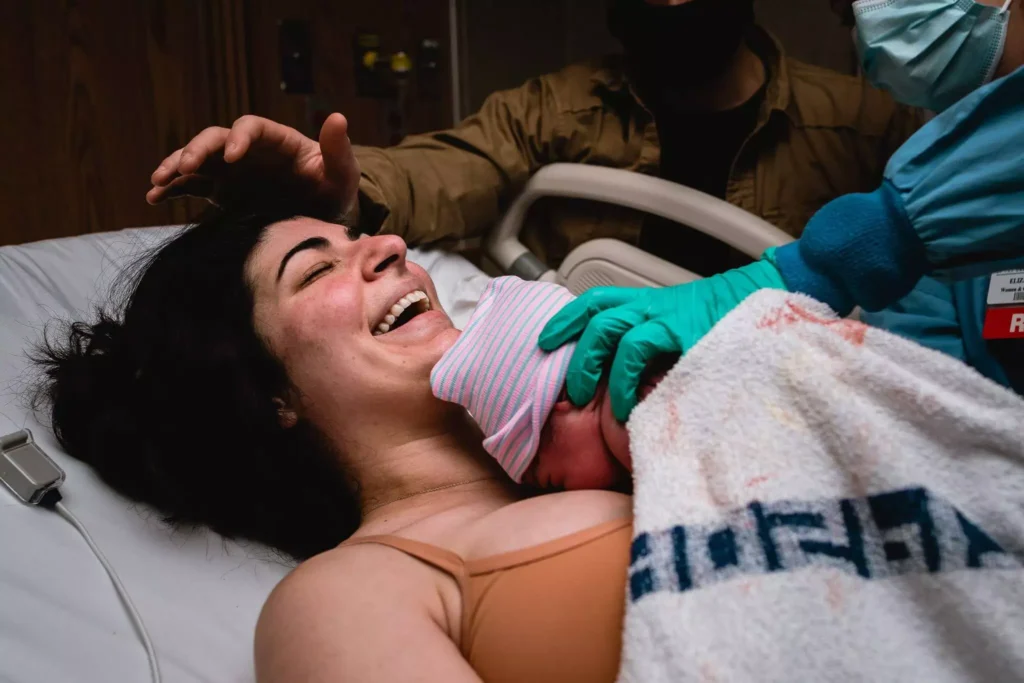

Learn the science of pregnancy and birth to take the mystery of labor away! Understand why you are feeling what you feel, and learn strategies to confidently move through pregnancy and birth!
- 9h+ of Video
- Support Group
- Close Captioning


- 5 Workouts/Week
- Gym Workouts
- Self-Paced

Instructor
GINA
Workout on-demand with our prenatal fitness workout videos! Each workout is 30-40 minutes to follow along as you exercise at the same time!
- Birth Prep
- All Trimesters
- Mobility Work

Instructor
GINA
Find comfort and relief from pelvic girdle pain throughout your pregnancy and postpartum period! This program incorporates myofascial sling focused exercises to stabilize across the pelvic girdle joints.
- 3 Weeks
- On Demand Workout Videos to Follow