



Welcome to the MamasteFit Podcast! In this emotional episode, perinatal fitness trainer and birth doula Gina shares her personal stories of two back-to-back pregnancy losses in honor of Pregnancy and Infant Loss Awareness Month. She discusses her experiences, the journey of managing losses while working within the perinatal community, and the challenges of handling pregnancy after loss. The episode aims to de-stigmatize pregnancy loss and provide support by sharing her struggles, professional insights, and coping mechanisms. Co-host Roxanne, a labor and delivery nurse and student midwife, contributes medical context to Gina’s narratives. The episode concludes with a reflection on the importance of early pregnancy announcements for community support and how each individual’s experience of loss and grief is unique. Please hear us when we say: It’s not your fault.
Read Episode Transcript
Gina: Welcome to The MamasteFit Podcast. In this episode, I’m gonna be sharing my pregnancy loss stories in honor of pregnancy loss and infant loss month. So this may be a triggering episode for you. If you’re feeling more sensitive about it, I won’t be offended if you don’t wanna listen to this episode. But my main goal is to help to remove the stigma of pregnancy loss so that you can know that it’s not your fault.
Welcome to The MamasteFit Podcast. Today I’m gonna be talking about my own pregnancy loss story. So I had two back to pack miscarriages between my first and my second kid. And so I wanna help kind of de-stigmatize pregnancy loss. For a lot of us if we have a loss, we may not tell anybody. ’cause maybe you didn’t even tell anybody that you were pregnant, or maybe you did tell people that you were pregnant, but you didn’t exactly put out like a bulletin to let everyone know that you were no longer pregnant anymore. And so there can be some stigma with it where you feel like maybe it was something you did or this is something that you should be ashamed of. And so I want to spend this episode sharing my own story, kind of how I approach recovering from pregnancy loss, how I manage working within this perinatal time space while dealing with my own losses- ’cause that’s something else that I’ve been hearing more about is, well, how do I keep supporting this community while I am navigating my own loss? And then how we can kind of approach supporting somebody while they have a loss, and then also supporting others if you are dealing with your own experience.
So let’s start with my pregnancy loss story. So I just kind of always had this vision for myself that’s just something that happened to other people. And I think we all kind of have that, we’re like, that bad thing happens to people that are not me. Really tragic, always so sad. But it was like, that’s something that doesn’t happen to me. No, I don’t have pregnancy losses, even though one outta four of us will have a pregnancy loss. And it just felt like something that was really uncommon, even though it’s a really high percentage because nobody talks about it. Nobody talks about the fact that they had a loss, and I really realized that after I had my first pregnancy loss, ’cause a lot of my friends were like, “Oh yeah, I had a pregnancy loss, but I told nobody.” And so it was this thing that just felt very far away from me ’cause nobody was talking about it, and I just kind of had this like protective instinct to be like, I am like invincible. Like nothing can harm me. And so when we went into our second attempt to have a child, so we had our first baby and then were trying to conceive baby number two, we got pregnant pretty quickly and something just felt off for me. But I didn’t really know what felt off. And I remember having this more like anxious feeling with it. Not because I was concerned like, oh, I might have a pregnancy loss, but it just, something just felt weird to me and I just had a little bit more anxiety. When I was like five or six weeks pregnant, I had like really slight brown bleeding, like it was like really mild bleeding or spotting, it wasn’t even enough to saturate a pad or it was just like when I wiped, I just noticed like a little bit of brown blood. And I was like, that’s probably like implantation bleeding. I also was like super sick at that point, and so I was like, it might just be diarrhea, like it’s nothing. But I still was like googling it, looking in forums to see had anybody else had any sort of brown spotting, and were they fine? But it just kinda left this feeling of like anxiety for me.
And so when I was around like eight or nine weeks pregnant, Roxanne was working on Labor and Delivery and I think I came for something to the hospital, maybe I was bringing you a drink or something. And I was like, “Hey, while I’m here… could we just do a quick ultrasound, a little ulti, just to see what’s going on?” And the midwife was like, “Yeah, sure.” I was a patient of the clinic, so like it, kind of made sense for me to work with them. And so we were doing an ultrasound on my belly, and at this point I would be like eight, nine weeks, and I remember getting an eight week ultrasound with my first, and it was like a little gummy bear. This was just black. And I was like, “It doesn’t look like there’s anything there.” And she was like, “Oh, this ultrasound might just be really bad. It’s a really bad…”
Roxanne: Which is literally the excuse every single time that used an ultrasound, even when it was like perfectly fine. They’re like, “Oh, I just hate this ultrasound. It’s such poor quality.”
Gina: It’s such a bad ultrasound.
Roxanne: I’m like, is this one really that bad? I feel like it looks the exact same as when I had it at the other clinic. She was like, “No, this ultrasound, this one is awful. It is bad. It’s poor quality.” I’m like…
Gina: So she called the OB in because maybe it was just above her skill level, you know.
Roxanne: She was a midwife. Ultrasounds are not our forte.
Gina: It’s a higher level now. So she called in the OB and the same thing, the OB was like, “Our ultrasound sucks up here. T his is the ultrasound that’s for 40 week babies. Like this, this is what this…”
Roxanne: Not nine week babies.
Gina: “Not nine weeks. That… you should go down to the clinic and we’re gonna see your baby there. You might just not be as far long as you think you are.” And I’m like, “I mean, I might be like a week off, but I’m not like a month off. There’s nothing there!”
So the next day they like got me in really quick and I came in for an ultrasound and I think we did a vaginal one and it was the same thing. There’s nothing. And she’s like, ” Well, maybe you’re just not as far along,” ’cause now we can’t use the excuse that it’s the ultrasound. Now it’s, “Well maybe you’re just not as far along as you think you are.” And I’m like, I don’t think I’m that far off. But they did see a little like bubble, which was like the yolk sack- I’m forgetting the terminology, but they didn’t see like a fetal pole, or something that let them know that there was something growing in there. And I was like, this is questionable. I don’t think that there’s a baby. I think I might have had a missed miscarriage, which means that at some point in the past month, this pregnancy stopped being a pregnancy and my body was just like, “D0-do!” and just kind of continued on its merrily way. I was having symptoms, I was nauseous, I was fatigued, I was dealing with all the first trimester stuff without a fucking baby in my belly. That was some bullshit.
Roxanne: Rude.
Gina: And that actually impacted me in future pregnancies, ’cause whenever I had first trimester symptoms, I couldn’t rely on that as a cue to let me know that things were normal, because I had them, and they were not normal.
So we went back for a few more ultrasounds, ’cause they were like, “Well… it seems like this might be a missed miscarriage.” And they were really compassionate, and I was, I am so appreciative for the obs that were helping to support me. Like they were all incredibly kind, they weren’t dismissive, and they were like, “If you feel like you need some more time to process this, or, maybe something will show up next week. Let’s give it some time.” And I was like, “Yeah, for sure. My baby’s just hiding. You suck at ultrasounds. That’s the problem. You are really… I thought OBs were high, topnotch. But you’re a resident and that’s why you don’t know how to use an ultrasound. You’re not an ultrasound tech. That’s the problem.” So I like convinced myself, even though I knew deep down that this was a missed miscarriage, that it was because they were really bad at ultrasounds. They didn’t know what they were doing. And then I had MFM helping me, like the next appointment. I was like, “Okay, maybe it’s me. Maybe I’m the problem.”
Roxanne: You’re not the problem, but…
Gina: Yeah, so I went in for two or three more ultrasounds. And so I think by the time I was like, 12 weeks was when I was like, “All right guys. I don’t think a baby’s gonna appear. I think the problem is not the ultrasound, or that the baby’s hiding, or that you’re bad at doing an ultrasound. I think the problem is that there is just no pregnancy, and for whatever reason, my body didn’t recognize it.”
So they gave me the option where well, we can either do a D&C or we can give you some medication and you can just take it at home. We’ll give you some painkillers and then you can just pass your baby at home and if you need any support after that, just come see us. And then after the fact, we want you to continue to receive care from us. So I was like, well, I think I’d rather just do this in the comfort of my own home and took the medication. My mom took my oldest for the night and then we went home. I took the pill. I didn’t really know what to expect. Like I didn’t really know what was, what it was supposed to be like. But I remember labor from my first and I was like, “If this is labor and there’s no baby, I don’t want to experience that.” So I was like, “Gimme those pain meds.” And so the pain meds, I can’t remember what it was, I think it was probably like, I don’t remember, but it just made me feel very fuzzy and I didn’t really feel much. And I felt like some cramping, there was some bleeding and… but overall I just felt like really numb to it all. Maybe it was because of the painkillers, but I just detached myself and I had some time to like detach myself from the pregnancy because it wasn’t, I just woke up bleeding one day. It was, I had one ultrasound, and then I had another one, and then another one, and so I had a two week period to really just kind of like process and accept that this was not happening.
I didn’t know what to expect in regards to the actual miscarriage portion. And I think a lot of folks like say this as well, where they didn’t know what to look for, or what was gonna happen. And so I had cramping, I had some bleeding, and then I passed like this clump of tissue and I didn’t know what it was. And I was initially like, oh, I’m gonna pass more stuff, like that’s my uterine lining falling off in clumps, is what I initially thought it was. ‘Cause I didn’t, I again, I didn’t know, I didn’t Google, “what does a miscarriage look like?” And so I passed this like initial clump of stuff and it looked really weird and I like kind of poked at it in the toilet and I was just like, I think that’s, there’s gonna be more stuff like that. Flush. Hindsight, that was the baby. That was whatever that little gestational sack and stuff was. I just flushed the baby down the toilet, or whatever it was at that point.
And I’m sorry for our listeners, if my recapping of the story feels like really dismissive and detached just because that’s how it felt for me and the moment. And so I was like, “Well, shit.” Like the next day I was like, to my husband, I’m like, “I think that little clump of tissue that I passed was like the baby and I just flushed it down the toilet.” I don’t know what I would have done. I probably would’ve put it in a plastic bag and brought it to my provider or something. I don’t really know what I would’ve done with it, but I probably would’ve flushed it down the toilet if I had known. And so for anybody that is going through a loss I don’t know if that’s how it is for everybody, but that’s what it was like for me with an early, ’cause I was like 11 or 12 weeks at this point, and there was no baby developing. It was like this little clump of tissue that was really different. It wasn’t like a blood clot. It was like a substantial size. And yeah, I just was like, “What is that? That’s weird.” And just flushed it. So that was… sad to look back on.
So after the loss, I couldn’t just move on with my life. I needed to go back to the provider like every week to get my HCG levels checked to make sure that they were dropping and that they got below a certain threshold to ensure that it wasn’t a molar pregnancy, which is the concern, at least from my provider, with the missed miscarriage, was maybe there never was a pregnancy, but it was like a molar one. So if you can explain what a molar pregnancy is.
Roxanne: Yeah. A molar pregnancy is basically a tumor within the uterus from a non-viable pregnancy. So the baby did not develop and it became almost cancerous type cells. They’re, in the moment, when you have a molar pregnancy in the beginning of a pregnancy, it is not like cancerous at that time. But they do want it to come out, and usually, sometimes, with the medication that they give you, you can’t pass the entire molar pregnancy. Sometimes they have to go in and scrape out the rest, but the only way that we would know that it was not a like early or missed miscarriage versus a molar pregnancy is ensuring that those HCG levels, which is the hormone that your body produces during pregnancy from like the placenta and all of those things, is for that to go down. If it continues to stay elevated or it doesn’t drop as fast as we would expect, that’s when we would think maybe this is potentially a molar pregnancy, and we would investigate further and then move towards a D&C to kind of continue removing the rest of the pregnancy. If it’s left there, this is when there’s like a small chance that it could develop into cancer, which we would like to avoid cancer at any time, if we possibly can. So that’s what usually the treatment for molar pregnancies are.
Gina: So I did not care that could be a potential thing, and I wanted to get pregnant again right away. So even though I was supposed to wait to, not because like my body needed time or anything, it was really just to make sure it wasn’t a molar pregnancy, my husband was getting ready to deploy, and I wanted my kids close in age. And so I was like, it’s fine. It’s not a molar pregnancy. We’re just gonna start to try to conceive before he leaves, and then when I go to my appointment and my levels go up, it’s because I’m pregnant. Spoiler. I did not get pregnant during that timeframe. He deployed and I was still not knocked up. And so my, like the universe was like, “No, bitch, we will be doing this treatment plan.” And so my levels did go underneath the threshold that they needed to be, and I just continued on my happy self with one child for several months while he was deployed.
During that time though, I had quite a few people ask me, when am I gonna try for baby number two? Like she needs a sibling. Like she’s so cute and amazing, you need more kids. And I was like, yeah, thanks. Like, I appreciate it. And so that kind of became something for me to like never assume somebody’s like reproductive plan or their family plan because you don’t know what it is that they’re going through, like with either fertility issues, like maybe they’re dealing with losses. This was like stuff where like I was like newly had a pregnancy loss and people were like, oh, like she really needs a sibling. And I’m like, I’m trying here. And so for me that I never wanna ask anybody. What is their plan? Oh, how many kids do you plan on having? Unless it’s somebody that I’m like close to, and I feel like I can have that conversation. But I’m not gonna ask a stranger. How are, how is, how many more kids are you trying to have? Because they could be, again, having a loss or going through something. And unless I’m willing to have that deep conversation with them, I shouldn’t be asking that question. And a lot of people…
Roxanne: Are you not willing to have that deep conversation?
Gina: A lot of people not trying to have a deep conversation with me when they’re like, oh, she needs a sibling. And I’ll be like, yeah, I know I had a miscarriage. I tried. Oh…
Roxanne: Well you should then. If somebody asks you that question.
Gina: Okay, we gonna have a convo!
Roxanne: And you’re either, you just had a loss, you’re struggling with fertility, like, you just say it and you make it awkward for them because they made it awkward for you. So it’s just gonna be an awkward situation for everyone.
Gina: I dunno. Yeah, it got really awkward a few times. Most of the time I’d be like, oh yeah. Ha. I’ll get right on that.
So my husband deployed. I dealt with a bunch of people asking me about my, like family planning plans, and then he came home and I was like, let’s go. But he was still in a job that he was frequently gone, so trying to tie my ovulation for like him being home was pretty challenging. And so it took us a few months to like finally conceive, and then we got it and I was like, all right. I feel super anxious, but it’s cool. I like went to my OB and immediately got blood work done to confirm pregnancy and then the next day I started bleeding, and I was like, this seems not normal. I don’t think you’re supposed to do this.
So I actually was in the gym with a client and I wiped, and they was just like bright red blood and I was like, eh, I don’t know.
Roxanne: I think, Gina, you sent me a, a text, little texty text about it, too. And I was like, we don’t love that.
Gina: Yeah. That’s not, and that’s all I gonna say.
Roxanne: And I was like, it could be fine.
Gina: Yeah. So I drove to the ER. And we live on, my hospital was on base, so I had, it was like a 45 minute drive. And I actually got pulled over on the way.
Roxanne: Oh my God.
Gina: Because you crest this hill and you come down the hill and it’s, unless you’re like slamming on your brakes, you pick up speed.
Roxanne: It’s SO steep.
Gina: It’s a really steep hill.
Roxanne: It’s so steep.
Gina: And the speed limit is like 35, or something really slow. And I was like 55, ’cause like I was just like a fucking sobbing. And this poor kid pulls me over, ’cause on base the police officers are soldiers, and so this 18-year-old MP pulls me over and he’s, ” Ma’am!” And I’m just like, “Ah!” And he’s just like, ” Oh gosh, what is happening?”
Roxanne: And he was like, “Oh, I’m gonna get one today! I’m gonna give out a ticket!”
Gina: And I’m just like, “Aaaaaah!”
Roxanne: No, just kidding.
Gina: He’s like, “Oh my God, are you okay?” And I was like, “I’m just trying to go to the hospital ’cause I think I’m having a miscarriage.” And he’s like, ” Okay. Have a good day.”
Roxanne: Have a good day, too!
Gina: I, he might not have said, “Have a good day,” but he was like, “I’m gonna remove myself from this situation.”
Roxanne: I’m just a child like.
Gina: “Just drive a little slower,” and went back to his car and was probably just…
Roxanne: I hope he thinks about that moment every time.
Gina: And so I just kept driving, and made it to the ER, and I had my daughter with me, my husband met me there. And the nurse in triage, super nice. She was like, “How many pregnancies have you had?” And I was like, ” Three, to include this one.” And she’s ” Okay, well how many,” I think she asked like, how many losses or yeah, live births or whatever. And I was like, “Well, I guess counting this one, two.” And she’s like, ” Don’t count yourself out!” And I was just like, “Bitch, we both know there ain’t no fucking baby anymore. Let’s, I appreciate your optimism. But we both know, but I guess it could be fine, too.” Yeah. Like you could, I mean, like you’ve bled twice now, and you’ve been fine. You lucky duck! How dare you?
Roxanne: It’s shocking.
Gina: How dare you.
Roxanne: There’s a lot of blood, still. Yeah.
Gina: So I also was wearing white leggings. Of all the days…
Roxanne: You’ve never worn white leggings a day in your life, since.
Gina: I’m just fucking bleeding through these pants. And it’s just like, “Whatever, I guess at this point.” So she was like, “Don’t count yourself out, champ!” And I was like…
Roxanne: Verbatim.
Gina: We both know that I’m out.
So I sit and wait in the ER for a few more hours ’cause I am not a priority. What are they gonna do? Well, what are they gonna do? Nothing. And then we made it to see the ER doctor who was a complete fucking asshole.
So at this point, all of my losses and managing of this, I’ve had incredibly compassionate providers, doctors.
Roxanne: Because they’re OBs.
Gina: Who were like, in this field, we’re giving you space, we’re supporting you in this. And even the nurse was like really nice. And then the doctor was just like, walks in with my chart, he’s, ” Okay, you came in on Friday, you had a positive pregnancy test. Now it’s negative. What are you here for?” And I’m like, “I guess a miscarriage, bro.” And so I was just like, ” I guess for a miscarriage.” And he’s like, “All right, well, you know, you’re really early, so I don’t think I need to do an internal exam.” And I was like, “I fucking hope not. Thank you though.” And he’s like, ” But just way on your back and I’ll feel your belly.” And I was like, “All right.” And at this point I start crying ’cause I’m just like so overwhelmed with just like the abruptness of this interaction. And he’s, ” Oh don’t be sad. Like, my daughter’s had four miscarriages and she’s got a bunch of kids now.” And I was just like, “Thank you. That was so comforting for me to know. I appreciate it.” And it was just like a really unhelpful interaction and I was like very angry. But in the moment I was just like, ah. So I couldn’t be like, “Oh, I’m sorry sir. It wasn’t a competition.” So you know when you have like the conversation in the shower later? Oh, you’re like, oh, I could have said you have so many.
Roxanne: Oh yeah. Better comebacks. Oh yeah. No,
Gina: I’m just in the moment. So I am not doing any of my witty comebacks. I am just sobbing.
Roxanne: As you’re alone in this ER room.
Gina: Well, Barron was there too, so my husband was there. But he was also equally like overwhelmed in this moment. So like we were both just like very overwhelmed. I was not expecting him to be like, “Hang on, let me wipe away my tears and tell you what’s up.” We’re just gonna take it and just move on with our lives.
Roxanne: Yeah.
Gina: The good news was after that I did get my referral back to my OB and it was incredibly compassionate care after that. My primary care provider was like, “Hey, I know, like you may have heard, the standard was three losses before we can do blood work. That’s stupid. You’ve had two now back to back. We need to start figuring out what’s going on. There’s no reason why you have to have another pregnancy loss before we’re gonna offer you care.” And I was like, “Hell yeah. So we did a bunch of blood work. We were starting to do the workup for fertility ’cause well, if I needed to go to fertility, at least we’re ready to go instead of having to delay it another month. And we found out that my thyroid antibody levels were super elevated. And now this could be have correlated to my losses or not, who knows, but elevated antibody levels could be associated with recurrent pregnancy loss. And this was something that she had found in her research and she was like, this was, I looked it up for you, and this seems like this could be the reason why. So, we need to do something to help get your antibody levels down.
And so she prescribed me medication for my thyroid, and I got referred to the OB for MFM. Or no, I didn’t get referred to yet, that was when I got pregnant. So I started taking medication and then I did like the autoimmune paleo diet to help lower my antibody levels. Again, was it the medication, was it the diet? I don’t know.
Roxanne: Combination of both.
Gina: But my levels plummeted. They were super like back to where they’re supposed to be. And then we conceive the very next cycle. So I had a loss, cried a lot, and they got pregnant. So I had no… I had a very short period of time to really process like what was happening.
Once I got pregnant, I was incredibly anxious.
Roxanne: Valid.
Gina: Shocking, I know. I’m incredibly anxious because I had no confidence in my ability to carry a pregnancy at this point. So I, my autoimmune paleo diet immediately went out the window ’cause I was super nauseous.
Roxanne: All you could eat was butter noodles.
Gina: I was… like, yeah, butter noodles and just tears.
Roxanne: But just strong gusts of wind.
Gina: Just sadness. And again, symptoms didn’t, weren’t comforting for me because I had symptoms and there wasn’t a baby. At least I wasn’t bleeding. And so every single time I wiped, that entire pregnancy, every, you know how many times I pee a day? Every single time I wiped…
Roxanne: A couple times a day?
Gina: I checked the tissue. I would look at it and verify that there was no blood. Every single time. At night, I would wake up, turn the lights on, look at the toilet paper, like if I would woke up.
Roxanne: How times have you waking up at night to pee?
Gina: I mean, usually one or two times, but if, but you know, times nine months, every night I woke up, at least. I’d wake up and I’d look and I’d be like, “Okay, it’s not pink or red. We’re good. It’s just lots of vaginal discharge.”
Roxanne: Like which doesn’t help because it doesn’t help. There’s so much vaginal discharge during pregnancy.
Gina: So that entire pregnancy my symptoms were not comforting for me. Every time I wiped, I’d check to make sure. The one thing that was comforting for me in that first trimester when it was very like ambiguous, are we gonna make it? And I was talking to my husband, I was like, “If we have another loss, I don’t know if I can do this again. This is destroying my mental health. Like I am not good. I am unwell now, mentally, right now.
Roxanne: Yeah, a little Zoloft may have been beneficial.
Gina: And so I was like, “We gotta take a break. If this doesn’t fucking workout this time ’cause I can’t fucking do this again.”
So my provider did weekly HCG- or more, more often, it was like every three days, my HCG levels. I’d go in and get my blood work to see that it was rising, and that was comforting. And then once I was like six weeks pregnant, we did weekly ultrasounds. So I would go in once a week, I’d get an ultrasound till we can see something’s happening, and I would do my blood draws. And this went on for 13 weeks or for, until I was 13 weeks pregnant.
Roxanne: I was like, damn.
Gina: Be cause that was the point where it was like, well this is when your last, your first pregnancy did not surpass, so do you feel comfortable at this point? And so when I hit like the 13 week mark and I was entering into the second trimester, like we saw baby, he was growing every week, my blood levels were looking really good. Everything seemed to be progressing very normally. The OB was like, “Do you feel comfortable transitioning to the midwives if you want to change to the midwives instead?” And I was like, “Yeah, like I think I feel comfortable now.” Like we, we reached a point where I we’re seeing him grow and everything’s looking really good. At that point, I think I could also start to feel him move, which was like another thing to let me know. Okay. He’s still in there, he’s still doing stuff.
So at first it was blood draws and then it was ultrasounds. ’cause again, I couldn’t rely on symptoms and I couldn’t rely on the fact that I wasn’t bleeding, that I was still pregnant. And so those were really helpful for me in the beginning. And then after that I could start to feel him move. And I had a little at home Doppler, which, you know, maybe shouldn’t use like further on, but at the beginning it was just comforting for me to know, okay, he’s still in there, he’s still doing stuff. And then once I could really feel him move, I didn’t use the Doppler anymore and I was just solely relying on the fact that he was moving and he, his trends seemed to be really good that he was still good in there. But that entire pregnancy, I was super anxious. I checked my wipe, like every single time I wiped, I checked- don’t wipe that way. Wipe it the other way! Every single time I peed, I’d look at the wipe like, okay, it’s, it’s not red. That’s good. I felt really disconnected from the whole pregnancy ’cause I was just, ” Well, if something happens, that’ll suck. And I’m already like very fragile right now. I just I feel like I just need to detach from this.” And then I had somebody tell me who had some later pregnancy losses that she never regretted bonding with her babies, even though she lost them. And I was like, you know what? You right. I could forget that he exists and I would feel like fucking shit if I lost him, ’cause I never took the time to love him. So after that was kinda like a wake up point for me and I was like, all right. Hey baby. And I went and bought, this was like my third trimester though, so I had, I missed the boat.
So in my third trimester I was finally like, alright, I guess I’ll pretend that you exist and I will connect with you. And I like went and bought him something. And then that was also like COVID time. And so I was like, oh my God.
Roxanne: Got a lot of stress already.
Gina: There’s so much disease happening, like everyone’s dying. Like I’m gonna have nobody in the hospital. And so we switched to home birth that time, and that’s like a whole nother story.
But the, that pregnancy after loss was incredibly challenging for my mental health. And even now sometimes, like my son whose pregnancy t hat was, he’s my most anxious child. And I am like, oh my God, it’s because of me. Like I was anxious that whole pregnancy, and that’s why you’re anxious. I was putting all my anxious vibes on you. And then my husband’s like, ” Please calm down. It’s, it wasn’t your fault. I think he’s just. It’s just his personality.” And I was like, “‘Cause of me!”
Roxanne: All your fault, 100%.
Gina: It’s all my fault. Everything is my fault.
So pregnancy after loss was incredibly challenging, but I will say the pregnancies after that one were much easier, mentally.
Roxanne: Maybe it’s just the boy.
Gina: Maybe, I don’t know. I just felt like I was in a better space and I think it was more that I had surrendered to the possibility that things will not work out the way that I want them to.
And so in my first trimester, for the next two pregnancies, I got ultrasounds so that I can see the baby, like every week. I was like, all right, you still exist, we cool. And then once I decided to stop doing ultrasounds, I had a fetal doppler and I was listening and I was like, all right, you exist. You’re still alive in there. And then once I could feel the move, I was like, all right, cool. But every ultrasound for me created a lot of anxiety, which was maybe bad about getting a weekly ultrasound in my first trimester, but it also was really reassuring for me, and so I didn’t want to not get them because it was really helpful for me. And then every milestone was like a really big deal. Okay, I made it to my anatomy scan. Okay. You good? You good at my anatomy scan? Okay, now I’m at my third trimester. You’re still in there. Cool. And like, all right, now we’re at 37 weeks, you can come out now.
But my next two pregnancies after the pregnancy after loss, I felt mentally much better. I was still checking my wipes, but not as obsessive with it. I just felt like more at peace with the pregnancy, and I also think I just felt a little bit more confident because I had a successful pregnancy, that it would be, it, it’s possible to have a baby.
And so for people that are dealing with their first pregnancy after loss and feeling really overwhelmed with it, for me, and I would be curious to know if other people had the same experience, for my subsequent pregnancies, they felt mentally easier. Like they didn’t feel quite as overwhelming, ’cause I had that one pregnancy, that one successful one in between.
So yeah, so that is my pregnancy loss story. I had two back to back miscarriages in between my first two kids that were really different from one another. One was a missed miscarriage, and it was like a whole different process. And the second was just like a spontaneous loss, like the day after I got a confirmation via blood test. So it couldn’t even be for someone to say like, “Oh, well you’re, you just, you didn’t actually see a positive pregnancy test,” I’m like, “No. There was a blood test that was positive. It was a real pregnancy.”
Roxanne: We call those complete miscarriages.
Gina: It was rough. That happened in between my first two kids. The pregnancy after the losses was incredibly mentally challenging.
I also suffered postpartum with the most anxiety that I’ve had out of any of my postpartum periods because I was so scared about something happening to him that I sought therapy, and that was super helpful for me. But then the subsequent pregnancies mentally were not as overwhelming. There was still some little things for me where I was like I need this reassurance. But overall I just felt like much more at peace and I felt like I had surrendered to the possibility of things not being the way I want them to be. And maybe it was just ’cause I was getting older, I was experiencing motherhood a little bit more. I’d had two pregnancies and, or, two births at this point where you really can’t control things. So I was just in a different mental space at that point, and they felt different. It felt better for me. So it’s not if you have a pregnancy loss, this is how it’s gonna be every single time. Like the first one was really hard, and then it didn’t feel quite as bad for the next two.
But during all of this time, I was also creating MamasteFit and working in person with birth clients, with pregnant clients, people that were conceiving after I did my first pregnancy, had given birth by the time we conceived my son. And so this was like a really long period of time where I was just like, everyone else is getting fucking pregnant and having their fucking babies, and I’m over here just fucking bleeding outta my vagina every month. What the fuck? And so it would be really easy for me to be like, fuck you. I can’t be in this space. And I know that there are people who like, they just, there’s a point where they’re like, I need to remove myself from these constant reminders of how I’m failing. And I just decided that there was enough joy in this world for all of us, and that if somebody else has the experience that I want, it does not mean that I can’t also have it. I may not have it right now, which I would really like to do, but, there’s enough for all of us. And I kind of just hung onto that abundance mindset of like just because she got pregnant and had her baby in between the time that I had a successful pregnancy, it’s okay. Like it’s fine. And there was moments where it was definitely harder. I think like at births it was like a little bit more challenging for me. But overall it was like, well, I’m really happy for you.
Roxanne: I know, and I of course was like pregnant.
Gina: And you got pregnant.
Roxanne: I was pregnant and then Gina announced her first loss of pregnancy and I was like, we’re gonna be pregnant together. And then I was like, now I am the only one.
Gina: I know were you pre so because, I’m trying to think of the timeline in my head.
Roxanne: I was due in August.
Gina: You were pregnant before I was, and yeah, we were like super excited. We were trying to figure out like how we were gonna do birth support because I was gonna be like super pregnant.
Roxanne: I’d be like 3 months postpartum.
Gina: And then you were gonna be like a little bit postpartum and we were trying to figure out like who was gonna watch your baby while you were supporting me at my birth.
Roxanne: Yeah.
Gina: ‘Cause we wanted our mom to be there, and so we were trying to figure all this out. And then I was like, JK.
Roxanne: Yeah.
Gina: And then you have this like beautiful birth at the hospital and I’m like, it’s fine.
Roxanne: Motherfucker.
Gina: No, I will honestly say like I did not feel feelings of like jealousy or resentment to people that were navigating this phase of life.
Roxanne: Yeah.
Gina: Because I just kept telling myself, there’s enough for all of us. There’s enough babies out there for all of us.
Roxanne: I did feel so weird during that entire pregnancy though, because I was like, I don’t wanna rub it in her face.
Gina: Yeah.
Roxanne: Which I felt like, oh don’t you complain, a single moment.
Gina: I know.
Roxanne: I’m like, my pubic bone is ripping in half, but Gina would kill for this. And I’m like, it’s fine.
Gina: I’ll take that pubic bone if that means I pregnant.
Roxanne: Gina missed my baby shower because she was supporting a birth for one of my really good friends and I was like, it’s honestly fine. She doesn’t need to be here. She doesn’t have to come to the baby shower. Even though i’m really sad without her here.
Gina: So that becomes like the other side of things of being the person that is having the experience that, you know, somebody else wanted to.
Roxanne: Yeah.
Gina: And how to navigate that. ‘Cause like we have so many friends that have miscarriages, like it’s such a common thing. And then being in that space ourself, be like, well, how do I talk about some of the discomforts that I’m having or my things that I don’t love about this experience? But knowing that, like that’s what she wants. She wants to be pregnant and they’re struggling and she’s having losses. And I’m over here oh, I know my pubic bone hurts. Or, oh, I feel really nauseous. I’m fucking miserable in my first trimester. I’m like, I’ll take your nausea, I’ll take it. But so it’s…
Roxanne: Yeah.
Gina: And so then it becomes this like kind of tiptoeing around somebody of not wanting to offend them, but wanting them to still be a support for you. Yeah, I don’t have a perfect answer on how to navigate it there.
Roxanne: I think every navigate everybody is also different on their like experience. Some people would rather you just not tell them anything and find someone else to support you through your pregnancy. And I think that’s okay to recognize in yourself like, like I, while you are like my best friend or while you’re my sister and family member and I love you and I’m happy that you’re having this experience, if you could choose someone else to talk about it with until maybe I am also on this journey with you, I would appreciate that.
And I think different people have different experiences with that, that like someone may feel okay to share your joy with you, whereas someone else maybe doesn’t need to share their joy with you at this time because they’re still working through it.
And I think that. Like with like pregnancy loss, infant loss, any sort of loss, everyone grieves very differently for it.
Gina: Even with my own losses, they were really different from one another, too.
Roxanne: And like everybody, yeah, everyone kind of experiences it differently. So it’s also like understanding like there is no perfect answer and no matter how hard you try, you likely are going to say something wrong. And the other person will get offended, and that’s not necessarily like you did it on purpose, but it’s like we’re all trying to navigate this same journey. I do really like the one Instagram couple who did lose their pregnancy, and like a late trimester, and all of their sharing right now of their grief and how they worked through it and a way that’s very authentic to them. And I love watching them because it does remind you that everybody does go through this differently. ‘Cause I feel like even the two of them show different perspectives of how they went through it and how we can still be sensitive to their experience, but know that their experience is still unique to them, and we just have to be sensitive to everybody. It’s like some people, their pregnancy loss, they’re like, well, we’ll just try again and they move on with it. And some people will like still remember, every single baby, they give every single pregnancy a name, and they say, when you ask ’em like, oh, how many kids do you have? They say, I have like however many kids. Three of them are on Earth with me and the others are in heaven, or what, and that’s just how they all process it. So I think it’s also being like mindful of that. And I think that as a like midwife and provider, this is all like really important to hear and remember because anytime like I meet someone, I have to be mindful of how I say different things because again, they’re all on their own journeys. And, and I would love if ER doctors would also be mindful of this ’cause they just, they’re great at emergencies. If I am bleeding out, I would love for the ER to save me. If I have a broken bone please address it. If my baby is choking and not breathing, yes, I will come to the ER. But if I’m having a miscarriage. I probably not going to go to the ER ’cause I have think I’ve heard one positive experience and even my own experience where I was literally bleeding through my pants and the doctor just comes in and he is, ” Okay, got any questions for me?” And I’m like, “What is happening? No one could tell me anything. What is happening to my baby?” And he’s, ” Oh yeah, your baby’s fine. Follow up with your midwife,” and I’m like, “What is it? Like why am I bleeding through my pants? Can you share more information?” ” Have a good day!” “What is happening?” “Yeah. I put your referral in, OB will call you tomorrow to schedule an appointment.”
Gina: Thank you.
Roxanne: Cool. So it’s just like, it’s not, and I think maybe it’s just like what they see in the ER is vastly different. And like I understand that there’s really nothing that they can do for you there, but like labor and delivery doesn’t take care of patients under weeks 20. So it’s a wide range of pregnant people that you’re still seeing in the ER. So I feel like that is also a thing that needs to be addressed or have a separate place.
Gina: Yeah.
Roxanne: That has the compassion for the pregnant people.
Gina: I will say, like when I reflect back on my ability to support people on this phase of life while navigating my own loss, I only had one loss at that point, and so I think I like told myself what are the chances of another one happening?
Roxanne: Yeah. Yeah.
Gina: That was my one that, that was my one four. Check the box. That was my check the box, alright, I had my loss. And I think I just had told myself you’re not gonna have another one. You’re just gonna have to wait till your husband gets home and you’re gonna have the same experience. And I think that’s why I was able to approach it with a really positive and like loving abundance mindset. If I had two losses in a row and then was supporting a bunch of people who were pregnant, I don’t think that I, my mental state would’ve had been as strong. Or, had multiple losses in a row. So I don’t wanna dismiss anybody or feel like anybody who has not been able to continue to support this phase or be okay.
Roxanne: No.
Gina: That there’s something wrong with them. I do think that if I had multiple losses and was still struggling to get pregnant, it would be a completely different, this would be a completely different story.
Roxanne: Or we wouldn’t be here right now.
Gina: We wouldn’t be here, ’cause I would’ve had to stop.
Roxanne: Yeah. It would just be me. And I would not have continued.
Gina: It would’ve been too hard for me to continue to see people have the experience that I want.
Roxanne: Yeah.
Gina: So I only had one loss at the time. ’cause after our second loss we immediately got pregnant and so there really wasn’t much of a window there for me to, I was just like still processing it when we found out that we were pregnant again. So I do want to point that out.
Roxanne: Yeah.
Gina: Something that we have done. Each pregnancy, which I think helps to, one, make me feel more comfortable sharing about my losses is we always announce really early. And now when it comes to Instagram, like we don’t always announce as soon as we pee on a stick, ’cause there’s some people that need to know before we…
Roxanne: Yeah. I would like to not tell like my mom that I’m pregnant via Instagram.
Gina: Yeah.
Roxanne: Not that she would see that. Yeah. But like friends, family.
Gina: But like I am telling people as soon as I find out that I’m pregnant.
Roxanne: I mean, Gina gets the picture.
Gina: Yeah, just here you go.
So I am telling people right away, and this is my personal preference, I don’t wanna keep it a secret because I want people to celebrate from the beginning. Because I’ve had losses, and I was so thankful with both those losses that I told people, ’cause then after I was dealing with the miscarriage, I had people to talk to. I wasn’t just oh, hey Roxanne. So you didn’t know this but I was pregnant and now I’m not and I need you to grieve with me. Like you’re gonna be like, oh my God, like what just happened? This is a lot of emotions. And so I had a lot of people after my first loss that I had told I was pregnant, ’cause I texted everybody right away. I was like, everybody, the world, I am with child. And then it was like, just kidding. I am not. But I had a ton of people that I got to rely on to provide me support and to talk to. And I was like very repetitive with the things that I was saying and everyone was looking to help me. And then they were also like more mindful of what they were saying around me. Like none of those people were like, so when are you gonna try for another?
Roxanne: I bet all those people that did ask…
Gina: They were holding space for me. They were letting me know their own stories. And so I was finding out like so many of my friends had losses. And I just felt this like sense of community and I felt like there was other people on this journey with me during my own loss. Like I’m not alone in this. I don’t have to be ashamed of it. We’re doing this all together.
And so then for our next pregnancy, I was like, I’m telling everybody this right away. And same thing, even though it was really quick after, it was like one text, just kidding. Next delete iPhone, delete.
Roxanne: Pre delete message.
Gina: Pre delete. So I told everybody and then immediately after the loss, I had another community to rely on. And for me, I was like, I knew with both of those pregnancies that there were people that were like really excited for this baby, for the very limited time that they were here with us. And that felt like really good to me in a way, even when I was like, I was like, well, at least we all were like fully excited for you for the little bit of time that you were here.
So when it came to my son’s pregnancy, I was like, you know what? I don’t know how long you’re gonna be here with me. But I want to be excited. I want everyone else to be excited to have you here, too. So we’re, I’m gonna tell everybody right away ’cause if I lose you fucking again, I’m gonna need some fucking shoulders to cry on, ’cause I’m gonna be unwell.
Roxanne: Mentally and physically.
Gina: And so, even though I was still like a little detached from that pregnancy until about the third trimester, I still wanted people to know, ’cause I knew that I was gonna need a community if something happened.
And so for me, like announcing really early and having other people know that I am pregnant was incredibly helpful for both of my losses, and it’s something that I continued with all of my pregnancies afterwards because I didn’t want to feel ashamed for having a loss. And I think there’s a lot of shame involved with it because you feel like, well, did I do something like. Did I like, is something wrong with me? And I mean, somebody could be like, well, something is wrong with you ’cause your thyroid was messed up and that’s why you had losses. And so just take responsibility.
Roxanne: Oh my God.
Gina: Or whatever. But it’s like, I had a community to rely on and because I was sharing my story, it was making other people feel less guilt about their own experiences. They’re less ashamed to have them. And it can be hard to have this really heavy conversation with somebody too, of, ” Hey, I had a pregnancy loss. I’m unwell, I’m not doing well right now.” And to rely on them and to give them that burden of, I need you to grieve with me. I need you to shoulder some of this too. It’s really hard to do that to somebody else. But I think that people want to do that for you. Obviously if I’m like trauma dumping on you, you might be like, Hey Gina, I need a moment please. But if I spread that out over 20 people it’s not so bad. Also, we could all work on this together.
Therapy was great after my second pregnancy. I guess it depends on which one you count a second. But after my son therapy, highly recommend talk, not highly recommend. It was very helpful for me.
So if you are navigating this month and you’re either dealing with your own pregnancy losses, dealing with your own infant loss, or worried about it, maybe you saw other people dealing with them and you’re it’s scary. There’s a lot of unknown when it comes to navigating a pregnancy, navigating your birth, and we can really only do as much as we can to set the conditions in our favor.
But there’s still like a lot of surrender that needs to happen, and that was something that I really learned from my last two pregnancies was there’s really not a lot that I’m gonna be able to do to prevent this. I can do as much as I can to prepare and to be as healthy as I can and to set myself up as best I can.
Like I was working with my provider to make sure we were checking my thyroid levels, we were adjusting my medication dosage, I was exercising, I was trying to eat as healthy as I could to help support a healthy pregnancy. You know, I had two or three more healthy pregnancies after the fact. But if I had a loss, it still wouldn’t have been my fault, like even if I did all the right things.
And I think letting go of that control can be really challenging during pregnancy because we, you know, we wanna do everything right and we wanna have this specific type of birth and we have this vision for ourselves with motherhood, but it doesn’t always go the way that we’re hoping it to. And being able to surrender to that.
Unknown is really hard to do and something that I would recommend working on if possible. But if you do have a loss, it is not your fault at all, and I want you to know that we’re here for you. If so, thanks so much for listening to my pregnancy loss stories. I hope that hearing my stories helps you to feel a lot less alone if you are dealing with your own losses.
And know that we are here for you in any way that we can be.
Roxanne: And this podcast is sponsored by Needed. Needed is a nutrition company that focus on the perinatal timeframe that both Gina and I’ve utilized throughout our entire, like past five, seven years. And if you wanna check them out, head to thisisneeded.com and use code MAMASTEPOD to get 20% off your first order.
Additional Resources
Prenatal Support Courses
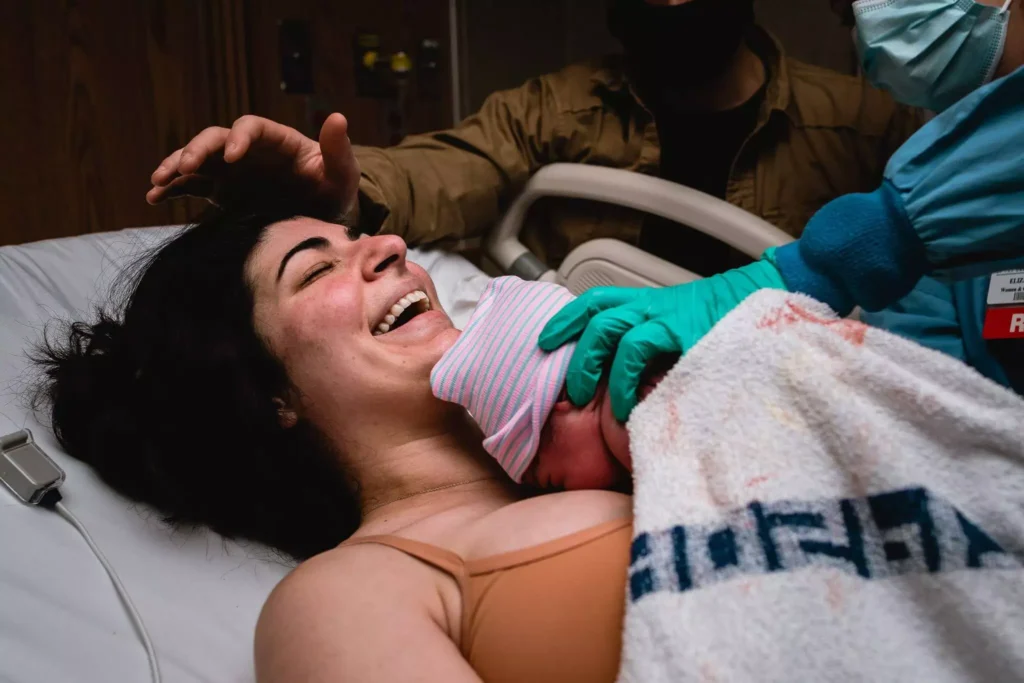

Learn the science of pregnancy and birth to take the mystery of labor away! Understand why you are feeling what you feel, and learn strategies to confidently move through pregnancy and birth!
- 9h+ of Video
- Support Group
- Close Captioning
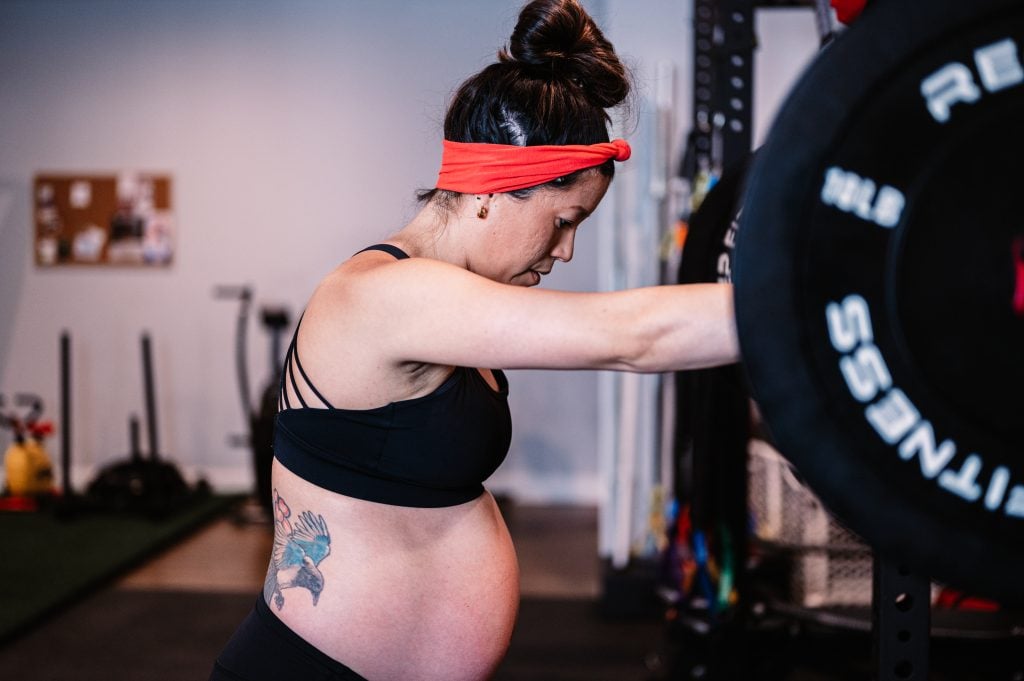

- 5 Workouts/Week
- Gym Workouts
- Self-Paced

Instructor
GINA
Workout on-demand with our prenatal fitness workout videos! Each workout is 30-40 minutes to follow along as you exercise at the same time!
- Birth Prep
- All Trimesters
- Mobility Work

Instructor
GINA
Find comfort and relief from pelvic girdle pain throughout your pregnancy and postpartum period! This program incorporates myofascial sling focused exercises to stabilize across the pelvic girdle joints.
- 3 Weeks
- On Demand Workout Videos to Follow