

Welcome to the MamasteFit Podcast! In this episode, Gina and Roxanne sit down for an update on Roxanne’s fourth pregnancy. Approaching her third trimester, Roxanne shares her experiences and challenges during her second trimester, including juggling midwifery school, work, and raising three other children. They discuss the preparation for the upcoming birth, including prenatal visits, the decision for a home birth, birth preparation items, and their thoughts on making the birth experience less intimidating and more normalized for their children. They also delve into their experiences with previous births, the importance of having a supportive provider, and the potential financial and logistical considerations of home birth.
Read Episode Transcript
Gina: Welcome to The MamasteFit Podcast. In this episode, Roxanne is going to be sharing a pregnancy update. She is almost in her third trimester, in the final stretch of her final pregnancy. Maybe, we’ll see. We’ll see. I feel like two years ago we had an episode like, “This is Roxanne’s last pregnancy!”
Roxanne: We did.
Gina: And then we even did an episode that was moving on from childbearing to child rearing, and closing that chapter. And you are like opening it back up. So I’m excited for you to hear about how Roxanne is preparing for her final trimester.
Congratulations, Roxanne, on finishing midwifery school.
Roxanne: I am done.
Gina: You are now a real life midwife. You’re no longer a student midwife. Graduate midwife. You are a certified nurse midwife, which is really exciting. Just in time for you to prepare for birth in your third trimester.
Roxanne: I know! It’s… I mean, I had hoped to be done, a couple months ago, but here I am. My goal was to be done before our Disney World trip. So, goal accomplished. So now I can relax, whatever that means.
Gina: No, no, no. We did have one day where we had an opportunity to go film and do some work and we…
Roxanne: Chose to…
Gina: Decided to just sit and stare at each other and relax. And it was really weird.
Roxanne: It was really weird, but it was also kind of nice.
Gina: Just have no expectations.
Roxanne: Our kids also, I think, enjoyed it. By “kids”, I mean my one kid who wasn’t in school, and then Gina’s kids who weren’t in school.
Gina: So how has your pregnancy been so far? So we had an unexpected pregnancy, so it was a little bit of processing I think in our last episode that we talked about.
How has your journey been through your second trimester?
Roxanne: My journey through my second trimester has been very stressful and long, because I haven’t really been able to focus on Baby as much. One, I have three other children that all have needs.
Gina: Rude.
Roxanne: I know! Like they have to eat and sleep and go to school, and need help with like education. But also like I was still in clinicals, working ungodly amounts of hours trying to finish up all of my clinical requirements, while also working, and doing as much as I can for MamasteFit, so, as much as I could… So I’ve been kind of dropped off of as much content creation as usual because I was just, I was on fumes, running on fumes. And so I didn’t, I felt bad, ’cause whenever I would like think about it, at the end of the day, I’d be like, “Oh, how you doing in there, man? You’re still there. Thank you. You’re still growing.” So the times that I did like have time to just like think about birth and… ‘Cause like the first one, you have so much time to just like sit there and like plan and think and read books and hypnobirthing tracks. I didn’t have, I didn’t have time for any of that. And I had high hopes, I think I’ve listened to a couple hypnosis tracks. Maybe seven days, the past 27 weeks. So I’m excited to actually be able to focus on that portion of birth prep.
We haven’t really bought anything for baby either, like any clothes. I think I maybe have like one onesie that I bought because I was like, “Oh, I kind of feel bad. I haven’t bought anything.” I I feel like I had so much stuff prepped already by 27 weeks with my other kids. Nothing.
Gina: Well, do you still have a lot of stuff left over or did you get rid of it all?
Roxanne: Well, no, we got rid of all of Colin’s stuff. Most of Colin’s clothes we donated because we were having Joan and she was a girl. So we went through the stuff that was like gender neutral, not clearly, like, “I’m a boy,” written on it. Like “I’m a boy and I love firetrucks.”
Gina: “Big brother.”
Roxanne: Yeah, big brother. Like, obviously those ones were like, well, Joan’s not going to wear that shirt.
Gina: I feel like all boys… So, girls I feel like have really cute little outfits. Like the bows and the dresses. And boys are, “I like trucks!”
Roxanne: Yeah. Yeah. I have a lot of those, or, I had a lot of those with Colin. Dinosaurs, monster trucks. But they, I mean, they have a lot of boy, like if you wanna dress your baby as like a, just a little tiny gentleman, like a suit and tie that I would totally do. I totally did with Colin a couple times, but most of the time it’s just, yeah, cars.
Gina: Yeah. And my Eoghan is older than Colin, so I don’t really have a plethora of boy clothes.
Roxanne: Yeah, no.
Gina: Sitting around.
Roxanne: Eoghan gave our, my mom, our mom, would take all of Eoghan’s old clothes slash clothes that still kind of fit him, and would give it to Colin and then we didn’t need it afterwards, so then some of it I just sent back to my mom. So she probably has some in a bag somewhere, but not the newborn ones. So I have a, I have a nice pink onesie that says, “Joan,” that he could wear.
Gina: Well, now you have time to prepare. So you’re really busy with clinicals, you’re finished with that, finally. You are now graduated. So what is your, what is your plan for the third trimester? How are you anticipating you’re going to start preparing?
Roxanne: So I’ll probably be more focused on like movement prep, as well as some of the mental prep stuff. So maybe actually like implementing some, not necessarily like, 15, 20 minute meditations, but like actually fitting in time during my day to like listen to like a meditation or just like sit and breathe for a second to like relax. Probably find all of my labor comfort tools that I’ve had stashed away somewhere in my home at some point, in one of the many baskets that I own, as well as probably start gathering the supplies for like the home birth kit. I can just buy it online, but I don’t know, I feel like a scavenger. I just wanna scavenge and make it for some reason, I don’t know why. I’ll probably changed my mind in like a week from now when I really look at the list. But I need like a birth tub. And I did buy this like immersion water heater on Amazon the other day- so like you put it in the birth tub for when you’re not in the birth tub, please don’t put it, don’t put it in when you’re in it ’cause it’s a heater. But you can put it in, in between, so then it’ll keep the water nice and toasty, warm. I learned that from Rose, my home birth midwife that I did clinicals with and is going to be at my birth.
Gina: I had one client that did have one of those, but they didn’t end up using it ’cause the baby was born really fast.
Roxanne: Oh, okay. Well hopefully I don’t use it, for that reason.
Gina: Yeah, the baby was like, crowning and he was like, “Should I blow the pool up?” And we were like, “No.”
Roxanne: No. I don’t think you’re going to make it.
Gina: I think, yeah, I don’t think we’re going to make it. Just hold her hands.
Roxanne: She could have like, just held it in!
Gina: They were a really sweet couple though. But it was, she was like, “This is happening much quicker than I anticipated.”
Roxanne: Yeah, yeah. But no, I’m excited to use that also in my normal tub, in the wintertime. Our tub doesn’t get as hot as I want it, ’cause I like get like scalding hot water, but in winter our water heater doesn’t work as well, so I’m going to use it for that as well, for baths. So it’s multi-purpose, but.
Gina: What specific birth prep items are you going to be looking for- scavenging and, like, prepping?
Roxanne: Probably so like heating pads. I really like the heating pad for like my lower belly and early labor. My TENS unit. I have a birth comb now that Gina gave me that I put somewhere in my house. But then I have my little acupressure balls that I’m really excited to try, that you have to remind me to try, because everyone really likes them.
Gina: That’s if I’m there, ’cause somebody decided to have her due date be when my marathon is, so.
Roxanne: That’s true. I’ll also tell my backup doula Brittany to remind me to use the balls, as well as my husband.
Gina: I’m really anticipating that you’ll have a baby in 2025.
Roxanne: I… I would love that.
Gina: I’m, that’s what I’m really banking on.
Roxanne: Yeah.
Gina: No pressure.
Roxanne: I would also love that.
Gina: No pressure.
Roxanne: Or January 1st would be fine, too. But December 31st, at the latest would be preferred. But I am open to whatever this baby decides to do.
Other birth prep items though. So my TENS, I have my water heaters for hydrotherapy. We have a fancy bathtub, so, shower. And make sure our water heater doesn’t break, so I’ll probably make sure we get maintenance on it. The birth comb and stuff. I might make a playlist. Or at least find and star the ones that I’ve liked previously. Because I, I did really enjoy listening to music during Joan’s birth. I don’t think, I don’t remember putting music on in any other births. Maybe you put music on at Colin’s birth, but I don’t remember. That was kind of, it was a faster labor, so I was asleep for part of it and then picked up quick, so music wasn’t on my mind. But I enjoyed it with Joan’s birth, so I would like music again. And then ensuring my husband is prepared as well, ’cause maybe he just brain dumped how to do a hip squeeze. You never know.
Gina: Potentially.
Roxanne: Yeah.
Gina: The good news is we have a monthly childbirth education class that he can attend to refresh.
Roxanne: I know. Yeah. He should. He should just come to that class to just refresh, refresh his mind of how to do everything.
He always jokes that he, like the past two he hasn’t had to do anything, ’cause he’s like, “Gina will just be there to tell me what to do.” But not this time. Gina might not be.
Gina: I might not be there. I might be hanging out with Mickey Mouse.
Roxanne: Yeah. With my mom, too, so this will be the first birth my mom also misses if she is gone. So, it’s fine. Mickey Mouse is more important than me.
Gina: Well, you’re the one that did that! You needed to look at my schedule before you had an unplanned pregnancy.
Roxanne: I know, I, I did not. I obviously didn’t plan at all. I did not plan accordingly.
Gina: So how, how have you guys been feeling about having a home birth this time?
So the previous two or three pregnancies you’ve done, hospitals, you’ve done a birth center birth. How, how has the preparation and kind of the mindset shift been to choosing a home birth this time? Because previously you, neither of you was comfortable with the idea of home birth.
Roxanne: Mm-hmm. I don’t really know about my husband. He still, I think he’s still goes back and forth, but he also, I think after I’ve gone through school and he’s like, “Well, you’re a midwife and if you feel comfortable with this, then, like, I’m good with it,” and he’s supportive of my choices and he’ll do whatever I want, almost, at this point. It’s our fourth kid, and so it’s like we’ve done everything else, why not? Also the drive, that hour drive with a fourth baby, I think makes… it already made him nervous with a third baby, so like fourth baby would make him even more nervous. And I didn’t really wanna drive home after a fourth baby at six hours and then have to return at 24 hours, which was probably my biggest motivator to not have to leave my home at all.
Gina: That would be if he gave birth at the birth center.
Roxanne: Mm-hmm. So. ‘Cause that would’ve been the option that I would’ve chose. If we lived like, five minutes from the birth center, it would’ve been an easy thing, and then they come to you for the home visit afterwards. But, we live too far from that birth center.
And I think working and doing home birth as a student midwife with my midwife also kind of made me feel more comfortable. And like, I think it’s different experiencing a home birth as like the sister of someone having a home birth, versus like the medical provider attending a birth, but still seeing how amazing and beautiful it was. ‘Cause it’s like your birth is always going to be fun and beautiful and exciting to be a part of ’cause you’re my sister, and regardless of what happened, I think it would’ve been amazing. It’s always cool to be at your births, to like be with you in those moments. Even Adeline’s birth, I still liked it even though it wasn’t at home, I still enjoyed being there to be able to support you, even though…
Gina: I’m glad somebody enjoyed it.
Roxanne: Like it, it was special to me that you like, let me be there, for all of your births. And so it’s like whether it was at a hospital or a home, I think I would’ve I had the same experience regardless. Whereas attending other people’s home births that were not my sister, seeing how like special they were, still, to me, made me be like, oh, maybe I do want this.
Gina: So what were some of your hesitations before with your, so you were here with Joan’s birth, but you still chose to give birth to the hospital even after my birth. So what were your hesitations before that made you feel nervous about exploring the option of a home birth?
Roxanne: I think it’s like I didn’t know all of the providers, and so like, one. And my husband didn’t love the option of giving birth at home with my third because of the unknown, and then also like the thought of cleaning the house afterwards- as I know now, like you don’t really, that’s not like a thing. But also like other people in the home that we don’t necessarily know, and he may not be able to go to like all of the prenatal visits to like bond with people, so it’s like the home is like our bubble and… granted you like develop a bond with somebody over nine months, but I think it’s, it would just have been different having this unknown person in our home as well. I think it’s just the experience is different. And then like I’ve been able to develop a relationship with Rose over the past six, or whatever many months; not just as like a midwife, but like also as like a friend, I hope… Hopefully! And I think I just feel even after just like one or two births with her, I was like, oh yeah, like even if she worked at a hospital, like I would want her to be there at my births, like regardless of the location. And she just does home birth, so, I think that that’s mostly, like, I feel very comfortable with her as a person and a midwife, to where I feel like I would feel very comfortable at home. Or wherever! Side of the road! The gas station!
Gina: So something that helped me feel really confident about giving birth at home was the midwife that I chose. Like I know that she had decades of experience, that she took her job really seriously, that she was going to be patient with me, but still very like, it’s not home birth or bust. Like if I needed to transfer, like, I knew it was because I needed to transfer, not because she was bored of being at my birth. I also felt really confident that if it was no longer safe for me to be home, that she was going to be very clear that, yeah, we needed to transfer, and I think that was really… And it’s, it’s similar to giving birth in a hospital or in a freestanding birth center, is the provider you choose is probably the most important aspect of planning for your birth, not necessarily like the location. If you have a provider that really aligns with your values…
Roxanne: Yeah.
Gina: And your, what you’re wanting for your birth, then that is really going to set you up for a better experience overall.
For me, like having control over who is in my space was really important to me, ’cause I’m, I was able to meet the birth assistants beforehand. Like it really wasn’t a random person, it was somebody that like if I had never met them before, it was somebody that Nancy trusted. She was bringing them into my space, so I trusted her opinion of that person. But while in a hospital setting, like I wasn’t probably going to ever know who that nurse was ahead of time.
One of the things that helped me feel more confident about giving birth at home was understanding what type of training and kind of procedures that my midwife had set up, like ahead of time in case of emergency. And so I took like the neonatal resuscitation class and I was like, “Oh, there’s actually a lot of things that we can do if there is an emergency like at home while we’re waiting for EMS to get there or while we’re transferring.” And so it was all of these kind of like extra layers of protection and care that I didn’t totally understand what’s available for like a home birth setting. So it’s not just like cross our fingers and hope that everything’s fine.
Roxanne: Yeah.
Gina: There was stuff that my midwife could do to help respond to emergencies after the baby was born, or during the labor as well, and so that also helped to boost my confidence as well.
And I think, like you were initially saying, when somebody is transferring for a home birth, they’re not transferring to have a home birth at the hospital, and so it’s…
Roxanne: No.
Gina: Like their emotional state is a little bit different. Like they’re changing their plan pretty drastically. It would probably be similar to supporting a birth in a hospital where somebody was planning an unmedicated, like vaginal birth in the hospital setting, and had to transfer their care to having an unplanned C-section. Like that’s a really big shift in somebody’s plan, and there’s going to be this emotional kind of thing that comes with it. And so with a home birth, having a transfer plan is incredibly important. And then having that continuing or, and then having that continuity of care to know that you’re going to go to a place that’s not going to judge you for realizing that you need a higher level of care.
Roxanne: Yeah.
Gina: But needing that higher level of care can sometimes come with stigma and be like, “Well, why did you even try to be at home? Like it was unsafe to be there,” when we realized that it was no longer safe, and that’s why we transferred care.
Roxanne: And that’s why we’re here. Yeah.
Gina: And so I can totally understand, like as a medical professional, initially feeling a little hesitant about home birth. It’s also not something that’s really common for people to do. I think in our space it’s a little bit more common just based on like who we are interacting with and kind of the content that we consume. So it might feel like everyone’s doing it.
Roxanne: Yeah, and like where I worked even.
Gina: I think most people are not giving birth at home. And so it’s still, I think there’s still a lot of stigma involved with it, but I also would not want to drive an hour.
Roxanne: Yeah.
Gina: To the hospital.
Roxanne: I think it’s also like it’s my fourth kid, so like I never wanna say like, don’t try to have a home birth on your first kid, or try to have a birth center birth on your first kid. ‘Cause a lot of, a lot of people will say, “Well, like you don’t have a proven pelvis,” whatever this means. Like, “You don’t know that a baby can come out of it, so like, why would you even attempt to give birth at home or at a birth center?” And I’m like, that’s like a very, very old, dated statement to make to somebody. Like if they don’t want to give birth at a hospital just because it’s their first baby, like honestly the birth center and home birth is the, the best setting for them if they want that. So like, I don’t want to make the statement to people be like, “Oh, well maybe I should have my first baby in the hospital just to make sure I can do it.” No, like you don’t. You should honestly just go to a birth center or give birth at home if you want to do that on your first baby. That could potentially have led to so many people’s experiences potentially being better if they just went with their first.
But I also, at this exact moment, this is my fourth kid, I’ve had three unmedicated births, one at a birth center and two at a hospital. So like, I kind of know what to expect and I know that I can do it like mentally. Physically, obviously like anything can happen. Like you could have three unmedicated births and like this baby could choose their own path, and that’s fine. But I feel like way more confident in my body ’cause I’m like, “Ah, if I can have an eight pound, eight ounce baby, that’s… It’s, I can, I can do anything, honestly, at this point.” I have full faith in my baby, in my body at this point, on my fourth baby that like it will happen- whether or not anybody’s even there! Like I knew, I know that I don’t have really any control over that portion. So like I feel more confident also, and I think that that helped me also choose the home birth. ‘Cause I’m like, if I can do it in a hospital, if I could do at a birth center, I could do it at home.
Gina: Might as well just do it at home.
Roxanne: And it would be way easier.
Gina: But think about how some of those statements that you were making about, like other notions that people, how that impacted you, like with your first baby.
Roxanne: Yeah.
Gina: With being worried that she wasn’t going to fit. And I knew that that was a big concern of yours during your labor, which I think probably impacted probably, it probably was good ’cause it, it made us not have a baby in the car or at home.
Roxanne: Yeah. Honestly, yeah.
Gina: Because you were a little nervous, so you were kind of, you were probably tensing up a little bit. But you had this idea of like, I need to prove that my pelvis is capable of birth.
Roxanne: Yeah.
Gina: And so there was this underlying fear for you.
And then when I think back to Joan’s birth, I think overall it was probably a really good experience for you.
Roxanne: Yeah.
Gina: But, I think there was still things that could have been better.
Roxanne: Yeah…
Gina: There was a lot of people staring at your butt hole at one point.
Roxanne: Yeah. I got real, I got REAL subconscious about my butt hole.
Gina: I think that probably contributed towards that…
Roxanne: there were a lot of people.
Gina: …like at a little bit more tension while you were pushing.
Roxanne: Yeah.
Gina: In comparison, I mean, Colin of course was like smaller than the girls were.
Roxanne: He also just fell out. Granted, I did have three midwives at Colin’s birth, because the wifies also had a student midwife, which I love her, still, so like, I’m so grateful. So like there were still like six people in that room, but it was a different experience, and there wasn’t as, like, I, I knew that there were six people, but like I knew all of these six people were like here to cheer me on.
Gina: Not to party, like at Joan’s birth.
Roxanne: Yeah, it was a party at Joan’s birth.
Gina: Well, not party.
Roxanne: I even tried to find like a picture, just to count how many people. It’s also change of shift, so like one shift was leaving as another shift was coming on, and then the shift that was leaving were like, “I just like, I’ve committed so much time, like, I’m just going to stay,” which I’m like, that’s fine. Like I want you to stay.
Gina: I’m just going to clench my butt hole now, because you’re all staring at it!
Roxanne: But also, there’s a lot of people staring at my butt hole. Yeah, and I think I was pushing really well in hands and knees, even though I was like at that slight incline, it was like I felt really effective. But then I thought about my butt hole just being exposed to the world and I was like, “No, I don’t like this anymore. I don’t wanna be in this position.”
Gina: But at home there’ll be less people staring at your butt hole.
Roxanne: Yeah. And it’s also okay if you, like you, you and Rose can look at my butt hole and it’s okay.
Gina: Yeah.
Roxanne: But I do, whenever someone’s in hands and knees and they’re pushing really effectively now, I always will offer like, would you like me to put a towel over your butt? And most of them are like, “Yes, please.”
Gina: “Actually…”
Roxanne: “Actually, that would be great.”
Gina: So, so that is something…
Roxanne: ‘Cause that’s something that I never thought of until it happened to me.
Gina: So I had one client that, it was something that I didn’t realize where she was, she asked, “How many people are going to be in the room when I’m pushing?” And I was like, “I didn’t even think that this was something that I should tell people,” to inform them of what to expect for the actual… like I was educating her on like, this is how you push, this is what signs to look for, these are some options. But I didn’t think about how important it was to inform her of like what to expect, environment-wise, for pushing, and how that can be really stressful. Even though in my own birth and in your births that we’re in a hospital setting, there was a lot of people surrounding you, and how that could impact somebody while they’re pushing.
Roxanne: That’s a good question to ask in a prenatal visit, if you’re giving birth at a hospital or even like at a free standing birth center, ’cause sometimes they have more people come in for the birth portion asking how many people are going to be there. Like what should you expect? Because some hospitals, they don’t have enough staff to have a bunch of people in there. So like where I did my clinicals, like there’s three people, maybe four people in the room, and the third person might just come in literally at the end when the baby is born to kind of help just be there, to be baby’s nurse, and then the other nurse can just be their nurse. And, and it’s very nice, honestly, it was really nice just having two to three people in the room for the birth.
Gina: Yeah.
Roxanne: But then other hospitals, yeah, like they have, there are a million people for some reason.
Gina: Like the midwife, her assistant, baby’s nurse.
Roxanne: Yeah.
Gina: Sometimes NICU’s in there, sometimes there’s three baby nurses, like, or if there’s like a student or…
Roxanne: Yeah.
Gina: It gets really crowded really fast.
Roxanne: Yeah. And if it’s like a teaching hospital, there’s residents and it’s like it could fill up real quick in those rooms and the rooms are not that big.
Gina: No.
Roxanne: So yeah, that’s, that is a thing that I definitely didn’t think about. And I don’t even remember how many people were in the room with Lily, my first, I think that there was less than normal because they…
Gina: There was still a lot.
Roxanne: But there’s still, I mean…
Gina: Still a lot.
Roxanne: Three people.
Gina: I’ve been at some births where the entire bed is surrounded by people.
Roxanne: Yeah.
Gina: And I’m like, what? What is this?
Roxanne: Is this, like, a show?
Gina: Are you good? Are you good?
Roxanne: But yeah, we went on a tangent there, but.
I feel very confident in the choice to have a home birth. Obviously, like I think one of the biggest things that pulled us away from it, maybe, was obviously like finances- because you do, you have to pay out of pocket. So Tricare covers, our insurance, covers birth in a hospital at 100%. I think maybe you pay like five or $10.
Gina: You pay like a copay.
Roxanne: So like it’s essentially free, which is really hard to say no to in this economy. But then after Colin’s birth was at a free standing birth center with midwives that our insurance doesn’t cover. So that was all out of pocket and I was like, well, if I can do that once, and we made it work, then we can do it again. Even though with Joan we didn’t do it, but we’re making accommodations for this one.
Gina: I think it’s worth investing in.
Roxanne: But I know that that’s like a big, that’s a big…
Gina: I think it’s worth investing in your experience.
Roxanne: Yeah.
Gina: If that’s, if that’s what you’re wanting.
Roxanne: Yeah. But I know it’s like not accessible to everybody, so I acknowledge that.
Gina: Yeah, well even if it’s, even if it is financially accessible, the provider availability I think is usually like a big deterrent.
Roxanne: Oh yeah, that’s true.
Gina: I mean, we see that now, like in our state where we have like a home birth group and people are messaging like every day and they’re like trying to find a midwife and there’s just not enough availability.
So it definitely can be hard to find. And this is where just choosing a provider, regardless of location, that best aligns with you, I think is the really, really the best option. And it sounds like you found the provider that best aligns with your vision for your birth, and it just happens to be at home, which I think is really good, and I think a really helpful preparation thing. So you were preparing for your birth!
Roxanne: Yeah.
Gina: The whole time. How have your home birth..
Roxanne: Just, I didn’t realize it!
Gina: How have your home birth, prenatal visits been?
Roxanne: Good!
Gina: So this is the first time you’ve been able to bring your kids to the appointments?
Roxanne: Yeah. Well, I mean, I was able to bring my kids with Joan’s pregnancy, but they were just not long. So they would just sit on the table, or not sit on the table, they would just sit in the chairs if I had to bring them. And then with my birth center, we had our long visits, but we didn’t move there until I was 34 weeks, so we only had like a couple before Colin was born. I think we had like three before he was born. So Lily only came to like two of those with me. Whereas this one, I can bring all the kids if I want to. granted, like they are in school, so like I can’t come to every single visit. My Lily was distraught that she couldn’t come to the last one, so I felt really bad. So our next visit is on Monday where they’re not in school, so they’re excited to come. But they can help take my blood pressure and like they could be involved and get as excited about their baby brother coming as we are. So I think that that aspect of like midwifery care is, you just can’t do that in a 15 minute, 20 minute visit. You can’t like, involve like the family in it as much.
And then just like, it’s not just checking in on like, “Oh, how are you doing with your pregnancy?” But like also, “How are you as a person?”
Gina: How’s your life? How’s YOUR life?
Roxanne: Like how’s your life doing? Like, how’s your stress?
Gina: I think it helps to normalize it, too, it makes the act of pregnancy and birth a lot less scary for kids.
Roxanne: Yeah.
Gina: I really like being able to bring my kids to my appointments and they got to help like find baby’s heart rate and measure my belly, and they got to be a part of the appointment and so like the pregnancy and birth preparation was a lot less scary.
I posted a video of Sophie and I in the birth tub together during my labor, and she’s vocalizing with me and the, the whole point of the video was like, vocalize to help relax your pelvic floor, but it was like really cute. And it made it to Facebook and people are a little aggressive over there, and some of the comments were like, “This is traumatizing for the child!”
Roxanne: No.
Gina: Like, “You should never do that.” And then when somebody would be like, “No, this is like really great to help normalize it,” they’d be like, “Well, she posted it and so I’m allowed to have an opinion on it.” And I’m like, I mean, sure you are. Like, I did post it publicly, so you can absolutely have an opinion. But I don’t think that my kids left any of my births feeling traumatized, or scared of birth, or like that there was any sort of negative impact from them. And I think a lot of it came from the preparation ahead of time, where they were coming to my appointments and they were being a part of the process to care for me during the pregnancy. And then when it came to the actual labor, like they were a part of the process of setting it up and then being a part during the labor, and then there was points where they can go away and they can go play.
Roxanne: Just go away.
Gina: Do something else.
Roxanne: Yeah.
Gina: But I would say the majority of my labor, they were by me ’cause it was like early labor and it was not really too intense, and like maybe the last hour they kind of wandered away. I will say that the girls did get a little startled when I was pushing, ’cause I was yelling, I was screaming, so they got a little scared by that. But once the baby was born, they realized like, “Oh, it was just like painful and, but you’re good now. Like, we’re excited to be here.”
Roxanne: I do remember Adeline with Sophie’s birth was like, “Can the midwife just come here and pull the baby out?”
Gina: I know she was really excited.
Roxanne: She was so excited to meet her, and she’s like, “It’s taking so long.” I was like, “Adeline, it just takes a while sometimes.”
Gina: I know.
Roxanne: It’s not quick!
Gina: But I really feel like it helped to normalize it, like they were part of the experience. It was, it was not this like super mysterious, scary thing, which, when it comes to preparing for birth, I think the fear of the unknown of birth was probably like the biggest thing that terrified me my first pregnancy- was not knowing what it was. It was this mysterious, super scary, terrifying thing, curse on women, the most painful thing people have. So there’s so much like negativity about it. And so our kids getting to be a part of the birth, like this is going to be really impactful for Lily, when she is like growing up as a woman, to know that this doesn’t have to be the super scary thing. Like now do they have to give birth at home? No. Like they can give birth wherever they want. If they wanna get epidurals, like I fully support them.
Roxanne: Yeah.
Gina: But it’s not going to be this terrifying experience.
Roxanne: No. It’ll be like a beautiful experience. Yeah.
Gina: And I think that was something for me with my first birth that I don’t think I really understood preparing, was that it didn’t have to be this thing I just had to survive. It could be this really transformative and beautiful experience of like the beginning of my motherhood journey, which I think was really cool. And I don’t know if it was similar for you going from supporting birth as a nurse to giving birth to your first baby, if you really understood how important this experience was or not?
Roxanne: I mean, I hope that I had always understood that this was like a pretty amazing experience and transformative experience for people that they only get to experience one to however many times they choose, or want to. And like we’re like, this is something that a lot of people will remember for the rest of their lives.
Gina: But was it different supporting like my birth?
Roxanne: Oh, yeah.
Gina: And did that kind of change the perspective for you?
Roxanne: Yeah, so like, it’s like supporting birth in general is beautiful and exciting and obviously I chose to do this for a living, or I feel very called to do this for a living. But, it’s different, supporting people that are not your sisters. Or even just like people that you’ve developed like these very close relationships to, because sometimes I’ve been able to be at births of like close friends, even at the hospital.
Gina: I cry at all of those births.
Roxanne: And it’s always like so profound. ‘Cause they’ll be like, “Can Roxanne please be my nurse?” And I’m like, “Thank you for wanting me to just be that close to you.” And I feel very sad when like, my friends who don’t live here have babies, ’cause I’m like, “I wanna be there!” But I can’t, obviously like physically can’t do that right now. But I think that the relationship with someone that you meet, like the day they show up in labor, it’s still going to be different even though like, I think that it’s still a beautiful experience and I feel honored to be at anybody’s births- it’s different when it’s your sister, and you get to experience it on a more emotional level than just as the like medical provider supporting their births.
But that is the one thing that, like, as a provider, I now kind of, kind of get a little bit, because you don’t just like see them in labor- you built this relationship with them over their pregnancy, at their prenatal visits. And it was so exciting when someone who like saw us, like- and that was like the one nice thing during that 10 months of clinicals, I was able to see people that I saw in January and February at their new prenatal, like newly pregnant visits and to like go with that first visit and help them work through their pregnancy, and then they like continued to come back to us ’cause they really liked us, which I felt so honored. And then actually end up being at their birth to support them- so like from first to literally the end- I didn’t get to do the postpartums, but at was like those births were more special than the ones that I was like, “Oh, hello, my name is Roxanne. I’m the student today.”
Gina: They’re all special, but yeah.
Roxanne: They’re all special. But like the ones that I was able to develop that bond with a little bit more.
Gina: I mean, it’s the same for me with doula support as well. When I have somebody that I worked with their whole pregnancy, like they come to the gym, and we’re interacting throughout their whole time, versus like clients who hire me and then I don’t see them or hear from them until they’re in labor- the relationship that we built is so, is so different. Like I’m still excited to be there and support them.
Roxanne: Yeah.
Gina: But like I’ll cry at the birth’s of the people that I’ve been working with every day during their pregnancies.
Roxanne: And so I think that just showed like that the emotional aspect of birth support is not always there in the hospital. That is there when you’re able to like build that relationship. And I think your birth was like the first seed of like, oh, birth is beautiful and I love it and I love doing this, but like it could be different. Granted like lots of things we learned, lots of things at, with your birth, with Adeline, and I think I carry that into my birth. But, I think that that was like the catalyst that has brought us to this point in our…
Gina: You’re welcome.
Roxanne: …life, but also like…
Gina: We all have to thank Adeline for Mamaste.
Roxanne: I know Adeline is really like the catalyst of me and midwifery, MamasteFit, like everything.
Gina: Without her we would not have…
Roxanne: I mean, I think that I would still be a midwife, but, I don’t know if we would be, we would not be the people we are today.
Gina: You would not, you would not be as good.
Roxanne: Without her birth, because it was just different. ‘Cause I mean, I still had births at like the previous hospital before I moved here for your birth, that I like knew, and was able to support and it was still special. But again, it’s different when it’s your sister. And I think, like obviously our relationship is closer than… not everybody’s…
Gina: Except when we’re fighting.
Roxanne: Yeah.
Gina: And applications have been sent out for a new sister.
Roxanne: Except when we fight, because, for the most silly… well, it was a nice friendship while it lasted! MamasteFit’s over.
Gina: I need a new business partner.
Roxanne: Because that’s just, that’s just who we are as people. But I think that we are closer than, other… maybe other people’s sibling-ships? I don’t really know. We are on the closer end, it’s a spectrum and we are definitely all the very close spectrum.
Gina: Don’t ever leave me!
Roxanne: I know. So I think that that really helped. And I, and obviously again, you’re home birth were always also special, but I learned something at all of your births.
Gina: I did too.
Roxanne: So.
Gina: I did too.
So how do you feel going into your third trimester where your workload is down from school, now back up for MamasteFit?
Roxanne: Yeah, I know.
Gina: But part of your workload is also preparing for your birth.
Roxanne: Growing a baby.
Gina: Because I need that content.
Roxanne: You’re welcome.
No, I feel weird, ’cause now I’m like, oh, now I don’t have anything else to like focus on other than now just…
Gina: Your baby.
Roxanne: My baby. Well, like, MamasteFit and my baby. So I’m like, “Oh, I got a lot of things to do.” Well, I still have to take my gestational diabetes test on Monday. So hopefully I don’t have gestational diabetes. I have been enjoying- I think a lot of people will say this to me before they do their gestational diabetes test- and they’ll be like, “I’ve been eating a lot of sugar and cake just in case I can’t eat it anymore!” So I did. I, we got a chocolate cake for my husband’s birthday slash my passing midwifery boards, and I was like, kind of just in case. I don’t know.
Gina: We’ll see.
Roxanne: I don’t feel any symptoms, but, you never know.
Gina: Well, it’s exciting that we’re heading into the final trimester, and we’ll definitely be sharing a lot on Instagram of how your journey is going and on YouTube. And thank you for being here, Roxanne.
Roxanne: I know. Thanks for being here, the little man.
Gina: Thanks for sticking around.
Roxanne: Yeah, yeah. Thank you. He is large.
Gina: And in a charge.
Roxanne: Yeah. My anatomy scan, at my anatomy scan, the lady was so sweet. She’s like, “Oh, you got a big boy in there. He’s 90th percentile!” And I was like, “Okay. (Wailing crying)”
Gina: You’ll be an athlete.
Roxanne: Oh, he’ll be fine. He’ll be fine.
Gina: He’ll be an athlete.
Roxanne: And he was 89th percentile, okay, so, like don’t round up. If anything, round down.
Gina: The perineum is very stretchy.
Roxanne: Yeah.
Gina: It’ll be good.
Roxanne: No, he’ll be fine. It’ll be fine. Good.
Gina: Well, thank you so much for listening to this episode on an update of Roxanne and I just kind of rambling about her, the preparation for her third trimester.
Roxanne: Yeah!
Gina: We’re both exhausted, so hopefully this conversation was still enjoyable for you.
If you would like more support during your pregnancy, check out our online prenatal fitness programs and our online childbirth education course. Our goal with MamasteFit is to help you feel confident moving through your pregnancy, confident preparing for your birth, so that you can navigate your birth experience however it is that you want it to be, knowing that we would never judge you for any decisions that you’re making and being okay with if plans change or if plans go exactly the way that you’re hoping for. We would love to support you with any of our online courses. You can check them out at our website at mamastefit.com and use code STORY10 to get 10% off any of our online offerings.
Prenatal Support Courses
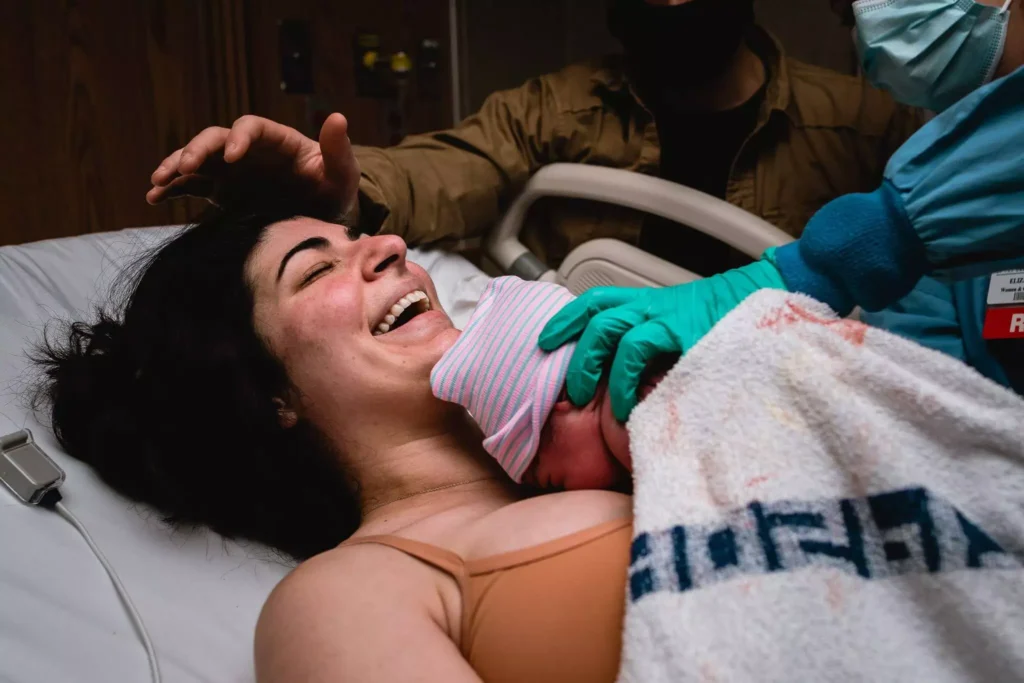

Learn the science of pregnancy and birth to take the mystery of labor away! Understand why you are feeling what you feel, and learn strategies to confidently move through pregnancy and birth!
- 9h+ of Video
- Support Group
- Close Captioning

- 5 Workouts/Week
- Gym Workouts
- Self-Paced

Instructor
GINA
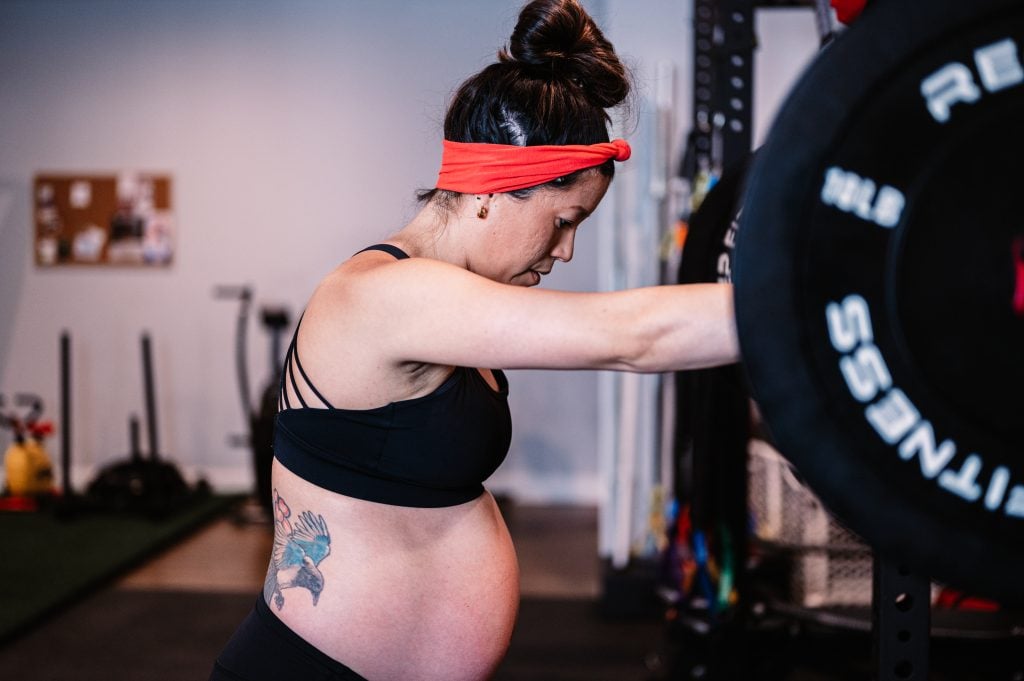
Workout on-demand with our prenatal fitness workout videos! Each workout is 30-40 minutes to follow along as you exercise at the same time!
- Birth Prep
- All Trimesters
- Mobility Work

Instructor
GINA
Find comfort and relief from pelvic girdle pain throughout your pregnancy and postpartum period! This program incorporates myofascial sling focused exercises to stabilize across the pelvic girdle joints.
- 3 Weeks
- On Demand Workout Videos to Follow