

Welcome to the MamasteFit Podcast! In this episode, Gina (perinatal fitness trainer and doula) and Roxanne (certified nurse midwife) break down what labor & delivery nurses do versus midwives, OBs, and some family medicine providers, including who typically handles low- vs high-risk care and which interventions midwives can’t do. They explain why some people choose midwives versus OBs, and note midwives can provide full-spectrum women’s health care. Roxanne outlines three midwife paths—CPM (apprenticeship plus education/exam; licensing varies by state), CM (non-nurse bachelor’s plus grad midwifery; limited states), and CNM (nursing degree to grad midwifery, boards, state licensure, collaboration requirements). They discuss clinical hour/birth requirements, costs, licensing logistics, and how Roxanne used ROTC and the GI Bill to pay for school, then end with a top tip: attend births (even on YouTube) to see if the calling is real.
Read Episode Transcript
Gina: Welcome to the MamasteFit Podcast. If you’ve been wondering how do you become a labor and delivery nurse or a midwife, this is the episode to listen to. Roxanne is going to be talking through how you can become a labor and delivery nurse, and how you can become a certified nurse midwife, which is what Roxanne is. She may mention how to become the different, other types of midwives as well, but we’re going to mostly focus on how to become a certified nurse midwife in this episode.
Roxanne, how do you become a midwife? Talk me through the entire process from start to finish.
Roxanne: Step one, feel called to the profession. I do feel that that’s an important step. Usually step one, or maybe four, depending on where in the process you’ve developed the calling. But I do feel like that is an important step because, midwifery is not, just like I think any job or profession within the medical system, I do feel like you have to feel like passionate and called to that profession in order to be motivated to go through school and then be passionate about the career and job. So, step one, have this like calling.
And if I, at anytime I asked any midwives, like, “How did you know you wanted to become a midwife? ‘Cause, I’m like, I feel like I want to be one,” they’re like, “That is the first step. If you feel like you have this calling to support this population and this specific window within that population, then you should do it.” If you don’t feel this like calling, but you’re just like, “I don’t really know what to do. I’ve been like a labor and delivery nurse for a while, and I just feel like that’s like the next step,” if you don’t feel like called to do that, then maybe redo some internal thinking.
Gina: So what is, before we dive into how to become these things, for our listeners that maybe don’t know, what is the difference between a labor and delivery nurse and then a midwife, versus an OB, or a different provider that’s supporting this timeframe. So just so we have the definitions of what the differences are, and then we can dive into how do you become them?
Roxanne: So labor and delivery nurses, they are registered nurses. Most of them are going to be registered nurses; there is another type of nurse that is LPNs, which are a nurse, but they are just a different type of nurse, so they both take like different board exams. There are LPNs sometimes on labor and delivery units, but they’re not as common anymore. So most of the time they’re going to be a registered nurse who took like the registered nurse licensing exam- they could have an associate’s degree or they could have a bachelor’s degree. And then you just have to find a labor and delivery unit that will hire you. And then they are the ones, in America, that are doing most of the bedside assessing and like support for most of a 12 hour shift. And these are nurses who, most of the time, are going to work in hospitals- sometimes you can find them out of hospitals in like birth centers or home birth settings, but they do fill a slightly different role in those settings than just as a the nurse in the hospital. Because, in the hospital there are more patients, so one provider is seeing a ton of patients; but the nurse is the one that has one to two patients, is doing most of the interaction with the patient and assessing them, assisting them in labor if they have time to ensure that baby and birthing person are doing well.
So the nurse is different though than the midwife or the OB providers. So they are the medical provider that is like overseeing the care, and they’re the one who’s going to be like catching the baby and like managing placenta and like the delivery process of the baby catching, and then the delivery of the placenta, and if there’s any sort of emergencies, within that time period.
A midwife, specifically, as a provider, is normally going to take care of more lower risk populations. Depending on where they’re like working, they may take care of some higher risk patients, but most of the time it’s going to be lower risk population, and that is, most of the time what we are the experts on, is like normal, physiologic birth and low risk pregnancies. We can’t do things like vacuums, forceps, or C-sections. We could do episiotomies if they are warranted in any sort of way, which hopefully not, but that is the one thing that we can do to assist with labor medically.
Whereas an OB provider typically is more qualified to take care of those higher risk patients, and then they can do more of the higher risk interventions such as the vacuum, the forceps, and the C-sections. And that’s something that they learn a lot within their residency programs to be able to manage that and decrease the risks and identify when, potentially, those things are necessary. Whereas midwives, again, more lower risk population.
There are other providers that can take care of pregnancy and birth outside of just an OBGYN and a midwife, and those are family medicine practitioners. And so they learn about pregnancy, but typically are going to still take care of more lower risk populations; and if they do become higher risk, they would still refer to an OB. But some family medicine providers will do like a fellowship, where they do a OB fellowship, so then they can take more of like the full spectrum, and then do C-sections, vacuums and all of that. So if you don’t have an OB in your town, but there’s a family medicine doctor they likely have that credential to be able to take care of pregnancy and birth in like the full spectrum.
So just to round it up, the nurse is the bedside primary person who’s doing a lot of the assessments and then they are communicating with the providers. The nurse has one or two patients that they’re taking care of, whereas the providers in especially hospital settings, are doing more of like the full patient load, they’re watching all of the patients. Midwives, more lower risk populations, but can sometimes take more high risk depending on where they work; whereas OBs are taking the full low to high risk, and they’re the ones that can do the C-sections, vacuums and forceps.
Gina: Which is more common?
Roxanne: In America? OBs are going to be the most common providers in America that you’re going to be able to find. A nurse is going to be in every hospital! I haven’t found a hospital that doesn’t staff a nurse, except on Grey’s Anatomy. But the most common provider is going to be in OB.
Gina: Why would somebody want a midwife versus an OB?
What are some like common things that people have come to you to say?
Roxanne: I mean, because we’re just really great!
Gina: Because they want to work with Roxanne from Mamaste.
Roxanne: Yeah, specifically.
Gina: What are some common things that people have said, “I am specifically seeking a midwife over an OB,” or, “I’m specifically wanting an OB versus a midwife,” or is there any like common trends that you’ve noticed with patients?
Roxanne: I do think the most common trends from people that have expressed wanting midwifery specific care versus an OB, is that just based off of their experience- and this is not to say that every OB is this way and every midwife is this way, but midwives are supposed to be the experts in normal physiologic birth and low risk pregnancy. We are the ones that know all of that, and can support that. But, we also still have, especially as a certified nurse midwife, with the nurse portion of that, one of the benefits of having someone who has been a bedside nurse in the past, is that they also have the bedside experience of dealing with patients emotionally, and like talking with them and supporting them in a different way than a provider. They just don’t have, they can’t sit at a bedside for 12 hours ’cause they have other patients! So like the bedside manner is slightly different in that emotional bonding aspect of a certified nurse midwife. But I think that’s also common in many midwives, not just CNMs. It’s the emotional aspect, and then the expert in normal physiologic birth, not necessarily all of the medical interventions and stuff- which we still learn, but that’s not like the expertise of a midwife. So most of the time people are like, “I just want my midwifery care because I feel like they care about me more.” And, the (patient) is low risk, it’s, “I’m a low risk person. I’m a healthy person going into pregnancy, the only thing that’s different about me now than before is that I’m pregnant.” Whereas an OB their expertise is that higher risk. Like, “Oh, like you’ve developed preeclampsia, like you have high blood pressure now in your pregnancy.” That’s like their bread and butter is more higher risk type things than necessarily the lower risk. And that’s what we want them for, we want the OBs for the high risk, and then the midwives can be there for the low risk.
Gina: For me as a doula, typically my clients that want a midwife are looking for a low intervention birth, they’re usually wanting like an unmedicated birth, and they want maybe more personalized care- but it depends on where you go, whether or not you’re going to get that. While my clients that are specifically seeking an OB, one, that might be all that’s available to them, like the hospital that they want to go to because it’s closest to them only has OBs, and they’re like, “I’m good with that.” So sometimes it could just be availability if OBs are the most common option in America; or, they consider something about their birth to be more complicated.
Roxanne: Yeah.
Gina: And so they specifically seek out an OB because of that. Because they have their own medical complication that they had prenatally or pre prenatally, something that developed during pregnancy, a concern with their baby, or they just feel safer being with a provider that has… “higher level of skill” is not the right term, but has a higher level of care that they can provide based on the capabilities available.
Roxanne: Yeah. I can’t do a vacuum.
Gina: Those are some things that like I’ve seen my own clients express, like specific things. So typically the ones that are wanting midwives are looking for a low intervention birth while the ones who are specifically choosing OBs, usually it’s availability is probably the number one thing, who’s even available. And then if they consider something about their situation to be more complicated, they want to work specifically with a doctor or with an OB provider.
And it could also just be like the perception of OB versus midwife as well. I think midwives are not necessarily like a new concept ’cause I think they’ve been around longer than OBs.
Roxanne: Yeah.
Gina: But I think there was a lot of alienation with like midwifery care for a long time that I feel like only within the past, like generation or so has kinda reemerged as like a legitimate career.
Roxanne: Yeah.
Gina: Or the legitimate person to have.
Roxanne: But in some places if you went there and you shared that you were a midwife, people are like, “Oh, so you’re like a doula.”
Gina: Yeah.
Roxanne: So, it’s like, they’re not recognized as being a medical provider that can still take care of like a higher level of care. So a lot of the time I will almost say, “Oh, I’m like a nurse practitioner,” ’cause that is more well understood than me saying I’m a midwife. Because a nurse practitioner is understood as a provider, not like doctor, but still a provider. Whereas a midwife, they’re like, “Oh, so you’re like, woo-woo?”
Gina: I mean, you could be.
Roxanne: Yeah, I mean, I am woo-woo. But they don’t necessarily accept midwives in every state, city, country, whatever.
Gina: And they don’t take it seriously.
Roxanne: Yeah. They’re not like an accepted provider. And in a lot of places, midwives will have almost like different regulations of what they can do versus nurse practitioners, so- and even in within the advanced nurse role, like a nurse practitioner potentially has more…
Gina: Hierarchy?
Roxanne: Yeah, more than a midwife, because they just in a lot of places are still not fully understood, as like a legitimate provider. Which is sad, because I can do all of the same things.
Gina: Yeah. We’ll have to do a whole episode just on the history of birth and midwifery.
Roxanne: Yeah.
Gina: Within the United States, because I think that’ll be really interesting to help explain the nuances of all of these different professions and why some lingering stereotypes may still exist.
So both midwife and an OB can both be medical providers for somebody’s birth. They’re both great options. They’re both very skilled, and it’s just a little different flavor on the approach birth, but every OB and midwife is also a little bit different, too.
Roxanne: Yeah. I also think it’s important to share that OBs, you can see an OB from the time you have, like your first period, you hit puberty, until like past menopause. So, it’s the full range, and that’s usually accepted, like, “Oh, I need a pap smear. I’m going to go to my OB.” But like, you can also see a midwife for that full range of care, like women’s health. A midwife can take care of you the entire spectrum as well, which I think that people are like, “Oh, I don’t need a midwife. I’m not having a baby.” You can still see a midwife if you just need an annual well exam, we can do that as well. Which a lot of people don’t realize, ’cause I think that they just think of midwifery as oh, birth and prenatal, postpartum. And then you’re like, “Goodbye. Never see you again, until I have a baby.” But you can still see the same midwife if you, especially if you liked them, for all of your care. And then if it does become like higher risk that you do need to see in OB, that’s again when we refer them to OB.
Gina: So I see a midwife for all my like women’s health care, and there were like a few times where like maybe I needed something a little bit more and we were going to explore it together, but there was also conversation of, “If for whatever reason this escalates, we can refer you to the OB providers within our clinic.” And so I like that they’re both there in case I do need a higher level of care, which is pretty neat. But I do think that people do forget that a midwife is an option.
Every state has different regulations.
Roxanne: Yeah.
Gina: It’s the beauty of the United States. So within each state, they all have different kind of regulations on what types of midwives can practice legally, or be licensed within the state, ’cause you can practice illegally, or unlicensed if you want.
Let’s talk about what are like the main three types of midwives. So we have CNMs, or certified nurse midwives, which is what you are.
Roxanne: Yep.
Gina: We have CPM, certified professional midwives, which is what you are not.
Roxanne: No.
Gina: And not licensed in every state, but more than…
Roxanne: It’s like 38 states.
Gina: More than that.
Roxanne: It’s like 37 states, and then the DC, Washington, DC area.
Gina: So certified nurse midwives are in every, they are licensed in every state.
Roxanne: Every state, 50 states.
Gina: For our specific insurance, this is the only type of midwife that they will cover. We have CPMs, which are licensed in most states, but not all. North Carolina is not one of those states.
Roxanne: No, it’s not.
Gina: And then we have certified midwives, right?
Roxanne: Yes.
Gina: That are licensed in less states.
Roxanne: 11 states.
Gina: 11 states. So you’re less likely to find one of those. So what are those three different types and how do you become them?
Roxanne: Yeah.
Gina: And let’s really emphasize CNM ’cause that’s what you do.
Roxanne: Yeah, we’re going to start with, we’re going to start with CPMs. So CPMs are certified professional midwives, and then in the states that they’re licensed sometimes will just refer to themselves as LMs, or licensed midwives, because they are licensed. That is a different route, entirely, and most of the time you’re going to find CPMs or LMs in out of hospitals, so community birth settings, most of the time in home birth. Sometimes you’ll find them in birth centers as well, depending on the state and the licensure, but most of the time you’re going to find them in a home birth setting. These are the midwives that are taught through apprenticeship, so they learn a lot of the stuff like with another midwife, but they still also have an educational requirement of learning biology and pregnancy, ’cause they still have to take care of you throughout your entire pregnancy. So there’s an educational component within all of this, and they have to do this within a certain time period. And then they do have a certification exam that they take, and then they’re certified professional midwife. And then the next step is then becoming licensed within their state, if it is one of the states that is licensed. So again, there’s 37 states, and then Washington DC also licenses certified professional midwives.
If you are in a state that they are not licensed, it does not necessarily mean that they are like less than- ’cause they still have to do all of the same requirements, they’re just not overseen by like the state board of nursing, or whatever board it is, to ensure that they’re like following the rules, necessarily. So depending on who you ask, some people are like, “I like the states that it’s not licensed because I don’t have somebody telling me what to do.” And then some people want them to be licensed because there is somebody that’s telling them not to do like maybe some things that may be like borderline sketchy. So it is a spectrum for CPMs. Oh, I delivered with CPMs in California and they were like amazing. I loved all of my midwives there. So they have LM, CPM, similar thing, and they had amazing care, but they are licensed, so they have a lot of requirements that they need to meet education wise and then submitting things in births and stuff to the state. Whereas in North Carolina state, CPMs are not licensed.
Gina: So one of the considerations with whether they’re licensed or not- and there’s two perspectives, like Roxanne was saying- but some folks like that, because they don’t have to follow like the restrictive rules. What we find in North Carolina, and this is probably similar in other states that have providers that are practicing without a license, is there are certain types of births that midwives can and cannot support. They cannot support breech, twins, or like certain complications. I don’t know if there are other ones.
Roxanne: Depending on states, yeah. So some states, you can do other things.
Gina: So this specific to North Carolina. But, so for clients that want to have a community birth or they want to give birth at home, they cannot do that in North Carolina State with a licensed provider like a CNM. And so they will seek a CPM, who’s practicing without a license, because there’s no restriction on what they can provide. Now, I am confident that they’re all skilled and capable and trained to do all of the things that they are choosing to support at home, but sometimes that’s why people want to work with a CPM in an unlicensed state is because they would otherwise not have the option.
Roxanne: Yeah.
Gina: To give birth at home.
Roxanne: I can’t take, if I know that somebody’s baby is breech prior to birth, I legally cannot take care of them.
Gina: Yeah.
Roxanne: And like I have to transfer their care out.
Gina: And there’s different opinions as to whether or not those are high risk or not high risk.
Roxanne: Yeah.
Gina: And people assume different types of risk.
Roxanne: And in some states, like the midwife can’t do breech at home or in a hospital, can do VBACs at home and in a hospital. So it’s state dependent as well, ’cause I’ve, we’ve had people on the podcast who shared about their VBAC at a birth center because their state like allows that, for lack of a better word.
Gina: Yeah. And so, really, it depends on the level of risk that you’re willing to assume. But that’s one of the reasons why some folks like an unlicensed provider is they don’t have to follow all of, the rules that they rules may or may not agree with rules. They can be a little bit more free range, and so some people like that.
The other perspective is, because they are unlicensed, they also may not have the same type of connections with a hospital. They don’t have the same networking capabilities. They also may not have the same access to medications that we may need for home. They may have to cross state borders to get hemorrhage medication, or things like that, or they may have to do some- I don’t really know how they get it! But some of them have it, maybe some of them don’t. So that’s sometimes something that I like to think about.
Roxanne: They’re not getting it legally,
Gina: They’re not getting it legally in North Carolina, specifically for North Carolina. So we want to be thinking about what kind of access to medication do they have, like hemorrhage medication, emergency response capabilities do they have, or what might be limited based on the lack of licensure? In addition to, how are you going to transfer?
Now some CPMs will still give you all your charts and stuff. And they’ll just be like, “I’m a doula.”
Roxanne: Yeah.
Gina: Or sometimes you just show up and you just, “I’ve been in labor.”
Roxanne: Yeah.
Gina: And so that may or may not be a good or bad thing, depending on your perspective.
Roxanne: What is their transfer plan?
Gina: So that can be like a tricky area.
But in all of the surrounding states of North Carolina CPMs are legal. They can be licensed.
Roxanne: Yeah.
Gina: And so some of them have licensure in other states and that helps them. But, so that’s just like a consideration that I like to, I think it’s important to have full informed consent when you are choosing a provider, and this is one of the things where it gets like a little tricky, where there’s no like right answer. I’m not going to tell somebody that they can’t choose the provider they totally vibe with. But these are just like little things to consider as well. And I would like to think that all providers that are providing care in this timeframe are doing all of the right things, with their best interest in mind.
Roxanne: Yeah.
Gina: Like nobody’s trying to do anything harmful.
Roxanne: No.
Gina: But it can be reassuring to you as the client that you are going to be cared for and safe.
Roxanne: Yes.
Gina: in your birth. So that is a CPM.
Roxanne: Yes.
Gina: What’s the next one?
Roxanne: CPM: apprenticeship, still some educational stuff, but they are not required to have a bachelor’s degree. Like they don’t, they might have one, but that’s not required, to be a CPM. Whereas the next step is a certified midwife. So these are someone with a bachelor’s degree, but they do not have it in nursing, they are not a nurse, and so like their bachelor’s degree could be like political science, I don’t know, anything is welcomed. But then you do have to take some pre-reqs in order to like then go to the graduate level midwifery program. So similarly with certified nurse midwives, we both are taking graduate level midwifery programs, and then passing a board exam. Whereas a certified midwife is not a nurse, certified nurse midwife is a nurse, previously.
And usually a lot of midwifery programs, if it is a nurse midwifery program, requires some sort of like bedside manner experience on Labor and Delivery, or bedside experience as a nurse in general. Some of them don’t require Labor and Delivery experience, which I still think is cool- it is a little bit harder if you don’t know like some stuff, but it doesn’t mean that you can’t go to midwifery school if you’ve never had Labor and Delivery experience. But that is certified nurse midwife, whereas again, CNMs are graduate level midwifery program still, but they did not require a nursing degree. This is not licensed in every state. This is like 11 states. And I do find that it’s mostly like the north, northeast, a lot of those places there are certified midwives, but they are also found in hospitals. ‘They do take the board exam and then they’re licensed in those states so they can work in a hospital as a CM, versus CPMs usually are not in hospitals, even if they’re licensed in the state, you won’t usually find a CPM in a hospital, whereas CMs will be in hospitals, ’cause they’re like, regulation is very similar to CNMs.
So if you live in one of the states that CMs are licensed and you wanted to go that midwifery route instead of going to nursing school, you can’t just go straight to a midwifery graduate program and become a midwife in that state- as long as you know that you’re not going to move to a state that it’s not licensed at.
And then the last step, obviously, so we went over CPMs, CMs, and then there’s CNMs. So I’ve already said, graduate level midwifery program, previously a nurse, and then you take a board exam and then you are licensed as a certified nurse midwife. But most of the time with certified nurse midwives, again, you have some sort of experience as a nurse, a lot of the time it is like previous experience as a labor and delivery nurse. Some of them have been doulas previously as well, ’cause there are programs out there where you become a nurse and a midwife all in one program. So you may have had no like nurse experience or Labor and Delivery nurse experience, but like maybe you were a previous like birth worker. So still supporting birth but in a different capacity than a midwife, or a provider.
Gina: So Duke, for example, by us, has like an accelerated nursing program. So you have to have a bachelor’s already and then it’s one year. You do have some pre-reqs that you need to have that you just like “fire hose” becoming a nurse. And I think there’s like clinicals and stuff involved with it. And then, I don’t think, I don’t know if Duke has a CNM program, but then from that accelerated program, you can then go to apply to different midwifery programs.
Roxanne: And with the accelerated nursing programs, you’re still doing clinicals, but you do lose out on like the bedside like experience. But again, that doesn’t mean that you’re like going to be less than, it’s just something to note that you are going into a provider level with a different experience level. But with those accelerated nursing programs, they are very, like, compact- all of the information that you would normally learn in like over a two year program is like compacted and you may not have as much free time during that time period ’cause it’s very accelerated.
So I think we’ve had, like somebody reach out to me about looking into a nursing accelerated program and they’re like, “Could I work at the same time?” And it’s very hard. Most of the time, like, people, they’re…
Gina: Do you need to sleep though?
Roxanne: Yeah, like you could work, but it would be very, very hard. Nursing school is a hard school. Very stressful time period.
Gina: Have you just tried to be smarter?
Roxanne: Yeah. No, I do.
Gina: I’ve never done it, so I have no idea.
Roxanne: Yeah. It’s funny because like I will talk to like friends that I went to nursing school with and, like, midwifery school was hard, it was still hard, and I definitely was still stressed during that period; but like nursing school like was way, way harder. And I don’t know if it’s just like school just like really, like harps, it makes you more stressed to prepare you for nursing. But I do remember crying a lot more in nursing school. But when you aren’t doing it accelerated, when you’re doing it like spaced out, you still have time for a life. Whereas when you’re doing an accelerated program, you have less time for a life, and/or it’s just harder to prioritize other things. If you have a job and a family and a school, maybe no room for other things outside of that… at all.
Gina: Okay, so now we have a nursing degree.
Roxanne: So yeah, now you have your nursing degree. So you, again, you can get an associate’s degree to become a nurse or you can do a Bachelor’s. If you get an associate’s degree, you take the same licensing exam, so you still take the NCLEX, but, an ADN or associate’s degree nurse, you would then have to go to a bachelor’s nursing program. A lot of the time those are online though, ’cause it doesn’t have the same clinical requirement. But those are two routes. So some people will like to do the ADN programs ’cause it’s two years, it’s quicker, and you can get out into the nursing force and start working, and then do bachelor’s online. Versus a bachelor’s degree you do have to get four years of school, most of the time, two of them, it’s like the pre-reqs of I don’t know, fucking intro to dance. Like for a bachelor’s degree, you have to do all the pre-req education, the “general education.” I took intro to dance.
Gina: It’s not pre-reqs, it’s a, it’s general education.
Roxanne: Thank you. And then you also have to take your pre-reqs within that though for nursing school, like biology, chemistry.
Gina: I think it also depends on your university, and whether you’re getting a bachelor of arts or science. Sometimes the core general education classes can change.
Roxanne: Yeah.
Gina: But there’s usually, generally, there’s some requirements.
Roxanne: There’s requirements for it other than nursing classes. So a lot of people are like, “I’d rather just do an ADN program ’cause there’s not as much core requirements as like the bachelor’s degree.” And then, again, take the same licensing exam, and then you start working.
And then after that, whether one or two or zero years, you then will apply to a graduate level midwifery program. There’s a ton throughout the US. Some are in person, some are entirely online. Some are like a hybrid version.
So for mine, I went to Frontier University and it’s entirely online, except you do go to Frontier like twice during the program for like more in depth stuff. And otherwise everything was remote.
Gina: Minus the clinicals. So just the, you used like a weird word to, which is not a weird word, it’s a normal word to describe the academic portion of your…
Roxanne: Oh yeah.
Gina: So there is the lecture portion.
Roxanne: There is always a clinical requirement for midwifery programs.
Gina: Which is in person.
Roxanne: Which is in person, yes, you are correct. So it is online for the didactic portion, lectures, and you still have to go in person for your clinicals, but it is remote still, like I did not have to go to Frontier, Kentucky for my in-person clinicals.
Gina: Gross.
Roxanne: I could do them here.
Gina: My husband is from Kentucky, so that’s fine. Yeah.
Roxanne: And it’s Versailles, it’s not Versailles like in Italy. It’s “Ver-sales”, Kentucky, which I felt like I always had to say in like a southern accent, “It’s VER-sales!” But it’s not like that, that’s just my own version.
Gina: I don’t know what a Kentucky accent is.
Roxanne: I don’t know either. But the way that it just comes outta my mouth, like, North Carolina has also like deep rooted their accent. So I just feel like whenever I said it, I always had to say Versales. I, no, no one had ever said it that way to me, but that’s how I said it in my brain.
But I did not have to go there for my clinicals, I was able to do my clinicals here. But I did have to find my own clinical site for Frontier. Some of the other schools that are remote, so like Georgetown has like a remote option, I think there’s this a little hybrid where you still have to go there, but you can do your clinicals wherever you live. So there’s the remote, but they will find your clinical sites. So some schools will find the clinical sites for you.
And every school’s curriculum is slightly different as well, where my curriculum, all didactic was at the beginning, and then I did clinical, so like for a year and a half-ish, we’ll say, I did all of my lectures online, took all of my exams and all the assignments.
Gina: Which you were very relaxed for.
Roxanne: Which I was. It was like so easy.
Gina: It was very chill. You were so chill.
Roxanne: Zero stress involved at all during the didactic portion, while pregnant and having a baby, and being postpartum.
Gina: Super chill.
Roxanne: Which, but I do feel that it, like my program by doing it that way, it is, it was easier for me because I could squeeze in like studying a little bit easier without having to also worry about going to clinicals; where that is the other option is that schools will do the didactic and the clinicals at the same time. Which, they each have their benefits.
So for me, I learned everything upfront, and then I had to then remember all of the things that I remembered I learned at the beginning to implement them in clinicals. Whereas when you do it, whereas when you do it at the same time, you can apply what you just learned in class that week to your clinical site. And so some people learn better that way, so, just person dependent. Whereas like our local college here, ECU, they do it that way where you learn didactic and do your clinicals at the same time. But then at the end there’s always like a, like an integration, capstone, whatever you want to call it, where you do just like full spectrum midwifery care and you implement everything just in a smaller context. Whereas I did nine months of clinicals, certain number of hours, certain number of visits, all of those things. They do a shorter period where they’re doing all of those things. And they have the birth requirements like newborn care, again, since we can take care of full spectrum, like you have to do so many annual exams, perimenopause, menopause, like all of those types of visits that you’re doing within your clinical. Most of them will have some sort of birth requirement though, like you have to catch a number of babies.
Gina: So, I asked you this question during when you were in school, just as like a curiosity thing, ’cause sometimes I’ll be at a birth where it feels like the provider is like pushing an intervention like with a resident; and I almost, I was like, is it because that’s a skill they have to check off and they’re like… And so I, I think I asked you like, as a midwife, are there certain skills that you have, like you have to do so many IUPCs, or is it just, you support a birth? Are there specific things for your program, or have you heard of other programs requiring like specific skills? Or is it more like a general, like you do an annual exam and in that annual exam there’s different things that could happen but you don’t have to do this many biopsies in this many months?
Roxanne: Yeah. No, I don’t know obviously what other programs are, but of the ones that I’ve met, they don’t have, you have to break this many people’s waters, you have to place this many FSEs, or fetal spiral electrodes, IUPCs, intra uterine pressure catheters. You don’t have to place all of these things. ‘Cause there were certain things that I did not do in my clinicals because it just didn’t… they’re not going to like cut someone’s perineum so that you can repair it! That’s ridiculous!
Gina: Yeah. I didn’t know if there, I’ve already asked you this question, but it was more for our listeners, but like, were there specific skills?
Roxanne: Yeah. It’s really just the births.
Gina: Yeah.
Roxanne: So with midwifery care, you’re typically taking care of low risk pregnancies, low intervention births and so we’re not needing to necessarily do all of these things in order to become a midwife. And depending on where you work, you would potentially never place any of these things- if you only work in community birth, like, you ain’t placing no IUPC in someone’s home.
Gina: Yeah.
Roxanne: So there are things that like, it is not a requirement, but in order to be able to support birth, you should know how to help a baby come out of a body, if necessary. And then learning like the maneuvers that might be involved in labor and birth. ‘Cause until you learn, like some people, like the babies, again, most of the time just slide out, but some people need a little bit of help, and so learning those skills on how to help them in a safe and appropriate manner is what midwifery school usually harps on.
Whereas when you are an OB, they’re learning things to be able to take care of, again, that higher risk population. So like they have to do a certain number of C-sections, similarly to how I have to do a certain number of births. The number of births that they support is a lot higher, but they may have like requirements of like vacuums, and I don’t think any of them have forceps requirements anymore, but vacuums and like potentially repairing certain number of perineums.
But again, birth is birth, like you can’t predict when someone’s going to have something. So I don’t necessarily think that like having a medical intervention requirement for any midwifery program would be appropriate. Or, and maybe like residency programs, I’m not sure like what the number is, but In certain aspects, like you can’t require someone to have a certain number of like twin births, ’cause…
Gina: Yeah.
Roxanne: How are you going to determine how many twin babies are going to come out?
Gina: You can’t just make another baby appear.
Roxanne: Yeah, exactly. Or like manual removal of the placenta, I’m not going to make, I’m not going to manually remove someone’s placenta if it doesn’t need to be manually removed. So for, so like within some context, a lot of the skills for midwives, you do learn on the job. And that is why as a brand new midwife, having like your first job be someplace that there are skilled midwives to be able to come to the births with you to learn some of those other things that you maybe didn’t experience in clinicals, is important.
Gina: So one of the things that happened with you, with your clinical was you’ve completed all your hours and all the things, except for the births.
Roxanne: Yes.
Gina: And you couldn’t just induce everybody so that you could have your births.
Roxanne: No!
Gina: Like you just had to patiently wait.
Roxanne: I had wait for babies to be born.
Gina: Waiting for babies to be born. And so that’s probably something similar that happens in other programs where there’s certain things that people have to meet for requirements, and so they just wait and it just takes a little bit longer.
Roxanne: So in other schools they do like especially so like I know Eastern Carolina University, they have a, their birth requirement I think is 35 births in their entire clinical series.
Bless you, Sir.
So their requirement is 35 births. But there are some people that don’t reach that at ECU and their clinical preceptor could deem them, like competent, and they don’t have to reach that birth requirement. Whereas Frontier University, you continue until you get all of your 40 births. And I think some schools it’s like 25 births, so it’s like really dependent on the schools, on how many births you have to get. But that is like the one thing that I needed to, that I have to do. I can’t, they can’t like, wave it off. Whereas like breastfeeding, like assisting someone breastfeeding, I did have a number of requirements for that, they’re like, “You could write a paper on that, if that was the only thing you were waiting on,” is like assisting people breastfeeding. You can’t write a paper on how to deliver a baby, or how to catch a baby and support birth in that way. So that did suck for me. ‘Cause I continued on, I think three extra months to finish my birth requirement.
Gina: You were like, “I’m going to be be done by June!” Or something.
Roxanne: And I technically, it was done in July.
Gina: I was like…
Roxanne: I did over a thousand hours and the requirement was 750.
Gina: So I think the clinical site selection also impacted that as well.
Roxanne: Yes.
Gina: Where you were not at a birth location that had a high volume of patients and so it was just going to take longer, unless you lived at that hospital.
Roxanne: Yeah. Which I did just basically live at the hospital for the last two months to try to catch just everything.
Gina: So that could be another consideration as well, for those that are looking to become a certified nurse midwife, of the clinical site with the volume of patients that they see, I think can probably impact the amount of experience that you can get as well.
Roxanne: Yeah.
Gina: Just ’cause if they see a lot of patients, this is going to impact that. And potentially, even if somebody is looking to choose a midwife, how many births have they supported? What is the volume of the patient load that they see? ‘Cause I would think if you have seen more patients, you probably have a different type of experience.
Roxanne: Yeah, in the types of patients you saw.
Gina: Not necessarily better, because depending on how many types of births that they’ve seen, it could also be impacting like their perspective as well. If they’ve had a lot of really adverse outcomes, they may be more…
Roxanne: I did support a lot of just unmedicated, spontaneous labors.
Gina: So I think that’s a helpful consideration when choosing your clinical site in addition to choosing a provider is, what is the patient volume? How much experience do they have? What types of experiences do they have? Not necessarily that you need to go in depth with an interview with them.
Roxanne: And a lot of the times they’ll have it on the website. So if you are looking at a clinic, go to their website and they’ll say, oh, where did they go to school? When did they graduate? So then you’re like, oh, if they graduated in 2016, it’s now 2026, like 10 years of, ideally, experience. And then there’s usually like some extra stuff in there, if they have certain certifications and whatnot so that you don’t have to ask all of those things.
Gina: I feel like it’s more important when you’re trying to find a community birth provider with what…
Roxanne: Which, they don’t always have.
Gina: …Type of experience they have because now we’re working with somebody who’s not in the hospital setting, not that hospital’s better obviously, like we gave birth at home, but they may not have the same access to things. And so their ability to identify that something is not normal and that something is potentially becoming more emergent, I think is even more important in a setting where you would need to transfer to receive a higher level of care.
So for me personally, I think knowing your provider’s experience level and the number of births that they have supported for a community birth setting is like really important, compared to a hospital, there’s a bunch of other providers around. They’ve probably seen a lot of patients if they’re, yeah, in a busy hospital, for example.
Roxanne: Yeah.
Gina: It’s just like a consideration of mine. So now you’re a certified nurse midwife?
Roxanne: Yeah.
Gina: Or you’ve graduated.
Roxanne: I graduated.
Gina: Are you certified if you just graduated?
Roxanne: I am certified, but, you are not certified when you graduate.
Gina: So, you’re certified, but somebody that graduates is just a graduate nurse.
Roxanne: A graduate midwife, yeah. So like you graduate, you have a master’s degree of nursing and midwifery.
Gina: Okay.
Roxanne: And then you have to take a board exam. So it is a certification exam that you take, like the school has to tell them like, yes, she’s graduated, she can take this exam, and then they send you an email and then you schedule it.
With nursing, that took forever because like my school took forever to, it had, they had to tell the board and then there’s just not as many nursing licensing exams apparently. So like I graduated in beginning of May for nursing school and I didn’t take my certification exam, like my licensing exam, until end of June. So that was like a long period, thankfully did not have to, and then they don’t tell you if you pass immediately. You had to wait, which was just freaking rude. I remember I cried the entire drive home from nursing, my nursing exam because I was like, “I failed.” I like called my mom, not speaking, ’cause I was just sobbing uncontrollably, and she’s like, “Did you fail? What’s going on?” I was like, “No, they don’t tell me, but I think I’ll fail!” So that is just like stressful.
Gina: So, was nursing so you school hard, or is it just Roxanne?
Roxanne: No, I think maybe… No! It’s not just me! Look at all of the nursing Instagram accounts, they will attest! But then like you could pay an additional, like money for New York State, you could pay like $25 and find out at two days, versus whatever the normal day is. And certain states will have that, but like you can’t find out immediately, which is again, they know if you passed or not.
Whereas the midwifery exam, I graduated, I think I like submitted all my stuff end of September and I took my exam October 8th, so it was like very quick that I was able to get all the stuff in, schedule it, and then they tell you immediately after if you pass or fail. So I was like, yes! Not only did I not have to study for a long period of time after I graduated, I also found out immediately. I still cried after the exam, and I was like, “I failed for sure!” Failed, because there were some wild questions in that exam. It’s also 300 questions. I can’t remember, it’s not 300 questions, it’s a hundred and something. But, a lot of questions, okay? And I was like, “I for sure failed.” The lady was like, “Why do you feel like you failed?” And I’m like, “Ugh, that was hard.” And she goes, “I think you should look at the paper!” And it tells you whether or not you pass or fail, obviously. And then if you do not pass though, that is cool, because it tells you like how many questions like within the grade, like how close were you to passing, and what should you work on, if you didn’t pass, like it would tell you like which ones, which topics to focus your studying efforts on for the next time.
But if you don’t pass the first time, you do have to wait a certain period of time and then you also have to pay for it again. Which, like becoming a medical provider is expensive because all of the steps. You have to go to school, but then you have to pay for your license, annually, you have to pay for the certification exam, and then a pay for the certification annually, or however the time period, there’s so much extra stuff that you have to pay for. But, immediately after graduating, you have to schedule, pay for the exam, and then pass it.
And then, because I’m a certified nurse midwife, I then had to apply for a license. So like certified nurse midwife, I can’t practice legally yet. You then have to become licensed in your state that you’re practicing in. So like I cannot practice in any other state other than North Carolina, currently
Gina: Do some states have, what’s it called, like “retroprocity” or something, where if you’re licensed…
Roxanne: Reciprocity.
Gina: Like you’re licensed in California, you can practice in Oklahoma.
Roxanne: Nursing does have that, they’re called compact licenses. Not every state is a compact. So North Carolina is a compact nursing license, where I can practice nursing in other states. But like California is not in the compact.
Gina: So, poor example.
Roxanne: For nursing. Midwifery, no. You have to apply to.
Gina: Got it.
Roxanne: Yeah, and maybe like, I just know North Carolina is not, but so like maybe there are some states that are like, you could work in like multiples, but I’m pretty sure you have to be licensed in all of them.
If you work in a military, or like government hospital, usually you don’t have to be licensed- sometimes you don’t have to be licensed within that state. You can be like, you can work in like various government hospitals sometimes. So like when I worked at Fort Bragg, I did not have a North Carolina license. I had a New York license, but because I was in the army and then working in a military hospital, I didn’t need like that specific state, ’cause it’s like different regulations. But that’s like the only caveat that I know of.
Gina: Is there any consideration for like military spouses with moving?
Roxanne: Yeah. So you don’t have to get a new license. You can have the same license, the same state license whenever you move, and that’s like a benefit of being like a military spouse for moving for military hospitals.
Gina: Oh, so not if you were going from…
Roxanne: not if you’re going from a civilian, you would still have to… but some of them will have, if you are a military spouse moving to state, they’ll have expedited like applications, where like you just say, “I like have a military spouse,” or like. “PCSing here,” especially ’cause a lot of the time you have an idea of where you’re going, but sometimes it is “oh, next month you’re moving to fucking Hawaii.” Oh. What is the process of getting a nursing license in Hawaii? And then you have to pay for all of it, so you still have to pay for it, from what like my research said when we moved to California. So like I just didn’t work in California ’cause it was like a six month process to get a nursing license, even with the expedition. Expedition? Expedited?
Gina: You had it with expedition.
Roxanne: Yeah. And expedited application, sometimes it could still take as long as six months. So I was like, we’re going to be there for 18 months, there’s no reason for me to like only work for a year for a nursing license. Which, it was fine. But that is like a consideration, like a total aside for like military spouses for being a medical provider.
Gina: Or even just spouses that if you have a partner that moves frequently for their job.
Roxanne: Or there’s like travel nursing, that is another thing. With travel nursing is, if you look into, ’cause you can be like a travel midwife, travel nurse, all of like most medical professions have some sort of travel contract. And you have to, again, get that license before you can take a contract in another state for certain things, yeah.
Gina: So to become a midwife or a certified nurse midwife, you have to have a nursing degree.
Roxanne: Yeah. A bachelor’s degree in nursing.
Gina: It has to be a bachelor’s degree in nursing.
It has to be a bachelor’s
Roxanne: degree in nursing. So if you went the ADN route, associates, you have to then get a bachelor’s.
Gina: Okay.
Roxanne: And then get a Master’s.
Gina: And then you can go to a midwifery graduate level program. Graduate that with whatever the school requirements are- some are in person, some are hybrid, some are remote. Clinicals, probably in person.
Roxanne: All clinicals.
Gina: All clinicals are in person.
Roxanne: Yeah. I mean, you might do some telehealth.
Gina: Yeah, but that’s…
Roxanne: You should not do all telehealth.
Gina: This is still live interaction. And then you graduate. You are now a graduate midwife, nurse midwife.
Roxanne: You have a master’s.
Gina: Take the national exam to be certified. And then you have to do, is there a test for state licensure specific North Carolina or is it just like you apply?
Roxanne: Yeah, so you have to have proof of certification. So with, to have an active license of midwifery, be an a midwife in North Carolina State, you have to have an active nursing license, you have to have the certification, active of certification- so like you have to pay for all those things. And then, depending on your experience, you also have to have a collaborating partner provider in North Carolina State for the beginning, for, it’s two years in two thou 4,000 hours of experience to become an independently licensed provider in North Carolina State. But your collaborating provider could be a midwife who’s independently licensed or like OB provider. In some other states, you don’t have to have that requirement, or it’s like less, or more. So it’s like some states are not independently licensed and some are, so it’s again, state dependent on that requirement. But a lot of the time for the beginning you need to have some sort of collaborating provider as well. So if you wanted to practice by yourself, like not within a clinic, which not, it’s going to be a lot harder to find like a collaborating provider who will let you just be alone.
Gina: Yeah. So I could see why somebody might want to be unlicensed in a state with how much money it costs.
Roxanne: Yeah, it’s a lot money it to, it’s a lot of money become midwife.
Gina: I could see how that makes it inaccessible.
Roxanne: So that is a consideration when you’re getting, like your first job is will they like pay for all of those things? Because there’s also like a license to prescribe controlled substances, which controlled substances is not just like Percocet and like narcotics, it’s also like other things like, so you have to have that license as well. Which is like $800.
Gina: I can see how this gets very expensive and I think when we do our episode on the history of midwifery in the United States, we can probably dive a lot deeper into how the limitations financially to become a midwife is really especially limiting for some communities as well.
Roxanne: Which, especially now with the nurses not being considered a professional degree potentially, that will limit how many people can go to graduate schools as well now because the loan requirement. Right now, like the loan that they can give you is a lot higher to be able to cover that entire master’s degree, whereas if they change it where nursing is not a professional degree or a professional job anymore, the amount that you can get in student loans is going to be a lot less, so that’s going to limit even more the number of people that are going to be able to go to get midwifery degrees or even just nurse practitioner degrees in general to be able to support this population. So I can see, I can totally understand why someone would just become like a CPM because it’s, especially in an unlicensed state, ’cause you don’t have to pay for any of these things. It’s like thousand.
Gina: You still have pay for education.
Roxanne: Like education and stuff, but it’s like the education is not going to be $80,000.
Gina: So let’s talk specifically on how you paid for all of this, ’cause MamasteFit did not fund your education at all.
Roxanne: Yeah. Well, you paid for me while I went to school and gave me a job.
Gina: I did. For very low return.
Roxanne: So far.
Gina: Very low return. So you did ROTC for your bachelor’s degree. So the Army paid for your bachelor’s degree.
Roxanne: They paid my tuition.
Gina: You still have to pay for room and board.
Roxanne: I would still pay to live, live there and feed myself.
Gina: But you did ROTC to pay for all that. I also did ROTC to pay for my bachelor’s degree as well. And then I did an extra year to have like my student loans repaid, or a portion of them to be repaid.
Roxanne: I did not do that.
Gina: That can be an option, not that we’re telling everybody to join the Army, but this is how we specifically paid for our education from a lower middle class family.
Roxanne: But we also went to a school, we went to cheap state schools, and in New York state schools are like very affordable, where it was like $3,000 to $4,000 for my school, a semester for tuition.
Gina: Yeah, mine was, I think less than that. My room and board was more expensive than my tuition.
Roxanne: But you also went, you went earlier than I did, so like they raised it every year, where I think by the end it was like closer to 4,000 for tuition with all the fees that they like, don’t tell you about at first, no. But room and board for me was also more expensive than tuition.
Gina: So for your bachelor’s you did OTC, and then you got tons of experience in the Army as a nurse.
Roxanne: Seven years.
Gina: And they paid for you to go to a labor and delivery course?
Roxanne: Yes.
Gina: As well. So that’s how you got certified to do that.
Roxanne: The experience to do it.
Gina: Or, experience to do that. And then you, if you stayed in, there would’ve been an option where they would’ve sent you to midwifery school, correct?
Roxanne: Yeah, they would’ve, in the army you could have done it’s called LFET, or like long-term health education training, where you apply for that and they’ll send you to a graduate level program, or, I think now they require a doctorate level program for midwifery. So you would get your DNP, and that is like three, four years depending on the school that you would go to. But they only allow certain number, like certain schools. And they’re mostly all of the in-person schools that you could go to.
Gina: Yeah.
Roxanne: But then you require, they require six years of your service after sending you to that graduate program.
Gina: So it’s pretty similar to the doctors that you worked with in Labor and Delivery, the OBs.
Roxanne: The OBs, yeah.
Gina: All of them got their medical school paid for by the military as well. And there’s different like requirements.
Roxanne: Yeah. And they require a number of years.
Gina: Yeah, I don’t remember what the exact requirements and stuff were. I had some other students in my ROTC program that went to become doctors from ROTC and then got all their medical school and stuff paid for.
Roxanne: Yeah.
Gina: We also had some that were physical therapists that got their school paid for. And then they became a PT in the Army. And then lawyers as well as like another one.
Roxanne: PA is another one that you can do. So like most medical degrees or medical professions, there is some way for you to be able to join the military and get your schooling paid for depending on- even veterinarians, ’cause there are like horses and dogs for the army and military that they need veterinarians for and it’s cheaper for the government to pay for schooling and have you get a salary than it is like hiring contract workers and government employee.
Gina: And then there’s a high patient volume with OB.
Roxanne: Yeah.
Gina: Because everyone’s having babies in the Army.
Roxanne: Yes, because it is the years and ages that people are joining the army is 18 to 42, I think, is like the childbearing years and those people are the people in the military. So it’s like childbearing years are the time you’re in the army for your spouses as well, so it is a high population of OB. So it’s, that’s why they want OB providers in the government.
Gina: So now we were both non-parents when we were in the military, which has some pretty significant time requirements. ‘Cause as a Army nurse, you were not on an overtime contract.
Roxanne: No.
Gina: They could work you as much as they wanted to.
Roxanne: Yeah.
Gina: So there were, there are some considerations with that as well. It’s not all like butterflies and free money.
Roxanne: No. I don’t know if I could do, I could not still be an Army nurse and live the life that I would want to live as a parent. Not to say that it’s not doable, like you could figure it out, and I know lots of people that have done it, dual military, or even just like they were the sole provider in the Army, but it is a lot harder, as you get up higher too, like you step away from the bedside. Like this is like becoming a military nurse thing, but like you are a bedside nurse for at least the first four years, usually, as a nurse, and then depending on the track you go, you leave the bedside and you become an admin person for a lot of the jobs. Unless you then specialize in OB periop nursing, critical care, ICU trauma nurse- those things usually require more bedside a little bit after that. So like I was able to stay bedside for the full seven years of my Army career and probably would’ve got a couple more years out of that. Whereas, a lot of my other friends moved into leadership positions and away from the bedside earlier than that. So that is a consideration, if you don’t want to stay bedside, like yeah, military could be an option. ’cause that gives you that administrative experience. Whereas if you want to stay bedside, like you’re going to, you’re going to be pulled at some point.
Gina: Yeah.
Roxanne: And it’s, you work 36 hours for full-time a week in civilian hospitals, ’cause you work three 12 hour shifts in most hospitals. In the military and in the government, you have to work 40 hour weeks in some sort of way. So in a pay period, two weeks, you work 80 hours and they will get those 80 hours. As a military person, they pay me the same whether I worked 36 hours, or 80 hours, or 120 hours. So most of the time they are going to have military nurses working more than 80 hours in a pay period, just because they can.
Gina: Yeah.
Roxanne: And, it’s hard.
Gina: So let’s talk about grad school then. So you are not in the Army anymore.
Roxanne: No, I got out.
Gina: How did you pay for your midwifery program?
Roxanne: So with the military, if you do ROTC, you do not get a GI bill, if you only do the four years minimum. You have to do three years of like unobligated, like where they paid for a school.
Gina: And this is for service academies and like OCS and stuff as well. You have to surpass the, your initial obligation.
Roxanne: So I did the four years and then they sent me to like OB school to become a Labor Delivery nurse. And I, my goal was never to re retire out of the Army. Like I had contemplated it a few times, but my goal was never to do that. My goal was always to do seven years, because you need to do three years to get the full GI bill. And so I did seven years exactly with a couple, I think it was a couple days, to be able to get the full GI bill, ’cause I knew I wanted to go to midwifery school. And I could not have, I mean I probably could afford it, but like I didn’t want to have to like, take on a huge amount of debt while also having kids and a spouse that is gone all the time.
So I always wanted to do at least seven so that I would get the full GI Bill. But you have to do three years past your initial obligation. So if you enlist into the military, you don’t have an obligation, so as long as you do three years, then you would get the full GI bill. Or if you didn’t have any, they didn’t pay for any school for ROTC, sometimes people are able to get it earlier. But for me, that’s what I did.
So then I did the seven years, got out and then was able to go to midwifery school for free. Like, minus like paying to go and drive around and have a vehicle to pay to go to clinicals and childcare, all those things.
Gina: Which I guess MamasteFit paid for.
Roxanne: Yeah. But they do give you a living stipend, so like with the GI Bill, this is becoming don’t, do not join the military if you don’t want to, but you do get like a living stipend, which is like a thousand dollars if during clinicals and like $600 with remote. But it’s still, that is still something. So like you could find a way to not have to work full time while going to school, which is also, midwifery school’s hard. It requires a lot. And like any sort of advanced degree usually requires a lot of time. So like, that was nice, yeah. And I didn’t have to like, take on any student loan debt.
But I do know lots of people have used, there’s a lot of like scholarship programs. Like I think I got an email daily from my school of like scholarships that they offered for different people and populations and like within the states. And then there’s lots of grants that’ll pay, so like I know some people will go through the government. There’s a, there’s a program where you can apply to do like public in a certain rural needs area, they’ll pay for school. And then you’re required to do four years in a rural area that has like high needs, and like they need a provider. So one of the maternal deserts. And then you can work there and then they pay for school.
So there are other ways to still be able to pay for like higher education like that, and without having to join the military.
Gina: Yeah. It’s just specifically what we did. Doesn’t, obviously doesn’t mean… it doesn’t need to be what you do.
Roxanne: It does not have to be.
Gina: But I do like to share about how we were able to afford higher education.
Roxanne: ‘Cause it’s not always accessible to everybody.
Gina: ‘Cause its always well known that this is like one of the benefits of joining. This is not a recruitment, nobody is paying us to recruit people into the military. But, that is like a really big thing that has really made higher education more accessible.
Roxanne: Yeah. ‘Cause you went, you used your GI bill to get your master’s. Yeah.
Gina: And then my husband transferred his to me so I can get a doctorate one day.
Roxanne: Yeah. I still have a year. So the GI bill is also, it’s like a certain number of months, and so that’s another consideration is midwifery school for me only took 20 something months for me to finish it. And then the GI bill gives you like 48 months or 36 months.
Gina: It’s 36 months.
Roxanne: So if your school is going to take more than 36 months, knowing that, like that is going to be extra payments that you’ll have to make. And then also that you don’t get a hundred percent, like they don’t pay for a hundred percent.
Gina: Yeah. And you also want to get the most bang for your buck, so going full-time…
Roxanne: Yeah.
Gina: …is going to be better than part. ‘Cause it’s not about a monetary amount, it’s about time.
Roxanne: Months. Yeah.
Gina: So if you do part-time, you’re not going to get all potentially, you’re not going to get all 36 months, yeah. But
Roxanne: So that’s why I also went full time for that reason. My school didn’t have a halftime option really, but.
Gina: All right, so that’s how you become a midwife. Just that simple.
Roxanne: That’s how I became a midwife.
Gina: You, you go to school to become a nurse.
Roxanne: Yeah.
Gina: You then go to graduate school to become a midwife, and then you cry as you take some exams.
Roxanne: Oh my gosh. Yeah.
Gina: Several times. But, that is the pathway to really, we really dove more into the certified nurse midwife because that is what Roxanne’s is.
Roxanne: And I don’t know, like personally, the other paths.
Gina: And there, there’s other options, too, as well. You also could just be a labor and delivery nurse as well, which can vary from hospital to hospital, like who will accept you or how that process works. Like when Roxane was in the Army, there was a specific course at the Army Center. Not every hospital has a course, sometimes you’re just like a new grad nurse that ends up on Labor and Delivery. I’m assuming there’s some sort of like preference process.
Roxanne: You have to, you apply to the direct unit that you want to work on. So if you want to work on Labor and Delivery, depending on the availability, but also the patient load of that hospital and like the acuity of that hospital, you may require certain experience on a Labor and Delivery unit previously, that makes it harder to be able to get into Labor and Delivery. Whereas some hospitals will take brand new nurses who have zero experience on Labor and Delivery, just knowing that you’re going to have to like orient a little bit longer. So for like the Army specifically, they sent you to a four month school where I learned everything, got some experience, and then once I got to that unit I did six months of orientation. Whereas in some hospitals it’s not that long or some, it’s even longer if you’re a brand new Labor and Delivery nurse. But I do, like Labor and Delivery is a higher acuity. It’s like the critical care of OB where you need to be able to do a lot of things where like you’re triaging, so you’re doing like an ER for pregnancy, you’re doing the OR for C-sections, or like other things like you have to be able to circulate in an OR and then also a like attend to things that could occur in labor.
So like I do encourage you to find a place that will nurture that process, that orientation process, so that you’re not just like thrown to the wind and we’ll figure it out after six weeks. Because that’s, that is where like burnout, but also the love of Labor and Delivery can be like smothered.
Gina: So what is your top tip for somebody that is thinking about becoming a midwife? Just one single tip that’ll change their life.
Roxanne: Oh my gosh. I feel like attend a birth, is my biggest tip. If someone is considering midwifery or just like birth work in general, like Labor and Delivery nursing, whatever, is attend to birth and especially like from beginning to end. So like in my nursing program we do like you do a rotation on maternal OB where you do all of the things. And I was fortunate enough that I was able to watch like a birth where she was admitted in like early labor, but then was able to deliver within that same shift that I was there, so I was able to watch the entire process and like bond with them as well. Like they were like, “Please stay in the room and watch this unfold as a student,” they were very welcoming. And it was like really cool because I was, I got like the taste of the midwifery aspect because it was a midwife, and then I got to also like witness this like really profound moment of someone meeting their baby for a really, monumental moment, like special moment. They allowed me and welcomed me into that space. And that’s where I was like, “This is what I would love to do. this is this exact thing, like what they did for this family is what I would love to do.”
‘Cause I think before that I was like, I’m going into the Army. I want to be an ICU nurse. Yeah, I want to be a trauma nurse! And then I was like, “I love babies.” Which they still need in the military. So I think that getting a taste for that, and I feel like that’s very common with a lot of doulas is like they had a baby or they supported someone and they’re like, “This was amazing. I would love to do this.” And then I met someone who was in midwifery school, in nursing school and she like planted the seed of I won’t just be a labor and delivery nurse, will also be a midwife. And that’s, so that’s my biggest tip, is even just like watching births on YouTube. It doesn’t have to be like in person, but watch it and then like unmedicated or just like low risk where nothing happened, like it just happened, a baby just came out without any help, that type of birth. ’cause I feel like that if you love that, then you’ll love supporting birth as a Labor and Delivery nurse or a midwife. That’s probably my biggest tip. I don’t know if you feel like you have other opinions, but that is my biggest tip.
Gina: I’m not a midwife.
Roxanne: But like I think Labor and Delivery units, if you’re in nursing school or you’re considering nursing school, a lot of them will let you like come and shadow birth, or like the unit. Or if you reach out to like home birth midwives, like some of them will see if their patients are cool with you coming to their home birth to see if that’s something.
So like I feel like there are opportunities to like, not just be a nurse on a Labor and Delivery, but see it in IRL
Gina: In real life.
Roxanne: Yeah. But you have to be able, like you have to have access to those things, but. Yeah, that’s my biggest tip.
Gina: All right. thank you for listening to The MamasteFit Podcast. We’ll see you next time!
So again, thank you so much for listening to this episode on how Roxanne, specifically, became a midwife and kind of all of the different avenues and paths that you can take with it. This was definitely a little bit longer of an episode than we were probably planning, anticipating, but.
Roxanne: Gina asked really important questions.
Gina: It’s, I really did ask a lot of questions. So I hope this was helpful for you. If you’re trying to figure out how to get into birth work, we also release an episode on how to become a doula. And if there’s any other like avenues of birth work that you’re curious about, let us know in the comments and we will maybe make a video on it, depending on how we, how much of an expert we feel and how to become that role, or we’ll find somebody who is in that role, and have them come and share how they became it. Because if you do want to get into birth work, it is, I think it’s a very rewarding place to be.
Roxanne: Yeah!
Gina: There’s, some aspects of it that are maybe not as positive, like being on call sucks, but.
Roxanne: Yeah, call is really hard.
Gina: It still can be incredibly rewarding.
And so if you are a professional and you are wanting to dive deeper into all of the things birth work, check out our pelvic mechanics course, where we dive into the movement things that can help keep births lower intervention as well. And so we don’t always need to jump into higher intervention immediately- not to say that they’re not necessary or needed, but sometimes we can use movement prenatally to help improve pelvic mobility, to support babies positions and also during labor to help improve that pelvic mobility and baby’s position to support a smoother birth experience. And so if you want to check out that course, head to our website at mamastefefit.com, then to education courses and scroll all the way down to our Pelvic Mechanics course.
We also offer it in person with various workshops, usually once a month around the country. And so you, if you would prefer to learn in person with us, come and check that out as well. You can use code STORY10 to get 10% off any of our online offerings, which I think is like 50 bucks off this online course. You can earn nursing credits, you can start ICO credits, depending on which avenue of CEs you need to support your experience. Check those out on our website. We’re excited to support you on both your personal journey through motherhood and your professional journey.
Curious About What a Doula Really Does??
Prenatal Support Courses
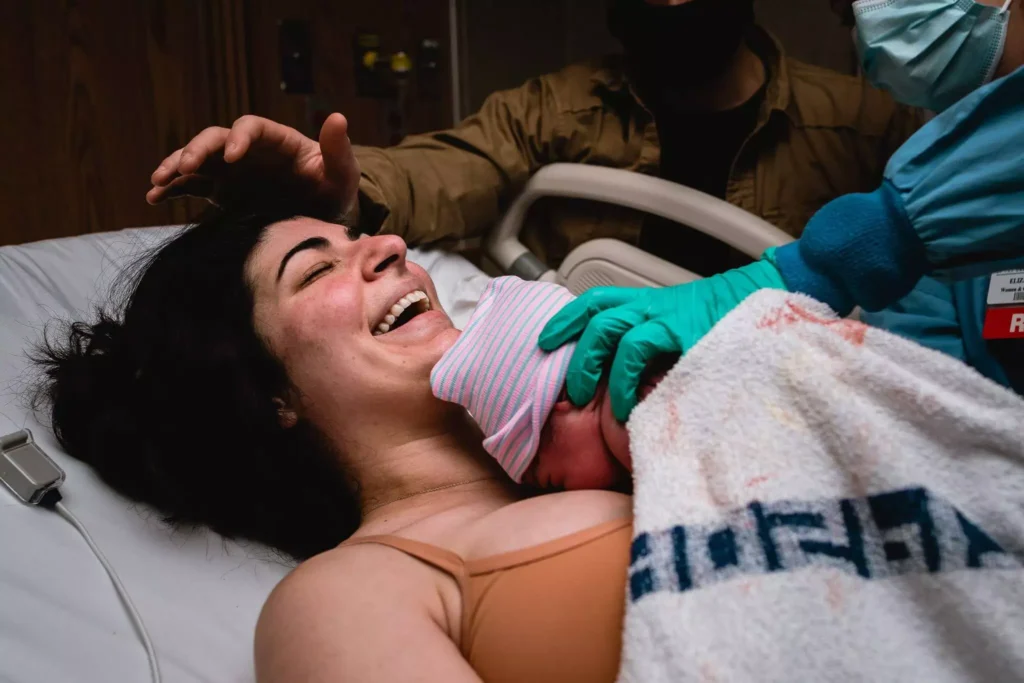

Learn the science of pregnancy and birth to take the mystery of labor away! Understand why you are feeling what you feel, and learn strategies to confidently move through pregnancy and birth!
- 9h+ of Video
- Support Group
- Close Captioning
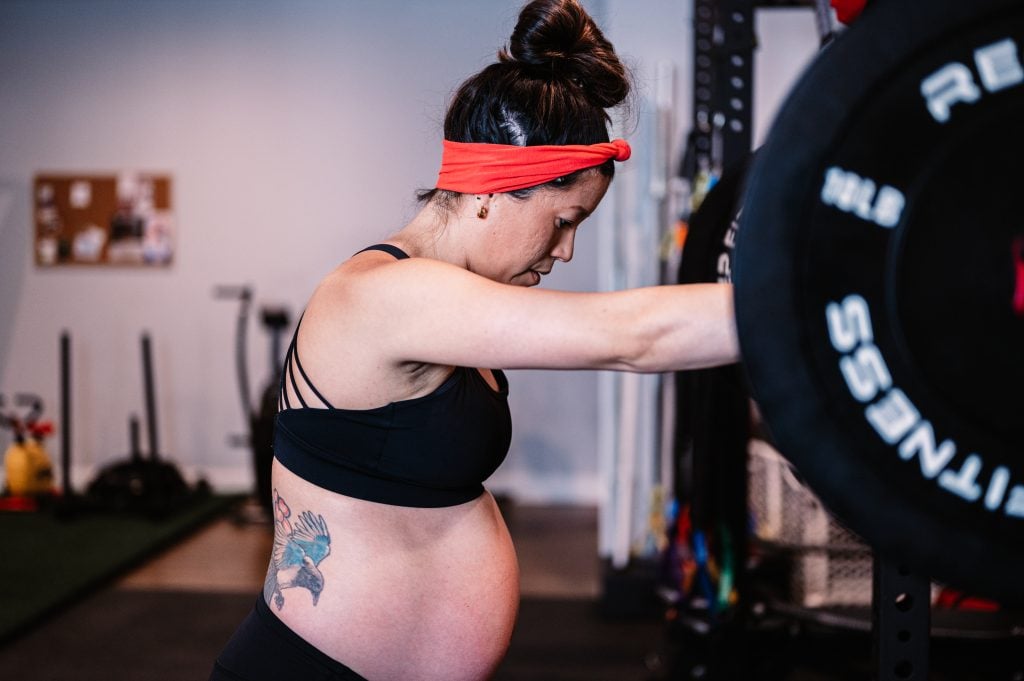

- 5 Workouts/Week
- Gym Workouts
- Self-Paced

Instructor
GINA
Workout on-demand with our prenatal fitness workout videos! Each workout is 30-40 minutes to follow along as you exercise at the same time!
- Birth Prep
- All Trimesters
- Mobility Work

Instructor
GINA
Find comfort and relief from pelvic girdle pain throughout your pregnancy and postpartum period! This program incorporates myofascial sling focused exercises to stabilize across the pelvic girdle joints.
- 3 Weeks
- On Demand Workout Videos to Follow