



Welcome to the MamasteFit Podcast! In this episode, Roxanne talks with Cheryl Sew Hoy, the founder and CEO of Tiny Health, about the importance of the microbiome during pregnancy and its impact on babies. Cheryl delves into the science behind the gut and vaginal microbiomes, how they transfer to the baby during birth and breastfeeding, and their critical role in training the infant’s immune system. The discussion includes practical tips on maintaining a healthy microbiome, the significance of probiotics, and the effect of antibiotics. Cheryl shares her personal journey and explains the importance of testing and understanding the microbiome for lifelong health, as well as sheds some light on increasingly more common symptoms of gut health issues that may be getting overlooked!
Read Episode Transcript
[00:00:00] Roxanne: Welcome to the MamasteFit Podcast. On this episode, we’re going to be talking about the microbiome, how we can support our microbiome, and why we should be supporting our microbiome during pregnancy and for our babies with founder and CEO, Cheryl, from Tiny Health.
[00:01:04] Roxanne: Welcome to the MamasteFit podcast. On this episode, we have Cheryl Sew Hoy, the CEO and founder of Tiny Health, here to discuss all about the microbiome, why it’s beneficial to know what our microbiome is, and how we can support it. So thank you so much for being here. And can you introduce yourself to our listeners?
[00:01:20] Cheryl: Yes, of course. Hi Roxanne. It’s great to meet you again. I’m Cheryl, I’m the founder of Tiny Health. And, microbiome or the gut health and all that and vaginal health has been a trend lately and I started this company when my son was just a week old, and I have my personal story I can share for why I started the company:
[00:01:43] Cheryl: He was a VBAC, a vaginal birth, at home after a C section birth. But I started it because I was trying to learn more about my pregnancy, gut microbiome, understanding how my vaginal and gut microbiome transferred to baby at birth during labor and also during breastfeeding in postpartum, and how that initial colonization from mom to baby, or from the environment to baby, really matters for their immune system.
[00:02:12] Cheryl: Their immune system is very immature at birth and it is being trained by these microbes, which is fascinating. And there’s only a critical tiny critical window of immune training from these bacteria, in the first 1,000 days, which by the way starts in conception, so your pregnancy microbiome, this matters. And so when I found out how the microbiome of the mom affects the infant, and is correlated with their immune health, and things like allergies and eczema, I was just like profoundly impacted and I was profoundly curious. But none of my OBGYN or my team, my kind of like birth team, of course my midwife and doula knew about it, but the medical world is still learning about the microbiome, although there’s a lot of groundbreaking academic research out.
[00:03:10] Cheryl: I was reading these papers, I was reading these journals, peer reviewed journals about the microbiome in the first 1,000 days, and it’s so crucial. So that’s why I started Tiny Health, and I can dive into the stories. But I can also dive into what is even the microbiome? I feel like we just went into it.
[00:03:30] Roxanne: Yeah, I feel like we discussed like a little bit of it. So the microbiome is obviously a huge proponent of our immune system, but can you describe exactly what our microbiome is and like how we can even support it?
[00:03:43] Cheryl: Yeah, because the microbiome is a mouthful, right?
[00:03:46] Roxanne: Yeah.
[00:03:47] Cheryl: There are 38 trillion microbes living in and on us.
[00:03:51] Cheryl: So we have many different, microbiome sites. The skin microbiome is probably omnipresent, right? All the skin, has its own microbiome, which is very different from the oral microbiome, so what’s in your oral cavity. There are microbes living in it. And then there’s like the nose microbiome. There’s probably an ear microbiome. There’s the gut microbiome. So if you’ve heard of this, maybe most of all, the gut health and gut microbiome. And then there’s the vaginal microbiome, which is a newer kind of area of research. And the vaginal microbiome is what your baby is passing through at birth if you do have a vaginal birth.
[00:04:31] Cheryl: And so I’m going to talk, I’m going to double click into more of the gut and the vaginal microbiome in this podcast, because that is truly what is more relevant to birthing. And I’m sure everyone, here listening are either, yeah, prenatal, postpartum, it’s very relevant.
[00:04:48] Cheryl: So the gut microbiome, which is what you’ve heard of most, is the most well studied, because the kinds of bacteria or fungi or viruses that live in your intestine, large intestines, and you can only study the microbiome in the large intestines, not the small intestines where most nutrient absorption happens, but the large intestines are very accessible because you get it through stool. So you take a stool sample, send it to the lab, and then we can sequence and see all the microbes in your gut. And that is where it’s the most studied in research, in academia, as it correlates with health or disease. And where do you get your gut microbiome from? Where do people get their gut microbiome from? It’s actually through mom at birth, as I mentioned.
[00:05:32] Cheryl: So it’s just really fascinating when I learn about it. Baby is pretty sterile in the womb. So if you are carrying your baby right now, there’s not really any microbiome passing into your baby’s gut and colonizing it, there is some very minor bacteria in the placenta, but it’s not really colonizing.
[00:05:54] Cheryl: The main event of colonization and seeding, what we call, “microbiome seeding at birth,” happens during labor, at birth. And so the baby actually first acquires the mom’s vaginal microbes, so your vaginal microbiome should be healthy throughout pregnancy and at birth. Postpartum is a different story. It does get temporarily disrupted. We think it’s for child spacing reasons. It’s harder to get pregnant if your vaginal microbiome is disrupted. So postpartum, your vaginal microbiome does get disrupted, which is really interesting. Post weaning from breast milk, and menstruation returning, then your vaginal microbiome returns to normal.
[00:06:37] Roxanne: Oh, interesting!
[00:06:40] Cheryl: Very interesting science there.
[00:06:43] Cheryl: So back to the vaginal microbiome, this is where I was researching and double clicking into it, because my baby was breech. My first child, Charlie, she was breech. And so the OB/GYN just told me, “Oh, you’re probably going to need a C section.” So then I was just really researching what the trade offs were. Should I just do, an elective C section? Should I still labor? There’s something called vaginal seeding, which is a procedure to swap your baby with the mom’s vaginal fluids, even if you’re doing a C section.
[00:07:18] Cheryl: So I think in my third trimester I just spent a whole month researching all this and so then that’s where I learned that the baby passes through the vaginal canal, ideally, and acquires mom’s vaginal microbes. And babies who are born via C section don’t get the vaginal microbes of the mom, and they have a very different microbiome from a vaginally born baby, C section babies, because the C section babies are not bypassing the vaginal canal. They’re also being exposed to the antibiotics from the operation, so the C section born baby does have a slightly disrupted microbiome at birth. However, the nice thing about this is that if you are breastfeeding post C section, then you can still modify your child’s microbiome, your infant’s microbiome, and breastfeeding is so impactful because mom is continuing to transfer her gut microbes to baby through the breast milk, which is fascinating.
[00:08:16] Cheryl: Now, actually you may wonder okay, so you talk about the vaginal microbes colonizing baby’s gut at birth, but what about the gut? And then here’s the fascinating thing, when you’re laboring, sometimes, medical professions ask if you had a bowel movement and whatnot, and there’s almost like this, in the past, this fear of taking a poop during labor. It’s actually healthy! This is actually how the baby gets the gut microbiome from the mom, some fecal fluid during labor also colonizes baby’s gut! So baby’s swallowing everything on the way out. They’re not just swallowing mom’s vaginal fluids, they’re also swallowing… You know, there’s a reason why the anus is very strategically located close to the vagina, right? Probably for the birthing process as nature has it. And so baby’s getting all that gut microbiome from mom as well on the way out. So it’s real interesting!
[00:09:16] Roxanne: So the microbiome is made up of bacteria that we have this like kind of symbiotic relationship with where it doesn’t overgrow or undergrow, to help support our immune system and help us fight against any pathogens that maybe enter our body, and just keep us well balanced.
[00:09:37] Cheryl: Yeah.
[00:09:38] Roxanne: So just to round it up.
[00:09:39] Cheryl: Yeah. Yeah. It is mostly a (inaudible).
[00:09:41] Roxanne: And we have different sites.
[00:09:42] Cheryl: Mmhmm. Different sites.
[00:09:44] Roxanne: Like we have the oral site. Obviously our skin is like our first line defense of our immune system, so there’s definitely like pathogens on our skin and like microbiomes and bacteria on our skin.
[00:09:56] Roxanne: But our vagina and our rectum are huge in pregnancy where we pass on the pathogens and bacteria that’s within those areas to help create the microbiome of our babies and support this microbiome developing. But if baby is born via C section, breast milk is another huge way that they can get a lot of these microbiomes and bacterias. Through the breast milk we’re also pass passing on antibodies and immunoglobulins to the babies to help build up this immune system in their bodies and that build up of that microbiome.
[00:10:31] Roxanne: But I know you said the antibiotics during C sections can help almost disrupt the microbiome for these babies, but what about if someone is GBS positive? Because we can’t talk about the microbiome without really talking about group beta strep, which is like a bacteria that can overgrow in pregnancy for some people and then this leads to them needing antibiotics during their labor. And one of the side effects of GBS positive getting those antibiotics is that it does show to disrupt the microbiome of babies for up to a year after they’re born. Obviously it also disrupts our microbiome, but especially disrupts these babies because one, they don’t have that microbiome yet, it’s still developing and it can take like almost a year for it to stabilize. Can you touch on GBS and then also the antibiotic after GBS?
[00:11:24] Cheryl: Yeah, for sure, for sure. And this is probably one of the number one reasons for moms to do antibiotics during labor is GBS. I think a third of moms do antibiotics during labor, maybe even more than that now. And… it depends. I think that there are papers showing that if the duration of antibiotics- and I believe for GBS it’s narrow spectrum, not broad spectrum, so whether or not it’s very targeted at certain bacteria like strep, versus broad, it’s just targeting everything, so it’s literally killing not just the bad, but the good- so normally I think if it’s a four hour like drip, the impact to baby is minimal. But, we have heard stories of women going through many rounds of the IV drip of antibiotics, and I believe, I can’t remember specifically, but if it’s like more than 12 hours, then the impact to the baby is greater, because it’s just more exposure, right? But this is just during labor, right? Even prenatal antibiotics have been shown to have some impact. And it could be more the antibiotics during prenatal stages is actually disrupting the gut of the mom.
[00:12:36] Cheryl: And one important bacteria for infancy and immune training is Bifidobacterium, this one bacteria called Bifidobacterium and the are specific strains of Bifidobacterium that we want to find in the infant’s gut for their immune health. And Bifidobacterium is very sensitive to antibiotics. So it’s one of those that, if you do take antibiotics for more than 10 days and it’s like killing everything, if you don’t take care to restore that in your gut, in your mom’s gut, then it may never come back.
[00:13:10] Cheryl: And kids and infants are more sensitive to it. So adults, if we had some prior and we take antibiotics, chances are it will bounce back and come back if we eat the right diets to support it. Ideally, you are taking a Bifidobacteria probiotic to restore and eating the right prebiotic to to help it colonize in your gut. For infants, same story, but they’re more sensitive. So if they’re exposed to antibiotics in early life and labor, it may just like never come back. So I think it’s important to understand.
[00:13:43] Cheryl: So Bifidobacterium, you may have heard of, if you pick up a random probiotic from this store and look at the ingredients, the species, the CFUs, there are usually Bifidobacteria strains or Lactobacillus strains. There are spore based ones as well, Bacillus, there are tons of other bacteria species, but Bifidobacteria is what should be dominating your infant’s gut in the first year. So we’re saying at least 50 percent to 90 percent because that bacteria protects your infant’s immune system and trains their immune system to recognize what’s friend and what’s foe when they’re eating, when they’re finally exposed to solids at six months, like some babies get, allergic responses or food sensitivities, that’s a sign that your baby’s immune system was not in the right balance at birth, in the first six months, because they’re being triggered by these dietary allergens, which they shouldn’t. A normal immune system should be responding correctly to dietary allergens, right? Early exposure to allergens and a huge diversity of food is important in early life, but if you do have sensitivities, if your child or baby has sensitivities to it, it is a sign that something may not be going right, some immune system wasn’t trained correctly.
[00:15:08] Cheryl: And even before allergies, eczema is actually usually the first sign of a progression of allergic diseases. So eczema appears between three to six months. Again, a lot of infants, I know they don’t get eczema until they start solids, and that’s what triggers it.
[00:15:24] Roxanne: Yeah.
[00:15:24] Cheryl: Because the skin, it’s all connected, like some babies get it earlier, three months, maybe even two months. Eczema, there’s a skin gut axis, same as what you may have heard of the gut brain axis. That’s why the gut is so important. It’s where 80 percent of the immune system lives, and it also impacts your skin and the immune training there, right? Normally, again, an infant is supposed to react to environmental allergens on their skin correctly, their immune system is supposed to be trained correctly. So eczema is actually a first sign that something is, there’s some bacterial composition that’s not right from birth, and kind of off along the way. So kids with eczema have a higher likelihood of developing food allergies between six months and two years old. And kids with eczema or allergies are at higher risk for asthma by age six.
[00:16:22] Cheryl: So I read all that, it’s called atopic march, or, allergic progression of disease. You can look it up, atopic march, it’s a known thing in the medical community. And the literature around atopic march’s connection with the infant microbiome has recently exploded and it’s very correlated.
[00:16:43] Cheryl: So this is why when I was reading about the kind of impact of C sections, it was really mostly speaking to how the disrupted microbiome at birth from a potential C section could lead to eczema, allergies, and asthma. And so I was like, “Oh no!” My baby was breech, I tried everything to turn her around, I tried Spinning Babies, I tried all the workouts, and she just wouldn’t come out. But I chose to labor and I knew that was healthy for her because of the research, spending some time in the mom’s vaginal canal is healthy, even if you were to end up with a C section.
[00:17:23] Cheryl: So for that reason, based on my research, I chose not to do an elective C section because I knew that maybe spending some time in my vaginal canal as I was trying to push her out. I think I labored for maybe 16 hours, 20 hours, and then I spent maybe two and a half, three hours trying to push her out. So she was stuck because she was breech. I was attempting a vaginal breech birth, at the hospital.
[00:17:50] Roxanne: Oh, okay.
[00:17:51] Cheryl: So she spent some time in my vaginal canal. And then at the time there was less research around vaginal seeding, that procedure I mentioned. But I felt intuitively for me, and it’s a personal decision- I think ACOG hasn’t officially recommended this protocol yet- but my midwife supported me in this. So she came with me into the operating room, and what I did was I soaked a gauze in my vaginal canal for an hour, when they were prepping for the C section. Because no C section is truly so rushed and emergency, like this was an emergency C section, but it was still an hour of prepping time.
[00:18:31] Cheryl: And then when they took her out, within the first two minutes, and that’s, this is the protocol, they would swab the gauze soaked with my vaginal fluids into her mouth and her face, mimicking like passing of the vaginal canal.
[00:18:49] Cheryl: So there’s now more studies showing that babies swabbed with mom’s vaginal fluids look more like vaginally born babies than C section babies. There’s more evidence now, although again, it’s not really quite accepted by conventional medicine, so check with your OBGYN and do it at your own risk. Knowing what we know now, this is why we have a vaginal microbiome test as well for mamas. I would do a vaginal microbiome test to see what’s there and if there needs to be any course correction before I did the vaginal seeding.
[00:19:23] Cheryl: But, yeah, as I was researching, the reason why I did all this is to prevent eczema and allergies and asthma for my baby. And so despite all that, my daughter did still get eczema, but she had a milder form of eczema around six months when I started solids. And she had some sensitivities. She had a mild allergy to sesame at first, but it was temporary. And, as she got older, she was sensitive to gluten and dairy. And I’ve been trying to heal her microbiome and now she is able to take some raw milk, basically. And, certain types of, yeah, we try to stay away from gluten as well.
[00:20:11] Cheryl: And so when I was pregnant with my son- and he was breech, again- I was worried that I was going to have a second C section. I really wanted to course correct his gut because when my daughter, I didn’t have a Tiny Health stool test for infants. I was looking for a stool test in a market and I couldn’t find one. Everything was for adults and using the wrong technology. I was looking for the latest technology, called shotgun sequencing that can measure the strain level cause I was looking for specific strains of Bifidobacteria that can digest breast milk efficiently and derive the full benefits of breast milk for the infant’s gut. Lots of literature pointing to B. infantis being the best HMO degraders, and HMOs are human milk oligosaccharides. They make up a third of mom’s breast milk. Did you know that a third of mom’s breast milk is indigestible by the infant? It just passes through their gut, unless the infant has Bifidobacteria to digest. So a third of breast milk is basically food for the microbes in their gut, not even for the infant, but for the bacteria in the infant.
[00:21:26] Roxanne: Yeah! Because that’s what’s helping build up that immune system. That’s not, again, it’s not for the nutrients of growing baby, that’s to help build up that immune system in their guts. That’s feeding and helping close that gut and help increase their immune system. That’s what those oligosaccharides are. That’s their intent and why they’re in that colostrum in such high amounts.
[00:21:48] Roxanne: So that’s super cool that you state like that is the reason that we have those oligosaccharides. And so even if you choose not to breastfeed, maybe like long term, those first few days where that colostrum is present can be so beneficial for your long term immune health for babies, which is super cool.
[00:22:06] Cheryl: One hundred percent.
[00:22:07] Cheryl: And so coming back to the whole C section discussion, now, with the Tiny Health testing, we launched it. Our first flagship test for moms and prenatals, so a vaginal test for mom, and we’ve got tests for mom because mom is passing vaginal and gut microbes to baby.
[00:22:24] Cheryl: So, what I learned when I did my son, when I started to use this with my son, so I had his two month sample- I wish I had his seven day sample, but I started the company literally a week after he was born and only got the swabs a month in- I learned that my pregnancy gut, I had no biffs! The bacteria that I was supposed to transfer to my son with a vaginal birth or with breastfeeding, I had none. And then I was like, “Huh, I thought I was eating a pretty healthy diet.”
[00:22:53] Cheryl: And then when I look back again, at my early life, then I learned from my mom, I was actually formula fed. She fed me, she breastfed me for about a month and then she formula fed me. So maybe that transfer was not enough or something. And then I had antibiotics in early life, a couple of rounds. And so remember I mentioned how Bifidobacterium is pretty sensitive to antibiotics, and so if you don’t take care to recover it through certain probiotics or through diet, then it may never come back? It could be that reason, it could be like in my college years and, like poor starving college student years where I was eating terribly, had a lot of stress, and all that can also impact your microbiome, right? Medications aside from antibiotics may have side effects as well.
[00:23:43] Cheryl: So anyway, I was like, “Shoot, I don’t have the right microbes to transfer to my infant.” So I knew that when my son was born, I needed to supplement him with, a specific species of bacterium to boost his immune system. Because now, now we’re serving about, 30,000 families in the past two and a half years. And we, we do see some moms who are like, “I did everything right. I vaginally birthed my baby. I breastfed for a year. Why does my infant get eczema and allergies?” And when we get the results back, it does look pretty bad and they have no bifs. And so oftentimes then we say, “Mom, why don’t you take a stool sample, too, to see, to check your gut.” And oftentimes when we do get mom’s stool sample, mom had no bifs as well.
[00:24:34] Cheryl: So, it’s interesting. Vaginal birth is important. Breastfeeding is obviously important for a variety of reasons, not just microbial transfer, but like you said, antibodies, growth hormones, just there’s macro and micronutrients, so many benefits. One of the main benefits is also the microbial transfer. However, if mom’s gut is deficient then baby may not be getting all those benefits, right? So that connection is important.
[00:25:02] Cheryl: And then like I get people like, “Oh, what about dads? How come there’s so much pressure on moms and dad can’t play a role?” So we have seen cases where mom did not have bifs and an infant had bifs! And we’re like, “Where is this coming from?” Probably dad. And then we do have cases where we have the dad sample, dad had bifs, mom didn’t have bifs. So dads kissing baby, and hugging and doing the skin to skin time is also crucial. And you have an older sibling, and your older child.
[00:25:33] Roxanne: Because you have microbiomes on your skin and in your saliva.
[00:25:36] Cheryl: Yeah, you don’t really get bifidobacteria on the skin. It’s not oxygen tolerant. So when exposed to air, it does not survive. There are some gut bacteria that can only survive in the GI tract, which is why the gut is a fascinating area for research. The type of bacteria you get in different sites are all different.
[00:25:56] Cheryl: But, when older siblings have it, maybe from daycare or exposure to pets and animals and whatnot, they can pass it on to their younger sibling as well.
[00:26:06] Cheryl: So all this is to say, we’re realizing that the family microbiome matters. The whole family’s microbiome does play a role in the infant. If you are bringing a new child into the world, you can’t just say adjust your infant’s microbiome without adjusting the parent’s microbiome. Because what influences the microbiome aside from birth and feeding both, eventually they’re going to eat solids. And the kind of foods that they eat are, you know, eventually they’re going to eat the same foods you eat as a parent, as a household. They’re living in the same environment and household conditions you are. They’re being exposed to nature or outside as much as you do. So if you’re always at home and not being exposed to enough pets or nature, then you have maybe less diversity in your gut, less robustness to fight pathogens. So they are eventually mimicking your lifestyle and the microbiome is influenced by lifestyle, right?
[00:27:08] Cheryl: So we always tell parents that you do need to work on your whole family’s microbiome, ideally, for your child’s best life long immune system.
[00:27:16] Roxanne: Let’s take a moment from this episode to hear from our sponsor, Needed. Needed is a nutrition company focused on the perinatal time frame that both Gina and I have utilized during our pregnancies, postpartums, and beyond- to include their pre and probiotic was something that I have been including in my like supplement routine since I was postpartum with Colin. I was having a lot of like microbiome and like gut issues after my postpartum with Colin, so I wanted to get a really good pre and probiotic, and they’re very intentional on the strains that they’re inputting in their pre and probiotic, and they’re also updating their ingredients as more research comes out. So they have actually changed and updated their pre and probiotics since I started taking it at the beginning. And they’re very intentional on the research so they’re putting in those lactobacillus strains that Cheryl was talking about that are beneficial to our microbiome during pregnancy. So if you want to try out Needed’s pre and probiotic, you can use our code, MAMASTEPOD, to get 20 percent off your first order at thisisneeded.com.
[00:28:15] Roxanne: Okay, so now getting back to GBS, because we went on a little tangent off of the GBS, which was the original question. GBS obviously is part of our microbiome in some of our bodies. We have GBS in a tolerable amount, living in our guts. But during pregnancy, this bacteria can overgrow and transcend down to the rectum and also enter into the vagina, potentially. So this can lead to them needing or being recommended to get antibiotics during their pregnancy because that GBS, as we said, baby’s immature, their like immune system is not fully developed, so if they do get that like colonization and GBS infection from being born vaginally and getting that GBS bacteria in their system, this can lead to some complications in a small amount of those people. So the recommendation is always to get that antibiotic.
[00:29:09] Roxanne: But, obviously with our microbiome there are things that we can do during pregnancy to support our microbiome. And why are some people potentially being GBS positive? Is there something that we can do and test for during pregnancy to decrease their risk of even getting this bacteria, as well as support their microbiome so that it is like more diverse, so that when they do pass it on to the babies the baby is able to if they do get the GBS, they’re just colonized, not necessarily develop that GBS infection, which is the part that leads to the long term complications and potentially disabilities for these babies, if they do develop that infection. But the colonization is a little bit different. So what are things that we can do to potentially support our bodies during pregnancy? Because obviously we can test for it to see if our microbiome is diverse, because as you said, we want a diverse microbiome. We want lots of different bacterias within our guts to help fight off different pathogens, potentially. We don’t want only one bacteria in there, we want lots of bacterias. And I know I did a Tiny Health testing during my pregnancy, and I had the pretty good bacteria and I had a really good diverse bacteria to help support my body during pregnancy, which was like obviously a thing that I was super worried about.
[00:30:31] Cheryl: Mhmm.
[00:30:32] Roxanne: Because everyone is worried about GBS. No one wants to be GBS positive because then they have to make that choice about the antibiotics and weigh the risks and benefits of whether or not they should get the antibiotics to help support their baby from getting GBS. But then also, obviously we talked about there are negatives of getting the antibiotics, especially if you have to get more than a couple of doses and they do most of the time get penicillin for GBS, which is a broad spectrum antibiotic, so it can affect not just your microbiome. I see a lot of people after they get antibiotics in the postpartum period, they get like a yeast infection because their like microbiome is thrown off from the antibiotics that they got during pregnancy. Or even after a C section if you had developed some infections during labor and then maybe that led to a C section, you’re getting a lot of antibiotics even if you’re not GBS positive, potentially in some cases. And this can increase those risks of those people developing a yeast infection because it’s throwing off the microbiome as well. But then again, as we said, this then affects our babies from one, they could develop some sort of like a yeast infection, but it’s called thrush in those babies because of your microbiome being thrown off in their microbiome being thrown off due to maybe a C section as well as antibiotics, or just antibiotics.
[00:31:53] Roxanne: So GBS is like a huge one that a lot of people are really concerned about and that’s probably the one thing that someone who is thinking about, “Oh, what is my microbiome? How can I support my microbiome? Not just to help my baby’s immune system, but like also my birth, like how can this affect my birth?” And not having to get antibiotics because your GBS positive is a huge question that I think a lot of people would like.
[00:32:17] Roxanne: And I know it’s been studied, but like some research might be like hit or miss depending on like the study that you look into. But is there a benefit of taking like, one, obviously doing microbiome testing, but pre and probiotics, if someone wanted to take a pre and probiotic during their pregnancy, or even eat certain probiotic or prebiotic foods, what are things that they can do during pregnancy to help support their bodies? Not just obviously for their baby’s longterm immune system health, and that is like a huge component, but also the GBS factor. Because obviously if you’re GBS positive, this could also show that maybe your microbiome isn’t balanced. Do you know what I mean? So if you have this increase in GBS, is your microbiome already unbalanced and maybe you need to address your like pre and probiotics and supplement to help your microbiome just in general, but also maybe decrease your risk of developing that GBS? And then, can you talk a little bit on GBS, its cycle? Because we know, it moves in cycles where it increases in growth and then, potentially can decrease in growth. Like, how does that correlate with our microbiome, potentially? Where maybe everybody has this cycle where we have increases in GBS. Is that normal? Or does it just go in cycles because of the natural growth in pregnancy in some people that have this colonization? Those were a lot of questions that I just threw at you.
[00:33:44] Cheryl: Yeah, I know, I might need you to repeat some of them! But, I think, yeah, earlier I mentioned that, GBS, it might be that people get a narrow spectrum, but you were right, actually, I misspoke. People do get a broad spectrum antibiotic. So it is, definitely be mindful, and maybe even ask if the doctor can switch to a narrow spectrum. I’m not sure if there’s one that can target, streptococcus specifically.
[00:34:15] Cheryl: But, GBS is a huge topic, right? We’ve written two blog posts about it on Tiny Health. If you go to our blog, you can search for it part one and part two. I would say, America is the only place in the world where we routinely test for GBS in the 37th week. In other countries like the UK and Australia, New Zealand, it’s risk based, so it’s not even required across the board to test for GBS. Did you know this fact?
[00:34:46] Roxanne: I did know that fact because based off of research doing the universal based GBS testing has actually been found to find more GBS and actually lowered the rate of GBS infections found in newborns, so it was able to lower potential complications for those babies. So that’s why, based off of research, the U. S. developed the universal based approach, where they screen just everybody for GBS, whereas in some countries in Europe, in Australia, New Zealand, they do the risk based, where it’s based off of different risk factors. And then also, I’m pretty sure both of them, if you have a GBS in your urine earlier on in your pregnancy, then you’re considered to be GBS positive and then you don’t even need the swab. But that is one of the risk factors for needing GBS screening is that you had GBS in your urine, as well.
[00:35:36] Cheryl: Yeah, maybe the urine test is a little bit different because normally when you swab for GBS, you’re swabbing the vagina and the anus as well because it may come from both the vaginal canal or the gut microbiome. So certainly, it’s important to swab both places.
[00:35:56] Cheryl: I knew about the selective testing because my baby was born in New Zealand, my first child, because my husband is from New Zealand. And so there, they wouldn’t even test me.
[00:36:05] Roxanne: That’s so cool. Beautiful country.
[00:36:06] Cheryl: Unless I asked for it. Yeah. So, it’s just interesting that, if you, I think, I can’t remember the kind of, criteria, but, if you’re low risk, then, you may never even know if you have GBS. But I think that is also a risk based factor, right? You know, I think it sounds scary when you do have it, but if you’re infant is colonized, by GBS, as you mentioned, they may not get an infection. Of course, if they do get an infection, it is very deadly, so it’s very important.
[00:36:35] Cheryl: But ultimately I would also urge for parents to just do their own research, frankly. I did my own research and had a decision framework if I tested positive for it. Will I do antibiotics? Is the risk worth it? And ultimately that risk based calculation should be your own. It should always be your own decision, your own informed decision, not just something that your OB, or whoever says, “Do it,” and you do it. I would just really recommend that you do your own research and make that decision based off of your own informed research.
[00:37:11] Cheryl: So coming back to GBS and how to like best prevent it. I would say most women don’t even know they have to do the GBS swab until they have to at 37 weeks and that point is so late to intervene. I was lucky because I took a birthing course quite early on, I think in my early second trimester. and I wish I’d known this even before, right? Like even in my trying to conceive phase. So I would say, again, like with the Tiny Health testing for prenatal, I think as soon as you find out you’re pregnant in the first trimester, do a gut test and like a gut stool test or a vaginal test to see if you even have GBS there. Cause then you can start taking the dietary pre/probiotic actions sooner. Or maybe you can say it never hurts to just do those things anyway, just as a precaution. So there are certain pre and probiotic that you can take even as early as first trimester to reduce your risk for GBS.
[00:38:08] Cheryl: And the other common dietary advice is garlic. Garlic is really potent when it comes to opportunistic pathogens. Again, opportunistic pathogens and not just pathogens, because at low levels, streptococcus, E Coli, staphylococcus, they’re all like a very common part of the microbiome. So low levels are okay, but it depends on the species, right? Again, not all E Coli are bad. Some are neutral.
[00:38:39] Roxanne: Yeah. We don’t want the overgrowth.
[00:38:40] Cheryl: You don’t want a virulent kind. So we actually just launch a virulence tracker, so we can tell if your E Coli is neutral or it produces toxins. And those are the kind you ones similar to that, there’s streptococcus, different types. The strain in yogurt is streptococcus tomophilus, so not all strep are bad. GBS is basically strep agalactiae- I can’t even pronounce it, but it’s a technical name. It’s a type of strep, right? But there are some really healthy strep that you want to eat, like yogurt, and there’s some strep that you don’t want, like GBS, right?
[00:39:15] Cheryl: But anyway, like garlic, ginger, like onions, these things, but mostly there’s studies showing, there’s one study showing garlic is effective against GBS. So I would say, there are some moms who are willing to do raw garlic, sometimes it’s easier to take with a spoon of raw honey in the morning, as a prevention. I’ve seen some people putting raw garlic in the vagina to help kill it, because there is something about…
[00:39:43] Roxanne: I’ve seen that as a treatment for yeast infection. People will be like, “If you don’t want to take the diflucan for a yeast infection, just put some garlic up there.”
[00:39:52] Cheryl: Yeah, that’s another topic. I think there are a lot of people misdiagnose down there with the vaginal canal because they think… yeast infection and BV have very similar symptoms, but one is a fungi or candida, a yeast, the other one is bacterial. We can sequence everything. We can tell you all your bacteria, your fungi, yeast, parasites, viruses, if you have them. Ideally, everything in your gut and vagina are bacteria and there’s no yeast overgrowth, right? But there are some people who are misdiagnosed and they like just, do treatments that are not really working for their microbiomes.
[00:40:31] Cheryl: But coming back to garlic is really good for a lot of the unfriendly opportunistic pathogens, right? I don’t know about putting raw garlic down there because, again, you don’t know… You don’t know, there’s no clinical studies.
[00:40:47] Cheryl: I think, for sure, the vaginal microbiome is so important. And again, I think I would highly recommend you checking on your vaginal microbiome. It’s supposed to be lactobacillus dominant. So similar to how an infant, it should be the bifidobacterium dominant, your vaginal canal should be lactobacillus dominant. So lactobacillus is another common probiotic you can find in the market. Your vaginal canal should have 97, 99 percent lactobacillus. And now we know there’s different kinds of lactobacillus that is also correlated with the chances of fertility, even IVF failure and things like that.
[00:41:27] Cheryl: So lactobacillus produces d-lactic acid in your vaginal canal, which creates an acidic environment. So sometimes when you go to an OB GYN, they measure the pH of your vagina, so you want it to be acidic. If it’s alkali, that probably means you don’t have any lactobacillus. So when your vaginal canal doesn’t have that protective d-lactic acid acidic environment, it gives the opportunity for things like strep, like GBS, to colonize, for BV type bacteria, like bacterial vaginosis type bacteria to colonize. And so you don’t want that because if you do have low lactobacillus and high gartnerella vaginalis, which is the BV bug or some fungal yeast overgrowth, then there is actually higher risk for preterm labor.
[00:42:16] Cheryl: So there are a few papers showing that if your vaginal microbiome is disrupted, you may get preterm labor, right? So you wanna definitely check in as early as possible. And you know the, coming back to why some people put the vaginal suppositories is ’cause it’s a closer, more direct route. If you think about even taking in oral vaginal probiotics to restore your vaginal microbiome, the probiotics have to have live bacteria culture in it, or maybe deactivated ones in the powder form, if it’s in a capsule, the capsule has to survive the stomach acid to get to the gut, and then pass the gut to the vaginal microbiome. So it’s a long route, right? All this is to say, if you have a disrupted vaginal microbiome, it takes longer to adjust and course correct, maybe two or three months, maybe even four or five months. And so I would say like knowing what we know now with research, I would test as early as possible, even if you’re just trying to conceive and you’re not even pregnant yet, because you want to find if you are at risk for that.
[00:43:24] Cheryl: Similar to the gut, we believe the gut is easier to change. We’ve seen that changing with diet and the right pre probiotics, you can change your gut in about two months. Vaginal, much longer route, longer time to course correct, but both are equally important to check in. Because again, if mom is deficient at this, which most of our Western society is, unfortunately, it’s one of these microbes called “Missing Microbes,” there’s a whole book written about it by Dr. Martin Blaser. Marty writes about the depletion of bifidobacteria in our society from antibiotic overuse. It’s really interesting. So I hope this answers your question about, there are things you can do early on. I would do garlic. I would eat more garlic in your pregnancy and, ginger, if you have nausea in your first trimester is very good for that as well.
[00:44:17] Roxanne: Yeah.
[00:44:18] Cheryl: And then test early. And then, I think, at the 37 week, ideally, you’re testing negative already, but there are things you can do.
[00:44:27] Cheryl: And then when, if you do test positive, then. It’s again, go back to the risk factor and do your own math and, make your own decisions.
[00:44:36] Roxanne: So if someone wanted to do, without testing, wanted to get on a pre and probiotic, what should they look for in a pre and probiotic to help supplement until, maybe they either can get tested or maybe, they can’t afford to get tested? What other ways than garlic and onions and ginger, like incorporating those into their diets? Like I’m told like eating like yogurts because they have pre and probiotics in them, or like some people like pre and probiotic drinks, or if they can take like a pre and probiotic supplement. What is something that they should look for that’s in it other than lactobacillus like is there a specific strain? Should they look for stuff that has the bifida in there as well? And is there a supplement for babies that you would recommend as well? Because I know, you were saying you gave your son some supplements. I took, I gave my daughter one when she was a baby. I can’t even remember the name of it, it was so long ago. But, is there something that you would recommend people look for in a pre and probiotic during pregnancy for sure, that has the things to help support their microbiome and potentially decrease the risk of the GBS? As well as if baby, maybe if you did have something, something that they could give baby if they’re, like, seeing some signs of, a disrupted microbiome.
[00:45:51] Cheryl: Yeah, so we can talk about what are those early signs in your infant, right? And I’ll share this blog post with you from Tiny Health, that has this strain, because you may not remember. So there is, like in probiotics, the studies are contradictory, but there are some strains or combination of strains that have been shown to be effective against GBS, and they are Lactobacillus rhamnosus GR1.
[00:46:15] Roxanne: Yeah.
[00:46:15] Cheryl: And Lactobacillus uteri, RC-14. So I know that’s a lot, but, the strains of the probiotic matter. So it’s not just any Lactobacillus rhamnosus, it has to be GR1 that has been found, clinically found, to help with GBS, and Lactobacillus uteri, RC 14. So you can find what products have a combination of those strains.
[00:46:39] Cheryl: So I think I think it’s pretty safe to just assume you should take that during pregnancy. And the thing is, those papers were probably done years before we learned more about the vaginal microbiome, the gut, and, I suspect that the lacto that they chose, creates that lactic acid acidic environment in the vaginal canal and protects the vaginal microbiome. Again, remember that GBS can also live in the gut, and so if you have GBS in the gut and you’re OB swabs your anus and vagina, you might still see it, so you do want to check in your gut as well, right? So I think it’s pretty safe to just take it, but, I’m just saying that now there’s more research on what should be in your vaginal canal. It should be lactobacillus crispatus, or gasseri. Or, like we know that lactobacillus inners, even though it’s lactobacillus, it doesn’t produce a lot of lactic acid. So it’s not the best vaginal microbiome. So I would say no harm to test again, if you’re not sure.
[00:47:46] Cheryl: And then in infancy, this is where I would encourage testing early, you can test as early as days, to see what literally seeded from mom at birth. That would give you some clues. But two months is a good time. Then, if you are breastfeeding, you would see the impact of your breast milk microbiome passing through the breast milk, or your gut microbiome passing through the breast milk into your infant. So then it would give you some clues if mom actually did have BIFs to pass on. If baby still had zero BIFs at that point, at two months, then that means probably the whole family doesn’t have BIFs, and so they would need some specific strain supplementation.
[00:48:25] Cheryl: Now, like you can say, “Oh, why don’t I just supplement my infant with probiotics at birth?” I would caution against that because nature is best. So mom’s innate strain, we think, uniquely matches the HMO in your breast milk, there are 300 types of HMOs in mom’s breast milk, and that composition uniquely feeds the microbiome. So we think that mom’s native strain, and I remember your gut during pregnancy, you had B. infantis and B. longum, which is great. These are the specific strains we want to see from mom to baby. I don’t think we did a baby microbiome test.
[00:49:05] Roxanne: We dd not. We did Gina’s baby. Gina’s baby was perfect. So she, her microbiome must be great.
[00:49:13] Cheryl: Model mom and baby. But if we had done your baby, then we would have seen that transfer, right? Ideally, then that B. infantis and b. longum in you…
[00:49:24] Roxanne: But she’s perfect, so…
[00:49:26] Cheryl: Yeah, but there, so then you don’t need supplementation, right? The thing with then knowing that you had it, and if your baby had 90 percent of B. infantis from you, we want to keep that. If you had done a probiotic from outside, your baby’s gut is very sensitive in the beginning. So if you’re breastfeeding, that HMO feeds the supplemented probiotic and blooms that strain and it may kick out your native straights. And we’ve seen that happening.
[00:49:52] Roxanne: Oh. Yeah. Interesting. Yeah.
[00:49:55] Cheryl: So, back to diversity, right? Comes back to diversity. You mentioned your gut should be as diverse as possible. Correct for adults or older kids, but incorrect for infants. In the first six months, the baby’s sole job is to digest mom’s breast milk. We can talk about formula a little bit on, because not everyone can or wants to breast feed and what you do then, right?
[00:50:15] Roxanne: Yeah.
[00:50:15] Cheryl: So the baby’s job, scientifically or, as nature has it, their main job is to digest breast milk. That’s why like the HMOs in breast milk are so essential for the right beneficial bacteria in a baby’s gut. So because of that, you don’t need diversity. You actually want low diversity. I remember when I was testing my infant’s gut, there was no Tiny Health yet back then, I just bought an adult gut test for my infant. And the results came back, “You have very low diversity and you have too much BIFs, you have 90 percent B infantis, and it’s unhealthy.” Because you know what? In an adult like you and me, if you have 90 percent B infantis, that would be terribly unhealthy for us, something is wrong with us! But it’s perfectly healthy for an infant.
[00:51:01] Cheryl: You only want like 10 species of bacteria at most in an infant, in the first six months because they’re not exposed to solids. They’re not really exposed to that much nature and kind of pets and things like that. Like closing up to six months, they should get more diversity at that point. And then when six months come around again, remember that discussion of allergens and diversity of foods, it like shoots up. In fact, breastfed infants diversity is still muted, the breast milk actually suppresses maturation and diversity for a while. And then with weaning, if the moment there’s no more HMO in breast milk, the baby’s gut takes off, it is so diverse. In fact, compared to say formula fed infants, formula fed infants scientifically have more diversity in your gut because you’re getting more foreign bacteria from the formula, more maturation stuff, like you’re feeding your baby kind of solids early, right? So baby’s exposed to, a lot of formulas, if you look at the top ingredient, it’s high fructose corn syrup. It’s literally, it’s not great. So I would recommend if you do formula, choose one that’s not high fructose corn syrup based, there are other healthier alternatives, and to add an HMO supplement in your infant formula.
[00:52:21] Cheryl: So again, like no guilt here. There’s some moms who really have low supply and can’t, or choose not to breastfeed.
[00:52:29] Roxanne: So what kind of, where would they get that? Where would they get the supplement to add to their formula?
[00:52:35] Cheryl: Yeah, there’s not a whole lot of companies making it, unfortunately. But I’m so happy one of our partners, Begin Health, they just launched an infant HMO. And so it’s approved for infants under one, it’s really hard to get approved for infants under one for this category because it’s just FDA has much higher bar for it. There are some formulas that have HMOs already in it. But the amount of HMOs added, because it’s so expensive to produce, there’s this manufacturer in Germany that produces the HMO, that’s derived from there’s a bit of cow’s milk involved, so if there’s no lactose, per se, but or dairy, per se, there’s lactose, it is created from lactose. So just so you know. And if you can get donor’s milk, for example, if you’re not breastfeeding, that can be an HMO component, ideally. Hopefully it’s not killed in the pasteurization process from donor milk, but that could help.
[00:53:38] Cheryl: There are some moms who are like, “Do I need to take an HMO supplement if I don’t have any bifs?” We’re like, “Yes.” Or if you’re breastfeeding, you can pump and drink your own breast milk to seed your own gut with HMOs, cause the amount of HMOs in breast milk, yeah, it’s just crazy.
[00:53:59] Cheryl: Breast milk has so many benefits, really. Like I, I would even, if I could redo pregnancy or sorry, postpartum, I would save some breast milk, freeze it for future use if my child gets sick and I needed some probiotics and bifs, I would feed them the frozen breast milk for the HMO.
[00:54:18] Roxanne: My daughter. If she doesn’t feel good, she’ll, just want like a glass of breast milk and she’ll feel better. And I’m like, whatever.
[00:54:27] Cheryl: Maybe it’s the HMOs.
[00:54:29] Roxanne: She’ll have one of the bottles that I’ve pumped. Yeah, maybe, I don’t know. Or if it’s like a comfort, I don’t know.
[00:54:36] Cheryl: Yeah, so if you look at Begin Health’s whole story, they created HMOs originally for kids one year and above for constipation because toddlers don’t eat fiber as much and they get constipated. They don’t drink enough water, they don’t eat enough fiber, and HMOs are basically fiber.
[00:54:53] Roxanne: Interesting. I should look into this.
[00:54:55] Cheryl: So like their product, the HMO supplement really solves constipation for a lot of older kids. So instead of turning to Miralax, which is a pharmaceutical and it only temporarily fixes constipation symptoms, not, they’re not addressing root cause. So what we want to do with the microbiome is really addressing what’s deficient in the microbiome and that’s where you solve root cause and ideally you’re fixing that and then you don’t have to supplement, ideally, ever again, right?
[00:55:22] Cheryl: So our goal is not to tell you to take a probiotic and tell you to take it forever. There is a danger of over supplementation, supplementing with the raw strains. So a lot of mamas come to us, they’re feeding their babies a lactobacillus based probiotic for colic and whatnot, but their colic goes away temporarily and then they have other issues popping up like sleep issues and eczema and things like that. When we look into their gut they have very low bifidobacteria, it’s the strain that is not important for, the immune training. So then when we switch them to the right strain, and I can’t tell you, so I can’t tell you which to feed your baby right now, because again, we believe in testing, not guessing, especially in the first year. Because you, there’s just this window, like I mentioned early in the podcast, critical window of immune training, and you want the right species of bifidobacteria, and you want some E. coli too, you want some unfriendly bacteria. We see some infants having 90 percent bifidobacteria of certain species and zero E. coli. And so we ask parents, are you over sanitizing? Are you using harsh chemicals on your floor? Because your baby’s crawling in whatever they’re licking from the floor, if you’re using Clorox bleach, it’s getting into your gut and potentially killing strains.
[00:56:37] Roxanne: So it is beneficial that all the stuff they’re putting in their mouths, it’s beneficial for their immune systems, kind of.
[00:56:43] Cheryl: There’s some dirt, again, it depends on if the infant has the protective BIFs, the right strains of BIFs in the composition, then expose them to as much nature and animals as possible, like six months on, like maybe four months on, so they’re getting the diversity. Again, you want diversity in the right, you want the right diversity. You don’t want a diverse pathogenic mix, you want a lot of BIFs and underlying like the 10 percent diversity is important of, like maybe some pathogen, like opportunistic pathogens to train their immune system too, because you can’t just have all good and there’s no immune training happening either. So dirt, healthy organic dirt is important.
[00:57:27] Roxanne: So just last question, cause we haven’t touched on it, what are the signs to maybe either get your baby tested or that their microbiome is off in those first early days? Is reflux and colic one of the biggest things to be like, “Hey, something’s going on.” Other than cause you say like eczema and like allergens aren’t going to show up until a couple of months later, so like potentially your baby’s not pooping every day. Maybe your baby has colic or reflux where they’re either actually throwing up or that silent reflux, are those signs that something’s going on with their microbiome and maybe we should address this? Are there other things that people should be looking for other than those though?
[00:58:09] Cheryl: So what we’ve learned, and again, we have served almost 30,000 families now in two and a half years, this is a lot of data points, right? Almost every infant symptom kind of maps back to some sort of like imbalance in their guts, from colicky symptoms or gassiness, constipation, eczema is obviously the most common one, frankly, and food allergies and sensitivity to mom’s breast milk, too, like cow’s milk protein allergy, which has been exploding in the recent years. It used to be very uncommon.
[00:58:41] Roxanne: Yeah, the number of people that I know that had to give up dairy and cheese and ice cream or whatever during breastfeeding is astounding.
[00:58:51] Cheryl: For those cases, I would, check both mom and baby’s gut. sometimes we don’t see a signal in baby’s gut for the cow’s milk protein allergy piece, but we see a strong signal in mom’s gut. So for those babies specifically their reactivity to mom’s protein in their diet and where they have to eliminate major groups of food- which ultimately isn’t healthy long term, you want to eat a huge diversity of foods because that’s healthier for your microbiome, so whenever you’re cutting out large food groups, it’s not giving you the best diversity long term. So I would say there’s something underlying that in mom and baby to look into to, to really figure out what’s, going on.
[00:59:34] Cheryl: But I would say this is why I, again, we always get asked, “How often should I test?” And it’s a factor of how much you can afford it, right? We have a family membership now.
[00:59:46] Roxanne: It’s not cheap.
[00:59:47] Cheryl: It’s not cheap. But if you buy a $399 membership, it’s an annual membership- you get two tests up front and one call with our specialists- you get more kits at a cheaper rate at $169. And, some people can afford it, and if you can, I would test once every, frankly, I would say like once every couple months if you can afford it. If not, once every quarter is like a good kind of pace. Twice a year, there’s no harm in doing that. I would do one before solid introduction. If you can only do just one test before solids, I would do at three months or a four month check in, and then once at nine months, probably before the one year mark.
[01:00:31] Cheryl: But this is if there’s no symptoms, right? Again, most kiddos don’t have symptoms until they start solids at six months. Actually, if you dig deeper, like my daughter didn’t get eczema until six months, but she was never able to nap well. She was, daytime naps were never more than 45 minutes. And when I had my son, my vaginal born son that I supplemented with a specific stream of probiotic, he was able to nap two, three hours, no problem. So there was a distinct difference in even sleep quality and nap, how well your baby can sleep, not overnight.
[01:01:08] Roxanne: Cause if you’re like, if you have, maybe some underlying, GI upset, even, like, when us as adults, our GI is upset, we’re not going to sleep as well, so that would make sense that even sleep disturbances could be linked to microbiomes.
[01:01:22] Roxanne: Basically, everyone just needs to test their microbiome, because my son had the worst colic and the worst reflux. He was my second, so I hadn’t even taken any probiotics or anything during his pregnancy, really. My first was fine, but like my second, it was like COVID happened. So we weren’t going outside as much. And so like things probably definitely affected my like microbiome. And then after I had him, maybe like a year later, I had like recurrent, like vaginal infections. So before I got pregnant, I was like doing before I got pregnant with Joan, we were doing a ton of like prebiotics like adjusting my microbiome and so that’s probably why like before when you tested me during pregnancy I had done so much work that I was like thankfully it’s finally back to normal like I feel good again.
[01:02:17] Cheryl: That’s great!
[01:02:18] Roxanne: My son’s microbiome probably needs to be adjusted because he definitely, he has eczema a little bit now, he doesn’t sleep as well, so maybe I need to I can buy a test for him because he needs some supplementation.
[01:02:30] Cheryl: Yeah, it’s never too late to check in. How old is he now?
[01:02:34] Roxanne: He’s three now, so I definitely might have to pop on the website and get him a test because I’m super interested to see if maybe that would help him with so many things that he’s got going on.
[01:02:45] Cheryl: Oh, yes. so, remember I mentioned the first 1,000 days is critical for their immune training earlier? So that means from conception. So when you’re pregnant, the mom’s gut functions is also important for infants. For example, mom’s butyrate function, butyrate is a short chain fatty acid that’s a product of fiber fermentation. So if you’re not eating enough of the right kinds of fiber, you may not get enough butyrate function, which is important for your gut lining and protecting that gut barrier so you’re not getting a leaky gut. So that has found to impact the child’s externalization behavior. So that the kind of gut brain axis, their mental health and kind of their personality, basically, by two years of age. So it’s really interesting.
[01:03:31] Cheryl: So that means the first 1000 days ends around two plus years old and in the scientific literature, the gut of the child matures into an adult like state between three to five years of age. So I would say two and a half, three, it’s like getting into a state that is very similar to mom or dad. So when we do have, say, a five year old’s gut, it looks almost identical to mom or dad or a combination of mom and dad. It’s really fascinating. Meaning the maturation is complete, it doesn’t mean you can’t change your child’s microbiome. It’s just, it takes more discipline, I would have to say. It takes more attention to diet. And toddlers are not the easiest to feed. They’re pretty picky.
[01:04:19] Roxanne: No, they’re not.
[01:04:20] Cheryl: But you still have an opportunity to influence what they eat. So I always say it’s still really, crucial, but you just have to do the supplements, maybe if you if need it and take dietary actions, the lifestyle changing changes for, maybe three months, four months. Versus an infant, because their guts are so malleable, and in early stages. Remember I said that you should only have maybe 10 microbes in the first six months? When they eat solids that grows to 20 and 30 and 50 really quickly. By the time they reach about three to five years old, they have about 300 species. So we, if we, sequence our guts, we should find about 300, 400 species and that’s the, mature stage. So think of an island, there’s only 10 coconut trees at the beginning and you know that’s what you get at birth.
[01:05:11] Roxanne: It just slowly grows.
[01:05:13] Cheryl: Yeah, like five years in, the roots are deep, right? So to unroot any sort of like unfriendly bacteria and re root it with new bacteria takes more time.
[01:05:22] Cheryl: So it’s important to understand kind of the evolution of your child’s microbes and all this is to say, this is why I would say focus on the infants microbiome and test more frequently. Because really the chance for course correction is so crucial in the early days, it’s just harder later on in life.
[01:05:42] Cheryl: Again, I think, I still think you should check in with your son’s microbiome at three years old.
[01:05:46] Roxanne: Yeah, I think I need to get him a test.
[01:05:49] Cheryl: Yeah, even for an eight year old, it’s never too late.
[01:05:51] Roxanne: That’s the conclusion of the episode. I need to test my son.
[01:05:56] Cheryl: No pressure, no pressure!
[01:05:57] Roxanne: But thank you so much, Cheryl, for coming on to the podcast and talking all about the microbiome. I feel like we could probably talk about the microbiome for a pretty long time because I think this is something that I’ve been pretty interested in the past couple of years, probably stemming from mine and my son’s probably microbiome, even though I never tested his.
[01:06:15] Roxanne: So for those listeners that are listening, if you want to check out Tiny Health, obviously we did our own testing with Tiny Health and we really recommend them, you can use code MAMASTEFIT20 to get 20 off your own box, and you can test yourself during pregnancy as well as test your babies within the first seven days and then as often as you feel fit for yourself financially. But this could be the first step to set yourself and your babies up for a really healthy immune system and lifelong health.
[01:06:43] Roxanne: So again, thank you so much Cheryl for coming on the podcast.
[01:06:45] Cheryl: Thanks for having me. I had fun!
[01:07:45] Roxanne: Thank you so much for listening to this really educational episode with Cheryl from Tiny Health, all on our microbiome, how we can support our microbiome during pregnancy and why we should really care about our microbiome for the long term health of our babies.
[01:07:59] Roxanne: Again, if you want to try out Tiny Health to test your microbiome or test baby’s microbiome, the code was MAMASTE20 to get $20 off your first testing kit, and you can use that for yourself, for baby, or for a future test if you’ve already tested.
[01:08:11] Roxanne: And if you’re looking to learn more from us, you can check out our prenatal fitness programs or our childbirth education at mamastefit.com. Our prenatal fitness comes in an on demand version or an app version. Our on demand are videos that you watch and follow along. And our app is a list of exercises with demo videos. Our app comes in a full version that’s 45 to 75 minute workouts, or a mini version that’s 15 to 20 minute workouts. You can then bundle our fitness programs with our childbirth education program, which is nine plus hours of education where we break down the science of labor and birth to take away some of that mystery, where we are also discussing labor options, birth options, labor positions, comfort options- all of the things to support you, not just during pregnancy, but your birth and beyond. And again, you can bundle those to save an additional 15%. And as a thank you for listening to this entire episode, you can use STORY10 to get 10 percent off any of our offerings.
Additional Resources
Check out Tiny Health here, and don’t forget to use our code, MAMASTE20 for $20 off!
Prenatal Support Courses
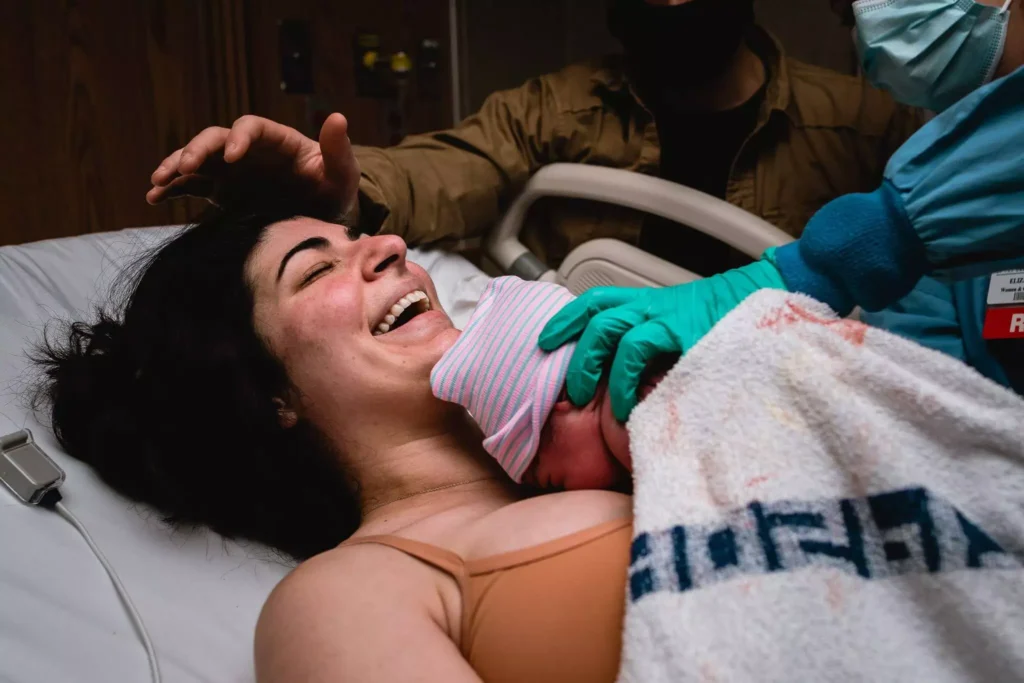

Learn the science of pregnancy and birth to take the mystery of labor away! Understand why you are feeling what you feel, and learn strategies to confidently move through pregnancy and birth!
- 9h+ of Video
- Support Group
- Close Captioning
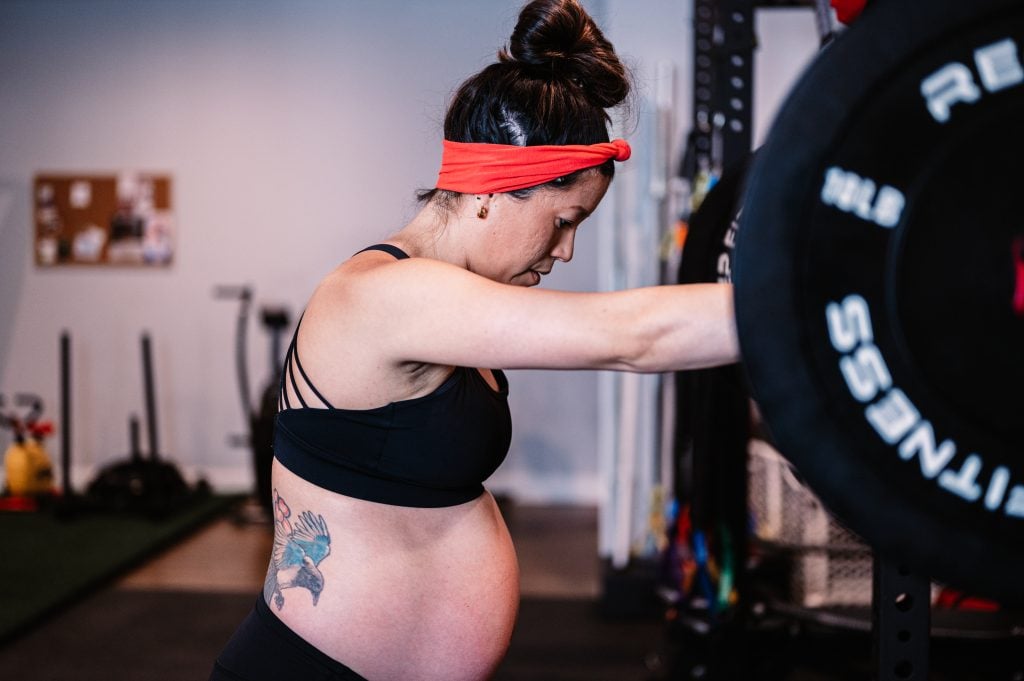

- 5 Workouts/Week
- Gym Workouts
- Self-Paced

Instructor
GINA
Workout on-demand with our prenatal fitness workout videos! Each workout is 30-40 minutes to follow along as you exercise at the same time!
- Birth Prep
- All Trimesters
- Mobility Work

Instructor
GINA
Find comfort and relief from pelvic girdle pain throughout your pregnancy and postpartum period! This program incorporates myofascial sling focused exercises to stabilize across the pelvic girdle joints.
- 3 Weeks
- On Demand Workout Videos to Follow