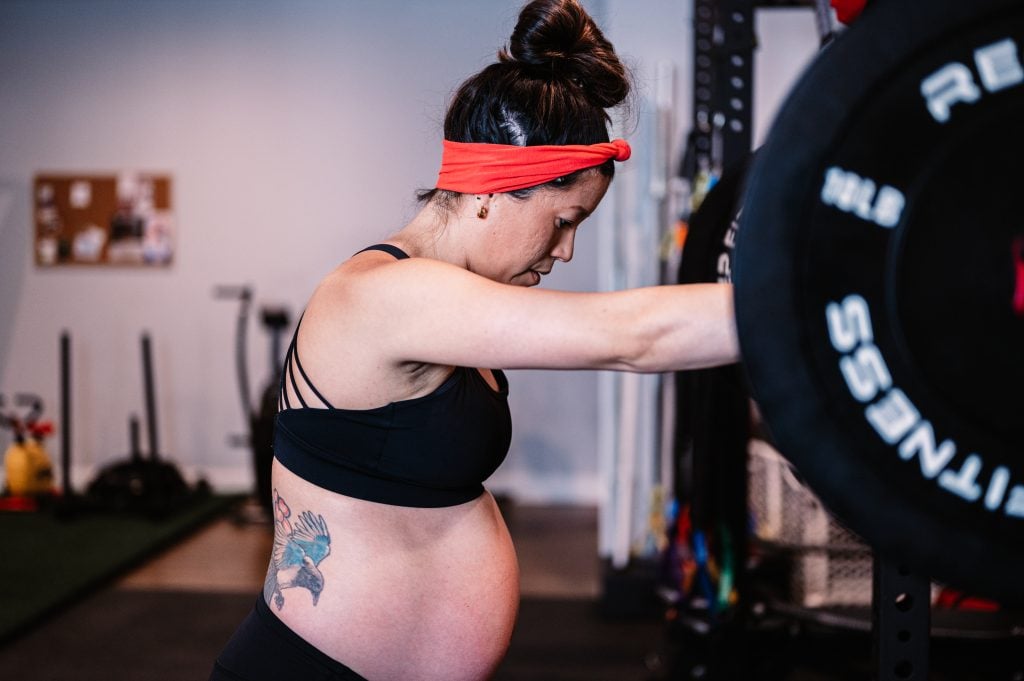
Third Trimester Lower Body Mobility Flow: Release, Relax, and Prepare for Birth
Birth Preparation, Fitness, Prenatal
As you move deeper into your third trimester, your body is working harder than ever. Your hips are shifting, your pelvis is softening, and your center of gravity is changing day by day. All of this transformation can leave your lower body feeling tight or tense—especially in the hips, glutes, and pelvic floor.
Today’s mobility flow is all about creating space, easing discomfort, and helping your body feel supported as you prepare for birth. We’ll explore several hip-focused positions with gentle nuance, intentional breathwork, and supportive props to help you release rather than push. Remember: deeper is not always better. The goal is never intensity—it’s ease, comfort, and connection.
Grab a pillow or bolster and a yoga block, and let’s get started.
Subscribe to our YouTube Channelfor more weekly workouts and educational videos! We publish one new workout video and 2-3 educational videos a week on our channel.
Starting with Full Pigeon: Exploring External Hip Rotation
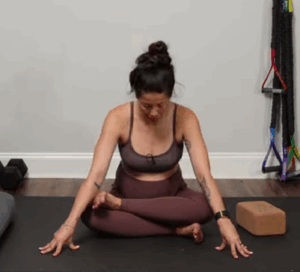
We’ll begin in a full pigeon setup, stacking the ankle over the knee and the knee over the opposite ankle. If your knee floats high off your bottom ankle, place a yoga block beneath the knee for support. When our joints feel supported, the muscles around them can soften—especially important in pregnancy.
Lean forward slightly while maintaining a long spine. Avoid collapsing in the upper back; instead, hinge from the hips.
Here’s where the nuance comes in:
Gently rotate your chest toward one knee or the other
Stay centered if that feels more comfortable
Explore where the sensation lands—top hip, bottom hip, or a bit of both
Let your breath guide the release. Every inhale expands space; every exhale invites softness.
Then, switch sides. Notice if one hip feels tighter or more challenging—that’s completely normal. As always, support the posture so your body can relax instead of clenching.
What you practice here mirrors labor: the most intense position isn’t always the most effective. Instead, choose the position where you can soften. That’s where your body opens.
90/90 Position: Creating Asymmetrical Pelvic Space
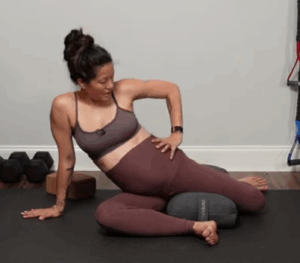
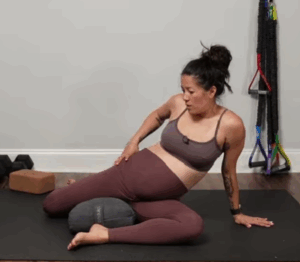
Next, set up in a 90/90 position with your back leg resting on a pillow. Your front leg extends in front, and your inside hand roots into the floor.
Press both knees into the ground as you gently lower your torso toward your side body. You should feel length through the side waist and a subtle rotation through your pelvis.
The key here is subtlety:
Slightly rotate your belly toward your back hip
Press through the front knee to deepen the rotation
Notice how this helps “offload” the front hip and pelvic floor
Side Camel Flow: Moving Between Hip Extension and Side Body Length
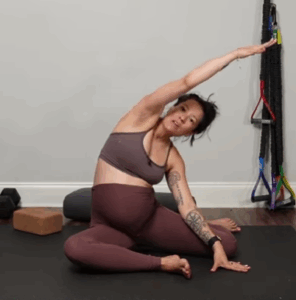
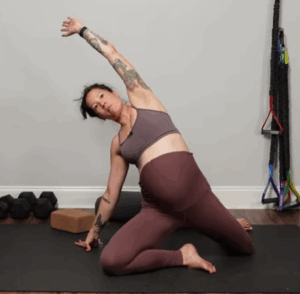
Transition into a seated position and flow between two movements:
Side body opener – sweeping your arm overhead
Hip extension – placing your hand behind you, lifting the chest, and opening through the hip flexor
Move slowly, pausing where your body needs a little extra attention. This isn’t meant to be fast; it’s meant to feel nourishing and intentional.
After about 60 seconds, windshield-wiper your legs from side to side. You can keep your hands behind you for ease or place them in front for a deeper challenge. This gentle swiveling encourages rotation through the pelvis and hip joints.
Then repeat the side camel sequence on the opposite side, exploring the stretches the same way—through breath, awareness, and curiosity.
Returning to 90/90 with Breathwork Into the Pelvic Floor
Place your pillow beneath the back thigh and return to 90/90. As you lower into the side body again, begin coordinating pelvic floor breathwork:
Inhale into the back half of your pelvic floor, feeling your sitz bones gently widen
Exhale and feel a subtle lift through the front half of your pelvic floor
This breath pattern is especially useful in late pregnancy:
Inhales help soften and open, preparing your body for birth
Exhales help maintain gentle tone and awareness
If needed, reach behind you to feel your sitz bone moving—that tactile cue can help your breath connect more intentionally.
Tabletop Hip Shifts and Knee Lifts: Creating Space in the Mid-Pelvis
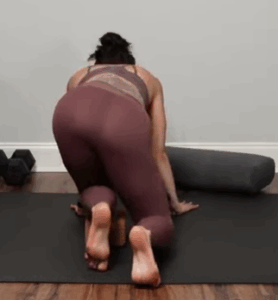
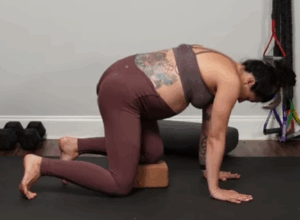
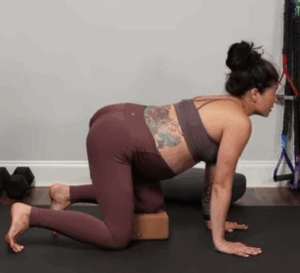
Now grab your yoga block and come to tabletop. Place one knee on the block and shift your weight toward that elevated hip. From here, move through gentle cat-cow motions:
Exhale, round your spine
Inhale, lengthen your belly toward the floor
This variation targets the elevated hip, helping release tension and create room in the mid-pelvis.
Without shifting your weight, begin lifting and lowering the lower knee. Keep your thighs parallel, and maintain a rounded spine to avoid excessive back extension. This movement activates the hip muscles in a way that supports balance and pelvic stability.
Switch sides and repeat the sequence, exploring the sensation and pausing where it feels right.
This sequence is designed to support your body during late pregnancy by addressing the three key areas of pelvic mobility:
1. External Hip Rotation
Full pigeon helps release the glutes, deep hip rotators, and front half of the pelvic floor.
2. Asymmetrical Expansion of the Pelvis
The 90/90 variations mimic functional shapes your pelvis moves through during labor, helping create openness and reduce tension.
3. Mid-Pelvis and Hip Stability Work
All-fours hip shifts and knee lifts gently strengthen and release the hips while opening more space for baby to descend.
Supporting your body in the right positions isn’t just about comfort—it can also make movement during birth feel more intuitive and less restricted.
Final Thoughts
Your third trimester is a time of preparation, both physically and mentally. Taking time to slow down, breathe, and tune into your body can make a world of difference in how you feel.
Thank you for choosing us to support your pregnancy journey. I hope this mobility flow helps you feel grounded, open, and more connected to your body as you approach birth.
Learn the science of pregnancy and birth to take the mystery of labor away! Understand why you are feeling what you feel, and learn strategies to confidently move through pregnancy and birth!
Find comfort and relief from pelvic girdle pain throughout your pregnancy and postpartum period! This program incorporates myofascial sling focused exercises to stabilize across the pelvic girdle joints.