



Welcome to the MamasteFit Podcast Birth Story Fridays! In this episode, Tina shares her transformative experiences of her three births. Tina’s first two births were unmedicated and hospital-based, which she initially perceived as traumatic. However, after an unexpected Cesarean during her third birth, she found a newfound appreciation for her earlier experiences. Tina emphasizes the vital role of prenatal fitness in healing postpartum, sharing how staying active during her third pregnancy helped significantly with her Cesarean recovery. Hosts Gina, a perinatal fitness trainer and birth doula, and Roxanne, a labor and delivery nurse and student midwife, explore how prenatal fitness not only enhances pregnancy comfort and birth preparation but also facilitates postpartum recovery. Tina’s story highlights the importance of mental and physical preparation for an empowering pregnancy, birth, and postpartum journey.
Read Episode Transcript
Gina: Welcome to the MamasteFit Podcast, Birth Story Friday. In this birth story, Tina is going to be sharing her three birth stories. Her first two births were unmedicated hospital births that she initially viewed to be more traumatic and not a positive experience. However, after her third birth where she had an unexpected Cesarean birth, she realized that her first two births were actually much more empowering than she had realized.
She emphasized the importance of prenatal fitness during her pregnancy to help her heal from her Cesarean birth, and the differences between her postpartum experiences based on how active she was during her pregnancy. Tina’s birth stories and postpartum journeys really highlight the importance of staying active during your pregnancy, not only to have a comfortable pregnancy experience, to help prepare you for birth, but also to help you navigate the postpartum with your baby.
Welcome to the MamasteFit Podcast, Birth Story Friday. In this episode, we have Tina here who is going to be sharing her birth stories with us and how MamasteFit helped support her throughout her pregnancy. So thanks so much for being here, Tina.
Tina: I’m so happy to be here, Gina. You’ve been such a huge support to me on this entire journey and I’m so excited to share.
Gina: We definitely connected a lot at the end of your last pregnancy because you were like super pregnant! And so I’m really excited to have you here to share your birth stories, and obviously I love hearing how we supported folks throughout their pregnancies and their birth. So let’s dive into how you prepared for your pregnancy, because this was your third pregnancy.
Tina: Yes. And do you want me to start with my third, or do you want me to give a little backstory first?
Gina: Let’s give a little backstory so that people can understand why you chose MamasteFit this time.
Tina: Yeah, I think it’s really important to have that context.
My oldest is 10, so I have a big, I have some really big age gaps. My oldest is 10, and then I have a six and a half year old, and now, of course, a newborn who just turned six months old. And this pregnancy was approached so differently than my other two were. And it’s funny, I, when I first got pregnant with this current baby, she was a bit of a surprise. My husband had just come back from a deployment and we were not planning on trying to get pregnant, and it was a, “one and done, here you go,” situation. And I was determined that this pregnancy was going to be different- that this, not so much the pregnancy, but that this birth was going to be a different experience. I thought, “Oh, you know what, it’s in the cards for me. I’m going to have a magical birth experience, and it’s going to be incredible.” And I know we’ve talked about this before, generally when I listen to people’s stories and they talk about that magical birth and how incredible it was, and empowering and beautiful, I have a really hard time with those stories because that was not my experience with any of my births. They were still empowering and beautiful in their own way.
But, as you know, birth is hard and it’s just a really difficult journey. But I was determined I was going to have that magical, beautiful, peaceful birth this time. And that was, I really wish that I had MamasteFit for the first two births that I went through- and we’re going to talk about those here in just a minute. But, sometimes no matter how much preparation you do, things just don’t go as planned. And that’s just life, right?
So with my first birth, obviously I knew nothing about birth, about being pregnant like any of us. And there was so much conflicting information. Things were very confusing and I had no idea. Doctors were asking me about birth plans and I had no one to guide me. You know, we’re a military family and we were in the middle of the country. We were living in the middle of nowhere, Missouri- good old St. Bob, Missouri, for anyone who’s in the military. And, we’re Army, but I didn’t have family to support me. I didn’t have friends out there. I had a fitness studio that I was running, and doing that full-time. But when I got pregnant, I didn’t have a whole lot of people to support me. So, I didn’t know what to do. Somebody in my church, someone that I knew through church, she was a doula, and I found that out through the grapevine. And so I decided to sit down and talk with her, and it was the best decision I ever made, was sitting down with her and talking to her. And she had my husband and I, his name is Mark, she had Mark and I sit down and watch a documentary, I believe it was called The Business of Being Born. The Ricky Lake Documentary?
Gina: Yeah. That’s a good one to scare people about hospitals.
Tina: Yeah.
Gina: But it is very eyeopening to understand that it is very much a business.
Tina: Absolutely. And I didn’t take it so much as being scary, but it was very enlightening to see how birth has changed, how the views of birth have changed over the decades, and it made me really think about the decisions I was going to make for this birth because I never saw myself as somebody who could go without pain meds. Yes, I’ve always had a high pain tolerance, but after watching that documentary, I had very mixed feelings about epidurals, about pain interventions. And I know a lot of research has come out and a lot of my feelings are likely unfounded, but that was how I felt at the time. And so my husband wasn’t a hundred percent sold on the whole thing, because he was like, “I don’t know if you can do that, Tina.” But I was determined and my doula, Clara was her name, and she helped me prepare.
And obviously first birth, there’s only so much preparation you can do. You’ve never been through it, and it’s going to be a rollercoaster no matter what. But in hindsight, I think that this birth was my most empowering experience, it was my first birth, because my water broke at home, I had so much wonderful support, I (labored) on a ball after my water broke. It was during the day, and my husband was in the office and I was able to call my doula and I just labored for a couple of hours on a birth ball and was watching the movie Jack Reacher in our living room and just bouncing on a ball. And as things got more intense, I called Clara and she goes, “Okay, you’re having a hard time talking. The contractions are getting closer together. I’m coming over.”
She came over and I think I was in very active labor as we were going to the hospital. And thankfully the hospital there was maybe a 20 minute ride from my house, so it wasn’t horrible. But as being in active labor in a car sucks. It’s just…
Gina: Yeah, it’s not good.
Tina: Yeah. And it’s painful and it’s difficult, and for the first, when it’s your first time going through it too, like there’s just there are so many emotions and there’s so much going on.
They hustled me into the hospital. They checked me and I was already at I think a six or a seven. And so within two hours of getting to the hospital. I was hitting transition and Clara, bless her, she had me, with my chest on a ball, I was on a table and all of the hospitals that I have labored in, I will say, have been very supportive and very, “You do you. You do what you want to do, what you need to do,” and that has been, in all of the hospital I’ve been in, has been a good experience. And anyways, went through transition, I’m throwing things at people leave me alone! I think I threw a ball at my husband at one point… And, anyways, she got, she had to be turned and then she came out and it hurt and it was hard and I had, I think, a third degree tear with her that had to be stitched up. I’ve had third to fourth degree tears with all of my babies except for the last because she was an emergency C-section- but we’ll get to that. Anyways, got stitched up and there you go. It was a pretty textbook eight hours from water breaking to her being out.
So I expected that my second birth would be lightning. I was like, “If my first birth was eight hours from start to finish, my second birth is going to be cake, and it’s going to go so fast!”
Gina: “So she’s just going to fall out!”
Tina: But I had, I felt like I had so much PTSD from the experience of birth. From the pain, the intensity, the… just the overall experience, that it took me quite a few years until my husband could convince me to try for a second. He pushed for the first one as well. I’m somebody who, I didn’t initially want to have biological children. I wasn’t somebody who was anxious to go through that experience, which sometimes I feel bad saying that out loud because I know so many struggle to get pregnant.
Anyways, so by the time I got pregnant with my second, I was just expecting a very smooth, easy pregnancy and labor, and I was expecting it to be very fast. And we were living at the time in Virginia, in Williamsburg, Virginia for my second, and the hospital was an hour away. So I thought, “As soon as I’m starting to have labor signs, we better get to that hospital because I do not want to go through active labor in a car for an hour.” And so when I started having some mild contractions, one evening I called Clara, my doula from my first birth, because she was still in Missouri, and I didn’t have a doula for my second. I thought, “Ugh, I know what I’m doing. It’s going to be fine. I don’t need a doula. I’m in a hospital. They’re going to take care of me. It’s all good.”
And so I had done Hypnobirthing, I had done a lot of Hypnobirthing practice during my pregnancy for my second, and spent a decent amount of time just practicing breathing exercises. But I thought, “I’m probably going to labor the same way, so I don’t need to do anything in that department. It’s going to be fine. I’m just going to have a ball and I’m going to lean over the ball just like I did for the first, and it’s going to be fine.” The things that we say naively to ourselves, when we don’t know.
Gina: Was it fine?
Tina: No, Gina it was not fine! It ended up being fine, but when I was in it, it was not fine.
So I went into, I thought I was going into labor, into active labor at home, and my doula friend Clara was like, “Yeah, go ahead and go to the hospital. Your contractions seem to be consistent,” they were, I think I was having contractions about seven or eight minutes apart. And so we went ahead and we went to the hospital and when they checked me, I was barely a two I think, but they went ahead and checked me in and my mother-in-law had come and taken our daughter.
And so we went to the room and I ended up stalling multiple times through the night. This was a 24 to 30 hour process that we were in the hospital. And at one point, they did break my waters, manually, and that seemed to push me into active labor after a couple of hours after they broke those waters. And of course, at that point, I’m tired, we’ve been awake all night, and I’m getting just really frustrated because things kept starting and stopping and starting and stopping. And, eventually I did go into active labor. And I ended up, after spending hours in different positions on the ball, I was determined the ball was going to work this time just like it did for the first- newsflash, it did not. I hated that position during my second labor. It was the worst possible position. I was like, “Nope, I can’t do this. I can’t do this. This isn’t working.” And I actually ended up spending a large majority of that labor in the shower. Thank heavens there was a shower with hot water at this hospital. My husband spent hours in the shower with me, just hosing my back with hot water.
And when I hit transition, this is where I think if I had a doula for my second labor, things would’ve been very different. Because when I got into, when I hit transition during my second labor, I stayed in transition for about six hours.
Gina: Oh God!
Tina: No pain meds for either of these births, okay? I was in transition for six hours. That last little lip just wouldn’t go. And there was this wonderful midwife, bless her, because she was so patient and so kind. I wish that somebody would’ve made some suggestions to me as to just different positions I could get into to help that last little bit, to move my hips and my pelvis. Nobody ever made any suggestions for that. I just stayed in this same static standing position for six hours. And knowing what I know now, I think that could have been a very different experience if I had somebody there to help me get into different positions and try different things. I think it would’ve been very different.
But as I got to the end and we’re getting close to pushing, I was like, “I can’t. I don’t know if I can do this. I’m so tired.” It had been over 30 hours and finally that last little lip went and I was able to, thankfully just put my chest over a bed and get into a squat position, and I was able to deliver him, again, with third to fourth degree tears. But they stitched me up and everything turned out fine. He was healthy, he was perfect, and I was able to get through that second birth, unmedicated again. Although that one was also traumatic just because of getting stuck in transition for so dang long. I was so mentally exhausted, I couldn’t even hold him other than for the first hour. I was like, “Mark, you need to take him. I just need to rest.” And I had a hard time, transitioning from labor into, oh, the elation of I have a newborn, until the next morning. And then everything sunk in. And it was a wonderful recovery in the hospital.
And postpartum with both of them wasn’t too horrible. It took a long time to get my body back, especially after my second. I think it took a solid 18 months to two years to feel like I really had my body back because I wasn’t as active during my pregnancy with my second. With my first, I was riding horses, I was running, I was teaching all the way up until the last month or so of my pregnancy. And then with my son, I was still teaching full-time fitness classes and working with clients, but I wasn’t personally as active. I rode horses up until, I think halfway through the second trimester. I was an assistant horse trainer at a farm out there, here in Virginia at the time, and I was teaching fitness classes. So I was very active and very much moving a lot, I just wasn’t intentionally strength training, I wasn’t as consistent with those things during my second pregnancy, which is just interesting to reflect on.
Gina: Did you do anything specific to help heal from the third and fourth degree tears each time that you felt was really helpful, like pelvic floor PT, or did you notice any like issues after birth from that?
Tina: Thankfully, I never seem to have issues other than I, and I don’t know if this is directly connected, but I do have severe constipation issues and maybe that’s related to my pelvic floor, i’m not sure. I never did pelvic floor PT though, and I wonder if that would’ve made a difference in my recovery. But overall, my recovery from both was pretty smooth. Yeah, painful for the first couple weeks.
Gina: Okay.
Tina: Lots of witch hazel and sitz baths, but it was pretty smooth and I don’t think I had too much damage.
Gina: I think that’s encouraging!
Tina: Yeah, for sure. Because I really don’t feel like I had any lasting negative impact on my (pelvic) floor post those tears.
Gina: Okay, that’s great.
Tina: And then when I got pregnant with my third, our, “Oops baby”- which is funny because we had been trying before he got deployed, this was the first baby that I pushed for and I started to get a bug and feel like, “You know what? Our family is not complete. I really would like to have a third.” But I was having a lot of health struggles and we went ahead and tried because I thought, “Oh, I’m going to get pregnant,” because I got pregnant within three months with the other two. And I thought, “Oh, if we try for three months before you deploy, I’ll be able to just be pregnant through your deployment and then you’ll come back and we’ll have a baby. It’ll be great!” But for whatever reason it didn’t work out. And after he had been through the deployment, I had been having some more health struggles and my husband put his foot down. He was like, “No. No, we’re not going to do that right now.” And we make plans- and I’m a religious faith person, and so I’ll say this with that context- “We make plans and God laughs,” and that is absolutely what happened here. My husband made a plan and God laughed.
This pregnancy, though, was incredibly smooth. I was so healthy. I actually, one year ago, almost to the day I completed my first Iron Man race, it was
December 10th last year. So I was three and a half, about three and a half months pregnant during that, I had started training in the spring and we, so we got pregnant in late August, didn’t find out until mid-September, but at this point I had already trained seven months for this race. And my husband was very supportive, so I decided to continue training, we just didn’t pay all the fees until we knew for sure I was going to make it through all of the training. And, I made it through the training and was able to complete that race, which was a big deal for me to do that. I didn’t want to drop out because you could push back your race a year and not lose the fees that you’ve paid. But I thought about that and I am not going to want to train for an Iron Man six months after I push out a baby!
Gina: Yeah, no.
Tina: We’re going to, no, no, we’re going to do it now!
Anyways, that said, once I, we got through that and I continued lifting, continued teaching. I actually have reels on my Instagram, on my YouTube channel, of me deadlifting upwards of 160 pounds all the way through the second trimester. Which I had, it’s amazing the number of people that sent me private messages telling me that I was going to push myself into early labor or kill my baby.
Gina: Oh gosh.
Tina: Because I was lifting. And things like that, it just highlights how little people know. And now that’s not to say that’s safe for everyone. For me, I had been lifting before I got pregnant. I had been building up that strength. And so for me that was maintaining my strength. I wasn’t trying to set any PRs. I was being very smart and safe about it. I was in the MamasteFit community. I think I even posted in there, and consulted with you, I believe, in private messages like, “Hey, I just want to make sure this is safe and that I’m not doing something stupid.” And, anyways, I always responded very kindly to those people, but it led to a number of head scratching moments because we want to be strong, we want to be fit all the way through our pregnancy so that we can have that better recovery experience on the other side. And I’m so grateful that I did that, and that I consulted with you and took that advice and had the MamasteFit community to give me the confidence to continue strength training all the way through my pregnancy. And I really do think that made a big difference for me, having that community, having that peace of mind that, okay, I’m, the, decisions I’m making are safe and it’s all going to be fine.
And your course was game changing. I had been following you guys on Instagram for four or five months before I actually purchased the course. I think it was, it might have even been a Black Friday deal where I went ahead and was like, “You know what? I need to buy all the things because…”
Gina: Send it!
Tina: “….these girls, yeah, these girls know what they’re doing and I need help.” So I went ahead and bought your courses and started going through them in January, preparing ahead. I even had my husband watch and go through the partner stuff and we practiced at home. The hip opening exercises were so helpful and they made me feel so much more prepared having an arsenal of positions and movements that I knew could help me throughout the different stages of birth, just if nothing else mentally made such a big difference to my confidence levels going into labor and that experience, because I had a lot of fear going into labor with my third. And I’ve been through it multiple times, I just, it never turned out the way I was expecting. And I had concerns about that. I got really anxious, which I know a lot of people do. And your course helped a lot with just easing a lot of those anxieties and giving me a lot of peace of mind. So I’ll always be so grateful for that and I wish I had it with my first two.
Anyways, I had a friend in Kansas, her name is Sophie. She is still one of my closest friends and she offered to be my doula with my third. And I was coming into my third trimester and she offered to be my support person and I was so excited. And, anyways, we got into the final trimester, so at this point, I’ve done all this prep work, i’ve been so healthy. I did end up with gestational diabetes during this pregnancy, which blew my mind because my diet was so clean and so healthy, and I was so active. I was like, “How does this happen on my third, healthiest pregnancy, and not for my first two? Other than the doctors telling me I was too old, even though I’m, 37, Gina.
Gina: I’m the same age. It’s, oh, wait, no. How old am I? I don’t know how old I am. I think I’m 36. I don’t know how old I am. Yeah. Anyways, we’re the same age.
Tina: I’m like, “I’m 36, 37. How am I geriatric? This is nuts.” But as we started to approach the 40 week mark, I, going to my appointments, I think it was the 39 week appointment, actually, I had this… I feel bad using this adjective, but I had a very crusty OB who I had this appointment with, and he was telling me at 39 weeks pregnant, I really needed to go ahead and schedule my induction because I had gestational diabetes and he was concerned. And he’s like, “You know, you’re 39 weeks. Let’s go ahead, let’s just schedule your induction. Let’s get it scheduled. And we really don’t want you to go much further than this because of the gestational diabetes.” Which of course I knew was well controlled. I had forgotten that day to bring in my paper that had all of my blood sugars recorded. And so he was like, “You didn’t bring your paper, so I can’t know for sure you’re managing your blood sugars,” like you said that to me. It’s like, “Um… I have no interest in risking the life of my baby. I don’t know why I would be dishonest about that,” said that very kindly, and also said, “No, thank you,” to the scheduled induction. I was very clear that I really wanted to go into spontaneous labor and give this baby a chance to come on her own.
And fast forward a couple more weeks, and a few more appointments with more OBs that really wanted me to go ahead and induce and have this baby- which I understood why. Because obviously, they’re not with me every day, and they, from a legality/insurance/liability position, they want to make sure that the baby is safe, that I am safe, and that nothing bad happens. And I appreciate that!
Once I hit 41 weeks, they started to put quite a bit more pressure on. I had one OB that started giving me some very, started putting some very scary thoughts in my head, pushing me to go ahead and induce, just going on and on about the statistics of stillborn when you go beyond 41 weeks and things like that, which really frustrated me. Thankfully I stuck to my guns and looked at her and said, “Thank you. I do understand and I appreciate you expressing your concerns with me. I will make sure to keep them in mind, but no thank you. I am not ready to schedule an induction.” And they had been doing a lot of scans. They did a growth scan and everything was healthy, I wasn’t just blindly deciding to let things continue to progress and to wait, I was making those decisions from a very educated standpoint. I know I messaged with you a few times too, throughout, during that time, to make sure I was making the right choice, making a safe choice for me and for my baby. And she was growing fine, she didn’t look abnormally large. Her fluid levels were perfect. Everything was perfect on every test that we did, and all the ultrasounds, and growth scan, and all of those things.
So at this point you start trying all of the things, right? All of the natural induction methods. I remember spending an hour a day doing the curb walks and the the inversions and the, what is the name of that circuit?
Gina: The Mile Circuit.
Tina: That! The Mile Circuit, I was doing it pretty much daily along with some of your, just the hip opening exercises and the other inversion options, trying to help this baby to come. And in a desperate attempt, I even tried castor oil at one point. They did a membrane sweep twice, and nothing was working. So it’s a testament to me that nothing is going to work until your baby decides it is time to come, at least that’s been my experience. And anyways, we’re a couple of false starts and lots of anxiety and trying to get this baby to come.
But eventually I did end up needing to induce because we got to almost 42 weeks. And at that point I was like, “All right, I no longer feel comfortable. Let’s go ahead and I won’t wait any longer. That’s fine.” And the hospital, it’s funny, once I finally scheduled the induction, it was scheduled for a Monday and then they pushed it to that night and then they pushed it to Tuesday morning, and then they pushed it to Tuesday night because they were so busy they didn’t have, they, they had no room to schedule my induction after weeks of pushing me to induce! Which obviously you can only control how many women go into spontaneous labor at a given time, obviously.
But eventually, we were able to go in. It was a Tuesday, it was like nine o’clock at night. Mind you, I’ve never been through an induction. I’ve never experienced Pitocin. I’ve never experienced any of those things. And I had been so adamantly against using those methods up until this point that my anxiety was sky high. But we got in the hospital at nine o’clock. The staff, they were all very wonderful, because I really wanted to attempt to go through this induction without an epidural, without unnecessary pain interventions, and they were very supportive of that. I showed up at the hospital with my TENS unit that I learned about through the course and a heat pad and I had a ball and, we were all ready.
And so they went ahead and they started the Pitocin and I- oh, another thing that I highly recommend to anyone is to get your own hospital gown. Get your own hospital gown, and have your own clothes to wear in the hospital because their gowns are awful. Anyways, so I was very grateful for that. Contractions started pretty quickly once they got me on the Pitocin. They started it low, but I felt like they shot it up really fast. And those contractions were nothing like the contractions I experienced with my first two labors. And that was a hard pill to swallow, because it was like, going from 0 to 60 in a span of, 20, 30 minutes. And those contractions were just boom, boom, boom. And I didn’t, I had a hard time dealing with them, from the get go. And thank goodness for my dear friend Sophie, who showed up not long after they started the Pitocin and the contraction started, and I can swear up and down that I would not have made it as far as I did without pain intervention, without her. Bless her. I love her and will always be so grateful to her for showing up for me through that experience, because she was able to help me. We did like curb walk up and down the hall. She put me in different positions. She just helped me mentally get through the pain of those contractions, or sorry, I should say, the intensity of those contractions, and got me to the point where my water broke.
We were back in the main room and the nurses were in there and my water broke. And at that point I looked at one of the nurses. And I was like, “I can’t do this anymore. I need an epidural.” They got so intense, I was, I couldn’t manage it any longer. And I, in hindsight, afterwards, even Sophie mentioned we wish that they had checked me when my water broke, because as soon as my water broke, I was in transition, but I didn’t know it. And in my mind, the contractions had been so intense and so difficult to manage up to that point, I was like, “I, this, I’m done. If I’m not in transition right now, I’m done.” And so they had somebody up there really quickly and I had to sit on the edge of the bed, i’m holding onto my husband for dear life, I’m convulsing on the table through the contractions, as this guy is trying to put a needle in my back and give me an epidural. But of course I did not know that I was in transition as I’m trying to be still on a bed. And as soon as the epidural was in, it was time to push.
And I don’t know, in hindsight, what could have been different if I hadn’t had the epidural, if I had been able to be in a standing position while I was pushing. And maybe nothing would’ve changed, but I’ll always wonder a little bit. Because, once I started pushing, we had a flurry of OBs that came into the room and they gave me about an hour to try and push. I was on my back. I begged them to let me get on my side because I was so worried about tearing, and I really wanted to be on my side with my knees in to push to try to avoid that tearing. And I had spent so much time leading up to the labor and the delivery doing stretching exercises down there, making sure that the perineal stretching and whatnot to try to prevent the tearing this time. And anyways, she ended up getting stuck in the birth canal. Her chin was up like this, just pointing up instead of tucked like it should be, and she just wasn’t going to fit through that birth canal, at least not the way she was.
And so the OBs started just shaking their heads at me and were like, “We need to deliver your baby, we need to take you back and C-section her out,” and at that point, what are you going to do? So I went ahead and agreed and they whisk me back and I was just bawling on that OR table, beside myself, just crying and crying. But thankfully they had put in the epidural so that I could be awake during that procedure, and they didn’t have to put me under, because I believe that’s what happens if you don’t have the epidural early enough and it becomes an emergent situation.
Gina: Was she having heart rate issues when you were pushing? I can’t remember….
Tina: Mild.
Gina: …if there was like, something going on with her. Okay. So if it wasn’t like… if it wasn’t like an emergency, like, “We need to get this baby out right now,” they could have given you a spinal, which is usually like pretty quick acting. This is more for folks that are like listening that are like wondering about that.
Tina: Yeah.
Gina: If it was like, baby needs to be out right now and you didn’t have an epidural, it would be general anesthesia. But in your case, if she wasn’t having heart rate issues, they probably would’ve given you a spinal. But I don’t know the exact circumstances that like, maybe something else was going on that was making it more emergent. But you, probably would’ve been able to still be awake, but it was probably less stressful to already have the paid medication.
Tina: That makes sense. Thank you, yeah. This is my first time going through that, and it all happened so fast. And her heart rate was dropping, but afterwards Sophie said it wasn’t extreme, she was recovering. I don’t know. Things happen so quickly when you’re in that scenario and you just have to go with what the doctors think is best at that point and hope for the best. And it, it all turned out fine. She was healthy and no problems. Her birth weight was perfect. It was seven pounds and change, just like my other two were, and so she wasn’t too big.
And I would say this was definitely my most difficult postpartum, obviously C-section, scar, much more difficult to recover from than a perineal tear. And I was in the hospital for three days, which I imagine is pretty standard, normal after a C-section. But it was a really nice, quiet, peaceful time in the hospital. That’s always my favorite part, is that quiet, peaceful time in the hospital afterwards. It’s just really nice and it was wonderful for my kids to be able to come and meet her. And, once we got home, that was probably the toughest part was living on the recliner for a couple of weeks, just letting my body slowly recover and trying to care for a newborn at the same time. But I will always be so grateful for how hard I worked through my pregnancy to stay fit, to stay healthy, to stay strong, because I think that is what made the biggest difference when I got to the other side, into the postpartum of it all. And it helped my recovery immensely, because with my other two, especially with my second, I felt like it took two years to get my body back, to get back to running and full activity and all those things. Which, obviously, I was doing those things long before the two year mark, but I didn’t feel connected to my body.
Gina: Yeah.
Tina: Until so long after. And I’ve, from what I understand, it takes, it can take, correct me if I’m wrong, of course, but it can take up to two years for the hormones to balance back out after you have a baby. I don’t know what the exact timing of that is.
Gina: It can be a very, like a significant period of time after a baby for things to just regulate within our bodies and just to feel connected and like ourselves again. So like I know when you’re saying body back, you don’t mean like fitting in jeans, you mean like I feel good physically in my body to do things,” like I know that’s what you mean. And I think that can take a year to two years because we’re sleep deprived, our nutrition is probably a little funky after babies, we’re caring for children, putting ourselves last. And so it can definitely, it can take some time.
Tina: Yeah. And that’s exactly what I mean. It’s feeling connected, feeling like my body is communicating with itself from head to toe. And i’m now, I’m six months postpartum, and I feel way better six months postpartum than I did with either of the other two, even though I had a C-section because I worked on breath and connecting and building that foundational strength all the way through that pregnancy, which MamasteFit and your programs do so beautifully, and it made all the difference in the world.
I was even like, I was recording, follow along videos for my YouTube all the way through to my six month mark. So it’s, funny if you, go to my YouTube channel, most of the content on there right now, I’m very pregnant. Even though my workouts are not written specifically for pregnant women and during pregnancy, I get quite a few comments about that. These are not pregnancy workouts, they’re just workouts. I just happen to be pregnant.
Gina: Yeah.
Tina: Anyways, neither here nor there. But I’m very surprised with how well my body’s recovered, even though the C-section was not a pleasant experience those first couple of weeks. We did get past it. I highly recommend anyone who has a C-section, make sure that you get the belly binder and wear that thing all the time. Take your time getting to that point where you feel like you can shower and do those things, like one day at a time. It’ll, be okay.
It’s so hard though, and it was such a difficult experience. It’s one of those that so many women go through because the rates of C-section are so high and so many, just because we don’t know what we don’t know, will have a C-section and then all the subsequent pregnancies go ahead and schedule C-sections, and I totally understand why somebody would make that decision. I get it. I respect it. My sister is one, she had a C-section with her first and she already is like, “Yeah, if I get pregnant again, I’m just going to schedule that C-section.” And it’s, it is not an easy way out. Like having a C-section is…
Gina: Oh, no.
Tina: It’s hard! And I’m grateful that I had the experience because I feel that it gives me a whole other level of empathy for anyone else who goes through that experience. Birth is birth and as long as you have a healthy baby, good for you, Mama.
But I just recently got back to running and feeling really good and I feel very grateful and very blessed.
Gina: At six months post C-section, which is awesome. And a huge testament to our prenatal fitness is not just birth preparation, it’s not just training for birth. It’s, one, we can be comfortable throughout our pregnancy based on our fitness, which is a long period of time. It can help us during our labor to move longer, to do all of the things. But even, probably more importantly, it helps you in the postpartum. It helps set the foundation to heal and recover from after birth. And so a lot of the movement patterns that we do during our prenatal program probably really helped you postpartum, like post C-section. Because there’s certain exercises that help you reconnect after a Cesarean birth that if they’re more familiar to you from pregnancy, you can connect a lot easier postpartum. It’d be like if you were doing one type of exercise throughout your whole pregnancy, you’re healing from birth, and then you do that same movement postpartum, it’s a lot easier than trying to learn a whole new movement after birth because that neuromuscular connection is not quite there.
And so I think it’s just like a huge testament to, even though your birth experience was probably not what you were expecting or like preparing for, that the efforts that you put in during your pregnancy still benefited you, even if you didn’t have the birth that you were maybe imagining, because it’s helping you now in motherhood and in the postpartum to feel connected to do the things, to go running at six months postpartum. That’s amazing!
Tina: Oh yeah. It’s amazing. And I feel so grateful. I agree with you a thousand percent, it’s the things that I did during my pregnancy that made all the difference. And like you said, even though I didn’t have the birth that I wanted, it’s okay because I learned a lot from it, and I do feel that it helped me to embrace the births that I had with my first two because, sorry, I’m going to get emotional, because my first two I always viewed them as traumatic births, even though they really weren’t, and having this experience with my third is what I needed to also heal from those and make peace with every experience so that now I can look back and have a much more positive relationship with those experiences, if that makes sense.
Gina: It does.
Tina: Because really, looking back, my first birth was probably my smoothest, most wonderful birth, even though at the time it felt like it was so hard and it was, I don’t like the word traumatic, but that’s how it felt at the time. And then the second, it was just kinda hard and traumatic again. But I think a lot of that was also my mentality going into it and my mentality after it as well. And this time I just embraced it in a very different way. And really as I went into the final stages of this pregnancy and of this labor, I just embraced the whole process and surrendered to whatever was going to happen is going to be okay. I think that was the most powerful mental tip that I have for anyone entering their pregnancy, whether it’s your first or it’s your fifth. Find a way mentally to surrender to the process and just accept it for whatever it’s going to be, and make peace with that because otherwise you’re going to hold onto like the trauma of your births for who knows how long. And I think that can be a difficult experience to walk through life with, too. If you can’t make peace when the birth doesn’t go the way that you were hoping or the way that you were expecting, it’s still all a beautiful part of life no matter how hard and awful it can feel to go through, it’s still beautiful and we’re still creating life and going through this experience that’s going to change our lives and impact the lives of future generations. As cheesy as that might be, I just, I feel at peace this time and I don’t know that I felt that with the other two and I’m, I’ll always be very grateful for that.
Gina: Absolutely, I love that so much. Like I, I love that this birth, even though it wasn’t what you were probably expecting and maybe what listeners were expecting to hear, that it was still like a very healing experience for you and gave you a better perspective on your previous births to carry with you for the rest of your life, which I think is so powerful and like amazing in so many ways.
Tina: And that’s not to say I wasn’t angry.
Gina: Oh, yeah!
Tina: I was very angry in the hospital right after, and questioning everything, and just beside myself. Because I went into this pregnancy and this birth determined to, to, what is the word I’m looking for? To make up for my other two experiences. “Ah, no, I’m going to make up for it, I’m going to have a better experience this time.” But again, we make plans and God laughs, and instead of getting what we want, we get what we need. And being able to sit with that grief and process not only this birth, but the others, and to get to the other side of that, and to find peace was worth it all.
Gina: Absolutely.
Thank you so much, Tina, for choosing us to support you during this last pregnancy. I wish we were there for all of them! And thank you so much for sharing your very powerful stories with us. I just like truly appreciate being able to connect with you on social media to have been a part of your pregnancy journey at the very end. I know we were messaging a whole bunch, and so when you said you wanted to come on the podcast to share your story, I was like, “Yes! I get to meet you virtually now. This is awesome.” So thank you again for sharing your story on the podcast that I know it’s going to really help people that are navigating their own pregnancy journeys.
You said you have a YouTube channel. We’ll link that down below. What is the name of your YouTube channel?
Tina: The Core Blades Chick.
Gina: Okay. Awesome. We’ll link that down below in the show notes for if any of you want to do pregnancy, not pregnancy workouts with Tina on her YouTube channel. And thank you again so much for choosing us to support you and for coming on the podcast.
Tina: Thank you, Gina. You’ve been an invaluable support to me this past year and I will always be grateful. So, thank you!
Gina: Thank you so much for listening to Tina’s birth story. While her birth story may not have been what she was expecting, she still felt very empowered navigating her final birth experience.
She really emphasized the importance of exercising throughout her pregnancy and how that has really impacted her, not only for her pregnancy, for her birth, but more importantly in her postpartum journey. So she feels much more connected, much more healed in the postpartum, even though she’s only six months post C-section. I’m really excited to see where she goes from here as she continues to work with us after birth.
If you want to check out our online prenatal fitness programs, you can check ’em out on our website at mamastefit.com. We would love to help support you to have a strong and pain-free pregnancy, to help you prepare for birth, and to also help you navigate the postpartum phase as well by setting a solid foundation during your pregnancy with your fitness. Again, prenatal fitness is not just about pregnancy and birth, it’s also about the postpartum phase as well.
You can bundle our prenatal fitness programs with our childbirth education course and save and additional 15% off. Our childbirth education course is going to teach you the science of birth. So we’re going to be going over: what is actually happening? Why is it happening? What hormones are involved? How do you open the pelvis? What different types of movements that you can do during your pregnancy and during your labor to create more space within your pelvis to help support your baby’s position and to help them navigate it more easily. So you can check out all of our offerings on our website at mamastefit.com and use code STORY10 to get 10% off any of our online offerings.
Thank you so much again for listening to Tina’s Birth Stories. We release new birth stories every Friday and new podcast educational episodes every Wednesday.
Additional Resources
Prenatal Support Courses
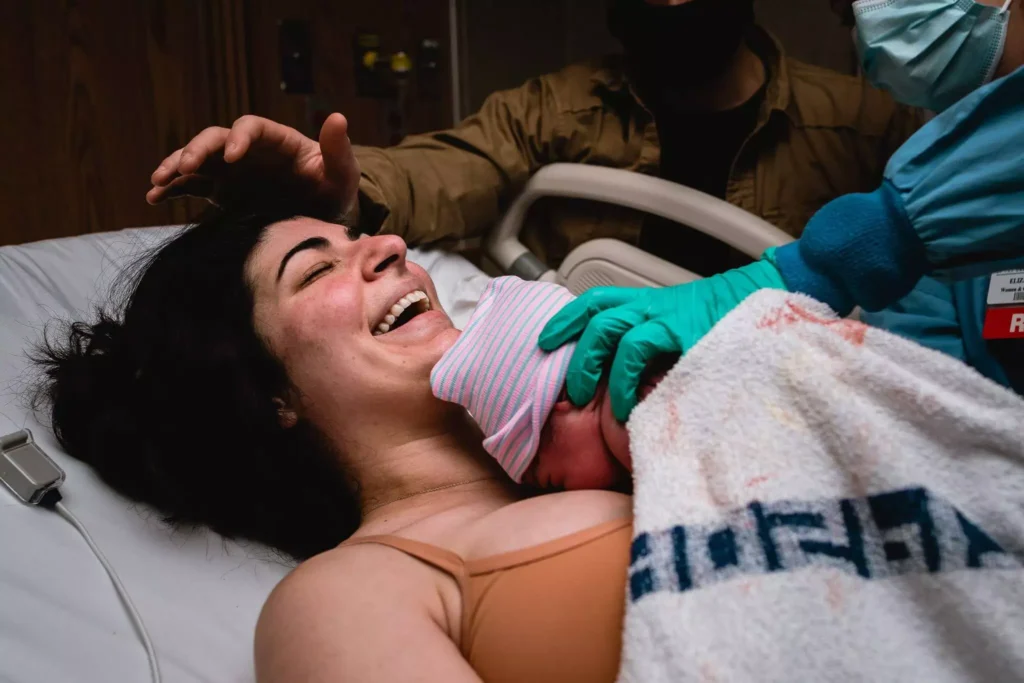

Learn the science of pregnancy and birth to take the mystery of labor away! Understand why you are feeling what you feel, and learn strategies to confidently move through pregnancy and birth!
- 9h+ of Video
- Support Group
- Close Captioning
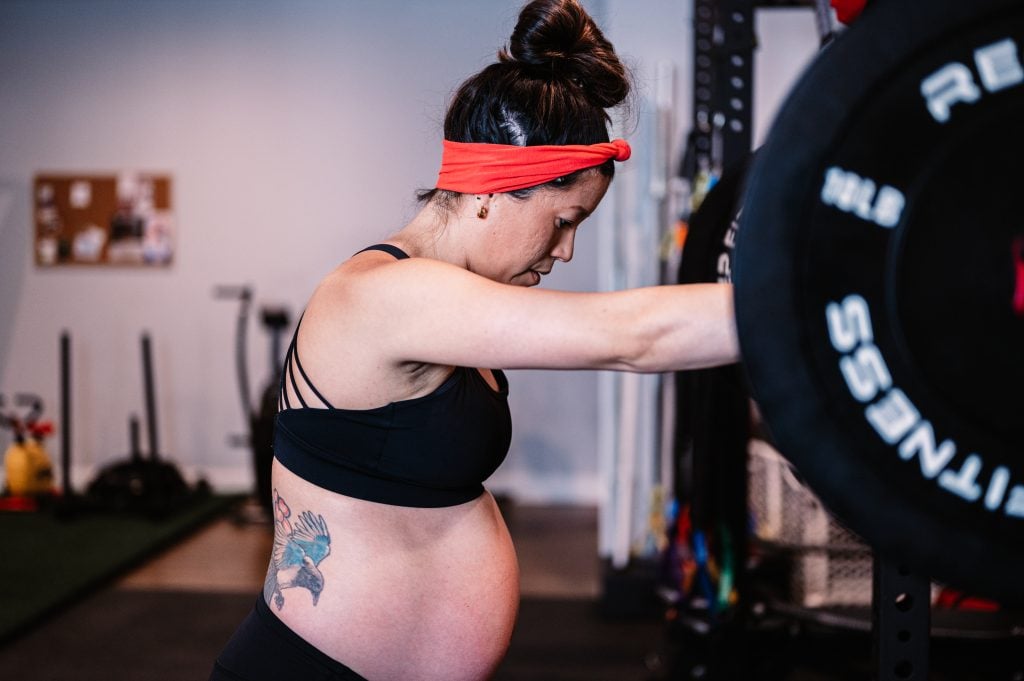

- 5 Workouts/Week
- Gym Workouts
- Self-Paced

Instructor
GINA
Workout on-demand with our prenatal fitness workout videos! Each workout is 30-40 minutes to follow along as you exercise at the same time!
- Birth Prep
- All Trimesters
- Mobility Work

Instructor
GINA
Find comfort and relief from pelvic girdle pain throughout your pregnancy and postpartum period! This program incorporates myofascial sling focused exercises to stabilize across the pelvic girdle joints.
- 3 Weeks
- On Demand Workout Videos to Follow