

If you’re pregnant, chances are you’ve heard about vaginal tearing during childbirth — and it can sound scary. Many women also wonder what does a vaginal tear look like and what actually happens if tearing occurs during birth. The truth is, vaginal tears are very common, and understanding what they are, why they happen, and how they heal can take a lot of fear out of the unknown.
Let’s walk through the different types of tears, how often they occur, what recovery looks like, and what you can do to reduce your risk.
Subscribe to our YouTube Channel for more weekly workouts and educational videos! We publish one new workout video and 2-3 educational videos a week on our channel.
First — What does a vaginal tear look like & What is it?
A vaginal tear (or laceration) is trauma to the tissues around the vaginal opening or birth canal that occurs as the baby stretches these tissues during birth.
This can range from:
Minor skin abrasions (“skid marks”) that heal quickly
Tears involving deeper muscles
Rare cases affecting the anal sphincter or rectum
About 80–90% of birthing people experience some form of tearing or tissue trauma, but many of these are mild and don’t always require stitches.
And importantly: tearing is not a failure — it’s often a normal part of birth.

Common Areas Where Tears Can Occur
While most conversations focus on perineal tears (the area between the vagina and rectum), tearing can happen in several places:
Perineal Tears
The most commonly discussed tears, occurring between the vaginal opening and rectum.
Labial Tears
Tears in the folds of skin around the vaginal opening. These are actually very common and often heal well.
Vaginal Canal Tears
These can occur inside the vagina, sometimes deeper near the cervix.
Periurethral Tears
Located near the urethra. Swelling here can occasionally affect urination temporarily.
Clitoral Tears
Rare, but possible due to tissue stretching.
Cervical Tears
Very rare, but taken seriously due to bleeding risk.
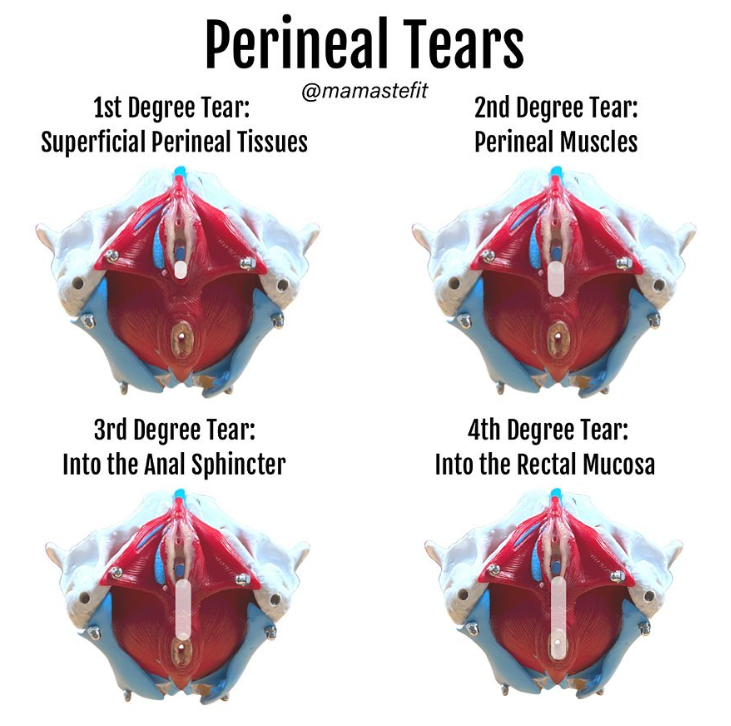
The Four Degrees of Perineal Tears
Perineal tears are categorized into four degrees based on depth:
First-Degree Tears
Affect only the outer layer of skin
Similar to a superficial cut
May not require stitches
Usually heal quickly
These occur in about 5–15% of births.
Second-Degree Tears (Most Common)
Extend into perineal or pelvic floor muscles
Often require sutures
Generally heal well with proper care
About 29–35% of births involve second-degree tears.
Third-Degree Tears
Extend into the anal sphincter
Require careful repair
Pelvic floor physical therapy is strongly recommended
These occur in roughly 1–7% of births.
Fourth-Degree Tears (Rare)
Extend through the sphincter into the rectum
Require surgical repair and rehabilitation
Can affect bowel function if not properly treated
These occur in less than 1% of births.
Do All Tears Need Stitches?
No.
Small tears that aren’t bleeding heavily may heal naturally. However, deeper tears or those causing significant bleeding typically require sutures to:
Promote proper healing
Restore function
Reduce bleeding risk
Pain relief during repair is standard — epidural, local anesthetic (like lidocaine), or sometimes nitrous oxide.
Unmedicated birth does not mean unmedicated repair.
How Common Is It to Avoid Tearing?
About 10–20% of births result in an intact perineum — meaning no tear requiring repair.
While you can’t guarantee this outcome, there are ways to support tissue flexibility and reduce severe tearing risk.
 Video course · 7 modulesPrepare Your Pelvic Floor For BirthSeven modules on releasing the pelvic floor rather than only strengthening it — breathing drills, thoracic and pelvic mobility, and how to relax it during labor.Learn more
 Video course · 9+ hoursChildbirth EducationOver nine hours of video on contractions, comfort measures, pushing, and recovery — so you walk into labor knowing what's happening and what your options are at each stage.Learn more
 On-demand video · 24 workoutsBirth Prep Workout ProgramTwenty-four workouts that open the pelvis for each stage of labor — strength, mobility, and positioning you can start at any fitness level, 15 to 30 minutes each.Learn more
Tips to Reduce the Risk of Tearing
Choose a Supportive Provider
Providers who actively support physiologic birth and tissue protection may use techniques to minimize tearing.
Slow Down During Crowning
Gentle, shorter pushes allow tissues to stretch gradually.
Relax Your Legs
Pulling legs tightly toward your chest can increase tension on the perineum.
Warm Compresses
These may improve tissue elasticity during pushing.
Hands-On vs Hands-Off Support
Research is mixed, but minimizing unnecessary manipulation can sometimes reduce trauma.
Perineal Massage During Pregnancy
Evidence suggests it may reduce severe (third- and fourth-degree) tears, especially for first-time parents.
It may also help you relax during the stretching sensations of birth.
Previous Vaginal Birth
Having delivered vaginally before often lowers tearing risk due to tissue “muscle memory.”
Healing After a Tear
Most tears heal well with:
Time and rest
Good hygiene
Pelvic floor physical therapy (especially for deeper tears)
Monitoring for pain, infection, or healing concerns
Even mild tears can benefit from pelvic floor rehab.
If You Do Tear — It’s Not Your Fault
Birth is unpredictable. Even with preparation, tearing can still happen. And many people heal completely with the right support.
Education, realistic expectations, and postpartum care make a big difference.
The Bottom Line
Vaginal tearing during childbirth is:
Very common
Usually mild
Often manageable with proper care
Understanding the types of tears, how they’re treated, and how to support healing can replace fear with confidence.
And remember — every birth experience is unique.
On-demand video · 30 workoutsCore, Pelvic Floor & Pelvic StabilityThirty follow-along workouts across beginner, novice, and advanced levels, ten per level — core and pelvic floor strength for pain relief in pregnancy or postpartum.Learn more Bundle · lifetime accessMamasteFit BundlesCombine courses and programs for lifetime access and save up to 15% — grouped for birth preparation, the third trimester, or the whole pre and postnatal journey.Learn more
 App program · 16 weeksPostpartum Return to FitnessSixteen weeks of rebuilding, four strength sessions a week, with a vaginal or cesarean recovery track and follow-along videos for the first six weeks.Learn more