

Welcome to the MamasteFit Podcast! In this episode, Gina and Roxanne discuss the essentials of an unmedicated birth, including what it is, why someone might choose it, and how to prepare for it. They delve into mental and physical preparation, emphasize the importance of continuous labor support, and share their personal experiences and professional expertise. The episode also covers the significance of choosing the right birth location and medical team, and highlights the benefits of fitness and childbirth education in achieving an empowered and positive birth experience.
Read Episode Transcript
[00:01:08] Gina: Welcome to the MamasteFit Podcast. In this episode, we’re gonna be talking all about what is an unmedicated birth? Why would anybody want to give birth without pain relief or an epidural? And what are some of the benefits and how can you go about doing it? So Roxanne, how would you define an unmedicated birth?
[00:01:24] Roxanne: So me personally, I define unmedicated birth as no pain relief. Like no epidural, no IV pain relief, personally. But everybody kind of defines it differently. Some people just say no epidural. Some people it is no meds in general. So even Pitocin, even like a Tylenol, no Tylenol either, not that would be super helpful in labor, but could be included. As well as no intervention, so no breaking of the water. So it’s no medicine and no medication. So medicine would be like interventions of monitoring your baby, breaking your bag of water. Medicines would be Pitocin, epidural. So it really is a wide range, but for most people, it means no epidural.
[00:02:08] Gina: When I was pregnant with my first, it was like strange to me that anybody would give birth without an epidural.
[00:02:14] Roxanne: Yeah, same.
[00:02:15] Gina: Why would we do that? But then as I navigated that pregnancy, especially towards the end, I was like, “Oh, I would like this challenge of giving birth without an epidural. I want to see if I can do it. I want to feel what it feels like.”
[00:02:27] Roxanne: And that’s most people’s thought is, “Oh, I want to just, I just want to know if I could do it.”
[00:02:32] Gina: Yeah. And I think I feel like most people can do it in the right circumstances. Like I think there is obviously preparation that is required to have an unmedicated birth. And I think in the actual birth, the circumstances, or the environment, needs to be supportive of that as well.
[00:02:52] Gina: Cause in my most recent birth, with Zoe, as I was laboring in the shower, I was like, “How can anybody do this without a shower or without a birth pool or without a really supportive partner or without an amazing midwife?” There were so many factors that were really beneficial for me having an unmedicated birth, one of them being I didn’t have an epidural because I was at home.
[00:03:13] Roxanne: There was no anesthesia provider.
[00:03:15] Gina: Yeah. No provider to give me an epidural, step one. It’s not an option. That’s how you can have an unmedicated birth, guys. Episode over.
[00:03:24] Gina: But there were so many factors that helped to support me be able to move through that without suffering. Without it feeling like this unmanageable thing. And so one of the things that I found to be very helpful to have an unmedicated birth was one, the preparation aspect of it.
[00:03:43] Gina: So what are some things that you did to prepare for your unmedicated birth or that you recommend to your patients?
[00:03:50] Roxanne: Things that I recommend to my patients to mentally prepare for an unmedicated birth- because again, this is the most important aspect, and more likely people who prepare in some way for an unmedicated birth are more likely to have an unmedicated birth.
[00:04:06] Roxanne: If you show up to Labor and Delivery and you’re like, “I would like to have an unmedicated birth, I don’t want an epidural,” and I ask you, “Okay, what have you done to prepare?” and you say, “Nothing,” I’m going to, you’re most likely, those situations, they decide to have an epidural. At some point during their labor process, they’re like, “I’ve changed my mind, this sucks, give me an epidural.” I still support them the same. I will clarify, we support you the same, whether or not you change your mind or not during the before part of you changing your mind. But most of those people do decide to get an epidural because they haven’t done that mental prep. So I just need to emphasize the mental prep, prior to, is important. How we all do it is different.
[00:04:47] Roxanne: I chose to do hypnobirthing. So I listened to the same track throughout my entire pregnancy. First at night time and then I implemented it during the day. And I do think that was really helpful for my first birth because it helps with those mental hurdles during the labor process of, “This shit takes forever!” Something that helped me was just like having those, like, being able to pull those tracks and listen to them helped me be able to get through the at least early active portion of labor. Even just meditating. I did do yoga a lot too. So like I did some meditation outside of the Hypnobirthing, but I think those two things were like the biggest things that I did. Obviously, I took Gina’s childbirth education class before I taught it with her, so that I’m gonna obviously give major props to, five stars, or ten stars?
[00:05:35] Gina: I think it’s five stars.
[00:05:35] Roxanne: Five stars.
[00:05:36] Gina: Yeah.
[00:05:37] Roxanne: Obviously that is the reason I went unmedicated, Gina. But no, I really do think the mental prep of Hypnobirthing and meditation were two really important steps for mine.
[00:05:47] Gina: I will say that I did not do really any Hypnobirthing or meditation mantra type stuff for this last birth, or really any of my pregnancies. So I don’t want anyone listening to feel like you have to in order to have an unmedicated birth. But I think it is about establishing a mindset and a place that you can go where you believe that you could do it.
[00:06:08] Gina: And something that helped me do that was listening to birth stories. So listening to other people’s stories who had unmedicated births were really helpful for me, especially for people that had similar experiences to me before. So my first pregnancy, or my first birth, I had an epidural, and so I wanted to listen to the stories where somebody had an epidural and then went and had an unmedicated birth the next time, because it was, “Oh, I couldn’t do it the first time, so maybe I’m not going to be able to do it ever. Maybe this is just not for me.”
[00:06:39] Roxanne: Yeah.
[00:06:40] Gina: But reflecting on that birth, it really was just the environment and the the different factors that kind of contributed to how I was feeling that really pushed me towards getting an epidural, because I was, like, spiraling through it. And listening to birth stories was really helpful for me.
[00:06:56] Gina: Another part of the mindset prep for me was having relaxation techniques and like different breathing techniques that I can utilize during labor to help me relax my body. And so it was in the mind and I had- obviously everything’s in your mind and then translates to your body- but so it was thinking about taking really slow, deep breaths, vocalizing with contractions, were both like two things that were super helpful for me.
[00:07:20] Gina: But when it comes to vocalizing, sometimes we feel embarrassed to make noise.
[00:07:24] Roxanne: How dare you make noise?
[00:07:25] Gina: Yeah, because I’ve actually, I’ve been at births where the provider told someone to be quiet, or to stop like yelling. And I was like, “Excuse me!”
[00:07:36] Roxanne: Someone told, a midwife told me that in another country, they had a patient who told them that they were vocalizing during labor and the doctor punched them in the face. So it is widely not allowed in some places, like you cannot make a single sound even though labor is not pain free.
[00:07:55] Gina: Yeah, like I have definitely heard more stories of folks being told to be quiet, or like you’re going to disturb the other patients, or just feeling embarrassed themselves. But know that you can make noise, like it’s actually very helpful to make noise, like I don’t, I would hope that nobody…
[00:08:11] Roxanne: Your throat might be a little sore afterwards, so having some cough drops could be beneficial.
[00:08:16] Gina: Don’t scream. Screaming is not beneficial.
[00:08:20] Roxanne: Even deep, low noises can be a lot on your throat if you make it for 12 plus hours, it could still hurt.
[00:08:28] Gina: But if you have to scream, it’s okay.
[00:08:29] Roxanne: But yeah, have some cough drops.
[00:08:31] Gina: Make whatever noise you need to make. But vocalizing was something that’s really important to me, or really helpful for me, but it was important to prepare mentally to make the noise, to be okay, and not be embarrassed by that.
[00:08:44] Roxanne: You were also at home.
[00:08:44] Gina: Yeah. In a hospital setting too, most people give birth in a hospital, not to be afraid of the noises that you make because it’s super helpful to relaxing within the body.
[00:08:55] Gina: Other things that can be really helpful for preparation is movement. Obviously, we’re big proponents of exercising during your pregnancy. Whatever exercising feels good for you is most important, not necessarily like what Gina would choose to do. Obviously, I have a preference. I like to lift weights. If you don’t like to lift weights, that’s okay. Go for walks, do yoga, do whatever activity feels good for you, but move your body during your pregnancy because that really helps to translate during labor, because it is a physically intensive activity.
[00:09:23] Roxanne: They don’t compare it to running a marathon for nothing. Like it is labor intensive.
[00:09:27] Gina: Like it is physically intensive.
[00:09:29] Gina: And so having the strength and the endurance to be able to move for longer, to change positions, to have good mobility is going to be really important to helping you during labor, especially if you’re wanting an unmedicated birth.
[00:09:41] Gina: And so for me in my most recent birth- because obviously this is fresh in my mind, so I’m going to be highlighting it throughout this entire episode- like I would find these like hip shifted movements during my contractions because I found that I was clenching a little bit in my pelvic floor and so I found just like moving into positions that stretched it were like really helpful to help me relax within my body. So I would vocalize, and then I would shift around in my hips in a way that felt like intuitively good for me, but it was stretching my pelvic floor, and it was helping me to like really relax down there instead of just like staying still and like just clenching my whole body. But that was like movements that I was doing during my pregnancy, and so they were accessible to me, they were familiar to me. I wasn’t just suddenly trying to learn this new movement in the middle of labor, it was something that I had been doing my whole pregnancy.
[00:10:31] Gina: And if you want some movements to do during pregnancy, we do have a free birth prep guide that has different stretches and different things to help release tension in your pelvic floor, release common areas of tension during pregnancy, and also help support your baby’s position, which are all things that can help you as you prepare for birth. And it is free, so we’ll just link it down below in the notes.
[00:10:49] Gina: Let’s take a break from this week’s episode to hear about our podcast sponsor, Needed. Needed is a nutrition company that specializes in optimizing nourishment for the perinatal timeframe that both Roxanne and I have utilized during our own pregnancies, into the postpartum.
[00:11:02] Gina: And so even postpartum, I’m still taking my Needed prenatal because a lot of folks will ask, “What postpartum vitamin are you taking?” I’m taking my prenatal still! Because that thing’s good. It’s really good for me. So prenatals are really important to take throughout pregnancy because a lot of us still have nutrient deficiencies even if we’re eating really amazing diets.
[00:11:25] Roxanne: And this could be related to just a lot of things with the soils, we can go on a tangent of, like, why we’re not getting all of the nutrients we need, but that is why a prenatal vitamin that is complete is so beneficial during pregnancy, because we need to make up for all of those nutrient deficits that we now just have, as a nation.
[00:11:43] Roxanne: Needed is very intentional about their ingredients and the dosages and the forms of their ingredients that are within their prenatal vitamins. And they have three different versions of their prenatal vitamins, so you can pick and choose which one you like. They have their original prenatal multi powder, so you can add that into smoothies. We would use it during our first trimester with morning sickness, like I’m not taking pills during that first trimester and it’s just really easy to add it into your coffee or smoothie. But then they have two capsule versions. So they have the essentials, which is like three capsules, very manageable, but then they have their complete one that is eight capsules. So that is a lot, but that’s why they have the essentials because eight is a lot for a lot of people. But the complete in the powder has like the most nutrients and those optimal dosages for our bodies that we need during pregnancy..
[00:12:30] Gina: So we highly recommend Needed. Again, we personally use it and we only promote brands that we truly love and trust, and you can check them out at thisisneeded.com and use code MAMASTEPOD to get 20 percent off your order.
[00:12:41] Roxanne: I personally liked during my contractions, especially when it got a little bit harder, was just jiggling of all of my muscles. That helped me relax. They normally recommend to do like the jiggling in between contractions, because that’s when we want to emphasize more relaxation, but I found it to be like exceptionally helpful during the contractions, especially near the end of the labor. Because just like my butt would just clench up and if someone wasn’t jiggling it, it would not relax. Hip squeezes were great, but it was, I needed a hip squeeze jiggle at the same time.
[00:13:14] Gina: Yeah, I definitely needed more of the jiggling towards the end of labor as well.
[00:13:18] Gina: So that’s something else as a part of your preparation, comfort techniques.
[00:13:21] Roxanne: Yeah.
[00:13:22] Gina: Have a whole arsenal of comfort techniques prepped that you know how to use. You’ve turned your TENS on before you’ve made it to the labor room.
[00:13:30] Roxanne: You’ve practiced. You’ve practiced them.
[00:13:31] Gina: You’ve practiced hip squeezes. You’ve practiced different massage techniques. You know how to turn the shower on. So when you get to your labor room, if you’re not quite in active labor, have the nurse walk you through things real quick. Because sometimes there’s a little, you gotta jiggle the knob a certain way to make it turn on. You don’t know a feature that’s available in the shower. And so having an arsenal of comfort techniques that you plan to utilize is super helpful because you might not use them all, or you might in the moment realize that you don’t like one of the techniques that you have in your little pile.
[00:14:04] Roxanne: Have them all.
[00:14:05] Gina: So I had a whole basket of, these are my labor comfort tools that I’m going to use during my birth. I had a birth sling in there, birth comb, a TENS, oils, like you name it, it was in that.
[00:14:19] Gina: The only thing that I used out of that entire basket was the birth comb because I wanted to try it out because everyone raves about how amazing it is. It was, 50/50 for me. It was okay.
[00:14:28] Roxanne: It was okay.
[00:14:29] Gina: It wasn’t that great. I was really expecting, I think my expectations were way too high for it. It was just something, it was a distraction tool to just hold in my hand. The shower and the tub and hip squeezes and jiggling my booty was like the only thing that I wanted for my labor.
[00:14:45] Roxanne: But I think it’s important to, if you don’t have a basket of all of the tools, having a list of all of the different labor comfort tools that you would want to utilize or have implemented during your labor. Because Gina even said at the end of her labor, she wished that I would have been like, “Oh, let me cue you through this relaxation sequence,” instead of like her having to ask for it, I would’ve just been like, “Oh, let me try this thing.”
[00:15:07] Roxanne: Having a list for your partners and people that are supporting you so that if something seems to not be working anymore, like maybe the tub’s not working anymore, what, else could we do? Hey, maybe we can get out and try the TENS. And you have this list to be like, “Hey, she looks like she’s no longer coping. Let’s try a different labor comfort tool.” Then I have this handy list to be like, “We tried this. Checkmark. Let’s move on to the next one. Oh, this one’s not working. Checkmark. Move on to the next one.” And just go through the list until you find something that works. And if we had, in the moment thought of that list, other than, “Oh, Gina’s pushing. She’s fine.” I could have been like, “Oh, she might really benefit from the relaxation sequence,” rather than me waiting for Gina to be like, “I need a relaxation sequence, please tell me.”
[00:15:50] Gina: Just read my mind. It’s really hard to ask for what you want or what you think might help when you’re actively in labor.
[00:15:58] Gina: Like sometimes I can ask, I’ll be like, “I want you to squeeze my hips or I want you to jiggle my hips.” But sometimes it’s really helpful when your support team just does these things for you, or they offer it. And then they try it, and whether or not it works during the contraction, that’s so much easier than asking for things.
[00:16:17] Gina: And so it’s also important as you prepare for an unmedicated birth that your support team is also preparing. So your partner is taking the classes with you. Your partner is watching our YouTube videos. Your partner is, you’re sending them all of our reels so that they know what to do. They should be an active part in the preparation also, because they need to be able to know what to do.
[00:16:38] Gina: Now, if your partner is like, “I’m overwhelmed. There’s so much information, I feel like I’m going to fail you,” hire a doula, hire an additional support person, or have a friend come who’s familiar with birth, so that they can help too. Because sometimes it’s just like you have like your girlfriend come and help you out, because she’s been through it, and she knows. Or have the birth professional like the doula come, who can do all these comfort techniques and stuff for you.
[00:17:04] Roxanne: But also be like, “Hey, she’s doing this, try doing this.” So like Gina at one point was like this in her labor, like shoulders up by her ears.
[00:17:13] Gina: Why would I be like that?!
[00:17:14] Roxanne: Like during labor, just super, super relaxed. And I was like, “Oh, she’s raising her shoulders up. Let me go over there and tell her to relax her shoulders and give her a little shoulder massage.” And if you were in the birth world, you’d be like, “Yeah, that’s a really common place for people to hold their tension during labor as well as between their eyes. And so if I’m seeing that, be like, ‘hey, just relax right here. Relax those shoulders down.'” And a doula, if you have someone there with you, will be like, “Hey, go, massage her shoulders. She’s holding a lot of tension there. That’ll help her relax.” And that could be really beneficial.
[00:17:44] Gina: I will say that, so whenever somebody hires me as a doula or they interview me, I tell them, “Hey, I am not there to replace you as the partner. I have not had the same opportunities to build this type of relationship with my client. I did not choose to make a baby with her. Obviously, you two are closer, I would hope. I’m just gonna, give you the answers to the test so that you can know what to do, and I’m going to whisper it in your ear and be like, ‘maybe try this.'”
[00:18:14] Gina: I have had that backfire a few times during labors where I’m like, “Hey, why don’t you give her this tissue? She’s sniffling a lot.” And the mom like yelled at him. And I was like, “I’m so sorry. That was me. I’m sorry. Don’t be mad at him. I thought that would be really helpful and nice. And I apologize.” So sometimes it does backfire. I usually own up to it though if someone gets angry that somebody offered something to them. I’m like, “That was me. That was my idea. I’m sorry. I was trying to make him look good.” But in general, like the doula can give you like the hint to try this, and then you get all the credit for being an amazing partner.
[00:18:53] Gina: But partners also need to be a part of the preparation.
[00:18:56] Roxanne: It helps so much.
[00:18:56] Gina: And they also need to physically prepare for birth.
[00:19:00] Roxanne: Yeah, that’s true.
[00:19:01] Gina: It’s not quite the same level of preparation as the person who is pregnant. But, labor support is physically intensive for an unmedicated birth.
[00:19:11] Gina: Now, if you’re planning to get an epidural, it will probably not be super physically intensive, like a little bit at the beginning. But if you want an unmedicated birth, like your team is like awake with you, they are moving with you, they are squeezing your hips. There is a lot of physical demand on partners as well, not quite the same as the physical demand on you as the person birthing, but like they still need to be physically, they have to be in good shape to support you.
[00:19:38] Gina: And so my husband was doing like a bench press like daily before our birth, like the last, two months of my pregnancy, cause he’s like…
[00:19:45] Roxanne: Just lots of upper body strength.
[00:19:47] Gina: He’s like, “You love hip squeezes, and my chest hurts after, and so I’m just going to bulk it up as much as I can.” So he was doing a lot of chest exercises, tricep exercises, lower back exercises. He was doing all the exercises, because he knew that my early labors are long and that we were going to be doing this for a while.
[00:20:06] Roxanne: And he wasn’t allowed to complain.
[00:20:08] Gina: And he was not allowed to complain. Last time, our third birth, he complained. And I was like, “I will murder you. I will murder you.” I will not. Don’t hold that to me.
[00:20:18] Roxanne: In the moment that’s what crossed your mind.
[00:20:20] Gina: So partners also have to prepare mentally and physically for birth as well, and also be on board with you wanting an unmedicated birth. And so I’ve had births that I’ve been at where the mom is, “Ah, I don’t really know if I want to do this anymore,” but the partner knew how important it was. Like she had been preparing her whole pregnancy, and so they were trying to encourage her and be like, “Yeah, you can do it if you want to!” Obviously, we’re not going to force anybody to not….
[00:20:48] Roxanne: Yeah. And I think that there’s a difference between some partners who are like, supportive and trying to encourage them to not get that epidural because they know that’s what they wanted. They didn’t want to get the epidural, so they’re like making sure, almost in a way, that they are like, “Yes. No, changed my mind, I want that epidural,” or, “Yeah, I can do this, we got this!” There’s a difference between that and being like, “No, you can’t get an epidural because you said you didn’t want one, too bad.”
[00:21:13] Gina: “Because I don’t think you should get one.”
[00:21:14] Roxanne: “I can clearly see that you are no longer coping, and struggling through every single contraction and not relaxing at all. But you said you didn’t want an epidural. So you can’t get one.”
[00:21:23] Gina: Obviously, I think there’s a difference. I think most partners are reasonable,
[00:21:26] Gina: But it can be helpful if your partner is on board with you wanting an unmedicated birth, and knowing how important it is because they can help encourage you to continue to go. As opposed to being like, “Are you sure you don’t want to get an epidural right now? It just seems like you’re in a lot of pain and this just seems like…”
[00:21:42] Roxanne: Yeah.
[00:21:43] Gina: Yeah, no, that’s not helpful at the time.
[00:21:46] Roxanne: One of the biggest things with an unmedicated birth is that like continuous labor support is just so important. So we can’t really emphasize that enough. Like you can probably do it like alone by yourself. People give birth by themselves. But like the continuous labor support during labor is so important for an unmedicated birth, whether that’s a doula and your partner or just your partner.
[00:22:09] Gina: When I think about my last birth, the first six or seven hours, I was just fending for myself with my children in early labor. Contractions were super spaced out. I like, I didn’t really need a whole lot at that time. But I knew that my labor was not really going to progress until I had somebody there with me supporting me during the contractions.
[00:22:28] Roxanne: You mean your kids weren’t your support?
[00:22:30] Gina: No, they were not a great support team. They were wanting to play in the pool.
[00:22:36] Gina: So for me having that in person support of somebody that was like physically with me at all times was like super, super beneficial.
[00:22:47] Gina: But on the other hand, I also had a lot of people around me, once like everyone came to the birth.
[00:22:53] Roxanne: And they’re all just staring at you.
[00:22:55] Gina: It was my husband, Roxanne, my mom, the kids, the midwife, the birth assistant, the photographer. So that’s like a lot of people, and everyone was like chit chatting around me and to me because it was still early and so it felt like very relaxed. But I was like getting, I was like starting to go into the zone of labor, but then being pulled out.
[00:23:18] Gina: And so I was at that transition, I think it was at active labor, active labor, I’m like, I hear nothing. I have no idea what’s happening around me. But when I’m in that transitional phase from like early to active, like it’s easy to get pulled back to like early labor. So you’re like going back and forth. And there were too many people chatting around me.
[00:23:37] Roxanne: Yeah, don’t have a party for your labor.
[00:23:39] Gina: Yeah, so that, that was like, okay, I have too much support. I need less. So once people went back to their spaces,
[00:23:49] Roxanne: We sensed Gina wanted to be alone.
[00:23:50] Gina: And it was just me and my husband, it was, like, things were able to start to progress.
[00:23:54] Gina: And usually where I went where I needed space was the shower, or the toilet. And so if you’re in labor and there’s a super loud nurse that walks in the room, because this happens sometimes when I’m supporting births, where she just busts in and she’s like bellowing into the room. And I’m like, “Do you not have volume control? Think a library voice volume!” A good place to hide is the toilet or the shower cause most people will like knock before they just bust in on you pooping or whatever. So if you need space, that’s where I would recommend retreating to so that you can collect yourself.
[00:24:33] Gina: And so for me, I would go into the shower and then I went for a walk, like with, just me and my husband cause I was just like, “I need some space from all of the noise around me and all the people so that I can focus.” But the shower was definitely my place to go when I was like, “Everyone, leave me alone!” Because no one can follow me in there. It’s a really small bathroom.
[00:24:53] Roxanne: We tried.
[00:24:54] Gina: You tried.
[00:24:54] Roxanne: We tried. I’m just kidding. I did not try.
[00:24:57] Gina: Having someone physically there with me for every contraction, especially when I was in active labor, was mandatory. Like whenever I felt a contraction coming, I was like yelling for my husband. I was like, “Get back over here! Don’t go. You need to come and squeeze these hips and hold me, or let me hang from you,” I needed like physical touch and support during every contraction. And that was definitely something that was like super crucial to me. And then there were points during the labor where I needed like somebody else to talk to me and help me relax. And so one person would be jiggling my hips while my husband, I was holding my husband’s hands. And so the physical support was like a huge aspect of why I know I was able to have an unmedicated birth or to give birth without an epidural because I felt just so supported.
[00:25:45] Gina: And so after the birth, I was like so sad. Cause I’m like, “Oh my God. there are people out there that don’t have support like this,” that are not just completely surrounded by love and, “You’re amazing! And like cheerleaders like all around you. And I’m like, “Oh, that’s so sad that not everybody gets that.” And I’m like, “How does anyone give birth without an epidural without having this support?” It obviously is possible. People do it.
[00:26:13] Roxanne: And I think that there is a spectrum of people, obviously, during labor who need more support. And some people are like, “Please don’t touch me and get away from me. Don’t talk to me or look at me. Or don’t even look at me.” And I’ve supported births at birth centers where they literally are like, “Please don’t touch me, I’m just going to go hide in this bathroom until I start bearing down and then you’ll hear me, so then you’ll come and just catch the baby as it falls out.” And that’s totally fine.
[00:26:37] Roxanne: So if you’re like, “I don’t want anyone to look at me, is something wrong with me?” No. Some people just don’t need that physical support. But sometimes, every once in a while, I’ll just be like, “You’re amazing!” That gives you the motivation to give you the motivation to keep going. Yeah, a little check in.
[00:26:54] Gina: I do have clients like that, too, that prefer just be in their own little space. A lot of them will go into the shower and then I’ll stand in the bathroom or towards the door to see if they need anything. But honestly, if somebody is coping well, you don’t need to interrupt that process by any means.
[00:27:13] Gina: I would say in comparison to my four births, the one factor that I have found to be really helpful for me to have an unmedicated birth is who I chose to be my provider and my medical team. Because usually the medical team is the portion of your team that you may not know very well. And so for me in my first birth, there was like a lot of people that I didn’t know, like coming into the labor room and interacting with me, some of them in a more negative way like that really negatively impacted my experience. Some of them in a much more positive way. So it was, it felt like almost like Russian roulette, who are you going to get to support your birth? But when it came to my home birth, like I got to choose my midwife. So I knew who the provider was going to be. I knew who the birth assistant was, or had a general idea of who that person was going to be. Like I got to choose like my support team with Roxanne, my mom, my husband, and then Brittany, our birth photographer, who’s also a doula. And so I had much more control over like the people in my space, which was really, important and helpful for me. But I know that not everybody wants to give birth at home to have that type of control.
[00:28:19] Gina: And so, if I was giving birth in like a clinic or like into a hospital setting- like I was doing dual care, so I had care with like midwives like in a hospital while I was preparing for home birth- and so sometimes like meeting the different providers can be helpful so you have an idea of who the different ones are. Because some, most of them, do like on call schedules so you don’t always know who the provider is going to be at your birth. But then also knowing that you don’t normally interact a ton with the providers as well.
[00:28:47] Gina: And so I think if the vibe in your clinic is vibing with you, you’re probably going to have a good vibe when you make it to your labor hospital or wherever you’re planning to give birth because the environment and kind of the personality of the clinic seems to resonate with the hospital that you go to as well. So if you have good feelings with your provider, you’re probably going to have good feelings with the nurses that you maybe have never met before, like at your, when you make it to labor and delivery. Does that make sense?
[00:29:16] Roxanne: Yeah.
[00:29:17] Gina: Yeah. So that would be like my recommendation if you’re not giving birth at home or maybe not at a freestanding birth center where there’s, it’s a smaller team that you have more exposure to, is to really just think about how do I feel about my appointments? Do I feel very supported by my providers? Because that’s going to continue to labor and delivery with the nurses because they’re going to vibe off the personalities of the providers that support them.
[00:29:42] Roxanne: I think that’s super important to share though, because some people will not really vibe with their providers or like they go for the tour of the hospital and they’re like, “I’m not really like loving this environment. I’ll just hire a doula and then I’ll be fine.” So like you still choose to deliver with those providers in that hospital and really like just cling on to the hope that your doula is going to save you from everything. And I think that just sets you up for like really unrealistic expectations.
[00:30:11] Gina: It’s really, it’s a lot of pressure.
[00:30:12] Roxanne: Your doula is just part of the team and it does put a lot of unnecessary pressure on your doula because like they can’t save you from a provider who wholeheartedly doesn’t believe in unmedicated physiologic birth.
And like your doula is not there to advocate for you to be like, “No, they don’t want Pitocin,” or, “No, they don’t want that,” because that is not their, that’s not their job to make those medical decisions for you. They’re just there to provide continuous labor support and help you make decisions, not make them for you.
[00:30:41] Roxanne: And so a lot of places that I’ve worked, like they hire a doula to be that person to be like, “No, don’t touch them. No, don’t do this.” And I think that puts too much on their doula, that it almost takes them away from their actual job of providing you support to make you feel safe and supported in those birth locations.
[00:30:59] Roxanne: So if you are able to switch providers, if you live in an area that your provider, like you can just find someone else that’s supportive and in a hospital that’s more supportive, I would 100 percent recommend that. But I also know that’s not accessible for everybody, maybe that doula is helpful.
[00:31:15] Gina: Something else, thinking about the hospital setting, for my home birth, what I was like, “I need this,” was the shower and the tub. Those were like must have labor comfort tools for me. And when you’re choosing wherever you are choosing to give birth, I would recommend making sure that they have the things that you want to labor with, like the amenities are very important. So if you’re giving birth in a hospital that doesn’t have a shower or a tub and wireless monitors,
[00:31:43] Roxanne: They should at least have the minimum of one of those things. Cause like people need to bathe.
[00:31:47] Gina: Some rooms don’t though. Or they don’t have wireless monitors so you could freely move around. Those are like the musts for me. Like I need at least a shower, and I need wireless options, or portable options for monitoring, because I am not about to just sit in this bed while you monitor me for 20 minutes or my entire labor, if I’m being induced for whatever reason.
[00:32:10] Gina: And so that can also be something really important when you’re preparing for an unmedicated birth is to look at what is available at your hospital or your birth location. What kind of water therapy do they have? Do they have showers? What kind of tub do they have? Do they have wireless and waterproof monitors? Do they have nitrous oxide? Do they offer a TENS unit? Because some hospitals even offer TENS.
[00:32:32] Roxanne: I think also adding into the monitoring, intermittent auscultation. Do they do an intermittent auscultation or intermittent monitoring where you’re not on the monitor the entire time? So if you’re a low risk pregnancy, that is a valid option, but not every hospital offers it. So asking if that’s even an option because that’s way better than waterproof monitors.
[00:32:51] Gina: Yeah. And so those would be other things that I would definitely consider when I’m choosing my birth location.
[00:32:57] Gina: And this is something that like a doula can help guide you through as well, cause they’re going to be more familiar with the hospitals in your local area. And you don’t have to hire a doula if you don’t want one, or if you maybe can’t afford one, but you can also just ask them, you can just DM doulas in your area, usually they’re very giving, I’m very giving, people DM and instant message us all the time, and I’m like, “Here’s all my knowledge! Take all my information!” Because deep down we want everyone to have a really wonderful experience, and if you’re telling me that you want this type of experience, I’m going to guide you to the hospitals that I have found in my experience to support that, I’m not going to tell you to go to this hospital that doesn’t have wireless options and just wants you to labor in the bed for the entire time. If you’re wanting an unmedicated birth, that’s not going to make any sense. I’m going to guide you to the hospital that has the luxury tub, and like nitrous oxide, and all these other things to help you during your labor.
[00:33:51] Gina: So the things that I found really helpful for me in my last birth to have an unmedicated birth, was one, the preparation aspect.
[00:33:59] Roxanne: Mental prep.
[00:33:59] Gina: So for me, my mental prep was listening to birth stories, doing mantras, which I guess is like meditation, and then just truly believing and knowing that I can do it.
[00:34:10] Gina: The preparation also included physical preparation too, so like exercising throughout my pregnancy, trying different movements, ensuring that the movements that I wanted to do during my labor were accessible to me and familiar to me. So it was easier to do it then when I was in a little bit more discomfort, as opposed to trying to learn how to do it in the moment.
[00:34:30] Gina: And the preparation also included education, obviously. I created the childbirth education course, I know all that stuff. But during my first birth, taking a childbirth education course would have been really beneficial to know how do I open the pelvis? What position should I do? What comfort measures are available to me? Having a toolbox of things that you can do to have an unmedicated birth is incredibly important. Just showing up and be like,
“What do I do?” Your nurse is not always able to stay in the room with you the entire time.
[00:34:59] Roxanne: We are very unlikely able to stay in the room with you.
[00:35:02] Gina: And so if you are like, “They’re just going to tell me what to do,” they are not, most likely. Like you might luck out…
[00:35:07] Roxanne: Some nurses might.
[00:35:09] Gina: You might luck out.
[00:35:10] Roxanne: But not all.
[00:35:10] Gina: In general, I would say probably not.
[00:35:12] Roxanne: Not all of them.
[00:35:13] Gina: Probably not going to happen.
[00:35:14] Roxanne: We wish we could.
[00:35:16] Gina: And then preparation also included my partner. He also needed to be prepared. to support me. So he needed to be educated on things such as comfort measures to help me, and then also his physical preparation.
[00:35:28] Gina: When it came to my space, I had lots of tools that I had available to utilize. I didn’t use all of them but I was glad I had them just in case because in each birth I’ve used different things as well. And so just having a little toolbox of different tools that you can utilize either like physical tools like a birth comb or TENS, or my partner applying manual pressure to my hips, so like having the education on those tools was really helpful.
[00:35:53] Gina: And then when it came to my partner, continuous labor support was huge for everybody that wants an unmedicated birth. Now how that support is, can vary from person to person. For me, it was like, “Do not stop touching me,” which is probably why my baby is like, “Never let me go.” She like, took that vibe for me during my labor. but you may be somebody who’s like, “Don’t touch or look at me. Just be there if I need you.”
[00:36:19] Roxanne: “But don’t breathe in my vicinity.”
[00:36:22] Gina: And so if there’s too much going on and you need some space, booming voice nurse walked in your room- I just look at you every time. Roxanne does not have a booming voice.
[00:36:30] Roxanne: I have the quietest voice ever, too. I actually had a patient who, they had hearing aids, and she took them out for her birth. So I would come in there and be like, “How are you doing?” And she’s like, “What?!” I’m like, “How are you doing?” He’s like, “She can’t hear you.” So then I was like, “Oh God! HOW ARE YOU DOING?” And she’s like, “What?” I feel like I’m assaulting you with my voice. And she’s like, “It sounds like a whisper even though you’re yelling, I promise you,” and I’m just like, “I feel very attacky with my voice.”
[00:36:59] Gina: So if you do have someone that comes in a room that is just loud and annoying you, or you just need some space from the people around you that you were like, “I love you, but now I don’t,” the shower is my go to spot to hide. Or the toilet. Those are the two places that people normally will follow you. And it’s also, yeah, you can close the door and it’s just you in there.
[00:37:24] Roxanne: In hospitals and at home.
[00:37:25] Gina: Even when I’m in a hospital and somebody retreats to the shower or the bathroom. When the nurse like walks in to be like, “Oh, I’m just coming in to check on them.” I’m like, “They’re in the shower.” They’re like, “Okay, I’ll come back,” and they just leave.
[00:37:35] Roxanne: Like we don’t want to bother you.
[00:37:36] Gina: So if you need to hide, that’s where I would go.
[00:37:39] Gina: The other thing that was really helpful for me in this last birth was water. The pool and the tub. So the different like amenities that I had in my home were like super beneficial. So if you are not giving birth at home, ensuring that where you are giving birth has the things that you want. The little tools that you’re desiring for your birth.
[00:37:58] Roxanne: Yeah, so as I was preparing for my hospital birth, I ensured that the hospital that I was delivering at had a tub and a shower. And they had both of those things.
[00:38:07] Gina: And so I think a lot of hospitals are doing labor tours now where you can actually go and tour the labor floor or they have like pictures and stuff. But even just asking like local doulas their recommendations based on what you are wanting for your birth can be really beneficial and helpful, because they’re going to have an insider view of the vibe of different Labor and Delivery floors. Because again, you don’t always meet the nurses before your labor. Usually the first time you meet them is at your birth. And so they have a general vibe of what is happening in various birth locations, so they can guide you to where might be a good fit for you.
[00:38:43] Gina: Because different hospitals have different types of specialties, so certain ones are way, way better if you have a really high risk pregnancy, with especially with like complications with baby, because their NICUs are like, very high level. Other ones are a little bit better for something else. Some of them are really focused on physiologic birth and like more unmedicated, like low risk patients. And so those are different things that you can take into consideration when you’re trying to choose where you’re going to get birth because that’s a huge factor in going unmedicated.
[00:39:10] Gina: So if you’re wanting to give birth unmedicated or without any sort of pain relief, the good news is as part of your preparation, you can join our childbirth education course.
[00:39:18] Roxanne: We have the answers!
[00:39:20] Gina: In our childbirth education course we include what is even going on during labor? Cause that’s something that can make it a lot less scary, is to understand it. What does a contraction do? What is dilation? What effacement? And what are all these medical words that are being thrown at me? If you understand it, it’s a lot less scary just to begin with. We also talk about different laboring positions that you can do, how these positions open each part of your pelvis, different comfort measures that your partner can do. So there’s information in there on what your partner can do to help support you as well, because they are a key player in all of this. We talk about pushing, different pushing strategies that you can utilize.
[00:39:57] Gina: And so Rox and I have supported hundreds of in person birth clients as a doula, as a labor nurse, and so we have a lot of hands on experience of what all these different types of births look like, because there is no one narrative to unmedicated birth, to epidural birth, or C section, like there’s so many different variances within it, and we educate you on what those different things are as well, so that hopefully you feel informed when you move into your own birth.
[00:40:23] Gina: In addition to our childbirth education course, we also offer prenatal fitness- shocking, I know. But we do have some well that you can join to help you stay strong throughout your pregnancy, pain free, as you prepare for your birth.
[00:40:34] Gina: So you can check out all of our online offerings on our website at mamastefit.com and use code STORY10 to get 10 percent off any of our online offerings. All of our online courses, our childbirth education and prenatal fitness can be bundled together and you can save an additional 15 percent off. So it’s 25 percent off.
[00:40:49] Roxanne: Basically free.
[00:40:50] Gina: Girl math, it’s free. So check out all our courses on our website and so much for listening to this episode.
[00:40:56] Roxanne: This podcast is also sponsored by Needed, a nutrition company focused on the perinatal timeframe that we both utilize during our pregnancies, postpartum, still to this day. And if you want to check them out, you can go to thisisneeded.com and use code MAMASTEPOD at thisisneeded.com to get 20 percent off your first order.
Additional Resources
Prenatal Support Courses
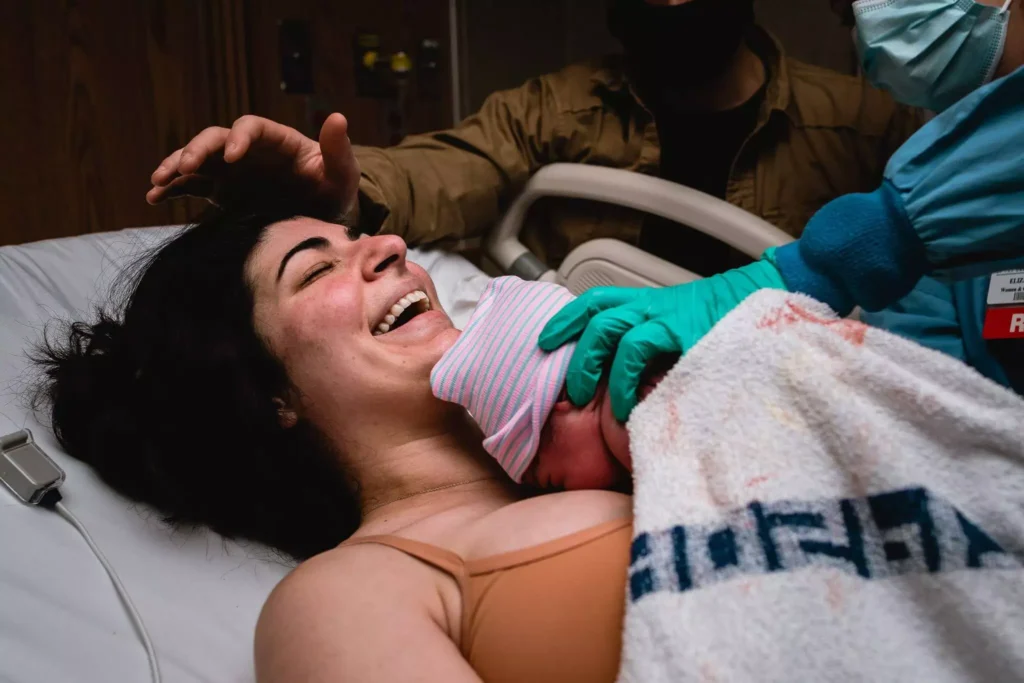

Learn the science of pregnancy and birth to take the mystery of labor away! Understand why you are feeling what you feel, and learn strategies to confidently move through pregnancy and birth!
- 9h+ of Video
- Support Group
- Close Captioning
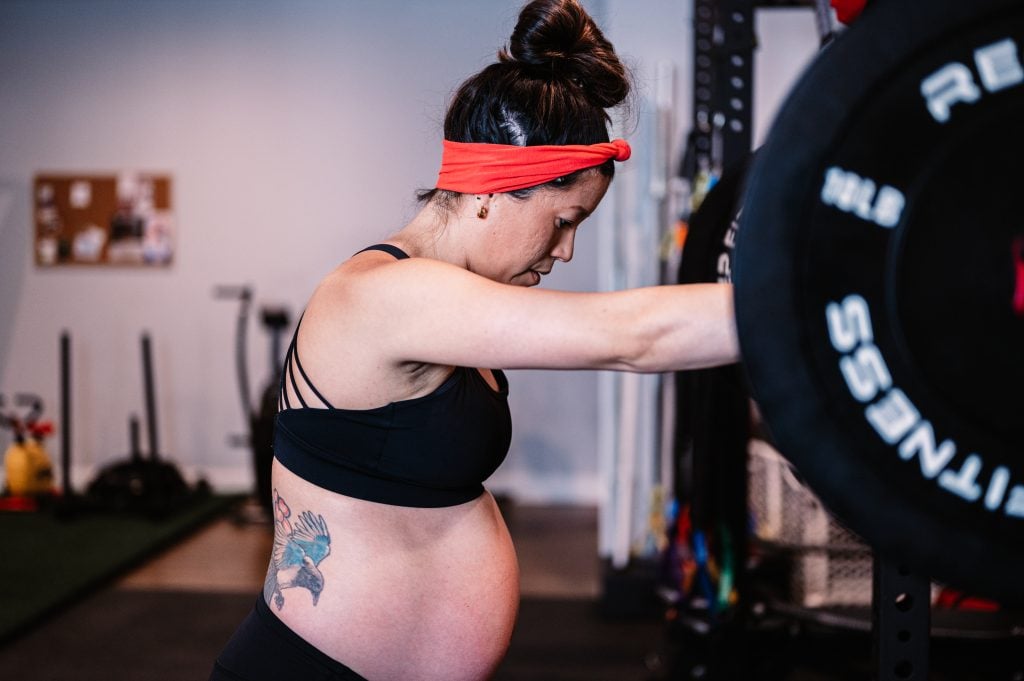

- 5 Workouts/Week
- Gym Workouts
- Self-Paced

Instructor
GINA
Workout on-demand with our prenatal fitness workout videos! Each workout is 30-40 minutes to follow along as you exercise at the same time!
- Birth Prep
- All Trimesters
- Mobility Work

Instructor
GINA
Find comfort and relief from pelvic girdle pain throughout your pregnancy and postpartum period! This program incorporates myofascial sling focused exercises to stabilize across the pelvic girdle joints.
- 3 Weeks
- On Demand Workout Videos to Follow