Stalled Labor: Causes, Positions, and How to Move Past It
Labor Stalls
Labor doesn’t always follow a predictable, linear path. It can ebb and flow—speeding up, slowing down, or even pausing temporarily. While this can be normal, it often raises questions and concerns, especially when you’re facing a stalled labor. In Episode 122 of the MamasteFit Podcast, Roxanne and I dive deep into the reasons behind labor stalls, particularly those caused by the baby’s position and the physical structure of the birthing parent’s pelvis.
If you’re preparing for birth or currently navigating labor, this episode is full of insights, tools, and encouragement. Here’s a comprehensive look at what causes labor stalls and how to address them with intention and movement.
Subscribe to our YouTube Channelfor more weekly workouts and educational videos! We publish one new workout video and 2-3 educational videos a week on our channel.
What Is a Stalled Labor?
A labor stall happens when labor progression slows or pauses. This may look like:
Contractions spacing out (e.g., from every 2–3 minutes to every 5–6 minutes).
No change in dilation, effacement, or baby’s station.
Temperament remains the same (you’re still aware of your surroundings rather than zoning into labor mode).
Labor progression typically includes shifting emotional states, increasing contraction intensity, and changes in cervical dilation—but it’s not always a straight line. External factors like changes in environment, fear, or fatigue can also influence the pattern.
Two Key Contributors to Labor Stalls
1. Baby’s Position (Passenger Issue)
If your baby isn’t optimally aligned with your pelvis, it may be harder for them to rotate or descend. Common misalignments include:
Head tilt (asynclitism) – where the baby’s head enters the pelvis at an angle.
Lack of chin tuck – which increases the presenting diameter.
Malposition – such as posterior or sideways facing.
Clues that baby’s position might be off include:
Double-peaking or “bumpy” contractions.
Sensations more intense on one side of the pelvis.
Contractions that seem strong but aren’t leading to progress.
2. Pelvis and Soft Tissue Tension (Passage Issue)
It’s not just bones—muscles, ligaments, and organs shape the path your baby navigates. Tension or restriction in the body can inhibit movement.
Releasing tension in areas like the lat muscles, hip flexors, or pelvic floor can create the space your baby needs to rotate and descend.
Releasing muscular tension can support baby’s movement:
Belly sifting or belly massage to ease uterine ligament tension.
Jiggling the hips or glutes (a soothing, fascia-stimulating technique).
Sacrotuberous ligament massage – found between the tailbone and sitz bones.
Toilet sitting – helps relax the pelvic floor.
These methods reduce restriction and improve pelvic mobility.
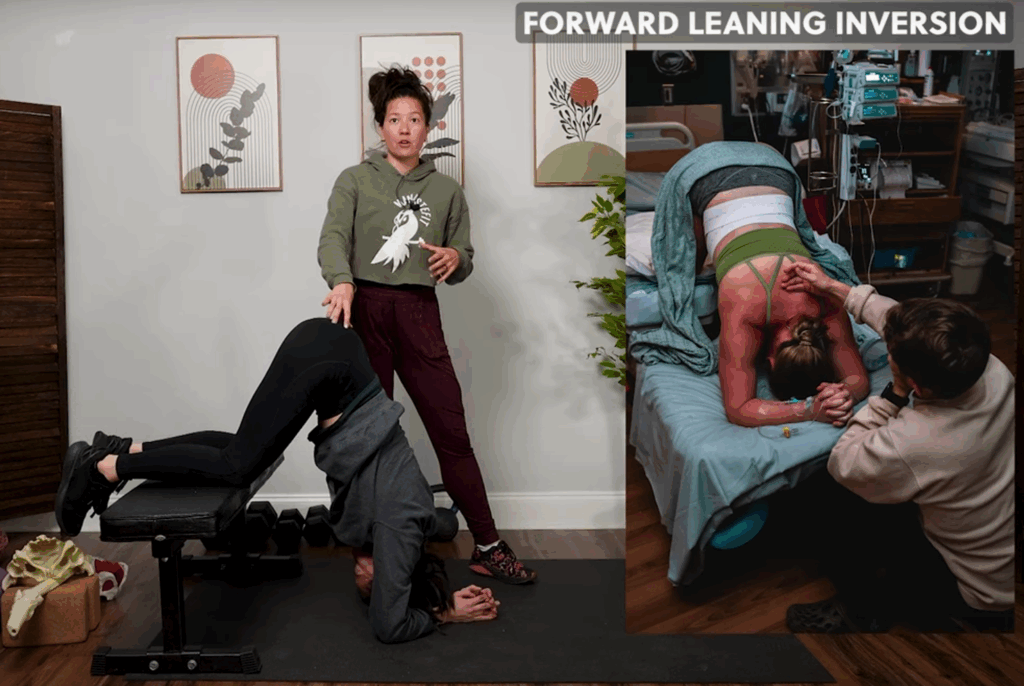
Step 4: Try “Magic Moves” Like Walchers
When all else fails, certain “magic” positions may do the trick.
Walchers is a powerful move where the birthing person hangs their legs off the end of the bed, which repositions the pelvis to help the baby engage. It’s not comfortable but can be highly effective.
When to Consider Medical Intervention
In hospital settings, Pitocinis often offered for labor stalls—but it shouldn’t be the first step. If the cause is malposition or tension, stronger contractions won’t solve the underlying issue and may even lead to complications or a cesarean.
Instead, first assess:
Is baby optimally positioned?
Is tension limiting pelvic space?
Has there been sufficient movement and repositioning?
If after addressing these, contractions remain irregular or insufficient, Pitocinmay then be helpful—but ideally used in conjunction with positioning and movement.
Supporting Yourself During a Labor Stall
Feeling stuck can be emotionally draining. Here’s how to advocate for yourself:
Choose a provider and birth team that supports physiological birth.
Work with a doula – they offer continuous support and specialize in movement-based solutions.
Educate yourself and your partner – understand tools like the peanut ball, hip shifts, and pelvic release techniques.
Stay flexible – be open to shifts in your plan if needed, but stay grounded in your goals.
If you want to reduce the likelihood of labor stalls, learning movements like hip shifting and inversions during pregnancy can make a huge difference.
Final Thoughts
Labor stalls don’t mean failure. They’re often just a sign your baby needs help finding a better position. With the right tools, awareness, and support, you can respond with intention rather than fear.
For more in-depth breakdowns, visuals of labor positions, and movement demonstrations, check out:
Learn the science of pregnancy and birth to take the mystery of labor away! Understand why you are feeling what you feel, and learn strategies to confidently move through pregnancy and birth!
Find comfort and relief from pelvic girdle pain throughout your pregnancy and postpartum period! This program incorporates myofascial sling focused exercises to stabilize across the pelvic girdle joints.