As you enter the 33rd week of your pregnancy, you are nearing the final stretch of this incredible journey. At this stage, your baby is continuing to grow and develop, and you might be experiencing a mix of excitement and discomfort as you prepare for the upcoming birth. Here’s what you can expect in week 33 of your pregnancy, along with some insights from my own experience during this special time.
Baby's Development
At 33 weeks, your baby is about the size of a pineapple or a lunchbox. Here are some key developments happening with your baby:
Immune System: Your baby’s immune system is maturing with the help of antibodies passed from you through the placenta.
Bone Hardening: While most of the bones are hardening, the skull remains soft and flexible to facilitate the birthing process.
Fat Accumulation: Your baby is adding body fat, which helps to smooth out their skin and form cute little rolls.
Lanugo Shedding: The fine hair (lanugo) that covered your baby’s body is starting to fall off, though some may remain at birth, especially around the shoulders and upper arms.
Changes in Your Body
As your baby grows, your body undergoes several changes to accommodate and support this development:
Amniotic Fluid: The volume of amniotic fluid in your womb peaks around this time and will gradually decrease until birth.
Vaginal Discharge: Increased estrogen levels might cause more vaginal discharge, typically white in color. Any changes in the color or consistency, such as a fishy odor or cottage cheese-like appearance, might indicate an infection and should be checked by your healthcare provider.
Braxton Hicks Contractions: These practice contractions are your body’s way of preparing for labor. They can be more frequent and intense in the evenings or after physical activity. Staying hydrated, using a belly band, and taking rest can help manage these contractions.
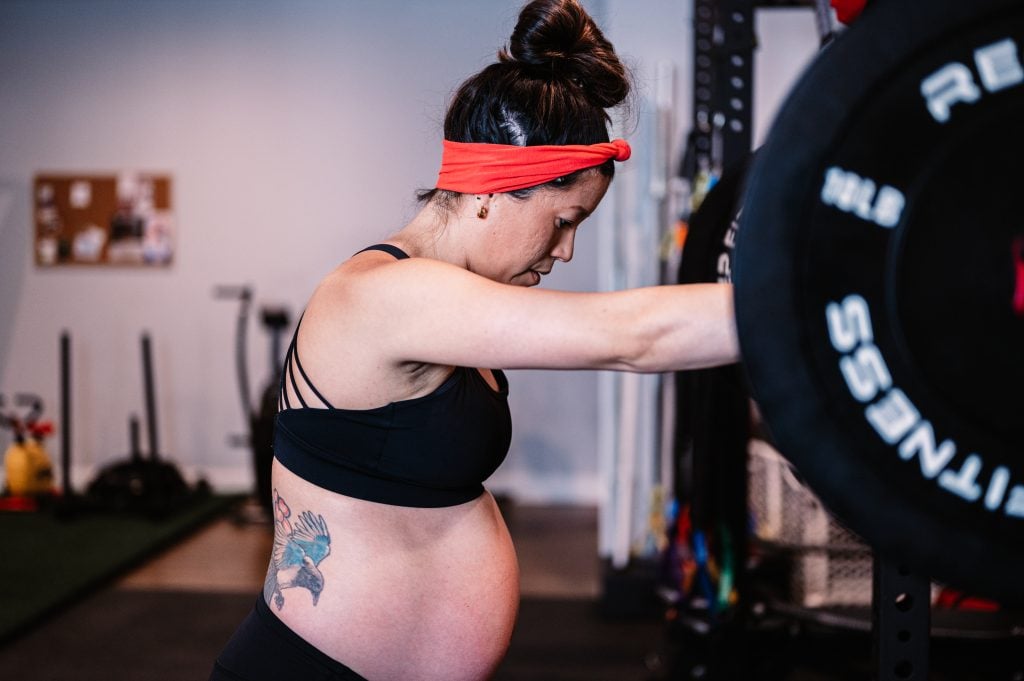
As a perinatal fitness trainer and birth doula currently pregnant with my fourth baby, I have had a unique perspective on this stage of pregnancy. Here’s how my 33rd week has been:
Braxton Hicks Contractions: I’ve been experiencing a lot of Braxton Hicks, especially in the evenings when I’m tired or after a workout. While these contractions can be uncomfortable, they are different from labor contractions, and staying hydrated helps manage them.
Physical Well-being: I’ve focused on exercises that support pelvic stability, particularly around the SI joint. Strengthening exercises for the glutes, quads, and adductors, along with mobility and myofascial sling exercises, have helped me stay relatively pain-free.
Birth Preparation: My husband has been actively participating in our birth preparation, focusing on exercises to support labor positions and comfort measures. It’s important for partners to be prepared physically and emotionally for the labor process.
Home Preparations: We’ve been busy getting our home ready for the baby, making sure we have all the essentials. It feels like there’s always something we might have forgotten, but preparing together makes it a special time for our family.
Tips for Week 33
Stay Hydrated: Drink plenty of water and electrolytes to manage Braxton Hicks contractions.
Exercise: Incorporate pelvic stability and mobility exercises into your routine to support your changing body.
Rest: Listen to your body and rest when needed. Lower the intensity of workouts if Braxton Hicks become uncomfortable.
Prepare with Your Partner: Engage in birth preparation activities with your partner to ensure you both are ready for the big day.
Check In with Your Provider: Always reach out to your healthcare provider if you have concerns about symptoms like unusual discharge or frequent contractions.
If you’re experiencing discomforts or have questions about your pregnancy, we offer a variety of resources:
Prenatal Fitness Programs: Our third trimester-specific programs include strength workouts, birth preparation, and pelvic floor release exercises.
Childbirth Education Courses: We provide comprehensive courses covering labor positions, comfort measures, and what to expect during birth and postpartum.
Online Community: Connect with us on our blog, Instagram, and YouTube for more tips and support throughout your pregnancy.
Conclusion
The 33rd week of pregnancy is a time of significant growth and preparation. While there may be discomforts, staying active, resting when needed, and preparing with your partner can make this time more enjoyable. Remember, you don’t have to navigate this journey alone—use the resources available to you and reach out for support when needed.
Learn the science of pregnancy and birth to take the mystery of labor away! Understand why you are feeling what you feel, and learn strategies to confidently move through pregnancy and birth!
Find comfort and relief from pelvic girdle pain throughout your pregnancy and postpartum period! This program incorporates myofascial sling focused exercises to stabilize across the pelvic girdle joints.