



One of the most common questions I get as a perinatal fitness trainer and birth doula is:
“When can I return to exercise after giving birth?”
The answer isn’t as simple as a specific week on the calendar — and it definitely isn’t just waiting for a generic “all clear” at your postpartum checkup. In this post, I’m breaking down what the real postpartum exercise timeline looks like, how to know if your body is ready, and what to do if your healing doesn’t follow a neat, linear path.
As a mom of four, I’ve personally navigated postpartum recovery multiple times. I’ve also supported hundreds of in-person clients and thousands of online clients through their own return-to-fitness journeys. What I’ve learned — both personally and professionally — is that postpartum is not about rushing back. It’s about rebuilding better.
Subscribe to our YouTube Channel for more weekly workouts and educational videos! We publish one new workout video and 2-3 educational videos a week on our channel.
Postpartum Is a Chance to Rebuild — Not Just “Bounce Back”
Postpartum is a unique opportunity to reset movement patterns that may have been limiting performance or contributing to injury long before pregnancy.
This is one of the only times in life when we’re forced to slow down and rebuild from the ground up — and when done intentionally, it can lead to:
Better core function
Improved pressure management
Stronger lifts
Faster running
Fewer injuries
Many of our clients (myself included) actually feel stronger and more capable after rebuilding postpartum than they did before having kids.
But that only happens if we’re patient.
For at least the first year postpartum, patience is essential. Rushing the process may feel productive in the short term, but it often delays healing and limits long-term performance.
Do You Really Have to Wait 4–6 Weeks for Postpartum Exercise?
The commonly recommended 4–6 week waiting period before returning to exercise is based on tissue healing timelines, not fitness level.
Even if you:
Worked out until delivery
Are a high-level athlete
Felt “good” right after birth
Your tissues still go through the same biological healing phases as everyone else.
That timeline may be extended if you experienced:
Cesarean birth
Perineal trauma
Postpartum hemorrhage
Preeclampsia
Significant fatigue or low iron
Let’s break down what’s actually happening inside your body during those early weeks.
Phase 1: The Inflammation Phase (Days 1–10 Postpartum)
This phase can last anywhere from 5 to 14 days.
During this time:
Tissue is swollen and inflamed
Blood flow is high
Bleeding is heaviest
Energy levels are typically very low
Most people feel like they “got hit by a truck” — and that’s normal.
What to focus on:
Rest and staying off your feet as much as possible
Nutrition and hydration
Gentle compression (belly band or perineal support)
Light breathing and gentle mobility
This is not the time for workouts or structured exercise — and that’s exactly how it should be.
Phase 2: The Proliferation Phase (Weeks 2–4+)
This phase typically begins around 5–7 days postpartum and can last up to 4–6 weeks.
During this phase:
You usually start to feel better
Type III collagen is being laid down
Tissue is weak, thin, and disorganized
This is where many people feel tempted to jump back into workouts — but this is also where rushing can cause problems.
Why structured exercise too early can backfire
Type III collagen:
Is not strong
Is randomly oriented
Cannot tolerate heavy load
Overloading tissue during this phase can:
Prolong healing
Trigger repeated inflammation cycles
Create poor tissue quality
Increase guarding and clenching
Worsen pressure management issues
This is why I strongly recommend avoiding structured, weight-bearing exercise during the first month postpartum.
Gentle Movement Is Still Important
Rest does not mean complete inactivity.
Appropriate movement during this phase can include:
Short, easy walks
Gentle mobility
Diaphragmatic breathing
Floor-based core connection exercises
After walks, monitor for:
Increased bleeding
Pelvic heaviness
Lower back or pelvic discomfort
These symptoms don’t mean you’ve ruined your recovery — they’re simply your body asking you to ease back a bit.
Phase 3: The Maturation Phase (Weeks 4–16+)
Around 4–6 weeks postpartum, tissue begins transitioning into the maturation phase, which can last up to 16 weeks or longer.
This is when:
Type I collagen develops
Tissue becomes thicker, stronger, and more organized
Progressive loading becomes appropriate
But this does not mean returning to pre-pregnancy workouts — even with lighter weights.
Instead, we want:
Intentional progressions
Symptom-guided loading
Foundational movement rebuilding
This phase is also influenced by:
Sleep deprivation
Nutrition and hydration
Mental health
Life stress
Caring for a newborn (and possibly other kids)
Postpartum recovery is not linear — and that’s normal.
Symptoms Matter More Than Exercise Checklists
You’ll often see lists like:
“If you can do these 10 movements, you’re ready to run”
“If you pass these tests, you’re cleared for lifting”
While these can be helpful, symptoms are the most important indicator.
Having:
Prolapse
Leakage
Pelvic heaviness
Back pain
does not mean you shouldn’t exercise.
It means we need to be intentional about how we approach movement.
Understanding Pelvic Heaviness
Pelvic heaviness can feel like:
Pressure
Fullness
A “thick” sensation
Something “being there”
If it shows up:
During or shortly after workouts → likely pressure management
Later in the day → likely fatigue
This gives us valuable information about how to modify movement.
Breathing and Positioning Make a Huge Difference
One of the most powerful tools postpartum is coordinated breathing.
General guideline:
Inhale with gravity or during lowering
Exhale against gravity or during effort
We also want to avoid excessive spinal extension (arching), which can:
Shift pressure forward
Increase pelvic floor strain
Simple strategies like:
Bringing the rib cage down
Loading weight to the front
Using wedges or blocks
Squeezing an object for anterior activation
can dramatically reduce symptoms and improve performance.
Progression Should Be Symptom-Guided
If a movement feels good:
Progress slowly
Add challenge intentionally
If symptoms increase:
Reduce load
Modify position
Regress the movement temporarily
Symptoms are not failures — they’re feedback.
You Don’t Have to Figure This Out Alone
This process can feel overwhelming, which is why we’ve built structured postpartum programs that guide you step-by-step through these phases — so you don’t have to guess.
When postpartum rebuilding is done patiently and intentionally, the payoff is huge:
Stronger lifts
Better endurance
Improved function
Greater confidence
If you’re looking for support, explore our postpartum fitness programs. All programs include lifetime access so you can move at your own pace.
Additional Resources
Prenatal Support Courses
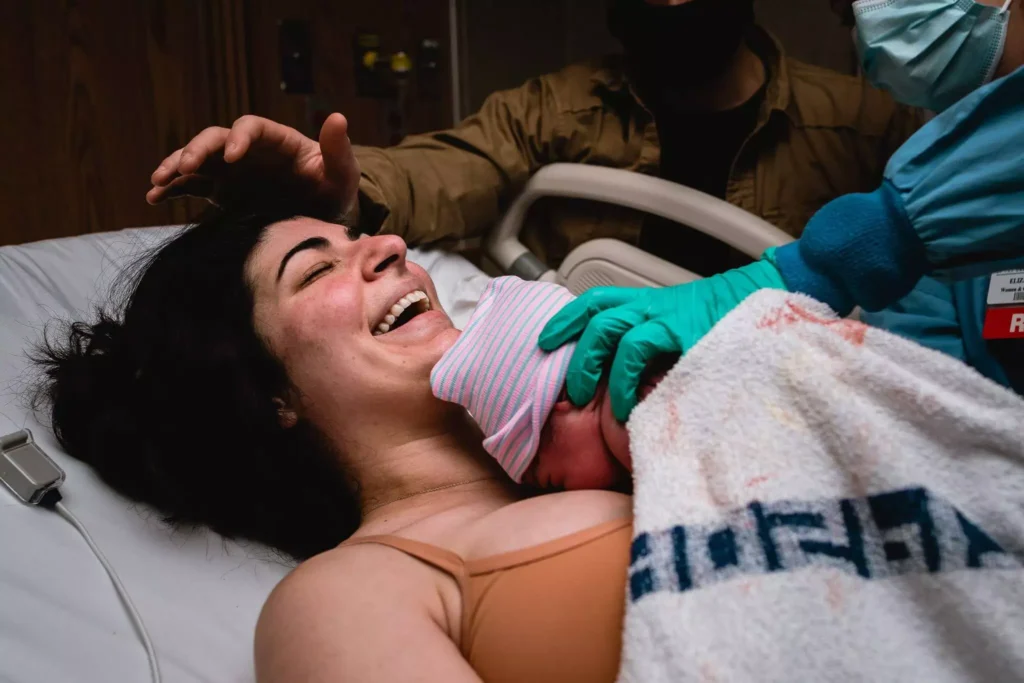

Learn the science of pregnancy and birth to take the mystery of labor away! Understand why you are feeling what you feel, and learn strategies to confidently move through pregnancy and birth!
- 9h+ of Video
- Support Group
- Close Captioning
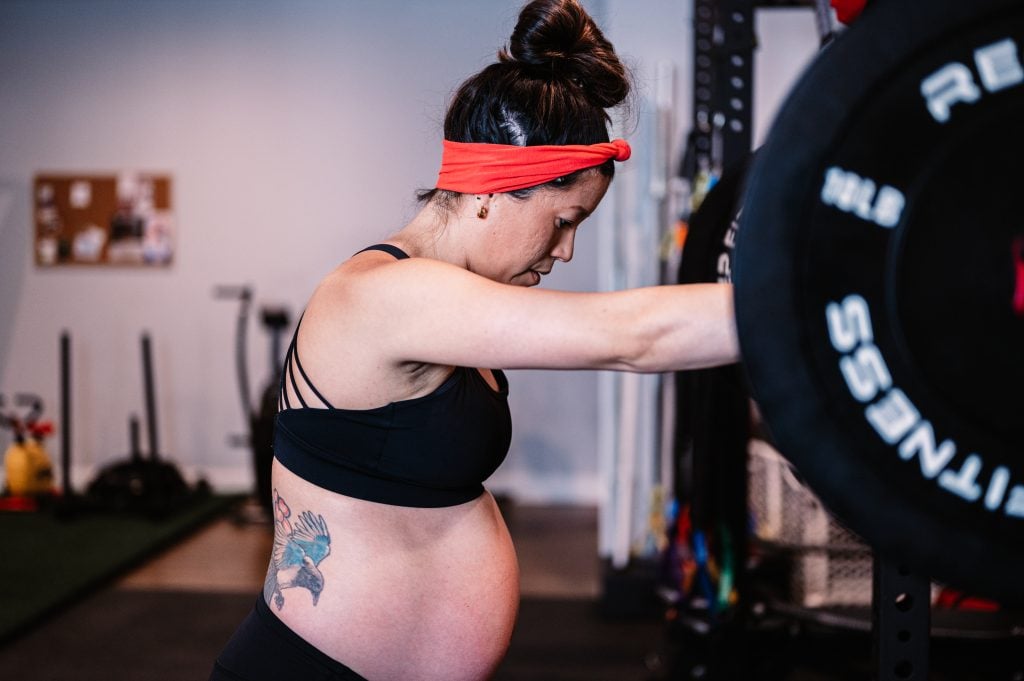

- 5 Workouts/Week
- Gym Workouts
- Self-Paced

Instructor
GINA
Workout on-demand with our prenatal fitness workout videos! Each workout is 30-40 minutes to follow along as you exercise at the same time!
- Birth Prep
- All Trimesters
- Mobility Work

Instructor
GINA
Find comfort and relief from pelvic girdle pain throughout your pregnancy and postpartum period! This program incorporates myofascial sling focused exercises to stabilize across the pelvic girdle joints.
- 3 Weeks
- On Demand Workout Videos to Follow