



Welcome to the MamasteFit Podcast. In this episode, we have Leah Vandale, who is a professional wrestler with the WWE, sharing about her pregnancy, her birth, and the creation of her newsletter Snatch, which is a resource to help us feel less alone as we are navigating the challenges of fertility, pregnancy, birth, and beyond.
Read Episode Transcript
[00:01:11] Gina: Welcome to the MamasteFit Podcast. In this episode, we have Leah Van Dale here, who is the founder of the newsletter Snatch, which is a new newsletter supporting pregnancy, birth, and the postpartum. And she’s going to be here to share about her pregnancy journey, her birth story, and then also what inspired her to create this newsletter.
[00:01:28] Gina: So thanks so much for being here, Leah.
[00:01:30] Leah: Thank you so much for having me.
[00:01:32] Gina: And if you could just introduce yourselves to our listeners who may or may not be familiar with you.
[00:01:37] Leah: Sure. My name is Leah Vandale. I am a new mom, I have an eight month old boy named Dimitri. I don’t know how many wrestling fans you have listening to your podcast, but I am a professional wrestler for WWE. I work under the name Carmella, so maybe someone might know me from that, but, yeah, my everyday life, I’m just a good old Leah.
[00:02:02] Gina: Yeah, it was really, we, I think we got connected with Sarah Rowe at first and that’s how we’ve kind of made our way into the WWE wrestlers, like…
[00:02:12] Roxanne: World.
[00:02:12] Gina: World, which has always been really exciting.
[00:02:15] Gina: But let’s start with how was your pregnancy as a professional athlete? So you’re a professional wrestler. I’m sure there had to be something, or like challenges that you were facing, while you were pregnant navigating this very physical career.
[00:02:29] Leah: Yeah, I mean, for me, the, the biggest challenge was getting pregnant.
[00:02:33] Leah: And as a professional athlete, someone who’s so in control of my body and always, you know, doing what I can to stay healthy and feeling my best, for me, I had a chemical pregnancy and then an ectopic pregnancy. So for me, that was so eye opening, “Wait a minute, I can’t just get pregnant? Like, I eat healthy, I’m healthy, I work out, I am always in control of my body,” or so I thought. So for me to try to get pregnant was just very eye opening. Wait a minute, I can’t believe I have fertility issues. What is happening? Why me? Especially, you know, being a professional athlete and knowing my body is my body of work and to know that I was so out of control of this process, that was the most difficult part for me.
[00:03:24] Leah: When I finally did fall pregnant, I’m not gonna lie, the pregnancy went so smoothly. And I hate when women are like, “Oh, I’m
pregnant and everything’s great and all is well!” But I think because it was such a struggle for me to get pregnant, my pregnancy felt… just I enjoyed every single minute of it. I mean, don’t get me wrong, the first trimester was hell, you know, always with the morning sick. I didn’t even have morning sickness, I had all day sickness. And I was very vocal about all of it once I finally did announce my pregnancy, I kind of vlogged a lot about it, took behind the scenes videos and just to show like this part of it is not at all what you would think it might be. Maybe for some people it is, but I, I really did have some struggles with feeling just awful. I felt like the best word I could use to describe it was feeling like wet inside. Like it just felt like a wet, I felt like a wet blanket. And then once I was past the first trimester, everything was a breeze. I just felt like great. I felt great in my body. I worked out my entire pregnancy up until the day before I gave birth. Well, I was in the hospital for three days, so I don’t want to say the day before. But the day I went into the hospital to give birth, I worked out.
[00:04:43] Leah: So I felt great. It was just that first trimester was crazy. And you know, you hear people talk about morning sickness and I just didn’t realize how much I would struggle in that first trimester.
[00:04:57] Roxanne: Oh yeah.
[00:04:58] Leah: With you know, food aversions and nausea and like all of it. It was just kind of crazy. And I just never thought I would get out of it. It felt like the longest period of time. So then when I did, I wanted to make sure I took note of that and was like, okay, I’m not going to forget how, you know, like the struggles I went through during that first trimester because I’m like, why does no one talk about this? How come nobody warned me? How come nobody told me that this would not be that much fun being pregnant in the beginning?
[00:05:24] Leah: And I asked everyone, and like anyone that I knew, like my mom, my mother-in-law, some of my friends are like, “Oh, you just like kind of deal with it and move on.” I’m like, well, how come you don’t talk about it? How come no one, you know, brings these things up? And even on social media I didn’t really see anyone, at least at that point in time, talking about how awful it was. And I wanted this so bad, so I felt bad even complaining about it, but it was just very real. But again, I would go through it all over again if I had to.
[00:05:54] Gina: I usually forget what the first trimester is like, and then I get pregnant again, and then I’m like, “Oh, this is awful.”
[00:06:01] Leah: Yeah!
[00:06:02] Gina: I feel so much better in the second trimester though. But that, those like six weeks I’m like, “I’m going to die. Like this, this is over for me.”
[00:06:11] Roxanne: But for some people it could be like 10 weeks long.
[00:06:15] Gina: Or like their whole pregnancy.
[00:06:16] Roxanne: Or their whole pregnancy. Yeah.
[00:06:19] Gina: But yeah, it was like overnight. I was like, “I’m good now. I’m, I’m totally fine. Moving on.” Yeah.
[00:06:25] Roxanne: That’s probably why though, it’s because people just block it from their memory. So they’re like, “Yeah, that didn’t happen. So I wasn’t sick for 10 weeks at the beginning of this pregnancy, barfing my brains out every single day. Let’s forget about that part. Cause now, now it’s fun.”
[00:06:41] Leah: And I’m like, I don’t want to block this out. I want to remember this. I want to warn other women when they’re going through it, “Hey, yeah, it sucks!”
[00:06:49] Gina: Did you have any struggles throughout your pregnancy with pregnancy after loss? So I had two losses be
fore we got pregnant with our second child and I was so anxious that whole pregnancy and then I think it even led to like postpartum anxiety as well.
[00:07:05] Gina: So I didn’t know if you struggled with like pregnancy after loss as well because I felt like the magic of pregnancy kind of faded a little, especially in the first half, where I was just really scared something was gonna happen. I never really felt safe in my pregnancy until he was born, and then I was like, “Oh, finally, I can breathe. He’s here.”
[00:07:27] Gina: Did you have, similar struggles at all?
[00:07:30] Leah: I did. I had felt like I was telling myself one thing, but then acting another way. In my head, I had such anxiety about it when I first got that positive test. I’m like, “Okay, well, I’m going to wait and take another test tomorrow and see if it’s still just as dark or if it’s getting darker.” And I would compare them so much, like the lines. And it was just this, I shudder to think at the amount of money I spent on pregnancy tests. And I wouldn’t tell my husband, I didn’t tell anybody. I was just like taking these tests on the daily, just making sure, or several times a day, to make sure it still said positive.
[00:08:02] Leah: And it was just such a struggle going on in my head and I felt like if I was speaking positively and I’m like, “Oh It’s gonna be different this time around. This is a different pregnancy!” I just kind of try to speak positively about it, even though internally I was struggling I think that the positive talk about it helped me get through it cuz it was like, okay I know this could go wrong because it’s happened twice now, but I’m going to put it out there in the universe that this is real. This is a new pregnancy. I’m feeling better. This is, this baby is meant for me. And I think that that is what helped me.
[00:08:40] Leah: But I felt that the entire pregnancy up until the day he was born, I still felt that after he was born, like if we get into my birth story, I can talk about that too. But it was just, it was a struggle the whole time.
[00:08:52] Leah: Even now I have like intrusive thoughts and I’m like putting him in his crib at night, I’m like, “Is he going to wake up in the morning?” Like it just, it still feels like I wanted it so bad that… what if it gets taken away? I just, and I hate feeling that way, but it’s just a real thing that, and an honest thing that happens to me all the time.
[00:09:13] Gina: Yeah, I think it’s something that’s really common after loss, especially like navigating that pregnancy and that postpartum. The one that my pregnancy with my son and that postpartum was like the hardest for me mentally, like physically it was a breeze, like super easy pregnancy, no complications, but mentally it was so tough.
[00:09:33] Gina: But I will say that my next two pregnancies, I felt mentally much better. And I don’t know if it was because I…
[00:09:41] Roxanne: Sought therapy.
[00:09:42] Gina: I sought therapy, but I just felt more like confident in the process and like maybe a little bit more like there’s only so much I could control, but I definitely struggled really big with like anxiety during that pregnancy. And in that postpartum was like the hardest one I think for me.
[00:09:59] Gina: And I don’t think people talk about it enough sharing like their loss stories. Like I think I saw on your Instagram that you shared about your loss. And I think it helps to normalize that this is something that happens to one out of four of us.
[00:10:12] Gina: And for some of us it happens multiple times. ‘Cause you also get told oh, it only happens once and then that’s it. And then it happens again.
And you’re like, “Oh my God. Like, I’m an anomaly.” Like, “The world is ending.” But I’ve had so many people reach out to me and be like, “Because you shared your story, I feel so much less alone in this experience. I know what to look out for. Like I know how I can support myself and my partner.” So I don’t know if other, if folks reached out to you, just thank you for sharing about your loss story. Because it’s, I think it’s something that like, there’s a lot of stigma and shame involved with, but it’s so important to normalize that this is something that happens. It’s nobody’s fault. And we’re just here to support each other during it.
[00:10:54] Roxanne: You don’t have to grieve alone. You can have people to support you through this. So you feel less alone, that you’re not the only one experiencing this.
[00:11:03] Leah: Yeah, and that’s exactly what, why I did it as well. The first loss I had, I didn’t tell anybody. It was only my husband, my sister, my mom, my immediate family. And then when it happened again, I was just, I felt like a different person. I was changed forever and I just was no longer the person I was before. And I felt like I needed to get it off my chest. And because I do have such a big following on social media, I felt like this responsibility to be transparent, be vulnerable, and just be real and honest about my experience because I knew if I was feeling like that, like you said, other women are too.
[00:11:44] Leah: And I decided to just put it out there, and I mean women came out of the woodwork, even friends of mine confided in me and were like, “I had an ectopic pregnancy, but I never told anyone.” And I’m like, that is so wild and it breaks my heart to know that women go through these things without any, any support or not telling anyone and just knowing hey, there’s nothing you could have done to change that, that, that was your journey and that’s what happened to you and you’re not alone because it’s happened, like you said, one in four, that’s the statistic. And it happens so much more often than we talk about, and it’s just so important, I think, as women to rally around each other and lift each other up, and there’s nothing you can say to someone who loses a baby. There’s nothing that can make it better, but you can just be there and sit in it with them. So they’re not alone.
[00:12:33] Gina: Let’s take a break from this week’s episode to talk about our sponsor, Needed. Needed is a nutrition company that optimizes nourishment for the perinatal time frame that both Roxanne and I have used from conception, pregnancy, postpartum, our husbands use it, so we’re really big fans of Needed and we highly recommend them to you.
[00:12:50] Roxanne: One of the things that’s often forgotten when we’re preparing our bodies for pregnancy is taking a prenatal vitamin. Preparing our bodies for pregnancy is not just preparing physically as well as mentally, but also our nutrient demand during pregnancy starts three months prior to actually getting pregnant.
[00:13:07] Roxanne: So taking a prenatal vitamin at least, three months before getting pregnant helps prepare your body to create baby for those first few weeks of life. But there’s a side benefit. Some research suggests by taking a prenatal vitamin at least three months before pregnancy, so that our nutrient levels are in the optimal level, can help decrease your risk of having morning sickness or really all day sickness during that first trimester. By taking a prenatal vitamin, this can help keep your nutrient levels within that optimal level because morning sickness, all day sickness could be related to nutrient deficits.
[00:13:43] Gina: What I really love about Needed is they have different options for your prenatal as well, depending on your preferences.
[00:13:49] Gina: They have a powder version, which I found to be really beneficial during the first trimester when I was very sensitive to all things. In addition to the powder, they also have a pill version of their prenatal, which I found to be easier to take later on in my pregnancy, because I didn’t have to make a smoothie or a drink, like I could just take the pills and drink something. And so that was my preference once I entered into the second and third trimester. And you can also take a prenatal just in general like even if you’re not pregnant or in the conception phase you get to get postpartum as well because it’s really just a multivitamin that’s really great for women during their child bearing years.
[00:14:23] Roxanne: And if you want to try out Needed’s prenatal vitamin, you can use our code MAMASTEPOD to get 20 percent off your first order or the first month of your subscription at thisisneeded.com.
[00:14:32] Gina: So let’s get into your birth story. So you worked out all the way until the day before you went to the hospital, which was not the day before you gave birth, which sounds similar to my first birth as well.
[00:14:44] Gina: Let’s talk about your birth. Like how did your birth go? What challenges do you have? Was it just like super smooth and easy? Probably not.
[00:14:54] Leah: I wish. I wish. I was actually watching the Kardashians this morning and it was Kourtney Kardashian’s birth of her baby and I was watching that and I literally started crying on the couch. My husband’s like, “What is wrong?” I’m like, “I just have such… so much sadness over the fact that my birth, it went nothing the way I wanted it to.” And I was, I’m still grieving it eight months later.
[00:15:14] Leah: So I guess, long story short, I had a plan, of course. I had a plan. I have a doula. I was like, I’m gonna, I was with the midwives here in Pittsburgh and, but I was still going to give birth in the hospital. This is my first baby, I want to make sure like everything is how I want it to be. So I started having contractions very early on on a Monday, this was Monday the 6th of November. And I had contractions like 4AM. I’m like, “Oh, okay, this is happening. I’m so excited!” And I messaged my doula, she’s like, “Okay, let’s start timing them, just make sure, you know, everything is kind of progressing the way it should.”
[00:15:53] Leah: And then I just went about my day, went to the, I went and got acupuncture that day, and my needles all popped out of me when I was on the table and my acupuncturist was like, “Okay, you’re definitely in labor! You’re contracting. The needles won’t even stay in you.” I was like, “This is great!” I was so excited.
[00:16:09] Leah: I went for a long walk that day. My husband and I walked to dinner. And then, I’m timing my contractions, they’re getting a little more, steady. They’re around like 7-8 minutes apart. And my doula’s like, “All right, why don’t you just go to bed and let me know like when you need me. I’ll come over and we’ll start.” Like, cause I was going to try to labor at home for as long as possible.
[00:16:30] Leah: Went to bed at about 10 o’clock. My husband’s asleep. 10 minutes later, all of a sudden I’m in like agony. These contractions just started coming. And I felt I mean, I’m a professional wrestler. I feel like I handle pain pretty well. I have a high pain threshold and I was in so much pain. I could not believe these contractions.
[00:16:49] Leah: So I’m like on hands and knees in my living room. My doula’s on the way over and I told my husband, I’m like, “You need to call her and tell her to meet us at the hospital. This is… This is not bearable.” So we get in the car, we get to the hospital. It’s 11 o’clock at night and they tell me I’m only, I think I’m three centimeters dilated, but I’m like 90 percent effaced. So they’re like, “This is great.”
[00:17:13] Gina: That’s pretty good!
[00:17:14] Leah: We’re doing it. Yeah! They’re like, “You’re doing it. If you want to stay, we’re good. Let’s start the process.” We’re like, “All right, let’s do it.” Cause they’re like, there’s no way I can go home with this pain. Like I need to be here and have my doula and I can just breathe. She’s like pressing my hips, the whole nine.
[00:17:30] Leah: So the problem was there’s no rooms, so we had to get stuck in triage for so long. My husband was driving me nuts. I’m like, “You go home. I don’t need you right now. I have my doula.” Because like the room was so small, and he was getting anxiety, like there’s no room in there. I’m like, “You just go home. It’s gonna be fine. It’s gonna be a while.” So my mom tagged in, she came, she met me there, and then, finally we get our room and I’m just in so much pain. I wanted to give natural birth, no induction, no Pitocin, nothing. I just wanted to go as natural as possible.
[00:18:01] Leah: By about 7AM, I’m like, “Give me the epidural. I can’t do this. I just can’t. And I just knew that it was going to be a while because I was still, after all night in labor, like having contractions, I was still only three centimeters dilated. So I’m like, “This is going to be a while. I need something to help me.”
[00:18:20] Leah: And I realized, you know, there’s no shame in getting the epidural. I had such ideas around it in the beginning. And then I’m like, you know what? If this is what I need to get through this, it’s, this is my journey. So I got the epidural and now I’m feeling like a million bucks.
[00:18:36] Leah: And it’s now Monday, or I’m sorry, it’s now Tuesday. And it’s afternoon. I’m now only five centimeters dilated. Fast forward to that evening. I’m only six centimeters dilated. And I’m like, “What is happening? This is… I’ve been at the hospital now for 24 hours. I’m only six centimeters dilated,” but I’m 100 percent effaced. So at least there was a little bit of, you know, some hope and some progress.
[00:18:59] Gina: You’re making change.
[00:19:00] Leah: Making some progress. So they had to start me on Pitocin, which I did not want. So again, now I didn’t want that Epidural, got that Epidural. I did not want Pitocin, now I’m on Pitocin. And it’s still not working. I’m not dilating. So they have to put like a catheter in me.
[00:19:15] Leah: Oh, by the way, when I got my epidural, my water broke naturally. So I was like, okay, well this is… we’re moving along here. This is happening. So, because my water broke, they were worried about putting the catheter in because of, you know, you can get an infection and it could not be the best thing for the baby. But they’re wondering what, what is happening with these contractions. Why aren’t they strong enough? They put the catheter in, they realized that the contractions, even though they hurt like hell, I’m like, “What do you mean these aren’t strong contractions? Because I’m feeling them still with epidural.” But they just said it’s just not pushing the baby down, letting me dilate the way I should.
[00:19:56] Leah: So we start upping the pitocin, but now the baby’s heart rate’s dropping and it’s just like everything that could go wrong went wrong. I’m literally vomiting every 10 minutes. I’m not eating. It, it was just, It was hell. And I, it was just so not how I envisioned my birth going. I just wanted it to be this calm and relaxing and peaceful journey.
[00:20:21] Leah: And, you know, I like to meditate and have breath work and this is not at all what I wanted. And so I was just so devastated. So that whole night I didn’t sleep. I’m still on the Pitocin. Wake up on Wednesday morning and I’m only, eight centimeters dilated. Mind you, I went to the hospital Monday night, it’s Wednesday morning, and I’m just feeling so defeated.
[00:20:45] Leah: And so I had gotten to the point where I’m like, “You know what, I’m just…” They were mentioning a C section. And I, of course, wanted to avoid that, I wanted to try to give birth naturally after all these other things that I’m making, you know, compromises on. And I just figured, well, this last ditch effort, just please let me give birth naturally.
[00:21:10] Leah: And I made the decision, “All right, let’s go with the C section.” And they said, “Well, do you want us to check one more time?” And I happened to be 10 centimeters dilated at that point. So I’m like, “Oh my god, this is amazing!”
[00:21:22] Leah: It was such an emotional rollercoaster because I had, I’m like, okay, I made up my mind. We’re gonna do the C section. I couldn’t take vomiting anymore. I had been vomiting for 24 hours. I had nothing left in me. And it was just, It was awful. And, I had come to the conclusion that we’re going to do the C section, but then that’s when they told me that I was ready to go. So, started pushing and then here he came. I pushed for an hour at least.
[00:21:52] Gina: That’s pretty good!. With an epidural, it’s not very long at all.
[00:21:55] Roxanne: That’s really good. First baby?!
[00:21:57] Leah: Yeah, yeah. It wasn’t, it wasn’t too, too bad. Because they were like, there was one part, I guess, where like the, I was 100 percent effaced, but there was one little part that the head they were saying was going to get caught on, so they were like, “Maybe if you start pushing, we can, you know, push past that, and we can get him down where he needs to be,” and with one push, he went past that little part of my uterus. And they were like, “Wow, okay, well, let’s go!” And so next thing you know, he was, he was here.
[00:22:27] Leah: And then that was, again, another emotional rollercoaster because I was so excited they went to go hand him to me, and he was blue, and he wasn’t responding, and because I had been in labor for so long, it was just, it was not good for the baby. And it was just so, I, I’m gonna get emotional thinking about it, but they took him from me, and it took like at least four minutes of them trying to resuscitate him and give him everything he needed, and I was just, I was a wreck.
[00:22:59] Leah: I was like sobbing. I’m like, “Is he okay? Is he okay?” And it was going from like this amazing, like high of finally pushing him out and they went to go put him on my chest and I’m like reaching for him and they took him and it was, it was… I’ll never forget that feeling.
[00:23:16] Leah: And finally they were able to get him where he needed to be. They gave him back to me and it was just… But again, going back to thinking of how I had felt, I was trying to get pregnant and then during my pregnancy, like you’re saying, pregnancy after loss, and I just thought, “Well, isn’t this great? After all of this, I finally get my baby and this is not going to work out the way I wanted with the right result in the end.”
[00:23:41] Leah: But it did. And I’m just so grateful. And I’m just so grateful for the doctors that were there, and the midwives, and my doula, and my husband, and my mom, and it all ended up working out. But it just was… I was in labor for 60 hours. It was such an insane journey. But I’m telling you all of this because for anyone listening who may have gone through something like it makes me feel better to know that I’m not alone in that. Things don’t always go the way you want them to, and that’s okay. At the end of the day, a healthy baby is all that matters, so I got my healthy baby, and here we are! Sorry that was so long!
[00:24:19] Gina: No, that was totally fine! I think it is important to acknowledge that not everyone has this picture perfect birth, and sometimes we
do have to make compromises on what our plan was, based on the circumstances.
[00:24:32] Gina: And so epidurals are tools, Pitocin is a tool that’s available to us if we need it. And so I like I’m thankful for advancements in medicine to give us the things that we potentially need during our labors. If we don’t need them, great. But sometimes we do need them.
[00:24:48] Gina: But it’s still hard to let go of the dream that you had for your birth and how you were imagining meeting your baby and how you were imagining going through that process. To let go of that and accept like whatever the current circumstances are. And then that battle of grieving your birth, but also being super excited that your baby is here is like this weird conflict of “Well, I don’t want to be disappointed in their birth because it brought them to me.”
[00:25:18] Gina: And so then it becomes this weird battle. And something that really helped me with my first birth, cause my first birth was similar to yours, where it was really long. All the things I didn’t want, I got. I did have a vaginal birth, but it was like, I was probably getting close to the point where people were going to start making different recommendations for me.
[00:25:35] Roxanne: Two and a half hours later.
[00:25:36] Gina: It was… it was a process. But I struggled after I gave birth with being really disappointed with my experience, but also being super excited that my baby was here, and feeling like I couldn’t have those conflicting emotions. But you can. Like being disappointed with what happened doesn’t take away from your love and excitement for your baby. But it feels… it’s hard to accept that. And I think it’s something that a lot of folks struggle with after they give birth, especially if they have been planning this dream. Like they’ve done all their preparation, they’ve exercised, they took the classes, they have the doula. And then it doesn’t turn out the way they hoped. And it’s like “Well, what did I do wrong?” Like, “How? Where did I mess up?” And it’s like, it wasn’t necessarily anything you did wrong. It it was just the circumstances that happened. Like maybe there was something like that kind of went outside your control.
[00:26:30] Gina: But it’s, it’s still a struggle after you give birth. And now you got this baby, and you’re sore, and you’re like, trying to figure out breastfeeding, and then you’re like, trying to also process like what happened. And then add on the anxiety that you had from pregnancy from managing pregnancy after loss.
[00:26:46] Gina: And it’s, I think it’s something that a lot of people don’t talk about, which like, I think is kind of like the theme of this episode is, there’s things that we go through as women to bring our children into this world that we don’t share enough about to help normalize so that we don’t feel alone.
[00:27:05] Gina: And I think that brings us to your newsletter, Snatch, that you’ve created.
[00:27:09] Leah: Yeah, exactly. I knew when I had the losses, again, the floodgates that opened of women coming out and talking about their losses, that alone, I knew something, I knew there was something there. I just didn’t know what it was. And I felt okay, if I’m being open and honest about this, and other women are now interacting with me, interacting with each other, I see people commenting on my posts when I talk, when I put it out there. It was kind of creating this connection in this community, and I, I just knew I wanted to do something with it, I wasn’t sure what. And throughout my pregnancy, I was just kind of like, I’m like, whatever it’s meant to be, it’s going to come to me, this idea. I just didn’t want to force it or make it into anything that it wasn’t.
[00:27:55] Leah: And then it was towards the end of my third trimester, I was like, “This. This is what it’s going to be. It’s going to be me talking about all of these things that nobody talks about and normalizing it.” And for example, during my pregnancy, I didn’t even know about the Fresh Test. My doula told me about it. She was like, “Oh, you know, there’s options when it comes to getting your gestational diabetes test.” I’m like, “Really? I had no idea. Like, why does no one tell you that?” She’s like, “I don’t know. They just don’t.” If I didn’t have my doula, I would have taken that garbage drink that they force you to drink. And it’s, it’s just wild. There’s so many different things that happen that nobody talks about, and I’m like, I’m going to talk about it.
[00:28:36] Leah: That’s why I created Snatch. The name of, in and of itself, it’s oh, why are you talking like that? And it’s, it’s, it’s built like that for a reason, to get people to feel a little uncomfortable, or to get people feeling comfortable with being uncomfortable.
[00:28:51] Leah: And I think that it’s important to bring all of these things to women’s attention. Before you’re pregnant, or before you’re a mom, it’s like this weird world you know nothing about. And then once you’re in it, all of a sudden everyone that’s in it knows it. It’s like this secret club that you’re a part of that nobody warned you about before.
[00:29:12] Leah: And I feel like now that I’m in it, I want other women to be prepared for that, whether you’re in it, or whether you’re struggling with fertility, or whether you’re thinking about it, or whether you’re postpartum, or you are a mom of a 20 year old, whatever it may be, there’s all of these things that we go through that are important to talk about. And I created this newsletter where, you know, I have women like yourselves, or doulas, or therapists, just kind of like every week it’s a new topic. And most of them so far have been something that I’ve personally struggled with, that I’ve made connections with other women about, but over time it can be about anything.
[00:29:53] Leah: And I think that’s what I’m creating this community for- all of the women that show up on, whether it’s the Instagram or I’ve created, it’s called Snatch Chat. It’s a private forum where women can log into. It doesn’t cost anything. You just need an email and you get into this forum and it’s a private chat where you can chat with other women like, “Hey, this happened to me during my third trimester. Did this happen to you?” Or I have lactation consultants and doulas and therapists in there that are answering questions for women that they might not feel comfortable with posting on social media. So it’s just a safe place for women to feel okay with being a little out of control, whether it’s their body or their mind or whatever it may be, we’re all in this together. And that’s what Snatch is about. We’re talking about it. We’re talking about things that nobody else wants to talk about.
[00:30:43] Gina: And I love it. I really love it. I get the weekly newsletter, I see the posts on Instagram, what the topic of the week is. And what I really love is you have these professionals that are coming and just like spilling information and like readily sharing it.
[00:30:58] Gina: There’s no gatekeeping, which I really love because there are some professionals out there that are like, you have to pay me to know my knowledge. But like everyone that you’ve had come on the newsletter, people that are in that forum are just like freely giving information because they genuinely want to help and they want people to feel less alone. And they have this expertise and they’re like, “And I want to share it with the world.” Like, “I make money in other ways, but I want to help other people.” And so I’ve really loved that about your newsletter because there are like professionals that are sharing that expertise to make this experience a little bit easier and less alone.
[00:31:34] Gina: Because for a lot of us, like you might be the first one in your group of friends to have a baby. Once you start having kids, you realize how isolated you start getting too, because it becomes a little bit harder to get out the door with like your little crew of people.
[00:31:48] Roxanne: Your little minions,
[00:31:49] Gina: I mean, you could do it. And then when you do meet up with people, you don’t always get a chance to talk, especially if you go to a playground, because you’re chasing your child, preventing them from offing themselves.
[00:32:00] Gina: And so it just starts to get kind of like lonely. And you’re trying to figure out, is this just something weird for me that I’m going through? I’m the only one that’s struggling with this. Cause social media is that highlight reel of I’m not going to post pictures of my kids crying and be like, this was my morning. It’s going to be the ones where they’re super happy and smiling with like ice cream. And so it’s really easy to start thinking like I’m the only one that’s struggling. And it’s we’re all struggling in different ways. And I think it’s so important for us to share that. So it makes people feel less alone.
[00:32:37] Gina: And I absolutely love the newsletter and what you’ve created and how can people sign up for it? Just on like snatch.com? Or, I don’t, I don’t know what the website is. I can’t remember what the website is.
[00:32:46] Leah: It’s snatch.co, C-O. So snatch.co, or on Instagram. It’s @SnatchForHer. And yeah, it’s again, everything’s free. You don’t have to pay for anything.
[00:32:57] Leah: It’s just a great resource a great tool. We have live Zooms with experts in the snatch chat. You know, we had a therapist last week talking about intrusive thoughts. And I’m so glad that you mentioned that, you know, there’s no gatekeeping here. Because that’s exactly what it’s about.
[00:33:13] Leah: All of these experts that I’ve reached out to personally, I’m like, “Hey, would you mind doing the newsletter?” And everyone asks, “Oh, how much do we have to pay to be a part of it?” I’m like, “You want to pay to be a part of it? No, like, that’s not at all what this is.” Every expert just wants to give their expertise and help out other women just from the goodness of their heart, because they know personally that they’ve gone through this and that they just want to help. And that’s what this entire community is about. And I, again, women like yourselves, I’m so grateful. We just reached out to you on Instagram like, “Would you think you’d be interested?” And you’re like, “Oh, of course!” And that just means the world.
[00:33:52] Leah: And I think as women, especially moms, the more we can help each other out, and not gatekeep, and just be able to share our experiences
with one another. That’s what Snatch is all about. So I’m so grateful for you guys for being a part of this, truly.
[00:34:07] Gina: Thank you for creating it. When you reached out, I was super excited. We’re all about just word vomiting information. People are like, maybe we should do less, No.
[00:34:17] Roxanne: I cannot physically give less information. Because I’m like, this isn’t
[00:34:22] Gina: enough.
[00:34:22] Gina: I want you to have everything that you need.
[00:34:24] Roxanne: 90 seconds isn’t enough.
[00:34:26] Gina: Where else can people like follow you and learn from you? So we’ve got snatch.co, @SnatchForHer, we have your personal Instagram. Do you have like a, like a YouTube channel? Like I know you were talking about sharing like vlogs from your pregnancy.
[00:34:41] Leah: Yeah, all of that is just on my Instagram. I don’t have a YouTube. Everything is just on, on Instagram for the most part.
[00:34:47] Leah: I’m not like a big TikToker or like YouTuber. I can’t like keep up with all that. I don’t know how people do it. I commend everyone that’s able to do all of that. But you can find all the information on Instagram. There’s links on like the “link in bio” on Instagram where you can subscribe to the newsletter and you can sign up for the Snatch Chat.
[00:35:04] Leah: You just have to be approved for the Snatch Chat and that’s just me going through and clicking yes, you’re allowed to come in. Just because a lot of people will just, I just want women to feel safe. So everyone needs to be approved and put in an email for that. But yeah, you can just go right on the Instagram and find all the information there.
[00:35:19] Gina: That’s so awesome. Well, thank you so much, Leah, for coming on the podcast and sharing such a personal story of struggling with fertility and navigating pregnancy after loss, your birth story. And then thank you so much for creating this resource for women to share their stories so that they’re not alone. Because I personally found sharing my loss stories to be really
therapeutic and healing for me. And just creating this community within your newsletter and the forum.
[00:35:47] Gina: So thank you again for coming on the podcast and sharing everything with our listeners.
[00:35:51] Roxanne: Thank you.
[00:35:52] Leah: Thank you guys so much. I’m so grateful for you giving me this platform even to put this out there. So thank you so much.
[00:36:02] Jaclyn: Hi, I’m Jaclyn Diaz, and I just wanted to share how much I absolutely loved the Beyond Postpartum Fitness Program. I wish I had found this program sooner, is all I want to say. I had had a twin birth and completed the 16t week postpartum fitness program for MamasteFit. And after that, I just started bouncing around from different programs to different programs, but I’d get to a certain point in the program where I felt like I would meet a space where I couldn’t lift any heavier or it would result in pain.
[00:36:34] Jaclyn: At about 18 months postpartum, I actually injured my back trying to work through one of these programs. That left me literally at ground zero, worse than I was post birth. And that’s when I found the MamasteFit Beyond Postpartum Fitness Program.
[00:36:50] Jaclyn: When I started this program four months ago, I literally could only squat a barbell. I didn’t have a lot of pulling strength. After movement, I’d be in a lot of pain. And once I started doing the program, consistently for four months, I gradually started to get back my strength and my stability, and wasn’t in pain anymore when I was working out.
[00:37:12] Jaclyn: The program includes a lot of your basic strength movements, like squatting, deadlifting, pull ups, bench pressing, all those things that you need strength, but the supporting exercises around it really also helped build that core strength up and build a lot of stability that I was lacking.
[00:37:29] Jaclyn: The program’s also really exciting because the cycles change and the goals for each cycle change. So you might be building some strength in one program, or in one cycle, and then it’s going to lead you into endurance strength in the next cycle. So it keeps it really exciting to be a part of a weekly program where the movements are changing, they’re building on each other, but it’s also your fitness goals are changing with each one.
[00:37:50] Jaclyn: And I really will use this program probably way beyond being postpartum now that I’m, you know, two and a half years postpartum and will use it as long as I can, cause I just love it so much. I’ve never felt as strong as I have now, since before I was pregnant. And I really credit it to this program. I mean, the last cycle we did, I didn’t have a single strict pull up before, and by the end of it, I could do 10. How exciting is that? That’s awesome. I feel so strong. Thank you guys so much.
[00:38:22] Gina: Thank you so much for listening to this episode where Leah shares really personal stories about her struggles with fertility, navigating pregnancy after loss, navigating the disappointment of her birth, but still being super excited that her baby is here. It’s really hard to sometimes share these harder experiences of motherhood while we’re navigating to meet our baby and then after our baby is here. And so I have found it to be really helpful to share my story and to normalize it for others, so you feel less alone.
[00:38:48] Gina: So be sure to subscribe to Leah’s newsletter, Snatch, so that you can hear stories from other women as they’re navigating their pregnancies, their birth, and then also from experts that again are not gatekeeping information, we’re just word vomiting everything that we know because we want to support you throughout your pregnancy.
[00:39:03] Gina: And if you want more support throughout your pregnancy, check out our online prenatal fitness programs and online childbirth education course. Our prenatal fitness programs are designed to help support a strong pregnancy, pain free, and help you prepare for birth, while our childbirth education course is giving you the information that you need to navigate your birth experience, whatever circumstances unfold.
[00:39:22] Roxanne: And if you’re in the postpartum period or about to be in the postpartum period, check out our postpartum fitness programs or our postpartum education courses, where we discuss what to expect in the postpartum period for both you and baby, what are normal signs, and what are signs that you need to seek more help.
[00:39:36] Roxanne: And you can check out all of our offerings at mamastefit.com and use code STORY10 to get 10 percent off as our thank you for listening to this entire episode.
[00:39:42] Roxanne: And this podcast is sponsored by Needed, a nutrition company focused on the period anal time frame that both Gina and I have utilized during our preconception, pregnancies, and postpartums. And you can
use code MAMASTEPOD to get 20 percent off your first order or the first month of your subscription.
Additional Resources
Find Leah Here:
Website: https://www.snatch.co/
Newsletter: https://snatch.ck.page/join
Join Snatch Chat: https://snatch-chat.mn.co/share/8zmuy…
Prenatal Support Courses
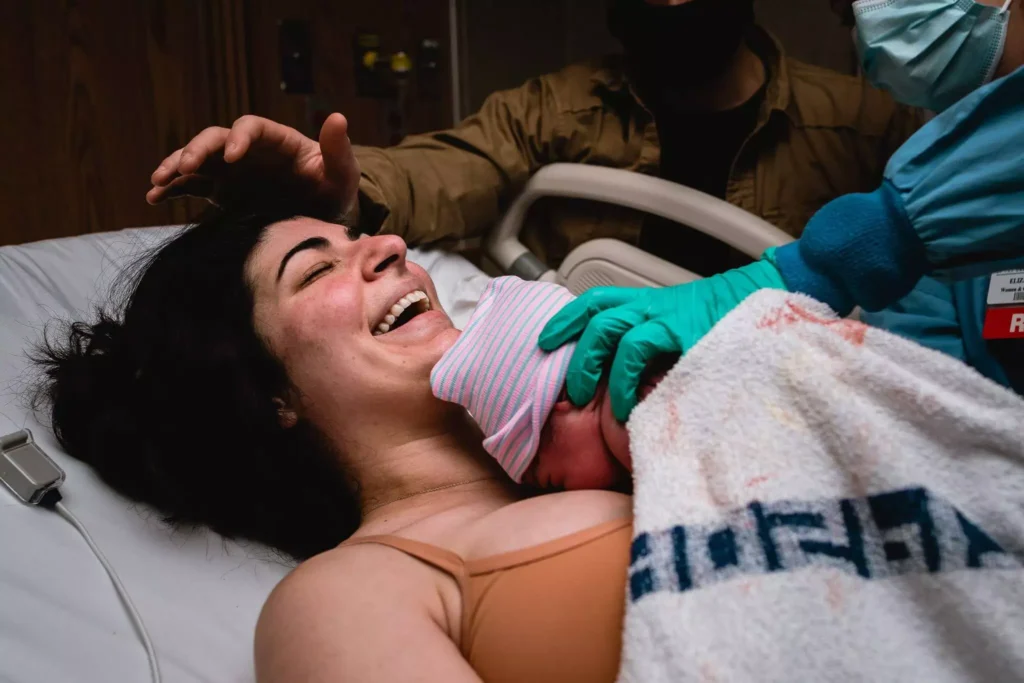

Learn the science of pregnancy and birth to take the mystery of labor away! Understand why you are feeling what you feel, and learn strategies to confidently move through pregnancy and birth!
- 9h+ of Video
- Support Group
- Close Captioning
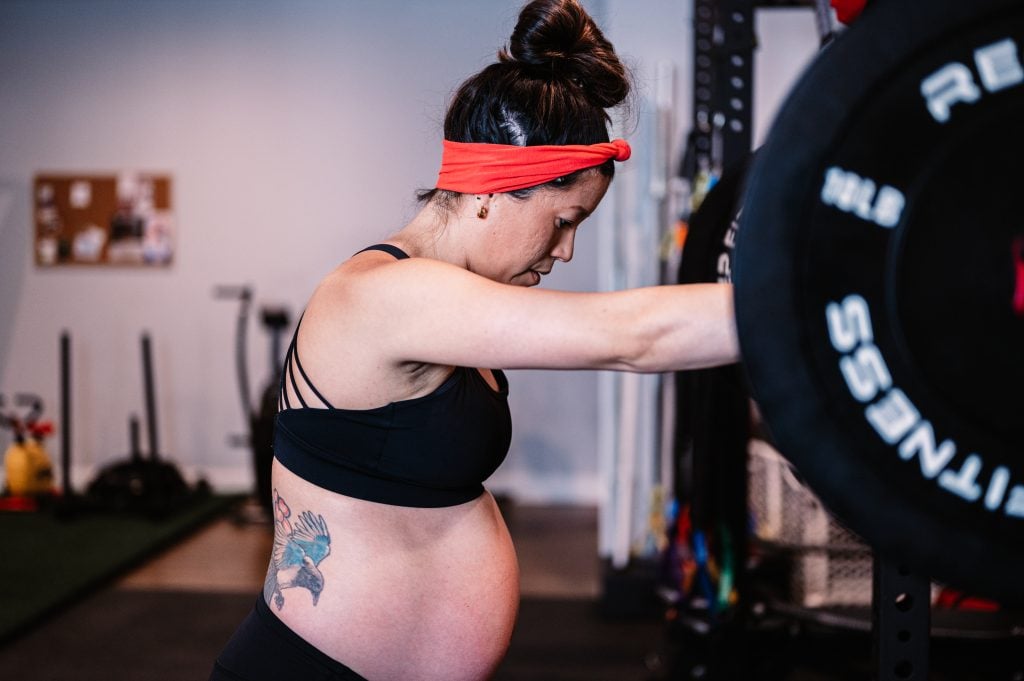

- 5 Workouts/Week
- Gym Workouts
- Self-Paced

Instructor
GINA
Workout on-demand with our prenatal fitness workout videos! Each workout is 30-40 minutes to follow along as you exercise at the same time!
- Birth Prep
- All Trimesters
- Mobility Work

Instructor
GINA
Find comfort and relief from pelvic girdle pain throughout your pregnancy and postpartum period! This program incorporates myofascial sling focused exercises to stabilize across the pelvic girdle joints.
- 3 Weeks
- On Demand Workout Videos to Follow