



Welcome to the MamasteFit Podcast. In this episode, we have Jane Austin, who is the non guru prenatal yoga expert based out of San Francisco. And we’re going to be discussing what are some common misconceptions when it comes to movement throughout pregnancy, and how we can use a prenatal yoga practice or movement practice to help build our confidence throughout our pregnancy to help support our birth and our journey into motherhood.
Read Episode Transcript
[00:02:07] Gina: Welcome to the MamasteFit Podcast. In this episode, we have Jane Austin here, who is going to be talking all about the benefits of prenatal yoga. We’re going to be debunking some common myths, which is a common thing that we do on our podcast, because there’s a lot of fear involved with movement during pregnancy, even though it’s super, super beneficial. So thank you so much for being here.
[00:02:28] Jane: Yeah, you’re welcome. Thank you for the invite. I’m thrilled to be able to talk to you guys in person and, have a fun conversation.
[00:02:36] Gina: So can you first share about yourself to our listeners so they can know who it is that they’re listening to as well and why we brought you on to this podcast because you are like the yoga expert for pregnancy.
[00:02:48] Jane: Well, I’ve been doing it for a long time. It’s so funny. People are like, “Oh, you’re a really good teacher.” I’m like, “Well, I’ve been doing it for 30 years, so if I, sucked at it, that would be terrible!” So yeah.
[00:02:57] Roxanne: Hopefully you’re good at it by 30 years.
[00:02:59] Jane: I know, right? Right? So my name is Jane Austin. I really began my journey into birth work and working in the perinatal field in, 1990. I went to my first birth in 1990 when I was in my early twenties. I graduated from college with an art degree, so it did not prepare me for, what I was the rest of my life journey, my creative part, but not my, my life work.
[00:03:27] Jane: But I started working as a doula in San Francisco in 1990, like I said. And then I always knew that I wanted to be a midwife. Like the doula was kind of the step to midwifery. And so I trained with a home birth midwife. I actually went to Texas, trained at a birth center. Worked as a home birth
midwife in San Francisco, so I really feel like I’m grounded and rooted in a holistic model of pregnancy and perinatal care, pregnancy, birth, and beyond- let’s not forget about postpartum. You guys are, you know, experts in that field as well. I work with postpartum women all the time. I had 20 in my class today of new mamas and babies, which is always fun and chaotic, of course.
[00:04:14] Jane: So, so then I trained as a midwife, got just shy of licensure, and then I just really was sort of stressed out and I was like, “I just need to take a break from this.” And I got married, I got pregnant, I always thought I’d go back to midwifery, but then I discovered yoga and really, I realized where my real passion was, was joining this kind of holistic model of midwifery care with, or just not necessarily midwifery care, but what I learned from midwifery and, and yoga.
[00:04:47] Jane: And the truth is like when I was pregnant, I didn’t like the prenatal yoga classes. They were like snooze fests. They were boring. I just wasn’t, I didn’t move my body and enough for me personally. So I just, you know, my idea was like, you know what, I’m going to take these two passions that I love and I’m going to create my own prenatal classes. Like I didn’t do a prenatal yoga teacher training. I just made it up. I mean, I used, I mean, not just out of thin air, but out of my knowledge and was able to really build one of the biggest, perinatal programs, certainly in San Francisco, but in the greater Bay area.
[00:05:27] Jane: So I work with hundreds of women a week. I was the perinatal director at Yogatree, which was a really big studio in San Francisco before COVID. And now I’m at Yoga Flow. I teach, four prenatal classes a week, with 20 plus to 40 women in them. And, like I said, three postnatal classes. So I teach a prenatal and a postnatal.
[00:05:52] Jane: So that’s my passion. And my joke is I’m going to be the oldest prenatal yoga teacher ever. And I’m literally waiting, this is my goal. I’m waiting for a woman, and I’ve been doing this for 30 years, so she’s out there, who comes into my class pregnant and says, my mom did yoga with you when she was pregnant with me.
[00:06:14] Gina: Oh man, that’s like the next milestone of birth work.
[00:06:17] Roxanne: That’s like the full circle moment, honestly. That’s like everyone’s goal, I feel like, is to deliver somebody’s baby that they delivered.
[00:06:25] Jane: Yes! Yes! I know! I know, so that’s I’m waiting for her. She just doesn’t live in San Francisco. So, but I…
[00:06:32] Gina: it’ll come. It’ll come.
[00:06:34] Jane: She will come one day. She will come for sure.
[00:06:37] Gina: She’ll be listening to this podcast episode and be like, “Wait a minute, I think my mom did yoga. Let me reach out.”
[00:06:43] Gina: Oh man. So I also have an art degree and did not relate to anything that I did, but it gave me the creative aspect.
[00:06:51] Roxanne: Which I don’t have.
[00:06:54] Gina: So yeah, that was funny. When he said that, I was like, “Oh, same.”
[00:06:59] Gina: And so I felt the same way when I was pregnant with my first, cause everyone says do yoga. That’s like the safe thing to do during pregnancy. Do yoga and walk. Just stretch and exist for however many months. But I always kind of had this like stigma that prenatal yoga was like really easy It was like just breathing and savasana and like just existing for an hour, and that’s not enough for me. Like I need to do more than just that.
[00:07:29] Gina: And I think there’s like a great opportunity, which i’m sure you have discovered yourself as well, to include so much more movement within a prenatal yoga class to really help someone stay comfortable throughout their pregnancy, to help them move their bodies in preparation for their birth, to be more comfortable during their birth, and then to give them that movement, like recognition and like muscle memory moving into the postpartum as well.
[00:07:55] Gina: Because we always think about like prenatal fitness and prenatal exercise as like birth preparation. But it’s also about how can we move through our pregnancies easier, and then how can this prepare for after birth? Because that’s a lot longer than pregnancy and birth combined. Like it’s the postpartum phase as well. so that’s really cool that you, I feel like you’ve probably already discovered that as well, which is really interesting.
[00:08:20] Gina: And we’re also the same. We’re like, we have a professional education in birth and fitness, but there wasn’t any sort of like course that we took that was like, that taught us everything like a lot of it was observations and
figure out what actually made sense for like our in person clients for fitness and for birth. And so on this path of like discovery to support this, realm, this transformative moment of all our lives.
[00:08:50] Roxanne: Time period.
[00:08:52] Jane: Well, I’ve had a very similar path, what it sounds like, because I definitely had the midwifery from that perspective, but I also, I’ve been working with pelvic floor PTs since the 90s, and in the 90s, there was one pelvic floor physical therapists that did internal assessments in San Francisco, one. And now it’s a, you know, it’s a field that has exploded, which is amazing. I went to, this pelvic floor conference called Pelvicon a few years back. I’m going again, this will be my third time. And there were, the first year there were 400 pelvic floor PTs. The second year there were 600 pelvic floor PTs and pretty much one yoga teacher. I thought it was going to be a little bit more interdisciplinary. I thought there would be other people there. I mean, there was some Pilates people, but I was the only person that there was primary yoga.
[00:09:44] Jane: And I was like, I mean, I always say I’ve been pelvic floor PT adjacent for 30 years. I’ve definitely, scoured through all those PT books and just trying to incorporate a more, maybe not necessarily evidence based, maybe experiential practices, because so many of the things that people say that you shouldn’t, do are people’s opinions, and it’s not evidence based.
[00:10:11] Jane: So, to be able to actually do my own research, you know, learn from experience, learn from my students, holy moly, I mean, I’ve learned from women and, pregnant folks for decades and decades. They’re my, you know, my best, teachers for sure.
[00:10:27] Jane: And as a yoga teacher, you know, there’s, this tendency that to kind of put them up on this sort of pedestal, or the teachers allow themselves to be put up on a pedestal, which I have no, I’ve not, people always say, “Oh, you’re the prenatal guru!” I’m like, “I am not a guru. I am definitely really, experienced and I’m a great teacher, but I am not a guru, just to be clear.” But also just to you know, be curious about my students, talk to my students.
[00:10:57] Jane: So I train yoga teachers. I’ve been training prenatal yoga teachers since ’06. So I have Mama Tree, which is my prenatal yoga teacher training and, you know, people have actually done my training after they’ve done other trainings and they’ll say, “Well, your training is so different.” You know, so it’s not just information, but also just like the perspective that we can
give our students, we can give them stronger practices. You know, obviously, if, it’s appropriate for them and their fitness level and their comfort level.
[00:11:31] Jane: But what happens in prenatal yoga is that people think it’s, sometimes they think, it’s like gentle yoga. And I’m like, well, you know what motherhood’s not gentle, so why would the preparation for it be gentle? You need to be strong. You need to have that mental stamina to get through those temper tantrums and all the things that come with mothering. And I just feel like yoga is such a terrific, tool to be able to cultivate. And by the end of people’s pregnancy, if they’ve been doing the practices, you know, for as long as they have, weeks and months or however long, you know, they go into their birth experience, hopefully with a little bit more confidence that they can do what they need to do to give birth.
[00:12:12] Jane: Now, people will often say, “Oh, well, if you do yoga, you know, do you have a better birth?” I’m like, “I hope people come out of their birth experience feeling whole, but being a yogi doesn’t give you any guarantee that you’re going to have any particular kind of birth. Sometimes the safest way out for a baby is through the abdomen. Hallelujah. Thank God we have that option for some folks. But does yoga prepare you hopefully to meet whatever your birthing brings? Yes. I hope so. That’s the goal. Does the yoga prenatal yoga prepare you for whatever postpartum brings? I hope so. I mean, and obviously you can’t, Prepare a hundred percent, but are you in a better place if you practice yoga before? Yeah, that’s The hope, that’s the goal.
[00:13:02] Gina: I love that. I think that’s something that a lot of folks like dismiss when it comes to the physical preparation for birth with whatever movement type they like to do, whether it’s lifting weights, whether it’s doing yoga, whether it’s walking, is that there’s also this huge mental preparation aspect of using movement throughout our pregnancy is, one, when you feel more comfortable in your body, you feel mentally better as well. There’s this endorphin release that happens whenever we’re exercising. And then that’s going to help translate to a more comfortable postpartum. Like obviously postpartum, there’s always so much that you could do. It’s, not a fun, fun time initially, but it’ll be less, slightly less, if you have some sort of conditioning going into your birth.
[00:13:45] Jane: Right.
[00:13:45] Gina: And then there’s this huge aspect of just kind of accepting your birth experience for what it is. And I totally believe that yoga can be super beneficial for that. I can see really any sort of exercise that someone does
throughout their pregnancy to be an opportunity to kind of accept things as they are because there’s so much like change that happens during pregnancy that sometimes we need to modify what it is that we’re doing based on our current needs, and that really translates well to birth. And then feeling confident to move your body during your pregnancy because there are so many misconceptions out there on don’t do this, don’t do that if you, do this, you’re harming your baby, like how could you? But if you don’t do that same thing, you’re not preparing yourself and so there’s a lot of conflicting information out there.
[00:14:34] Gina: And so it becomes really hard to confidently navigate pregnancy and there’s this like thought of I have to always ask for permission to do this, to eat this, to move in this way. Like I have to ask for permission. And then it becomes really challenging when we make it to our births because then we’re like, okay, well, I had to ask for permission throughout my whole pregnancy to move in a certain way. Well, do I have to also ask for permission during my labor to, to do this or that even though this feels intuitively best for me? And then that moves into motherhood. It’s okay, well, I’ve been asking everyone else for, to hold my hand this whole time, and now I’m supposed to do it all by myself? What do you mean?
[00:15:12] Gina: And so I think when we can overcome the misconceptions of movement during pregnancy to help people feel more confident when they navigate their pregnancies, it just really translates well into motherhood, because they’re like, “Well, I was able to kind of tune into my intuition during my pregnancy and I was able to tune into it during my birth and kind of accept it for what it was,” and then that’s just only going to help in the postpartum.
[00:15:39] Gina: So can we talk about what are some of those movement misconceptions that folks have about prenatal yoga? What are you kind of like battling with folks that are like coming to you and they’re like, “What do you mean I can twist? I got told that I wasn’t allowed to twist at all.”
[00:15:54] Jane: Oh, I hate that one. I’m like, how are you going to pick up the sippy cup from the back seat without twisting? Tell me that. You know, so yeah, it’s, funny because I get asked all the time- so I teach in a big studio, often right before my class, there’s these, you know, heated flow classes with 50 people in them, you know, whatever, so that it’s like a big studio. So I often will, when I’m coming in, I’m cooling the room down, you know, getting the props set up for the folks coming in for my class and people will come up to me and they will, the first thing they’ll say, “Oh, you’re Jane, the prenatal teacher, right?” And I say, “Yeah.” And then I know when she says that, she’s going to
say she’s pregnant because I see, her coming out of the corner of my eye. She’s been approaching me for the last 30 years. And then the first question is, “What shouldn’t I do?” That’s the first question. And, they, people often look outside of themselves for answers, and then I always say, well, I answer a question with a question. So instead of being like, “Oh, don’t do this, wah, wah,” I, start with, “Well, what feels good to you right now?” So it’s turning that inquiry within, as opposed to “Oh, this is what you should and shouldn’t do.” So I never start with the shouldn’t list. I start with, well, what feels really nourishing to you right now?
[00:17:16] Jane: And then when she answers that, I might, you know, ask some more questions about that. And she’ll say she likes heated classes. And I say, “Well, the concern about a heated class is that. It’s very easy to get dehydrated. If you’re sweating a lot, you need to stay hydrated. Baby has no way to cool themselves down. So, you know, if possible, be closer to maybe a window or, you know, by a cracked door so that you get a little, you know, air when you’re practicing. Slow down. If you feel like you’re getting a little overheated, stay super hydrated.” So something like that, people are told they shouldn’t do heated practices and If they’re used to doing heated practices and they can practice in a way that’s mindful, not just going, “I’m going to do my, you know, Bikram style, hot vinyasa class, you know, despite being pregnant!” Well, that’s ridiculous. Don’t do it despite being pregnant. Do it if it feels good. But you know what, there’s stanky, sweaty people in there. So I don’t know if you want to, whether you’re sensitive pregnancy nose wants that. Yeah, there’s like sweaty man parts in there, so, you know, no, thank you!
[00:18:28] Jane: So, so that’s a really common one. The other thing is twisting and I say, well, you know, there is a lot of mobility in this, in the joints in the pelvis. Optimally, when you twist the sacrum moves with the spine. So you don’t put too much torque on the sacrum if you’re having a lot of instability and that’s causing discomfort. So allowing the spine and the sacrum to move together. I mean, there’s, obviously there’s ways to work therapeutically with a twist, but like in general, make sure that you don’t strain the round ligaments that stabilize in the front.
[00:19:02] Jane: So instead of saying, don’t, I’ll, you know, tell people go as deeply into the twist as it feels good, probably compressing the abdomen is not optimal, you know. Are you going to harm your baby if you twist into your leg? Doubt it. Baby’s really cushioned in there. But is it like the best thing to for you to do right now? Maybe don’t do that right now. So, you know, you don’t want to compress the belly excessively, of course. So just simple things like that.
[00:19:31] Jane: Giving people the reason why there’s sort of this don’t do list. “Oh, never invert your body because, you know, the cord might get twisted around a baby.” It’s like, you know what, the cord might get twisted around a baby, whether your feet are in the air or your feet are on the ground, right? Sometimes being in an inversion takes pressure off the pelvic floor and hallelujah. I had two women in their third trimester do Viparita Karani today, which is legs up the wall. We put a bolster underneath their lumbar to help take some of the pressure off the vena cava. And I just said, you know, if you feel, and both of them were like, “Hallelujah!” because finally they got some of the pressure off their pelvis. One was having her third baby. Other one was just had a baby that was really low. Like she could touch the baby’s head. That is a low baby. If she can touch the baby, stick her fingers in her vagina and touch her baby’s head. That baby’s low.
[00:20:25] Jane: So, you know, so I think these poses that people will say don’t do could be therapeutically really well applied. Would I teach headstands to a whole room of pregnant folks? No, I wouldn’t do that. I don’t know that’s appropriate for every single person. Is it appropriate for some people who have an existing inversion practice? Yeah. I inverted through my whole pregnancies. Absolutely fine, no problem. So, you know, I think there’s a, just a lot of kind of like you said, Gina, a little bit of fear based, oh, don’t do this, don’t do that, don’t do this. And, you know, if we can just sort of step away from that, don’t, and really focus more on, well, what feels good to you right now? And if she says something like, “Well, I don’t know, this doesn’t feel that great.” Well, maybe letting that go for now, and you know I always remind my students that they have their whole life to practice yoga and they don’t have to do absolutely everything today. And that’s really important for the postpartum period as well.
[00:21:21] Jane: Because you guys know this, there’s all this like protection around pregnancy and “don’t,” And then you have that baby and everyone’s like “Bye bye.” And you’re basically on your own and nobody’s like helping you. I mean, I think they’re like, you know, “My doctor said I can get back to doing what I did before.” And I’m like, “Did they check your abdomen for rectus diastasis?” No. Or, this is my big pet peeve is that they do get checked and then I say, “Well, what did, your care provider say?” And they said, “Oh, my care provider said I’m fine.” And I said, “Well, you know what? Fine is actually not information. Would you like information? Cause I can palpate your abdomen. We can do a couple of different variations of the testing technique to see when you’re getting good, you know, activation of the transverse abdominals in its relationship to the whole core canister,” or whatever. I mean, something. Something like that. It’s just there’s all this sort of misinformation about pregnancy, and then there’s no information about postpartum. And people are told just to go ahead and do whatever they were doing before, after six weeks.
[00:22:30] Roxanne: And for many people, that is regardless of the delivery mode too. Like, whether you had a vaginal birth or a C section.
[00:22:38] Jane: Yeah.
[00:22:38] Roxanne: Six weeks, you’re good to go.
[00:22:40] Gina: Just to do a little bit less.
[00:22:41] Roxanne: You just had a major abdominal surgery, your organs were out of your body. But you’re good. Six weeks.
[00:22:48] Jane: Yeah. Yeah!
[00:22:50] Roxanne: Return to activity.
[00:22:52] Jane: Yeah. And it’s so crazy. And it’s not, and that’s not an evidence based recommendation. At all.
[00:22:58] Roxanne: No.
[00:22:58] Jane: You know, just to say that everybody’s okay at six weeks. That’s preposterous, right? So, yeah, I mean, I appreciate that, that perspective, Roxanne.
[00:23:08] Gina: After my first birth, so I had an episiotomy and it was probably my most physically traumatic birth experience. I went to my six week appointment, I think it was like six weeks, and they were like, I think they were like, “What kind of birth control do you want to be on?” and I was like, “Are we gonna, check my diastasis. Are you going to check my episiotomy to make sure it healed correctly?
[00:23:31] Roxanne: Yeah.
[00:23:32] Gina: Like, are we gonna to do something? And they’re like, “I mean, I guess if you want us to, we, we can.” And I’m like, “Yes! I want you to! I don’t know what’s happening down there! This is not my expertise.” And so I had to like really prompt it to get them to do the assessment. And I’m like, “You literally took scissors and cut my vagina. You want to make sure that you did it right?”
[00:23:56] Jane: And that I’m healing okay. Because people don’t know because there’s no education, or there’s very little education around that. So.
[00:24:04] Gina: Or, they get told, like we’ll have a lot of folks that’ll message us and be like, “Yeah, I got told I had prolapse and then that was it.” Their provider did an internal exam on them and they’re like, “You have a bladder prolapse.” And they’re like, “Okay?” And they’re like, “All right, see you later.”
[00:24:22] Gina: And so they’ll message us and they’ll be like, “What do I do?” It’s like, that Jennifer Lawrence, “What do you mean?” What do I do? What do I do? And so, and then they’re like scared cause they’re they just told me that my bladder is falling out of my body. Like, how do I…? How am I…? Should I just clench and hold this whole time now? Oh God!
[00:24:43] Gina: And so it’s like there’s this lack of information, or like a little piece of information that’s terrifying, but then nothing beyond that sometimes. And yes, there are providers out there who are phenomenal that do give like the really in depth exam and give the referrals automatically. And so I don’t want to see that does not exist. But I feel like I hear more stories of folks being like, “Yeah, they told me that I had a prolapse and now I don’t know what I’m supposed to do with myself because now I’m scared to move my body and make it worse.” Or, “I’m scared to get pregnant again and make it worse.”
[00:25:18] Gina: And so then it becomes like a little bit too much information without an actual solution then just kind of contributes towards more of the fear of moving our bodies. And then during pregnancy, we have, “You’re going to hurt your baby.” Like you’re gonna, it’s always about, it’s usually about the baby and causing harm to the baby with movement. “Oh, if you lift weights, like you’re going to have a miscarriage,” or whatever, like movement thing. I typically find when it comes to movement, I like cannot think of very many movements that would cause like physical harm to baby, other than like blunt trauma, like throwing your body, like off a high surface or, you know, doing like burpees where you’re slamming your belly into the floor would not recommend. That would probably be the one movement, I would say.
[00:26:06] Roxanne: Yeah.
[00:26:07] Gina: Or if you have a preexisting condition or complication with your pregnancy where exercise is contraindicated. So it could be like a preexisting health complication. Maybe something that developed during pregnancy, like you are having like your cervix is starting to dilate and you’re like 20 weeks, like I would probably not recommend exercise at that point. But
in general, during pregnancy, if you’re a low risk person, you don’t really have any sort of complications going on, like moving your body is usually pretty safe and it’s about tuning into what feels good for you. Like this movement feels good. This one doesn’t serve me anymore.
[00:26:45] Gina: And I like what you said about you have your whole life to practice yoga. You have your whole life to do the movement that you love that it’s okay if right now is not that moment and that we have to modify a little bit, like it’s a little bit of letting go of like the identity and being open to kind of expanding like who we are as a person. Which, for me with my first baby, like my identity was my career and my athleticism. My ability to go to the gym and lift weights. That was how I defined myself. And so there was this like confusion that happened when I was like, well, I’m no longer in that career anymore. And I don’t work out in the same way. Who am I like? Oh my gosh.
[00:27:28] Jane: That’s huge. I mean, that’s, really huge, obviously.
[00:27:32] Jane: And what I love about the yoga practice is that you have this opportunity to do that kind of introspection. We call it Swadhyaya and Swadhyaya is just that willingness to kind of go inside and then maybe, without judgment, notice like what feels good, what doesn’t feel good, what’s serving me in my life, and what don’t I need anymore, you know?
[00:27:55] Jane: And one of the great things about group classes, and not everybody has access to them, but the great thing about group classes is that it also helps you build community. And you just feel a little less crazy when you’re in a room full of pregnant folks. Like I’ve had, somebody came up to me, the other day and she was like, “I met my,” this was postnatal class, she’s like, “I met all my mama friends in the prenatal class and we meet once a week with our babies.” And it’s it’s such, a fertile ground, no pun intended, to, really forward friendships.
[00:28:29] Jane: Because the truth is like your friends who either don’t have children, have older kids, they don’t really want to hear about your pregnancy that much. They don’t really want to hear about what is in your baby’s diaper, you know. Whereas somebody who is pregnant or somebody who has a newborn baby is interested. So, you know, being able to have a place where you can make friends and connect with other folks and just feel a little less crazy. People cry in my class all the time.
[00:28:58] Roxanne: It’s those pregnancy hormones.
[00:28:59] Jane: They say they’re a little overwhelmed. Yeah. I mean, it’s, yeah, of course, but it’s, but they say they’re a little overwhelmed. And I always like kind of throw it out to the class and say, “Hey, is there anybody else who’s feeling a little overwhelmed today?” And you know, a dozen hands will go up and then you just feel less alone.
[00:29:17] Jane: And, you know, in this day and age, we’re expected to kind of do everything on our own. Whereas, you know, tribally and with our communities and our clans, we have people around us helping us through our pregnancies, helping us take care of our children, you know? No, no other time in the history of our species have we been expected to do everything on our own. And it’s overwhelming and it leads the U. S. to one of the, as you guys know, countries that has the highest rate of postpartum depression, anxiety and mood disorders, you know? Perinatal, pre and post natal. So having something that just helps you feel better is amazing.
[00:30:01] Jane: And, to your point, Gina, sometimes people say, “Oh, don’t start anything new when you’re pregnant.” I’m like, “What are you talking about?” If you’re not moving at all and you’re healthy, you should probably maybe move a little bit. I mean, I certainly wouldn’t recommend somebody going to a you know Hot vinyasa flow class if they’ve never done any yoga before and they’re pregnant. But starting prenatal yoga, like what a terrific time to start prenatal yoga.
[00:30:32] Jane: I always tell people that are like, “When is it too late to start?” I’m like, “When you’ve had your baby, like that ship is sailed!”
[00:30:39] Gina: That’s what we usually say too. “Is it too late to join your prenatal fitness program?” I’m like, “Are you pregnant?”
[00:30:43] Roxanne: Are you still pregnant?
[00:30:45] Gina: Did you give birth? If not, then no, it’s not too late.
[00:30:50] Gina: But yeah, there is this huge misconception that you can only do things that you’ve done pre pregnancy, which if you don’t have a fitness background, like how is that fair to that person to be like, well, maybe next time. Next time you can think about preparing a little bit better. Or the person that already has a practice or like a workout routine, well, they don’t necessarily need to do everything exactly the same way when they’re pregnant. Not every movement makes sense to continue to do throughout their pregnancy or if they’re having like discomfort with certain movements, like it doesn’t make
sense to keep doing that same pose or posture because they did it pre pregnancy. That doesn’t make any sense either.
[00:31:30] Gina: And so I think what you’re saying about, helping people understand what it feels like inside their body and, interpreting those, signals from what their body is communicating to them is so much more beneficial than giving these blanket statements of, “Only do what you did pre pregnancy. If you did it before just do the same stuff, just a little bit less.” Because yeah that doesn’t make any sense. “If you’re sedentary, it sucks to suck!”
[00:31:58] Jane: Yeah, “Sorry about that!” It’s preposterous.
[00:32:02] Jane: Well, and then you know, one of the things I hate when people say “Oh, just listen to your body because to me, that’s half the instruction.” so listen to your body and respond accordingly. You know what I mean? I mean, give them that next, okay, I’m listening. I’m listening now what? And then respond in a way that feels appropriate for you. And I have a deep trust that when people are practicing yoga or movement, anything, if they’re, truly listening to themselves and they’re not being guided by ego, that they’re going to make decisions and choices that are appropriate for them and their baby.
[00:32:41] Jane: Like I have that trust that if they’re really paying attention, they’re going to get the like understanding of what they need in that moment. And sometimes it’s just being quiet so you can hear, you know? Yoga begins with listening. We always say yoga begins with listening. So just being in that place where you can maybe be still for a moment, notice what’s present for you physically, mentally, emotionally, and then let the practice meet you right where you are. And that’s true for everybody, of course, but when you’re pregnant and in that postpartum period and your body is going through this huge, you know, change this life transformative, you know, situation, having a practice that can change and shift and transform with you is going to be the most beneficial.
[00:33:31] Jane: So, yeah, I mean, but, if you’re new to yoga and you don’t know how to modify any of the postures because you don’t even know what the postures are, going to a class that’s specifically designed for the pregnant body or the postpartum body is probably going to be, you know, just optimal, you know, just optimal.
[00:33:50] Roxanne: Let’s take a break from this episode to hear from our sponsor Needed. So Needed is a nutrition company focused on the perinatal timeframe and one of our favorite products is their prenatal vitamin. We love their prenatal vitamin because, one, it comes in two different forms, a powder
and a capsule, and then there’s two different types of capsules that you could take with eight capsules or three capsules. But they’re very intentional about all of their ingredients that go into the prenatal that are in the optimal forms to be readily absorbed into our body more easily, and they’re very intentional about those dosages, that they’re at those optimal levels that we actually need in our bodies to support not just our body, but also our babies during pregnancy.
[00:34:27] Roxanne: But a lot of people will ask us, “Hey, I know you take the Needed prenatal, but what do you take in the postpartum? What postnatal vitamin are you taking?” And we take Needed prenatal, still, in the postnatal. You don’t need a special postpartum specific vitamin because all of the nutrients that we’re needing during pregnancy are also the nutrients that we’re needing in the postpartum to support our recovery after childbirth and pregnancy. So we take Needed’s prenatal, not just during prenatal, but also in the postnatal.
[00:34:56] Gina: If you’re interested in checking out Needed, you can check them out at thisisneeded.com and use code MAMASTEPOD to get 20 percent off your first order.
[00:35:03] Gina: I love what you said about, not letting ego kind of fuel your movement practice as well, because usually that’s where I see a lot of the issues, especially with like athletes or somebody that has an established practice is “Well, this is my identity, like I’m used to kind of ignoring some little like messages for my body to continue to do what it is that I feel is like I want to do to like impress or, you know, to satisfy my ego,” but there’s so much of that, letting go that needs to happen during our pregnancy, when we’re in labor.
[00:35:37] Gina: Not that we can’t plan for birth and that we can’t have a wonderful and empowering experience. But sometimes contractions are just a little bit harder than you were anticipating. Or maybe labor’s lasting a little bit longer than you wanted, so not necessarily like a problem with your birth, but if we’re kind of still caught up in the ego and satisfying this like desire to impress ourselves and others, like it can make labor a little bit more challenging, because we’re like “Well, no, my contractions are supposed to be easy. I did yoga my whole pregnancy. Like my baby should just fall out at this point, like I’m so, so yoga, and loose!” and then motherhood, same thing. Like these kids did you know that they have their own opinions and they like to do their own thing? They don’t just like to do what I tell them to do.
[00:36:22] Gina: And so I think being able to like really tune in to what our body is communicating to us and then respond accordingly, without ego is so,
so beneficial, like when it comes to just life in general, I think it would be helpful.
[00:36:40] Jane: And then just giving yourself a freaking break, you know? Like it’s okay to back away from something.
[00:36:46] Jane: And, you know, it’s so funny because I often will, I mean, I’ll have all people at all different levels of experience, but I’ll have people come in with the very end of their pregnancy and be a little you know, 38, 39 weeks and they’ve been doing their regular practice, which is great, you know, I always say if you have to modify half of what the instructor is giving you, then like maybe go to a class where you can do the whole thing and not have to go to the wall and you know, do a squat at the wall or whatever, you know. If the, teacher can guide you with different modifications, that’s one thing, but a lot of times they’re not well trained. Some, yoga teacher trainings don’t have any prenatal. Like I teach six hours in one training in San Francisco in a 200 hour training, and I teach eight hours in another. And you know, some people will say, “Oh, I didn’t learn anything about it. They told me what not to do.” You know, and they said, “Oh, that took about a half hour.” I’m like, “Ah!” You know?
[00:37:46] Jane: So, but, just being able to, you know, you definitely can take your regular classes, but I have these women come in at the end of their pregnancies. And they’re like, “Oh, I thought this was going to be like easy.” I’m like, “No, you need to have strength to hold your baby.”
[00:38:03] Jane: So we, I teach what’s called a tapas practice and yoga tapas practice is, designed to be challenging. So it takes you outside of your comfort zone. And when you don’t want to do the pose anymore, that’s actually when it starts. And we do a series of postures where we keep our arms lifted. We do different movements and we do that for 10 minutes. And it’s, first time they do it, they hate it. They’re like, “Oh my God, this is so hard.” and the brilliant thing is that the more they do the tapas practice, they feel themselves getting stronger and it’s building their confidence so that, you know, they know that they have these inner resources, not just physically stronger, but mentally and emotionally they are cultivating, not just endurance, but like resilience.
[00:38:48] Jane: And, you know, people tell me, and then because I would tell them, you know, you’re basically prepping for baby holding. Right? So you want a strong upper body so that you can do the work of holding your children and your baby, because you know who doesn’t care you’re tired? Your baby. And you still have to pick them up when they’re exhausted. And they’ve got their own opinions. Yes, they do!
[00:39:09] Jane: So also just through that, those practices, helping them get stronger. I do teach a workshop and I’ve been teaching it for, I’ve taught childbirth prep for years and years, and now I’m doing mostly yoga as birth preparation. So I teach a two hour birth preparation for a woman. Not, not everybody has a partner of course. and you know, pregnant folks, all the different iterations, but, it’s a two hour birth prep workshop and it’s really, cause from my perspective, the prenatal yoga is all birth prep, like regardless of how you give birth, it’s all birth prep from my perspective. But the partners like don’t have, they have very few avenues in which to help them prepare for childbirth. Yeah, they can read a few books and maybe they do a, you know, childbirth prep class, but what I teach is really hands on. And I just really help them build, I help build their confidence that they know how to touch her in a way that feels good. So I’ll teach them massage techniques and we’ll do some deep relaxation, we’ll do some supported poses. I have them get their hands on her bones, you know? Literally put their fingers on her sit bones so they can feel where the, you know, where the pelvic floor attaches side to side. And, you know, I always, it’s so funny because inevitably, I’ve got 20 couples in a class, right? Inevitably, like some, sweet guy is just like cupping his wife’s butt. I am like, “That’s so sweet that you’re cupping her butt, but I want you on the bones.” And then, what happens when the pelvis goes into a forward tilt? What happens when the pelvis goes into a posterior tilt? Where do you feel the bones widening the most, the sit bones widening the most?
[00:40:56] Jane: So, so just helping them kind of understand a little bit of the like logistics of labor, but also their role in helping her feel safe, helping her feel respected, helping her feel connected in her birth. And I love watching it even in a two hour period, watching the partners transform. And not everybody is a male partner, of course, but especially the dudes, like watching them kind of come in and they’re like, “Ugh I have to do this yoga thing she signed me up for,” and then they’re like, they leave and they are like smiling. And, I always have them look at her face and she’s always you know, cause she’s so relaxed. She’s so relaxed. And then I’m like, “You did that. You helped her get to that place. That’s where she’s going to need to be to begin to soften and open for her baby.”
[00:41:51] Jane: So, yeah, so it’s really, it’s fun. I love having that piece. But then I, do the tapas with them as well. And the mamas have been doing the tapas practice with me for months and months. So they’re super strong. And then the partners are like, “Ah, this is so hard!”
[00:42:06] Gina: But they need the strength too! Birth support is physically…
[00:42:09] Roxanne: It’s very challenging.
[00:42:11] Jane: No joke!
[00:42:11] Roxanne: It’s freaking tiring.
[00:42:14] Gina: Yeah. Oh man. I love that you have a class that’s just, that’s really focused on the partner and like this partnership aspect of it too. Like we have an in person childbirth ed course and then we have online courses as well. But we find that like the partner is usually the one who’s like the most excited at the end of the class because they’re like, “I have all of these like things that I could do! I don’t have to just be confused the whole time and afraid to like, touch her or to do things like I have, I know how to advocate for her. I know how what movements to try, what positions to help with.” And so giving them like tangible things to do with their hands. Like what do I do with my hands? Like I feel like it’s so helpful.
[00:43:01] Gina: Because even in my own labors like my husband like needs to be like physically doing something as to help with his anxiety during the birth of just like kind of waiting and so he’s like, “I’ll fill the pool, I’ll do this other thing, I’ll squeeze your hips,” and so giving them, these tangible things to do, I think is so helpful when it comes to the preparation as a team for birth. And so I think that’s really awesome that you have this in person course.
[00:43:26] Roxanne: I also think we like sometimes dismiss the importance of the partners and some people like they’re like, “Oh, like she’s doing all the work. You’re just kind of there.” And so some partners won’t even really prepare because they’re like, “Well, I don’t really have to do anything, I guess. I don’t really have to be a part of this process,” when they actually do. A lot of them want to do something and they want to have a role to actually help their partner like through this transformative process. And then they’re like, “Wow, like I saw the difference of like I massaged your back or like I squeezed your hips and it really helped you and like this small amount that I was helpful during your labor and birth.” And it makes them feel part of the process rather than just like an outsider witnessing this like moment that’s also important to them.
[00:44:17] Jane: Absolutely. And most people, I mean, I’m a home birth midwife. I had my babies at home. The vast majority of people are going to have their babies in a hospital under obstetrical care. That’s like the paradigm, you know, the maternity paradigm in our culture. But I’m like, in a hospital, when you’re birthing in a room full of people that you’ve never have met and you’re supposed to relax and let go, you know what’s really going to help you?
To have somebody in the room that you trust. And I’m wearing my little oxytocin molecule necklace, you know, and oxytocin, yes, it is the love hormone when we’re touched by somebody that we love, but it’s also the trust hormone. So I tell the partners that, it’s like, “She trusts you. Hopefully she trusts you. Hopefully she loves you. And with that, like that’s going to support her to give birth and, maybe reduce some of the fear that she feels.” or, you know, sometimes in labor, women just feel like they get scared and then they feel alone. And I tell the partners sometimes just holding her, hands, and reminding her that she’s not alone, put the love, the connection that you have for her in your hands, and she will get it, and you don’t have to say a dang thing.
[00:45:31] Jane: So you know, just like little tips like that can be so helpful, and, you know, because the, paradigm is that, you know, partners are useless, and, you know, sometimes women don’t want their partners close by, I mean, I’ve definitely been at births like that, but the vast majority of women, at least in my experience, want their partners nearby, right? So that giving them those practical things, but also knowing that even just their presence can be really helpful, especially if they’re birthing in an environment where they don’t know who the people are. Or they’re amazing L&D nurse, who are little angels, and obviously CNM’s are angels too, but you’re amazing L&D nurse that has been with you for the last 14 hours is going home and you’re still in labor.
[00:46:19] Jane: So, you know, it’s great as the staff can be having that continuity of somebody that you love, well, of course, that’s why I like doulas, but that of your partner so their role is essential. They’re not superfluous. I, that’s one of the first things I say, saying, “You are not superfluous at this birth. You are as essential. She needs you to show up in whatever level you show up.”
[00:46:44] Gina: Nobody can replace the partner.
[00:46:45] Roxanne: No. You trust your partner the most out of everybody, but then other people are also there to help support you and make you feel safe as well. But they’re like the beacon of trust.
[00:46:58] Gina: I always tell my doula clients, because the partners will be like, “Well, what do I do?”
[00:47:03] Roxanne: Like, “I don’t wanna be replaced.”
[00:47:04] Gina: “I don’t wanna be replaced.” I’m like, “Oh, I cannot replace you.” Like I’m like, “I could spend every moment with this woman from now
until she gives birth that I would hope that I still couldn’t compete with the relationship that the two of you have.” I would hope.
[00:47:15] Jane: Yeah! Of course.
[00:47:15] Roxanne: Like you guys made a baby together.
[00:47:16] Gina: Like I want you to like. Have your baby and for her to look, at you and lock eyes and be like, “I couldn’t have done this without you. Gina was nice, but like you, you were the one that I needed.”
[00:47:26] Roxanne: But still tell Gina, “I couldn’t have done it without you!”
[00:47:32] Gina: But like the partner is so important. This is a person that we chose to be in our life and to procreate in some capacity, whether it was planned or unplanned, but like we’re choosing to move through this parenthood journey with them and like they’re, they have such an important role. And even with all the support people that I have at my birth, I give birth at home as well, the one person that I am always like looking for is my partner, is my husband. I’m like, Roxanne, you’re great. I love you being there. I want you to be there. But if my husband was not there, I would be distraught. Because he’s again, my like beacon, the person that I’m like seeking to provide me that like continuity and that emotional support, like during my birth.
[00:48:18] Jane: And just having them for, me, I, I needed my husband kind of in a headlock. I just needed him like right here with, me, like in it with me, so I wouldn’t feel alone. I remember going to the bathroom and walking into the bathroom, turning around and I’m like, “Where is everybody?” And I remember just pulling on my, my midwife was the first person in the bathroom, I remember pulling on her clothes, and bringing her down in a headlock!
[00:48:45] Roxanne: I need you!
[00:48:46] Gina: I need you.
[00:48:47] Jane: I need you here!
[00:48:52] Gina: Well, thank you so much, Jane, for coming on the podcast. I feel like we could probably talk for a really long time. Pregnancy, movement, the misconceptions, helping people feel confident and how important movement confidence is in preparing us for this entire journey. How can our listeners learn
more from you? If they’re in San Francisco, can they take your class? Do you have any online offerings or like courses that you offer?
[00:49:18] Jane: Yes, I, well, certainly during COVID, I everything was online, but I’m not teaching any of those classes anymore. I do have a few, on demand offers. You can find my stuff at JaneAustinYoga.com. So A-U-S-T-I-N, as opposed E-N. And I’m on Instagram @JaneAustinYoga. And so I, post, you know, short little videos online. And then I have my whole program in San Francisco. I do take my Mama Tree training on the road. The last time I did it in San Francisco in the spring, but in February I did it in the Dominican Republic. I’ve done it in China before. I’ve done it in different places nationally. So I’ve got plans to expand my Mama Tree prenatal yoga teacher training to other cities. I’m looking at Boston. I’m looking at Indianapolis just to kind of spread the wings of Mama Tree. So that is a, complete prenatal yoga certification, you know, with guest speakers, and it’s really juicy and super dynamic.
[00:50:25] Jane: So it’s good for people who are obviously yoga teachers who want to start teaching prenatal, classes. But for doulas and midwives, I’ve even had obstetricians take it. That was a coup. If concentrations take my prenatal yoga training, whoop! It was awesome.
[00:50:42] Gina: That’s awesome!
[00:50:43] Jane: I know. It was amazing.
[00:50:44] Roxanne: Put that on your list.
[00:50:45] Jane: I know! I know.
[00:50:46] Roxanne: OB approved.
[00:50:47] Jane: OB approved! Right. Exactly. Exactly. So, yeah, so that, that’s basically where you can find me. So JaneAustinYoga.com and come check out what I, offer. Super sweet.
[00:50:59] Gina: Do you have any last minute advice for if you could give one piece of sage advice as, a non guru, what advice would you give for somebody that like, that found out they’re pregnant or they’ve, been pregnant for, they’ve known for several months and they’re like, “Okay, so what do I, do What do I do?” What advice would you have for them?
[00:51:19] Jane: I guess it would be just, if you don’t, if you haven’t already, cultivate a relationship and a connection to your breath. Because having a conscious breath practice is going to help you not just in the pregnancy, not just in the birth, not just in your early postpartum, but for the rest of your life.
[00:51:41] Jane: I mean, science has confirmed what yogis have known for centuries, is that a deep breath has a calming effect on our nervous system. And something as super simple as breathing in through the nose, gently blowing out through the lips. And it seems so simple, but we forget all the time. So we practice yoga so we remember. So it doesn’t have to be any fancy pranayama practice. Just bringing some awareness to your breath to kind of calm your, mind and calm your body. So that would be it.
[00:52:22] Gina: Thank you so much again, Jane, for coming on the podcast and sharing all of your wisdom with us and with our listeners. And we’ll link all of your information down in the notes below. So any of you that are listening, you’re like, “I definitely want to take a class with her,” head to the show notes and that’s where you will find all of her information. So thank you again.
[00:52:40] Jane: Thank you. You guys are like the dynamic duo. Awesome! You got the fitness lady, the doula, the midwife. I love it. Absolutely love it.
[00:52:48] Gina: Thanks so much for listening to this episode with Jane. If you want to check her out and you’re in San Francisco, definitely go check out her in person prenatal yoga classes.
[00:52:56] Gina: It’s really hard to beat the in person experience, especially with the opportunity to build community. But if you want more support and you’re not local to San Francisco, you can check out our online prenatal fitness programs. Or if you’re local to us here in Aberdeen, North Carolina, you can also come work out with us in the gym as well to build your community. But we do have an online community with our prenatal fitness programs and our childbirth education course as well.
[00:53:20] Gina: So we’re here to support you throughout your pregnancy so that you can move confidently. And to help empower you with education so that you feel more confident going into your birth as well. We’re debunking tons of myths associated with prenatal fitness and with birth so that you can know what is actually happening. And again, feel more confident as you navigate this experience.
[00:53:39] Gina: And you can use code STORY10 to get 10 percent off any of our online courses or fitness programs. This includes anything that’s offered on our online website, you can get 10 percent off. And you can bundle a lot of our courses together to save even more.
[00:53:51] Gina: You can check out all our online offerings at mamastefit.com, and again use that code STORY10 to get 10 percent off.
[00:53:57] Roxanne: And this podcast is sponsored by needed, a nutrition company focused on the perinatal time frame that both Gina and I have utilized and still utilize, our husbands utilize, and even our kids use some of this stuff.
[00:54:07] Roxanne: So you can check out Needed at thisisneeded.com and use code MAMASTEPOD percent off your first order.
Additional Resources
Links to Learn More with Jane:
Jane’s Website: https://janeaustinyoga.com/about-jane…
Find Jane on Instagram @JaneAustinYoga
Prenatal Support Courses
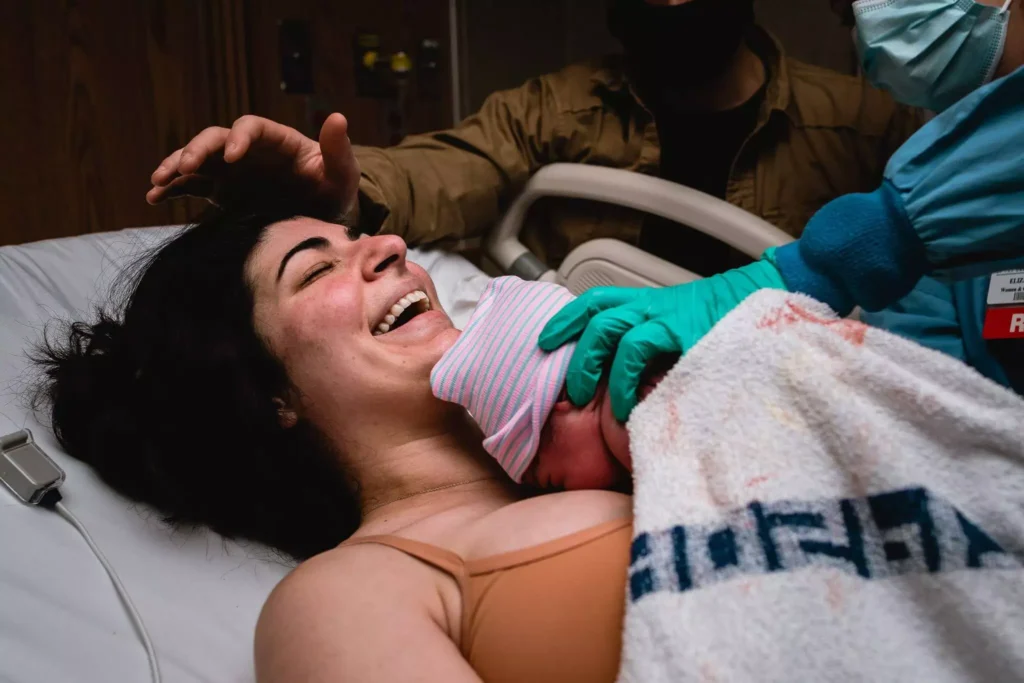

Learn the science of pregnancy and birth to take the mystery of labor away! Understand why you are feeling what you feel, and learn strategies to confidently move through pregnancy and birth!
- 9h+ of Video
- Support Group
- Close Captioning
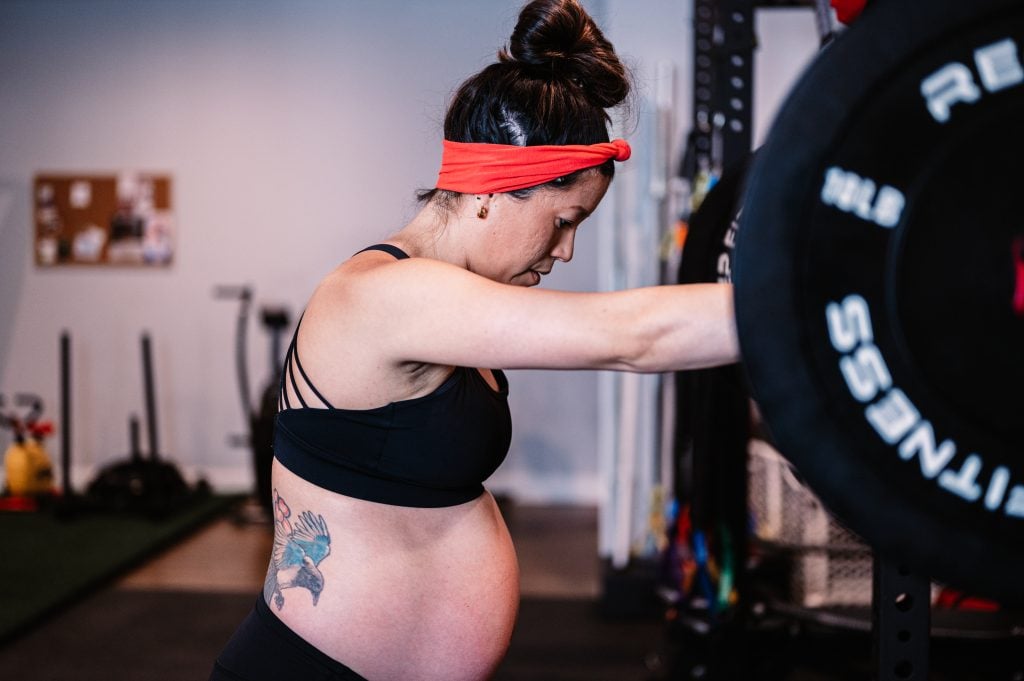

- 5 Workouts/Week
- Gym Workouts
- Self-Paced

Instructor
GINA
Workout on-demand with our prenatal fitness workout videos! Each workout is 30-40 minutes to follow along as you exercise at the same time!
- Birth Prep
- All Trimesters
- Mobility Work

Instructor
GINA
Find comfort and relief from pelvic girdle pain throughout your pregnancy and postpartum period! This program incorporates myofascial sling focused exercises to stabilize across the pelvic girdle joints.
- 3 Weeks
- On Demand Workout Videos to Follow