

There are many misconceptions when it comes to yoga in pregnancy. In this article we will try to give your mind clarity when it comes to this subject. So let’s first explain the benefits of Yoga…
“I am NOT flexible or calm enough for yoga”
When we come into intentional movement or even a bit of stillness, we tune into the radio station of the mind. MOST of us will notice the ‘busyness’ of the mind, the constant chatter, distractions, self-criticism, inner monologue and more.
It’s A LOT to observe…kind of like a junk drawer or messy closet. It is easier for us to TUNE OUT… To distract ourselves with endless scrolling or chores to avoid the messiness of the mind.
Infuse the serenity of yoga into your childbirth journey!
Join our Childbirth Education Course and discover how to harmonize your mind, body, and spirit for a truly peaceful birthing experience.
Enroll today!
It can be easy to assume that we aren’t “GOOD” at yoga because our minds are messy. But yoga is a practice of intentionally deciding WHAT we pay attention to and WHEN.
The mind begs for our attention, constantly chatting away asking us to react.
Yoga asks us to acknowledge the thoughts without getting tangled up in their drama. To notice the thoughts and then intentionally return to the sensations of this moment. A practice of becoming MORE intentional with each experience on and off the mat.
No fancy yoga clothes or equipment required!!

Yoga is a movement practice that invites us all to tune back in.
All poses can be safely modified or substituted during pregnancy so that we can use this exceptionally healing practice to support our motherhood journey.
The practice of mindful breath, connecting inward with our own heartbeat (and baby’s), and moving into shapes that evoke sensation without holding our breath can be invaluable as we prepare for labor, birth, and the postpartum.
Pregnancy can be a time of great transition in both our physical bodies and our identities.
Many women report a wide range of emotions especially in the first trimester before baby kicks can be felt consistently and in the third trimester as preparing for birth.
Recent research indicates that even just 1-2 sessions of prenatal yoga can markedly diminish symptoms of anxiety and depression. For this reason and many other physical benefits, providers are frequently recommending yoga to pregnant women.
Yoga gently transports us out of the “what ifs” in the mind and back into what actually is happening in this moment.
“I LOVE Yoga but don’t want to hurt myself or my baby”
It is estimated that ~300 million people are practicing yoga worldwide. With approximately 214 million pregnancies worldwide, it’s safe to assume that at least some pregnant women are practicing or desire to practice yoga. How do we safely incorporate yoga into pregnancy and postpartum?
The mental health benefits of yoga have been well documented. Yoga when guided and performed intentionally can also offer significant physical benefits to include:
- flexibility
- strength
- pelvic floor mobility
- breathing strategies.
To venture safely into any movement practice in pregnancy, it makes sense to examine any potential risks and identify modifications.
What is safe about Yoga in pregnancy and what concerns actually created such debates?
A few of the big debates related to pregnancy and yoga surround:
- Twists
- Inversions
- Prone or belly down poses.
Join us for on-demand prenatal yoga classes specific to each trimester!
- 20-30 minute long on-demand yoga classes
- Trimester Specific Classes
- Pelvic Opening Yoga Flows: Prepare for Birth!
- Lifetime Access of Program
Twists
Certain poses combine a flexed spine with twisting such as prayer twist in lunge or chair.
We do avoid such belly compression with twisting motions largely because it feels uncomfortable but also because belly compression is not advised in 2nd/3rd trimester.
Modification: These poses can be easily modified to avoid compression but maintain spinal twisting. Revolved lunge or supine twist are appropriate substitutes
Inversions

Any time the head is down and the hips are elevated; While remaining inverted for an extended period of time is not indicated for people with elevated blood pressure, most inversions can be attempted safely.
Downward facing dog is perhaps the most common example of a yoga inversion. Others include handstand, headstand, and forearm stand.
While some skilled practitioners might choose to continue with handstand throughout pregnancy, the body’s changing center of gravity and hormone relaxin add a degree of risk.
In my own teaching of prenatal yoga, I have opted to omit poses like headstand that bear weight on the cervical spine.

Modifications/Substitutions: Avoiding all inverted poses is rarely necessary.
Down dog and dolphin are great substitutions for handstands and headstands. They offer relief to the pelvic floor as the pelvic and abdominal organs move up toward the diaphragm.
These poses are great for birth prep and baby positioning. Spinning Babies coined the term forward leaning inversion which offers an incredible amount of pelvic relief in the 2nd and 3rd trimester.
Prone (Belly down poses)
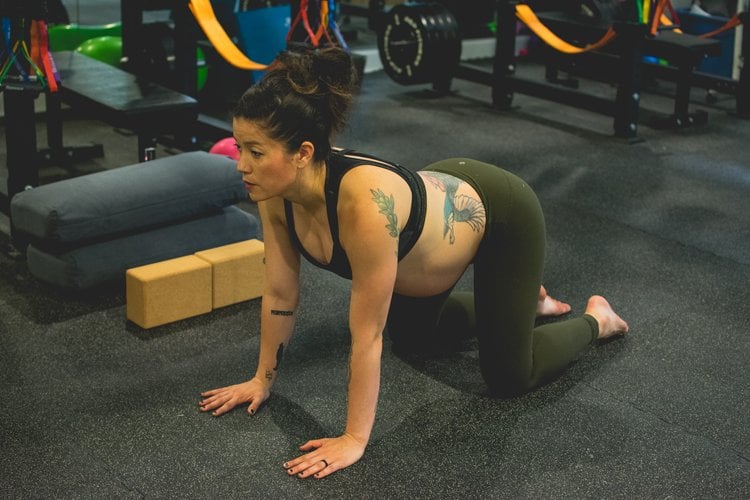
Poses like sphinx, cobra, and floor bow are not comfortable or indicated late 1st trimester through the remainder of pregnancy because of the compression on the abdomen.
These poses focus on breath control and spinal extensor strengthening and can be easily modified or substituted.
Modification/Substitution: Table with alternating arm and leg lift, cat- cow, Table with diagonal bow
Prone (Belly down poses)
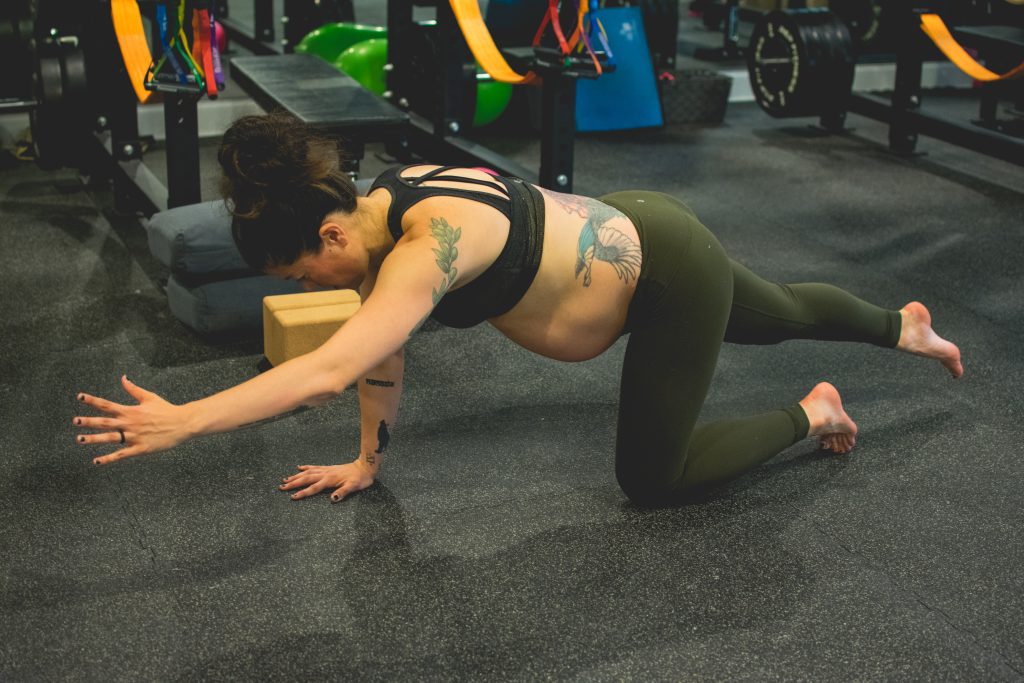
Poses like sphinx, cobra, and floor bow are not comfortable or indicated late 1st trimester through the remainder of pregnancy because of the compression on the abdomen.
These poses focus on breath control and spinal extensor strengthening and can be easily modified or substituted.
Modification/Substitution: Table with alternating arm and leg lift, cat- cow, Table with diagonal bow
Yoga is a movement practice that invites us all to TUNE BACK IN. All poses can be safely modified or substituted during pregnancy so that we can use this exceptionally healing practice to support our motherhood journey.
The practice of mindful breath, connecting inward with our own heartbeat (and baby’s), and moving into shapes that evoke sensation without holding our breath can be invaluable as we prepare for labor, birth, and the postpartum.
Looking for more guidance on integrating yoga in your prenatal/postpartum journey?
Join us Tuesday March 7th 7:30-9pm EST for our Introduction to Prenatal Yoga and Pose Modifications Webinar.
We’ll introduce the basics and modifications to help you feel confident incorporating yoga into your movement practice.
Already love yoga but looking for prenatal classes? Click to access our Prenatal On Demand library where I’ll guide you through ~20 minute classes designed to support the body’s changing needs by trimester!
Looking forward to connecting with you soon!
Join us for on-demand prenatal yoga classes specific to each trimester!
- 20-30 minute long on-demand yoga classes
- Trimester Specific Classes
- Pelvic Opening Yoga Flows: Prepare for Birth!
- Lifetime Access of Program